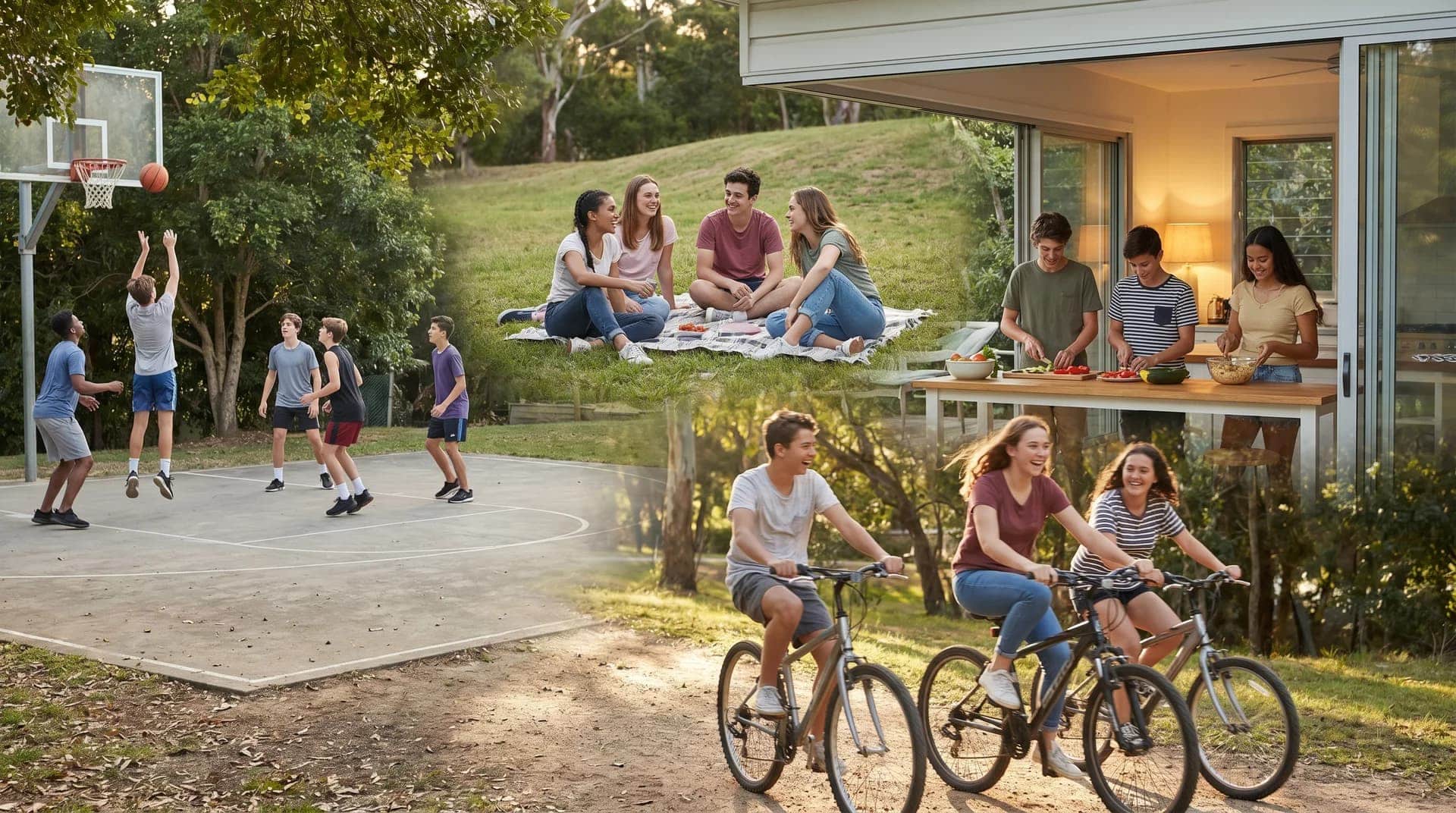
Your teen says they’re bored, you suggest something fun, and they still walk away. It happens often, especially when most activity lists feel repetitive or unrealistic.
There are activities for teens that fit different moods, energy levels, and interests.
This post breaks them into clear categories: outdoor, creative, social, productive, solo, and community-based.
So instead of scrolling through random ideas, you can quickly find something that works right now, today, for your teen.
Outdoor Activities for Teens That Get Them Moving
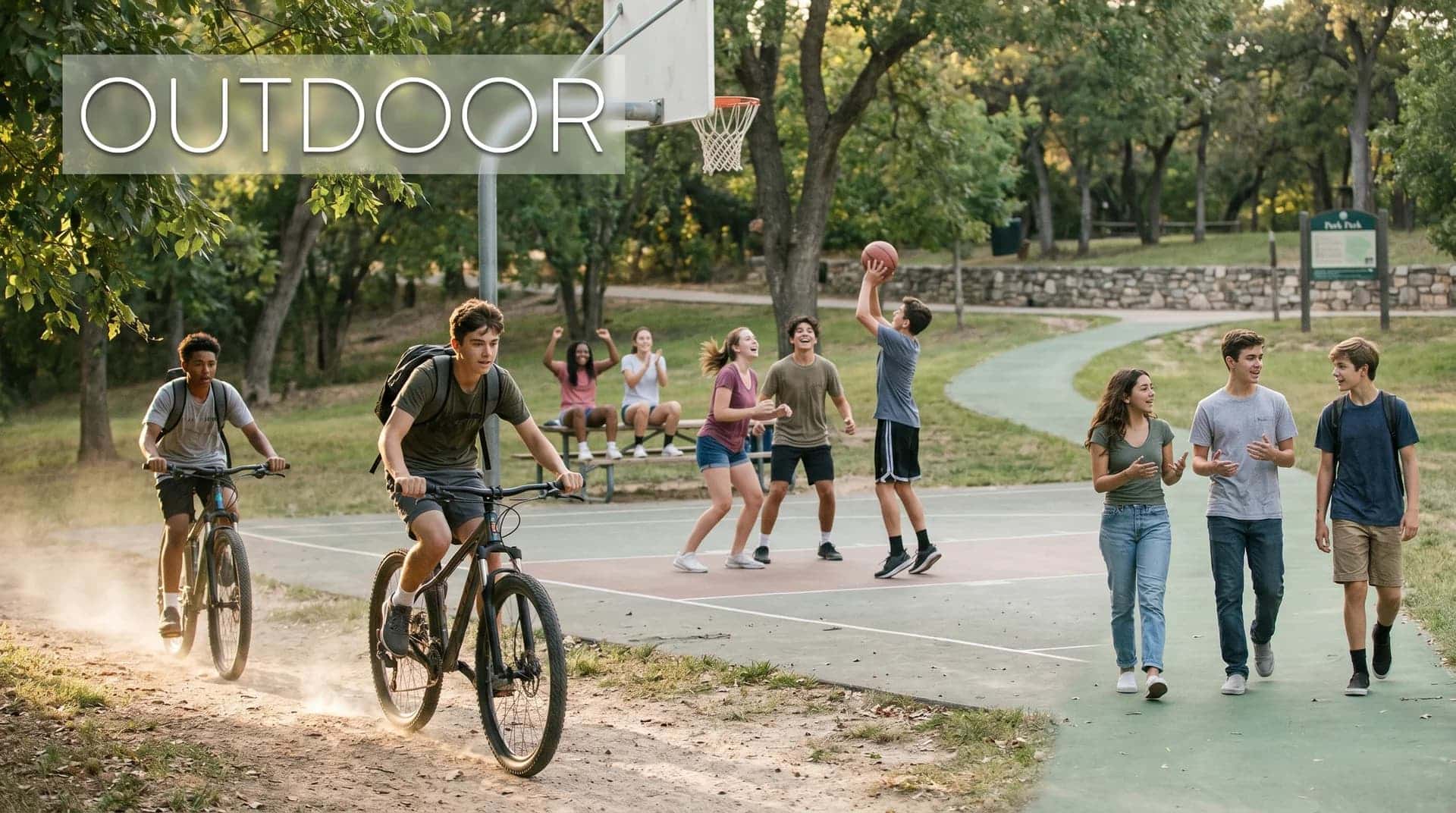
Getting outside changes a teen’s mood faster than almost anything else. Fresh air, movement, and a change of scenery help break restlessness. When boredom hits, a quick step outside can reset your mood. These 16 outdoor activities for teens work across skill levels, seasons, and budgets.
1. Go on a bike ride: Find a local trail or neighborhood bike path. Teens can ride solo or bring a friend. Many cities post free trail maps at parks and recreation centers.
2. Start a backyard camping night: No campground needed. A tent, a fire pit or portable grill, and some marshmallows are enough. A small backyard works just fine.
3. Try geocaching: Geocaching is a GPS-based scavenger hunt where teens use the free Geocaching app to find hidden caches nearby. There are over three million active caches across the US.
4. Go swimming at a community pool or lake: Most city recreation centers charge under $5 for a day pass. Open water swimming at a nearby lake is usually free.
5. Play tennis at a public court: Most parks have free public courts. Two rackets and a can of balls are all that’s needed. Free beginner tutorials are widely available on YouTube.
6. Take a hike on a local trail: Use the free AllTrails app to find beginner-rated trails under 3 miles nearby. Bring water and a snack, and build up distance as fitness improves.
7. Have a water balloon fight: A pack of balloons, some water, and two teams. Costs almost nothing and gets competitive quickly.
8. Set up an outdoor obstacle course: Use lawn chairs, hula hoops, jump ropes, and cones. Time each run. Teens can race against their own record or challenge friends.
9. Play a pickup basketball game: Most neighborhoods have a court nearby. Teens can join a pickup game or set up challenges like HORSE or Around the World with friends.
10. Try outdoor yoga in the backyard or park: Yoga works the full body and helps reduce stress. Free beginner sessions are available on YouTube. A mat or blanket is enough to start.
11. Go rollerblading or skateboarding: Both improve balance and coordination. Most skate parks are free to use. Rollerblades can often be rented from recreation centers for a few dollars an hour.
12. Take the dog for a long walk: A neighborhood or trail walk counts as real exercise. Many teens use it as solo decompression time, which is perfectly fine.
13. Have a frisbee or football toss: All you need is a flat open space and one piece of gear. Low-pressure, high-fun, and no teams required.
14. Try stand-up paddleboarding: Many lake parks and recreation centers rent paddleboards by the hour. It looks easy, but challenges core strength and balance right away.
15. Go bird-watching with the Merlin app: Download Merlin by Cornell Lab for free. Tap “Sound ID” outdoors, and the app identifies birds by their calls in real time. Genuinely addictive for the right teen.
16. Build and fly a kite: Kite kits are sold at dollar stores and toy shops. An open park or field on a windy day is all it takes. Simple, cheap, and satisfying.
Creative Arts and DIY Activities for Teens to Try at Home
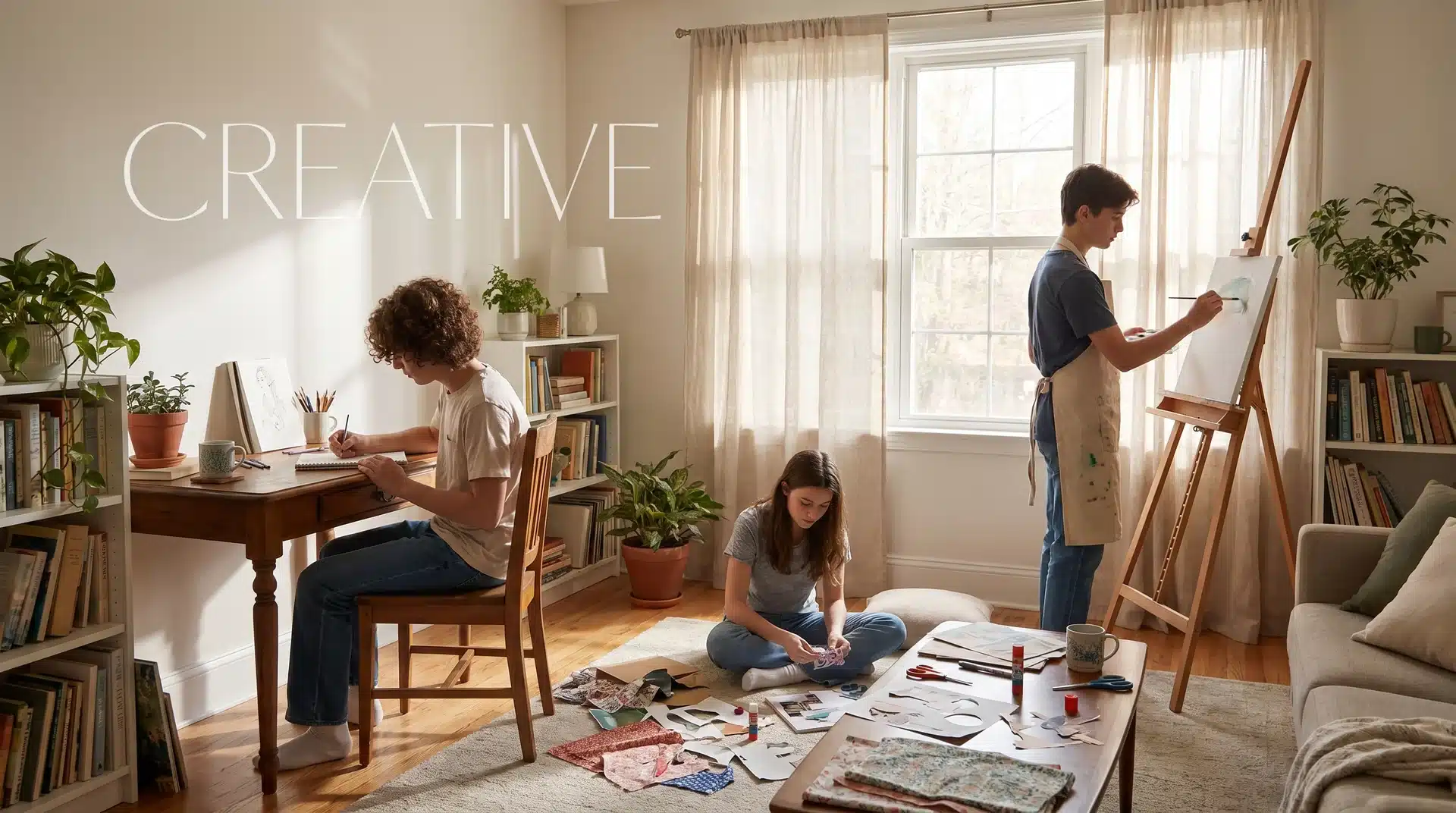
Creative projects give teens a way to express themselves without a screen. These 16 creative activities for teens cover art, crafts, and hands-on making. Most need only basic supplies from home or a dollar store, and none require prior experience to start.
17. Tie-dye t-shirts or sneakers: Pick up a tie-dye kit at a craft store. Teens dye old white t-shirts, socks, or canvas shoes with rubber bands and a few colors.
18. Make homemade candles: Candle-making kits are available at most craft stores. Teens melt wax, pick a scent, and pour it into a jar mold. Finished candles make solid gifts.
19. Try watercolor painting: Watercolor is one of the most forgiving art forms for beginners. A starter set costs under $10. Teens can copy reference photos, paint landscapes, or experiment freely.
20. Build a vision board: Cut images from old magazines and printouts. Glue them to poster board around goals, interests, and things that matter. Personal and creative with no materials budget required.
21. Design custom phone cases or tote bags: Plain clear phone cases and canvas tote bags are cheap online. Teens use fabric markers or acrylic paint to create their own designs. No art experience needed.
22. Make bath bombs at home: Bath bomb kits use baking soda, citric acid, essential oil, and a mold. Teens customize scent and color. Finished ones are worth giving away.
23. Try origami: All origami needs is paper. Teens start with basic shapes like cranes or boxes, then move to more complex designs. Free instructions are easy to find at the library or online.
24. Sketch or draw in a sketchbook: A blank sketchbook and a set of pencils are enough. Teens sketch still life, portraits, or cartoon characters with no pressure to share or get it perfect.
25. Make friendship bracelets: Bead kits and embroidery floss bracelets are popular again. Teens can make them solo, with friends, or as a group project. Each one takes 20 to 40 minutes.
26. Redecorate or rearrange their bedroom: Moving furniture and adding DIY decor costs nothing. Teens hang photos, rearrange shelves, make a gallery wall with printouts, or repaint an accent wall.
27. Create a scrapbook: Collect printed photos, ticket stubs, stickers, and handwritten notes. Teens organize them by year, trip, or theme. It becomes a personal time capsule they keep forever.
28. Try pour painting: Pour painting uses acrylic paint and a pour medium available at craft stores. Teens tilt a canvas to create abstract patterns. Every piece turns out differently.
29. Make a DIY terrarium: A glass jar, some soil, small pebbles, and a few succulents or air plants are all it takes. Low-maintenance and looks great on a bedroom shelf.
30. Learn hand lettering or calligraphy: Brush pens and practice sheets are widely available. Free workbooks and video tutorials help teens build lettering skills step by step. Meditative and satisfying.
31. Sew or alter old clothing: Basic hand sewing can turn old clothes into something new. Teens patch jeans, hem a skirt, or add embroidery details. No machine or experience required to start.
32. Design and print a zine: A zine is a small self-published booklet. Teens write a few pages, fold them, and staple them together. Topics can be anything: a comic, poetry, recipes, or opinions.
Social and Group Activities for Teens to Do with Friends
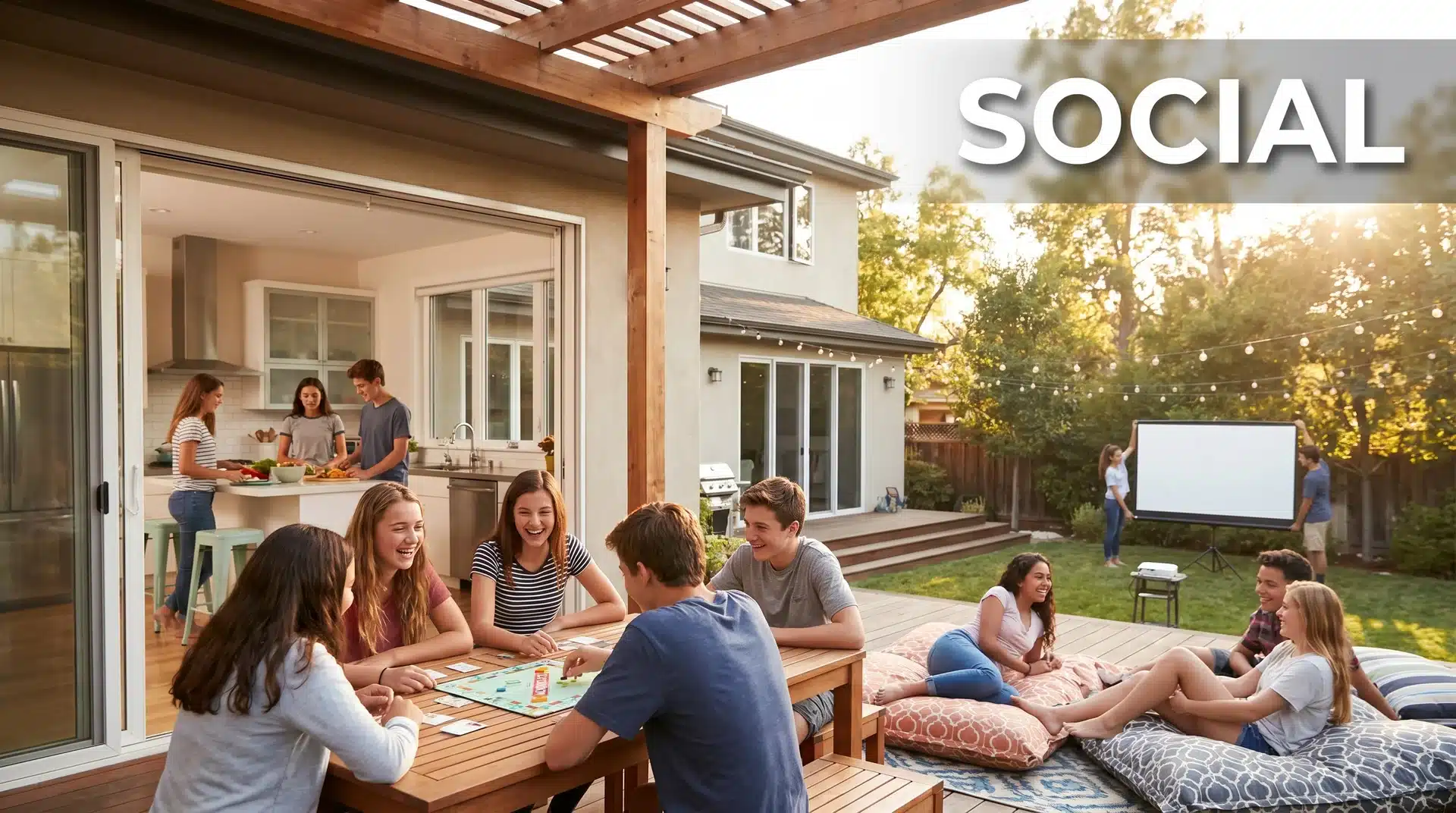
Teens naturally thrive with people they like around them. These 15 social activities for teens work for two friends or a full group and can happen at home with zero planning time. Most need only a few items already in the house.
33. Host a game night: Board games like Catan, Exploding Kittens, or Codenames work for any group size. Rotate game choices across nights and keep a running scoreboard.
34. Run a bake-off competition: Everyone bakes the same thing, brownies, cookies, or cupcakes, then rates each other’s results on taste, look, and creativity. Set a one-hour timer and go.
35. Have a backyard movie night: A white sheet as a screen, a projector or laptop outdoors, blankets, string lights, and popcorn. Free to set up at home.
36. Create a DIY escape room: One person designs the puzzles and clues. Everyone else plays through them. Household items like locks, envelopes, and coded notes are all that’s needed.
37. Do a lip sync battle: Two teams each pick a song, rehearse a performance, and perform for judges. Best lip sync wins. Simple, funny, and completely free.
38. Hold an indoor scavenger hunt: Write clues that lead from room to room. The last clue leads to a small prize. Works best with three to eight people.
39. Plan a spa day at home: Set up face masks, nail polish, foot soaks, and soft lighting. Teens take turns with shoulder or foot massages. Add a playlist and snacks to complete it.
40. Cook a new recipe together: Pick a recipe none of them have tried before. Assign jobs: prep, cook, plate, clean. Group cooking is faster, messier, and far more fun than going solo.
41. Have a talent show in the backyard: Singing, stand-up, a skit, a magic trick, a dance, anything goes. String lights and a makeshift stage area make it feel surprisingly official.
42. Start a book club with friends: Everyone reads the same book and meets once to talk about it. Keep it casual. Bring snacks and let the conversation go wherever it goes.
43. Challenge each other to choreography: Pick a popular audio, learn the moves together, and film each other. No editing needed. Competitive, physical, and usually ends in laughter.
44. Play capture the flag or flashlight tag after dark: Both games need only a backyard or open park space. Flashlight tag after dark is a favorite for this age group and needs no gear beyond flashlights.
45. Have a photo shoot challenge: Teens pick a theme, gather props, and take turns being photographer and subject. Free editing apps like Snapseed or VSCO add another layer of fun.
46. Host a trivia night: Use a free trivia app or write questions from scratch. Split into teams and track scores. Rotate categories: pop culture, sports, science, history, and current events.
47. Do a clothes swap: Everyone brings clothes they no longer wear. Items go on a shared table, and teens swap freely. Anything unclaimed goes to donation. No money, just trading.
Life Skills and Productive Activities for Teens
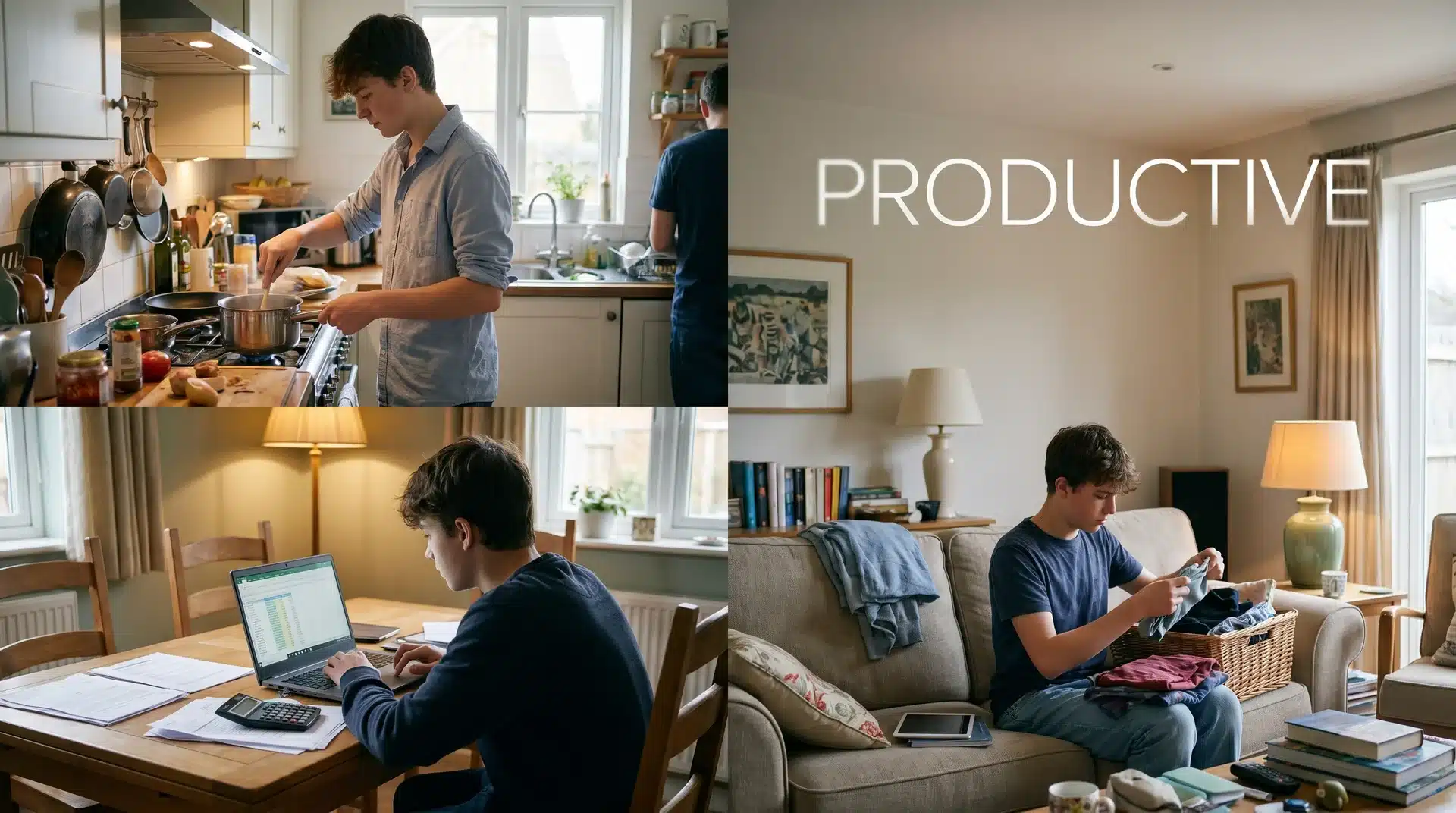
Some of the best activities for teens also prepare them for real life. These 15 options teach real, usable skills. Most feel more like interesting projects than chores, and teens tend to get more out of them than they expect.
48. Learn basic cooking and meal prep: Teens pick three to five meals they like and learn to make them from scratch. Start simple: scrambled eggs, pasta, grilled chicken. Cooking confidence builds fast.
49. Start a simple budget: Teens set up a basic budget using a notebook or a free app like EveryDollar. Track income and spending for one month. A skill most adults wish they had learned earlier.
50. Learn to do laundry properly: Most teens do not know which fabrics shrink, what cold versus hot water does, or how to read a care label. Teaching this once prevents many future problems.
51. Fix something around the house: Changing a lightbulb, patching a wall, or tightening a loose screw are all beginner-level repairs. Parents can walk teens through one fix at a time.
52. Grow an herb garden indoors: Basil, mint, parsley, and rosemary all grow well in small pots on a windowsill. Teens plant seeds, water them, and watch something grow. It also trims the grocery bill.
53. Take a first aid and CPR class: The American Red Cross offers teen-friendly certification courses at local chapters. A real skill that builds confidence and could save a life.
54. Learn a new language with a free app: Duolingo is free and works in short daily sessions. Teens commit to 10 to 15 minutes a day. Even beginner Spanish or French builds vocabulary that helps in school.
55. Write and send a real letter: Teens pick someone they care about, a relative, a friend who moved, a grandparent, and write them an actual letter by hand. Mailing it is the whole point.
56. Research a career they’re interested in: Teens spend an hour on the Bureau of Labor Statistics Occupational Outlook Handbook looking up what education, salary, and day-to-day work a career they like actually involves.
57. Organize a closet or bedroom: Sorting, donating, and setting up a system for staying tidy is a real-life skill. Teens decide what to keep, sell, and give away. One clean space creates calm.
58. Learn to type faster: Free tools like Keybr run timed tests and drills. Going from 40 to 70 words per minute has direct value for schoolwork and future jobs.
59. Build a basic resume: Teens list school activities, volunteer work, and any jobs or projects they have done. Google Docs has free templates. Having a draft ready at 14 or 15 is a real head start.
60. Practice public speaking at home: Teens pick a topic they know well and give a three-minute talk to a parent or sibling. Recording it and watching it back builds confidence faster than any other method.
61. Learn basic car maintenance: For teens 16 and up: how to check tire pressure, check oil, and fill the windshield wiper fluid. Parents walk through this during any routine car day.
62. Start a small money-making project: Mowing lawns, walking dogs, selling handmade items, or reselling thrifted finds are all real options. Even earning $20 from something self-started builds a sense of ownership.
Indoor Solo Activities for Teens on Quiet Days

Not every activity needs a group or the outdoors. Teens need solo time too, and having a solid list of indoor activities for teens on hand means quiet days do not default to hours of scrolling. These 15 options work for rainy afternoons, low-energy days, and deliberate alone time.
63. Read a book outside their usual genre: If a teen always reads fantasy, suggest true crime, a sports biography, or narrative nonfiction. Reading outside comfort zones builds vocabulary and opens new interests.
64. Keep a personal journal: No rules, no audience. Teens write whatever they feel: frustration, goals, random thoughts. Journaling reduces stress and helps process the intensity of the teenage years.
65. Learn to play a chord on guitar or ukulele: A beginner ukulele costs under $30. Teens learn three chords using free YouTube tutorials and can play full songs within a few weeks. The most beginner-friendly instrument available.
66. Solve a 1,000-piece puzzle: Puzzles slow the brain down in a healthy way. A 1,000-piece puzzle takes multiple sessions to finish, giving teens a satisfying long-form project to return to over several days.
67. Watch a documentary series: Documentaries on history, true crime, science, sports, and nature are available on Netflix, YouTube, and Prime. They do not feel like learning, but they are.
68. Draw or illustrate a comic strip: Teens create their own characters, write simple dialogue, and sketch out panels. A six-panel comic strip is a complete short story. No art training needed.
69. Try advanced origami: After basics, teens can move to modular origami where dozens of individual pieces connect into one 3D shape. A meditative solo project that can take several focused hours.
70. Take a free online photography course: Free beginner courses are available on YouTube and Coursera. Teens learn the basics of composition, lighting, and editing. A smartphone is enough to start.
71. Build and curate a personal playlist: Teens go through their full music library and build separate playlists by mood, memory, or genre. A personal creative project that connects them to music they already love.
72. Learn chess: Chess.com has free beginner lessons and daily puzzles. Teens start with basic openings, learn a few tactical patterns, and begin short games. Strategy games sharpen focus and planning.
73. Start a 30-day personal challenge: Teens pick one small thing to do every day for 30 days: 10 push-ups, one drawing, 10 minutes of reading. Tracking progress builds follow-through habits.
74. Research a topic they are genuinely curious about: No format, no purpose beyond interest. Teens spend an hour reading about whatever genuinely fascinates them. Curiosity-led learning sticks longer than assigned material.
75. Try meditation or breathing exercises: The free Insight Timer app offers teen-friendly guided meditations. Even five minutes of quiet breathing at night can improve sleep quality and reduce daily stress.
76. Write a short story or poem: A writing prompt found free on sites like Reedsy gives teens 30 minutes of no-pressure writing. Many teens who claim to hate writing find they enjoy it when no grade is attached.
77. Create a digital mood board: Using free tools like Canva, teens collect images, fonts, color palettes, and quotes that reflect their personality or goals. Low effort, oddly satisfying, and completely personal.
Community and Volunteering Activities for Teens
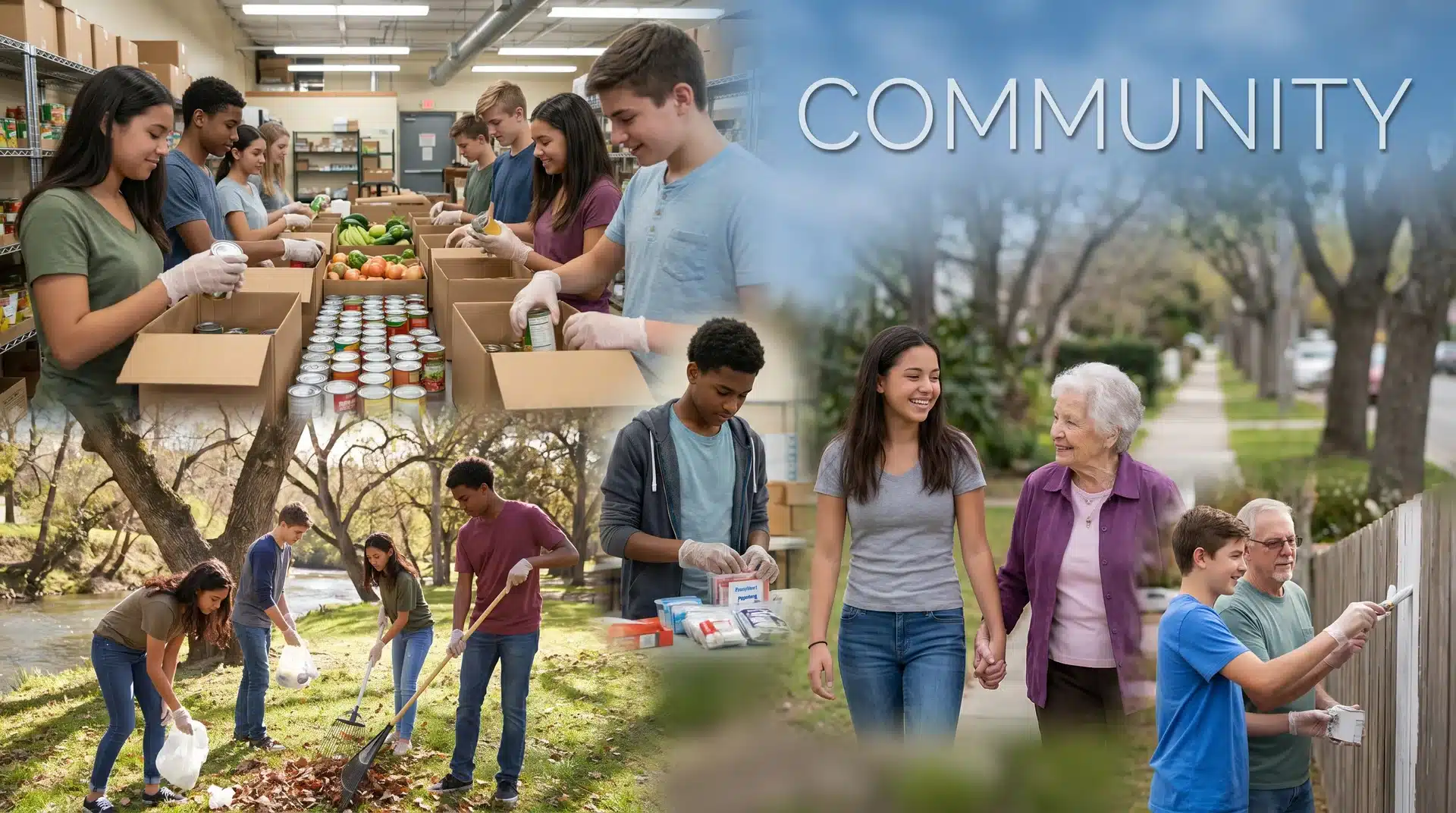
These 14 community-based activities for teens go beyond fun. They build character, connect teens to something outside themselves, and strengthen college applications. Most cost nothing to start and are open to teens 13 and up with no prior experience required.
78. Volunteer at a local animal shelter: Most shelters welcome teen volunteers to walk dogs, socialize cats, or help at adoption events. Teens contact the shelter directly. A short orientation is usually all that’s required.
79. Help at a community food bank: Food banks run regular weekend shifts for teens. Tasks include sorting donations, packing boxes, and helping distribute food. Feeding America has a location finder to find a local food bank.
80. Clean up a local park or trail: Teens organize a simple cleanup with friends. Most parks supply gloves and bags through their recreation department. No formal registration is needed for small informal groups.
81. Start or join a neighborhood beautification project: Planting flowers, repainting a mural, or building a Little Free Library are all teen-accessible projects. Local neighborhood associations often support these with small budgets.
82. Tutor a younger student: Teens who do well in math, reading, or science can offer free tutoring to younger students nearby or through a school program. Teaching something cements your own understanding of it.
83. Fundraise for a cause they care about: A bake sale, a car wash, or a simple online fundraiser through a platform like GoFundMe can support a cause teens feel strongly about. Teens handle the planning and promotion themselves.
84. Visit or assist at a senior center: Many senior centers welcome teen visitors for conversation, board game sessions, or help with technology. Meaningful for both the teens and the residents.
85. Participate in a community garden: Teens join a local community garden plot, help grow food, and learn basic horticulture. Many community gardens assign plots for free or low cost through city programs.
86. Collect and donate unused items: Teens sort through books, clothes, or toys they no longer need. Donating to local shelters, thrift stores, or Little Free Libraries is a simple, concrete act of giving.
87. Write cards for hospitalized kids: Cards for Hospitalized Kids is a national nonprofit that accepts hand-drawn cards from teens. Teens create them at home and mail them in batches. No fee, no registration.
88. Join a park or beach cleanup event: Ocean Conservancy posts cleanup events nationally. Teens sign up online, show up, and leave with a real sense of having done something that mattered.
89. Help an elderly neighbor with yard work or errands: Mowing a lawn, carrying groceries, raking leaves, or shoveling snow for an elderly neighbor is a concrete act of community care. No organization needed.
90. Join or start a community sports league: City recreation departments run free and low-cost teen leagues for soccer, basketball, volleyball, and more. Teens sign up or organize pickup games that become regular fixtures.
91. Create a social media post or campaign for a cause: Teens design a simple post or short video about an issue they care about. It builds research, communication, and design skills while contributing to something real.
How to Get Your Teen to Actually Try These Activities
The biggest reason teens reject activity suggestions is how they’re presented. Walking up to a teen with a list and saying “pick something” rarely works.
A better approach is to mention one specific idea casually, something low-pressure, or suggest simple places for teens to hang out, and offer to do the first step together.
Most resistance drops when teens aren’t expected to commit to the whole thing upfront. Let the activity reveal itself over a few minutes rather than pitching it as a full plan. If it doesn’t click, try something else the next day without making it a discussion.
The teens who end up loving new activities almost always got there because the first version felt optional rather than assigned.
Conclusion
Activities for teens do not need to be expensive, elaborate, or carefully planned beforehand. The ideas in this post cover every setting, every budget, and every personality type.
Some will stick, some will not, and that is completely fine. The goal is to give teens a real starting point so boredom does not automatically mean a screen. Pick one idea from any category, try it once, and see what happens.
You might be surprised by how quickly a teen gets into something new when the very first step feels low-pressure. Revisit this list whenever the next boredom drought hits.