

You know you have academic strengths. But when someone asks you to name them, your mind goes blank. That moment happens to almost every student at some point.
It happens in college applications, IEP meetings, scholarship forms, and job interviews. Academic strengths are the specific skills, habits, and traits that help a student succeed in a learning environment.
They cover both hard skills, like math and reading, and soft skills, like focus and communication.
This post gives you ready-to-use examples of academic strengths, organized by student type, plus examples of academic weaknesses, each explained clearly, honestly, and with practical framing.
What Are Academic Strengths?
Academic strengths are the skills and personal traits that help a student learn, perform, and grow in a school setting. They are not limited to high grades. A student can have strong time-management skills, sharp critical thinking, or excellent listening skills and still be described as academically strong.
Academic strengths can also be viewed through a child’s strengths in everyday learning situations, such as how they solve problems, communicate, or stay focused in class.
There are two types to know:
- Subject-based strengths: skills tied to specific subjects, like reading comprehension or math problem-solving
- Learning-trait strengths: personal habits and mindsets, like persistence, curiosity, or self-discipline
Both types matter in applications, IEPs, and interviews. Knowing which category your strength falls into helps you describe it more clearly and back it up with a real example.
Academic Strengths Examples for Different Types of Students
Below are 60 examples of academic strengths, split across six student categories. Each strength includes a short description so you can use it or adapt it for your specific situation. Numbering runs 1 through 60 across all six sections.
Academic Strengths for Kindergarten Students

Young learners show their academic strengths through behavior, curiosity, and early skill development. These examples work well for kindergarten applications, parent-teacher discussions, and school readiness assessments.
- Curiosity: Asks questions freely and shows genuine interest in how things work and why.
- Listening: Pays close attention when the teacher gives directions and rarely needs reminders to refocus.
- Sharing: Takes turns with materials and classmates without conflict or resistance.
- Following routines: Adapts quickly to classroom schedules and transitions between activities smoothly.
- Letter recognition: Identifies letters of the alphabet and confidently connects them to their sounds.
- Number sense: Understands basic counting, compares quantities, and recognizes simple number patterns.
- Creativity: Uses drawing, storytelling, and play to express original ideas in multiple ways.
- Focus: Stays on task during short activities without needing constant reminders or redirection.
- Enthusiasm for learning: Shows visible excitement about new topics, books, and classroom activities each day.
- Kindness: Treats classmates and teachers with consistent respect, care, and consideration.
Academic Strengths for Kids (Elementary School, Grades 1–5)

Elementary-age students develop a wider range of skills as they move through structured subjects. These examples fit well in report card comments, parent conferences, and school transfer applications for grades one through five.
- Reading comprehension: Understands stories at grade level and retells key events with strong, accurate detail.
- Math problem-solving: Works through multi-step math problems using a clear and logical approach.
- Writing clarity: Expresses ideas in complete sentences with a recognizable beginning, middle, and end.
- Persistence: Keeps trying when a task gets difficult instead of giving up or asking for the answer.
- Organizational skills: Keeps their desk, folders, and assignments neat and ready for use each day.
- Verbal communication: Explains ideas clearly and confidently during class discussions and group work.
- Memory retention: Recalls information taught in previous lessons accurately and without heavy prompting.
- Peer collaboration: Works well with others in group activities and respects the input of classmates.
- Science observation: Notices specific details during hands-on activities and asks thoughtful follow-up questions.
- Self-discipline: Completes homework and independent tasks without being reminded by a parent or teacher.
Academic Strengths for Students (Middle School and High School)
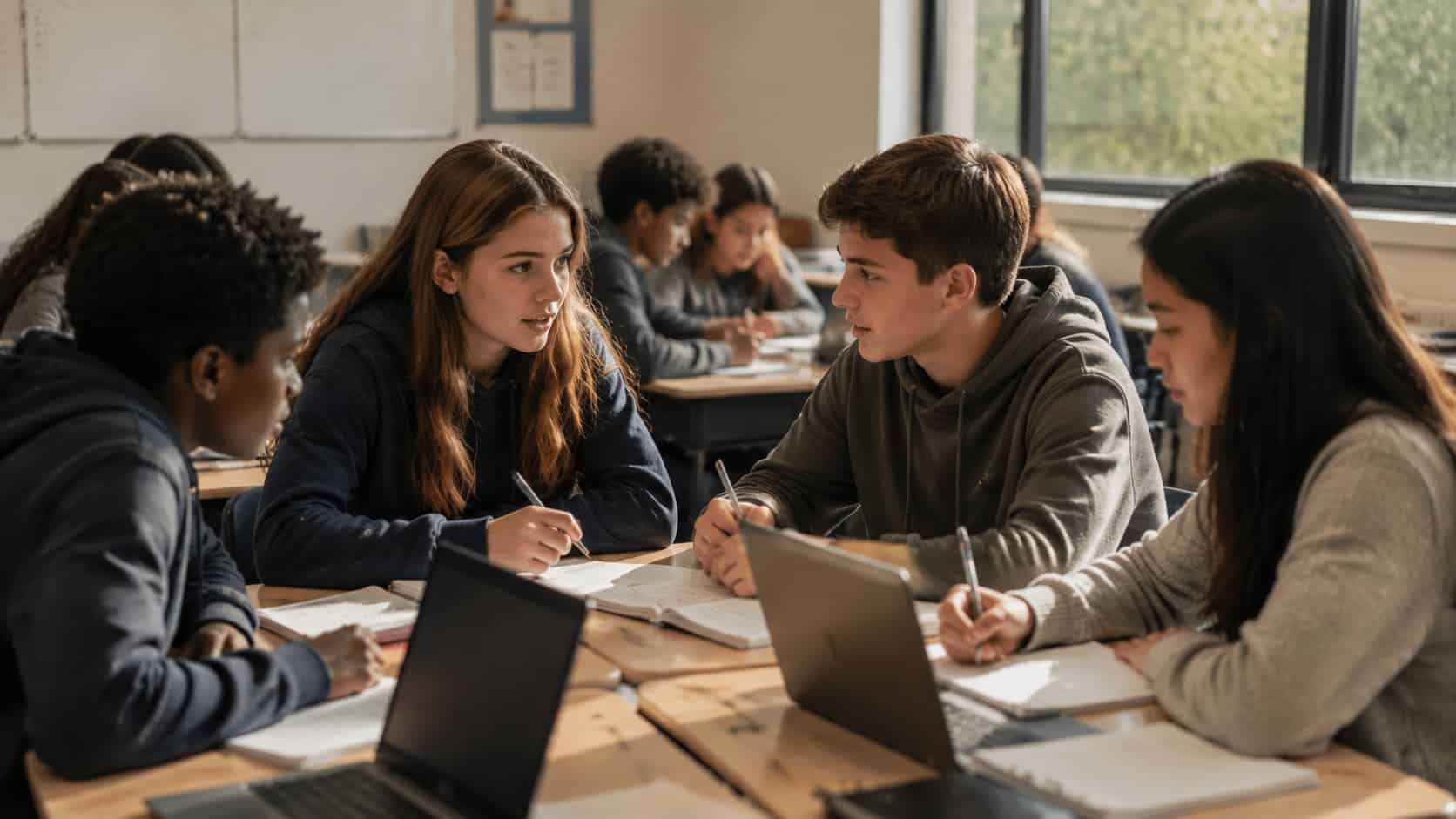
Older students need to name their academic strengths for scholarship essays, teacher recommendations, and college application personal statements. These examples reflect the skills admissions officers and scholarship committees most look for.
- Critical thinking: Analyzes evidence carefully and draws conclusions based on facts rather than assumptions.
- Time management: Juggles multiple deadlines across subjects without letting tasks pile up at the last minute.
- Research skills: Locates reliable, credible sources and uses them to build original, well-supported arguments.
- Academic writing: Produces clear, structured essays with strong thesis statements and logical supporting points.
- Self-motivation: Sets personal goals and works toward them consistently without waiting for outside pressure.
- Adaptability: Adjusts quickly when a teacher changes the format, pace, or expectations of an assignment.
- Leadership: Organizes group projects effectively by dividing tasks fairly and keeping the team on track.
- Analytical thinking: Breaks down complex problems into smaller parts and works through each one logically.
- Growth mindset: Treats feedback and setbacks as useful information rather than personal failure. According to Carol Dweck’s research at Stanford University, students with a growth mindset consistently outperform those with a fixed mindset over time.
- Debate and argument: Builds a clear, well-reasoned case and defends it respectfully under pressure.
Academic Strengths for an IEP
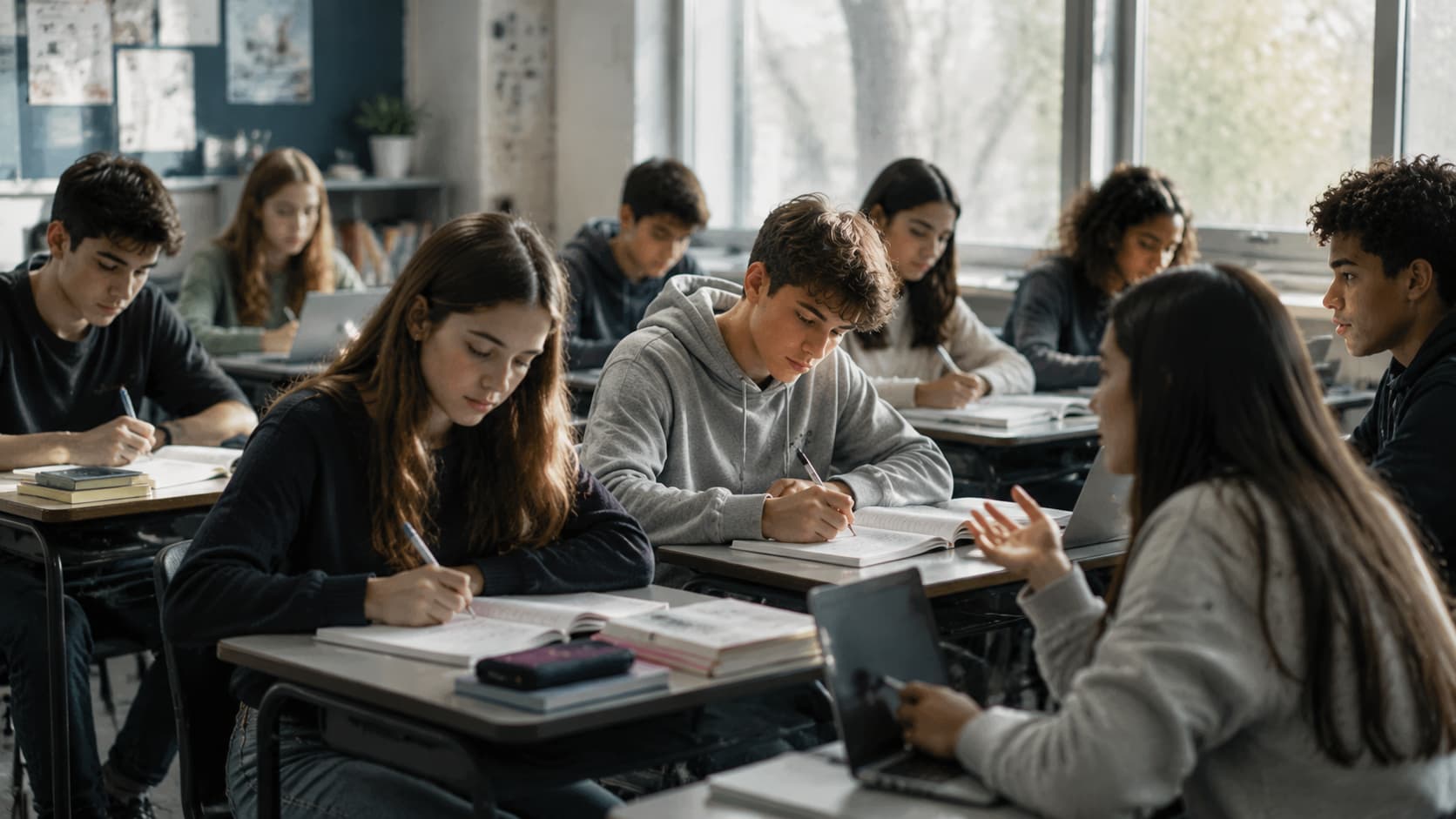
IEP teams are required to document a student’s present levels of academic and functional performance, and that section should lead with what the student does well. These strength examples use observable, behavior-based language that fits the present level of performance section of an Individualized Education Program (IEP), as defined under the Individuals with Disabilities Education Act (IDEA).
- Visual learning: Retains and applies information most effectively when it is presented using pictures, charts, or diagrams.
- Verbal storytelling communicates ideas clearly through speech, even when written expression is a significant challenge.
- Hands-on learning: Performs at a higher level during activities that involve building, creating, moving, or doing.
- Empathy: Recognizes how peers and adults are feeling and responds with care and appropriate consideration.
- Memory for routines: Follows established classroom schedules and procedures consistently across the school day.
- Creative problem-solving: Finds original, workable approaches to challenges that fall outside conventional methods.
- Interest-based engagement: Shows strong, sustained effort and attention in subject areas that align with personal interests.
- Resilience: Recovers from setbacks and frustrations and returns to the task without extended disruption.
- Peer support: Naturally helps classmates work through tasks and builds positive, productive relationships in group settings.
- Task initiation: Starts assigned work promptly when given clear expectations, a defined start cue, and a specific goal.
Academic Strengths for College Students

These academic strengths work in college applications, scholarship essays, and personal statements. They help admissions officers and review committees understand how you think, how you learn, and what kind of student you will be on their campus.
- Independent learning: Pursues knowledge beyond the required coursework out of genuine interest in the subject.
- Open-mindedness: Considers perspectives that challenge existing beliefs without becoming defensive or dismissive.
- Collaboration: Contributes meaningfully to group work and actively values diverse viewpoints and input.
- Research and synthesis: Locates credible academic sources and builds original arguments from multiple pieces of evidence.
- Academic integrity: Consistently produces honest, original work and takes full responsibility for academic output.
- Written communication: Writes with clarity, logical structure, and a tone appropriate to the academic context.
- Intellectual curiosity: Pursues questions and topics out of genuine interest, not only to earn a grade.
- Discipline: Maintains consistent study habits and output even during high-pressure or personally difficult periods.
- Feedback receptiveness: Uses instructor comments, peer reviews, and evaluation rubrics to meaningfully improve future work.
- Cross-subject thinking connects concepts across different disciplines to analyze problems from multiple angles.
Academic Strengths for a Resume or Interview

Recent graduates and students with limited work experience can use academic strengths to describe their capabilities on a resume or in a job interview.
The key is to connect each strength to a real academic situation that shows results. According to the career resource platform Indeed, showcasing these strengths alongside extracurricular achievements significantly strengthens any application.
- Analytical skills: Breaks down complex information, identifies patterns, and draws clear, data-supported conclusions.
- Written communication: Produces organized, accurate written work under deadlines and in a variety of formats.
- Public speaking: Presents ideas to groups with confidence, clarity, and strong preparation.
- Problem-solving: Identifies root causes of issues and proposes practical, tested solutions in real time.
- Attention to detail: Reviews work carefully to catch errors and inconsistencies before submission or delivery.
- Project management: Plans, tracks, and delivers multi-step assignments on time within a defined set of requirements.
- Technical aptitude: Learns new software, platforms, and digital tools quickly with minimal formal instruction.
- Teamwork: Collaborates across different working styles and personalities to reach a shared goal on schedule.
- Commitment: Follows through on responsibilities consistently, even when the work becomes tedious or difficult.
- Initiative: Takes on tasks and responsibilities independently without waiting to be directed or assigned.
Academic Weaknesses Examples
Every student has areas where learning is harder. Naming your academic weaknesses honestly, particularly in interviews and college applications, shows self-awareness. The most effective way to share a weakness is to name it, describe its impact briefly, and then explain what you are doing to address it.
Here are 10 honest examples of academic weaknesses with clear, direct explanations.
- Procrastination: Many students delay starting large or unstructured assignments until pressure builds. This often leads to rushed work and missed details. Addressing it through scheduled work blocks and smaller daily goals helps significantly.
- Test anxiety: Some students perform below their actual ability during timed exams because of stress rather than lack of knowledge. Practicing with timed mock tests and learning basic relaxation techniques before exams can reduce the gap between preparation and performance.
- Public speaking nerves: Presenting to large groups is a genuine difficulty for many students. Joining a speech or debate club, or simply practicing presentations more often in lower-stakes settings, builds this skill over time.
- Time management under pressure: Underestimating how long tasks take is one of the most common academic weaknesses. Using a planner, breaking projects into smaller tasks with separate deadlines, and building in buffer time all make a measurable difference.
Conclusion
Academic strengths are not just for college applications or IEP forms. They shape how you learn every day, how teachers support you, and how employers see your potential.
Knowing your academic strengths by name and being able to describe one with a real example puts you ahead of most applicants.
The examples here are a starting point. Read through each category that fits you and pick two or three that feel true to how you actually learn.
Then connect each one to a real moment when it helped you succeed. That combination is what makes any application stand out.