A painful bump near your big toe or a smaller toe that curls downward can make everyday activities uncomfortable. Walking, standing, and even finding shoes that fit can become frustrating.
People often confuse bunions and hammertoes because both change the look of your toes and cause similar problems with footwear. They are not in the same condition.
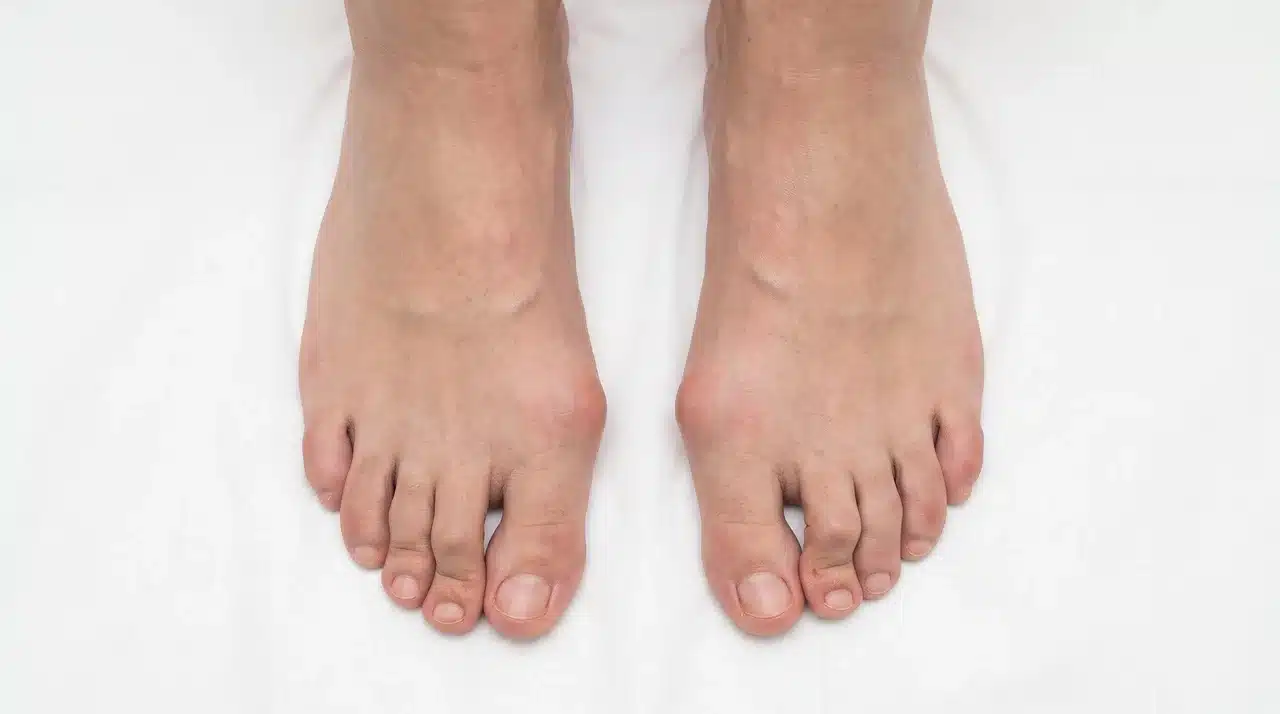
A bunion affects the big toe joint, causing it to shift toward the second toe and creating a bump on the side of the foot. A hammertoe affects one or more smaller toes, causing them to bend downward at one or more joints.
These conditions often appear together. Changes in one area of the foot increase pressure on another, and one deformity can trigger the other.
This post explains the difference between bunions and hammertoes, why they develop, how to spot them early, and which treatments are most effective at each stage.
Medical Disclaimer: This article provides general educational information only. It does not replace a diagnosis or treatment plan from a licensed podiatrist or foot specialist. If you have foot pain or a visible deformity, see a qualified healthcare provider.
What is a Bunion?
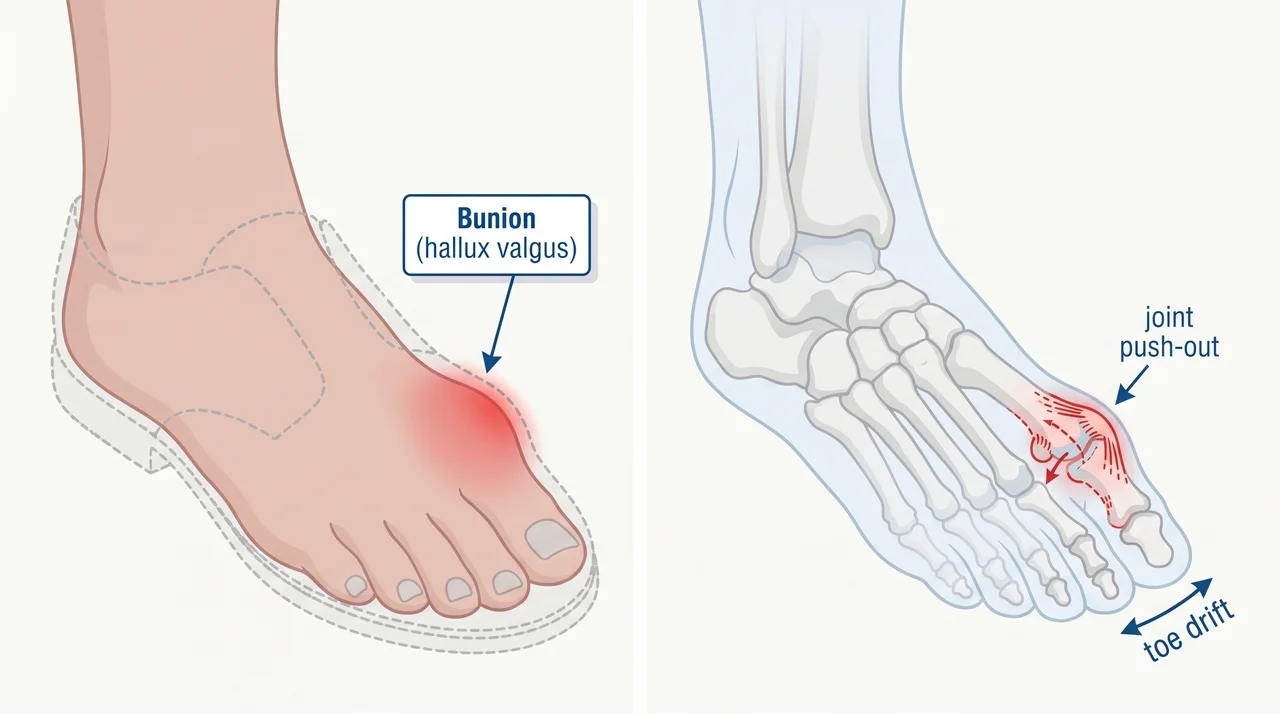
A bunion, medically known as hallux valgus, is a structural deformity that affects the joint at the base of the big toe. Instead of pointing straight ahead, the big toe gradually angles toward the second toe.
As the joint shifts, the first metatarsal bone moves outward, creating the noticeable bump on the inside edge of the foot.
Over time, the area may become swollen, red, stiff, and painful. This gets worse when shoes press against the joint.
In some cases, a similar condition called a bunionette (or tailor’s bunion) can develop on the outside of the foot at the base of the pinky toe. It follows the same mechanism but affects the fifth metatarsal joint instead.
Common Signs of a Bunion
- A visible bump near the base of the big toe
- Big toe leaning toward the second toe
- Redness or swelling around the joint
- Thickened skin or calluses at the pressure point
- Difficulty fitting into regular shoes
- Reduced movement in the big toe over time
Are Bunions and Hammertoes the Same Thing?
No. Bunions and hammertoes are different foot deformities that affect different parts of the foot.
A bunion develops at the base of the big toe, where the joint becomes misaligned and pushes outward. A hammertoe develops in the smaller toes, causing one or more toes to bend downward at the middle joint.
While they are separate problems, they often appear on the same foot. A bunion changes how weight moves through the foot and increases pressure on nearby toes.
Bunion vs Hammer Toe: Key Differences
| Feature | Bunion | Hammertoe |
|---|---|---|
| Area affected | Big toe joint | Smaller toe joints |
| Medical name | Hallux valgus | Digital deformity |
| Visible sign | Bony bump on the inside of the foot | Toe bent or curled downward |
| Main cause | Bone misalignment, genetics, joint instability | Muscle and tendon imbalance, tight footwear |
| Pain location | Big toe joint and side of foot | Top, tip, or bottom of the affected toe |
| Progression | Often slow, over several years | Can worsen faster under repeated pressure |
| Treatment focus | Reduce joint pressure and improve alignment | Relieve pressure and restore toe flexibility |
What are the Symptoms to Watch Out For?
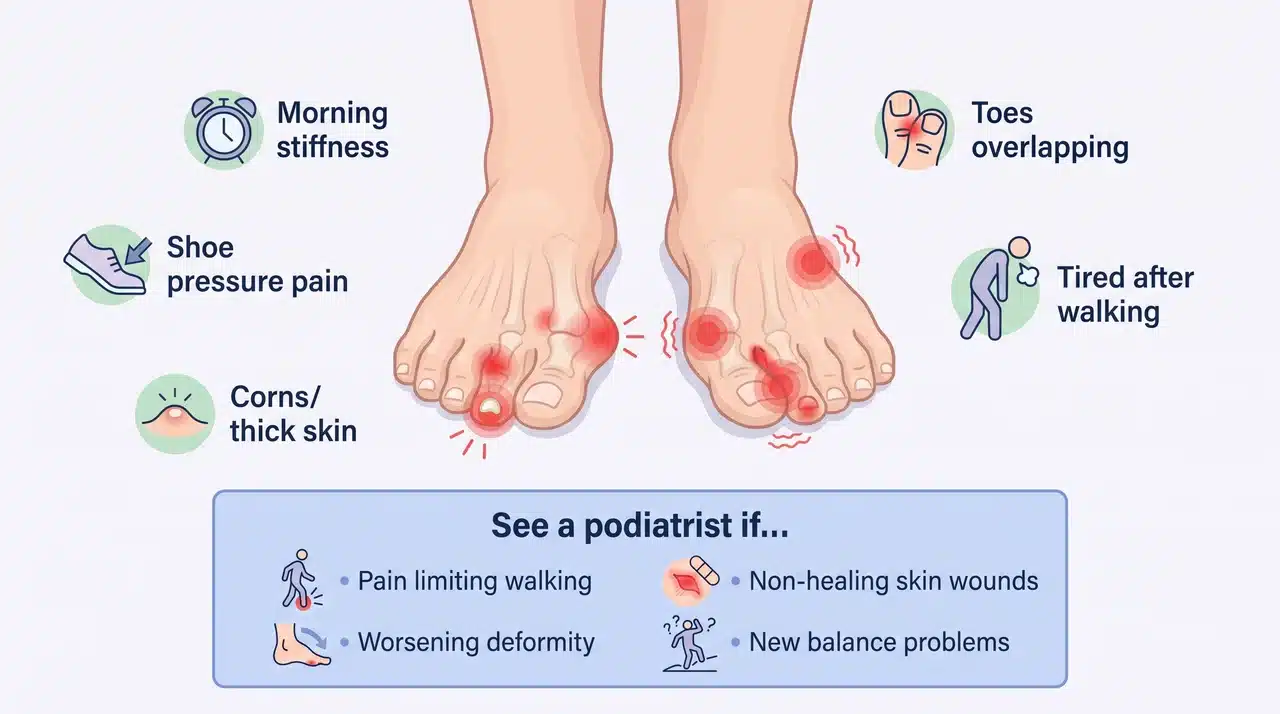
Catching foot changes early can make a real difference in how much treatment you eventually need.
Watch out for:
- Stiffness in your toes when you first wake up in the morning
- Pain that flares up from shoe pressure on a specific spot
- Corns or thickened skin forming where toes rub together
- Toes starting to overlap or cross over one another
- Tired, sore feet after walking distances that used to feel easy
You Should See A Podiatrist In Case Of:
- Pain that interferes with your normal daily walking
- A visible deformity that appears to be worsening
- Skin breakdown, corns, or ulcers that will not heal
- New balance issues while standing or walking
A podiatrist can give you a full, hands-on exam and develop a treatment plan that fits your foot, lifestyle, and goals.
What is a Hammertoe?
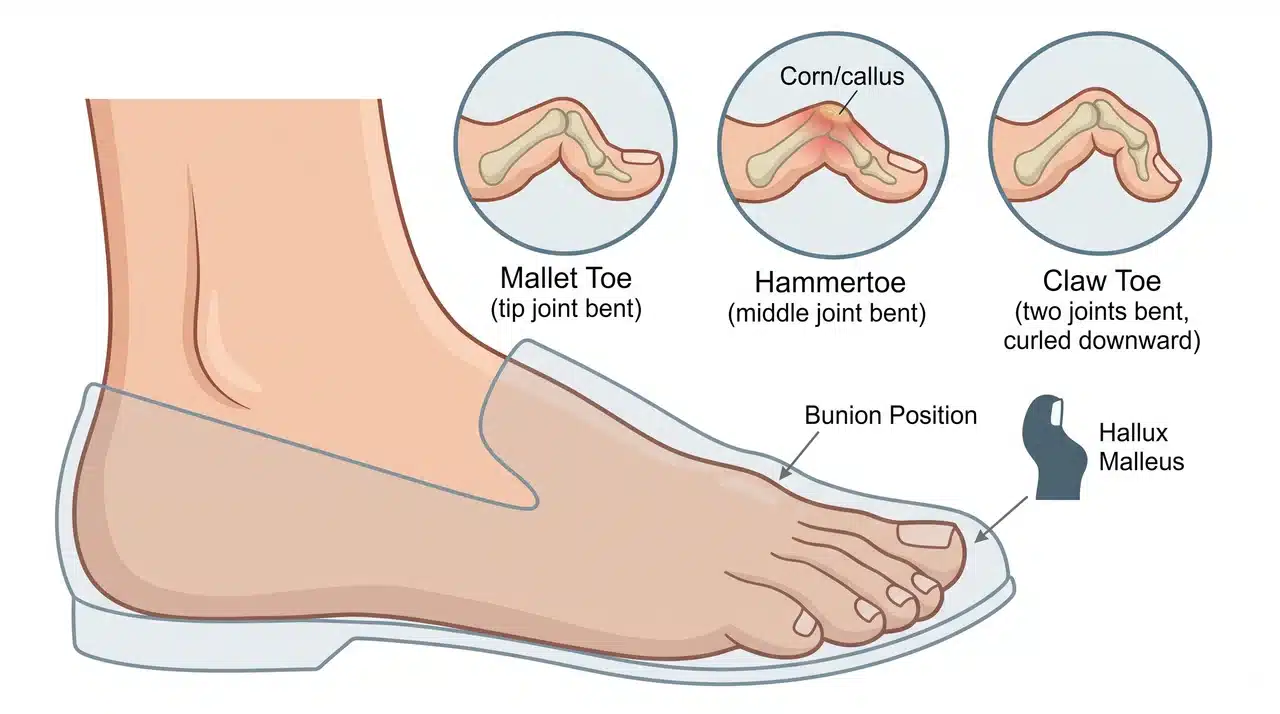
A hammertoe occurs when one of the smaller toes bends abnormally at the middle joint rather than lying flat. Over time, the toe gets stuck in this bent position. It becomes stiff and hard to straighten.
Hammertoes most commonly affect the second, third, or fourth toes. You may also come across the terms mallet toe and claw toe. A mallet toe bends near the tip of the toe rather than the middle.
A claw toe bends at two joints at once, curling the toe downward and inward. All three fall under the same family of toe deformities.
Common Signs of a Hammertoe
- The toe curls downward and stays that way
- A raised bump appears at the middle joint from shoe friction
- Corns or calluses form on top of the bent joint
- Pain when wearing closed or narrow shoes
- The toe loses flexibility and is hard to straighten
- Walking or standing for long periods becomes more tiring
Can a Bunion Cause a Hammertoe?
A bunion does not directly cause a hammertoe, but it can contribute to its development. When the big toe shifts toward the second toe, it takes up extra space and changes how pressure moves across the foot.
The smaller toes then work harder to maintain balance with each step. Over time, the tendons and muscles around those toes become uneven, pulling the toe into a curled shape.
This is why some people develop both conditions on the same foot. Treating the bunion early can slow or prevent the formation of a hammertoe.
Why Do Bunion and Hammer Toe Happen Together?
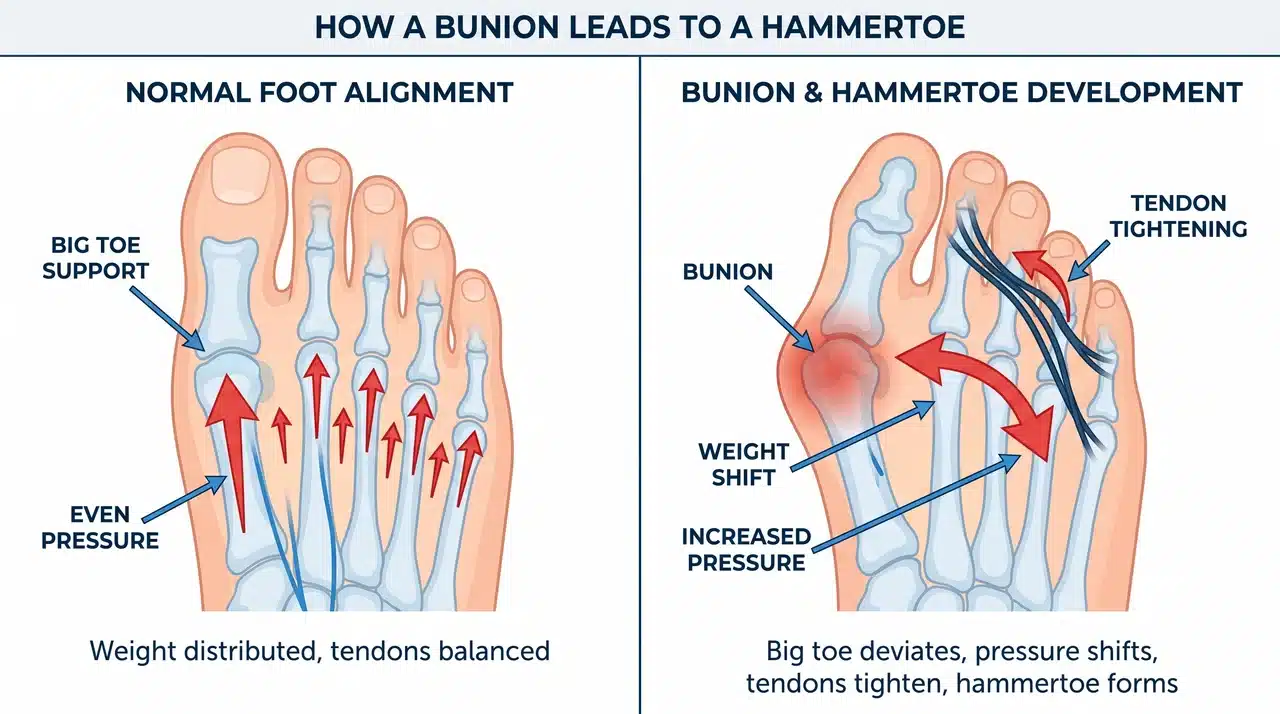
Your big toe plays an important role in walking. It helps push your body forward and supports your balance. When a bunion changes the position of the big toe, several things shift at once:
- Weight distribution changes across the forefoot
- Smaller toes absorb more pressure than they should
- Toe muscles become imbalanced over repeated steps
- Nearby joints become strained day after day
Your walking pattern shifts too. You naturally avoid the sore spot, but that shift puts extra load on other parts of the foot and can accelerate the development of a second deformity.
How Are Bunions and Hammertoes Diagnosed?
A podiatrist diagnoses both conditions through a physical exam and a review of your medical history. Here is what to expect at an appointment:
- Visual inspection: The doctor looks for deformities, swelling, redness, and skin changes around the affected toes.
- Range-of-motion test: The podiatrist gently moves your toes to assess how each joint moves and where pain occurs.
- Gait assessment: You may be asked to stand or walk with and without shoes. This shows how your foot moves under load.
- X-rays: A podiatrist often orders foot X-rays to measure the degree of misalignment and assess the underlying bone structure. X-rays confirm whether a hammertoe is flexible or rigid and how far a bunion has progressed.
An early diagnosis matters. Catching these changes before they become rigid gives you far more non-surgical options and better outcomes overall.
What Increases Your Risk Level of Developing Bunions?
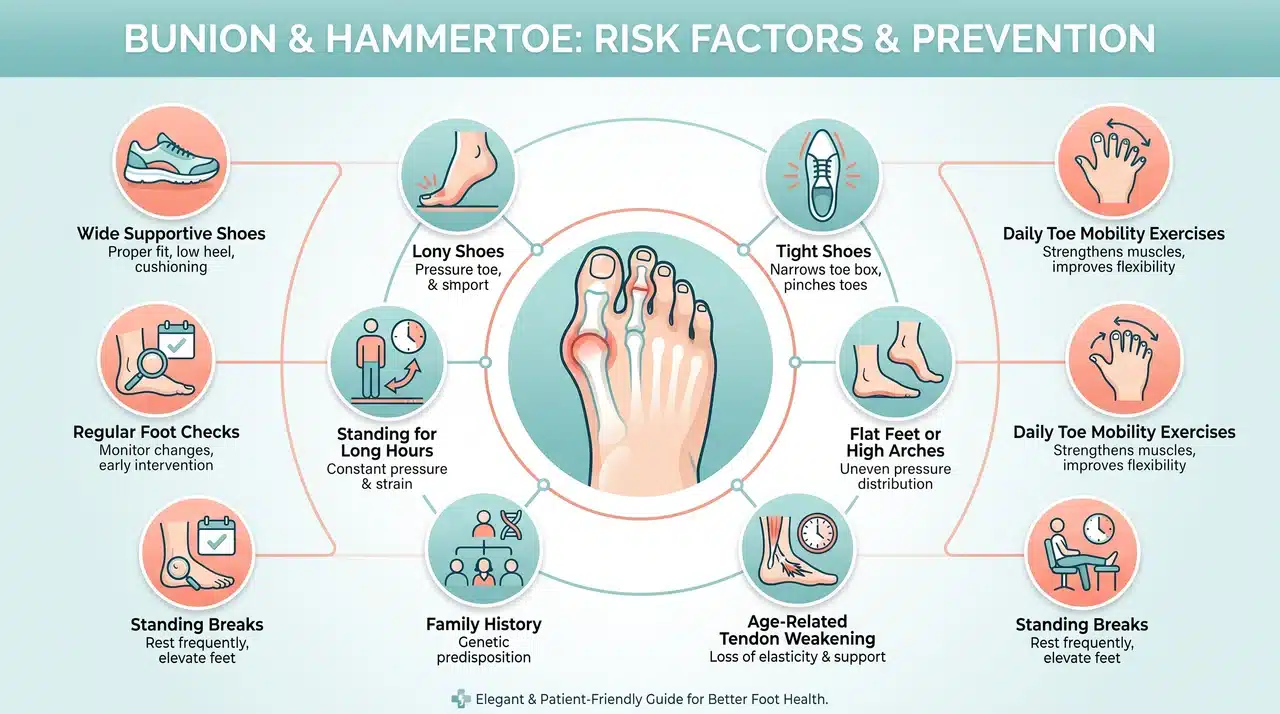
Some people are simply more likely than others to develop bunions and hammertoes. Knowing your personal risk factors can help you take steps before symptoms become severe.
- Tight shoes or high heels: These force your toes into a cramped, unnatural position for hours at a time.
- Flat feet or very high arches: Both foot types affect how weight is distributed across your foot with each step.
- Age-related tendon weakening: Tendons naturally lose some strength and flexibility as you get older.
- A family history of foot deformities: If your parents or grandparents had bunions or hammertoes, your risk increases.
- Jobs with long hours standing: Nurses, retail workers, and teachers often report more foot problems from time spent on their feet.
Can You Prevent These Conditions?
You cannot control your genes, but you can control several daily habits that affect your foot health over the long run.
Small, consistent choices add up over the years.
- Choose supportive, wide footwear early, before symptoms even start
- Do toe mobility exercises daily to keep joints flexible and strong
- Avoid standing in the same position for long stretches without breaks
- Check your feet regularly for early shape changes you might otherwise miss
Non-Surgical Treatments for Bunions and Hammertoes
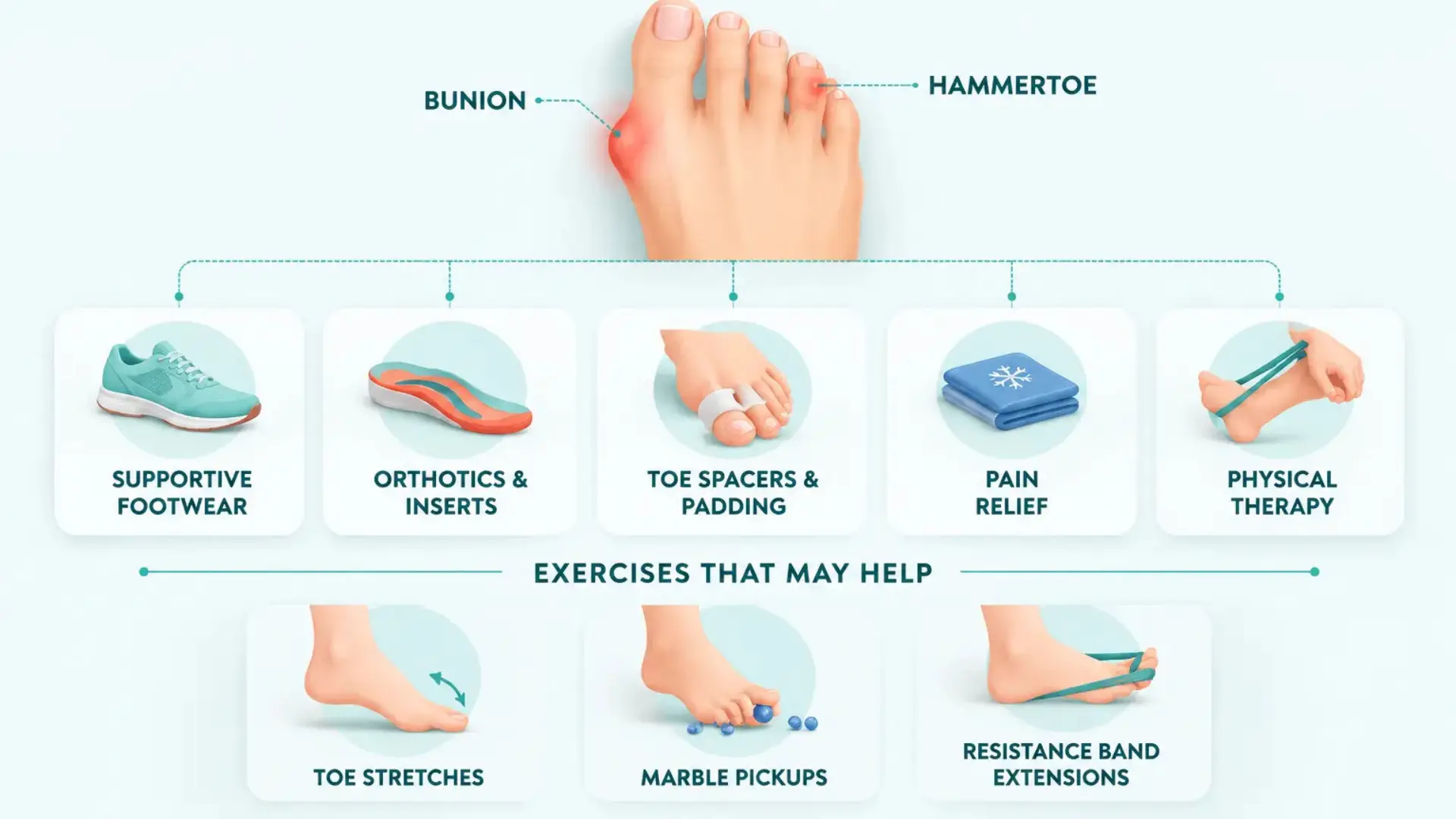
People often start with conservative care before considering surgery. These options ease pain and slow the progression of the problem.
1. Choose Supportive Footwear
Shoes with a wide toe box, low heel, and flexible material reduce pressure on painful areas. This is often the most effective first step and makes the biggest immediate difference.
2. Use Orthotics or Shoe Inserts
Custom or over-the-counter inserts help correct pressure imbalances and support foot mechanics. They do not permanently correct every deformity, but they significantly reduce daily pain.
3. Try Toe Spacers and Padding
These tools reduce friction, protect painful spots, and improve comfort inside shoes. Toe splints can hold the toe in a better position during the day or while sleeping.
4. Pain Relief
Ice and rest help manage flare-ups. Over-the-counter NSAIDs such as ibuprofen can reduce pain and inflammation during a painful episode. Always follow the dosage instructions on the packaging and check with a doctor if you take them regularly.
5. Physical Therapy
A physical therapist teaches movements that build strength around the affected joints and slow the rate of change. Starting early gives the best results.
Exercises That May Help
Exercises cannot usually reverse structural deformities. But they can improve comfort and joint mobility, especially when started at an early stage.
- Toe stretches: Gently stretch the toes daily to maintain flexibility in the joints.
- Marble pickups: Use your toes to pick up small objects off the floor. This strengthens the small muscles in the forefoot.
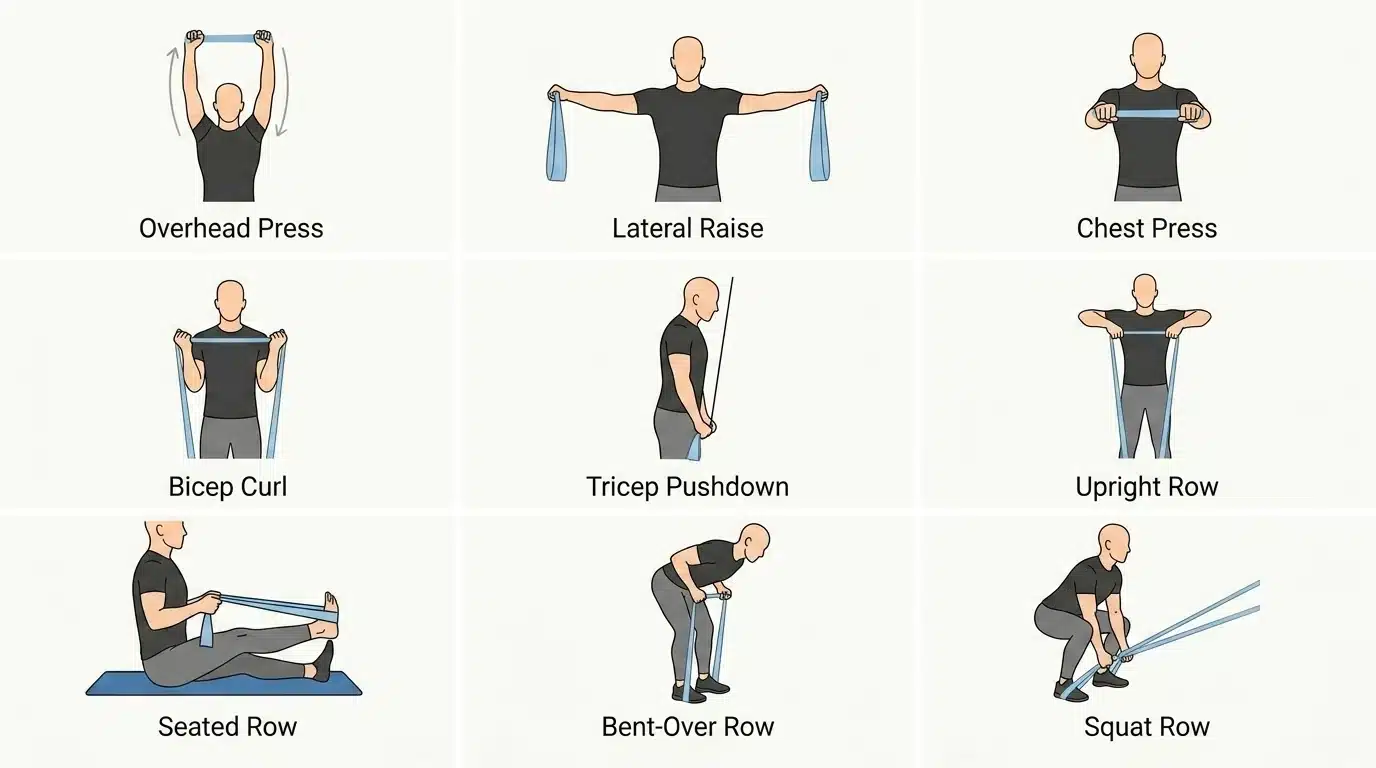
- Resistance band toe extensions: Push the toes against resistance to build strength around the joint.
Start with 1 to 2 sets of 10 to 15 repetitions once daily. Increase gradually as comfort and strength improve. Stop if any exercise causes sharp pain and speak to a foot specialist before continuing.
When Do Bunions and Hammertoes Need Surgery?
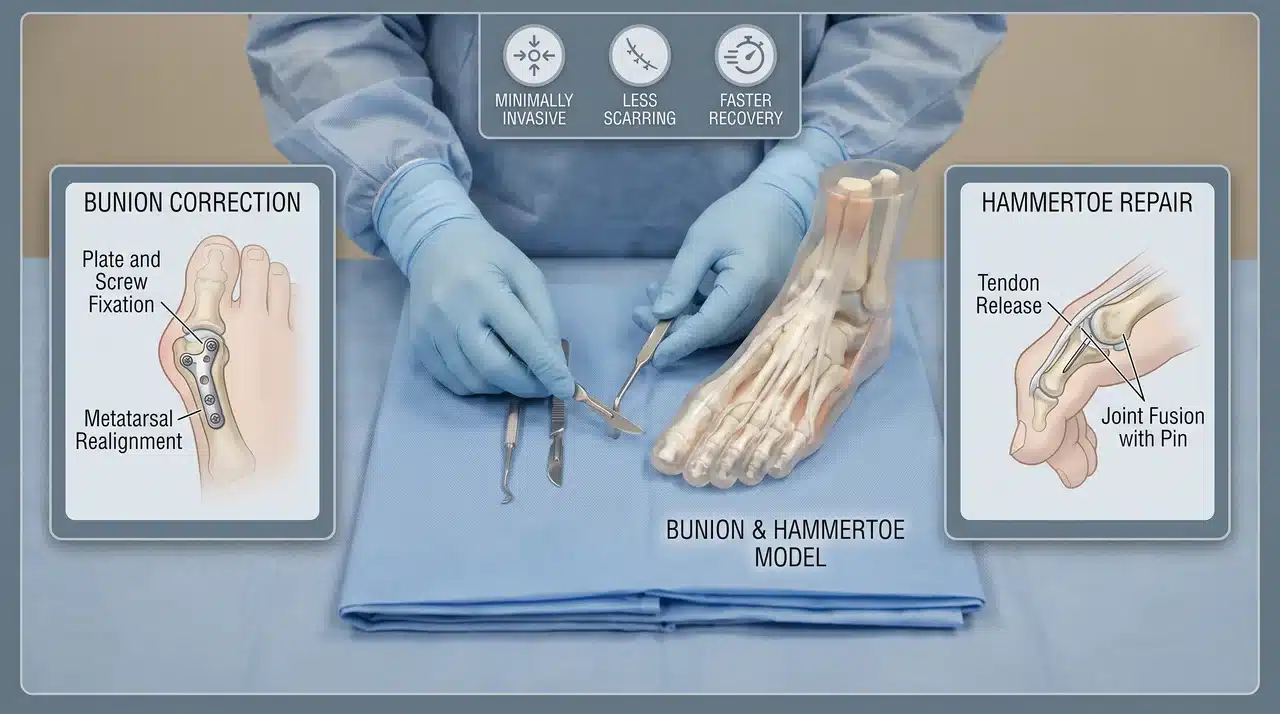
Surgery comes into the conversation only after other treatments fail to bring real relief. It is considered when:
- Pain continues despite months of conservative care
- Walking or standing becomes difficult
- Shoes are consistently uncomfortable despite changes made
- The deformity keeps getting worse
- A rigid hammertoe causes ongoing pain and skin breakdown
The goal of surgery is to restore function and reduce pain, not only to improve appearance.
Surgical Options for Bunions
- Exostectomy: Removes the enlarged bump on the side of the foot. Used for mild cases without full joint realignment.
- Osteotomy: The surgeon cuts and realigns the bone to correct the bunion deformity.
- Chevron osteotomy: A common type used for mild to moderate bunions, shifting the metatarsal into better alignment.
- Akin osteotomy: Often paired with other bone cuts to further correct the big toe’s angle.
- Lapidus procedure: Fuses the joint near the base of the first metatarsal. Used for larger or more unstable bunions.
- 3D bunion correction (Lapiplasty): A newer approach that corrects the deformity in multiple planes for more stable results.
Surgical Options for Hammertoes
Treatment depends on whether the hammertoe is still flexible or has become rigid.
- Tendon release: For flexible hammertoes, the surgeon releases the tight tendons to allow the toe to straighten.
- Joint correction: Removes part of the joint to change the angle of the bent toe.
- Toe joint fusion: Fuses the affected joint in a straight position. Used for rigid hammertoes that do not respond to other options.
If you are dealing specifically with a hammertoe and want to know which steps to take before surgery becomes necessary.
What Is Recovery Like After Surgery?
Recovery varies depending on the procedure and how your body heals. Many people experience swelling in the early weeks, temporary activity limits, and a gradual return to normal footwear. Physical therapy or guided exercises during healing can support recovery. Following your surgeon’s instructions is important for proper healing.
When Should You See a Podiatrist?
See a foot specialist if you have:
- Pain that interferes with your normal daily walking
- A visible deformity that appears to be getting worse
- Skin breakdown, corns, or ulcers that will not heal
- New balance issues when standing or walking
- Persistent difficulty finding comfortable shoes
A podiatrist will give you a thorough hands-on exam and develop a treatment plan tailored to your foot condition, lifestyle, and goals. The earlier you go, the more treatment options remain available.
Conclusion
Bunions and hammertoes are separate problems, but they are closely connected by how your foot carries weight with every step.
One condition often sets the stage for the other to develop.
The encouraging part is that early action makes a real difference.
Supportive shoes, daily foot exercises, and regular checkups can slow down both conditions and protect your comfort for years to come.
If your pain keeps growing or a deformity keeps changing shape, talk with a podiatrist sooner rather than later.
Catching these changes early gives you far more treatment options than waiting until surgery becomes your only realistic path forward.
Frequently Asked Questions
How Long Does It Take for a Bunion to Get Noticeably Worse?
Bunions usually progress slowly, often over several years, though tight shoes and repeated pressure can speed the process up considerably.
Can Children Develop Hammertoes Too?
Yes, though it happens less often in kids than in adults. Tight shoes and inherited foot shape are usually the main cause when it does occur.
Does Extra Body Weight Make Bunions and Hammertoes Worse?
Carrying extra weight puts more pressure on your feet with every step, which can accelerate the progression of both conditions over time.
What Happens if Hammertoes Are Left Untreated?
They become more rigid over time. Ongoing pain, worsening corns, and difficulty wearing shoes are the typical result.
Can Hammertoes Go Away without Treatment?
Flexible hammertoes may improve with changes in footwear and exercises. Rigid hammertoes do not correct on their own and usually need medical care.