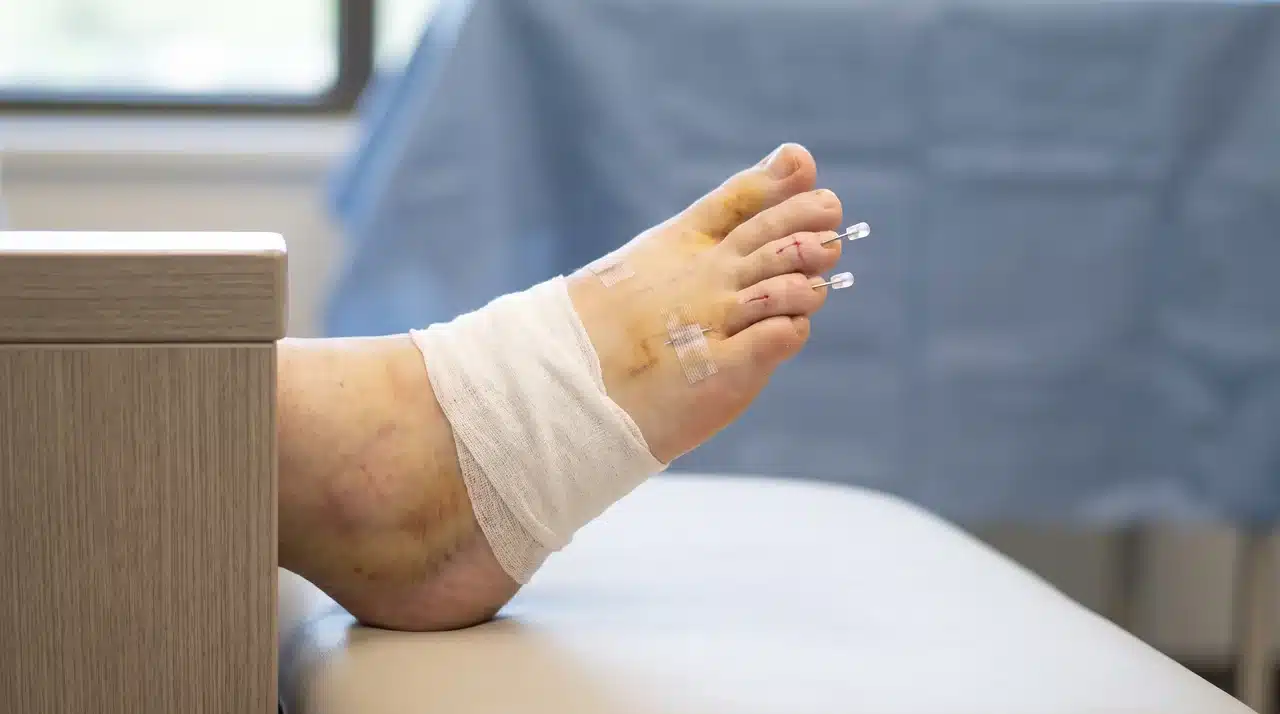
A toe that curls downward and won’t straighten can affect more than how your foot looks. It changes how you walk. It makes shoes uncomfortable. It can slowly limit activities you used to do without thinking.
This condition is called a hammertoe. Mild cases often improve with changes in footwear, exercise, or padding. But severe or rigid hammertoes may need surgical correction. Modern hammertoe surgery has improved significantly in recent years.
Newer techniques use smaller incisions, improved fixation tools, and procedures tailored to each patient’s toe rather than applying the same approach to everyone.
If you are also looking at non-surgical options first, it helps to understand how to fix a hammer toe without going under the knife before weighing surgical choices.
Medical Disclaimer: This article is for general information only. It is not medical advice. A podiatrist or foot and ankle surgeon can evaluate your specific condition and recommend the right treatment. Always consult a qualified professional before making any surgical decision.
When Do You Need Hammertoe Surgery?
Surgery is rarely the first step. Doctors usually try simpler options first, including wider shoes, toe padding, stretching exercises, and custom orthotics.
Surgery becomes a real option when those approaches stop working. You may be a candidate if you have:
- Ongoing toe joint pain that does not ease with rest or footwear changes
- A stiff toe you cannot straighten by hand
- Painful corns or calluses from constant rubbing against shoes
- Difficulty finding comfortable footwear
- Problems walking normally
- No improvement after months of non-surgical care
If the toe is still flexible, non-surgical correction may still be effective as part of a broader hammer toe treatment.
Who Should Not Get Hammertoe Surgery?
Not everyone is a surgical candidate. Your doctor will likely advise against surgery if you have:
- Poor blood circulation in the feet
- An active infection in the foot or toe
- Uncontrolled diabetes affects wound healing
- Other health conditions that increase surgical risk
When those conditions are treated or controlled, surgery may become an option again.
Flexible vs Rigid Hammertoe: Why It Matters
The condition of your toe plays a major role in which surgery your doctor recommends.
| Type | What It Means | Likely Treatment |
|---|---|---|
| Flexible hammertoe | Toe still moves, can be pressed flat | Tendon release or soft tissue correction |
| Rigid hammertoe | The toe is locked in position, and the joint has changed structurally | Bone reshaping, joint resection, or fusion |
Flexible hammertoes are easier to correct and tend to heal faster. Rigid deformities need more work because the joint itself has changed over time.
What Is the Newest Surgery for Hammer Toes?
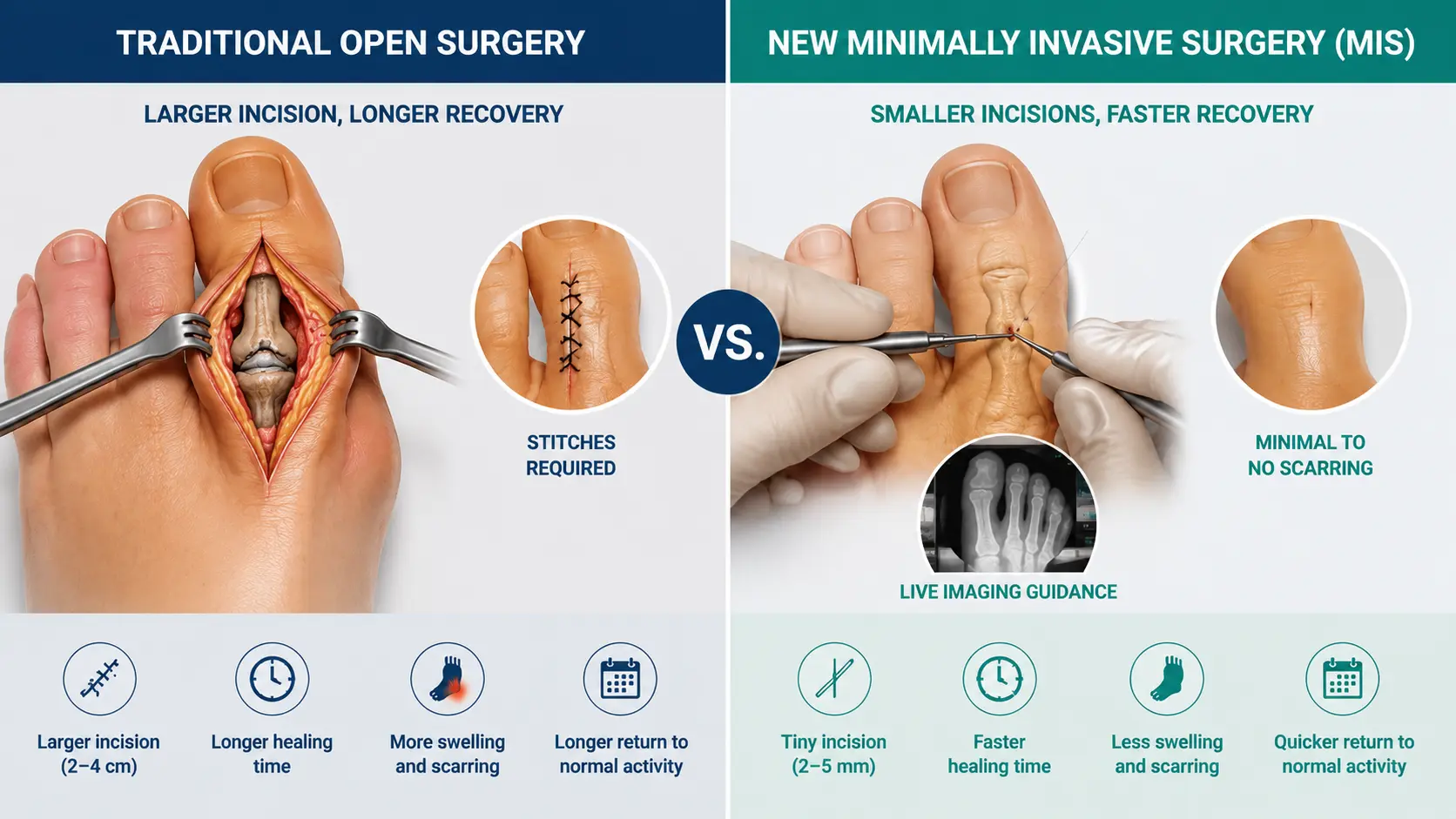
The newest hammertoe surgery is not one single procedure. It refers to updated techniques that improve how surgeons correct toe deformities. Older approaches used larger cuts, direct joint exposure, and external pins sticking out of the toe. Newer methods may include:
- Smaller incisions, some as small as 2 to 5 millimeters
- Minimally invasive correction using live imaging to guide instruments
- Internal screws or implants instead of protruding external pins
- More specific treatment plans based on toe flexibility and severity
| Feature | Traditional Surgery | Newer Approaches |
|---|---|---|
| Incision size | Larger cut to expose joint | Smaller openings in suitable cases |
| Tissue disruption | More soft tissue exposure | Less disruption with minimally invasive methods |
| Fixation | External pins commonly used | Internal implants may be used |
| Recovery | Longer healing period, stitches | May allow faster return to walking |
| Approach | Similar procedure for most patients | More specific to deformity type |
Important: Newer does not always mean better for every patient. Severe deformities may still need traditional open surgery for the best long-term result.
Types of New Hammertoe Surgery
Your surgeon matches the procedure to your toe’s flexibility, the severity of the deformity, and your overall health.
1. Tendon Release (Tenotomy)
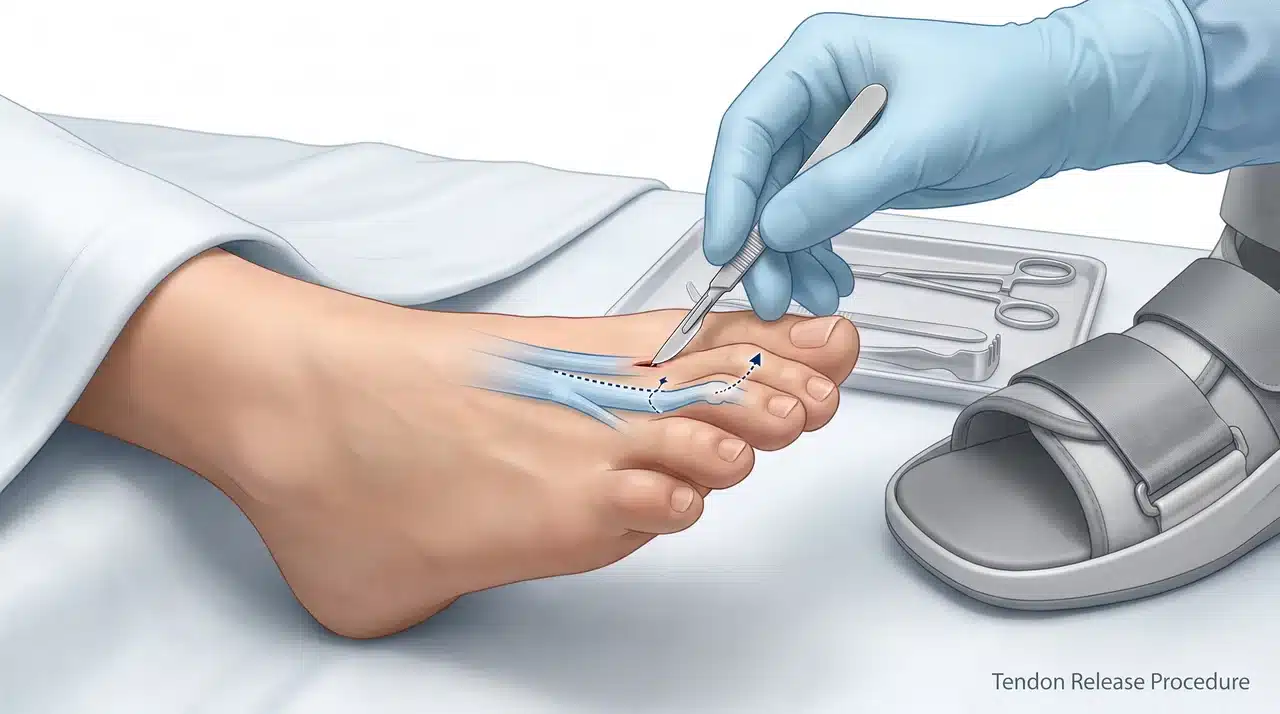
Tenotomy works best for flexible hammertoes. The surgeon cuts or lengthens the tight tendon that forces the toe into a bent position. Releasing the tension lets the muscles rebalance, and the toe sits flatter.
In some cases, this is combined with a tendon transfer, in which the tendon is rerouted from the bottom of the toe to the top to actively pull it straight rather than just release pressure.
Recovery: Usually faster than bone procedures. Patients often wear a stiff-soled surgical shoe for a few weeks during healing.
2. Joint Resection (Arthroplasty)
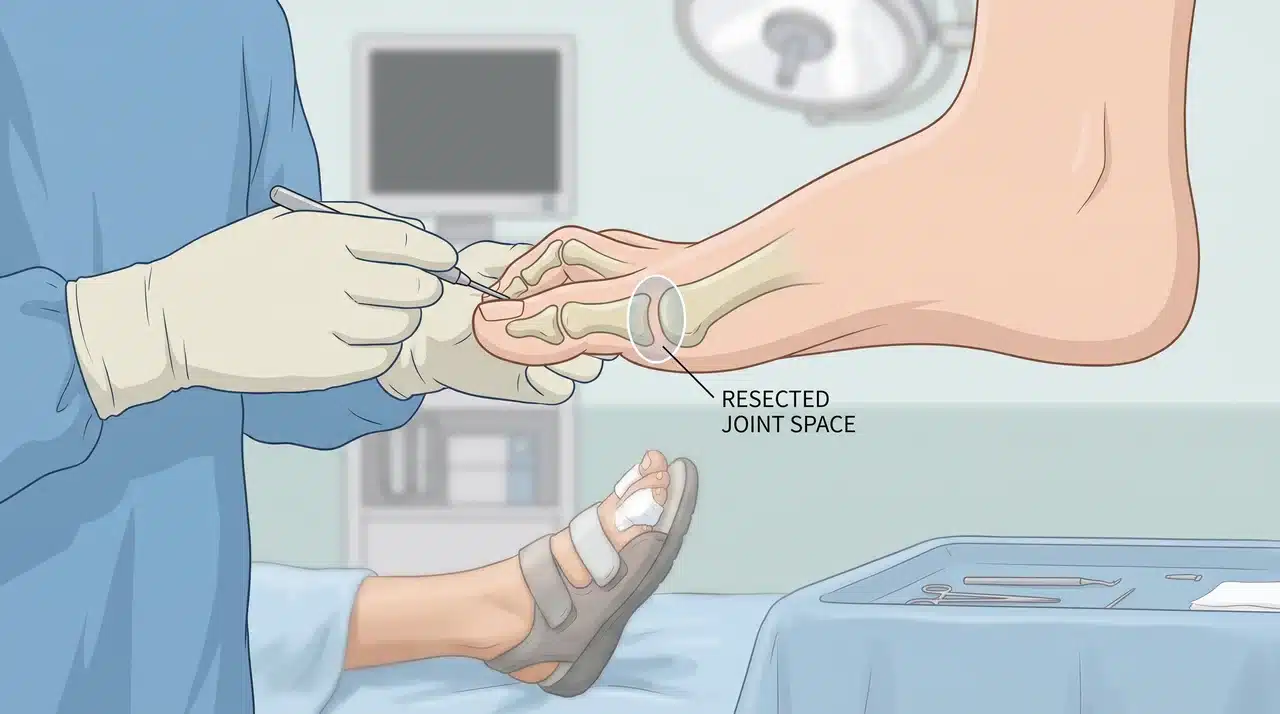
Arthroplasty removes a small wedge of bone from the affected joint. This creates space so the toe can straighten. Surgeons choose this for moderate hammertoes in which the joint has been affected, but full fusion is not needed.
The toe shortens slightly, pressure is reduced, and some joint movement is preserved. Recovery includes wound care, limited weight-bearing, and a gradual return to normal shoes over a few weeks.
3. Joint Fusion (Arthrodesis)
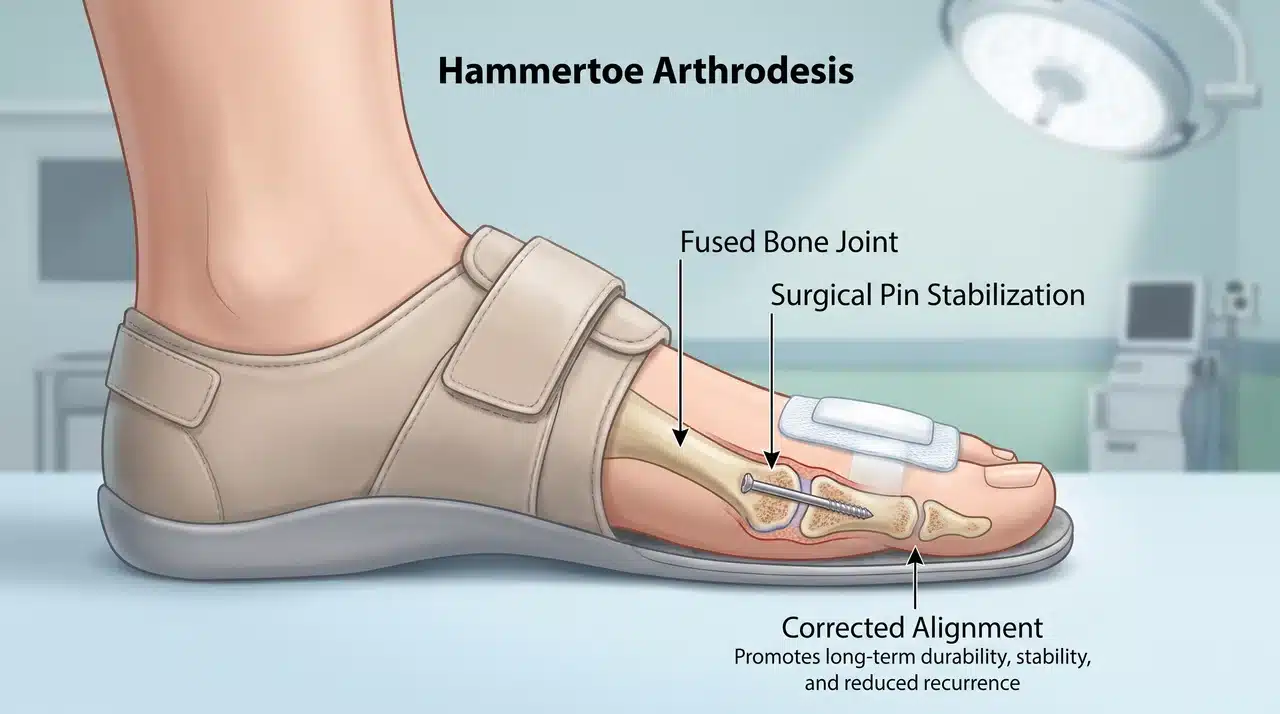
Fusion permanently joins the bones at the affected joint. The surgeon removes damaged cartilage, aligns the toe straight, and holds the bones together with a pin, screw, or internal implant until they fuse into one stable structure.
This eliminates movement at that joint, which reduces pain and lowers the risk of the deformity returning. It is used for rigid, severe, or recurring hammertoes.
Recovery: Typically 6 to 8 weeks of protected weight-bearing. If a pin was used, it may need to be removed after healing is complete.
4. Minimally Invasive Percutaneous Correction
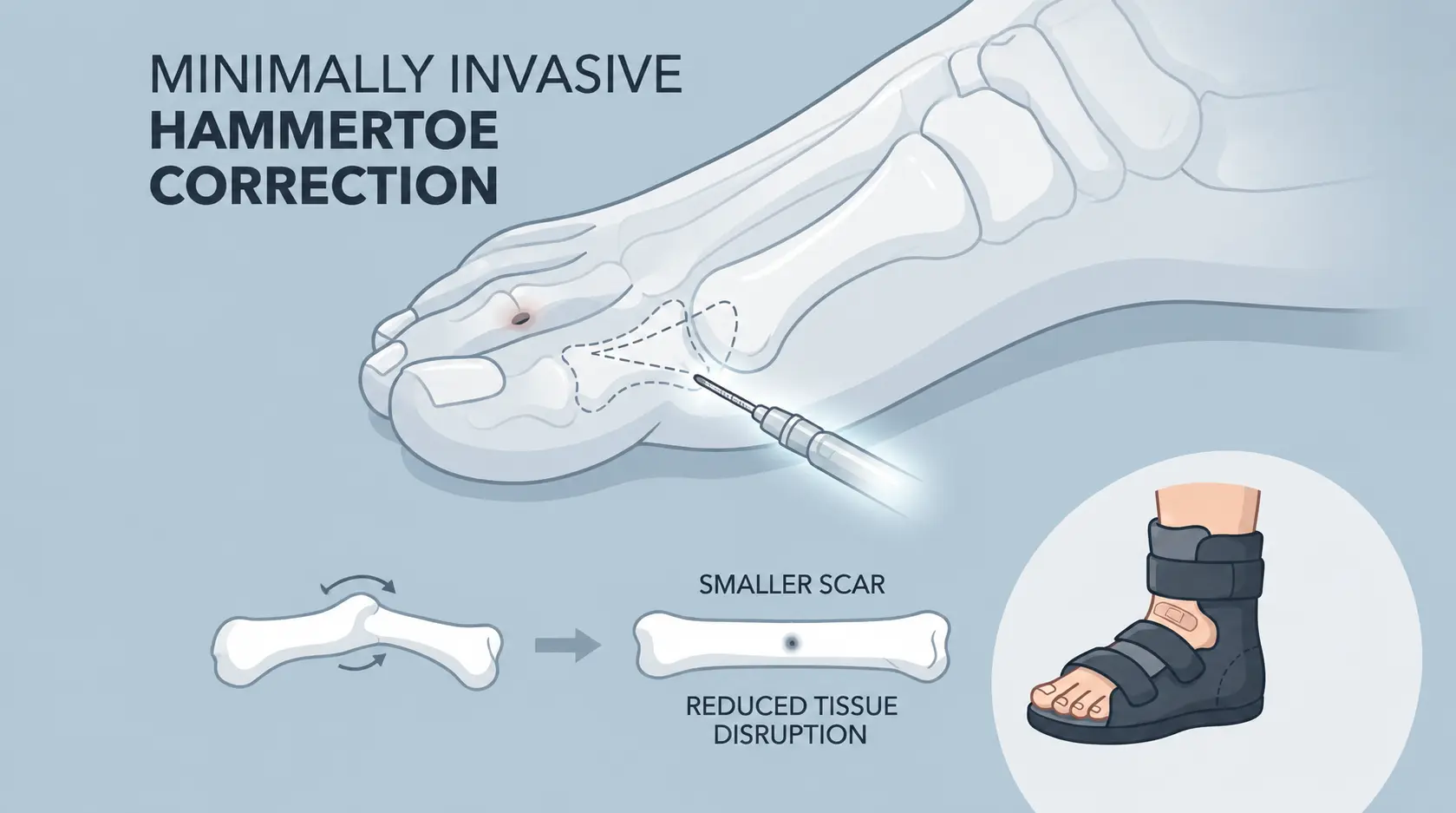
MIS uses very small openings instead of a traditional cut. Surgeons use fine instruments, sometimes guided by live X-ray imaging, to reshape bone and release tight tissues without fully opening the joint.
Compared with open surgery, MIS may result can less scarring, less swelling, and a quicker return to walking for patients who qualify. One comparative study found MIS patients returned to normal footwear in about 2 weeks, compared with 6 weeks for open surgery patients, though results vary by case.
MIS is not suitable for everyone. Severe deformities and cases with significant joint damage may still need open correction.
5. Surgery Without External Pins
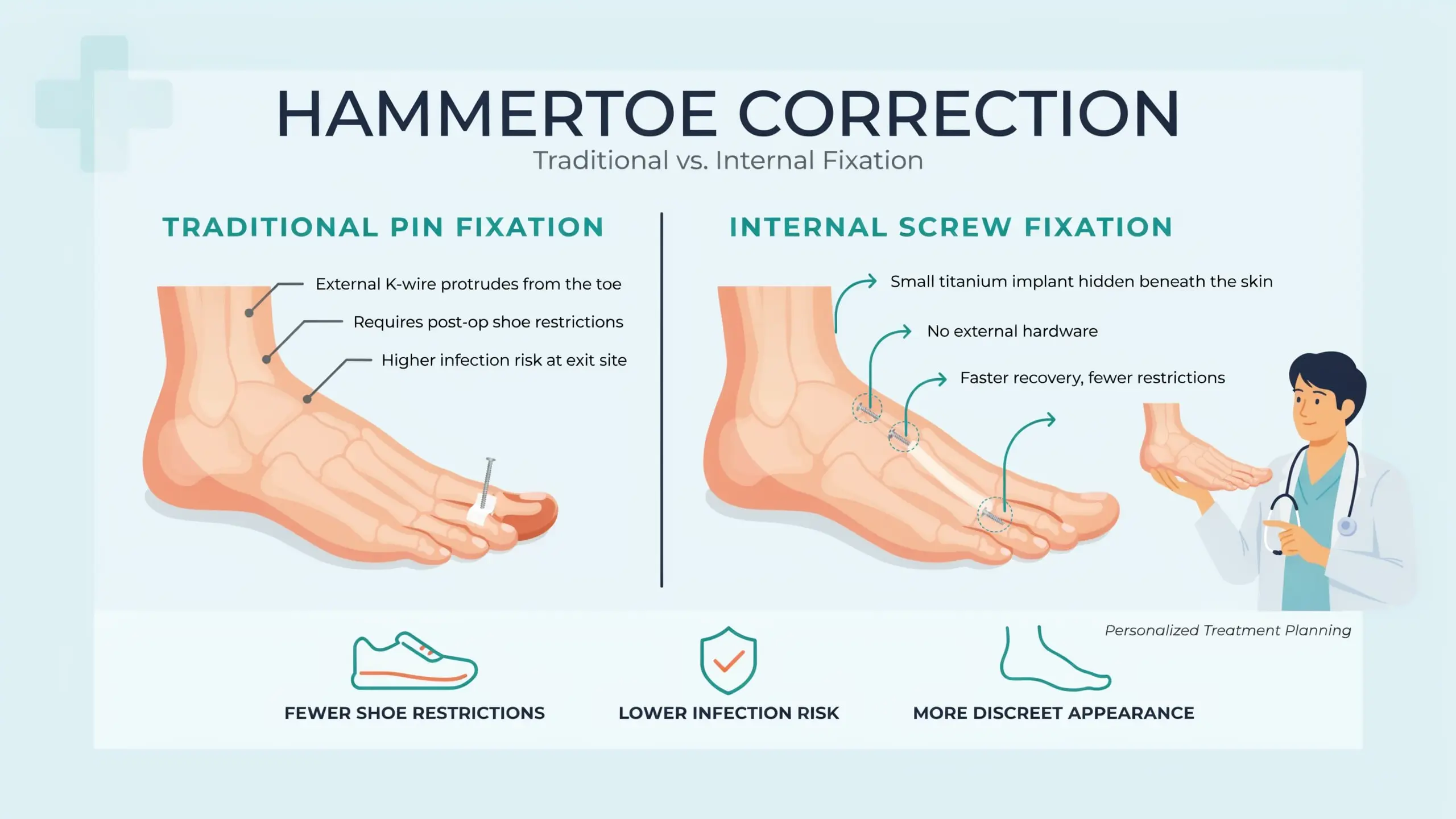
External pins sticking out of the toe can limit the shoes you can wear and carry a small risk of infection.
Newer fixation options, including internal screws and small implants, allow some patients to avoid visible external hardware entirely.
Whether pin-free surgery is possible depends on the type of procedure and the severity of the deformity. Ask your surgeon which fixation method is best for your case.
Is Laser Surgery Used for Hammertoes?
You may see “laser hammertoe surgery” mentioned in ads. Laser treatment is not a standard method for correcting hammertoe deformities.
Actual hammertoe correction addresses tendon imbalance, bone position, and joint alignment. These require physical reshaping that lasers cannot provide.
If a provider promotes laser as a primary correction method, ask them to explain exactly what the procedure involves and how it corrects the structural deformity.
How Surgeons Choose the Right Procedure
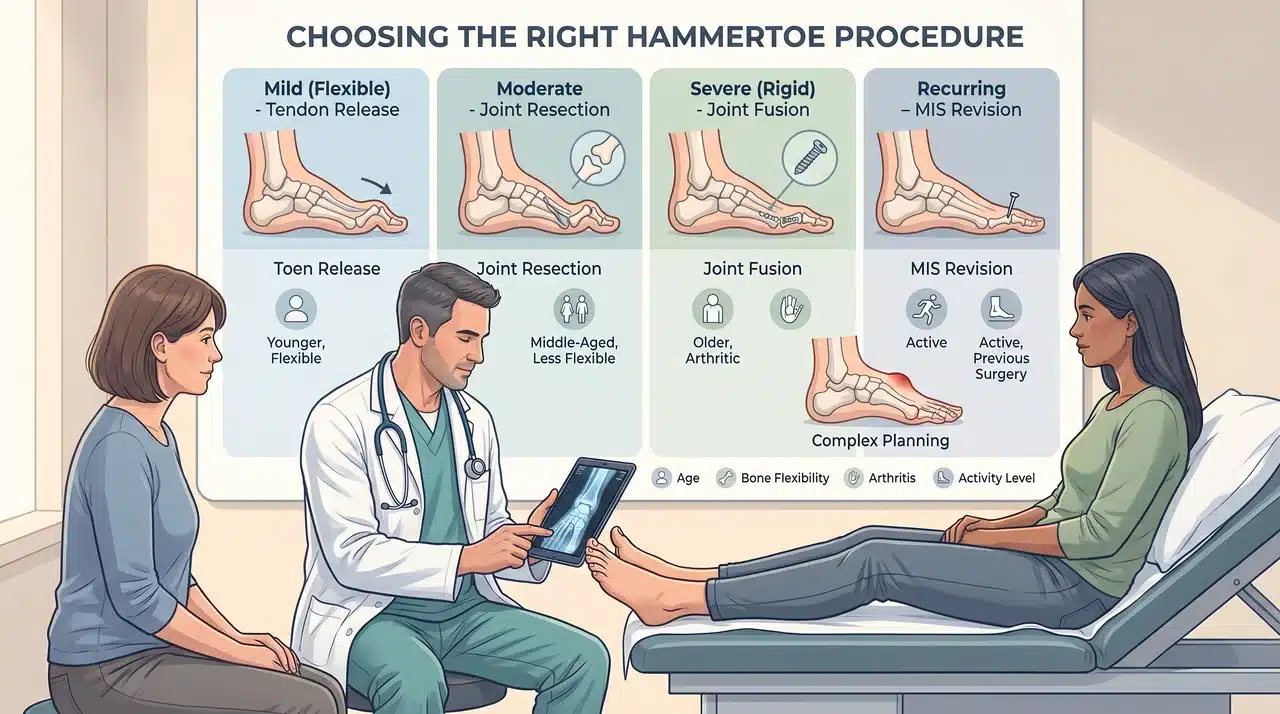
No single surgery works for every patient. Your surgeon considers:
| Condition | Likely Procedure |
|---|---|
| Mild flexible hammertoe | Tendon release |
| Moderate deformity | Joint resection (arthroplasty) |
| Severe or rigid hammertoe | Joint fusion (arthrodesis) |
| Selected cases with suitable anatomy | Minimally invasive correction |
Other factors your surgeon reviews include your age, bone quality, presence of arthritis, activity level, and whether you have other foot problems. Hammertoes sometimes appear alongside bunions, which adds planning complexity because both conditions affect pressure on the front of the foot.
What Happens During Hammertoe Surgery?
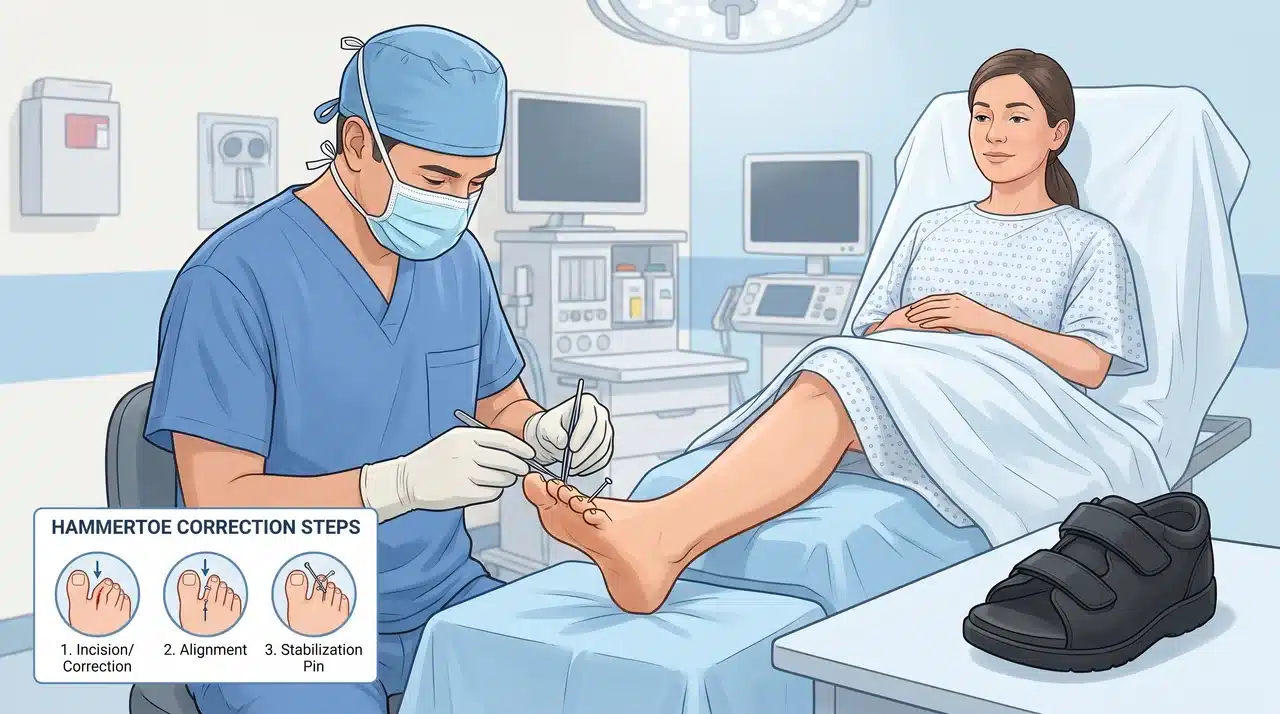
Most hammertoe procedures follow a similar sequence, whether open or minimally invasive.
- Anesthesia: Local or regional anesthesia numbs the area. You are often awake but feel nothing in the foot.
- Incision: The surgeon makes a small incision or percutaneous opening at the affected joint.
- Depending on the procedure, the surgeon releases a tendon, removes part of a joint, or fuses bones.
- Alignment check: The surgeon confirms the toe sits in the correct position before closing.
- Fixation: A pin, screw, or internal implant may be placed to hold the correction during healing.
- Dressing and protective shoe: The toe is wrapped and placed in a surgical shoe before you go home.
Most procedures take between 30 and 90 minutes, depending on the number of toes and the complexity of the correction.
How to Prepare Before Hammertoe Surgery
A little preparation makes the first days of recovery much smoother.
- Arrange a ride home; you won’t drive yourself
- Set up a comfortable recovery spot with your foot easily elevated
- Keep daily items within easy reach to limit unnecessary movement
- Have loose, wide footwear ready for after the surgical shoe comes off
- Follow your surgeon’s instructions on which medications to stop before surgery
- Plan time away from work, especially jobs that require standing
- If you smoke, talk to your surgeon about stopping before the procedure. Nicotine significantly raises the risk of postoperative complications in foot surgery, including slower healing and higher infection risk.
Recovery After Hammertoe Surgery
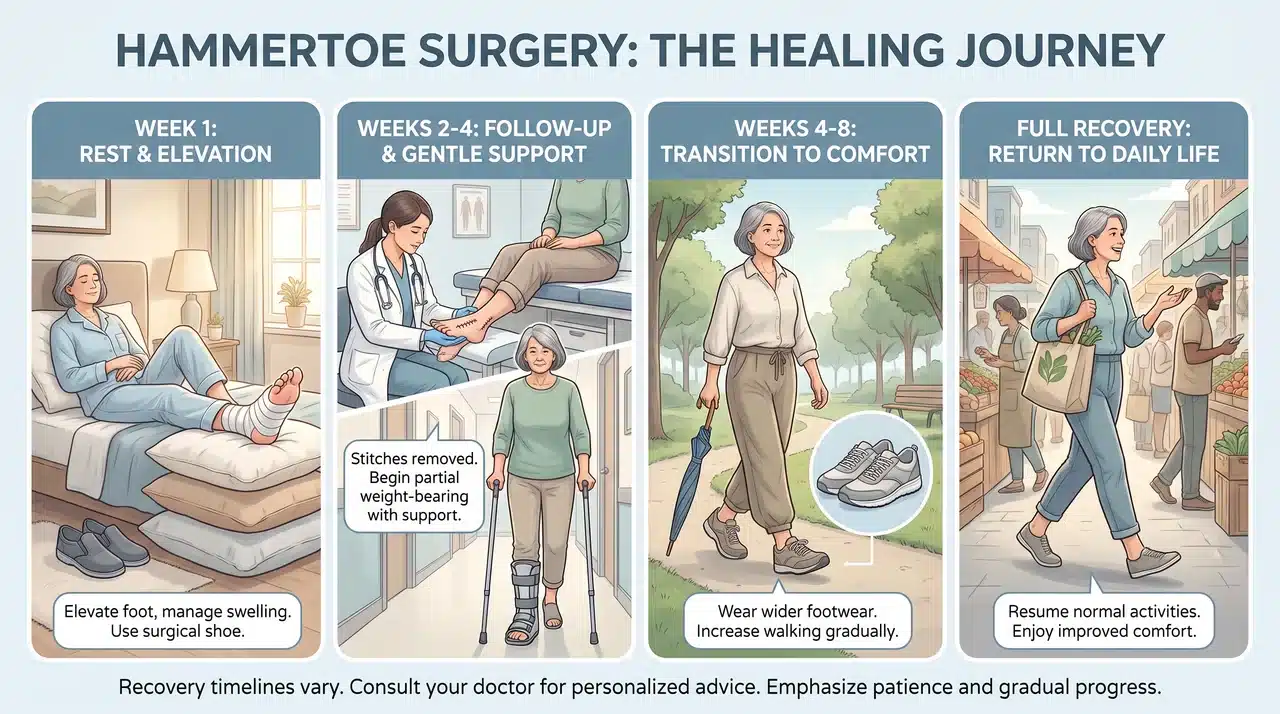
Recovery happens in stages. Rushing any stage can undo the correction.
Week 1
Swelling, bruising, and soreness are normal. Keep your foot elevated as much as possible. Walk only when needed, in your surgical shoe. Follow your surgeon’s weight-bearing instructions closely.
Weeks 2 to 4
Stitches from open surgery usually come out during this window. You will gradually put more weight on the foot. Swelling often increases when you stand, so elevate the foot after activity.
Weeks 4 to 8
Mobility continues to improve. Many patients begin switching to wider, more comfortable shoes during this phase. Follow-up appointments check alignment and healing progress.
Full Recovery: 8 to 12 Weeks and Beyond
You return to regular activities. Some swelling can persist for up to a year, even after the toe has healed well. Working on ankle mobility during this stage, with your surgeon’s approval, helps restore normal foot movement and gait patterns.
How Long Until You Can Walk Normally?
Most patients walk shortly after surgery using a protective surgical shoe. Normal walking without a special shoe depends on the type of procedure performed and how well the toe heals.
Recovery is affected by the number of toes treated, whether bone correction was required, your overall health, and whether you follow post-surgery instructions. Returning to regular shoes too quickly puts unnecessary pressure on the healing toe and can shift the correction.
How Painful Is Hammertoe Surgery?
Pain levels vary by person and procedure. The first few days after surgery are usually the most uncomfortable. Your surgeon will prescribe medication to manage this.
Other helpful steps during early recovery include keeping the foot elevated, applying ice as your surgeon recommends, and limiting time on your feet.
Checking in with dorsiflexion exercises once your surgeon clears you can also support a more complete recovery of your foot.
What Are the Risks of Hammertoe Surgery?

Like any surgery, hammertoe correction carries potential complications, even with newer, less invasive methods.
- Recurrence of the deformity over time
- Stiffness left in the toe joint
- Infection, though this is uncommon in healthy patients
- Hardware irritation if a pin or screw was used
- Temporary numbness around the surgery site
- Delayed healing, which is more common in smokers and diabetic patients
Contact your surgeon right away if you notice unusual redness, warmth, increased pain, or discharge after surgery.
How Much Does Hammertoe Surgery Cost in the USA?
The out-of-pocket cost for hammertoe surgery can vary widely, with many procedures ranging from around $3,000 to $10,000 depending on the type of surgery, surgeon fees, location, and insurance coverage.
Factors that affect the final cost include:
- Type of procedure (tendon release costs less than joint fusion)
- Use of pins, screws, or internal implants
- Surgeon fees and facility charges
- Geographic location (surgery centers are often cheaper than hospitals)
- Additional costs for anesthesia, X-rays, post-op shoe, or follow-up visits
Insurance typically covers hammertoe surgery when it is medically necessary, meaning the condition causes pain, affects function, or prevents normal walking.
Cosmetic correction is generally not covered. Medicare Part B covers 80% of medically necessary procedures. Always verify your specific benefits before scheduling.
Conclusion
New surgery for hammer toes is not one single procedure. It is a set of improved options, from small-incision minimally invasive correction to joint fusion, each matched to the type and severity of the deformity.
The right procedure depends on whether your toe is flexible or rigid, how much pain it causes, and how it affects your day-to-day movement.
Talk with a podiatrist about which approach is best for your case. For more guidance on what the American College of Foot and Ankle Surgeons considers standard care for toe deformities, their patient resources can give you a useful second frame of reference before your consultation.
Long-term foot care after surgery matters just as much as the procedure itself. Shoe choices, follow-up visits, and staying realistic about what surgery fixes will shape your results more than the incision size ever will.
Have questions about your recovery experience? Share them in the comments below.
Frequently Asked Questions
Do I Need Physical Therapy After Hammertoe Surgery?
Some patients benefit from stretching or therapy. Others recover well with home care. Your surgeon will advise based on your specific procedure.
Can Both Feet Be Treated in One Surgery?
Yes. Some patients choose this. Recovery planning is more demanding since weight-bearing on both feet is limited at the same time.
Does Insurance Cover Hammertoe Surgery?
Insurance covers it when the surgery is medically necessary. Cosmetic-only correction is usually not covered. Confirm your plan’s specifics before scheduling.
Is Hammertoe Surgery Safe for Older Adults?
Age alone does not rule it out. Surgeons review bone health, circulation, and overall health before recommending a plan.
Can Hammertoes Come Back After Surgery?
Yes. Recurrence is possible, especially if tight footwear habits continue or the underlying foot mechanics are not addressed after healing.