
Ask someone about cranberry juice, and one answer comes up first. Urinary health.
But that is not the full story.
This tart red drink carries antioxidants, vitamins, and plant compounds. These support more than just your bladder.
Your results depend on one key factor: the type of juice you pick. Some bottles pack real nutrition. Others hide sugar behind a health label.
This post breaks down what cranberry juice actually does for your body. No exaggerated claims. Just facts backed by real research.
What Makes Cranberry Juice Healthy?
Cranberry juice gets its health reputation from its nutrient makeup. It holds vitamin C, vitamin E, and plant compounds called polyphenols.
One compound group, proanthocyanidins (PACs), plays a special role. It may stop harmful bacteria from sticking to your urinary tract walls. But not all cranberry juice is equal. Whole cranberries and juice differ in one big way: fiber.
Vitamin and Antioxidant Content: Cranberries pack a strong vitamin C punch. This vitamin supports your immune system and skin health. Vitamin E adds another layer of antioxidant protection. Together, these nutrients help guard your cells from daily wear and tear.
Whole Cranberries vs Cranberry Juice
Whole cranberries and cranberry juice both offer health benefits, but the way they are processed creates important differences in their nutrition and overall value.
| Feature | Whole Cranberries | Cranberry Juice |
|---|---|---|
| Fiber Content | Contains natural fiber that supports digestion and helps you feel full. | Usually contains little to no fiber because processing removes the fruit pulp. |
| Nutrient Retention | Keeps more of the fruit’s natural nutrients in its original form. | Some nutrients may decrease during processing, depending on how it is made. |
| Processing Level | Minimally processed when eaten fresh or dried. | More processed due to extraction, filtering, and possible sweetening. |
| Health Benefits | Provides fiber along with antioxidants and plant compounds. | Can provide cranberry compounds but may lack the benefits of whole fruit fiber. |
| Best Choice | Better for getting the full nutritional value of the fruit. | Convenient option, especially when choosing unsweetened varieties with minimal processing. |
10 Cranberry Juice Benefits Backed by Research

Cranberry juice offers more than urinary support. Below are ten benefits backed by research, from immune health to blood sugar balance. Each one comes with real context, not hype.
1. May Help Prevent Urinary Tract Infections (UTIs):
Cranberry compounds may stop E. coli bacteria from attaching to urinary tract walls. This lowers the chance of infection taking hold. People who get frequent UTIs may benefit most from regular intake.
But cranberry juice does not treat an active infection. It works as prevention, not a cure. Anyone with UTI symptoms should still see a doctor for proper care.
2. Supports Antioxidant Protection
Antioxidants help protect your cells from oxidative stress. Cranberries are rich in anthocyanins and flavonoids. Both are linked to cellular protection. Darker fruits like cranberries often carry higher amounts of these protective plant compounds than lighter-colored produce.
3. Supports Immune Health
Vitamin C plays a direct role in immune function. Cranberry juice delivers a solid dose of this nutrient. Combined with its antioxidants, this drink can fit well into a balanced, immune-supporting diet. It works best alongside other healthy habits, not as a stand-alone fix.
4. May Support Heart Health
Cranberry polyphenols may support blood vessel function. Some research points to modest improvements in cholesterol and blood pressure markers with regular intake.
Antioxidants like anthocyanins help reduce inflammation. They may also improve blood vessel flexibility over time. Results tend to be gradual rather than dramatic.
5. May Promote Gut Health
Polyphenols in cranberry juice may support beneficial gut bacteria. Some studies link these compounds to a healthier gut microbiome. Juice lacks the fiber found in whole cranberries, though. That fiber plays its own role in digestion, so juice alone will not replace the benefits of whole fruit.
6. Helps Maintain Hydration
Cranberry juice contains a high water content. Unsweetened versions can count toward your daily fluid goals. Mixing it with water dilutes the tartness while preserving the hydration benefit.
7. May Support Oral Health
Cranberry compounds may reduce how well bacteria stick to teeth. This could, in theory, support oral health. But most store-bought juices contain added sugar, which works against this benefit. Choosing unsweetened juice matters here more than in most other categories.
8. Provides Essential Vitamins and Minerals
Cranberry juice supplies several important nutrients beyond vitamin C.
| Nutrient | Role in the Body |
|---|---|
| Vitamin C | Immune support and collagen production |
| Vitamin E | Antioxidant protection |
| Potassium | Fluid balance and muscle function |
| Vitamin K | Blood clotting and bone health |
These nutrients work together to support several body systems at once, not just one area of health.
9. May Support Skin Health
Antioxidants help protect skin cells from damage. Vitamin C supports collagen formation, which keeps skin firm. Staying hydrated with cranberry juice adds another layer of skin support. None of this replaces a good skincare routine, but it can help from the inside out.
10. May Help with Blood Sugar Balance
Some research links low-calorie cranberry juice to lower fasting glucose levels. It may also support insulin sensitivity. This benefit only applies to unsweetened varieties. Sweetened versions can spike blood sugar quickly, which works against this effect.
Cranberry Juice Benefits in Pregnancy
Moderate amounts of cranberry juice are generally safe during pregnancy. The drink provides vitamin C, antioxidants, and potassium, all of which support basic body functions.
Its potential to lower UTI risk may also matter more during pregnancy, since UTIs are more common at that stage.
Regarding female fertility, the source material contains no information. Adding claims unsupported by the provided articles would violate your sourcing rules.
If you have a separate source article covering cranberry juice and fertility, share it, and I can fold that in accurately.
Is Cranberry Juice Good for UTIs or Is It a Myth?

This question comes up often, and for good reason. Research suggests cranberry compounds called PACs may lower UTI risk. They do this by blocking bacteria from sticking to the urinary tract.
That said, cranberry juice cannot cure an infection once it starts. It works better as a prevention tool for people prone to repeat infections.
What the Research Says
Studies show mixed but promising results. Some trials found reduced UTI recurrence among women who regularly drank cranberry juice. Other studies found smaller effects, especially with low-PAC juices. The strength of the juice and its PAC content both matter for results.
When to See a Doctor
Burning during urination, fever, or back pain needs medical attention right away. Cranberry juice should never replace antibiotics for an active infection. If symptoms do not improve within a day or two, contact a healthcare provider promptly.
Unsweetened Cranberry Juice vs Cranberry Juice Cocktail: Which Is Better?
Not all cranberry juice bottles are created equal. The difference between unsweetened juice and cranberry cocktail comes down to sugar, calories, and purpose. Knowing which one fits your goals helps you shop smarter and avoid hidden sugar traps.
| Feature | Unsweetened Cranberry Juice | Cranberry Cocktail |
|---|---|---|
| Added sugar | Usually none | Often added |
| Calories | Lower | Higher |
| Taste | More tart | Sweeter |
| Best choice | Daily wellness | Occasional drink |
How to Read the Label: Look for “100% cranberry juice” on the front label. Avoid bottles listing sugar or corn syrup near the top of the ingredient list. A short ingredient list usually signals a purer, less processed product.
How Much Cranberry Juice Should You Drink Daily?

There is no single official daily amount for cranberry juice. Most health sources suggest 4 to 8 ounces (120 to 240 ml) of pure, unsweetened juice per day. Going beyond that regularly may cause an upset stomach. Moderation and sugar content both matter more than exact numbers.
- Best Time to Drink It: Morning or with meals works well for most people. Drinking it right before bed may cause discomfort for some due to its acidity. There is no strict rule, so listen to how your body responds.
- Watch the Sugar Content: Many bottles marketed as cranberry juice contain added sugar. Check the nutrition label before buying. Pure, unsweetened options give you the health benefits without the extra sugar load.
Cranberry Juice vs Cranberry Supplements: Which Works Better?
Some people prefer capsules over juice, and both have their place. The right choice depends on what you want from cranberry: hydration and taste, or concentrated compounds without the liquid.
| Option | Benefits | Limitations |
|---|---|---|
| Juice | Hydration and nutrients | May contain sugar |
| Capsules | Concentrated compounds | No hydration benefit |
Capsules skip the sugar and calories found in most bottled juices. They also offer a stronger, more consistent dose of PACs. But dosage varies widely between brands, so checking the label matters. Juice, on the other hand, gives you hydration plus a range of nutrients in one drink.
Potential Side Effects of Drinking Cranberry Juice

Cranberry juice is generally safe, but it is not risk-free for everyone. Knowing the possible downsides helps you enjoy it without surprises. Most issues come from overconsumption or interactions with certain medications.
Possible Concerns
- Added sugar: Most bottles contain far more sugar than the label suggests.
- Stomach discomfort: Large amounts may cause an upset stomach or acid reflux, especially in sensitive people.
- Medication interactions: Cranberry juice may interact with blood-thinning drugs like warfarin.
Who Should Talk to a Doctor First
People with a history of kidney stones should ask a doctor before adding cranberry juice daily. Cranberry juice contains oxalates, which can affect stone formation in some people.
Those on blood thinners also need medical guidance. Cranberry compounds may affect how these drugs work in the body, so a quick check-in with a doctor is a safe first step.
Important Tip: If you take any regular medication, mention cranberry juice to your doctor or pharmacist. This small step helps avoid unwanted interactions.
Who Should Be Careful With Cranberry Juice?
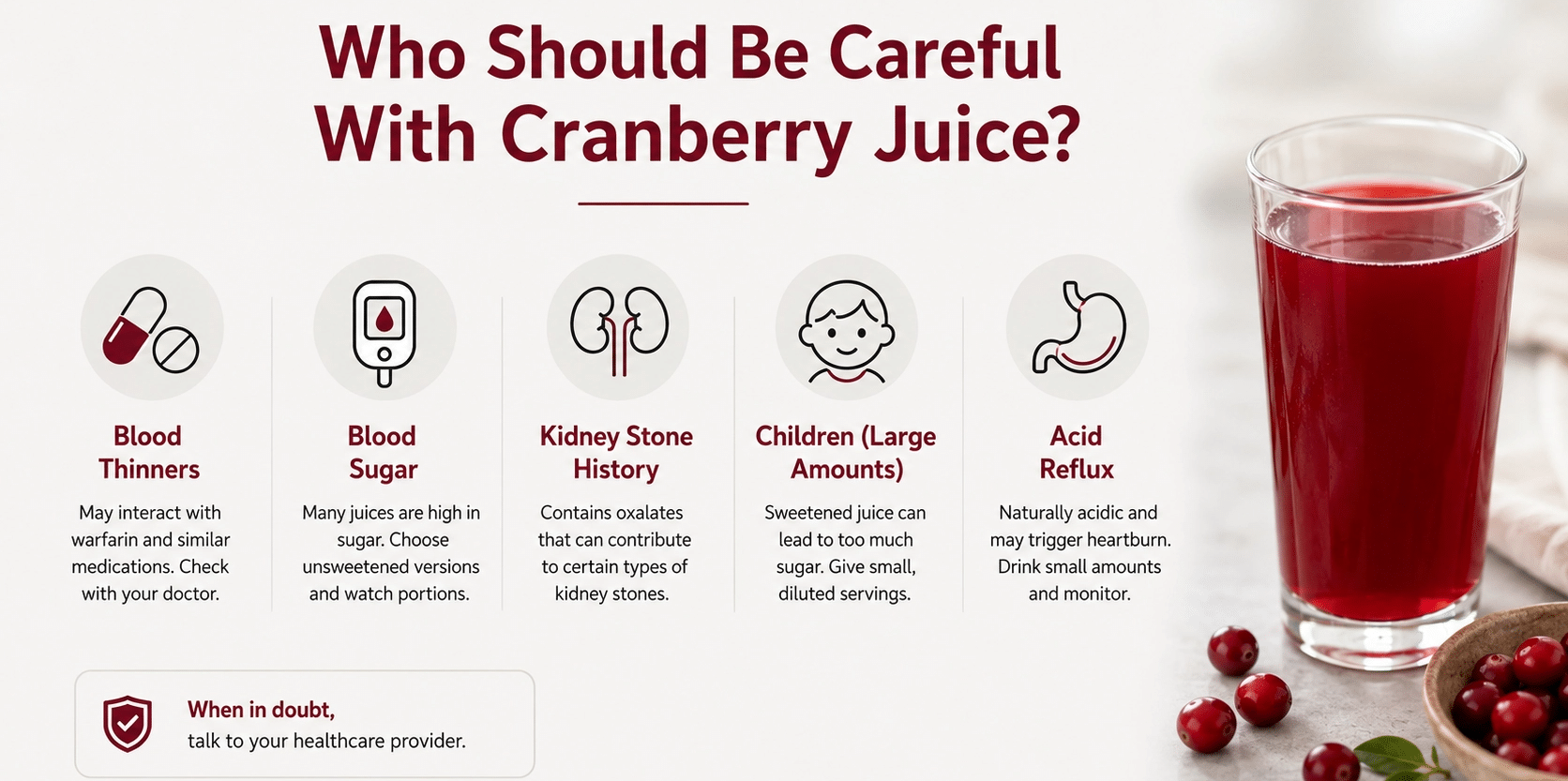
Certain groups need extra caution with cranberry juice. Knowing if you fall into one of these categories helps you make a safer choice.
- People Taking Blood Thinners: Cranberry juice may interact with warfarin and similar medications. This can affect blood clotting in unpredictable ways. Anyone on these drugs should check with a doctor before drinking cranberry juice regularly.
- People Managing Blood Sugar: Many cranberry juice cocktails contain high sugar levels. This can spike blood sugar quickly. People with diabetes should choose unsweetened versions and watch portion sizes closely.
- People With Kidney Stone History: Cranberry juice contains oxalates, which can contribute to certain types of kidney stones. Anyone with a history of stones should ask a healthcare provider before adding it to their routine.
- Children Consuming Large Amounts: Kids who drink large amounts of sweetened cranberry juice may consume too much sugar. Small, diluted servings work better for younger children.
- People With Acid Reflux: Cranberry juice is naturally acidic, which can trigger heartburn in some people. Those with acid reflux or a sensitive stomach should drink small amounts and watch how their body reacts.
If you fall into any of these groups, talk to your doctor first. One quick conversation keeps you safe.
How to Add Cranberry Juice to Your Diet

Adding cranberry juice to your day does not need to be complicated. A few simple swaps can make it a regular, enjoyable habit without overloading on sugar.
- Mix it with sparkling water for a light, fizzy drink
- Blend it into morning smoothies
- Dilute it with plain water to cut the tartness
- Use it as a base for homemade mocktails
- Pair a small glass with balanced meals
Small changes like these help you enjoy the benefits without much extra effort. Pick one or two ideas and build them into your routine.
Pro Tip: Start with a 1:1 mix of cranberry juice and water. This cuts the tartness and sugar load while still giving you the benefits.
Can You Drink Cranberry Juice Every Day?
Yes, most healthy adults can drink cranberry juice every day. A daily serving of 4 to 8 ounces of pure, unsweetened juice is safe for most people.
Going beyond that regularly may cause stomach upset or diarrhea, so moderation matters. Morning or with meals is the best time to drink it.
Drinking it right before bed may cause discomfort for some people due to its natural acidity. Always choose 100% unsweetened juice over cranberry cocktail versions.
Cocktail versions often contain added sugar, which increases your calorie intake without providing any additional nutritional value. If the tartness is too strong, mix it with plain water in a 1:1 ratio.
This keeps the sugar load low while preserving the drink’s nutritional value. People on blood thinners, those with a kidney stone history, or those managing diabetes should check with a doctor before making it a daily habit.
For everyone else, a small daily glass paired with balanced meals is a simple and practical routine.
Final Thoughts on Cranberry Juice Benefits
Cranberry juice offers real value beyond its reputation for urinary health. It carries antioxidants, vitamins, and plant compounds that may support your heart, gut, skin, and immune system.
The key lies in choosing unsweetened varieties over sugary cocktails whenever possible. That one choice makes the biggest difference in what you actually get from the drink.
Cranberry juice works best as a helpful addition to your routine. It should never replace medical treatment or a balanced diet.
Pair a small daily glass with healthy meals. That simple habit helps you get the most out of what cranberry juice can offer.
For more on how everyday drinks and foods affect your wellness, check out our nutrition and recovery guides.
Frequently Asked Questions
Can You Drink Too Much Cranberry Juice?
Yes, too much can cause stomach upset or diarrhea. Stick to 4 to 8 ounces daily for best results. More than that offers no extra benefit and may upset your stomach.
How Much Pure Cranberry Juice Should I Drink?
Aim for 4 to 8 ounces of pure, unsweetened juice daily. Dilute it with water if it’s too tart. This keeps sugar and acidity in check for daily use.
What Is the Healthiest Cranberry Juice to Buy?
Look for 100% pure, unsweetened cranberry juice with no added sugar or artificial ingredients. Check the label carefully before buying to confirm purity.
Can Cranberries Lower Blood Pressure?
Cranberry polyphenols may support blood vessel function. Some research links regular intake to modest improvements in blood pressure markers.
Is Cranberry Juice Good for Constipation?
This topic is not covered in the provided source article. A verified source is needed before I can answer accurately.
How Much Sugar Is in Cranberries?
The source article does not include specific sugar figures for cranberries. A verified source with exact numbers is needed before answering this.