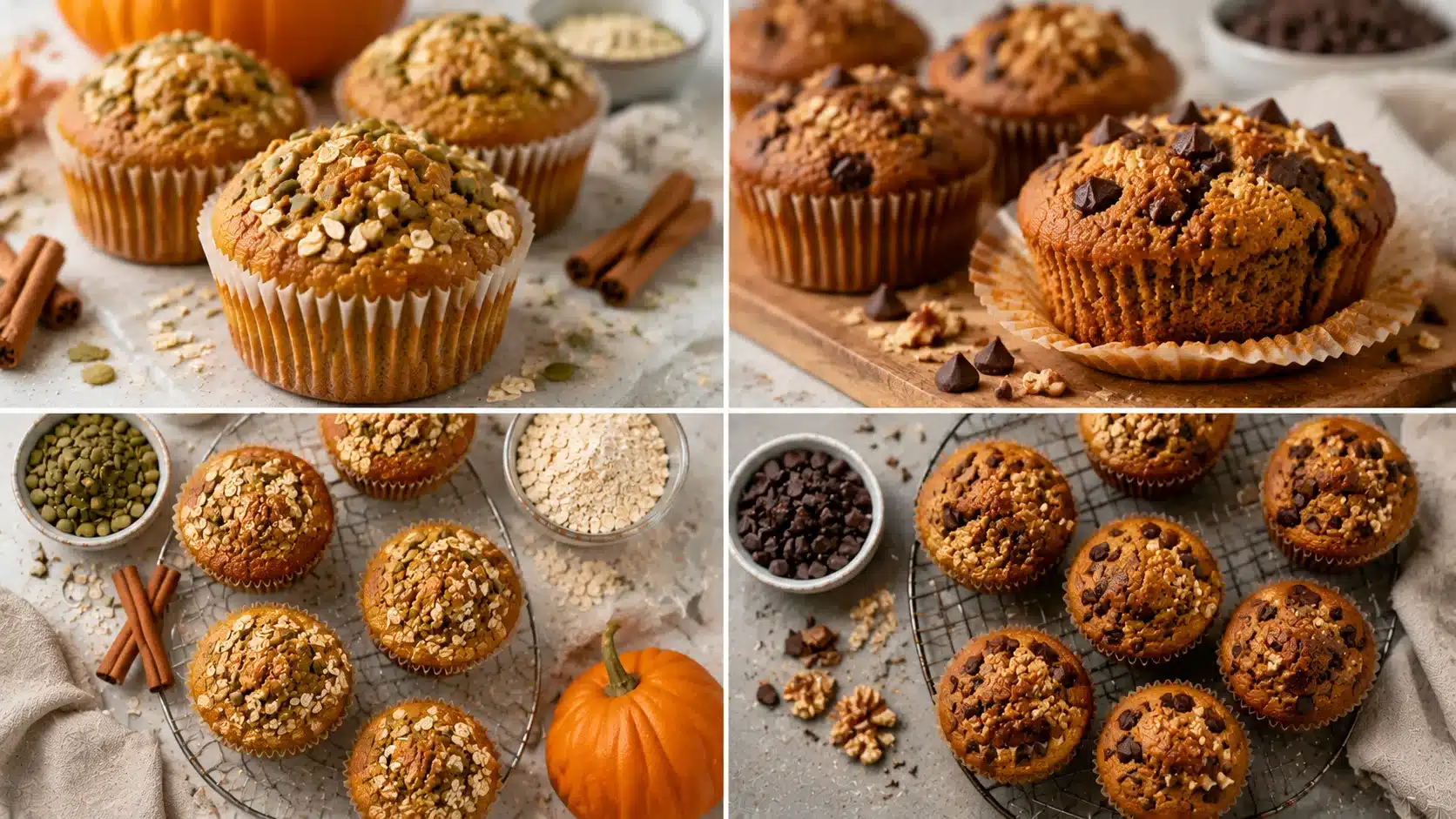
Fall baking does not have to come with a sugar crash. These healthy pumpkin muffins swap refined flour, excess sugar, and heavy butter for whole grains, Greek yogurt, and natural sweeteners.
The result is a muffin that is soft, warmly spiced, and filling. You do not have to strip out every bit of flavor to eat better.
With a few smart ingredient choices, you can keep the moist texture and cozy pumpkin-spice flavor you love. You also add fiber, protein, and real nutrients that regular muffins lack.
This post covers the full recipe, ingredient swaps, baking tips, variations, and storage. You can make a better muffin on your first try.
Healthy Pumpkin Muffin Nutrition Facts
Nutrition in a healthy pumpkin muffin varies depending on which ingredients and swaps you choose. The figures below are estimates for a standard-sized muffin made with whole wheat flour, maple syrup, and Greek yogurt.
| Nutrient | Amount Per Muffin |
|---|---|
| Calories | 140 to 180 |
| Protein | 3 to 5 grams |
| Fiber | 2 to 4 grams |
| Sugar | 6 to 10 grams |
| Carbohydrates | 20 to 25 grams |
These numbers shift based on your flour, sweetener, and mix-ins. Treat them as a general guide, not an exact count for your specific batch.
What Makes a Pumpkin Muffin Healthy?
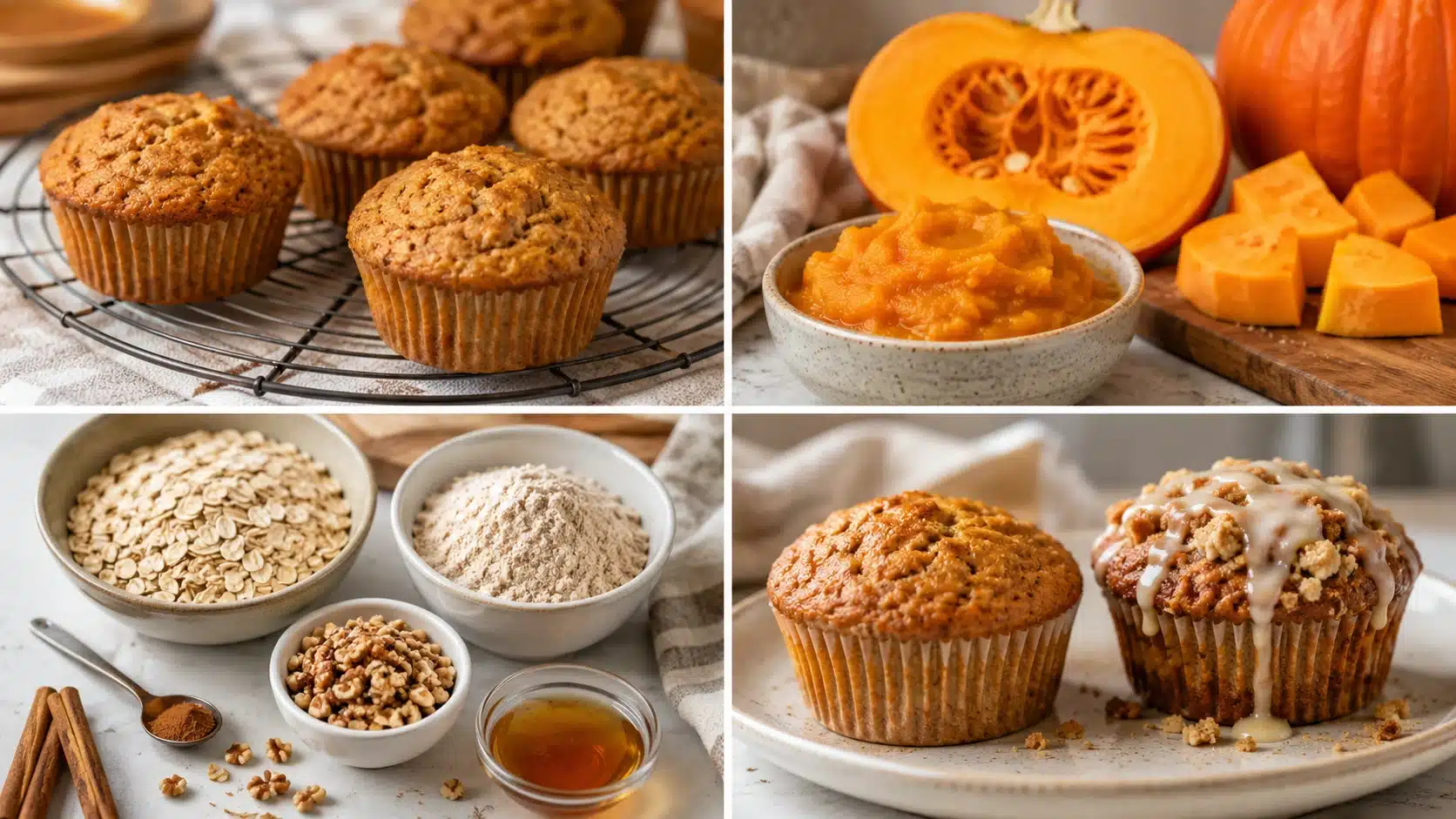
A healthy pumpkin muffin starts with targeted swaps, not a complete recipe overhaul. Small changes to flour, sugar, and fat sources make the biggest difference. The soft texture and warm spice flavor stay intact.
- Less added sugar comes from leaning on maple syrup, honey, or the natural sweetness of pumpkin instead of white sugar.
- More fiber shows up when oats or whole wheat flour replace refined white flour. Fiber helps you stay full longer.
- Healthier fats from walnuts, pecans, or chia seeds replace the heavy butter in traditional recipes. A moderate amount of quality oil can also work.
- Added protein from Greek yogurt or an extra egg turns a simple snack into a filling one. It holds you over until lunch.
The table below shows how the healthier version compares to a standard pumpkin muffin.
| Regular Pumpkin Muffin | Healthy Pumpkin Muffin |
|---|---|
| Refined white flour | Whole wheat flour or oats |
| High added sugar | Maple syrup, honey, or fruit-based sweetness |
| Butter or excess oil | Greek yogurt balanced with a moderate amount of oil |
| Low fiber | Added grains, nuts, or seeds |
Are Healthy Pumpkin Muffins Actually Good for You?
Yes. When made with whole ingredients and moderate sweetness, healthy pumpkin muffins can be a genuinely nutritious choice.
Pumpkin does a lot of heavy lifting here. It is low in calories but rich in vitamin A and carotenoids. These plant compounds give pumpkin its deep orange color. It also contributes fiber, which supports digestion and helps regulate blood sugar. Refined-flour muffins cannot claim the same.
Added sugar and toppings still matter, though. A muffin loaded with streusel and glaze can undo nutritional benefits fast. Homemade versions give you full control over the sugar, fat, and extras. You are not relying on a bakery recipe built for shelf life and sweetness, not nutrition.
Healthy Pumpkin Muffin Ingredients You Need
Every ingredient in this recipe serves a purpose, whether that’s moisture, sweetness, or structure. Understanding what each one contributes makes it easier to swap items based on your dietary needs or what’s already in your pantry.
1. Pumpkin Puree
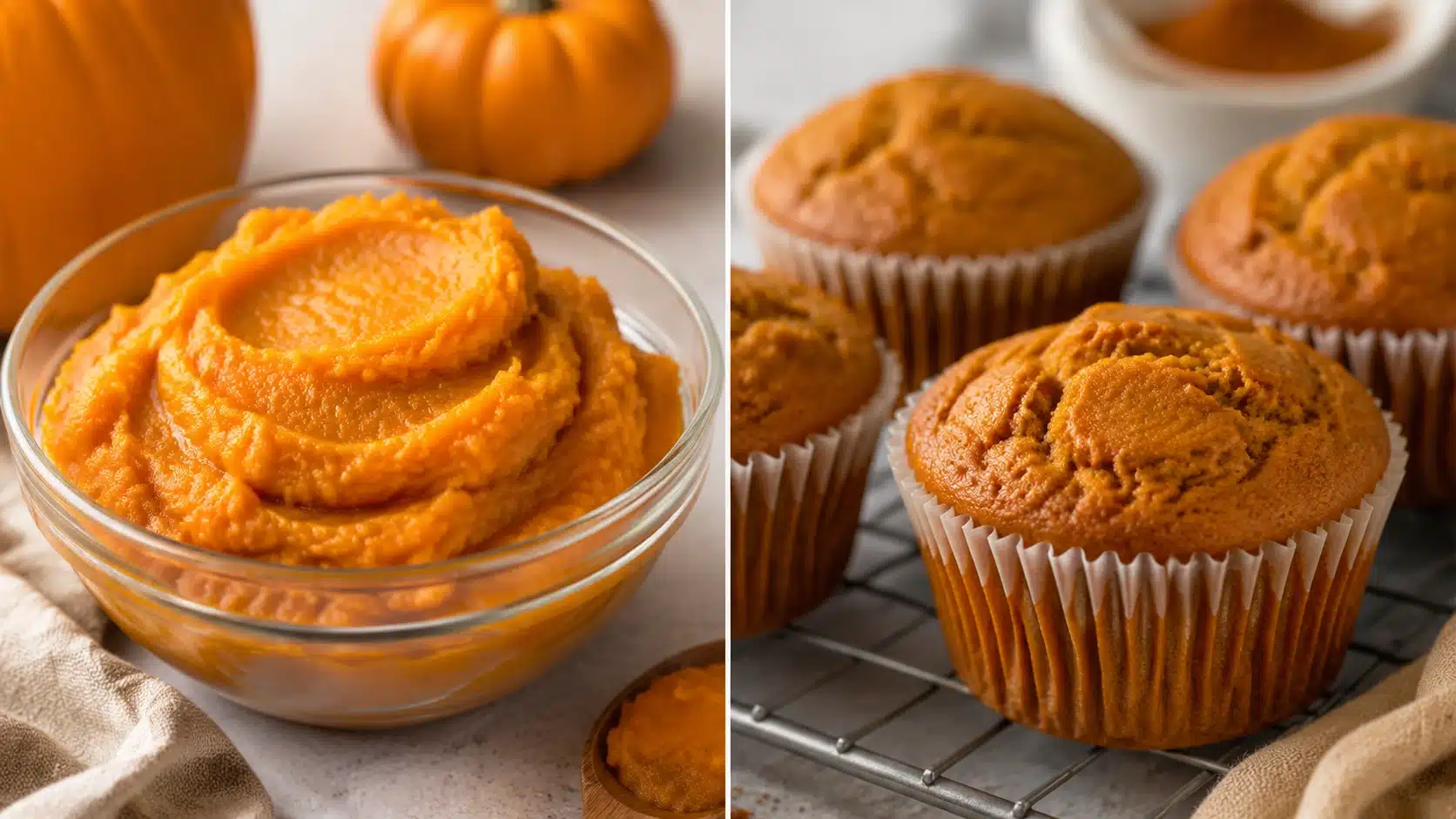
Pumpkin puree is the backbone of this recipe. It adds moisture, natural sweetness, and that signature fall flavor without needing extra fat.
Canned pumpkin puree works well and stays consistent batch to batch. Homemade puree can taste even richer, but it varies in water content, so you may need to adjust the baking time slightly.
One thing to avoid: pumpkin pie filling. It’s pre-sweetened and spiced, which throws off the sugar balance in the recipe.
2. Better Flour Options
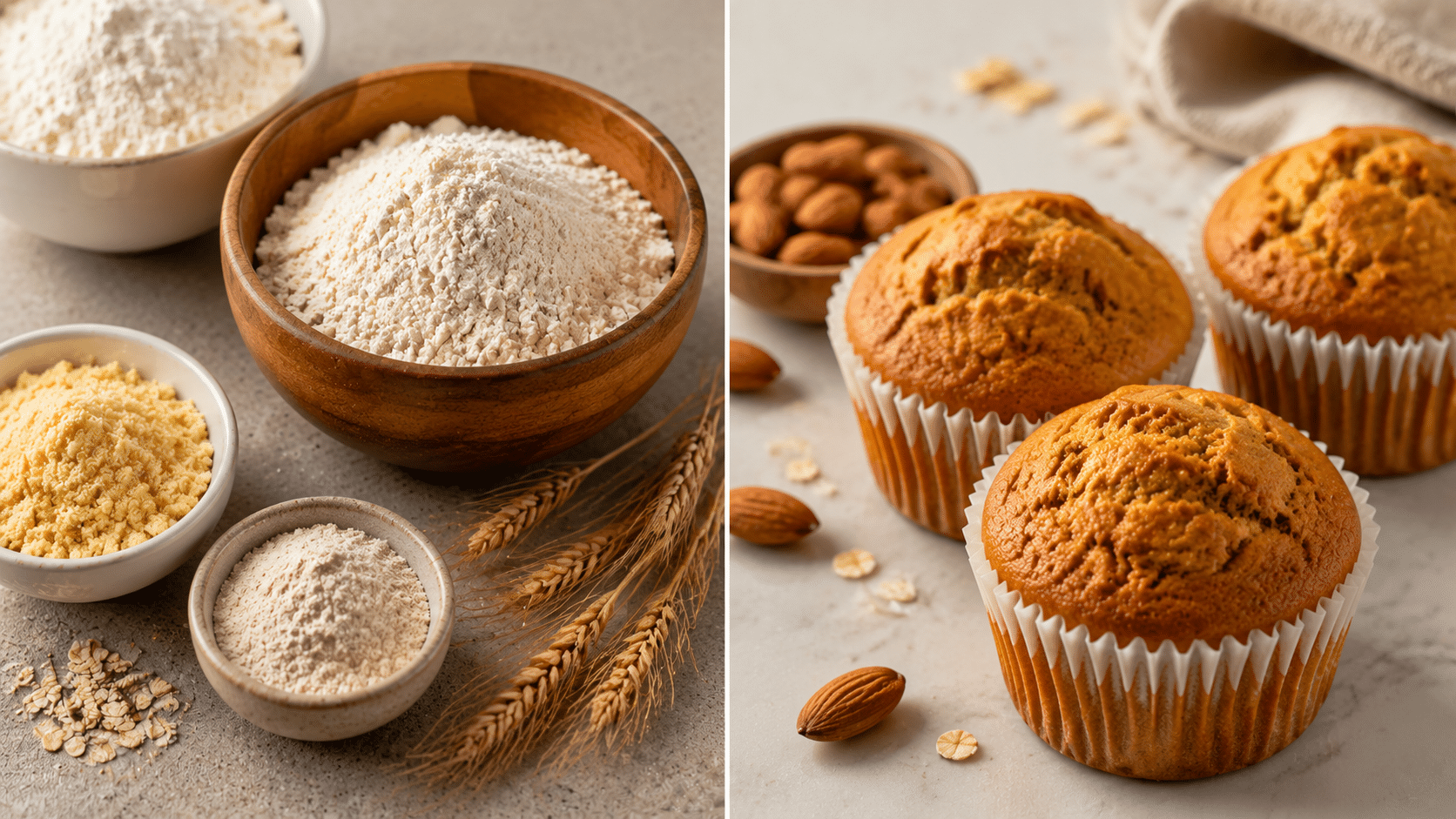
Whole wheat flour brings more fiber and a slightly nuttier flavor than all-purpose flour, while still giving the muffins good structure.
Oat flour offers a softer crumb and works well for anyone avoiding wheat, though it can make muffins a touch denser.
Almond flour blends add moisture and healthy fats, but they usually need to be combined with another flour to hold their shape.
Gluten-free flour blends designed for baking are the easiest swap if you want a one-to-one replacement with minimal recipe adjustments.
3. Natural Sweeteners
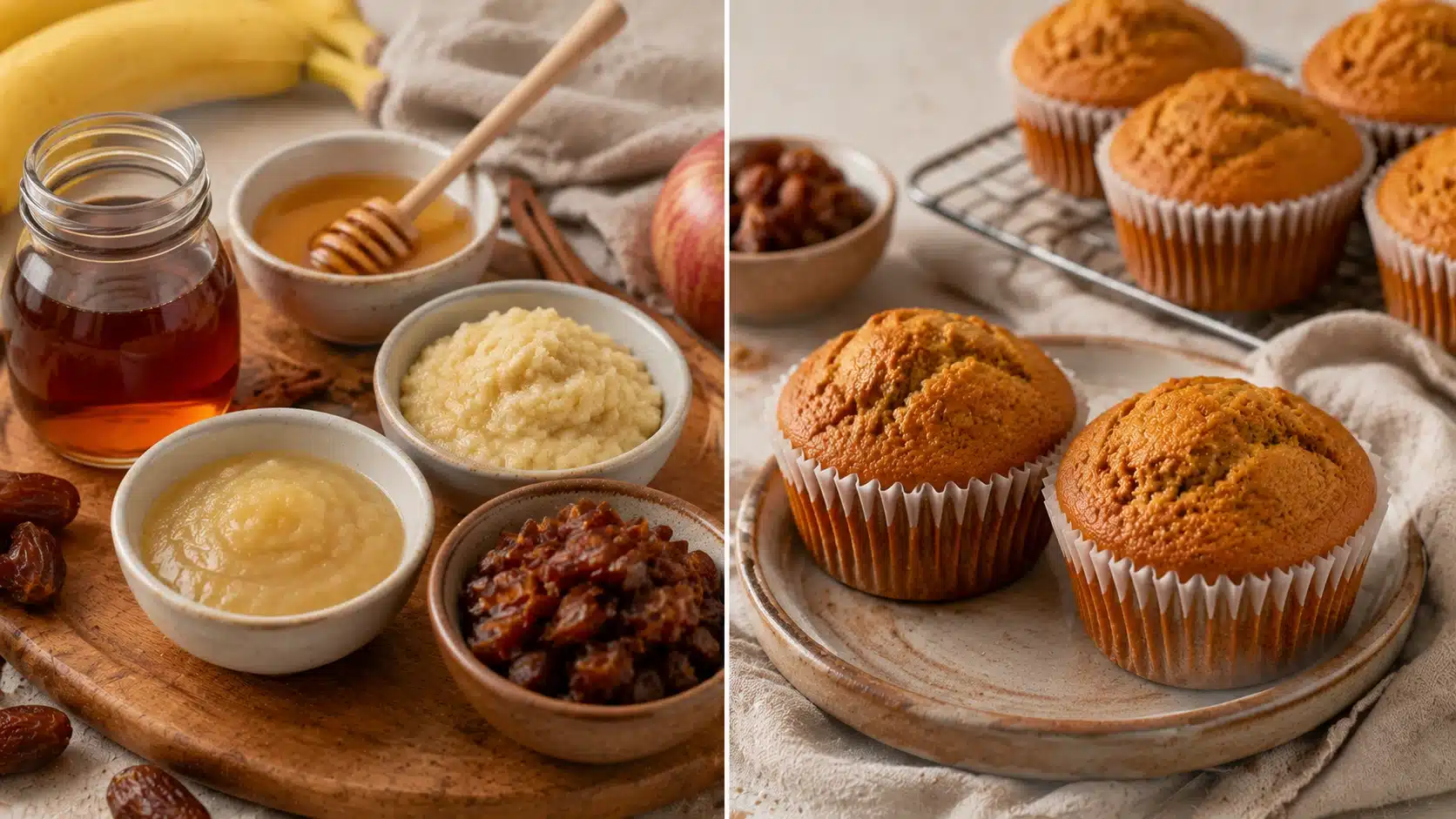
Sweetness in this recipe comes from natural sources rather than refined sugar. Each one brings its own flavor and moisture level to the batter.
- Maple syrup adds a warm, earthy sweetness that pairs naturally with pumpkin spice.
- Honey sweetens efficiently but can add a slightly floral note and a bit more moisture.
- Mashed banana sweetens and adds extra softness to the crumb.
- Unsweetened applesauce sweetens mildly and boosts moisture without adding fat.
- Dates, blended into a paste, offer deep sweetness and fiber, though they change the texture more than liquid sweeteners.
Each of these affects both sweetness level and moisture. Swapping one for another may require slightly adjusting the flour to keep the batter balanced.
4. Moisture Boosters
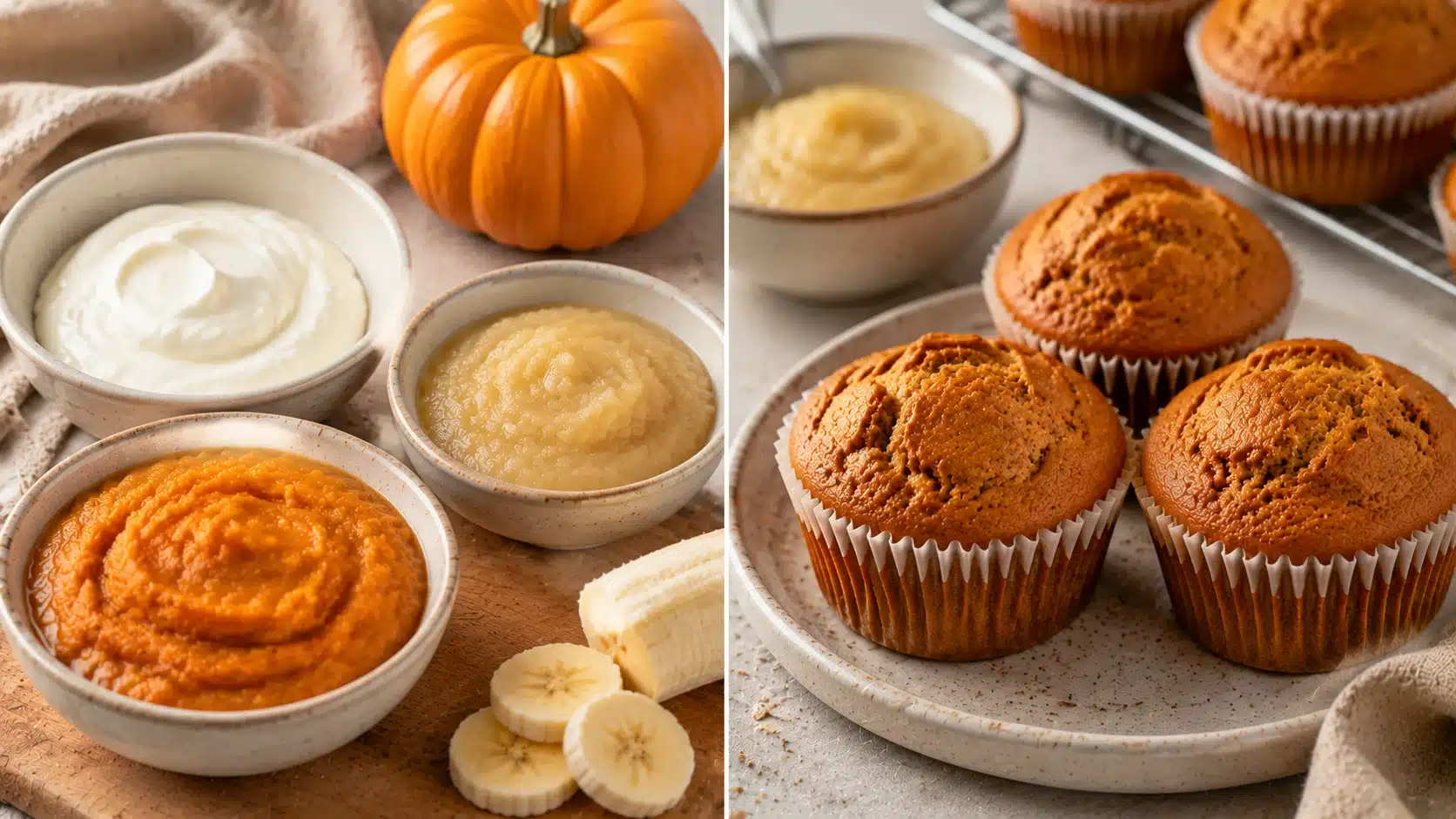
Greek yogurt adds moisture along with a protein boost, helping muffins stay soft for days. Applesauce keeps things tender without the fat that oil or butter would add.
Pumpkin puree can be increased slightly for more moisture, though too much can make the muffins gummy.
Mashed fruit, like bananas, works the same way as applesauce, adding softness and natural sweetness. Any of these can replace part of the oil in a traditional recipe, cutting fat without drying out the muffin.
5. Pumpkin Spice Blend
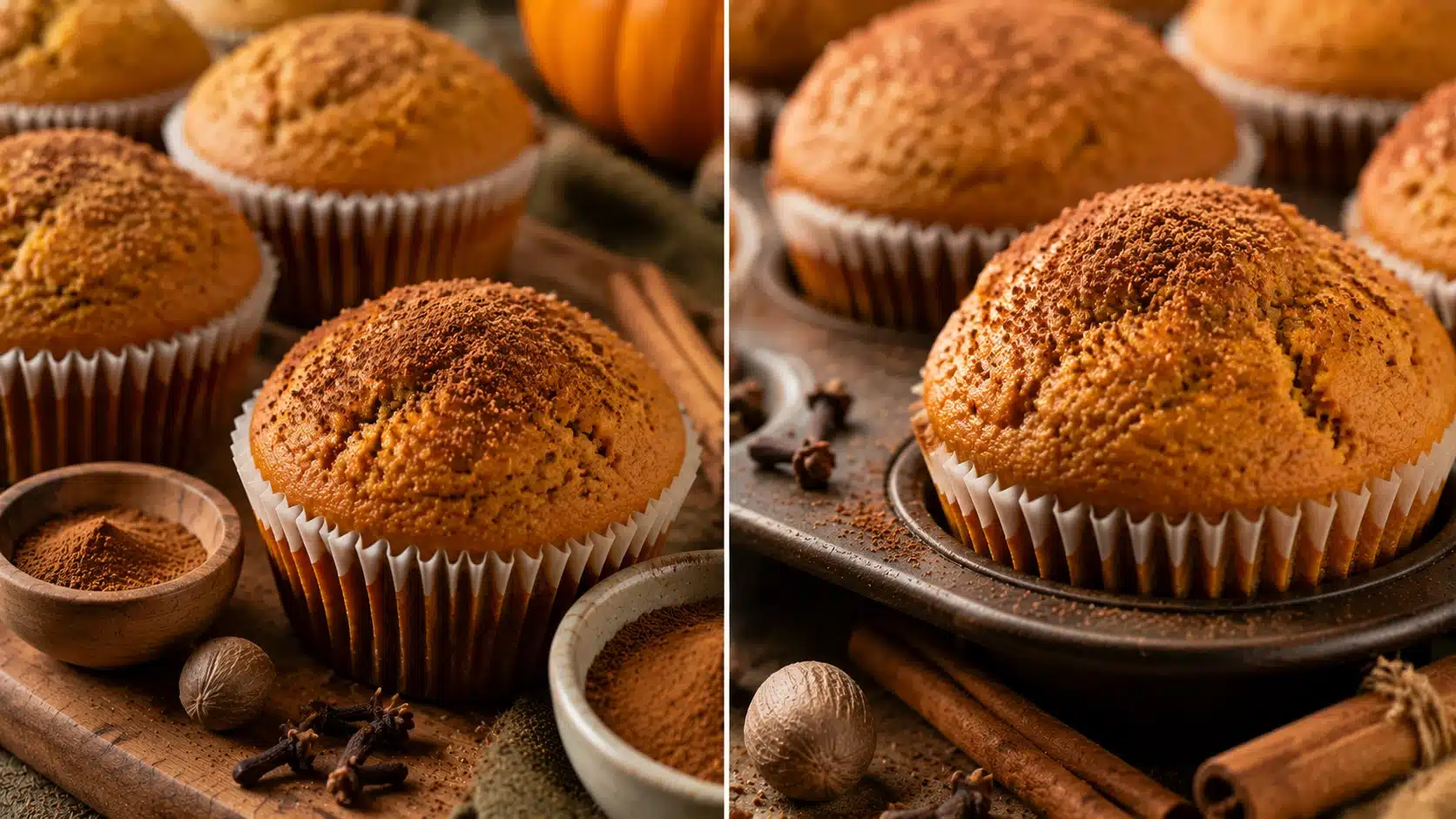
Cinnamon, nutmeg, ginger, cloves, and allspice make up the classic pumpkin spice blend that gives these muffins their fall flavor.
You can buy a pre-made pumpkin spice mix or combine your own for a fresher, more customizable flavor.
Healthy Ingredient Swaps For Pumpkin Muffins
If you already have a favorite pumpkin muffin recipe, you do not need to start from scratch. These substitutions let you lighten up an existing recipe and still land on a healthy pumpkin muffin that holds its shape.
| Instead Of | Use |
|---|---|
| White flour | Whole wheat flour or oat flour |
| White sugar | Maple syrup or coconut sugar |
| All butter or oil | Greek yogurt plus a small amount of oil |
| Chocolate chips | Dark chocolate chips or chopped nuts |
| Regular milk | Almond milk or oat milk |
Keep in mind that each swap slightly shifts the texture. Whole wheat flour makes muffins denser, natural sweeteners add extra moisture, and yogurt can make the crumb softer than butter would. If you are swapping several ingredients at once, expect some trial and error before you land on your version.
How To Make Healthy Pumpkin Muffins
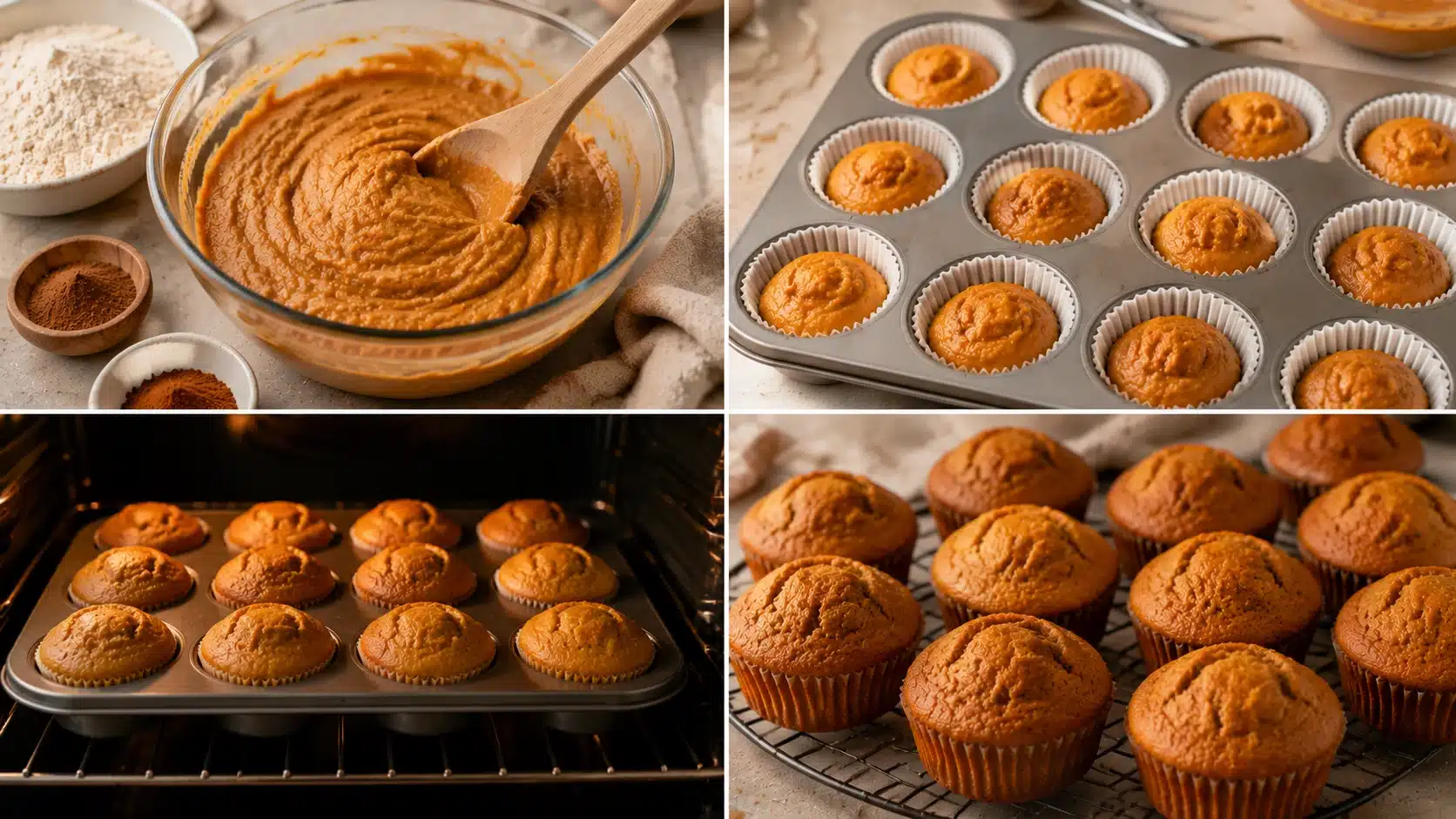
Once your ingredients are ready, the process comes together quickly. These three steps cover everything from mixing the batter to knowing exactly when your muffins have finished baking.
Step 1: Prepare The Muffin Batter
Mix the wet ingredients, pumpkin puree, eggs, sweetener, and yogurt or applesauce in one bowl. In a separate bowl, whisk together the dry ingredients: flour, baking soda, baking powder, salt, and spices.
Combine the two just until no dry streaks remain. Overmixing develops gluten and results in tough, dense muffins rather than a soft crumb.
Step 2: Fill The Muffin Pan Correctly
Fill each muffin cup about three-quarters full. This gives the batter room to rise without overflowing or baking unevenly.
Use paper liners or grease the pan well so the muffins release cleanly once baked. Try to portion the batter evenly across the cups so every muffin bakes at the same rate.
Step 3: Bake Until Moist And Fully Set
Bake at 350°F (175°C) for about 18 to 22 minutes, depending on your oven and muffin size.
Test doneness by inserting a toothpick into the center. It should come out clean or with a few moist crumbs, not wet batter.
Avoid overbaking, since pumpkin muffins can dry out quickly once they’ve passed the perfect point.
How To Make Pumpkin Muffins More Nutritious
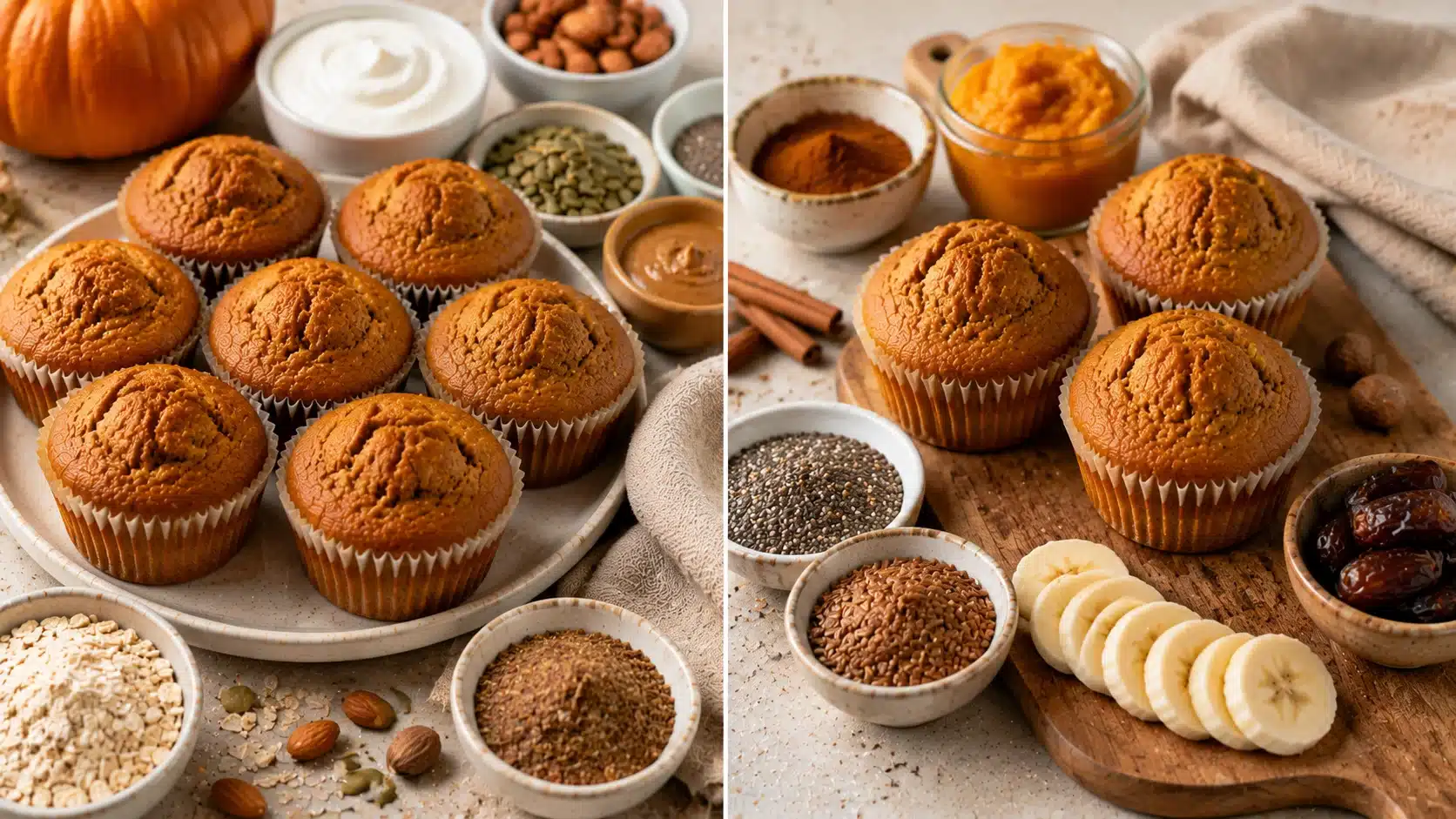
Beyond the basic swaps, a few extra additions can target protein, fiber, or sugar specifically. Customize based on your own goals.
1. Add More Protein
Greek yogurt, a scoop of protein powder, chopped nuts, seeds, or a spoonful of nut butter all fold into the batter well. These additions help turn a snack-sized muffin into something that supports muscle repair and keeps hunger at bay longer.
If you add protein powder, reduce the flour by about two tablespoons per scoop to keep the batter from getting too thick.
2. Increase Fiber
Rolled oats, chia seeds, flaxseed meal, and whole grains all boost fiber content without changing the flavor much. Chia and flax also add a subtle nutty texture and a small amount of healthy fat. Stir in up to two tablespoons of either without any other adjustments.
3. Reduce Sugar Without Losing Flavor
Increasing the pumpkin puree slightly adds natural sweetness without more added sugar. A pinch more cinnamon or nutmeg gives the impression of extra sweetness without changing the sugar count. Skipping sweet toppings like glaze or streusel keeps the final total in check.
Healthy Pumpkin Muffin Variations
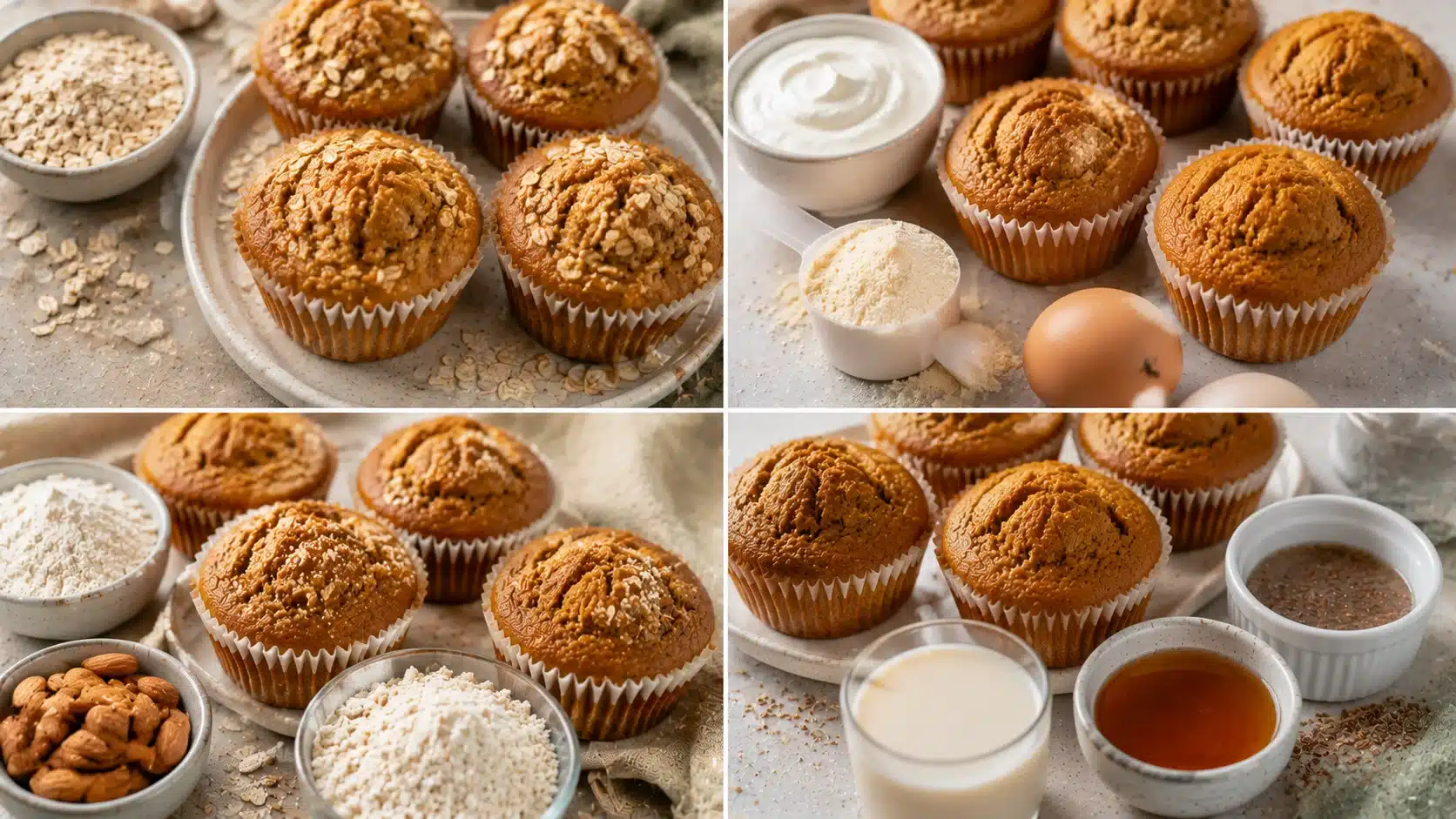
This healthy pumpkin muffin base recipe adapts well to different dietary goals. Each variation below includes practical guidance on what to change and what to expect from the texture.
1. Healthy Pumpkin Oat Muffins
Replace the whole wheat flour entirely with certified gluten-free oat flour at the same ratio. The crumb comes out slightly softer and more tender than the wheat version.
These hold up well on busy mornings when you need something filling and portable. Add a tablespoon of chia seeds for extra fiber without changing the flavor.
2. High Protein Pumpkin Muffins
Add Greek yogurt, one scoop of vanilla protein powder, and an extra egg to the base recipe. Reduce the flour by two tablespoons to compensate for the powder.
The result is denser and more filling. It works well as a post-workout snack rather than a light breakfast. These pair well with a piece of fruit for a complete recovery meal.
3. Gluten-Free Pumpkin Muffins
Certified gluten-free oat flour is the closest one-to-one swap for whole wheat here. The ratio stays the same, and the crumb comes out slightly softer.
Almond flour works but needs support; a 50/50 blend with oat flour holds together well and adds a mild nutty flavor. Store-bought GF blends labeled “measure for measure” are the simplest option with no other adjustments needed.
4. Vegan Pumpkin Muffins
Replace each egg with a flax egg: one tablespoon of ground flaxseed mixed with three tablespoons of water. Let it rest for five minutes until gel-like.
Use maple syrup instead of honey, plant-based milk instead of dairy, and coconut yogurt instead of Greek yogurt. The muffins will be slightly denser but still moist and flavorful.
Tips For Moist, Healthy Pumpkin Muffins
Healthier ingredients in a healthy pumpkin muffin recipe can sometimes lead to a drier crumb if you are not careful. These baking tips help you keep that soft, moist texture intact no matter which swaps you have made.
- Keep a small amount of fat in the recipe. Even when you are using yogurt as the primary moisture source, a few tablespoons of oil still matter for texture and richness.
- Measure flour correctly. Spoon flour into the measuring cup, then level it off. Scooping directly from the bag packs in too much flour and dries the muffin out.
- Use room-temperature eggs and yogurt. Cold ingredients do not blend smoothly into pumpkin puree and can make the batter seize up.
- Add a teaspoon of apple cider vinegar. It reacts with baking soda during baking and helps muffins rise taller without changing the flavor.
- Let muffins cool in the pan for five minutes, then move them to a wire rack. Leaving them in the pan too long traps steam underneath and softens the bottoms.
- Check that your baking soda and baking powder are fresh. Old leaveners are one of the most common reasons muffins turn out flat and dense.
How To Store Healthy Pumpkin Muffins
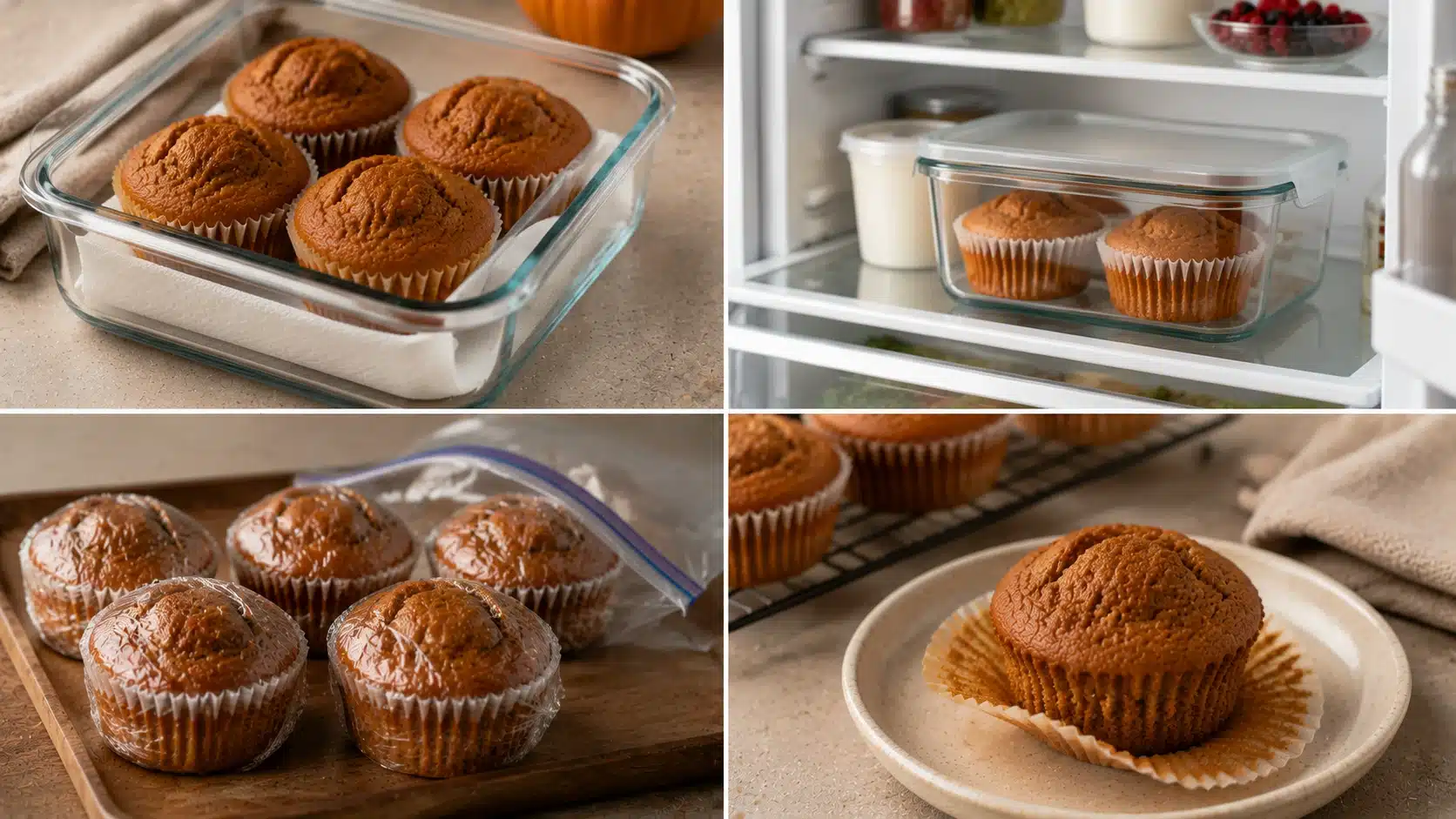
Since healthy pumpkin muffins skip the preservatives found in store-bought versions, storage matters more. Here is how to keep them fresh at every time frame.
Room Temperature
- Store cooled muffins in an airtight container.
- They stay fresh for up to 2 to 3 days at room temperature.
- Let muffins cool fully before sealing to prevent trapped steam from softening them.
- Tip: Line the container with a paper towel to absorb extra moisture.
Refrigerator
- Refrigeration extends freshness to about one week.
- This works best if your kitchen runs warm or humid.
- Cold storage can slightly dry out the crumb. Warm a refrigerated muffin for 15 seconds in the microwave before eating.
Freezer
- Let muffins cool fully before freezing.
- Wrap each muffin individually in plastic wrap, then store together in a freezer bag.
- Frozen muffins keep well for up to 3 months.
- Reheat in the microwave for 20 to 30 seconds, or thaw at room temperature for a couple of hours.
- Tip: Label the freezer bag with the date so you always use the oldest batch first.
What Goes Wrong While Making Pumpkin Muffins
Knowing these common pitfalls helps you avoid a dense, gummy, or flat batch of healthy pumpkin muffins.
- Using pumpkin pie filling instead of pumpkin puree. Pie filling contains added sugar and spices, which throws off the sweetness and flavor balance of the recipe.
- Adding too much pumpkin. More pumpkin does not always mean better results. Too much extra puree adds excess moisture, leading to a gummy or underbaked center.
- Overmixing the batter. Stirring too long develops gluten, which results in dense, tough muffins instead of a light, tender crumb.
- Using old baking soda or baking powder. Expired leaveners are a common reason muffins come out flat and barely rise. Test baking soda by dropping a small amount in hot water. It should fizz right away.
- Swapping too many ingredients at once. Testing one substitution at a time makes troubleshooting far easier. If you change the flour, sweetener, and fat all at once, you will not know what caused the problem.
Frequently Asked Questions
Are pumpkin muffins good for weight loss?
A pumpkin muffin can fit into a weight-loss plan when portioned reasonably and made with less sugar and more fiber. Whole grain flour and natural sweeteners keep calories lower while still feeling satisfying.
Can I make healthy pumpkin muffins without sugar?
Yes. Mashed banana, unsweetened applesauce, or blended dates can replace added sugar entirely. These natural sweeteners also add moisture, so the muffins still taste balanced and bake up soft.
How do I make pumpkin muffins more moist?
Use Greek yogurt in the batter, measure flour correctly by spooning rather than scooping, and avoid overbaking. Letting muffins cool properly on a wire rack also helps the crumb stay soft rather than soggy.
Can I use fresh pumpkin instead of canned?
Yes. Roast and puree it first, then drain the excess water so the batter doesn’t get too wet. Fresh pumpkin can taste richer, though it needs more prep time. Canned pumpkin is more consistent batch to batch.
How long do homemade pumpkin muffins last?
About 2 to 3 days at room temperature in an airtight container, up to one week refrigerated, or up to 3 months in the freezer. Letting them cool fully before storing keeps them from turning soggy.
Can I make healthy pumpkin muffins without eggs?
Yes. Use a flax egg: one tablespoon of ground flaxseed mixed with three tablespoons of water, rested for five minutes. Two flax eggs replace two regular eggs. The muffins will be slightly denser but still moist and well-flavored.
What is the best flour for healthy pumpkin muffins?
Whole wheat flour gives the best balance of fiber, structure, and flavor for most bakers. Oat flour works well for a gluten-free option. Almond flour adds moisture and healthy fats but needs a second flour for structure.
Making Healthy Pumpkin Muffins Worth Baking Again
Homemade healthy pumpkin muffins give you complete control over what goes into your food. The type of flour, how much sugar, and what fat source are all your call.
Small swaps make a real difference. Greek yogurt instead of all butter, maple syrup instead of white sugar, a handful of oats for extra fiber. None of these changes strip the flavor out. They just make the muffin work harder for you.
Balance matters more than perfection. Once you have nailed the base recipe, try folding in walnuts, chia seeds, or dark chocolate chips. Serve them warm with a spread of almond butter for a protein boost that carries you through the morning.
Subscribe to our newsletter for more high-protein snack recipes and practical nutrition guides delivered every week.