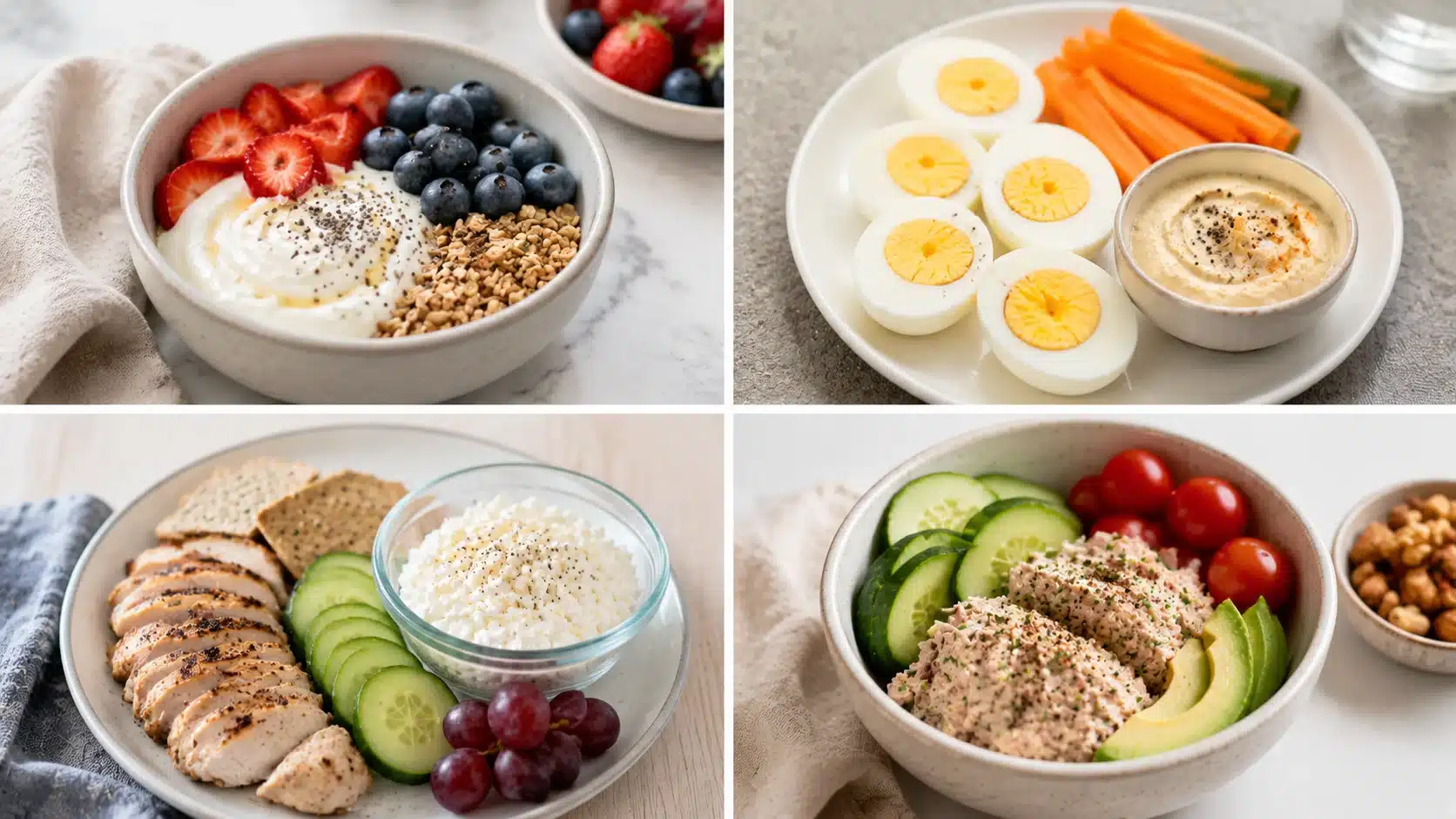
You eat a snack, and forty minutes later you’re hungry again. Protein-rich snacks hold you over longer, but only if the portion and calories are right.
Below are high-protein snacks for weight loss, sorted into nine categories plus a bonus pick, each with estimated protein and calories.
Nutritional values will vary depending on the brand, exact serving size, added ingredients, and how the food is prepared, so treat these as estimates rather than fixed numbers.
High-Protein Snacks at a Glance
| Snack | Estimated protein | Estimated calories | Best for |
|---|---|---|---|
| Plain Greek yogurt | 15–18 g | 100–150 | Sweet cravings |
| Low-fat cottage cheese | 14–16 g | 120–160 | Maximum fullness |
| Tuna cucumber bites | 15–20 g | 100–160 | Low-carb snack |
| Shelled edamame | 14–18 g | 180–220 | Vegan option |
| Turkey roll-ups | 15–20 g | 130–190 | Work or travel |
What Are the Best High-Protein Snacks for Weight Loss?
Plain Greek yogurt, low-fat cottage cheese, eggs, tuna, edamame, roasted chickpeas, turkey roll-ups, tofu, and protein-rich smoothies are among the best high-protein snacks for weight loss.
A snack that actually supports weight loss usually combines:
- A meaningful amount of protein
- A manageable calorie count
- Little added sugar
- Some fiber or produce
- A serving size that matches your actual hunger level
There isn’t one protein number every snack needs to hit. Many of the options below provide roughly 10 to 20 grams of protein per serving. Smaller snacks contribute less on their own but still add up across the day.
Low-Calorie Dairy and Egg Snacks
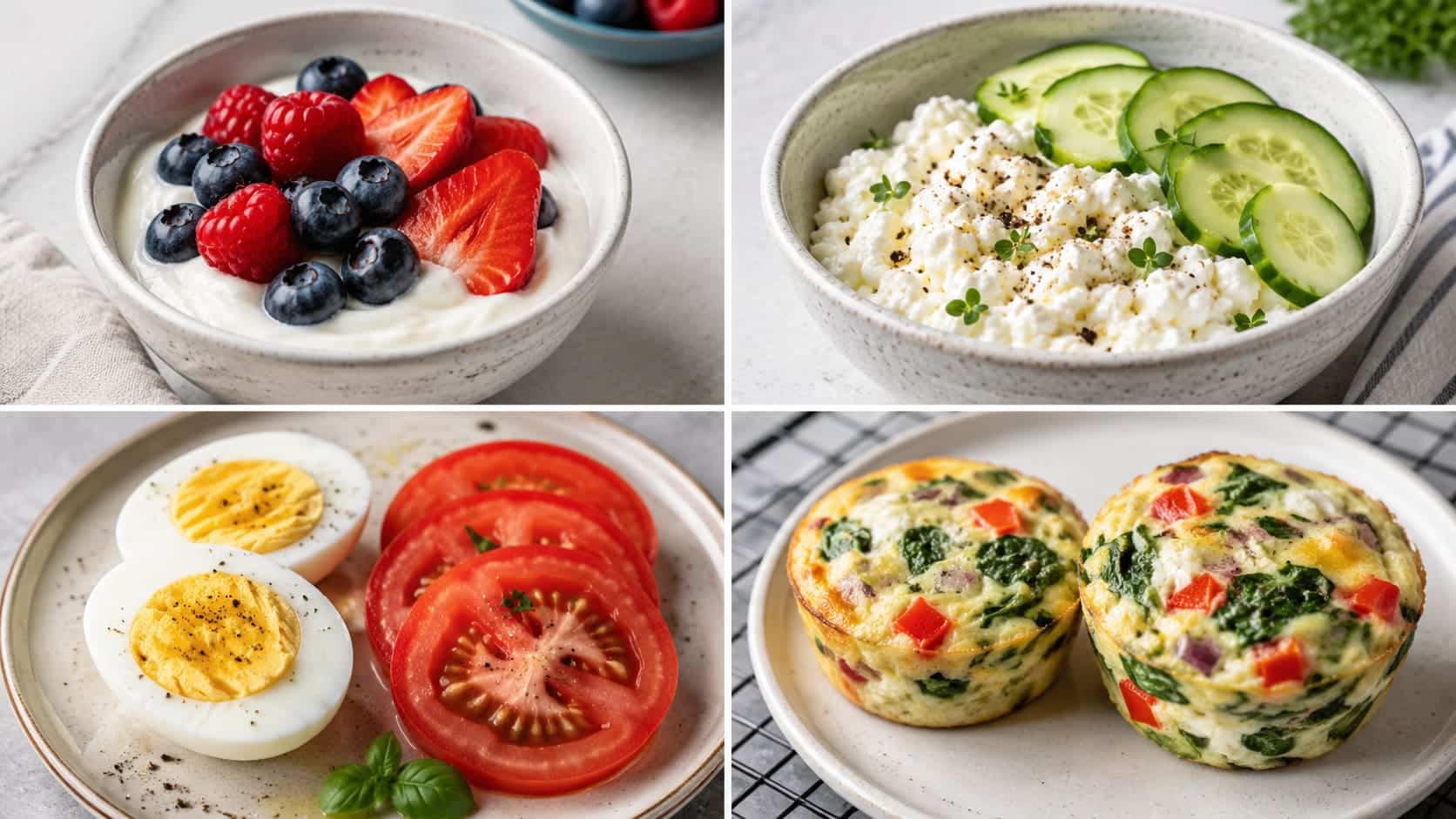
These snacks offer complete protein (protein containing all nine essential amino acids) and need almost no preparation.
1. Plain Greek Yogurt With Berries
Serving: 3/4 cup plain nonfat Greek yogurt with 1/2 cup berries. Protein: ~15 g. Calories: ~120–150.
Berries add natural sweetness and fiber, so you get flavor without the added sugar found in flavored yogurt cups. Not a fit if dairy doesn’t agree with you.
2. Low-Fat Cottage Cheese With Cucumber
Serving: 1/2 cup cottage cheese with sliced cucumber, black pepper, and herbs. Protein: ~14 g. Calories: ~120–140.
The high water content of cottage cheese and cucumber makes this a large, filling portion for relatively few calories. Pass on this one if you’re sensitive to lactose.
3. Two Hard-Boiled Eggs With Tomato
Serving: 2 eggs with sliced tomato. Protein: ~12–13 g. Calories: ~150.
Eggs are one of the most nutrient-dense protein sources available. Pairing them with tomato adds volume and freshness without many extra calories. Not an option if eggs are off-limits for you.
4. Egg-White Vegetable Muffins
Serving: 2 muffins made with egg whites, spinach, peppers, and onion. Protein: ~14 g. Calories: ~110–130.
Bake a batch on Sunday, and you have a grab-and-go snack for the whole week. Skip these if you have an egg allergy.
Savory Meat and Seafood Snacks
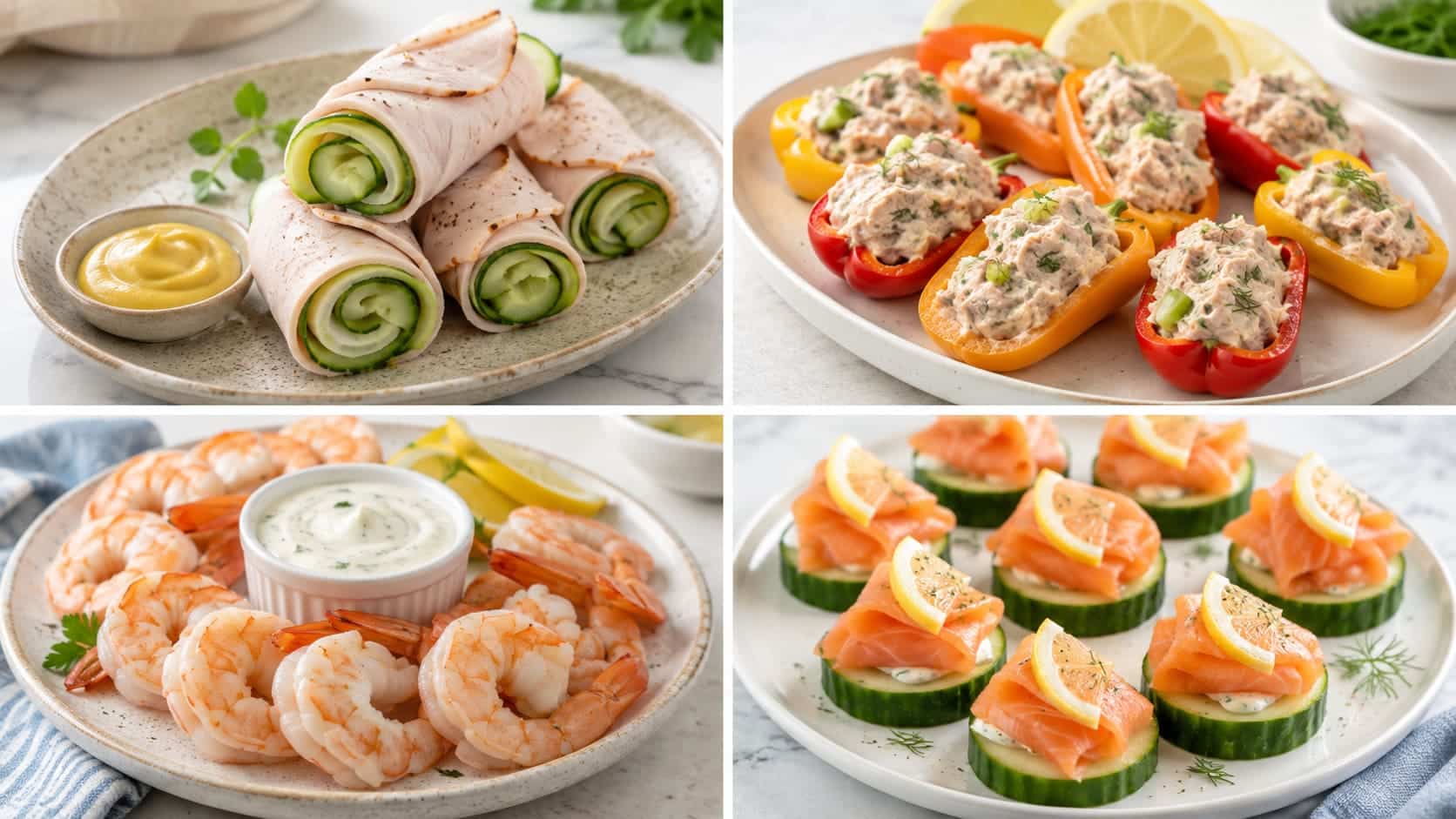
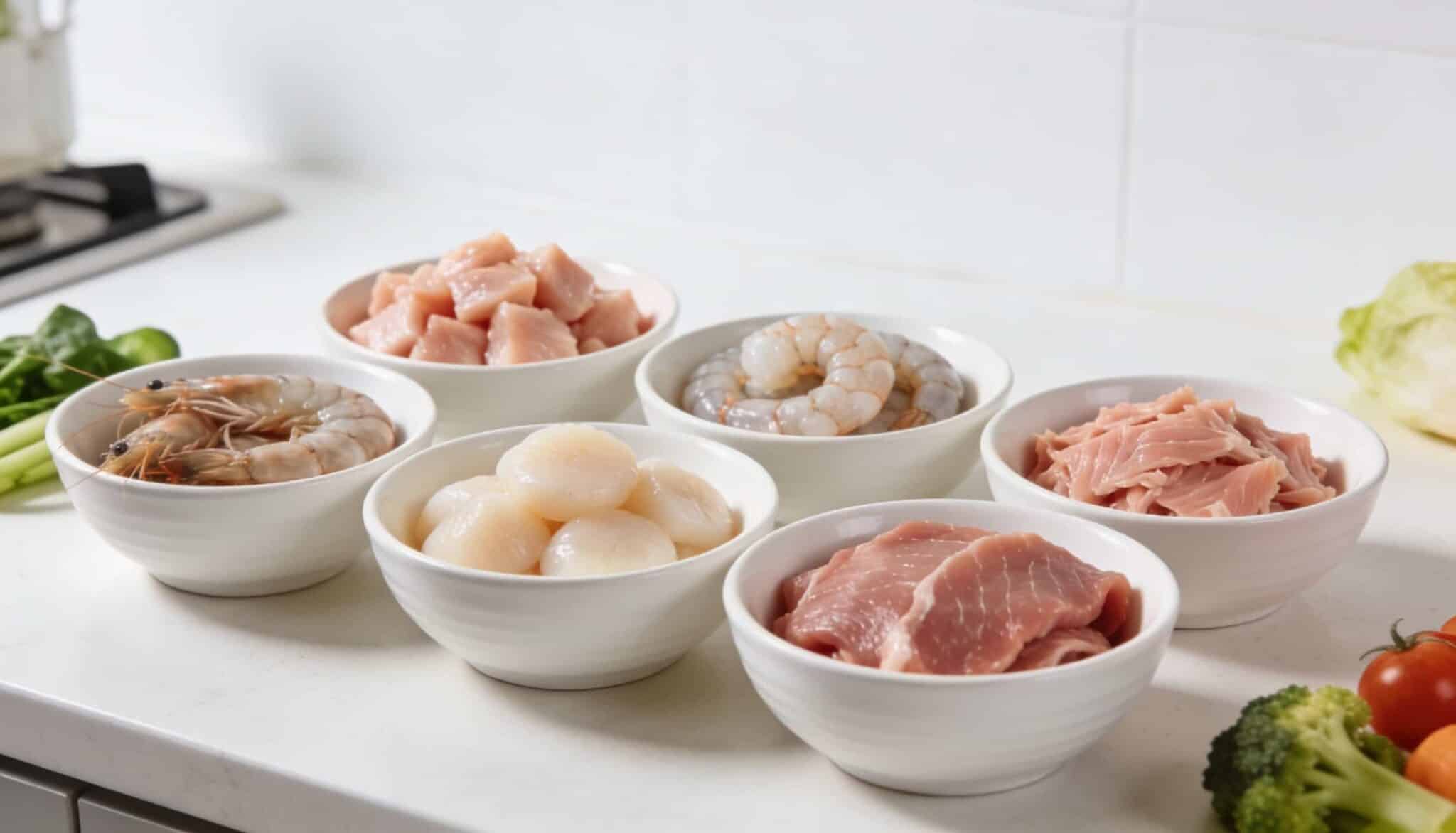
Lean meat and seafood are among the most protein-dense options by calorie. If you’re watching sodium, check labels on canned tuna, cured fish, and deli meat, since these can add up quickly.
5. Turkey and Cucumber Roll-Ups
Serving: 3 oz sliced turkey wrapped around cucumber strips with mustard. Protein: ~18 g. Calories: ~140–160.
Skip the tortilla and let the cucumber provide the crunch instead. Choose a lower-sodium turkey if you’re watching sodium.
6. Tuna-Stuffed Mini Peppers
Serving: 1 can tuna mixed with Greek yogurt and lemon, stuffed into mini peppers. Protein: ~20 g. Calories: ~130–150.
Swapping mayonnaise for yogurt cuts calories without losing creaminess. Watch the frequency here if you’re pregnant, since tuna carries mercury.
7. Shrimp With Yogurt Cocktail Dip
Serving: 4 oz chilled cooked shrimp with a yogurt-lemon dip. Protein: ~22 g. Calories: ~140.
Shrimp is one of the leanest protein sources available, with very few calories per gram of protein. Skip it if you have a shellfish allergy.
8. Smoked Salmon on Cucumber Rounds
Serving: 2 oz smoked salmon on cucumber slices with a squeeze of lemon. Protein: ~14 g. Calories: ~110–130.
Smoked salmon adds omega-3 fats along with protein. Using cucumber instead of a bagel keeps the calorie count low while still feeling like a real snack. Watch the sodium if you’re on a low-sodium diet, since cured fish tends to be higher than fresh.
Vegetarian High Protein Snacks
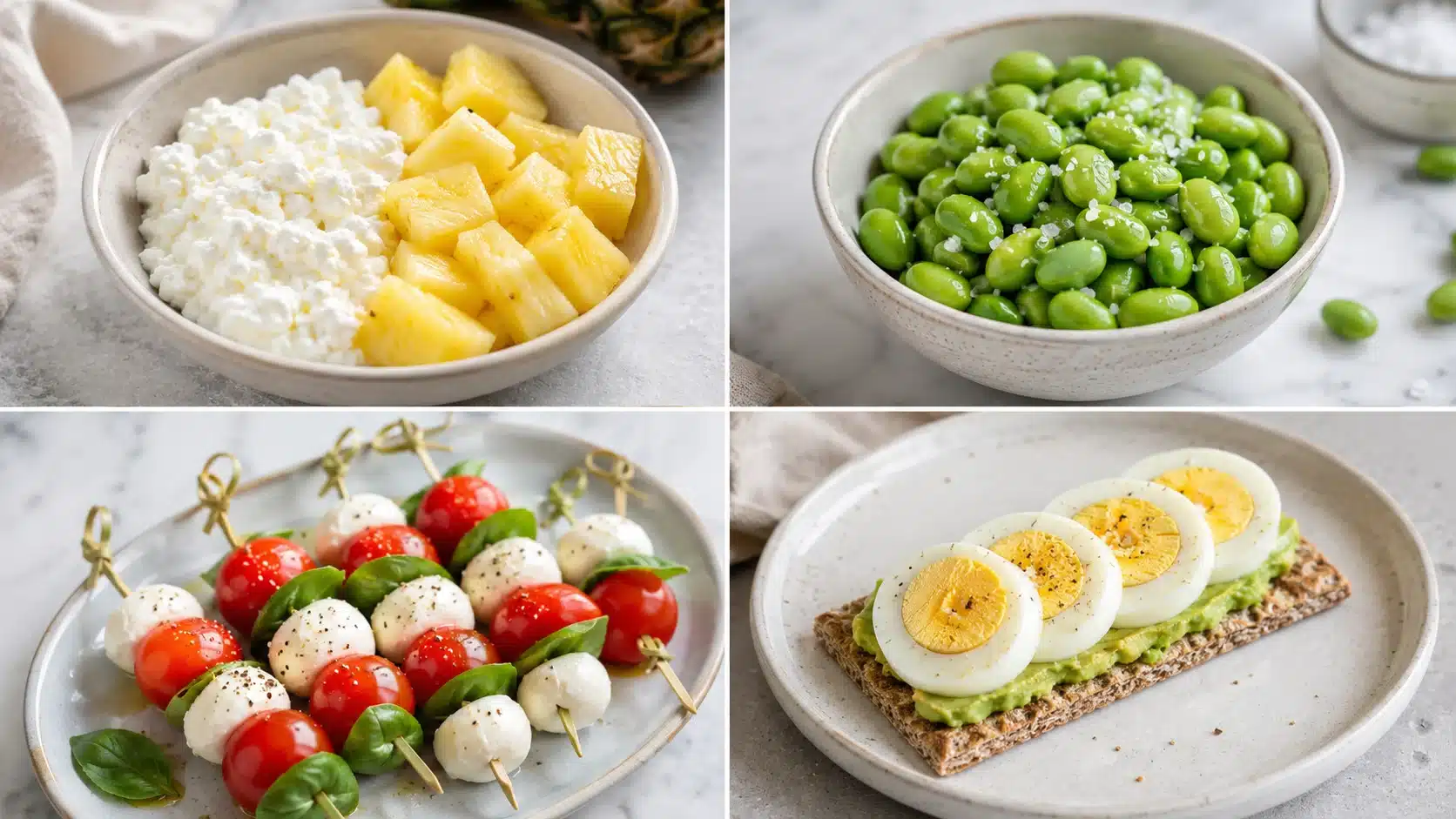
These options rely on dairy, eggs, legumes, and soy. They skip meat and seafood entirely, making them a good fit if you eat plant-forward but still include dairy and eggs.
9. Cottage Cheese and Pineapple
Serving: 1/2 cup cottage cheese with 1/2 cup pineapple (packed in juice). Protein: ~14 g. Calories: ~150.
Keep the fruit portion moderate since pineapple is higher in natural sugar than berries. Lactose intolerant readers should look elsewhere.
10. Edamame With Sea Salt
Serving: 1 cup shelled edamame, lightly salted. Protein: ~17 g. Calories: ~190.
One of the few plant snacks that qualifies as a complete protein on its own. Not a match if you’re allergic to soy.
11. Mini Caprese Skewers
Serving: Mozzarella pearls, cherry tomatoes, and basil (4–5 skewers). Protein: ~10 g. Calories: ~180–200.
Cheese calories build quickly, so stick to a measured portion rather than snacking straight from the container. Watch the portion if you’re limiting saturated fat.
12. Egg and Avocado Crispbread
Serving: 1 egg, thin layer of avocado, 1 high-fiber crispbread. Protein: ~9 g. Calories: ~160.
Keeping the avocado layer thin, rather than using a whole avocado, controls the calorie count while still adding healthy fat and fiber. Not suitable for an egg allergy.
Vegan Snacks High Protein
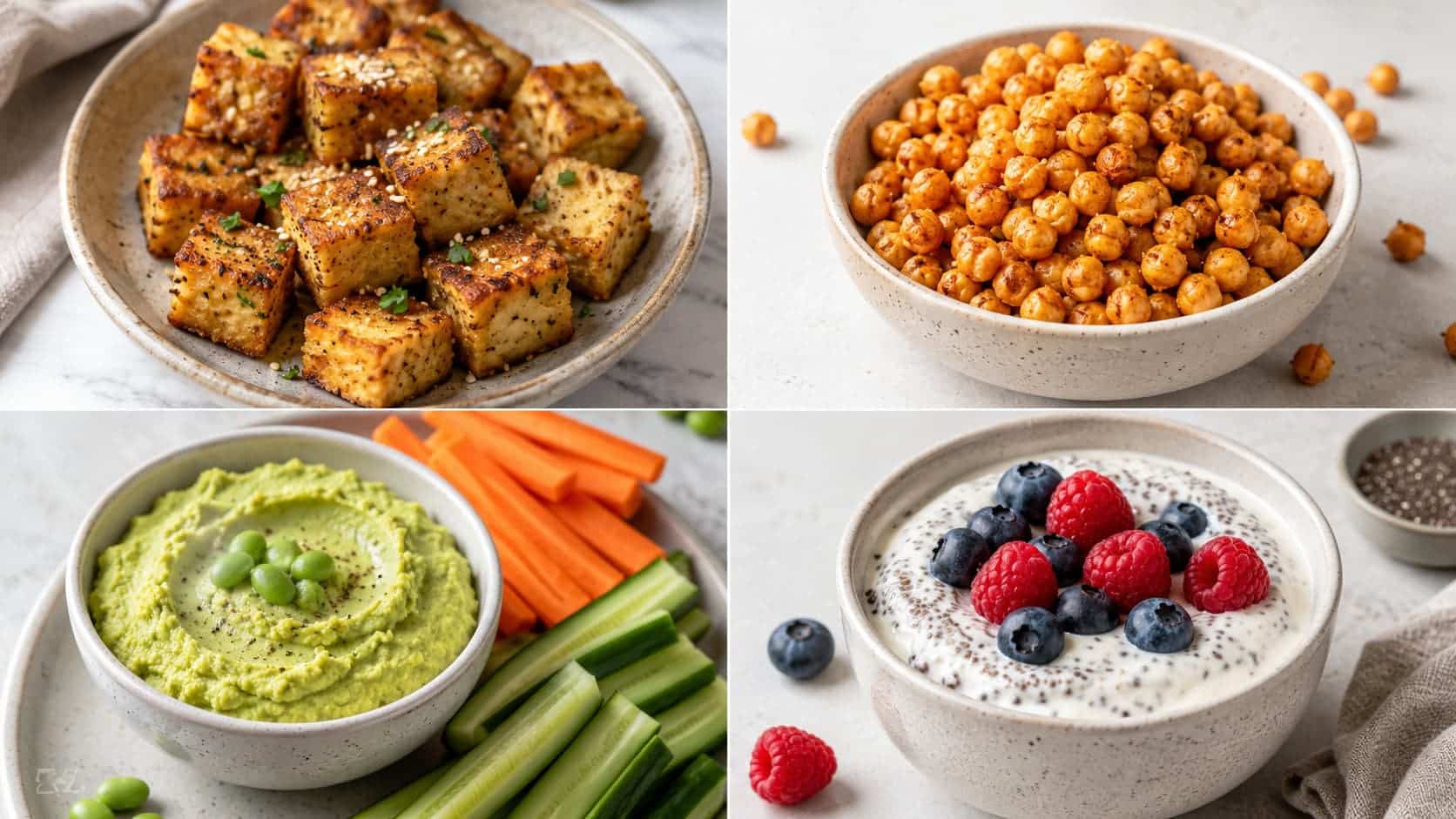
Plant protein doesn’t have to mean protein powder. Legumes, tofu, soy, and seeds all provide meaningful protein on their own.
13. Crispy Baked Tofu Cubes
Serving: 4 oz seasoned, baked tofu. Protein: ~10 g. Calories: ~100–120.
Pressing the tofu before baking helps it crisp up instead of turning soggy. Skip tofu entirely if you have a soy allergy.
14. Roasted Chickpeas
Serving: 1/2 cup roasted chickpeas. Protein: ~7 g. Calories: ~140–160.
Chickpeas provide fiber alongside protein, but they’re easy to overeat straight from the bag, so pre-portion them. Can cause bloating if your gut isn’t used to legumes yet.
15. Edamame Hummus With Vegetables
Serving: 1/4 cup edamame hummus with carrot and cucumber sticks. Protein: ~10 g. Calories: ~150.
Blending edamame instead of chickpeas bumps up the protein content compared with traditional hummus. Not suitable if soy is off the table for you.
16. Chia Soy Yogurt Cup
Serving: 3/4 cup unsweetened fortified soy yogurt with 1 tbsp chia seeds and berries. Protein: ~10–12 g. Calories: ~140.
Soy yogurt is one of the few plant-based yogurts that comes close to dairy yogurt’s protein content. Avoid this if soy doesn’t agree with you.
Sweet High Protein Snacks
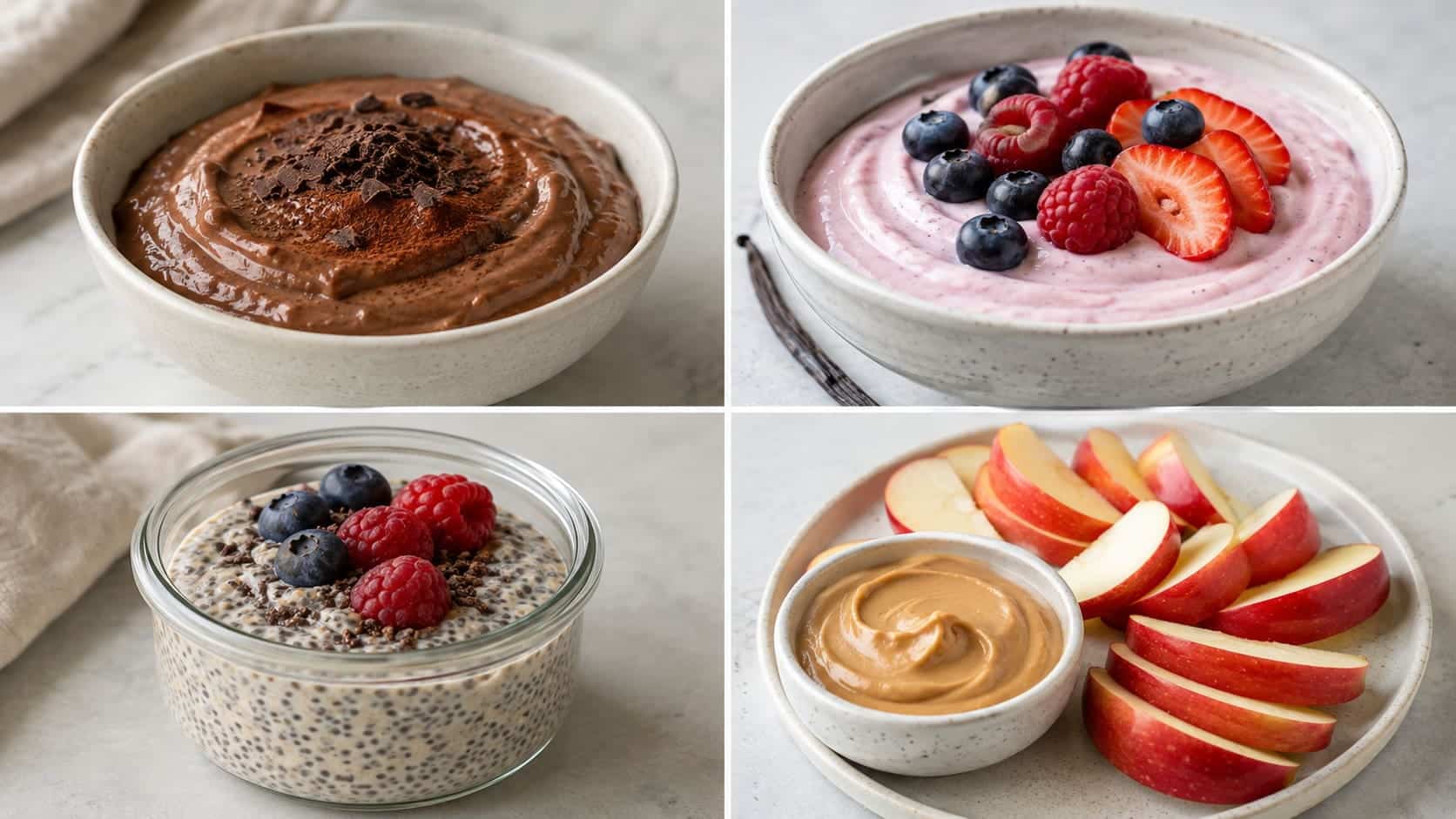
Dessert cravings are real, and not every sweet snack has to derail a weight loss plan. That said, sweet doesn’t automatically mean low-calorie, so portions still matter here.
17. Greek Yogurt Chocolate Pudding
Serving: 3/4 cup Greek yogurt with unsweetened cocoa and a small amount of sweetener. Protein: ~16 g. Calories: ~130.
Tastes like dessert, functions like a protein snack. This one’s off the table if dairy bothers you.
18. Cottage Cheese Berry Bowl
Serving: 1/2 cup blended cottage cheese with berries and vanilla. Protein: ~14 g. Calories: ~140.
Blending smooths out the texture for anyone who isn’t a fan of cottage cheese’s usual curds. Steer clear if lactose is a problem for you.
19. Protein Chia Pudding
Serving: 1 cup milk or soy milk with chia seeds and a measured scoop of protein powder. Protein: ~20 g. Calories: ~200.
Let it sit overnight in the fridge for a ready-made snack the next day. Check the protein powder’s ingredients if you have allergies.
20. Apple Slices With Powdered Peanut Butter Dip
Serving: 1 medium apple with 2 tbsp powdered peanut butter mixed with water. Protein: ~8 g. Calories: ~130.
Powdered peanut butter has much of the fat removed, so it delivers protein and flavor for far fewer calories than a spoonful of the regular kind. Not an option if you have a peanut allergy.
Crunchy High Protein Snacks
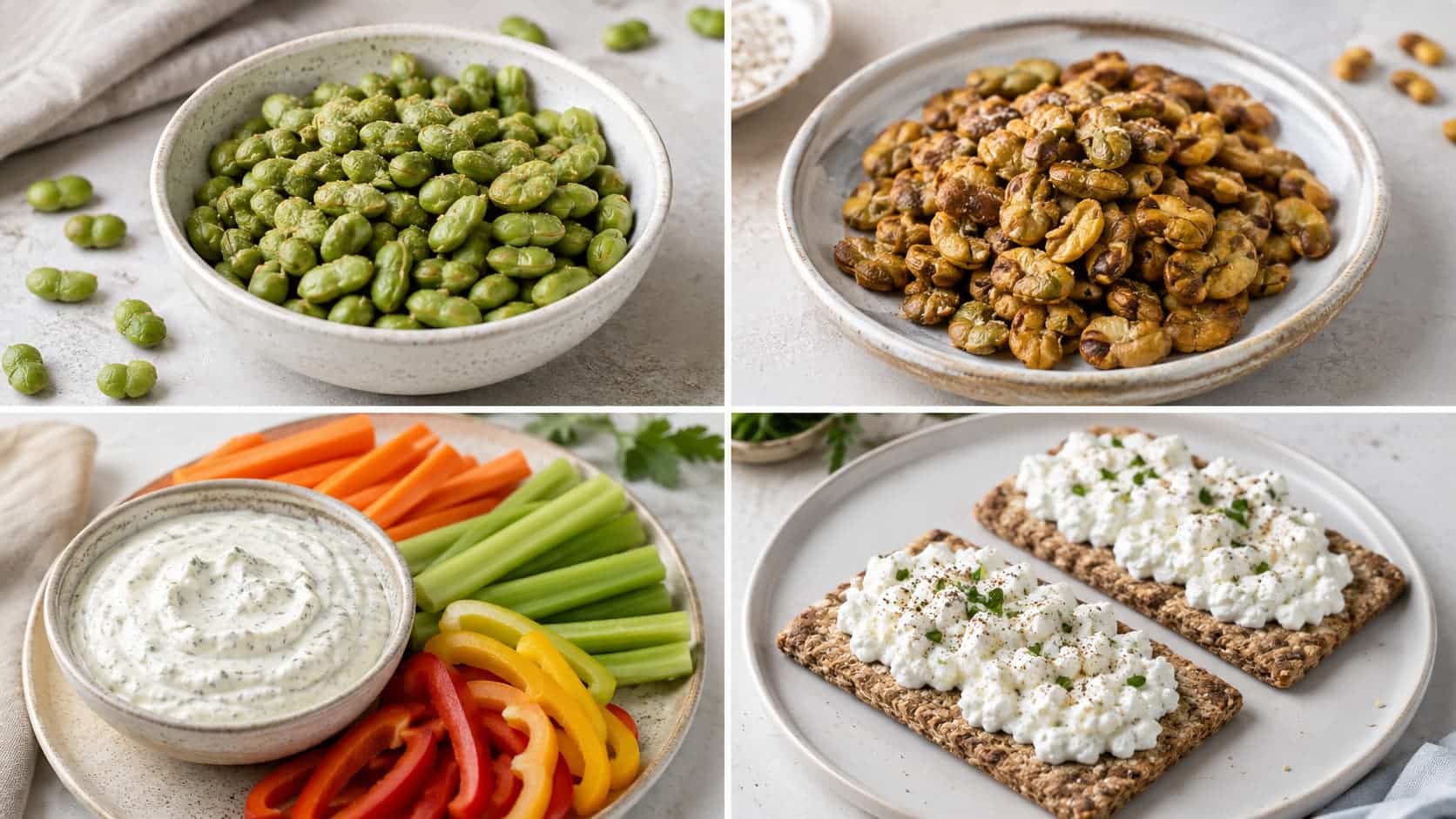
If you’re missing crunch on a weight loss plan, these options answer that craving without relying on chips. You get texture without the empty calories.
21. Dry-Roasted Edamame
Serving: 1/3 cup. Protein: ~13 g. Calories: ~130.
Check the sodium content on flavored versions, which can run higher than plain. Not an option for a soy allergy.
22. Roasted Broad Beans
Serving: 1/4 cup. Protein: ~10 g. Calories: ~110–130.
Stick to single-serve bags or pre-measured portions, since flavored varieties often include added oil. Avoid it if you’re sensitive to fava beans.
23. Greek Yogurt Ranch Dip With Vegetables
Serving: 1/3 cup yogurt-based ranch dip with carrots, peppers, and celery. Protein: ~10 g. Calories: ~120.
Swapping sour cream for yogurt keeps the protein up and the calories down. Best avoided if you can’t tolerate dairy.
24. High-Protein Crispbread With Cottage Cheese
Serving: 2 whole-grain crispbreads topped with 1/3 cup cottage cheese. Protein: ~13 g. Calories: ~150.
Look for crispbreads with whole grains or seeds for extra fiber alongside the crunch. Not ideal if you’re lactose intolerant or avoiding gluten.
No-Cook and On-the-Go Protein Snacks
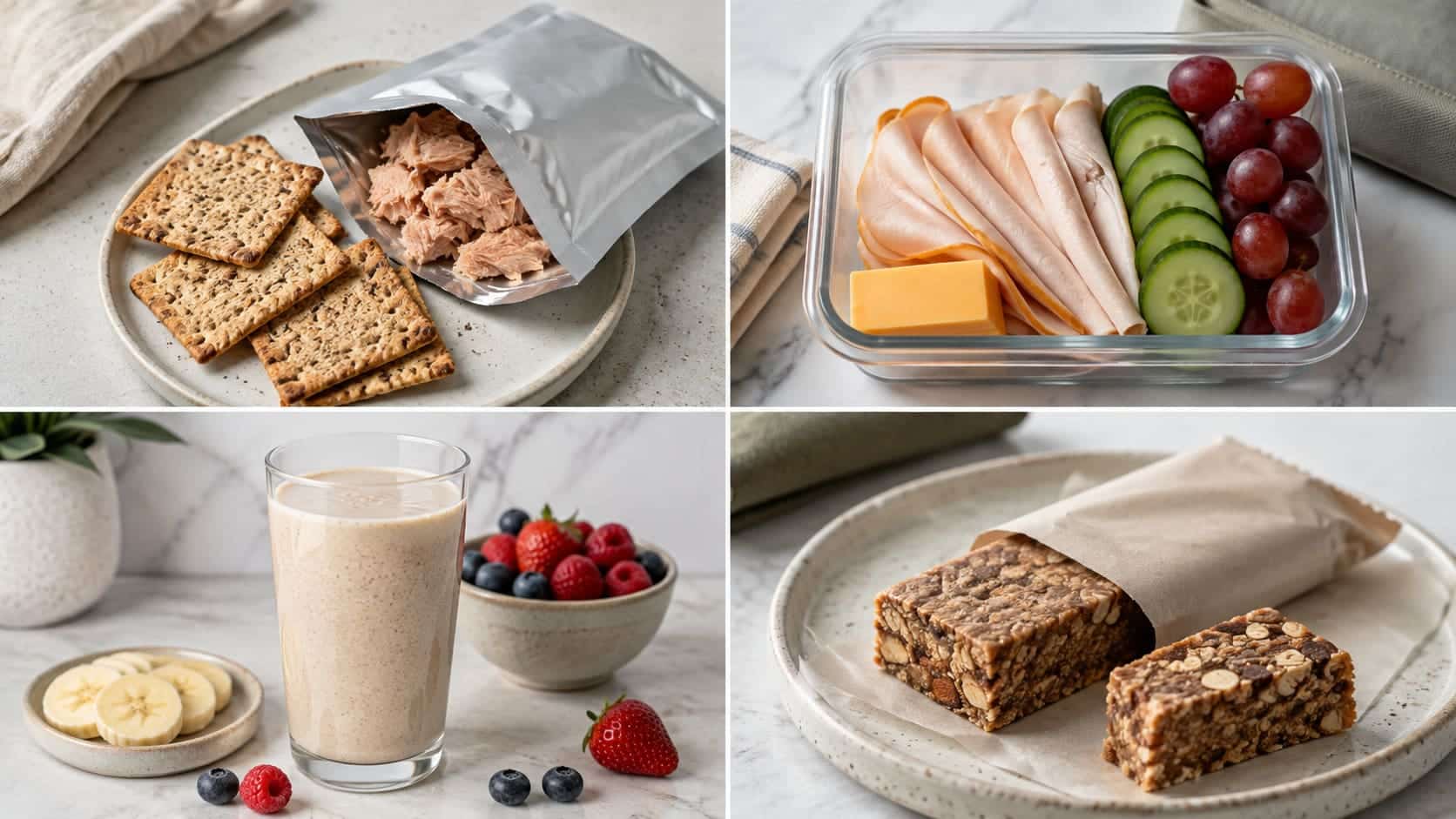
For work, school, travel, or errands, these snacks need zero prep. Just grab one, toss it in a bag, and you’re set for hours without any extra planning.
25. Tuna Pouch With Whole-Grain Crackers
Serving: 1 tuna pouch with 5–6 whole-grain crackers. Protein: ~18 g. Calories: ~170.
Easy-open pouches skip the can opener and the draining step entirely. Limit frequency if you’re pregnant, since tuna contains mercury.
26. Turkey and Cheese Snack Box
Serving: 2 oz turkey, 1 cheese portion, cucumber slices, and a small bunch of grapes. Protein: ~16 g. Calories: ~200.
Building your own version at home usually costs less and has fewer calories than a pre-packaged café snack box. Watch the sodium if you’re using deli turkey.
27. Protein Shake With Fruit
Serving: 1 scoop protein powder blended with fruit and water or milk. Protein: ~20–25 g. Calories: ~180–220.
Convenient, but liquid calories don’t satisfy everyone the same way solid food does, so pay attention to how full you actually feel afterward. Check the label if you have dairy or soy sensitivities.
28. Lower-Sugar Protein Bar
Serving: 1 bar. Protein: ~10–15 g. Calories: ~180–220.
Look for a bar with roughly 10 grams or more of protein, limited added sugar, a reasonable calorie count for a snack, some fiber, and a short ingredient list where possible.
Check the label for sugar alcohols if they bother your stomach.
Budget-Friendly Homemade Protein Snacks
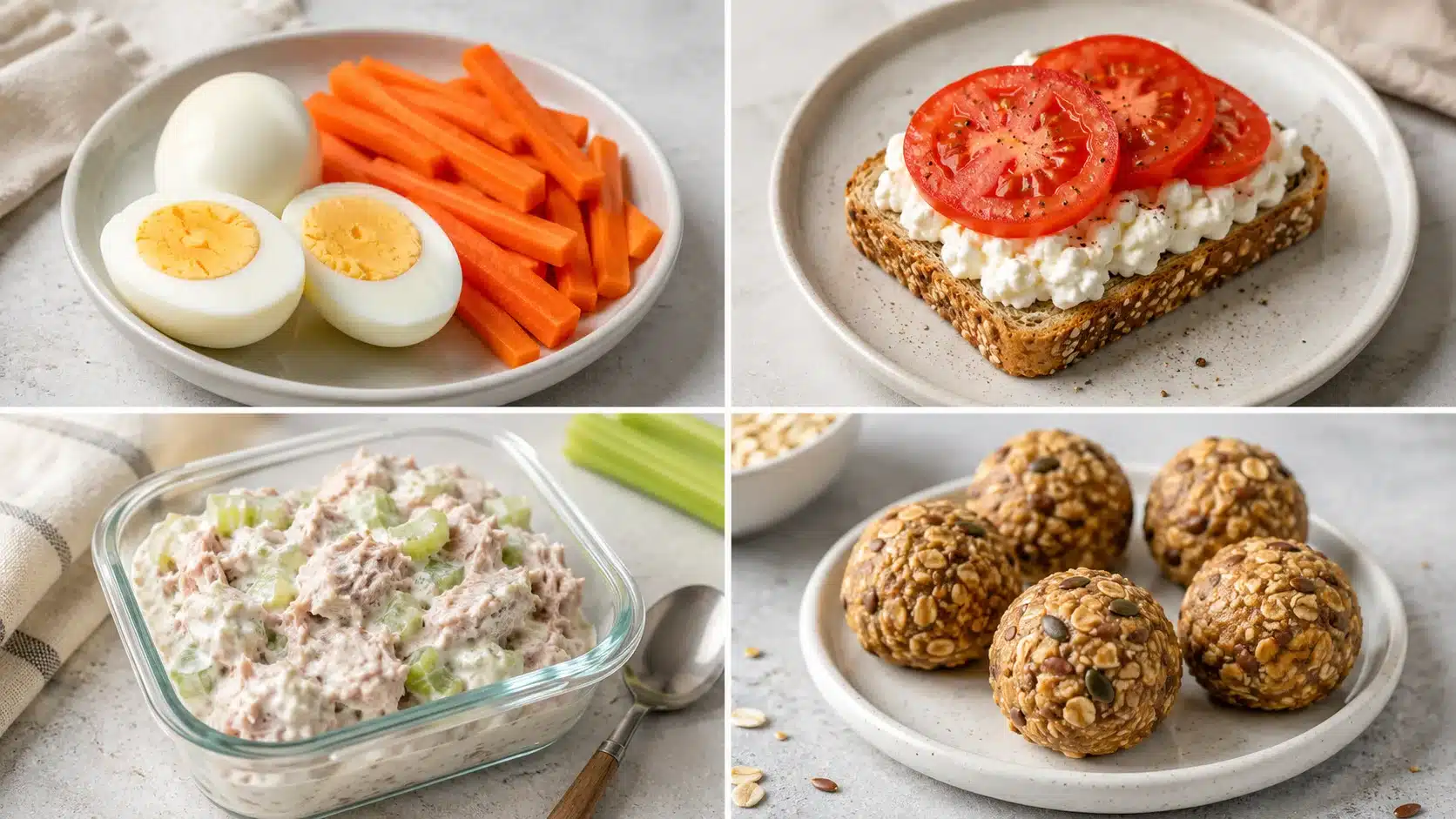
Many ranking lists lean heavily on premium packaged products. These options prove you don’t need to spend much to hit your protein goals.
29. Boiled Eggs With Carrot Sticks
Serving: 2 eggs with a cup of carrot sticks. Protein: ~13 g. Calories: ~160.
Boil a dozen eggs at once for grab-and-go snacks all week. Not suitable if you have an egg allergy.
30. Cottage Cheese on Whole-Grain Toast
Serving: 1 small slice of toast with 1/3 cup cottage cheese, tomato, and pepper. Protein ~12 g. Calories: ~150.
A savory, filling snack that costs less than most packaged bars. Skip it if you’re lactose intolerant or gluten sensitive.
31. Homemade Tuna Yogurt Cups
Serving: 1 can tuna mixed with Greek yogurt, mustard, and celery, portioned into a container. Protein: ~22 g. Calories: ~160.
Batch-make several containers at once for the week ahead. Limit frequency if you’re pregnant, since tuna contains mercury.
32. Peanut Butter Protein Oat Bites
Serving: 2 bites made from oats, powdered peanut butter, seeds, and protein powder. Protein: ~10 g. Calories: ~150–180.
These are easy to overeat since they’re bite-sized, so stick to a measured portion rather than the whole batch. Avoid it if you have a peanut allergy.
Poultry and Cured Meat Snacks
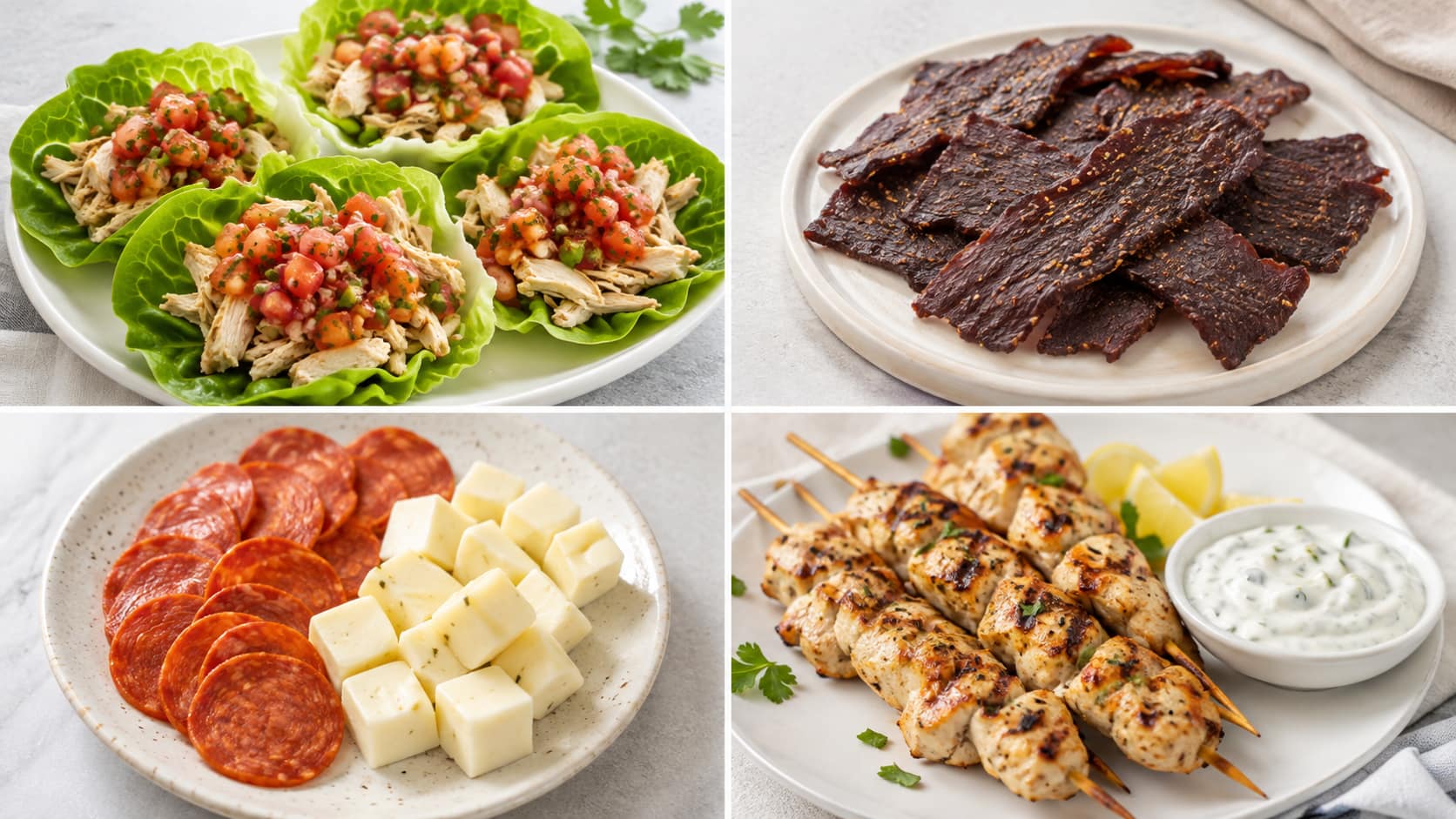
Poultry and cured meats add variety beyond the seafood category, with options that work well cold or reheated.
33. Chicken Lettuce Cups
Serving: 3 oz shredded chicken in lettuce leaves with salsa. Protein: ~20 g. Calories: ~150.
A great way to use leftover grilled chicken thighs. Generally well tolerated, with no major exceptions.
34. Lower-Sodium Beef or Turkey Jerky
Serving: 1 oz. Protein: ~11–13 g. Calories: ~80–100.
Compare brands closely; sodium and added sugar vary widely, so look for options with shorter ingredient lists and lower sodium per serving. Still watch sodium, even in lower-sodium versions.
35. Turkey Pepperoni and Cheese Bites
Serving: 1 oz turkey pepperoni with 1 oz part-skim mozzarella. Protein: ~14 g. Calories: ~150.
A salty, savory combo that satisfies chip cravings without the refined carbs. Watch the sodium, since cured meats tend to run high.
36. Grilled Chicken Skewers With Yogurt Dip
Serving: 3 oz grilled chicken breast cubes with a yogurt-garlic dip. Protein: ~24 g. Calories: ~170.
Great for meal-prepping ahead of a busy week since it reheats well straight from the fridge. Skip the yogurt dip if you’re lactose intolerant.
More High Protein Snacks Worth Trying
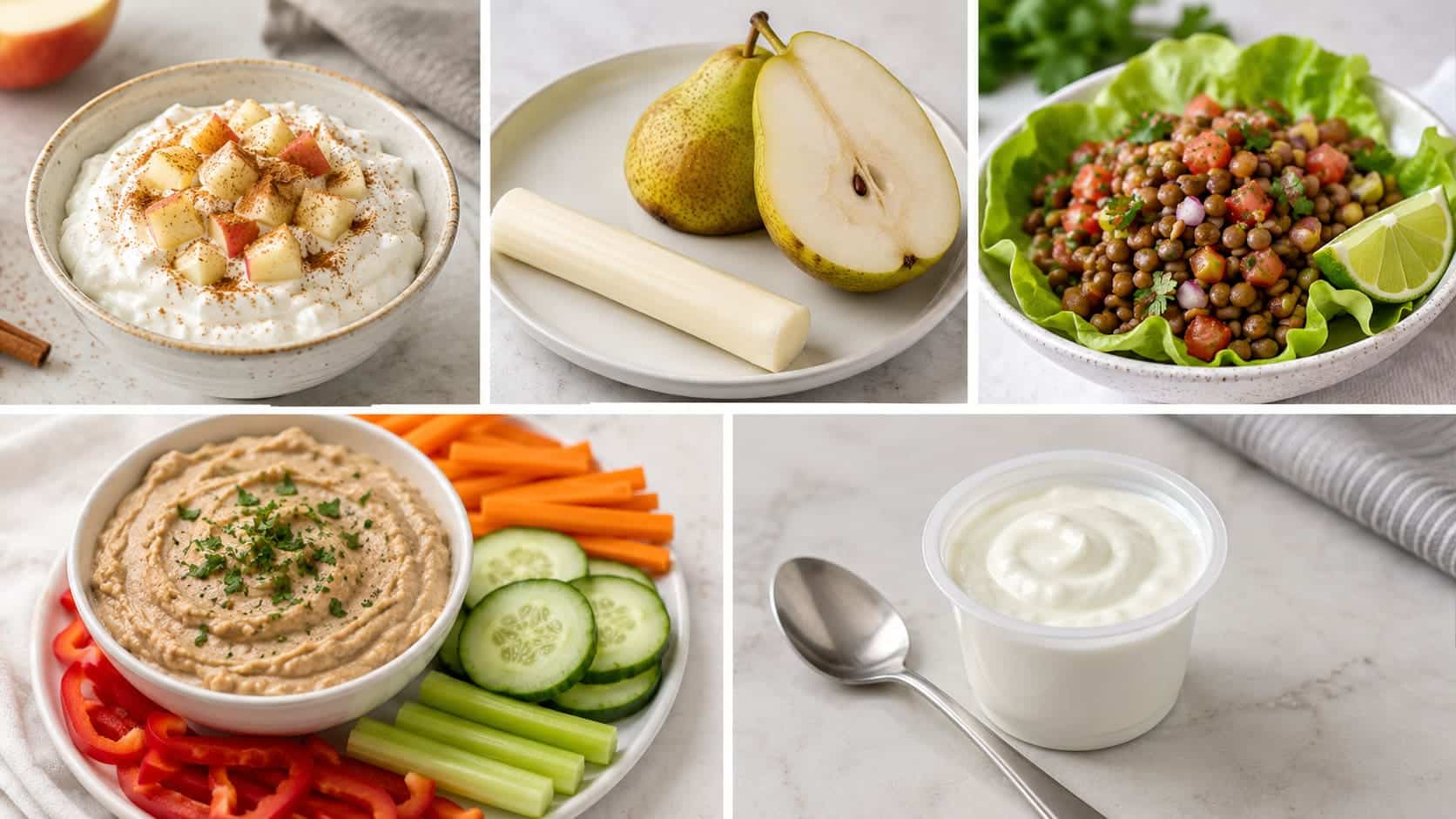
These options didn’t fit neatly into the categories above but are still worth keeping in your rotation, whether you’re after more variety or just a familiar favorite.
37. Skyr With Cinnamon and Apple
Serving: 3/4 cup plain skyr with cinnamon and diced apple. Protein: ~17–19 g. Calories: ~140.
Skyr is an Icelandic dairy product that’s strained more than regular yogurt, giving it a thicker texture and often a slightly higher protein count.
Choose the plain version to keep added sugar low. Skip it if you’re lactose intolerant.
38. String Cheese With a Pear
Serving: 1 string cheese with a medium pear. Protein: ~8–9 g. Calories: ~170.
Pairing cheese with whole fruit adds fiber that cheese alone doesn’t provide, which helps with fullness. Skip it if you’re lactose intolerant.
39. Lentil Salsa Cups
Serving: 1/2 cup cooked lentils with tomato, onion, lime, and cilantro. Protein: ~9 g. Calories: ~130.
A fresh, savory option that also delivers a solid dose of fiber. May cause bloating if you’re not used to legumes.
40. Homemade Bean Dip With Vegetables
Serving: 1/4 cup white or black bean dip with sliced vegetables. Protein: ~7 g. Calories: ~130.
\Blend beans with lemon, garlic, and a small amount of olive oil for a dip that costs pennies per serving. May cause bloating if you’re not used to legumes.
41. Single-Serve Greek Yogurt
Serving: 1 cup, plain or lightly sweetened. Protein: ~15–18 g. Calories: ~120–150.
Check the label. Some flavored cups pack in nearly as much sugar as a dessert. Look elsewhere if dairy doesn’t sit well with you.
Best High Protein Snacks by Goal
This table reorganizes selections from the list above by the goal they best fit, so you can jump straight to what matters most to you.
| Goal | Strong options |
|---|---|
| Lowest-calorie choices | Greek yogurt, shrimp, turkey roll-ups, tuna cucumber bites |
| Best vegetarian choices | Cottage cheese, eggs, skyr, edamame |
| Best vegan choices | Tofu, lentils, roasted chickpeas, soy yogurt |
| Best for sweet cravings | Yogurt pudding, frozen yogurt bark, berry cottage cheese |
| Best for travel | Jerky, tuna pouches, protein bars, dry-roasted edamame |
| Best budget choices | Eggs, canned tuna, beans, cottage cheese |
| Best crunchy choices | Broad beans, roasted chickpeas, edamame |
| Best post-workout choices | Greek yogurt, protein shake, cottage cheese, tuna |
How to Build a Filling High Protein Snack
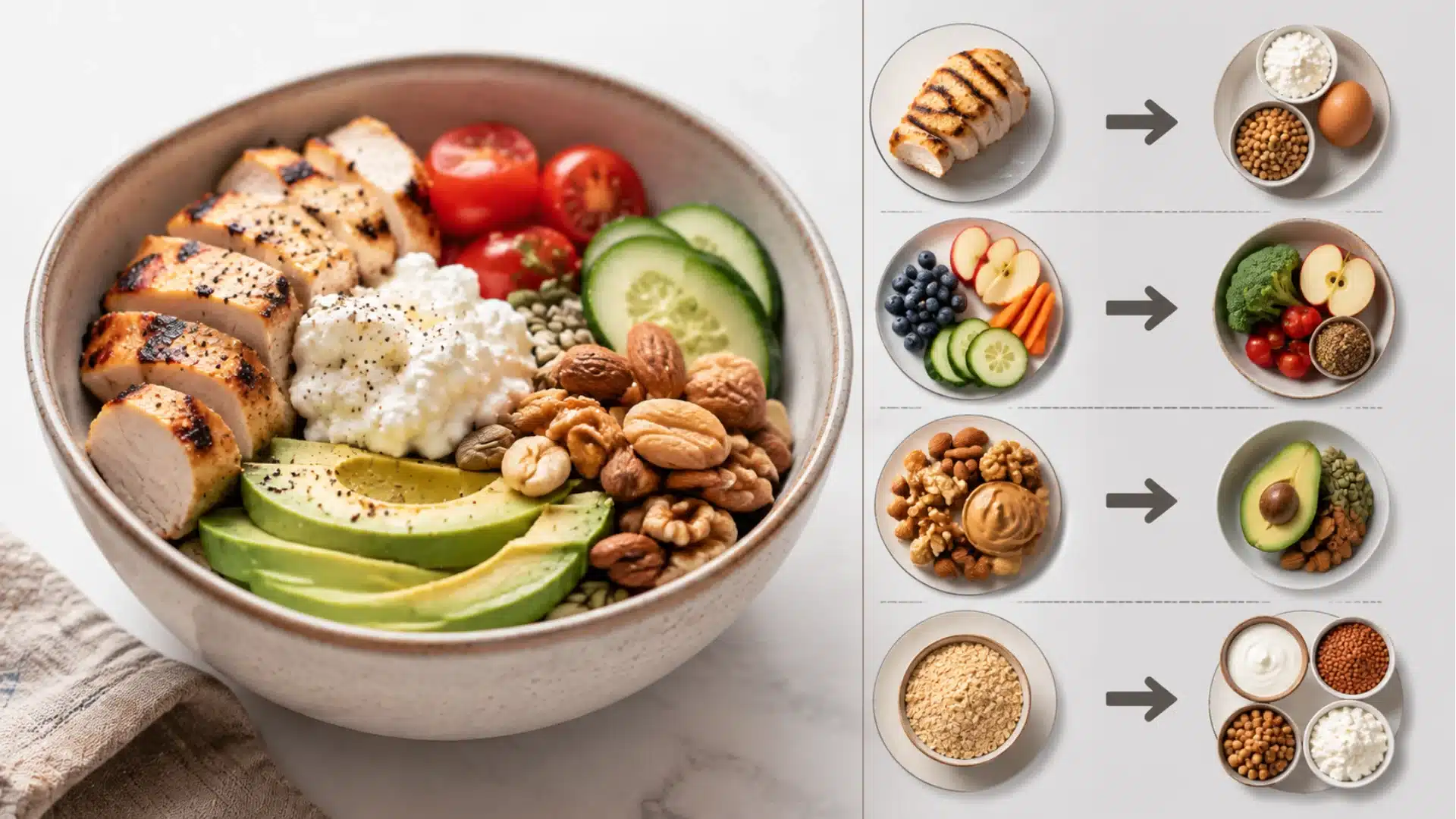
If none of the 40 options above fit what’s in your fridge, use this simple framework to build your own.
- Start with a protein source. Yogurt, cottage cheese, eggs, fish, poultry, soy, tofu, lentils, beans, or a carefully chosen packaged protein product all work.
- Add fiber or produce. Berries, apples, pears, vegetables, legumes, whole grains, chia seeds, or crispbread slow digestion and add volume.
- Include fat in a measured portion. Avocado, nuts, seeds, nut butter, cheese, and tahini improve flavor and satisfaction, but they’re calorie-dense, so measure rather than eyeball.
- Match the portion to your hunger. A small snack to bridge a short gap looks different from a larger snack before a late meal, a post-workout snack, or a mini-meal when several hours remain before your next real meal.
What to Look for in a Packaged High Protein Snack
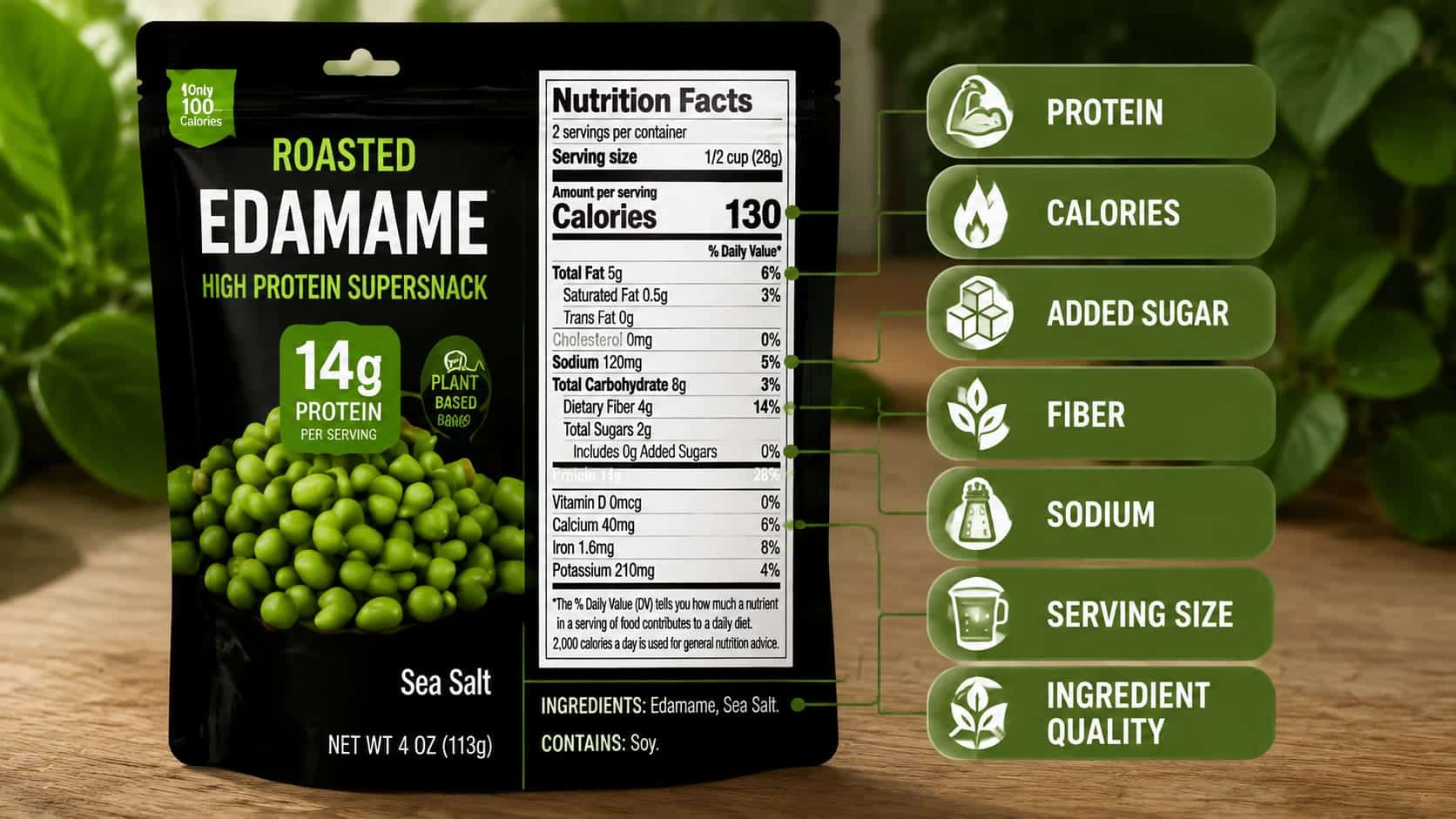
- Protein per serving. Choose products with a protein amount that’s actually meaningful, not just a front-label claim.
- Calories per serving. Compare protein against total calories instead of grabbing whatever has the single highest protein number.
- Added sugar. Check yogurt, bars, shakes, granola, and flavored nuts closely; these categories are where added sugar hides most often.
- Fiber. Fiber pairs well with protein and generally makes a snack more filling.
- Sodium. Pay close attention to jerky, deli meat, canned fish, cheese, roasted beans, and protein chips, where sodium can climb quickly.
- Serving size. Some packages contain two or more servings even though they look like a single snack.
- Ingredient quality. Aim for a mix of minimally processed whole foods and convenient packaged options. You don’t need to eat perfectly to lose weight, just consistently.
Sample One-Day High Protein Snack Plan
A simple one-day high-protein snack plan could include Greek yogurt with berries in the midmorning, turkey and cucumber roll-ups in the afternoon, cottage cheese with fruit after a workout, and edamame or Greek yogurt pudding in the evening when genuinely hungry.
This combination provides a balance of sweet and savory options while adding protein, fiber, and carbohydrates at different points during the day. Portion sizes should be adjusted based on hunger, activity level, and overall calorie needs.
Disclaimer: This article is for informational purposes only and does not replace medical or nutritional advice.
Frequently Asked Questions
How can I get 20g of protein in a snack?
Options like Greek yogurt, tuna, turkey roll-ups, cottage cheese, shrimp, or a protein shake can provide around 20g of protein in a snack.
What snacks are high in protein but low in calories?
Low-calorie, high-protein snacks include Greek yogurt, shrimp, tuna cucumber bites, turkey roll-ups, egg whites, and low-fat cottage cheese.
What high protein snack is best before bed?
Plain Greek yogurt, cottage cheese, skyr, eggs, or edamame all work well before bed. Keep the portion reasonable and check in with whether you’re actually hungry rather than snacking simply because it’s late.
Are protein bars good for weight loss?
They can be convenient, but calories, added sugar, fiber, and protein content vary widely between brands. A bar should fit into your overall daily intake rather than being treated as an automatically healthy choice just because it’s labeled high protein.
Can I lose weight by eating more protein?
Protein may improve fullness and help preserve lean muscle mass during weight loss, but increasing protein alone doesn’t guarantee results. Total calorie intake and overall diet quality still play the larger role.
What food is almost 100% protein?
Egg whites, tuna, shrimp, and very lean meats are among the highest-protein foods, though none are 100% protein.
What are the best vegan protein snacks for weight loss?
Edamame, tofu, roasted chickpeas, lentils, bean dips, dry-roasted broad beans, and unsweetened soy yogurt provide plant-based protein along with varying amounts of fiber.
Are nuts a good high-protein snack for weight loss?
Nuts offer protein, fiber, and healthy fats, but they’re calorie-dense. A small, measured portion, roughly a tablespoon or two, works better for weight loss than eating straight from a large bag.
Choosing High-Protein Snacks That Fit Your Routine
The right high-protein snack depends on your hunger, calorie needs, and daily habits. Simple options like Greek yogurt, eggs, cottage cheese, tofu, or tuna can help increase protein intake.
Keep portions balanced and focus on your overall diet, as sustainable weight loss comes from consistent eating habits rather than one snack alone.