Hydromassage uses warm, pressurized water to massage muscles and soft tissues. It may help with relaxation, muscle recovery, circulation, and temporary pain relief.
Research on warm underwater water-jet massage has reported benefits for post-exercise recovery and muscle soreness, while a 2020 systematic review found that warm-water therapy may also support physical and mental well-being.
This article explains how hydromassage works, its main benefits, possible risks, and who should avoid it.
What Is Hydromassage?
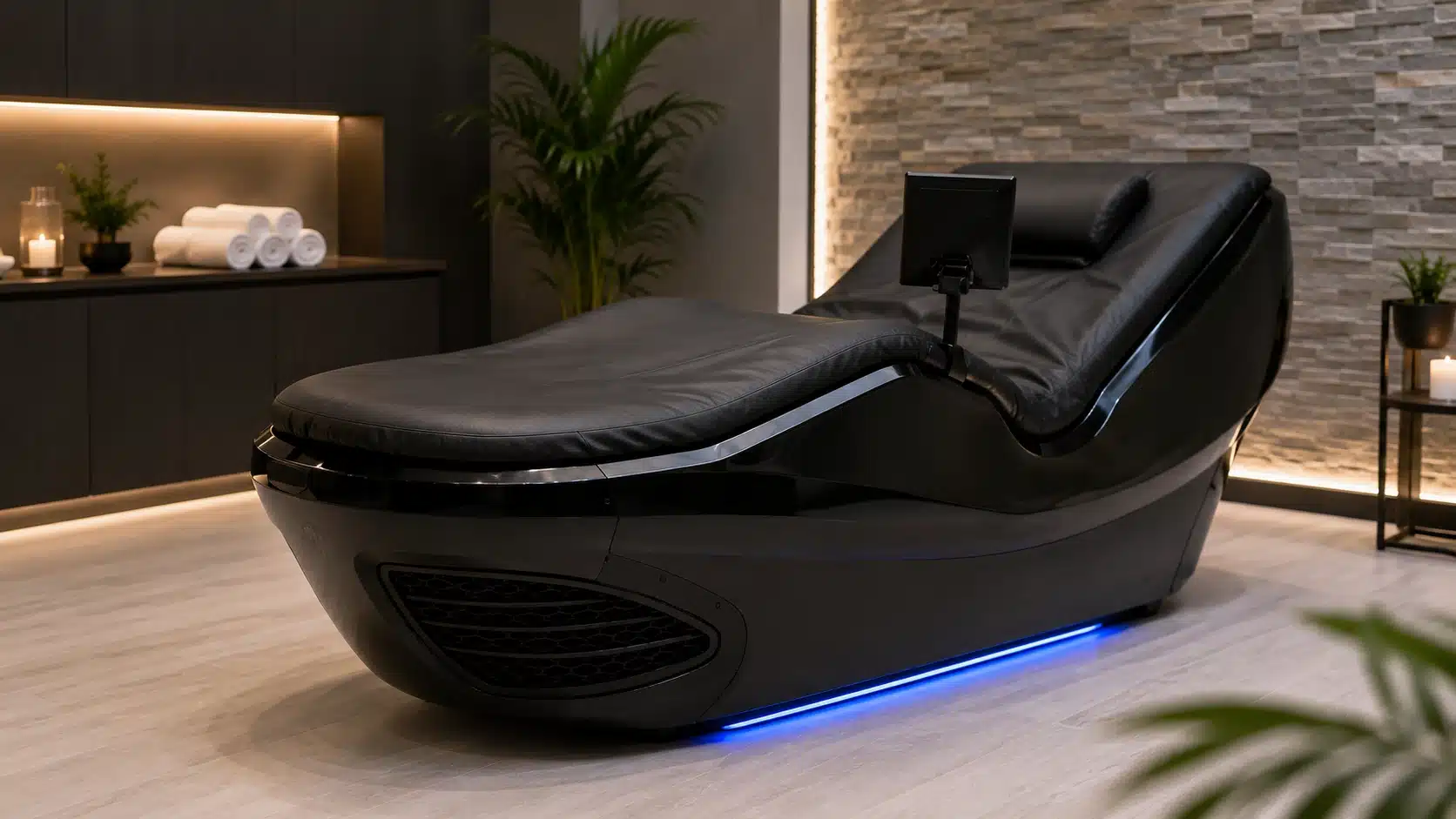
Hydromassage is a water-based therapy that uses pressurized jets to apply controlled pressure to muscles and soft tissues. Unlike traditional massage, no therapist is involved. The machine handles the pressure, temperature, and target area.
How Hydromassage Works
Jets push warm water at controlled pressure directly onto the body. This creates a massage-like effect without a therapist. You can adjust both pressure and temperature on most machines.
The warmth relaxes surrounding muscle tissue while the pressure targets specific areas. Each session is consistent and repeatable.
How Hydromassage Affects the Body
Hydromassage comes in two forms. Dry hydromassage keeps a waterproof layer between the jets and your body. You stay fully clothed throughout the session. Water-based systems involve direct contact through therapy pools or hydrotherapy tubs. Dry versions are more common in gyms because they require no changing and take less time.
Regardless of type, the mechanics are the same. Jet pressure stimulates soft tissues and breaks down built-up muscle tension. Warm water softens the surrounding tissue first. Then pressure drives that relaxation deeper. Together, they produce a physical response similar to manual massage.
What Are the Benefits of Hydromassage?
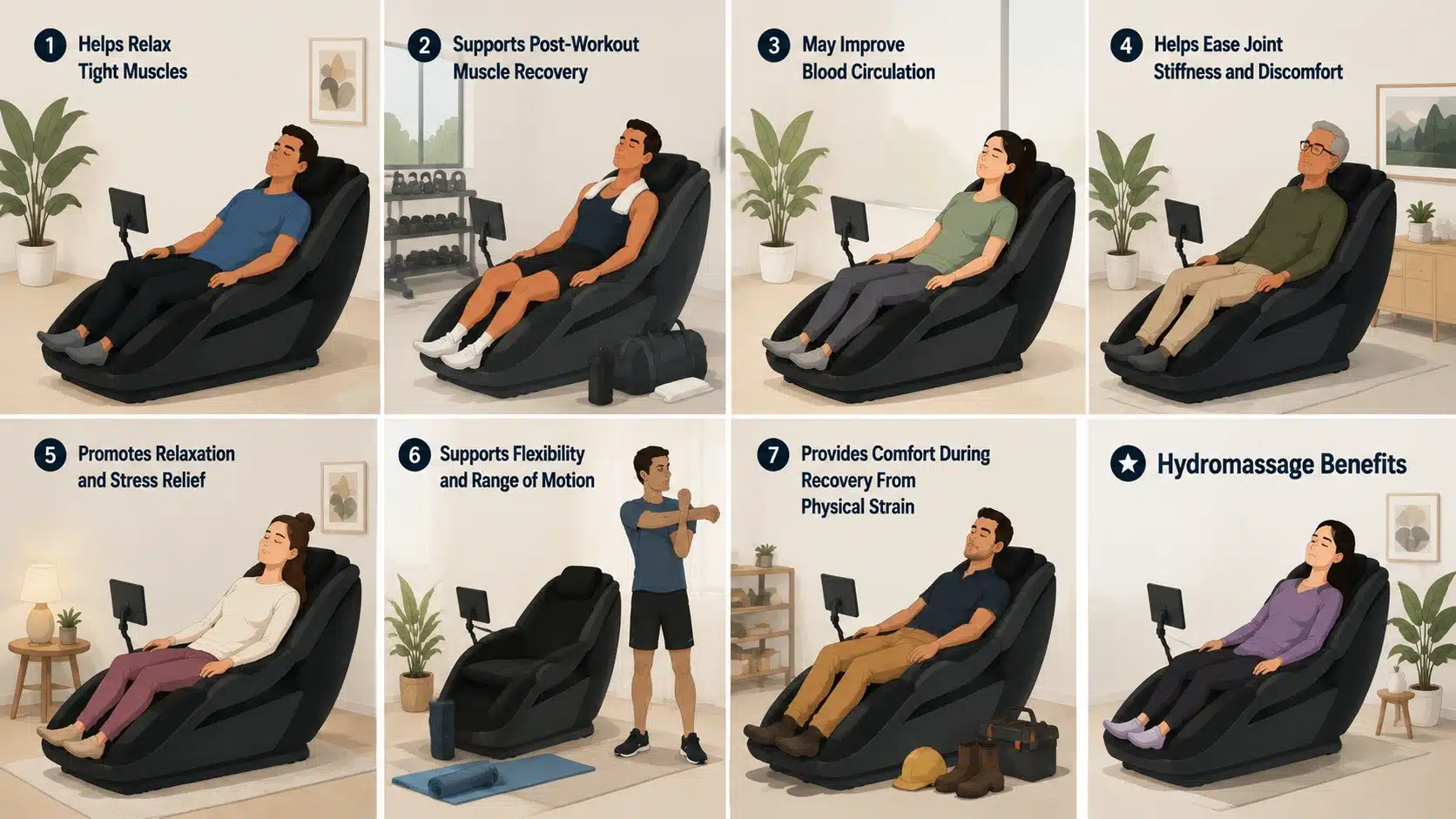
Water therapy produces distinct physical effects on muscles, joints, circulation, and mood. Each benefit has a practical recovery application.
1. Helps Relax Tight Muscles
Water pressure on tight muscles signals surrounding tissue to release. This is most noticeable after long periods of sitting, repetitive movement, or physical work.
Heat softens the tissue first. Then pressure drives that relaxation deeper into the muscle. Most people notice a clear change in muscle feel within a single session.
2. Supports Post-Workout Muscle Recovery
Delayed onset muscle soreness typically peaks one to three days after intense exercise. Exercise also causes lactic acid and metabolic waste to build up in muscle tissue. Water pressure helps flush these out by increasing blood flow to fatigued areas.
Hydromassage may shorten the soreness window by getting circulation moving through tired tissue. Using it right after training, before soreness peaks, tends to produce the clearest results.
3. May Improve Blood Circulation
Jet pressure pushes against blood vessels in the targeted area. This supports blood movement through the limbs and muscles. It may also reduce the heaviness and fatigue that lingers in the legs after a demanding day.
4. Helps Ease Joint Stiffness and Discomfort
Stiffness around a joint often comes from tight surrounding muscle tissue. Hydromassage applies warmth and pressure to that tissue. This may make movement feel less restricted.
It does not correct the cause of joint problems. But it can reduce short-term discomfort and make everyday movement more manageable.
5. Reduces Stress and Supports Relaxation
Consistent exposure to warmth and rhythmic pressure can shift the nervous system toward a calmer state. Many users report feeling less tense after a session, even on high-stress days.
Research spanning studies from 2004 to 2024 found a positive link between hydrotherapy use and lower anxiety and depression scores.
6. May Improve Sleep Quality
Regular warm water exposure before sleep has been linked to faster sleep onset. When you use hydromassage in the evening, the body temperature drop afterward can signal your body to prepare for rest.
7. Supports Flexibility and Range of Motion
Muscle tightness is one of the main limits on how far a joint can move. When that tightness decreases, the body moves more freely. Using hydromassage before stretching or mobility work may produce better results than stretching alone. The target muscles are already in a softer, more pliable state.
8. Provides Comfort During Recovery From Physical Strain
Physical strain from sport, manual labor, or long work shifts builds up in the body over time. Hydromassage addresses that built-up tension without requiring an appointment or clinical visit. People who spend long hours on their feet often find it effective as an end-of-day recovery tool.
Hydromassage Side Effects
Hydromassage is safe for most healthy adults. But incorrect settings and certain health conditions can create problems.
Possible Side Effects of Hydromassage
Side effects are uncommon when settings are used correctly. Most problems come from water that is too hot or pressure set too high. Skin conditions and nerve sensitivity can also be triggered in some users.
- Burns from water temperature set too high
- Skin irritation or worsening of existing skin conditions
- Bruising from excessive pressure over a prolonged session
- Nerve discomfort in sensitive areas
- Rare cases of blood clot risk linked to prolonged heat exposure
Hydromassage Before or After a Workout
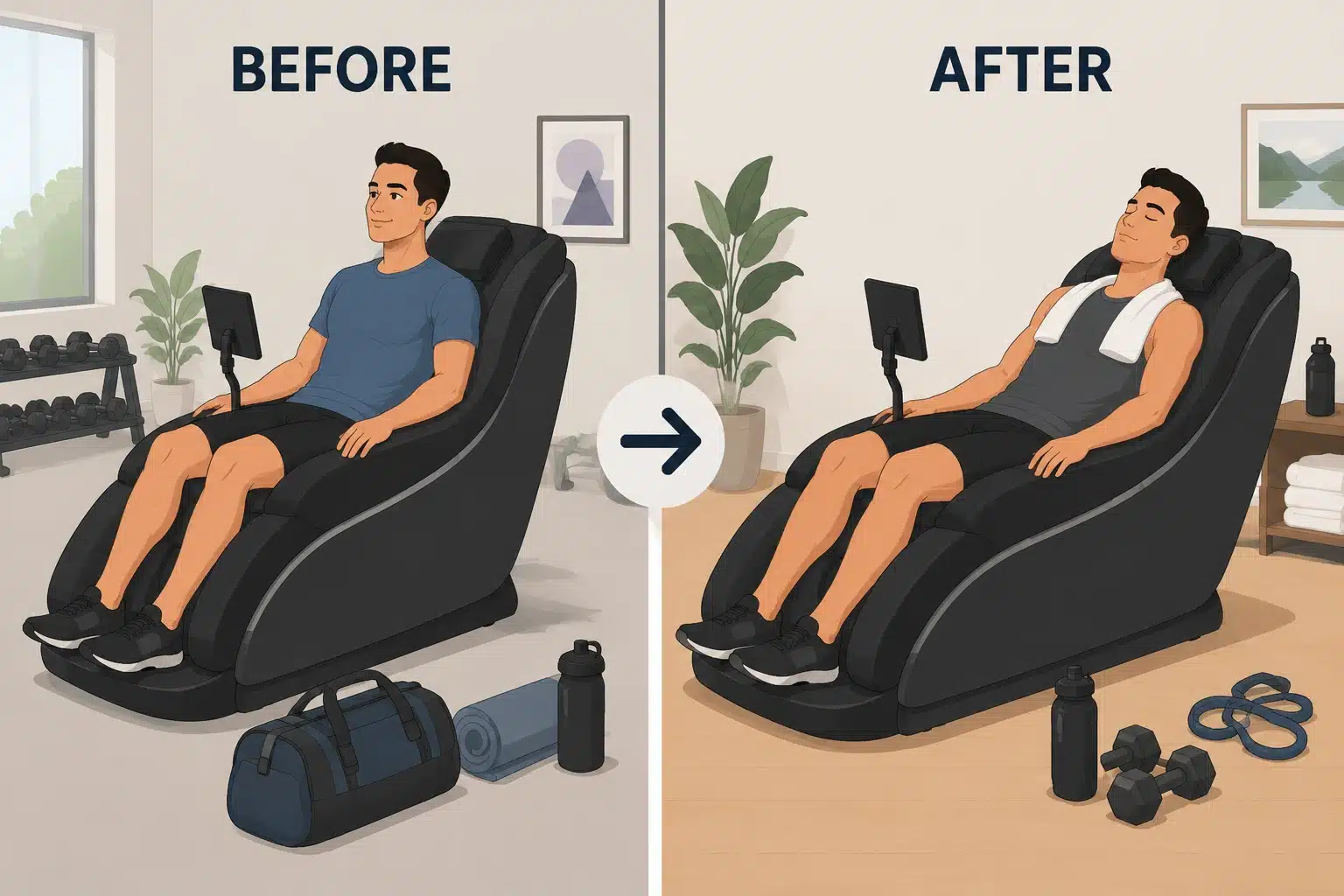
The timing of your session affects which hydromassage benefits you experience most.
Before Exercise
A short, low-pressure session before a workout can free up tight areas and improve range of motion. This works best on low-intensity or mobility-focused days.
Avoid high-pressure settings before demanding sessions. Overly relaxed muscles may not produce as much force under load. This can affect strength output.
After Exercise
Post-workout hydromassage targets the muscles that worked hardest during training. It addresses soreness before it fully sets in. Most users schedule 15 to 20 minutes right after finishing.
Using it while muscles are still warm tends to produce a more noticeable effect than waiting several hours.
Hydromassage vs Traditional Massage: Which One Is Better?
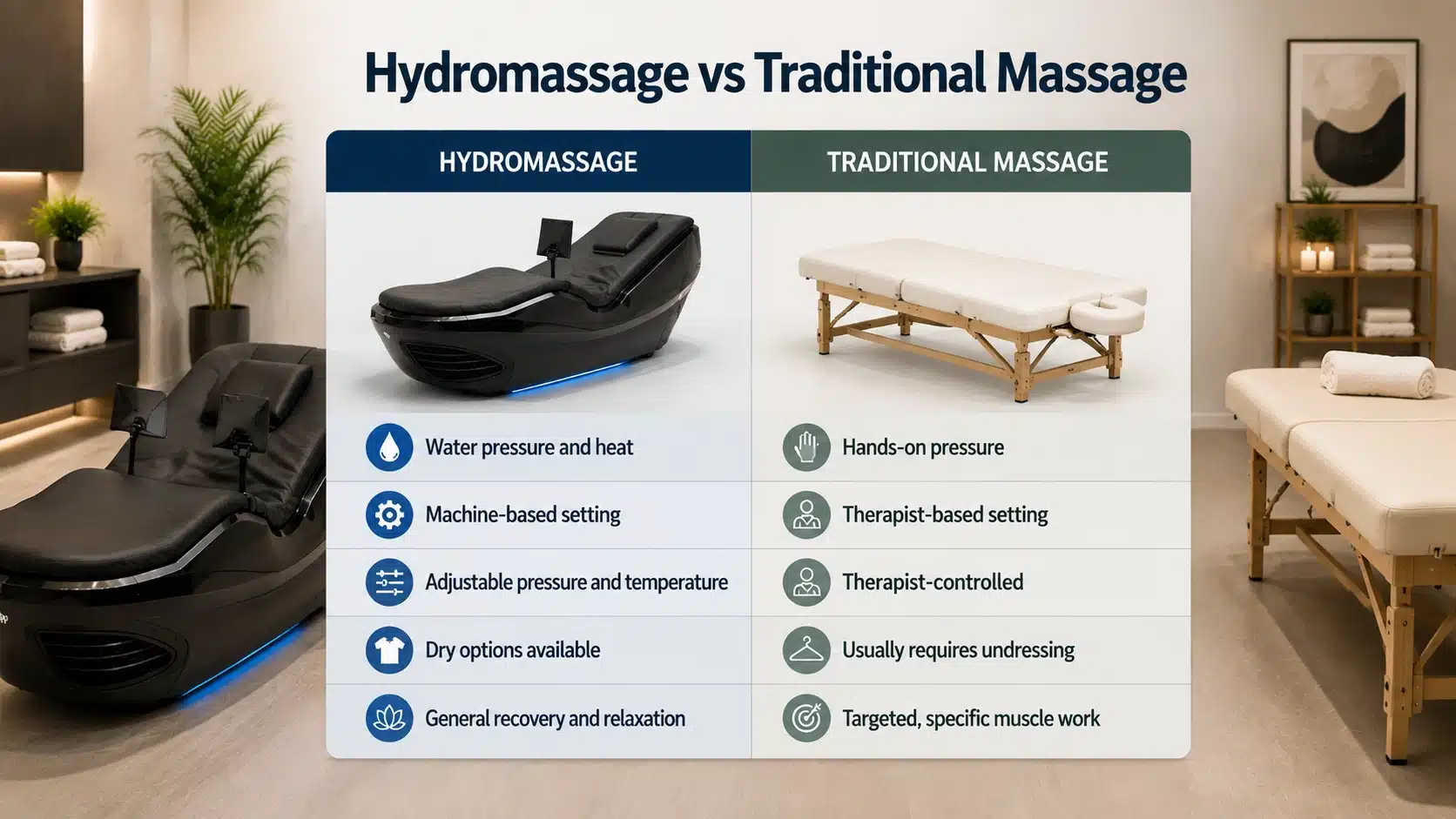
Both have a place in recovery, but they serve different purposes. The table below shows where each method is stronger.
| Feature | Hydromassage | Traditional Massage |
|---|---|---|
| Technique | Water pressure and heat | Hands-on pressure |
| Environment | Machine-based setting | Therapist-based setting |
| Control | Adjustable pressure and temperature | Therapist-controlled |
| Clothing | Dry options available | Usually requires undressing |
| Best suited for | General recovery and relaxation | Targeted, specific muscle work |
Traditional massage is better for precise problem areas that need skilled manual attention. Hydromassage works well for broad recovery and relaxation without scheduling an appointment.
Where Can You Get Hydromassage?
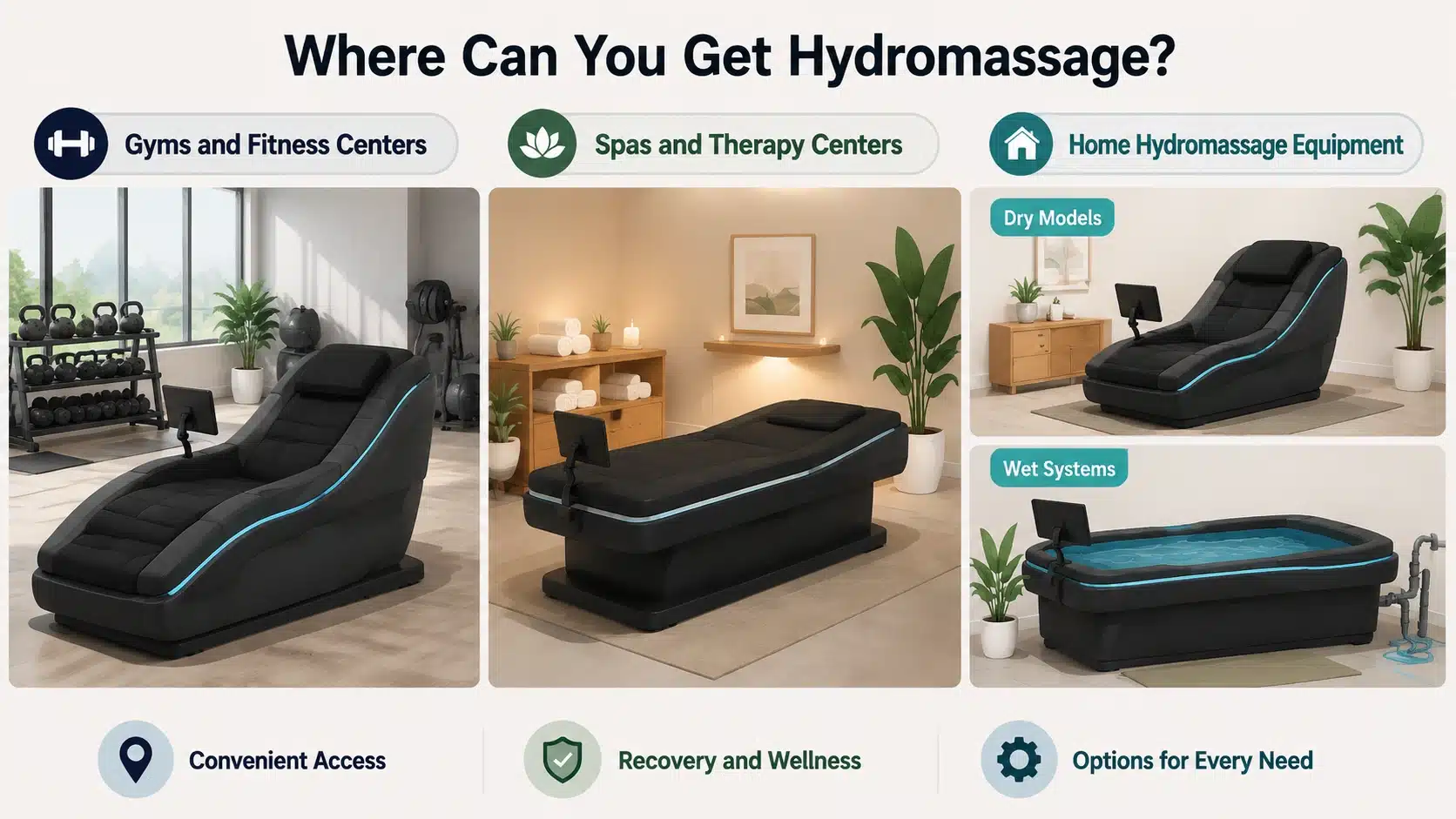
Hydromassage is available across gym chains, private wellness clinics, and home setups.
Gyms and Fitness Centers: Most major gym chains include hydromassage as part of their wellness floor. Planet Fitness offers it through its Black Card tier. Beds or chairs are usually available without booking in advance.
Spas and Therapy Centers: Professional spas and wellness clinics offer hydromassage in a quieter setting. Sessions are often bundled with other recovery treatments like contrast therapy or assisted stretching.
Home Hydromassage Equipment: Home units range from compact dry chairs to full water jet tables. Dry models need no water supply. Wet systems require a plumbed connection and regular maintenance.
How Much Does Hydromassage Cost?
Costs vary based on the type of access and session frequency.
| Setting | Typical Cost | Notes |
|---|---|---|
| Gym membership add-on | $10 to $25/month | Planet Fitness Black Card: $24.99/month |
| Single gym session | Rarely sold individually | Usually included in membership tiers |
| Spa hydrotherapy session | $40 to $100 per session | Luxury or resort spas typically charge $120+ |
| Basic home chair (dry) | $300 to $600 | Entry-level consumer models |
| Professional home table | $2,700 to $5,000+ | Mid-range clinical and spa tables |
| Insurance coverage | Rarely covered | Only when prescribed by a licensed provider |
A gym membership with hydromassage included is the most cost-effective option for regular use.
Who Should Seek Medical Advice Before Hydromassage?
Certain health conditions make hydromassage a higher-risk activity. Heat and pressure can affect blood pressure, circulation, and sensitive tissue. The groups below need medical clearance before starting sessions.
- Pregnant individuals
- People with high blood pressure or cardiovascular conditions
- People with bleeding disorders
- Those with open wounds or active skin conditions
- Anyone managing a chronic or underlying health condition
Speak with your doctor before starting if any of the above applies to you.
Frequently Asked Questions
Can hydromassage help with lower back pain?
Hydromassage may ease lower back tension by warming and loosening tight muscles around the spine. It does not treat structural problems like disc injuries. Consult a doctor for persistent pain.
Can hydromassage help with pain relief?
Hydromassage may help ease general muscle tension and stiffness. It does not treat underlying injuries or replace medical care.
Is hydromassage safe after exercise?
For most healthy adults, hydromassage is safe after exercise. People with health conditions should consult a healthcare professional first.
How long does a hydromassage session usually last?
Most hydromassage sessions last between 10 and 20 minutes, depending on the machine, setting, and personal preference.
Is hydromassage good for weight loss?
Hydromassage does not burn significant calories or reduce fat. It supports recovery and reduces stress, which may help with consistency in a weight loss program.
How often should I do hydromassage?
Many people use hydromassage once or several times weekly, depending on their recovery needs, comfort level, and overall routine.
Does hydromassage help lymphatic drainage?
Hydromassage may support general circulation and fluid movement. It does not replace specialized lymphatic drainage therapy.
Is Hydromassage Worth Adding to Your Routine?
Hydromassage benefits go beyond simple relaxation. When used consistently at the right pressure, it supports faster muscle recovery, lower stress, and better daily movement. The evidence is still growing, but the practical case for adding it to a fitness routine is solid.
A gym membership that includes access is the lowest-barrier starting point for most people. If you have an existing health condition, talk to your doctor before your first session.
Start with one session this week and pay attention to how your body feels the following morning.