Tight neck muscles can build up from desk work, poor sleep, or daily stress. The right neck massage techniques can ease tension in just a few minutes without special tools or training.
This article covers practical methods, a 5-minute daily routine, safe pressure levels, tool safety, and warning signs to watch for.
How Neck Massage Helps Relieve Tension
Neck massage techniques ease everyday muscle tension, but they have clear limits. Understanding both sides helps you use them safely and with realistic expectations.
Gentle neck massage may offer:
- A short-term reduction in muscle tightness
- General relaxation and lower stress levels
- More comfortable head and neck movement
- Brief relief from ordinary soreness or stiffness
- Support alongside stretching or physical therapy
Research on manual therapy for neck pain suggests it can provide short-term symptom relief for some people. The overall quality of evidence is mixed. Massage should not be treated as a guaranteed cure or a substitute for proper diagnosis.
Neck massage cannot treat structural or medical problems on its own, including:
- Herniated or bulging discs
- Cervical radiculopathy (nerve pain radiating into the arm)
- Spinal cord compression
- Fractures, infections, or vascular conditions
- Serious ligament or muscle injuries
If you suspect any of these, get a medical evaluation before applying any massage technique.
How to Prepare for a Neck Massage
A few simple steps before you start make neck self-massage safer, more comfortable, and easier to control throughout the session.
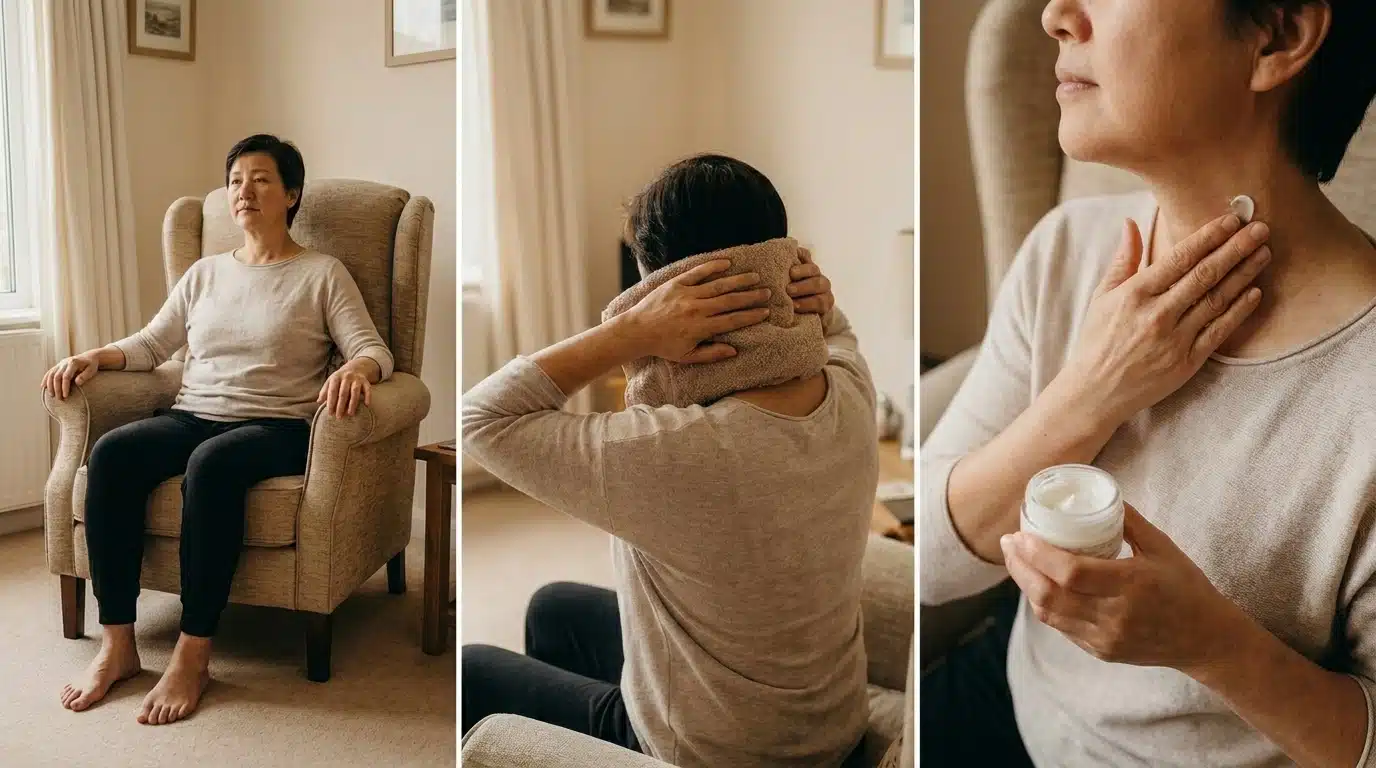
Step 1: Sit in a Supported Position
Sit in a chair with back support. Plant both feet on the floor. Let your shoulders drop and keep your head level rather than tilted forward. A stable position lets you control pressure and notice warning signs early.
Step 2: Warm the Muscles First
A warm shower or a warm towel held against the neck for a few minutes helps the tissue relax. Use either option before you apply any pressure. Starting with light strokes before adding deeper pressure works too. Cold, tight muscle resists massage and is easier to irritate.
Step 3: Use a Small Amount of Lotion or Oil
A small amount of lotion or massage oil reduces friction on the skin. Too much makes the fingers slide. This reduces control and increases the risk of drifting into sensitive areas like the front of the neck.
Follow a Simple Pressure Scale
Before you start, use this 1-to-5 scale to keep pressure in a safe and useful range throughout your session.
| Pressure Level | What It Feels Like |
|---|---|
| 1–2 | Very light contact, barely more than resting the hand on the skin |
| 3–4 | Gentle, comfortable pressure that feels soothing |
| 5 | Moderate pressure, firm but never painful |
Stop immediately if pressure feels sharp, burning, or electrical, or if it causes nausea or dizziness. Pain is not a sign that the massage is working.
How to Give a Good Neck Massage: 7 Step-by-Step Techniques
Each technique below follows the same format: target area, hand placement, movement, pressure level, duration, and stop signs, so it is easy to follow along.
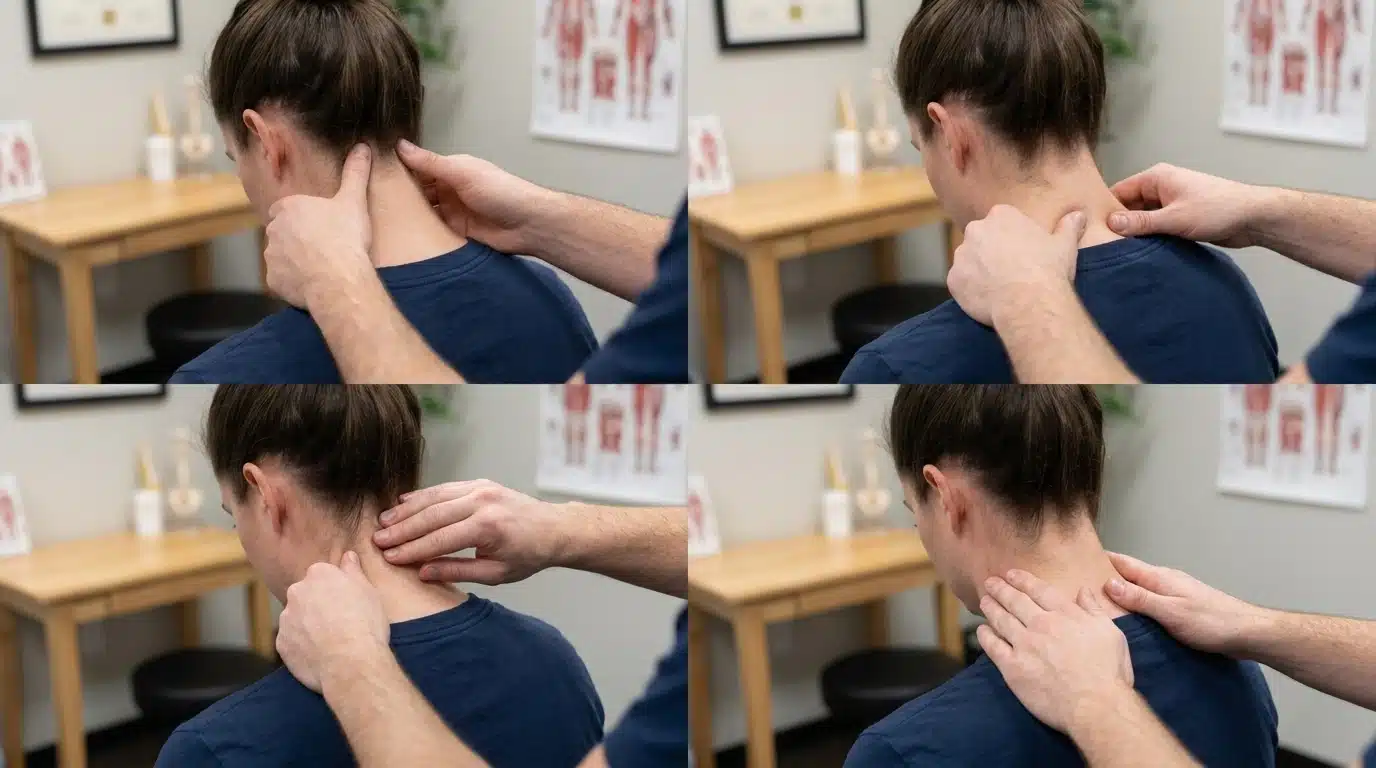
1. Gentle Warming Strokes
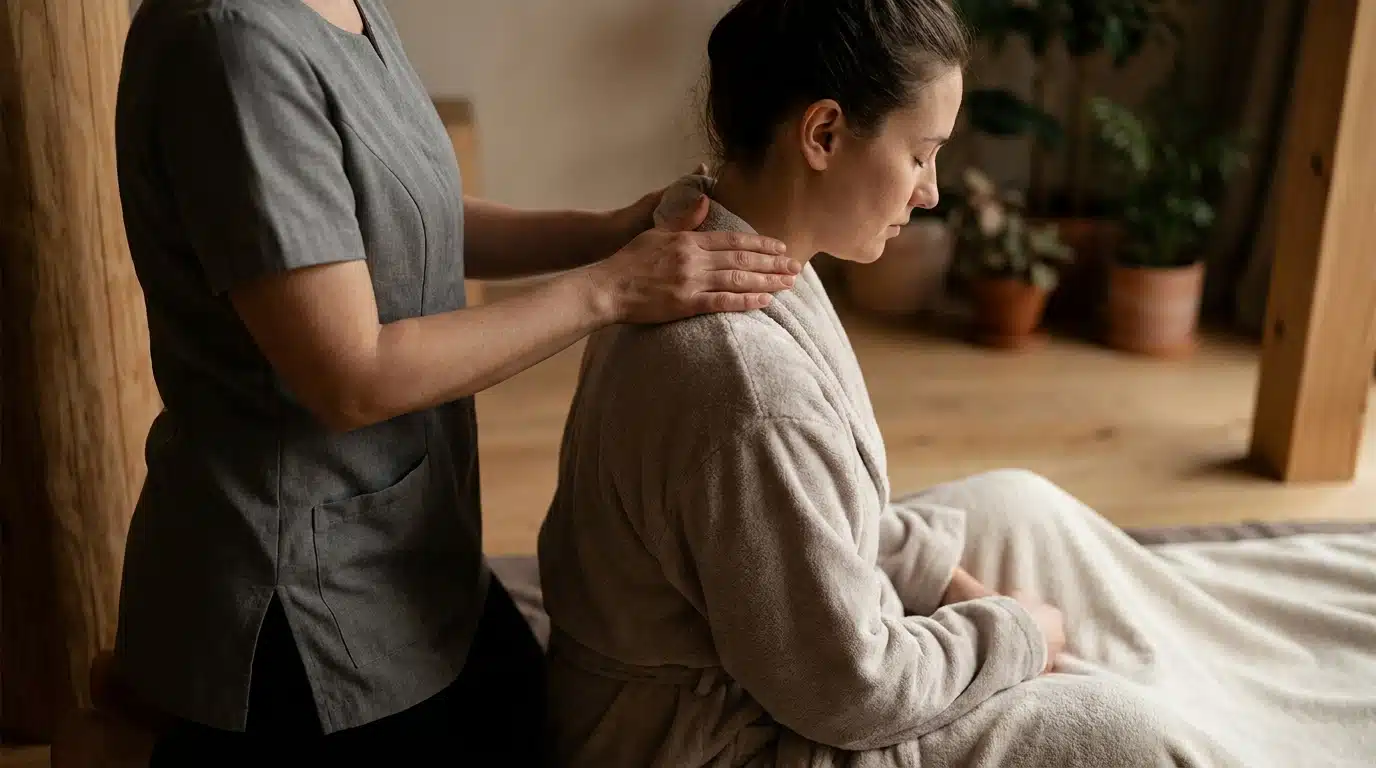
Target area: Upper shoulders and the back of the neck.
Hand placement: Flat palms or fingers resting lightly on the skin.
Movement: Long, slow gliding strokes from the base of the skull down toward the shoulders.
Pressure: Level 1–2.
Duration: 30–60 seconds.
Stop if: You feel sharp pain or dizziness.
This is a warm-up move. It prepares the tissue rather than releasing deep tension on its own.
2. Upper Trapezius Kneading

Target area: The soft muscle between the neck and shoulder.
Hand placement: Gently grip the muscle with your thumb and fingers, not just the skin.
Movement: Lift and gently squeeze the muscle, then release. Move slowly along its length.
Pressure: Level 3–4.
Duration: 1–2 minutes per side.
Stop if: You feel numbness, tingling, or pain shooting down the arm.
3. Fingertip Circular Massage
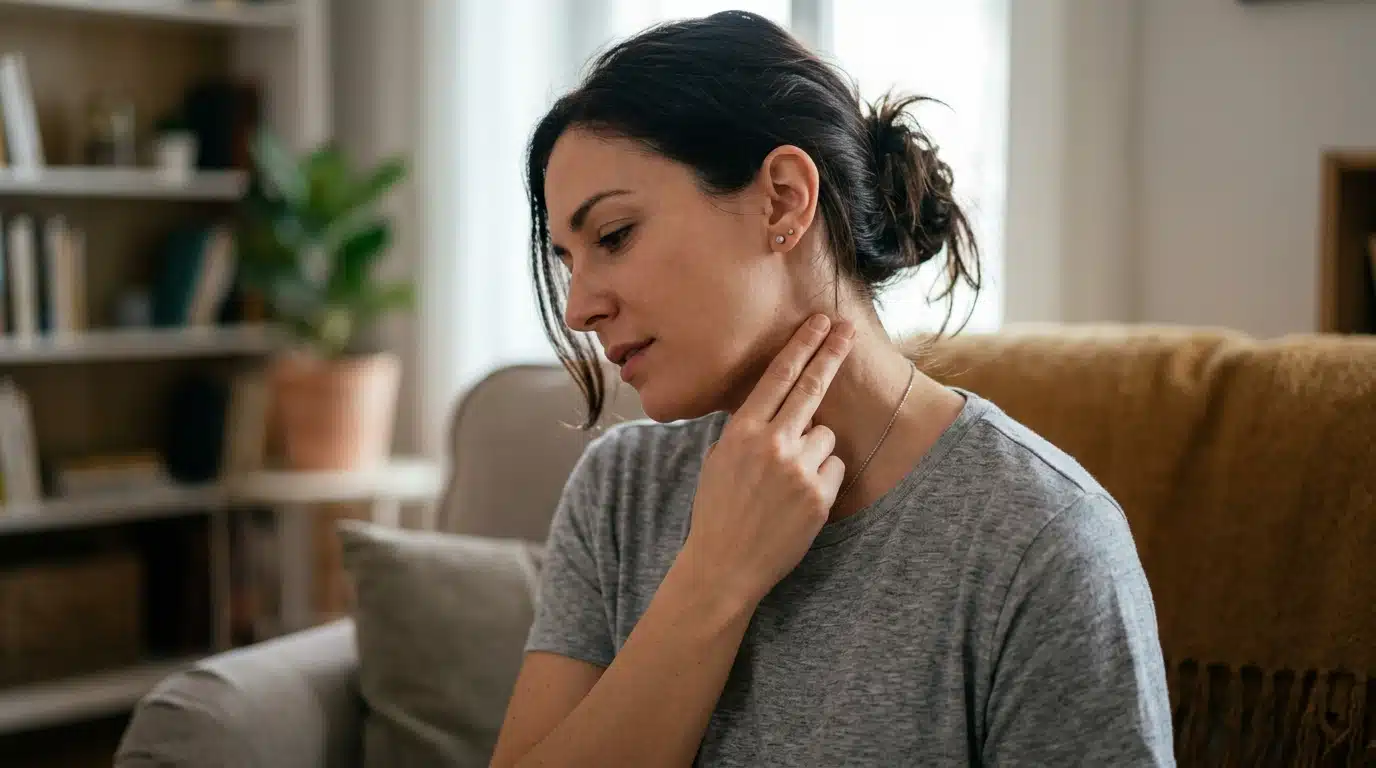
Target area: Muscular areas of the neck and upper shoulders. Never the spine or the front of the neck.
Hand placement: Two or three fingertips.
Movement: Small, slow circles over tight muscle.
Pressure: Level 2–4.
Duration: 20–30 seconds per spot.
Stop if: Pain is increasing rather than easing.
4. Trapezius Squeeze and Release
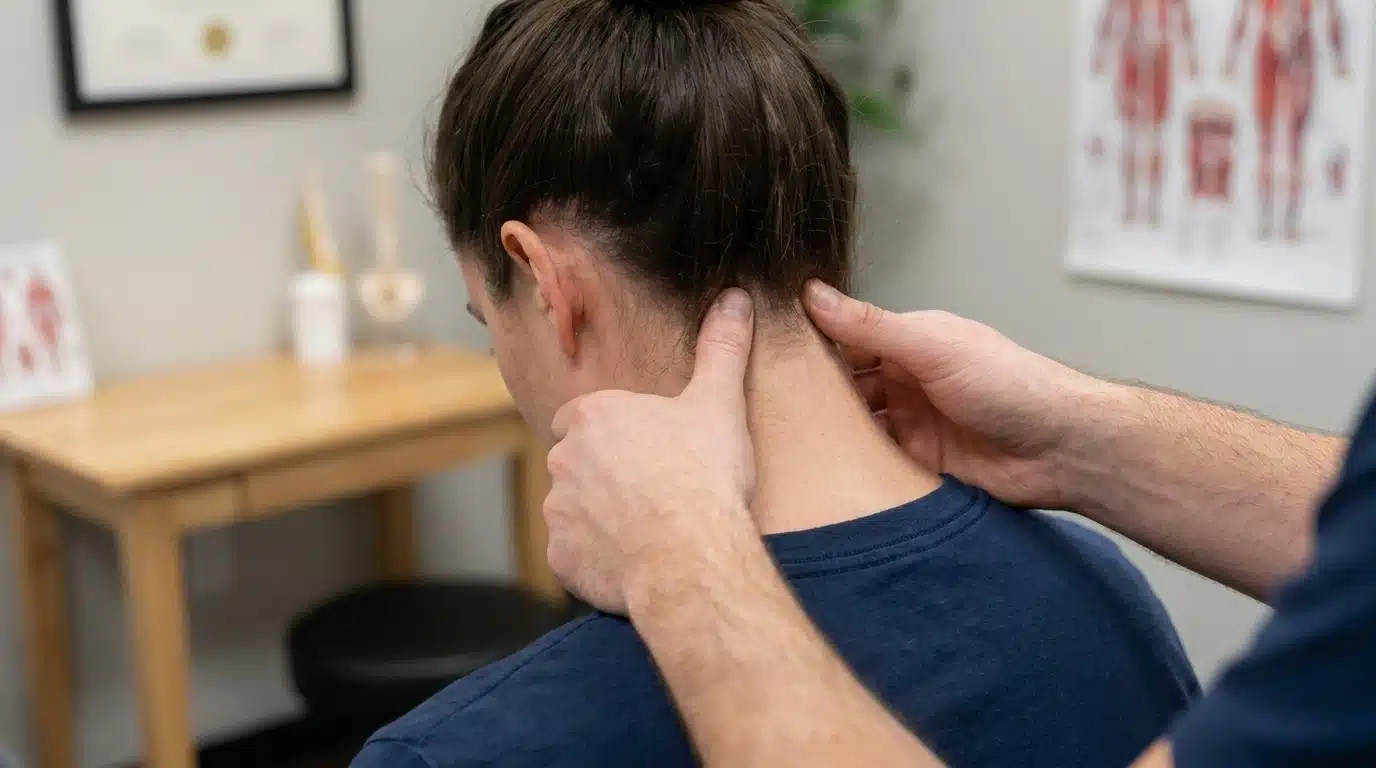
Target area: Upper trapezius muscle.
Hand placement: Whole hand gripping the muscle.
Movement: Slowly compress for a few seconds, then fully release. Avoid continuous hard gripping.
Pressure: Level 3–4.
Duration: 5–10 repetitions per side.
Stop if: You notice bruising or lingering soreness after the release.
5. Trigger-Point Hold
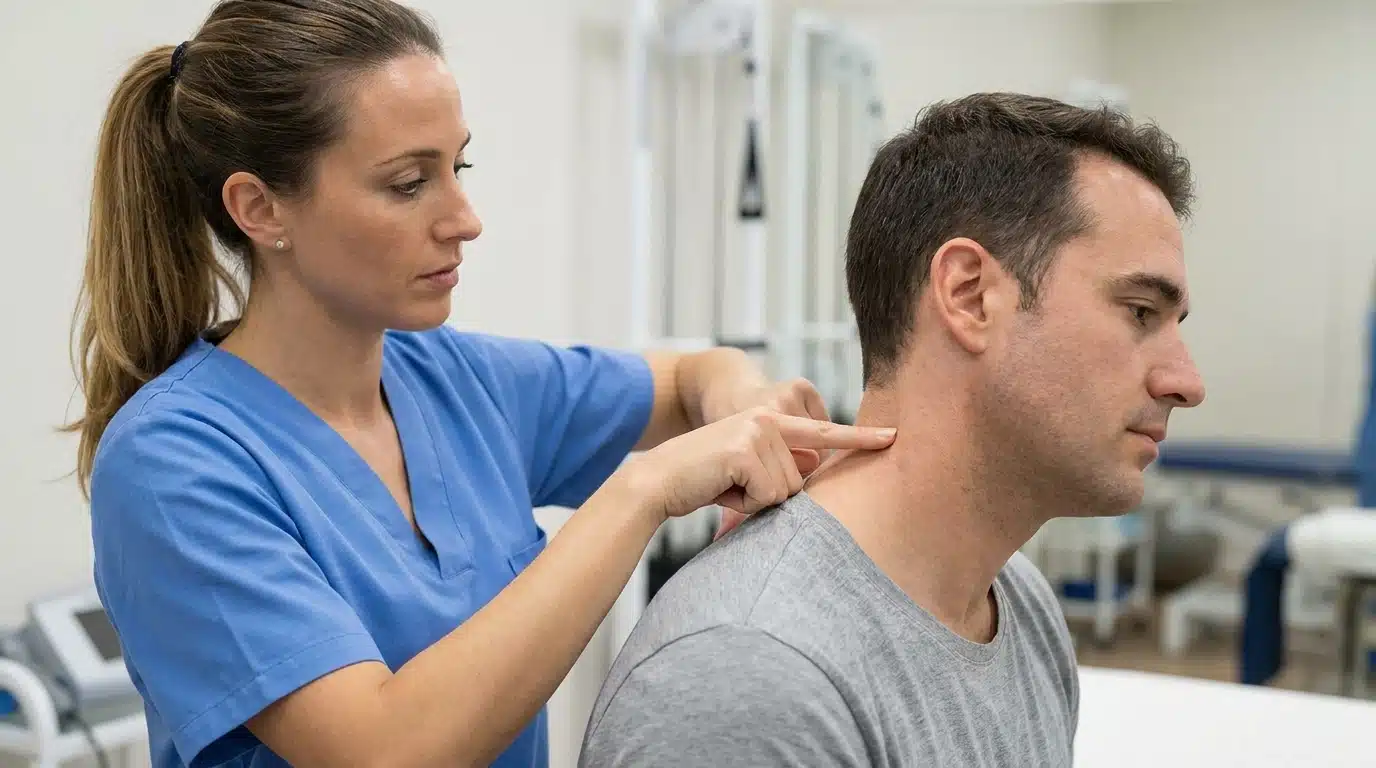
Target area: A specific tender spot within a muscle, often called a knot.
Hand placement: One or two fingertips.
Movement: Apply steady, comfortable pressure directly on the tender spot and hold.
Pressure: Level 3–4. Never apply sharp or forceful pressure.
Duration: 20–30 seconds, then release.
Stop if: Pain spreads outward rather than easing in place.
Cleveland Clinic describes trigger-point work as pressure applied to sensitive muscular areas. Too much force can irritate tissue rather than help it relax.
6. Base-of-the-Skull Release
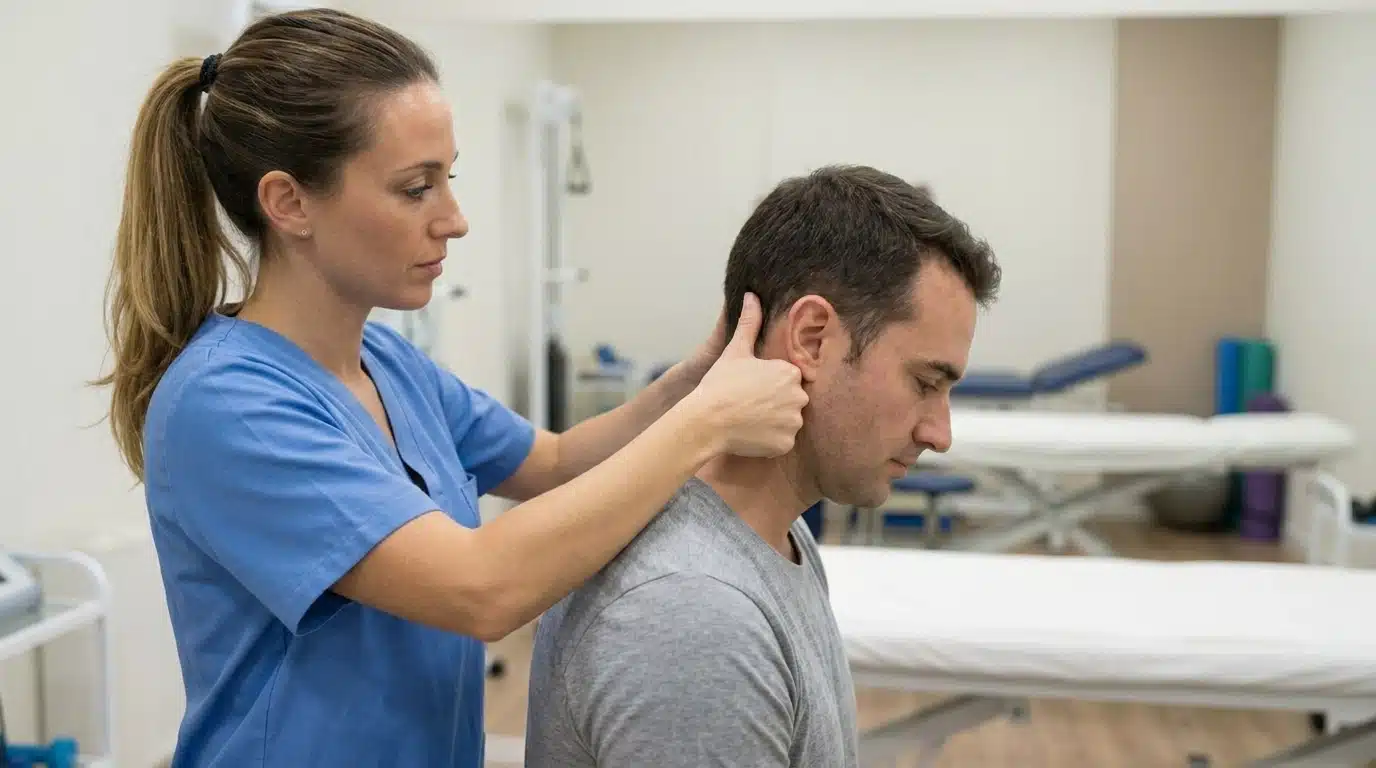
Target area: The suboccipital muscles where the skull meets the neck.
Hand placement: Light fingertip or thumb-pad pressure.
Movement: Gentle, sustained pressure just below the skull. Stay off the bony vertebrae.
Pressure: Level 2–3.
Duration: 30–60 seconds.
Stop if: You feel a headache worsening, dizziness, or blurred vision.
7. Gentle Pin-and-Move Technique
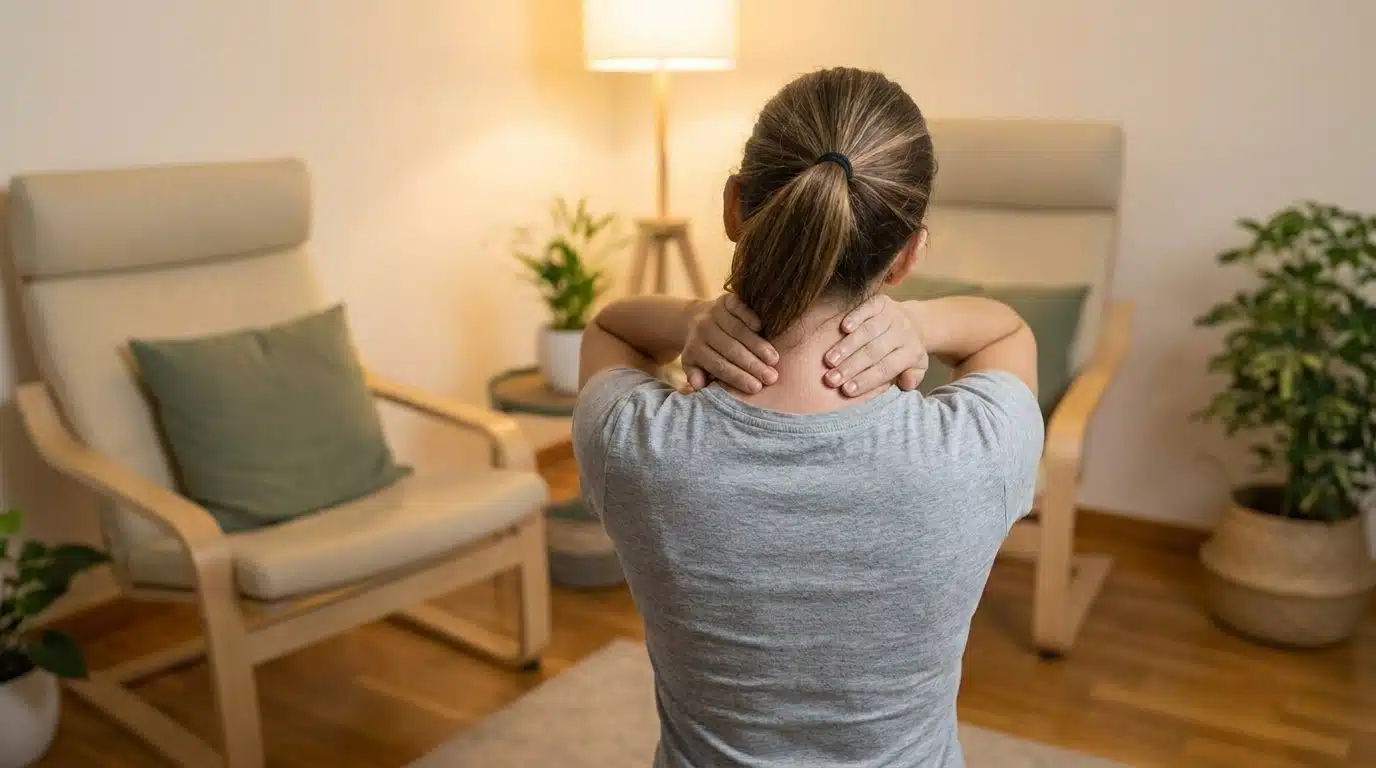
Target area: A tight spot in the upper trapezius or levator scapulae.
Hand placement: One or two fingers holding mild, steady pressure.
Movement: While maintaining light pressure on the tight muscle, slowly turn or tilt the head through a small, comfortable range.
Pressure: Level 2–3.
Duration: 5–8 slow repetitions.
Stop if: You feel pinching, sharp pain, or restricted movement that feels wrong.
Trigger Point in Trapezius
A trigger point in the trapezius is a sensitive, tight area within the muscle that may feel like a small knot or firm band under the fingers. The trapezius is a large muscle that runs from the base of the skull across the shoulders and down the upper back, so trigger points can develop in several areas.
They commonly form after prolonged sitting, poor posture, repetitive shoulder movements, stress, or keeping the shoulders raised for long periods. A trapezius trigger point may cause localized tenderness, neck stiffness, shoulder discomfort, or pain that seems to spread toward the upper back or head.
For gentle self-massage, place one or two fingertips over the tender muscular spot and apply steady, comfortable pressure for about 20 to 30 seconds. Keep the pressure moderate and avoid pressing on the spine or front of the neck. Stop immediately if the pressure causes sharp pain, numbness, tingling, dizziness, or pain that travels down the arm.
A 5-Minute Daily Neck Self-Massage Routine
This short sequence works well as a daily reset for ordinary muscle tightness. Stop early if symptoms worsen or spread into the arm.
- Minute 1: Sit tall, breathe slowly, and let your shoulders drop away from your ears.
- Minute 2: Apply gentle warming strokes from the base of the skull down to the shoulders.
- Minute 3: Use upper trapezius kneading on each side for 60 seconds.
- Minute 4: Apply trigger-point holds on any tender spots for 20–30 seconds each.
- Minute 5: Slowly turn the head side to side and check whether tension has eased.
Are Neck Massage Tools Safe to Use?
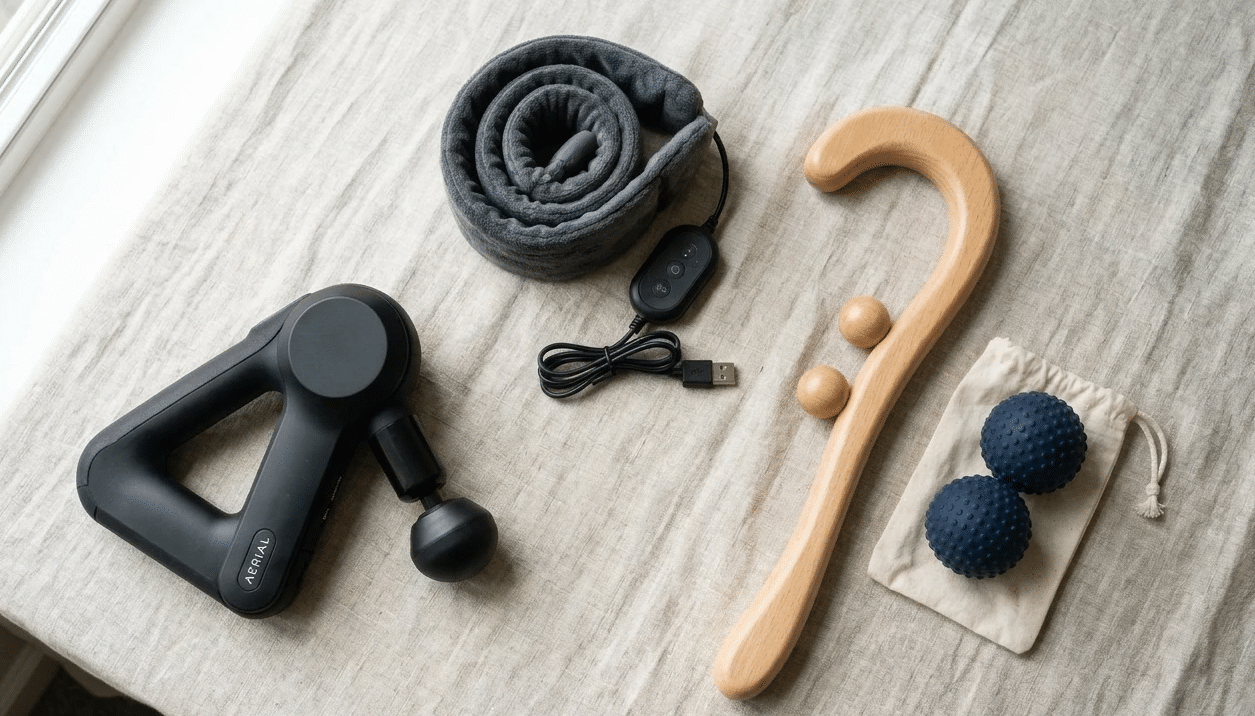
Massage balls, canes, heated devices, foam rollers, and massage guns can all help. Each one, though, has its own rules for safe use around the neck. The table below shows how to use each one and what to skip.
| Tool | Safe Use | Avoid |
|---|---|---|
| Massage ball | Upper back and sides of the neck, pressed against a wall | Placing it directly beneath the cervical spine |
| Massage cane | Controlled, precise pressure in a stable seated position | Excessive leverage, which multiplies force quickly |
| Heated massager | Low heat, short sessions, check skin periodically for redness | Falling asleep while wearing it; prolonged heat can cause burns |
| Foam roller | Upper back muscles | Rolling directly over the cervical spine |
| Massage gun | Large muscle areas of the upper back and shoulders | Front of the neck, throat, or over major blood vessels |
Cleveland Clinic advises keeping massage guns on muscle rather than bone. Dragging one over a bony area like the nape of the neck causes discomfort and kickback rather than benefit.
How Do You Know if Neck Massage Pressure Is Right?
The right pressure feels like relief, not pain. Use these signs to check in with yourself during any session.
Signs the pressure is appropriate:
- Comfortable warmth in the area being worked
- Gradual relaxation of the muscle
- Mild tenderness that does not increase
- Easier neck movement after the session ends
Signs the pressure is too strong:
- Sharp or stabbing pain
- Tingling or numbness anywhere
- Dizziness or nausea
- A headache that worsens during or after
- Pain shooting into the arm or shoulder
- Symptoms that last longer after the massage than they did before it
Which Parts of the Neck Should You Never Massage?
Some areas sit too close to nerves, arteries, and the airway for firm pressure to be safe. This is true no matter how tight the muscle feels.
- Front of the neck and throat: Contains the airway and major blood vessels. Never apply firm pressure here.
- Pulse points: Located directly over an artery. Pressing on these is unsafe.
- Bony vertebrae: Bone, not muscle. Pressing on bone brings no benefit and can cause harm.
- Swollen or tender lymph nodes: Often a sign of infection or inflammation. Leave them alone.
- Bruised, inflamed, or broken skin: Already irritated. This area needs time to heal first.
- Sites of sharp or radiating pain: A signal of nerve involvement, not a simple muscle knot.
What I Never Do During a Neck Massage
When I massage a tight neck, I always focus on the muscle and avoid pressing directly on the spine or the front of the neck, where sensitive nerves, blood vessels, and the airway are located.
More pressure is not always better, so sharp pain, tingling, numbness, dizziness, or pain traveling into the arm are clear signs to stop.
I also avoid using a massage gun over bones or sensitive neck structures and never massage a fresh injury without proper medical advice. If weakness or numbness appears, I would treat it as a possible nerve issue rather than an ordinary muscle knot.
What to Do After a Neck Massage
What you do right after a neck massage matters just as much as the technique itself. Abrupt movement or ignored symptoms can undo any benefit gained.
- Move the neck gently through its comfortable range. Do not push into aggressive stretching immediately afterward.
- Check for delayed pain, dizziness, or tingling over the next few hours.
- Return to normal activity gradually. Avoid intense exercise right away.
- Address the posture or habit that likely contributed to the tension in the first place.
- Note which techniques helped and which made symptoms worse, to guide future sessions.
When Should You See a Professional?
Choosing the right professional depends on the type of symptom involved.
See a physical therapist for:
- Recurring neck pain that comes back despite self-care
- Limited neck movement
- Posture-related symptoms
- Rehabilitation after an injury
- Pain linked to weakness or specific movement patterns
If you are already receiving neck strain treatment, adding short self-massage sessions between appointments may support your recovery.
Contact a doctor for:
- Neurological symptoms such as numbness, weakness, or tingling in the arm or hand
- Serious trauma to the neck or head
- Severe or persistent pain that does not ease with rest
- Unexplained swelling in the neck
- Systemic symptoms such as fever alongside neck pain
- Suspected disc, joint, nerve, or vascular problems
Frequently Asked Questions
Can you massage a pinched nerve in the neck?
No. Massage cannot release a pinched nerve and may worsen symptoms if pressure lands near the irritated area. Numbness, tingling, or arm pain calls for a doctor’s evaluation, not self-massage.
Is heat or ice better after a neck massage?
Use heat before massage to relax tight muscles. After massage, ice works better if there is swelling, inflammation, or a recent minor injury involved.
Can neck massage replace physical therapy?
No. Massage eases muscle tension in the moment. Physical therapy builds lasting strength and mobility. The two work better together than as replacements for each other.
Can neck massage cause a stroke?
Gentle manual massage rarely poses this risk. Forceful or percussive pressure directly on the neck’s arteries has, in rare cases, been linked to serious vessel injury.
How often should you do a neck self-massage?
A short 5-minute routine once daily suits most ordinary tension. Stop if symptoms worsen, and rest the area if soreness persists beyond a day or two.
Do knots in the neck pop during massage?
No. Knots do not audibly pop. Any easing happens gradually as the muscle relaxes. A nearby joint may produce an unrelated cracking sound, but that is not the knot releasing.
Does neck massage help with stress?
Slow, gentle massage can promote relaxation and may briefly lower heart rate. The calming effect is short-lived rather than a lasting solution for stress or anxiety.
What to Remember About Neck Massage
Good neck massage comes down to one rule: stay on muscle, keep pressure comfortable, and stop when something feels wrong.
These neck massage techniques cover the most common sources of everyday neck tension. Gentle warming strokes and upper trapezius kneading are the safest starting points for most tight necks.
Trigger-point holds and the base-of-skull release work well for stubborn spots. Use these as a daily reset, not a long-term fix. Good posture, movement, and rest still do the heavy work.
If pain is spreading, recurring, or coming with arm numbness, a physical therapist is always the right next step.