

You cut back on sugar. Then the headaches start. The mood swings follow. By day two, the cravings feel relentless.
Sugar detox symptoms are the physical and mental reactions that happen when your body adjusts to less added sugar. They include headaches, fatigue, irritability, and strong cravings. Many people notice them within the first one to three days.
This article covers every common symptom. It explains why each happens, how long it lasts, and what you can do to feel better.
What is sugar detox?
A sugar detox is a period where you cut back on or remove added sugar from your diet. It is not a formal medical treatment. There is no clinical protocol, and doctors do not prescribe it.
It focuses on added sugars, the kind found in soda, candy, baked goods, flavored yogurts, and sauces. It does not mean cutting natural sugars found in whole fruit or plain dairy.
Symptoms of sugar withdrawal: 10 signs your body is adjusting

Symptoms of sugar withdrawal vary from person to person, but these ten show up most often. Knowing what to expect makes them easier to manage.
1. Strong sugar cravings
Cravings are the most common symptom. Sugar triggers dopamine, the brain’s reward chemical. When you stop eating sugar, that reward signal drops off. Your brain notices and pushes you to fill the gap.
Stress makes cravings worse. Many people reach for something sweet when they feel tired or overwhelmed. If you always had dessert after dinner, your brain ties that time to sugar. The urge can hit even when you are not truly hungry.
2. Headaches
Headaches are common in the first few days. They happen as blood sugar swings while your body adjusts to a new eating pattern.
But sugar is not always the direct cause. Three other factors often play a bigger role:
- Dehydration, since sugary drinks count toward daily fluids. Removing them can leave you drinking less.
- Caffeine reduction. If you also cut sugary coffee drinks, caffeine withdrawal adds to the problem.
- Meal timing. Skipping meals or eating later than usual can drop blood sugar quickly.
Check your water intake and meal schedule before assuming sugar alone is the cause. Headaches usually clear within a few days.
3. Fatigue and low energy
Sugar delivers a fast energy spike followed by a crash. When you remove it, your body has to relearn how to run on steadier fuel. That means protein, fat, and complex carbohydrates.
That adjustment period brings real fatigue. Some people feel sluggish or foggy by midafternoon. This dip is temporary. Once your body adapts to more stable energy sources, energy levels even out.
4. Irritability and mood changes
Mood swings are a well-documented sign of sugar withdrawal. Lower sugar intake affects dopamine levels. That shift can leave you feeling short-tempered or on edge.
Some people notice a dip in mood that feels close to mild sadness. This is usually short-lived and tied to the same drop in reward chemicals that drives cravings. Getting enough sleep and eating regular, balanced meals can take the edge off.
5. Brain fog and trouble concentrating
Sugar affects blood glucose, and blood glucose affects the brain. When your sugar intake drops quickly, blood sugar can swing before it settles into a steadier pattern.
That swing can show up as trouble focusing, forgetfulness, or general mental fog. Tasks that normally feel easy may take more effort. This usually improves as blood sugar stabilizes, within the first one to two weeks.
6. Dizziness or lightheadedness
Dizziness during a sugar detox often ties back to blood sugar drops. As your body shifts away from frequent sugar intake, glucose levels can dip lower than they are used to.
This can cause a lightheaded feeling, especially if you stand up quickly or go too long between meals. Eating meals with protein and fiber helps keep blood sugar steadier throughout the day.
If dizziness feels severe or does not improve, check with a doctor to rule out other causes.
7. Nausea
Nausea shows up for some people in the early days of cutting sugar. It is often grouped with other flu-like symptoms. The body can react to major diet changes the way it reacts to mild illness.
This tends to be mild and short-lived. It usually eases as your body adjusts to fewer sugary foods and more stable meals.
8. Changes in sleep
Sleep and sugar intake are closely connected. Sugar can affect how well you fall asleep and stay asleep. Removing it may shift your sleep pattern for a while.
Some people sleep better once sugar is reduced. Blood sugar swings that used to disrupt sleep become less frequent. Others notice restlessness in the first few nights. Poor sleep makes cravings and mood symptoms worse, so a consistent bedtime matters during this adjustment.
9. Increased hunger or appetite changes
Sugar interferes with the hormones that signal fullness and hunger. When you cut it, those signals take time to reset.
Some people feel hungrier than usual in the first week. Others find their appetite drops as cravings ease. Eating meals with enough protein and fiber helps appetite signals settle into a more predictable rhythm.
10. Digestive changes
Digestive shifts are common when people change their sugar intake. This is especially true when they add more fiber at the same time. Symptoms can include bloating, gas, constipation, or looser stools.
A sudden increase in fiber can be hard on the gut if it happens too fast. The gut microbiome also needs time to adjust to a new mix of foods. Drinking enough water helps. Increasing fiber gradually, rather than all at once, eases most digestive symptoms within a week or two.
How long do sugar detox symptoms last?
The adjustment follows a similar pattern for many people when they cut added sugar. Physical symptoms tend to ease first. Mood and craving changes take a little longer.
The table below gives a general timeline. Your experience may differ. It depends on how much sugar you ate before and how quickly you cut it.
Sugar detox timeline:
| Timeframe | What to Expect |
|---|---|
| Days 1 to 3 | Symptoms peak: strong cravings, headaches, fatigue, irritability |
| Days 4 to 7 | Physical symptoms ease; mood shifts and cravings may linger |
| Week 2 | Real drop in symptoms; energy feels steadier |
| Beyond 2 weeks | Mild cravings or mood shifts may appear occasionally |
Why the timeline is different for everyone
How long symptoms last depends on a few personal factors:
- How much added sugar you used to eat: higher intake usually means a longer adjustment period.
- How quickly you cut it out: going cold turkey often brings stronger symptoms than a gradual reduction.
- Your overall diet: enough protein, fiber, and water can shorten how long symptoms last.
- Your body chemistry: people respond differently to changes in blood sugar and dopamine.
Why do sugar detox symptoms happen?
Two main systems explain most sugar detox symptoms: dopamine signaling in the brain and blood sugar regulation in the body.
Sugar triggers dopamine release. That is why eating something sweet feels rewarding. When you cut back on sugar, that reward signal drops. Your brain notices the gap and responds with cravings and mood changes.
Blood sugar levels also shift. Your body is used to regular sugar input, so removing it can cause short-term drops in glucose. Those drops cause headaches, fatigue, and dizziness.
Habits play a role too. If sugar was tied to specific times or emotions, breaking that pattern can feel uncomfortable. Cutting sugar in the evenings, for example, can feel harder. That time is tied to the habit.
How to reduce sugar detox symptoms
A few changes can make the adjustment period much easier. None of them require drastic steps.
1. Cut sugar gradually, not all at once
Going cold turkey often triggers stronger symptoms. Lowering your intake step by step gives your body time to adjust without a hard shock to your system. For example, reduce added sugar by 25 percent each week rather than removing it overnight.
2. Eat balanced meals with protein and fiber
Protein and fiber slow digestion and keep blood sugar steady. This helps prevent the spikes and crashes that lead to headaches, fatigue, and cravings. Aim for a source of protein at every meal and include vegetables or whole grains where possible.
3. Stay hydrated
Many sugary drinks count toward daily fluid intake. Replacing them with water helps prevent headaches and supports digestion as your fiber intake changes. If plain water feels dull, try adding lemon or sparkling water as a short-term swap.
4. Do not skip meals
Going too long without eating can drop blood sugar and trigger dizziness, headaches, or irritability. Regular meals keep your energy more stable throughout the day. If you tend to skip breakfast, start small rather than skipping it entirely.
5. Replace sugary foods with satisfying alternatives
Fruit, nuts, and plain yogurt satisfy a sweet craving. They do not cause the same sugar spike. This makes cravings easier to manage without feeling deprived. Berries with a small handful of almonds is a practical option that requires no preparation.
6. Get enough sleep
Poor sleep makes cravings, mood swings, and fatigue noticeably worse. A consistent bedtime supports your body while it adjusts to lower sugar intake. Even one or two extra hours in the first week can make a genuine difference.
What helps flush sugar out of your system
Water is the most direct way to help your body process and clear excess sugar. Staying hydrated supports your kidneys in filtering waste and helps blood sugar settle faster.
Fiber slows sugar absorption and helps regulate blood glucose. Foods like oats, beans, vegetables, and whole grains are good sources.
Physical activity helps too. Even a short walk after a meal can lower blood sugar by prompting your muscles to use glucose for energy.
Protein at each meal slows digestion and prevents blood sugar spikes. This reduces the cycle of highs and crashes that make cravings worse.
When to seek medical advice
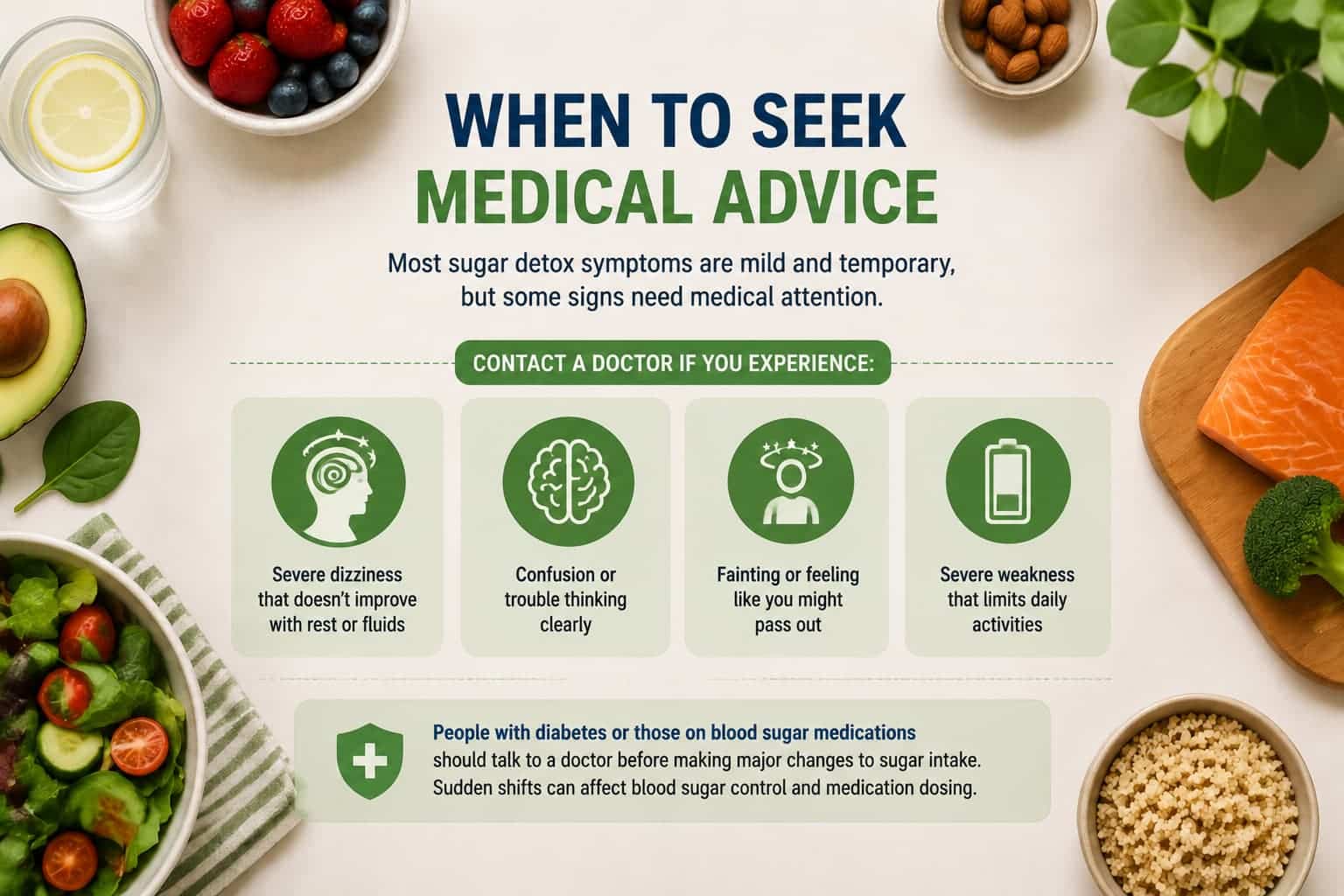
Most sugar detox symptoms are mild and fade within two weeks. A few signs are worth medical attention.
Contact a doctor if you experience:
- Severe dizziness that does not improve with rest or fluids
- Confusion or serious trouble thinking clearly
- Fainting or feeling like you might pass out
- Severe weakness that limits daily activities
People with diabetes or those on blood sugar medications should talk to a doctor before making major changes to sugar intake. Sudden shifts can affect blood sugar control and medication dosing.
Disclaimer: This article is for informational purposes only. It does not constitute medical advice. If you have diabetes or take blood sugar medication, speak with your doctor first. The same applies if you have any underlying health condition.
Sugar detox symptoms: Final takeaways
Sugar detox symptoms are a normal response to cutting added sugar. Cravings, headaches, fatigue, and mood changes are the most common signs your body is adjusting.
Most symptoms of sugar withdrawal peak in the first three days and ease within one to two weeks. Eating balanced meals, staying hydrated, and getting enough sleep make the process smoother.
Gradual reduction works better than going cold turkey for many people. Small, steady changes give your body time to adjust without the intense withdrawal that comes from cutting everything at once. With the right approach, symptoms fade, and steadier energy and mood usually follow.
Frequently Asked Questions
Can cutting out sugar cause headaches?
Yes. Headaches are common in the first few days as blood sugar levels adjust. Dehydration and caffeine reduction, if happening at the same time, can make headaches more intense.
Can cutting sugar make you tired?
Yes. Fatigue is common at first because your body is shifting away from quick sugar-based energy. It adapts to more stable fuel sources within one to two weeks.
Does quitting sugar help with cravings over time?
Yes. Cravings often drop within one to two weeks as taste preferences shift and dopamine responses reset. Many people find that food tastes sweeter naturally after a few weeks without added sugar.
Is it better to cut sugar gradually or all at once?
Gradual reduction tends to produce milder symptoms for many people. Cutting sugar slowly, over two to four weeks, gives your body time to adjust. You avoid the intense cravings that come from a sudden stop.
Can sugar withdrawal affect sleep?
Yes. Blood sugar swings can disrupt sleep. Some people sleep better quickly after reducing sugar. Others notice restlessness in the first few nights before sleep improves.