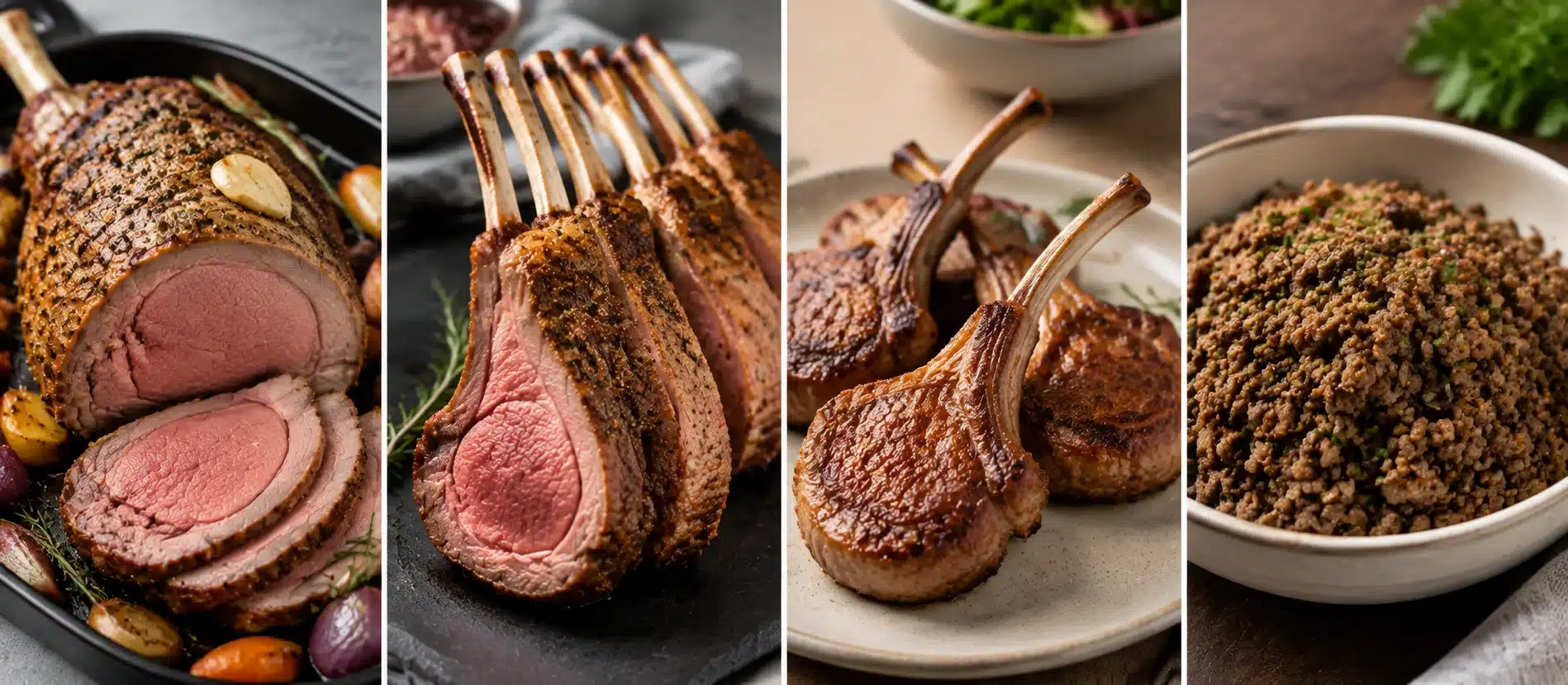
If you have wondered whether lamb fits into a healthy diet, you are not alone. Fat is the most common concern, as lamb carries more fat per serving than chicken or fish.
But lean cuts of lamb, eaten in the right portion, deliver complete protein, heme iron, zinc, selenium, and vitamin B12.
This article breaks down lamb’s nutrition, benefits, how it compares to beef, which cuts to choose, and how much to eat per week.
Is lamb healthy?
Yes. For most healthy adults, lamb can be part of a balanced diet. When eaten in moderate portions from lean cuts, it provides a complete protein, iron, zinc, selenium, and vitamin B12.
At the same time, fattier cuts carry a meaningful amount of saturated fat. Lamb works best as an occasional protein rather than a daily default.
The answer also depends on a few personal factors:
- The cut you choose
- How much you eat at one sitting
- How often lamb appears on your plate
- Your cooking method
- Any personal health conditions, such as high cholesterol or gout
Lamb is healthiest when you choose a lean, unprocessed cut, keep the cooked portion to about 3 ounces, trim visible fat, and pair it with vegetables, legumes, or whole grains.
Lamb nutrition facts
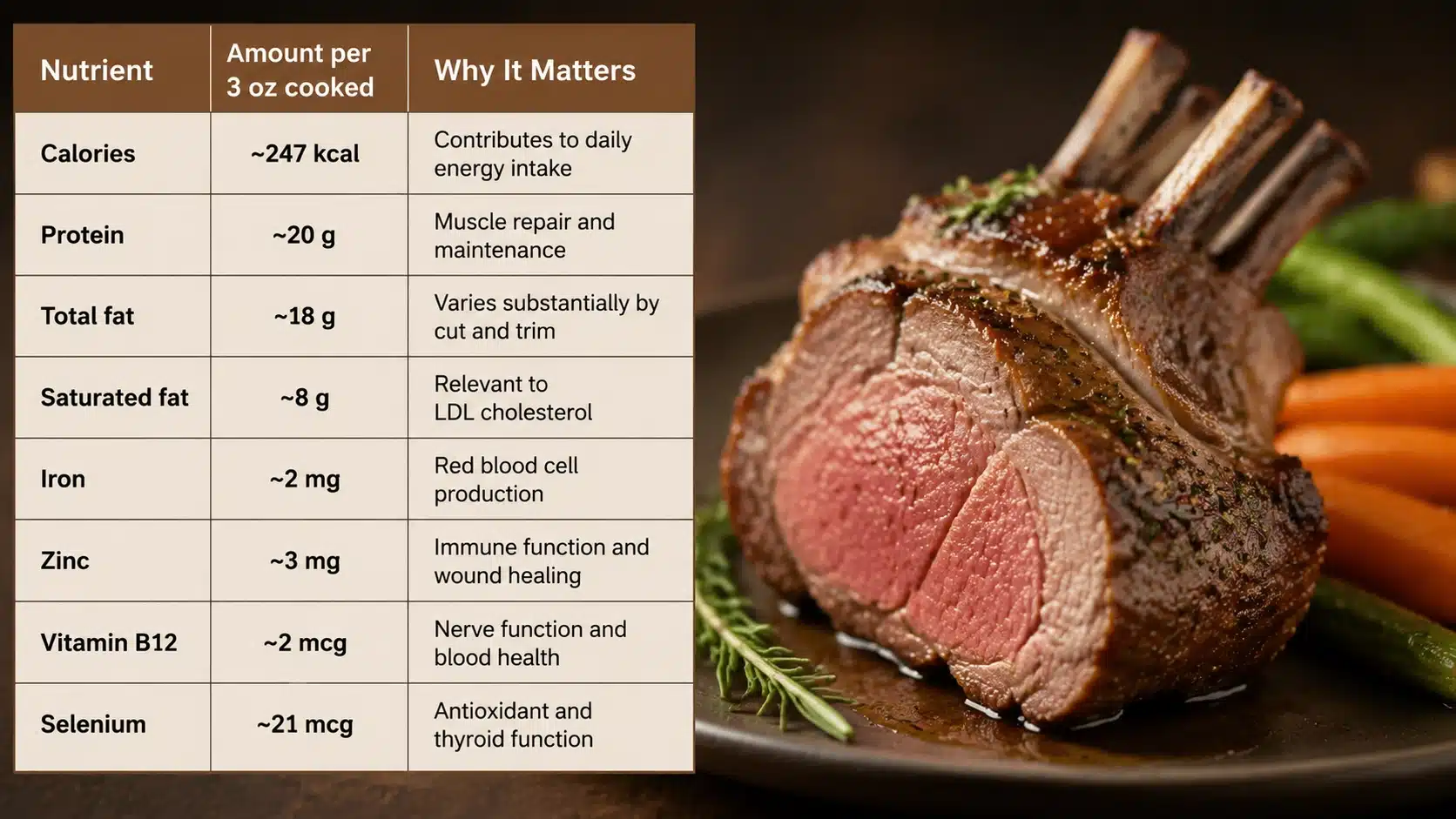
The table below shows what a standard 3-ounce cooked serving of lamb typically provides. Values shift depending on the cut, cooking method, and the amount of visible fat remaining.
A fattier cut, like rib or shoulder, is higher in calories and saturated fat. A trimmed loin or leg of the same weight will read very differently. Treat these numbers as a useful baseline rather than fixed values for every cut.
| Nutrient | Amount per 3 oz Cooked | Why It Matters |
|---|---|---|
| Calories | ~247 kcal | Contributes to daily energy intake |
| Protein | ~20 g | Supports muscle repair and maintenance |
| Total Fat | ~18 g | Varies by cut and how much fat is trimmed |
| Saturated Fat | ~8 g | Relevant to LDL cholesterol levels |
| Iron | ~2 mg | Supports red blood cell production |
| Zinc | ~3 mg | Supports immune function and wound healing |
| Vitamin B12 | ~2 mcg | Supports nerve function and blood health |
| Selenium | ~21 mcg | Supports antioxidant activity and thyroid function |
Lamb meat benefits
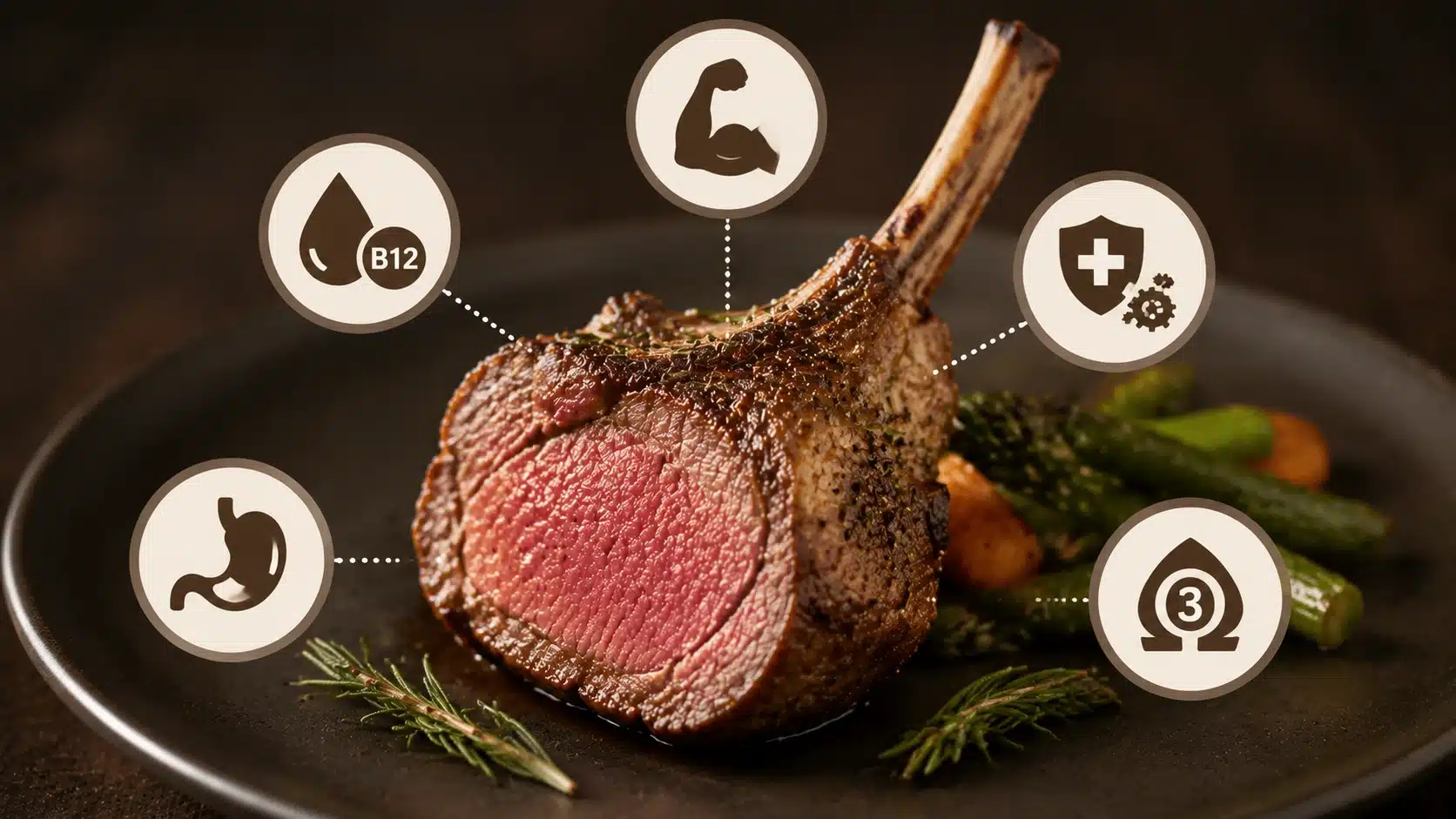
Lamb offers complete protein plus iron, zinc, B12, and selenium in one serving. These nutrients support muscle maintenance, immune function, and a sense of fullness when lamb is part of a varied diet. Here is a closer look at each benefit.
1. Complete protein for muscle and recovery
Lamb supplies all nine essential amino acids, which makes it a complete protein source. That matters for maintaining muscle as you age, repairing tissue after activity or injury, and supporting recovery after exercise. This does not make lamb superior to chicken, fish, eggs, or plant combinations like rice and beans. Variety across the week matters more than relying on any single source.
2. Heme iron for oxygen transport
Lamb contains heme iron. The body absorbs it more efficiently than the non-heme iron found in plant foods like spinach or lentils. The National Institutes of Health notes that heme iron bioavailability is notably higher than non-heme iron. This makes lamb a practical choice for people at risk of low iron status.
3. Zinc and selenium for immune support
Zinc in lamb supports immune response and wound healing. Selenium supports antioxidant activity and normal thyroid function. These two minerals work alongside protein and B vitamins in the body. No single food prevents illness on its own, but getting enough of both regularly supports your body’s baseline defenses.
4. Vitamin B12 for nerves and blood
Lamb provides roughly 2 mcg of vitamin B12 per 3-ounce serving. B12 supports normal nerve function and red blood cell production. B12 is found naturally only in animal foods. This makes lamb a useful source of B12 for people who eat limited amounts of fish or poultry.
5. Protein-rich and filling
Protein-rich foods tend to be more filling per calorie than carbohydrates or fat alone. A lamb serving at around 20 grams of protein can help you stay full between meals. That said, the overall fat and calorie count of the cut matters just as much as the protein content.
Side effects of eating lamb
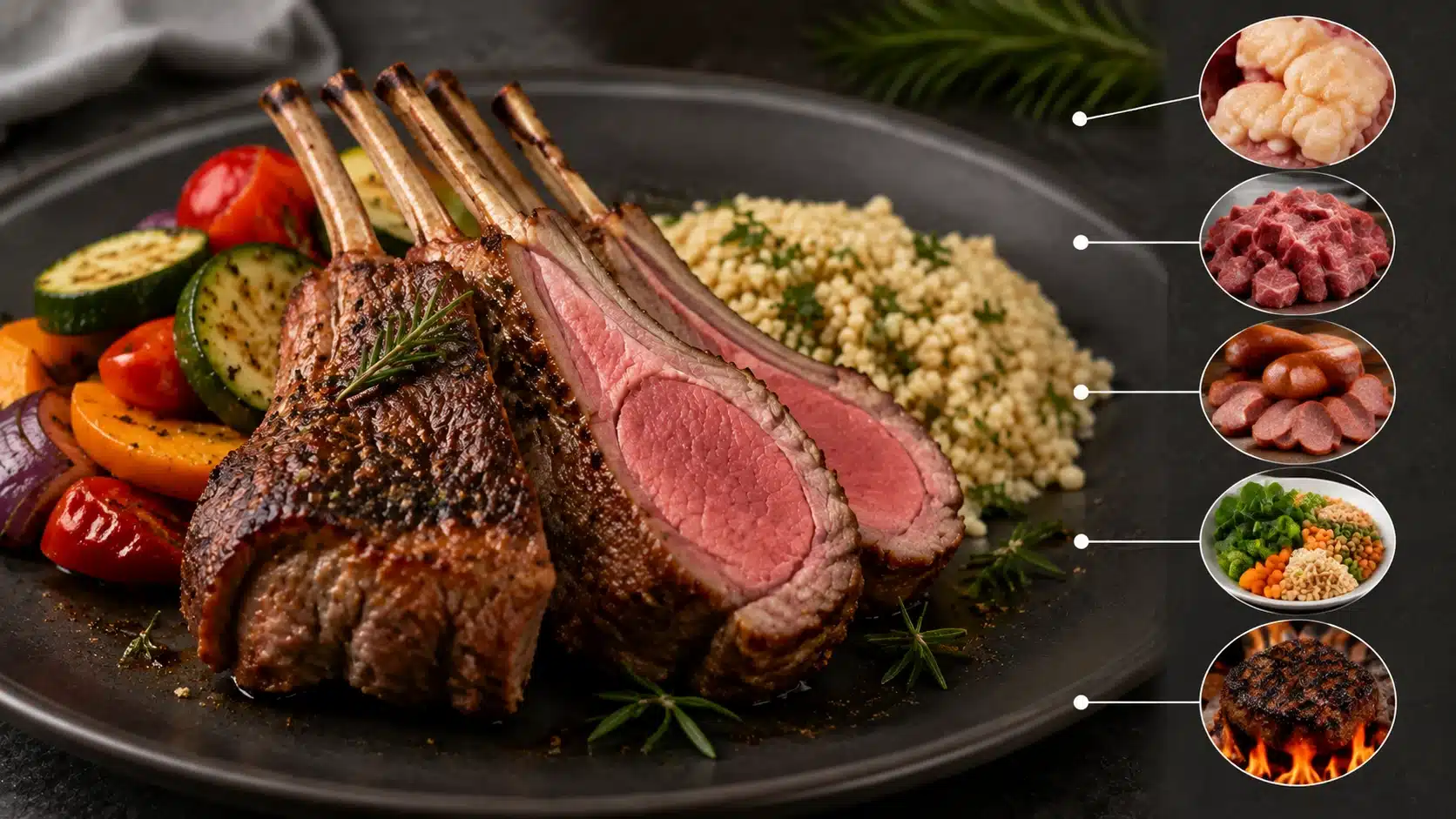
Lamb comes with a few trade-offs worth knowing before you add it to a regular meal rotation. None of these make lamb off-limits for most people. But they do shape how often and how much you eat.
1. Some cuts are high in saturated fat
The American Heart Association links swapping saturated fat for unsaturated fat to lower LDL cholesterol. Rib cuts and shoulder cuts carry more saturated fat than loin or leg cuts. Trimming visible fat before cooking helps reduce the total saturated fat load in a meal.
2. Lamb is classified as red meat
The American Cancer Society links consistently high red meat intake to an increased colorectal cancer risk. The general recommendation is moderation, not elimination. Keeping total red meat within the weekly limits discussed later in this article helps manage this risk over time.
3. Processed lamb carries extra risk
The World Health Organization treats processed meat separately from fresh meat. Cured or smoked lamb products carry additional risks associated with the processing itself. Fresh, unprocessed cuts are the better choice for regular use.
4. Lamb contains no fiber
Like all meat, lamb provides zero dietary fiber. A lamb-heavy plate needs balance from other foods. Round it out with leafy or roasted vegetables, beans or lentils, and a whole grain like brown rice or barley.
5. High-heat cooking can create harmful compounds
The National Cancer Institute notes that compounds form when muscle meat is cooked at high temperatures. Avoid letting the surface become heavily charred or blackened. Roasting, braising, and moderate-temperature grilling are safer cooking methods.
Is lamb meat healthier than beef?
Neither lamb nor beef is clearly the healthier option across all situations. The comparison depends on the specific cut, the portion size, and how both meats are cooked. That said, there are real nutritional differences between the two that are worth knowing about.
The table below compares lamb and beef on key nutrition factors. The data is based on a per-100g serving of cooked meat.
| Nutrition Factor | Lamb | Beef |
|---|---|---|
| Total Fat (per 100g) | ~21 g | ~15 g |
| Saturated Fat (per 100g) | ~8.1 g | ~7.3 g |
| Omega-3 Fatty Acids | Higher (roughly 2x more than beef) | Lower |
| CLA (Conjugated Linoleic Acid) | Higher | Lower |
| Selenium | Higher | Lower |
| Iron and Zinc | Similar; slightly lower in some cuts | Slightly higher in some cuts |
| Vitamin B12 | Similar | Slightly higher in some cuts |
| Protein | Similar | Slightly higher overall |
Lamb carries slightly more total fat and saturated fat than lean beef cuts. But it also provides more omega-3 fatty acids and CLA than beef. Both are red meats, and both come with the same general health trade-offs when eaten too often. The healthier pick usually comes down to the specific cut and how much fat you trim, not the animal itself.
If you want more omega-3 fatty acids and selenium, lamb has a modest edge. If you prefer slightly less saturated fat, lean beef cuts may better suit your goals. Rotating between both throughout the month is a practical middle ground.
How to cook lamb the healthier way
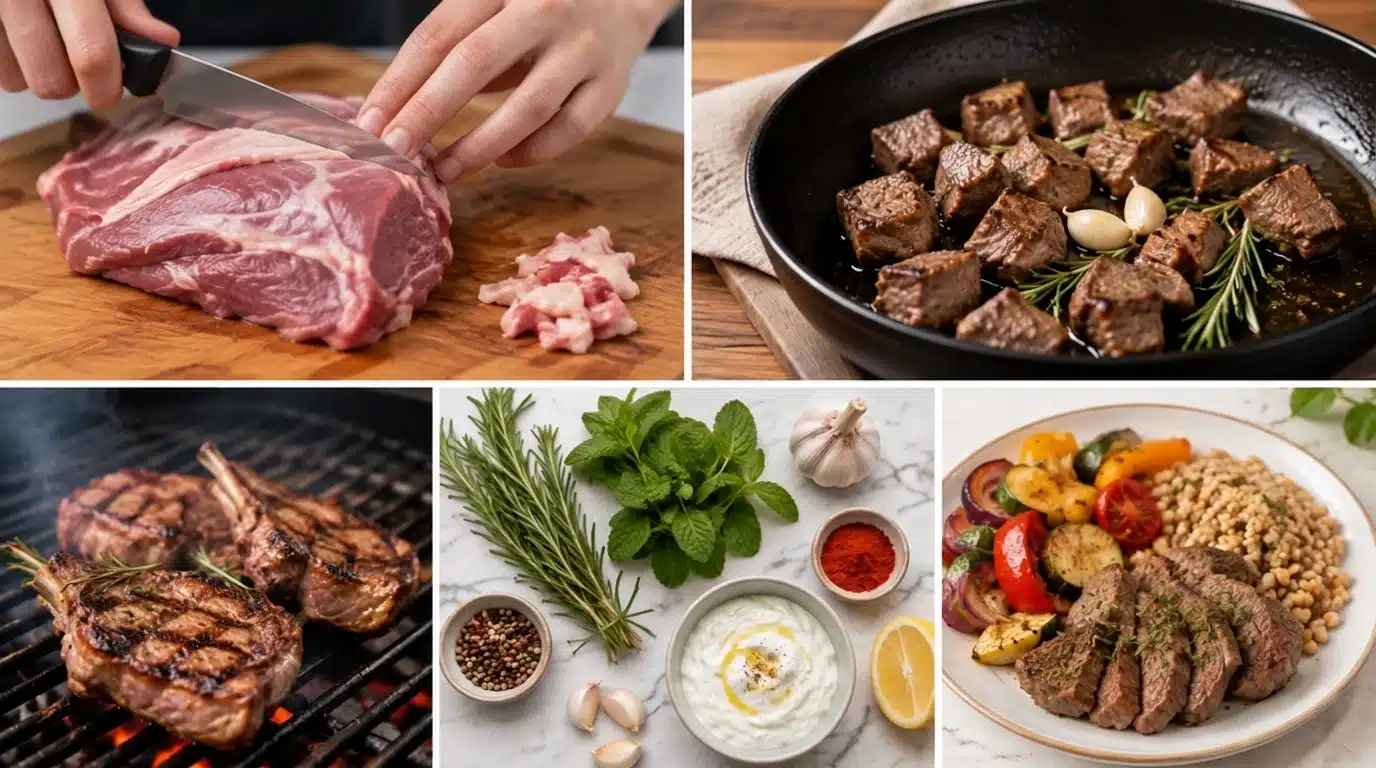
A few simple changes to the preparation and cooking methods can meaningfully reduce the fat and calorie load of any lamb meal without sacrificing flavor.
Step 1: Trim visible fat
Remove thick external fat before or after cooking. Drain the rendered fat from the ground lamb rather than cooking it back into the meat.
Step 2: Choose lower-fat cooking methods
Roasting, baking, braising, slow cooking, air frying, and moderate-temperature grilling all require less added fat. Deep-frying and cooking meat repeatedly in its own rendered fat add unnecessary calories and saturated fat.
Step 3: Avoid heavy charring
Cook lamb thoroughly, but avoid letting the surface become extensively blackened. This reduces the formation of harmful compounds that develop at very high cooking temperatures.
Step 4: Use herbs instead of extra salt
Garlic, rosemary, mint, cumin, lemon, black pepper, paprika, and yogurt-based marinades add strong flavor. They do this without relying heavily on salt or added fat.
Step 5: Build a balanced plate
Let lamb take up about one-quarter of the plate. Cover half the plate with vegetables. Fill the remaining quarter with a whole grain or legume, such as barley, lentils, or brown rice.
How much lamb can you eat?
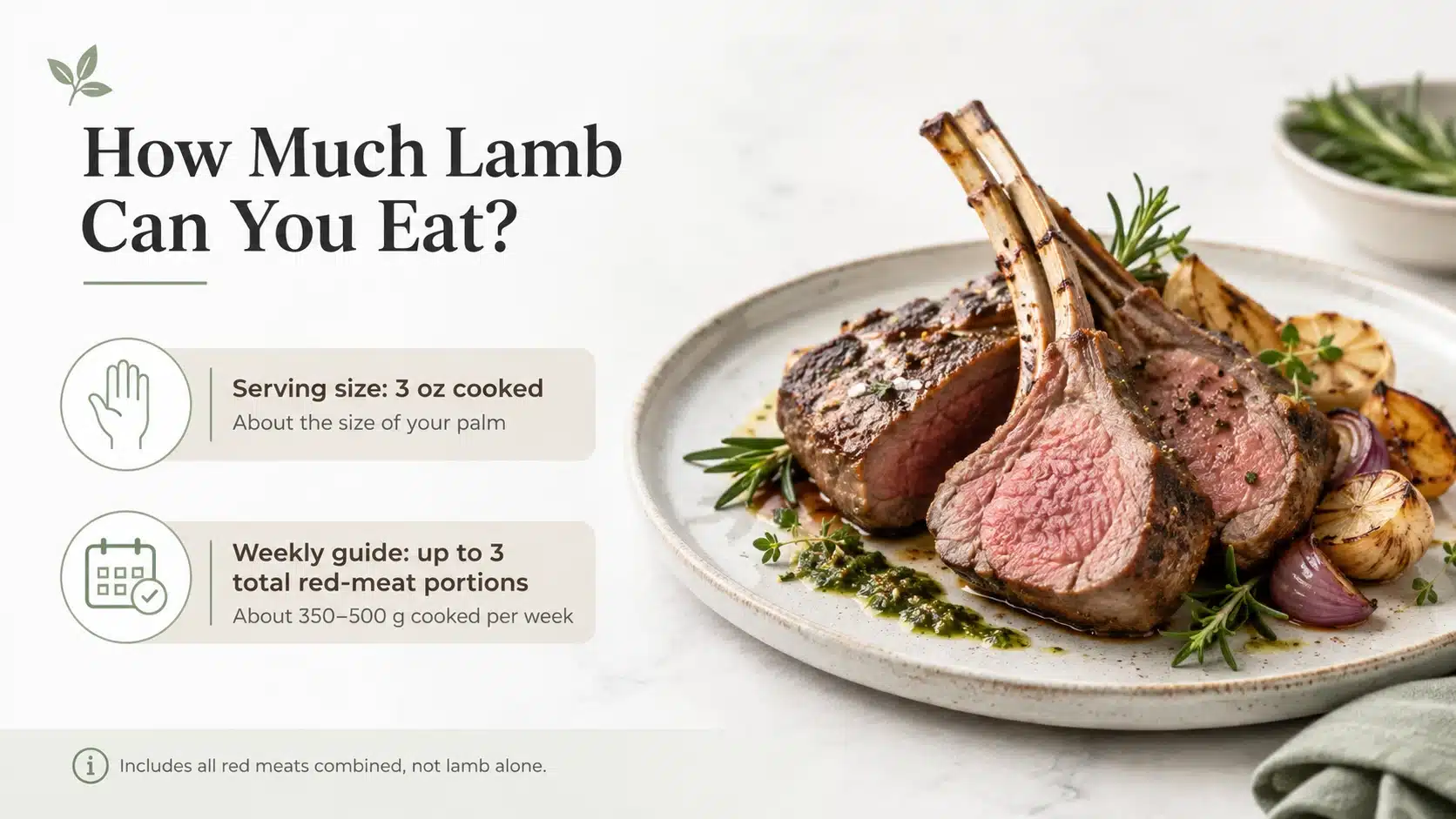
A “serving” of lamb is smaller than most restaurant portions. A practical cooked serving is:
- About 3 ounces
- Roughly the size of a deck of cards, or about the size of your palm
- One component of the plate, not the majority of it
The American Heart Association uses approximately 3 ounces as a practical portion size for cooked meat, which is a useful visual reference when you are plating a meal at home.
Weekly frequency
The World Cancer Research Fund recommends limiting total red meat intake, not lamb specifically, to roughly three portions per week, or about 350 to 500 grams of cooked meat, while keeping processed meat intake minimal.
Individual needs vary based on:
- Overall protein requirements
- Heart health and cholesterol levels
- Iron status
- Low-calorie meats
- Guidance from a doctor or registered dietitian
What are the healthiest cuts of lamb?
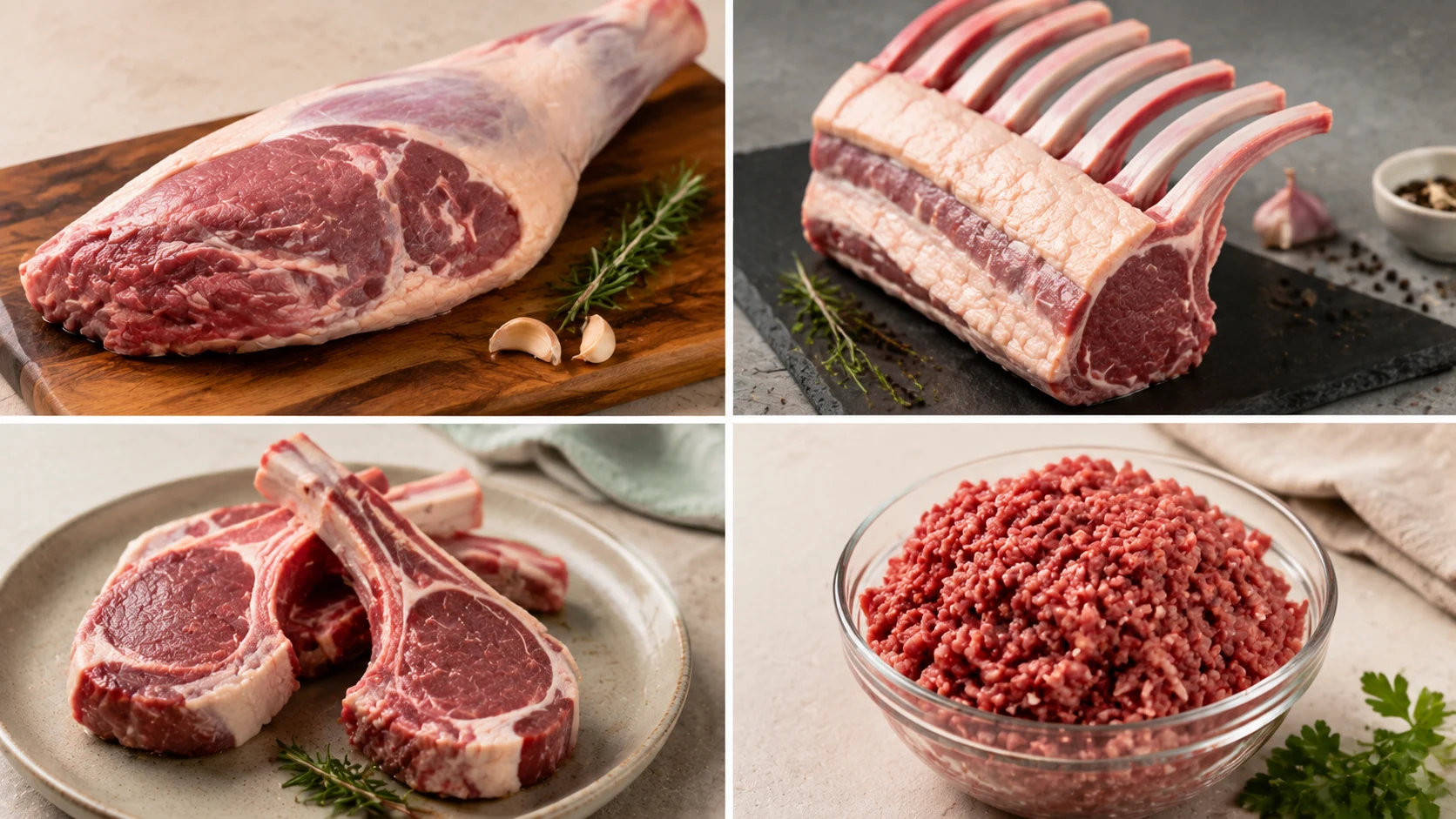
Not all lamb cuts carry the same fat load. The cut you choose matters just as much as portion size. Both directly affect how healthy lamb is on a regular basis. Leaner cuts from the leg and loin are the better everyday choices.
| Lamb Cut | Fat Level | Best Cooking Method | Health Note |
|---|---|---|---|
| Leg of lamb | Relatively lean when trimmed | Roasting or grilling | Good everyday choice in a controlled portion |
| Lamb loin | Lean to moderate | Roasting or pan-searing | Trim outer fat before cooking |
| Lamb tenderloin | Lean | Quick cooking | Small, protein-dense cut |
| Shoulder | Moderate to high | Slow cooking | Remove visible fat after cooking |
| Rib or rack | Higher | Roasting | Keep portions on the smaller side |
| Lamb breast | High | Slow roasting | Best saved for occasional meals |
| Ground lamb | Varies widely | Burgers or meatballs | Check the package’s lean-to-fat ratio |
Tip: Always compare the Nutrition Facts label between packages. The word “lamb” on the front does not tell you the fat content. The label does.
Is lamb healthier than other meats?
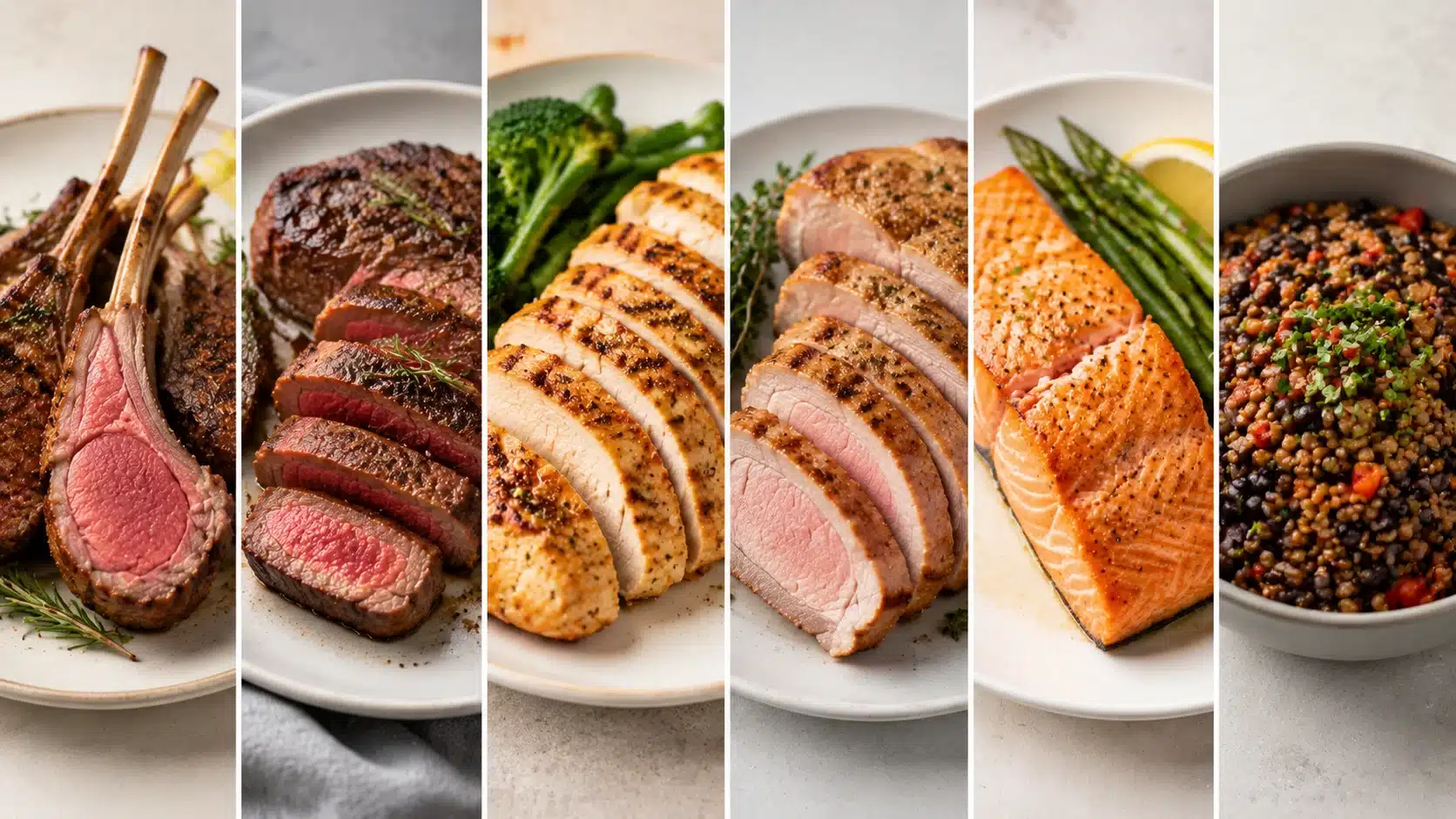
There is no single meat that is automatically the healthiest choice. The comparison depends heavily on the specific cut, the portion size, and how it is cooked.
| Comparison | Main Difference |
|---|---|
| Lamb vs. beef | Both are red meats; the healthier pick usually comes down to the cut and fat trim, not the animal itself. |
| Lamb vs. chicken | Skinless chicken is generally lower in saturated fat |
| Lamb vs. pork | Lean pork can be lower in fat, while lamb may offer more iron and B12 in some cuts. |
| Lamb vs. fish | Fish, especially oily fish like salmon, generally provides more omega-3 and less saturated fat. |
| Lamb vs. plant protein | Lamb provides complete protein and heme iron; beans and lentils provide fiber and no cholesterol. |
The takeaway is that no meat wins across the board once you control for serving size, cut, and cooking method.
Rotating between several protein sources across the week is a more realistic strategy than trying to pick one “best” meat.
Who should limit their lamb intake?
Most healthy adults can eat lamb in moderation without problems. But certain health conditions call for extra care around how often and how much lamb fits into a weekly diet.
- People with gout: Lamb contributes dietary purines that can trigger flare-ups. The Arthritis Foundation lists red meat among foods to limit for gout management.
- People with iron overload disorders: Lamb’s easily absorbed heme iron may need closer attention for those with hereditary hemochromatosis or a similar diagnosed condition. Follow guidance from your treating clinician.
- People with gallbladder or digestive problems: Fatty lamb meals can trigger discomfort, nausea, or reflux. This is typically tied to fat content or portion size.
- People managing cardiovascular risk: Choose lean cuts and watch portion size. Eat lamb less often and favor fish and plant proteins when managing cholesterol or heart disease risk.
- Pregnant women: Lamb is safe during pregnancy when cooked thoroughly to 145°F for whole cuts or 160°F for ground lamb. Undercooked meat carries a foodborne illness risk. Lamb’s iron, protein, and B12 can support nutritional needs during pregnancy as part of a balanced diet.
Is lamb a healthy choice? final takeaway
Lamb can be part of a healthy diet when eaten in moderation. Choosing lean cuts, keeping portions controlled, and pairing lamb with vegetables, whole grains, and other protein sources helps create a balanced meal.
Overall, lamb can be enjoyed as a nutrient-rich protein choice when included as part of a varied diet.
Frequently Asked Questions
Is lamb sustainable?
Yes, lamb can be sustainable with responsible farming practices and careful land management.
Its impact depends on how it is raised and managed.
Is lamb good for building muscle?
Yes. Lamb contains all nine essential amino acids, making it a complete protein that supports muscle repair and growth. A 3-ounce serving provides about 20 grams of protein, which contributes well toward daily protein goals for active adults.
Is lamb good for iron deficiency?
Lamb provides heme iron, which the body absorbs more easily than non-heme iron from plant foods. It can support iron intake as part of a varied diet. Suspected iron deficiency should be confirmed with blood testing and managed under a doctor’s guidance.
Is ground lamb healthy?
Ground lamb can be a healthy choice, but fat content varies widely between products. Compare the nutrition label and choose a leaner blend when available. Drain rendered fat after cooking and keep your portion close to 3 ounces.
Is lamb safe to eat during pregnancy?
Yes, when cooked to the correct internal temperature. Whole cuts should reach 145°F and ground lamb should reach 160°F. Undercooked meat carries a foodborne illness risk. Lamb’s iron, protein, and B12 can support pregnancy nutrition when included in a balanced diet.
Is lamb good for kids?
Yes, in age-appropriate portions. Lamb’s iron, zinc, and B12 can support healthy growth in children. Cut it into small, safe pieces for younger children and keep servings smaller than an adult portion.
What is the leanest cut of lamb?
Lamb tenderloin and trimmed leg of lamb are generally the leanest options. Lamb loin is also a relatively lean cut. Avoid shoulder, rib, and breast cuts if you are focused on keeping the total fat in a meal lower.