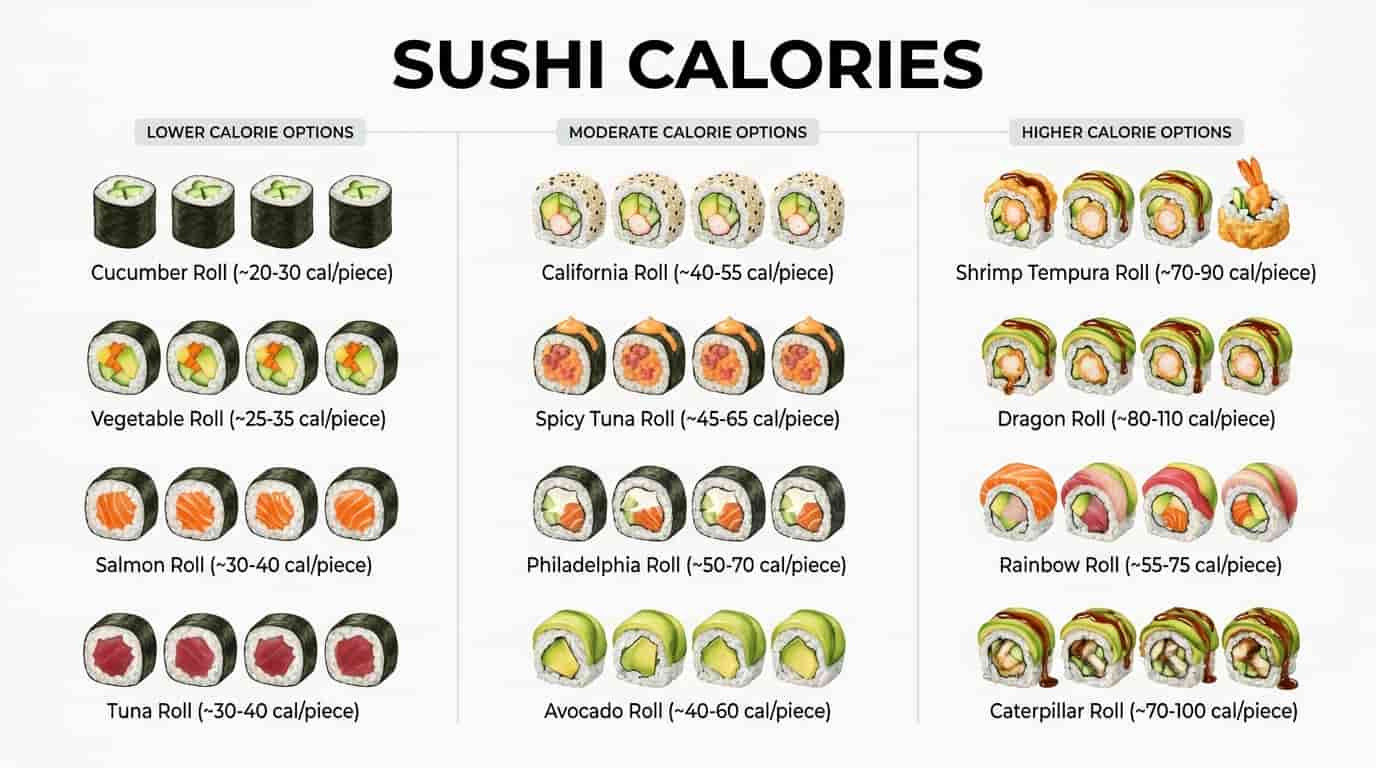
Quick Answer: Most sushi rolls contain between 140 and 500 calories per full roll.
A sushi roll’s calorie count depends more on its ingredients than its size. Simple fish or vegetable rolls stay lighter, while fried fillings and creamy toppings quickly raise the numbers.
This breakdown compares popular rolls, highlights calorie-heavy ingredients, and shows smarter ways to order.
Sushi Roll Nutrition Facts: Calories, Carbs, Protein, and Fat
Looking beyond calories helps you understand how filling and balanced each sushi roll really is. The table below compares key nutrition details.
| Sushi Roll Type | Calories | Carbs | Protein | Fat |
|---|---|---|---|---|
| Cucumber Roll | 140 to 180 | 28g | 2 to 3g | 1 to 2g |
| California Roll | 250 to 350 | 38g | 9g | 7g |
| Tuna Roll | 180 to 250 | 27g | 24g | 2g |
| Spicy Tuna Roll | 280 to 400 | 26g | 20 to 24g | 11g |
| Salmon Avocado Roll | 300 to 350 | 42g | 13g | 8 to 13g |
| Dragon Roll | 350 to 500+ | 45 to 55g | 15 to 18g | 19 to 20g |
| Shrimp Tempura Roll | 450+ | 40 to 50g | 15 to 18g | 20 to 21g |
Key nutrition patterns across these rolls:
- Rice provides most of the carbohydrates
- Fish supplies most of the protein
- Salmon and avocado contribute healthy fats
- Fried ingredients or sauces increase the overall fat content
Note: These estimates are based on typical restaurant portions. Actual values vary depending on recipe, portion size, ingredient amounts, sauces, and preparation methods.
Calories in Popular Sushi Rolls
Different sushi rolls can vary widely in calories depending on their ingredients.
1. California Roll Calories
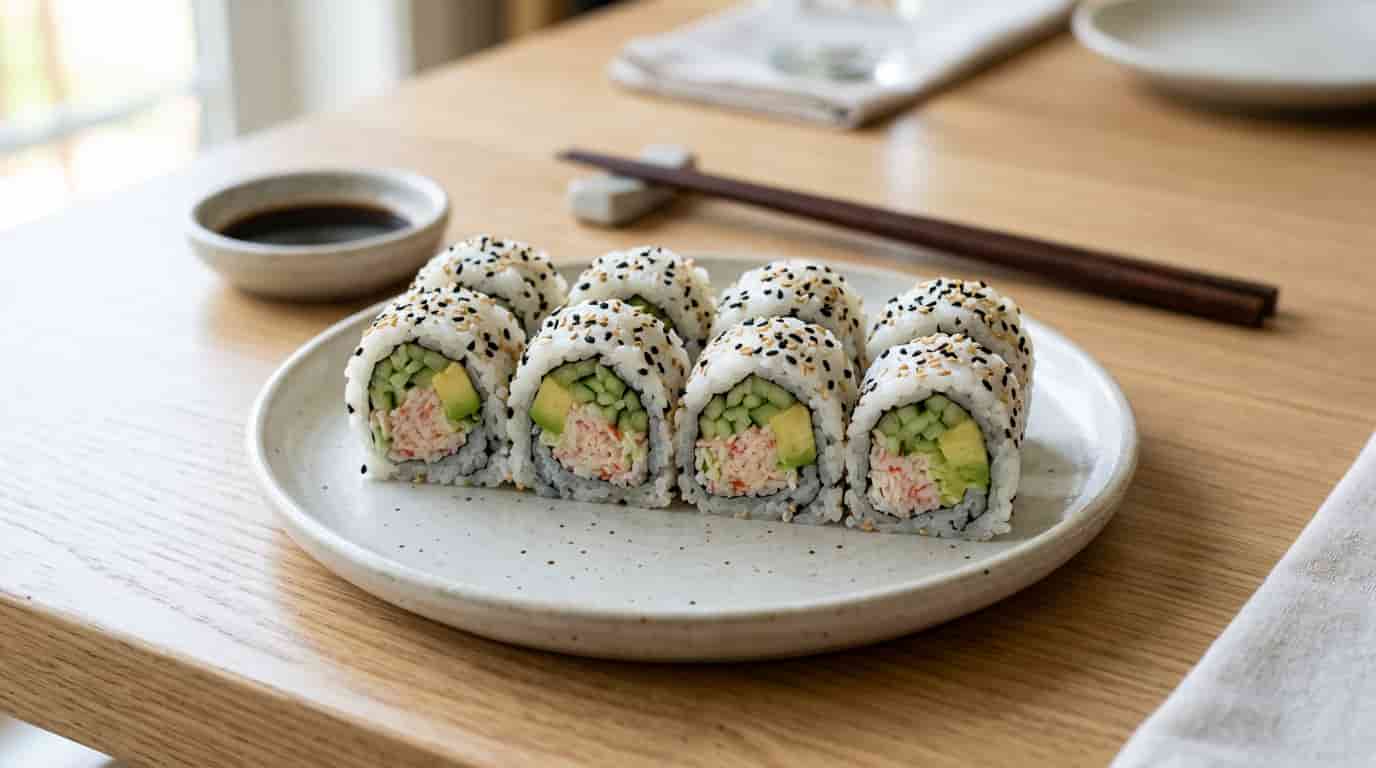
A California roll usually contains around 250 to 350 calories per roll.
The calories mainly come from three sources:
- Sushi rice, which provides most of the carbohydrates
- Imitation crab, which may contain added starch
- Avocado, which adds healthy fats
Compared with a cucumber or tuna roll, a California roll sits in the middle for calories.
2. Spicy Tuna Roll Calories
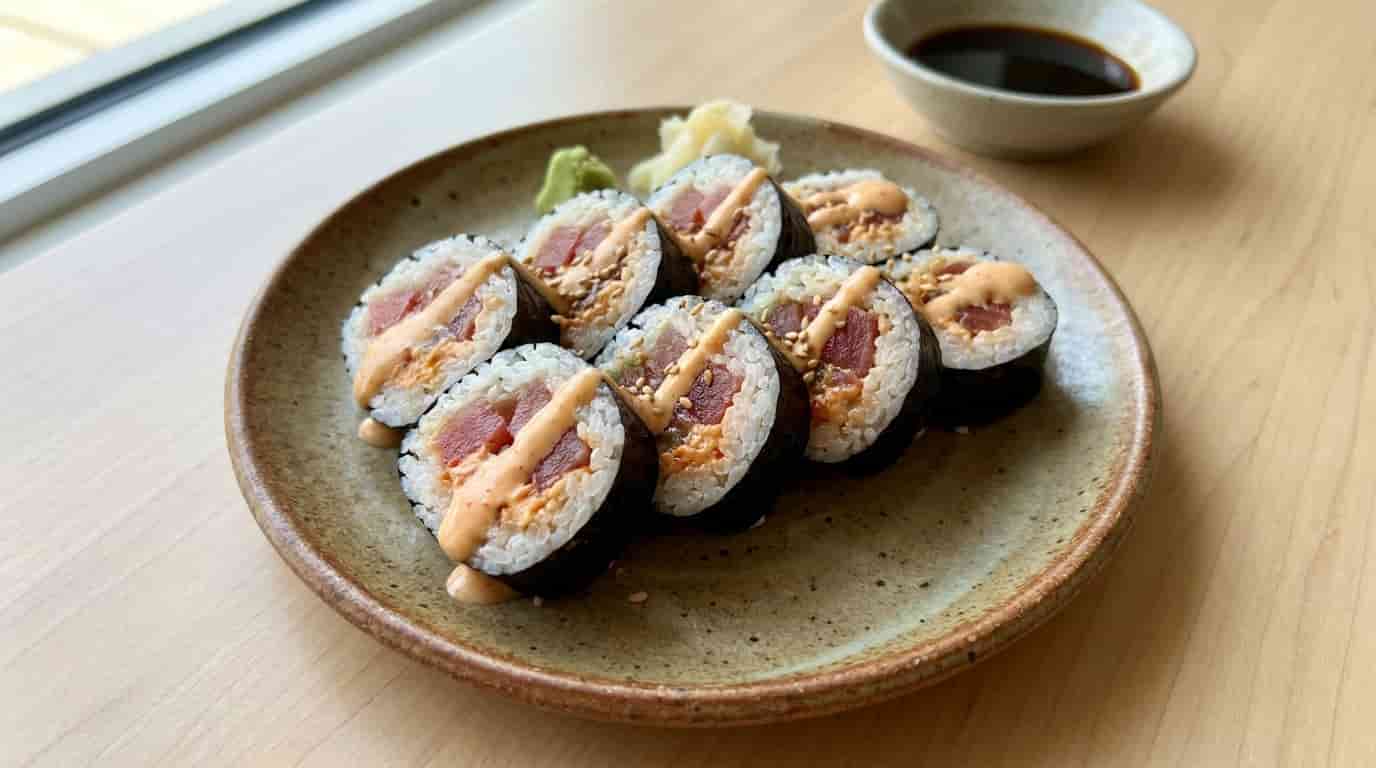
A spicy tuna roll usually contains 280 to 400 calories per roll.
Tuna itself is a lean protein with relatively few calories. The main calorie increase comes from spicy mayo. Depending on how much is used, spicy mayo adds significant fat and calories.
For a lighter option, ask for the sauce on the side or request less of it.
3. Salmon Roll and Salmon Avocado Roll Calories
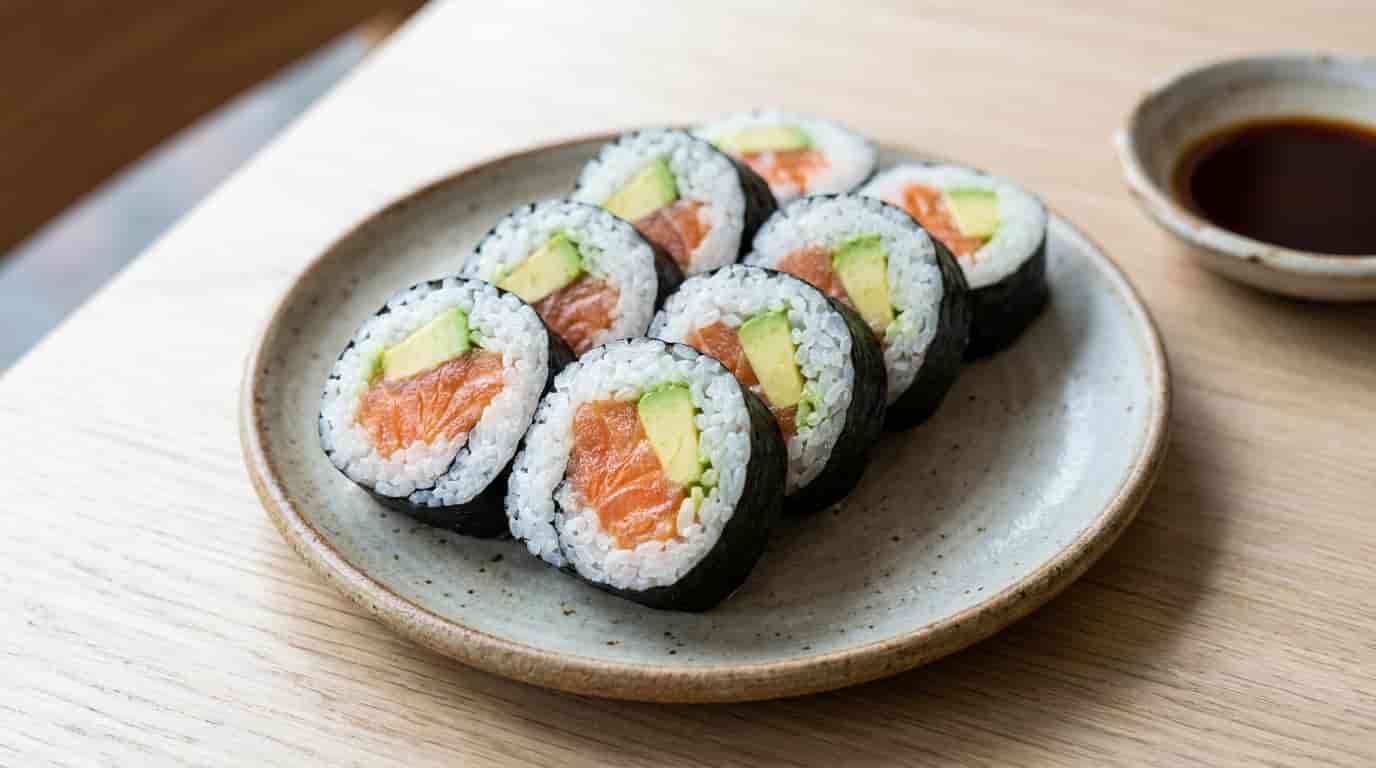
A plain salmon roll is generally lighter than many specialty rolls. The calories mainly come from sushi rice and salmon, which provides protein and healthy fats, including omega-3 fatty acids.
Adding avocado increases the calorie count because avocado is higher in fat. A salmon avocado roll usually contains around 300 to 350 calories per roll.
4. Philadelphia Roll Calories
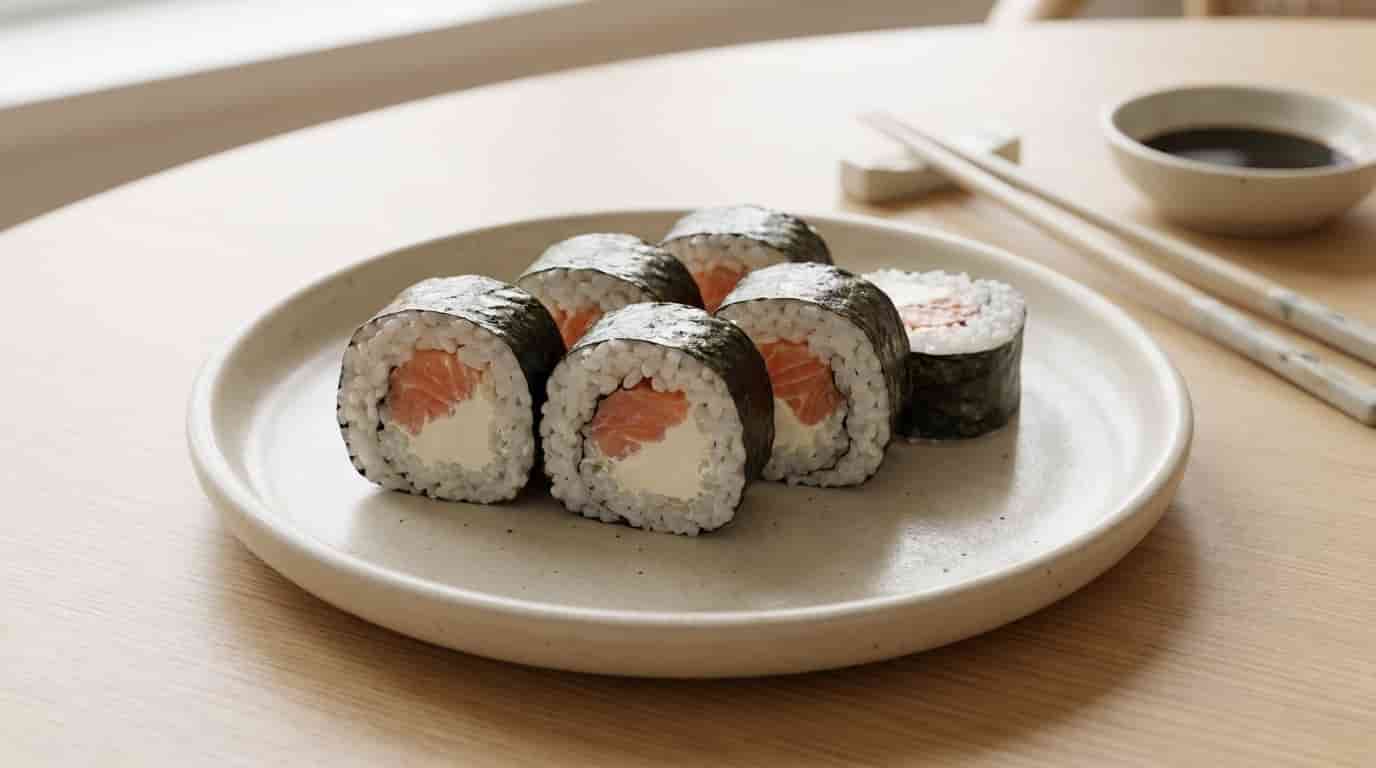
A Philadelphia roll typically contains 300 to 400 calories per roll.
The main calorie increase comes from cream cheese, which adds fat and calories compared with simple fish-based rolls. Salmon still provides protein, but the overall fat content is higher.
5. Shrimp Tempura Roll Calories
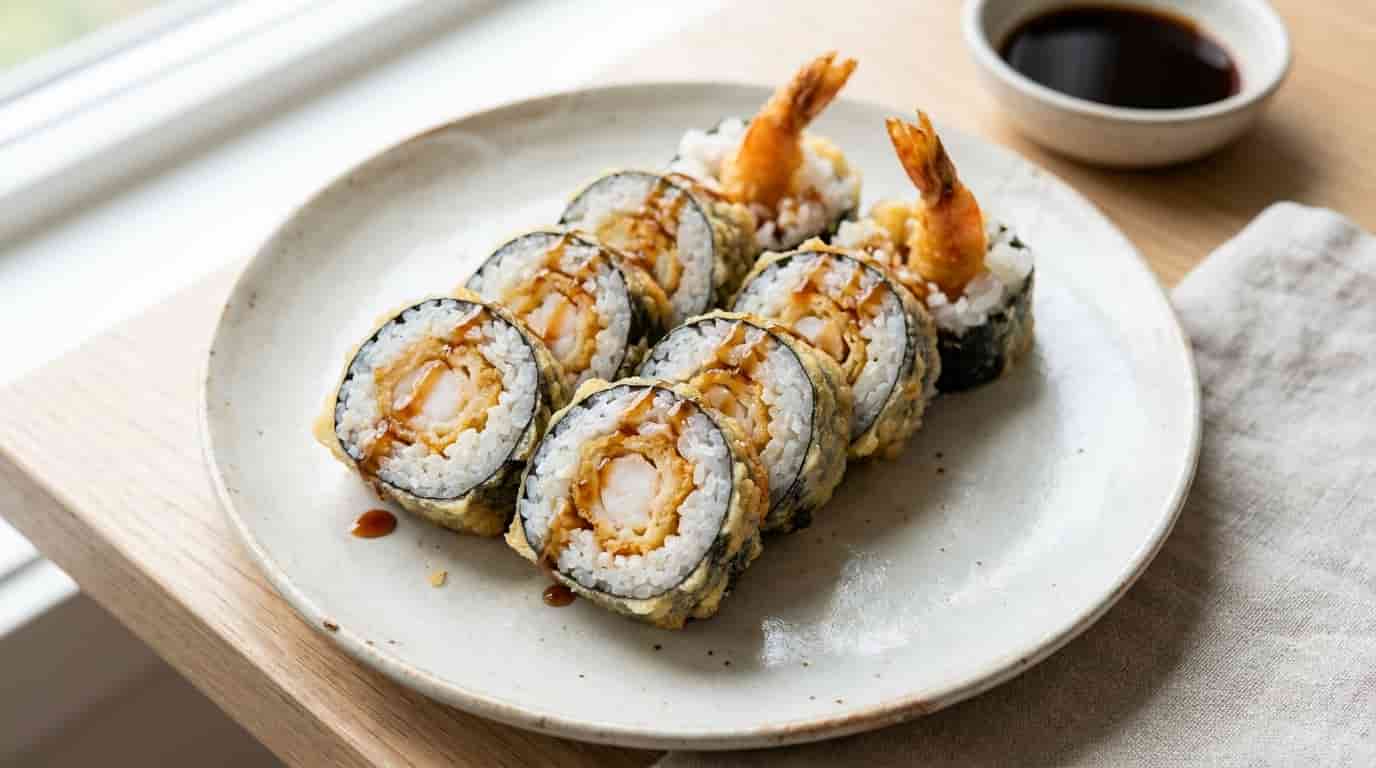
Shrimp tempura rolls are among the highest-calorie sushi options. They usually contain around 450 to 500+ calories per roll.
The extra calories come from:
- Tempura batter
- Oil absorbed during frying
- Added sauces such as eel sauce or spicy mayo
6. Vegetable and Avocado Roll Calories
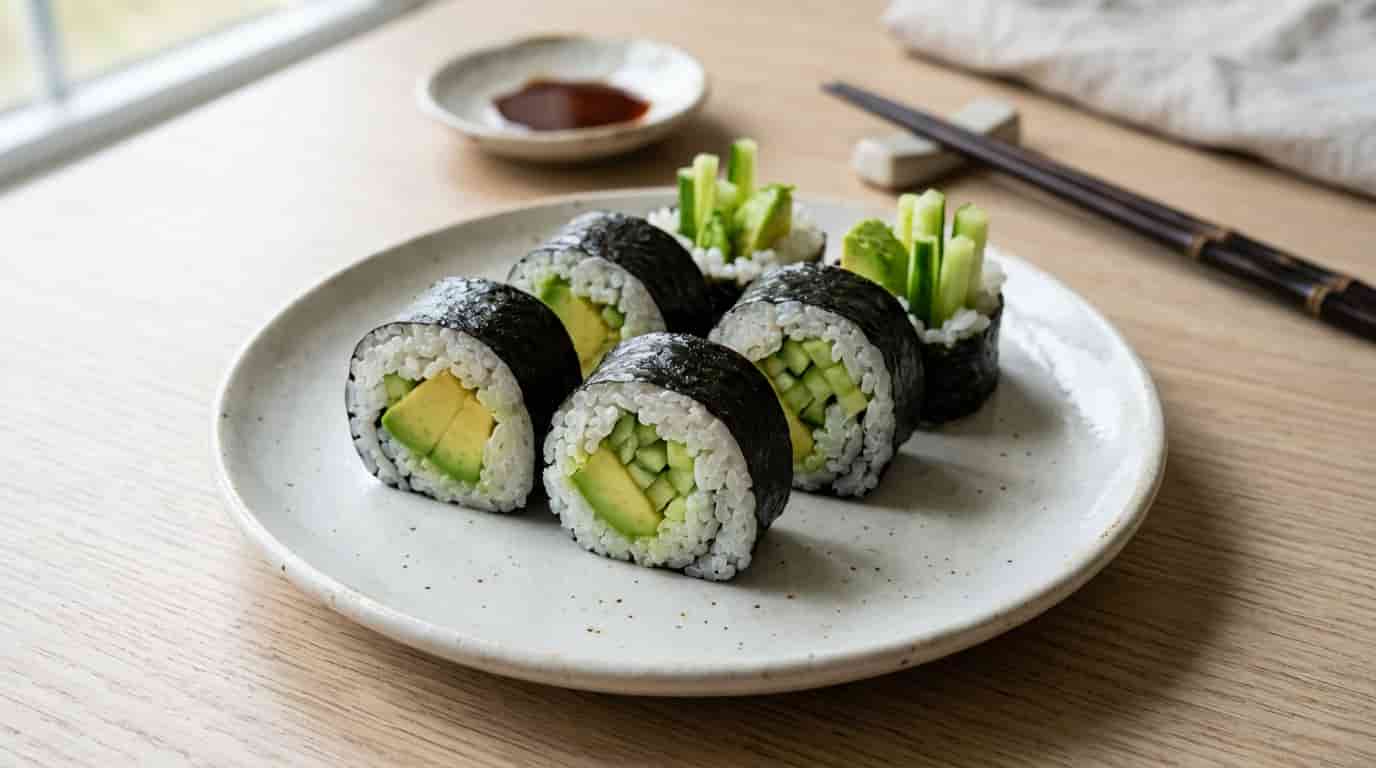
Vegetable-based rolls are often among the lighter choices:
- A cucumber roll may contain around 140 to 180 calories
- An avocado roll usually contains 170 to 250 calories
These rolls stay lighter because they skip fried ingredients and heavy sauces. They may contain less protein than fish-based rolls, though.
What Makes Sushi Rolls Higher in Calories?
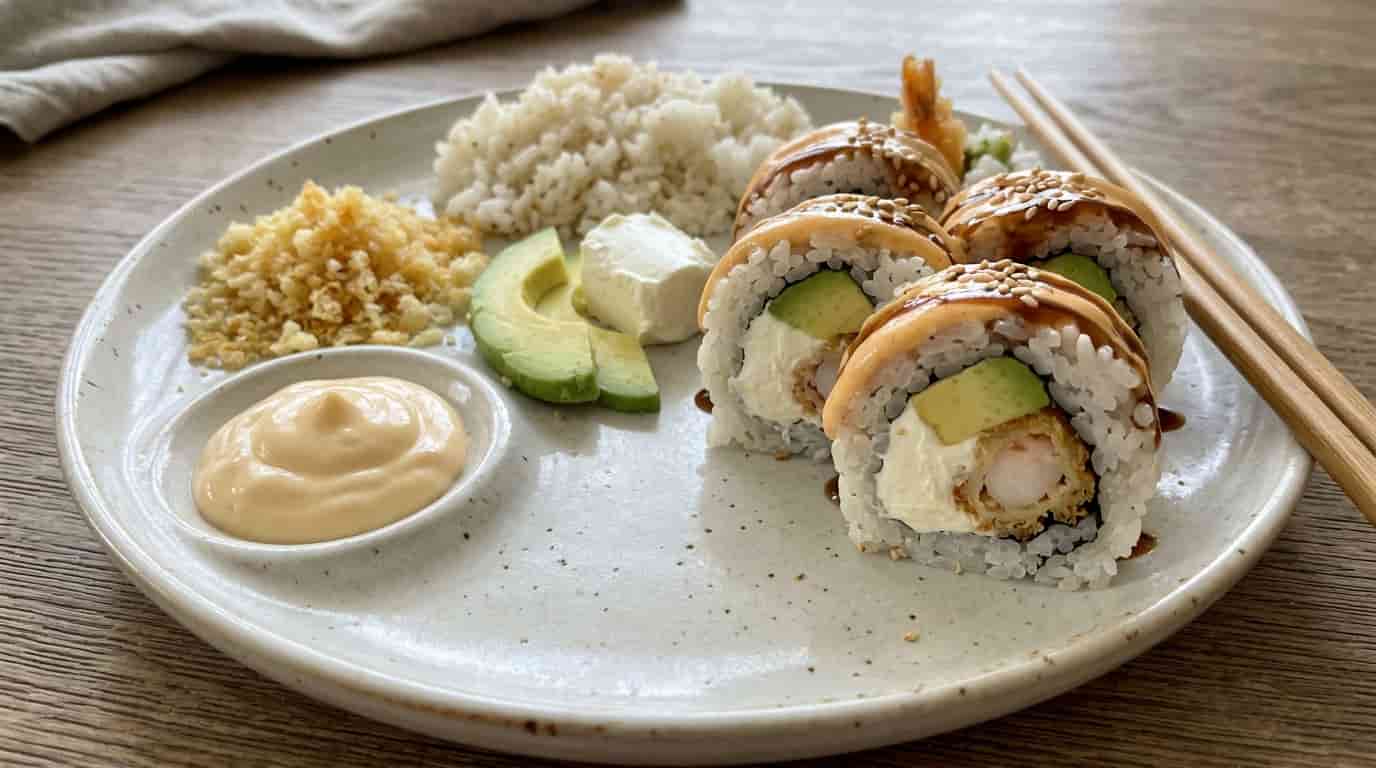
Several ingredients can quickly increase the calorie content of sushi.
1. Sushi Rice Quantity
Rice is the main source of carbohydrates in most sushi rolls. Larger rolls often contain more rice, which increases calories before you add any fillings or sauces.
2. Sauces and Toppings
Sauces can add a surprising number of calories without making the roll look bigger. Common calorie-heavy additions include spicy mayo, eel sauce, creamy toppings, and extra sauce drizzles. Ordering sauces separately can lower total calorie intake.
3. Fried Ingredients
Fried ingredients are one of the biggest calorie contributors in sushi. Tempura batter absorbs oil during cooking, increasing both fat and calories compared with raw or steamed ingredients.
4. High-Calorie Fillings
Some ingredients increase calories even without frying. Common examples include cream cheese, extra avocado, and multiple rich fillings combined in one roll. Specialty rolls often stack several calorie-dense ingredients together.
Calories From Common Sushi Ingredients
Understanding individual ingredients helps explain why two similar-looking rolls can have very different calorie counts.
| Ingredient | Approximate Impact |
|---|---|
| Sushi Rice | Main source of carbohydrates and calories |
| Tuna | Lean protein with fewer calories |
| Salmon | Provides protein and healthy fats (omega-3s) |
| Avocado | Adds nutrients but increases calories due to fat content |
| Cream Cheese | Raises fat and calorie levels |
| Spicy Mayo | Adds extra fat and calories |
| Tempura Batter | Increases calories through frying and oil absorption |
A roll made with lean fish and vegetables will usually contain fewer calories than one combining rice, fried ingredients, cream cheese, and sauces.
Sushi Roll Calories Compared With Other Sushi Options
Not all sushi has the same calorie profile. Comparing rolls with nigiri, sashimi, and hand rolls shows how rice, portion size, and ingredients affect the count.
Sushi Roll vs Nigiri
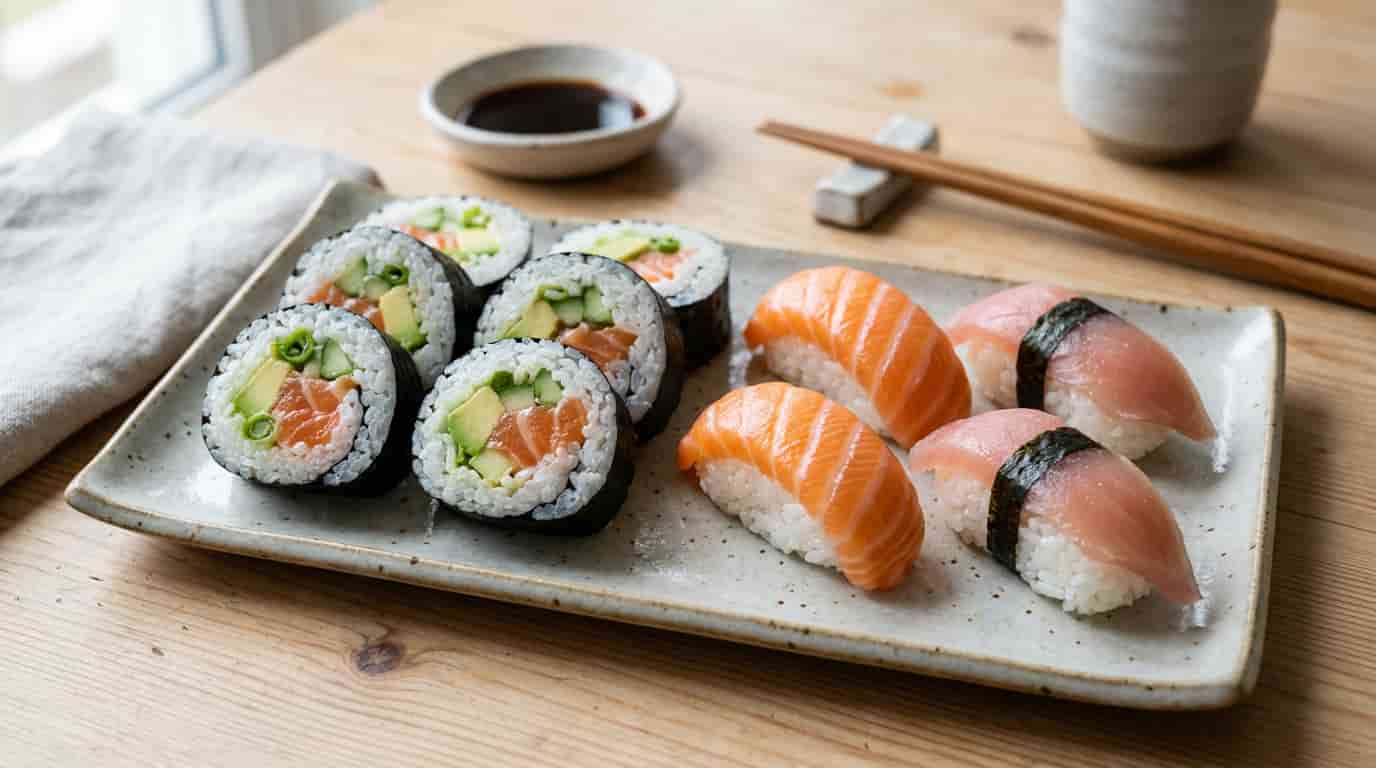
Nigiri contains a small amount of rice topped with fish. One piece usually contains around 40 to 65 calories. Nigiri generally has a higher fish-to-rice ratio than rolls, which can provide more protein with fewer added ingredients.
Sushi Roll vs Sashimi
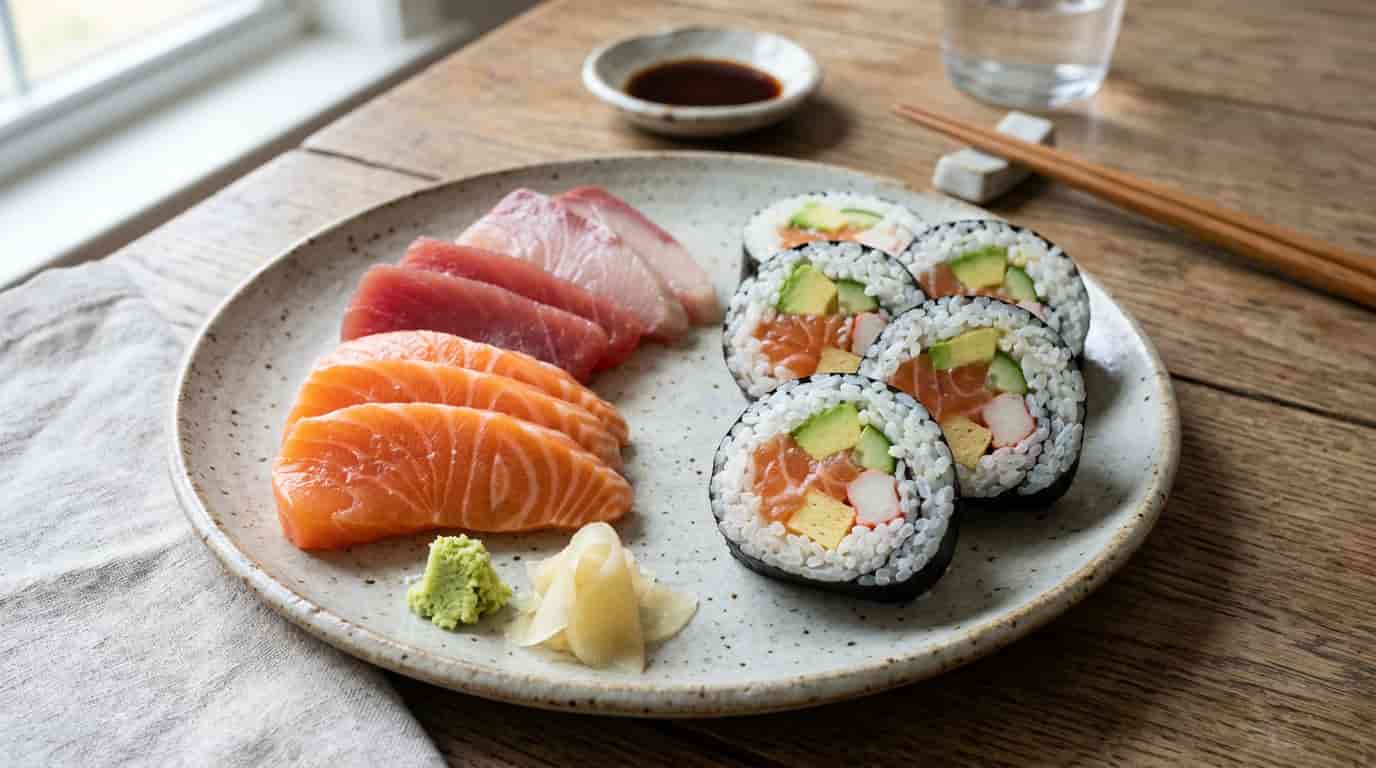
Sashimi is sliced fish served without rice. Because it contains no rice, it is lower in carbohydrates and calories. A typical serving of sashimi may contain around 25 to 40 calories per ounce, depending on the fish type.
Sushi Roll vs Hand Roll
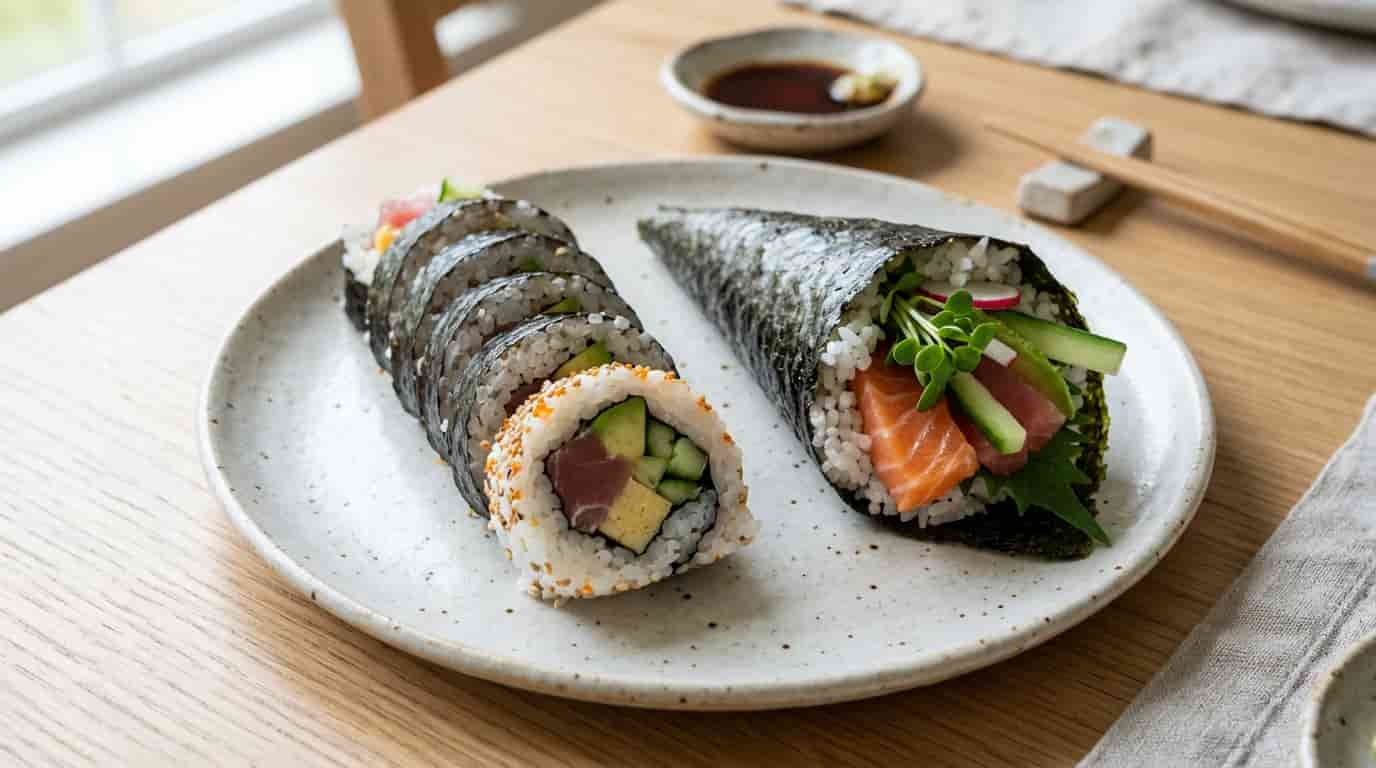
Hand rolls (temaki) are cone-shaped and can vary in size and filling. A hand roll may have more or fewer fillings than a standard sliced roll. Calories are harder to estimate because portion size and ingredients vary more than with standard rolls.
Lowest and Highest Calorie Sushi Rolls
Sushi rolls can vary greatly in calorie content depending on ingredients, preparation, and added toppings.
Generally lighter choices
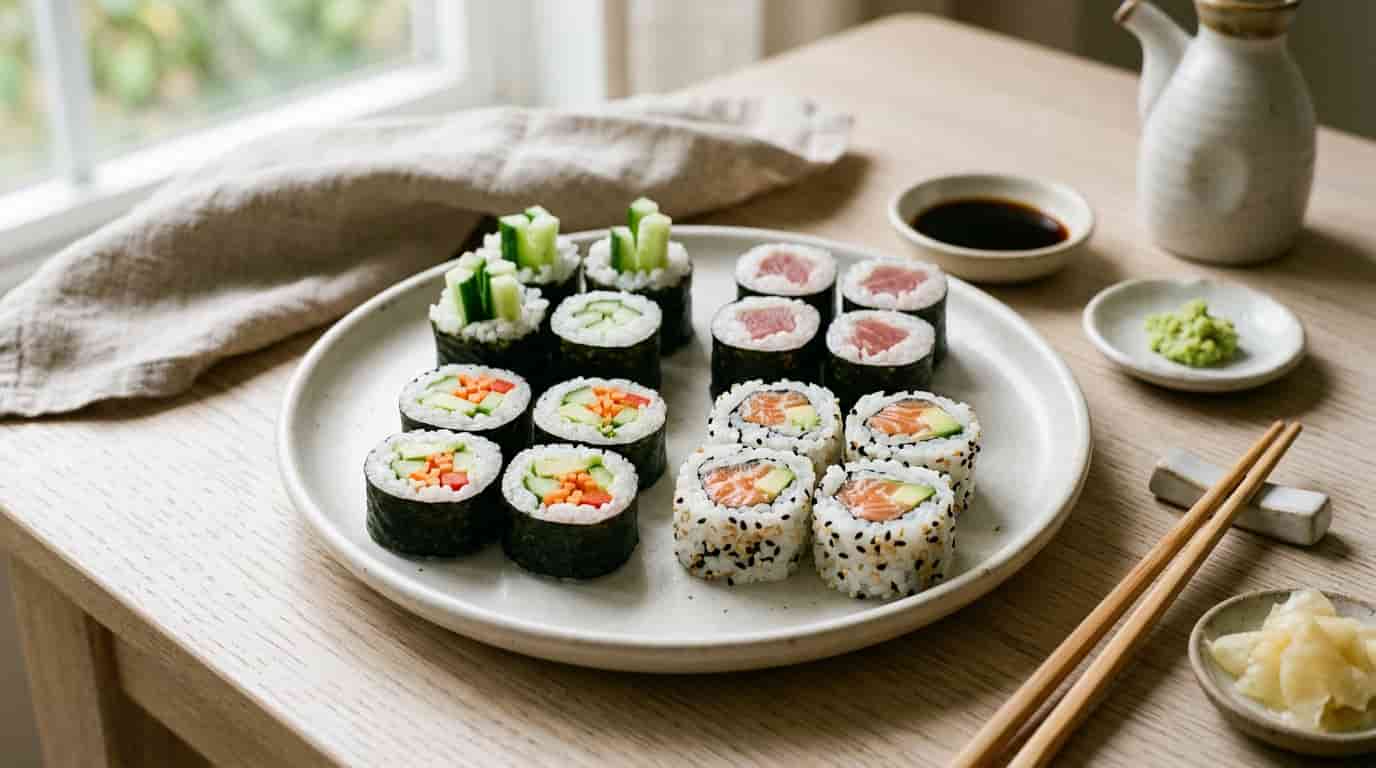
- Cucumber roll: 140 to 180 calories
- Tuna roll: 180 to 250 calories
- Salmon roll: approximately 200 to 260 calories
- Avocado roll: 170 to 250 calories
These options stay lighter because they skip fried ingredients and heavy sauces.
Generally higher-calorie choices
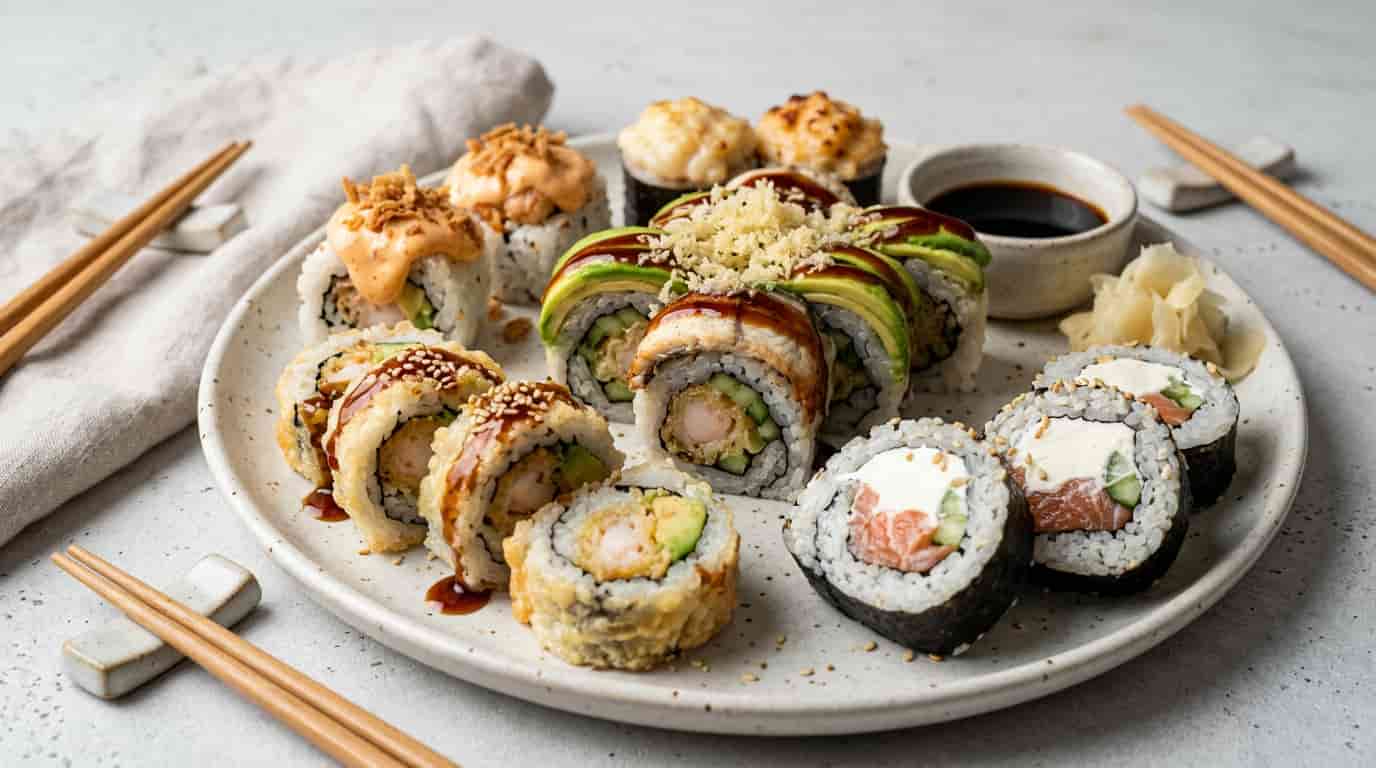
- Shrimp tempura roll: 450 to 500+ calories
- Dragon roll: 350 to 500+ calories
- Philadelphia roll: 300 to 400 calories
- Specialty rolls with multiple sauces: varies widely
Fried ingredients, cream cheese, and rich toppings are the main reasons these rolls contain more calories.
How to Choose Lower-Calorie Sushi Rolls
Choosing lighter sushi does not mean giving up flavor. Small changes in ingredients and portions can reduce calorie intake while keeping the meal satisfying.
1. Choose Lean Protein and Vegetable-Based Rolls
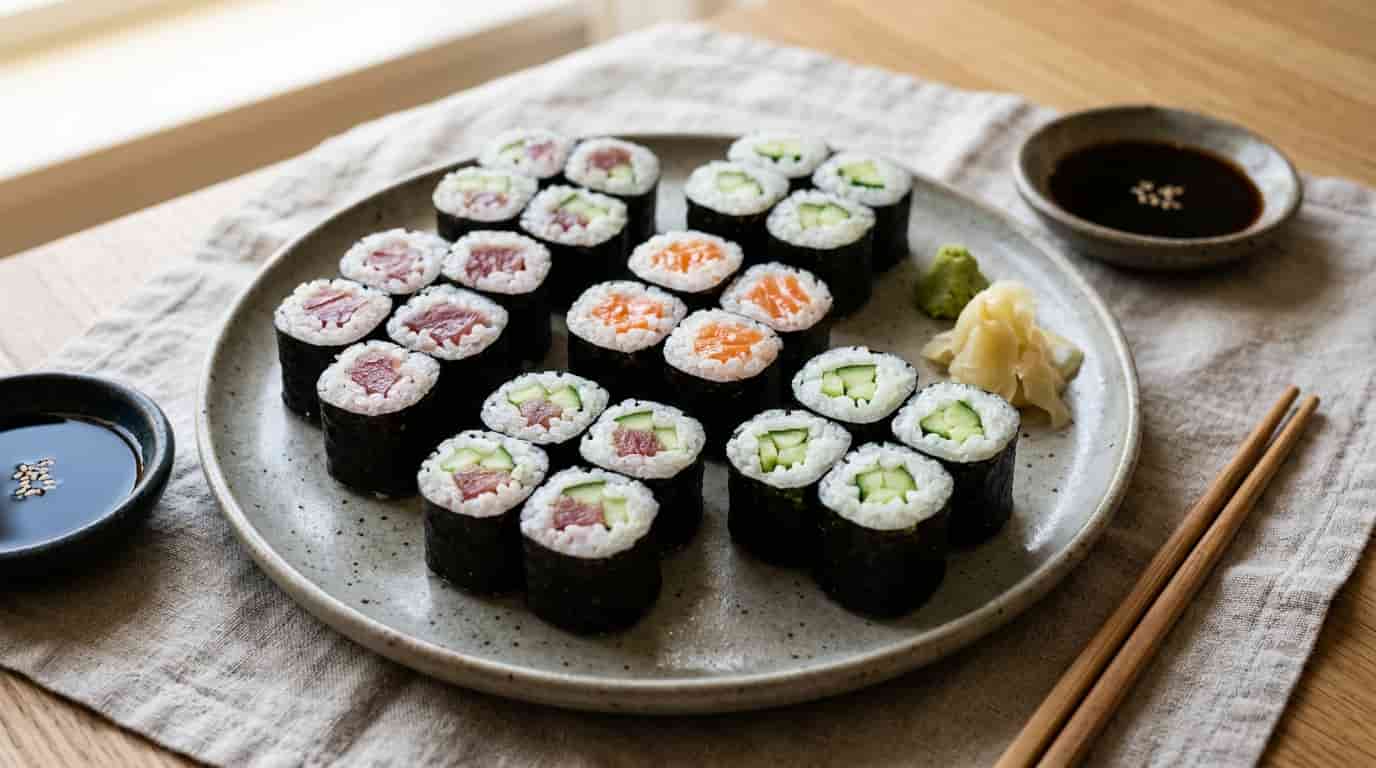
Good options include tuna rolls, salmon rolls, and cucumber rolls. These focus on simple ingredients without heavy sauces, fried toppings, or calorie-dense fillings.
2. Reduce High-Calorie Additions
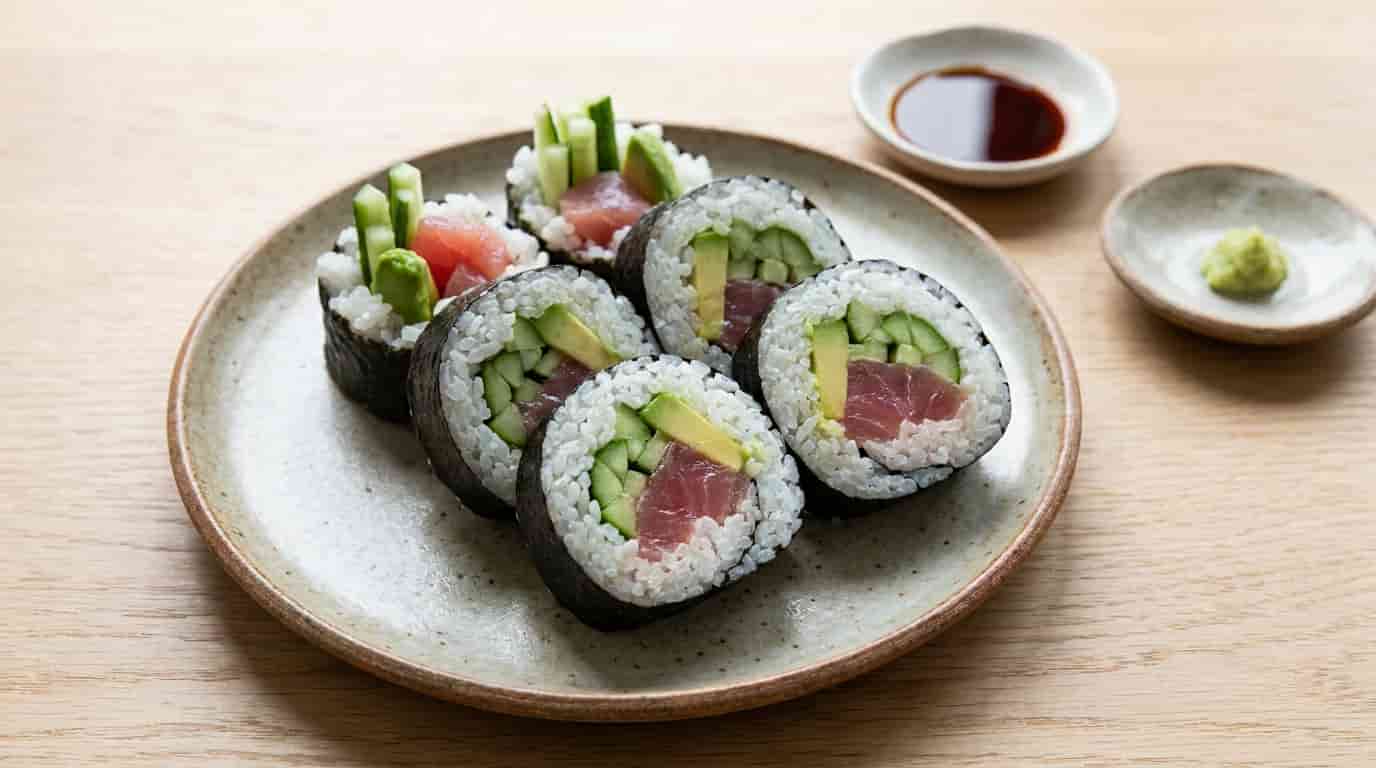
Ask for less cream cheese, skip tempura, and request spicy mayo or other sauces on the side. Small changes can lower total calories while keeping the flavor you want.
3. Control Portion Sizes
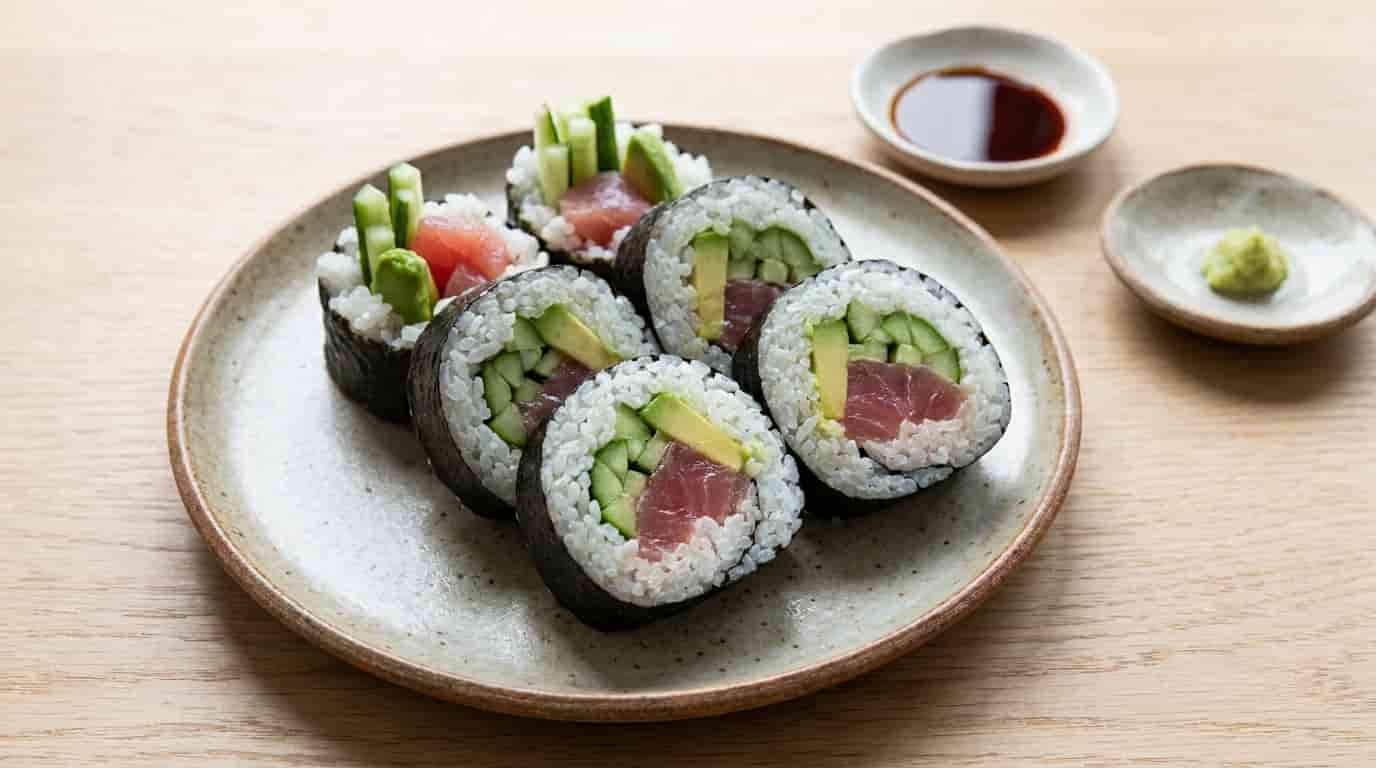
A single specialty roll may contain the same calories as two or three simpler rolls. Counting pieces alone does not show the full calorie picture.
4. Consider Sashimi or Nigiri
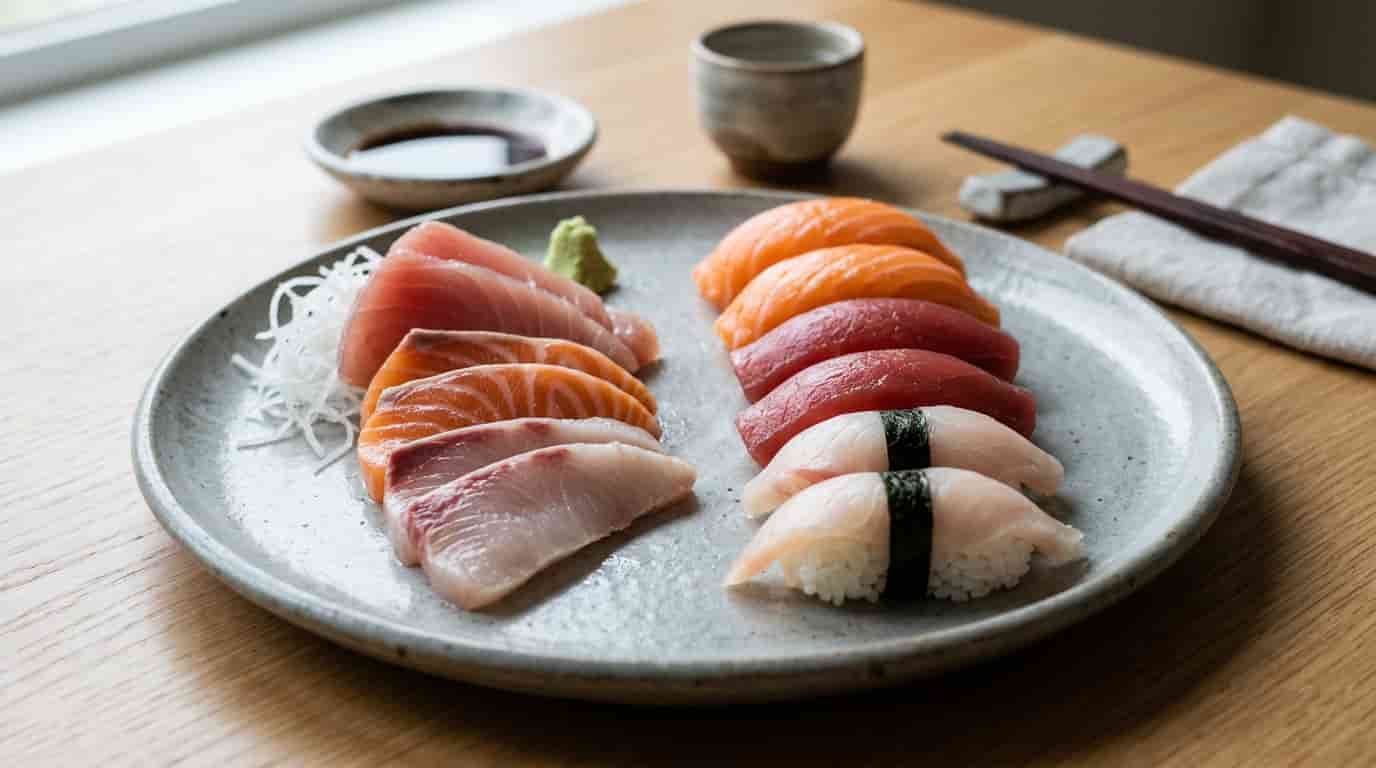
These options contain less rice than standard rolls, which lowers the carbohydrate content. They often provide a higher proportion of fish, which increases protein while keeping the meal lighter.
Why Sushi Roll Calories Vary Between Restaurants
The same roll name can have different calorie counts at different restaurants.
Differences often come from:
- Roll size
- The amount of rice used
- Sauce quantity
- Extra toppings
- Preparation methods
For example, one restaurant may use more spicy mayo or avocado than another making the same roll. Calorie estimates should always be treated as averages, as recipes vary between locations.
Are Sushi Rolls Good for Weight Loss?
Sushi can fit into a calorie-controlled eating plan when you consider what goes into it.
Helpful choices include:
- Lean protein rolls such as tuna or salmon
- Vegetable-based rolls
- Smaller portions
- Rolls with fewer creamy sauces or fried ingredients
Also watch your sodium intake. Soy sauce is high in sodium, and eating multiple rolls with salty toppings adds up quickly. Using low-sodium soy sauce and dipping lightly rather than drizzling can help.
Sushi is not automatically healthy or unhealthy. The ingredients inside the roll determine its overall nutrition profile.
How Many Sushi Rolls Should You Eat?
No single serving size works for everyone.
A typical sushi meal may include one to three rolls, depending on:
- Your personal calorie needs
- Activity level
- The ingredients in each roll
- Additional sides such as miso soup, salad, or edamame
A specialty roll can contain as many calories as several lighter rolls. Ingredients matter more than the number of rolls alone.
Key Takeaways About Sushi Roll Calories
The calories in a sushi roll depend almost entirely on what goes inside it. A plain tuna or cucumber roll stays light and filling. A shrimp tempura or specialty roll loaded with sauces can easily top 450 to 500 calories per roll.
Knowing the difference gives you the full confidence to order well. Ask for sauces on the side, skip extra cream cheese, and lean toward fish-based rolls for a lower-calorie meal. Sushi does not have to conflict with your nutrition goals.
Learn what drives the calorie count, watch your portions, and you can enjoy sushi without worry or guilt.
Frequently Asked Questions
How many pieces of sushi are 300 calories?
Around 6 to 8 pieces of a simple roll may reach 300 calories, while higher-calorie rolls can reach it with fewer pieces.
Is 2 rolls of sushi too much?
Not always. Two lighter rolls may fit easily, but specialty rolls with sauces or fried ingredients can add up quickly.
How many calories are in an 8 piece sushi roll?
An 8-piece roll usually contains the calories of the full roll, ranging from about 140 to 500+ calories.
What’s the healthiest sushi roll to eat?
Cucumber, tuna, and salmon rolls are generally lighter choices.
How often can you eat sushi safely?
You can eat sushi regularly as part of a balanced diet by watching portions, ingredients, and sodium intake.