Living with acid reflux can make every meal feel like a careful decision.
This 7-day GERD diet plan provides a simple way to manage symptoms with balanced, lower-fat meals featuring lean proteins, whole grains, and reflux-friendly foods.
It also includes a shopping list, trigger foods guide, customization tips, and daily habits to support better digestion.
What Is a GERD Diet Plan?
GERD stands for gastroesophageal reflux disease. It is a chronic form of acid reflux. Most cases involve a weak or poorly functioning lower esophageal sphincter, known as the LES.
The LES is the muscle ring that sits between your esophagus and your stomach. When it fails to close properly, stomach acid flows back up and causes symptoms.
A GERD diet plan matters because food choices, meal sizes, and eating times all affect symptom frequency and severity.
Occasional Reflux vs. GERD
Almost everyone gets acid reflux now and then, usually after a heavy meal or too much coffee. GERD is different. It is a chronic condition where reflux happens often or severely enough to affect daily life. Symptoms can include regurgitation, coughing, hoarseness, and trouble swallowing, not just heartburn.
How Food Choices Affect Symptoms
Large meals stretch the stomach and put extra pressure on the LES. This makes it easier for acid to travel back up into the esophagus. High-fat meals sit in the stomach longer, giving reflux more time to happen.
Eating close to bedtime makes the problem worse. Lying flat removes gravity’s help in keeping acid down. Certain foods and drinks are also commonly reported triggers.
What to Know Before Starting the Meal Plan
Before you start, keep two things in mind.
Track what you eat. A simple food and symptom diary often reveals patterns. Write down what you eat, the portion size, the time of the meal, and any symptoms that follow. Even one week of tracking can show you which meals work and which ones cause problems.
Adjust portions to your own needs. These meals are a starting point, not a fixed prescription. People managing diabetes, kidney disease, or food allergies should work with a registered dietitian. They can adjust portions and food choices to fit your specific situation.
7-Day GERD Diet Plan
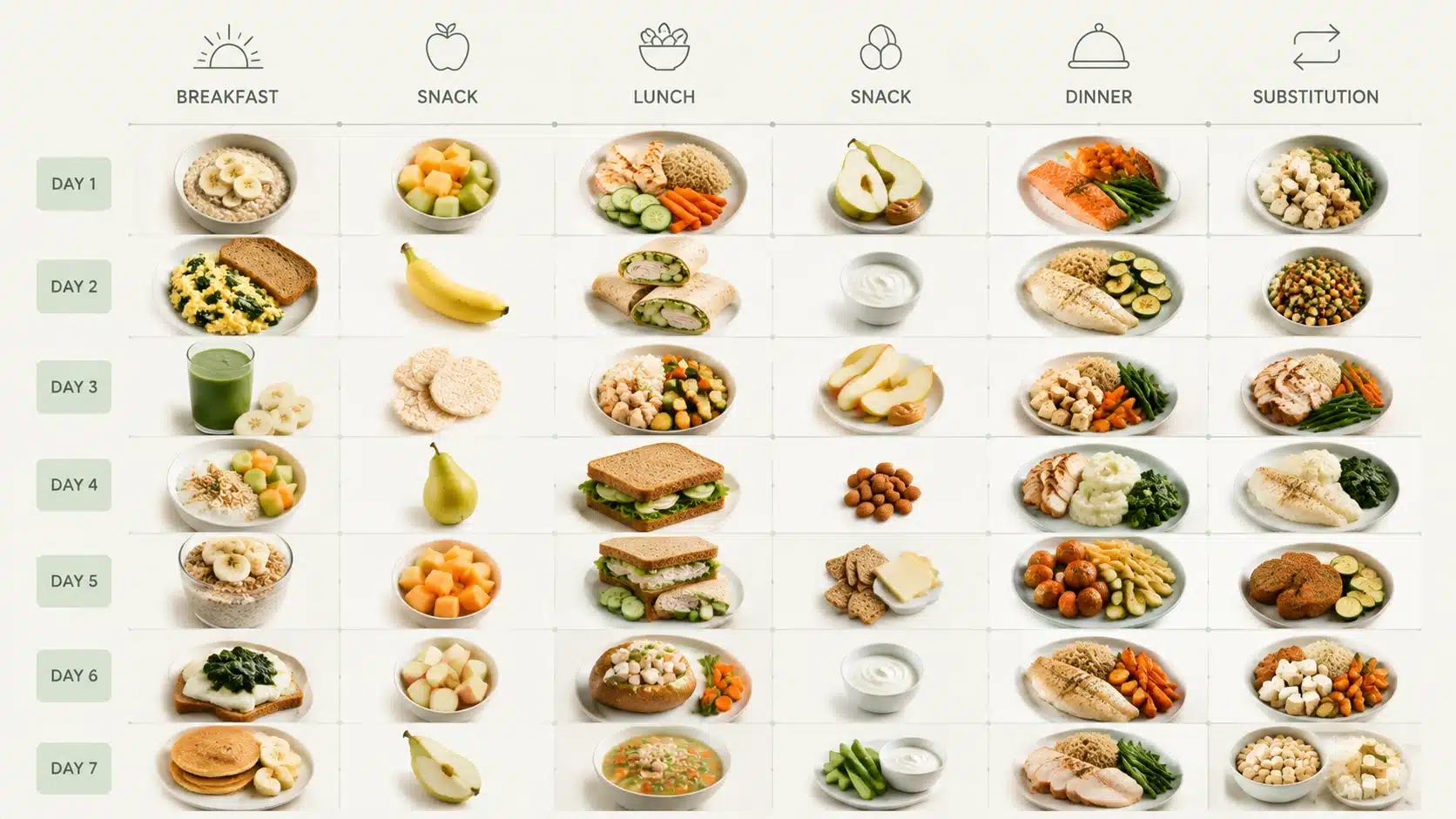
Below is a full week of GERD-friendly meals built around lean proteins, whole grains, and gently cooked produce. One substitution is listed each day to give you variety or to work around personal tolerance.
| Day | Breakfast | Morning Snack | Lunch | Afternoon Snack | Dinner | Substitution Option |
|---|---|---|---|---|---|---|
| 1 | Oatmeal with banana and unsweetened oat or almond milk | Melon cubes | Grilled chicken, brown rice, cucumber, and steamed carrots | Pear with a small portion of almond butter | Baked salmon, sweet potato, and green beans | Tofu instead of salmon |
| 2 | Scrambled eggs with spinach and whole-grain toast | Banana | Turkey and cucumber wrap with lettuce | Low-fat yogurt or dairy-free yogurt | Baked cod, quinoa, and roasted zucchini | Chickpea and quinoa bowl if legumes are tolerated |
| 3 | Banana, spinach, oat, and non-dairy milk smoothie | Plain rice cakes | Chicken and vegetable rice bowl | Sliced apple with seed or nut butter | Tofu with brown rice, carrots, and green beans | Skinless chicken instead of tofu |
| 4 | Low-fat yogurt with oats and melon | Pear | Turkey sandwich with lettuce and cucumber | Unsalted almonds in a moderate portion | Herb-baked chicken, mashed potatoes, and steamed spinach | White fish instead of chicken |
| 5 | Overnight oats with banana and chia seeds | Melon | Tuna and cucumber sandwich with a light yogurt-based filling | Whole-grain crackers with low-fat cheese | Turkey meatballs, whole-grain pasta, and zucchini (no tomato sauce) | Lentil patties if tolerated |
| 6 | Egg-white and spinach toast | Apple slices | Baked potato with chicken and steamed vegetables | Low-fat yogurt or a banana | Grilled fish, brown rice, and roasted carrots | Tofu or tempeh instead of fish |
| 7 | Oat or buckwheat pancakes with sliced banana | Pear | Chicken and rice soup made without tomato, garlic, or heavy cream | Cucumber sticks with a tolerated low-fat dip | Baked turkey, quinoa, and green beans | White beans or tofu if tolerated |
GERD Diet Shopping List
Use this list as a starting point. Adjust it based on what you tolerate and what fits your budget.
- Whole grains and starches: rolled oats, brown rice, quinoa, whole-grain bread, whole-grain wraps, potatoes, sweet potatoes, whole-grain pasta, buckwheat
- Lean proteins: skinless chicken, turkey, salmon, cod or other white fish, eggs, tofu, low-sodium canned tuna, beans or lentils if tolerated
- Fruits and vegetables: bananas, melons, pears, apples, carrots, green beans, spinach, zucchini, cucumbers, lettuce
- Dairy and alternatives: low-fat yogurt, low-fat cheese, unsweetened oat milk, unsweetened almond milk, dairy-free yogurt
- Pantry staples: olive oil in moderate amounts, basil, thyme, parsley, oregano, ginger if tolerated, chia seeds, unsalted nuts and seeds, low-sodium broth
GERD-Friendly Foods and Possible Trigger Foods
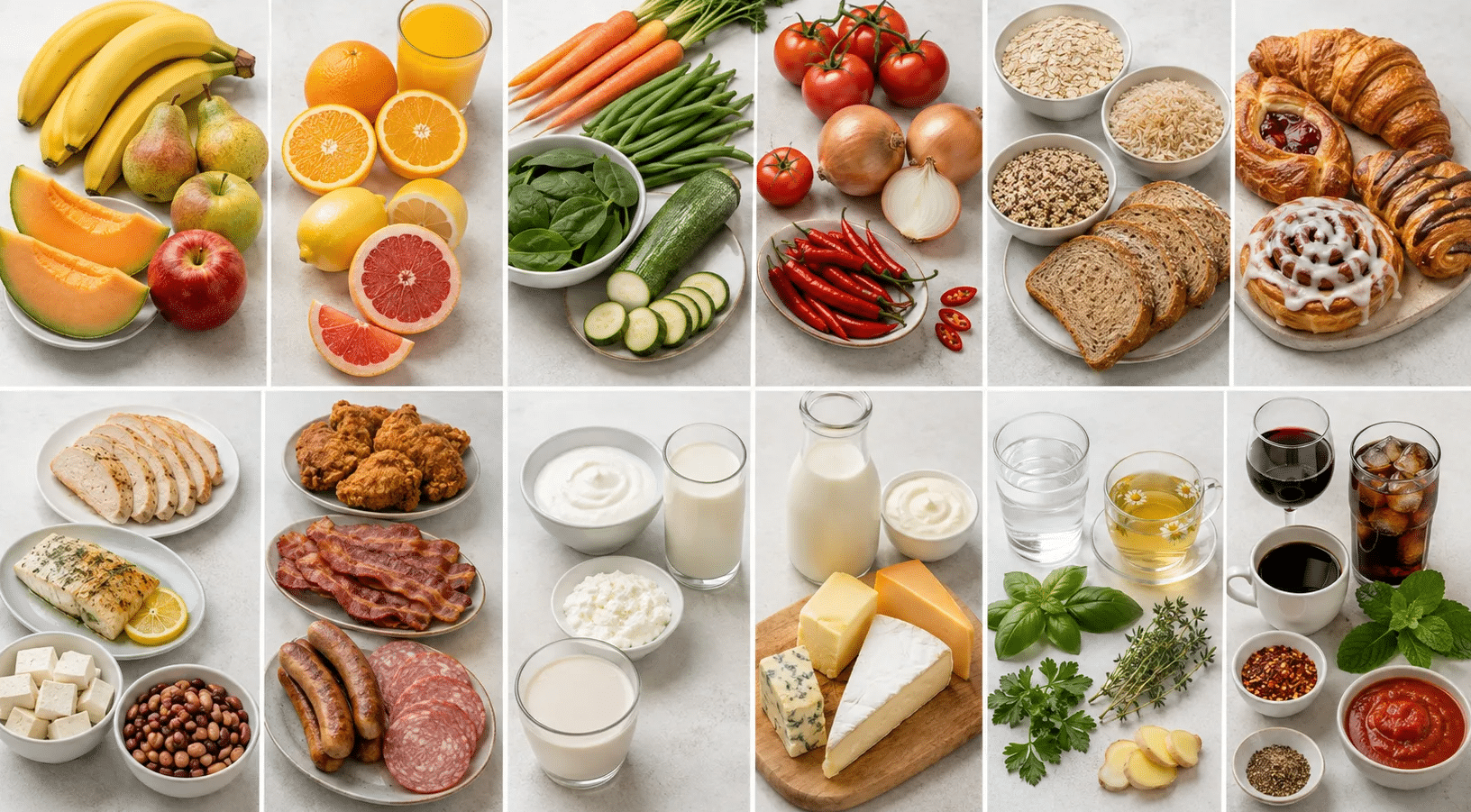
Common triggers include high-fat foods, chocolate, caffeine, alcohol, mint, spicy foods, citrus fruits, and tomatoes. The table below shows which foods are generally better tolerated and which are frequently reported as triggers.
| Food Category | Often Better Tolerated | Possible Trigger |
|---|---|---|
| Fruits | Bananas, melons, pears, apples | Citrus fruits and juices |
| Vegetables | Carrots, green beans, spinach, zucchini | Tomatoes, onions, spicy peppers |
| Grains | Oats, brown rice, quinoa, whole-grain bread | High-fat pastries and fried dough |
| Protein | Skinless poultry, fish, tofu, beans if tolerated | Fried meats, high-fat processed meats |
| Dairy | Low-fat yogurt or tolerated alternatives | Full-fat dairy for some people |
| Drinks | Water and non-mint herbal drinks | Alcohol, carbonated drinks, excess caffeine |
| Flavorings | Basil, parsley, thyme, ginger if tolerated | Peppermint, hot spices, acidic sauces |
This table is a general reference. You only need to avoid foods that consistently cause problems for you personally. Calorie needs vary by age, body size, activity level, and health conditions. If you are managing a specific condition, speak with a registered dietitian before making big changes.
Customize Your 7-Day GERD Diet Plan
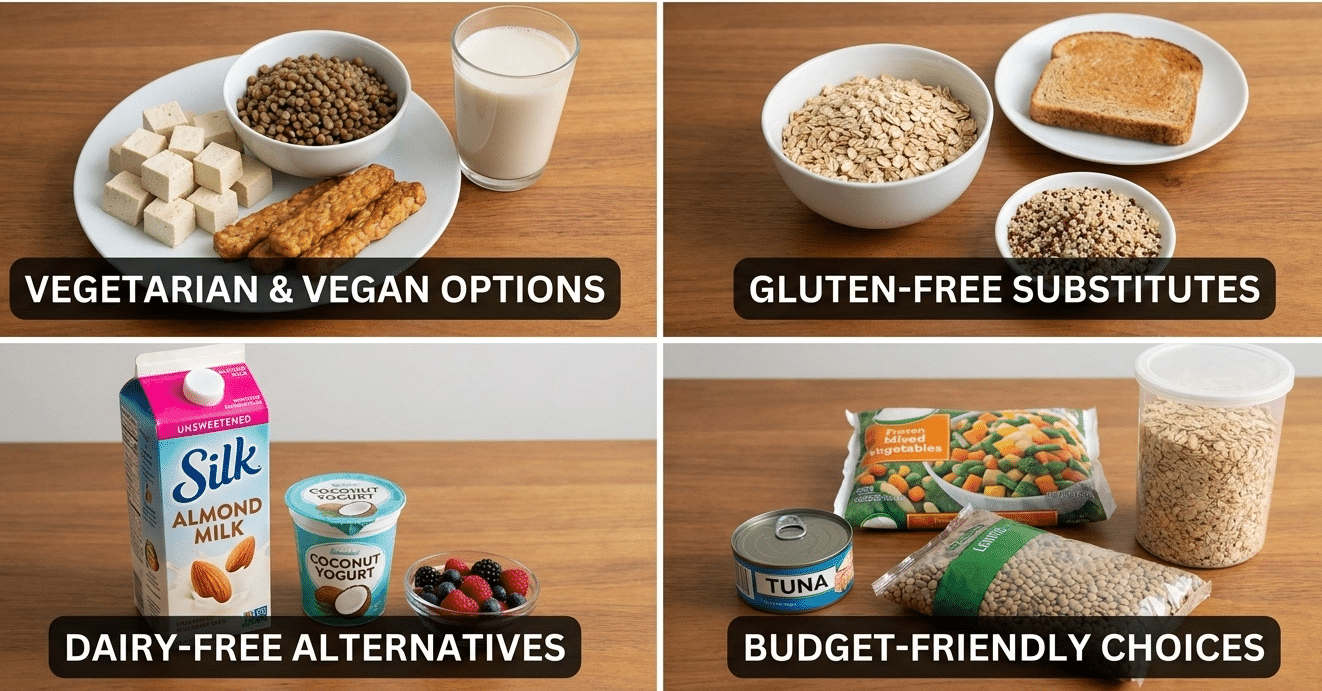
People managing GERD have different needs, from food allergies to budget limits. Use these options to tailor the plan to your situation.
- Vegetarian or vegan: Tofu, tempeh, lentils, and beans can replace poultry or fish depending on your tolerance. Start with smaller bean portions to limit bloating. Use fortified plant-based milk and yogurt.
- Gluten-free: Use certified gluten-free oats, gluten-free bread and wraps, rice, quinoa, potatoes, and buckwheat in place of wheat-based items.
- Dairy-free: Unsweetened plant-based milk and dairy-free yogurt with limited added sugar work well. Go easy on high-fat coconut products if fat is a known trigger for you.
- Budget-friendly: Frozen vegetables, canned tuna or salmon, and buying oats, rice, and lentils in bulk keep costs down. Repeating breakfasts and lunches across the week also reduces spending.
- Higher calorie needs: If you are losing weight without trying, add larger lean protein portions and moderate amounts of nut butter or olive oil. Talk to a healthcare provider or dietitian if unexplained weight loss continues.
Pro tip: Swap one variable at a time, such as the protein or the dairy. This way, you can tell what is actually working for you instead of guessing.
Meal Timing and Daily Habits in a 7-Day GERD Diet Plan
Beyond what you eat, when and how you eat play a role in reflux. These daily habits can make meals much easier on your stomach.
- Eat smaller, more regular meals. Avoid very large portions. Eat slowly and stop before you feel uncomfortably full. Large meals put more pressure on the LES.
- Finish dinner at least three hours before bed. A sample daily schedule: breakfast at 8 a.m., lunch at 12:30 p.m., dinner at 6:30 p.m., and bedtime at 10 p.m. This gives your stomach time to empty before you lie down.
- Stay upright after eating. A gentle walk is a better choice than lying down right after a meal. Avoid intense exercise right after eating, as it can also trigger reflux.
- Manage nighttime reflux. Skip late snacks, raise the head of your bed, and try sleeping on your left side. These changes reduce the chance of acid moving up overnight.
- Consider weight management when relevant. Extra abdominal weight can worsen reflux by putting more pressure on the stomach. Ask a healthcare provider about gradual, supported weight management if it applies to you.
How to Identify Personal GERD Triggers After Seven Days
After a week of tracking, use these steps to build an eating pattern that works for you long term.
| Step | What to Do |
|---|---|
| Review the diary | Look for patterns in meal size, fat content, caffeine use, carbonated drinks, spicy ingredients, eating speed, late meals, activity after eating, and sleep position. |
| Test one food at a time | Reintroduce a suspect food on its own, in a consistent portion, and track symptoms for the rest of the day. This helps you avoid cutting out foods you do not actually need to avoid. |
| Build a repeatable pattern | Keep meals that felt easy and well tolerated. Rotate proteins and vegetables for variety, and update the plan as your symptoms, medications, or health needs change. |
A complete diary entry can track:
- What you ate or drank and the portion size
- The time of the meal
- Any symptoms that followed and how severe they were
- Physical activity after eating, your bedtime, and medication timing
Even basic tracking kept for one to two weeks often reveals patterns that are easy to miss otherwise.
When to See a Doctor
Diet and lifestyle changes help most people manage GERD symptoms. But some warning signs need prompt medical attention, not just more meal planning.
- Frequent or worsening reflux
- Symptoms that do not improve with lifestyle changes or over-the-counter treatment
- Difficulty or pain when swallowing
- Persistent vomiting
- Unexplained weight loss
- Loss of appetite
- Vomiting blood, or black or bloody stools
- New or unusual chest pain, especially with breathing difficulty, sweating, dizziness, nausea, or pain spreading to the arm, jaw, neck, or back
Do not assume these symptoms are ordinary heartburn. Get evaluated quickly. Early attention often makes treatment easier and more effective.
Disclaimer: This article is for general informational purposes only and is not a substitute for personalized medical advice. Consult a registered dietitian or healthcare provider before making major changes to your diet, especially if you have an existing health condition.
Managing GERD With a Simple, Consistent Diet
A well-planned GERD diet does not need to be restrictive. This 7-day GERD diet plan gives you a simple, practical approach. Eat lean proteins, whole grains, and smaller meals.
Finish dinner a few hours before bed. Track your meals and any symptoms for at least one week. You will quickly spot patterns that help you better understand your personal triggers. Start with the meals in this plan, then adjust based on what your body tells you.
If symptoms keep coming back despite your dietary changes, talk to your doctor. Getting a proper medical diagnosis is always the right next step.
Frequently Asked Questions
What Is the Best Breakfast for GERD?
Oatmeal, banana, whole-grain toast, scrambled eggs, and low-fat yogurt are common choices that tend to sit well. Personal tolerance still plays a role in what works best for you.
Is Oatmeal Good for GERD?
Yes. Oatmeal is a low-fat whole grain that digests easily. It is one of the most commonly tolerated breakfast options for people with GERD.
Can People With GERD Eat Eggs?
Eggs are not typically a trigger. Cooking method and added fat, such as butter or oil, often matter more than the eggs themselves.
What Drinks Are Better for Acid Reflux?
Water and non-caffeinated, non-carbonated drinks are generally easier on the stomach. Be cautious of claims that alkaline water or herbal teas can cure reflux, as evidence for those claims is limited.
Can Coffee Be Included in a GERD Diet?
Some people tolerate coffee without issue, while others find it triggers symptoms. Portion size, caffeine content, and timing relative to meals and bedtime can all make a difference.
Is Milk Good or Bad for Acid Reflux?
Full-fat milk may cause issues for some people due to its fat content. Lower-fat milk or plant-based alternatives are often better tolerated, but individual responses vary.