Gripping a mug, typing, or turning a doorknob should not hurt, yet tennis elbow can make these daily tasks painful.
Most cases stem from repetitive arm movements, not tennis. Physical therapy helps calm the irritated tendon and rebuild strength.
This article covers effective exercises, PT sessions, recovery time, and when to seek professional help.
What Is Tennis Elbow and Why Does It Happen?
Tennis elbow is a tendon problem on the outer side of the elbow. It affects the wrist extensor tendons where they attach to a bony bump called the lateral epicondyle. The medical term is lateral epicondylitis, though many clinicians now prefer lateral elbow tendinopathy as the more precise label.
What Happens Inside the Elbow
The tendons that straighten your wrist and fingers anchor to the outside of your elbow. When they get overloaded, the tissue starts to break down and develop tiny tears. This process is called tendinopathy.
Simple inflammation is not the main issue. The tissue itself loses structural integrity from repeated stress. Pain sits on the outer elbow. It flares with gripping or wrist movements because those actions pull directly on the damaged tendon.
Common Causes of Tennis Elbow
Racket sports get the blame, but most people who develop this injury have never picked up a tennis racket. Common triggers include:
- Repetitive racket sports such as tennis, squash, or pickleball
- Weightlifting with poor wrist or grip technique
- Manual jobs involving tools, painting, or plumbing
- Long hours using a computer mouse and keyboard
- Repeated lifting or gripping tasks at work or home
Research puts the yearly rate of lateral epicondylitis at roughly 1 to 3 percent of the population, making it one of the more common overuse injuries of the arm.
Symptoms to Tennis Elbow
Tennis elbow tends to announce itself in familiar ways:
- Pain or tenderness on the outer elbow
- A weaker grip than usual
- Discomfort when lifting objects, even light ones
- Pain when bending the wrist back against resistance
How Does Physical Therapy Help Tennis Elbow?
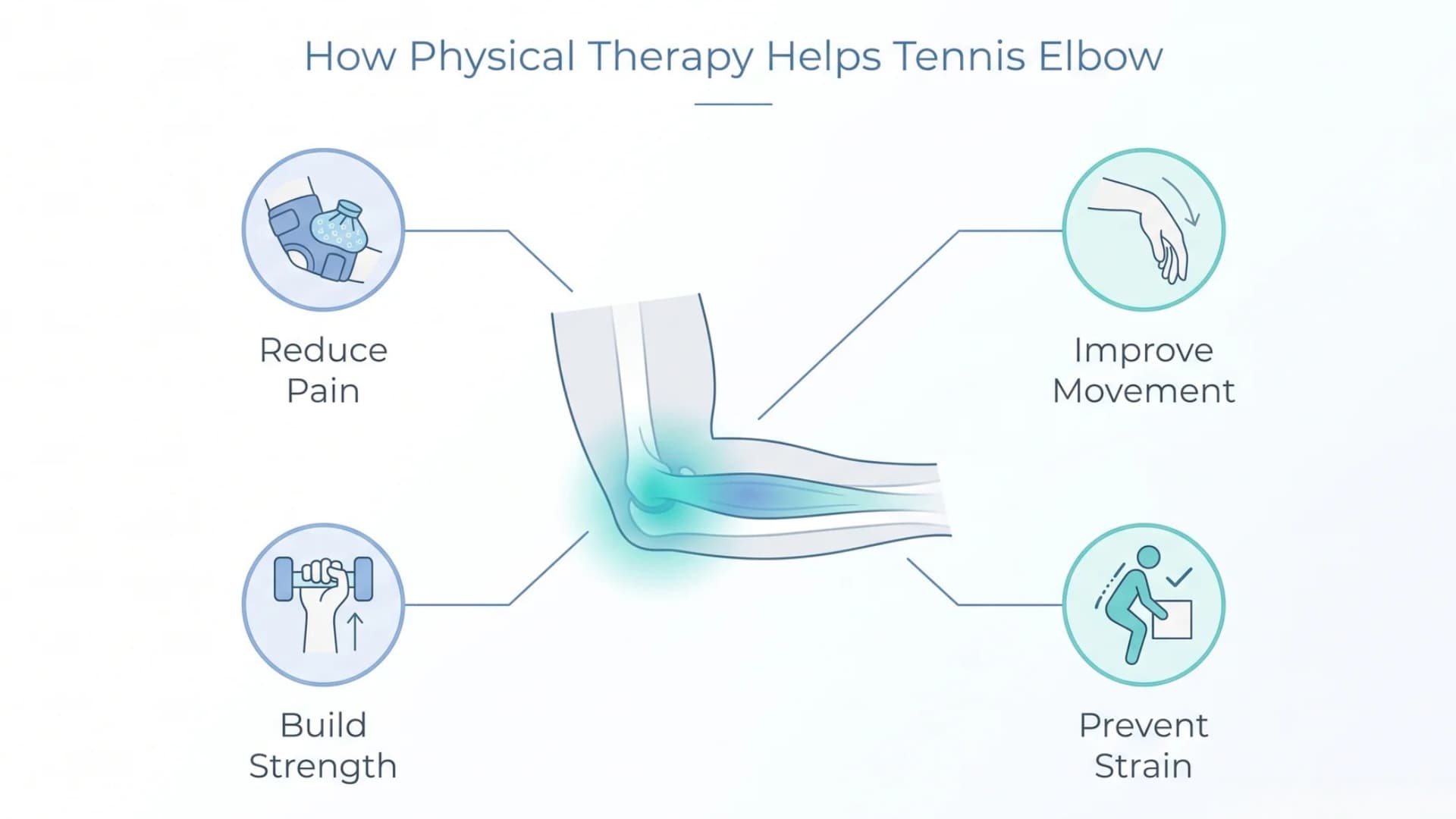
Physical therapy for tennis elbow works by restoring the tendon’s ability to handle load. It does not just quiet the pain for a short time.
Clinical guidance in the Journal of Orthopedic and Sports Physical Therapy notes that treatment should match the individual. A physical therapist blends several tools based on your specific situation and how far along recovery is.
A physical therapist’s take: Tendon problems respond better to gradual, controlled loading than to complete rest. Sitting still may ease pain for a day or two. But it does little to rebuild a tendon that has lost its load capacity.
1. Pain Management Techniques
In the early stages, the goal is to settle symptoms so you can start moving safely. This may include:
- Activity modification: small changes to how you grip and lift daily objects
- Ice or heat: depending on what feels better for you at each stage
- Taping: to offload the tendon during daily tasks
- A counterforce brace: when it helps reduce strain during activity
2. Mobility Exercises
Stiff wrists and forearms add stress to an already irritated tendon. Loosening them keeps the whole arm moving freely. Common mobility work includes wrist flexor and extensor stretches, forearm mobility drills, and elbow range-of-motion exercises.
3. Strengthening Exercises
This is the part that actually rebuilds the tendon. The key methods are progressive tendon loading, grip strengthening, and wrist extensor strengthening. Passive treatments alone rarely restore tendon strength.
4. Movement Correction
If your technique caused the problem, fixing it prevents a repeat. A therapist may review your lifting habits, sports mechanics such as your grip or swing, and your workstation setup.
Physical Therapy Exercises for Tennis Elbow
The right tennis elbow exercises depend on how much pain you currently have. You start gently and build up as symptoms settle. Pushing into sharp pain slows recovery rather than speeds it up. The exercises below follow the order most therapists use when progressing through a rehab program.
1. Wrist Extensor Stretch
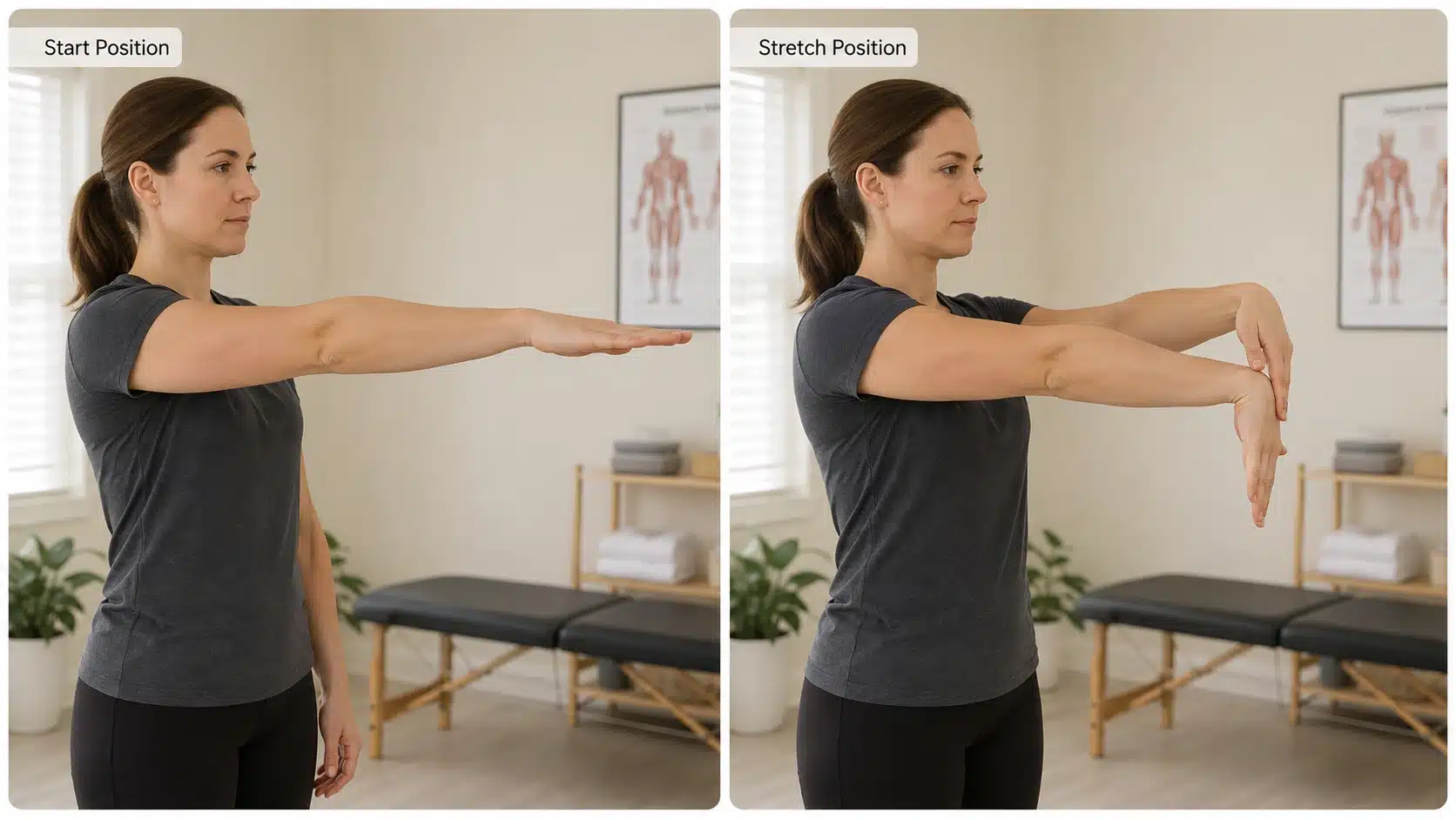
Muscles targeted: the extensor muscles along the top of your forearm.
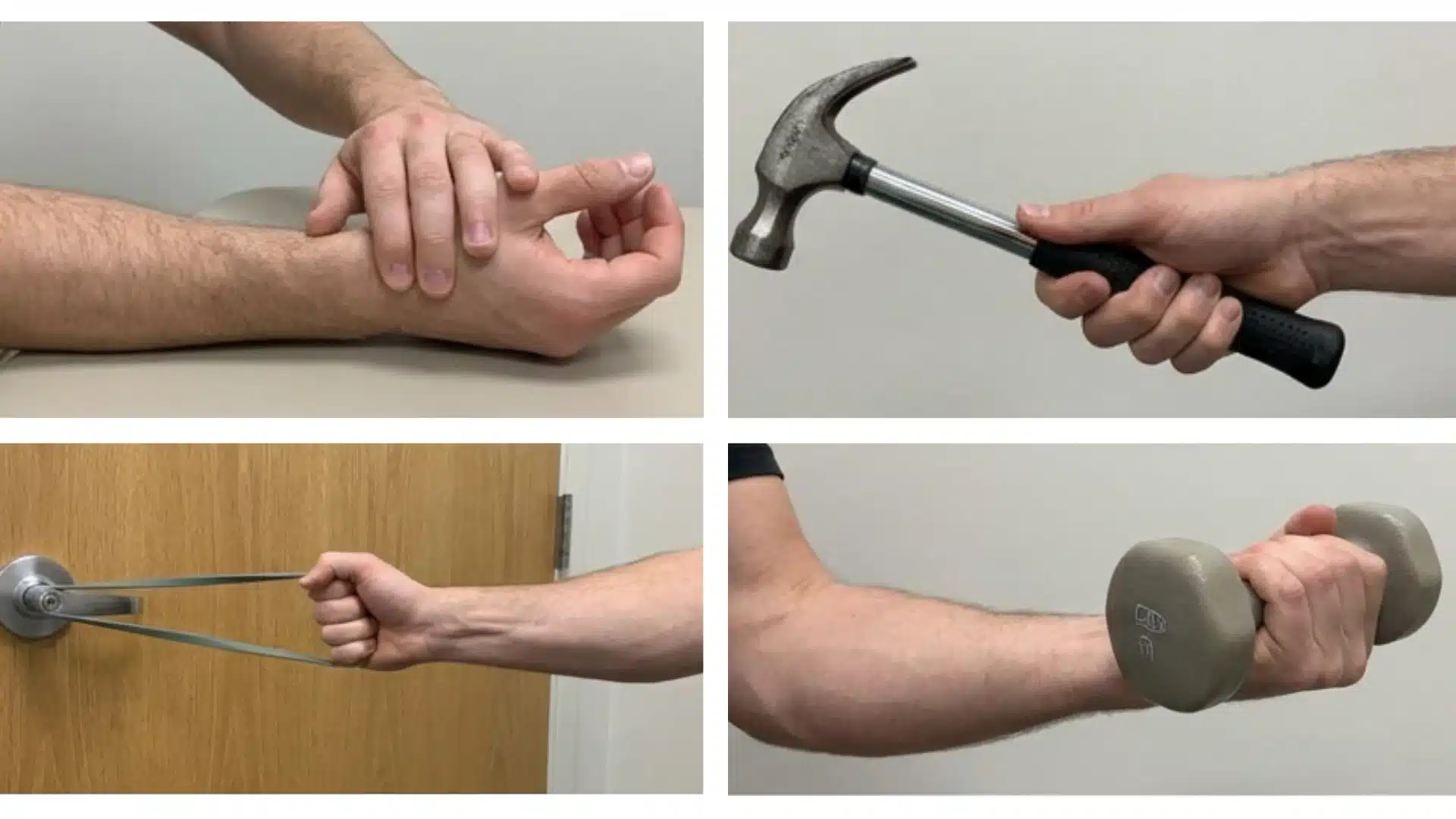
How to do it: Straighten your affected arm in front of you, palm facing down. Use your other hand to gently pull the fingers and wrist downward. Stop when you feel a light stretch in the forearm.
Sets and reps: Hold for 15 to 30 seconds. Repeat 3 times per set. Do this up to 3 times per day.
Common mistake: Pulling hard enough to trigger pain. This should feel like a gentle stretch, not a strain.
2. Eccentric Wrist Extension Exercise
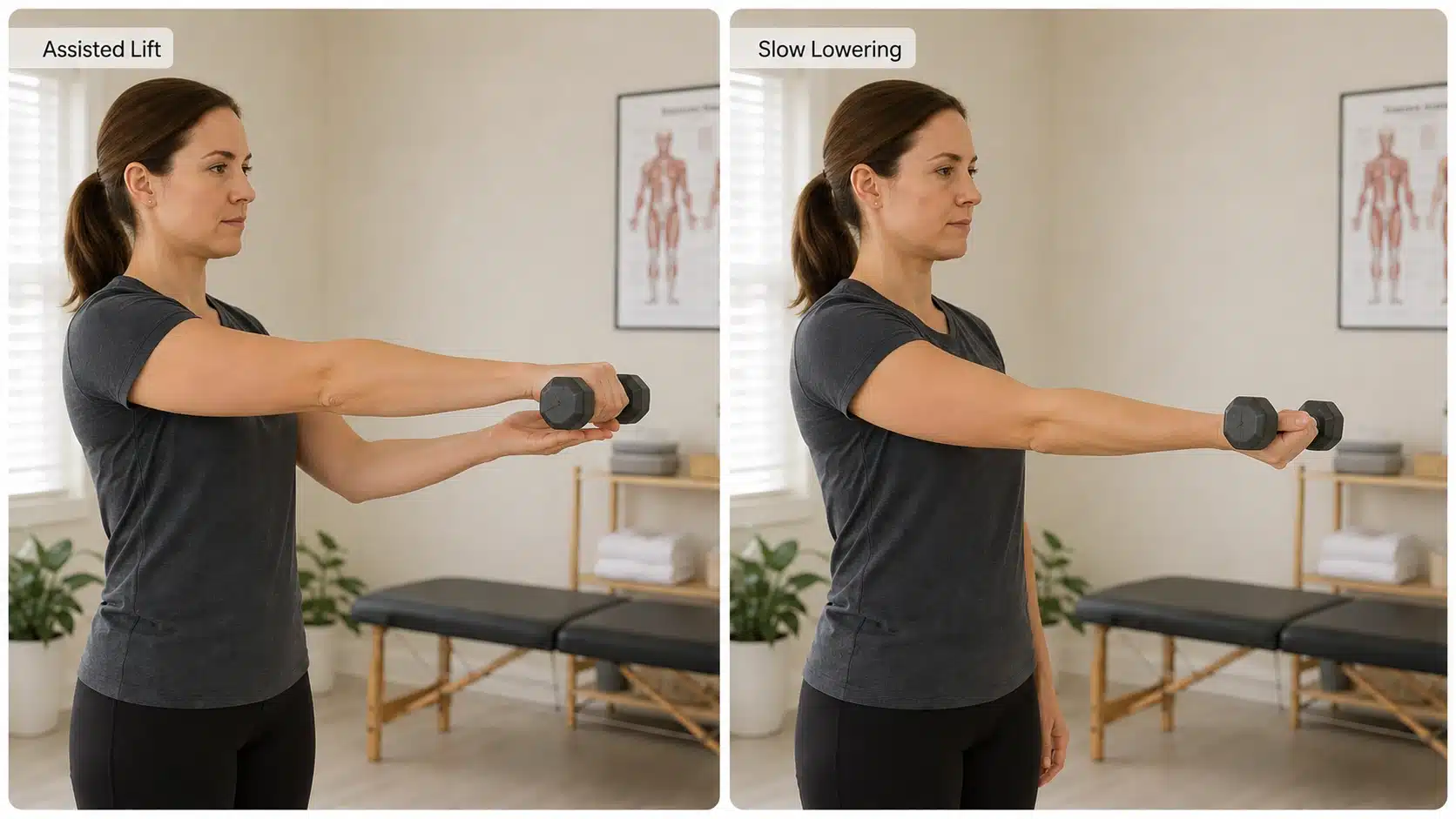
Why it works: Slowly lowering a weight is the most studied exercise for tennis elbow. It loads the tendon in a way that supports tissue repair and is often called eccentric loading.
How to do it: Rest your forearm on a table with your hand hanging off the edge, palm facing down, holding a light dumbbell. Use your other hand to lift the weight to the start position. Then slowly lower it back down over three to four seconds using only the injured arm.
Sets and reps: 3 sets of 10 to 15 repetitions, once daily. Start with a very light weight (0.5 to 1 kg). A 2010 protocol by Tyler and colleagues used a rubber FlexBar with this loading style. It reported strong pain reduction over about seven weeks of consistent practice.
Common mistake: Dropping the weight quickly instead of lowering it with control. The slow lowering phase is what drives tendon repair.
3. Isometric Wrist Holds
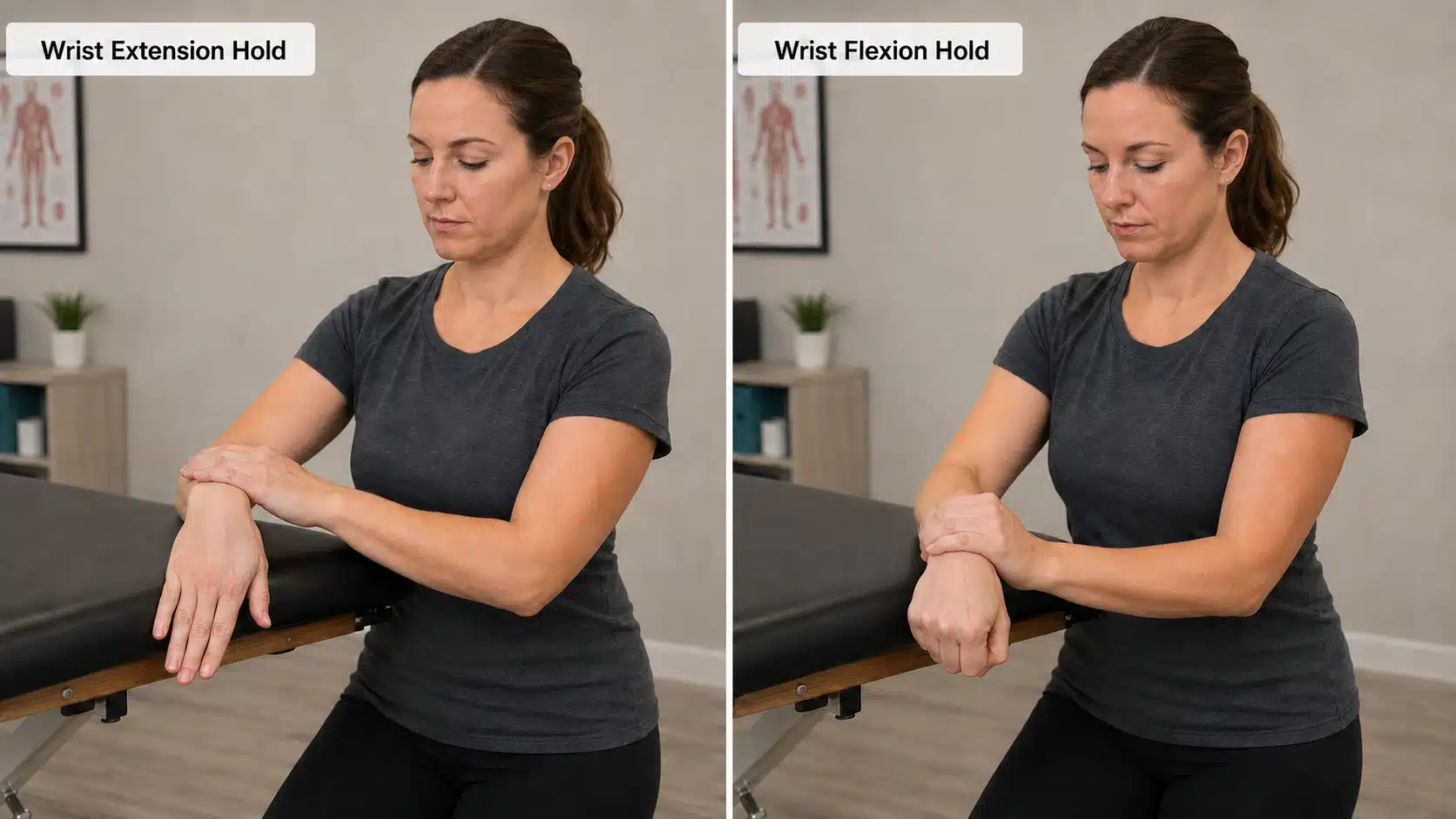
Best for: early, painful stages of recovery when movement causes too much discomfort.
How to do it: Hold your wrist in a slightly extended position against light resistance for 20 to 45 seconds. Nothing is moving. This lets you load the tendon even when other exercises are still too uncomfortable to perform.
Sets and reps: 3 to 5 holds per session, 2 times per day.
4. Forearm Pronation and Supination Exercise
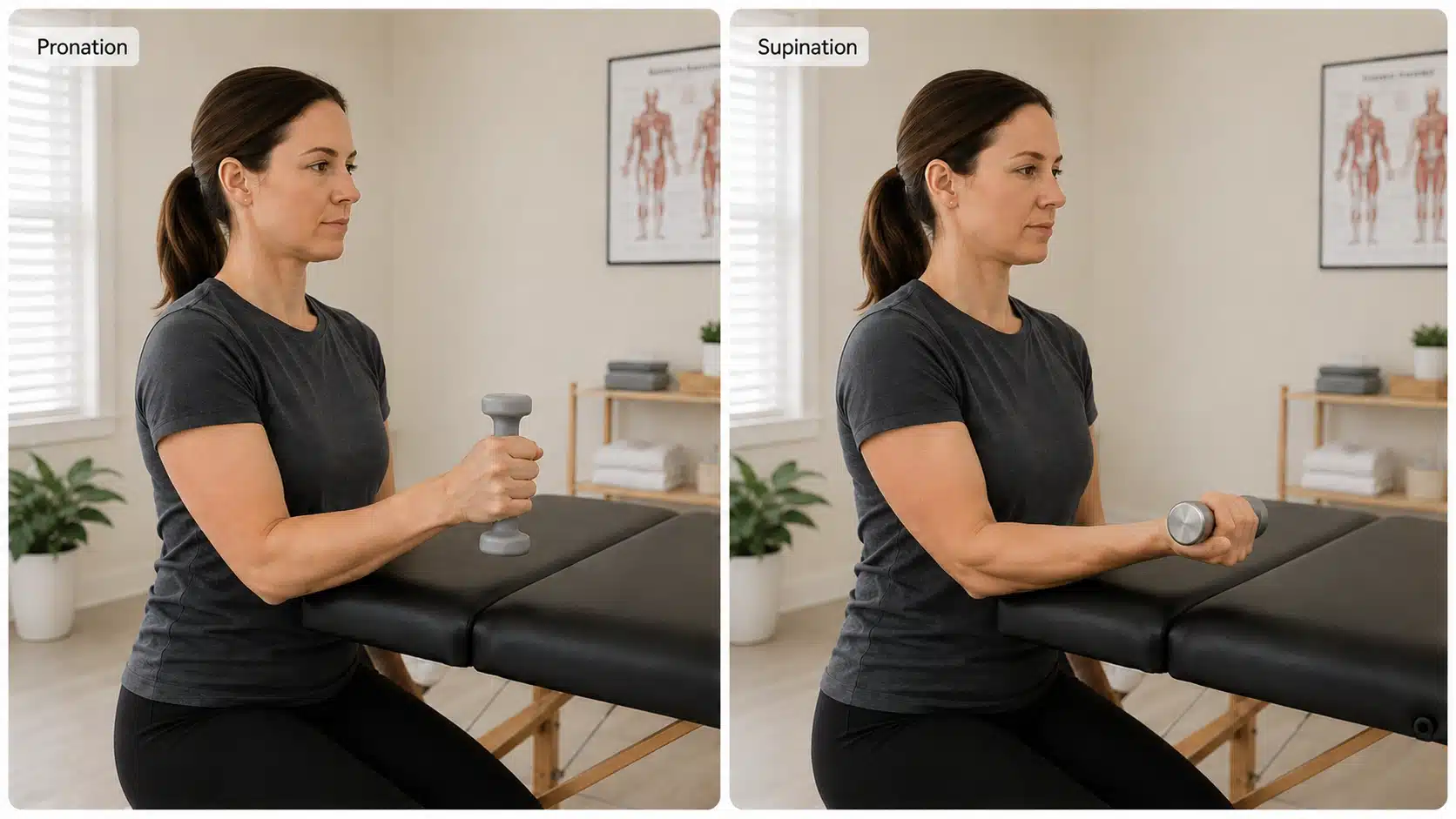
How to do it: Rest your forearm on a table with your hand off the edge. Hold a light object such as a small hammer or a full water bottle. Slowly rotate your palm up, then down. Stay within a pain-free range at all times.
Sets and reps: 3 sets of 10 to 15 repetitions, once daily.
What it restores: the forearm rotation needed for everyday tasks like turning a key or opening a jar.
5. Grip Strengthening Exercise
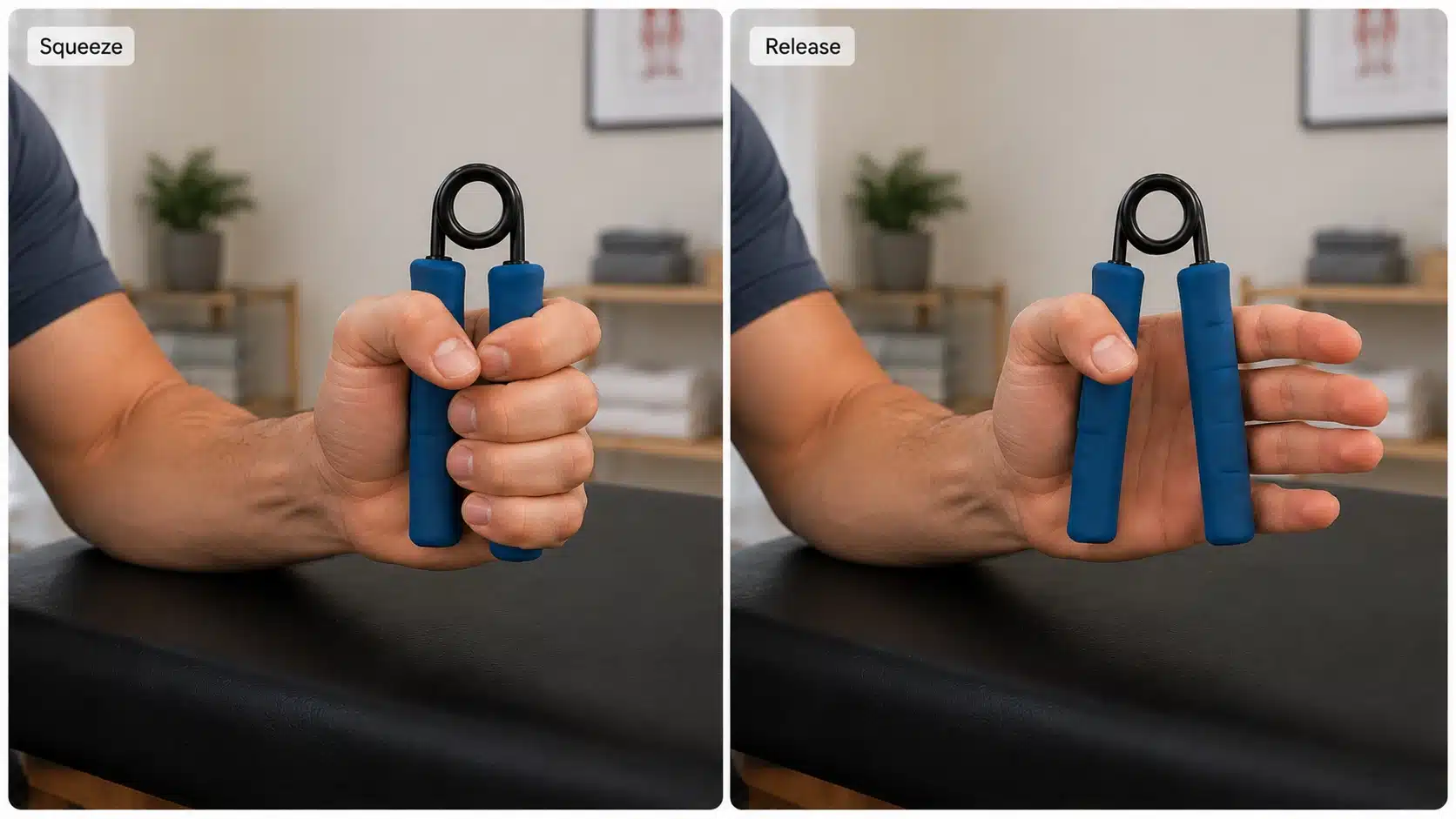
How to do it: Squeeze a soft stress ball or a rolled-up towel. Hold for 5 to 10 seconds, then release fully before the next repetition.
Sets and reps: 3 sets of 10 repetitions.
Watch out for: squeezing as hard as you can. Keep grip work moderate. Aggressive squeezing can flare symptoms early in recovery.
6. Shoulder and Scapular Strength Exercises
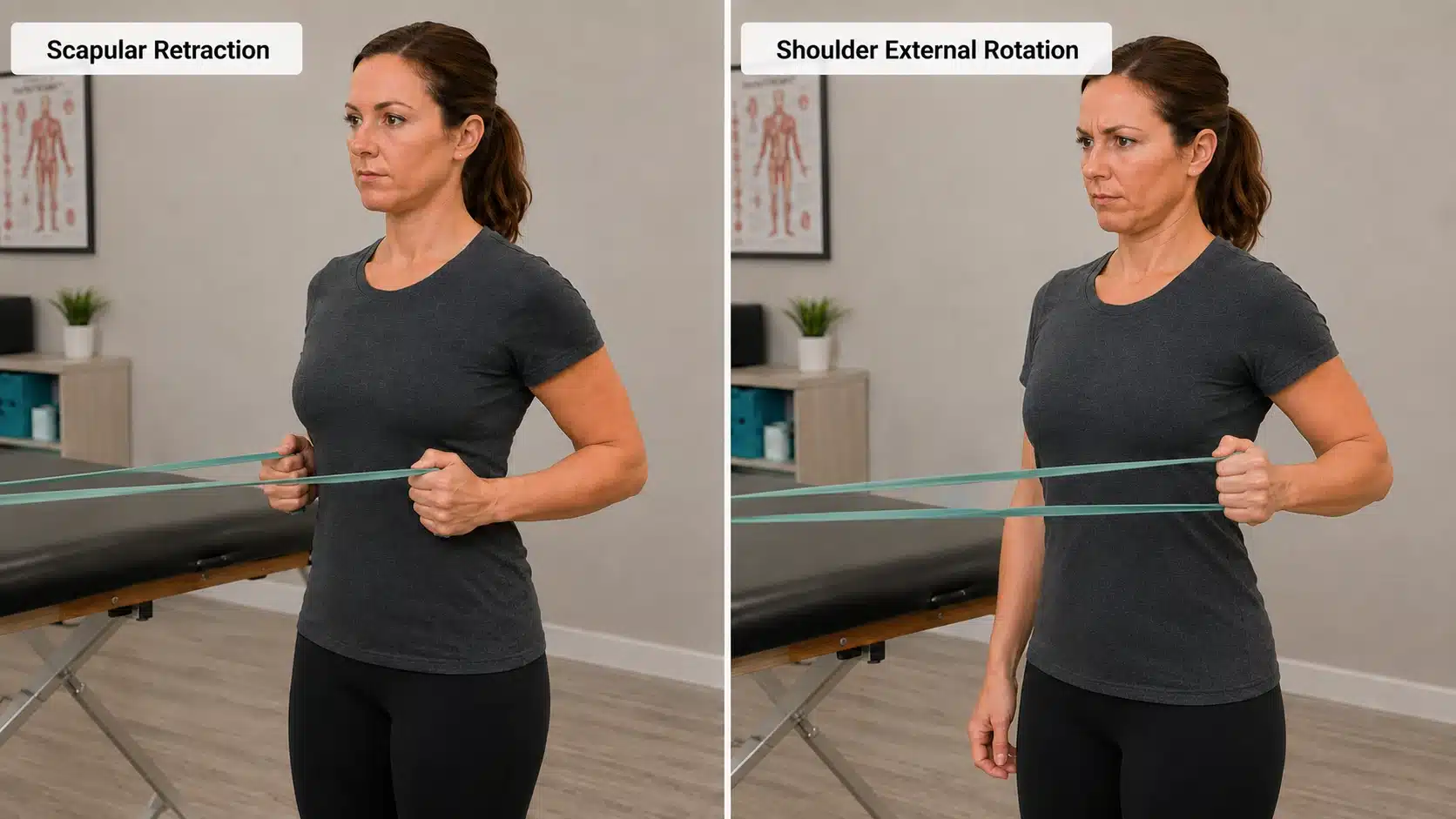
Many rehab routines skip this step entirely. Your shoulder and shoulder blade control how your entire arm moves. Weakness there quietly adds stress at the elbow.
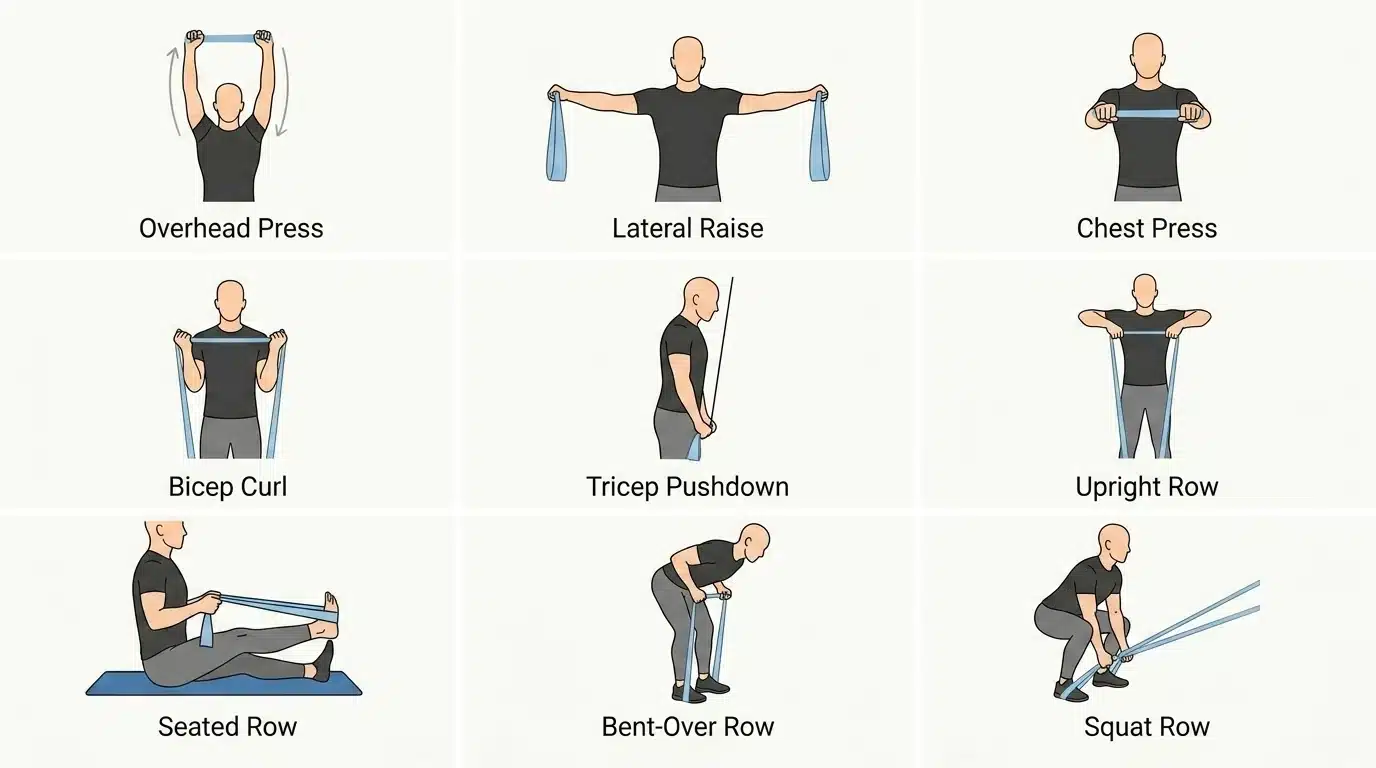
Simple rows, shoulder blade squeezes, and external rotation exercises help the arm function as a single unit. Adding upper-limb strengthening makes elbow rehab more complete.
Sets and reps: 3 sets of 10 to 12 repetitions for each movement.
What Happens During Physical Therapy Sessions for Tennis Elbow?
Knowing what to expect makes the first appointment far less daunting.
Your First Session
Your therapist will typically review your medical history and how the pain started. They will test your grip strength and watch how your wrist, elbow, and shoulder move. This assessment shapes the entire treatment plan.
Ongoing Sessions
Sessions usually mix hands-on work with guided exercise. Manual therapy, stretching, and steady exercise progression are all common. You will receive a home program to do between visits. That home routine often drives more progress than clinic time alone.
How Recovery Progresses
Recovery moves through stages rather than following one flat routine. The table below shows the general arc of a standard rehab program.
| Recovery Stage | Main Focus |
|---|---|
| Early (weeks 1 to 3) | Reduce pain and restore movement |
| Middle (weeks 3 to 8) | Build strength and tendon tolerance |
| Later (2 to 6 months) | Return to sport and full daily activity |
How Long Does Physical Therapy Take for Tennis Elbow?
People often notice real improvement within several weeks. Full recovery depends on several factors. How long symptoms have been present and how much tendon damage exists both matter. So does how reliably you follow your home exercise program. Your work demands also play a role.
Research comparing treatment approaches found that at one year, most people recover regardless of which conservative route they took. Consistency tends to win out over time.
Factors That Affect Recovery Time
- How long symptoms have been present (older cases take longer)
- The severity of tendon changes on imaging or clinical assessment
- Whether your job or hobby keeps stressing the arm
- How reliably you follow your home exercise program
Typical Recovery Timeline
The table below reflects a common pattern. Individual results will vary based on the factors listed above.
| Time Period | What Usually Happens |
|---|---|
| Weeks 1 to 3 | Pain settles, and movement begins to improve |
| Weeks 3 to 8 | Strength builds through progressive loading |
| 2 to 6 months | Full return to demanding activities in more stubborn cases |
What Treatments Work Alongside Physical Therapy?
Physical therapy is the foundation of care for tennis elbow, but a few other options sometimes support it. Here is how the main ones fit in.
Braces and Supports
A counterforce brace worn just below the elbow can reduce the pull on the tendon during activity. Some people also use wrist supports. Both can help manage symptoms, but neither replaces the strengthening work at the core of recovery.
Shockwave Therapy
Extracorporeal shockwave therapy delivers energy pulses to the tendon. It is sometimes considered when symptoms have not improved after about three months of consistent rehab. It works best paired with a continued loading program rather than used on its own.
Medication Options
Short courses of over-the-counter pain relief or topical anti-inflammatory gels may ease symptoms in the first few weeks. Oral anti-inflammatories have not shown a clear long-term benefit. Speak to your healthcare provider before relying on medication as a regular management tool.
Injections
Injections are one of the most misunderstood parts of tennis elbow care. The table below explains why the research on this area matters for long-term outcomes.
| Treatment | Short-Term Relief | Long-Term Consideration |
|---|---|---|
| Steroid injection | Often strong early pain relief | Higher recurrence rates and worse 12-month outcomes |
| PRP (platelet-rich plasma) | Slower to act | Used in some chronic cases; evidence is still mixed |
In the 2013 Coombes trial published in JAMA, the steroid injection group had better results early on. Their recovery at one year was worse, with recurrence around 54 percent compared with 12 percent for the placebo group.
A 2006 BMJ trial by Bisset found the same pattern. Injections were best at six weeks but fell behind physiotherapy at the one-year mark. Because of findings like these, steroid injections are no longer a routine first choice for tennis elbow.
Exercises and Activities to Avoid With Tennis Elbow
Recovery is not just about what you do. It is also about what you avoid while the tendon heals. Several habits tend to keep the tendon irritated:
- Heavy gripping exercises early in recovery
- Painful wrist curls loaded with too much weight
- Repetitive lifting with a straight, palm-down grip
- Poor racket sport technique that strains the outer elbow
- Continuing any activity that causes sharp or worsening pain
One helpful guideline from rehab clinicians: mild discomfort during exercise does not always mean damage. Sharp or worsening pain signals you to ease off and adjust the activity.
When Should You See a Physical Therapist for Tennis Elbow?
Most cases settle with time and the right exercises. Some need a professional assessment sooner. Book an appointment if you notice any of the following:
- Pain that has lasted several weeks without improving
- A weak grip that interferes with daily tasks
- Pain that keeps increasing even when you rest
- Numbness or tingling in the hand or forearm
- A noticeable loss of movement in the elbow
Persistent symptoms sometimes point to a different problem. A professional assessment can rule out other elbow or nerve conditions and get you on the right path toward recovery.
How to Prevent Tennis Elbow From Returning
Getting better is one thing. Staying better takes a few simple adjustments that are easy to maintain.
Improve your technique: Check your tennis grip size, work on cleaner swing mechanics, and fix your form when lifting weights. Small technical corrections remove a lot of repeated strain from the tendon.
Build strength gradually: Keep up forearm and grip work even after the pain is gone. Add shoulder stability exercises so the whole arm shares the load more evenly.
Manage your workload: Avoid sudden jumps in activity, whether that is a new sport, a home renovation, or a heavier training week. Build up slowly and take recovery breaks.
Maintain mobility: A few minutes of regular wrist and forearm stretching keeps the tissue supple and less prone to flare-ups over time.
Final Thoughts on Physical Therapy for Tennis Elbow
Physical therapy for tennis elbow is the most reliable path to full recovery and long-term maintenance. Rest alone will not rebuild a damaged tendon.
Regular exercise, proper movement technique, and gradual loading do the real work. Start gently, increase the load as pain settles, and keep going even after pain fades.
Most people return to all daily activities without ever needing surgery. If your symptoms aren’t improving after a few weeks, don’t wait.
A physical therapist can identify what isn’t working and adjust your plan. With the right approach and care, your elbow can fully recover.
Frequently Asked Questions
Can physical therapy cure tennis elbow?
Physical therapy does not offer a guaranteed cure, but it is the most effective conservative treatment. It reduces pain and rebuilds tendon strength, and most people recover well with a consistent program.
How often should I do tennis elbow exercises?
Most therapists recommend doing your home exercises daily or every other day, depending on the type. Isometric holds can often be done more frequently, while heavier loading needs rest days for recovery.
Is physical therapy better than injections for tennis elbow?
For long-term results, yes. Steroid injections ease pain faster in the first weeks, but studies show worse outcomes and higher recurrence at one year compared with physical therapy.
Can tennis elbow heal without surgery?
In most cases, yes. Tennis elbow treatment without surgery is the standard approach, and only a small minority of stubborn cases that fail months of good rehab go on to need an operation.
Should I wear a brace during physical therapy?
A counterforce brace can help reduce strain on the tendon during activity, so many people use one early on. It can help manage symptoms but does not replace the strengthening exercises that drive recovery.