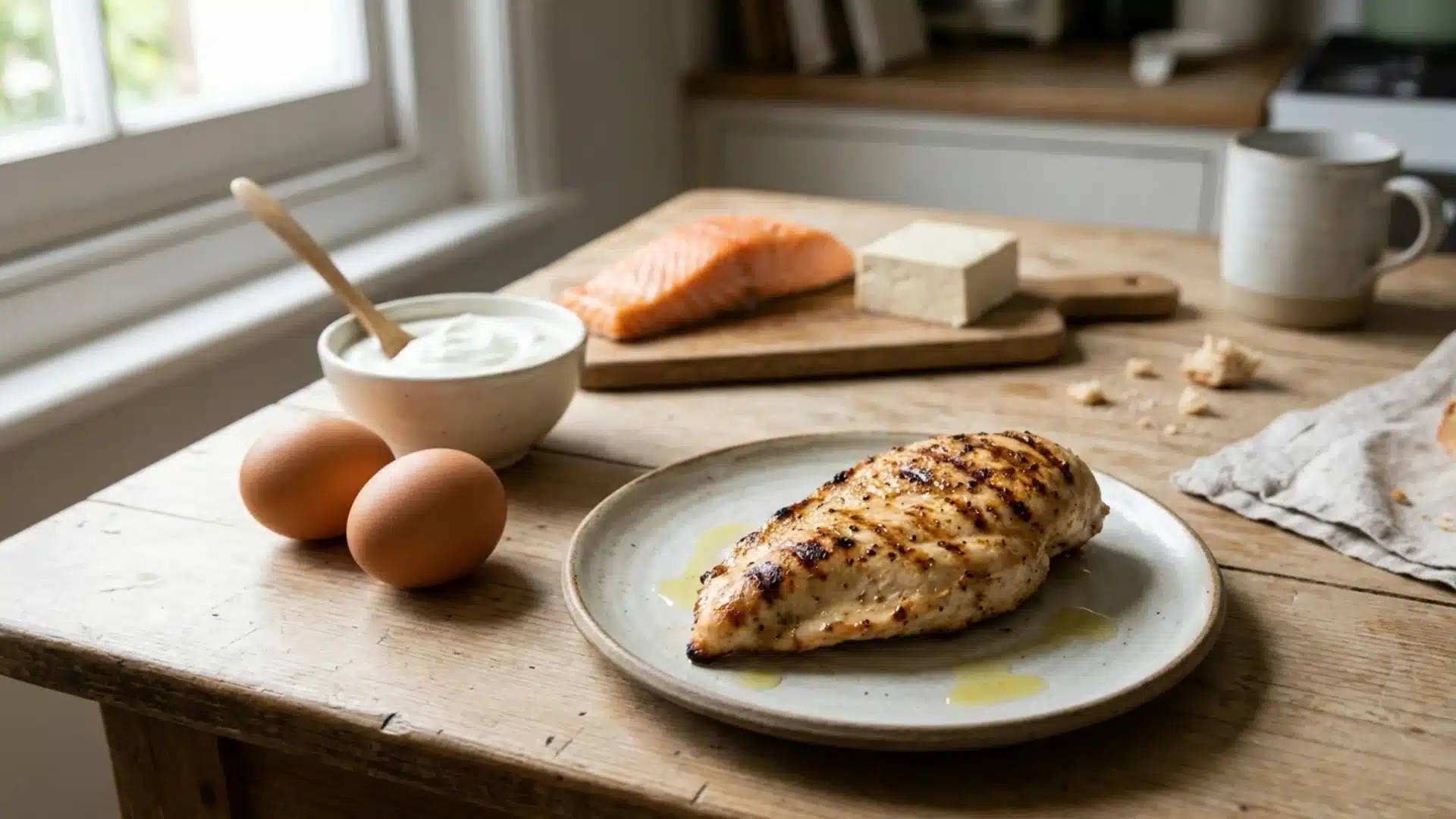
Two eggs and toast feel like a solid protein breakfast. They land closer to 14 grams. That gap keeps your protein target out of reach all day.
Knowing how much protein is in 30 grams of real food helps you build better meals without guessing. This article covers protein amounts in chicken, eggs, yogurt, tofu, fish, and more, plus easy meal ideas.
What Does 30 Grams of Protein Look Like?
Use your palm as the anchor. A palm-sized piece of cooked meat, poultry, or fish gets you close to 30 grams. On a scale, that is 3.5 to 4.5 ounces, depending on the food.
Away from meat, 30 grams looks like:
- 5 large eggs
- 1 cup of low-fat cottage cheese
- 1.25 cups of plain nonfat Greek yogurt
- 10 ounces of extra-firm tofu
- 1 to 1.5 scoops of most protein powders
The leaner the food, the smaller the portion. Chicken breast gets you there faster than ground turkey because more of every ounce is protein, not fat.
How Much Is 30 Grams of Protein in Common Foods
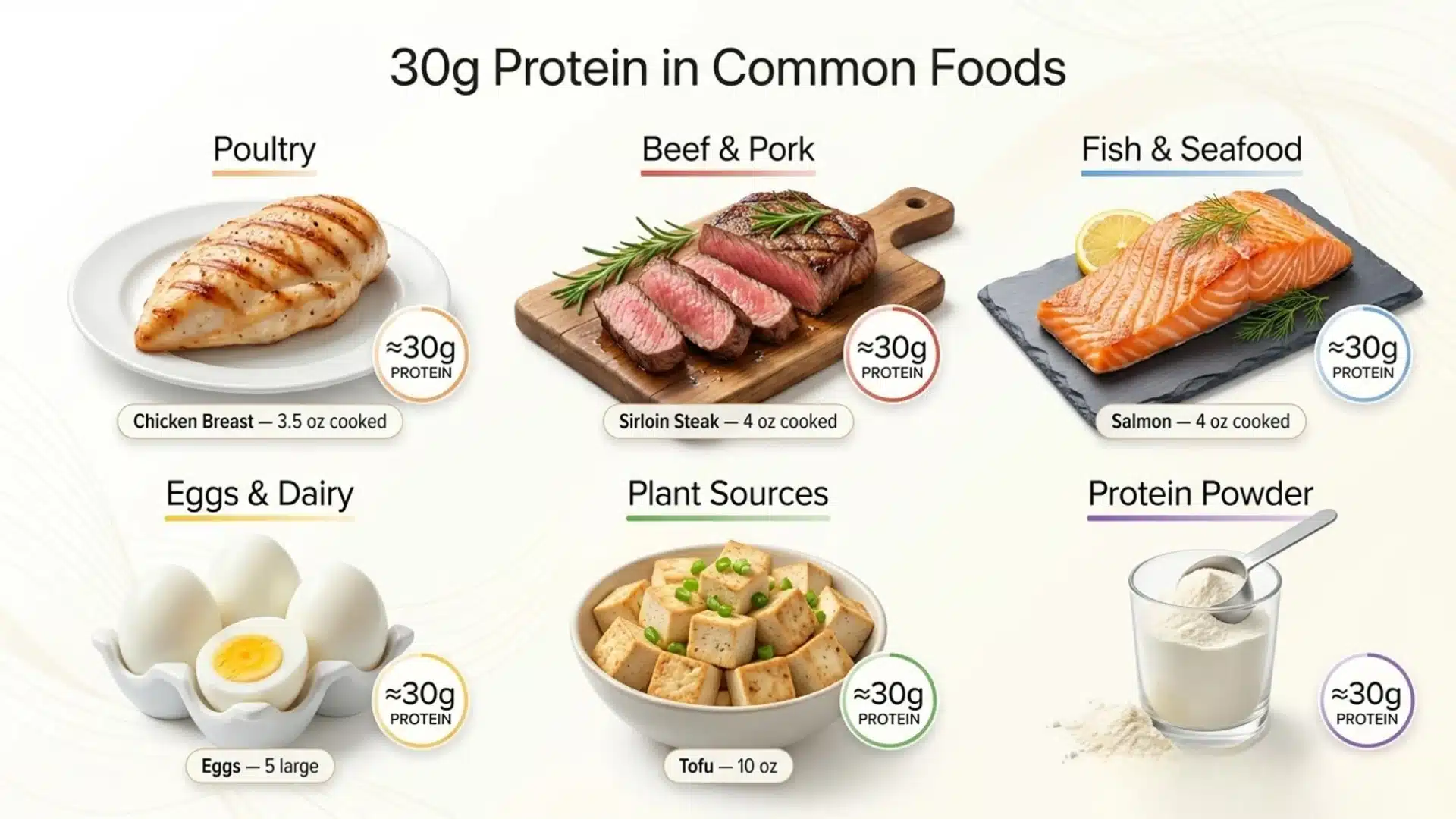
Each portion below gives you roughly 30 grams. Meat and fish are shown both raw and cooked, because many tracking errors start with mixing up those two weights.
Poultry
| Food | Raw Portion | Cooked Portion | Visual Reference |
|---|---|---|---|
| Chicken breast | 4.5 oz | 3.5 oz | Half a large store-bought breast |
| Turkey breast | 4.5 oz | 3.5 oz | One thick palm-sized slice |
| Ground turkey, 93% lean | 5.5 oz | 4 oz | A generous half cup |
Beef and Pork
| Food | Raw Portion | Cooked Portion | Visual Reference |
|---|---|---|---|
| Ground beef, 93% lean | 5.5 oz | 4 oz | A generous half cup |
| Sirloin steak | 5 oz | 4 oz | A thick deck of cards |
| Pork tenderloin | 5 oz | 4 oz | Two thick medallions |
Fish and Seafood
| Food | Raw Portion | Cooked Portion | Visual Reference |
|---|---|---|---|
| Salmon | 5.5 oz | 4 oz | One small fillet |
| Cod or tilapia | 6 oz | 4.5 oz | One medium fillet |
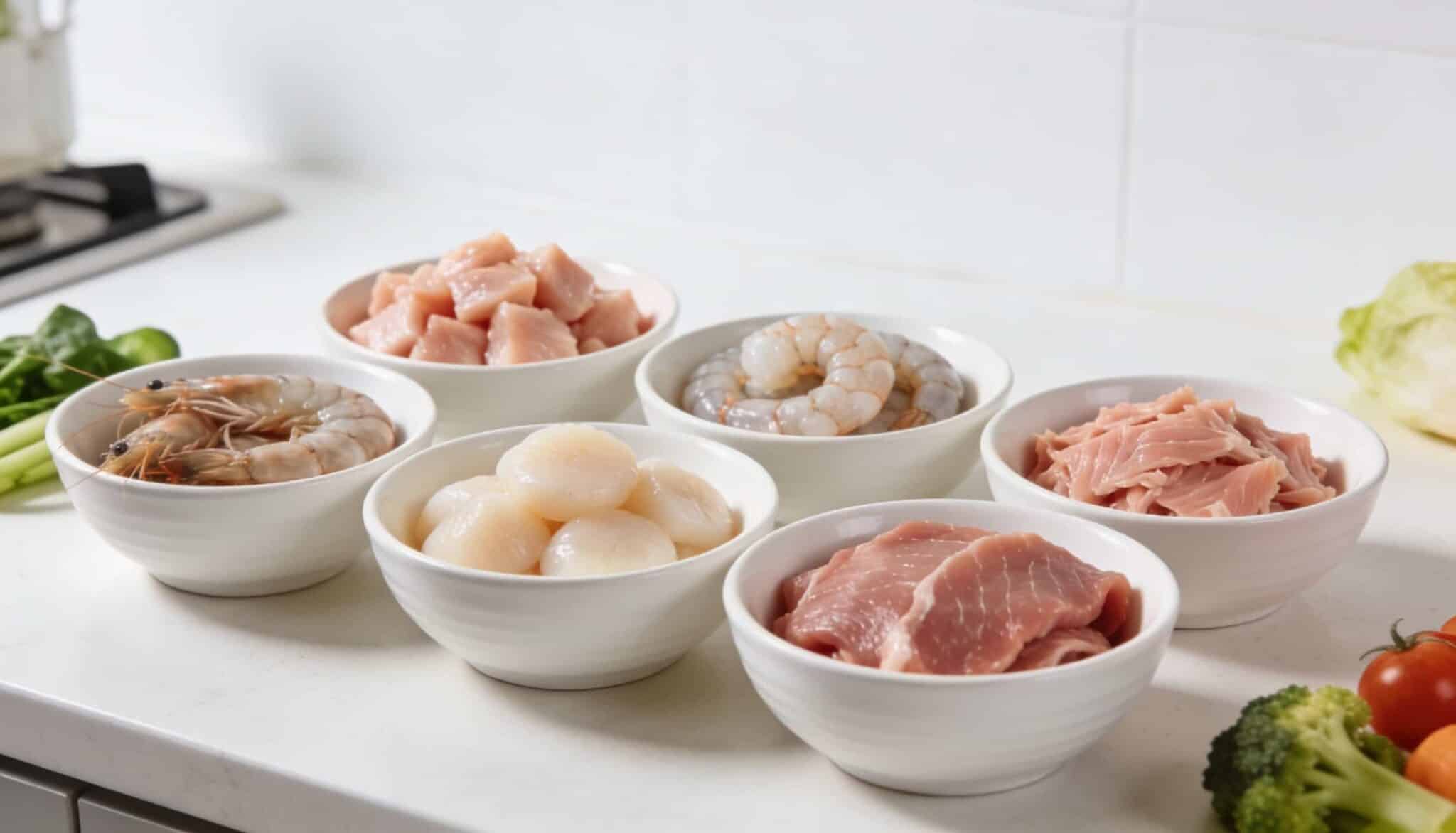
| Shrimp | 5.5 oz | 4.5 oz | About 12 to 15 large shrimp |
| Canned tuna in water | n/a | 5 oz drained | One standard can |
Eggs and Dairy
| Food | Portion for 30 g protein | Visual Reference |
|---|---|---|
| Large whole eggs | 5 eggs | A full scramble |
| Large egg whites | 1 cup (about 8 whites) | One cup measure |
| Nonfat Greek yogurt | 1.25 cups | A large tub plus a little more |
| Low-fat cottage cheese | 1 cup | A cereal bowl portion |
| Cheddar cheese | 4 oz (1 cup shredded) | A full handful shredded |
Plant Sources and Protein Powder
| Food | Portion for 30 g protein | Visual Reference |
|---|---|---|
| Extra-firm tofu | 10 oz | Just over half a standard block |
| Tempeh | 5.5 oz (~1 cup cubed) | A heaping cup |
| Cooked lentils | ~1.75 cups | Two large fists |
| Shelled edamame, cooked | ~1.75 cups | A large soup bowl |
| Whey protein powder | 1 to 1.5 scoops | Check your label |
All numbers are approximate. Protein content shifts with brand, cut, and cooking method.
How Many Eggs Is 30 Grams of Protein?
Five large eggs give you roughly 30 grams of protein. Each large egg holds about 6 grams, split between the yolk (about 2.7g) and the white (about 3.6g).
If you prefer fewer whole eggs, you can mix in egg whites. Here are two practical options:
- All whites: 8 large egg whites. Lower fat, fewer calories, nearly the same protein.
- Mixed: 3 whole eggs plus 3 egg whites. Gives about 29 grams. You keep the yolk nutrients, including vitamin D, choline, and healthy fats.
The catch: 5 whole eggs cost about 360 calories and 25 grams of fat. That is a high price to reach 30 grams of protein. That is a high-calorie price compared to chicken breast or Greek yogurt for the same target. Eggs work best stacked with other protein sources rather than as your only option.
Egg size also matters. Here is a quick breakdown:
| Egg Size | Protein per Egg | Eggs Needed for ~30g |
|---|---|---|
| Medium | ~5.5g | 5 to 6 |
| Large | ~6g | 5 |
| Extra-large | ~7g | 4 to 5 |
| Jumbo | ~8g | 4 |
Standard cartons sold as “large” are the default. If your carton does not list a size, use the five-egg rule for 30 grams.
Why Raw and Cooked Weights Are Not the Same
Cooking removes water from meat, not protein. Meat loses about one-quarter of its weight as water on the pan. The protein stays.
Two things follow from that:
- A 4.5-ounce raw chicken breast and the 3.5-ounce cooked piece hold the same protein.
- A standard store chicken breast at 6 to 8 ounces raw gives you 40 to 50 grams of protein, not 30.
Pick one method, raw or cooked, and stick with it. Mixing the two is where the tracking errors pile up fast.
Do All 30-Gram Portions Cost the Same Calories?
No, and the difference is wide. Protein has 4 calories per gram, so 30 grams of protein always equals 120 calories. The fat riding along changes the total.
| Food | Portion | Approx. Calories | Approx. Fat |
|---|---|---|---|
| Chicken breast (cooked) | 3.5 oz | 165 | 3.5g |
| Nonfat Greek yogurt | 1.25 cups | ~170 | 0g |
| Sirloin steak (cooked) | 4 oz | 215 | 9g |
| Salmon (cooked) | 4 oz | 235 | 11g |
| Extra-firm tofu | 10 oz | 250 | 15g |
| Large whole eggs | 5 eggs | 360 | 25g |
Five eggs cost more than double the calories of chicken breast for the same protein. That does not make eggs a poor choice. Whole eggs carry vitamins and healthy fats that egg whites leave out. Salmon brings omega-3s your body needs.
But if your protein looks on target and your calories keep running high, start by checking this table. Swapping ground beef for chicken breast twice a week saves a few hundred calories. Your protein total stays the same.
Protein Per Ounce: Math for Any Target
Fixed portions only help at 30 grams. This formula works at any number: divide your protein target by the food’s protein per ounce.
| Food (cooked) | Protein per Oz | For 20g | For 30g | For 40g |
|---|---|---|---|---|
| Chicken breast | 8.7g | 2.25 oz | 3.5 oz | 4.5 oz |
| Turkey breast | 8.5g | 2.5 oz | 3.5 oz | 4.75 oz |
| Sirloin steak | 7.5g | 2.75 oz | 4 oz | 5.25 oz |
| Ground turkey, 93% | 7.5g | 2.75 oz | 4 oz | 5.25 oz |
| Salmon | 7.3g | 2.75 oz | 4 oz | 5.5 oz |
| Shrimp or white fish | 6.8g | 3 oz | 4.5 oz | 6 oz |
Example: You want 35 grams from cooked chicken breast. Divide 35 by 8.7. That lands near 4 ounces. The same math works for any food in the table above.
How to Hit 30 Grams of Protein at Every Meal
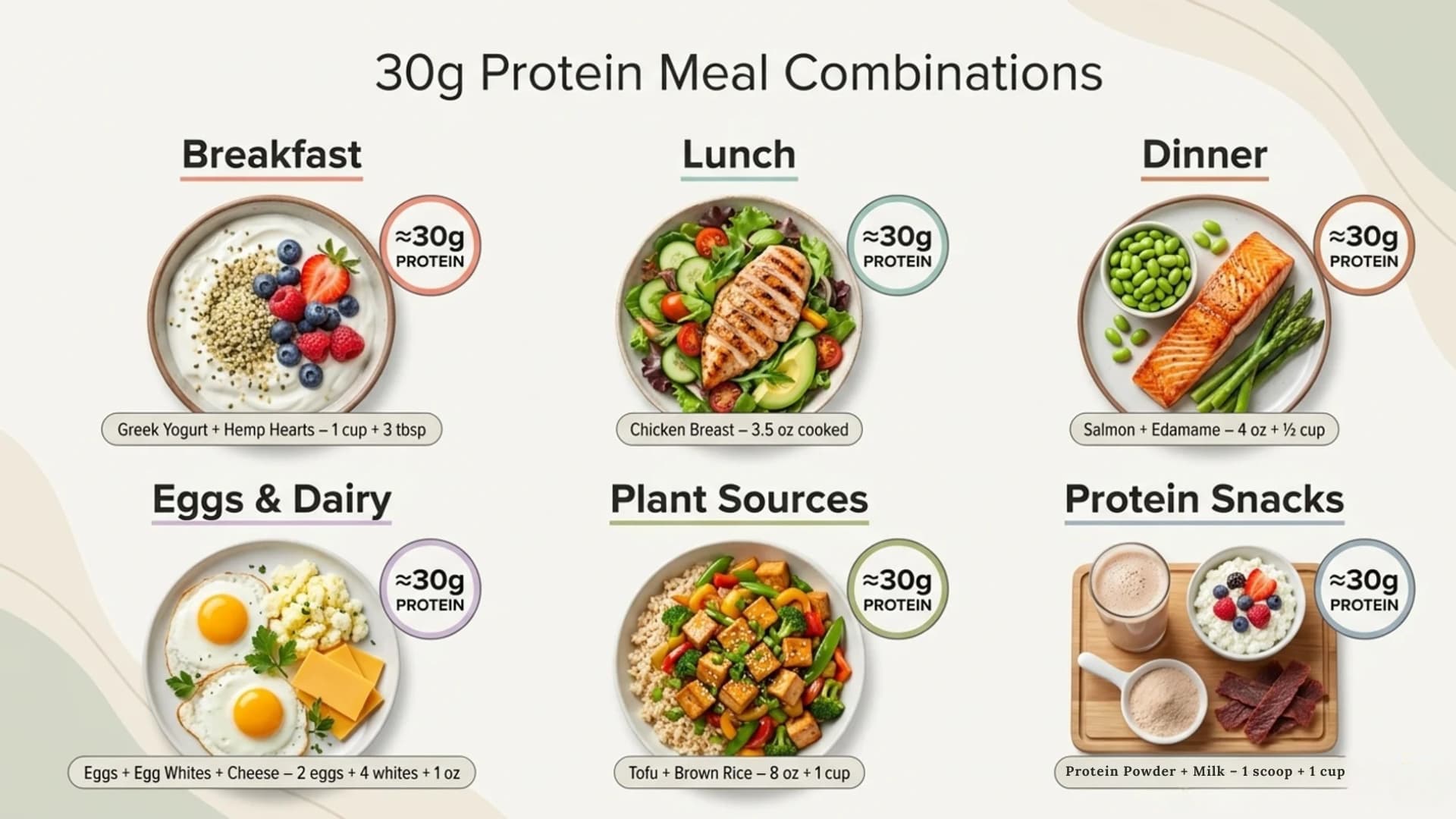
You rarely eat one food alone. Stacking two or three protein sources gets you to 30 grams faster and makes meals more balanced.
Breakfast
- 1 cup Greek yogurt (24g) plus 3 tbsp hemp hearts (10g)
- 2 whole eggs (12g) plus 4 egg whites (14g) plus 1 oz cheddar (7g)
- 1 cup cottage cheese (25g) plus 2 tbsp peanut butter (8g)
Lunch
- 3.5 oz grilled chicken (30g) over greens
- 1 can tuna (30g) with whole grain crackers
- 1.5 cups lentils (18g) plus half cup quinoa (4g) plus 2 tbsp pumpkin seeds (9g)
Dinner
- 4 oz salmon (24g) plus half cup edamame (8g)
- 4 oz cooked ground turkey (30g) in a rice bowl
- 8 oz tofu (24g) stir-fry plus 1 cup brown rice (5g)
Snacks
- 1 scoop protein powder (24g) with 1 cup milk (8g)
- 1 cup cottage cheese (25g) with fruit
- 2 hard-boiled eggs (12g) plus 1 oz cheese (7g) plus jerky (10g)
How Much Protein Do You Actually Need Per Meal?
The 30-gram figure comes from muscle protein synthesis research. A 30-gram serving raised synthesis rates by roughly 50 percent in both younger and older adults. Tripling that portion produced no further rise.
Spreading protein across three or four meals works better than loading it all into one large dinner.
For daily totals, 0.8 grams per kilogram of body weight is the minimum floor, not a goal. Active adults often do better at 1.2 to 1.7 grams per kilogram.
| Body Weight | Daily Protein Range | Per Meal (4 meals) |
|---|---|---|
| 130 lb | 71 to 100g | 18 to 25g |
| 150 lb | 82 to 116g | 21 to 29g |
| 170 lb | 93 to 131g | 23 to 33g |
| 190 lb | 104 to 147g | 26 to 37g |
Treat 30 grams as an anchor, not a strict rule. Anywhere from 20 to 40 grams per meal works. Your needs shift with age, training, and health conditions.
How to Use a Food Scale Without It Feeling Like a Project
Use a food scale for two weeks, not for life. Weigh your portions until your eye learns the difference between 3 ounces and 5 ounces. Most people overestimate protein portions by 30 to 40 percent before they calibrate.
After two weeks, put the scale away. You will have a reliable sense of each portion. The estimates from there hold up well for everyday meals.
Always weigh meat raw when you can. Raw portions are easier to control at the grocery store and prep stage. The cooked weight follows automatically once you know the raw target.
Disclaimer: This article is for informational purposes only and does not replace professional medical or dietary advice. Protein needs vary by age, health, activity level, and goals. Consult a qualified healthcare provider for personalized guidance.
Conclusion
Knowing how much 30 grams of protein is turns a loose target into something you can see and plan around. A palm of cooked chicken, five eggs, or a cup of cottage cheese all land in the same place.
The per-ounce formula in this article works for any number you need. Breakfast is the fastest win. That is where protein tends to run lowest for most adults.
Add a scoop of protein powder, a bowl of Greek yogurt, or a mix of eggs and egg whites. The rest of the day gets easier from there. Use a food scale for two weeks to build your eye, and the portions stop feeling like math.
Frequently Asked Questions
How much is 30 grams of protein in chicken?
30 grams of protein from chicken breast equals about 3.5 ounces cooked or 4.5 ounces raw. That is roughly half a large store-bought breast.
Can I get 30 grams of protein from plant foods?
Yes. About 1.75 cups of cooked lentils, 1.75 cups of edamame, or 10 ounces of extra-firm tofu each get you close. Stacking two plant sources makes it easier.
Is 30 grams of protein per meal enough to build muscle?
Research shows 30 grams per meal raises muscle protein synthesis by about 50 percent. Spreading that across three to four meals per day works better than one large protein meal.
Are 2 eggs enough daily protein?
No. Two large eggs give roughly 12 grams of protein. Most adults need 80 to 160 grams per day depending on body weight and activity level.