Your therapist hands you a cup of water and says it will flush out the toxins. That explanation gets repeated at nearly every spa and clinic. Most of it is wrong.
So why drink water after a massage at all? The real reasons are simpler than the toxin story, and they still hold up.
This article covers what actually happens in your body, why water helps, and how much to drink.
Why Drink Water After a Massage?
People ask why they should drink water after a massage because the usual explanation, flushing toxins, turns out to be inaccurate. The real answer is about circulation, tissue hydration, and fluid loss. None of it involves pushing anything out.
Here is what changes in your body during a session.
- Local blood flow rises. Pressure and stroking move blood through the tissue being worked on.
- Lymph fluid shifts. Manual pressure nudges lymph toward collection points near your heart.
- Muscle tone drops. Tight muscle bands relax, which changes how the area feels for hours.
- Your nervous system calms. Heart rate and blood pressure often fall during a session.
That fluid movement explains a familiar detail. Many people need the bathroom right after an appointment. The fluid moves, the kidneys filter it, and it leaves your body. That is a genuine reason to top up your fluids.
There is also a structural reason most therapists never mention. Fascia, the connective tissue surrounding your muscles, is roughly 70 percent water.
When your fluid levels are low, fascia becomes less pliable and harder to work with. Hydration before and after a session improves how well the work holds.
Five Reasons That Actually Hold Up
|
Reason |
What It Means |
|---|---|
|
Rehydration after heat |
Heated tables, hot towels, and steam rooms pull water from you through sweat. |
|
Muscle tissue softness |
Hydrated muscle and fascia glide more easily. Dehydrated tissue stiffens like a dried sponge. |
|
No fluid during the session |
Lying face down is 60 to 90 minutes without a single sip of anything. |
|
Kidney and liver support |
These organs handle your actual waste clearance every hour. They run on water. |
|
Soreness reduction |
Hydration helps sore tissue recover faster after firm pressure. |
Does Massage Release Toxins From the Body?
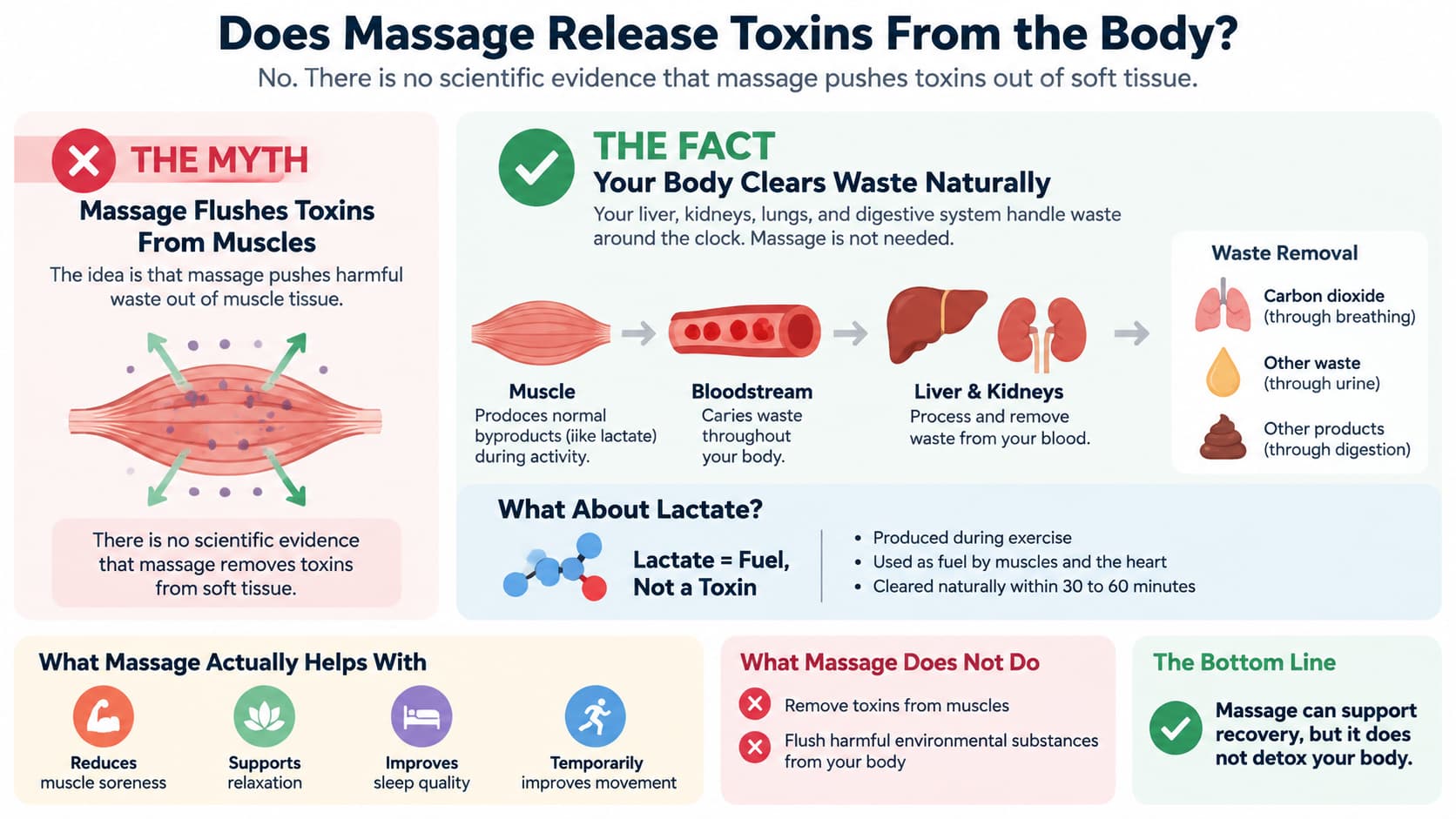
No. The American Massage Therapy Association states there is no scientific evidence that massage pushes toxins out of soft tissue. The idea traces back to a mistake about lactic acid. That error spread from old research into training programs decades ago.
Where the Toxin Story Came From
Early lab research found lactate building up inside tired muscles. Scientists of that era assumed it was harmful waste and blamed it for both fatigue and next-day soreness. That explanation spread through physiology books, and massage training absorbed it wholesale.
Modern physiology tells a different story. Lactate is not a toxin. Your muscles and your heart both burn it as fuel during exercise. Your body recycles and clears it without any outside help. Blood lactate returns to baseline within 30 to 60 minutes on its own.
When rest, light movement, and massage were compared directly, gentle activity cleared lactate best. Massage produced no extra clearance effect at all.
What Your Body Actually Classifies as a Toxin
A toxin is a harmful substance produced by a living organism, such as a bacterial toxin or venom. What your muscles produce during normal use does not qualify.
|
Substance |
What It Is |
How Your Body Handles It |
|---|---|---|
|
Lactate |
Normal byproduct and fuel |
Recycled and burned for energy by muscle and heart |
|
Carbon dioxide |
Normal byproduct |
Leaves through your lungs when you exhale |
|
Other metabolic waste |
Normal byproduct |
Processed by liver, kidneys, and digestive system |
|
Lead and mercury |
Environmental toxin |
Stored in fat, bone, and organs. Needs medical treatment. |
|
Certain pesticides |
Environmental toxin |
Processed slowly by the liver. Needs medical evaluation. |
Two things follow from that table. Your body clears the top three around the clock, so there is nothing for a massage to push out. The bottom two settle in fat, bone, and organ tissue rather than muscle. That location puts them well beyond the reach of any hands-on technique.
What Massage Actually Does
The benefit is real. The toxin explanation is not. Here is what research does support.
- Eases soreness. Reduces how sore worked muscles feel over the following days.
- Calms your system. Helps with relaxation and everyday stress.
- Improves sleep. Many people report better sleep quality after a session.
- Loosens movement. Can temporarily improve range of motion in stiff joints.
What Happens If You Don’t Drink Water After a Massage?
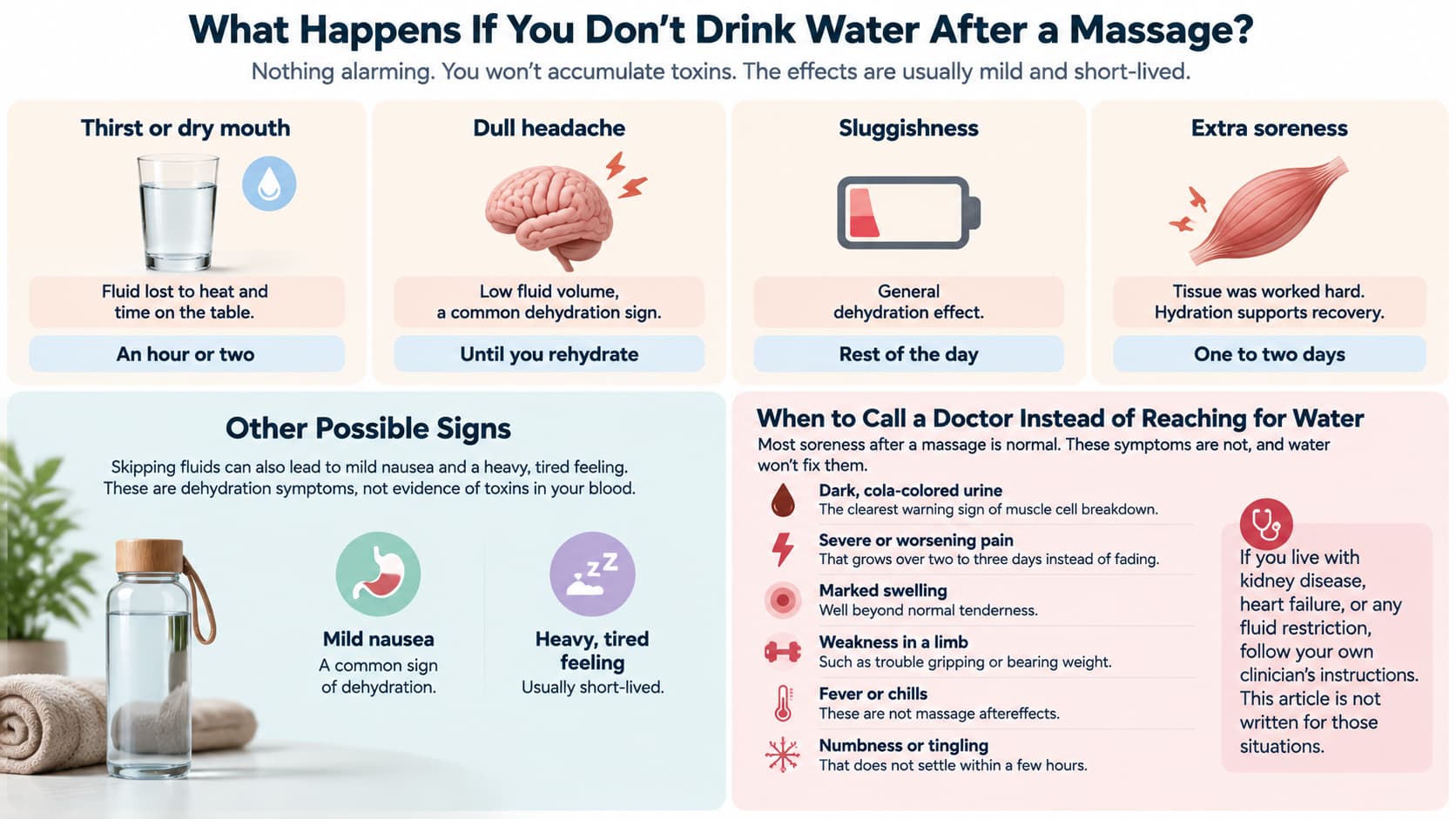
Nothing alarming. Your body will not accumulate toxins. The realistic outcomes are mild and short-lived.
|
What You Might Feel |
Why It Happens |
How Long It Lasts |
|---|---|---|
|
Thirst or dry mouth |
Fluid lost to heat and time on the table |
An hour or two |
|
Dull headache |
Low fluid volume, a common dehydration sign |
Until you rehydrate |
|
Sluggishness |
General dehydration effect |
Rest of the day |
|
Extra soreness |
Tissue was worked hard. Hydration supports recovery. |
One to two days |
Skipping fluids after a session can lead to mild nausea and a heavy, tired feeling. These are dehydration symptoms, not evidence of anything circulating in your blood.
When to Call a Doctor Instead of Reaching for Water
Mild soreness after firm bodywork is normal. A few symptoms are not, and water will not fix them.
- Dark, cola-colored urine. The clearest warning sign of muscle cell breakdown.
- Severe or worsening pain that grows over two to three days instead of fading.
- Marked swelling well beyond normal tenderness.
- Weakness in a limb, such as trouble gripping or bearing weight.
- Fever or chills. These are not massage aftereffects.
- Numbness or tingling that does not settle within a few hours.
If you live with kidney disease, heart failure, or any fluid restriction, follow your own clinician’s instructions.
How Much Water Should You Drink After a Massage?
Once you understand why drinking water after a massage matters, the next question is how much to drink. Drink one full glass, about 8 to 12 ounces, within 15 minutes of finishing. Then add another 20 to 40 ounces through the rest of the day on top of your normal intake.
No single number fits everyone. Adjust based on what kind of session you had and how your body feels.
|
Situation |
Add Roughly |
Why It Raises Your Need |
|---|---|---|
|
Deep tissue or sports massage |
8 to 16 oz extra |
Firmer pressure means more tissue stress and recovery demand |
|
Sauna, steam room, or hot stone |
16 to 24 oz extra |
Direct heat causes real sweat loss during the session |
|
Hot or dry climate |
8 to 16 oz extra |
Sweat loss continues after you leave the building |
|
Larger body size |
8 to 16 oz extra |
Fluid needs scale roughly with body mass |
|
You trained that same day |
16 to 24 oz extra |
Exercise and bodywork stack fluid losses on the same day |
The Simplest Self-Check
Check your urine color. Pale straw means your fluid balance is fine. Dark yellow means drink more.
More is not automatically better. Drinking several liters in a short window can dilute blood sodium, which is dangerous. Steady sipping through the day beats chugging a large amount at once.
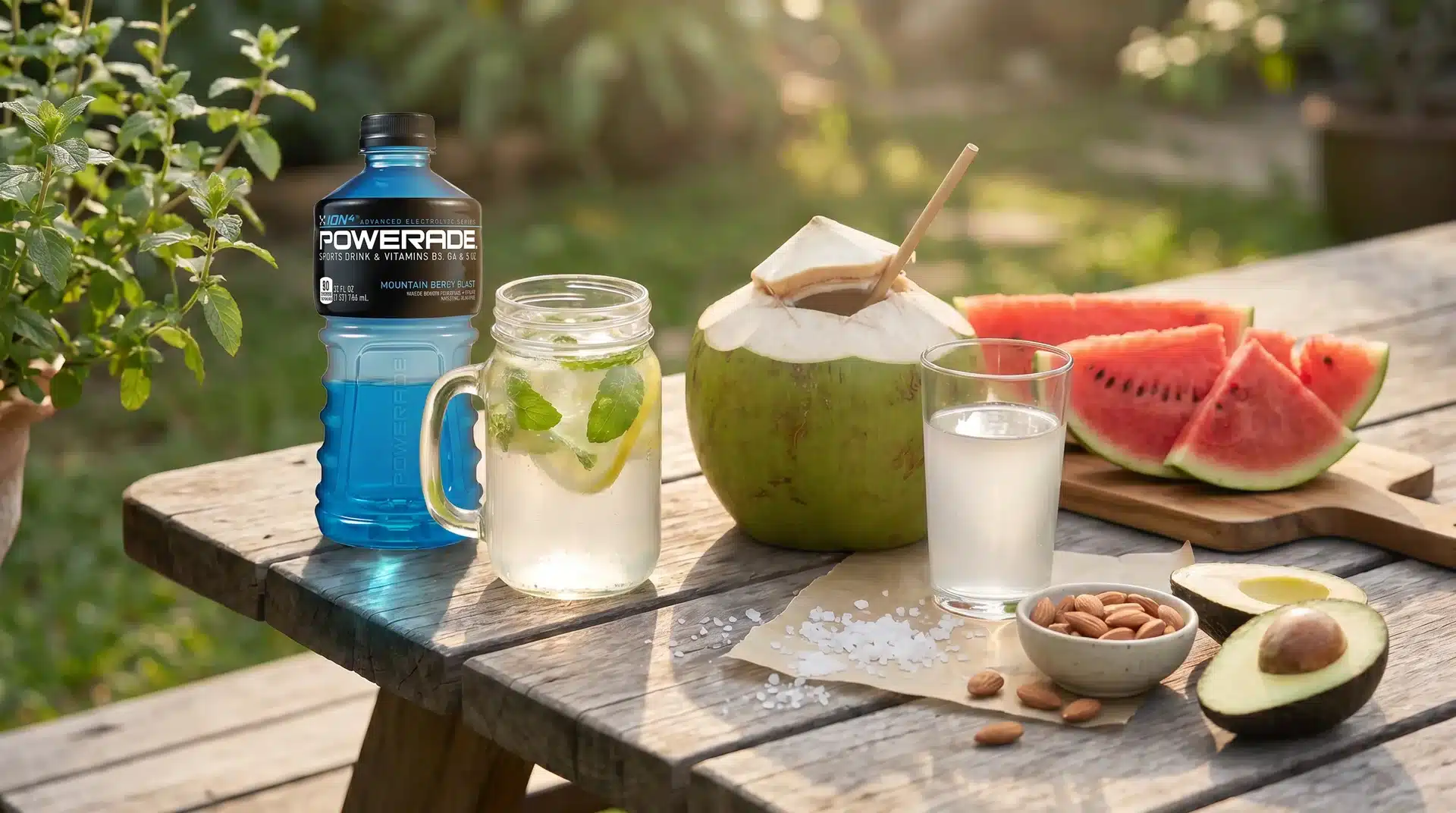
Pro Tip: Skip the electrolyte powder after a standard Swedish massage in an air-conditioned room. Plain water does the job. Save electrolytes for sessions paired with hard training, a sauna, or a hot stone treatment where real sweat loss has occurred.
Should You Drink Water Before or After a Massage?
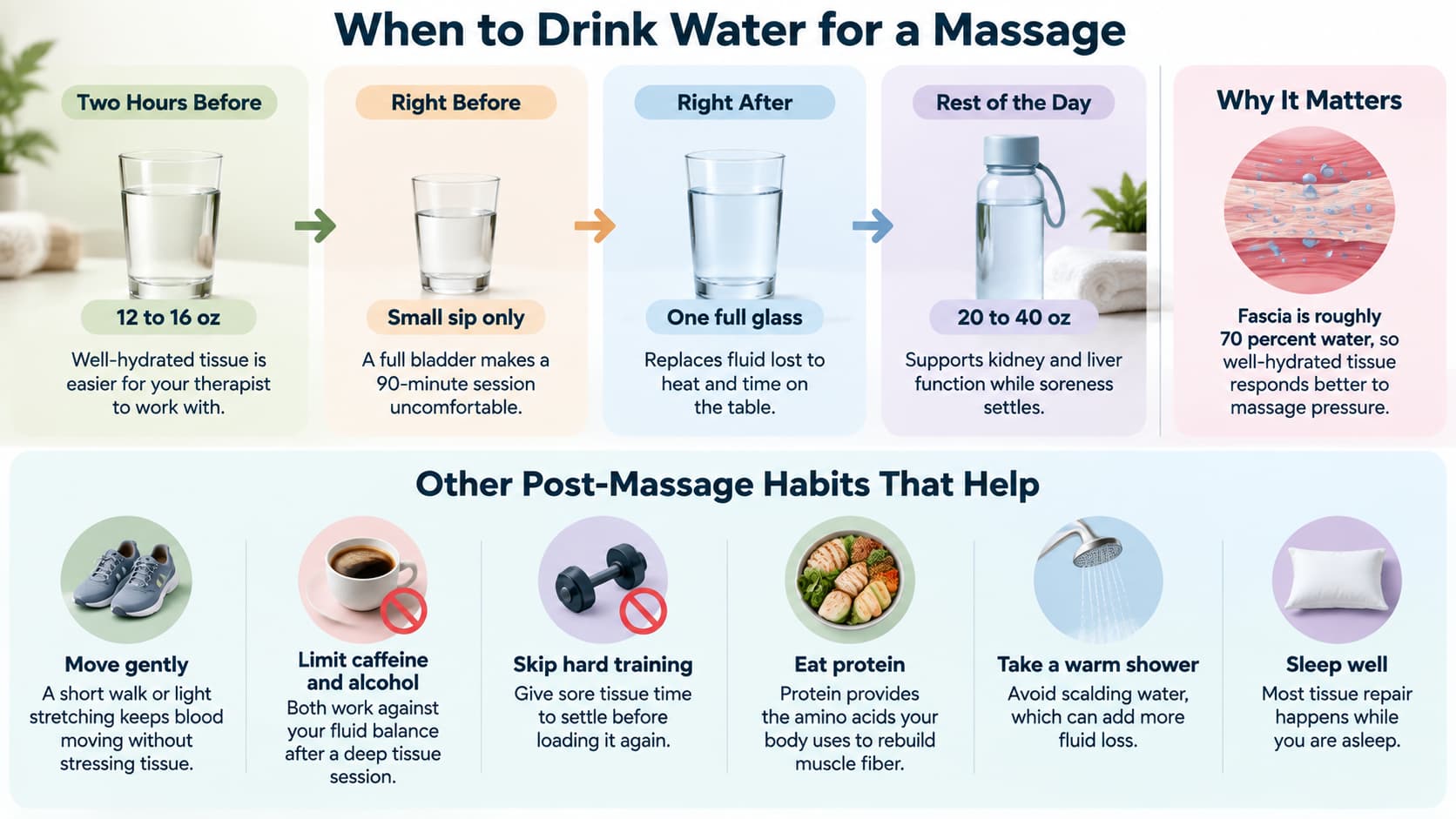
Both. When people ask why drink water after a massage, they often forget that before matters too. Hydration before your session changes how the work feels. Hydration afterward supports your recovery.
|
Timing |
How Much |
Why It Matters |
|---|---|---|
|
Two hours before |
12 to 16 oz |
Well-hydrated tissue is easier for your therapist to work with |
|
Right before |
Small sip only |
A full bladder makes a 90-minute session uncomfortable |
|
Right after |
One full glass |
Replaces fluid lost to heat and time on the table |
|
Rest of the day |
20 to 40 oz |
Supports kidney and liver function while soreness settles |
Because fascia is roughly 70 percent water, well-hydrated tissue responds better to massage pressure. Going in dehydrated can make the work feel harder and leave you sorer the next day.
Other Post-Massage Habits That Help
Water is one part of your recovery. These habits protect the work your therapist just finished.
- Move gently. A short walk or light stretching keeps blood moving without stressing tissue that was just worked.
- Go easy on caffeine and alcohol. Both work against your fluid balance after a deep tissue session.
- Skip hard training for a day. Give sore tissue time to settle before loading it again.
- Eat something with protein. Protein provides the amino acids your body uses to rebuild muscle fiber.
- Take a warm shower, not a scalding one. Very hot water on top of heat therapy adds more fluid loss.
- Sleep well that night. Most tissue repair happens while you are asleep.
Health Disclaimer: This article is for informational purposes only. It is not a substitute for professional medical advice. If you experience unusual symptoms after a massage, including severe pain, dark urine, or numbness, contact a qualified healthcare provider.
Why Drink Water After a Massage? The Short Answer
Water after a massage helps your body stay hydrated, not flush out hidden toxins. Your liver and kidneys handle waste clearance every day without any help from bodywork.
The real reasons to drink water after a massage are practical. Your tissues lost fluid to heat. Your fascia works better when hydrated. Your kidneys need water to do their job. One full glass right after your session, then steady sipping through the day, covers it.
If you want to get more from each session, start hydrating two hours before you arrive. Well-hydrated fascia is softer, more responsive, and easier to work with. That small habit makes the work last longer.
Frequently Asked Questions
How much water should you drink after a massage?
Drink one full glass within 15 minutes of finishing. Then add another 20 to 40 ounces through the rest of the day on top of your normal intake. Adjust up after deep tissue work, hot stone sessions, or hard training.
Does massage really flush toxins from the body?
No. The American Massage Therapy Association states there is no scientific evidence that massage pushes toxins out of soft tissue. Your liver and kidneys handle waste clearance every hour without any help from bodywork.
Why am I thirsty after a massage?
Your body loses fluid from heated surfaces and hot towels used during the session. Lymph fluid also shifts toward the kidneys, which can briefly increase urine output and make you feel thirsty.
What are red flags after a massage?
Watch for dark cola-colored urine, severe worsening pain, marked swelling, limb weakness, or fever. Numbness that does not settle within hours is also a concern. These are signs to call a doctor, not reach for water.
Does the type of massage change how much water I need?
Yes. Deep tissue, sports massage, and hot stone sessions raise your fluid needs more than a standard relaxation massage. Sessions paired with exercise on the same day also increase fluid loss and require more water.