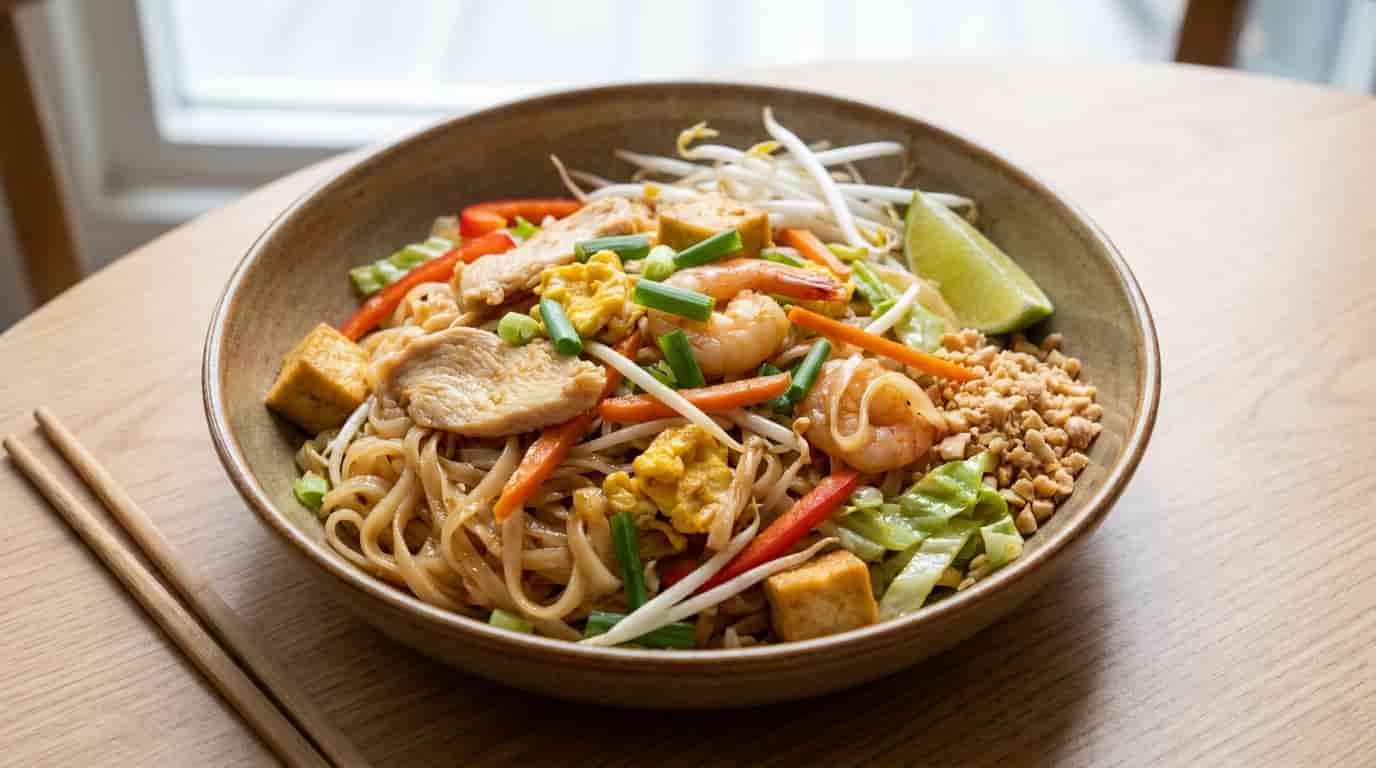
A single Pad Thai serving can reach 700 calories before you add peanuts or sauce. Rice noodles drive most of that total. They also supply selenium, which supports immune function.
Bean sprouts contribute vitamin C and folate with almost no calories. Toppings and sauce can match the noodles’ calorie contribution.
This post covers how many calories are in Pad Thai across every version.
How Many Calories Are in Pad Thai?
A standard Pad Thai serving contains roughly 400 to 700 calories. That range is wide because the dish has no universal recipe. Calories shift based on how much food is on the plate. The amount of oil used and the size of the peanut topping also matter.
The table below shows estimated calorie ranges across common Pad Thai versions. These are estimates based on typical portion sizes and standard ingredient ratios.
|
Type of Pad Thai |
Estimated Calories per Serving |
|---|---|
|
Small homemade serving |
350 to 500 calories |
|
Average serving (any source) |
400 to 700 calories |
|
Chicken Pad Thai |
550 to 650 calories |
|
Shrimp Pad Thai |
400 to 650 calories |
|
Tofu Pad Thai |
350 to 600 calories |
|
Large restaurant serving |
600 to 900+ calories |
|
Packaged Pad Thai (~311g) |
Approx. 429 calories |
A packaged version will list its exact figures on the label. A restaurant version depends on that kitchen’s portion size and recipe. Homemade Pad Thai gives you the most control over the final count.
Pad Thai Calories
Portion size has a bigger impact on calories than protein choice does. A small 100g portion and a full restaurant plate share the same ingredients. But they can differ by 500 or more calories.
Weight-based measurements are more reliable than volume. A tightly packed cup of noodles contains more food than a loose one. The same “one cup” can mean very different calorie totals.
|
Serving Size |
Estimated Calories |
|---|---|
|
100 grams |
150 to 225 calories |
|
200 grams (USDA reference) |
Approx. 308 calories |
|
1 cup (loosely packed) |
300 to 400 calories |
|
Small serving (250g) |
350 to 450 calories |
|
Average restaurant serving |
600 to 900+ calories |
A standard restaurant plate often contains 1.5 to 2 portions worth of noodles. This means the calorie count can easily reach 800 or more. That is before any extra sauce or peanuts are added at the table.
Pad Thai Protein Content by Type
The protein you choose changes how much protein the dish actually delivers. Here is what each version typically provides per serving.
1. Chicken Pad Thai
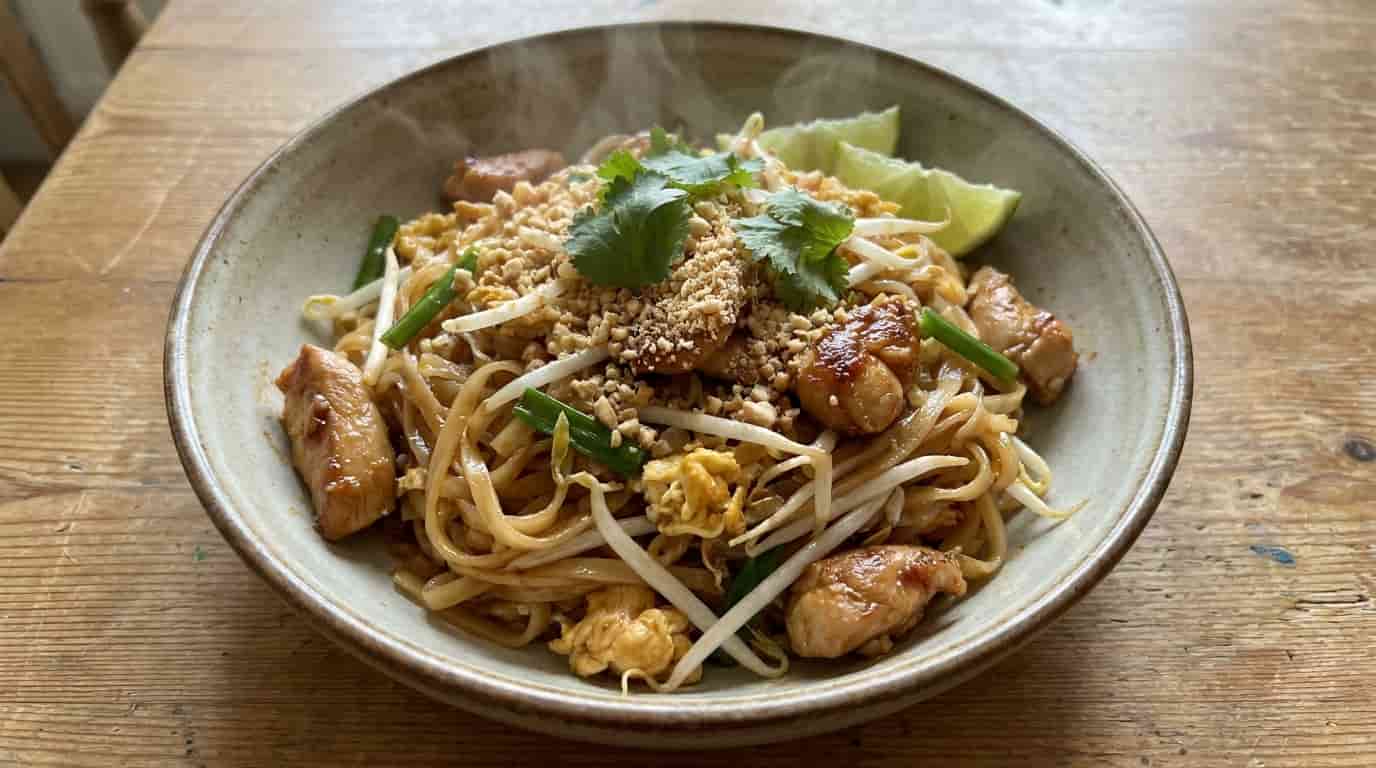
Chicken Pad Thai provides around 18 to 25 grams of protein per serving. Chicken breast is a complete protein source, meaning it contains all essential amino acids. It supports muscle repair and keeps the meal filling without adding significant fat.
2. Shrimp Pad Thai
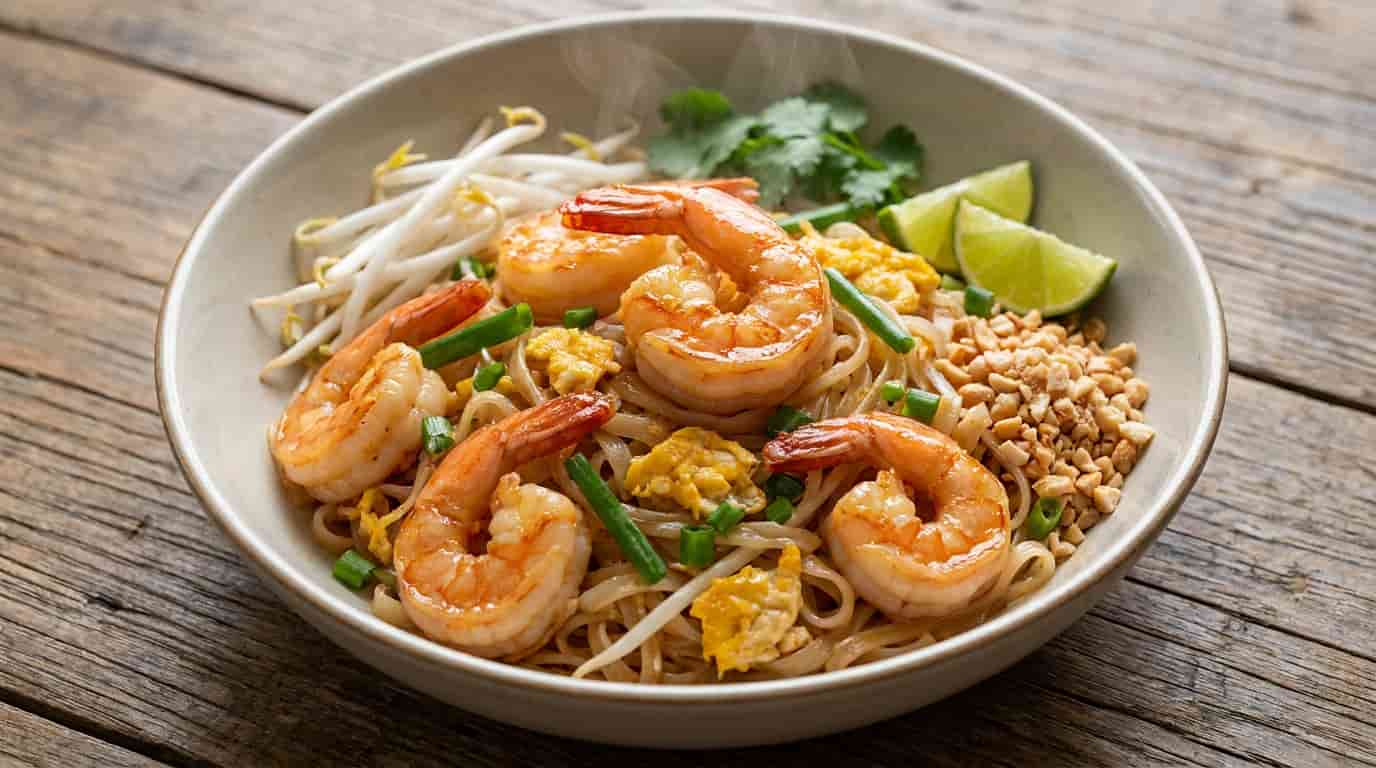
Shrimp Pad Thai delivers roughly 15 to 18 grams of protein per serving. Shrimp is low in fat and calories on its own. It raises the protein content without adding much to the total calorie count. It is a good option when you want protein without extra fat.
3. Tofu Pad Thai
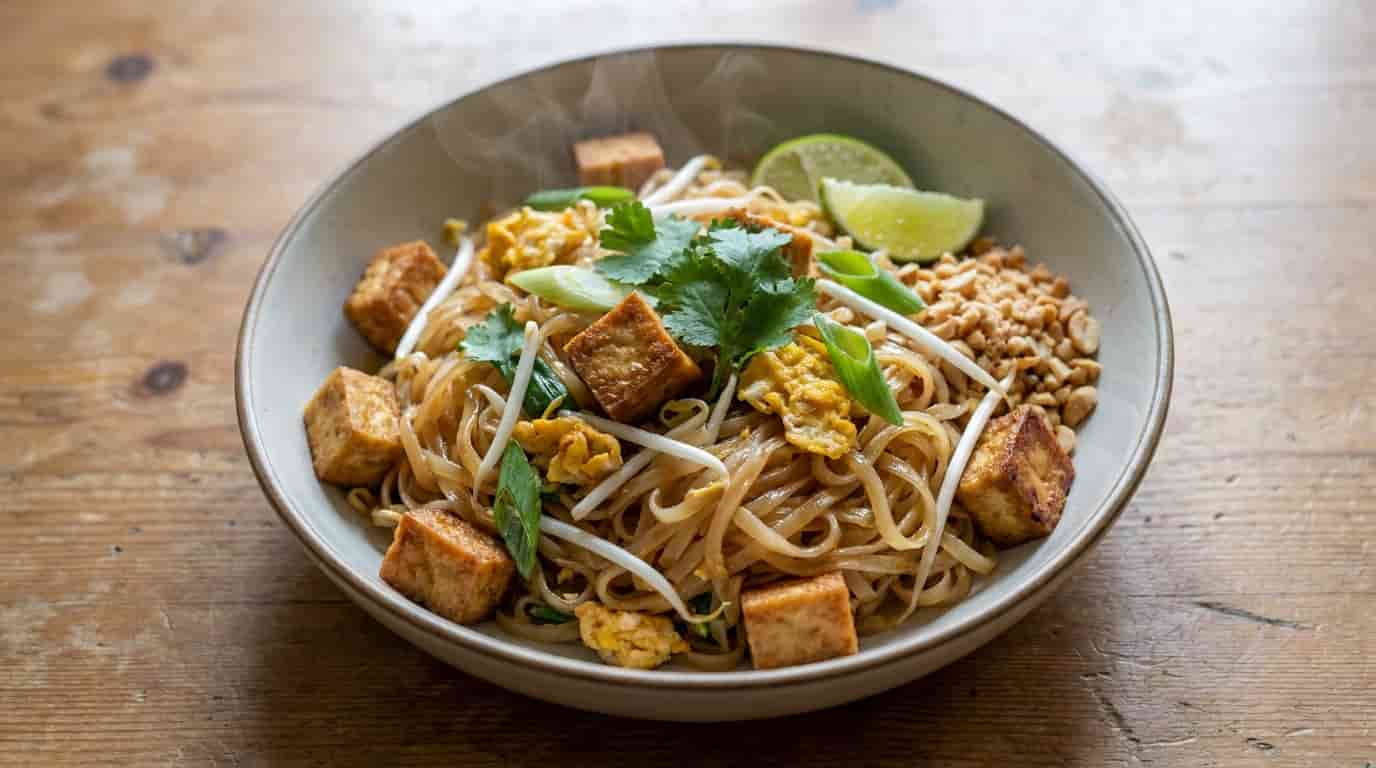
Tofu Pad Thai provides around 12 to 14 grams of protein per serving. The amount depends on how much tofu you use and how you prepare it. Firm tofu, pressed and lightly cooked, gives more protein than softer versions. Fried tofu adds protein but also absorbs more oil.
4. Vegetable Pad Thai
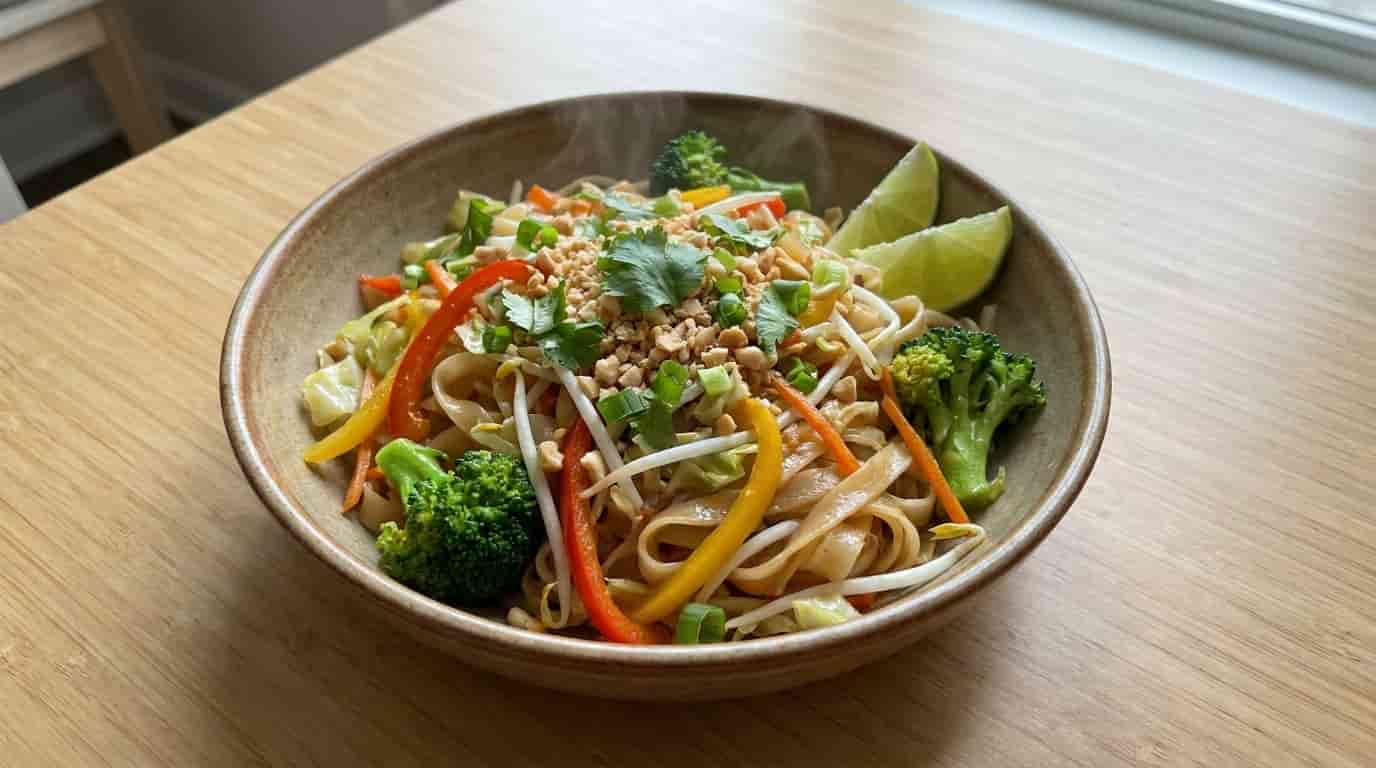
A vegetable-only Pad Thai with egg provides around 8 to 10 grams of protein per serving. Egg is the main protein source in this version. Adding extra egg or a small portion of tofu can raise the total closer to other versions.
How Many Carbs Are in Pad Thai?
A typical serving contains 45 to 80 grams of carbohydrates. Rice noodles are the main source. Their glycemic index sits around 53 to 61. That is lower than white bread but still worth watching for people managing blood sugar.
Rice noodles are naturally gluten-free, which makes Pad Thai a useful option for people avoiding gluten. The sauce is an exception. Soy-based versions can contain gluten, so check the specific recipe or ask at a restaurant if this matters to you.
Adding more sauce or noodles raises the carb total. Reducing the noodle portion and adding more vegetables is the most effective way to lower carbohydrates from this dish.
Is Pad Thai High in Sodium?
Yes, Pad Thai tends to be high in sodium. Fish sauce, soy sauce, and prepared sauces all contribute salt. One tablespoon of fish sauce alone contains around 1,260 mg of sodium. A restaurant serving can contain 700 to 1,200 mg or more. This depends on the sauce recipe and how much is used.
Homemade Pad Thai lets you control sodium by measuring sauces carefully. Restaurant versions often use larger quantities of sauce for stronger flavor.
Is Pad Thai Healthy?
Pad Thai is not automatically unhealthy. It provides carbohydrates from rice noodles, protein from meat or tofu, some vegetables and herbs, and fats from peanuts. Bean sprouts and lime add vitamin C. Eggs provide B vitamins that support energy and general health.
The main nutritional concerns are portion size and sodium. A large restaurant serving can account for a significant portion of daily sodium and calorie needs in one sitting. Eating it with that awareness makes a real difference.
Pad Thai Calories Compared to Other Thai Dishes
Pad Thai sits in the middle of the calorie range when compared to other popular Thai dishes. The comparison below is based on typical restaurant-sized servings.
Exact figures will vary by restaurant and recipe. You can also compare it to other Asian options like poke bowls and sushi rolls when planning your meals.
|
Dish |
Approx. Calories (Restaurant Serving) |
Main Calorie Drivers |
|---|---|---|
|
Pad Thai |
600 to 900+ |
Rice noodles, oil, sauce, peanuts |
|
Pad See Ew |
600 to 850 |
Wide noodles, oil, sauce |
|
Thai Fried Rice |
500 to 800 |
Rice, oil, sauces |
|
Green Curry with Rice |
600 to 900 |
Coconut milk, rice |
|
Tom Yum Soup |
150 to 300 |
Broth-based, low in fat |
Tom Yum is lighter because it is broth-based. Green curry can match or exceed Pad Thai calories due to its coconut milk base. Pad Thai, Pad See Ew, and Thai fried rice are comparable when prepared in similar portions.
How to Make Lower-Calorie Pad Thai at Home
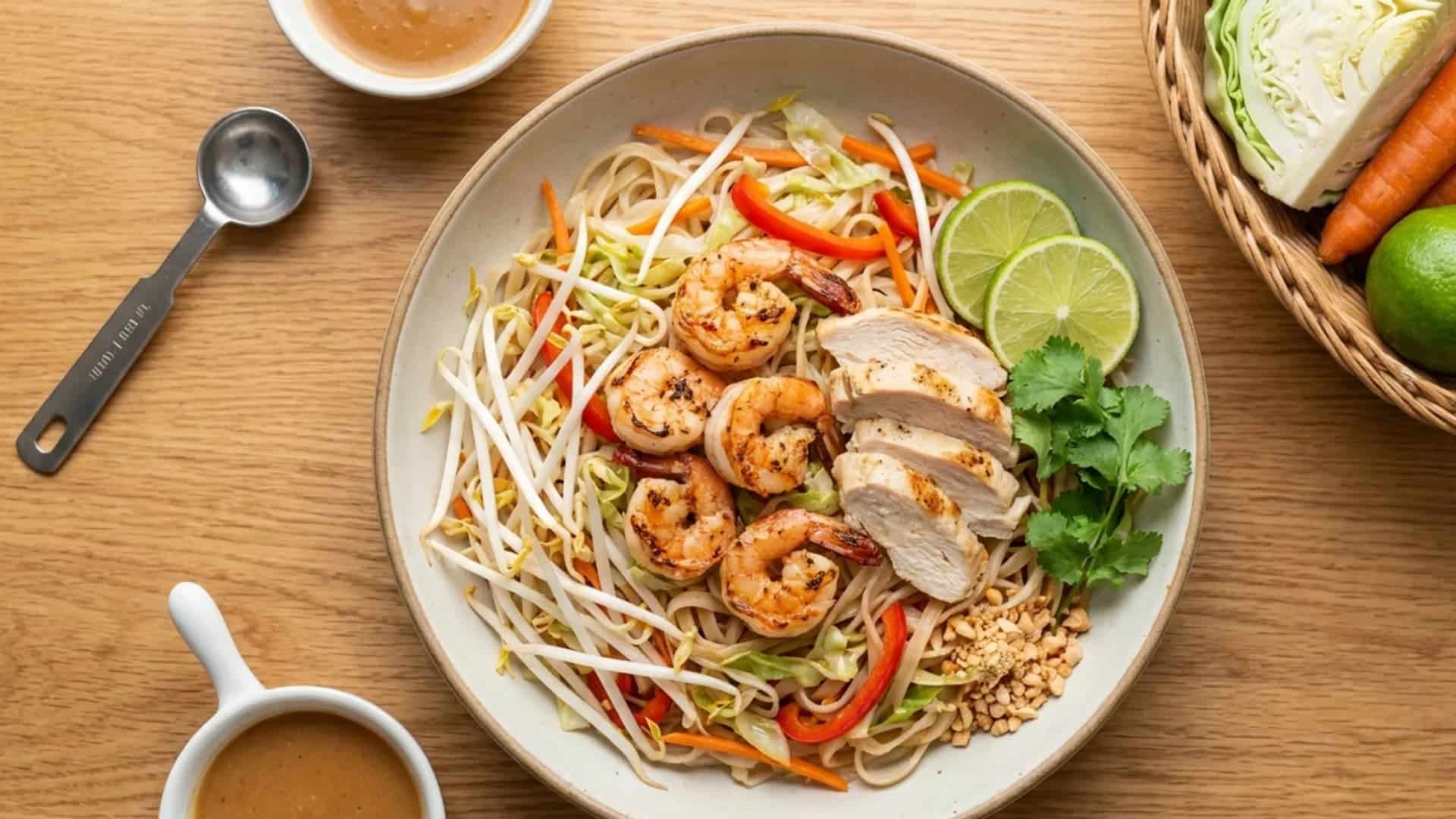
Making Pad Thai at home gives you full control over every ingredient. Small changes to the noodle amount, cooking oil, and sauce lower calories. The flavor does not have to suffer.
Step 1: Use Fewer Noodles, More Vegetables
Rice noodles are the biggest calorie contributor. Reducing noodles and adding bean sprouts, cabbage, carrots, and bell peppers keeps the plate full. The calorie count stays lower without reducing the volume of the meal.
Step 2: Measure Cooking Oil
One tablespoon of oil adds over 100 calories. Stir-frying with an unmeasured pour can quietly add 200 or more calories. Measuring one or two teaspoons before cooking and using a non-stick wok reduces the amount needed.
Step 3: Adjust the Sauce
Traditional Pad Thai sauce contains added sugar. A lighter version uses less sugar, more lime juice, and a smaller measured amount of fish sauce. Measuring each sauce ingredient keeps the flavor while preventing extra calories from sugar and sodium.
Step 4: Increase Vegetables
A small handful of peanuts adds 80 to 100 calories. One tablespoon of crushed peanuts provides plenty of flavor and crunch. Reducing the peanut topping is one of the easiest changes you can make to lower the final calorie count.
Step 5: Choose Lean Protein Options
Shrimp, chicken breast, tofu, and eggs are all good options for Pad Thai. A protein-rich version is more filling and can help with eating an appropriate portion size.
Is Pad Thai Good for Weight Loss?
Yes. Pad Thai can fit into a weight-loss diet, but traditional versions are often high in calories because of rice noodles, cooking oil, sugar, peanuts, and large portions.
Choosing a smaller serving, adding more vegetables, using lean protein, reducing oil and sugar, and limiting peanut toppings can make it more weight-loss friendly while still keeping the meal filling and flavorful. It also helps to watch restaurant portions, which can be much larger than a typical serving.
Pairing Pad Thai with extra vegetables or a light side can make the meal feel more satisfying without adding too many calories.
Getting the Most from Every Pad Thai Serving
Pad Thai does not have one fixed calorie count. The final total always depends on serving size, protein choice, cooking oil, sauce, and toppings.
A small homemade portion can stay around 350 to 500 calories. A large restaurant order may reach 600 to 900 or more. The biggest factor is almost always how much food ends up on the plate. Watching portion size, adding more vegetables, and choosing a lean protein all help.
You can still enjoy Pad Thai regularly with those habits in place. At home, measuring oil and adjusting the sauce keeps Pad Thai calories within your goals.
Frequently Asked Questions
How many calories are in one cup of Pad Thai?
One cup of Pad Thai contains roughly 300 to 400 calories. The exact amount depends on how tightly packed the cup is and how the dish was prepared.
How many calories are in shrimp Pad Thai?
Shrimp Pad Thai typically contains 400 to 650 calories. Most calories come from the noodles, oil, sauce, and peanuts rather than the shrimp.
Is Pad Thai higher in calories than fried rice?
Both are comparable. Thai fried rice contains 500 to 800 calories per restaurant serving. Pad Thai ranges from 600 to 900 calories or more. Portion size matters most in both cases.
How many calories are in restaurant Pad Thai?
Restaurant Pad Thai often contains 600 to 900 calories or more per serving. Larger portions, extra oil, and more sauce raise the total above a homemade version.
Is Pad Thai gluten-free?
Rice noodles are naturally gluten-free. However, some Pad Thai recipes use soy sauce, which contains gluten. Using tamari in place of soy sauce makes the dish gluten-free.