
Cranberry juice does not cleanse the kidneys or improve filtration. Its main benefit is limited to helping reduce repeat UTIs in some people by affecting bacterial attachment.
For healthy adults, small amounts may be safe, but people with kidney stones or kidney disease need more caution.
This article covers the science, safety, nutrition facts, and how much cranberry juice to drink.
Cranberry Juice Nutritional Information
Deciding whether cranberry juice is good for kidneys starts with what is actually in the glass. Numbers tell a clearer story than label claims. The table below covers one 8-ounce (240 mL) serving of 100% unsweetened cranberry juice. Each figure is explained in terms of kidney health.
|
Nutrient |
Amount per 8 oz |
Why It Matters for Kidneys |
|---|---|---|
|
Calories |
116 |
Adds up fast as a daily habit |
|
Total sugars |
30.6 g |
Natural, but still raises blood glucose |
|
Added sugars |
0 g |
Cocktail versions add 20 to 30 g more |
|
Potassium |
195 mg (ranges from 50 to 200 mg by brand) |
Check this closely on a potassium restriction |
|
Phosphorus |
32 mg |
Food additives can push this much higher |
|
Sodium |
5 mg |
Low; one clear advantage |
|
Vitamin C |
23.5 mg |
Provides antioxidant activity |
|
Oxalate |
7 mg |
A concern if you form kidney stones |
|
Water content |
87% |
Counts against your daily fluid limit |
Two figures stand out. Potassium swings widely between brands. Sugar nearly doubles the moment you switch to a cocktail blend. Always read the label before buying.
Is Cranberry Juice Good for Kidneys?
Cranberry juice offers one specific kidney-related benefit: it may reduce the risk of repeat urinary tract infections. It does not treat kidney disease, improve filtration, or remove waste from the body.
The idea that it “flushes” the kidneys is a myth. Drinking more fluids only dilutes urine; your kidneys already filter blood continuously without help from a specific drink.
Cranberries contain proanthocyanidins (PACs), especially A-type PACs, which may prevent certain bacteria like E. coli from attaching to urinary tract walls. However, cranberry juice cannot treat an active infection, and antibiotics are needed when one occurs.
The benefit is preventive, not curative. Whether cranberry juice helps or causes problems depends on your health, especially if you have kidney stones or kidney disease.
|
Your Situation |
Is Cranberry Juice Helpful? |
Main Risk |
Better First Step |
|---|---|---|---|
|
Healthy adult; gets repeat UTIs |
Possibly; modest effect |
Added sugar in most bottles |
Water, timed bathroom habits, unsweetened juice |
|
History of kidney stones |
Depends on stone type |
Oxalate load; acidic urine |
Get a stone analysis from your urologist |
|
Chronic kidney disease, stages 3 to 5 |
Only with dietitian clearance |
Potassium, sugar, and fluid limits |
Ask your renal dietitian first |
|
On dialysis or post-transplant |
Usually not a priority |
Strict fluid and potassium limits |
Follow your prescribed fluid allowance |
How Cranberry Juice May Support Kidney Health
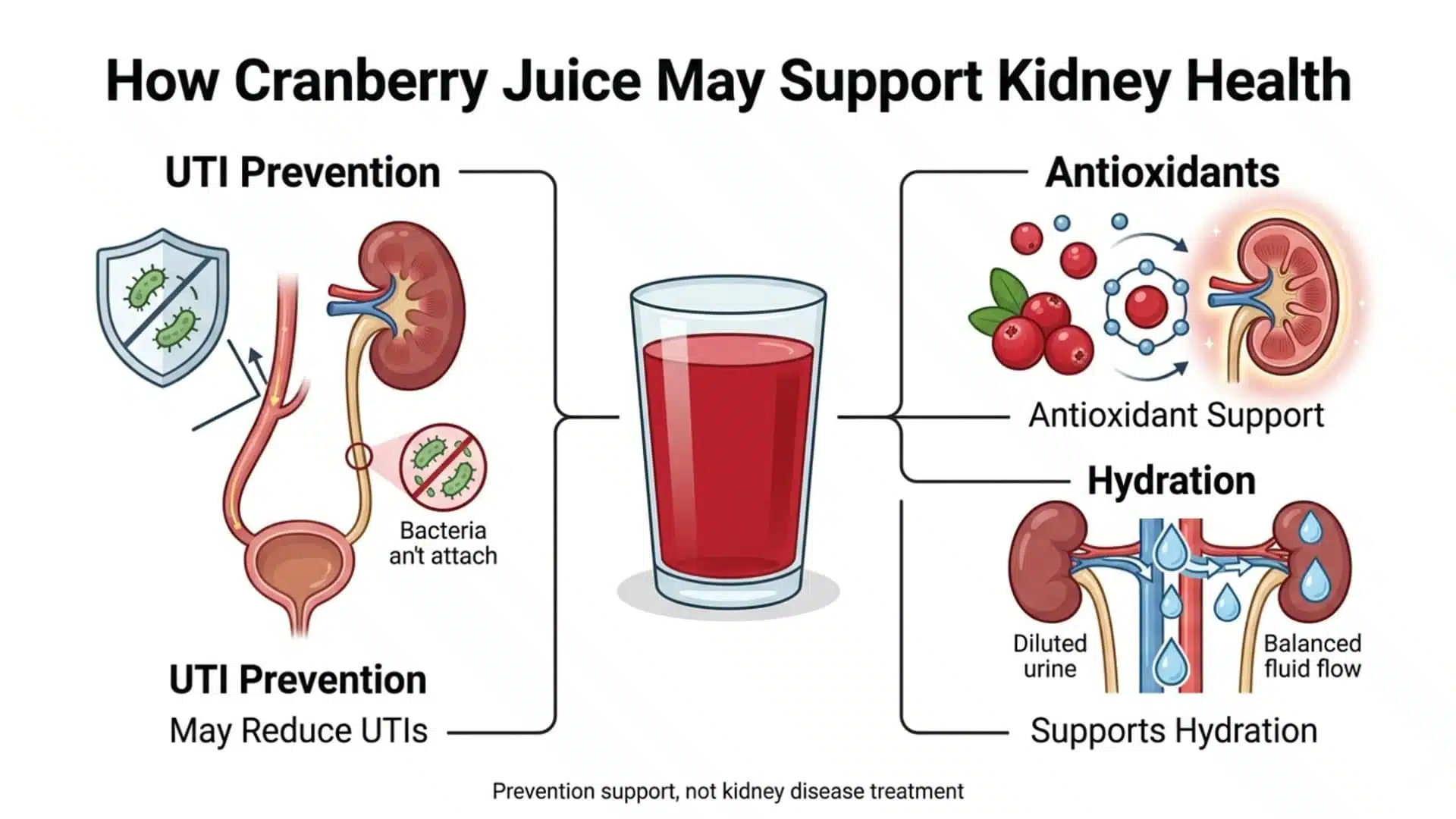
Research supports three specific effects from cranberry juice. None of them treat kidney disease directly. Each has a clear limit worth understanding before making this a daily habit.
1. May Help Prevent UTIs
For people who get repeat urinary tract infections, cranberry juice shows a modest but real benefit.
A 2023 Cochrane review reported lower repeat UTI risk in women with recurring infections and in children. The FDA does not grant cranberry a full health claim for UTI prevention. It allows only a qualified health claim, which sits at a lower evidence bar than a full approval.
The dose the research points to is roughly 150 mL twice daily, taken continuously over time. Stomach upset was common at this intake level. The benefit is modest and does not apply to people who do not get recurring infections.
There is also an indirect kidney benefit. A bladder infection that travels upward becomes pyelonephritis, a kidney infection. Preventing the first lowers the odds of the second. Untreated kidney infections can cause permanent scar tissue. In serious cases, bacteria can spread into the bloodstream.
Key point: Cranberry juice is a preventive tool, not a treatment. Once an infection starts, see a doctor and take antibiotics as prescribed.
2. Provides Antioxidants
Cranberries carry anthocyanins, flavonols, and vitamin C. These compounds reduce oxidative stress, one factor linked to long-term kidney damage.
The limit here is scale. Antioxidant activity in a lab does not always translate into measurable kidney protection in patients. No clinical trial has shown cranberry juice improving kidney filtration rate or lowering creatinine. It is not a treatment for kidney disease at any stage.
3. Supports Hydration
Diluted urine lowers the concentration of stone-forming minerals in the urinary tract. Any fluid contributes to this effect, and cranberry juice counts toward daily fluid intake.
Mixing it with water lowers the sugar load per serving and makes it easier to finish. For anyone on a prescribed fluid restriction, this benefit disappears entirely. Every 8 ounces of juice counts against your daily fluid limit, not in addition to it.
Can Cranberry Juice Help With Kidney Stones?
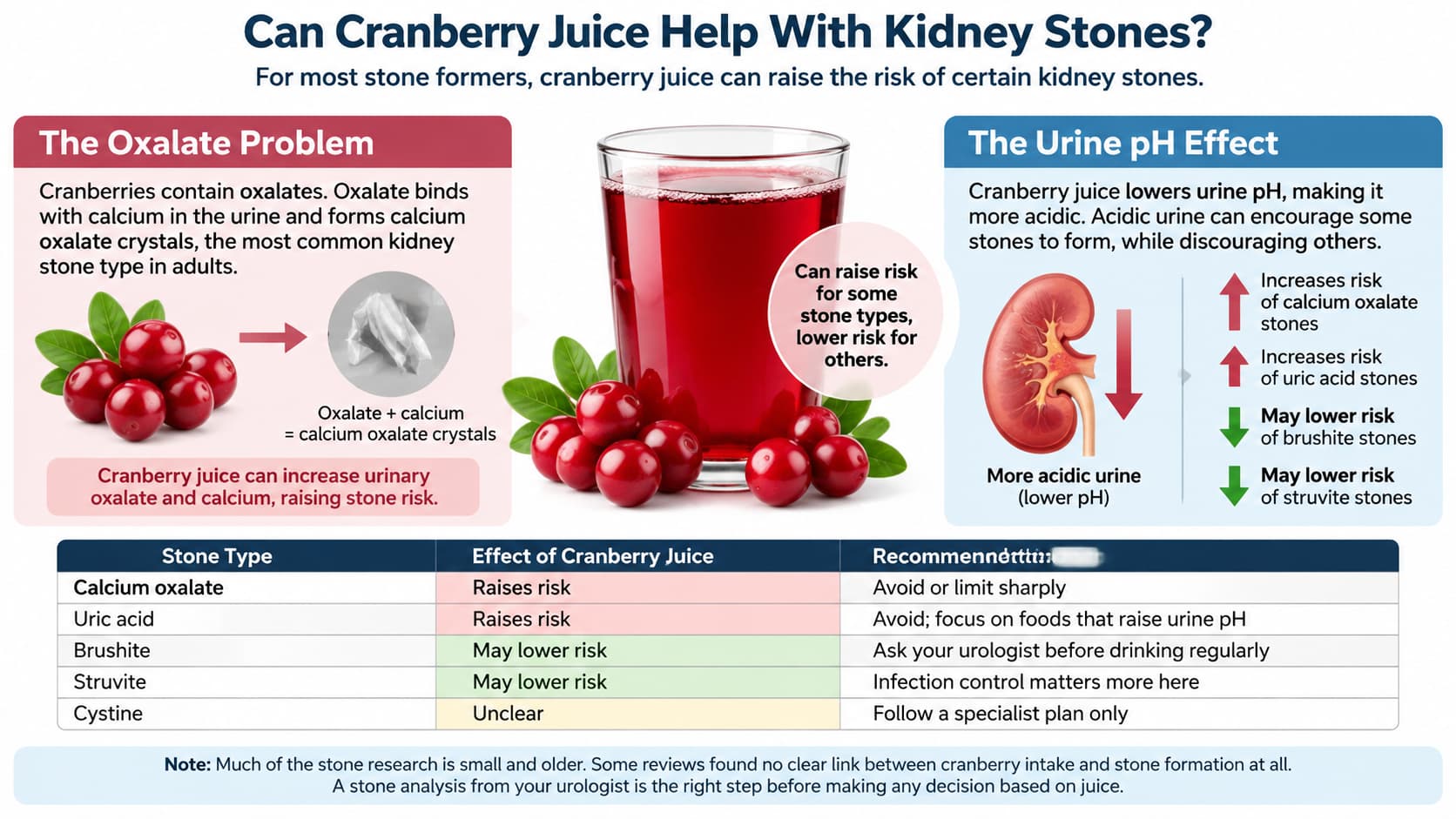
For most stone formers, cranberry juice is a poor choice. For the two most common stone types, it can raise risk rather than lower it.
The Oxalate Problem
Cranberries contain oxalates. Oxalate binds with calcium in the urine and forms calcium oxalate crystals, the most common kidney stone type in adults.
A metabolic study by Gettman and colleagues gave subjects one liter of cranberry juice daily. Urinary calcium rose from 154 to 177 mg per day. Urinary oxalate also rose. Calcium oxalate saturation climbed by 18 percent across the study period.
For anyone who already forms these stones, that direction is harmful. Whole and dried cranberries also contain oxalate, so switching formats does not fix the problem.
The Urine pH Effect
Cranberry juice lowers urine pH, making it more acidic. This works in two directions at once.
Acidic urine encourages calcium oxalate and uric acid stones to form. At the same time, it discourages brushite and struvite stones, which need alkaline conditions to grow. One drink can raise risk for one stone type while lowering risk for another.
This is why a stone analysis report from your urologist matters more than any general rule about juice.
The table below shows the effect of cranberry juice on each stone type.
|
Stone Type |
Effect of Cranberry Juice |
Recommendation |
|---|---|---|
|
Calcium oxalate |
Raises risk |
Avoid or limit sharply |
|
Uric acid |
Raises risk |
Avoid; focus on foods that raise urine pH |
|
Brushite |
May lower risk |
Ask your urologist before drinking regularly |
|
Struvite |
May lower risk |
Infection control matters more here |
|
Cystine |
Unclear |
Follow a specialist plan only |
Note: Much of the stone research is small and older. Some reviews found no clear link between cranberry intake and stone formation at all. A stone analysis from your urologist is the right step before making any decision based on juice.
Is Cranberry Juice Safe for People With Kidney Disease?
Reduced kidney function changes every calculation on a nutrition label. Four specific numbers need your attention before you pour a glass.
- Potassium: Cranberry juice is not reliably low in potassium. Levels range from under 50 mg to over 200 mg per serving depending on the brand. On a potassium restriction, the brand matters as much as the serving size.
- Fluid allowance: Every 8 ounces of juice counts inside your daily fluid limit, not on top of it. Each serving uses up fluid you could have used later in the day.
- Sugar and blood pressure: Diabetes and high blood pressure are the two leading causes of chronic kidney disease. Sweetened cranberry drinks worsen both. Cocktail-style bottles often contain as little as 20 percent real juice and carry the most sugar per bottle.
- Hidden phosphorus: Check the ingredient label for anything starting with “phos.” Your gut absorbs added phosphate almost completely. High phosphorus draws calcium from your bones over time and affects heart health in CKD patients.
If you have stage 3 to 5 chronic kidney disease, bring these questions to your renal dietitian first:
- What is my daily potassium target, and does an 8-ounce glass fit inside it?
- How much of my fluid allowance can go toward something other than water?
- Given my recent lab results, is there any reason to avoid cranberry products entirely?
Best Type of Cranberry Juice for Kidney Health
Not all cranberry products deliver the same benefit. The type you choose determines whether you get the active PAC compounds at all. The table below compares the most common options.
|
Product |
Added Sugar |
PAC Content |
Best For |
|---|---|---|---|
|
100% unsweetened juice |
None |
High |
Most healthy adults, if tolerated |
|
Cranberry juice cocktail |
High |
Low (often 20 to 27% real juice) |
Not recommended for kidney health |
|
Diet or light cranberry |
None; uses sweeteners |
Low |
Taste preference only |
|
Cranberry concentrate |
Varies |
Very high |
Dilute heavily; check label first |
|
Dried cranberries |
High |
Moderate |
Snacking only; not for kidney support |
|
Cranberry capsules |
None |
Varies by brand |
Good option when limiting fluid or sugar |
100% unsweetened cranberry juice is the clearest choice for most healthy adults. To make it more drinkable, mix it with plain or sparkling water and add a squeeze of lime.
Cranberry capsules suit people who need to limit fluid or sugar. Supplements are not regulated like medicines, so PAC content varies widely between brands. Always check the label before buying.
How Much Cranberry Juice Should You Drink for Your Kidneys?
The right amount depends entirely on your health status. Drinking the correct dose matters as much as choosing the right product type.
- Healthy adults: Around 8 ounces (240 mL) of unsweetened cranberry juice per day is a reasonable ceiling. Spread it across the day rather than drinking it all at once.
- For UTI prevention: Research points to roughly 150 mL twice daily, taken on an ongoing basis. That is a consistent daily habit, not a one-time remedy.
- People with chronic kidney disease: Renal educators suggest a ceiling near 4 to 8 ounces per day. This applies only with a dietitian’s approval. Concentrate counts double, so dilute it heavily if you use that format.
Do not drink cranberry juice to treat an active infection. If you have symptoms of a urinary tract or kidney infection, see your doctor promptly.
Who Should Avoid or Limit Cranberry Juice?
Certain groups should skip cranberry juice entirely or check with a doctor before adding it to their diet.
- People taking warfarin: Large cranberry intake has been studied for interaction risk with this blood thinner.
- Calcium oxalate or uric acid stone formers: Cranberry juice raises risk for both stone types.
- Anyone on a strict potassium restriction: Potassium levels vary widely between brands, so don’t estimate without lab guidance.
- People with poorly controlled diabetes: Sweetened cranberry drinks raise blood sugar and can worsen kidney disease progression.
- Anyone with a salicylate or aspirin sensitivity: Cranberries contain salicylic acid.
- Dialysis patients and post-transplant patients: Fluid and potassium limits are strict. Follow your prescribed allowance.
The symptoms below need a clinician the same day. Do not wait and hope juice helps.
- Fever with pain in your side or back
- Blood in your urine
- A sharp drop in how much you urinate
- Swelling in your legs, ankles, or face
- Burning or urgency lasting more than 48 hours
Waiting on these symptoms risks permanent kidney damage.
Cranberry Juice vs Water for Kidney Health
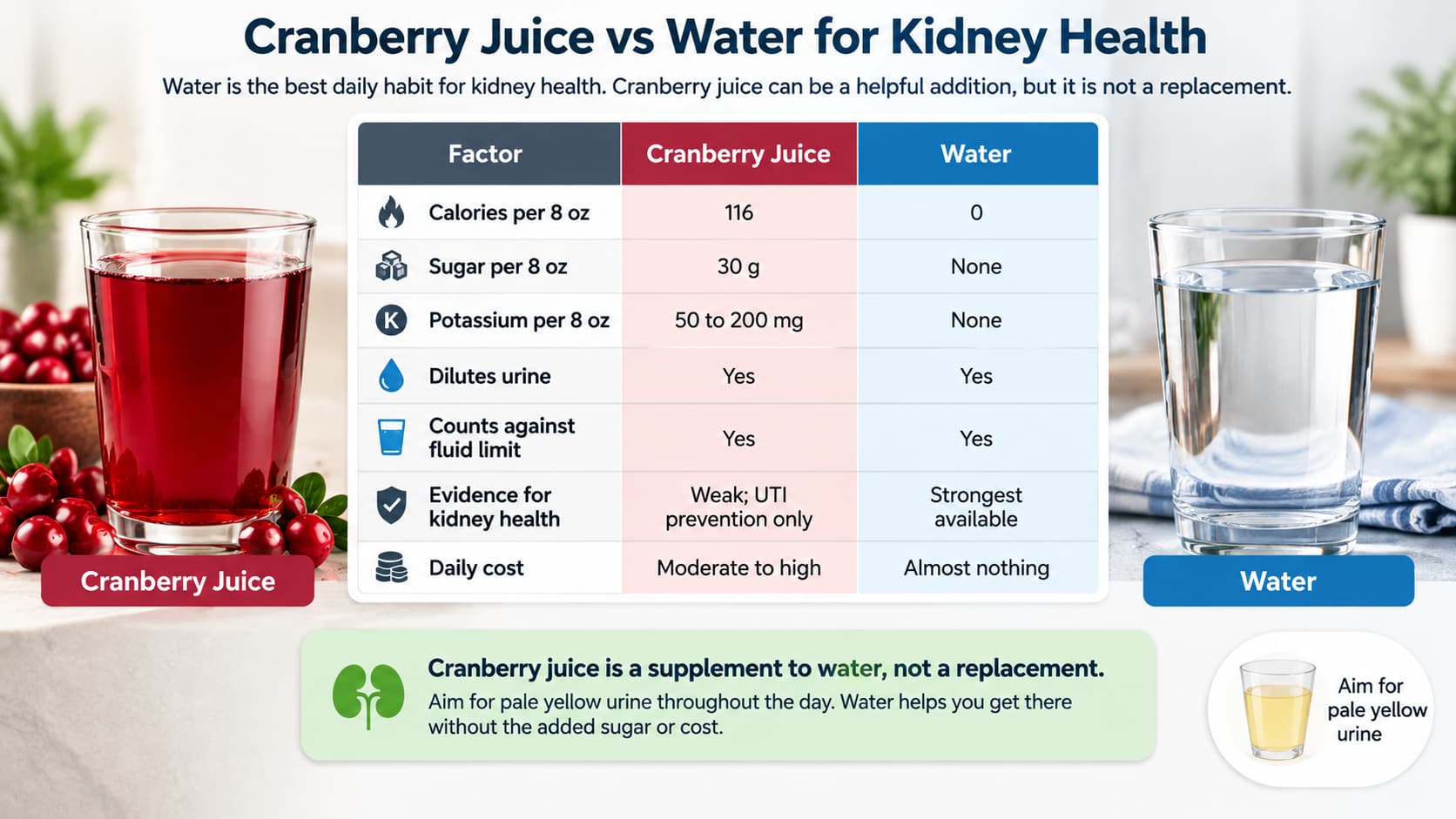
If you can get only one habit right for kidney health, make it water. The table below compares cranberry juice and water on every factor that matters for kidney function.
|
Factor |
Cranberry Juice |
Water |
|---|---|---|
|
Calories per 8 oz |
116 |
0 |
|
Sugar per 8 oz |
30 g |
None |
|
Potassium per 8 oz |
50 to 200 mg |
None |
|
Dilutes urine |
Yes |
Yes |
|
Counts against fluid limit |
Yes |
Yes |
|
Evidence for kidney health |
Weak; UTI prevention only |
Strongest available |
|
Daily cost |
Moderate to high |
Almost nothing |
Cranberry juice is a supplement to water, not a replacement for it. Anyone drinking juice to meet a hydration target has the priorities reversed. Aim for pale yellow urine throughout the day. Water gets you there without the added sugar or cost.
Other Drinks That Support Kidney Health
People often ask whether cranberry juice is good for kidneys compared to other options. Several drinks have stronger evidence for kidney health. The list below ranks them by how well the research supports each.
- Plain water: The most studied and least expensive option. Pale yellow urine throughout the day is your target.
- Lemon water: Citrate in lemons raises urine pH and slows calcium oxalate crystal growth. A helpful choice for stone formers, with no sugar.
- Unsweetened green tea: Low in potassium, high in antioxidants, and linked with lower stone risk in some studies.
- Herbal teas without added potassium: Chamomile and peppermint work well as sugar-free swaps for juice.
- Diluted apple or grape juice: Lower in potassium than orange juice, though still high in sugar.
- Sparkling water with lime: Delivers the same citrate benefit as lemon water with no sugar and more appeal for people who want a fizzy option.
Skip dark colas entirely. Phosphoric acid in dark colas is linked to faster kidney function decline. They are among the worst drink choices for long-term kidney health.
Medical Disclaimer: This article is for informational purposes only and does not constitute medical advice. Always consult a qualified healthcare provider or renal dietitian before changing your diet. This applies especially if you have kidney disease, take warfarin, or form kidney stones.
Bottom Line: Is Cranberry Juice Good for Kidneys?
Cranberry juice earns a small, specific place for people who get repeat urinary tract infections. Outside of that, the evidence is thin. For stone formers, the juice can raise risk. For people with kidney disease, potassium, sugar, and fluid content all need to be checked first.
The type and amount you choose matter. Stick with 100% unsweetened juice and keep servings small. Water should always come first.
The CDC reports that up to 9 in 10 adults with chronic kidney disease do not know they have it. Annual eGFR and urine albumin testing give a real picture of kidney health. No drink replaces that.
Speaking with a renal dietitian is the most practical first step you can take for kidney health through diet.
Frequently Asked Questions
Does cranberry juice flush or cleanse the kidneys?
No. Cranberry juice does not flush the kidneys. Healthy kidneys filter blood on their own. Drinking more fluid produces dilute urine. That is normal hydration, not a cleanse.
What is the best juice for kidney health?
Water is the best choice for kidneys. For juice, unsweetened cranberry juice or diluted lemon water work well for healthy adults without fluid or potassium restrictions.
Who should not drink cranberry juice?
People taking warfarin, those prone to kidney stones, and dialysis patients should avoid cranberry juice. Those on a potassium restriction or with poorly controlled diabetes should also limit it.
How much cranberry juice should I drink for my kidneys?
Healthy adults can drink up to 8 ounces of unsweetened cranberry juice daily. For kidney disease, limit to 4 to 8 ounces with a renal dietitian’s approval.
Is cranberry juice good for a kidney infection?
No. Cranberry juice cannot treat a kidney infection. Kidney infections require antibiotics. Fever, side pain, or blood in your urine means you should see a doctor the same day.