

Electrolyte drinks can help with hydration, but having too many may push sodium, potassium, magnesium, or calcium intake higher than your body needs.
This post covers safe daily electrolyte limits, signs you may be getting too much, and what to do if symptoms appear.
Medical Disclaimer: This content is for informational purposes only. If you have kidney disease, heart failure, or take medications, consult your doctor before changing electrolyte intake.
Can You Have Too Many Electrolytes?
Yes. Your kidneys work to keep sodium, potassium, magnesium, and calcium in balance at all times.
When you take in more than your body needs, your kidneys filter out the extra. If you keep overloading them with concentrated drinks, powders, or pills, that system gets overwhelmed.
Electrolyte imbalance does not only mean you are running low. You can also have too much of any single mineral.
Doctors call excess sodium hypernatremia and excess potassium hyperkalemia. Both cause real symptoms. In severe cases, they require medical care.
The real risk rarely comes from eating food. It comes from stacking sports drinks, powders, and supplements on top of a normal diet.
Whole foods release minerals gradually. Your kidneys can keep up with that steady pace. A concentrated powder or pill delivers a large dose all at once. That is what tends to cause trouble.
How Much of Each Electrolyte Is Too Much?
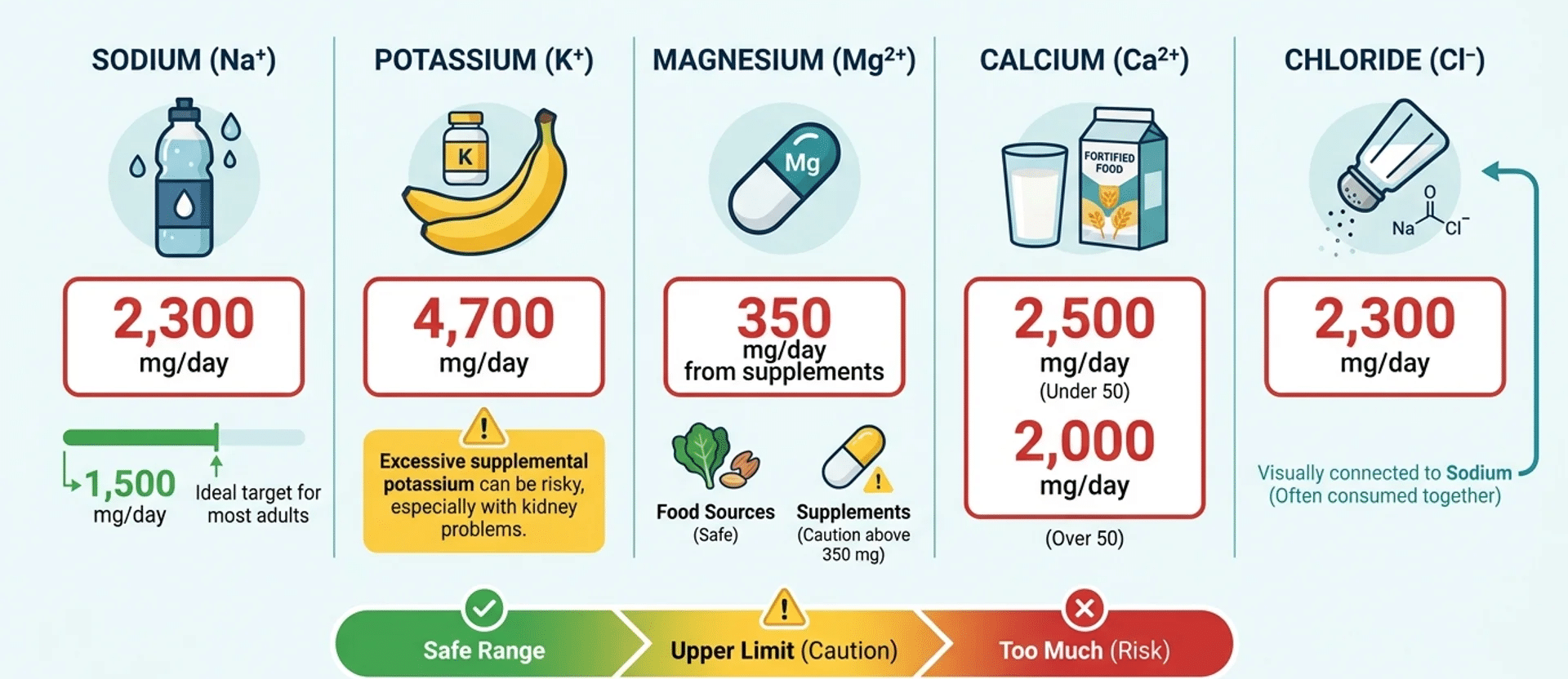
Each mineral has its own safe ceiling. The table below shows daily reference limits for healthy adults. These cover standard conditions. Athletes, people in hot climates, and anyone recovering from illness may need slightly more on certain days.
|
Electrolyte |
Daily Reference Limit (Healthy Adults) |
Main Risk of Excess |
|---|---|---|
|
Sodium |
Under 2,300 mg (AHA ideal: 1,500 mg) |
High blood pressure, fluid retention |
|
Potassium |
3,400 mg men / 2,600 mg women (adequate intake) |
Irregular heartbeat, muscle weakness |
|
Magnesium (supplements only) |
350 mg from supplements |
Diarrhea, low blood pressure |
|
Calcium |
2,500 mg (under 50) / 2,000 mg (over 50) |
Kidney stones, constipation |
|
Chloride |
Under 2,300 mg |
Fatigue, breathing trouble |
Sodium
Keep your sodium intake under 2,300 mg a day. The American Heart Association recommends an ideal limit closer to 1,500 mg for most adults. A single sports drink can carry 150 to 300 mg of sodium.
Some electrolyte powders pack over 1,000 mg per serving. Drink two or three of those on top of regular meals, and you exceed the daily limit fast.
Potassium
The adequate daily intake for potassium is 3,400 mg for men and 2,600 mg for women, per USDA guidelines. No established upper limit exists for potassium from food in healthy adults.
Your kidneys generally handle it well. Concentrated potassium supplements are different. They deliver a large dose at once and can push blood levels too high, especially in people with kidney problems.
Magnesium
Food sources of magnesium rarely cause problems. The National Institutes of Health sets a supplement limit of 350 mg per day from pills and powders.
Supplements absorb faster than food and can cause stomach upset at higher doses. Magnesium from nuts, seeds, and leafy greens does not count toward this ceiling.
Calcium
Adults under 50 should stay under 2,500 mg daily from all sources combined. Adults over 50 should stay below 2,000 mg.
Some electrolyte blends add calcium on top of what you already get from dairy and fortified foods. Combining calcium supplements with vitamin D increases absorption. That makes it easier to overshoot the limit without realizing it.
Chloride
Chloride travels closely with sodium in most foods and drinks. Keep total chloride under 2,300 mg a day to avoid fatigue and breathing trouble. If you stay within the sodium limit, chloride usually takes care of itself. It rarely needs separate tracking.
Signs You Are Getting Too Many Electrolytes
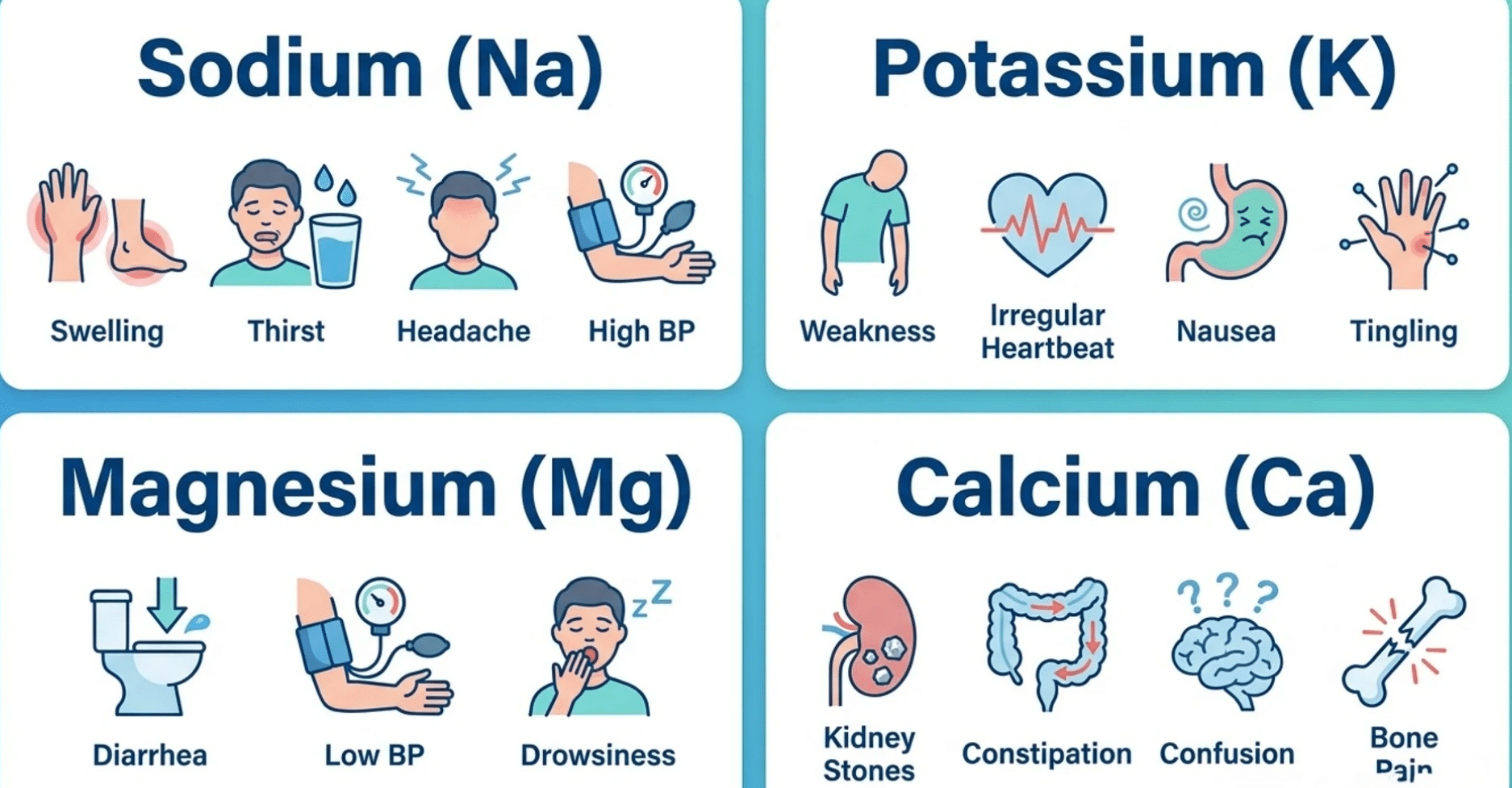
Symptoms differ depending on which electrolyte is too high. Here is what to watch for with each one.
Too Much Sodium
- Bloating and visible swelling in the hands or face
- Constant thirst despite drinking fluids
- Headaches
- Rising blood pressure
Too Much Potassium
- Muscle weakness or heaviness
- Irregular heartbeat
- Nausea
- Tingling in the hands or feet
Too Much Magnesium (from supplements)
- Diarrhea or stomach cramps
- Low blood pressure
- Drowsiness or fatigue
Too Much Calcium
- Kidney stones
- Constipation
- Confusion or trouble concentrating
- Bone pain over time
If you notice several of these signs after a day of heavy electrolyte use, stop taking more. Drink plain water and rest. Severe symptoms like chest pain or an irregular heartbeat need urgent medical attention.
Who Is Most at Risk of Overdoing It?
Some people need to watch their electrolyte intake more closely than others. You are at higher risk if you:
- Take blood pressure medication
- Have kidney disease or reduced kidney function
- Live with heart failure
- Are over 65
- Mix more than one electrolyte product in the same day
- Follow a ketogenic diet without medical guidance
If any of these apply to you, talk to your doctor before adding electrolyte supplements to your routine. What is safe for a healthy adult may not be safe for you.
Kidney function slows naturally with age. Older adults process excess sodium and potassium more slowly. That makes it easier to build up too much without noticing right away.
People on keto diets are a specific case. The diet increases sodium loss through urine, which sometimes makes extra sodium feel necessary. But taking high-dose supplements without medical guidance can push potassium or magnesium into unsafe ranges at the same time.
How Many Electrolyte Drinks or Packets Are Safe per Day?
For healthy adults, one or two electrolyte drinks per day is generally enough. Use them after intense exercise or prolonged heat exposure, not every time you feel thirsty.
Always check the label on whatever you are drinking. Some powders carry over 1,000 mg of sodium per serving. Two or three of those in one day pushes you past the 2,300 mg sodium limit. That can happen without you noticing.
If you are still thirsty after one electrolyte drink, reach for plain water next. Thirst does not always signal low electrolytes. It often just means you need more fluid.
When Do You Actually Need Extra Electrolytes?
Your body loses electrolytes through sweat, vomiting, and diarrhea. These are the situations where extra intake genuinely helps.
Consider an electrolyte drink when you:
- Finish an intense workout lasting over 45 minutes
- Spend hours outside in hot weather
- Are recovering from vomiting or diarrhea
- Feel unusually fatigued after heavy sweating
On a normal day without heavy sweating or illness, water and a balanced diet already cover what you need.
Many foods supply electrolytes naturally. Bananas and spinach contain potassium. Dairy products and leafy greens provide calcium. Nuts and seeds give you magnesium. Coconut water provides a mix of minerals without the concentrated sodium found in many powders.
Food-sourced electrolytes release gradually as you digest them. That slow release is why food rarely pushes you over the daily limits. This holds true even on days when you eat a lot.
If you want a lower-sodium option, a homemade electrolyte drink can work well for light recovery days.
What to Do if You Have Had Too Many Electrolytes
If you think you went overboard, take these steps right away.
- Stop all electrolyte drinks, powders, or pills for the rest of the day.
- Drink plain water to help your kidneys flush out the excess.
- Rest and avoid intense exercise until symptoms pass.
- Watch for serious warning signs. Confusion, chest pain, or an irregular heartbeat need urgent medical care.
- Call your doctor if mild symptoms like cramping or nausea do not improve within a few hours.
Mild cases usually resolve once you stop adding more and give your body time to catch up. Keep a mental note of what you consumed. If cramping or nausea returns after similar intake, tell your doctor about that pattern.
The Bottom Line on Electrolyte Limits
Electrolytes support your muscles, heart, and hydration. But more is not always better.
Sodium, potassium, magnesium, and calcium each have a daily limit. Going past those limits regularly causes real symptoms that range from bloating and cramps to serious heart rhythm problems.
One or two electrolyte drinks on days you actually need them is enough. On normal days, real food and water do most of the work.
Always check labels before stacking multiple products in a single day. If you take medication or have any kidney disease, speak to your doctor. The same advice goes if you are over 65.
Frequently Asked Questions
Can you drink electrolytes every day?
Drinking one electrolyte drink daily is generally safe for active people. For most healthy adults, daily supplements are not necessary. Plain water and a balanced diet cover regular hydration needs.
Is it possible to overdose on electrolytes?
Yes. Taking high doses of sodium, potassium, or supplemental magnesium beyond daily limits can cause hypernatremia or hyperkalemia. Both are serious conditions that may require medical treatment.
How much sodium per day is too much?
More than 2,300 mg per day exceeds the recommended limit for most healthy adults. The American Heart Association sets an ideal target of 1,500 mg for added protection.
Can electrolyte drinks cause kidney damage?
In healthy people, the kidneys filter excess electrolytes without permanent damage. In people with existing kidney disease, regular overconsumption can worsen kidney function over time.
Are morning or evening electrolytes better?
Morning electrolytes support daytime hydration and activity for most people. Evening use is less necessary unless you trained hard or sweated heavily during the day.