Tight quads are behind more problems than most of you realize. Knee discomfort, lower back aches, and stiff hips often trace back to quadriceps that are short and overworked.
The kneeling quad stretch is one of the best ways to address all three at once. It targets the front of your thigh and hip at the same time, giving you a much deeper stretch than the standard standing version.
This post covers how to do the kneeling quad stretch with correct form, the best variations for every level, common mistakes to avoid, and exactly when to add it to your routine.
What Is the Kneeling Quad Stretch?
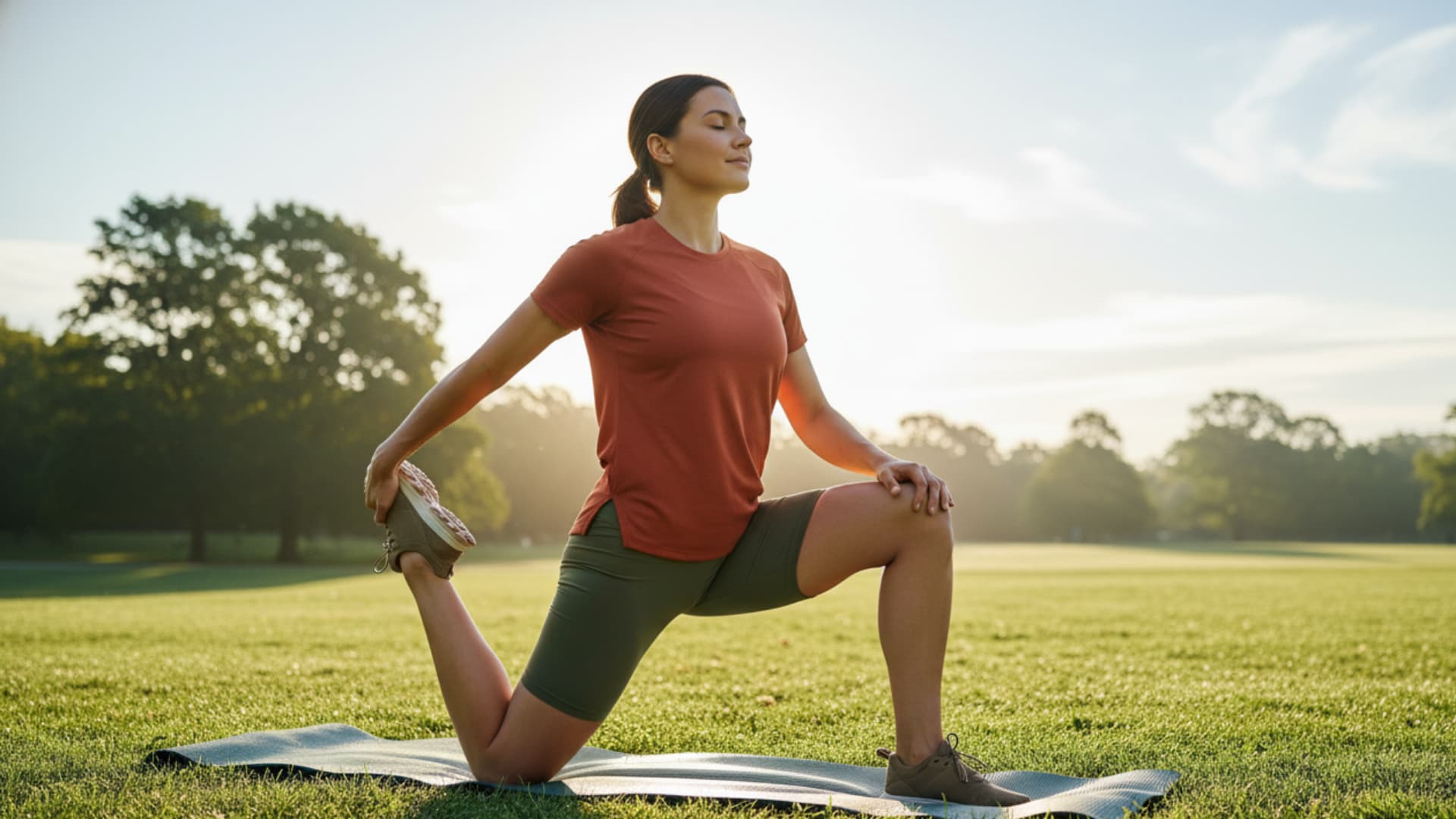
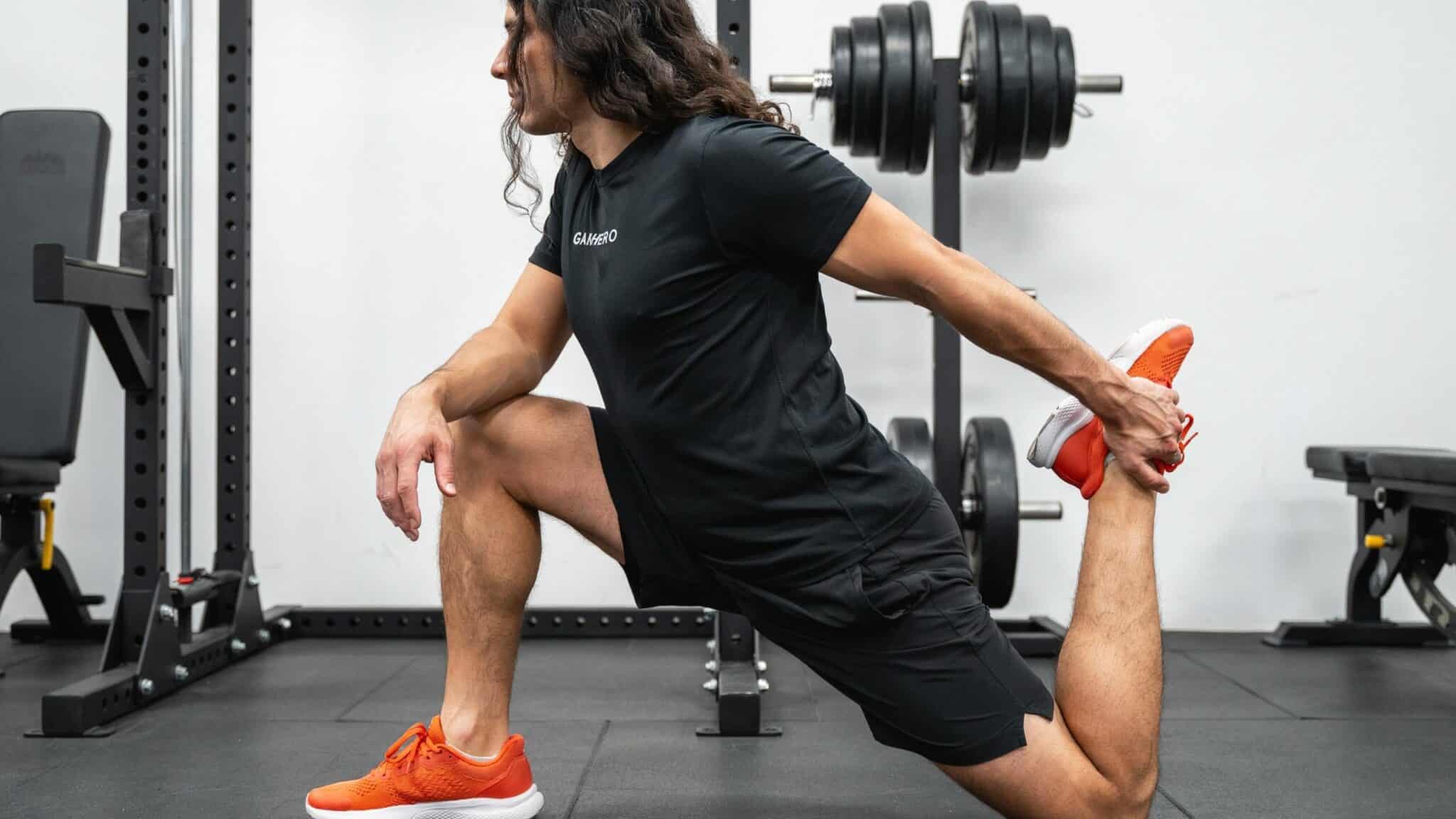
The kneeling quad stretch is a lower-body flexibility exercise performed in a half-kneeling position. One knee rests on the floor while the opposite foot stays flat in front.
You bend the back knee and pull that heel toward your glutes, creating a stretch through the front of the thigh and hip. Unlike the standing quad stretch, which only bends the knee, this version also extends the hip at the same time.
That two-joint action targets the rectus femoris more directly, the quad muscle that crosses both the hip and the knee. Physical therapists and trainers use it in post-workout cooldowns, daily mobility routines, and lower-body injury recovery programs alike.
How Is It Different from a Regular Quad Stretch?
The standing quad stretch bends the knee to create tension in the quad. The kneeling version goes further by adding hip extension, stretching the rectus femoris at both ends at the same time.
This makes the kneeling quad stretch more useful for people who sit for long hours, because sitting shortens both the quads and the hip flexors together, and the kneeling position corrects both in one movement.
What Muscles Does the Kneeling Quad Stretch Work?
The kneeling quad stretch works through more than just the thighs. It targets the entire front chain of the lower body from one ground-level position.
| Muscle | Role in the Body | Stretch Intensity |
|---|---|---|
| Rectus femoris | Main quad muscle; crosses both the hip and the knee | High |
| Vastus lateralis | Outer quad running along the side of the thigh | Moderate |
| Vastus medialis | Inner quad near the knee (the teardrop shape) | Moderate |
| Vastus intermedius | Deep quad muscle directly beneath the rectus femoris | Moderate |
| Iliopsoas | Primary hip flexor that pulls the thigh toward the torso | Moderate to High |
| Iliacus | Deep hip flexor attached to the inner pelvis | Moderate |
| Sartorius | Long diagonal thigh muscle crossing both the hip and knee | Low to Moderate |
The rectus femoris receives the deepest stretch in this position. When the hip extends and the knee bends at the same time, both ends of the muscle get pulled simultaneously. No other quad stretch produces that effect as clearly.
Benefits of the Kneeling Quad Stretch
Stretching the quads in the kneeling position produces more than a temporary feeling of looseness. The benefits below reflect how this muscle group actually functions and what happens when it stays compressed for too long.
- Relieves Tightness from Sitting: Prolonged sitting shortens the quads and hip flexors together, and the kneeling position directly reverses that compression by extending the hip while bending the knee.
- Reduces Anterior Knee Pain: Tight quads pull the kneecap upward and increase pressure on the patellar tendon, so regular stretching reduces that tension and may ease discomfort linked to patellofemoral syndrome. A 2017 study published in the Journal of Orthopedic & Sports Physical Therapy found a direct connection between quad tightness and patellofemoral pain in runners.
- Improves Athletic Performance: Greater quad and hip flexor flexibility supports fuller hip extension during running and a deeper range of motion in squats and lunges.
- Corrects Anterior Pelvic Tilt: A tight rectus femoris pulls the front of the pelvis downward and forward, creating a visible arch in the lower back, and consistent stretching helps restore neutral pelvic alignment.
- Builds Balance and Body Awareness: The half-kneeling position requires core bracing and glute activation, which trains stability and builds proprioception over time.
How to Do the Kneeling Quad Stretch Step by Step
Getting the form right matters more than pulling your foot as far as possible. Small positioning errors shift the stretch away from the target muscles entirely.
What You Need: A yoga mat or a folded towel to cushion your kneeling knee. A wall or the back of a chair works for balance support if needed. No other equipment is required for the basic version of this stretch.
Step 1: Starting Position
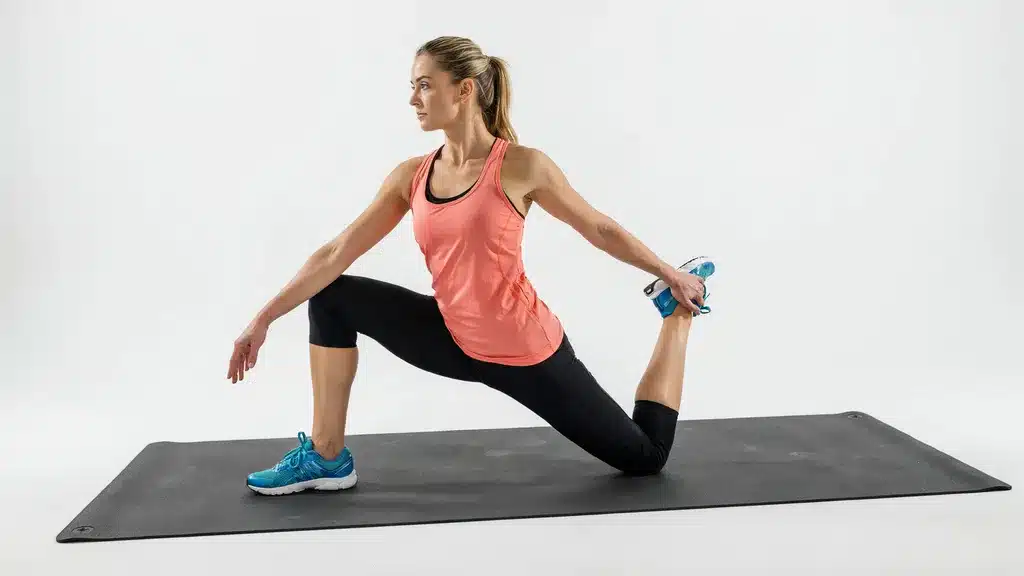
Kneel on the mat with both knees down. Bring your right foot forward so your right knee sits at a 90-degree angle, with your foot flat on the floor and your shin vertical. Your left knee rests on the mat directly below your left hip, not pushed beyond that neutral point.
Step 2: Getting Into the Stretch
Keep your torso upright and gently brace your core. Before pulling your foot, squeeze the glute of your back (kneeling) leg. This is the most important cue in the whole stretch, and most people skip it entirely. Reach back with your left hand, grab your left ankle or foot, and slowly pull your heel toward your left glute. You should feel a clear stretch along the front of your left thigh and into the hip area.
Step 3: Hold and Release
Hold the position for 20 to 30 seconds and breathe steadily throughout. Do not hold your breath or force the pull beyond what is comfortable. Release slowly, return both knees to the mat, and switch sides. Perform 2 to 3 sets per leg for a complete session.
Pro Tip: Squeezing the glute of the kneeling leg increases stretch depth without any extra pulling force. This one adjustment often makes the kneeling quad stretch feel noticeably more effective.
Kneeling Quad Stretch Variations
Once you are comfortable with the basic form, these variations let you go deeper or adjust for your specific needs. Each one targets the quadriceps and hip flexors from a slightly different angle.
1. Wall-Supported Kneeling Quad Stretch (Couch Stretch)
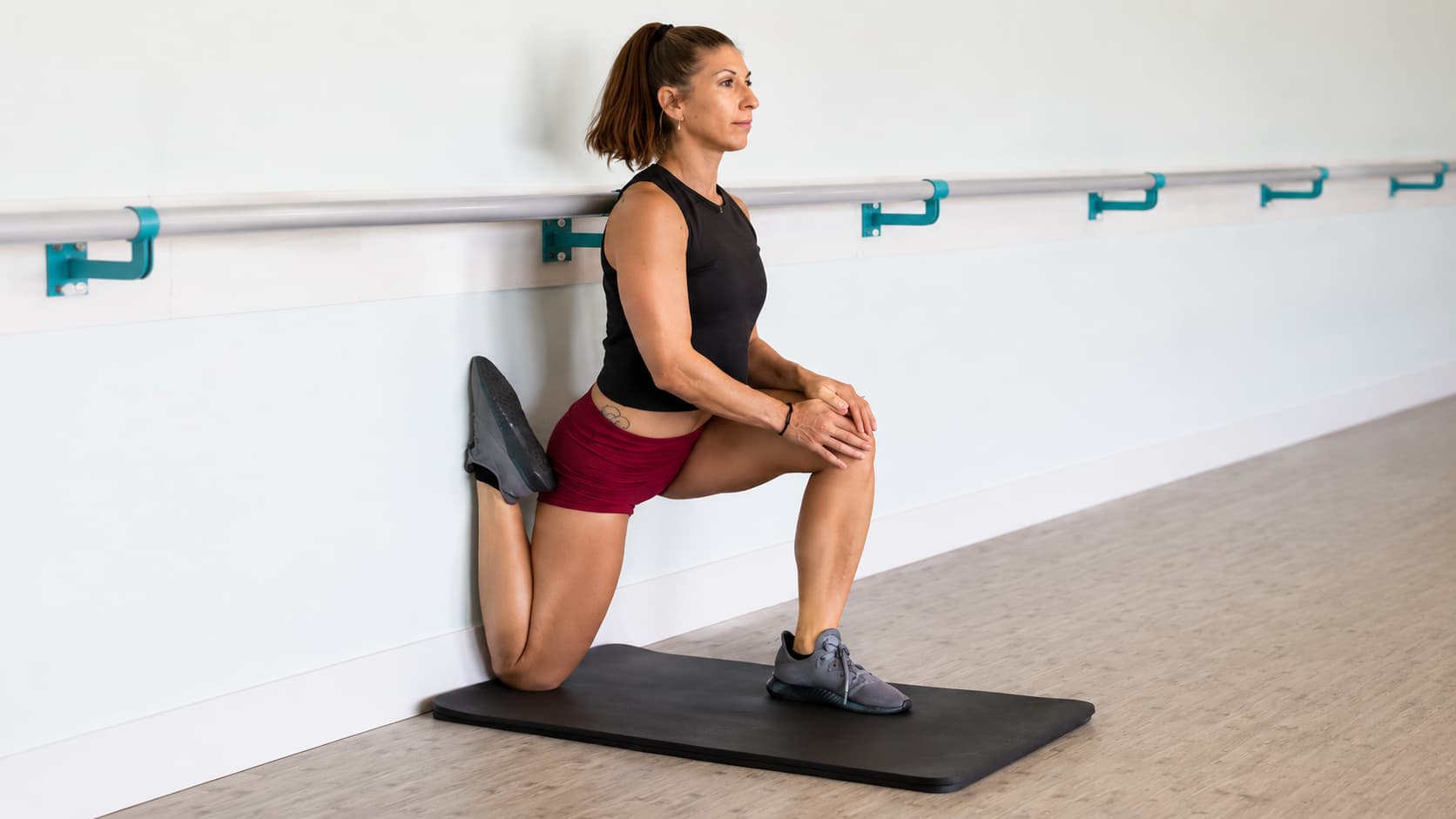
This version places the back shin flat against a wall, which adds direct intensity at the hip flexors and makes it a strong choice for runners and cyclists carrying tightness through the hip crease.
Steps:
- Kneel facing away from a wall, about 6 inches from the baseboard.
- Place your back shin flat against the wall, toes pointing upward.
- Bring your front foot forward so your front knee sits at 90 degrees.
- Keep your torso tall and lean gently toward the wall until you feel the stretch.
- Hold for 30 to 60 seconds, then switch sides.
2. Kneeling Quad Stretch with Foot Elevated
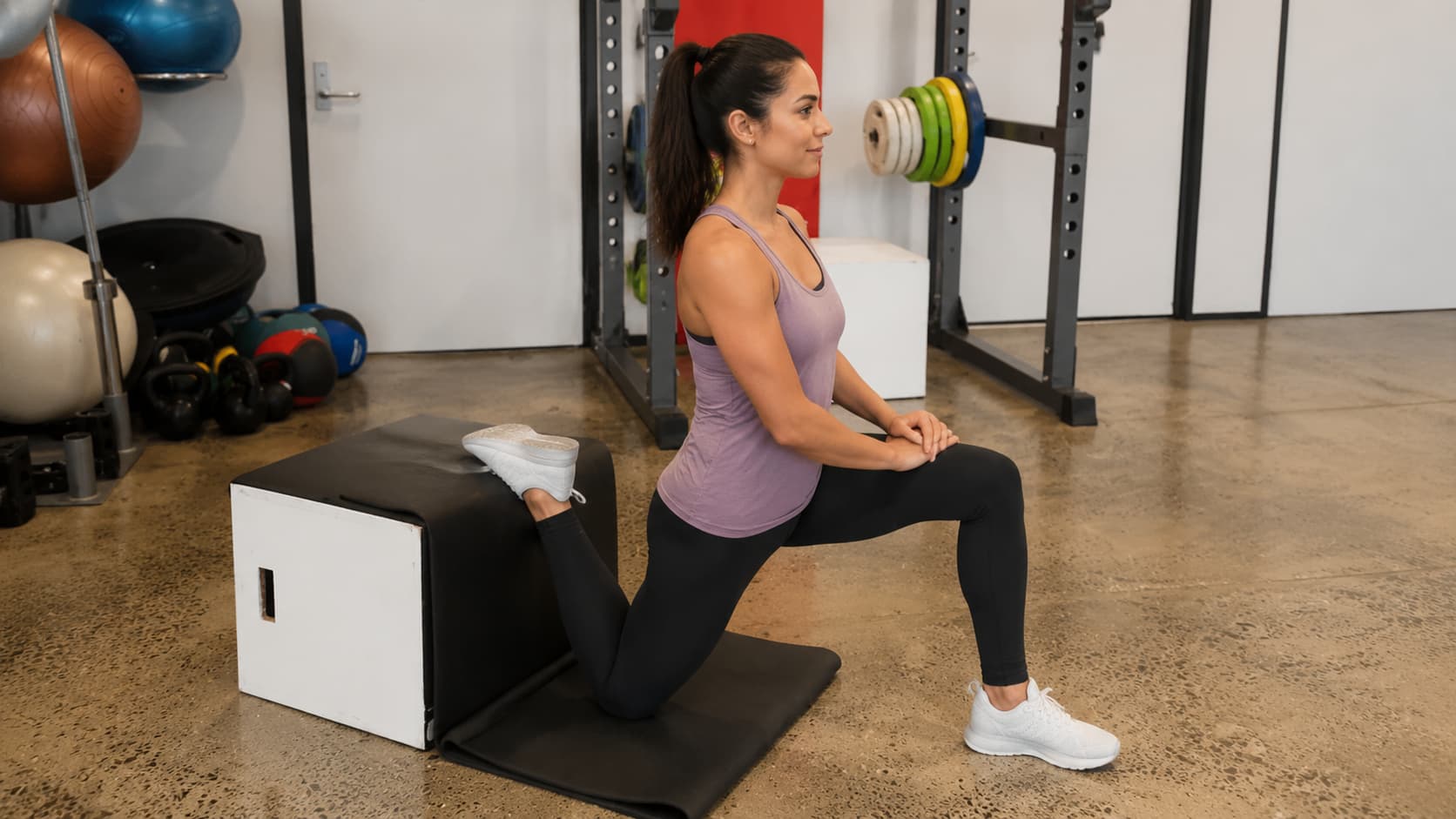
Placing the back foot on a low bench or step increases knee flexion and creates a deeper pull through the quadriceps. This version works well when there is specific tightness between the rectus femoris and the vasti muscles beneath it.
Steps:
- Place a low bench or step about 2 feet behind you.
- Get into the basic half-kneeling lunge position.
- Rest the top of your back foot on the bench instead of the floor.
- Lower your back knee toward the floor while keeping your torso upright.
- Hold for 20 to 30 seconds per side.
3. Low Lunge Kneeling Quad Stretch (Crescent Pose)
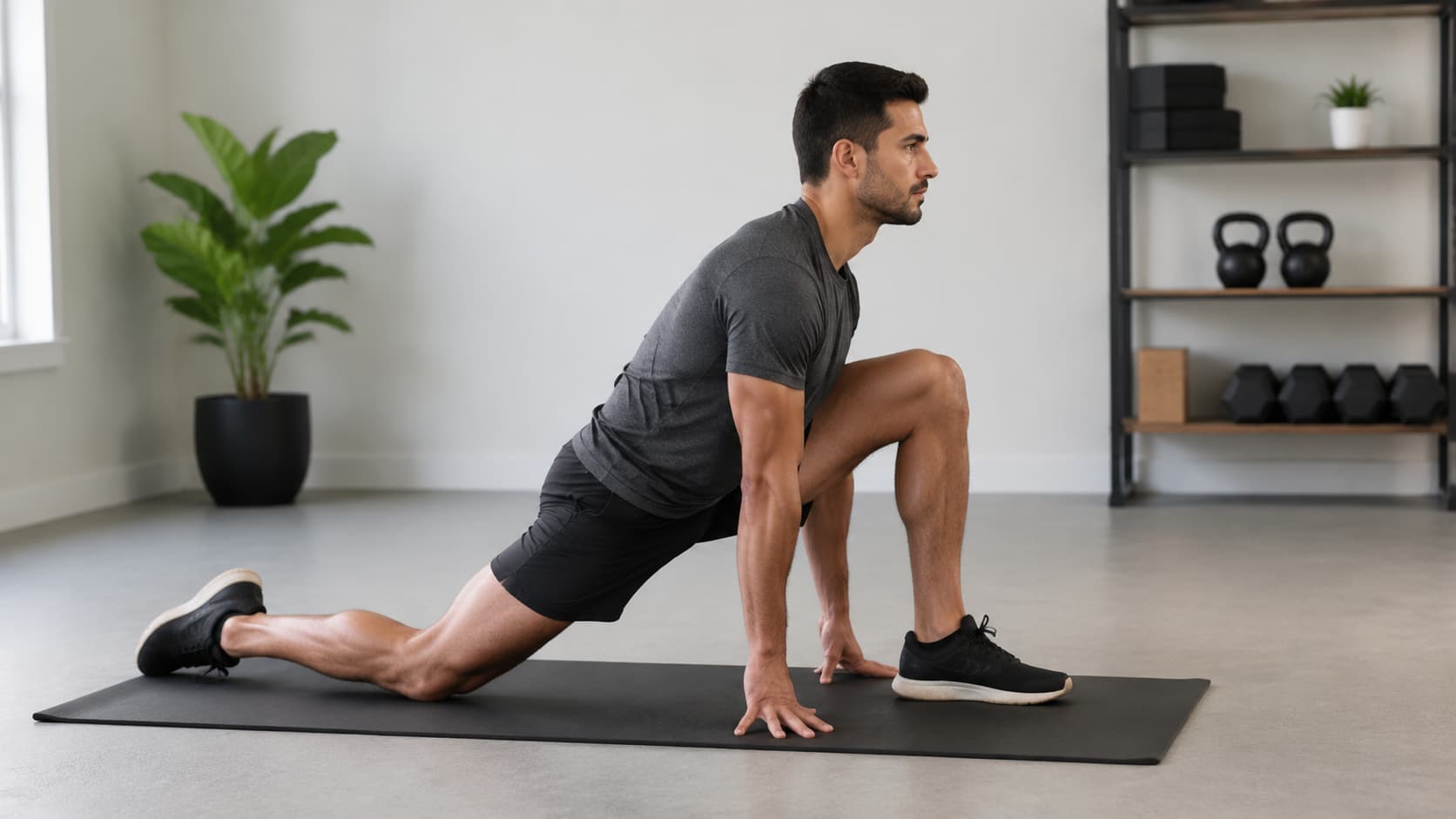
This yoga-based version keeps both hands on the floor, making it more accessible for beginners who are not yet ready to reach back for the ankle. It opens the front of the hip from a stable, supported base.
Steps:
- Start in a low lunge with your back knee on the mat.
- Place both hands flat on the floor inside your front foot.
- Press your hips forward gently until you feel a stretch at the front of the back thigh and hip.
- For more intensity, sweep one arm upward and rotate slightly toward the front knee.
- Hold for 20 to 30 seconds, then switch sides.
Common Mistakes and How to Fix Them
These errors are common, often invisible to the person making them, and they reduce the stretch’s effectiveness or shift tension to the wrong area.
Even people who stretch regularly tend to fall into these patterns. Catching them early makes a real difference in how well the kneeling quad stretch actually works.
| Mistake | What Happens | How to Fix It |
|---|---|---|
| Arching the lower back | The stretch moves away from the rectus femoris and loads the lumbar spine instead | Tuck the tailbone slightly and brace the core before pulling your foot |
| Skipping the glute squeeze | The hip does not fully extend, so the stretch stays shallow | Squeeze the glute of the kneeling leg throughout the entire hold |
| Front knee tracking past the toes | Load shifts onto the front knee, and stability drops | Keep the front shin vertical with the knee directly above the ankle |
| Holding for too short a time | Muscles do not relax or lengthen enough to respond to the stretch | Hold each side for a full 20 to 30 seconds, not 5 to 10 |
| Kneeling directly on a hard floor | Knee discomfort cuts the hold short and reduces focus | Always use a folded mat, thick towel, or cushion under the kneeling knee |
Modifications for Beginners and People with Knee Pain
The kneeling quad stretch does not require full flexibility or pain-free knees to be worth doing. These adjustments let you work within your current range without giving up any of the real benefits.
- For Beginners: Use a wall or chair for balance support on the same side as the kneeling leg, and start with the low-lunge version (both hands on the floor) before progressing to reaching back to the ankle.
- For Knee Pain or Sensitivity: Place a folded yoga mat, rolled towel, or firm cushion under the kneeling knee for pressure relief, and stop immediately if you feel sharp or acute pain at the joint.
- For Tight Hip Flexors (No Ankle Grab): Instead of pulling the ankle, shift your hips forward from the basic half-kneeling lunge position to stretch the front of the hip, without the full knee bend required to grab the foot.
Not everyone starts at the same place. These modifications keep the stretch safe and productive while your flexibility and knee tolerance build over time.
When and How Often to Do the Kneeling Quad Stretch
Perform the kneeling quad stretch after a workout, when the muscles are already warm, holding each side for 20 to 30 seconds, for 2 to 3 sets.
If you sit for most of the day, a daily session of 1-2 sets per side in the morning or evening will produce steady gains over several weeks.
Before a workout, use the dynamic version and rock gently in and out of the position for 5 to 10 reps per side rather than holding still.
Consistency matters more than session length. Short, daily practice builds lasting flexibility far more reliably than occasional long holds done once a week.
Conclusion
The kneeling quad stretch is a practical, reliable move that addresses quad tightness, hip flexor restriction, and pelvic alignment in a single position.
You do not need equipment or a gym to do it. You need the correct form, the right hold time, and the habit of doing it consistently.
Start with the basic version, master the glute-squeeze cue, and add a variation when you are ready. Your knees, hips, and lower back will all respond.
If you want to track your flexibility progress, start with one side and note where the stretch feels tightest. That information guides your next session.