A bent toe that keeps rubbing the inside of your shoe may look minor. A hammer toe starts with mild discomfort. Over time, it can affect how you walk, which shoes fit, and how your foot feels every day.
Early on, the toe still bends back easily. Left alone, a corn forms, pain grows, and the joint stiffens. At that point, fixing it gets harder.
Knowing what hammer toe looks like, spotting hammer toe symptoms early, and understanding your options can help you act before the problem gets worse.
Flexible hammer toe often responds well to simple changes. Better shoes, stretching exercises, and support devices can reduce discomfort and help many people manage the condition without surgery.
Read on for a clear look at causes, non-surgical fixes, surgical options, and exactly when to call a podiatrist.
What Is a Hammer Toe?
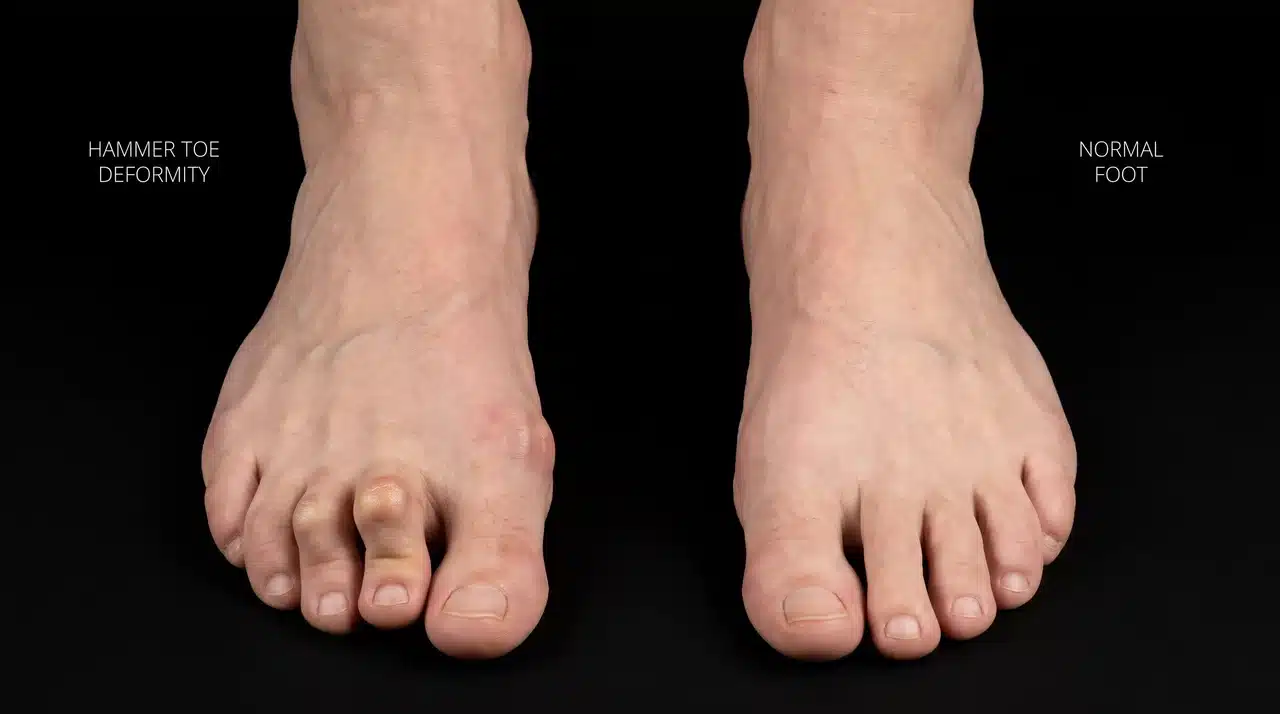
Hammer toe is a joint deformity where the middle joint of a toe bends upward. The tip of the toe then points downward, forming a bent, claw-like shape.
It usually affects the second, third, and fourth toes. The condition develops when the muscles and tendons around the toe pull unevenly. Over time, they tighten and hold the toe in that bent position.
What Does Hammer Toe Look Like?
- The middle joint of the toe bends upward
- The tip of the toe points downward
- The toe may look raised compared to the toes beside it
- A corn or callus forms on top of the bent joint
- In advanced cases, the toe overlaps an adjacent toe
Flexible vs. Rigid Hammer Toe
| Type | What It Means | Treatment Response |
|---|---|---|
| Flexible | You can still straighten the toe by hand | Responds well to exercises and shoe changes |
| Semi-rigid | The toe is stiff but partially moves | May need orthotics or professional care |
| Rigid | The joint is locked and cannot be straightened | Surgery is often the most reliable option |
Most hammer toes begin as flexible deformities. Treating them early gives you the best chance of maintaining movement.
What Are the Hammer Toe Symptoms?
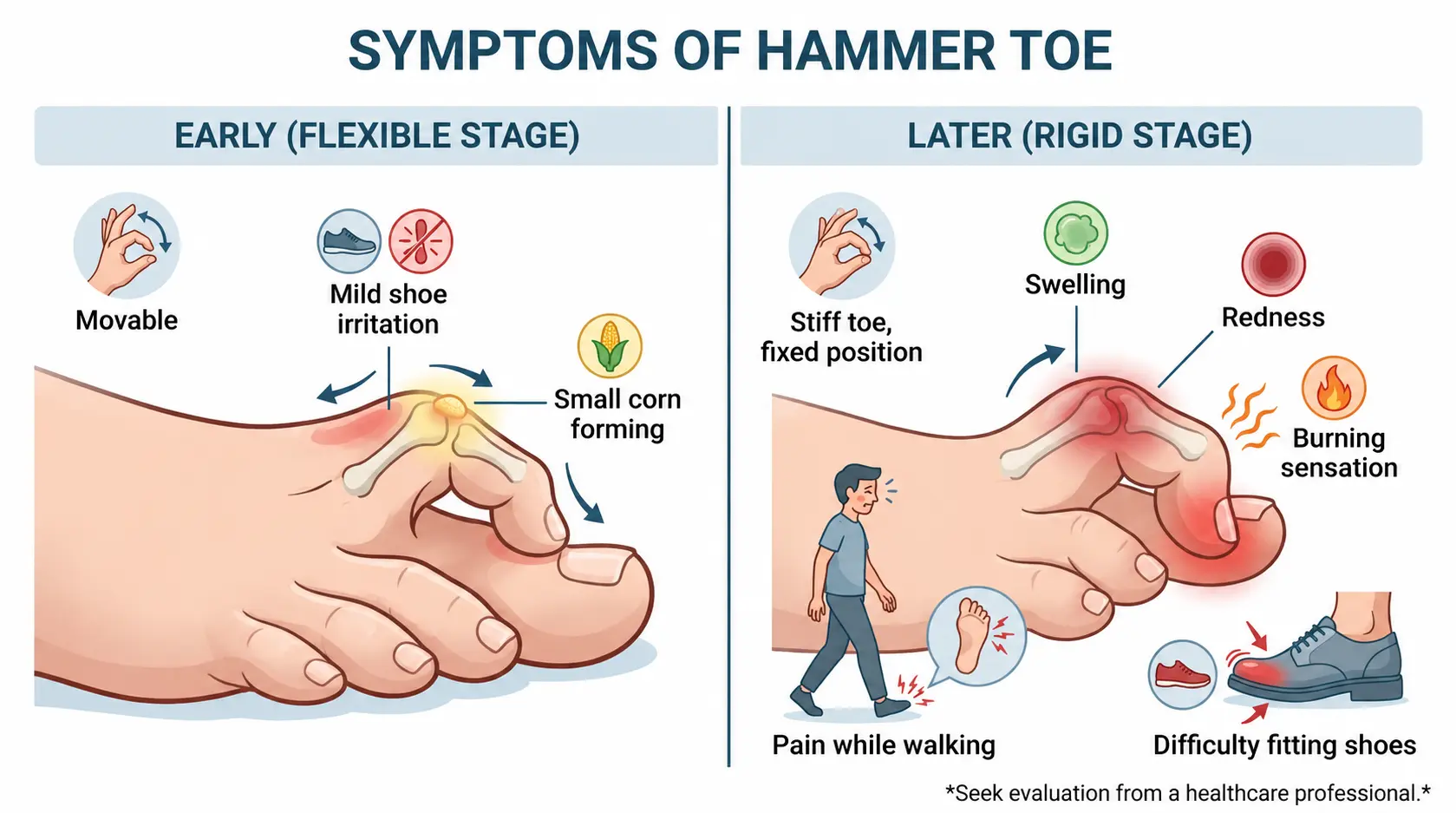
Some hammer toes cause no pain at all. Others affect every step. Symptoms often grow more noticeable as the joint stiffens.
Early Symptoms:
- A toe that curls but still moves
- Mild rubbing against the inside of your shoe
- A small corn forming on the top of the toe
- Discomfort after long periods of standing or walking
Later Symptoms:
- Constant toe pain while walking
- The toe cannot straighten at all
- Swelling or redness around the joint
- Burning sensation in the toe
- Difficulty finding shoes that fit comfortably
- Thickened skin from repeated friction
If pain has become constant or the toe no longer moves, book an appointment with a podiatrist. The treatment window closes as the joint stiffens.
What Causes Hammer Toe?
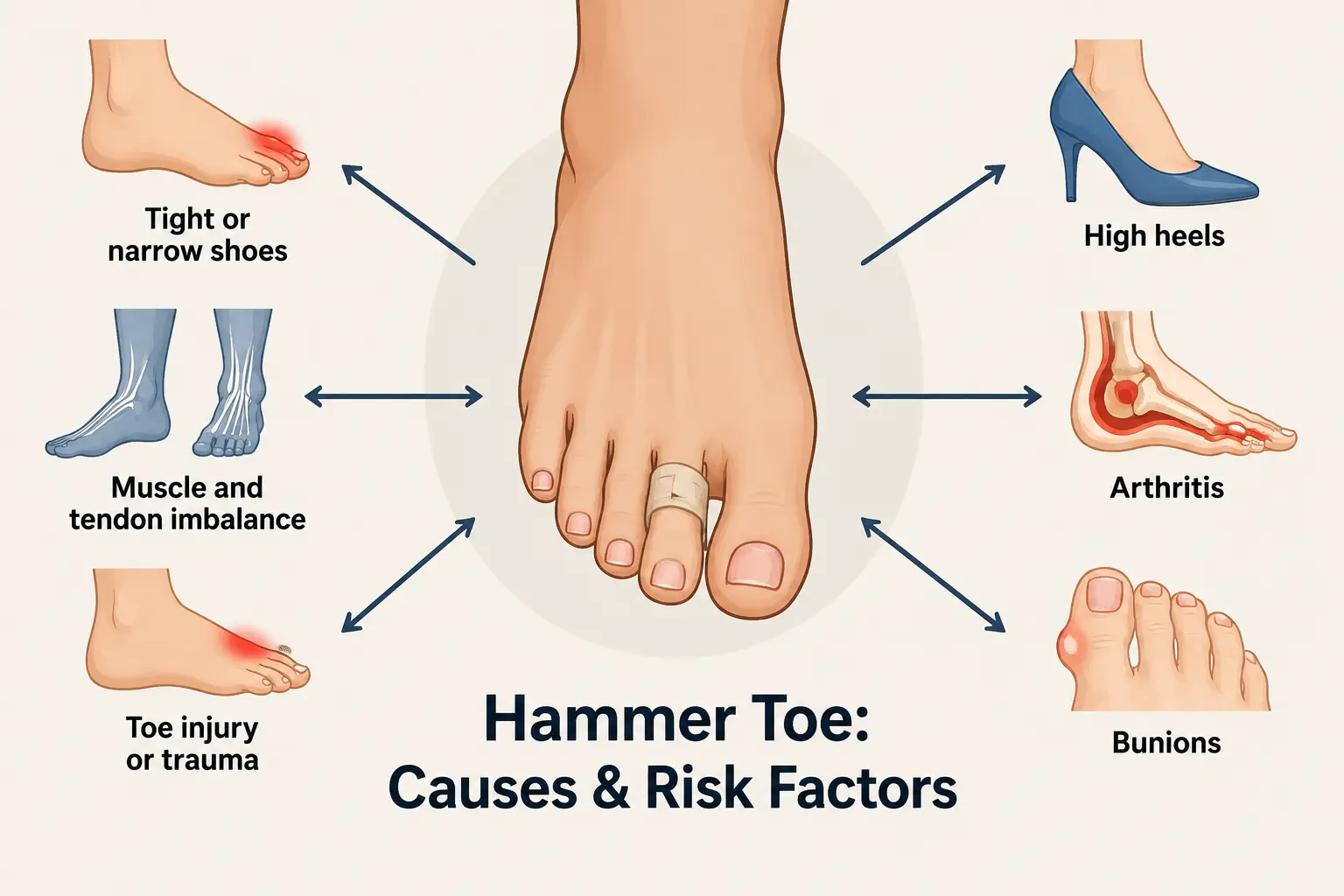
Hammer toe usually has more than one cause. Ill-fitting shoes on a foot already at risk are the most common combination.
- Tight or narrow shoes: A small toe box forces toes to scrunch together. This puts constant pressure on the middle joint.
- High heels: Heels shift body weight to the front of the foot. This pushes the toes into a cramped position for hours at a time.
- Muscle and tendon imbalance: When muscles on the top and bottom of the foot pull unevenly, the toe bends. This can result from foot mechanics, aging, or repetitive stress.
- Genetics: Flat feet and high arches are inherited. Both change how weight spreads across the toes.
- Toe injury: A broken or badly stubbed toe can heal in the wrong position.
- Arthritis: Joint inflammation gradually changes the structure and alignment of the toe.
- Bunions: A bunion pushes the big toe inward. This forces the second toe into an abnormal position over time.
According to the American Podiatric Medical Association, heredity and trauma can also contribute to hammer toe formation.
How to Fix Hammer Toe Without Surgery
Yes, hammer toe can often be fixed without surgery, but only while the toe is still flexible. If you can manually straighten your toe, non-surgical treatments can stop the condition from progressing. In many cases, they reverse the bend entirely.
Once the toe reaches the rigid stage, the joint is locked. Surgery becomes the most reliable path forward.
Medical Note: The treatments below are for informational purposes only. Always consult a licensed podiatrist before starting any treatment plan for hammer toe. Self-treating a rigid or painful hammer toe without professional assessment may delay the care you need.
1. Toe Exercises
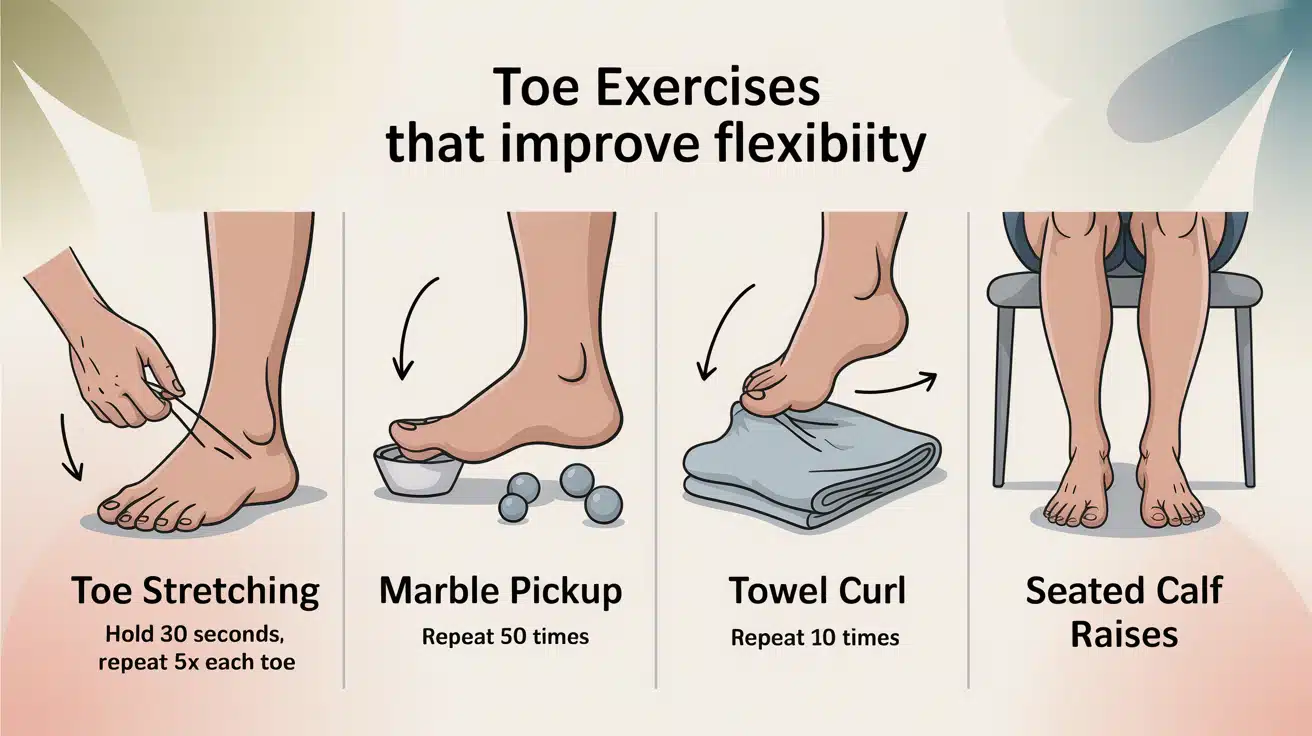
These exercises work best when done daily, not occasionally. Consistent effort over weeks outperforms sporadic effort over months.
Daily toe exercises strengthen the small muscles in your foot. They also keep the joint mobile before stiffness sets in. Good ankle mobility work supports the whole foot and can reduce strain on the toe joints too.
- Toe stretch: Hold the bent toe and gently pull it back to a flat position. Hold for 20 to 30 seconds. Repeat 5 times per toe.
- Marble pickup: Place marbles on the floor. Use your toes to pick them up and drop them in a cup. Repeat 10 times per foot.
- Towel curl: Lay a small towel flat. Use your toes to scrunch it toward you. Repeat 10 times.
- Toe lifts: Keep your heel flat on the floor. Lift all your toes upward slowly, then lower them. This builds coordination between the toe muscles.
Improving ankle and toe dorsiflexion through targeted foot exercises can also help restore the natural range of motion that hammer toe reduces over time.
2. Change Your Shoes
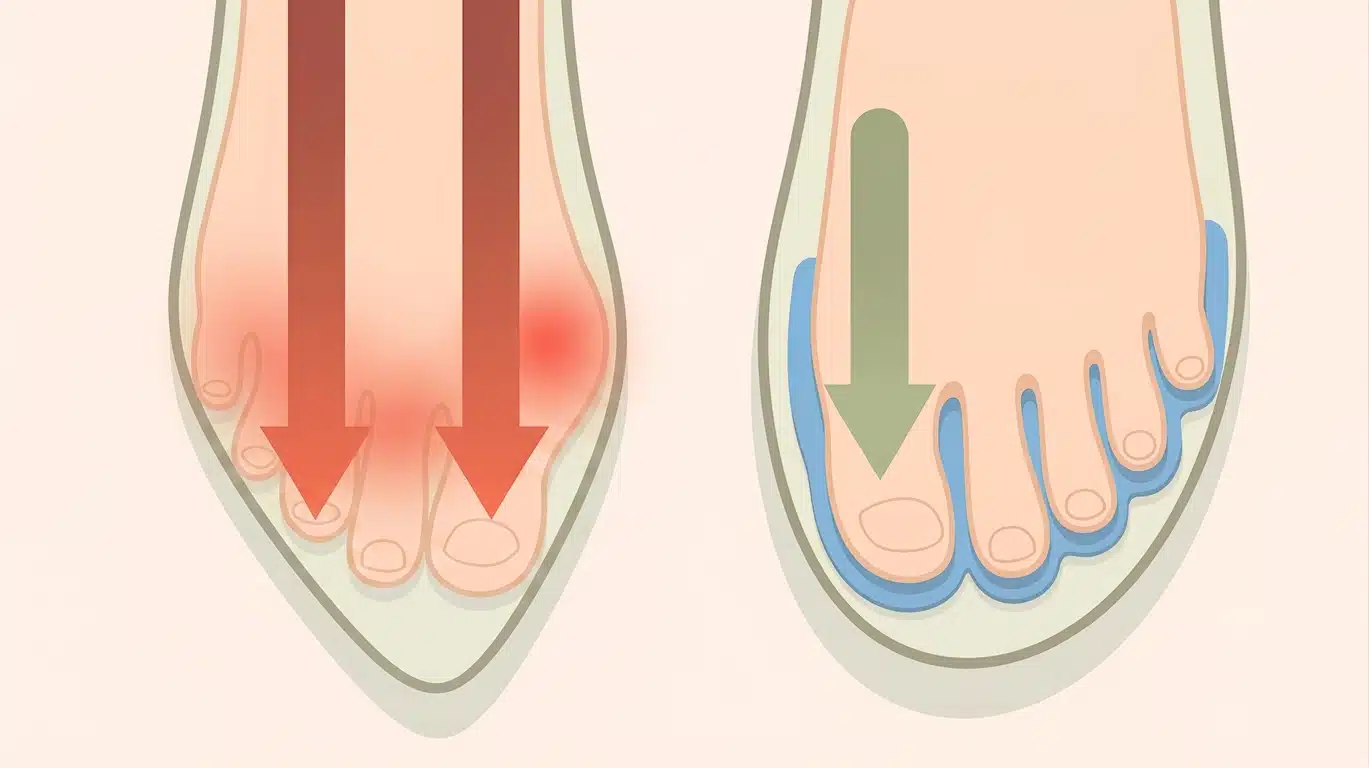
Shoes are often the cause of hammer toe. Changing them is one of the fastest steps you can take.
Choose shoes that offer:
- A wide, deep toe box with at least half an inch of space past the longest toe
- Soft, flexible materials that don’t press against the bent joint
- Cushioning at the ball of the foot
- Heels no higher than two inches
Avoid narrow, pointed shoes, rigid dress shoes, and any footwear that pushes your toes forward. If your shoes still rub after one day, they are the wrong fit.
3. Use Pads, Splints, and Taping
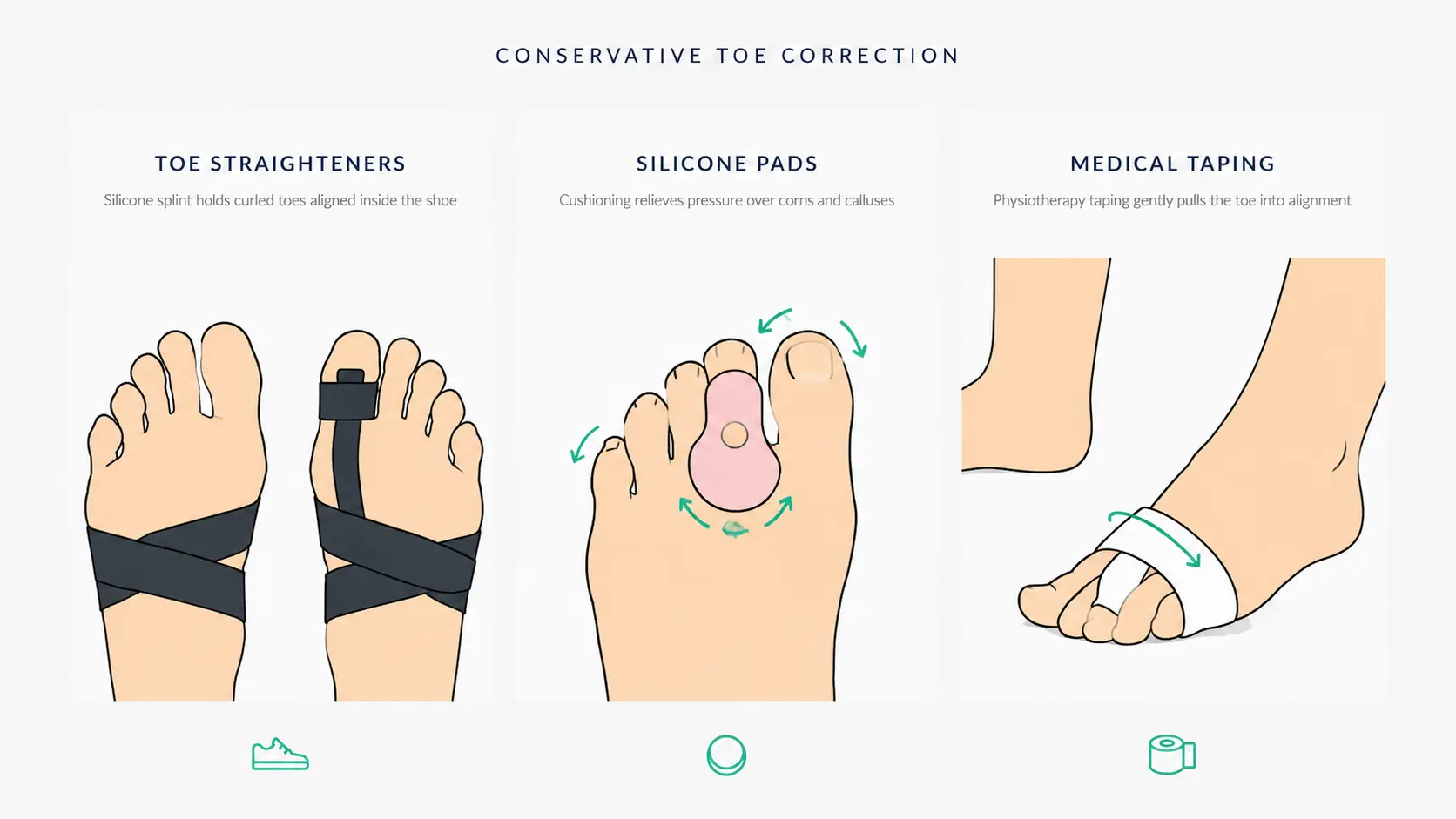
These tools don’t fix the underlying cause, but they reduce pain and slow progression.
- Non-medicated toe pads: Cushion the corn on top of the joint that’s bent. Available at most pharmacies without a prescription.
- Silicone toe straighteners: Hold the toe in a flatter position inside the shoe. Most effective during the flexible stage.
- Medical taping: A podiatrist or physical therapist tapes the toe to improve alignment. This works best when the joint still has movement.
4. Use Orthotics
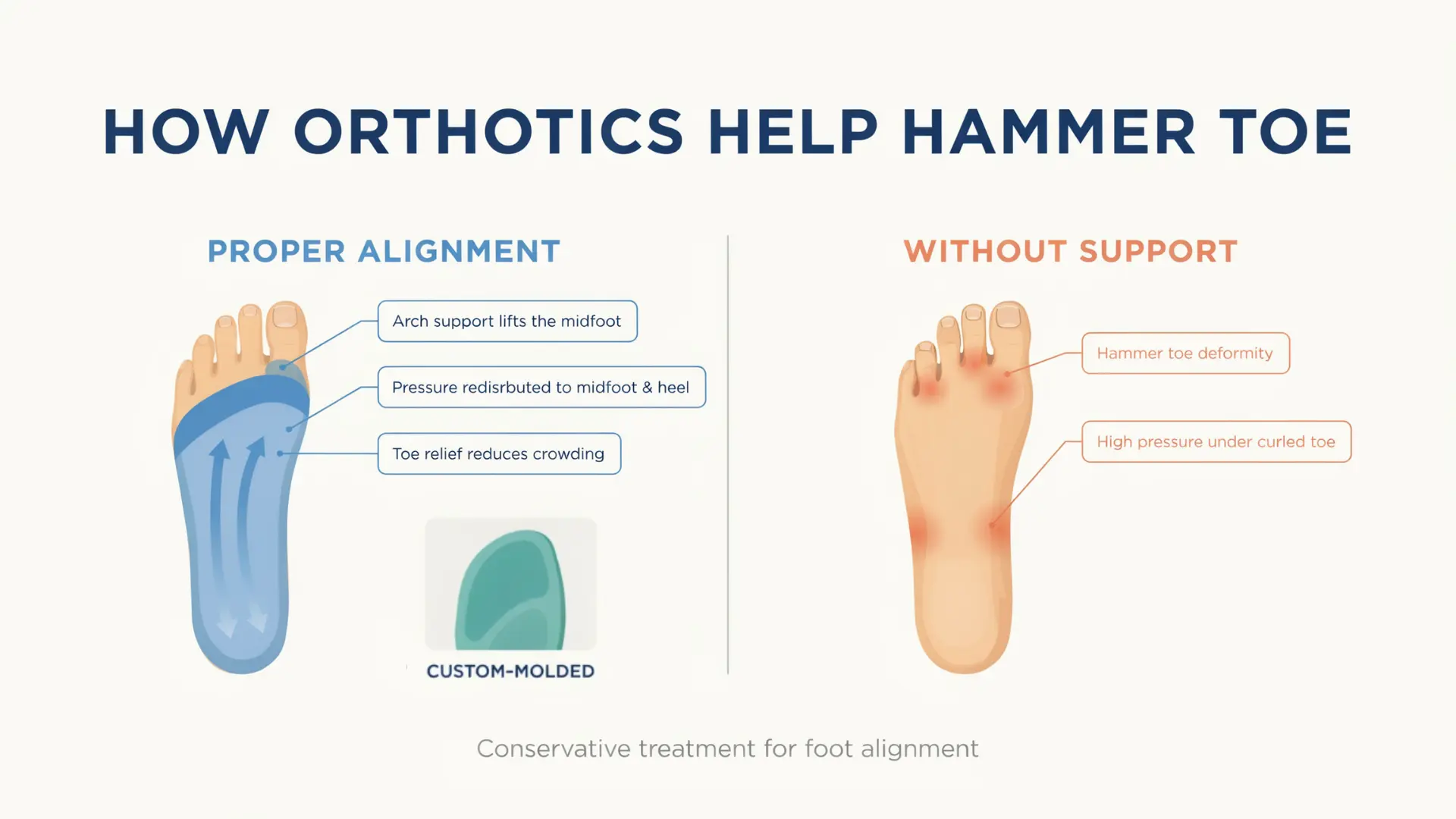
Orthotics help redistribute pressure across the foot. They reduce strain on the toe joints and may prevent the condition from worsening.
- Over-the-counter orthotics work well when combined with roomy shoes
- Custom orthotics are shaped to your foot and can address underlying arch problems
- Orthotics work best paired with other conservative treatments, not used alone
5. Pain Replacement Options
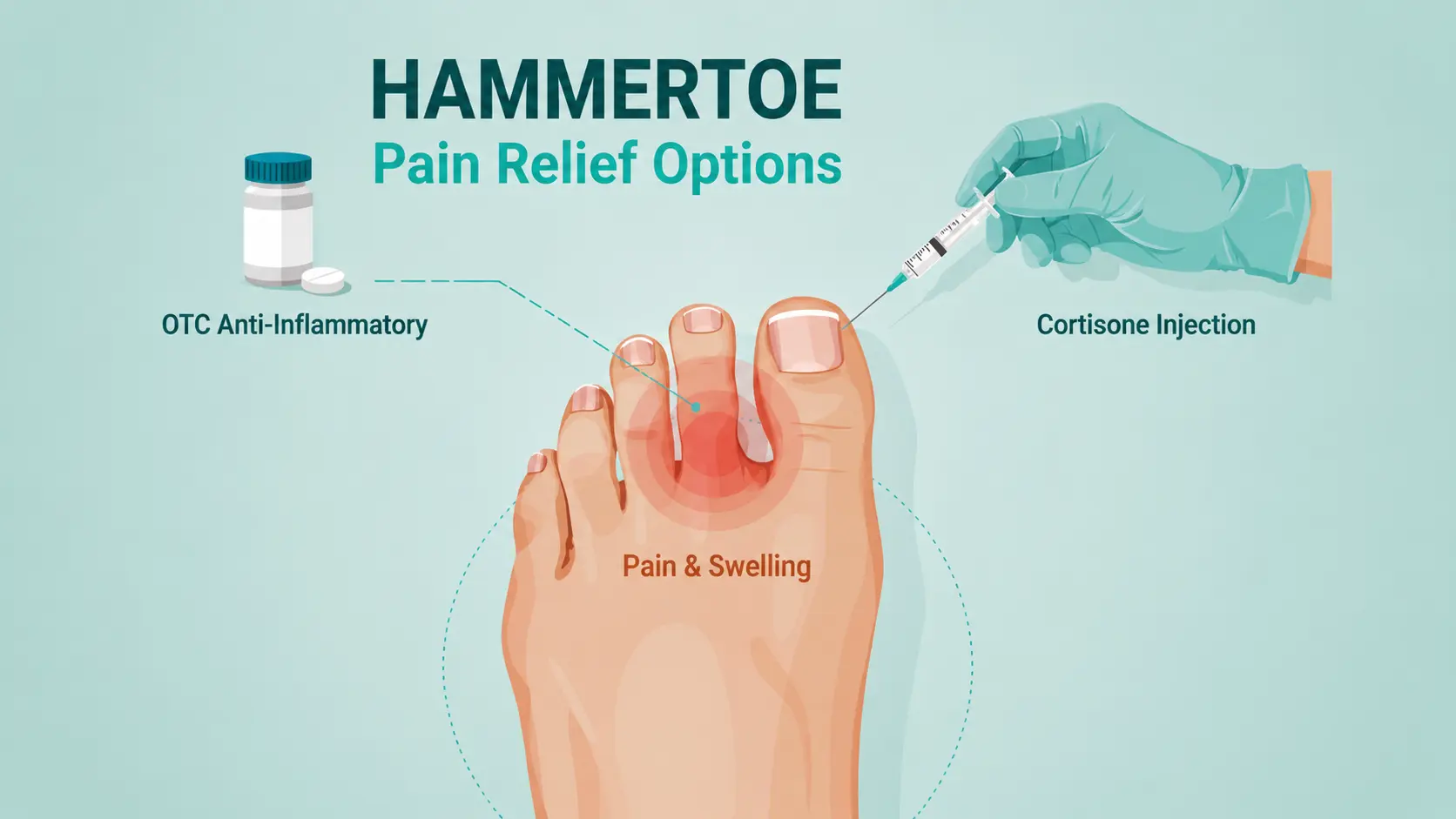
When pain and swelling are present, over-the-counter anti-inflammatory medications such as ibuprofen can help.
A podiatrist may also recommend cortisone injections to relieve acute joint pain.
These do not correct the structural problem but can make other treatments easier to follow.
| Treatment | Best For | Effectiveness |
|---|---|---|
| Wide-toe-box shoes + orthotics | All flexible stages | Strongest conservative option |
| Daily toe exercises | Flexible stage | Good with consistency |
| Pads and taping | Pain relief and friction | Supportive only |
| NSAIDs / cortisone | Acute pain and swelling | Pain management, not correction |
How Long Does Hammer Toe Take to Improve?
Hammer toe improvement does not happen overnight. The timeline depends on the severity of the deformity and how consistently you follow the treatment plan.
| Stage | Expected Timeline |
|---|---|
| Flexible (early) | Weeks to a few months with regular care |
| Semi-rigid | Symptoms may improve, but full correction takes longer |
| Rigid | Surgery usually needed for structural correction |
Consistency matters most. Daily exercises for eight weeks beat sporadic effort for six months.
What Are the Surgical Options for Hammer Toe?
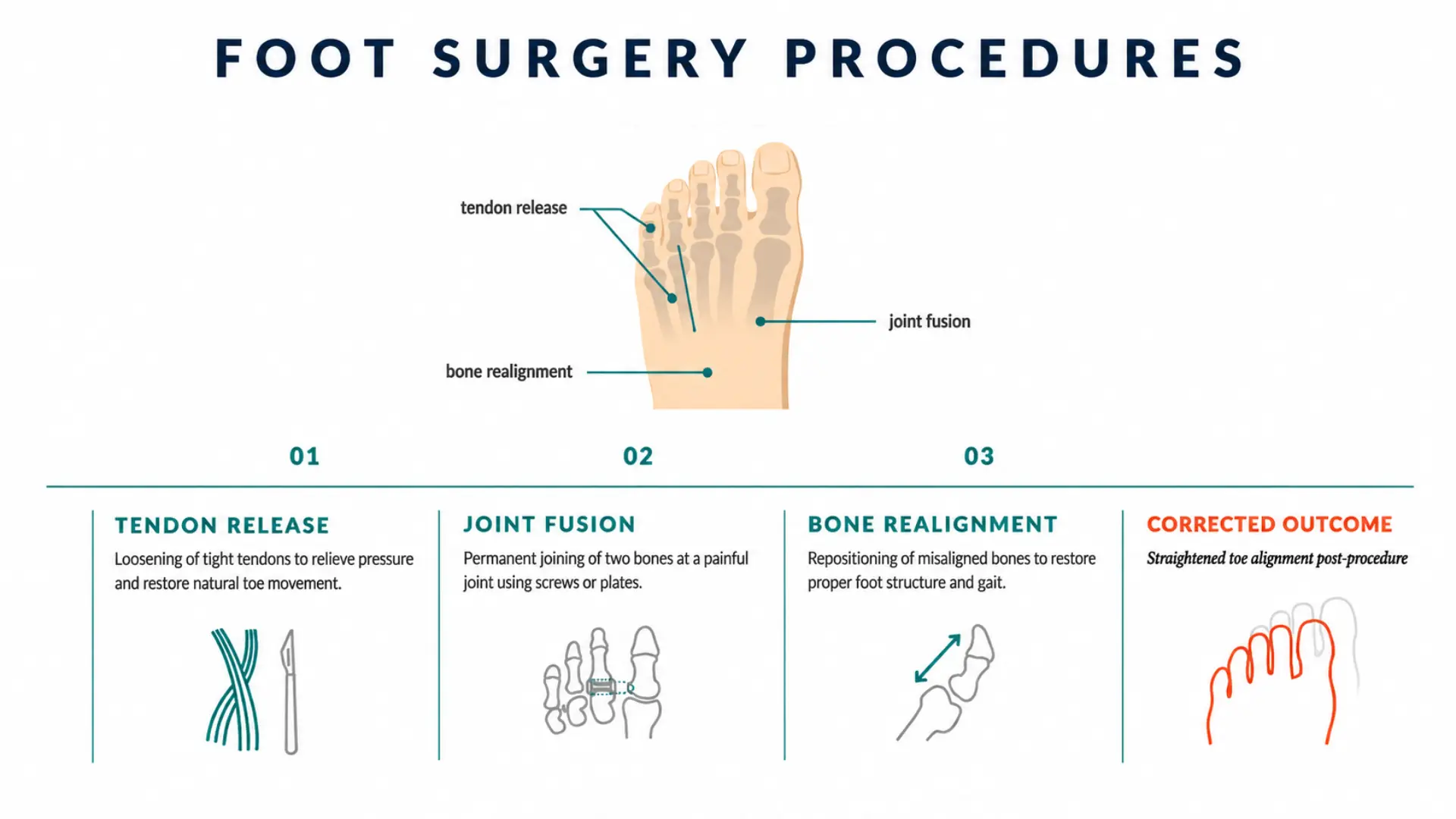
Surgery is the right path when non-surgical options have not worked, or the toe is already rigid. The goal is to reduce pain and restore normal function.
Common procedures include:
- Tendon release: The surgeon cuts the tight tendon, allowing the toe to bend. Best suited for flexible cases.
- Joint fusion (arthrodesis): The middle joint is fused in a straight position and held with a pin or screw. Common for rigid hammer toe.
- Bone realignment: A small section of bone is removed so the toe can straighten. Used for less severe deformities.
- Tendon transfer: Tendons from the bottom of the toe are moved to the top. This pulls the joint into a straighter position from the inside.
Hammer toe surgery is typically an outpatient procedure. Recovery usually takes four to six weeks. Swelling and some stiffness are normal during this period.
Minimally invasive techniques use smaller incisions than traditional surgery. They may reduce scarring and shorten early recovery time for suitable patients. A surgeon will determine the right approach based on the type and severity of the deformity.
Hammer Toe vs. Mallet Toe vs. Claw Toe
Not every bent toe is a hammer toe. Here is how the three most common toe deformities differ:
| Condition | Joint Affected | Appearance |
|---|---|---|
| Hammer toe | Middle (PIP) joint | Toe bends upward in the middle; tip points down |
| Mallet toe | End (DIP) joint | The tip of the toe curls downward |
| Claw toe | Both joints | Full claw curl affecting the whole toe |
If the big toe is affected rather than the smaller toes, this is called hallux malleus. It follows the same pattern but targets the first toe.
How to Stop Hammer Toe From Getting Worse
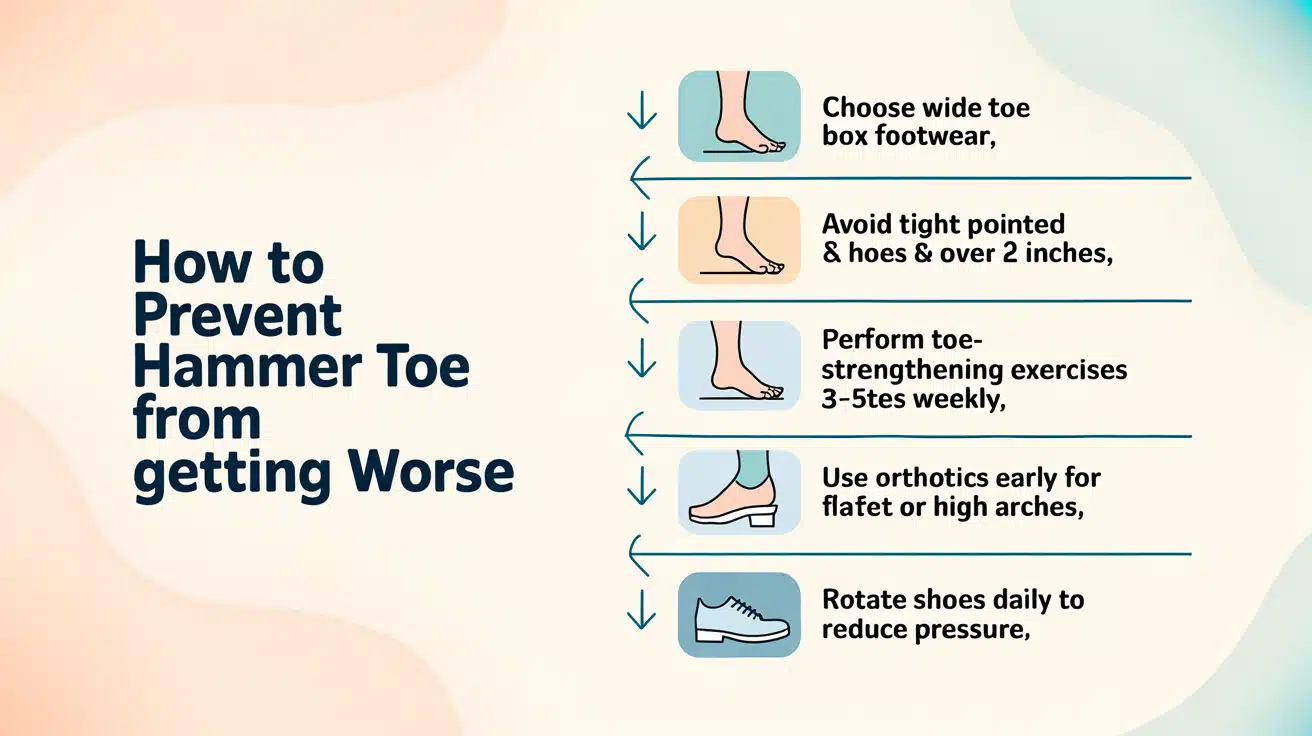
Prevention focuses on protecting movement and cutting pressure on the toe joints.
- Wear shoes with a wide, deep toe box, especially for exercise
- Avoid heels over two inches and any shoes with pointed tips
- Do toe-strengthening exercises three to five times per week
- Use orthotics early if you have flat feet or high arches
- Rotate your shoes so that no single pair applies constant pressure
- Treat any bunions promptly, as they push neighboring toes out of alignment
These steps will not reverse a rigid toe, but they keep a flexible one from locking up.
Can Hammer Toe Come Back After Treatment?
Yes, it can. The correction fixes the toe, but the underlying foot structure does not change. The same tight shoes or muscle imbalances will restart the process if habits do not change.
Long-term care after treatment requires:
- Permanent changes to footwear
- Ongoing toe and foot strengthening exercises
- Regular check-ins with a podiatrist if you are in a high-risk group
When to See a Podiatrist
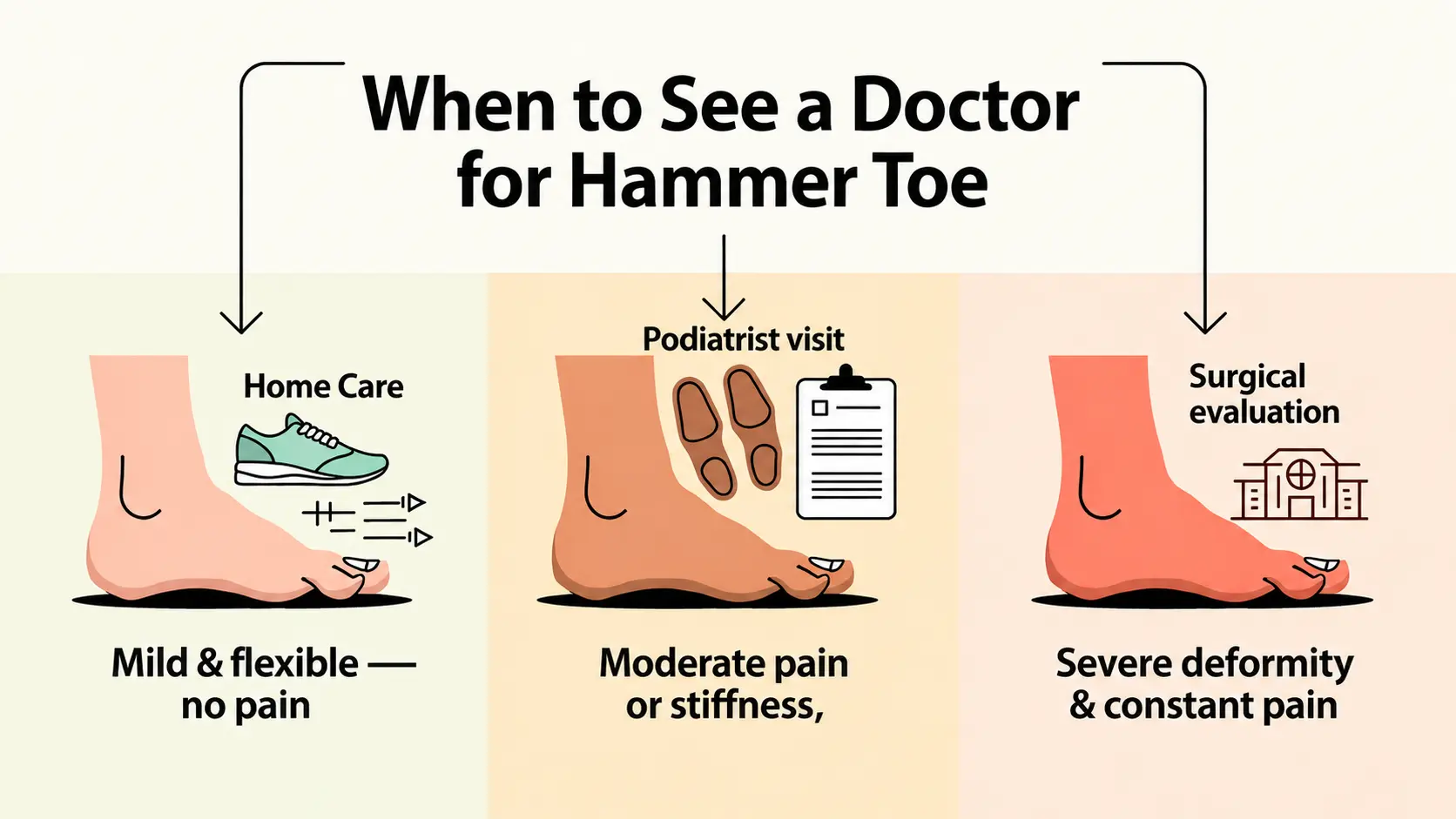
The earlier you act on hammer toe, the simpler the treatment.
- Mild, flexible toe, no pain: Start at home. Change shoes and do daily exercises.
- Moderate pain or stiffness: See a podiatrist. You may need orthotics or a structured plan.
- Severe deformity, constant pain, or rigid joint: Get a surgical evaluation.
A podiatrist diagnoses hammer toe with a physical exam of your foot and toes. They will touch and move the toe to assess joint flexibility. You may need an X-ray to see the alignment of the toe bones. Telling your podiatrist which shoes you wear most often is helpful information.
Disclaimer: This article is for informational purposes only and does not replace professional medical advice. If you have pain, swelling, or changes in your toe alignment, consult a licensed podiatrist or foot and ankle specialist. Treatment decisions should always be made with a qualified healthcare provider.
Closing Remarks
Hammer toe is easier to manage when you catch the signs early. A bent toe, shoe irritation, or a developing corn are worth paying attention to now.
For a flexible hammer toe, better shoes, daily stretching, and foot support can reduce symptoms and slow the condition. If your toe is already rigid or painful, a podiatrist can help you find the right next step. Surgery for hammer toe is typically straightforward and has a short recovery time.
Your feet carry you through everything you do. A small change in footwear today can save you from a much bigger problem later. Start with one exercise and one better pair of shoes, and give your feet the attention they need.
Frequently Asked Questions
Can Hammer Toe Go Away on Its Own?
No. It does not resolve without treatment. Early cases can improve with changes in exercise and footwear, but the condition will not self-correct.
Does Walking Barefoot Help Hammer Toe?
Walking barefoot on safe, flat surfaces may improve toe muscle activation. It does not reverse a hammer toe that has already become rigid.
Can Toe Spacers Fix Hammer Toe?
Toe spacers can help improve alignment and reduce pressure between toes, especially in the early stages. However, they do not fully correct rigid hammer toe.
Can you reverse a hammer toe?
Yes, but only while it remains flexible. Regular exercises and shoe changes can correct a flexible hammer toe. A rigid hammer toe requires medical or surgical intervention.
How Can I Fix My Hammer Toe at Home?
Switch to wide-toe-box shoes, do daily toe stretches, and use gel pads to reduce friction. These steps work best when the toe is still flexible and not yet rigid.