Your big toe bends downward at the tip. Pushing off the ground hurts. That is the most common early sign of hallux malleus.
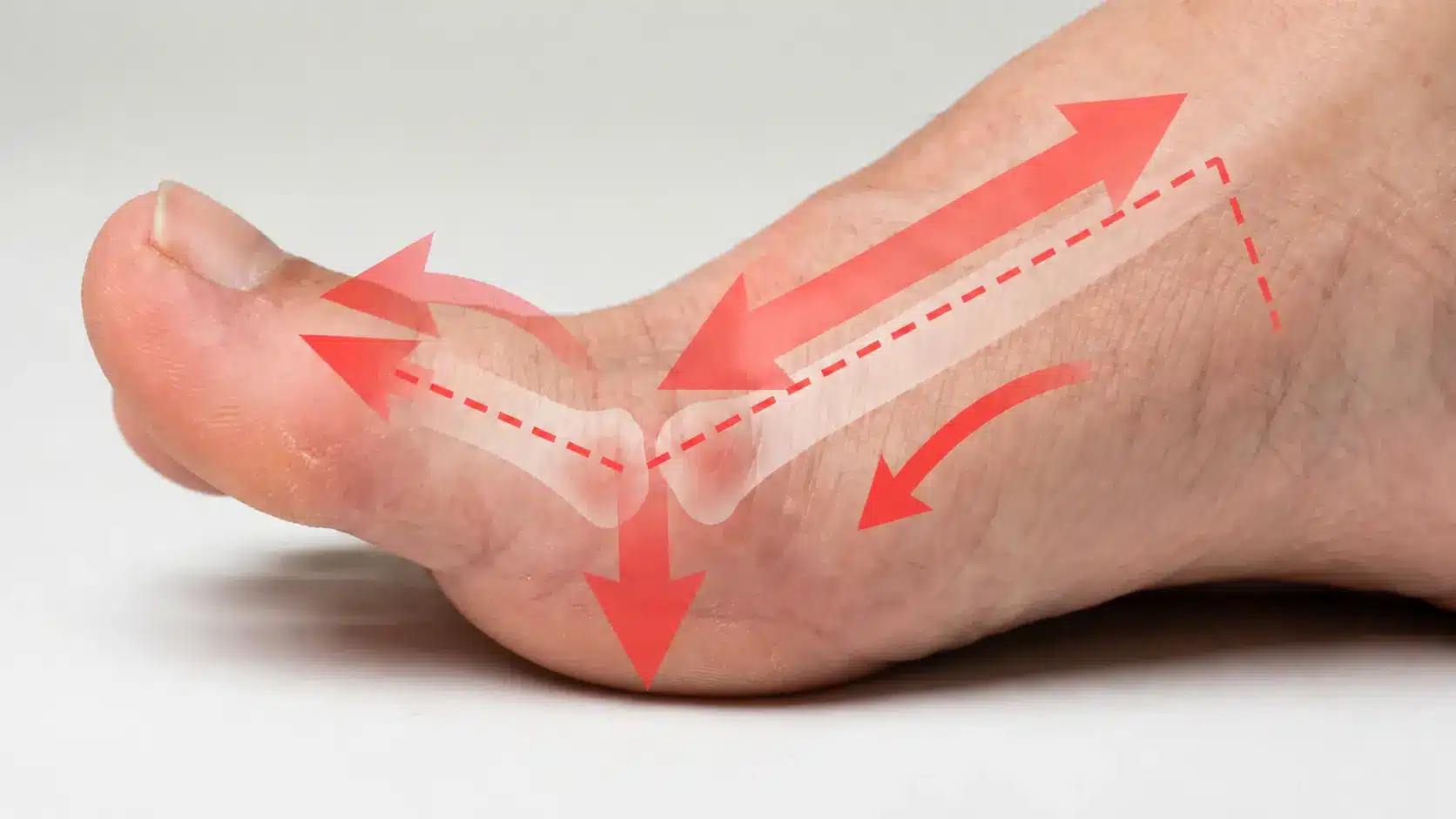
Hallux malleus is the medical term for a hammer toe in the big toe. The joint in the toe near your foot bends upward. The joint near the tip bends down.
Most hammer toes show up in the second toe. A hammer toe in the big toe is much less common. It often causes more trouble with balance and push-off strength.
This post covers what causes it, how to spot it, what you can do about it, and how it fits into the wider picture of hammer toe deformities.
How Does Hallux Malleus Develop?
You develop hallux malleus when the muscles and tendons that move your big toe stop working in balance. One side pulls too hard. The other side gives in.
The biomechanical process involves:
- Tendons on top of the toe tighten over time
- The joint near your foot gets pushed and stressed with every step
- Small stabilizing muscles in your foot grow weak
- A flexible bend can turn into a fixed, rigid one if left alone
Many cases also involve a nerve-related component, not just a muscle imbalance. That is why the deformity often affects the whole foot, not just the toe.
What Causes Hallux Malleus Deformity?
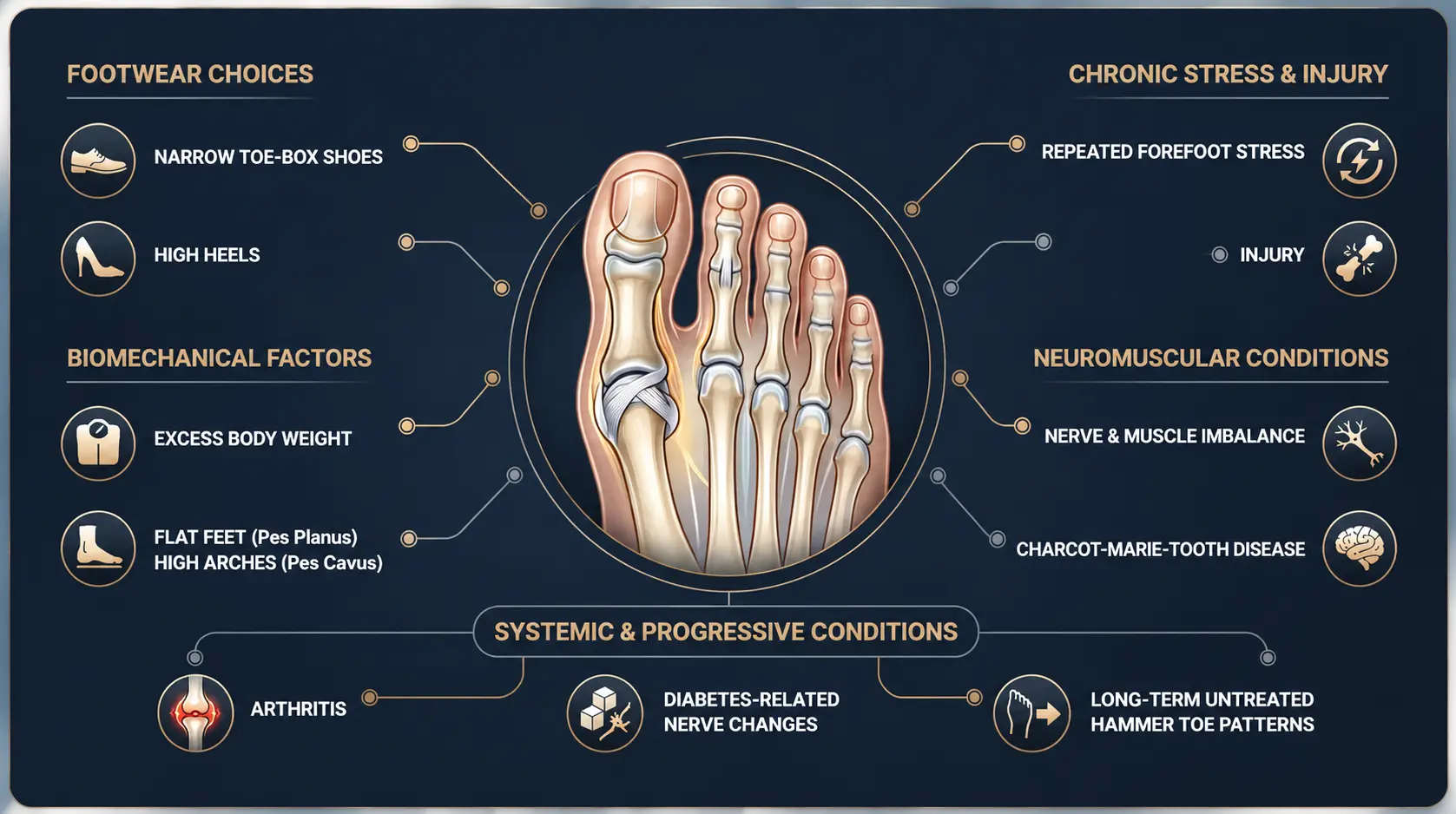
Hallux malleus has several known causes. In most cases, a combination of factors is involved.
- Extra body weight and years in tight shoes can make things worse
- Foot shapes like flat feet or a high arch also raise your odds
- Injury or repeated stress on the forefoot
- Nerve and muscle imbalance, sometimes tied to compartment syndrome after trauma
- Joint changes linked to arthritis or chronic inflammation
- Long-term, untreated hammer toe patterns in the other toes
- Nerve changes linked to diabetes
- Charcot-Marie-Tooth Disease (CMT) damages motor and sensory nerves in the legs and feet
What Are the Early Signs of Hallux Malleus?
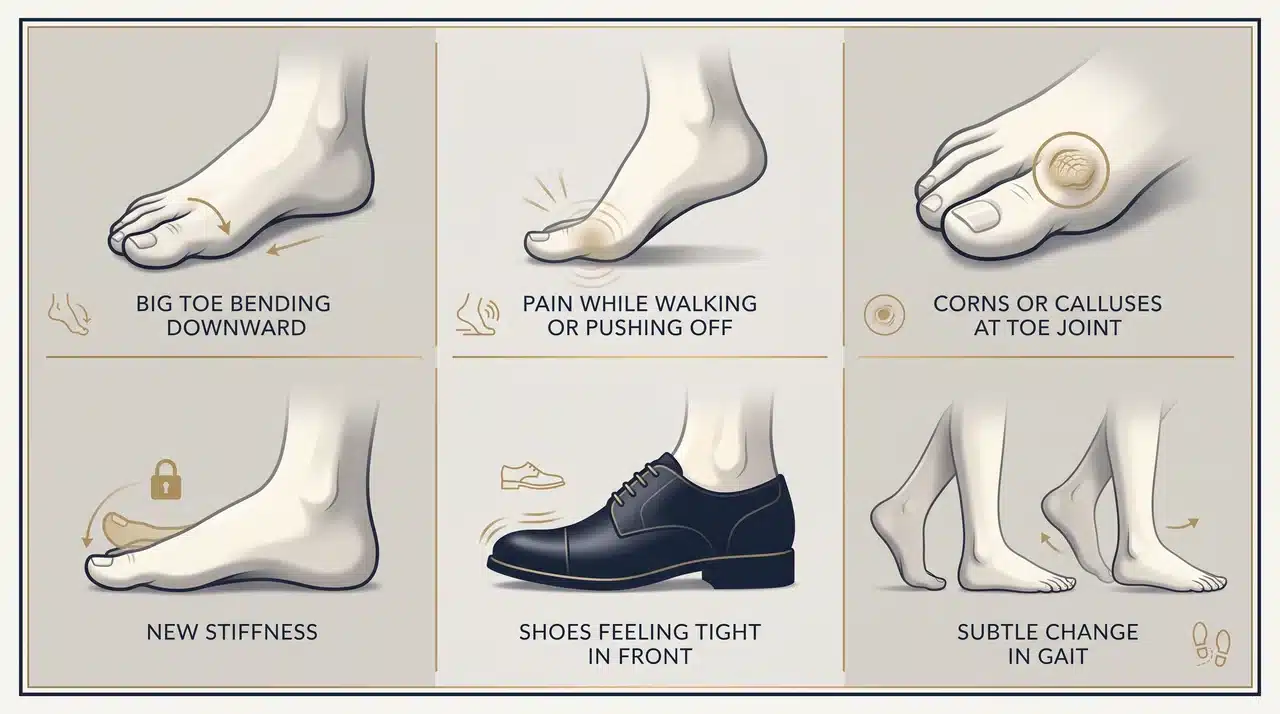
The early signs of hallux malleus include a downward bend in the big toe, pain when you walk, and stiffness that was not there before. Catching these signs early keeps your non-surgical options open.
Here is what to watch for:
- Your big toe starts bending downward, even slightly
- Pain when you walk or push off the ground
- Corns or calluses forming on the toe joint
- Stiffness that was not there before
- Your shoes suddenly feel tight in the front
- A change in how you walk, even a small one
How Does Hallux Malleus Differ From Other Toe Conditions?
Hallux malleus affects only the big toe and involves a downward bend at the joint at the tip. That sets it apart from hammer toe, hallux rigidus, and bunions. Here is how they compare:
| Feature | Hallux Malleus | Hammer Toe | Hallux Rigidus | Hallux Valgus (Bunion) |
|---|---|---|---|---|
| Toe affected | Big toe | Second through fifth toes | Big toe | Big toe |
| Main movement | Downward bend at the tip joint | Downward bend at the middle joint | Stiffness with little to no bend | Sideways drift toward other toes |
| Underlying issue | Muscle and nerve imbalance | Muscle and tendon imbalance | Arthritis and joint wear | Ligament laxity and joint shift |
| Flexibility | Often flexible in early stages | Often flexible in early stages | Usually rigid from the start | Often flexible, becomes fixed over time |
| Common overlap | Can occur alongside bunions | Can occur alongside hallux malleus | Rarely paired with bending deformities | Can occur alongside hammer toes |
How Does Hallux Malleus Progress?
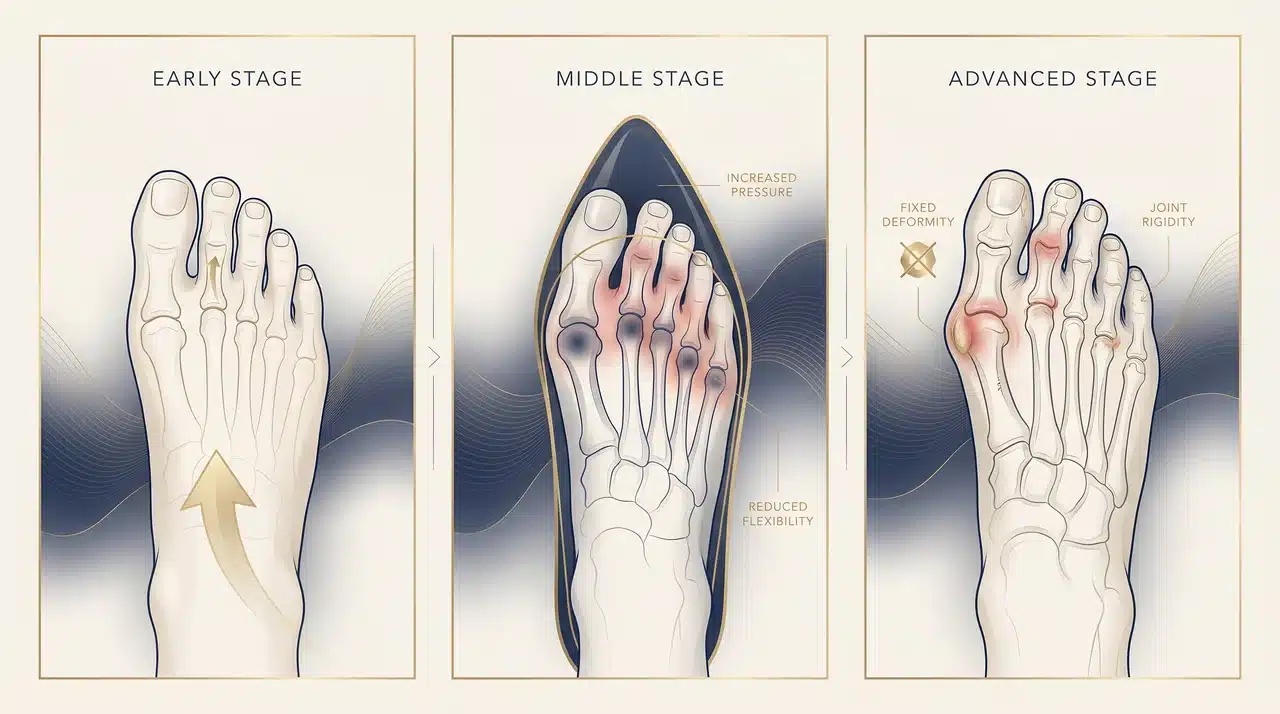
Hallux malleus moves through three stages: flexible, stiffening, and fixed. Knowing which stage you are in helps guide the right treatment approach.
- Early stage: The toe is still flexible. You, or a doctor, can straighten it by hand. Discomfort is mild.
- Middle stage: The toe grows stiffer. Shoes start to hurt more often.
- Advanced stage: The deformity becomes fixed. The joint adapts to the bent position. Surgery becomes more likely at this point.
Moving from one stage to the next can take months or years, but it rarely reverses on its own. Getting help in the early stage gives you the best shot at avoiding surgery down the road.
How Does Hallux Malleus Affect the Way You Walk?
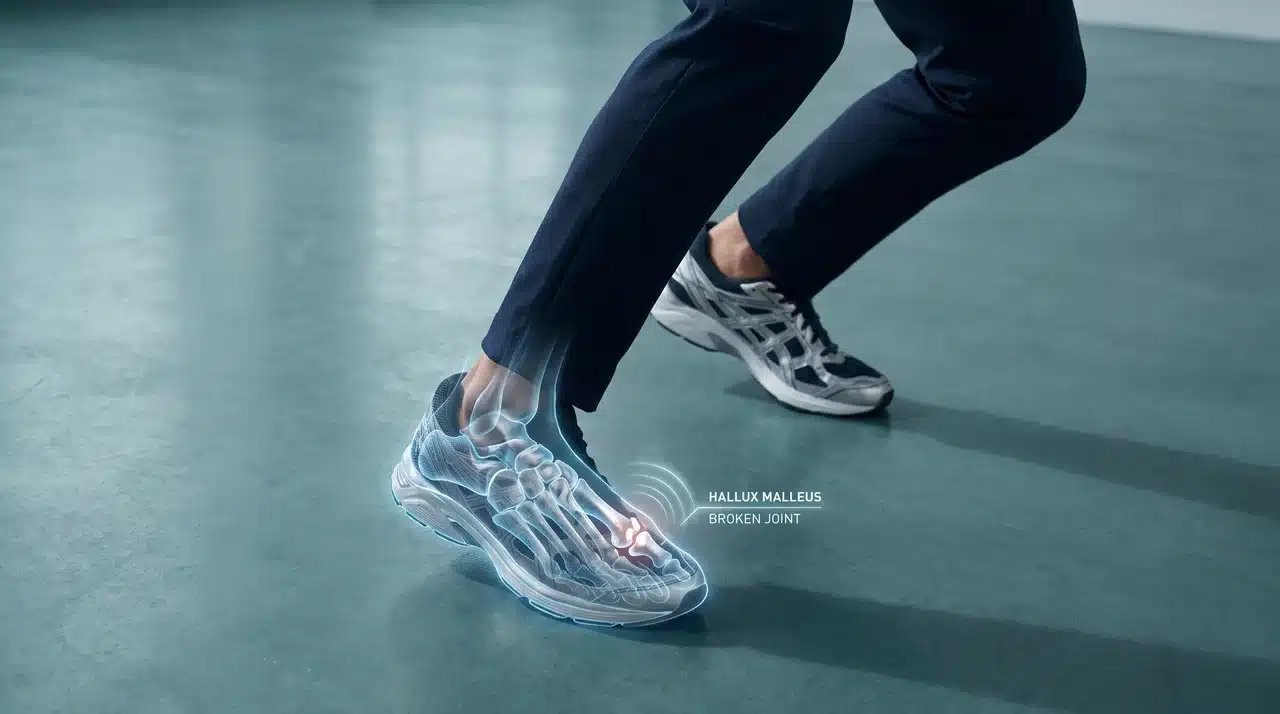
Hallux malleus weakens your push-off and throws off your walking pattern. Your big toe handles a large share of your body weight with every step.
When the hallux malleus changes how that joint moves, your entire walking pattern adjusts.
- Your push-off gets weaker and less steady
- Pressure builds up under the ball of your foot
- Your ankle and knee start compensating, which adds strain there too
- Your arch takes on pressure that it was not built to handle
- Walking becomes more tiring over time
These changes build up slowly. You may not notice them until walking starts to feel like real effort.
Non-Surgical Treatment Options for Hallux Malleus
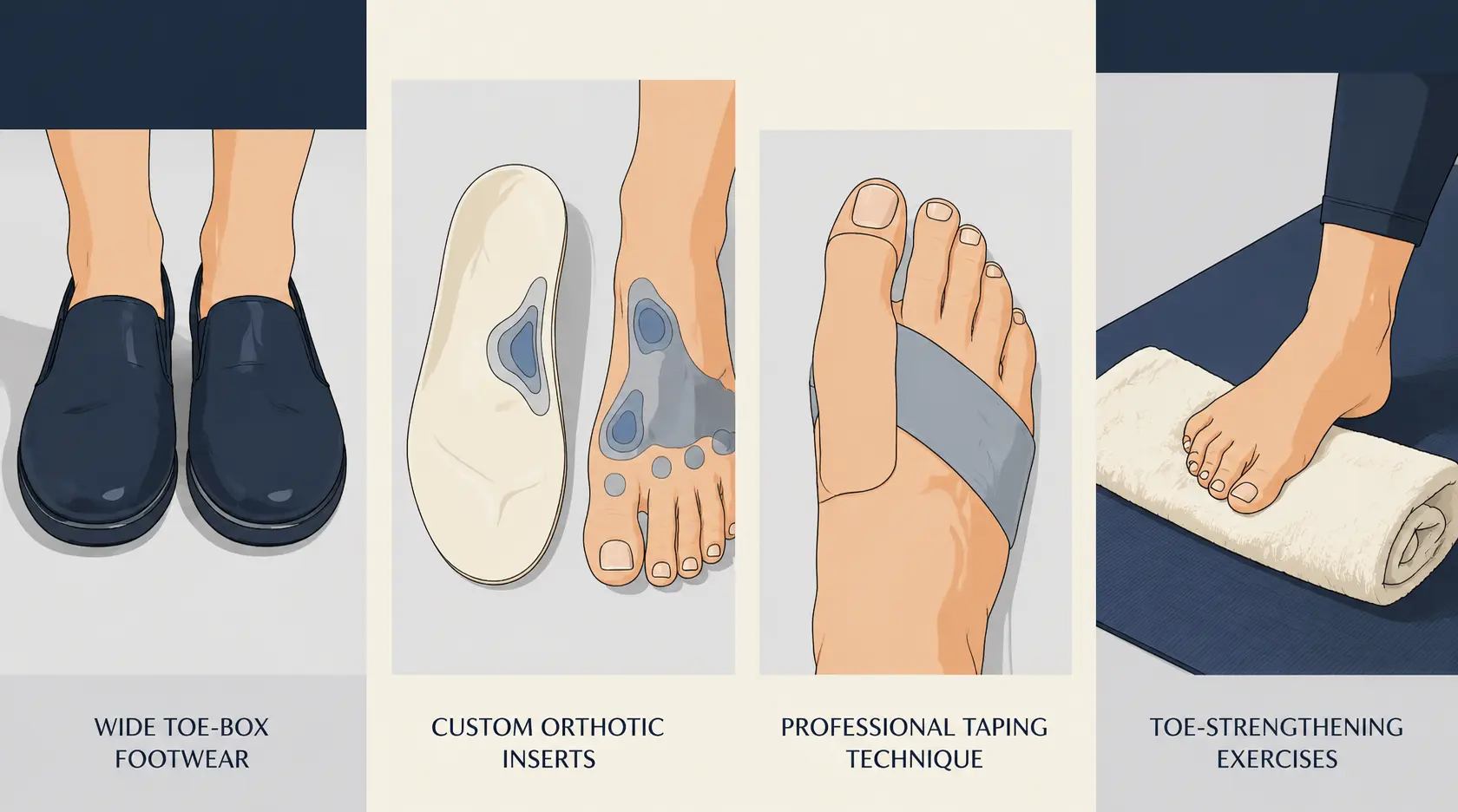
Non-surgical care is the first step for hallux malleus. It works best during the early and middle stages, and many patients find lasting relief without needing an operation.
Footwear changes: Switching to shoes with a wide toe box takes pressure off the joint right away.
Orthotics and inserts: Custom inserts redistribute pressure under the ball of your foot and support the metatarsal area.
Taping and splinting: Taping helps realign the toe early on. Night splints offer gentle, passive correction while you sleep.
Toe strengthening exercises: Toe curls, towel scrunches, and balance work build up the small muscles that stabilize your toe. If you are also dealing with hammer toe in the smaller toes, these same exercises are central to fixing hammer toe across the foot.
When Does Hallux Malleus Need Surgery?

Surgery usually comes up after conservative care stops helping. Here is when doctors typically recommend it.
- Pain sticks around despite months of non-surgical care
- The toe has become rigid and will not respond to bending
- Skin breaks down from constant pressure and rubbing
- Your normal walking pattern has been lost
If you are at this point, it is worth talking to a podiatrist about your specific case before deciding on a path forward.
What Surgical Options Are Available?
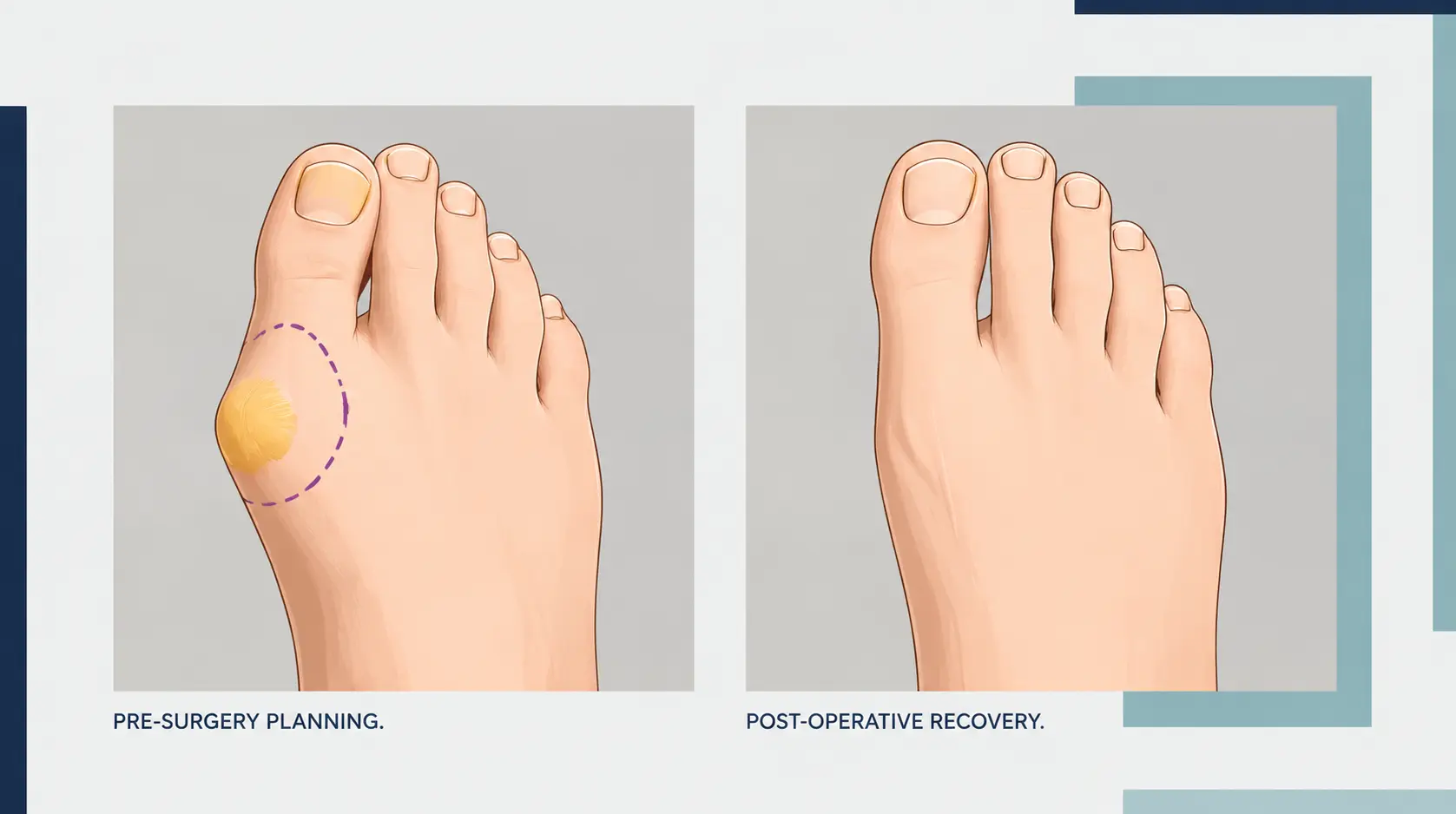
Several procedures used for hammer toe correction also apply to hallux malleus. The right option depends on how severe and flexible the deformity is.
In mild to moderate cases, tendon release reduces the pulling force keeping the toe bent.
Joint realignment can help restore a more natural toe alignment.
For severe, rigid deformities, fusion may be used to stabilize the joint when soft-tissue correction alone is not sufficient.
Surgeons may also use minimally invasive techniques. These involve smaller incisions and aim to reduce soft-tissue disruption and shorten recovery.
If multiple toes are affected, the surgical plan may overlap with broader forefoot correction strategies.
Who Is at Higher Risk of Developing Hallux Malleus?
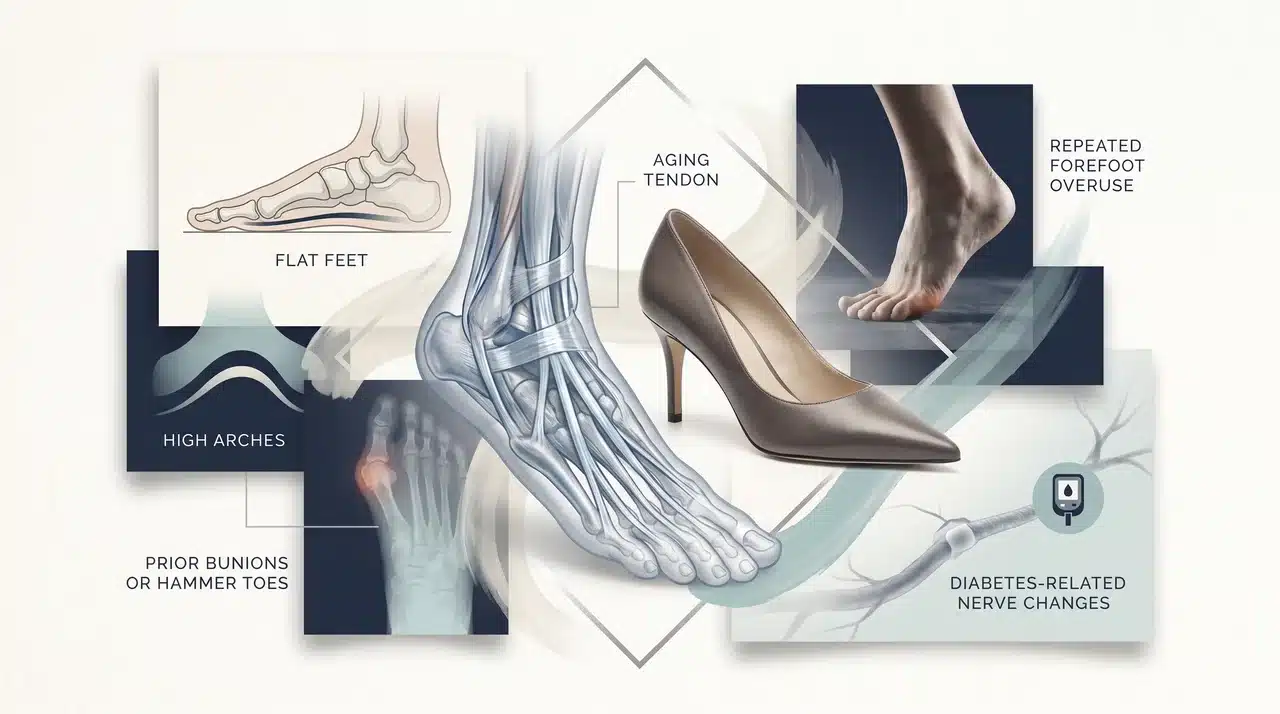
Certain factors raise your risk of developing hallux malleus. Knowing which ones apply to you can help you act before symptoms appear.
These risk factors often overlap. Someone with a history of bunions may also experience related toe crowding, which increases the odds of developing hallux malleus.
Watch for these risk factors:
- Regularly wearing tight, narrow, or pointed shoes
- Tendons that naturally stiffen with age, reducing joint flexibility
- Repeated forefoot overuse from running, court sports, or standing jobs
- Foot structure you were born with, including flat feet or a high arch
- Diabetes and the nerve sensitivity changes that often come with it
- A personal history of bunions or hammer toes elsewhere in the foot
How Can You Prevent Hallux Malleus?

Prevention comes down to a few consistent habits. None of them are complicated or require special equipment.
Small, consistent habits protect your feet more effectively than any single fix. That is especially true once damage has already set in.
- Choose supportive, wide-toed shoes before problems start
- Do toe mobility exercises a few times a week
- Avoid standing for long periods in tight forefoot pressure
- Get any early bending checked out right away
- Keep the small muscles in your foot active and strong
What is the ICD-10 code for Hallux Malleus?
The ICD-10-CM code for hallux malleus depends on which foot is affected. Code M20.40 covers acquired hallux malleus of an unspecified foot, while M20.31 applies to the right foot and M20.32 to the left foot.
These are billable, specific codes valid for HIPAA-covered transactions and fall under the broader category of acquired deformities of the toes.
If both feet are involved, the bilateral form is documented under the same code family.
Doctors and coders use these codes to record the diagnosis officially, process insurance claims, and track treatment outcomes across visits
Disclaimer: This article is for general informational purposes only and is not a substitute for professional medical advice, diagnosis, or treatment. Hallux malleus and other toe deformities can have different causes and require different care. Always consult a qualified healthcare provider, podiatrist, or orthopedic specialist for an accurate evaluation and personalized treatment plan.
Conclusion
So where does this leave you? Hallux malleus is a hammer toe that settles into your big toe instead of the smaller ones.
Because that toe carries so much of your body weight, the effects spread further than you might expect.
This condition rarely appears without warning; it builds slowly through muscle imbalance and pressure that adds up over years.
That means you usually get a window to act before things get worse. Catching it while the toe is still flexible gives you access to the gentlest treatments.
If the deformity has already become rigid, surgery is not something to fear. What matters most is paying attention early and working with a podiatrist who can guide your next step.
Frequently Asked Questions
Is Walking Barefoot Helpful or Harmful for Hallux Malleus?
Short barefoot walking on safe, soft surfaces may help strengthen foot muscles, but avoid it if it increases pain or stress on the toe.
What Happens if Hallux Malleus is Left Untreated?
It can gradually worsen, becoming stiffer and more painful. Ongoing pressure may also lead to corns, rubbing, shoe irritation, and difficulty with walking.
What is Acquired Hallux Malleus?
Hallux malleus develops later in life rather than being present from birth and is often linked to foot misalignment, footwear, movement patterns, or trauma.