
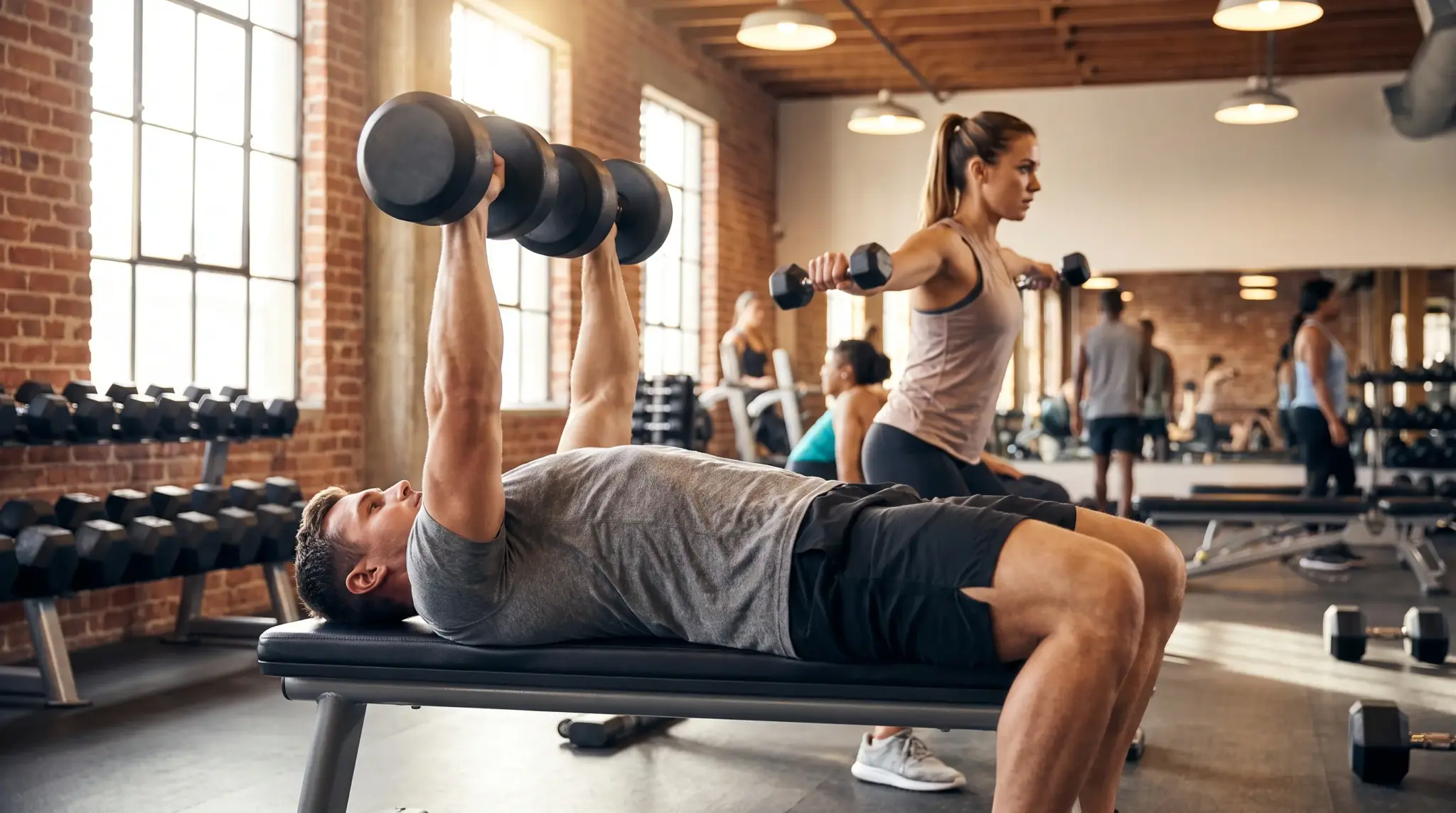
A chest workout with dumbbells builds real strength without a barbell rack or a spotter. Most people assume they need a packed gym to train their chest properly. They don’t.
Free-weight chest exercises give each arm an independent path. That stops your stronger side from taking over during every set. The result is more balanced pressing strength and a deeper stretch on every rep.
In this post, you will find the best dumbbell chest exercises broken down by fitness level.
You will also get ready-to-use workout plans and form cues to keep your shoulders safe throughout every session.
Why Use Dumbbells for Chest Training?
Dumbbells let you control the pressing path more freely than a barbell. Without a bar limiting your path, you can lower the weights further on each rep. That extra depth creates a longer stretch at the bottom of each movement. It places more demand on your chest muscles.
A barbell can let the stronger side carry the weaker one. Dumbbells stop that from happening. Both sides must lift their own weight on every rep, which builds more balanced strength over time.
Dumbbells also fit into different training setups. A home gym, a commercial gym, or a small room with limited equipment all work. You do not need special machines or a full bench setup for every exercise in this list.
Which Chest Muscles Do Dumbbell Exercises Target?
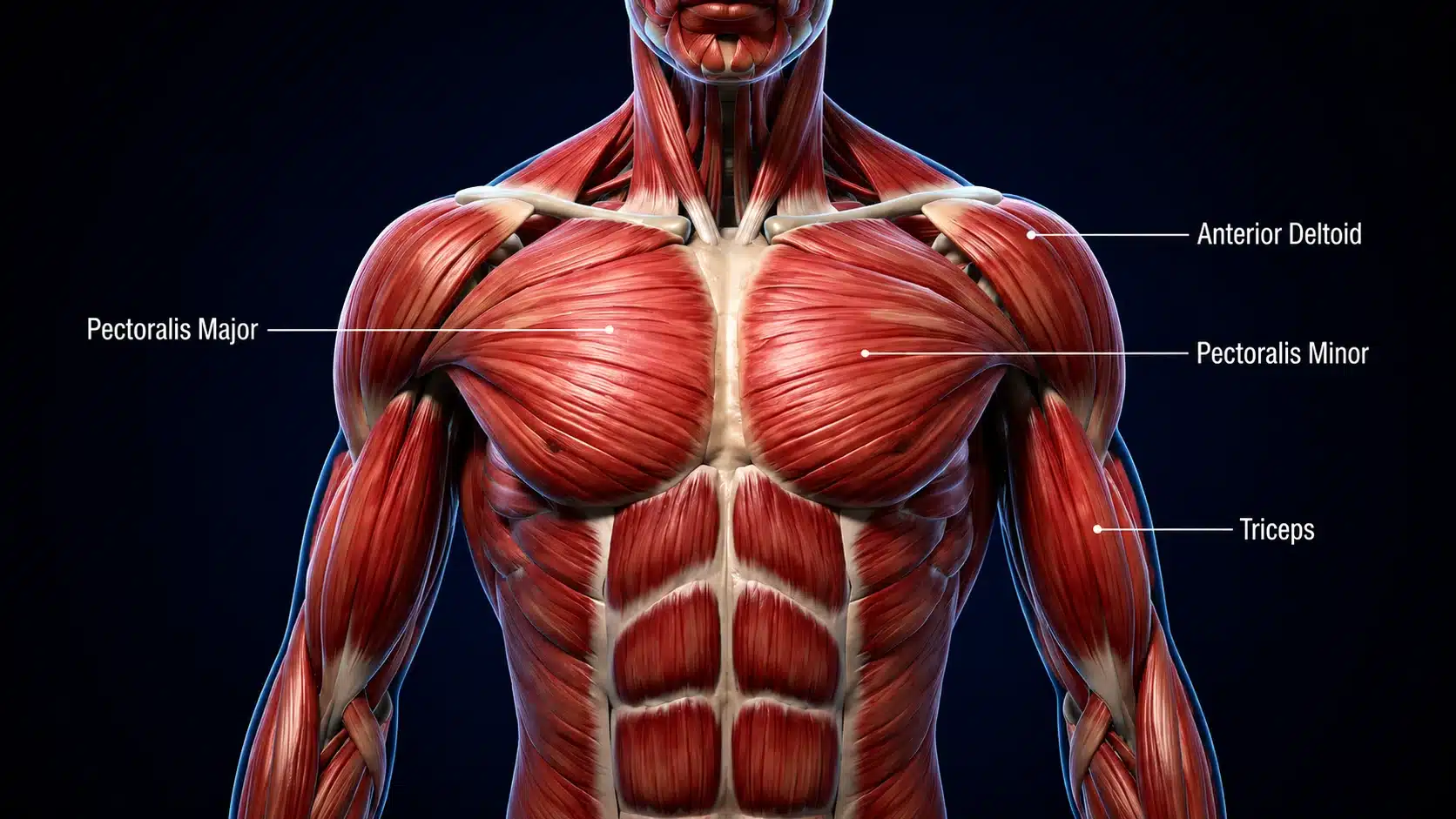
Dumbbell chest exercises primarily work the pectoralis major. This is the large, fan-shaped muscle that covers most of your chest. It drives every pressing and flying movement.
The pectoralis minor sits underneath it. It stabilizes the shoulder blade throughout those same movements.
Your front shoulders and triceps assist during presses. These are compound movements, meaning they involve more than one joint.
The angle of your press determines which part of the chest works hardest:
- Flat press: targets the middle chest
- Incline press: shifts the focus to the upper chest
- Decline press: targets the lower chest
Training all three angles means you work the full muscle, not just one section.
Best Chest Exercises With Dumbbells
A complete chest workout with dumbbells combines pressing movements with fly movements. Pressing builds overall upper body strength. Fly movements isolate the chest and build control through a wider range of motion.
A good session uses 2 to 4 exercises. Mix one or two presses with one or two fly variations. The 10 exercises below cover every angle of your chest. Each one lists the muscles targeted, the equipment needed, and a key form cue.
1. Dumbbell Bench Press
Credits: Jay Gardner
Target muscles: Middle chest, triceps, front shoulders. Equipment: Flat bench, two dumbbells. Level: Beginner
The dumbbell bench press is a strong starting point for any chest session. The movement is straightforward. Each arm works independently, which helps correct strength differences between sides over time.
How to do it:
- Sit on a flat bench with a dumbbell in each hand. Rest the weights on your thighs.
- Lie back and bring the dumbbells to chest level with palms facing forward.
- Press upward until your arms are fully extended above your chest.
- Lower the dumbbells slowly until your elbows drop slightly below chest level.
- Press back up with control throughout.
Form cue: Keep your wrists stacked above your elbows. Avoid letting your elbows flare out to 90 degrees. A 45-degree elbow angle reduces shoulder strain and keeps the chest doing most of the work.
2. Dumbbell Incline Press
Credits: Max Euceda
Target muscles: Upper chest, front shoulders, triceps. Equipment: Adjustable bench, two dumbbells. Level: Beginner
The incline press places more focus on the upper chest. The angled pressing path sets it apart from a flat press, making it a useful addition to any chest session.
You need an adjustable bench and two dumbbells.
How to do it:
- Set the bench to a 30- to 45-degree angle.
- Sit back and bring the dumbbells to shoulder height with palms facing forward.
- Press upward and slightly inward until your arms are fully extended above your upper chest.
- Lower slowly until you feel a stretch across your upper chest.
- Press back up while keeping your shoulders stable.
Key form cue: Do not set the bench above 45 degrees. Higher angles shift the work from your chest to your shoulders.
3. Dumbbell Decline Press
Credits: My Training App
Target muscles: Lower chest, triceps. Equipment: Decline bench, two dumbbells. Level: Intermediate
The decline press targets the lower chest and engages the triceps. Pressing from a decline angle requires more control and stability. This exercise suits intermediate lifters who are already comfortable with flat pressing.
You need a decline bench with secure foot support.
How to do it:
- Secure your feet on the decline bench. Hold a dumbbell in each hand.
- Lie back carefully and position the weights near your lower chest.
- Press the dumbbells upward until your arms are straight.
- Lower slowly toward the lower part of your chest.
- Press back up with your hips and upper back fully supported.
Key form cue: Take your time setting up before each set. Secure foot placement is important for maintaining control throughout the movement.
4. Dumbbell Chest Fly
Credits: My Training App
Target muscles: Middle chest, front shoulders. Equipment: Flat bench, two dumbbells. Level: Beginner
The chest fly is an isolation exercise that works the middle chest and front shoulders through a wide-arm movement rather than a press. Many lifters use it to build chest strength and muscle control.
It is beginner-friendly and works well with lighter weights than pressing movements.
How to do it:
- Lie on a flat bench with a dumbbell in each hand above your chest.
- Extend your arms upward with a slight bend in your elbows.
- Lower the dumbbells outward in a wide arc until you feel a stretch across your chest.
- Pause briefly at the bottom without letting your shoulders roll forward.
- Bring the dumbbells back together along the same arc.
Key form cue: Do not bend your elbows too much during the movement. Excessive elbow bend turns the fly into a press and reduces chest activation.
5. Dumbbell Incline Fly
Credits: MyTraining App
Target muscles: Upper chest, front shoulders. Equipment: Adjustable bench, two dumbbells. Level: Intermediate
The incline fly shifts the focus to the upper chest using an angled bench. It is an intermediate isolation exercise that builds control and stretch under tension.
You need an adjustable bench set to 45-60 degrees and lighter dumbbells.
How to do it:
- Set the bench to 45-60 degrees. Sit back with a dumbbell in each hand.
- Hold the weights above your upper chest with palms facing inward and elbows slightly bent.
- Lower the dumbbells outward in a slow, controlled arc.
- Stop when you feel a comfortable stretch through your upper chest.
- Bring the dumbbells back along the same path. Do not lock your elbows.
Key form cue: Use slow, controlled reps rather than heavy weights. Dropping the dumbbells too fast at the bottom increases stress on the shoulder joint.
6. Dumbbell Floor Press
Credits: Colossus Fitness
Target muscles: Middle chest, triceps. Equipment: Two dumbbells, flat floor. Level: Beginner
The floor press targets the middle chest and triceps. The floor limits your range of motion, which reduces shoulder strain compared to a standard bench press. This makes it a good option for beginners, home workouts, or anyone managing shoulder discomfort.
All you need is a pair of dumbbells and a flat floor.
How to do it:
- Lie on your back with knees bent and feet flat on the floor.
- Hold a dumbbell in each hand at chest level with palms facing forward.
- Press upward until your arms are fully extended above your chest.
- Lower slowly until your upper arms gently touch the floor.
- Pause briefly, then press back up.
Key form cue: Do not let your arms drop heavily onto the floor between reps. A controlled touch keeps tension on the chest and protects the shoulder joint.
7. Dumbbell Pullover
Credits: MyTraining App
Target muscles: Chest, lats, triceps. Equipment: One dumbbell, flat bench. Level: Intermediate
The pullover is an intermediate exercise that works the chest, lats, and triceps using a single dumbbell. It uses a long range of motion that challenges chest flexibility and control.
You need one dumbbell and a flat bench.
How to do it:
- Lie across a flat bench with only your upper back supported. Keep your feet firmly on the floor.
- Hold one dumbbell with both hands above your chest. Keep your arms slightly bent.
- Lower the dumbbell backward over your head in a controlled arc.
- Stop when you feel a stretch through your chest and upper body.
- Pull the dumbbell back over your chest using your chest and back muscles.
Key form cue: Keep a slight bend in your elbows throughout the movement. Locking your arms places unnecessary stress on the shoulder joint.
8. Dumbbell Squeeze Press
Credits: Lift With Michelle
Target muscles: Inner chest, triceps, front shoulders. Equipment: One dumbbell. Level: Intermediate
The squeeze press builds tension on the inner chest by pressing the dumbbell firmly between both hands throughout the movement. Unlike a standard press, the constant inward pressure adds muscle engagement with a lighter load.
You only need one dumbbell for this exercise.
How to do it:
- Hold one dumbbell vertically with both hands, pressing in from either side.
- Lie back on a flat bench and position the dumbbell above your chest.
- Squeeze the dumbbell firmly between your palms.
- Lower the weight slowly toward your chest while keeping the inward pressure.
- Press back up until your arms are extended. Keep the squeeze active throughout.
Key form cue: The exercise only works when you maintain constant pressure between your hands. Releasing the squeeze reduces tension on the chest muscles.
9. Dumbbell Push Up
Credits: Mike | J2FIT Strength & Conditioning
Target muscles: Chest, shoulders, triceps, core Equipment: Two dumbbells Level: Beginner
The dumbbell push-up uses dumbbells as handles to train the chest, shoulders, triceps, and core. Gripping dumbbells keeps your wrists in a neutral position. This makes the movement more comfortable than placing your hands flat on the floor.
You can do this almost anywhere with a pair of dumbbells.
How to do it:
- Place two dumbbells on the floor, slightly wider than shoulder-width apart.
- Grip the handles and get into a straight-line position from head to heels.
- Lower your chest toward the floor with your elbows slightly tucked.
- Pause briefly at the bottom.
- Push through the dumbbells and return to the starting position.
Key form cue: Keep your core tight throughout. Letting your hips drop or rise breaks your alignment and reduces chest activation.
10. Single Arm Floor Press
Credits: Littauer Strength Training
Target muscles: Chest, triceps, core. Equipment: One dumbbell. Level: Advanced
The single-arm floor press is an advanced exercise that works the chest, triceps, and core. Working one side at a time forces your core to resist rotation. Your chest must work without the other side compensating.
How to do it:
- Lie on your back with knees bent. Hold one dumbbell at chest level on the working side.
- Extend your opposite arm flat on the floor for balance.
- Press the dumbbell upward until your working arm is fully extended.
- Lower slowly until your upper arm lightly touches the floor.
- Press back up while keeping your hips and shoulders flat.
Key form cue: Watch for body rotation as you press. If your torso twists toward the working side, reduce the weight. Build core control first, then add load.
Choosing Dumbbell Chest Exercises by Fitness Level
Your exercise selection should match your current strength, control, and training experience. Beginners should master basic movements first. More experienced lifters can add variations that challenge stability and range of motion
| Fitness Level | Best Exercise Choices | Training Focus | Recommended Approach |
|---|---|---|---|
| Beginner | Dumbbell bench press, dumbbell chest fly, dumbbell push-up | Learn proper pressing mechanics, build chest activation, and improve shoulder stability | Use controlled movements and a full range of motion. Start with 2 sets of 10–12 reps per exercise before increasing weight. |
| Intermediate | Dumbbell incline press, dumbbell decline press, dumbbell pullover | Add angles to target different chest areas and build balanced development | Use moderate weights with controlled speed. Aim for 3–4 sets and adjust reps based on your training goal. |
| Advanced | Single-arm floor press, dumbbell squeeze press, advanced pressing variations | Build unilateral strength, stability, and chest and core control | Add techniques like slower reps, drop sets, or shorter rest only after you can maintain solid form with heavier loads. |
Safety Tips for Dumbbell Chest Training
Many training problems come from lifting too much weight, rushing through reps, or losing proper form during a set.
Excessive weight reduces your range of motion and pushes stress toward your shoulders. Keep your elbows controlled, your shoulders stable, and your movements smooth throughout each exercise.
Warm up before your heavier sets. Give your muscles enough time to recover between sessions to support muscle growth.
If an exercise causes sharp pain or discomfort, reduce the weight, adjust the movement, or speak with a professional if the issue continues. Good form and smart training habits protect your joints over the long term.
How to Structure a Chest Workout With Dumbbells
The right combination of exercises, sets, reps, and rest depends on your training goal, experience level, and available equipment. A good chest workout with dumbbells balances pressing movements with chest-focused isolation work.
| Training Goal | Exercises | Sets and Reps | Rest Time |
|---|---|---|---|
| Beginner Workout | Dumbbell bench press, chest fly, dumbbell push-up | 2–3 sets of 10–12 reps each | 60 seconds |
| Muscle Growth | Bench press, incline press, chest fly, pullover | 3–4 sets of 8–15 reps each | 45–90 seconds |
| Strength-Focused | Bench press, incline press, single-arm floor press | 4–5 sets of 5–8 reps each | 90–120 seconds |
| Home Workout | Floor press, squeeze press, dumbbell push-up | 3 sets of 10–15 reps each | 45–60 seconds |
Training the chest two to four times per week with at least one rest day between sessions supports steady progress. Adjust the weight and volume over time as your strength improves. Do not increase intensity too quickly.
How to Keep Building Chest Strength With Dumbbells
Progress with free weight chest exercises comes from gradually increasing the challenge over time. This is called progressive overload.
There are three simple ways to apply it:
- Add reps first. Complete 1 to 2 extra reps per set before increasing weight.
- Add weight in small steps. When you can hit all your target reps with clean form, add the smallest increment available. Usually that means 2.5 lb per side.
- Slow the lowering phase. A 3-second lowering phase increases the time your muscles spend under tension without changing the load. This is a useful way to add difficulty without going heavier.
Form matters at every stage. Use a full range of motion on every rep. Control the weight from start to finish. A lighter dumbbell with better technique places more tension on your chest than a heavier weight with poor control.
Build Your Chest With Confidence
A chest workout with dumbbells gives you everything you need to build real pressing strength. Pick exercises that match your current fitness level.
Start with clean form before you add weight. Train two to four times a week and give your muscles enough recovery time between each session.
Small weekly improvements in weight or reps add up over months of consistent, focused training. Use the workout table above that matches your goal.
Choose two to three exercises and keep your technique steady across every set. A reliable routine built around free-weight chest exercises produces real, lasting results.
Frequently Asked Questions
How often should you do a chest workout with dumbbells?
Training your chest 2 to 4 times per week works well for most people. Include at least one full rest day between each session. This gives your muscles enough time to repair and adapt between workouts.
What dumbbell weight should beginners use for chest day?
Start with a weight that lets you complete 10 to 12 controlled reps with good form. If the last 2 reps feel hard but doable, the weight is right. Add weight gradually as your strength improves over weeks of consistent training.
Is a bench necessary for dumbbell chest exercises?
No. Floor presses and floor fly variations replace bench exercises and train the chest well at home. They also reduce shoulder strain because the floor limits the range of motion. Most exercises in this list work without any bench at all.
Can a chest workout with dumbbells build the same muscle as a barbell?
Yes. Dumbbell training builds chest strength and muscle size well. Dumbbells also allow a greater range of motion and help correct strength imbalances between sides. The results are comparable to barbell training when training is consistent and progressive overload is applied.
What is the difference between a chest press and a chest fly with dumbbells?
A press is a compound movement that also works your triceps and shoulders. A fly is an isolation exercise that focuses on the chest through a wide arc. Most chest sessions benefit from using both types together for complete chest development.



2 Responses