
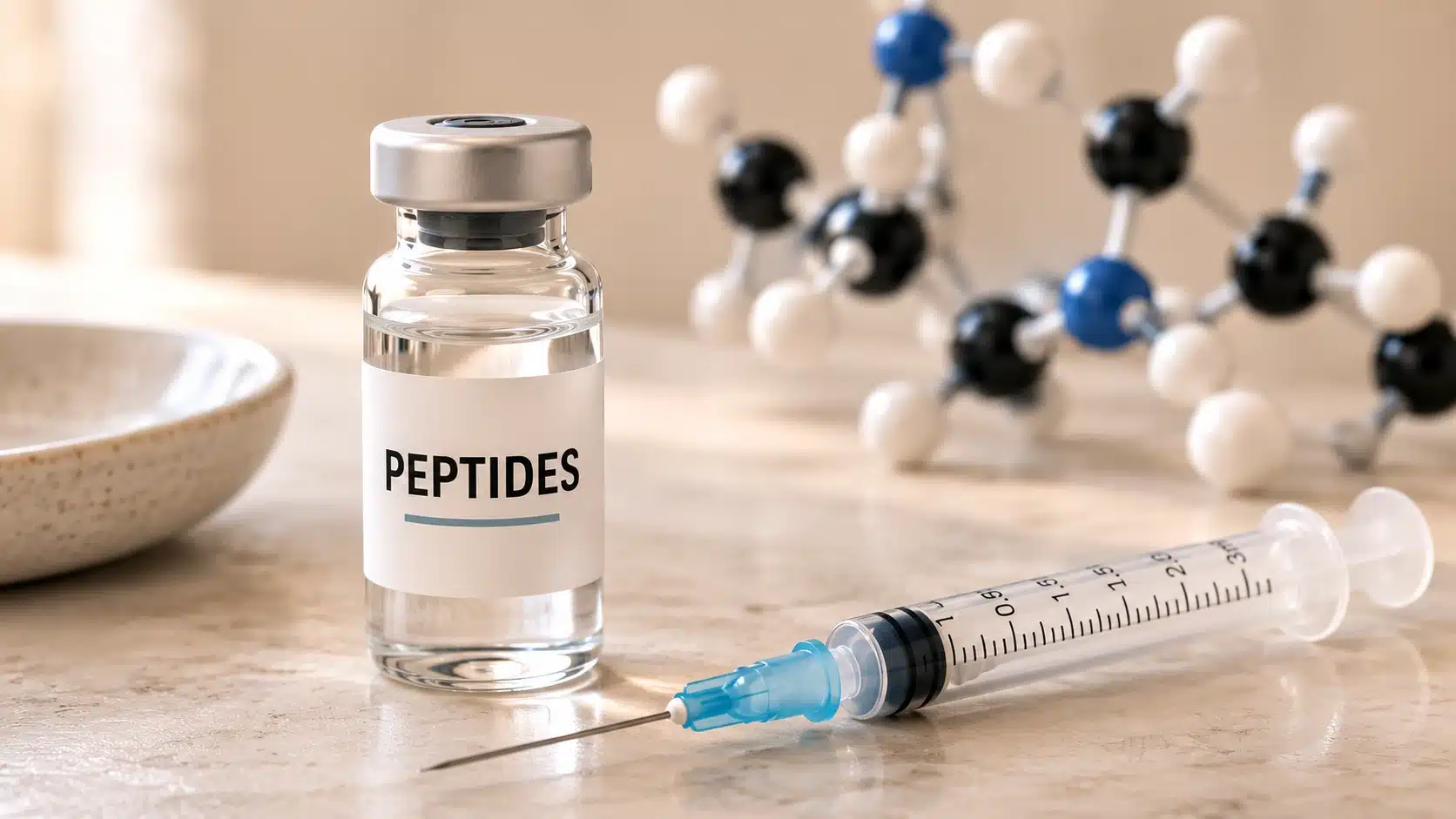
Peptides now appear in skincare, supplements, medicines, and wellness products, but their uses and evidence vary widely. Some have established medical or nutritional roles, while others come with claims that research has not fully supported.
This article looks at how peptides work, where they are used, and what the science actually says.
What are peptides?
Peptides are short chains of amino acids held together by chemical bonds. StatPearls, published by the NIH, defines peptides as short chains of 2 to 50 amino acids.
A protein might contain hundreds or even thousands of amino acids folded into a complex structure. A peptide is a shorter sequence built for one specific, targeted job. Your body produces peptides constantly. Scientists have also learned to make them in labs for medical use.
The table below compares peptides and proteins at a glance.
| Feature | Peptides | Proteins |
|---|---|---|
| Chain length | 2 to 50 amino acids | Often hundreds of amino acids or more |
| Primary role | Signals and chemical messengers | Structure and major body functions |
| Scope | One specific biological process | Broad, complex functions throughout the body |
| Examples | Insulin, GLP-1, collagen peptides | Collagen, keratin, muscle proteins, enzymes |
Small in size, but significant in function: understanding what peptides are and what they do gives you a much better handle on how your body actually works.
How do peptides work in the body?
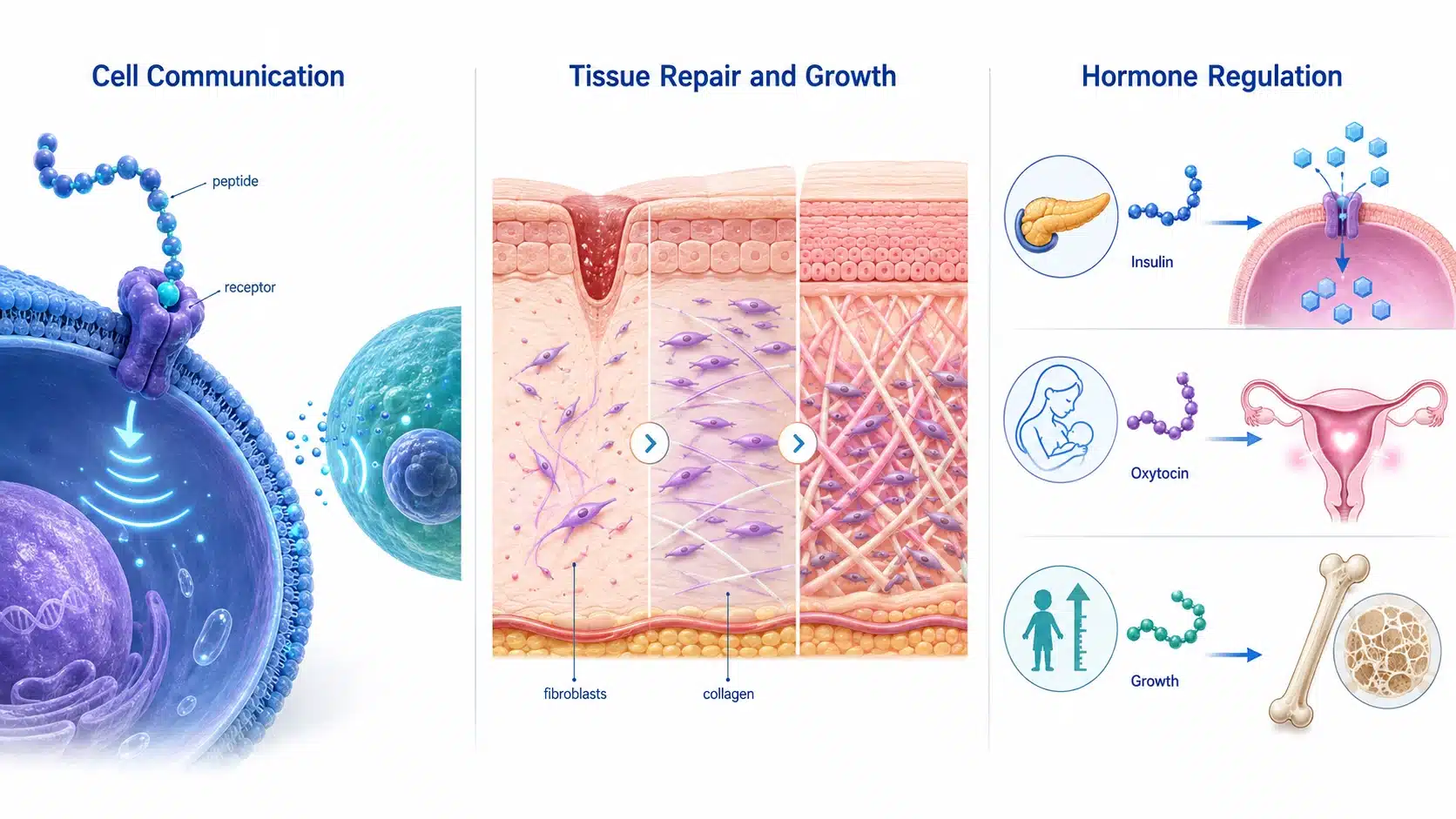
Peptides work as biological messengers. They carry signals between cells. These signals tell your body when to repair tissue, release hormones, or respond to inflammation and stress.
1. Cell communication
A peptide binds to a receptor on a cell’s surface. That binding triggers the cell to change its behavior. The cell might divide, produce a protein, or release another chemical signal.
2. Tissue repair and growth
Some peptides support the body’s natural repair pathways. In skin, certain peptides signal fibroblasts to ramp up collagen and elastin production. Fibroblasts are the cells responsible for building and maintaining connective tissue.
3. Hormone regulation
Several well-known hormones are actually peptides. Insulin is a 51-amino-acid peptide hormone. It helps cells absorb glucose from food for energy. It also tells the liver to store any excess glucose.
Other common peptide hormones include:
- GLP-1 (glucagon-like peptide-1): regulates appetite and blood sugar after eating
- Oxytocin: involved in social bonding, labor, and stress response
- Growth hormone-releasing peptides: influence growth and metabolic processes
4. Immune support
Certain peptides help regulate immune responses. They act as part of the signaling network. This network tells immune cells when to activate and when to stand down.
As Harvard Health notes, peptides help coordinate hormone activity, immune defense, tissue repair, inflammation control, and digestion. Their reach goes far beyond the skincare aisle.
Types of peptides and their functions
Not all peptides do the same job. There are four main categories based on how each one acts in the body. The table below gives a quick overview before each type is covered in detail.
1. Signal peptides
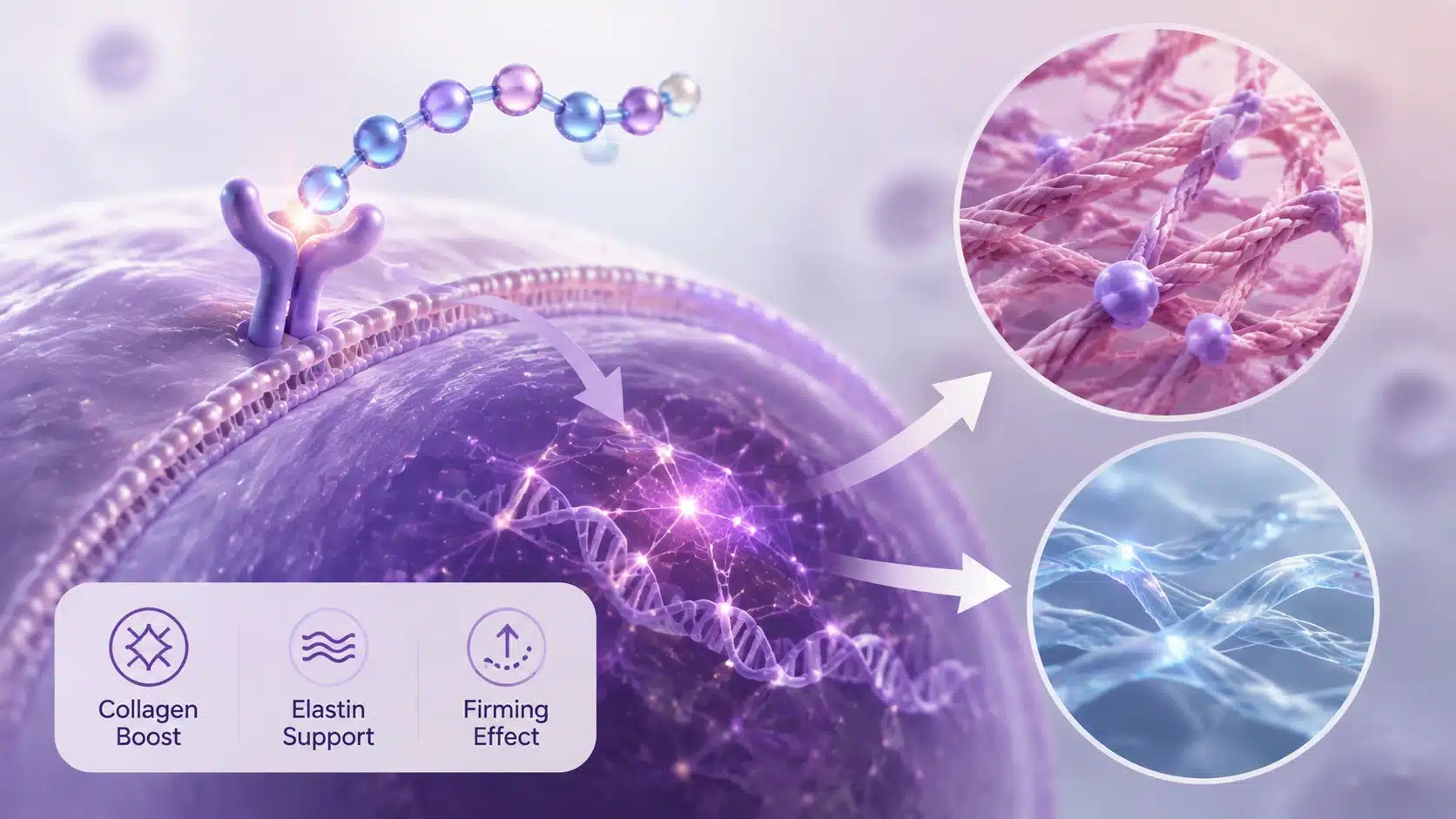
Signal peptides act as messengers to skin cells. They tell fibroblasts to produce more collagen and elastin. These are the two structural proteins that give skin its firmness and bounce.
As skin ages, collagen production naturally slows. Signal peptides step in and prompt cells to ramp up production again. They are among the most researched peptide types in skincare.
How they work: A signal peptide binds to a receptor on a skin cell. That binding sends a message to increase collagen output. The effect is gradual and builds with consistent daily use.
Key benefits:
- Supports collagen production
- Helps improve skin firmness over time
- Reduces visible signs of skin aging with regular use
Common examples: Palmitoyl pentapeptide-4 (Matrixyl), palmitoyl tripeptide-1, palmitoyl tetrapeptide-7
2. Carrier peptides
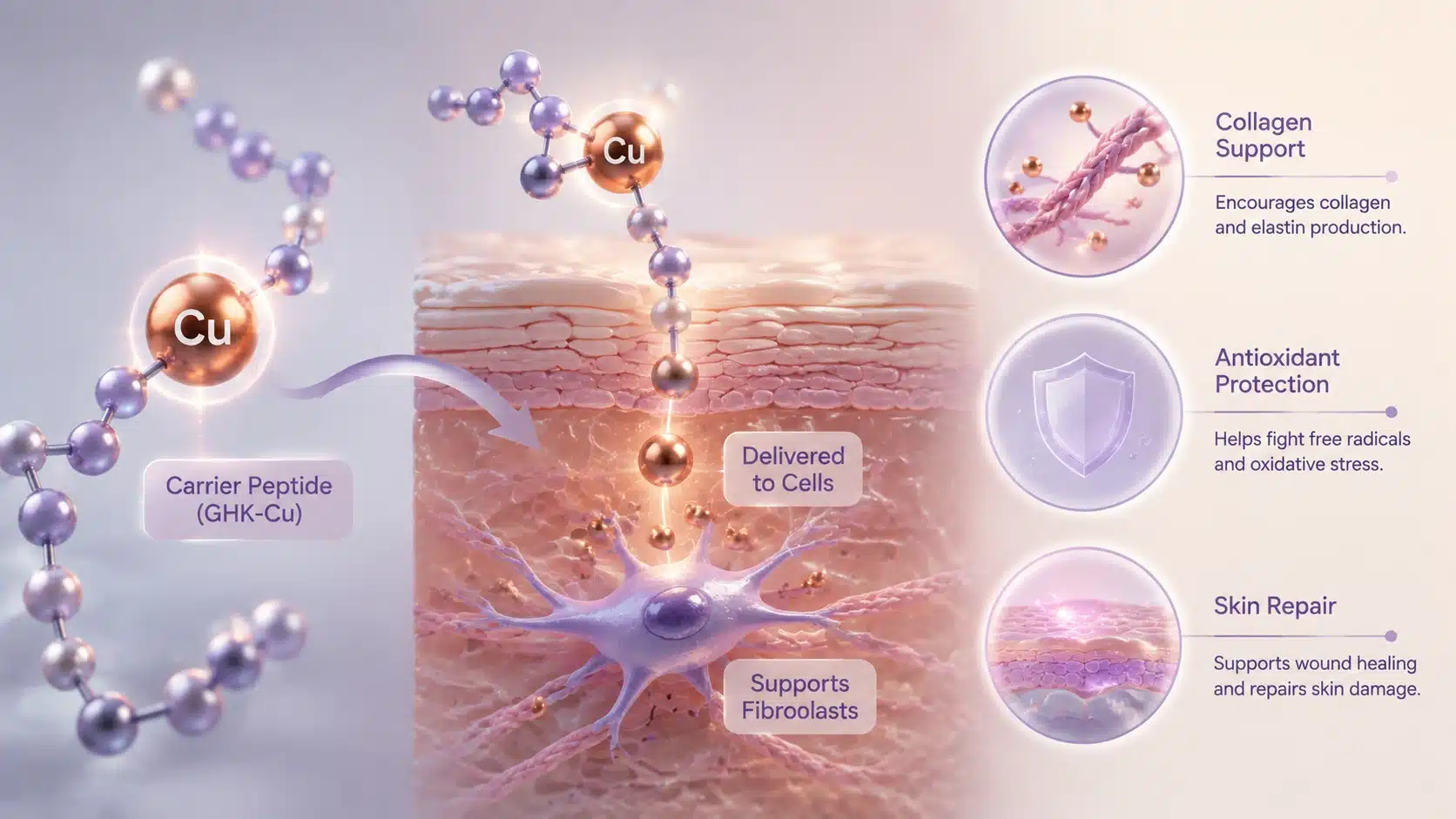
Carrier peptides deliver trace elements to where the body needs them most. The best-known example is copper peptides, which carry copper ions directly to skin tissue.
Copper plays a key role in collagen cross-linking. It also activates enzymes that keep skin firm and healthy. Without an efficient delivery system, copper does not reach the skin in a usable form.
How they work: The peptide binds to a mineral and carries it into the skin. Once delivered, the mineral supports repair, enzyme activity, and collagen structure.
Key benefits:
- Supports wound healing and skin repair
- Acts as an antioxidant in skin tissue
- Promotes collagen and elastin production
Common example: GHK-Cu (copper peptide)
3. Enzyme-inhibitor peptides
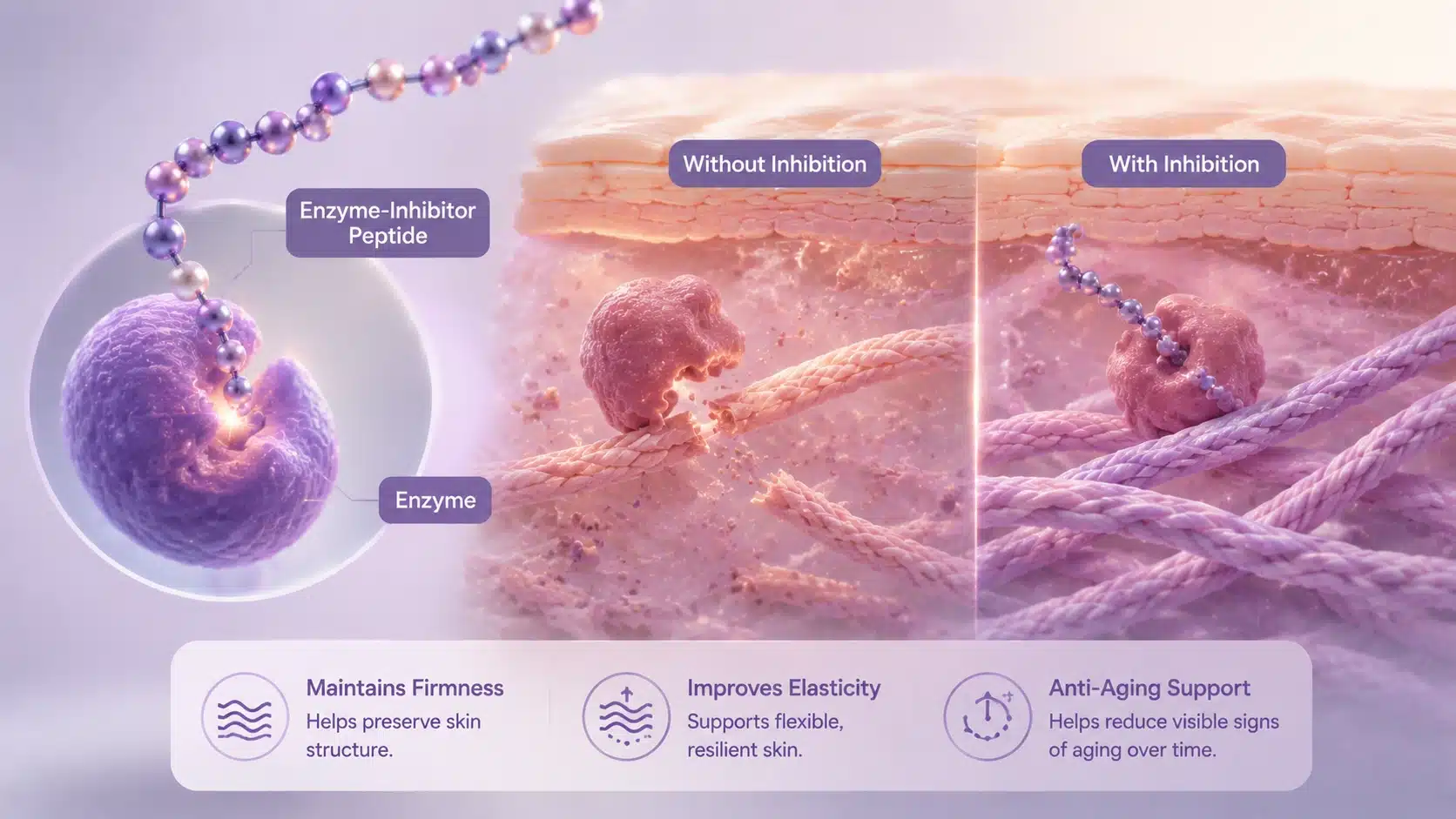
Enzyme-inhibitor peptides slow down the enzymes that break down collagen. These enzymes, called matrix metalloproteinases (MMPs), increase with age and sun exposure.
When MMP activity goes unchecked, collagen degrades faster than the body can replace it. Enzyme-inhibitor peptides block or slow this process. This helps skin hold onto its structure for longer.
How they work: These peptides mimic the enzyme’s natural substrate. They bind to the active site of the MMP and block it from breaking down collagen fibers.
Key benefits:
- Helps maintain collagen density over time
- Supports skin firmness and elasticity
- Works best alongside signal peptides in anti-aging formulas
Common examples: Soybean-derived peptides, silk peptides
4. Neurotransmitter-inhibiting peptides
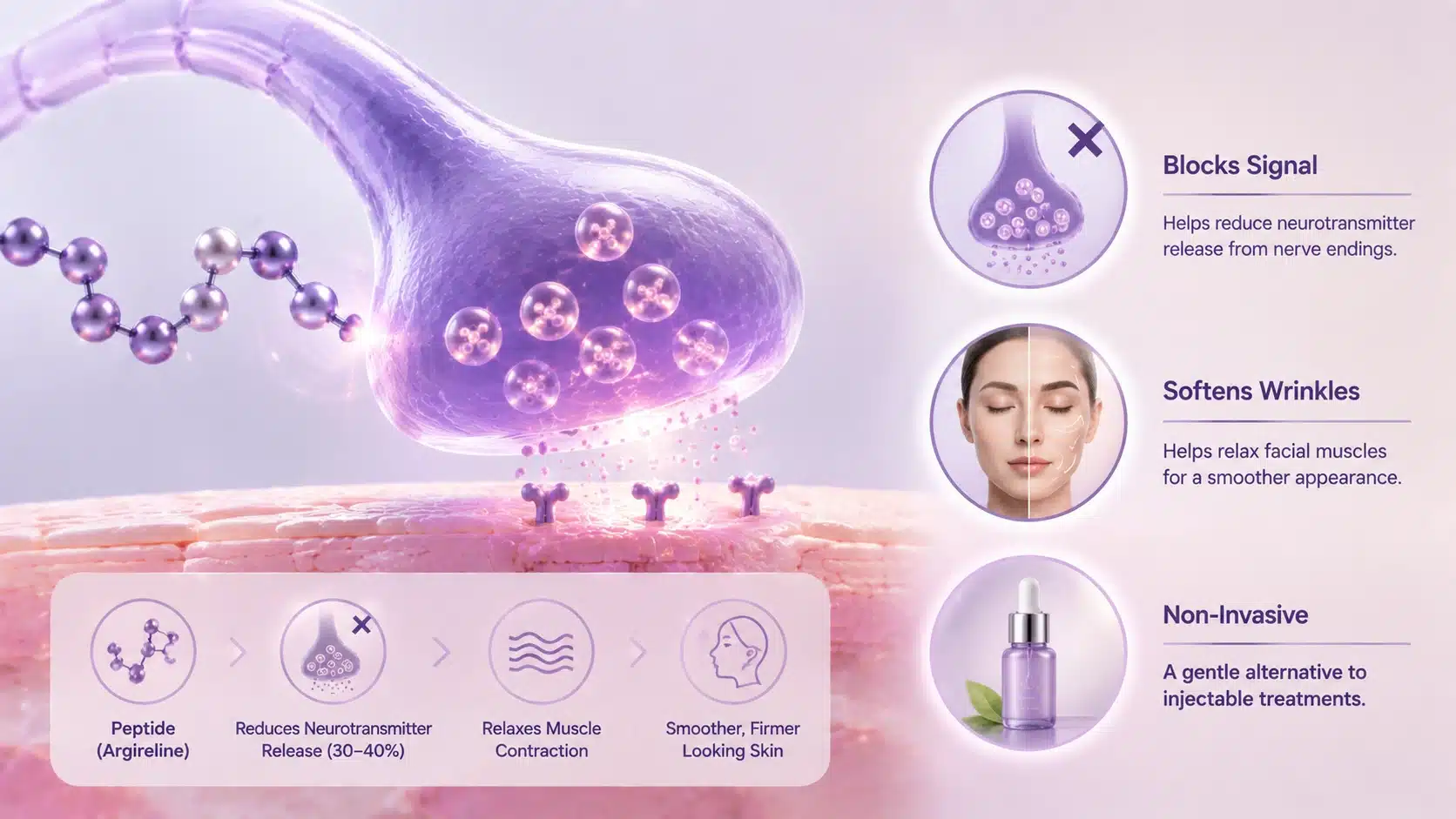
Neurotransmitter-inhibiting peptides work differently from the other three types. They do not target collagen directly. Instead, they reduce the nerve signals that cause facial muscles to contract.
Repeated muscle contractions from expressions like squinting or frowning create expression lines over time. By reducing how strongly these signals fire, this type of peptide can soften those lines without an injection.
How they work: These peptides interfere with the release of acetylcholine at the nerve-muscle junction. Less acetylcholine means less muscle contraction and less visible creasing in the skin above.
Key benefits:
- Softens expression lines around eyes and forehead
- Works without needles or clinical procedures
- Suits people seeking a non-injection anti-aging option
Common example: Acetyl hexapeptide-8 (Argireline)
How does Argireline compare to Botox? A review in the Journal of Drugs in Dermatology found Argireline reduces neurotransmitter release by roughly 30 to 40 percent. Botox achieves 90 to 95 percent inhibition. That is a significant gap in effect size. Argireline can produce modest, visible improvements with consistent daily use. It is not a clinical replacement for botulinum toxin injections.
Where do peptides come from?
Knowing what peptides are is only part of the picture. Where they come from matters too. Peptides appear in three very different places: food, medicine, and supplements. Each one comes with a very different level of evidence behind it.
Peptides in food
Protein-rich foods naturally contain peptides. They are released during digestion or fermentation. Common sources include:
- Fish and seafood
- Eggs
- Dairy products
- Soy
- Meat and poultry
Some of these, known as bioactive peptides, are studied for specific health effects. Peptides from fermented dairy products, for example, have been researched for their potential to support healthy blood pressure.
Peptides in medicine
This is where peptides have the strongest evidence. Several peptide-based drugs are FDA-approved and widely prescribed. These include:
- Insulin: used to manage blood sugar in people with diabetes
- GLP-1 receptor agonists (semaglutide, tirzepatide): approved for type 2 diabetes and weight management
- Oxytocin-based drugs: used in labor and delivery settings
These medications go through years of clinical trials before approval. That rigorous process is why they carry reliable safety and efficacy data.
Peptides in supplements and injections
Oral collagen peptide supplements are the most common consumer product in this space. A reasonable body of research exists behind their skin and joint benefits.
Injectable wellness peptides are a very different story. Products like BPC-157 and TB-500 are marketed heavily for muscle recovery, injury healing, and anti-aging.
Most are sold outside FDA-approved channels. Human clinical trial data for these compounds remains largely absent. A 2025 Sports Medicine review found that positive data comes almost entirely from animal studies. Animal data cannot confirm safety or efficacy in humans.
Both are also classified as banned substances by the World Anti-Doping Agency (WADA) for competitive sports use.
What do peptides do for skin?
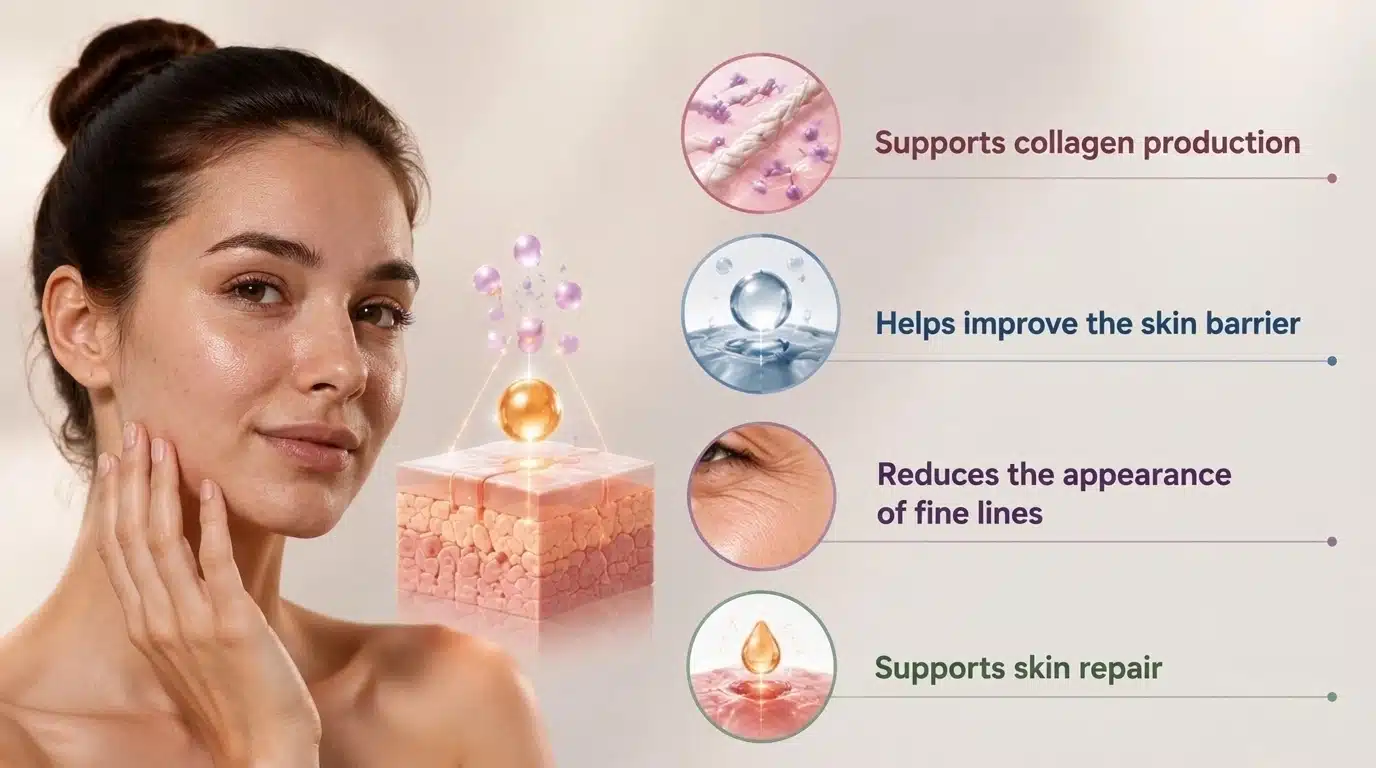
Skincare is where most people first come across peptides. Certain peptides genuinely support collagen production, hydration, and visible signs of aging when used with consistency.
- Support collagen production: Signal and carrier peptides can prompt skin cells to produce more collagen. Collagen gives skin its firmness and structure.
- Improve the skin barrier: Some peptides help skin retain moisture. This can make skin look smoother and more hydrated over time.
- Reduce visible fine lines: Over several weeks of consistent daily use, peptides like Argireline show modest, measurable improvements in wrinkles in clinical studies.
- Support skin repair: Copper peptides (GHK-Cu) are studied for their role in wound healing and tissue recovery, not just visible aging.
That said, expectations matter. Results can vary widely between formulas, concentrations, and product packaging. No serum replaces sunscreen, sleep, or a dermatologist’s guidance for serious skin concerns.
Peptides in skincare products
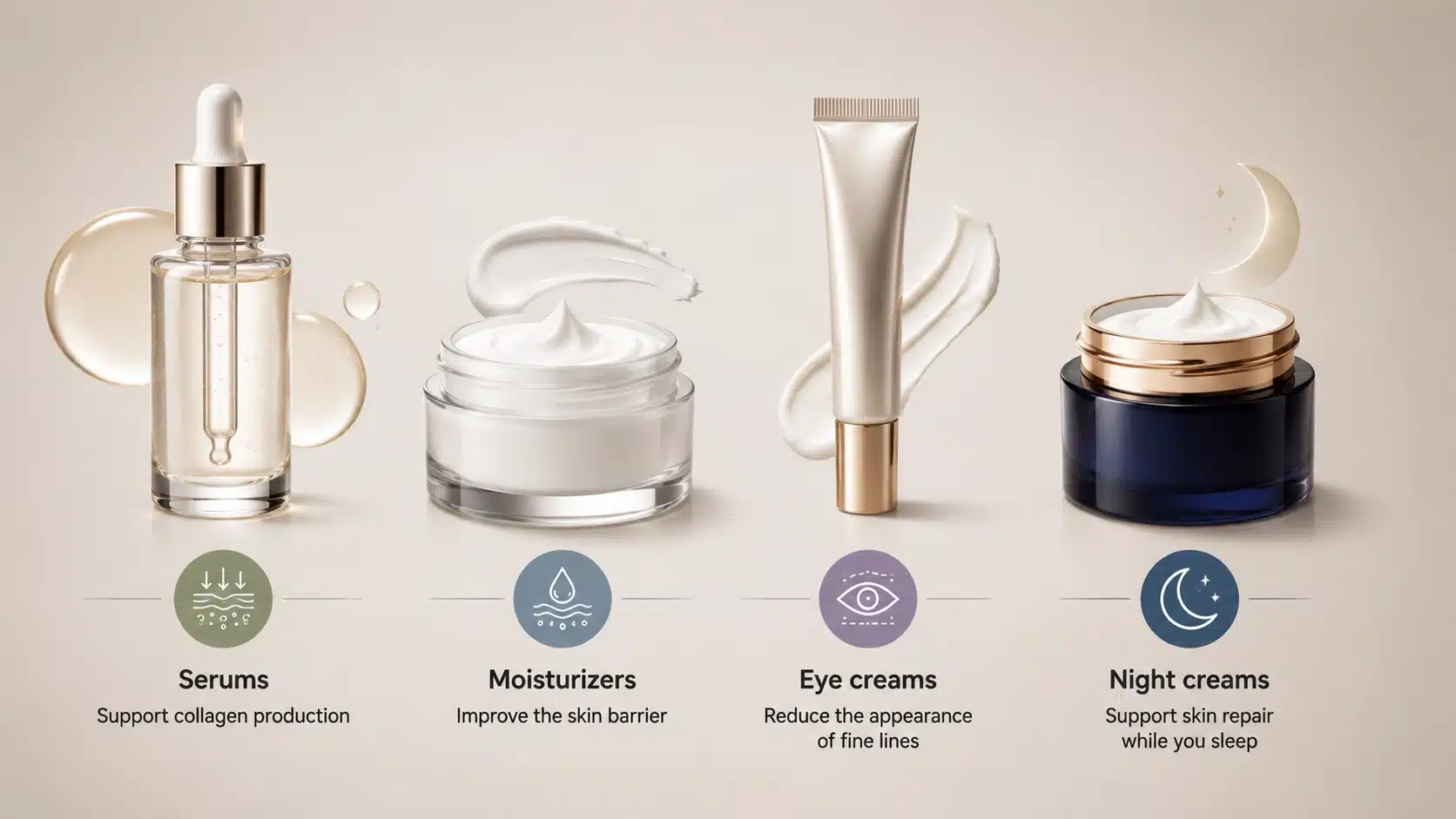
Peptides show up in a wide range of everyday products, though how well they work often depends more on the formula than the ingredient list alone.
You will typically find peptides in:
- Serums
- Moisturizers
- Eye creams
- Night creams
How to use peptides in a skincare routine
A simple routine that incorporates peptides usually looks like this:
- Cleanser
- Peptide serum
- Moisturizer
- Sunscreen (mornings only)
A few practical notes worth keeping in mind:
- Patch test any new peptide product before applying it to your whole face
- Visible results typically require several weeks of consistent, daily use
- Formula quality, concentration, and packaging affect performance more than the ingredient name on the label
Good peptide skincare rewards patience over hype, one consistent routine at a time.
Are peptides effective?
Peptide effectiveness depends heavily on the specific peptide in question, since some have solid clinical backing while others rely mostly on marketing claims and social media buzz.
What The U.S. Food and Drug Administration (FDA) records and clinical studies support:
- Certain peptides supporting collagen-related pathways in skin
- Improved skin hydration and firmness with consistent topical use
- Specific peptide-based drugs, like insulin and GLP-1 medications, with strong FDA-approved evidence
What is still unclear:
- Many wellness checks include peptide injections promoted online that lack strong human clinical evidence
- Social media claims frequently outpace what studies actually show
A useful rule: be skeptical of claims like “peptides reverse aging” or “peptides cure disease.”
Many peptides sold in newer wellness supplements are synthetic and not FDA-approved; regulators classify some as Category 2 bulk drug substances, a label tied to significant safety concerns rather than proven benefit.
Real evidence and viral marketing rarely move at the same speed, so it pays to check which one you are actually reading.
Peptides vs amino acids vs proteins: what is the difference?
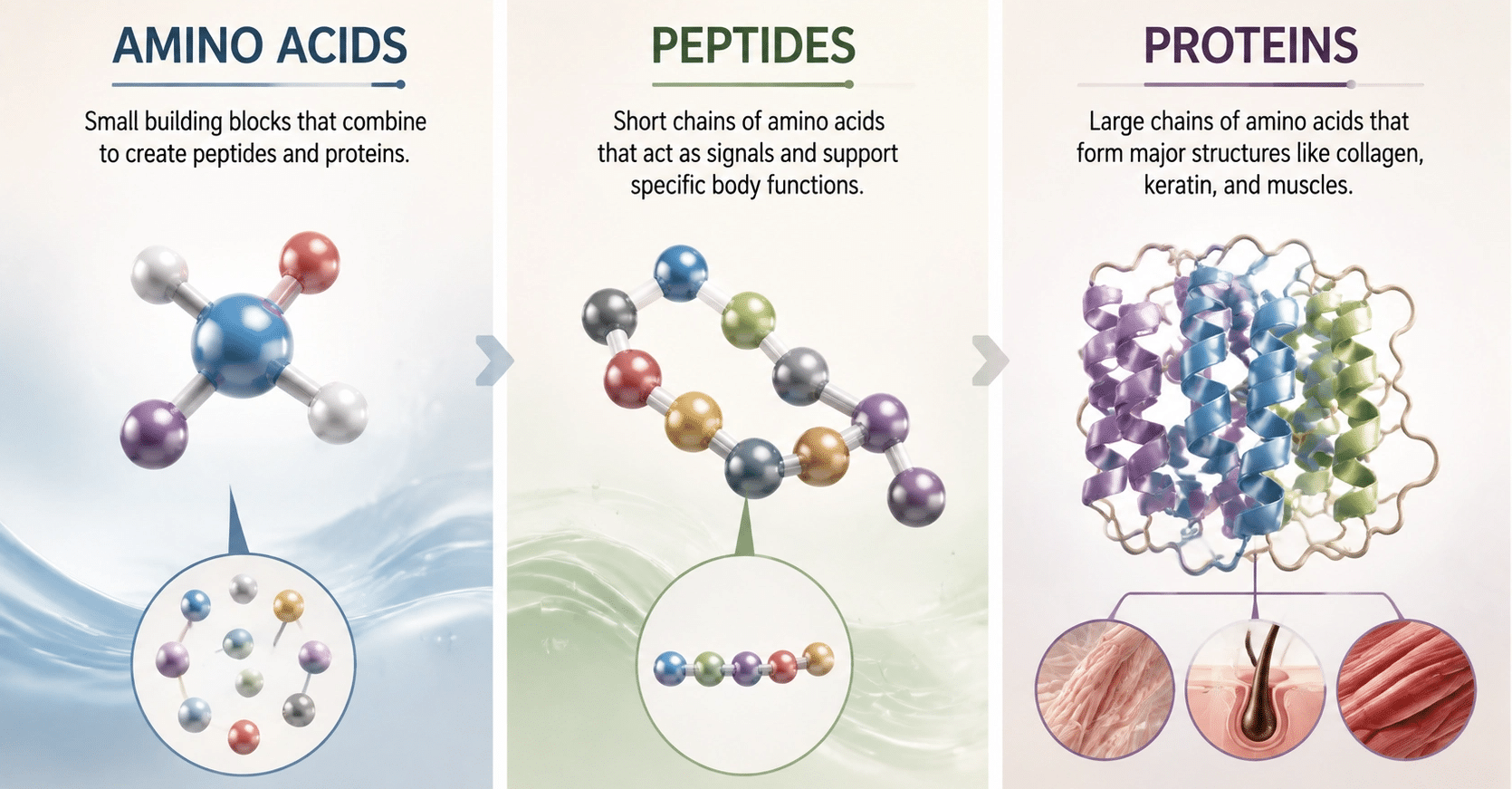
These three terms get mixed up constantly online. Each one describes a different size and role. The table below keeps the comparison clear and direct.
| Building Block | Size | Main Role in the Body | Examples |
|---|---|---|---|
| Amino acids | Single molecules | Build peptides and proteins; support enzymes, hormones, and metabolism | Glycine, leucine, lysine |
| Peptides | 2 to 50 amino acids | Act as chemical messengers; signal collagen production, hormones, and cell behavior | Insulin, GHK-Cu, collagen peptides, GLP-1 |
| Proteins | Hundreds of amino acids | Provide structure; run major body functions from digestion to immunity | Collagen, keratin, muscle proteins, enzymes |
Think of amino acids as the bricks. Peptides are short walls. Proteins are the whole building.
Are peptides safe?
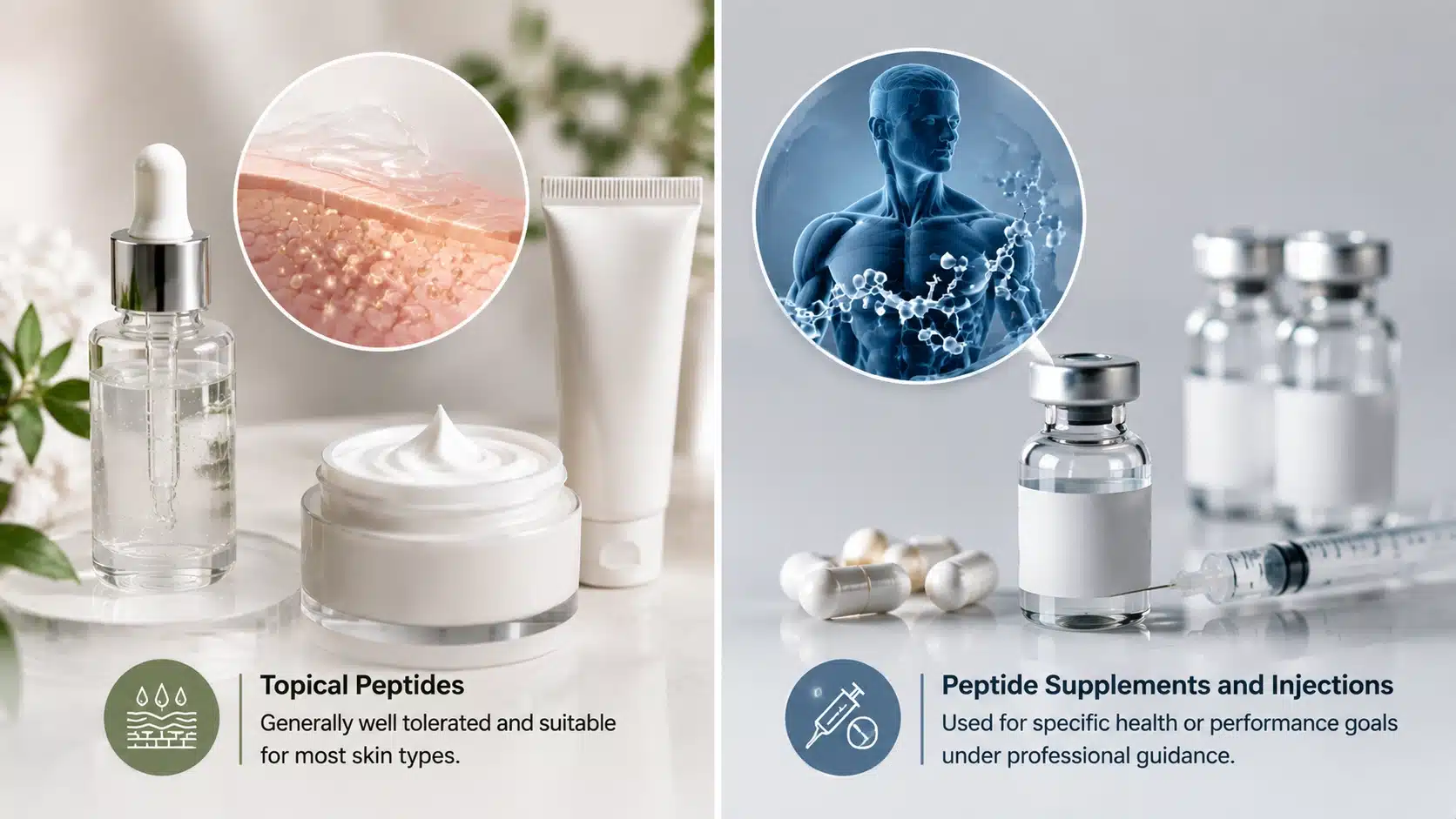
Safety depends on the peptide type and how it is used. Topical products carry a very different risk profile compared to injectable supplements sold outside approved medical channels.
Topical peptides
Topical peptide products are generally well tolerated by most skin types. Mild irritation or redness is possible at higher concentrations. Patch testing a new product before full use is a smart habit.
Oral collagen supplements
Oral collagen peptide supplements have a reasonable safety record. They come from food sources and are sold as dietary supplements. Quality and concentration vary between brands. Choosing products with third-party testing certificates is worth the extra step.
Injectable and unapproved peptide products
This category requires real caution. Injectable peptides sold outside approved medical channels vary widely in quality, purity, and evidence. Don’t assume a product is safe just because it includes the word “peptide.” An FDA-approved medication like insulin is completely different from an unregulated compound sold online.
If you are considering any injectable or oral peptide supplement, talk to a licensed physician first. A doctor can assess your situation, review any existing medications, and explain the actual risks.
Peptide ingredients
Knowing which peptides appear on labels helps you match a product to your actual goal. This saves you from guessing based on packaging alone.
| Peptide | Common Use | Typical Product Type |
|---|---|---|
| Copper peptides (GHK-Cu) | Skin repair, firmness, wound healing | Serums, eye creams |
| Palmitoyl pentapeptide (Matrixyl) | Collagen support, anti-aging | Moisturizers, serums |
| Acetyl hexapeptide-8 (Argireline) | Softening expression lines | Serums, eye creams |
| Collagen peptides (hydrolyzed collagen) | Joint comfort, skin support, muscle recovery | Oral supplements, protein powders |
| Matrixyl 3000 (palmitoyl tripeptide-1 + tetrapeptide-7) | Collagen and elastin support | Anti-aging serums and creams |
Reading the ingredient list is the closest thing skincare and supplement products have to a reliable guide.
Medical Disclaimer: This article is for education only and does not replace medical advice. Consult a licensed physician before using peptide injections, prescription peptides, or supplements. Athletes should also check WADA rules before use.
Final thoughts on peptides
Peptides are short chains of amino acids that drive many important processes in your body. Some, like insulin and GLP-1, are FDA-approved medications with strong clinical backing.
Others, like collagen and copper peptides in skincare, have solid research behind their benefits. But many products, especially injectable ones sold online, are still far ahead of the actual evidence. The right approach is clear. Match the peptide to the research, not the marketing.
Use topical peptides as part of a good daily skincare routine. Always ask a doctor before trying any supplement or injection. That is how you use peptides on merit.
Frequently asked questions
Are peptides found naturally in food?
Yes. Peptides occur naturally in protein-rich foods like fish, eggs, dairy, and soy. They are released during digestion. Most supplement peptides, including collagen peptides, come from these same food sources.
Are peptides the same as hormones?
No. Not all peptides are hormones. Many hormones are peptides, including insulin and GLP-1. Peptides also work as messengers, antioxidants, and structural components with no hormonal role.
Are peptide supplements legal in the US?
Peptide skincare products are legal and widely available. Injectable and oral peptides are in a regulatory gray area. Many are classified as unapproved bulk drug substances by the FDA.
Do peptide supplements actually build muscle?
Collagen peptides, combined with exercise, may reduce muscle damage markers and support joints. For muscle size, whey protein outperforms collagen. Growth hormone peptides lack strong human trial data.
What is the difference between a peptide and a protein?
Peptides contain 2 to 50 amino acids. Proteins contain hundreds. Peptides mainly act as chemical signals. Proteins provide structure and run major body functions.
Can peptides cause side effects?
Topical peptides rarely cause side effects beyond mild irritation. Injectable and oral supplements carry more risk. Always consult a doctor before using any unapproved peptide product.
What does GLP-1 mean, and is it an example of what peptides are in medicine?
Yes. GLP-1 stands for glucagon-like peptide-1. It is a naturally occurring peptide hormone. Drugs like semaglutide are synthetic GLP-1 receptor agonists approved by the FDA for diabetes and weight management.