

Booking a doctor’s appointment sounds simple. Then the scheduling page shows three options: wellness check, physical exam, annual wellness visit.
Which one is right for what you need? This post covers what a wellness check includes and how it differs from the other options. It also explains what to expect during the appointment.
| Appointment | Main Focus |
| Wellness check | Preventive review of history, habits, and risk factors |
| Physical exam | Hands-on physical evaluation |
| Annual wellness visit (Medicare) | Personalized prevention plan for Medicare patients |
| Sick visit | Addressing a specific symptom right now |
What Is a Wellness Check?
A wellness check is a routine, preventive medical appointment. It focuses on overall health rather than one specific illness. It reviews your medical history, vital signs, and lifestyle habits. The goal is to catch health risks early, before symptoms appear.
You go when nothing is technically wrong yet. Your doctor reviews your history, checks your basic measurements, and asks about your daily habits. The appointment is built around catching health risks early, not treating something that has already started.
A blood pressure reading that has quietly crept up gets noted here. A family history that has not been revisited in years gets addressed too. Small details like these get folded into a care plan before they become larger problems.
This is the key difference from a sick visit. A sick visit addresses something already bothering you. A wellness check happens before that point.
What Happens During a Wellness Check?
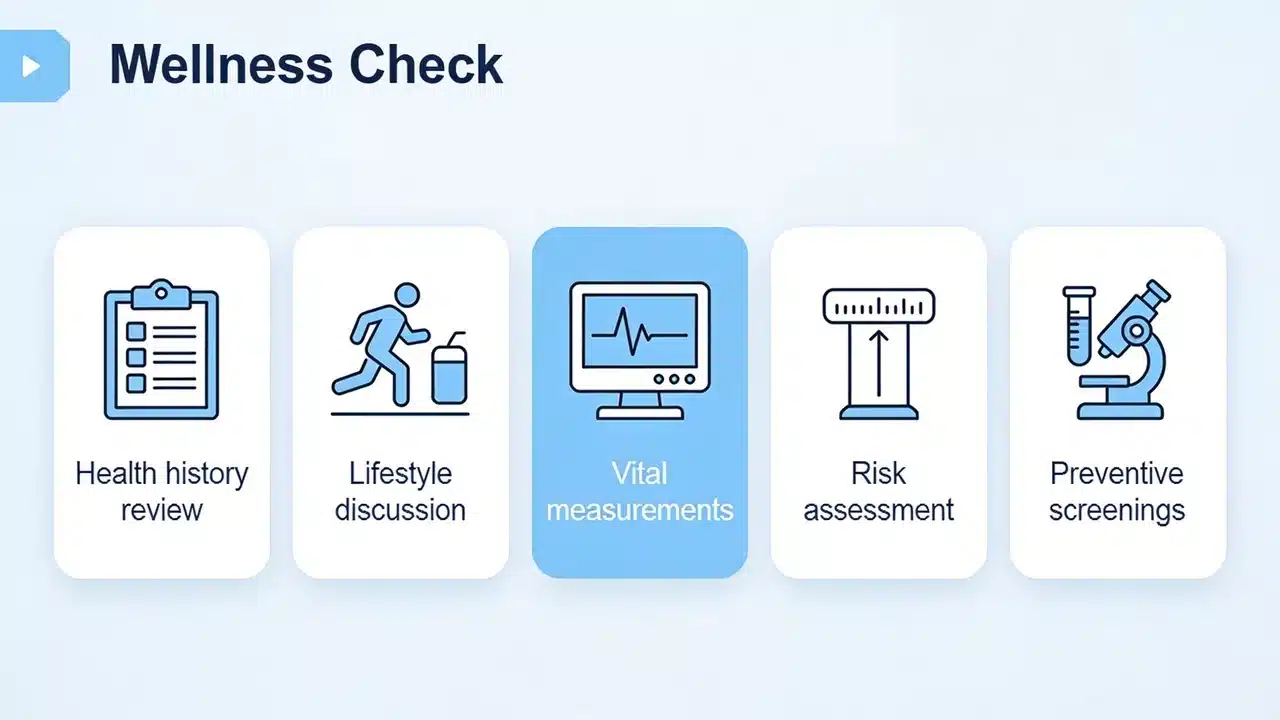
A wellness check follows a familiar pattern. The order may shift slightly from one clinic to another, but the core steps stay consistent.
1. Review of Medical History
Your doctor will review your past illnesses, surgeries, and current medications. Allergies and long-term conditions come up here too. Anything that has changed since your last visit gets noted. This part sets the tone for the rest of the appointment.
2. Conversation About Lifestyle and Habits
Expect questions about food, movement, sleep, and stress levels. Alcohol use and smoking usually come up as well. These questions map out the habits that shape your health outside the exam room. None of this is meant to judge you.
3. Vital Signs and Basic Measurements
Blood pressure, heart rate, and temperature get checked. Height, weight, and body mass index are recorded too. These numbers look simple on their own. Tracked over several visits, they tell a much clearer story than any single reading can.
4. Health Risk Assessment
Your doctor will ask about your family history. Certain conditions run in families and are easy to miss without a direct question. Mental health is part of this conversation too. It is treated as part of your overall health, not a separate topic.
5. Preventive Screenings and Vaccination Review
Depending on your age and history, your doctor may recommend bloodwork or a specific cancer screening. A vaccine that is due for an update may also come up. These recommendations are not automatic. They come from what was discussed earlier in the appointment.
For example, consider someone in their forties with a parent who developed type 2 diabetes. That person might receive a glucose screening recommendation well ahead of the standard timeline. The family detail makes the difference.
What Is Included in a Wellness Visit?
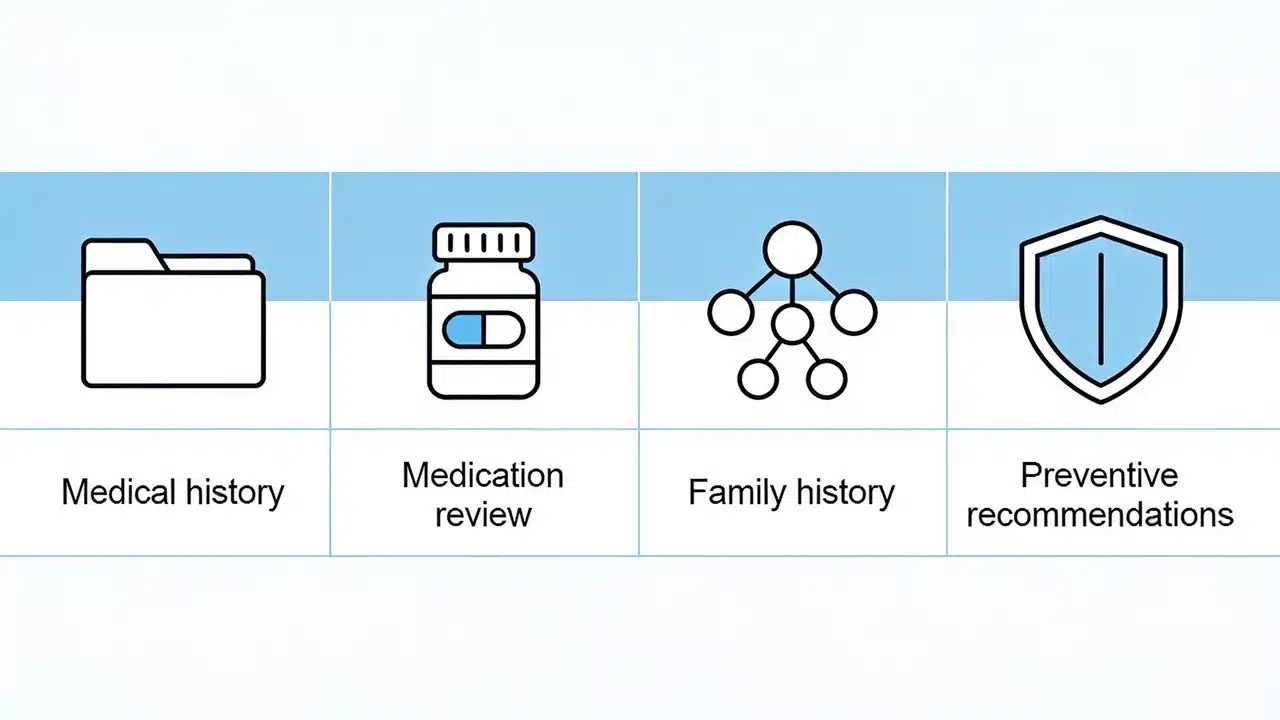
A wellness check produces several practical outputs. Together, they give you a full picture of your current health and a clear plan for what comes next.
- An updated health record reflecting anything new from the visit
- A written or portal summary listing screenings due, vitals recorded, and next steps
- A referral if something during the visit needs a specialist’s attention
- A follow-up plan showing when to book your next appointment or complete a pending test
What Is Not Included in a Wellness Check?
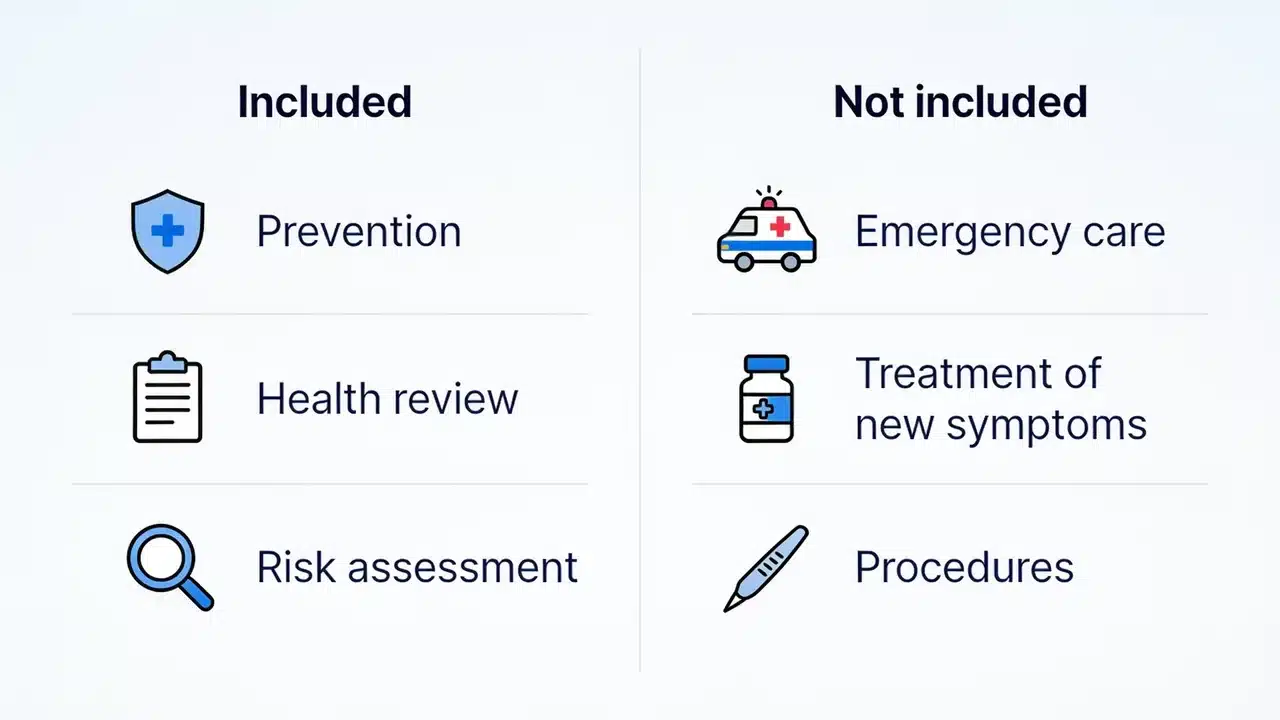
A wellness check has limits, and knowing them ahead of time can save you a second trip.
- Treatment for new symptoms you’re currently experiencing
- Diagnosis of an illness that’s already active
- Emergency medical concerns of any kind
- Procedures that fall outside preventive care
If something specific comes up while you’re there, a new pain, an odd symptom, say so anyway. Your doctor will likely ask you to book a follow-up appointment focused on that issue alone.
Wellness checks and symptom-specific visits are billed and coded differently, which is part of why providers tend to keep them separate rather than combining the two.
How to Request a Wellness Check
Call your doctor’s office directly or log into their online patient portal to book the appointment. When scheduling, ask specifically for a wellness check or annual preventive visit. Do not book a sick visit by mistake, as the two are billed differently.
If you are on Medicare, ask for the Annual Wellness Visit by name. This ensures it gets coded correctly and covered under Medicare at no out-of-pocket cost.
If you are seeing a new doctor, call the billing office first. Ask whether your insurance covers a wellness check and whether a referral is needed. This one step can prevent an unexpected bill after the visit.
Wellness Check vs Physical Exam: What Is the Difference?
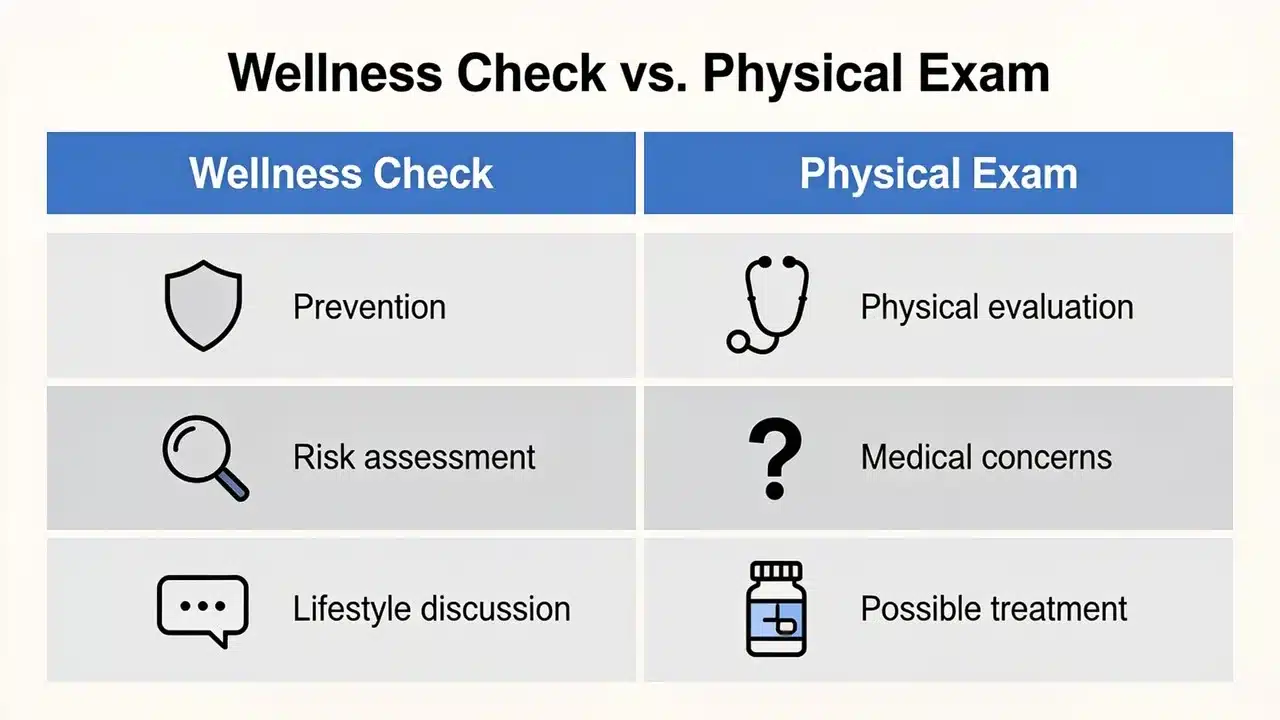
This is usually the real question behind the search: wellness check or physical exam, and which one should actually be on your calendar?
The short version is that the two overlap quite a bit. Many clinics use the terms interchangeably, and some label the same appointment a wellness exam instead of either one. Don’t read too much into the wording on your confirmation email.
| Factors | Wellness Check | Physical Exam |
| Main purpose | preventive care and health tracking | full physical evaluation |
| What it covers | history, habits, and risk factors | hands-on physical assessment |
| Typical outcome | screenings and risk-based advice | specific tests based on findings |
A real difference tends to show up with employment or sports physicals. In those cases, a doctor is confirming you’re fit for something specific rather than reviewing your health as a whole.
If you’re ever unsure which one you’re booked for, ask the front desk directly. Names for the same appointment change slightly from one practice to the next.
Wellness Check vs Annual Wellness Visit
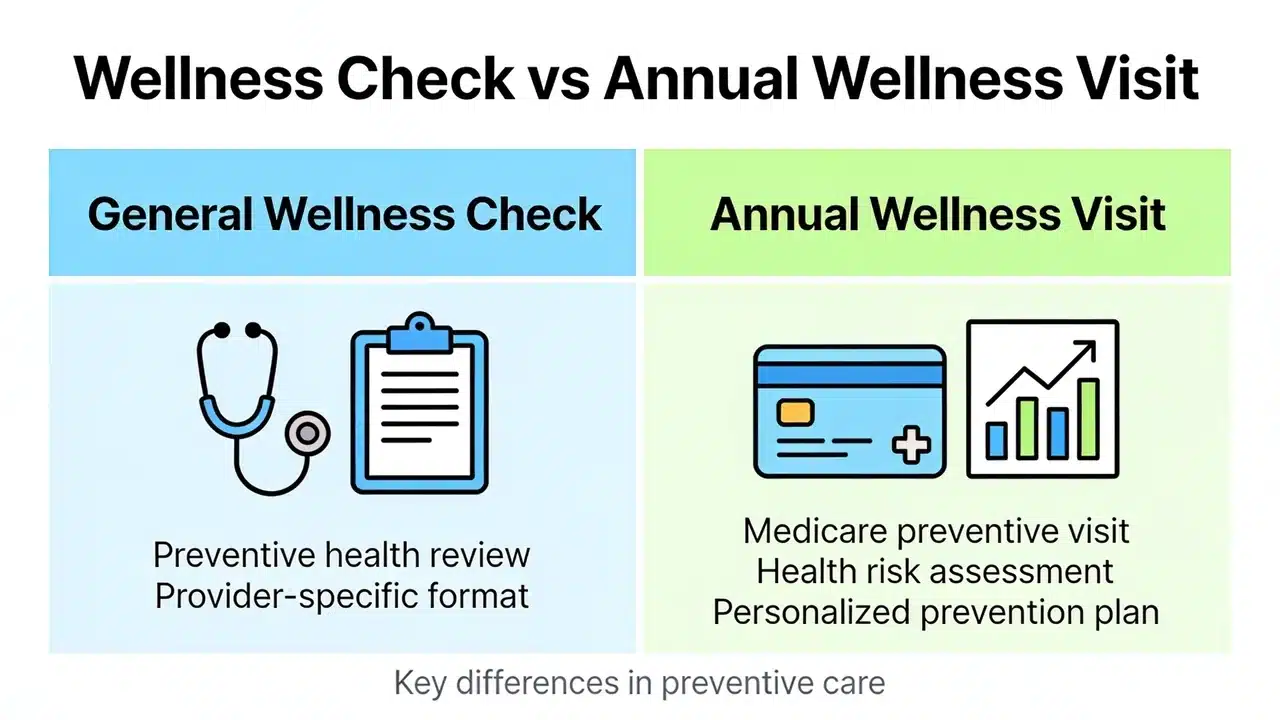
If you’re on Medicare, “annual wellness visit” has a specific meaning. It’s a yearly appointment built around creating or updating a personalized prevention plan, and it’s treated as separate from a standard physical exam.
Our Medicare annual wellness visit guide breaks this down further, but the short version: Medicare covers this visit under its own rules, and it typically doesn’t include a hands-on physical exam at all.
Outside of Medicare, “wellness check” tends to be the everyday term for a routine preventive visit, regardless of the exact billing code sitting behind it.
Coverage and cost can differ by insurance plan, so a quick call to your provider’s billing office before you book is a reasonable step, especially if it’s your first appointment with a new doctor.
How to Prepare for a Wellness Check
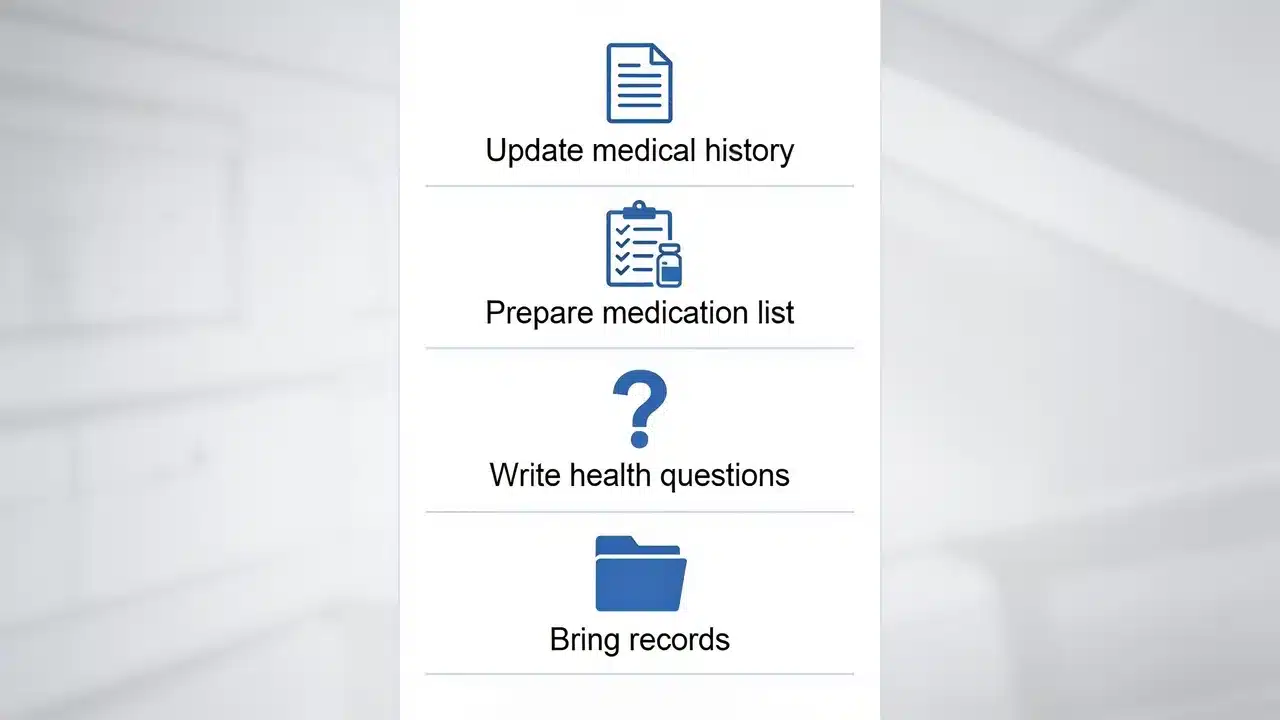
A little preparation goes a long way. Here is what to bring and what to think through before your appointment.
Bring Your Medical Information
Bring a current medication list. If you are seeing a new provider, bring past records too. Include supplements, since they count as part of the full picture. Note any recent changes in your family health history as well.
Write Down Your Health Questions
It is easy to forget questions once you are sitting on the exam table. Write them down before you go. A symptom you have noticed, a lifestyle question, something you read online and want clarified. A short written list works better than trying to recall everything mid-appointment.
Review Any Lifestyle Changes
Think through anything different since your last visit. A new job with longer hours, a change in sleep, or less activity during the week. These details shape the advice you will receive. Having them ready saves time and makes the appointment more useful.
How Often Should You Get a Wellness Check?
For most healthy adults, once a year is the standard recommendation.
Age and existing health conditions can shift that timeline. Someone managing diabetes or heart disease may need more frequent check-ins. A younger adult with no ongoing health concerns might stretch to every two years with their doctor’s approval.
The clearest way to know your own schedule is to ask directly at your next appointment. Your doctor can base a recommendation on your actual health history rather than a general rule.
Disclaimer: This article is for informational purposes only. It does not replace advice from a licensed healthcare provider. For personal health concerns, consult a qualified medical professional directly.
Frequently Asked Questions
Is a wellness check the same as a physical
A wellness check focuses on prevention and health planning, while a physical exam usually involves a more detailed physical assessment and evaluation.
How long does a wellness check take?
A wellness check usually takes 20 to 60 minutes, depending on health history, screenings needed, questions discussed, and provider recommendations.
Do wellness checks include blood tests?
Blood tests are not always included in wellness checks. Providers recommend them based on age, health history, risks, and preventive care needs.
How often should you get a wellness check?
Most adults schedule wellness checks annually, but timing may vary based on age, medical conditions, risk factors, and healthcare provider recommendations.
What is a Medicare wellness check?
A Medicare wellness check, called the Annual Wellness Visit, is a yearly preventive appointment covered by Medicare. It builds or updates a personalized prevention plan and does not include a hands-on physical exam.
What is a wellness check for women?
A wellness check for women is a routine preventive appointment covering vital signs, lifestyle habits, and age-specific screenings such as cervical cancer screening, breast exam, and bone density checks.
What is a wellness check for a dog?
A dog wellness check is a routine vet visit covering a physical exam, weight check, vaccinations, and parasite screening. Most vets recommend once a year for healthy adult dogs.
Final Thoughts
A wellness check is one of the most practical things you can do for your health. It requires no symptoms. No emergency. Just a regular appointment to check in before anything goes wrong.
Catching a risk early is far easier than managing a condition that has already developed. That is the real value of a wellness check.
If it has been more than a year since your last visit, now is a good time to schedule one. Your body keeps a running tab even when you are not paying attention.
For more on building a long-term health routine, check out our article on essential health screenings by age.