
Hip replacement can make everyday movement easier, but recovery takes patience and steady progress. Knowing what to expect after surgery can make each stage feel more manageable.
This article covers pain, walking, physical therapy, sleep, returning to work, and warning signs to watch for duringhip replacement recovery time.
How Long Does Hip Replacement Recovery Take?
You can generally manage basic daily tasks comfortably within 6 to 12 weeks. Walking becomes steadier. Pain settles. Activities like dressing, cooking, and climbing stairs take less effort.
Full hip surgery recovery time often runs 2 to 6 months. Stiffness, weakness, or tiredness may last beyond that. This is especially true if hip pain limited your movement for months before surgery. The surrounding muscles may already be weak by the time of the operation.
Recovery speed depends on several factors:
- Age and general health
- Fitness level before surgery
- Surgical approach used
- Consistency of rehabilitation exercises
- Whether any complications arise
Progress is not always steady. A more active day can cause extra soreness, even when your overall recovery is moving in the right direction.
Hip Replacement Recovery Timeline by Week
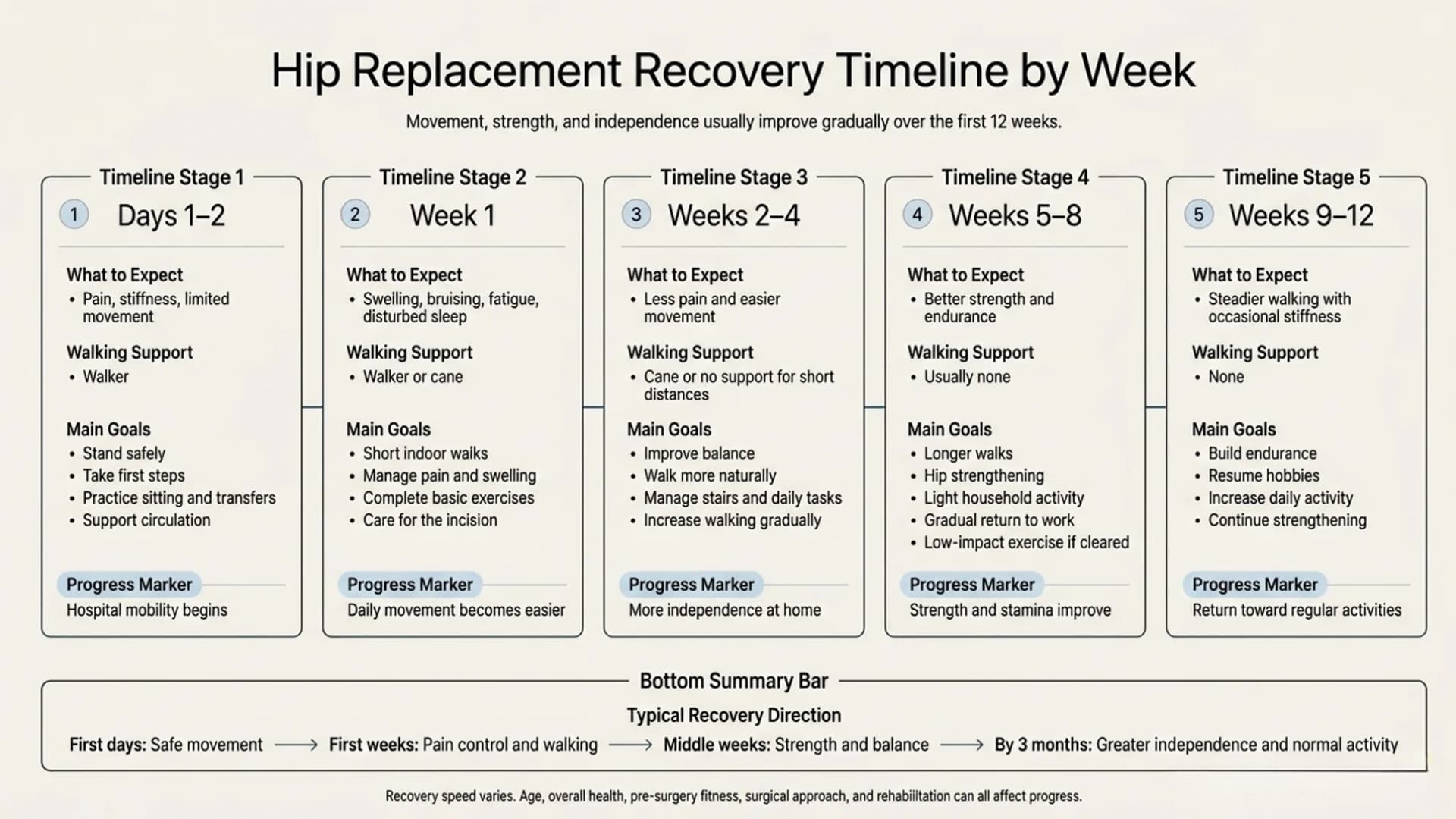
The early days focus on safe movement and pain control. Over the following weeks, attention shifts to walking more naturally, rebuilding strength, and returning to everyday activities.
| Recovery Stage | What You May Notice | Walking Support | Main Focus |
|---|---|---|---|
| Days 1 to 2 | Stiffness and pain controlled with medication | Walker | Standing, transfers, circulation |
| Week 1 | Swelling, bruising, fatigue | Walker or cane | Short walks, rest, wound care |
| Weeks 2 to 4 | Less pain, easier movement | Cane or none | Balance, walking form, daily tasks |
| Weeks 5 to 8 | Better strength and endurance | Usually none | Work, longer walks, light exercise |
| Weeks 9 to 12 | More natural movement, mild discomfort | None | Stamina, hobbies, continued strengthening |
Days 1 to 2: Standing and Walking After Surgery
A nurse or physical therapist will help you stand and take a few steps on the day of surgery or the following morning.
The aim is safe movement, not distance. You will practice sitting down, standing up, turning, and using a walker without straining the new hip.
Ankle pumps and gentle leg movements begin during this period. These support circulation and lower the risk of blood clots. Pain medication is given on a schedule. The incision site is checked for drainage, bleeding, or unusual swelling.
Week 1: Managing Pain, Swelling, and Fatigue
The first week can feel exhausting. Even simple tasks take more energy than usual. Bruising, swelling, stiffness, and disrupted sleep are all common.
Short walks around the home are usually encouraged. Rest, ice, leg elevation, prescribed medication, and home exercises all help reduce discomfort.
Help with dressing, bathing, cooking, and moving around the house is often still needed at this stage.
Weeks 2 to 4: Walking With Less Support
Getting in and out of chairs, moving around the home, and completing basic tasks often feel easier during this period.
You may move from a walker to a cane as your balance improves. Some people begin walking short distances without support. Others still need a walking aid for longer stretches.
The focus is on control, not speed or distance. Driving may become possible once you can react quickly, work the pedals, and are off any medication that affects alertness.
Weeks 5 to 8: Rebuilding Hip Strength
Longer walks, light household tasks, and desk work often feel more manageable by this point.
Rehabilitation exercises focus on hip strength, balance, and controlled movement. Low-impact activities like stationary cycling or swimming may be cleared once the incision has fully closed.
Light soreness after exercise can be normal. Report sharp pain, sudden weakness, or a noticeable drop in mobility to your care team right away.
Weeks 9 to 12: Returning to Regular Activities
Around three months after surgery, walking often feels steadier. Spending longer periods on your feet becomes easier.
Pain may be mild or occasional. Stiffness can still appear after sitting for a long time or doing more than usual. Strength and endurance continue to build for several months beyond this point.
Hobbies, travel, gardening, and other familiar activities may return gradually, depending on your surgeon’s advice and how your hip responds.
Hip Replacement Pain During Recovery

The first one to two weeks are usually the most uncomfortable. The hip may feel sore, tight, bruised, or swollen. This is most noticeable when standing up, getting into bed, or taking the first steps after resting.
Pain is typically managed with:
- Prescribed medication taken on a schedule
- Ice applied to the area
- Rest and leg elevation
Taking medication on schedule in the early days makes movement and sleep easier. As discomfort settles, your surgeon may reduce stronger medicines and switch to milder options.
Some soreness after exercise or a longer walk is normal while muscles are still weak. Pain should gradually become easier to manage week by week.
Contact your care team if pain keeps getting worse, becomes severe, or comes with fever, drainage, redness, or increasing swelling.
Walking After Hip Replacement Surgery

Walking often begins on the day of surgery or the following morning. Gentle movement reduces stiffness, supports circulation, and lowers the risk of blood clots.
You will start with a walker for maximum support. As balance and leg control improve, you may move to a cane. Eventually, you will walk without any support at all.
There is no need to rush that progression. Using support a little longer is safer than walking with a limp or feeling unsteady on your feet.
Short walks around the home are enough at first. You can slowly increase distance as the hip gets stronger and less sore. Your physical therapist can help you decide when to walk farther, reduce support, or move outdoors safely.
Physical Therapy and Exercises After Hip Replacement
Physical therapy typically begins within the first day after surgery. Early sessions focus on practical movements, including:
- Getting in and out of bed safely
- Standing from a chair without straining the hip
- Turning without twisting the joint
- Using a walker correctly
Your first exercises may include ankle pumps, gentle knee bends, controlled hip movements, light thigh strengthening, and short walks. These rebuild muscles that may have weakened before surgery and help prevent blood clots.
Some people attend regular therapy sessions. Others follow a structured home program. Both approaches work well when exercises are done correctly and consistently.
The aim is steady, controlled progress. Stop right away if you develop sharp pain, sudden weakness, or dizziness. Contact your care team if swelling increases after exercise.
How to Sleep Comfortably After Hip Replacement
Sleep can be difficult during the first few weeks. Soreness, swelling, medication changes, and trouble finding a comfortable position all get in the way. Waking when changing position or getting up to use the bathroom is also common.
Sleeping on your back is often recommended early on. A pillow between the legs helps keep the hip in a safe position. It also stops the leg from turning inward during the night.
Some people find a recliner chair useful for a short time. It makes standing up easier and reduces direct pressure on the hip.
Your surgeon will tell you which sleeping positions are safe based on the approach used during surgery. Do not lie on the operated side until you are cleared to do so. Sleep generally improves as swelling settles and stiffness eases.
Returning to Work and Daily Activities
You may feel ready for some parts of your normal routine before others. Tasks like preparing meals, getting dressed, and short walks often return before driving or work.
- Driving: Possible within 2 to 6 weeks. Only when you are off alertness-affecting medication, can get in and out of the car without difficulty, and can brake firmly without pain.
- Desk work: Often possible around 4 to 6 weeks if sitting is comfortable. Take short standing breaks throughout the day to reduce stiffness.
- Physical jobs: Jobs that involve lifting, climbing, prolonged standing, kneeling, or bending will take longer before you can return safely.
- Swimming: Possible once the incision has fully healed and your surgeon approves it.
- Other low-impact exercise: Can return gradually as strength, balance, and walking ability improve.
What to Avoid After Hip Replacement
Movement restrictions protect the new hip while muscles and soft tissues heal. The exact precautions will vary depending on the surgical approach your surgeon used.
You may be asked to avoid:
- Crossing your legs at the knee or ankle
- Bending too far at the hip (past 90 degrees in some cases)
- Sitting in very low chairs or soft couches
- Twisting sharply on the operated leg
- Sudden turns and deep squats
High-impact activity, running, and heavy lifting are restricted during early recovery. These place extra force through the hip before the surrounding tissues are ready to handle it.
Do not follow another patient’s restrictions. Their surgical approach and recovery plan may differ significantly from yours. Always follow the specific precautions your own surgical team gave you.
What Affects Hip Replacement Recovery Time?
Your health before surgery directly affects how quickly you recover. The following conditions may extend healing time:
- Diabetes
- Anemia
- Poor circulation
- Reduced muscle strength
- Smoking
If hip pain limited your activity for a long time before surgery, the muscles around the hip may need extra time to regain strength and control.
Things that support faster hip surgery recovery time include:
- Completing prescribed exercises consistently
- Taking short walks each day
- Eating enough protein to support tissue repair
- Taking medication as directed
- Attending all follow-up appointments
- Getting enough sleep
- Having help at home during the early weeks
Doing too much too soon raises pain and swelling. But avoiding all movement slows the return of strength. A sore day after extra activity can happen. Worsening pain or reduced mobility, though, should always be discussed with your care team.
Warning Signs to Watch for After Hip Replacement Surgery
Pain and swelling should generally improve over time. A sudden change from your usual pattern is always worth reporting.
Contact your surgeon promptly if you notice:
- A sudden increase in pain around the hip
- The incision site becoming warmer or redder than before
- Any drainage from the wound
- Fever or chills
These symptoms may point to an infection that needs prompt treatment.
New calf pain or swelling in one leg only needs prompt attention. Sudden trouble putting weight on the operated side can also signal a blood clot or joint problem.
Go to the emergency room immediately if you experience:
- Chest pain
- Sudden shortness of breath
- Coughing up blood
- Fainting or sudden loss of consciousness
Do not wait for a routine appointment if any of these symptoms appear. These require emergency care.
Frequently Asked Questions
When can I climb stairs after hip replacement surgery?
You can often use stairs before leaving the hospital. A physical therapist will show you the safe method. Steadiness improves over the following weeks.
When can I sleep on my side after hip replacement?
Sleeping on your side is usually possible after a few weeks. Your surgeon will confirm when this is safe for you.
When can I walk without a cane after hip replacement?
Once you can walk steadily without limping or losing balance. This often happens between 4 and 6 weeks, but timing varies between patients.
Can I fly or travel after hip replacement?
Short trips may be possible within a few weeks. Check with your surgeon before flying or sitting in one position for a long time.
What slows down hip surgery recovery time?
Diabetes, smoking, poor nutrition, low pre-surgery fitness, and doing too much too soon can all extend the length of recovery.
What is the hardest part of hip replacement recovery?
The first few weeks are often the hardest because pain, swelling, fatigue, limited mobility, and sleep problems can make everyday tasks difficult. Regular rehabilitation usually makes movement easier over time.
Making the Most of Your Hip Replacement Recovery
Hip replacement recovery time looks different for every person. Some people walk without support within a month. Others need a few extra weeks to feel steady.
What matters most is sticking to your exercise plan. Use support when you need it. Do not push through sharp pain. The first 12 weeks are the most active part of hip surgery recovery time. But healing does not stop there. Strength and endurance keep building.
Follow your surgeon’s advice, go to every follow-up appointment, and give your hip the time it needs. A more comfortable and active daily life is entirely within reach.