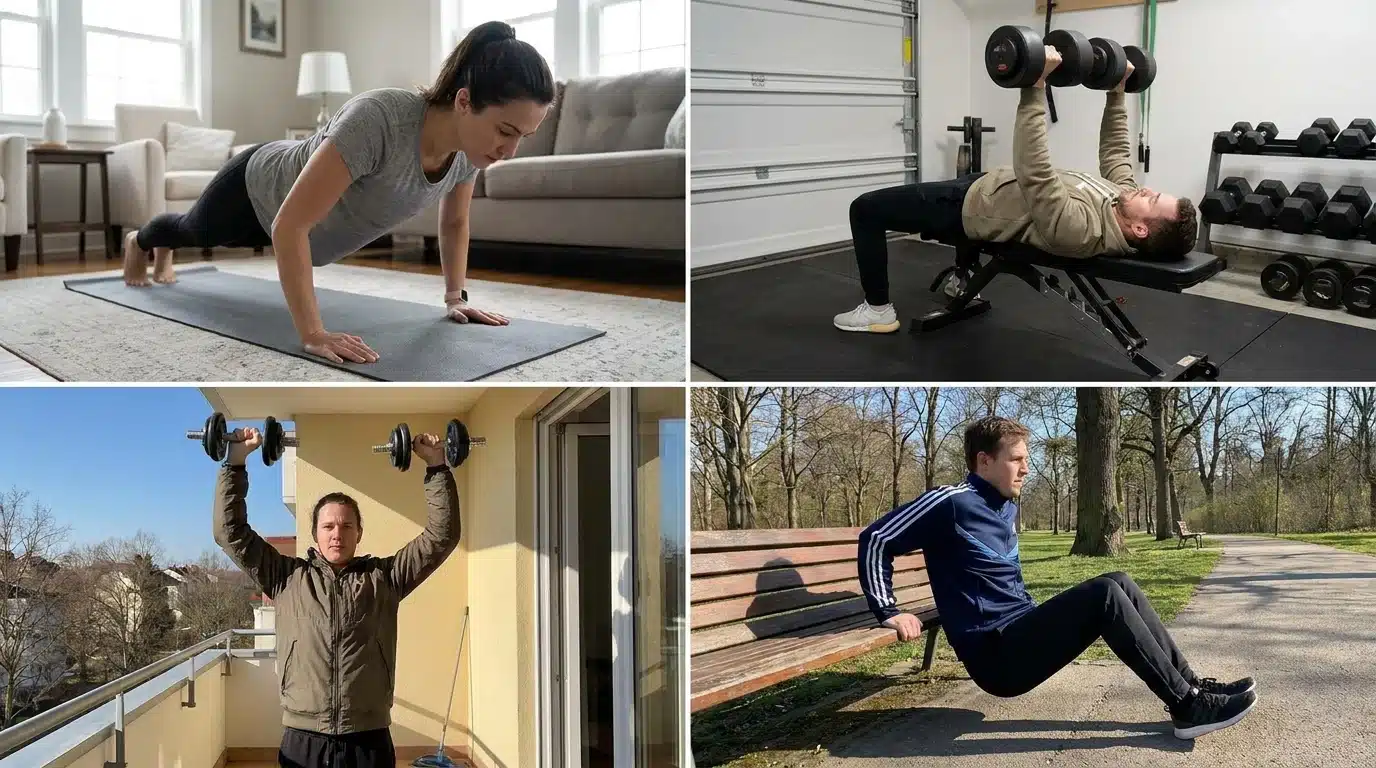
Upper-body push exercises require more than heavy bench presses. A balanced routine trains your chest, shoulders, and triceps for better strength and progress.
This article covers the best push exercises, the muscles they work, workout plans, training splits, common form mistakes, and goal-based programming.
What Are Upper Body Push Exercises?
Upper body push exercises are movements where you press weight away from your body. Your chest, shoulders, and triceps generate the force in every rep. These exercises fall into three main groups.
| Push Movement Type | Examples |
|---|---|
| Horizontal Push | Bench press, push-ups, chest press |
| Vertical Push | Overhead press, shoulder press |
| Isolation Push | Triceps extensions, cable pushdowns |
Pull exercises work the opposite way. They draw weight toward your body and train your back, biceps, and rear shoulders. A good weekly plan includes both types.
Push movements also show up in daily life. Opening a heavy door, lifting a box overhead, or pressing yourself off the floor uses these same muscles.
Muscles Worked During Upper Body Push Exercises
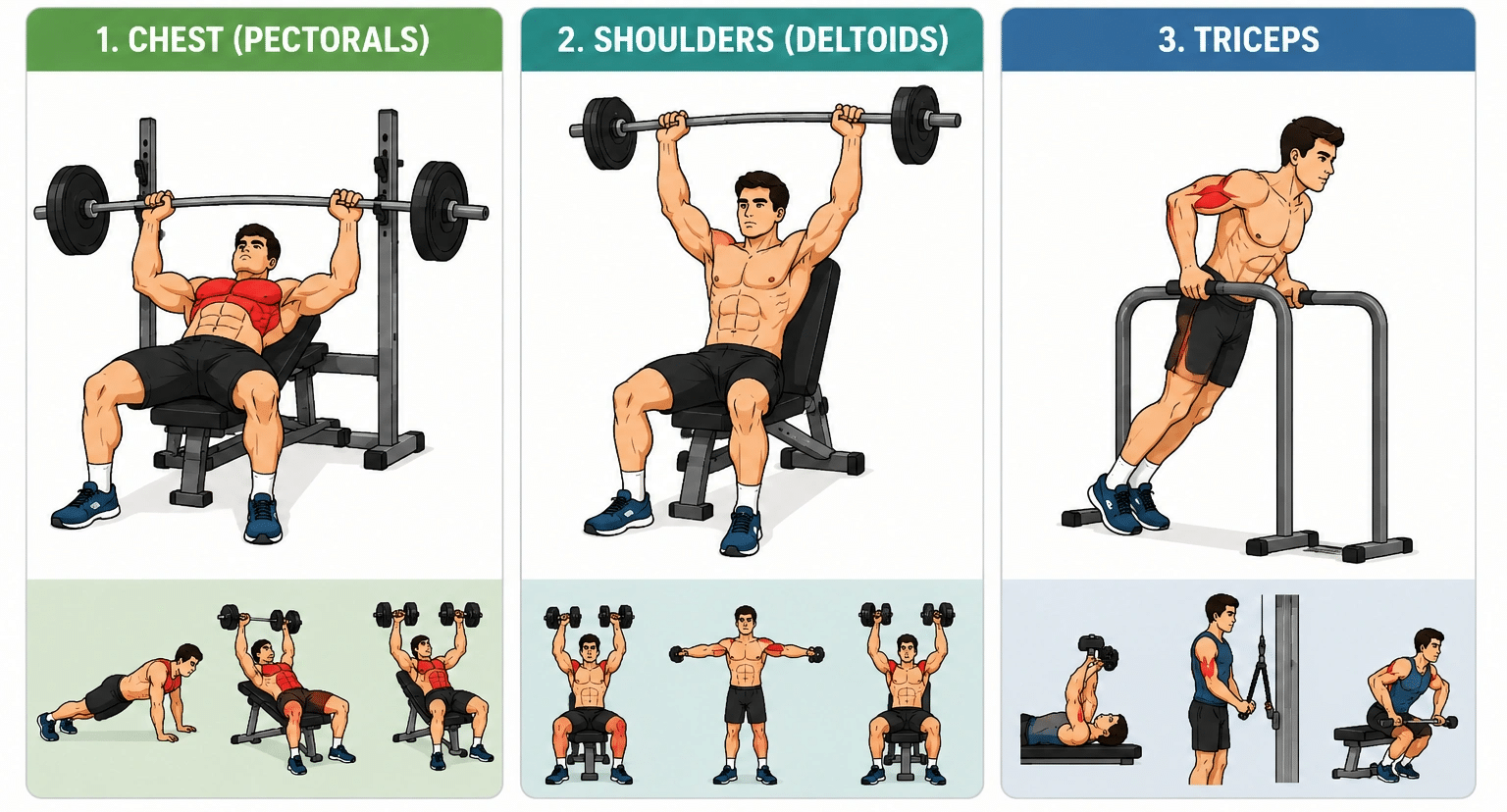
Three muscle groups power every push exercise. Knowing what each one does helps you choose the right moves and fix weak points in your pressing strength.
Chest (Pectorals): Your chest muscles drive most pressing movements. They generate the force that pushes weight forward and upward. Push-ups, bench presses, and dumbbell presses all engage the pectorals.
Shoulders (Deltoids): Your shoulders have three sections: front, side, and rear. Push exercises mainly load the front and side deltoids during pressing and overhead movements.
Triceps: Your triceps sit on the back of your upper arm. They straighten your elbow on every push and take center stage in dips and pushdowns. Isolation exercises like triceps extensions train one muscle group at a time. This helps you fix specific weak points in your pressing strength.
Best Upper Body Push Exercises
These nine exercises cover every part of your chest, shoulders, and triceps. Add a mix of these to your push day for balanced upper body strength.
1. Barbell Bench Press
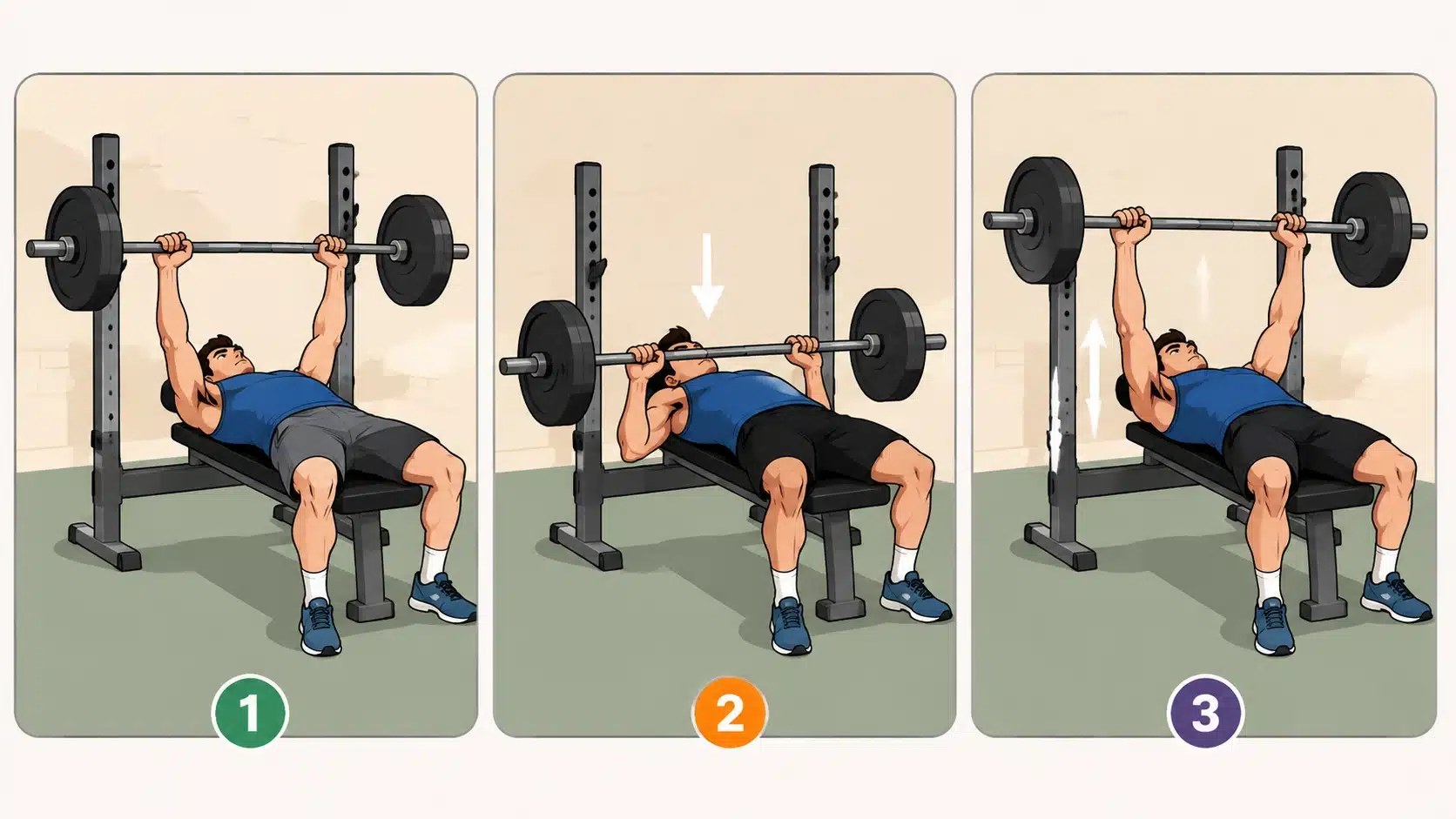
Muscles worked: Chest, front shoulders, triceps.
The barbell bench press lets you load more weight than almost any other push exercise. That makes it the top choice for building raw pressing strength.
Lie on a flat bench and pull your shoulder blades back and down. Lower the bar to your mid-chest with control, then press it back up. Keep your shoulders pinned throughout each rep.
Common mistakes: Flaring elbows too wide, bouncing the bar off your chest, or loading too much weight.
2. Push-Ups
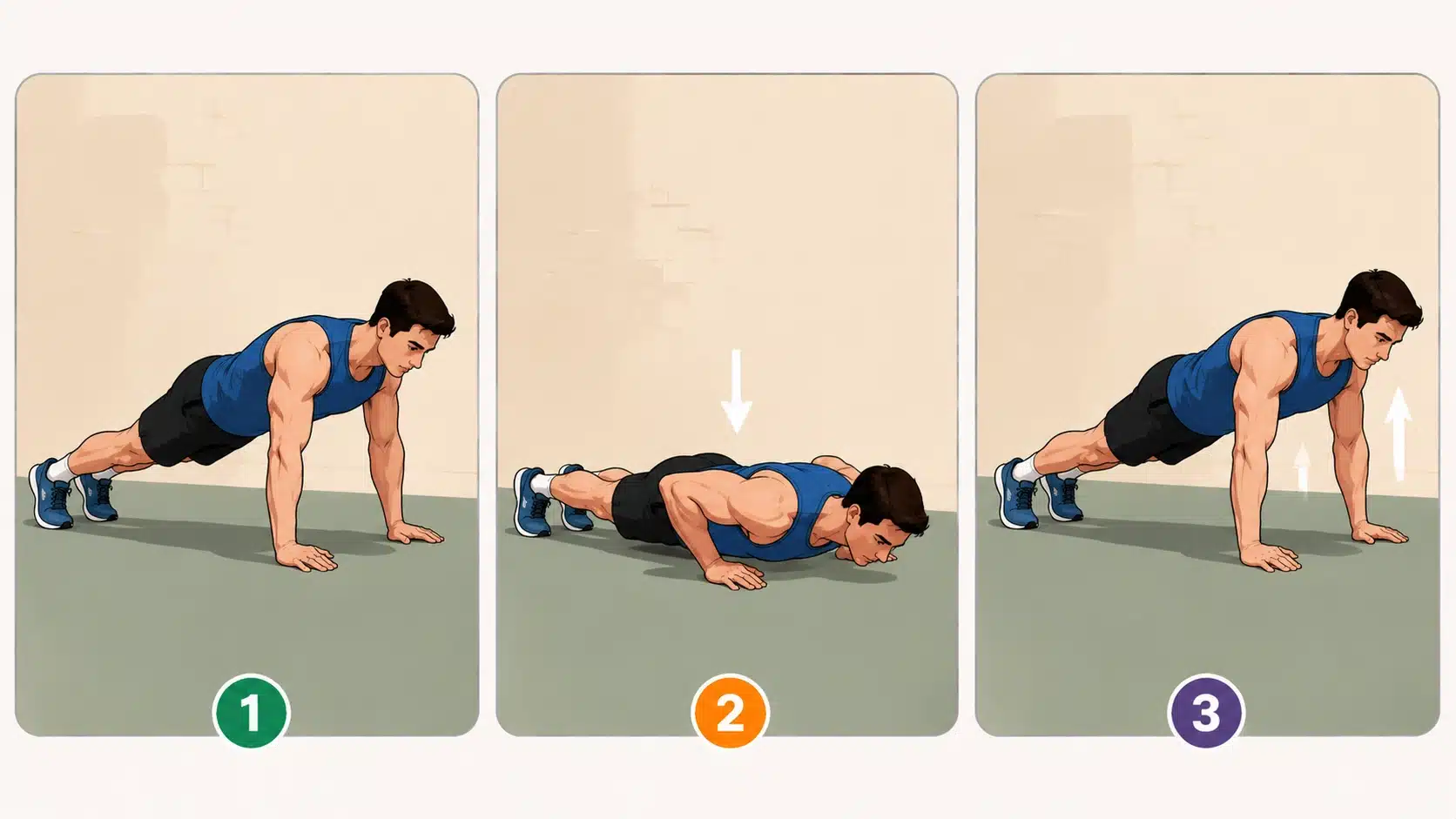
Muscles worked: Chest, shoulders, triceps, core.
Push-ups need no equipment and work for almost any fitness level. They also train your core, since you hold a straight line from head to heels throughout the movement.
Start in a plank position with hands under your shoulders. Bend your elbows to lower your chest toward the floor, then press back up.
Variations: Incline push-ups, knee push-ups, decline push-ups, and weighted push-ups for added resistance.
3. Overhead Shoulder Press
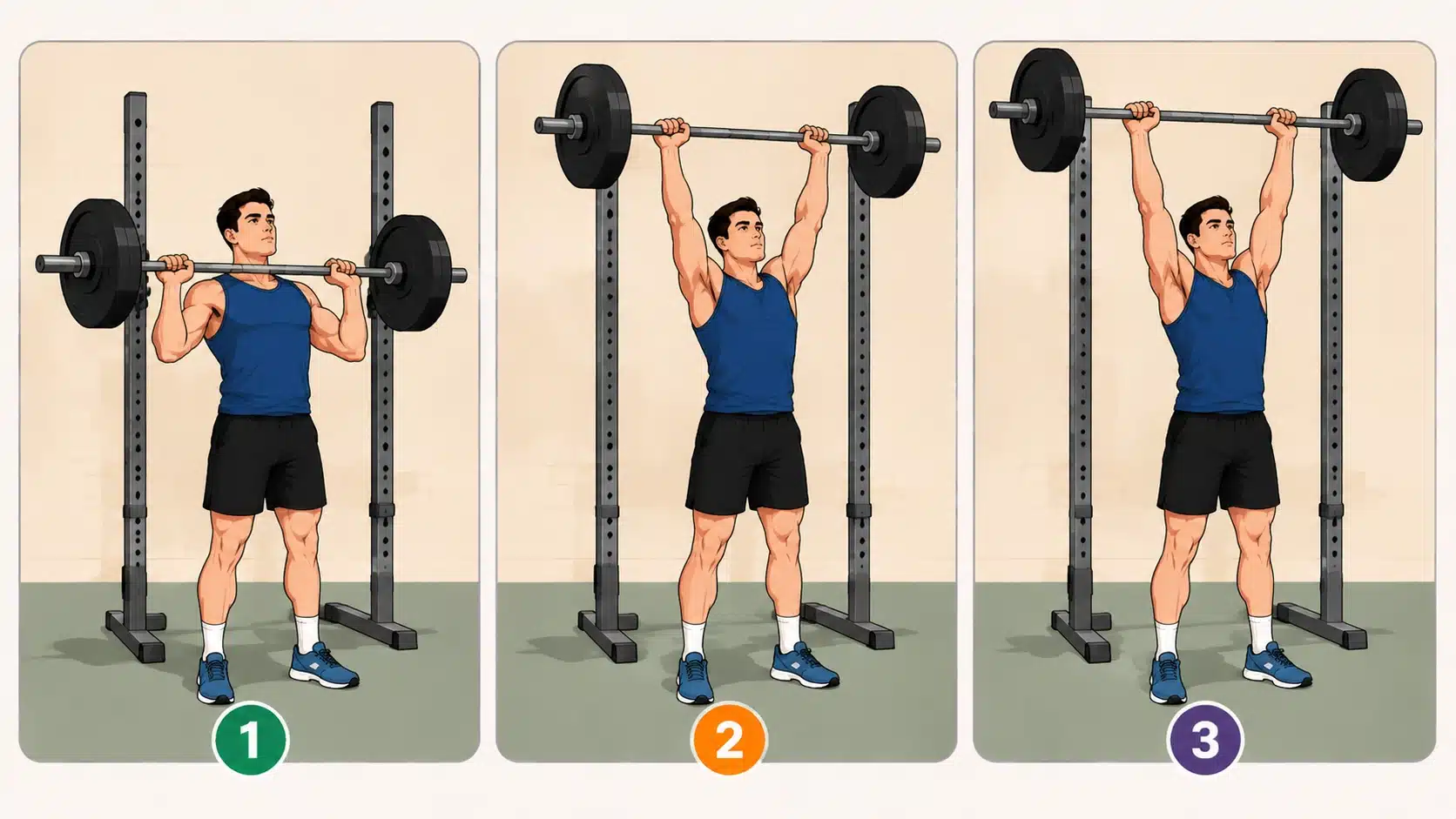
Muscles worked: Deltoids, triceps, upper chest.
Stand with feet shoulder-width apart and press a barbell or dumbbells overhead until your arms lock out. Dumbbells let each arm move independently, which helps fix strength gaps between sides. A barbell allows heavier loading once your form is solid.
4. Incline Dumbbell Press
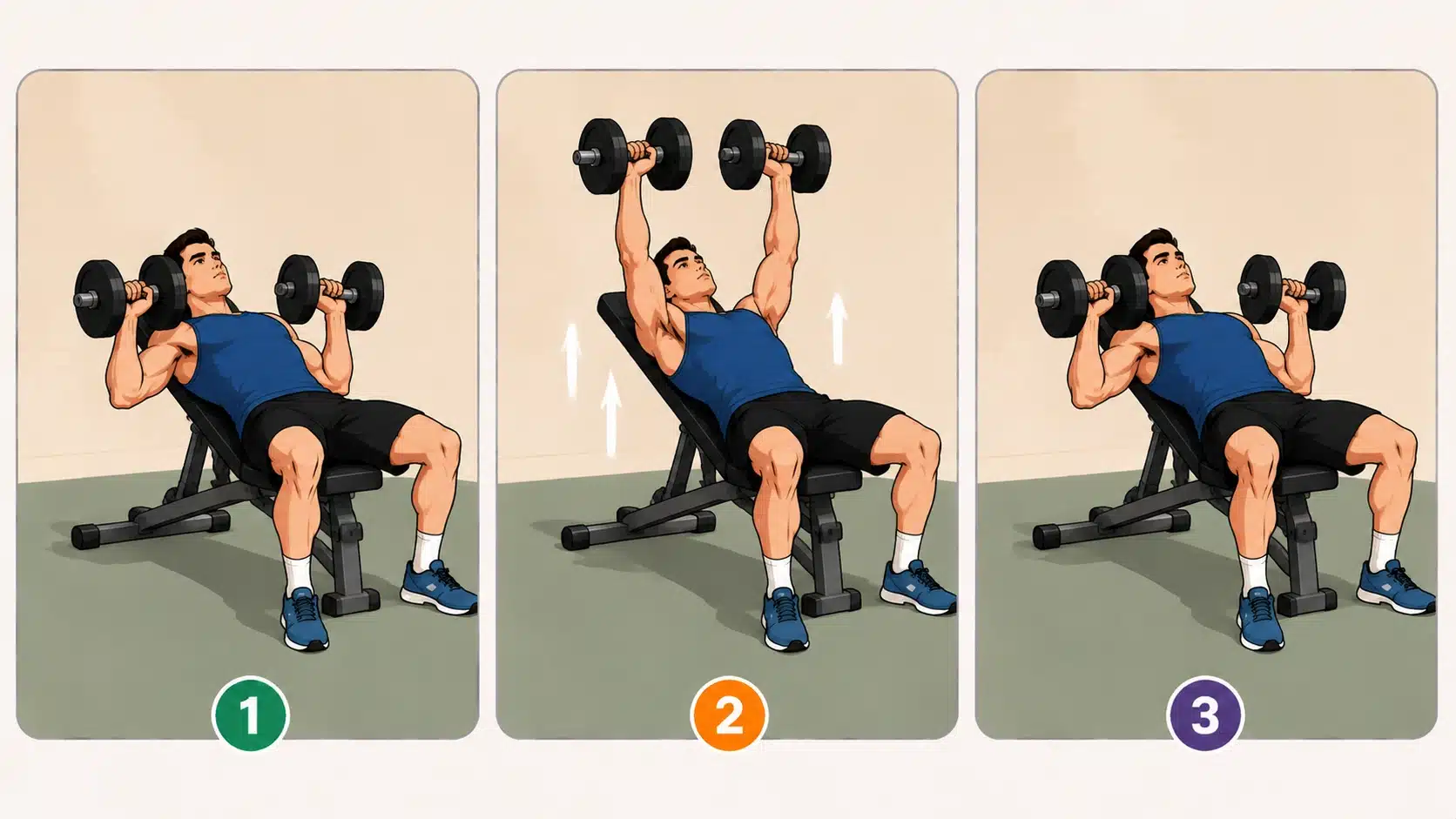
Muscles worked: Upper chest, front deltoids, triceps.
Setting the bench between 30 and 45 degrees shifts more work to your upper chest and front deltoids. This builds a fuller chest shape over time.
Lie back on an incline bench and press the dumbbells up and slightly inward over your upper chest. Lower with control between each rep.
5. Parallel Bar Dips
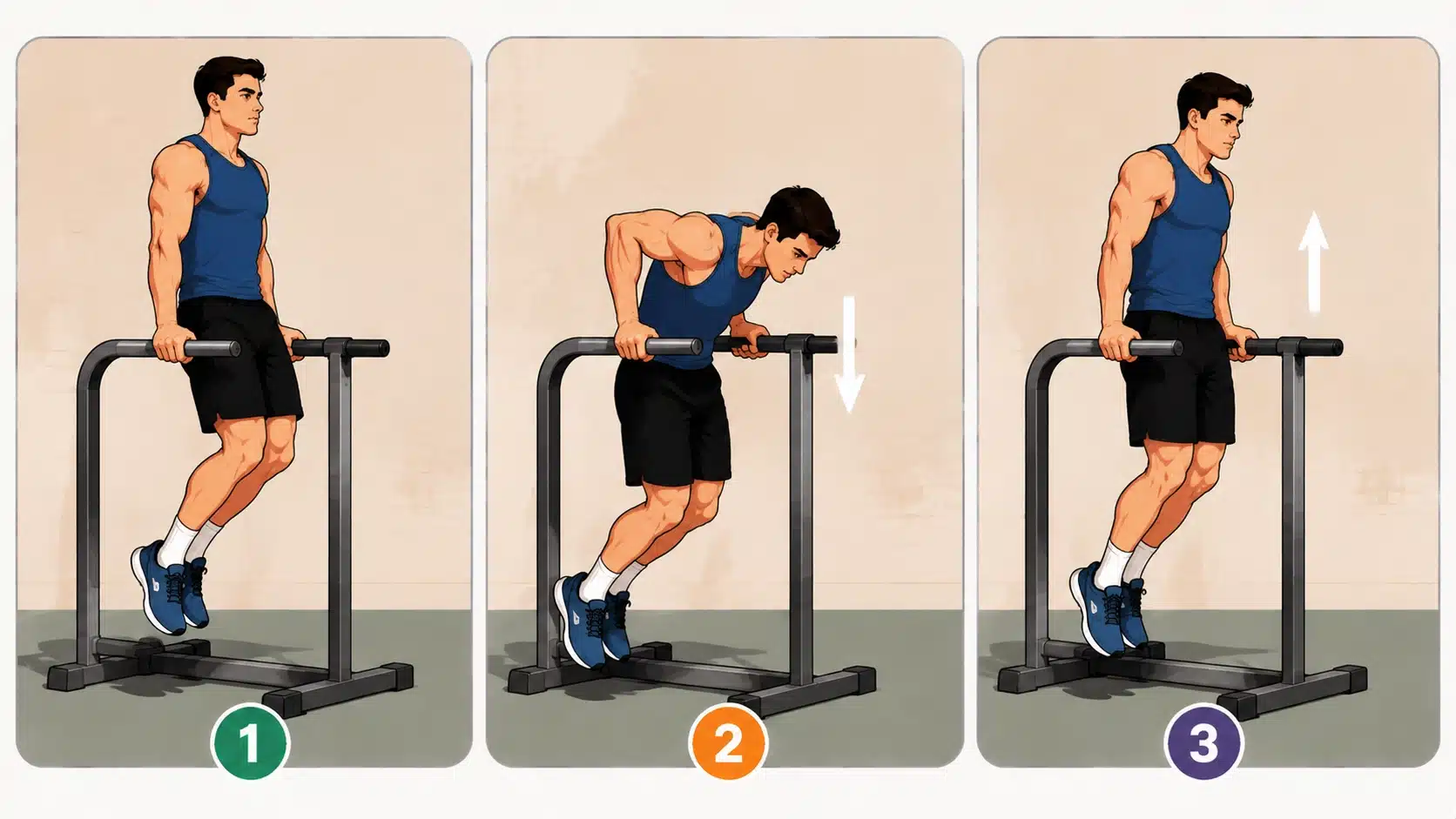
Muscles worked: Chest, triceps, shoulders.
Dips use your own bodyweight to build pressing strength. Leaning your torso forward shifts more work to the chest. Staying upright loads the triceps more.
Grip the parallel bars and lower your body until your upper arms are close to parallel with the floor. Press back up without letting your shoulders roll forward.
6. Dumbbell Chest Fly
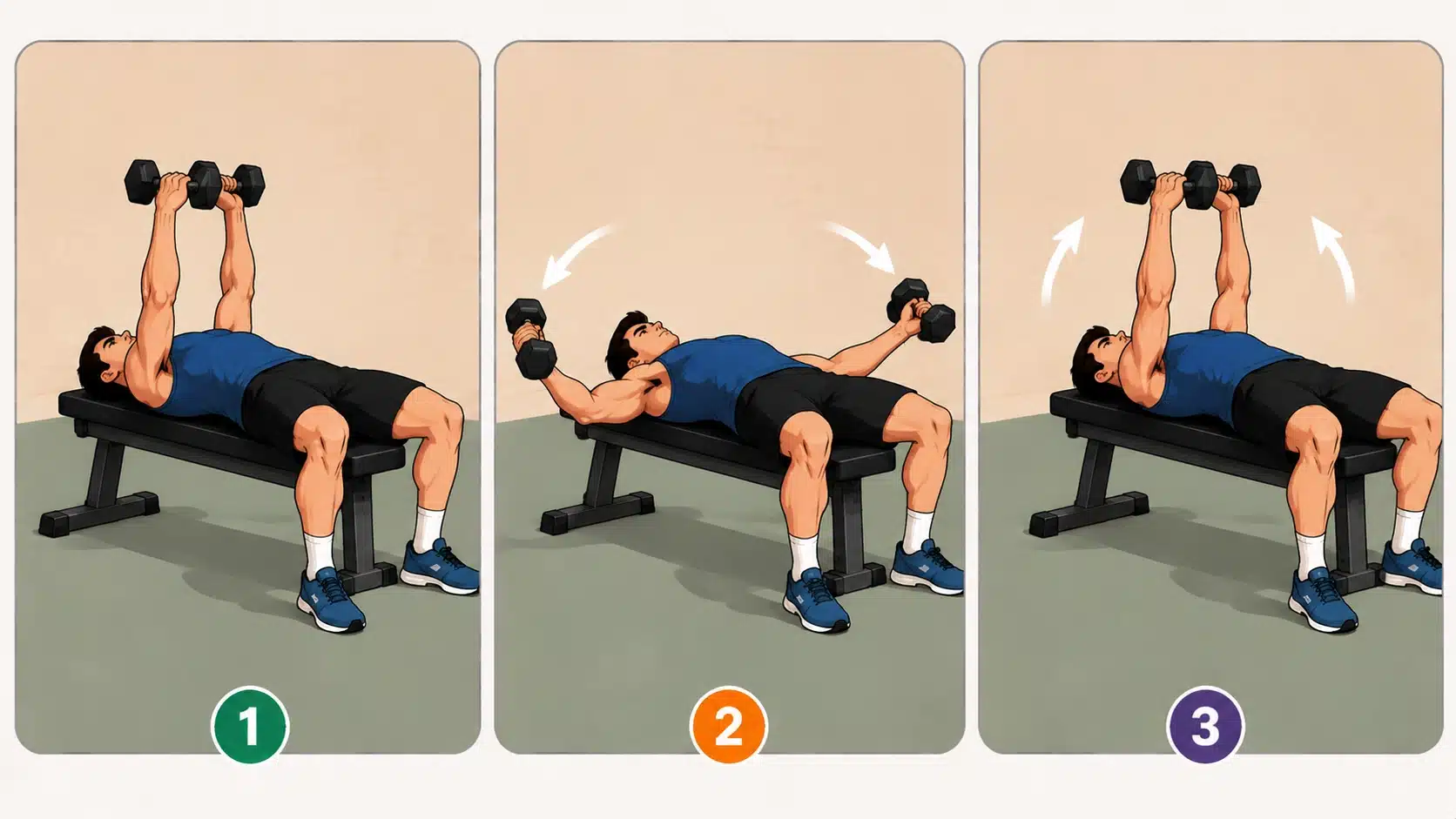
Muscles worked: Chest, front shoulders.
The chest fly moves your chest through a wide range of motion that pressing exercises alone cannot match. Use it as a finishing move on push day.
Lie on a flat bench holding a dumbbell in each hand above your chest, palms facing in. Lower the weights out to the sides with a slight elbow bend, then bring them back together over your chest.
7. Dumbbell Lateral Raises
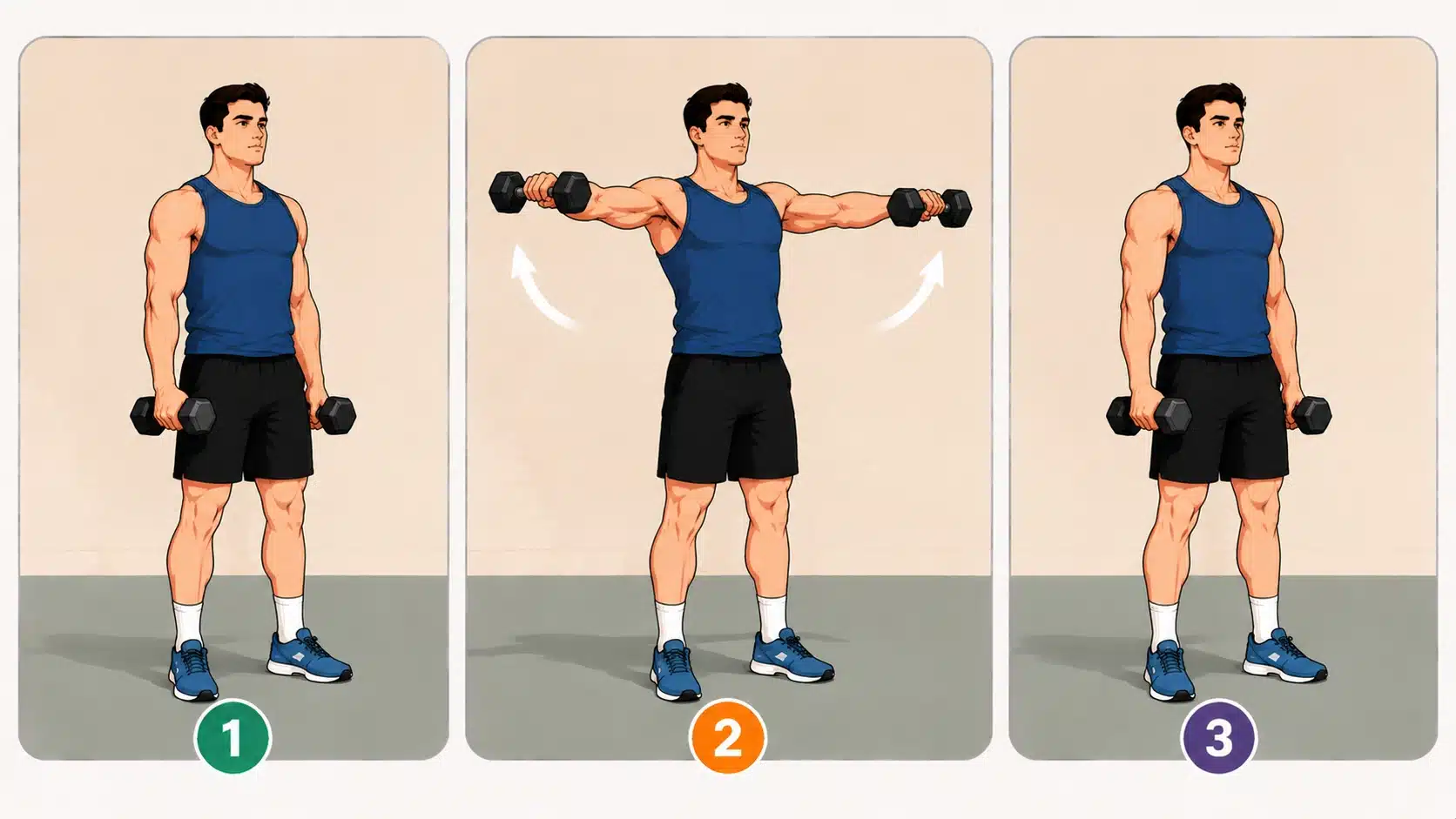
Muscles worked: Side deltoids.
Lateral raises build width across your shoulders. This move targets the side deltoids better than any pressing exercise.
Hold a dumbbell in each hand at your sides. Raise your arms out to shoulder height with a slight bend in your elbows. Keep your shoulders down and avoid swinging the weight up.
8. Close-Grip Bench Press
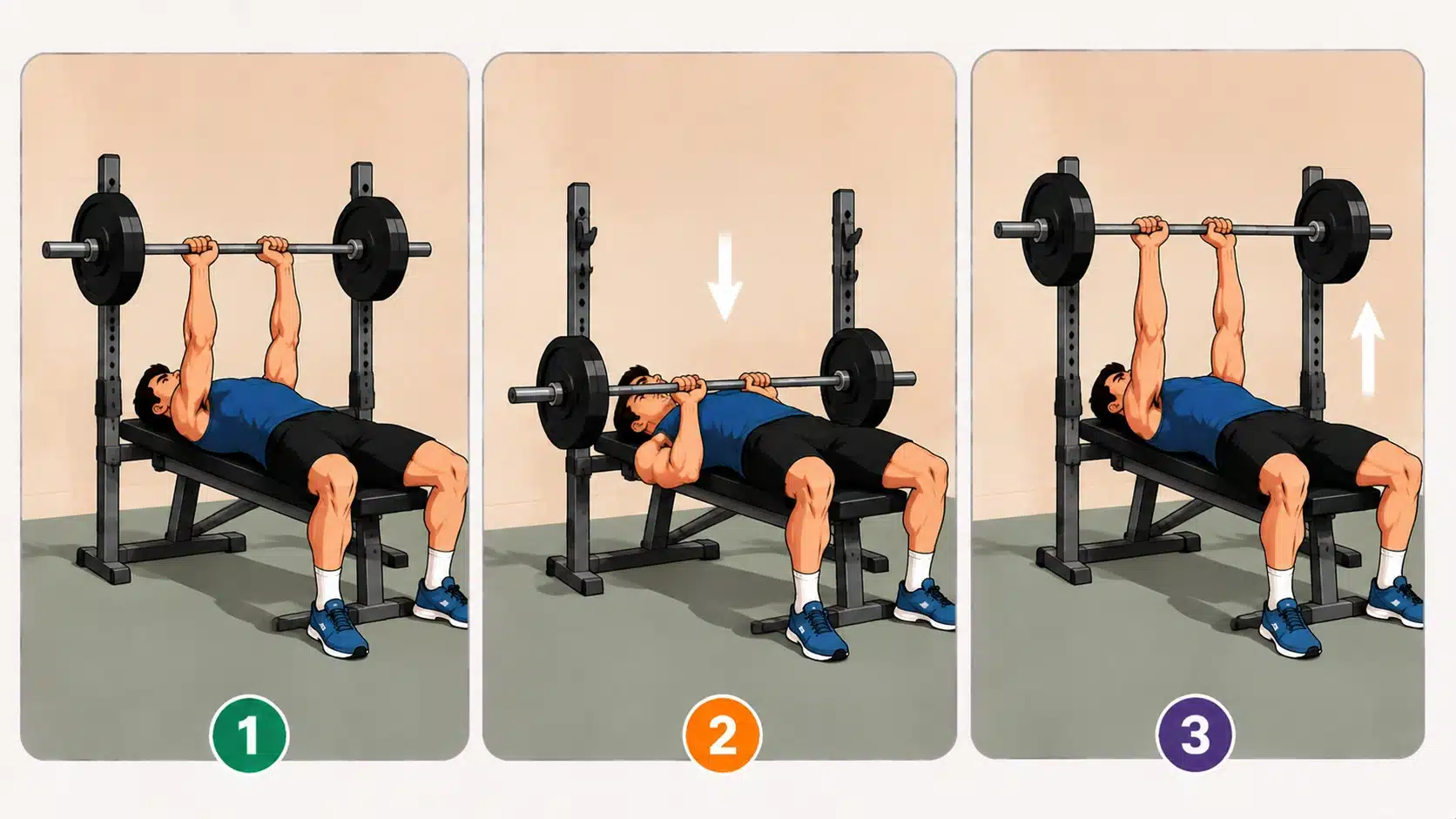
Muscles worked: Triceps, chest, front shoulders.
Moving your hands closer together on the bar shifts more load onto your triceps. It still trains your chest, but the triceps do the bulk of the work here.
Grip the bar with hands just inside shoulder width. Lower the bar to your lower chest with your elbows tucked close to your body, then press back up.
9. Triceps Pushdowns
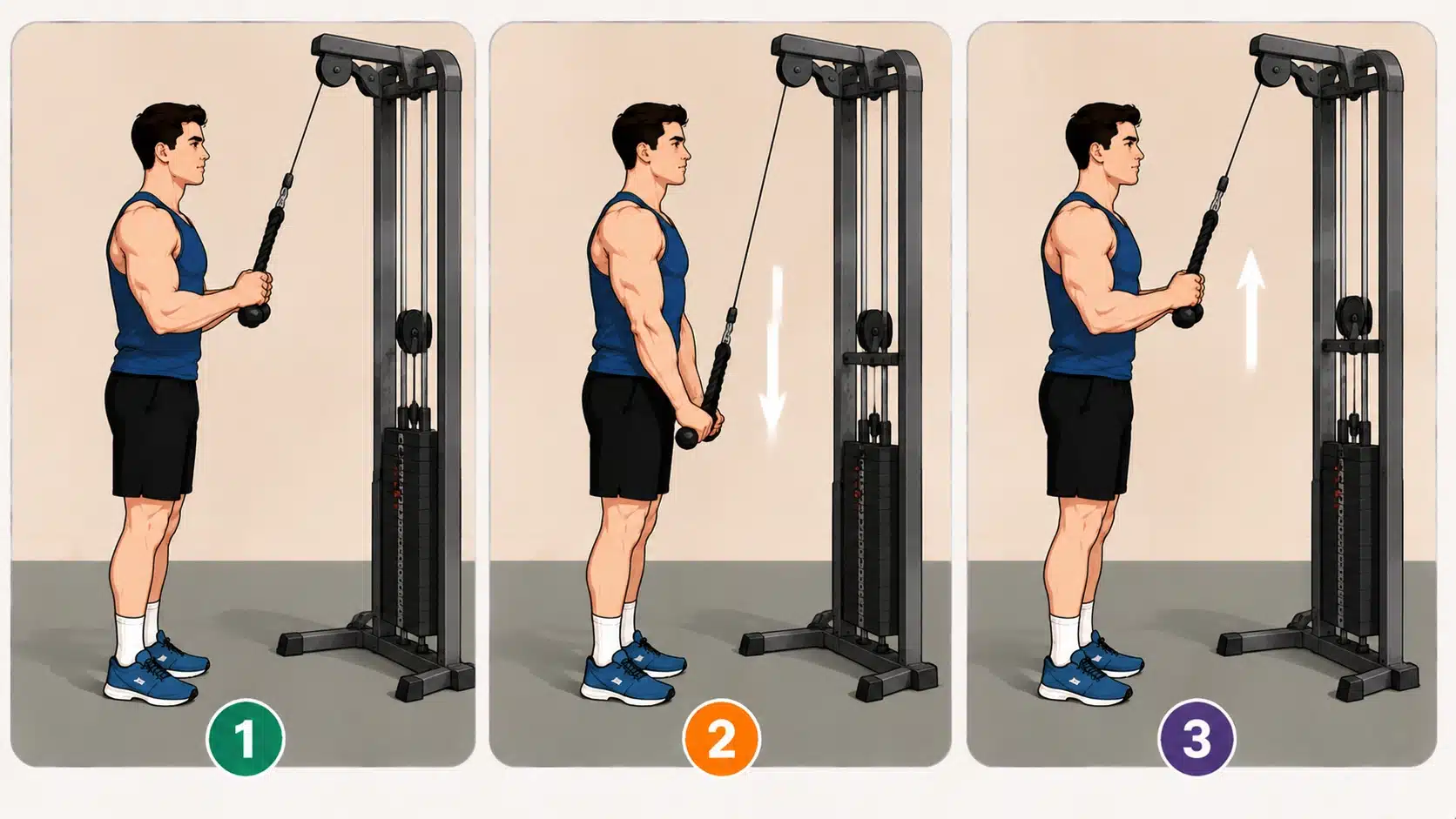
Muscles worked: All three triceps heads.
Pushdowns isolate the triceps and pair well with heavier pressing exercises earlier in your session. Use a cable machine or resistance band for this move.
Stand facing a cable machine with a rope or bar attachment set above head height. Keep your elbows locked at your sides and push the attachment down until your arms straighten. Let it rise back with control.
How Push Day Fits Into a Training Split
Push day is a core part of the push-pull-legs (PPL) split. This is one of the most widely used training structures for building muscle and strength.
On a PPL split, push day comes first. You train your chest, shoulders, and triceps. The next session focuses on pull muscles: back, biceps, and forearms. The third session covers legs. You can run the cycle three days a week or repeat it for six sessions.
| Training Split | Push Day Frequency | Best For |
|---|---|---|
| 3-Day PPL | Once per week | Beginners |
| 6-Day PPL | Twice per week | Intermediate to advanced lifters |
| 4-Day Push-Pull | Twice per week | Intermediate lifters |
| Upper-Lower Split | Twice per week (upper days) | All experience levels |
PPL splits work well because the muscles trained on each day don’t heavily overlap. Your chest can recover while you train your back the following session. That separation lets you train more frequently without overloading any single muscle group.
Push day also fits into upper-lower splits. On upper body days, you mix push and pull exercises in one session. This works well for lifters who train four days per week and want balanced upper body volume across the week.
No matter which split you use, the exercises stay the same. Rep ranges and loading shift based on your experience level and goal.
Upper Body Push Exercises For Different Goals
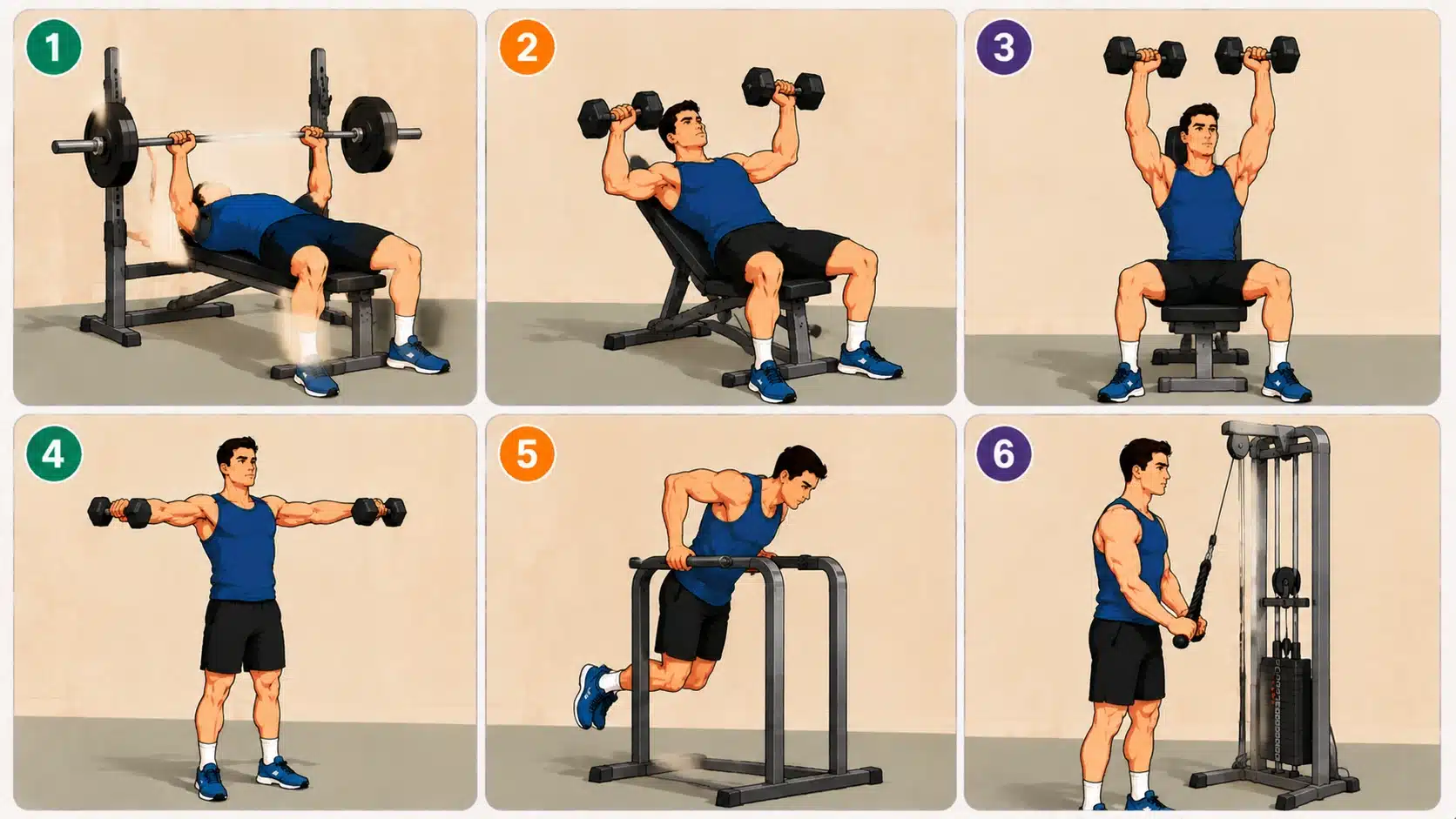
Your rep range and exercise choice should match what you want to achieve. Here is how to set up push day based on your goal.
- For building muscle: Use the bench press, incline dumbbell press, overhead press, lateral raises, and triceps pushdowns. Work in the 8 to 15 rep range with a controlled lowering tempo. Add weight gradually as your reps improve.
- For strength: Focus on the barbell bench press, overhead press, and weighted dips. Keep reps low, around 3 to 6 per set. Rest longer between sets and use heavier loads than you would for muscle building.
- For beginners: Start with incline push-ups, dumbbell chest presses, machine shoulder presses, and assisted dips. Learn the movement pattern with light weight before adding load or progressing to harder variations.
Sample Upper Body Push Workout
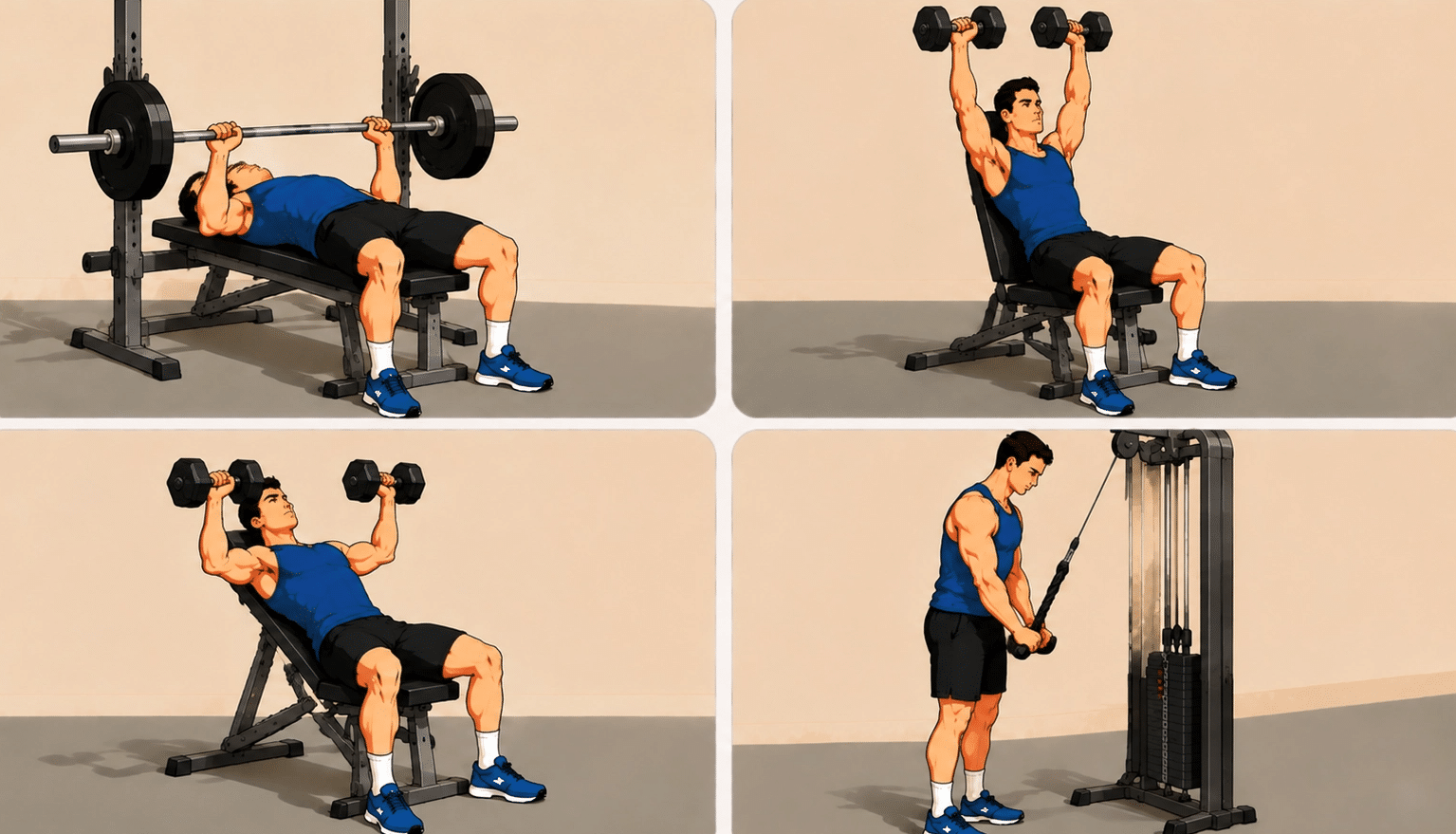
This routine covers all three push muscle groups in one session. Use it as a starting point and adjust as you get stronger.
| Exercise | Sets | Reps |
|---|---|---|
| Barbell Bench Press | 3 to 4 | 6 to 10 |
| Overhead Shoulder Press | 3 | 8 to 12 |
| Incline Dumbbell Press | 3 | 8 to 12 |
| Dumbbell Lateral Raises | 3 | 12 to 15 |
| Triceps Pushdowns | 3 | 10 to 15 |
Beginner version: Cut the workout to four exercises and use lighter weights. Prioritize form over load before adding weight.
Session length: Most push day workouts last between 45 and 60 minutes. This depends on your rest periods, the number of exercises, and your experience level.
Push Exercises vs. Pull Exercises
Push and pull exercises train opposite muscle groups. A balanced training plan includes both types across the week.
| Push Exercises | Pull Exercises |
|---|---|
| Chest | Back |
| Front and side shoulders | Rear shoulders |
| Triceps | Biceps |
| Pressing movements | Rowing and pulling movements |
Skipping pull work leads to muscle imbalances. When push muscles are stronger than pull muscles, your shoulders round forward. That increases the risk of shoulder and upper back injuries over time.
Pair every push session with a pull session. The timing depends on your split. A PPL structure separates them on different days. An upper-lower split combines both in one session on upper body days.
Push Exercise Mistakes to Avoid
Small form errors slow your progress and lead to shoulder or elbow pain. Watch for these during push workouts.
- Using too much weight: Lifting more than you can control shortens your range of motion. It also shifts the work onto the wrong muscles.
- Cutting your range of motion short: Partial reps reduce muscle growth and strength gains. Lower the weight fully and press through the complete range each rep allows.
- Training only your chest: Pressing only the bench and skipping shoulder and triceps work creates muscle imbalances. It also limits your overall pressing strength.
- Skipping pull exercises: Push training alone rounds your shoulders forward and strains your upper back. Balanced push-and-pull training supports better posture and joint health.
- Poor shoulder position: Letting your shoulders roll forward during a press puts extra stress on the joint. Keep your shoulder blades pulled back and down through every set.
Disclaimer: This article is for general information only and is not medical advice. Speak with a doctor or certified trainer before starting a new exercise routine. This matters most if you have an injury, a health condition, or are new to strength training.
Frequently Asked Questions
How many push exercises should I do in a workout?
Four to six push exercises per session gives enough volume to train your chest, shoulders, and triceps without overdoing it.
Are push-ups enough to build upper body strength?
Push-ups build real strength, especially for beginners. Adding weighted exercises like presses and dips helps you keep progressing over time.
Can beginners do upper body push exercises?
Yes. Start with bodyweight or light dumbbell versions and focus on form before adding heavier weight.
How many days a week should I train push muscles?
Most lifters get good results training push muscles one to two times per week. This allows enough time for recovery.
What is a push-pull training split?
A push-pull split separates workouts into push days and pull days. Push days train the chest, shoulders, and triceps. Pull days target the back and biceps.
What is the difference between push and pull exercises?
Push exercises press weight away from your body and train the chest, shoulders, and triceps. Pull exercises draw weight toward you and target the back and biceps.
Putting Your Push Day Together
Every strong upper body starts with the basics done well. Bench presses and overhead presses build lasting strength, while a few accessories support muscle growth.
Upper body push exercises reward patience, with small weekly gains adding up over time.
Pair push day exercises with a solid pull day to support balanced growth, healthier shoulders, better posture, and steady progress.
Ready to start? Pick three exercises from this article and put them to work this week.