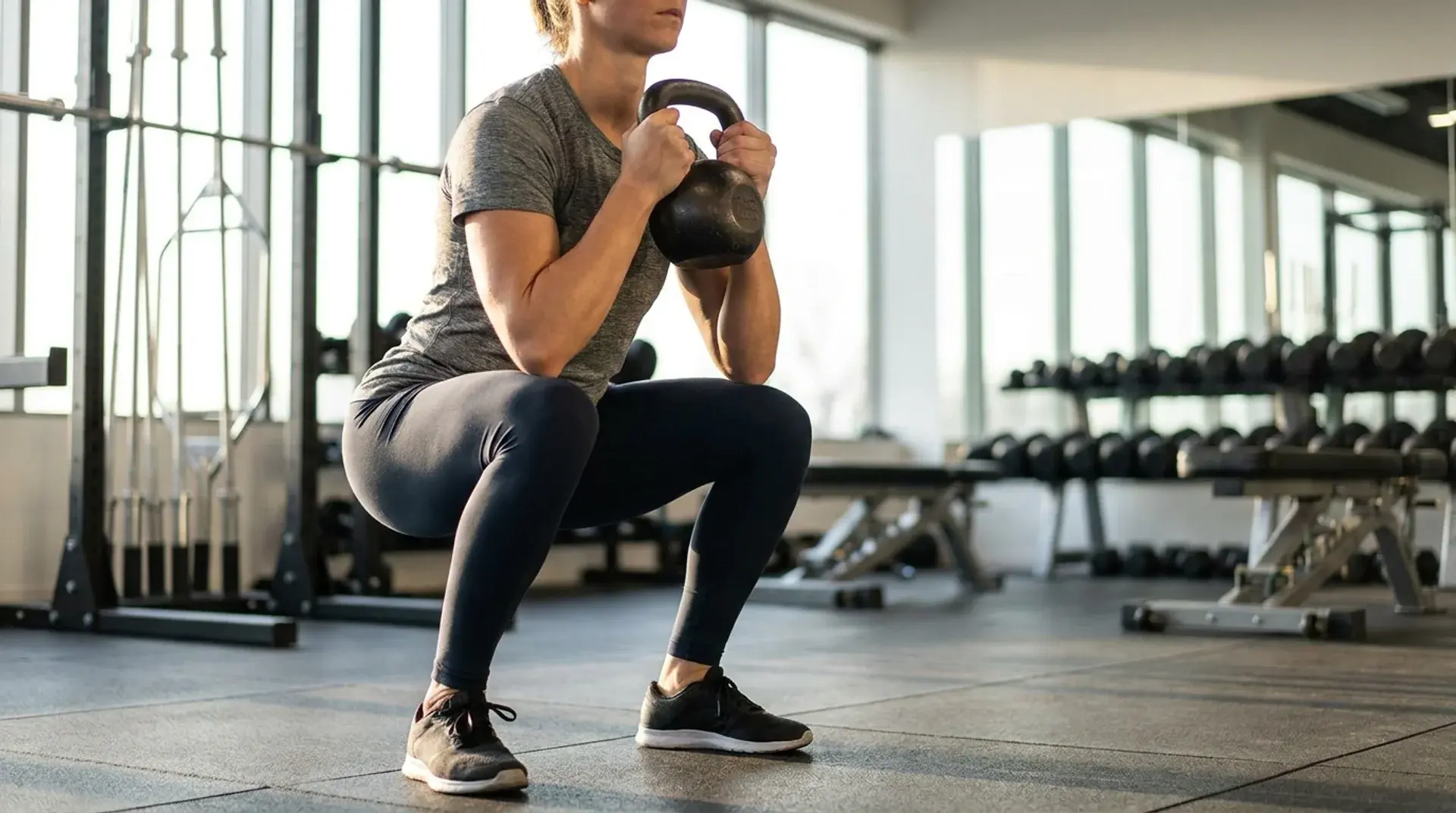
Squats with a kettlebell build lower-body strength while training your legs, core, and grip in one movement. You can do them at home or in a gym, and anyone at any fitness level can start with proper form.
This article covers setup, step-by-step technique, muscles worked, common mistakes, and four variations to progress once your goblet squat feels solid.
Disclaimer: This article is for general fitness education only. Speak with a doctor or certified trainer before starting if you have a knee, hip, lower back, or shoulder injury.
What Are Squats with a Kettlebell?
A kettlebell squat is a lower-body resistance exercise. You hold a kettlebell for added load while performing the squat movement pattern. The extra weight makes your legs and core work harder than a bodyweight squat alone.
The most common version is the kettlebell goblet squat. You hold the kettlebell at chest height with both hands, like cupping a large goblet. This position keeps your torso upright and makes the movement easier to control.
Once you build this pattern, other squat variations become much easier to learn. The rack squat, sumo squat, and overhead squat all use the same base hip-and-knee movement.
What You Need Before You Start
Getting your setup right makes everything easier. A few checks before your first rep prevent the most common early mistakes. The table below covers the key items.
| What You Need | Guidance |
|---|---|
| Kettlebell weight | Pick a weight you can control for 10 to 15 reps with good form. Only increase it once your form stays consistent across all sets. |
| Surface | Use a flat, non-slip floor with enough grip to keep your feet stable. |
| Footwear | Flat shoes or bare feet work best. They keep your heels grounded during the squat. |
| Space | Leave enough room to hold the kettlebell close to your chest without hitting anything around you. |
| Bodyweight squat first | You should perform a clean bodyweight squat before you add any load at all. |
If you are unsure about weight, start lighter than you think you need to. Poor form from too much weight causes injury faster than any other beginner mistake.
How to Do Goblet Squats with a Kettlebell Step by Step
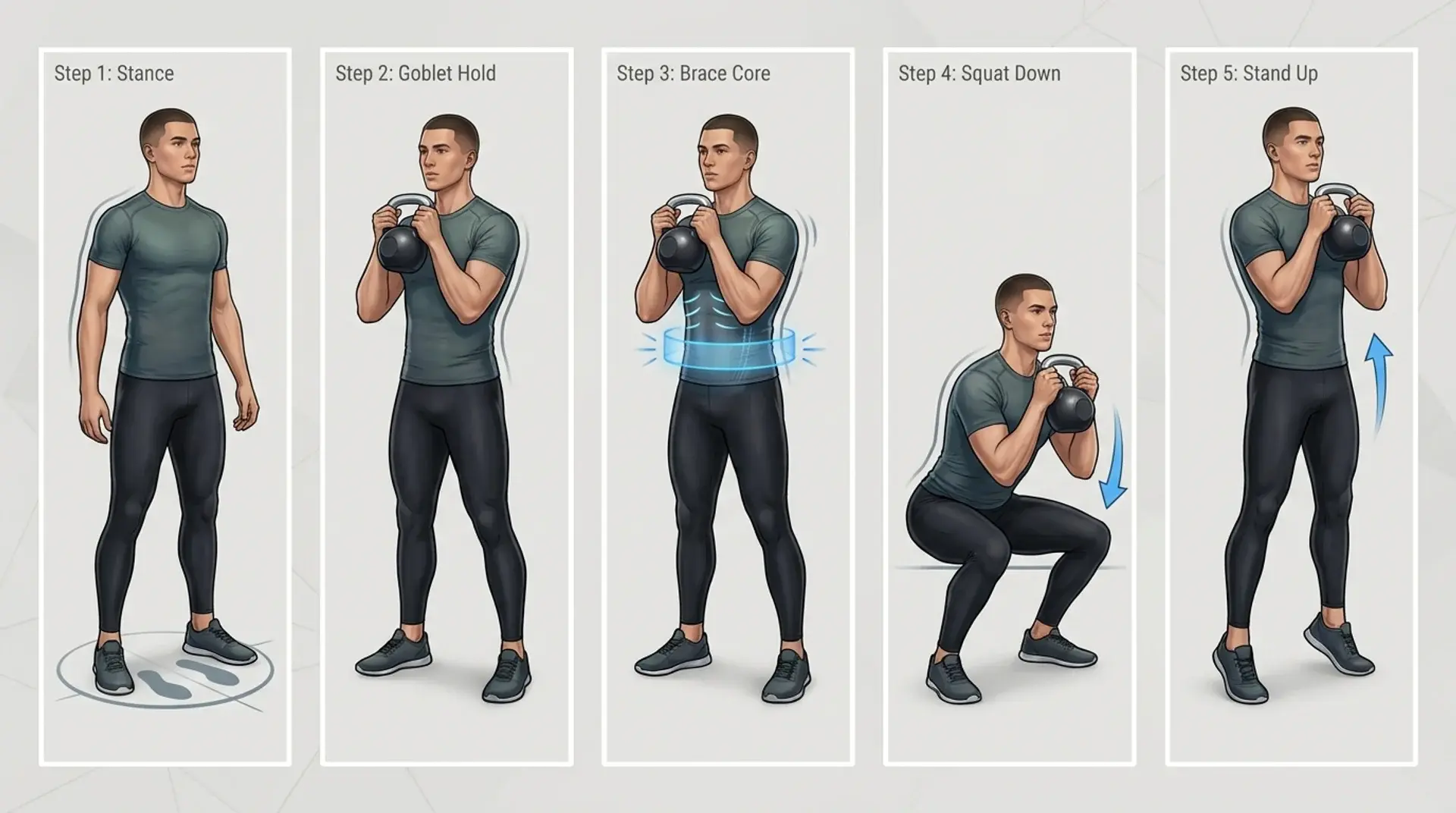
This is the core movement behind almost every kettlebell squat variation. Learn it well here, and your lower-body training will feel more controlled from the start.
Step 1: Set Your Stance
Stand with your feet about shoulder-width apart. Point your toes slightly outward, not straight ahead. This gives your hips room to sit back and down during the squat.
Keep your chest lifted and your eyes forward. Spread your weight evenly across both feet before picking up the kettlebell. A stable stance sets up the rest of the movement, so check your foot position before every set.
Step 2: Hold the Kettlebell Correctly
Pick up the kettlebell with both hands cupped under the horns. Bring it up to your chest with your elbows pointing down toward the floor. Keep your grip firm but relaxed, not tense.
The kettlebell should rest against your sternum, not float in front of you. This close chest hold is what makes squats with a kettlebell easier to control through the full range of motion. It is also what defines the goblet position.
Step 3: Brace Your Core
Before you lower down, take a deep breath into your belly. Tighten your core as if bracing for light contact. Hold that tension as you begin to bend your hips and knees.
This brace protects your lower back and keeps your torso stable under load. Breathe out on the way back up. This breathing pattern also protects your spine during every rep.
Step 4: Lower Into the Squat
Bend your hips and knees at the same time as you go down. Keep your weight in your heels, not your toes. Let your knees track in line with your toes, not cave inward.
Lower until your thighs are close to parallel with the floor. Only go as deep as you can control with a flat back. Keep your chest tall the entire way down.
Step 5: Drive Back Up
Push through your heels to stand back up. Squeeze your glutes and quads as you reach the top of the movement. Keep the kettlebell close to your chest the whole time.
Avoid locking your knees out hard or rounding your back at the top. A controlled, steady drive up finishes the rep correctly and keeps the squat safe on your joints.
Sets and Reps for Beginners
The table below gives a starting point for beginners. Adjust it based on how your form holds up across each set.
| Variable | Beginner Target |
|---|---|
| Sets | 2 to 3 sets per session |
| Reps | 10 to 15 reps per set |
| Rest | 1 to 2 minutes between sets |
| Frequency | 2 to 3 times per week, with a rest day between sessions |
Pro Tip: Once the goblet position feels solid, try the rack or sumo squat for variety. Both use the same base squat pattern with a different hold position.
What Muscles Do Kettlebell Squats Work?
A kettlebell squat trains more than just your legs. Holding the weight at chest height increases core demand compared to a bodyweight squat alone. Here is how the load is distributed across your body.
Primary muscles:
- Quadriceps: Straighten your knees as you stand up from the squat
- Glutes: Drive hip extension and power you out of the bottom position
- Hamstrings: Support your hips and knees through the full movement
Secondary muscles:
- Core: Stabilizes your spine and resists the forward pull of the weight
- Lower back: Helps keep your torso upright under load
- Calves: Support balance and ankle control throughout
The squat pattern trains muscular endurance, strength, and lower-body power. The National Academy of Sports Medicine lists it as a primary lower-body movement. The front-loaded kettlebell position adds greater core demand.
Kettlebell Squat Variations to Try Next
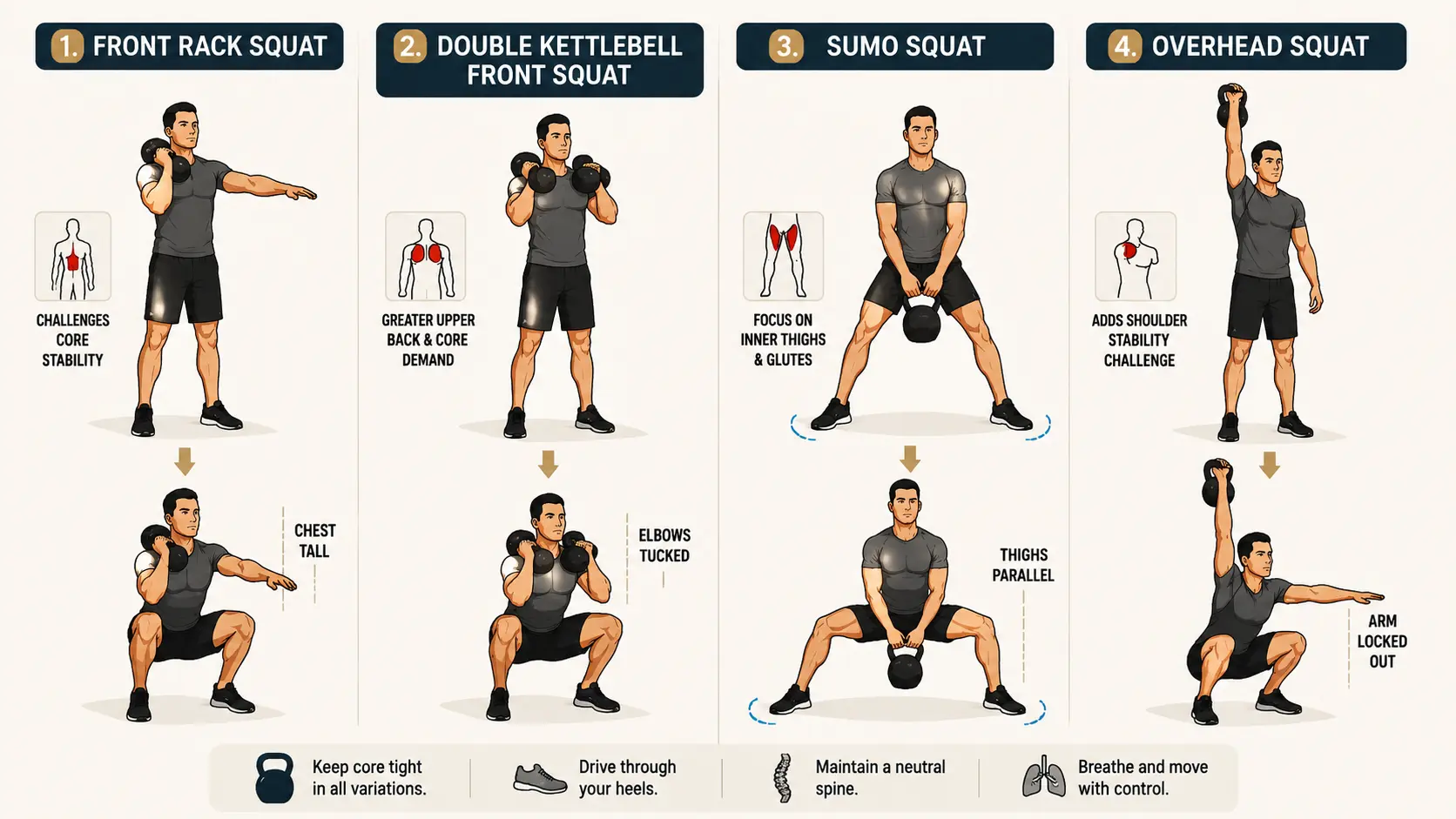
Once you have the goblet squat down, these four variations add fresh challenge to your training. Each uses the same base movement with a different weight position.
1. Front Rack Squat
Hold one kettlebell against your shoulder in the rack position. Rest it on your forearm with your elbow tucked in. Squat while keeping your chest tall and your free arm out for balance.
The off-center load challenges your core to resist leaning to one side. This builds lateral stability alongside leg strength.
2. Double Kettlebell Front Squat
Hold two kettlebells in the rack position, one on each shoulder. Keep both elbows tucked close to your body. This setup lets you use more total weight than a single kettlebell allows.
It also demands greater upper-back and core strength to keep both kettlebells stable throughout the movement.
3. Sumo Squat
Take a wider stance with your toes pointed out further than usual. Hold the kettlebell with both hands and let it hang between your legs, arms straight.
Lower until your thighs are parallel to the floor, then drive back up through your heels. This stance shifts more focus onto your inner thighs and glutes.
4. Overhead Squat
Press a single kettlebell overhead with a locked elbow before you begin the squat. Keep your arm extended straight up as you lower down and stand back up.
This adds a shoulder stability challenge on top of the usual leg and core demands. Only attempt this once your basic squat form is fully solid.
Common Kettlebell Squat Mistakes and How to Fix Them
Small form breakdowns happen with any new exercise. Catching these early keeps your squats safe and effective over time. The table below covers the five most common errors and how to correct them.
| Mistake | How to Fix It |
|---|---|
| Leaning too far forward | Keep the kettlebell close to your chest. Brace your core before you descend. |
| Knees caving inward | Press your knees outward so they track over your toes throughout the movement. |
| Heels lifting off the floor | Reduce your squat depth. Work on ankle mobility before going deeper. |
| Rounding your upper back | Pull your shoulder blades down and back. Keep your chest open and tall. |
| Using too much weight too soon | Drop back in weight and rebuild solid form before adding load again. |
Getting the Most from Squats with a Kettlebell
Squats with a kettlebell reward consistent practice more than heavy loads. Keep the weight close to your chest. Brace your core before each rep, and let your hips and knees move together on the way down.
The kettlebell goblet squat is the right starting point. Fix small errors early before they become habits. Knees caving in, heels lifting, and a forward lean are all quick to correct at the start.
Pick a weight you can control for clean reps, and this simple lower-body exercise will build real strength over time.
Frequently Asked Questions
Can kettlebell squats replace barbell squats?
Yes, for general strength and home training goals. Kettlebells limit how heavy you can load over time, but they work well for fitness goals outside of powerlifting.
Is it better to hold a kettlebell high or low during squats?
Chest height keeps your torso more upright and increases core demand. Holding it lower changes balance mechanics. The chest position works best for beginners learning the movement.
Why do kettlebell squats feel harder than the weight suggests?
The kettlebell’s front position shifts your center of mass. Your trunk works constantly to maintain balance, so even a modest weight creates more fatigue than expected.
Can kettlebell squats improve your barbell squat?
Yes. They build bracing habits, depth control, and torso stability under front-loaded resistance. They work well as a supplementary movement alongside barbell training.
Should you do squats with a kettlebell every day?
Light, technique-focused sessions can work daily, but heavy daily sets slow recovery. Two to three sessions per week, with rest days in between, is a better structure for progress.
How do you know when to increase kettlebell weight?
Add weight once you complete all sets and reps with clean form. Increase in small steps, typically 2 to 4 kilograms at a time, to keep form intact.