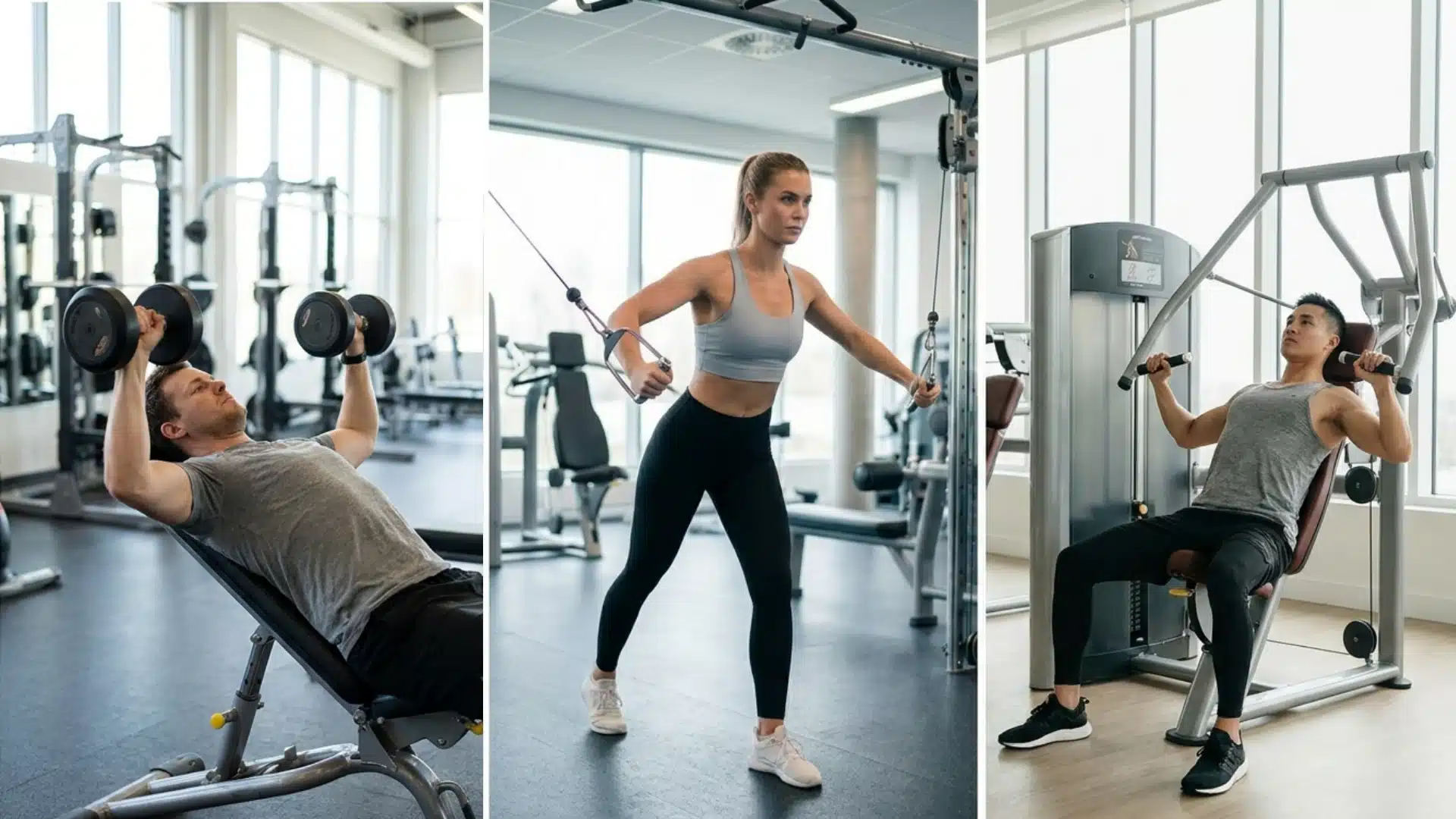
A flat upper chest is one of the most common training frustrations. The issue is almost always the same: too many flat bench sets and not enough incline work.
The upper chest, the clavicular head of the pectoralis major, responds to incline angles and upward pressing directions. Flat bench targets the lower and mid portions, leaving the clavicular fibers undertrained.
This upper chest workout guide covers the best exercises and complete routines. It also includes form cues for each movement and the mistakes that stall progress.
What Is the Upper Chest and Why Is It Difficult to Build?
The upper chest gets treated like some hard-to-reach muscle. In practice, it comes down to anatomy and fiber direction once you understand how the muscle is structured.
Upper Chest Muscles
The upper chest is the clavicular head of the pectoralis major. It attaches along the collarbone, sitting above the sternal head that accounts for most of the chest’s total mass.
The clavicular fibers run at an upward angle toward the upper arm. The sternal fibers run more horizontally. That difference in fiber direction is why changing the pressing angle shifts work between the two portions.
Can You Isolate the Upper Chest?
You cannot fully isolate the upper chest. Any press or fly recruits both the clavicular and sternal fibers at once.
Incline angles between 15 and 45 degrees shift more of the workload toward the clavicular side. The visible center line of the chest is the gap between the left and right pectorals. It is not a muscle division called “upper chest separation” and does not change with training.
Best Upper Chest Exercises for Muscle Growth
These seven exercises load the clavicular fibers directly using a barbell, dumbbells, cables, or bodyweight. Each one works by directing tension toward the upper chest through an incline angle or a low-to-high line of pull. Understanding how to workout upper chest starts with these specific movements.
1. Incline Barbell Bench Press
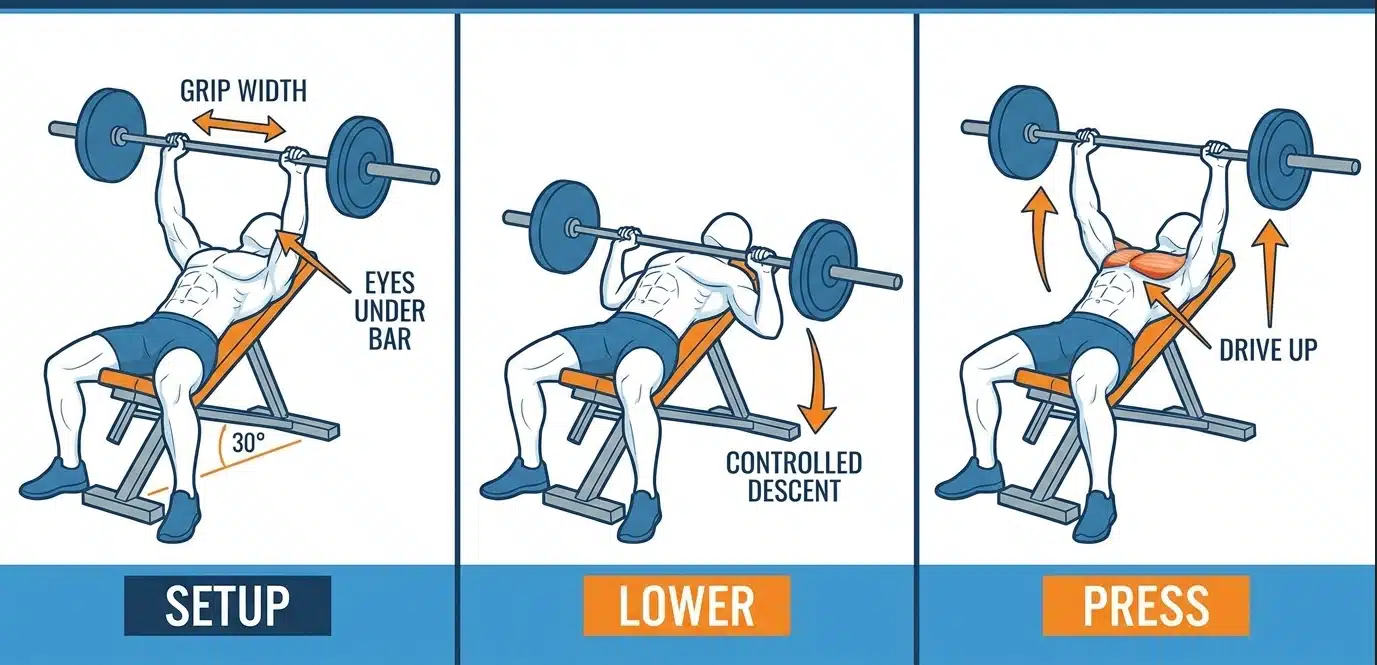
The incline barbell press is the primary mass-builder for the upper chest. It allows heavier loading than dumbbell or machine variations.
A 2020 study in the International Journal of Environmental Research and Public Health found that a 30-degree incline maximized upper chest activation. Angles above 45 degrees increased front shoulder involvement instead.
Set the bench to 30 degrees. Grip the bar slightly wider than shoulder width. Pull your shoulder blades back and down, lower the bar to your upper chest with control, then press upward.
2. Incline Dumbbell Press
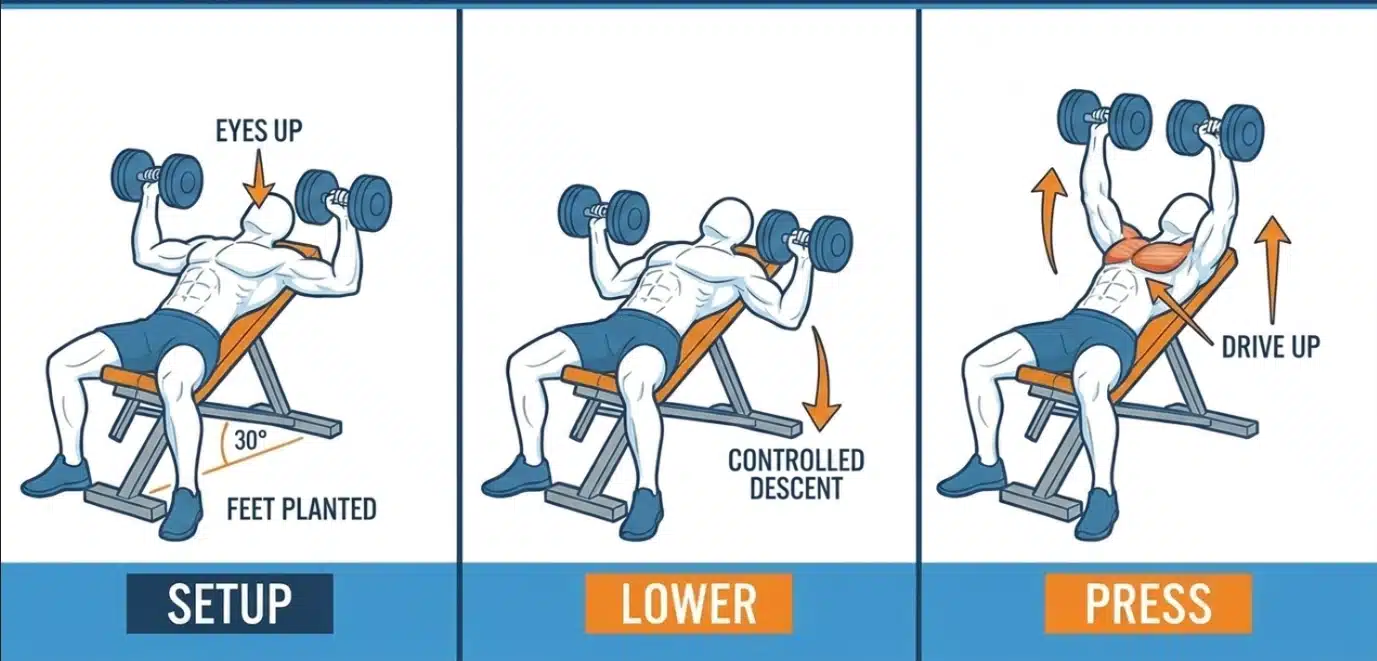
Dumbbells let each arm move independently through a longer range of motion than a barbell allows. This can reveal strength imbalances between sides over time.
Without a fixed bar path, your shoulders find a more natural pressing angle. Lifters with front shoulder discomfort on the barbell often find dumbbells more comfortable.
Keep the bench at 30 degrees. Lower the dumbbells until the upper arm is roughly parallel to the floor. Press back up without snapping the elbows fully straight at the top.
3. Incline Dumbbell Fly
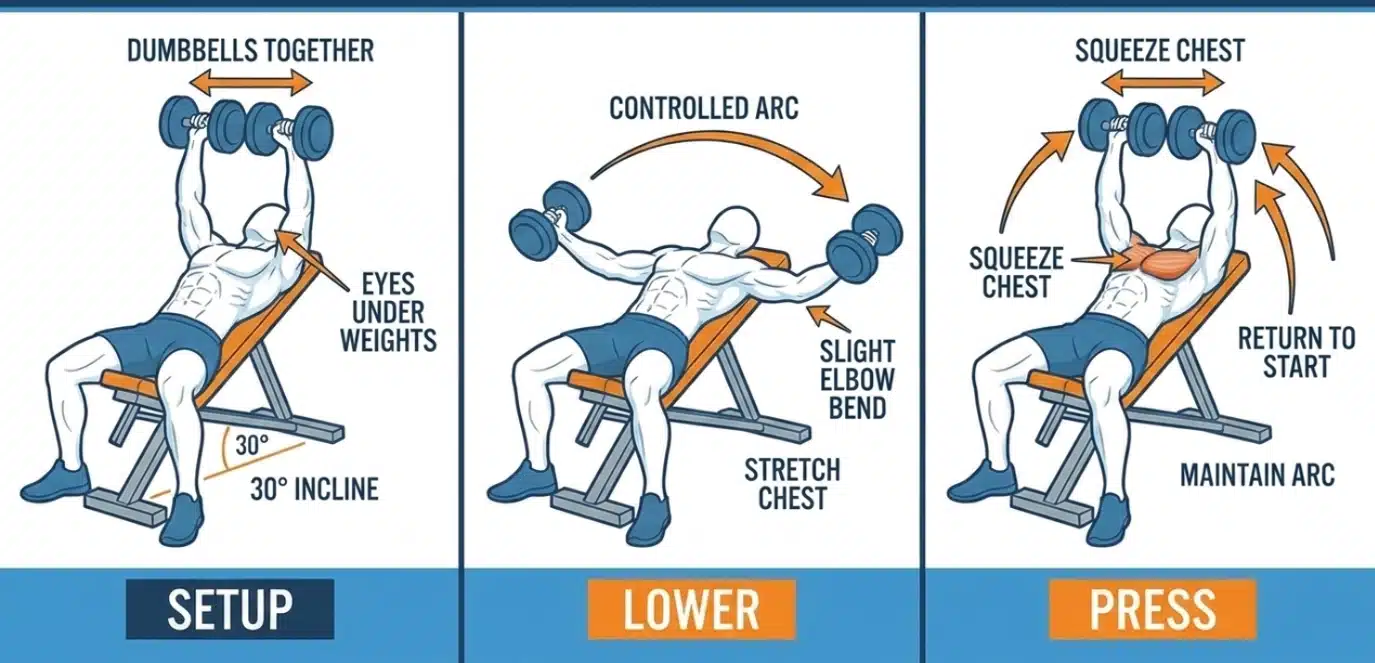
Fly movements complement pressing work by removing elbow extension from the movement. Without the triceps helping to drive the weight, more tension stays on the chest fibers throughout the set.
Keep a slight bend in the elbows throughout the rep. Stop the descent when you feel a stretch across the upper chest. Lowering too far places unnecessary stress on the shoulder joint.
4. Low-to-High Cable Fly
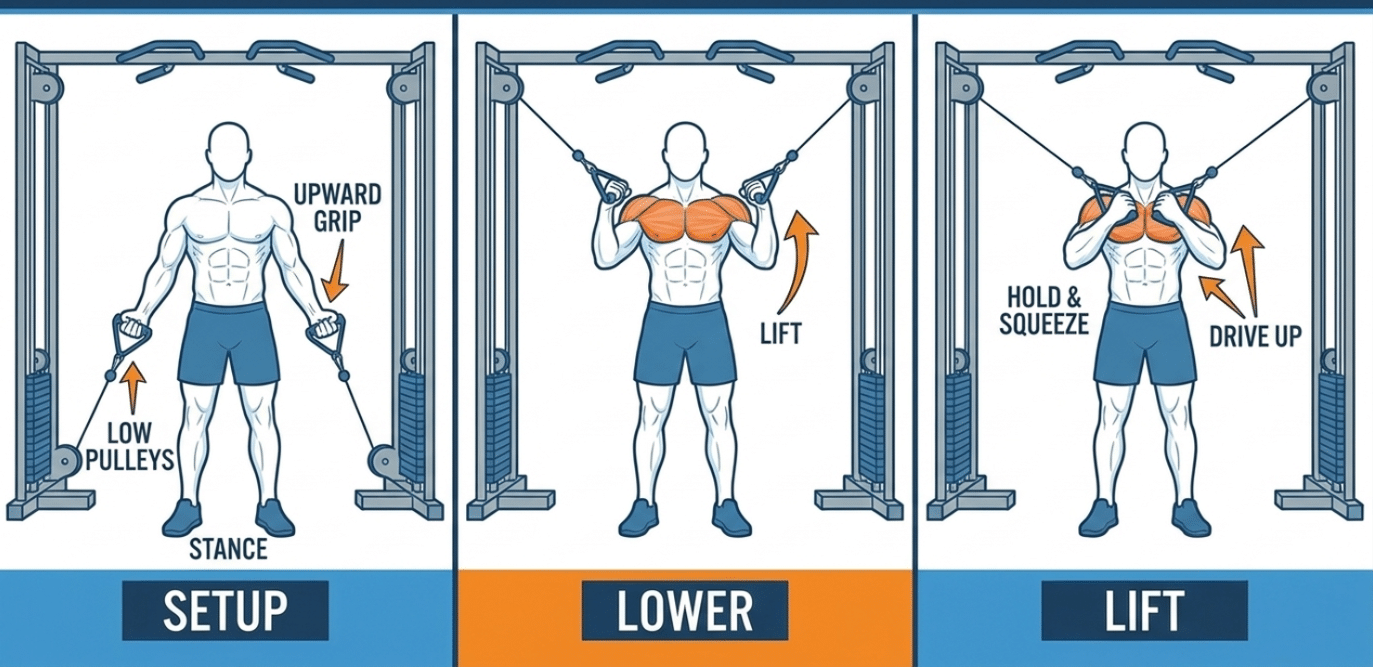
Cables keep tension on the upper chest across the full range of motion. Free weights lose resistance near the top of a press or fly because gravity no longer works against the muscle. Cables do not have that limitation.
Set both pulleys to their lowest position. Step slightly forward. Bring the handles up and together in front of your upper chest. Keep the motion slow and controlled rather than swinging the weight.
5. Incline Chest Press Machine
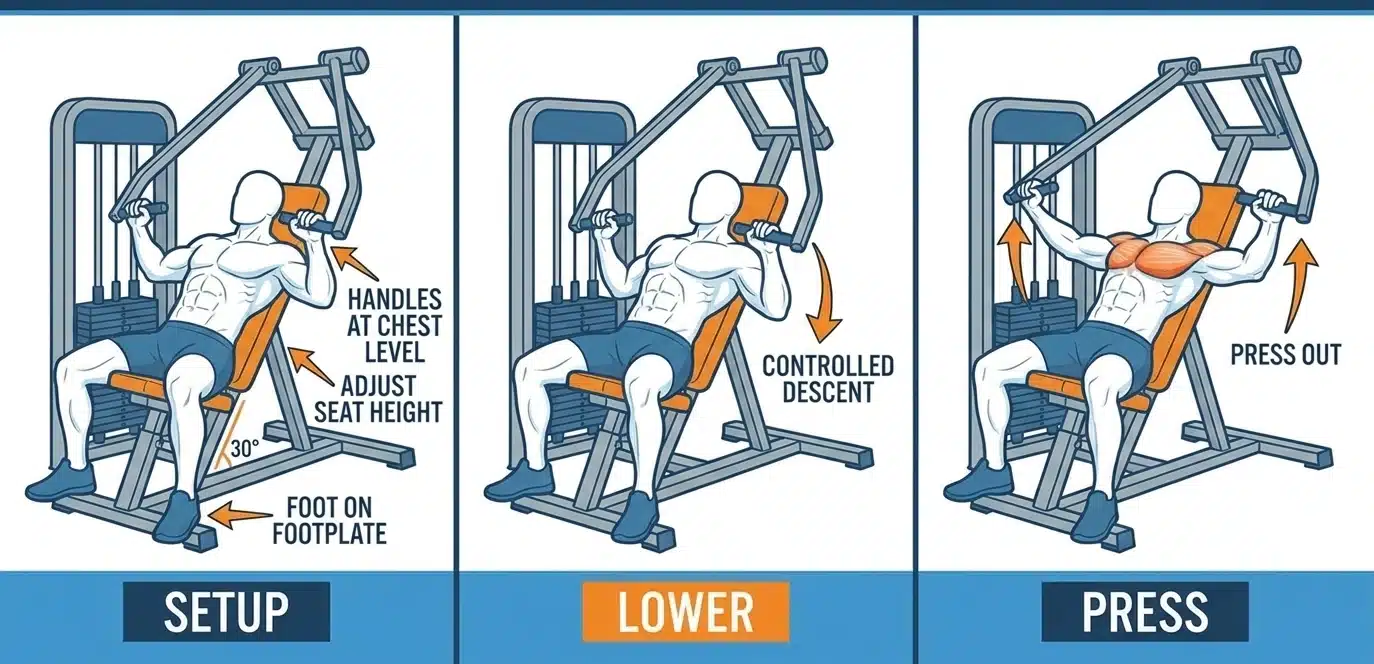
Machines fix the pressing path and remove the need to balance the weight. This lets beginners focus entirely on pressing mechanics and build the mind-muscle connection before moving to free weights.
For experienced lifters, machines work well as a high-rep finisher late in a session. By that point, fatigue makes stabilizing a barbell harder and raises the risk of form breakdown.
6. Raised-Feet Push-Ups
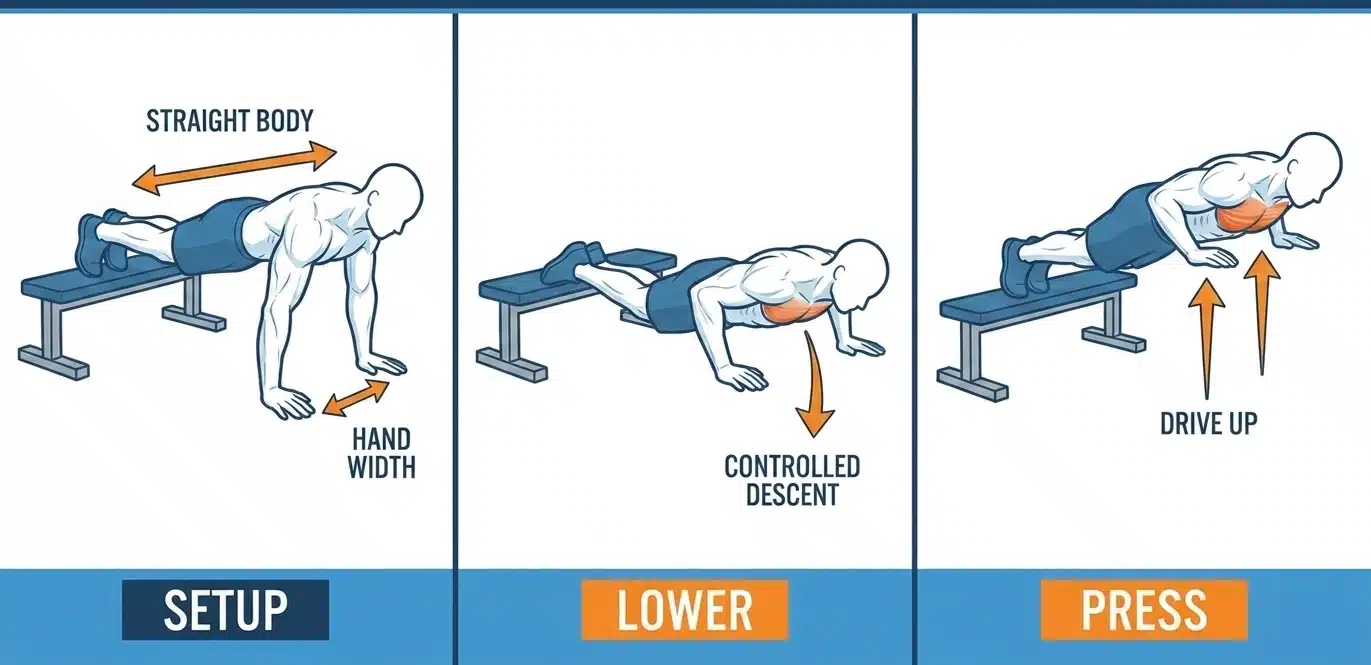
Placing your feet on a bench or step shifts more load onto the upper chest and shoulders. It works in a similar way to a bodyweight incline press. No equipment is needed beyond a raised surface.
As strength builds, raise the height of the surface or add a weighted vest to keep the movement challenging.
7. Reverse-Grip Bench Press
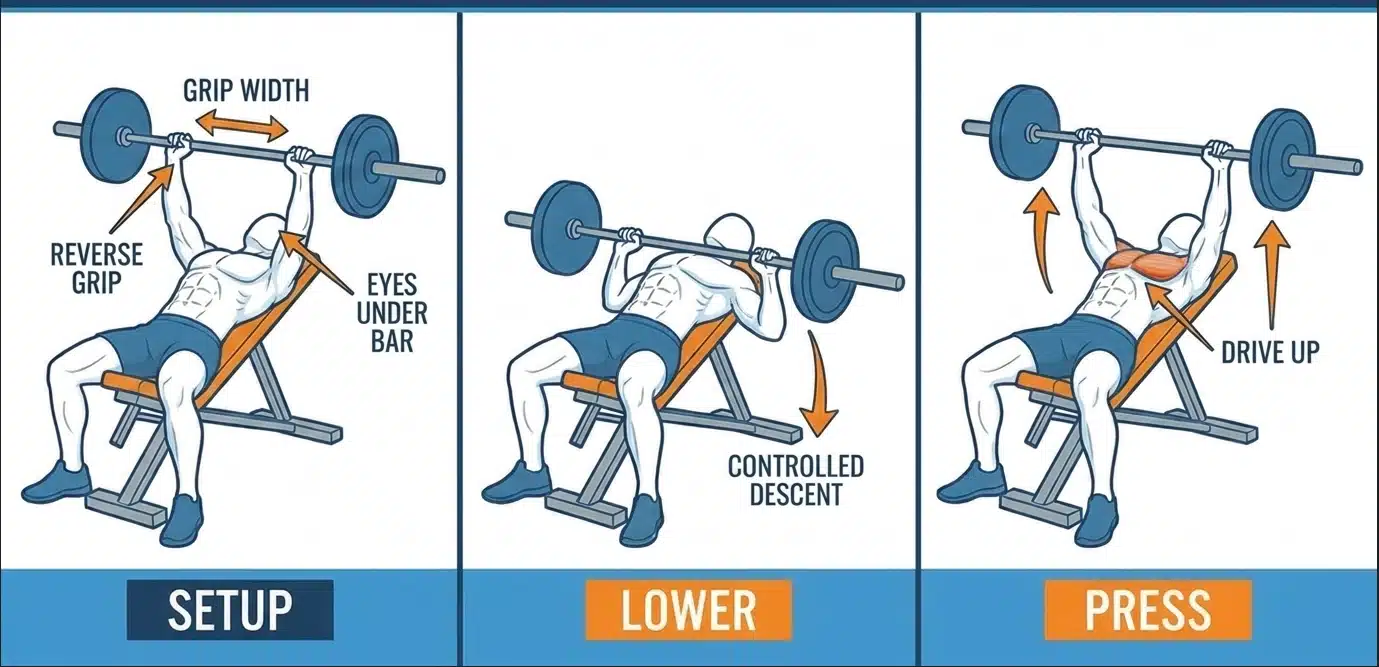
An underhand grip changes the elbow and shoulder angle through the press. This shifts more work onto the clavicular fibers even without an incline.
This variation requires good shoulder mobility and a lighter load than a standard grip. Always use a spotter and start well below your normal flat bench weight. Stop the set immediately if you feel pinching in the front of the shoulder.
A Complete Upper Chest Workout Routine
The right exercises only produce results when organized into a structured plan. The table below shows sets, reps, and rest for three training levels. Match it to your current stage and progress from there.
| Level | Exercises | Sets x Reps | Rest | Frequency |
|---|---|---|---|---|
| Beginner | Incline dumbbell press, raised-feet push-ups, cable fly, machine chest press | 3 x 10–12 | 60–90 sec | 1x per week |
| Intermediate | Incline barbell press, incline dumbbell press, low-to-high cable fly, incline machine press | 3–4 x 8–12 | 90 sec | 1–2x per week |
| Advanced | Heavy incline barbell press, incline dumbbell press, incline dumbbell fly, high-rep finisher | 4–5 x 6–15 | 90–120 sec | 2x per week |
Beginner Upper Chest Workout
Do these four exercises per session:
- Incline dumbbell press: 3 sets of 10–12 reps
- Raised-feet push-ups: 3 sets to max reps (target 10–15)
- Cable fly: 3 sets of 12 reps
- Machine chest press: 3 sets of 12 reps
Focus on the movement pattern before adding weight. Rest 60 to 90 seconds between sets. Train the upper chest once per week until the mechanics feel consistent.
Intermediate Upper Chest Workout
Do these four exercises per session:
- Incline barbell press: 4 sets of 8–10 reps
- Incline dumbbell press: 3 sets of 10–12 reps
- Low-to-high cable fly: 3 sets of 12–15 reps
- Incline machine press: 3 sets of 12 reps
Add a small amount of weight or one extra rep every one to two weeks. Aim for 10 to 16 working sets per week, across one or two sessions.
Advanced Upper Chest Workout
Do these four exercises per session:
- Heavy incline barbell press: 5 sets of 6–8 reps
- Incline dumbbell press: 4 sets of 8–10 reps
- Incline dumbbell fly: 3 sets of 12–15 reps
- Raised-feet push-ups: 3 sets to max reps (finisher)
A drop set or a slower lowering phase on the final working set adds intensity without extra volume. Pull back on training load if recovery falls behind or joints feel irritated between sessions.
How to Perform Upper Chest Exercises Correctly
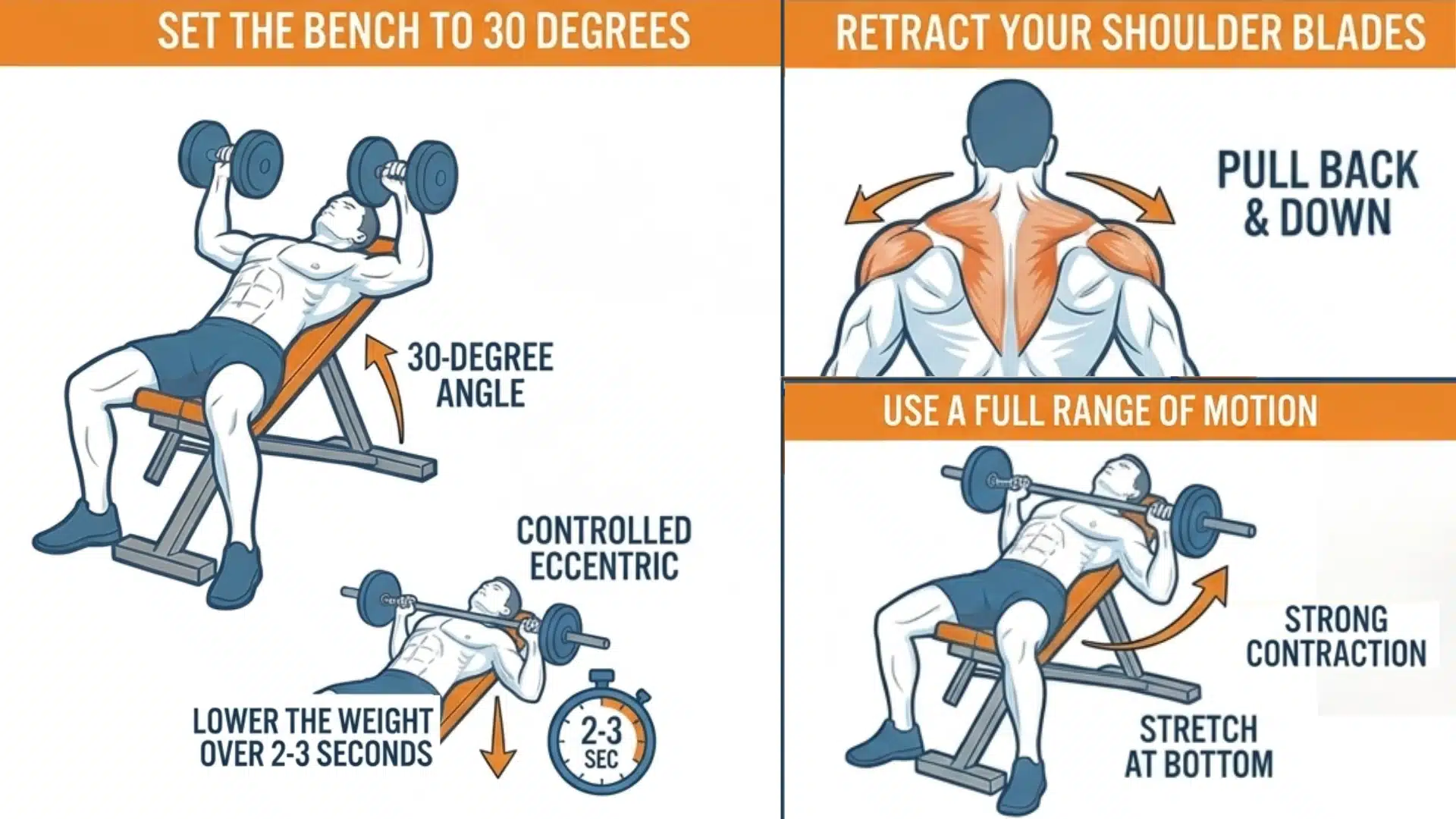
Bench angle, shoulder position, and rep tempo all matter. Together they decide whether the movement builds the upper chest or just fatigues the front deltoids.
- Set the bench to 30 degrees. Upper pec activation peaks at this setting. Angles steeper than 45 degrees shift work onto the front shoulder.
- Retract your shoulder blades. Pull them back and down before every rep to create a stable base and protect the shoulder joint.
- Lower the weight with control. A two-to-three-second lowering phase keeps tension on the upper chest and prevents the bar from bouncing.
- Use a full range of motion. A stretch at the bottom and a deliberate contraction at the top produce more muscle stimulus than partial reps.
- Warm up before loading. Two or three light sets before working weight improve blood flow to the joint and reduce injury risk.
Upper Chest Workout Sets, Reps, and Frequency
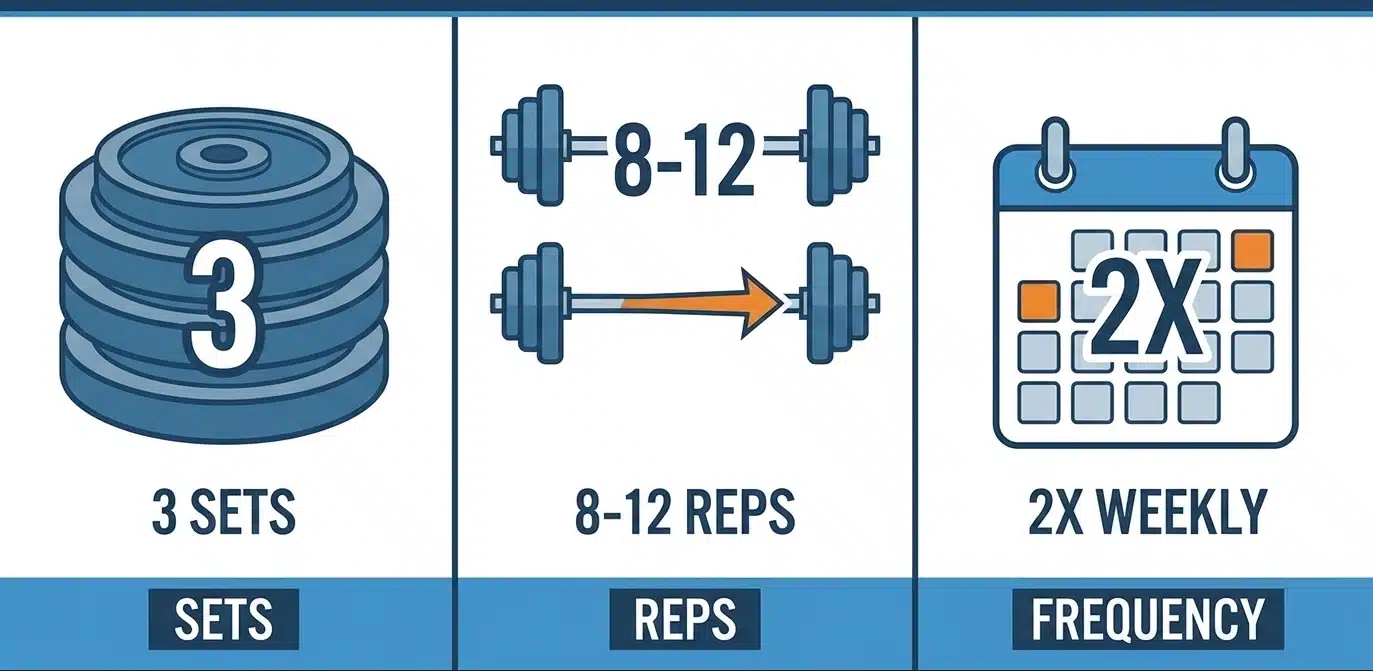
Exercise selection matters. But consistency with the right training load over months is what closes the gap between the upper and lower chest.
- Rep range 8 to 15. Compound movements like the incline barbell press sit closer to 6 to 10 reps. Isolation movements like flyes work well at 12 to 15 reps.
- Weekly sets 10 to 20. Beginners respond well around 8 to 12 sets. Intermediate and advanced lifters often need 16 to 20 sets per week to keep progressing.
- Frequency once or twice per week. Leave at least 48 hours between sessions that heavily load the same chest fibers so the muscle can recover and adapt before the next session.
Upper Chest Workout Mistakes to Avoid
These five habits account for most upper chest plateaus. Fixing them makes the exercises already in your program work harder without changing anything else.
- Using too much weight. When the load is too heavy, momentum moves the bar rather than the chest muscle. The upper chest receives less tension per rep and progress stalls. Drop the weight until you feel the chest working through the full movement.
- Setting the bench too high. A 45 to 60-degree incline moves a large share of the work onto the front deltoids. If your shoulders tire before your chest does, the angle is too steep.
- Ignoring range of motion. Partial reps allow heavier loads but produce less muscle development than full-range reps. Stretch at the bottom, contract deliberately at the top.
- Training only flat bench. Flat bench loads the sternal head of the pec, not the clavicular head. Without dedicated incline work, the upper chest does not receive the direct stimulus it needs to grow.
- Skipping progressive overload. The same weight, sets, and reps every week give the muscle no reason to keep adapting. Add a rep, a small amount of weight, or an extra set over time.
Upper Chest Workout at Home Without Equipment
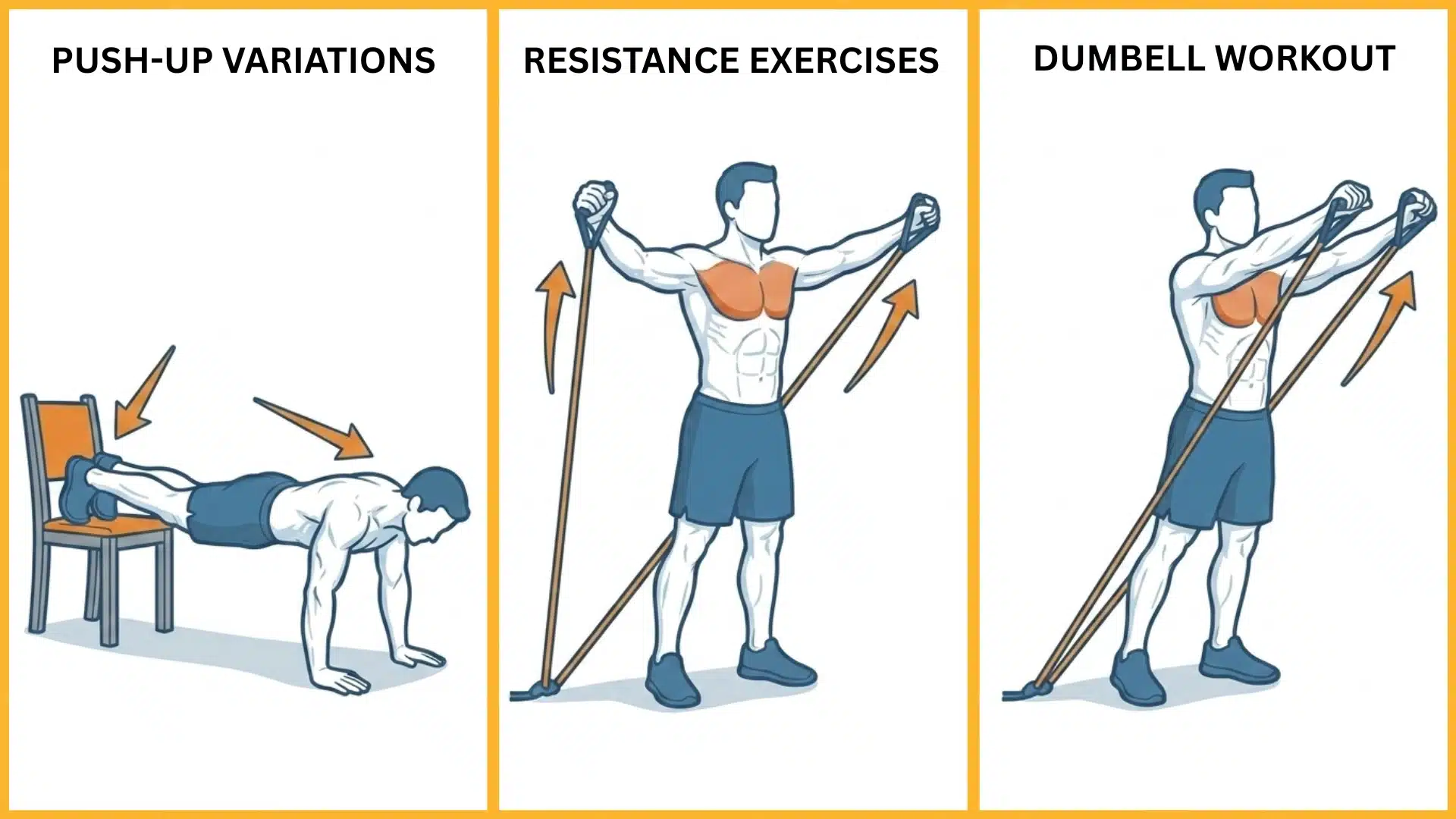
No bench or barbell is needed to train the upper chest at home. These three options recreate the pressing and pulling angles that target the clavicular fibers using bodyweight, resistance bands, or dumbbells.
Push-Up Variations
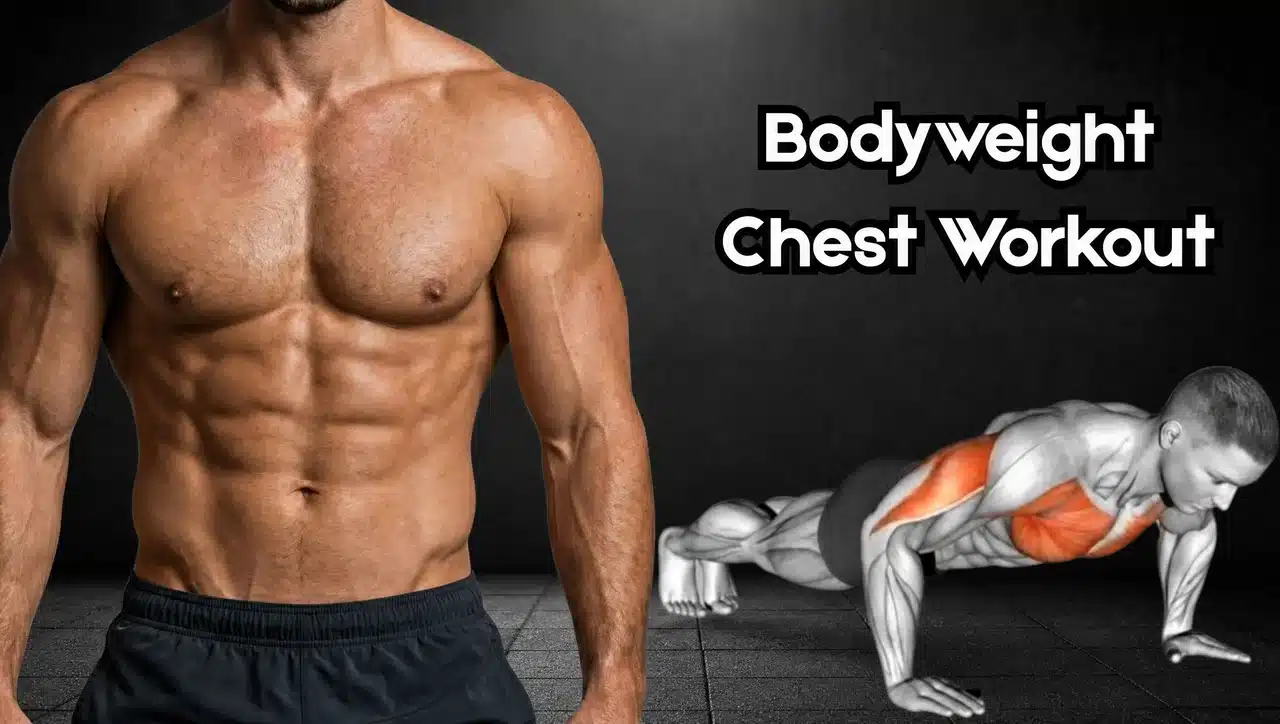
Raised-feet push-ups are the closest bodyweight equivalent to an incline press. Raising the feet shifts more load onto the upper chest and shoulders.
Slowing the lowering phase to three seconds increases time under tension without adding resistance. This is a practical way to progress when adding external load is not an option.
Resistance Band Upper Chest Exercises
Anchor a resistance band low and behind you. Press up and forward at an incline angle to recreate the stimulus of a band incline press.
Anchor the band near the floor for a fly. Bring both handles up and together in front of your upper chest. This closely matches the stimulus of a low-to-high cable fly.
Dumbbell Home Workout
A pair of dumbbells and a stable incline surface cover the core stimulus of a gym incline station. That could be an adjustable bench, a firm wedge, or a chair propped safely at an angle.
Incline dumbbell presses and flyes build the upper chest in a small space. They work effectively with consistent load progression over time.
Disclaimer: This article is for informational purposes only and is not a substitute for professional medical or fitness advice. Consult a qualified healthcare professional before starting a new workout program if you have an existing injury or health concern.
Frequently Asked Questions
What is the best exercise for upper chest growth?
The incline barbell bench press at around 30 degrees is the best upper chest exercise since it allows the heaviest loading of any upper chest movement.
How many times a week should I train my upper chest?
Training the upper chest once or twice a week works well for most people, with advanced lifters often splitting sessions to fit in more volume.
Does incline bench press build upper chest?
Yes, the incline bench press targets the clavicular head of the pectoralis major, known as the upper chest, with 30 degrees working as a common sweet spot.
What incline angle is best for upper chest?
A 30-degree incline is generally the best angle for upper chest activation, based on EMG research comparing angles from flat all the way up to 60 degrees.
Can push-ups build the upper chest?
Feet-elevated push-ups can build the upper chest by increasing the load placed on that region compared to standard push-ups, making them a useful home workout option.
Why is my upper chest not growing?
Slow upper chest growth is usually caused by relying too heavily on the flat bench, using too steep an incline, or skipping progressive overload over time.
Building a Fuller Upper Chest Takes Consistent Work
No single exercise or trick builds the upper chest overnight. What works is picking the right angle, pressing and pulling in the directions those clavicular fibers respond to, and adding a little more weight or volume over the weeks and months ahead.
Start with the incline press at 30 degrees, add a fly variation for isolation work, and stay consistent with your training frequency.
The upper chest tends to be one of the slower areas to respond, so give a program at least 8 to 12 weeks before judging whether it’s working.