Tight shoulders, stiff hips, and sore calves often come from sitting too long or training hard. Resistance bands add steady support, helping you stretch deeper with better control. Research shows regular stretching can improve flexibility and range of motion over time.
This post covers full-body band stretches, a 10-minute routine, safety tips, and band selection advice.
Health Disclaimer: This article is for informational purposes only. Consult a healthcare professional if you have an injury or chronic pain.
What Are Resistance Band Stretches?
Resistance band stretches use a long, elastic band to support your body and add controlled tension during a stretch. You loop the band around your foot, hand, or another body part, then gently pull to create steady support. This helps you reach positions that may be difficult on your own while reducing muscle strain.
Unlike resistance band exercises, which use repeated movement to build strength, band stretches focus on improving flexibility and mobility. A good stretch should feel like mild tension, not pain. If you feel sharp discomfort, ease off immediately.
Moving Stretches vs. Held Stretches
|
Feature |
Moving Stretches |
Held Stretches |
|---|---|---|
|
How they work |
Use controlled movement through a range of motion |
Hold one position with steady tension |
|
Example |
Shoulder pass-through |
Hamstring or chest stretch |
|
Best time to use |
Before workouts or as a warm-up |
After workouts or during recovery sessions |
|
Main benefit |
Prepares joints and muscles for movement |
Improves flexibility and helps muscles relax |
|
Hold time |
Repeated movements, not held |
Usually 20–30 seconds per stretch |
Benefits of Using a Band to Stretch
Learning how to use resistance bands for stretching gives you something your hands cannot. The band provides consistent, adjustable support to help you reach deeper positions and hold stretches longer. Here is what you gain by adding a band to your routine.
- Greater range of motion. The band helps you hold a position past your natural end range. This gradually improves flexibility over weeks.
- Less muscle compensation. Without support, tight muscles often pull surrounding joints out of alignment during a stretch. The band keeps things steady.
- Useful for all levels. Beginners get support. Advanced athletes get more control. Both benefit from the same tool.
- Better muscle activation. Light tension from the band keeps the target muscle working throughout the stretch.
- Portable and low cost. A flat band weighs almost nothing and fits in a gym bag or carry-on bag.
Which Band Works Best for Stretching?
The right band depends on the stretch. Most stretching movements call for light to medium resistance. A very heavy band fights your movement instead of supporting it.
|
Band Type |
Best For |
Resistance Level |
|---|---|---|
|
Flat therapy band |
Hamstring, calf, shoulder stretches |
Light to medium |
|
Long loop band |
Hip, ankle, lat stretches |
Light to medium |
|
Tube band with handles |
Chest and shoulder stretches |
Light |
Do not use color alone to judge resistance level. Colors vary between brands. Test the tension manually before you pick a level. If the band fights your movement rather than supporting it, go lighter.
Resistance Band Stretches for Shoulders and Chest
The chest and front shoulders tighten quickly with desk work and pushing exercises. These three moves open up the front of your body and restore shoulder range of motion.
1. Banded Shoulder Pass-Through
Targets: Shoulders and chest
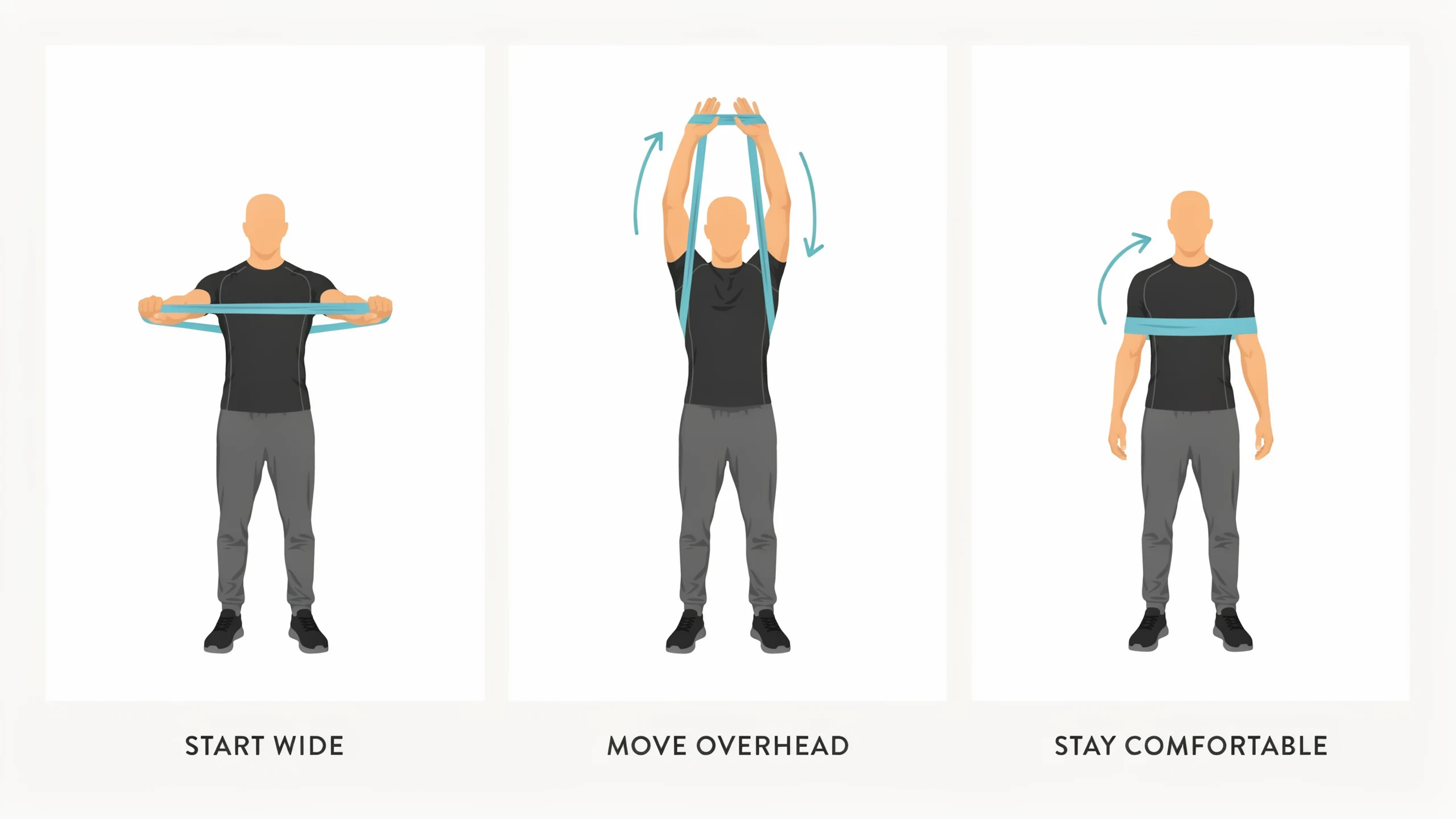
Hold the band with both hands, wider than shoulder width. Stand tall with your arms straight in front of you, the band taut. Raise the band overhead in a slow, controlled arc. Continue moving it behind your back as far as feels comfortable. Reverse the movement back to the front. Repeat for 8 to 10 slow passes.
Common mistake: Forcing your arms behind your body past a comfortable range. Widen your grip to reduce the arc required.
Beginner tip: Start with a very wide grip and move only as far as you can without discomfort.
2. Overhead Lat Stretch
Targets: Latissimus dorsi, shoulders, and upper back
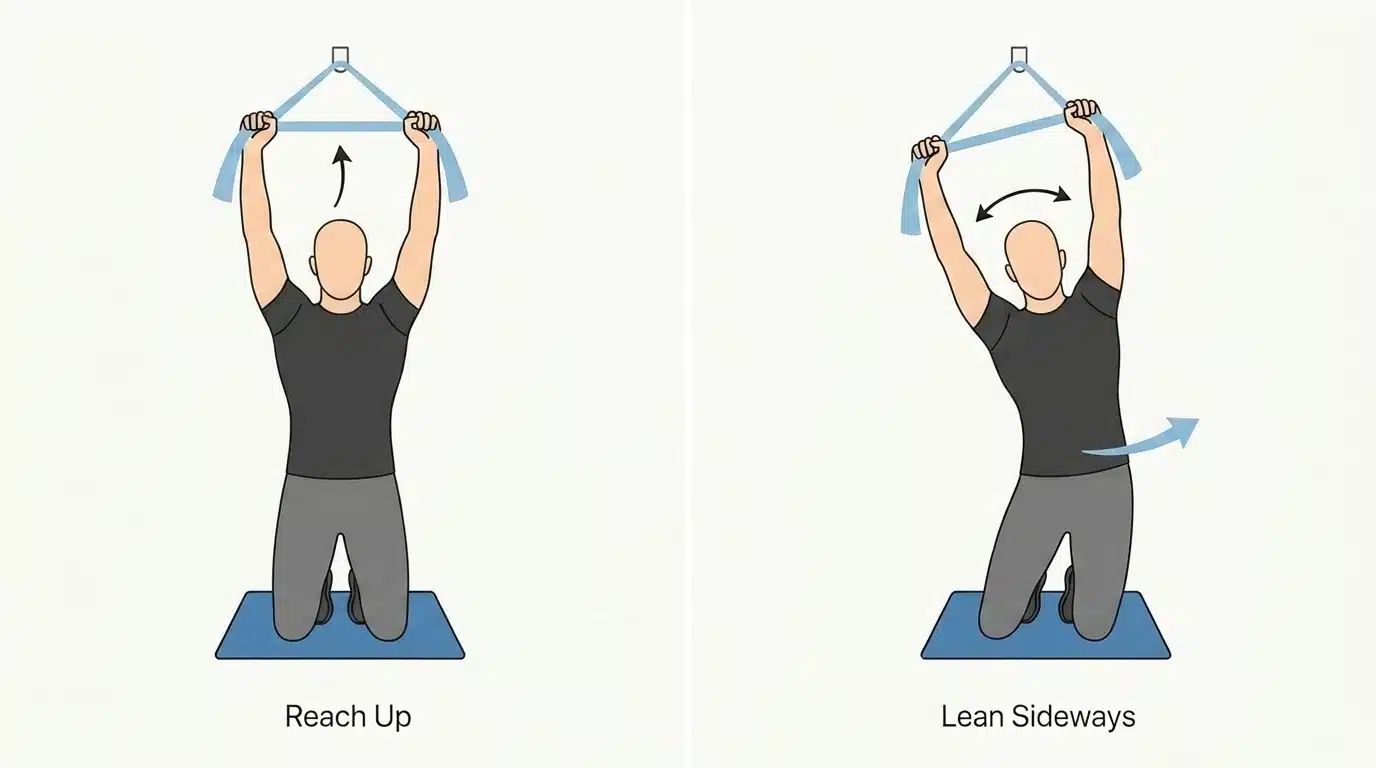
Anchor the band overhead at a pull-up bar or door anchor. Or hold one end in each hand with your arms extended above your head. Reach up and slightly back, keeping your arms straight. Lean your hips to one side to deepen the stretch along your side body. Hold for 20 to 30 seconds, then switch sides.
Common mistake: Arching your lower back instead of leaning from the hips.
Beginner tip: Try this stretch from a kneeling position if standing feels unstable.
3. Banded Chest Stretch
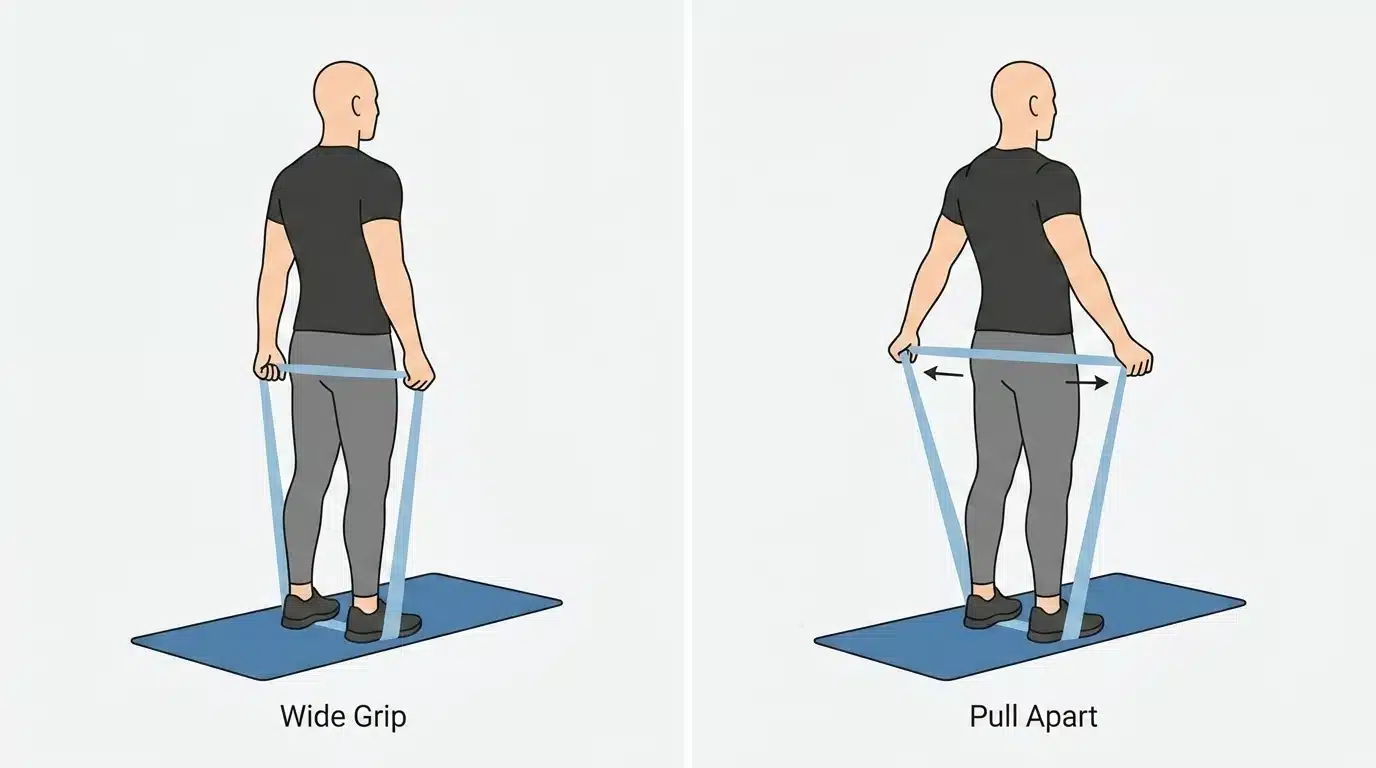
Targets: Chest and front shoulders
Hold the band behind your back with both hands. Stand tall, lift your chest, and relax your shoulders. Gently pull the band ends apart and slightly upward, drawing your shoulder blades together. Keep your neck relaxed throughout. Hold for 20 to 30 seconds.
Common mistake: Shrugging your shoulders up toward your ears. A wider grip lowers the intensity.
Beginner tip: Use a longer band or wider grip to reduce tension.
Resistance Band Stretches for Upper Back and Arms
The upper back and triceps are often left out of standard stretching routines. These two moves address the muscles between your shoulder blades and along the back of your arms.
4. Upper-Back Resistance Band Stretch
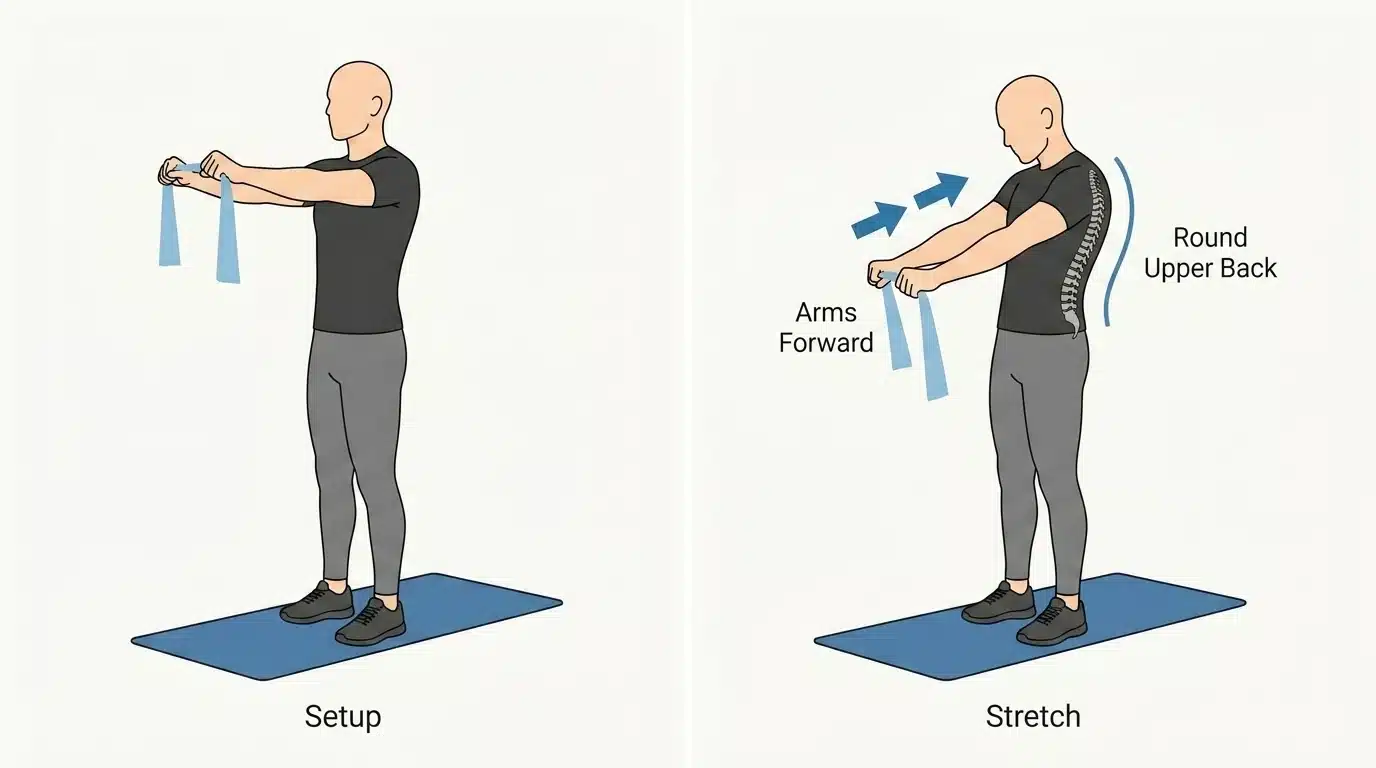
Targets: Upper back and rear shoulders
Sit or stand with the band held in both hands. Extend your arms in front of you at shoulder height. Gently round your upper back and push your hands forward. Let your head drop slightly, chin toward your chest. Hold for 20 to 30 seconds, feeling the stretch between your shoulder blades.
Common mistake: Rounding your lower back along with the upper back. Keep your knees soft to isolate the upper spine.
Beginner tip: Keep the forward push small to start.
5. Banded Triceps Stretch
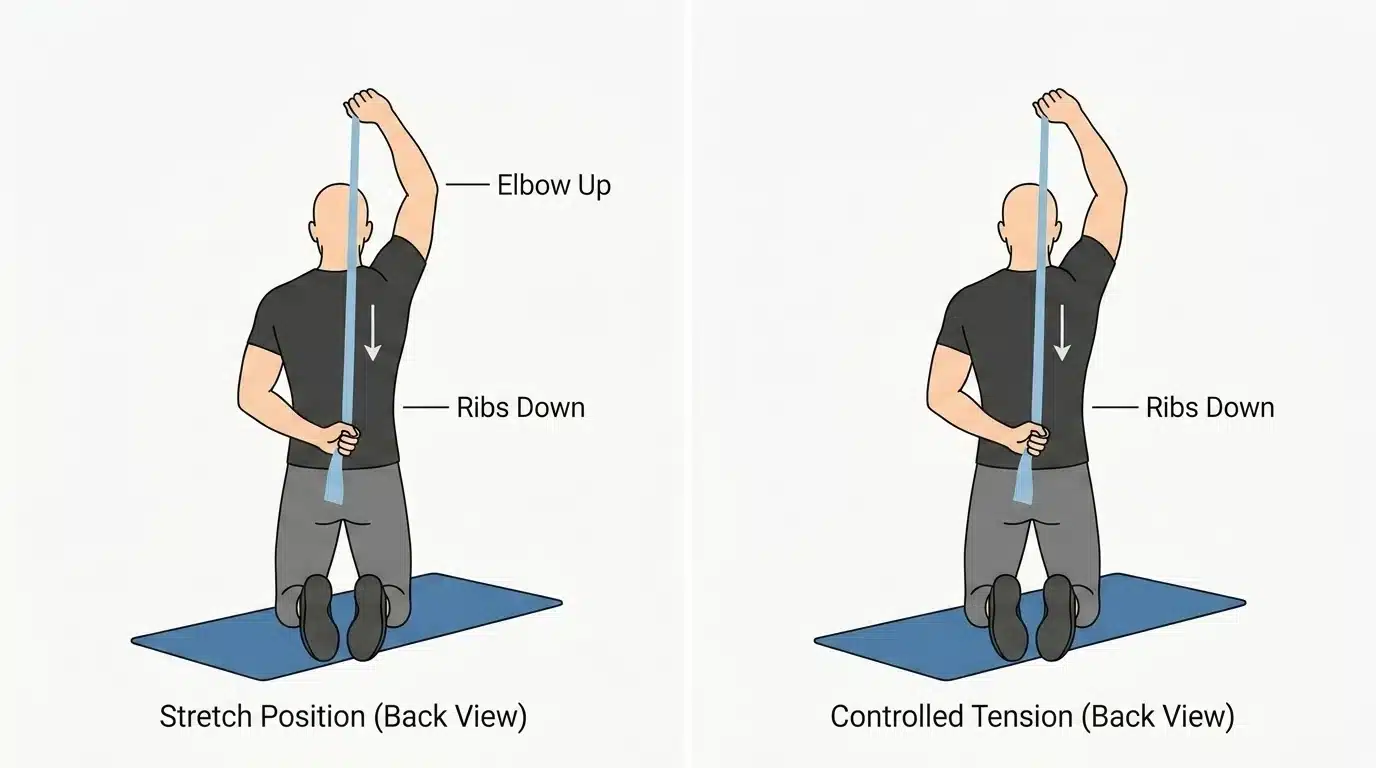
Targets: Triceps and shoulders
Stand with one end of the band overhead and the other end behind your lower back. Bend your top arm so the elbow points up. Reach the top hand down your back, keeping the band taut. Reach the bottom hand up toward it if your flexibility allows. Hold for 20 to 30 seconds per side. Keep your ribs down and your neck relaxed.
Common mistake: Flaring the ribs to force a deeper reach.
Beginner tip: Skip the bottom-hand reach and focus only on the top arm.
Resistance Band Stretches for Hips and Glutes
Tight hips and glutes are common after long periods of sitting. These four stretches target your hip flexors, glutes, inner thighs, and outer hips. If hip pain is a factor, these easy hip stretches for pain relief offer gentler starting points.
6. Half-Kneeling Hip Flexor Stretch
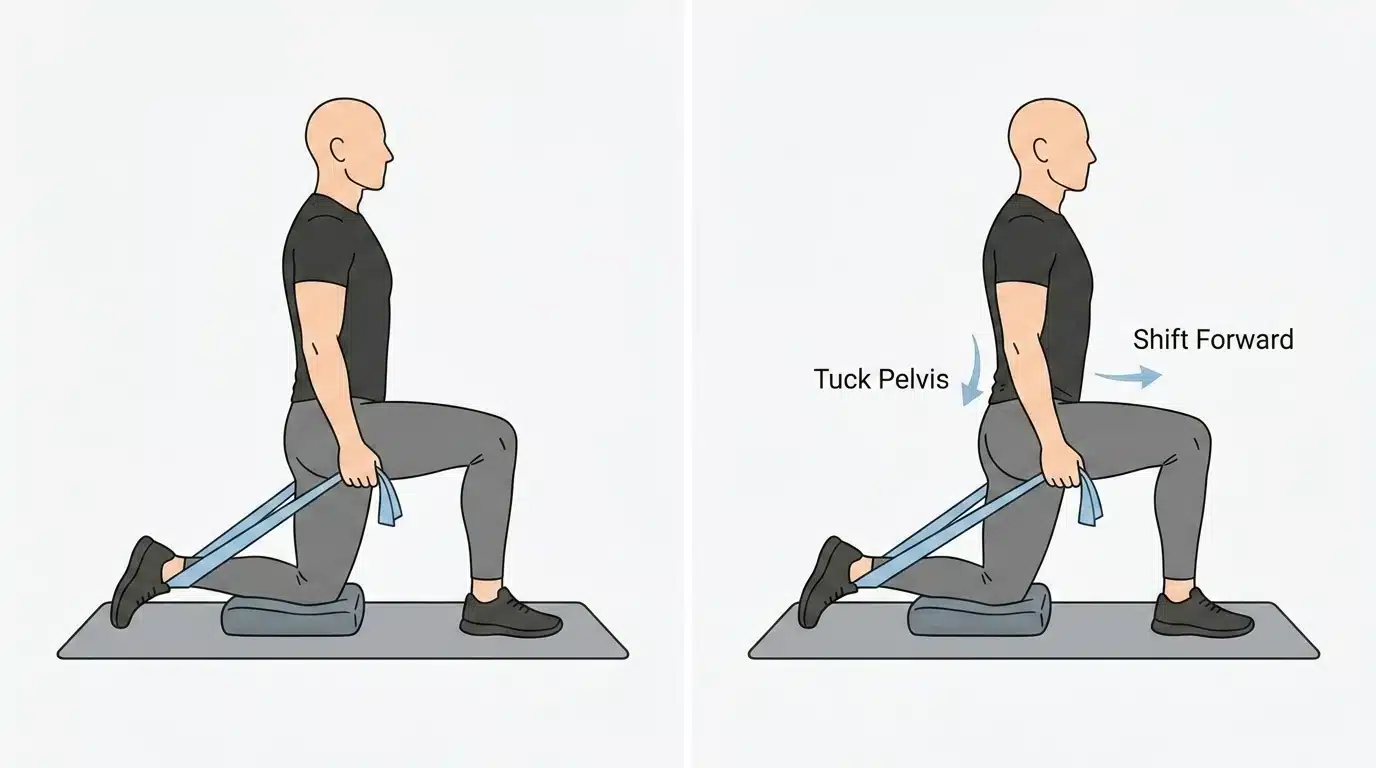
Targets: Hip flexors and front thigh
Get into a half-kneeling position with your back knee down and your front foot flat. Loop the band around the back ankle or hold it for light support. Tuck your pelvis slightly so your lower back does not arch. Shift your weight forward until you feel a stretch in the back hip. Hold for 20 to 30 seconds per side.
Common mistake: Leaning your torso forward instead of tucking the pelvis.
Beginner tip: Place a cushion under the back knee and shift forward only slightly.
7. Lying Glute Stretch
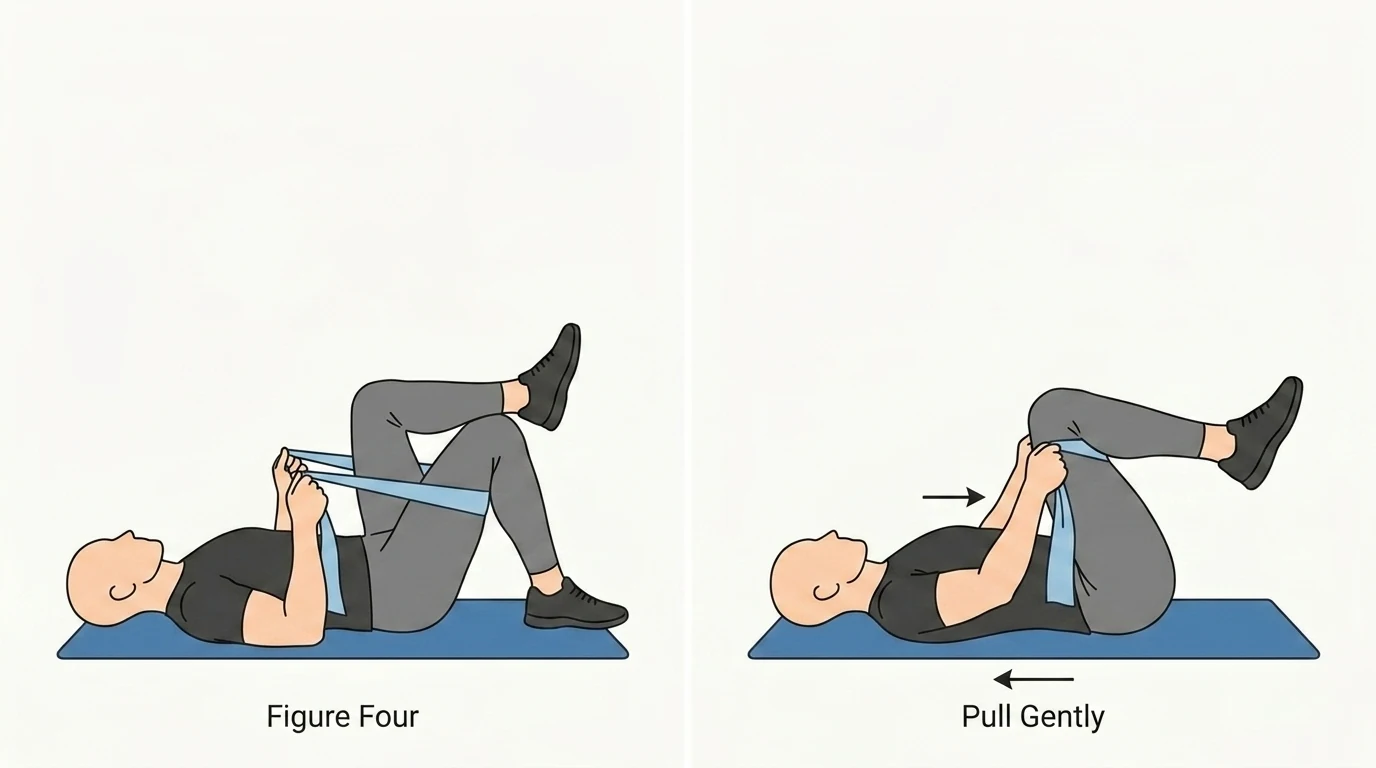
Targets: Glutes and outer hips
Lie on your back with one ankle crossed over the opposite knee, forming a figure-four shape. Thread the band around the foot of the crossed leg. Gently pull the uncrossed leg toward your chest using the band. Keep your head and shoulders relaxed on the floor. Hold for 20 to 30 seconds per side.
Common mistake: Pulling hard and fast instead of easing in slowly.
Beginner tip: Keep the pulled leg closer to your body with less knee bend on the crossed leg.
8. Inner-Thigh Stretch
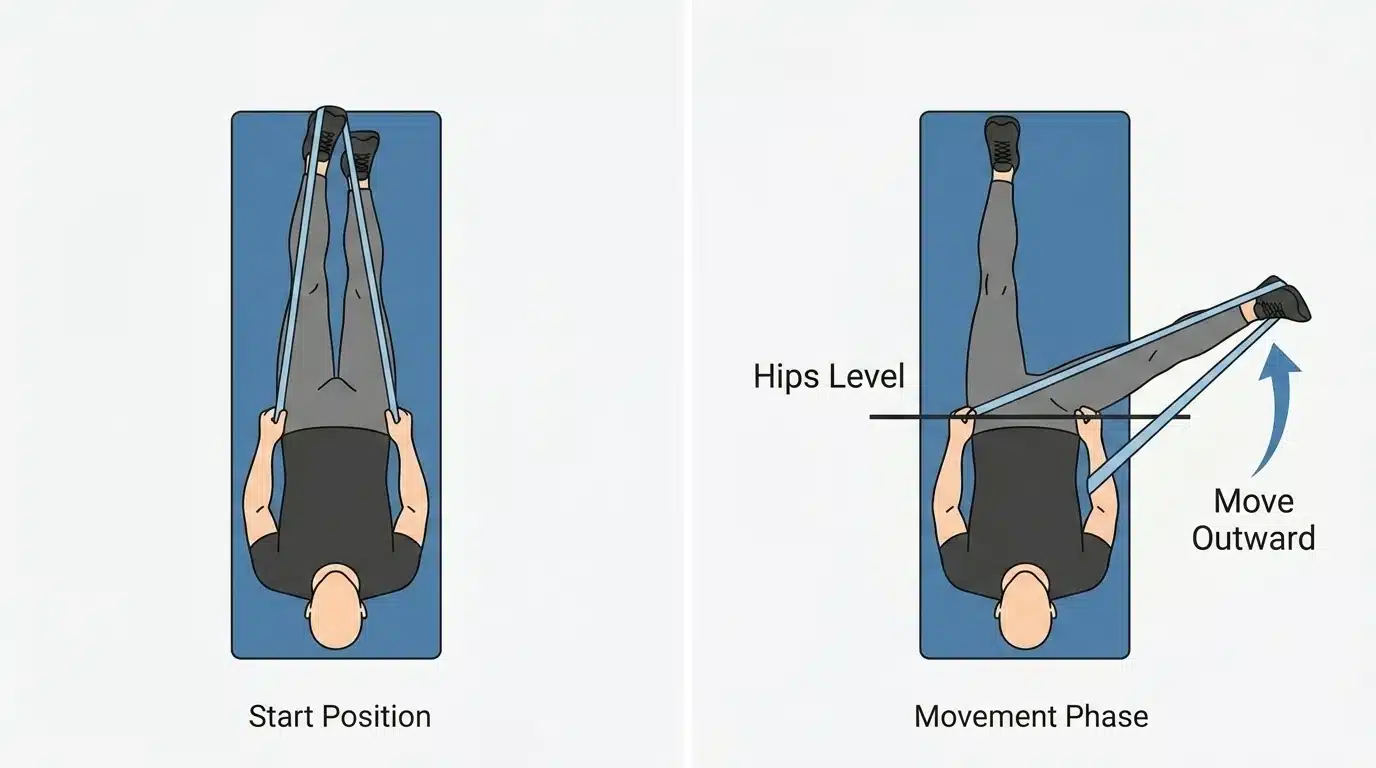
Targets: Adductors and groin
Lie on your back or sit with your legs apart. Loop the band around one foot extended out to the side. Let the banded leg drift out to the side, supported by the band. Move only as far as your pelvis stays level and stable. Hold for 20 to 30 seconds per side, then slowly bring the leg back to center.
Common mistake: Letting the opposite hip lift off the floor.
Beginner tip: Move the leg out only a short distance, keeping both hips grounded.
9. Outer-Hip Stretch
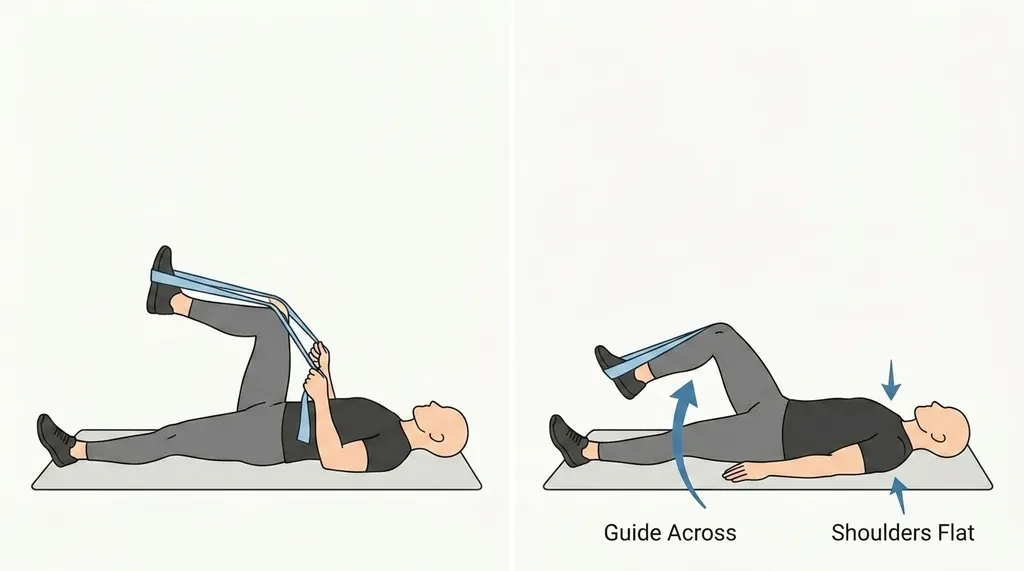
Targets: Outer hip and gluteal area
Lie on your back with the banded leg bent. Loop the band around that foot and cross it over your body. Use the band to guide the bent knee across your body. Keep both shoulders flat on the floor. Hold for 20 to 30 seconds per side, feeling the stretch along your outer hip.
Common mistake: Letting your upper back and shoulders twist with the hip.
Beginner tip: Cross the knee only partway, keeping the movement small.
Resistance Band Stretches for Hamstrings and Quads
The hamstrings and quadriceps run the full length of your thigh. Keeping both groups flexible reduces knee strain and helps you move more freely. For additional quad work, these quad stretches cover standing and floor-based variations.
10. Seated Hamstring Stretch
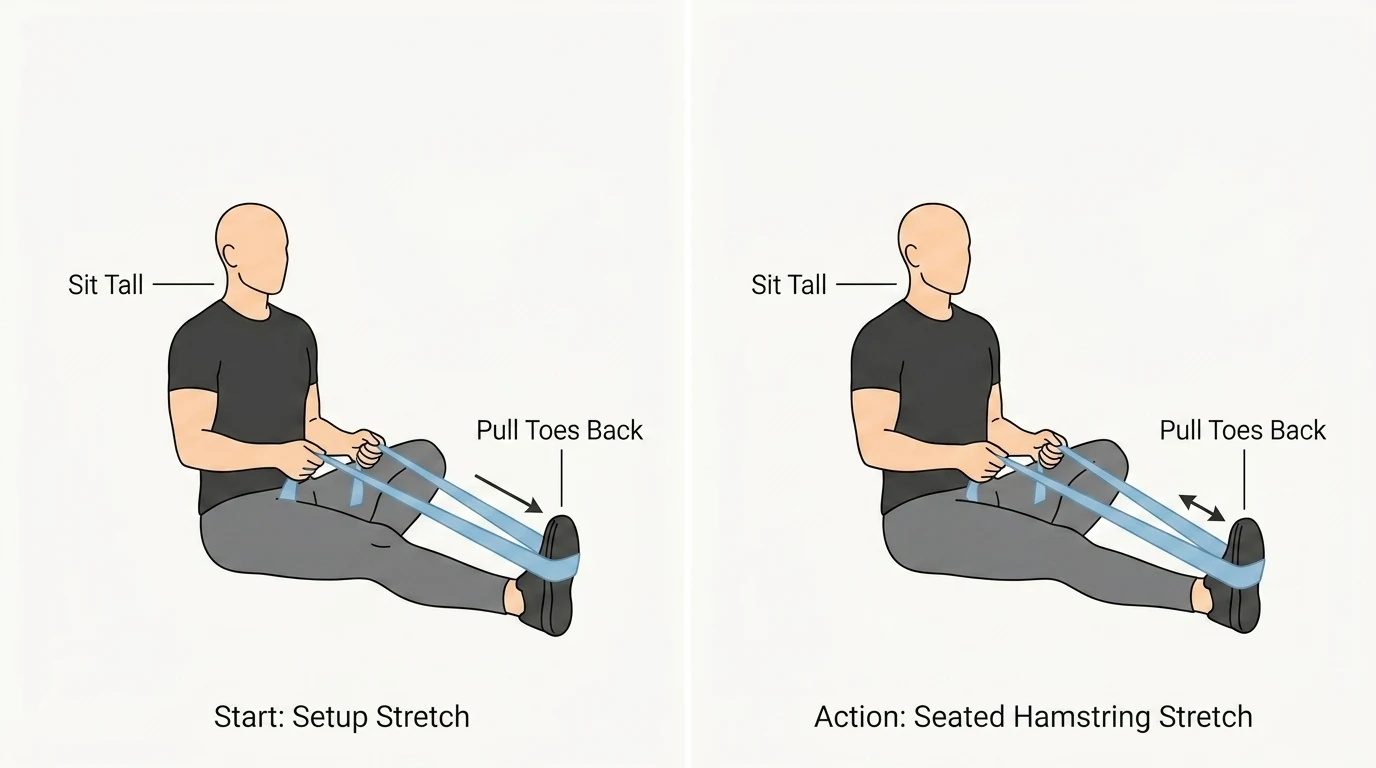
Targets: Hamstrings and calves
Sit with your legs extended. Loop the band around the ball of one foot and hold both ends in your hands. Keep the stretched leg straight or slightly soft at the knee. Pull the band to draw your toes toward you. Hold for 20 to 30 seconds per side.
Common mistake: Rounding your back to chase a deeper stretch. Keep your spine long throughout.
Beginner tip: Bend both knees slightly and keep the resting leg’s knee bent.
11. Lying Hamstring Stretch
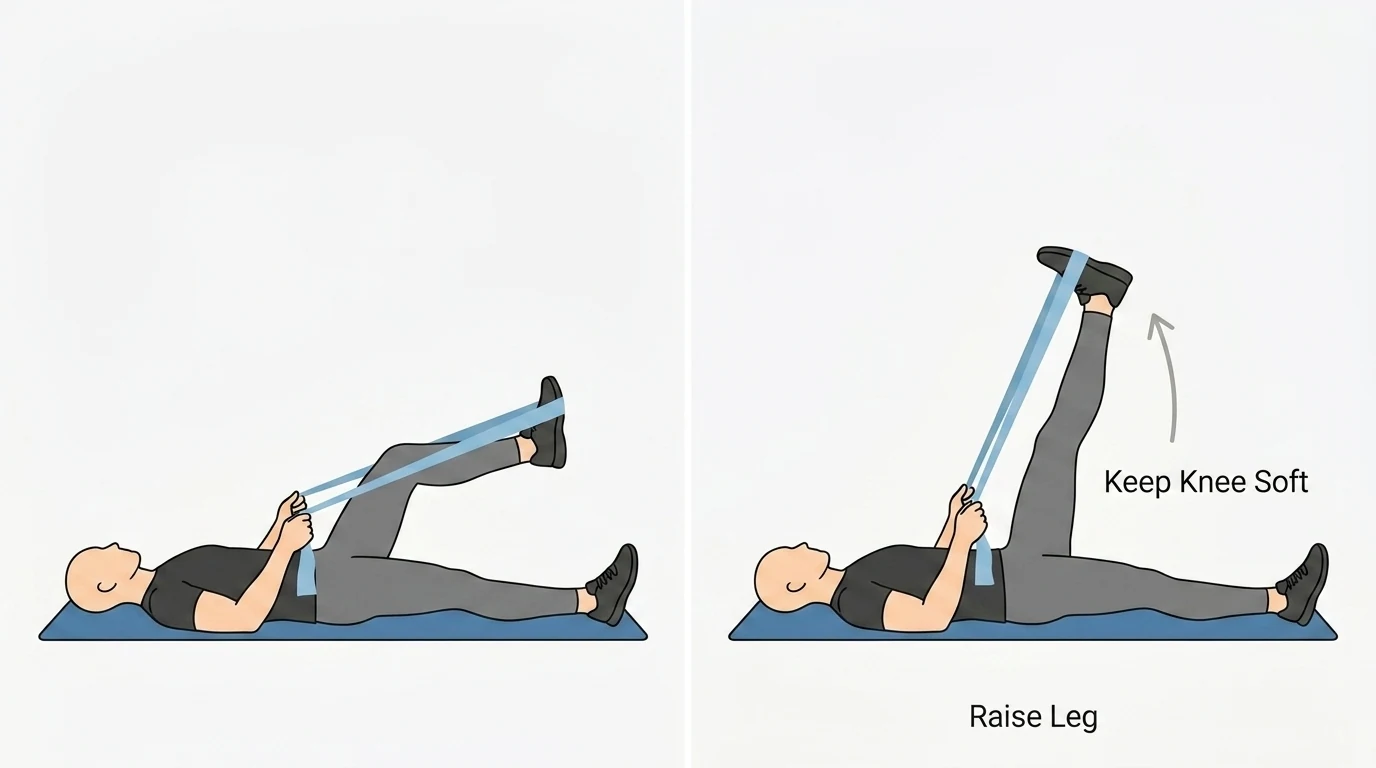
Targets: Hamstrings
Lie on your back with the band looped around the ball of one foot. Keep the other leg flat or bent on the floor. Raise the banded leg toward the ceiling. Keep the knee straight or slightly bent if the position feels tight. Gently draw the leg closer using the band. Hold for 20 to 30 seconds per side.
Common mistake: Locking the knee hard, which can strain the joint. Keep a soft bend throughout.
Beginner tip: Raise the leg only partway and hold there rather than pulling it all the way up.
12. Lying Quadriceps Stretch
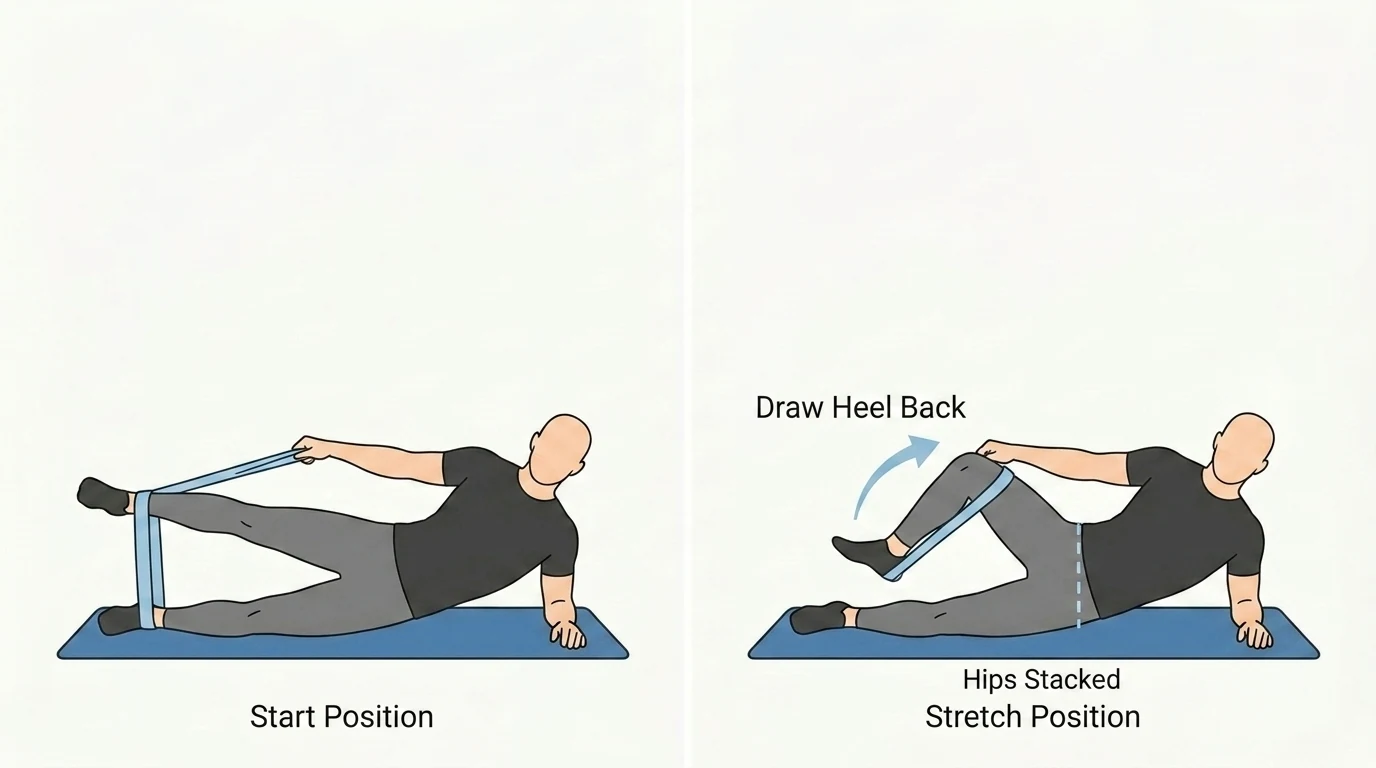
Targets: Quadriceps and front thigh
Lie on your side or stomach with the band looped around one ankle. Hold the band in the same-side hand. Bend the knee and use the band to draw your heel toward your glutes. Keep your hips stacked and your lower back neutral. Hold for 20 to 30 seconds, then switch sides.
Common mistake: Arching your lower back to force the heel closer.
Beginner tip: Draw the heel only partway back and focus on hip position rather than range.
Resistance Band Stretches for Calves and Ankles
Your calves and ankles take impact from running, jumping, and standing for long periods. These two moves target both calf muscles and improve ankle range of motion. For a broader set of ankle drills, this collection of ankle mobility exercises covers more options.
13. Banded Calf Stretch
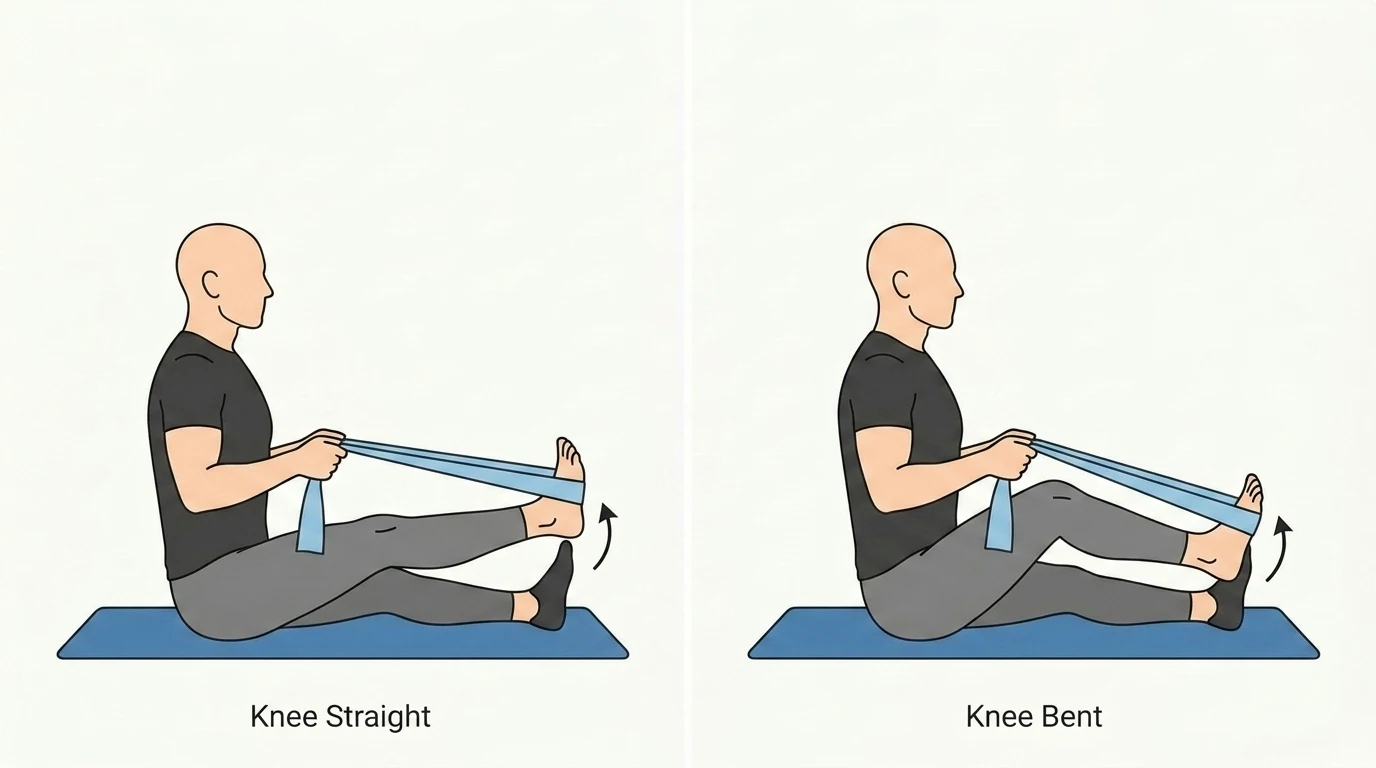
Targets: Gastrocnemius and soleus (both calf muscles)
Sit with your leg extended and the band looped around the ball of your foot. Hold both ends of the band. Keep the knee straight and pull your toes toward your shin. Hold, then bend the knee slightly and repeat. Notice how the stretch shifts lower in the calf with a bent knee. Hold each position for 20 to 30 seconds per side.
Common mistake: Skipping the bent-knee version. This misses the soleus, the deeper of the two calf muscles.
Beginner tip: Keep a slight bend in the knee throughout if a straight leg feels too intense.
14. Banded Ankle Mobility Stretch
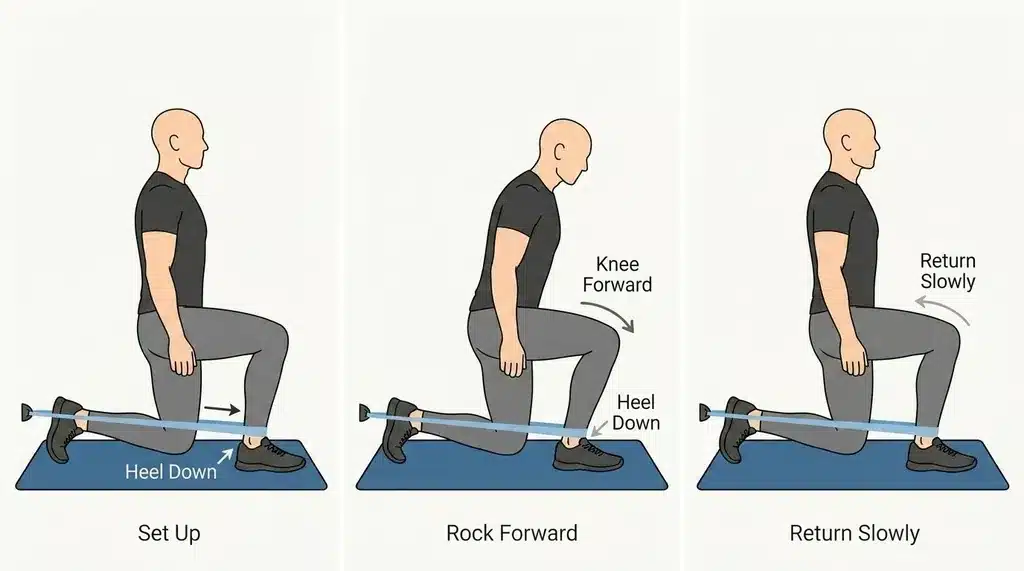
Targets: Ankle joint and calf
Kneel or sit with the band looped around the top of your foot. Anchor the other end low, such as around a table leg. Flex your foot against the band’s tension. Gently rock your shin forward over your foot, keeping your heel down. Move slowly and with control. Return to the start and repeat for 8 to 10 controlled reps per side.
Common mistake: Treating this as a forceful stretch instead of a controlled mobility drill.
Beginner tip: Use lighter band tension and shorten how far the knee travels forward.
Safety Tips for Resistance Band Stretches
Good technique matters, but so does your setup and gear. Follow these safety guidelines before and during every session.
Before You Start
- Clear the floor of clutter and sharp edges.
- Stretch on a non-slip surface, or wear grippy socks or bare feet.
- Anchor the band to something stable. Never attach it to a loose or movable object.
- Wear comfortable workout clothing that allows a full range of motion, especially if you use gear like resistance band leggings during mobility or resistance-based training.
- Keep children and pets out of the area. A slipped band can snap back fast.
- Drink water before your session. Skip stretching if you feel dizzy or unwell.
Band Care and Replacement
- Wipe your band down after each sweaty session.
- Store it flat or loosely rolled, away from sunlight and heat. Both make the material brittle over time.
- Avoid alcohol-based cleaners, which break down the band.
- Never tie knots to shorten a band. Knots create weak spots that can snap under tension.
- Do not stretch a band past two and a half times its resting length.
- Replace any band that looks dry, cracked, or overstretched.
During Your Session
- Release tension between stretches. Do not leave the band pulled tight.
- Every stretch should feel like mild tension, not pain.
- Stop right away if you feel sharp pain, tingling, or numbness.
10-Minute Full-Body Resistance Band Stretching Routine
Short on time? This routine puts eight of the stretches above into one full-body session. Do it after a workout or after a short warm-up walk on a rest day. Give yourself a few seconds between each move to reposition the band.
|
Order |
Stretch |
Time |
|---|---|---|
|
1 |
Shoulder Pass-Through |
45 seconds |
|
2 |
Overhead Lat Stretch |
30 seconds per side |
|
3 |
Banded Chest Stretch |
30 seconds |
|
4 |
Lying Hamstring Stretch |
30 seconds per side |
|
5 |
Banded Calf Stretch |
30 seconds per side |
|
6 |
Half-Kneeling Hip Flexor Stretch |
30 seconds per side |
|
7 |
Lying Glute Stretch |
30 seconds per side |
|
8 |
Inner-Thigh Stretch |
30 seconds per side |
How to Track Your Flexibility Progress
Flexibility gains from resistance band stretches build slowly. A simple tracking habit helps you notice the change before it feels obvious.
- Compare the same stretch under the same conditions each time, such as after a similar warm-up.
- Note your grip position on the band, not just the band color, since colors vary between brands.
- Track your range of motion, comfort level, and any differences between sides.
- Reassess every two to four weeks rather than session to session.
- Judge progress by comfort and range. Do not force an extreme range to feel a result.
Build Flexibility That Lasts
Resistance band stretches work best when done consistently. A few focused sessions each week beat one long session once a month. Start with two or three stretches that target your tightest areas.
If your hips feel locked from sitting all day, begin there. If your calves are tight from running, start with the calf and ankle moves. Add more stretches as those spots loosen up.
Before every session, check your band for cracks or wear. Stop immediately if you feel sharp pain, numbness, or tingling during any stretch. A physical therapist or trainer can help if tightness does not improve.
Frequently Asked Questions
Is It Good to Stretch With Resistance Bands?
Yes. Resistance bands add support and steady tension during a stretch. This helps you hold a position longer and reach farther safely without forcing the joint.
How Long Should I Hold a Resistance Band Stretch?
Hold each stretch for 20 to 30 seconds. Release, then repeat on the other side. For very tight areas, holds of up to 60 seconds can improve flexibility.
Should I Use Resistance Band Stretches Before or After a Workout?
Band stretches with movement, like the shoulder pass-through, work well before training to warm up joints. Static holds of 20 to 30 seconds are better after a workout.
What Resistance Band Is Best for Stretching?
A long, flat therapy band or a light loop band works best. Check actual tension by pulling the band, since colors vary between brands.
Difference Between a Stretching Band and a Resistance Band?
Both are elastic bands. A stretching band is usually flat and light, made for assisted stretches. Resistance bands include heavier types built for strength training.
What Stretches Can I Do With Resistance Bands?
Resistance bands can target most major muscle groups. These include your shoulders, chest, upper back, triceps, hamstrings, calves, quads, hip flexors, glutes, inner thighs, outer hips, and ankles.