
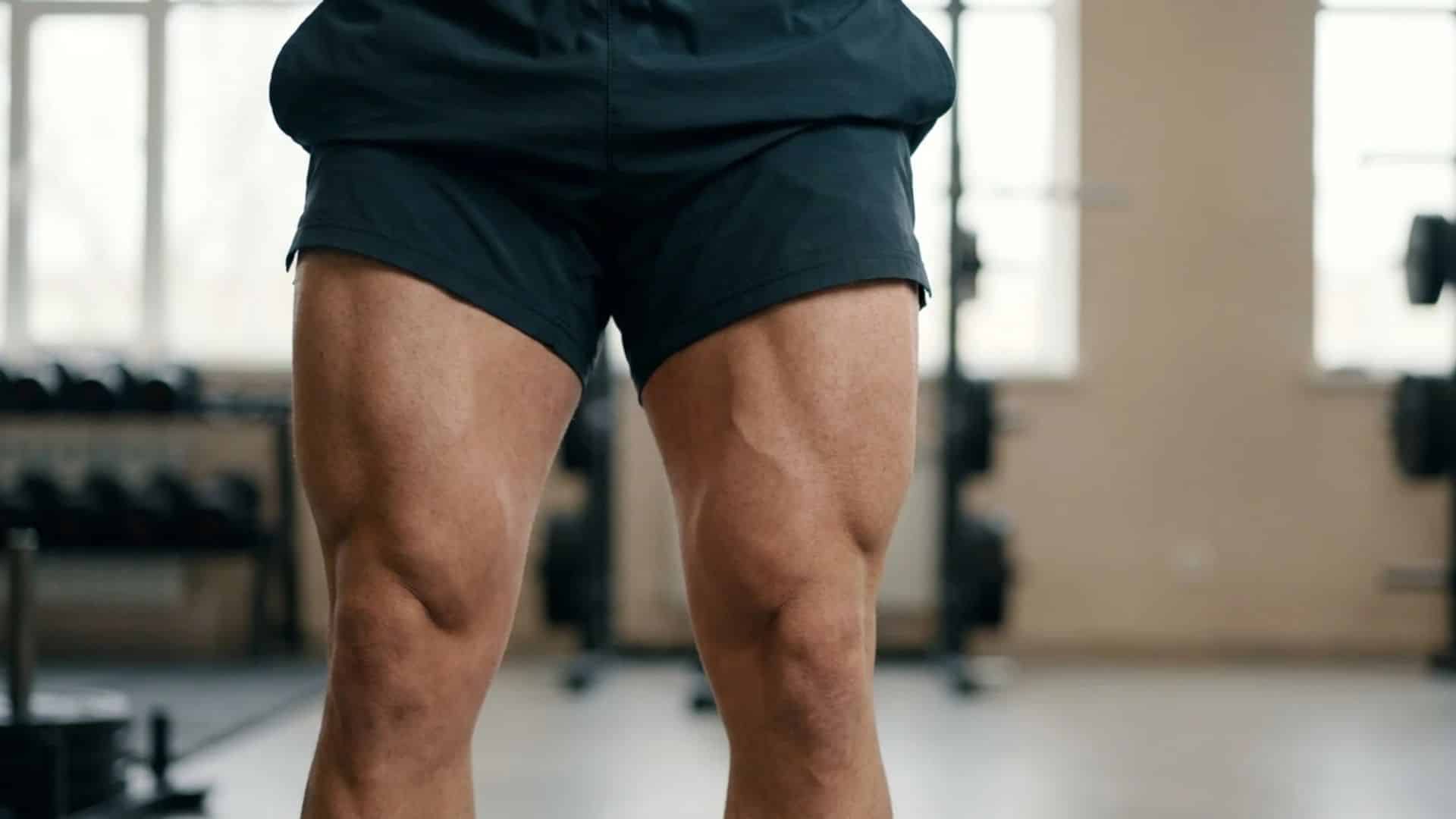
Quick Answers: The quadriceps are located at the front of your thigh, running from your hip to your kneecap.
The quadriceps do more than straighten your legs. This powerful muscle group helps absorb force during running, jumping, and daily movement while keeping your knees stable.
Located at the front of your thigh, the quadriceps connect your hip area to your kneecap through four muscles that work together.
Knowing their location helps you train better, spot problems early, and understand knee function.
What are the Quadriceps Muscles?
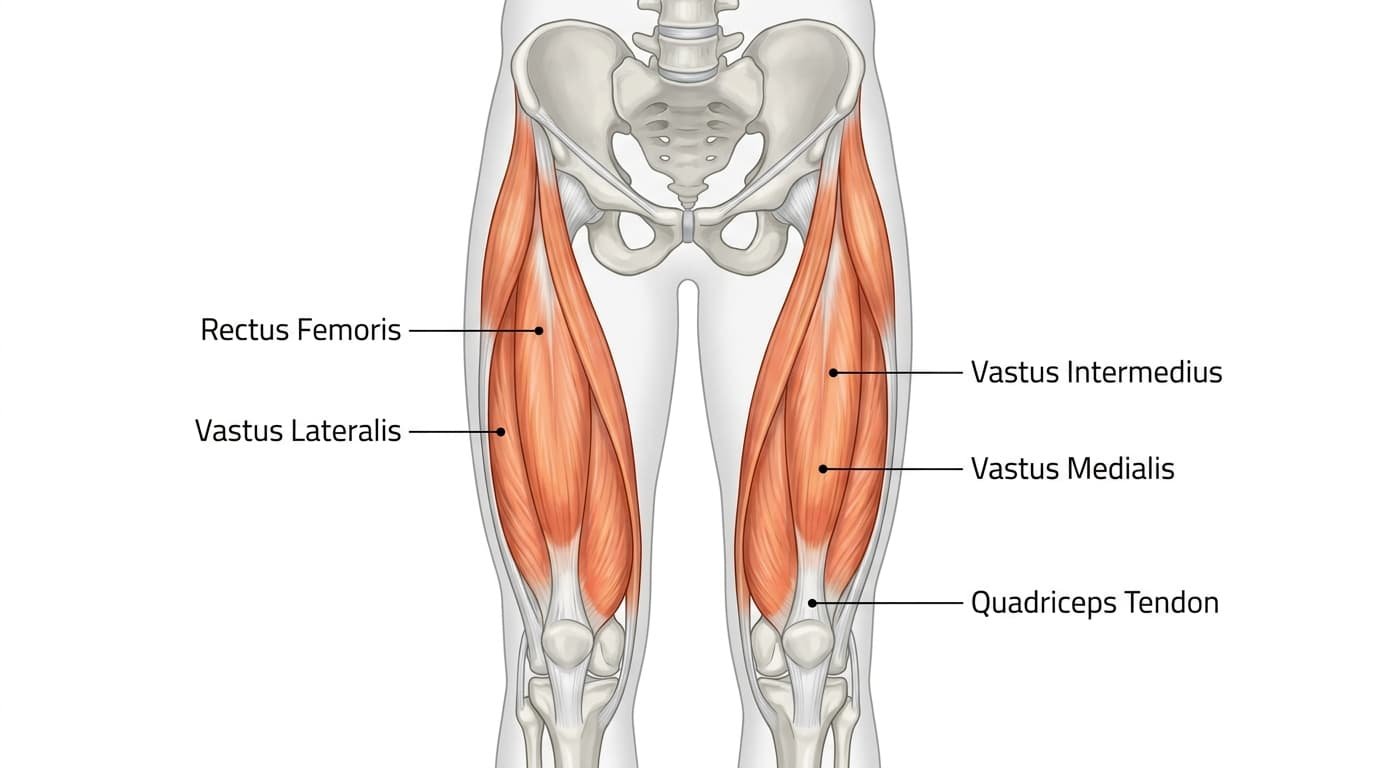
The quadriceps femoris takes its name from Latin, meaning “four heads.” It refers to the four separate muscles that make up the group. Each one has a distinct position on the thigh and a slightly different job. They all attach near the kneecap and work together to extend the leg.
Together, they form one of the strongest muscle groups in the body. The four muscles are:
- Rectus femoris
- Vastus lateralis
- Vastus medialis
- Vastus intermedius
Recent anatomical research has identified a small additional structure near the vastus intermedius called the tensor of the vastus intermedius. It supports similar movement patterns and shows that our understanding of leg anatomy is still developing.
The Four Quadriceps Muscles and Their Locations
Each muscle occupies a slightly different spot on the thigh. That variation explains why quad injuries often produce pain in a specific location rather than the whole front of the leg.
1. Rectus Femoris: The Central Quadriceps Muscle
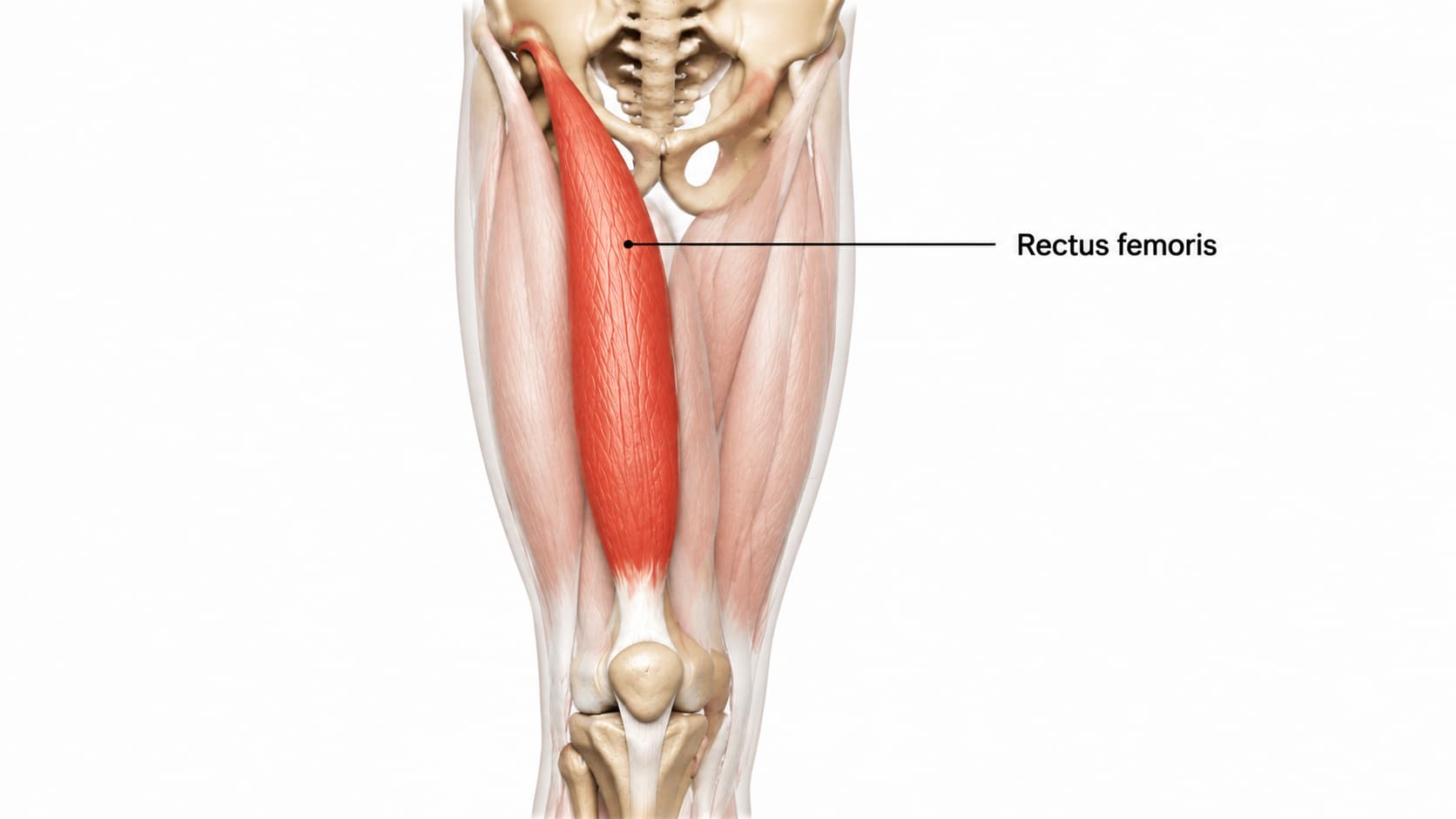
The rectus femoris sits in the middle of the front thigh. It lies over the other three quadriceps muscles. This muscle is unique because it crosses both the hip and the knee joint.
Most other thigh muscles cross only one joint. The rectus femoris helps straighten the knee. It also helps lift the thigh toward the body during hip flexion.
2. Vastus Lateralis: The Outer Thigh Quadriceps
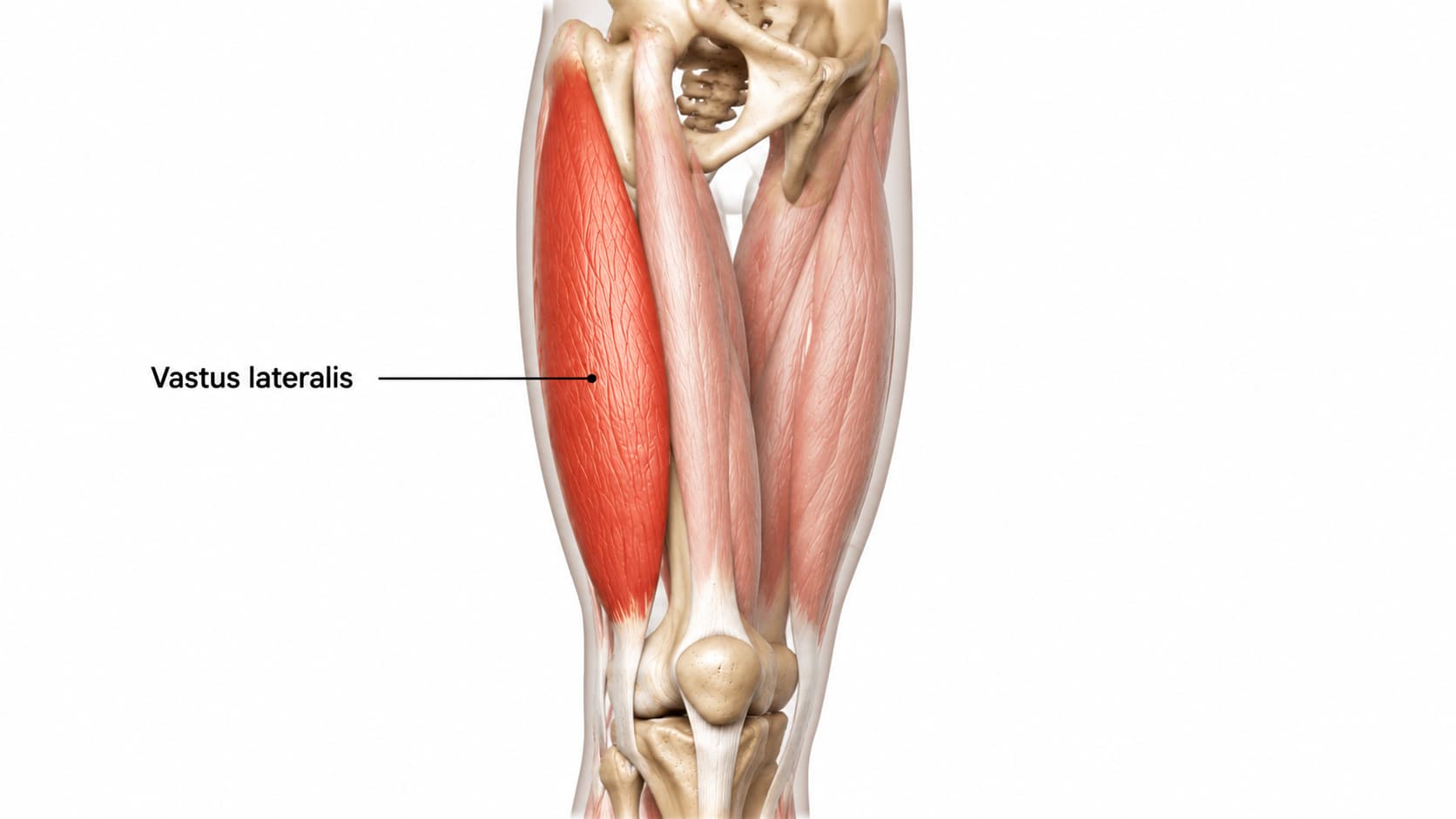
The vastus lateralis sits on the outer side of the thigh. It is the largest muscle in the quadriceps group. This muscle helps extend the knee during walking and running.
It also supports knee stability during side-to-side movement. Many athletes feel this muscle working during squats and lunges.
3. Vastus Medialis: The Inner Thigh Quadriceps
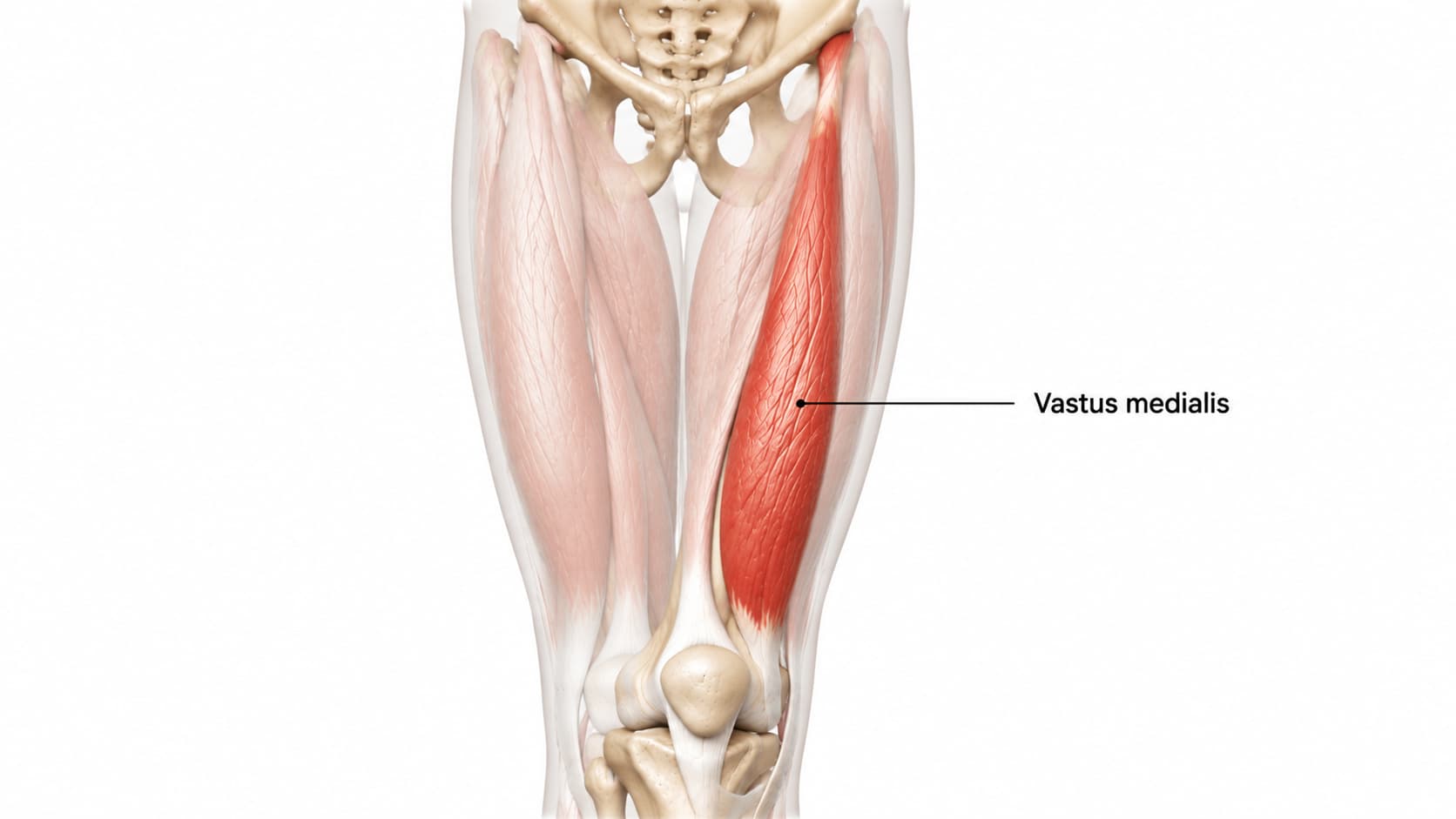
The vastus medialis sits on the inner front portion of the thigh. People often notice this muscle near the inner side of the knee. It plays a key role in controlling kneecap movement.
This muscle also supports knee extension during daily activities. Physical therapists often focus on this muscle after knee injuries.
4. Vastus Intermedius: The Deep Quadriceps Muscle
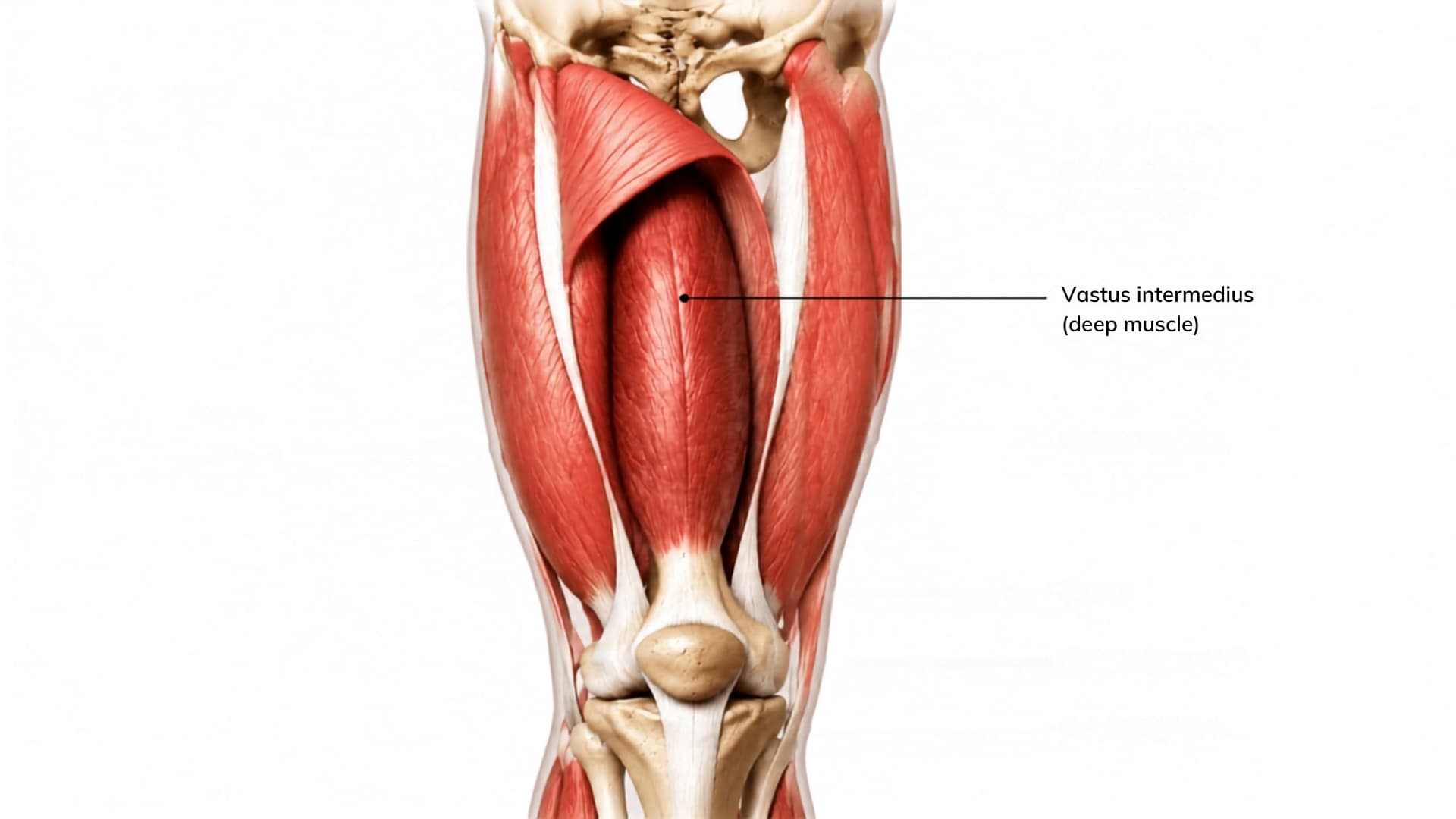
The vastus intermedius sits beneath the rectus femoris. It lies directly over the femur bone. This muscle cannot be seen from the surface of the thigh.
It still plays an important role in straightening the knee. Because it sits deep in the leg, injuries here can be harder to notice.
How Do the Quadriceps Connect to the Knee?
All four muscles merge into the quadriceps tendon, which attaches to the top of the kneecap. The patellar ligament connects the bottom of the kneecap to the shin bone. When the quadriceps contract, this chain pulls on the shin and the lower leg straightens.
This connection also absorbs impact. During running or jumping, the tendon and ligament system absorbs force before it reaches the joint. A full tendon rupture breaks this chain completely, and the knee can no longer extend, which requires immediate medical attention.
What are the Functions of the Quadriceps?
The quadriceps muscles support several important movements in the body. Together, these functions help you move with control and strength.
1. Knee Extension
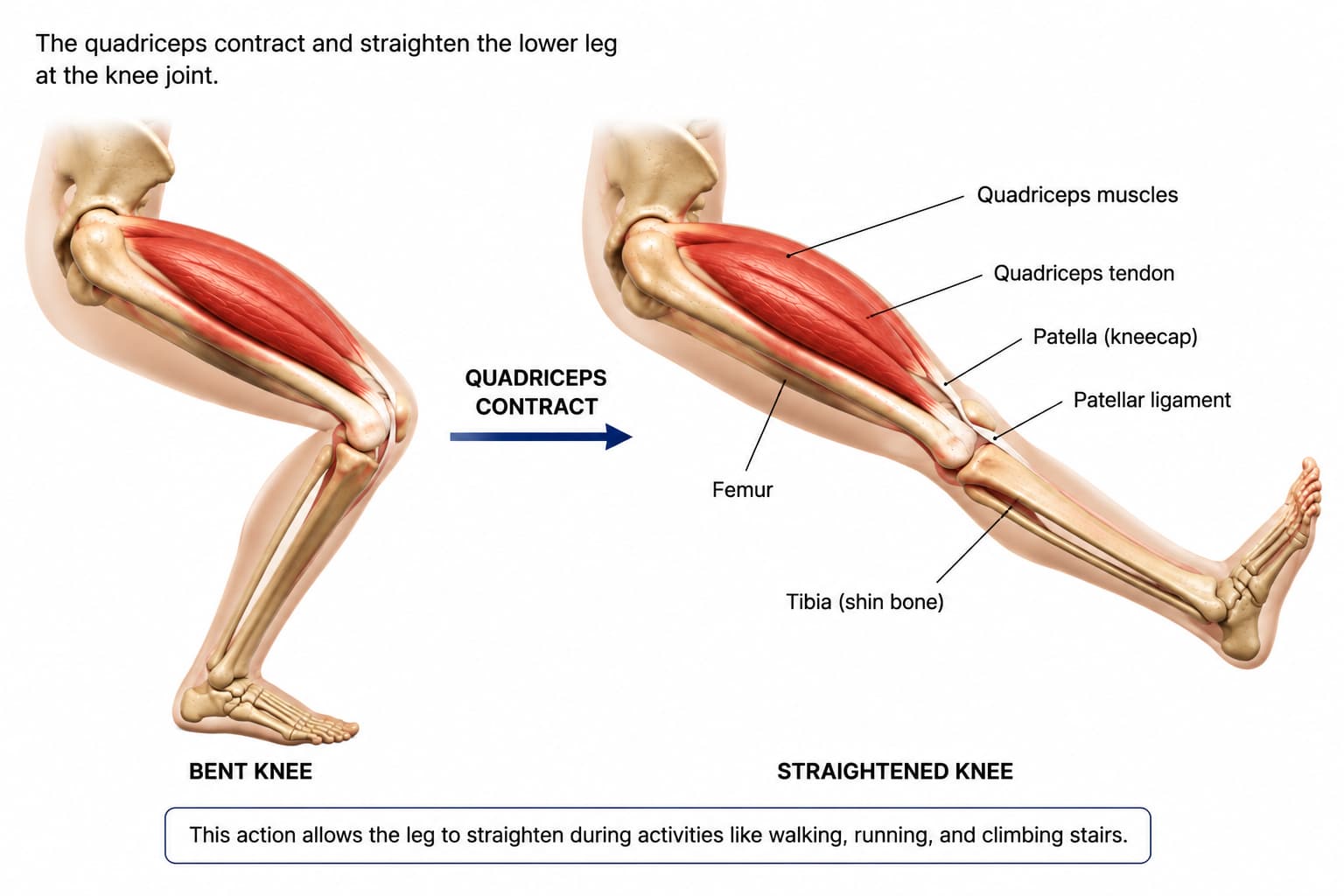
This is the primary function. Extending the leg from a bent position happens during walking, running, climbing stairs, and standing up. Without adequate quad strength, the knee buckles under load.
2. Hip Movement
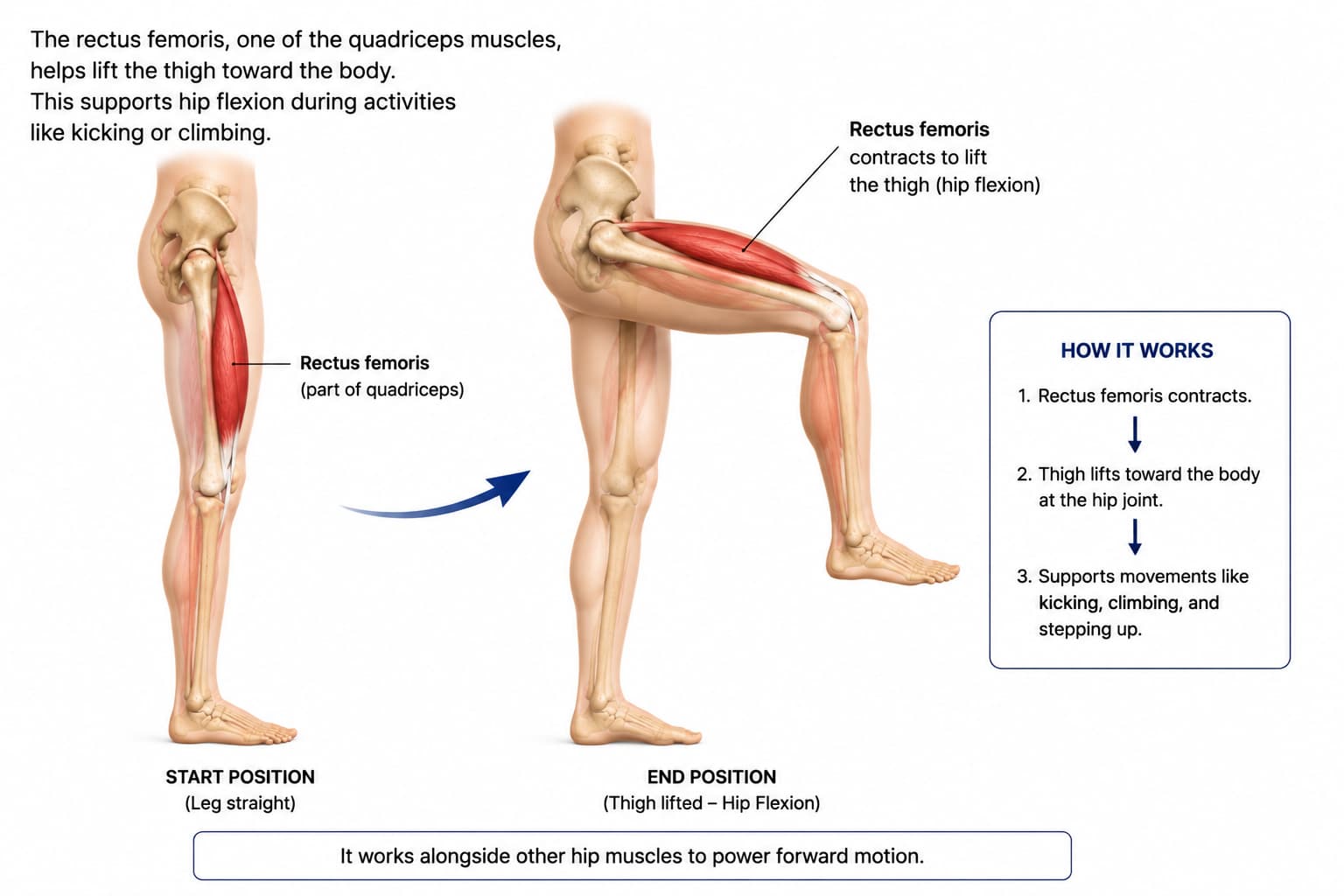
The rectus femoris, because it crosses the hip, helps lift the thigh toward the chest. This role becomes important during cycling, stair climbing, and kicking. It works alongside the hip flexor muscles to drive forward motion.
3. Knee Stability
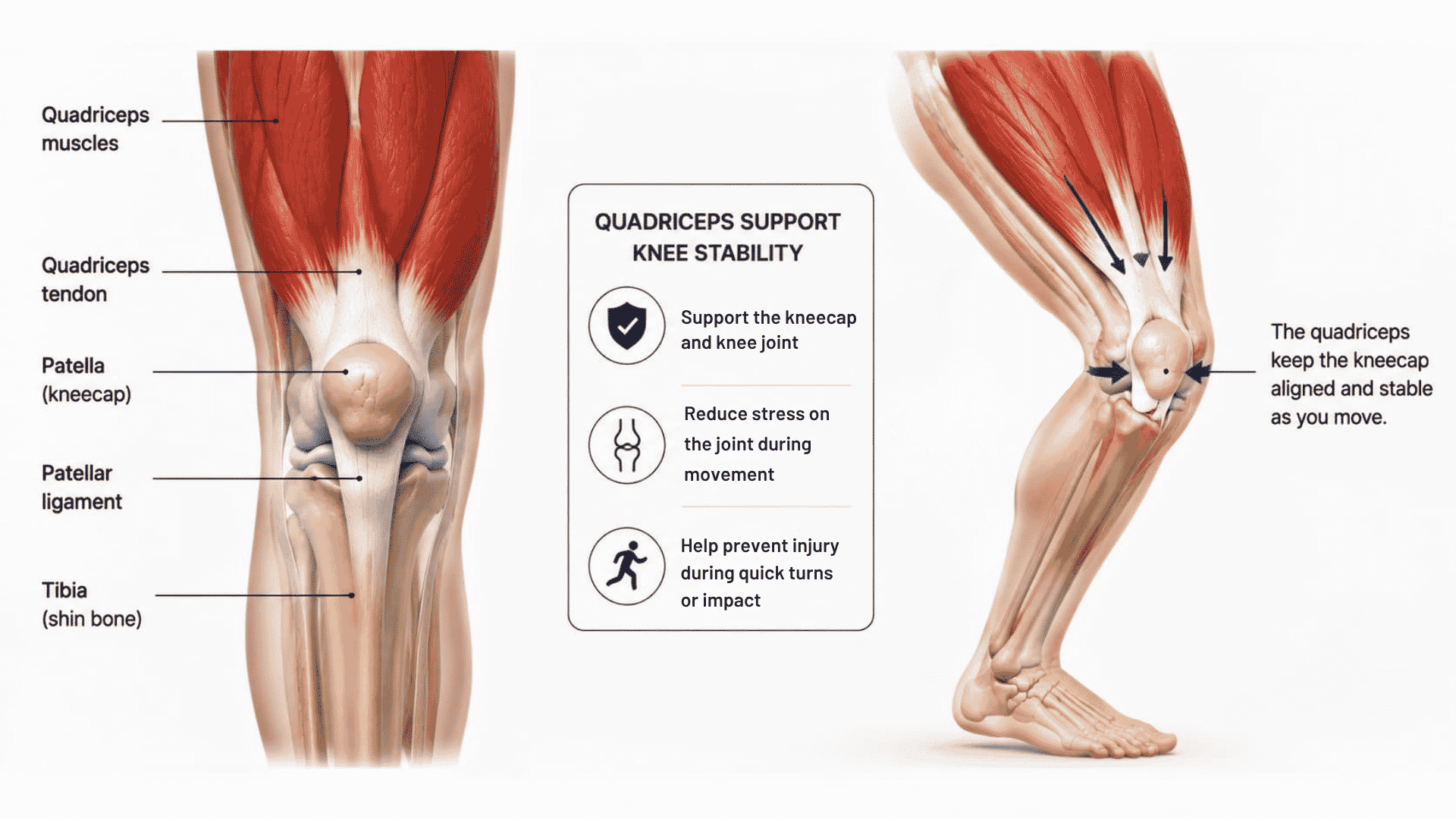
Strong quadriceps hold the kneecap in position and reduce the load on the joint itself. The American Academy of Orthopedic Surgeons links quadriceps strength directly to knee joint health. Weak quads shift that load onto the cartilage and ligaments instead. This creates wear over time.
4. Everyday Movement Support
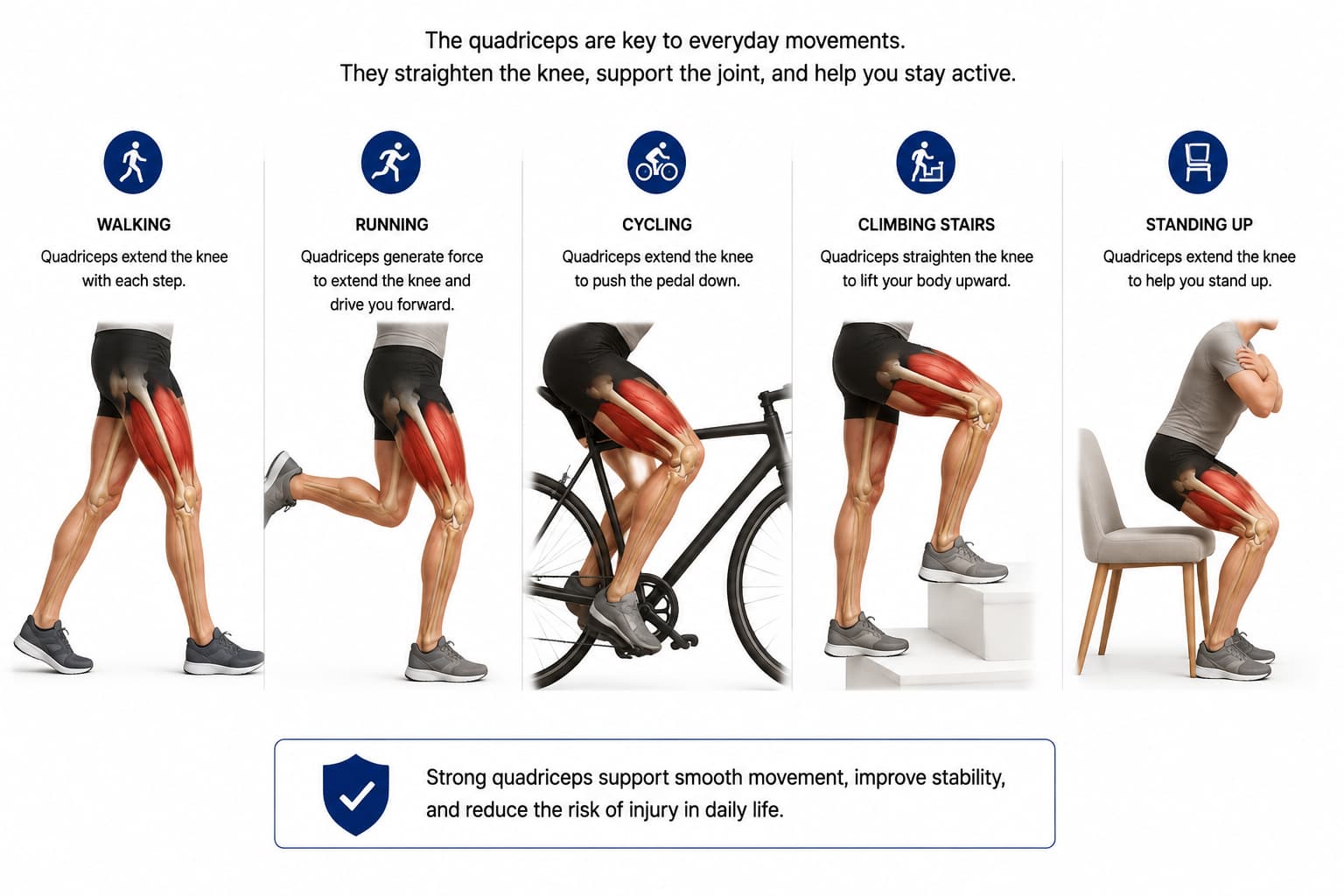
The quadriceps play a role in many daily tasks, such as:
- Walking
- Running
- Cycling
- Climbing stairs
- Standing from a chair
How Can You Find Where Your Quad Muscle Is Located?
You can locate the group in under a minute using two simple tests.
Standing test: Stand upright and tighten the muscles at the front of your thigh without bending your knee. Place your hand on the upper leg. You will feel the muscle firm up directly under your palm.
Seated test: Sit in a chair and slowly lift one leg until it is fully straight. Hold for two seconds. The muscle contracting above your knee, from hip to kneecap, is the quadriceps group, which extends your leg.
Common Quadriceps Injuries and Problems
These four injury types account for most quad problems in both athletes and everyday people.
| Injury | What Happens | Common Cause |
|---|---|---|
| Quadriceps strain | Muscle fibers stretch or partially tear | Sprinting, jumping, sudden direction change |
| Quadriceps tendonitis | Tendon becomes inflamed from repeated stress | Overuse in runners and jumpers |
| Quadriceps contusion | Bruising from direct impact to the thigh | Contact sports such as football or rugby |
| Quadriceps weakness | Reduced strength shifts stress onto the knee joint | Inactivity, aging, post-surgery deconditioning |
Weakness is especially common in older adults and after knee surgery. It affects balance and makes stair climbing harder. Older adults often notice the effects when standing from a low chair or walking on uneven ground.
Exercises That Strengthen the Quadriceps
These four exercises directly load the quad group and work across most fitness levels. The table below shows what each one targets and the most common form error to avoid.
| Exercise | What It Targets | Key Form Tip |
|---|---|---|
| Squats | All quad muscles, glutes, lower body | Keep knees in line with toes throughout |
| Lunges | Single-leg quad strength and balance | Start with bodyweight before adding resistance |
| Leg extensions | Isolated knee extension | Use light weight until form feels controlled |
| Step-ups | Functional strength for stairs and daily movement | Choose a step height that feels steady first |
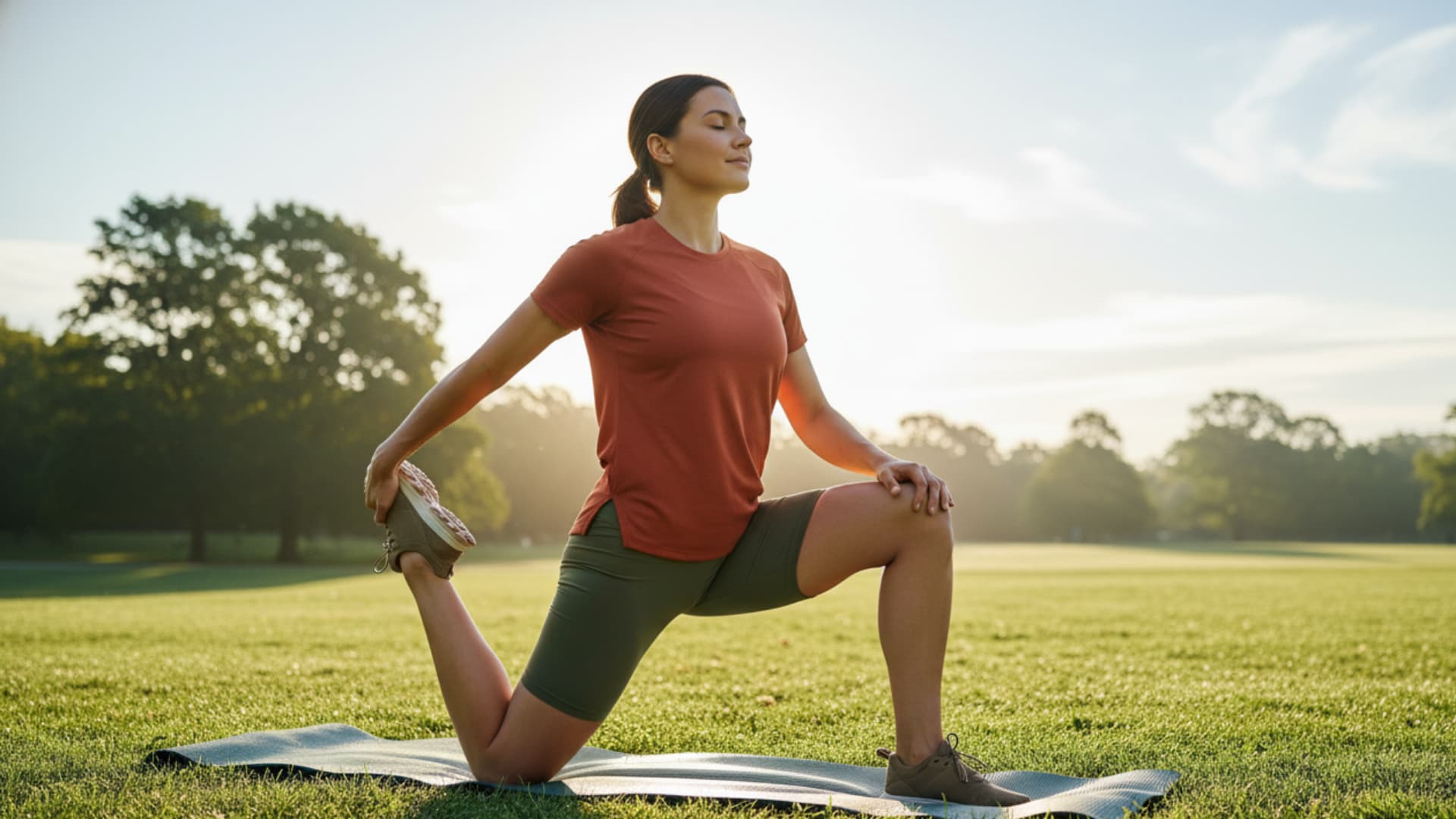
Add resistance gradually. Too much load too soon is a common cause of quad strains. After training, releasing tension in the thigh matters as much as the workout itself.
When Should You See a Doctor for Quadriceps Pain?
Muscle soreness after training is normal. These signs are not:
- Sharp pain during or immediately after a sudden movement
- Inability to fully straighten your knee
- Visible swelling in the thigh or around the kneecap
- A sudden loss of leg strength that does not improve with rest
- Pain lasting more than a week without any improvement
These symptoms can indicate a muscle tear, tendon rupture, or joint damage. Early evaluation gives you faster recovery and stops you from making the injury worse by continuing to train through it.
Paying Attention to Your Quadriceps Pays Off
Most people do not think about their quads until something goes wrong. Pain above the knee, a leg that gives way, or tightness that never fully clears are all signs this group needs attention.
Knowing where the quadriceps are located and what each muscle does helps you make better decisions about training and recovery.
If symptoms in this area do not settle within a week of rest, see a healthcare professional before returning to activity.
Frequently Asked Questions
What nerve controls the quadriceps?
The femoral nerve controls the quadriceps. It sends signals that trigger muscle contraction and allow the knee to extend. Damage to this nerve can cause weakness or numbness along the front of the thigh.
How long does a quadriceps strain take to heal?
A mild strain typically heals within two to three weeks with rest and basic care. Severe strains can take six weeks or longer. Recovery time depends on how deep the tear is and whether you follow a rehabilitation program.
Which quadriceps muscle gets injured most often?
The rectus femoris tears most often. It crosses both the hip and the knee, which means it handles load from two joints at once. This makes it vulnerable during sprinting, kicking, and explosive acceleration.
Can tight quadriceps affect posture?
Yes. Chronically tight quads pull the pelvis forward, increasing the curve in the lower back. This is called anterior pelvic tilt. It can cause lower back discomfort, affect your gait, and stress the lumbar spine over time.
Do the quadriceps work during cycling?
Yes. The quadriceps drive the downstroke phase of each pedal rotation. Cyclists often build strong quads from this repeated load, particularly in the vastus lateralis and rectus femoris.

One Response