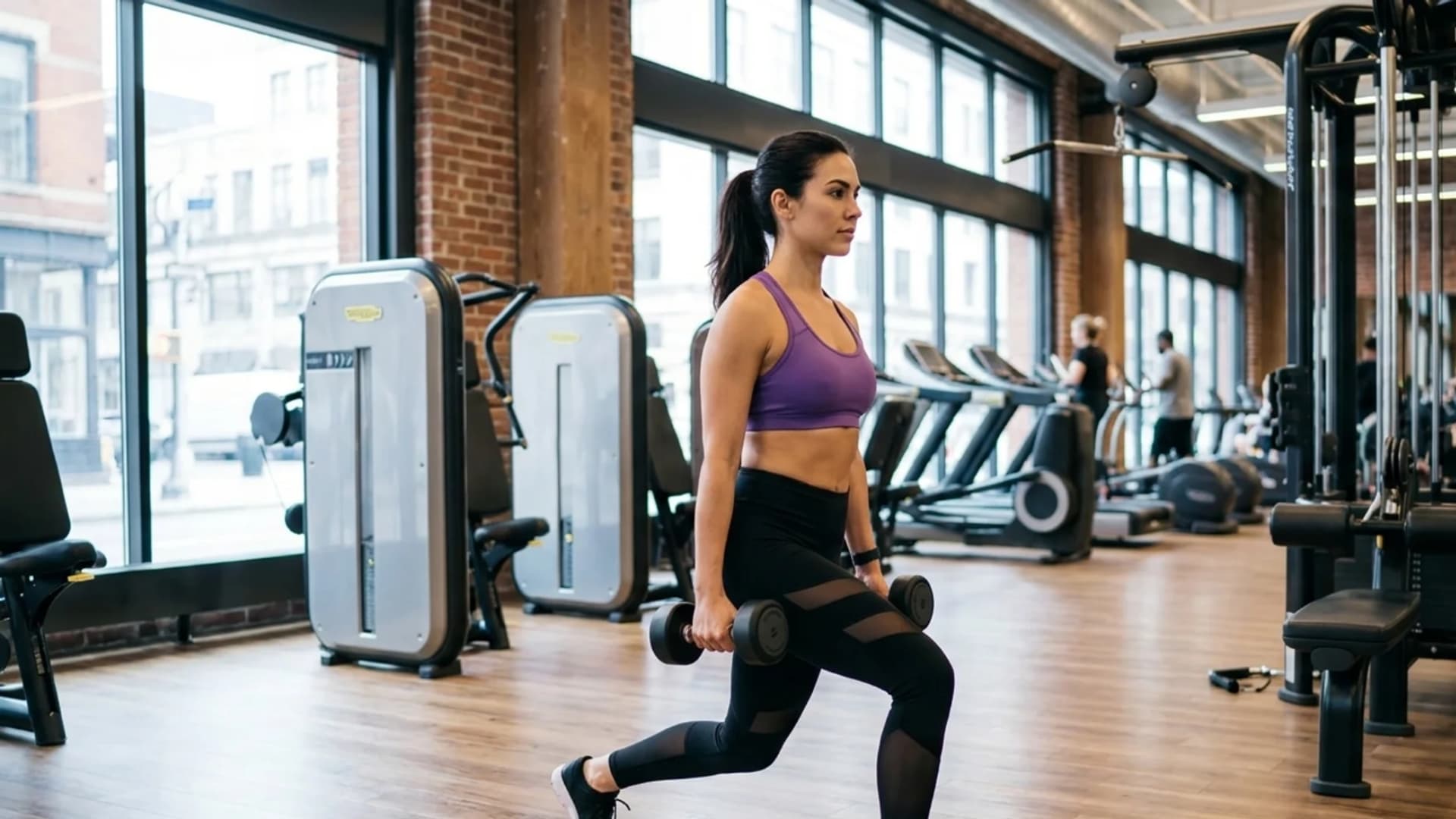
Dumbbells can build strong, powerful quads without a barbell, squat rack, or leg press machine. With the right movements, a pair of dumbbells is enough for squats, lunges, split squats, and step-ups.
The key is training with proper form, enough intensity, and the right progression.
This post covers dumbbell quad exercises with form tips, sets, reps, and four workout plans for different goals, whether you train at home or in the gym.
What Do Dumbbell Quad Exercises Actually Work?
A quad-dominant exercise puts most of the work at the knee joint. Your knee bends deeply, then straightens against load. That is why squats, lunges, split squats, and step-ups appear on every quad training list.
Hip-dominant moves work differently. Romanian deadlifts and hip thrusts keep the knee fairly straight and load the hips instead. They target glutes and hamstrings far more than quads.
Two details separate quad exercises from hip exercises:
- Knee travel: More forward knee movement usually means more demand on the quads.
- Torso angle: Keeping your chest tall puts load on the knees, not the hips.
Machines like the leg extension isolate the quad very precisely. Dumbbells trade a small amount of that precision for range of motion, balance demands, and the ability to train anywhere. For most lifters, that is a fair trade.
What Are the Quadriceps Muscles?
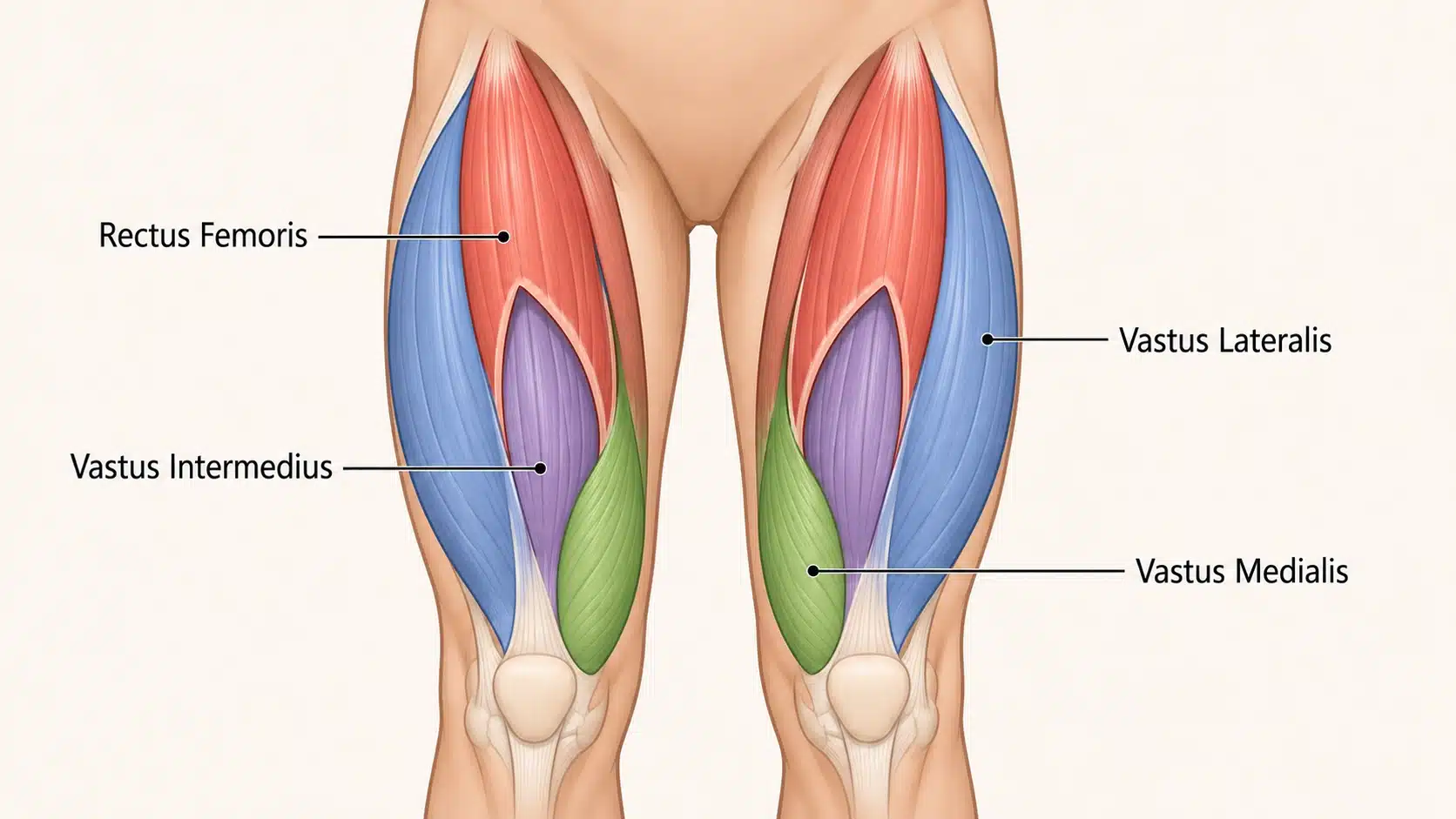
The quadriceps sit at the front of your thigh. Their main job is straightening the knee. According to StatPearls, the quadriceps femoris consists of four muscles: the rectus femoris, vastus lateralis, vastus medialis, and vastus intermedius.
- Rectus femoris: Runs down the middle of your thigh. It crosses both the hip and the knee, so it works hardest when your hip stays open during movement.
- Vastus lateralis: Sits on the outer thigh. This is the largest of the four heads and adds most of the width visible from the side.
- Vastus medialis: Sits low on the inner thigh near the knee. It works through the final degrees of knee extension and steadies the kneecap.
- Vastus intermedius: Lies under the rectus femoris. It contributes to knee extension and adds thickness to the front thigh.
Strong quads matter beyond appearance. They support the knee joint and make everyday tasks like climbing stairs far easier. Strong quads also reduce joint stress during athletic movements like sprinting, jumping, and cutting.
One common misconception worth addressing: no foot position or squat style shuts off three heads and fires one in isolation. Stance width and depth change the emphasis. They are not on-off switches. Treat any claim of true quad isolation with dumbbells as an oversimplification.
Why Train Quads with Dumbbells?
Dumbbells make quad training simple, flexible, and easy to progress. You can train one leg or both. You can change where you hold the weight. You can make an exercise harder without needing heavier dumbbells.
- No setup required: You only need a pair of dumbbells and a small patch of floor. No rack to set up, barbell to unrack, or spotter to find.
- Unilateral options: Split squats, lunges, and step-ups train each leg on its own. This makes it easier to spot and address strength differences between sides.
- Multiple progression paths: You can progress by adding reps, slowing the movement, increasing range, or moving to harder variations. Adding weight is not your only option.
When your heaviest dumbbell starts to feel light on squats, single-leg exercises solve that problem without needing heavier equipment.
Best Dumbbell Quad Exercises
One squat variation will not cover everything. This list mixes two-leg strength, single-leg work, deep knee flexion, and a finisher. You can build a full session from these exercises alone. Each entry includes setup, working cues, sets and reps, and a note on who it suits best.
1. Dumbbell Squat
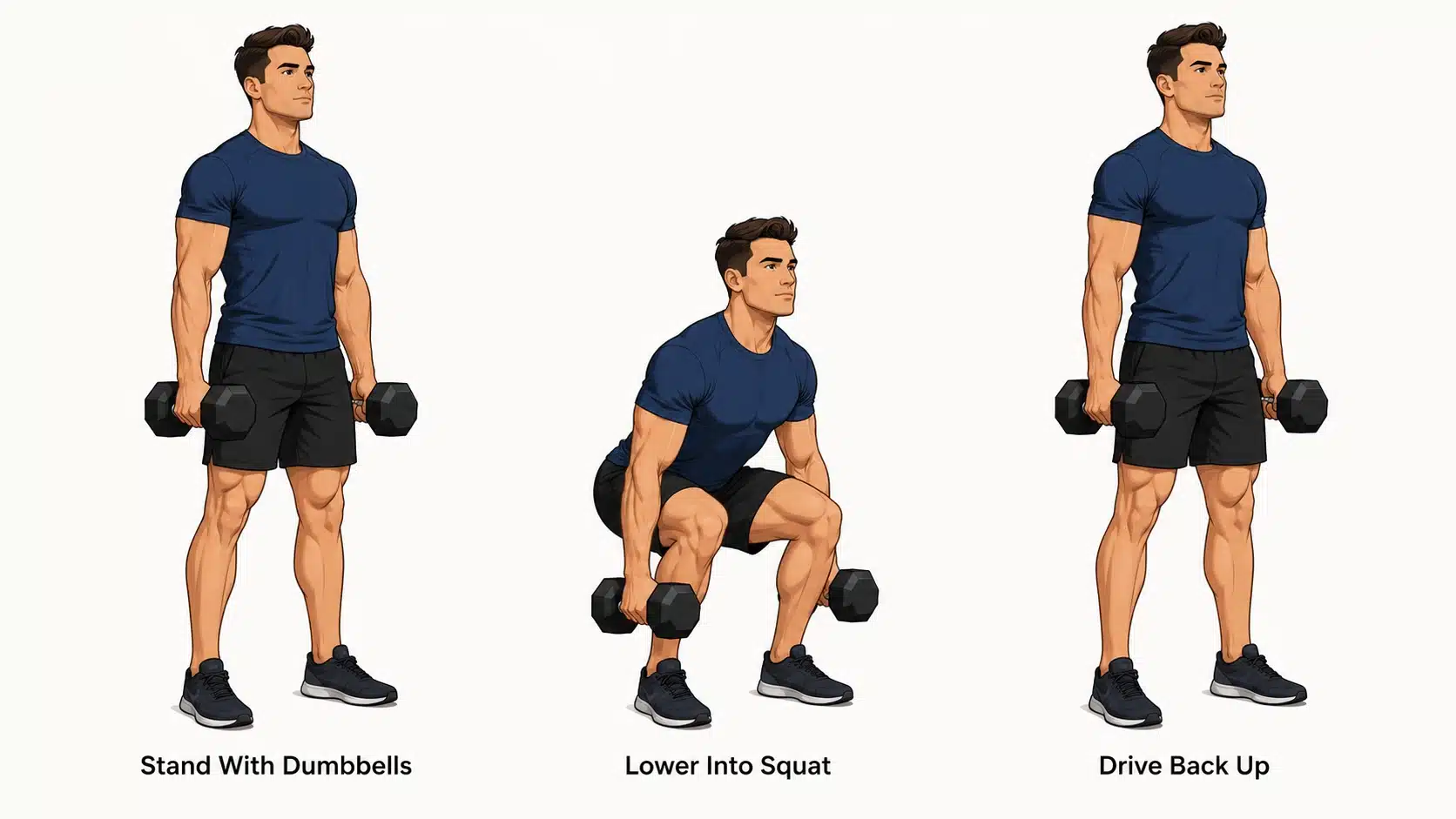
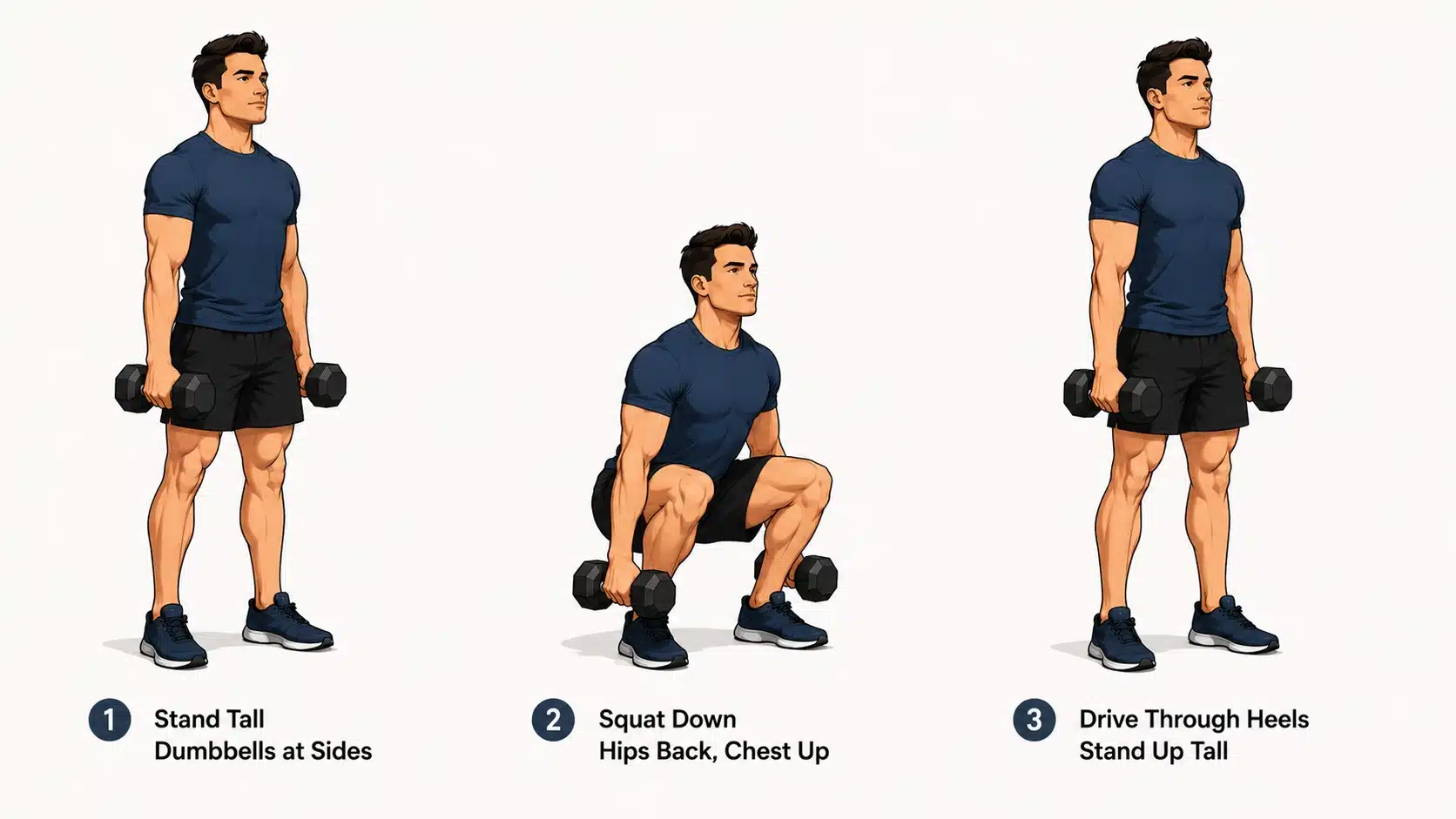
Hold a dumbbell in each hand at your sides. Set your feet between hip-width and shoulder-width apart. Brace your core, then bend your knees and hips together. Sit down until your thighs are parallel to the floor, then stand by pushing through your whole foot.
Sets and reps: 3 to 4 sets of 8 to 15 reps
Best for: Beginners building general quad strength from scratch.
2. Goblet Squat
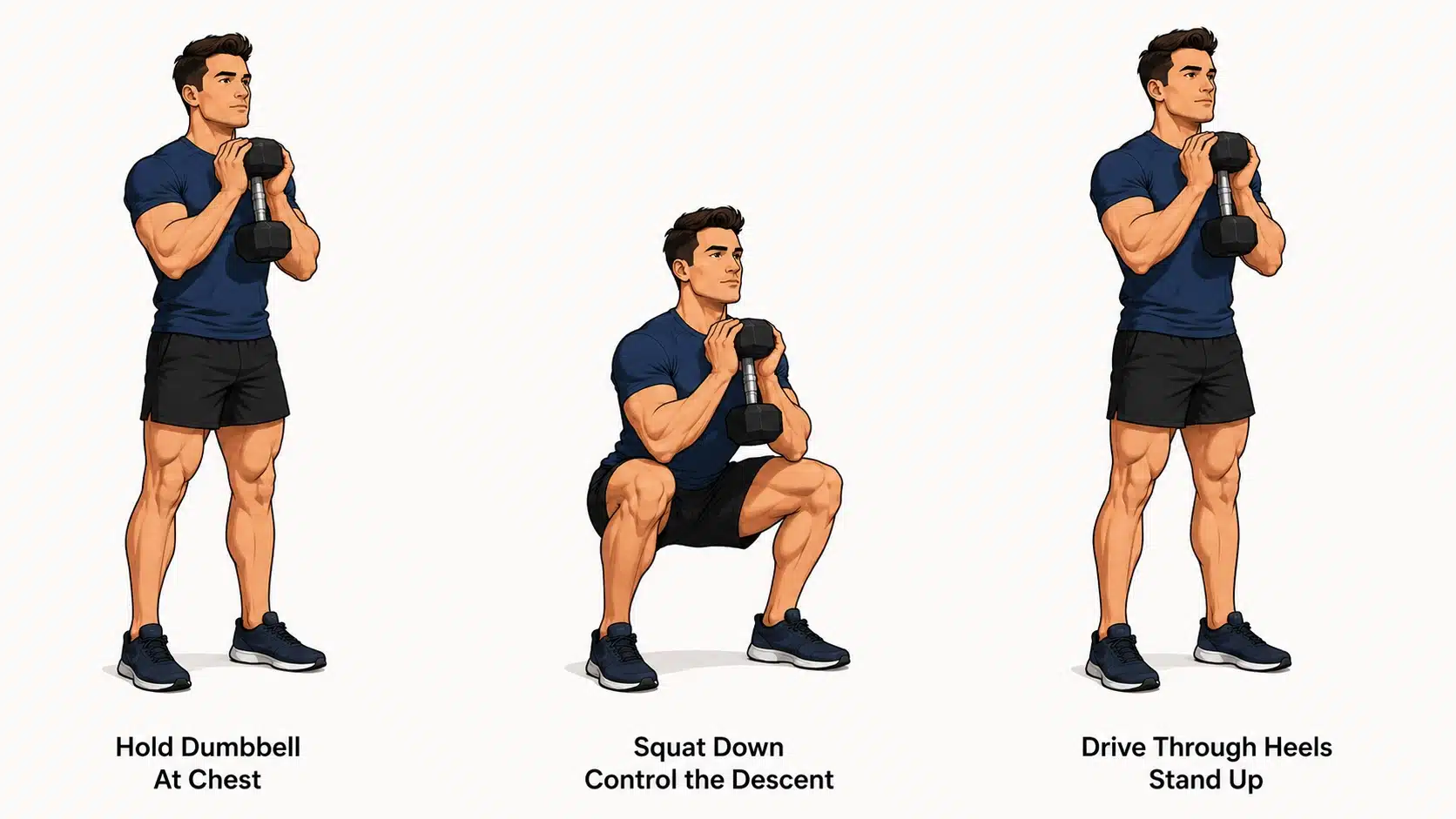
Hold one dumbbell vertically at your chest with your elbows tucked close to your ribs. The front load keeps your torso tall and sends more work to your quads. Lower under control, let your knees track over your toes, and pause one second at the bottom.
Sets and reps: 3 to 4 sets of 8 to 15 reps
Who it suits: Beginners, home sessions, and technique work. BarBend’s expert-reviewed content rates the goblet squat as effective for any experience level.
Variation: A wide-stance goblet squat also hits the inner quad and adductors. Set your feet wider than shoulder-width with toes turned out 45 degrees. Keep the dumbbell at your chest and lower straight down.
3. Dumbbell Front Squat
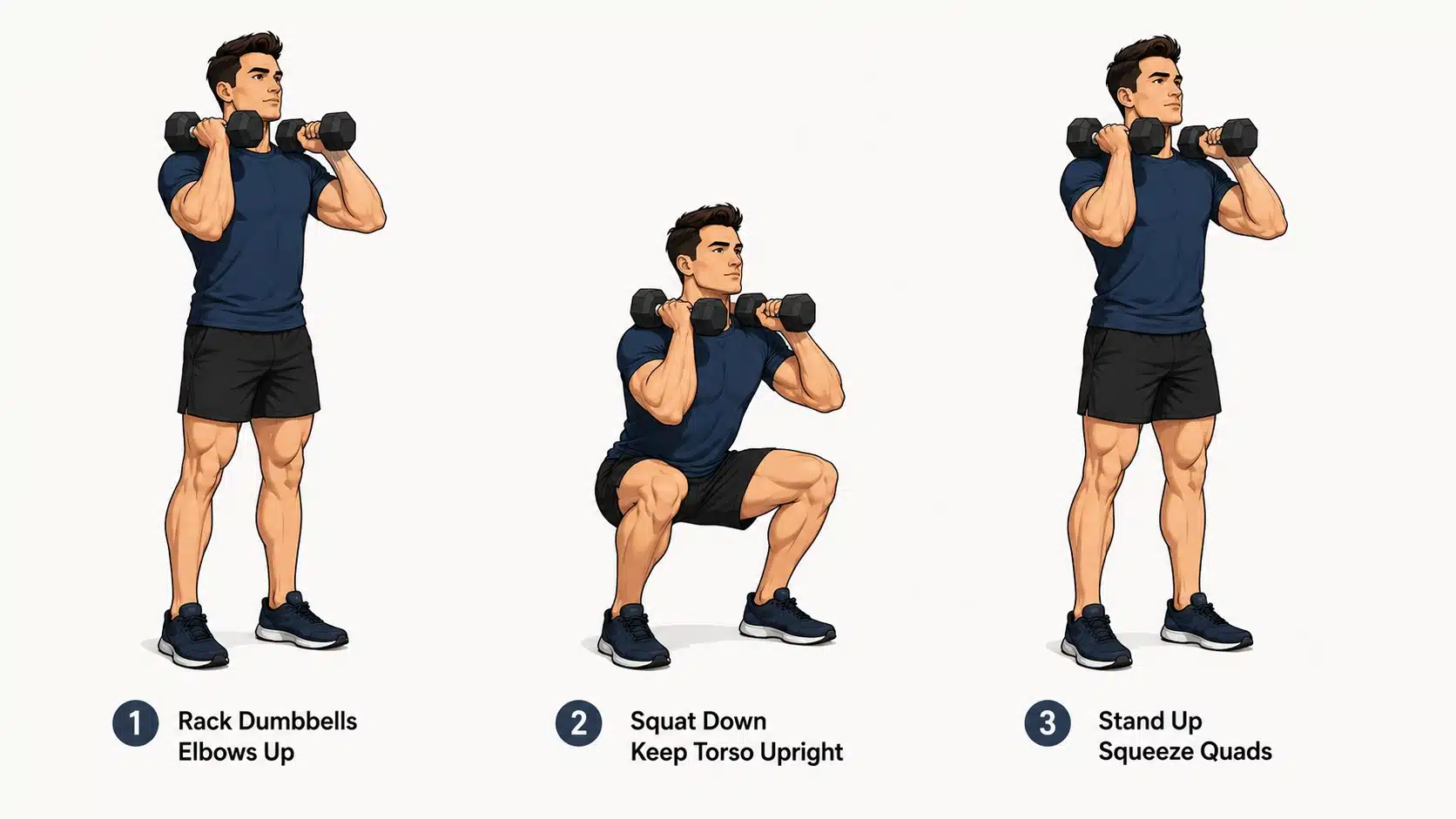
Clean two dumbbells to shoulder height and rest them on your front delts with elbows pointing forward. This is the most upright squat position you can load with dumbbells. Brace hard, squat down with a near-vertical torso, then stand without dropping your elbows.
Sets and reps: 3 to 4 sets of 6 to 12 reps
This variation suits lifters who want heavier loading while keeping a strong quad-focused torso position.
4. Raised-Heel Goblet Squat
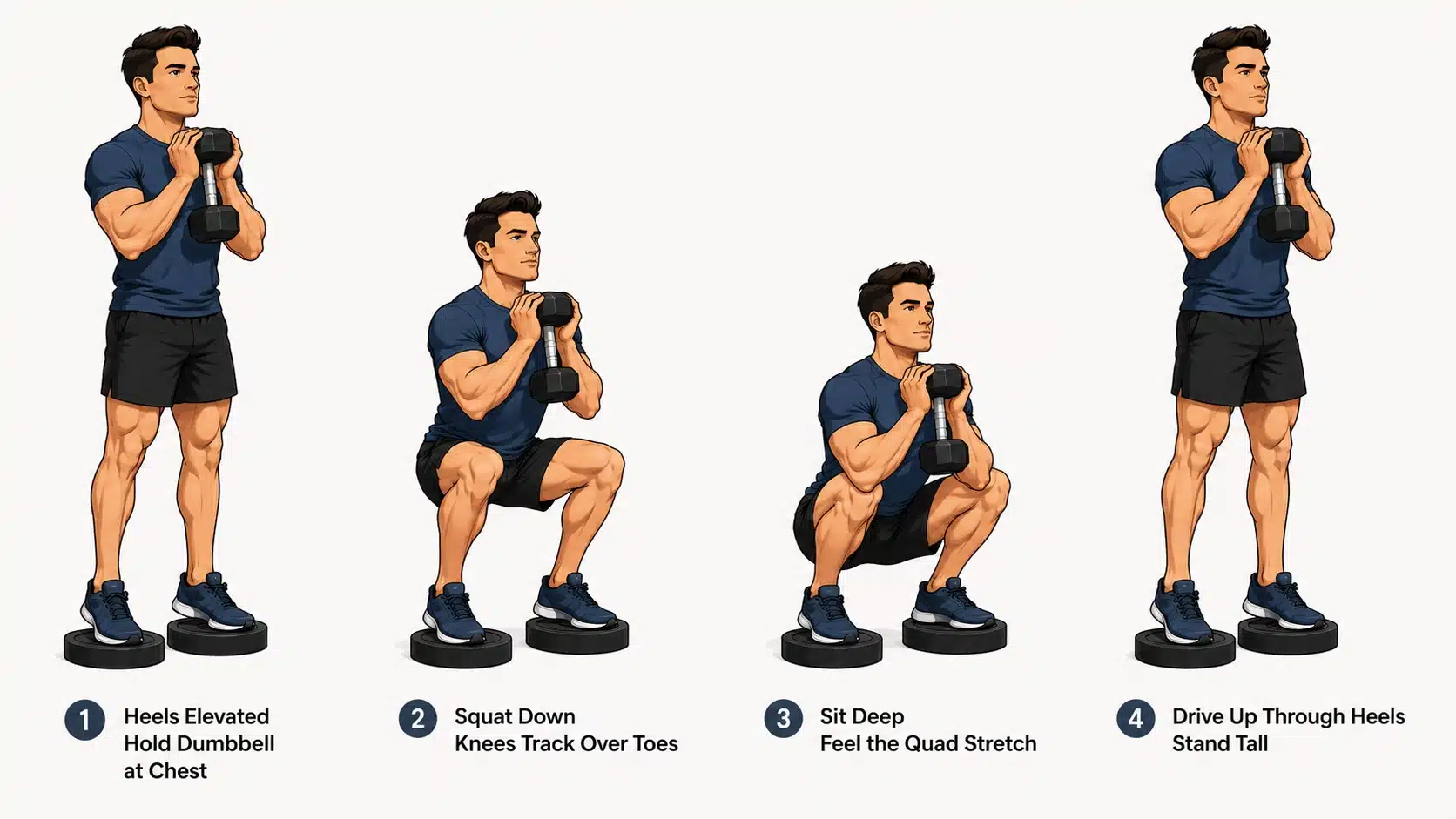
Rest your heels on a stable wedge or small weight plates while keeping your whole foot supported. The extra ankle clearance lets your knees travel further forward, and your quads work harder as a result. Hold a dumbbell at your chest, sit straight down, then stand up under control.
Sets and reps: 3 to 4 sets of 10 to 15 reps
Best for: Extra quad emphasis and lifters with stiff ankles who struggle to reach parallel depth.
5. Narrow-Stance Dumbbell Squat
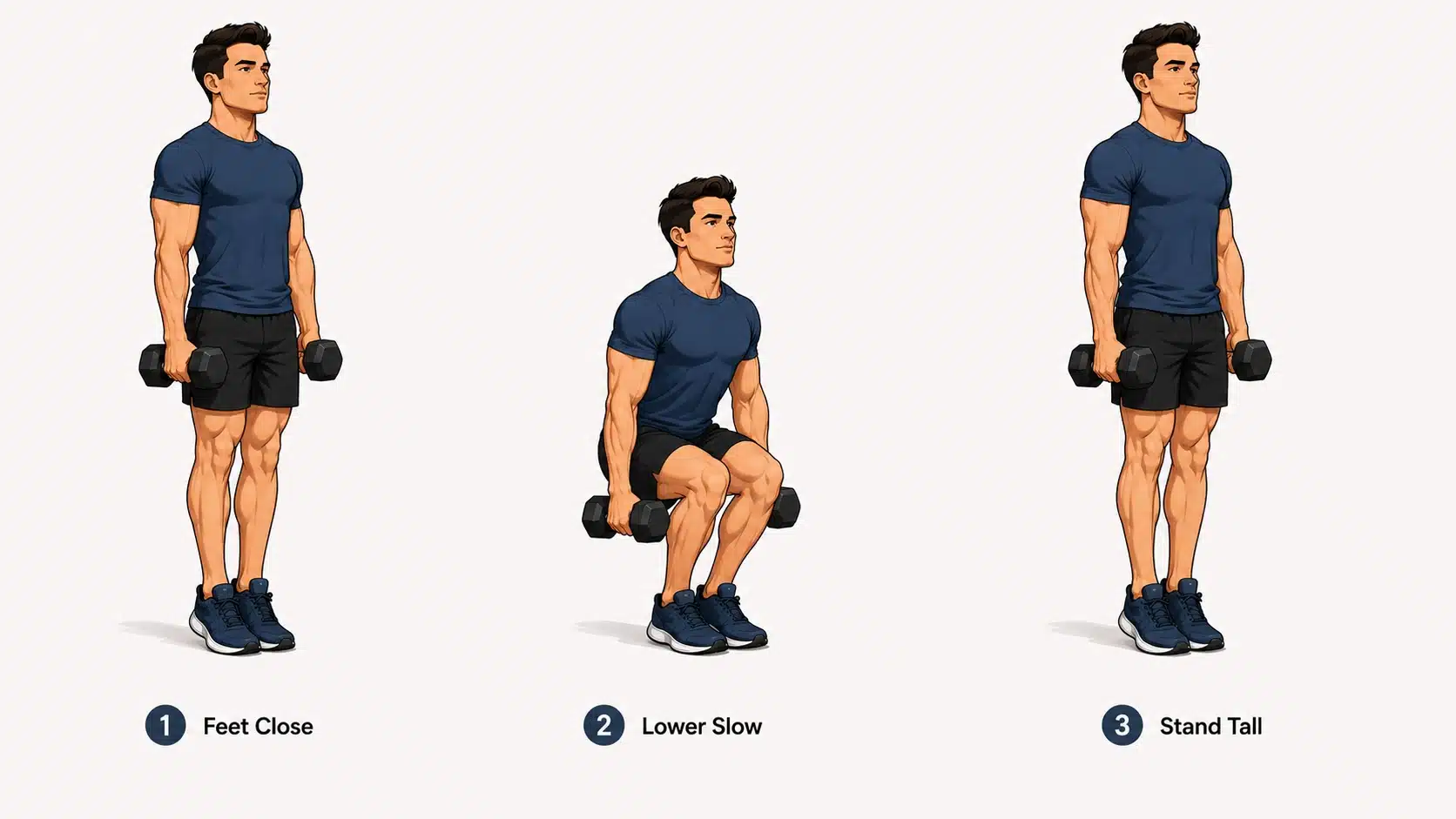
Stand with your feet a few inches apart and hold dumbbells at your sides or at your chest. The close stance forces a deeper knee bend on every rep. Keep your heels down, track your knees over your toes, and lower for three slow seconds on the way down.
Sets and reps: 3 sets of 10 to 15 reps
Use this as a second squat pattern in the same session without needing any extra equipment.
6. Dumbbell Split Squat
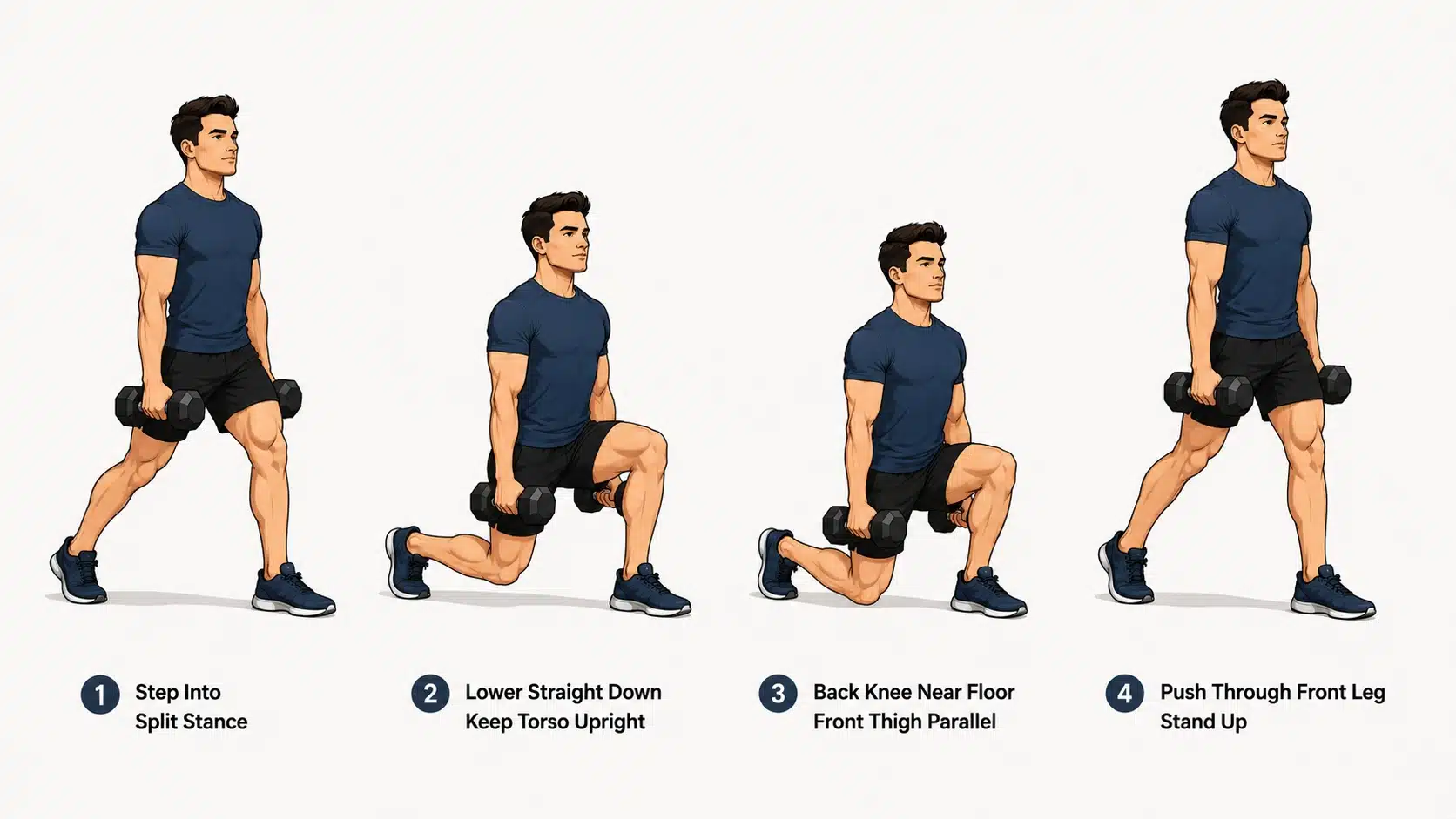
Step one foot forward into a staggered stance with a dumbbell in each hand. Keep most of your weight on the front foot and your torso upright throughout. Lower your back knee straight down, then push through the front leg to return to standing.
Sets and reps: 3 to 4 sets of 8 to 12 reps per leg
Best for: Single-leg quad strength and identifying side-to-side strength differences.
7. Bulgarian Split Squat
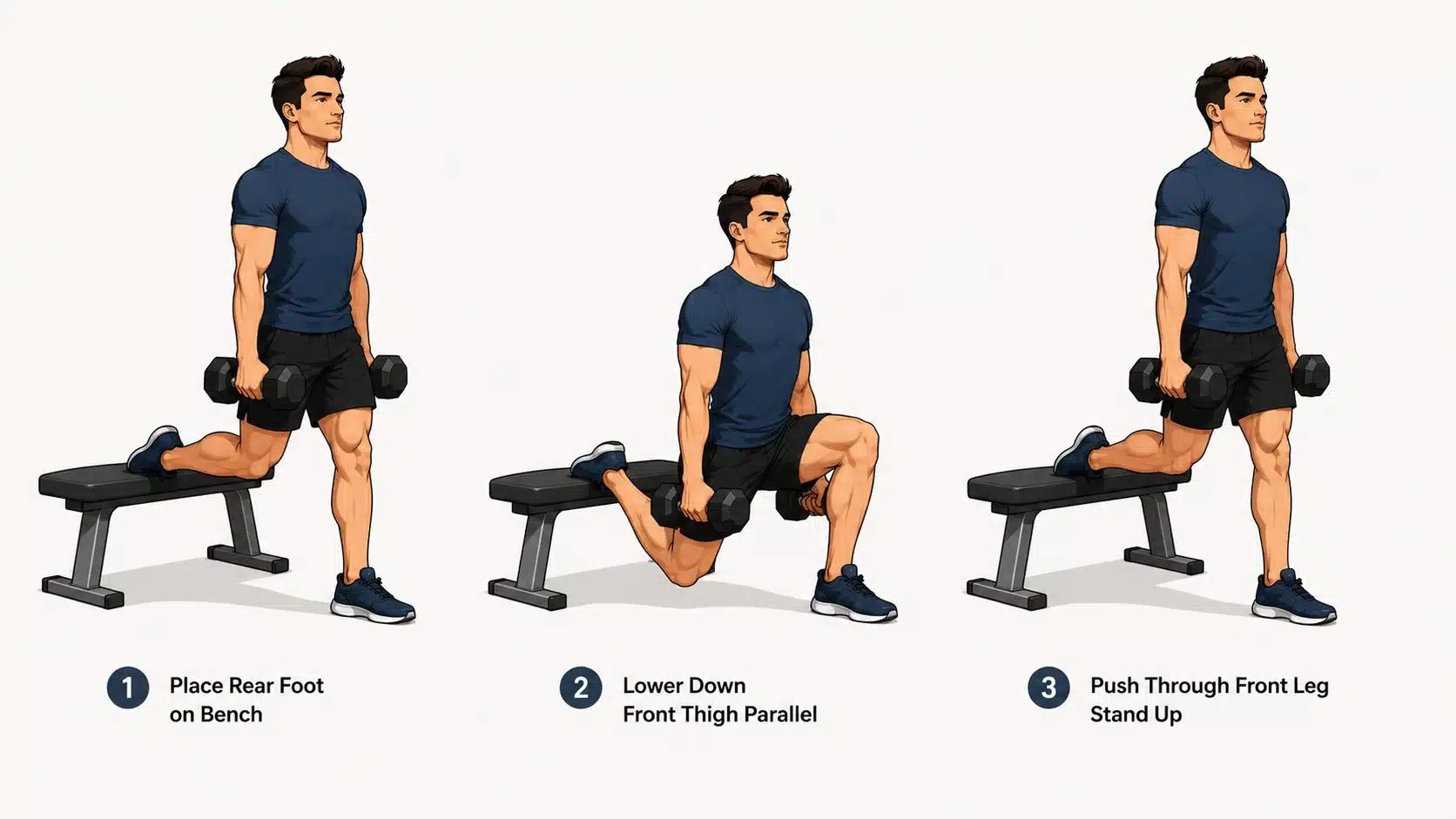
Rest the top of your rear foot on a bench. Position your front foot far enough forward to feel stable. Half your bodyweight lands on one leg before you add dumbbells. Test the stance empty-handed first, lower until your front thigh nears parallel, then stand.
Sets and reps: 3 to 4 sets of 8 to 12 reps per leg
Best for: Building muscle when your heaviest dumbbells feel too light for regular squats.
Your stance length changes what this exercise works most. The table below shows how to adjust based on your goal.
| Setup | What Changes | What It Hits Most |
|---|---|---|
| Short stance, upright torso | More knee bend | Quads |
| Long stance, slight forward lean | More hip bend | Glutes |
| Standard split squat, both feet on floor | Easier balance | Quads, beginner-friendly |
8. Front-Foot-Elevated Split Squat
Place your front foot on a low step or plate stack two to four inches high. Elevating the working foot opens up more knee travel and a longer range of motion. Lower your back knee toward the floor, let the front knee move forward, then stand back up.
Sets and reps: 3 sets of 8 to 12 reps per leg
This advanced single-leg variation rewards lifters already comfortable with standard split squats.
9. Dumbbell Forward Lunge
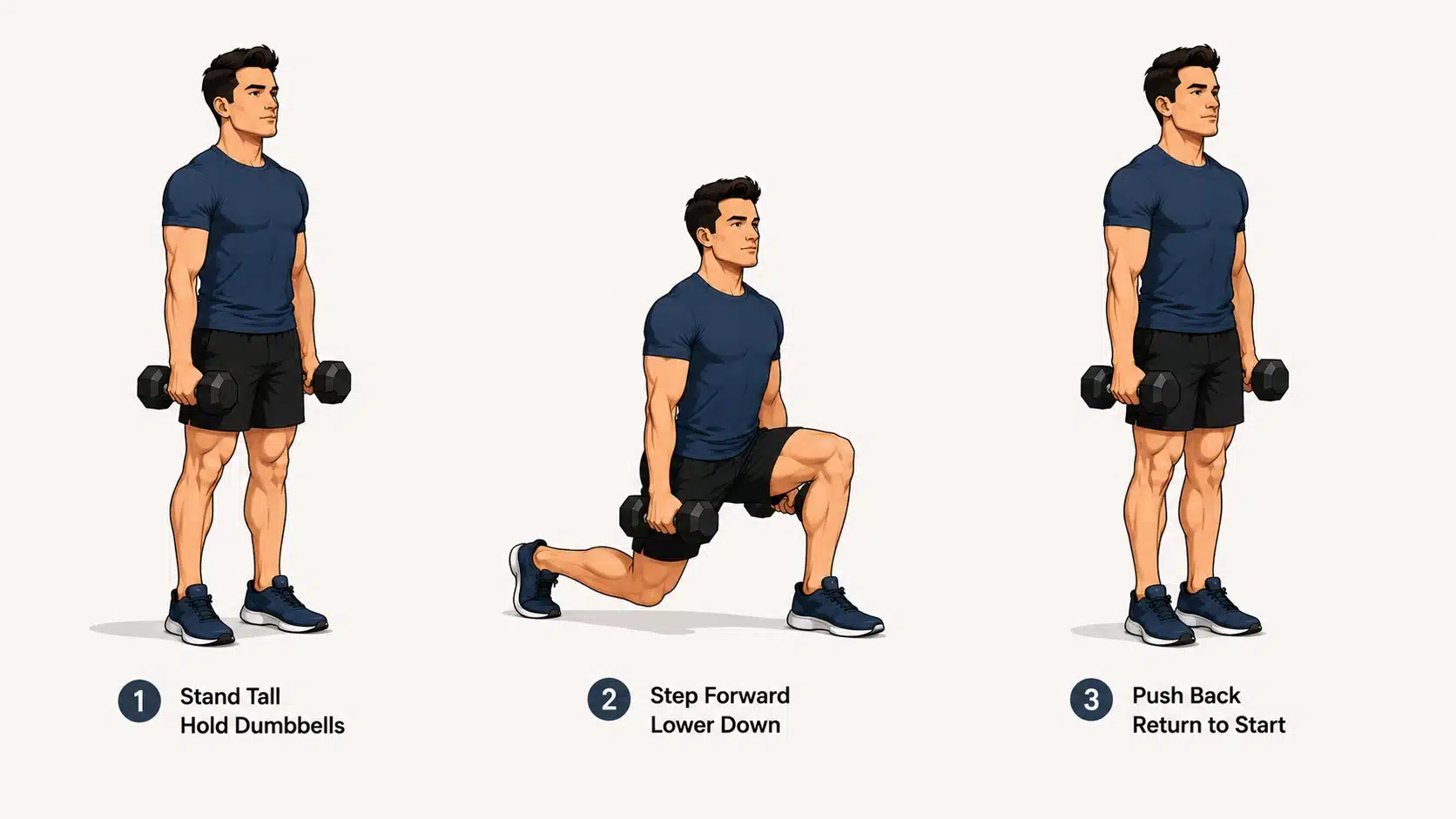
Stand tall with a dumbbell in each hand, then step forward a comfortable distance. A shorter step puts more of the work on the front thigh. Land with your whole foot flat, bend both knees, then push back to the starting position.
Sets and reps: 3 sets of 8 to 12 reps per leg
Best for: Quad strength under a moving load with a natural stepping pattern.
10. Dumbbell Reverse Lunge
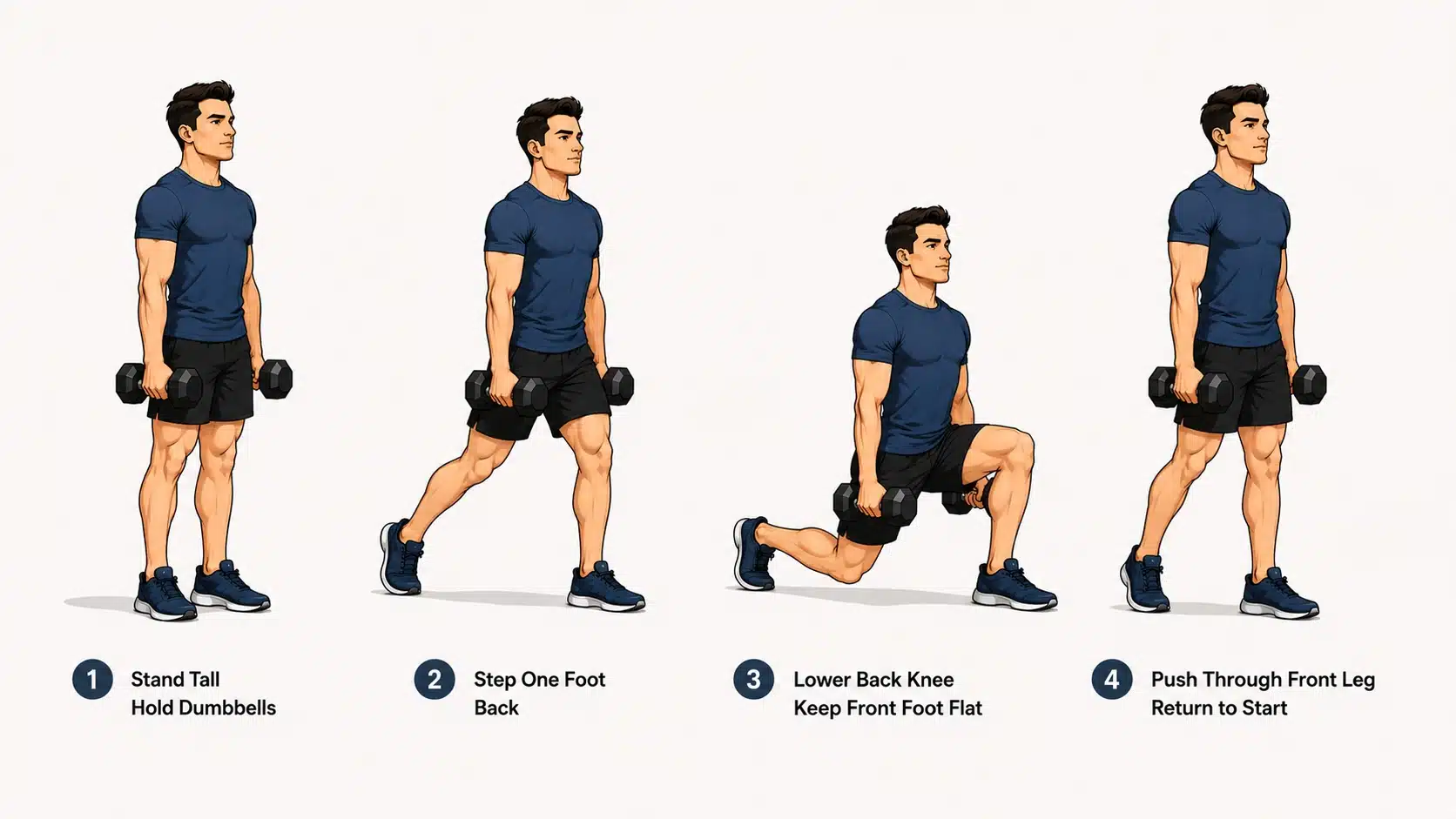
Hold dumbbells at your sides and step one foot straight back. Stepping backward is easier to control than stepping forward, making this a better entry point for weighted lunges. Keep the front foot flat, lower the back knee, then push through the front leg.
Sets and reps: 3 sets of 8 to 12 reps per leg
Start here if forward lunges feel unstable or cause knee discomfort. It targets the same muscles with less balance demand.
11. Dumbbell Walking Lunge
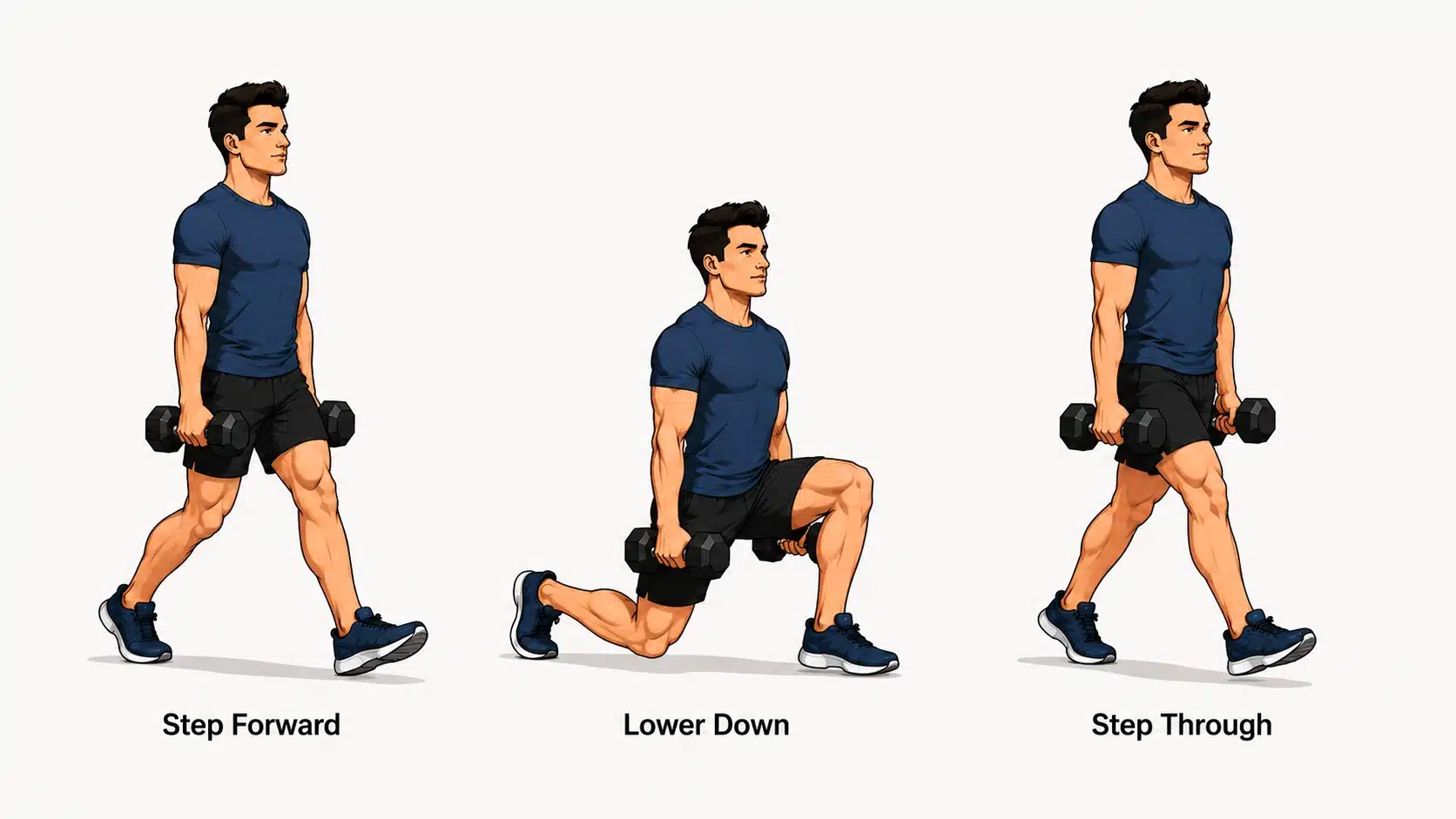
Hold a dumbbell in each hand, step forward, and lower into a lunge. Bring your back foot through into the next step and keep a steady rhythm. Stay tall through the chest and use slightly shorter strides to hold tension on the quads throughout.
Sets and reps: 2 to 3 sets of 10 to 16 steps per leg
Best for: Quad endurance and higher-rep leg training at the end of a session.
12. Dumbbell Step-Up
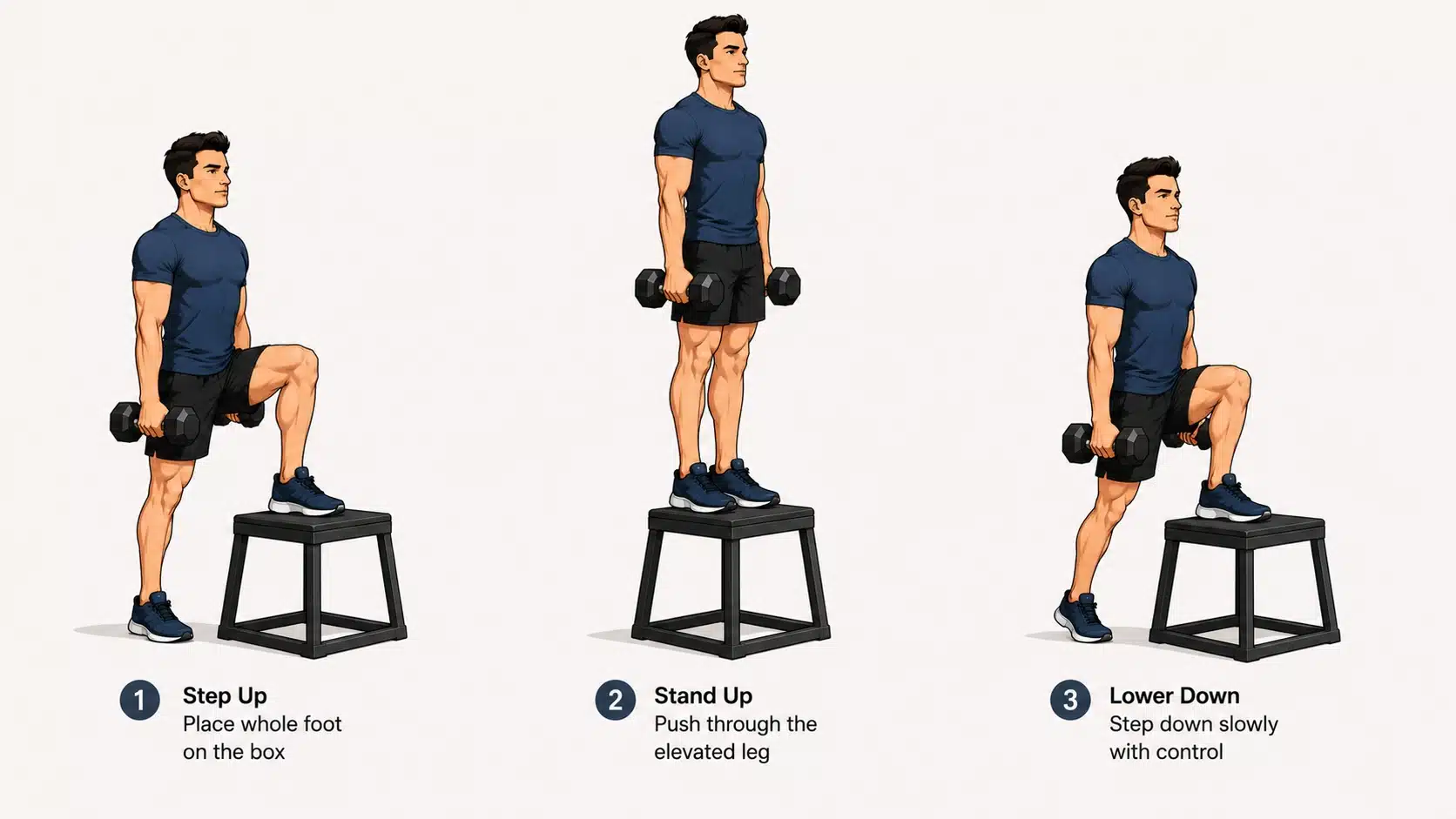
Set a stable box or bench at roughly knee height. Place your whole working foot on the surface, then push through the raised leg to stand. A higher box creates more knee bend and more quad demand. Lower yourself slowly on the way back down.
Sets and reps: 3 sets of 8 to 12 reps per leg
This exercise builds single-leg strength and balance while mimicking everyday movements like climbing stairs. It carries over well outside the gym.
13. Dumbbell Wall Sit
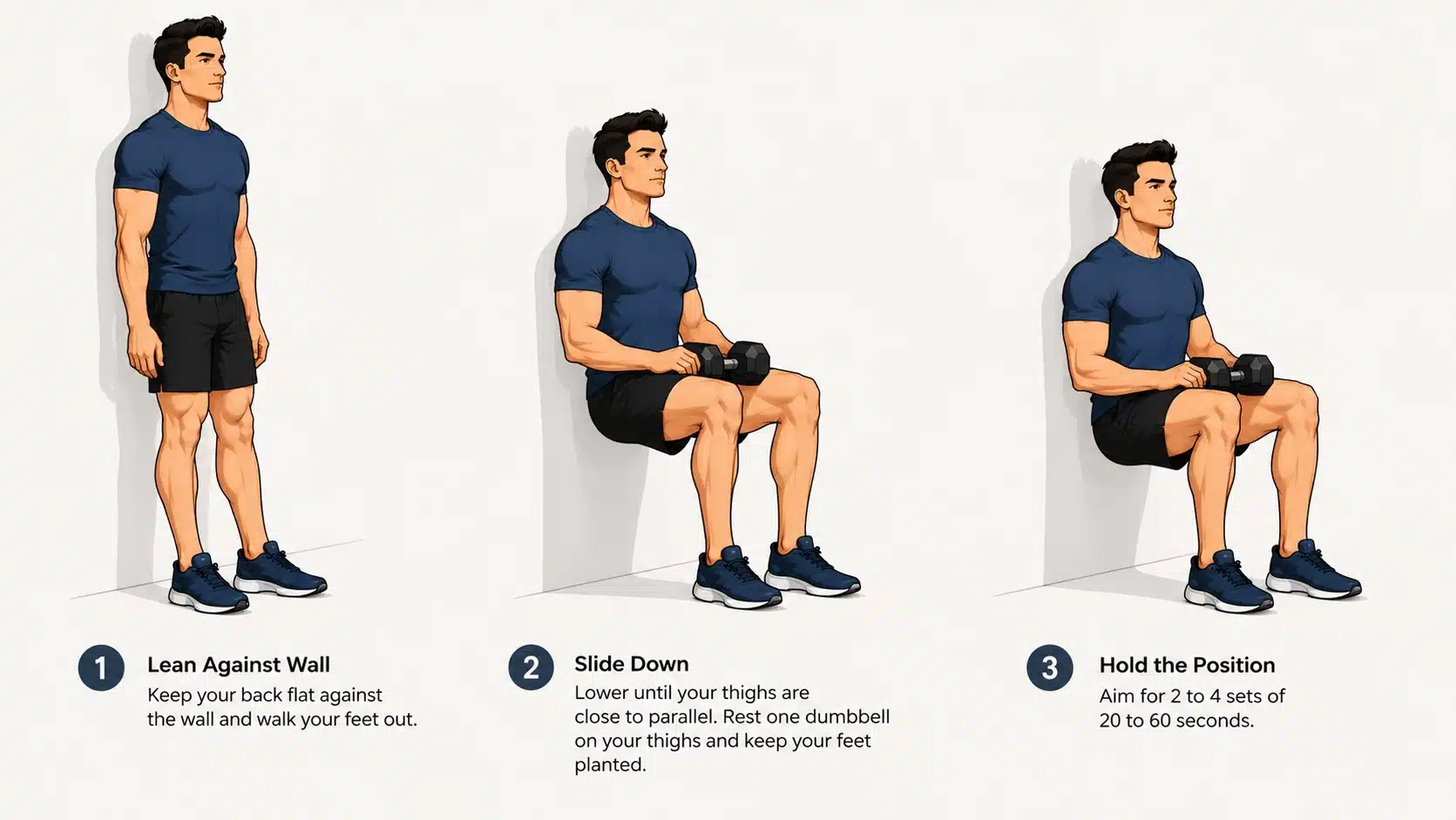
Lean your back flat against a wall, walk your feet out, and slide down until your thighs near parallel. Rest one dumbbell across your thighs, keep your feet planted, and hold the position. The closer your thighs are to parallel, the harder your quads work.
Sets and reps: 2 to 4 sets of 20 to 60 seconds
Best for: Quad endurance and end-of-session finishers when your legs are already fatigued.
Build Your Quad Workout
Picking good exercises is only half the job. Sets, reps, rest time, and weekly frequency decide whether you build strength, size, or just fatigue. Pick three or four exercises per session.
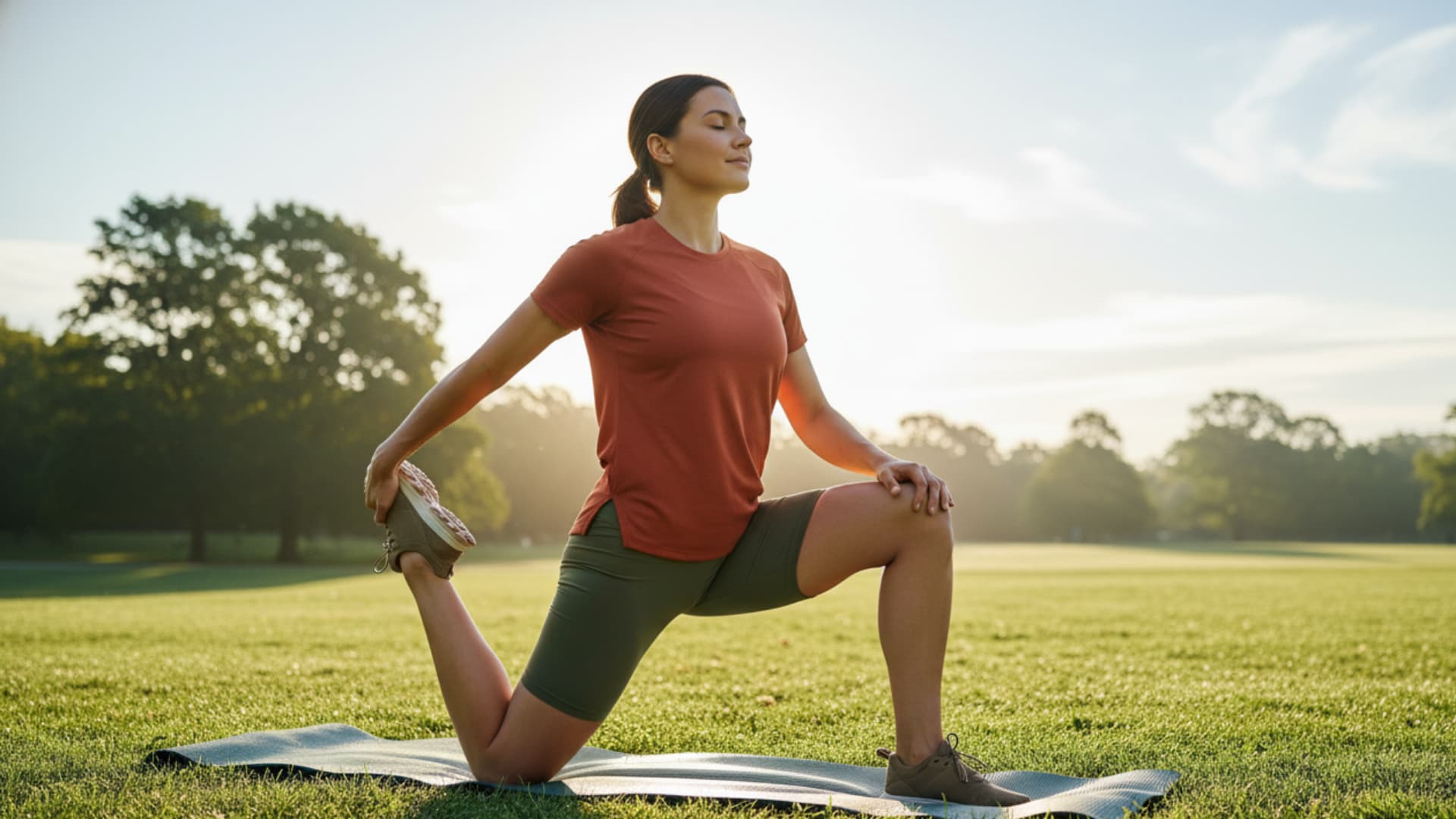
Include one two-leg squat, one single-leg move, and one finisher. Train your quads twice a week and follow each session with quad stretches to support recovery.
Beginner Dumbbell Quad Workout
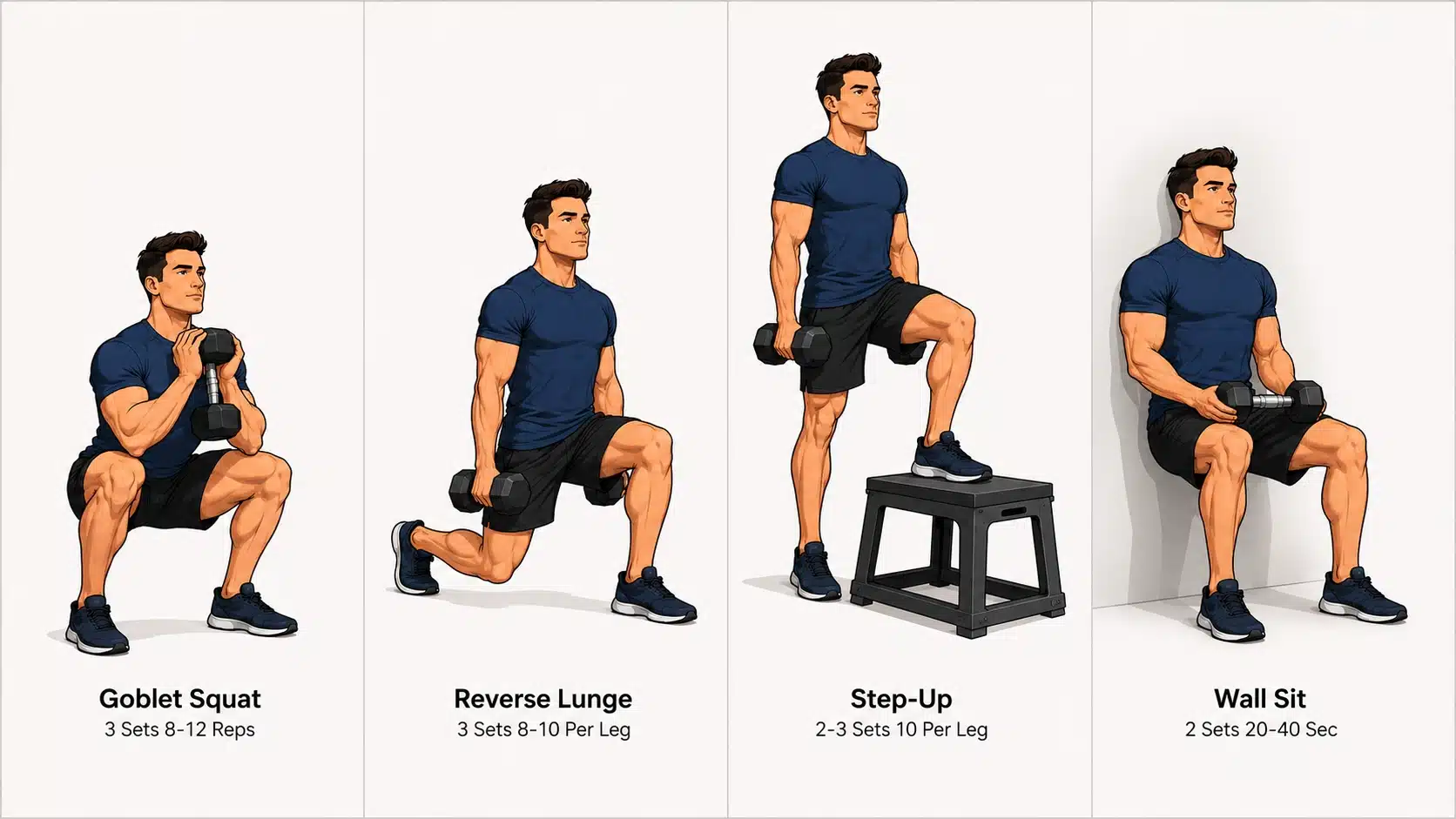
This session keeps skill demands low while you learn the movement patterns. Rest 60 to 90 seconds between sets.
| Exercise | Sets | Reps / Duration |
|---|---|---|
| Goblet Squat | 3 | 8 to 12 reps |
| Dumbbell Reverse Lunge | 3 | 8 to 10 reps per leg |
| Dumbbell Step-Up | 2 to 3 | 10 reps per leg |
| Dumbbell Wall Sit | 2 | 20 to 40 seconds |
Dumbbell Quad Workout for Muscle Growth
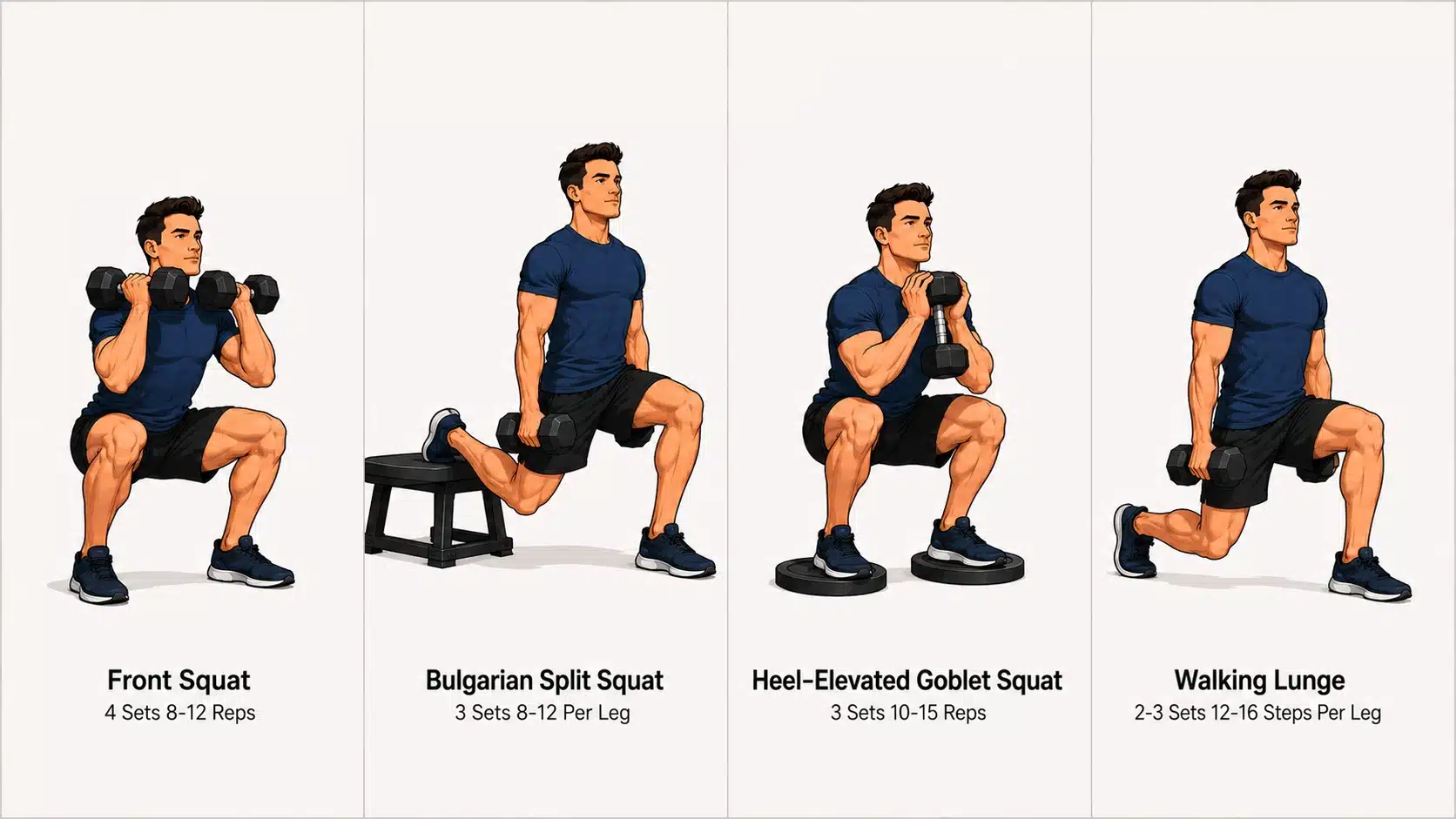
Volume climbs here, and the reps sit in the range where growth happens. Rest 90 seconds to two minutes between sets.
| Exercise | Sets | Reps |
|---|---|---|
| Dumbbell Front Squat | 4 | 8 to 12 reps |
| Bulgarian Split Squat | 3 | 8 to 12 reps per leg |
| Raised-Heel Goblet Squat | 3 | 10 to 15 reps |
| Dumbbell Walking Lunge | 2 to 3 | 12 to 16 steps per leg |
Dumbbell Quad Workout for Strength
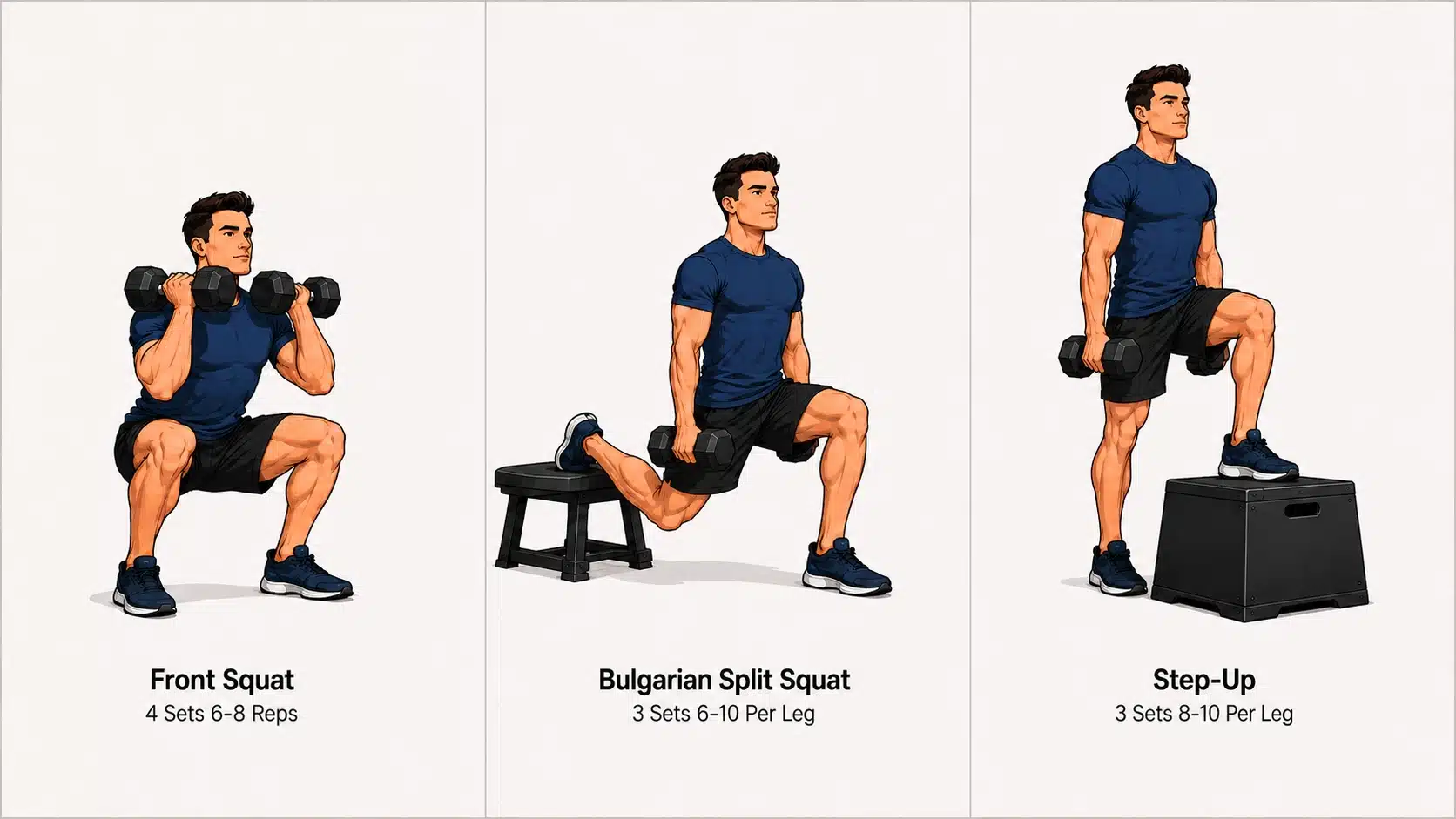
Fewer reps, heavier dumbbells, and longer rest. Stop each set with two or three reps left in reserve. Rest two to three minutes between hard sets.
| Exercise | Sets | Reps |
|---|---|---|
| Dumbbell Front Squat | 4 | 6 to 8 reps |
| Bulgarian Split Squat | 3 | 6 to 10 reps per leg |
| Dumbbell Step-Up | 3 | 8 to 10 reps per leg |
At-Home Quad Workout with Dumbbells
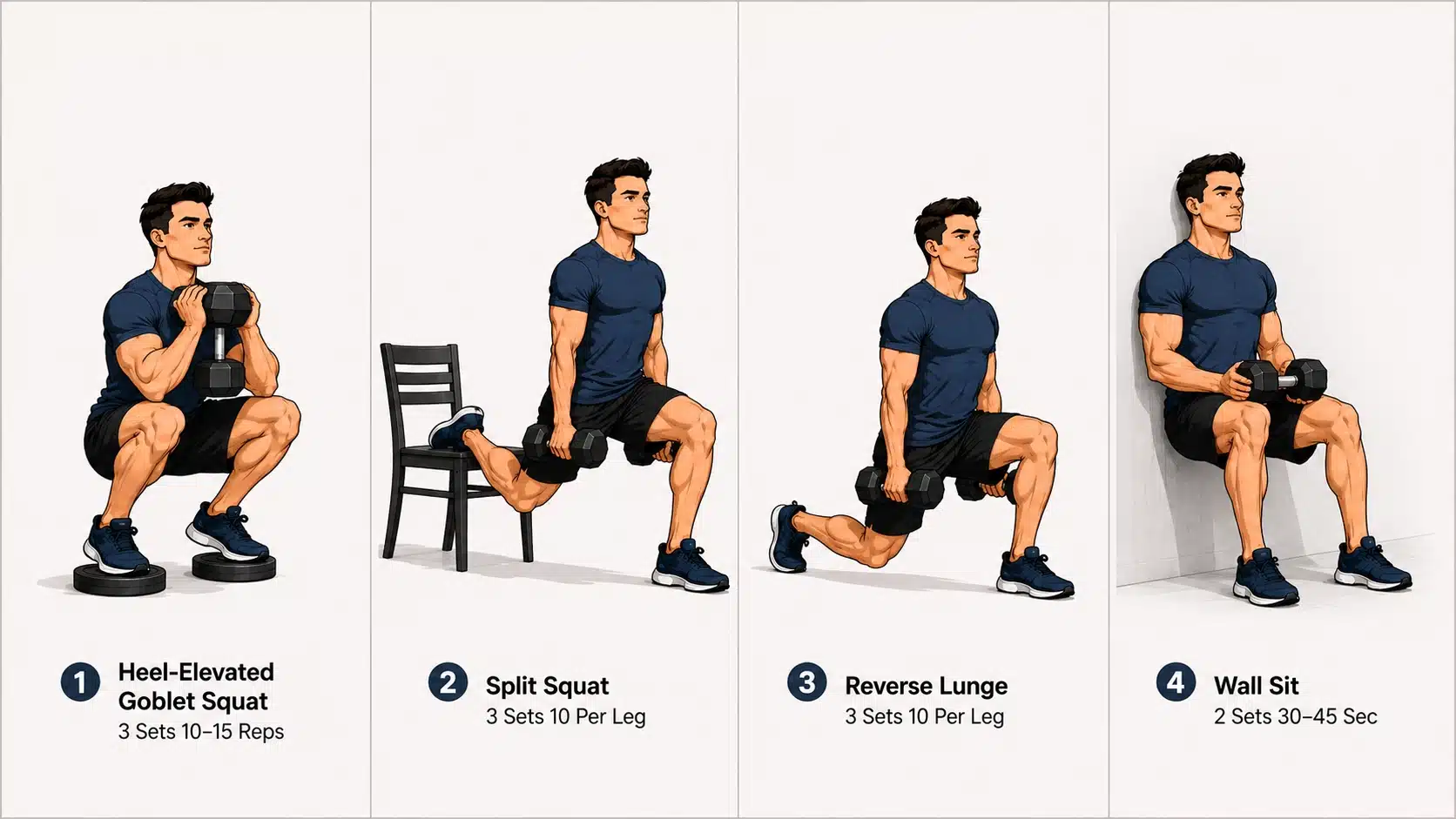
These at-home quad exercises need only dumbbells and a chair. No rack, no bench. Rest 60 to 90 seconds between sets.
| Exercise | Sets | Reps / Duration |
|---|---|---|
| Raised-Heel Goblet Squat | 3 | 10 to 15 reps |
| Dumbbell Split Squat | 3 | 10 reps per leg |
| Dumbbell Reverse Lunge | 3 | 10 reps per leg |
| Dumbbell Wall Sit | 2 | 30 to 45 seconds |
Mistakes That Steal Quad Tension
Good exercises stop working when form slips. These are the most common errors that shift the load away from your quads.
- Using too much weight: Heavy dumbbells you cannot control lead to short reps, wobbly balance, and momentum. Your hips and lower back quietly take over. Drop the load and earn it back with clean reps.
- Turning every squat into a hip hinge: Some forward lean is normal. The problem starts when your chest drops toward the floor, and your shins stay vertical. Keep your chest up throughout the movement.
- Cutting every rep short: Half reps let you use more weight, but they skip the stretched position where quads work hardest. Use the deepest range you can control with good form.
- Letting the knees cave inward: A slight inward drift under heavy load can happen. A knee that caves on every rep is a problem. Slow down, widen your stance slightly, or reduce the weight.
- Bouncing through the bottom: Speed through the bottom borrows energy from your tendons rather than your muscles. Control the descent and pause briefly before standing.
When to Modify or Scale Back
Training should tire your quads without hurting your joints. Burning muscles, shaky legs, and next-day soreness are normal. Sharp, pinching, or worsening joint pain is not. Use these adjustments when something feels wrong:
- Reduce the load when your form breaks down at the same point every set.
- Shorten the range if a certain depth pinches your knee or hip.
- Swap the exercise by trading forward lunges for reverse lunges or split squats.
- Add support by holding a wall or stable surface during balance-heavy moves.
- Raise your heels when tight ankles force your torso too far forward.
Anyone recovering from a knee, hip, or back injury should consult a physical therapist before adding load to these exercises.
Training Variables at a Glance
These numbers give you a starting point for programming your dumbbell quad training. Adjust them as your strength and recovery improve over time.
| Variable | Recommendation |
|---|---|
| Exercises per session | 3 to 4 quad-focused moves |
| Weekly frequency | 2 sessions per week (1 for beginners) |
| Rep range | 6 to 12 for strength; 12 to 20 with lighter loads |
| Rest between sets | 90 to 120 seconds; 60 seconds for finishers |
| Warm-up | 2 light sets before your first working set |
| When to add weight | Once you hit the top of your rep range with clean form |
| Effort per set | Leave 1 to 3 reps in reserve |
| Weekly volume | 6 to 10 hard sets for beginners; more for experienced lifters |
Start Building Stronger Quads Today
Strong quads come from a few exercises done well over time. Pick three or four moves from this list and work them consistently.
Keep one two-leg squat, one single-leg lift, and one finisher in every session. Push the reps, then the range, then the weight. Track your last set as carefully as your first. Sleep, protein, and consistent training do more for leg size than any single exercise choice. Dumbbells are enough for serious quad development.
Used with real effort and steady progression, these dumbbell quad exercises will build legs that perform and look the part. Start this week.
Disclaimer: This article shares general fitness information only. It is not medical advice. Speak with a qualified health professional before starting a new training program. This is especially important if you have an existing injury or health condition.
Frequently Asked Questions
Can you build big quads with dumbbells?
Yes. Muscle grows from tension, progressive overload, and effort, not from specific equipment. Goblet squats, Bulgarian split squats, and lunges give your quads what they need to grow.
Are dumbbell squats enough to build quads?
They can build quads, especially for beginners. Once your dumbbells stop feeling challenging, split squats and step-ups give you more ways to keep progressing without heavier equipment.
How often should you train quads?
Twice a week is the standard starting point. Beginners do well with one session per week while learning the patterns. Experienced lifters often split volume across three sessions.
How heavy should dumbbells be for quad exercises?
Pick a weight that leaves two or three reps in reserve. Go heavier if the last rep still feels easy. Drop weight if form breaks early in a set.
Should your knees go over your toes during squats?
Often, yes. Knee travel past your toes happens naturally during deep squats. Keep it controlled and pain-free. Your ankle mobility determines how far the knee can safely move forward.
Which dumbbell quad exercises are best for beginners?
Start with goblet squats, dumbbell squats, reverse lunges, and step-ups. These require little balance skill. Use a light weight for two weeks before moving to split squats or Bulgarian variations.
Can you train quads at home with one dumbbell?
Yes. One dumbbell covers goblet squats, split squats, reverse lunges, and weighted step-ups. When it feels too light, slow the lowering phase or hold a pause at the bottom.