Yes, acai bowls can be healthy, but it depends on what goes into them.
You ordered the acai bowl expecting a healthy breakfast. Nobody warned you about the sugar. Some restaurant bowls pack more sugar than a candy bar. That is the part most people miss.
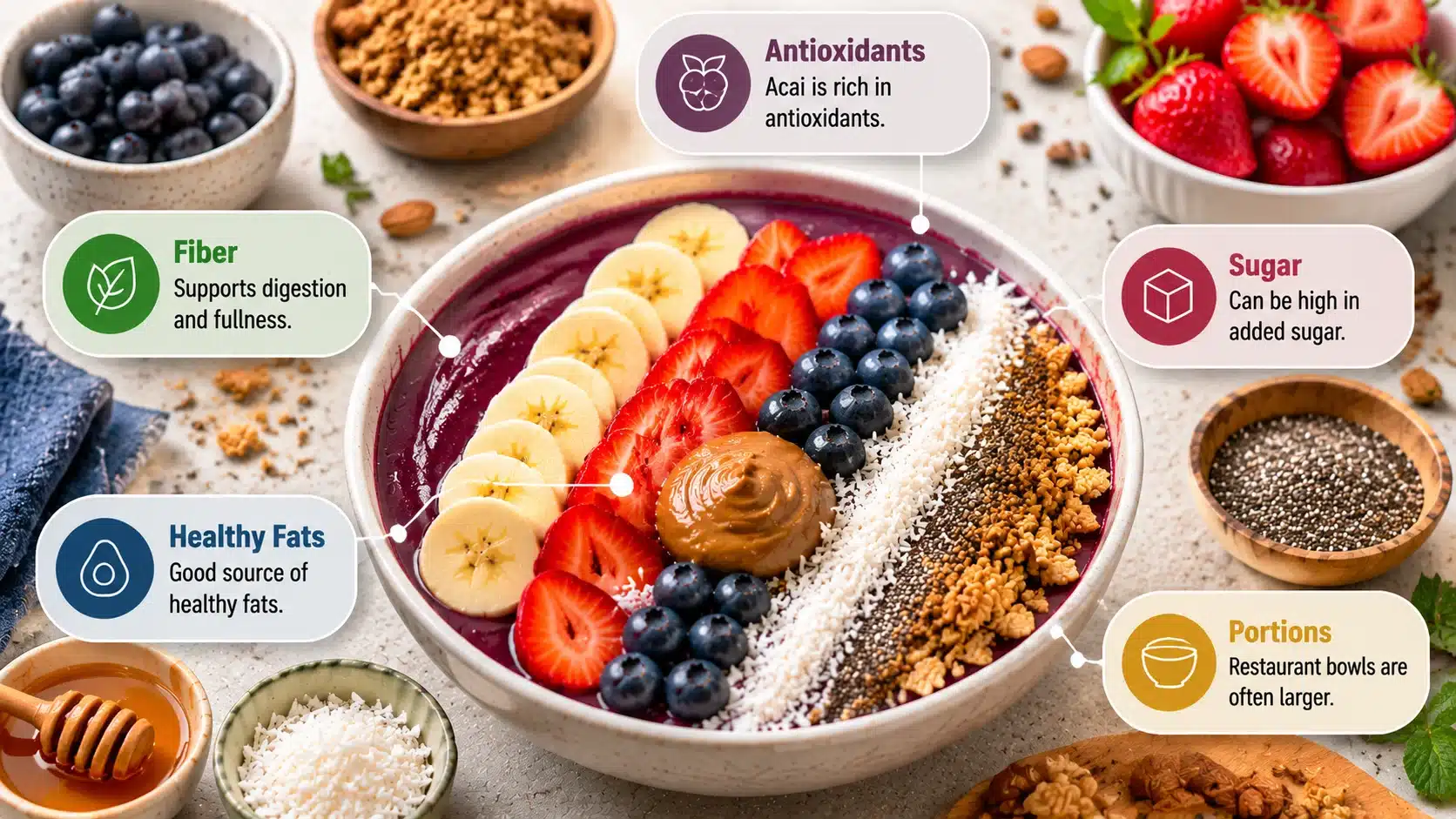
The acai base brings fiber, antioxidants, and healthy fats. But the wrong toppings quickly turn that into a sugar-loaded meal.
This post covers the real nutrition facts, benefits, and red flags. You will also get a clear guide to building a healthier bowl.
What Is an Acai Bowl Made Of?
Before judging whether acai bowls are healthy, it helps to know what is inside one.
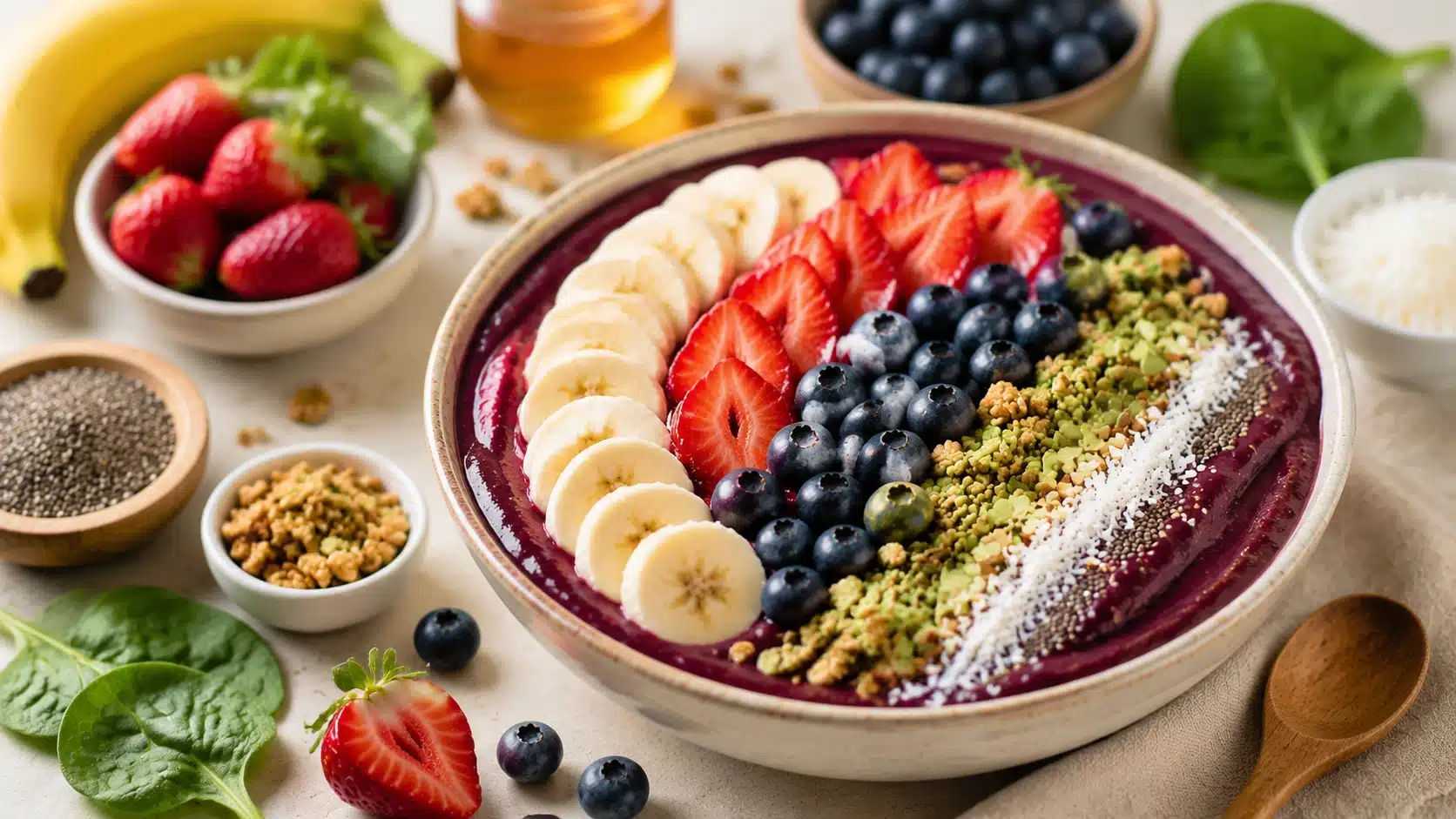
Acai berries are small, dark purple fruits. They grow on acai palm trees native to Central and South America. Fresh acai spoils quickly. Most bowls use frozen acai puree or acai powder instead.
A typical acai bowl includes:
- Acai puree (sweetened or unsweetened)
- Banana or mixed berries
- Plant-based milk, coconut water, or juice
- Granola
- Nuts and seeds
- Nut butter
- Coconut flakes
- Honey, agave, or other sweeteners
The nutritional value shifts based on the ingredients used. A bowl with unsweetened acai and fresh berries looks very different from one loaded with honey and extra granola.
What Are the Health Benefits of Acai Bowls?
When built thoughtfully, acai bowls can support several aspects of daily wellness beyond just being a tasty breakfast option. Here’s where a well-made bowl can genuinely add value to your routine.
1. May Support Better Energy Levels
The natural carbohydrates from fruit provide quick, usable energy, which is why acai bowls are popular before workouts or as a morning meal.
Pairing the fruit base with protein and healthy fats helps convert that quick energy into longer-lasting fullness instead of a mid-morning crash.
2. May Help You Eat More Plant-Based Foods
Acai bowls make it simple to pack multiple plant-based foods into one meal. Fruits, seeds, nuts, and whole-food toppings naturally show up in a well-built bowl, which can help increase overall intake of plant foods without much effort.
3. May Support Heart-Healthy Eating Patterns
The combination of fiber from fruit and unsaturated fats from nuts and seeds fits well within heart-healthy eating patterns recommended by nutrition professionals.
Acai itself doesn’t directly prevent heart disease, but it can be part of a broader diet that supports cardiovascular health.
4. They Deliver Antioxidants From Acai Berries
Acai berries contain anthocyanins. These are the plant compounds responsible for the deep color in blueberries and blackberries.
Anthocyanins are a type of antioxidant. Antioxidants help protect the body’s cells from oxidative stress. Everyday exposure to pollution, UV light, and normal metabolism all cause oxidative damage.
Acai works best as one part of a broader antioxidant-rich diet. It is not a standalone cure.
5. They Add Meaningful Fiber to Your Diet
Fiber is one of the most underconsumed nutrients in the average diet. A single acai bowl can add fiber from multiple sources:
- Acai itself
- Fresh fruit
- Chia seeds
- Flaxseeds
- Nuts
- Whole-grain granola
Fiber supports digestion and feeds beneficial gut bacteria. It also helps you feel full after eating. A fiber-rich breakfast links to steadier blood sugar levels throughout the morning.
6. They Provide Healthy Fats and Key Nutrients
Toppings like walnuts, almonds, chia seeds, and nut butter contribute unsaturated fats. These fats support heart health when they replace saturated fats in the diet. These same toppings also provide magnesium, vitamin E, and plant-based omega-3s.
Here is a general nutritional snapshot of a typical bowl:
| Nutrient | Average Amount |
|---|---|
| Calories | 300–700+ |
| Carbohydrates | 50–100g |
| Fiber | 5–15g |
| Protein | 5–20g |
| Sugar | 20–60g |
Are Acai Bowls Good for Weight Loss?
Acai bowls aren’t automatically a weight-loss food, despite their health-food reputation.
Whether they support weight-loss goals depends entirely on portion size, toppings, and how the bowl fits into your overall daily calorie intake.
Several factors determine whether an acai bowl helps or hurts weight-loss efforts:
- Portion size of the base
- Amount of granola added
- Type and quantity of sweeteners
- Protein content of the bowl
Practical tips for a weight-loss-friendly bowl:
- Use unsweetened acai puree instead of pre-sweetened packs
- Add Greek yogurt or a scoop of protein powder
- Increase seeds and nuts for staying power
- Limit high-sugar toppings like honey and candy pieces
A bowl built around protein and fiber tends to keep you fuller for longer, which can naturally support portion control throughout the day.
Are Acai Bowls High in Sugar?
Acai berries themselves are relatively low in natural sugar compared to many other fruits. Most of the sugar in an acai bowl actually comes from everything added around the acai, not the acai itself.
Sugar sources in acai bowls include:
- Banana-heavy blends
- Fruit juice is used as a liquid base
- Pre-sweetened acai packs
- Honey or agave drizzles
- Large amounts of granola
How to Reduce Sugar in an Acai Bowl:
- Choose unsweetened acai puree over pre-sweetened packs
- Use berries instead of large amounts of banana
- Skip sugary syrups and honey drizzles
- Choose a low-sugar or no-added-sugar granola
How to Make a Healthier Acai Bowl: 4 Recipes to Try
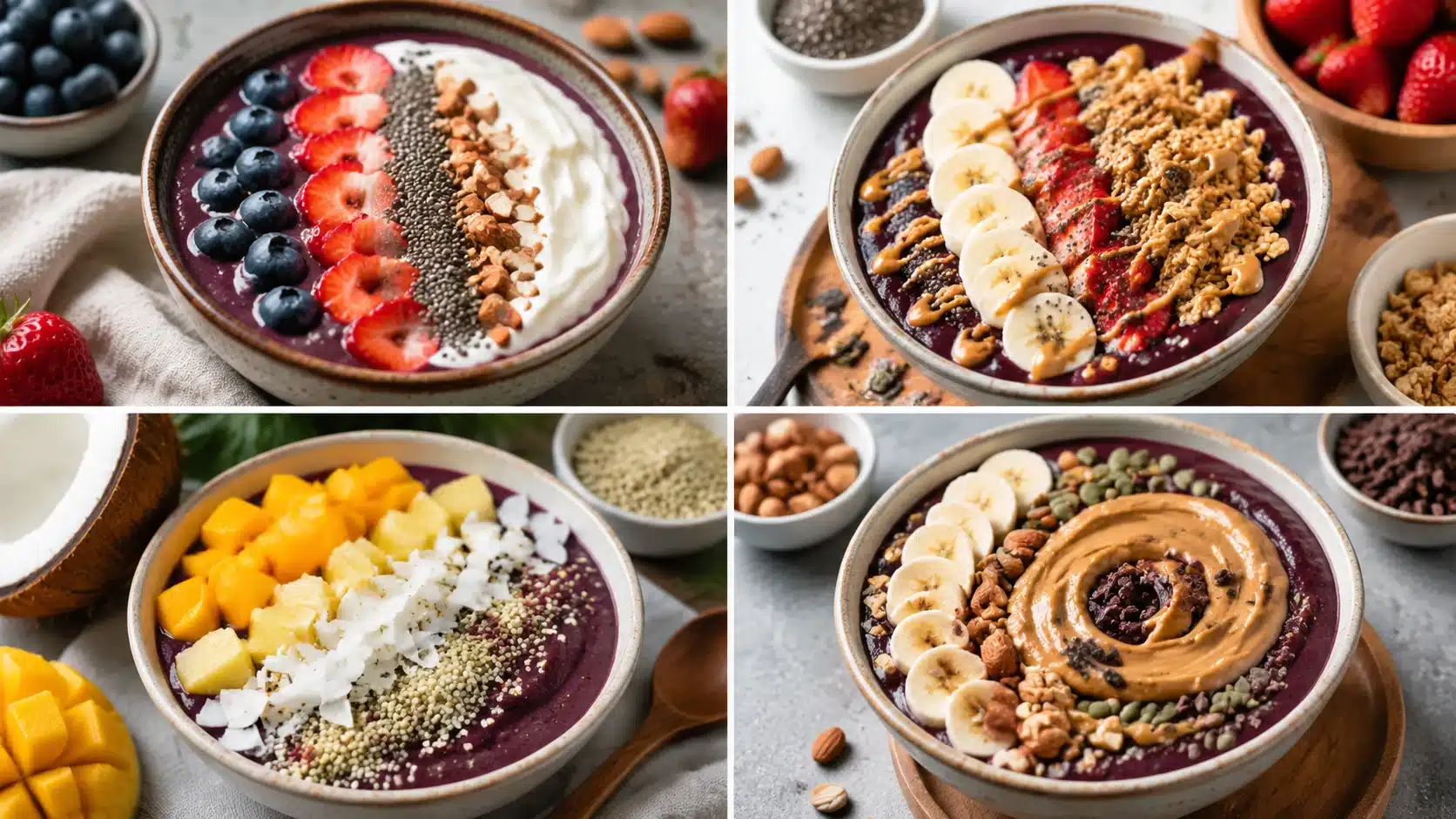
Building a healthier acai bowl comes down to a simple formula rather than complicated rules. A few smart swaps can turn a sugar-heavy bowl into a genuinely balanced meal.
- Choose a Balanced Base: A good base sets the tone for the whole bowl. Unsweetened acai puree keeps sugar low, Greek yogurt adds protein, and unsweetened almond milk beats juice.
- Add Protein for Better Fullness: Traditional acai bowls tend to run low on protein. Greek yogurt, protein powder, nut butter, hemp seeds, and chia seeds all help balance out the carbs.
- Pick Smart Toppings: Toppings decide whether a bowl stays balanced or turns into dessert. Berries, nuts, seeds, and coconut flakes are solid picks, while candy, sweetened sauces, and excess granola pile on sugar fast.
1. Acai with Greek Yogurt Protein Bowl
- Unsweetened acai puree
- 1/2 cup plain Greek yogurt
- Splash of almond milk
- Topping: fresh berries, chia seeds, a few almonds
Blend the acai, yogurt, and almond milk together.
Top with berries, chia seeds, and almonds for a protein-packed, low-sugar bowl.
YouTube Recommendation: Low Calorie Acai Overnight Oats Yogurt Bowl – Foodaciously
2. Acai with Chia Seed Power Bowl
- Acai puree
- Banana
- Unsweetened almond milk
- 1 tbsp chia seeds
- Topping: granola, sliced strawberries, nut butter drizzle
Blend the acai, banana, and almond milk together.
Stir in the chia seeds and top with granola, strawberries, and a drizzle of nut butter.
YouTube Recommendation: Açai Bowl & Chia Seed Pudding Recipe by La Juiceria
3. Acai with Tropical Coconut Bowl
- Acai puree
- Pineapple
- Coconut water
- Topping: unsweetened coconut flakes, mango slices, hemp seeds
Blend the acai, pineapple, and coconut water together. Top with coconut flakes, mango, and hemp seeds for a lighter, fiber-rich bowl.
YouTube Recommendation: Acai Coconut Bowl with Homemade Granola by Good Chef Bad Chef
4. Acai with Nut Butter Energy Bowl
- Acai puree
- 1 scoop protein powder
- Unsweetened almond milk
- Topping: peanut or almond butter swirl, banana slices, crushed walnuts
Blend the acai, protein powder, and almond milk together.
Top with nut butter, banana, and walnuts for a filling, post-workout bowl.
YouTube Recommendation: Easy & Healthy Acai Peanut Butter Bowl by Mindfully Healthy Living aka the Mood Food Mama
Of these, the Greek yogurt version tends to offer the best balance of protein, fiber, and low added sugar, making it a solid go-to for anyone building a healthier daily habit.
Homemade vs. Store-Bought Acai Bowls
Homemade acai bowls generally offer more control over ingredients and sugar content, but that doesn’t mean store-bought bowls are automatically unhealthy.
It really comes down to what’s actually in the bowl you’re buying.
| Homemade Bowl | Store-Bought Bowl |
|---|---|
| Full control over ingredients | Often served in larger portions |
| Easier to keep added sugar low | May use pre-sweetened acai bases |
| Simple to boost protein content | Toppings can be more calorie-dense |
Cafes and juice bars can absolutely offer healthy acai bowls. The key is to check the ingredient list and ask about portion sizes before assuming a bowl is automatically the “healthy” option on the menu.
Are Acai Bowls Better Than Smoothies?
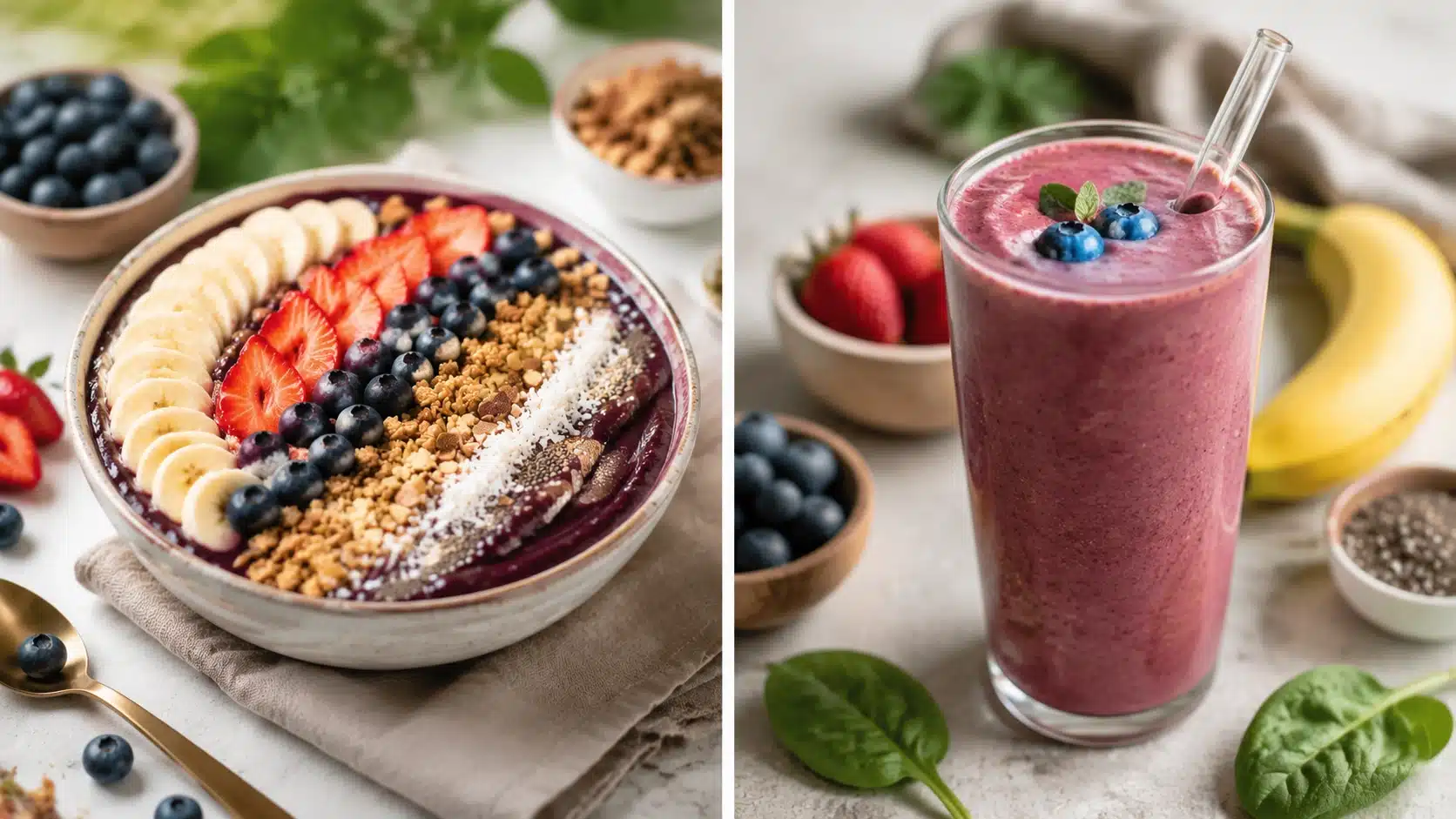
Neither acai bowls nor smoothies are automatically the healthier choice. The nutritional value of both comes down to what goes into them, not the format itself.
| Acai Bowl | Smoothie |
|---|---|
| Usually eaten with a spoon and toppings | Usually consumed as a drink |
| Offers more texture and chewing satisfaction | Quicker and easier to drink on the go |
| Can contain more calories from toppings | Often easier to control the total portion size |
If you’re deciding between the two, think about your goals. A smoothie might work better for a quick, portable breakfast, while an acai bowl can feel more like a satisfying, sit-down meal.
Who Should Be Careful With Acai Bowls?
Certain groups may want to pay closer attention to how they build their acai bowl or how often they eat one. This isn’t about avoiding acai bowls altogether, just being mindful of individual needs.
People who may want to be more cautious include:
- Those monitoring blood sugar or overall sugar intake
- Anyone tracking calories closely for weight management
- People with allergies to common toppings like nuts, dairy, or coconut
As always, anyone with specific health conditions or dietary restrictions should check with a doctor or registered dietitian before making major changes to their diet.
Frequently Asked Questions
Are acai bowls healthy for breakfast?
Yes, acai bowls can make a healthy breakfast when they include protein, fiber, and healthy fats alongside the fruit base. Adding Greek yogurt, nuts, seeds, or nut butter helps make the meal more filling.
Are acai bowls healthier than smoothies?
Not automatically. Acai bowls often come with more toppings like granola and nut butter, which can add extra calories, while smoothies may have fewer calories depending on the ingredients blended in.
Can you eat an acai bowl every day?
Eating an acai bowl daily is fine for most people as long as it’s built with balanced ingredients and fits your overall calorie needs. Rotating toppings and keeping added sugar low helps make daily consumption a sustainable habit rather than a splurge.
Are acai bowls good for kids?
Acai bowls can be a kid-friendly way to introduce fruit, seeds, and nuts, especially with fun toppings kids enjoy. It’s worth trying since kid-focused ones often lean sweeter than homemade ones.
How often can you eat acai bowls?
A balanced acai bowl can be enjoyed regularly if it fits within your overall daily nutrition needs. Building it with a good mix of protein, fiber, and healthy fats makes it easier to incorporate into your routine diet.
Is acai powder as healthy as fresh acai puree?
Acai powder retains most of the antioxidants and fiber found in fresh puree, making it a convenient and shelf-stable alternative. It lacks the same thick, smoothie-like texture that a puree brings to a traditional acai bowl.
The Bottom Line on Acai Bowls
Acai bowls can be a nutritious part of your diet. The acai base brings fiber and antioxidants. The right toppings add protein, healthy fats, and real staying power.
Toppings and portion size decide whether a bowl stays balanced. A sugar-heavy drizzle or oversized serving can turn it into a dessert in disguise.
Build your bowl with protein, fiber, and controlled sweeteners. That is when an acai bowl is truly healthy and not just good-looking.
Want to try one? Start with an unsweetened base, add a protein source, and go easy on the sweet toppings. Your body will feel the difference.