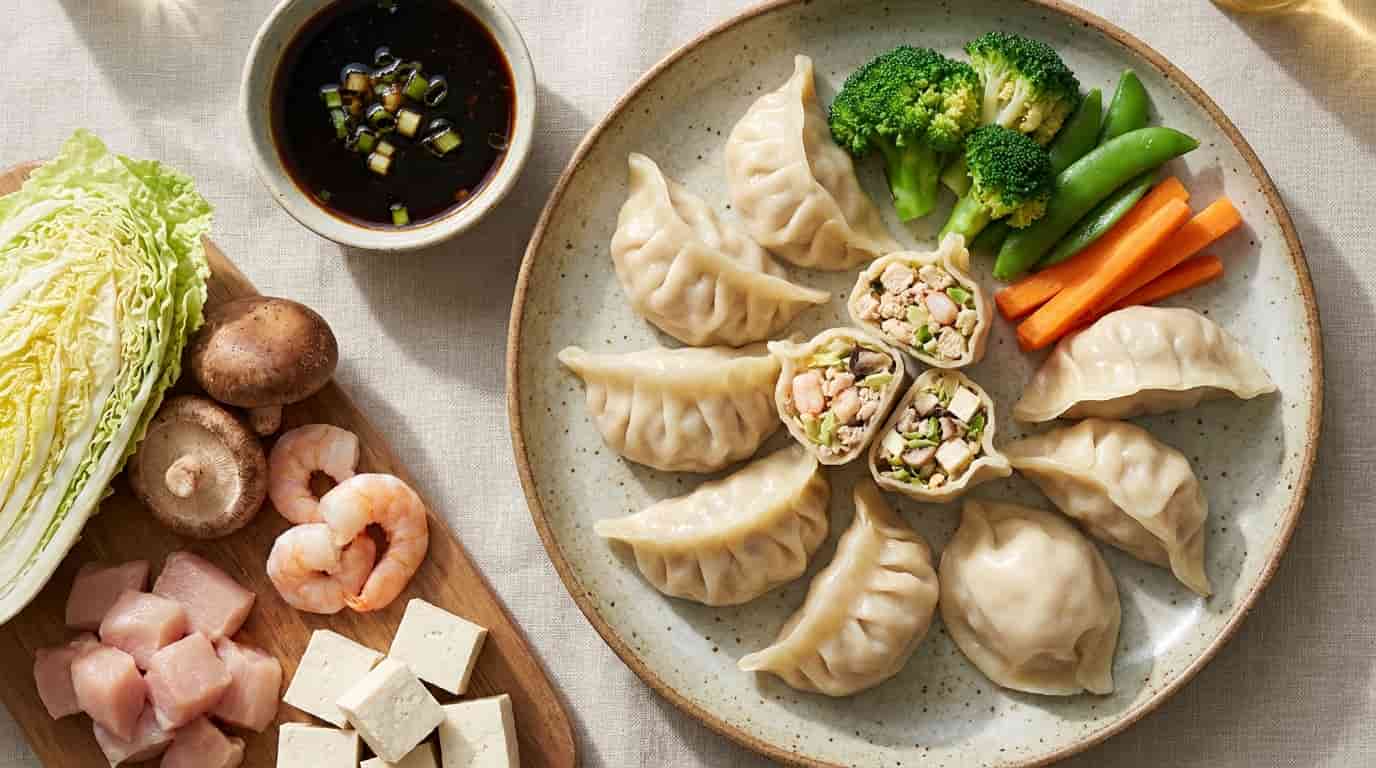
Dumplings are delicious, but are they healthy? The answer depends on the filling, cooking method, and portion size. A steamed chicken and cabbage dumpling offers different nutrition than a deep-fried pork dumpling with salty sauce.
This article covers dumpling nutrition facts, healthier choices, common mistakes, and simple tips for enjoying dumplings in a balanced way.
Are Dumplings Healthy?
Yes, dumplings can be healthy. The nutritional value depends mainly on the filling ingredients and the cooking method.
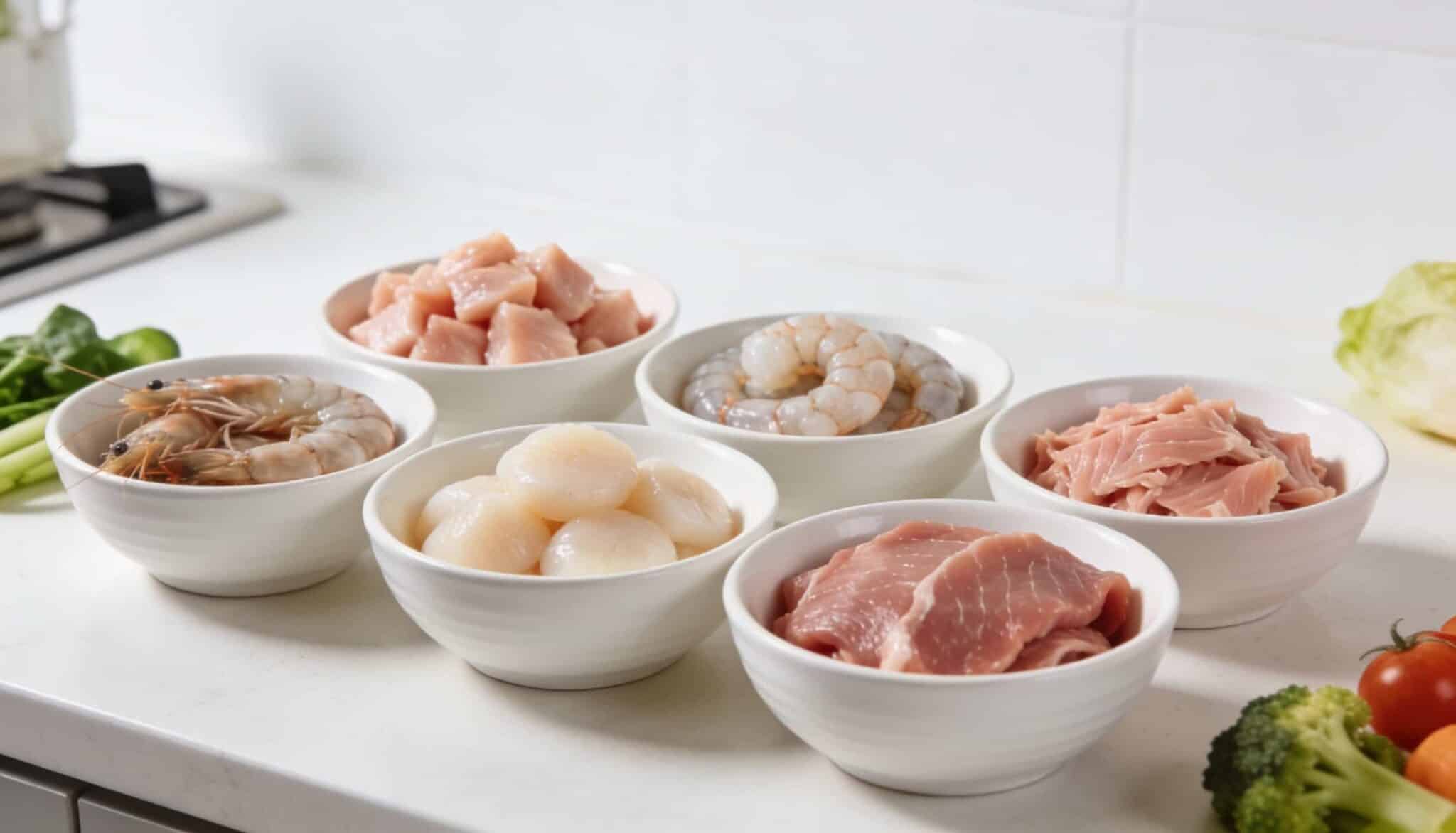
A well-prepared dumpling can provide protein from chicken, shrimp, tofu, or lean pork. The wrapper supplies carbohydrates for energy. Vegetable fillings add fiber, vitamins, and minerals.
The problem is not the dumpling itself. The issue comes from poor ingredient choices, heavy frying, and large portions paired with high-sodium sauces.
The four factors that shape dumpling nutrition are:
- Filling ingredients: lean protein and vegetables make the biggest difference
- Cooking method: steamed and boiled options stay lower in fat
- Portion size: dumplings are small, so it is easy to overeat
- Side dishes and sauces: sauces can add a large amount of sodium
Looking at the complete meal tells you far more than labeling dumplings as good or bad.
Dumplings Nutrition Facts
Dumpling nutrition varies depending on the recipe. The table below shows approximate values for a typical serving of 5 to 6 medium dumplings. These numbers can shift based on filling type and cooking method, so use them as a general reference point.
| Nutrient | Amount Per Serving (5 to 6 Dumplings) |
|---|---|
| Calories | 200 to 250 calories |
| Protein | 7 to 15 grams |
| Carbohydrates | 20 to 30 grams |
| Fat | 5 to 12 grams |
| Fiber | 1 to 2 grams |
| Sodium | 400 to 800 mg |
A single steamed dumpling contains roughly 40 to 60 calories. That is a reasonable number. The challenge is their size. It is easy to eat 6 to 10 at a sitting. Sauces then add extra sodium on top of that.
Calories in Different Types of Dumplings
Not every dumpling has the same calorie count. Filling type, wrapper thickness, and cooking method all affect the final number. The table below compares the main types so you know what you are choosing before you order or cook.
| Dumpling Type | Nutrition Consideration |
|---|---|
| Vegetable dumplings | Usually lighter with more fiber but lower in protein |
| Chicken dumplings | Lean protein source with moderate calories |
| Shrimp dumplings | High protein and naturally lower in fat |
| Pork dumplings | Good protein source but may contain more fat |
| Fried dumplings | Higher calories due to added oil |
| Soup dumplings | Can contain more sodium from broth and sauces |
Shrimp and chicken dumplings tend to be the lightest choices per serving. Fried versions can easily double the calorie count compared with steamed options of the same size.
How Cooking Methods Affect Dumpling Nutrition
The cooking method can change the nutrition profile of dumplings almost as much as the filling. The table below compares the four main cooking options and shows how each one affects calories and fat.
| Cooking Method | Nutrition Impact | Best For |
|---|---|---|
| Steamed | Lower fat, no added oil | Everyday meals |
| Boiled | Low fat, simple preparation | Balanced meals |
| Pan-fried | More calories from added oil | Occasional meals |
| Deep-fried | Highest fat and calories | Occasional treat |
Steamed Dumplings
Steamed dumplings are usually the healthiest choice. They need no added oil. Fat content stays lower, calories stay moderate, and the filling keeps its natural flavor.
A steamed dumpling with vegetables and lean protein can make a solid everyday meal.
Boiled Dumplings
Boiled dumplings are another good lower-fat option. Boiling adds no extra oil and works well with fillings like chicken, shrimp, tofu, and vegetables.
Fried Dumplings
Fried dumplings taste great, but the added oil increases calories and fat significantly. Choosing steamed over deep-fried for a single meal can save roughly 250 calories. Over a week of regular meals, that adds up.
Enjoy fried dumplings occasionally. For most meals, steamed or boiled options are the smarter choice.
Are Frozen Dumplings Healthy?
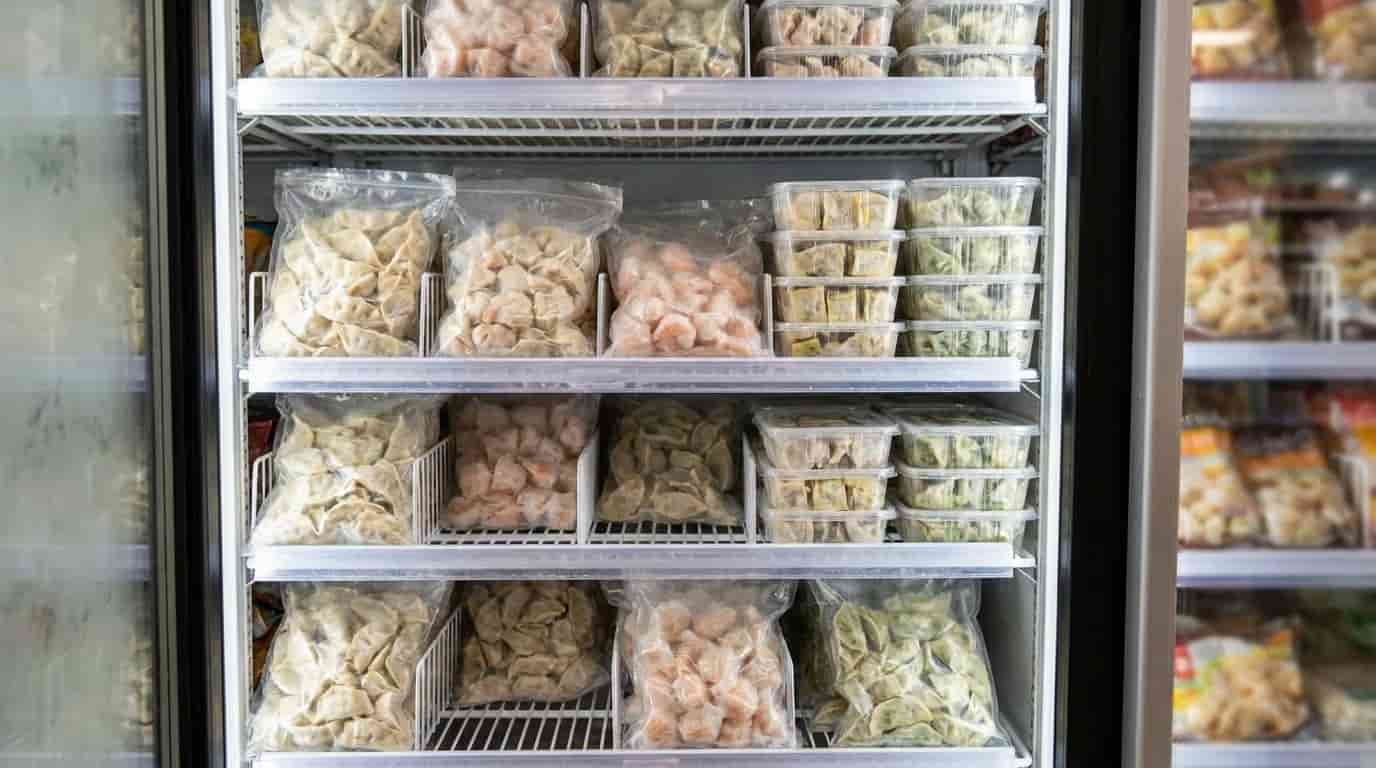
Yes, frozen dumplings can fit into a balanced diet. The nutritional value depends on the ingredients, sodium content, cooking method, and serving size.
When buying frozen dumplings, look for these four things:
- Lean protein fillings: Chicken, shrimp, turkey, tofu, and lean pork are better choices. They deliver quality protein while keeping saturated fat lower.
- More vegetable ingredients: Cabbage, mushrooms, spinach, and carrots add fiber, vitamins, and minerals without many extra calories.
- Lower sodium levels: Frozen dumplings often contain added seasoning to extend shelf life. Check the label for sodium per serving and watch for added sauces.
- Simple ingredient lists: Dumplings with recognizable ingredients are easier to evaluate. Do not rely on labels that say “healthy” or “natural.” Read the actual nutrition information.
Frozen dumplings are not automatically unhealthy. A well-chosen frozen option with lean protein and vegetables can be a practical, balanced meal on a busy weeknight.
Are Dumplings Good For Weight Loss?
Yes, dumplings can fit into a weight-loss diet when you manage portions, choose smart ingredients, and use lighter cooking methods.
The challenge is their size. Dumplings are small, which makes it easy to keep eating past the right portion without realizing it. That can push calorie intake higher than expected.
For a more weight-loss-friendly meal, choose:
- Steamed or boiled dumplings instead of fried
- Lean protein fillings like chicken, shrimp, or tofu
- Vegetable-rich options that add fiber and volume
- Lighter dipping sauces or smaller amounts of regular sauces
Pairing dumplings with vegetables or a broth-based soup makes the meal more filling. The goal is not to cut out dumplings. The goal is to enjoy them as part of a nutritious, balanced plate.
Healthiest Dumpling Options Ranked
Some dumpling types provide a stronger nutritional profile than others. The ranking below is based on protein content, fat levels, and overall nutrient balance.
| Rank | Dumpling Type | Why It Can Be A Healthier Choice |
|---|---|---|
| 1 | Shrimp dumplings | High in protein, naturally lower in fat, and provides important nutrients |
| 2 | Chicken dumplings | Lean protein source with moderate calories and lower saturated fat |
| 3 | Tofu and vegetable dumplings | Provides plant-based protein, fiber, and nutrients from vegetables |
| 4 | Lean pork dumplings | Good protein source when made with lean meat and vegetables |
| 5 | Vegetable dumplings | Higher fiber option but may need additional protein for balance. |
| 6 | Fried dumplings | Usually higher in calories and fat because of added oil |
The healthiest dumpling choice also depends on preparation. A steamed pork dumpling with vegetables may be a better option than a fried vegetable dumpling with heavy sauces.
How To Make Dumplings Healthier
Small changes to ingredients and cooking can improve dumpling nutrition without losing flavor or texture.
1. Choose Lean Protein Fillings
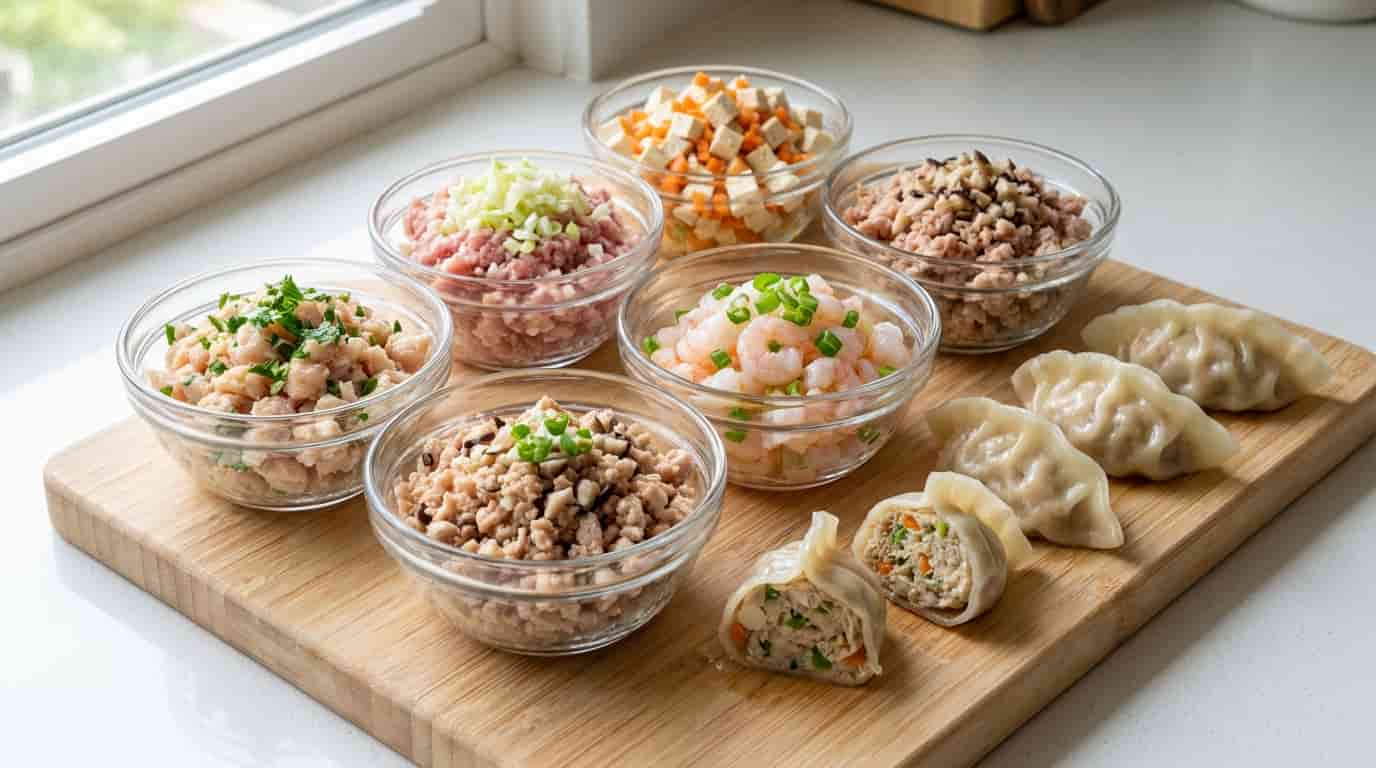
The filling has one of the biggest effects on nutrition. Chicken, shrimp, turkey, tofu, and lean pork are all solid choices. They supply quality protein while keeping saturated fat lower than fattier meat mixtures.
2. Add More Vegetables To Increase Fiber
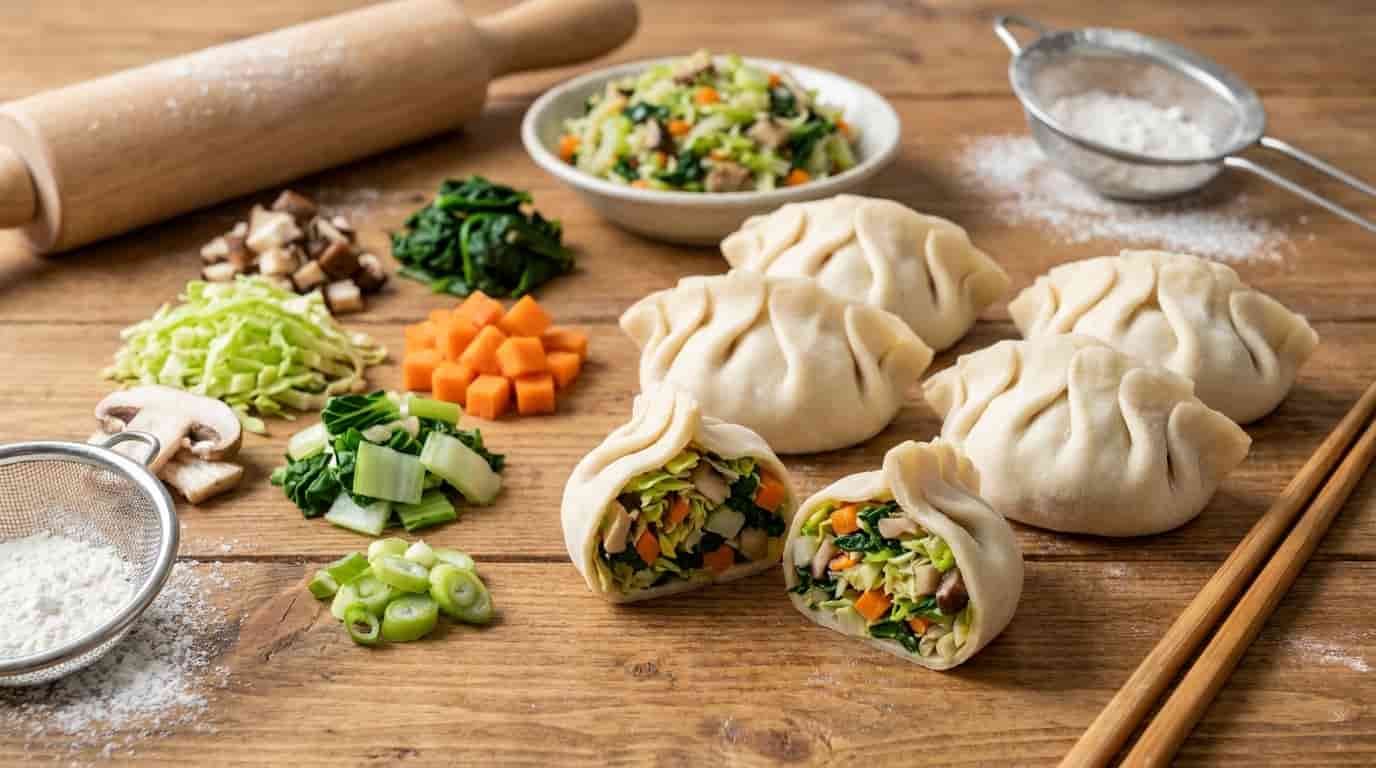
Cabbage, mushrooms, spinach, carrots, bok choy, and green onions add fiber, vitamins, and minerals. Vegetable-rich fillings add volume to the meal. You feel fuller without eating more calories.
3. Choose Healthier Cooking Methods
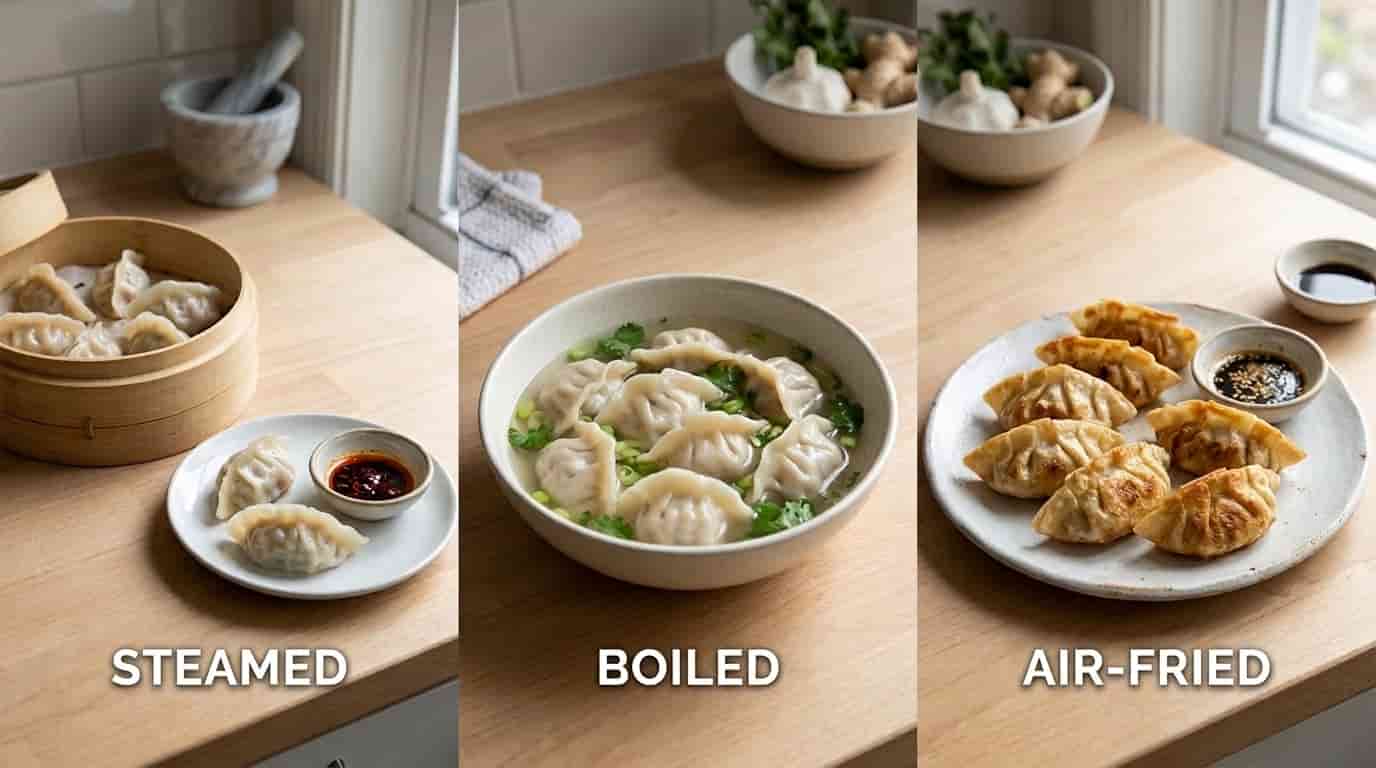
Choose steaming, boiling, or air frying over pan-frying or deep-frying. Steaming keeps added fat low and lets the filling’s natural flavors come through. Air frying gives a crisp texture with far less oil than traditional frying.
4. Reduce Sodium In Sauces And Seasonings
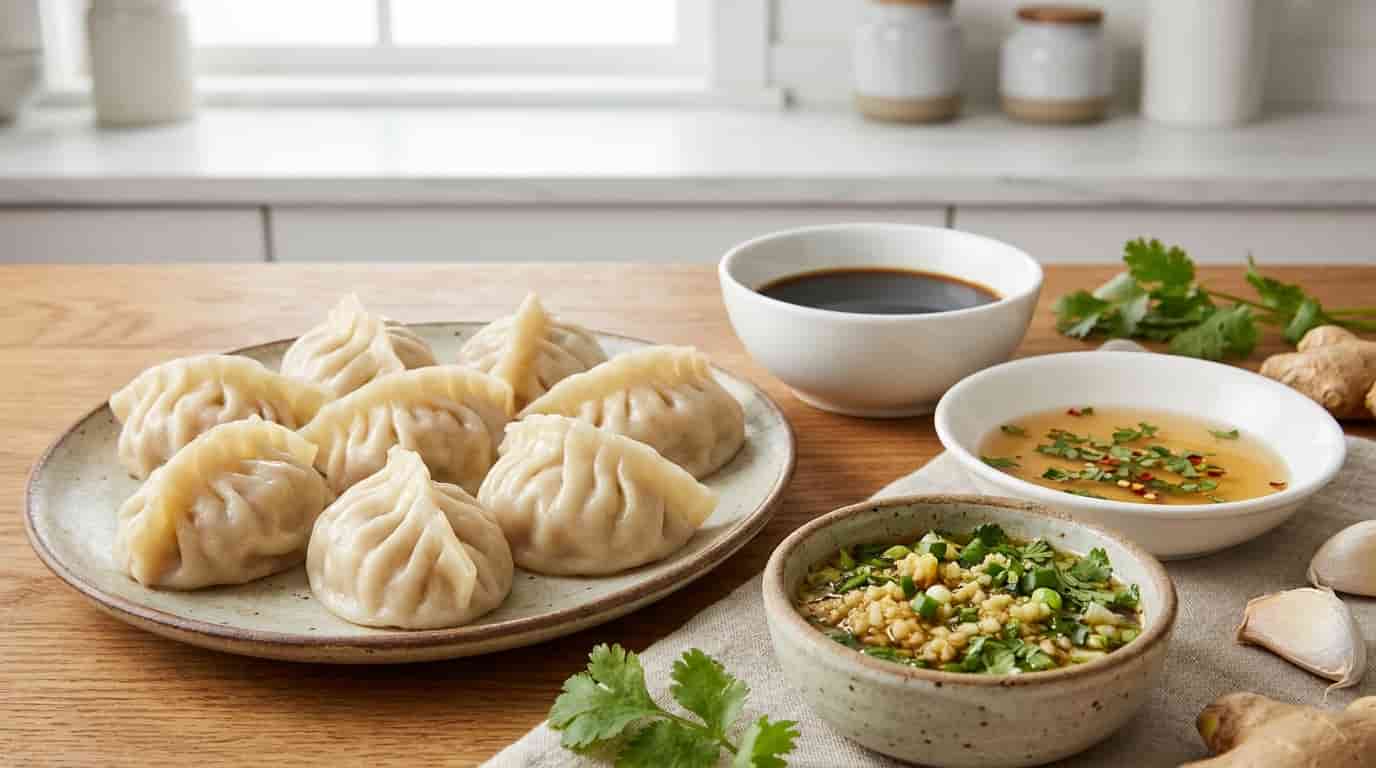
Dipping sauces can add a lot of sodium to an otherwise balanced meal. Try low-sodium soy sauce, vinegar-based dips, or homemade versions with controlled salt. Adding garlic, ginger, and fresh herbs can build flavor without relying on salt.
Dumplings Compared To Other Popular Foods
Dumplings often get compared to other takeout options. The healthiest choice depends on ingredients, portion size, and how the food is prepared. The comparison below uses a standard serving size for each food to keep things fair.
| Food | Approximate Calories | Protein | Nutrition Consideration |
|---|---|---|---|
| Steamed dumplings (6 pieces) | 200 to 250 calories | 7 to 15 g | Moderate calories, depends on filling |
| Fried rice (1 cup) | 300 to 400 calories | 6 to 8 g | Often higher in oil and refined carbohydrates |
| Fried noodles (1 cup) | 350 to 450 calories | 8 to 10 g | Usually higher in sodium and added fats |
| Fried spring rolls (3 pieces) | 220 to 300 calories | 4 to 6 g | Higher fat due to frying |
| Pizza (1 slice) | 250 to 300 calories | 10 to 12 g | Often higher in refined carbohydrates and saturated fat |
Steamed dumplings compare well against many popular takeout options, especially when they contain lean protein and vegetables. A large serving of fried dumplings with salty dipping sauce, though, can quickly shift that balance.
Are Dumplings Healthy? The Final Answer
Yes, dumplings can be part of a balanced diet. The key is making smarter choices around filling, cooking method, portion, and sauce.
The healthiest dumplings include lean protein fillings like chicken, shrimp, or tofu, plenty of vegetables, and steamed or boiled preparation. They are served in moderate portions alongside balanced side dishes.
Dumplings are not a food to avoid. Their nutritional value depends on the choices made around them. Better fillings, less sodium, lighter cooking, and reasonable portions can make dumplings a satisfying and genuinely nutritious meal.
Frequently Asked Questions
Are dumplings high in carbs?
Yes, the flour wrapper adds carbohydrates. Pairing dumplings with protein-rich fillings and vegetables creates a more balanced meal. The meal no longer relies entirely on carbohydrates.
How many dumplings should you eat in one meal?
A typical serving is 5 to 8 dumplings, depending on size and what else you are eating. Pairing them with soup or vegetables makes the meal more balanced and keeps portion control easier.
Are vegetable dumplings healthier than meat dumplings?
Not always. Vegetable dumplings may contain more fiber, while meat dumplings often provide more protein. The healthiest option depends on the filling, cooking method, and portion size.
Are dumplings healthier than rice?
It depends on the type and portion size. Dumplings can provide more protein when filled with chicken, seafood, or tofu, while rice mainly provides carbohydrates. The overall meal combination matters most.
What is the healthiest type of dumpling?
Steamed dumplings with lean protein and vegetable fillings, such as chicken, shrimp, or tofu dumplings, are generally among the healthier options.
Can you eat dumplings every day?
Yes, dumplings can be included regularly as part of a balanced diet. For frequent consumption, choose options with lean proteins, vegetables, lower sodium, and healthier cooking methods such as steaming or boiling.
Are homemade dumplings healthier than store-bought dumplings?
Homemade dumplings give you full control over ingredients, salt levels, and cooking method. Store-bought options can still work well when you check the nutrition label and choose balanced varieties.