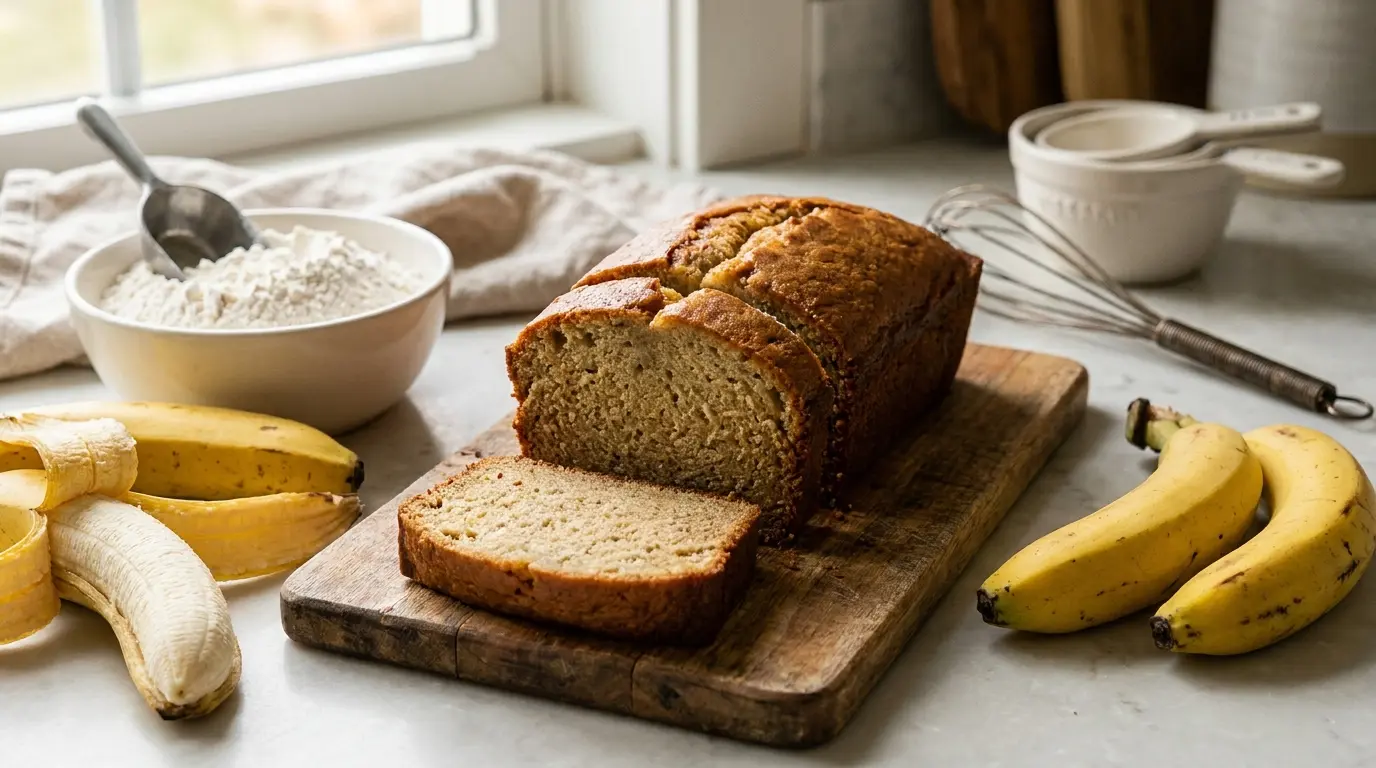
You reach for the flour canister, and it is empty. The only option is bread flour meant for pizza dough. Can you use bread flour for banana bread?
Yes, and you do not need a new recipe. Bread flour swaps in cup for cup. The loaf bakes up slightly chewier and firmer, with a tighter crumb.
One small liquid adjustment keeps the texture soft. One mixing habit stops it from turning gummy. This post covers the swap ratio, the right liquid fix, and every flour option that works.
Can You Use Bread Flour for Banana Bread?
Yes. Bread flour is a direct substitute for all-purpose flour. You do not need a special recipe to make it work.
Banana bread rises from baking soda, not yeast. The flour mainly provides structure and controls moisture. That means the flour type changes texture, not the baking process.
Swap bread flour one-to-one by volume or weight. Keep the sugar, eggs, and baking soda the same. Expect a slightly firmer and chewier slice.
The texture difference comes down to protein. Bread flour contains about 12.7 percent protein. All-purpose flour sits at around 11.7 percent. That extra protein builds more gluten, which creates a chewier bite.
Bread flour also works in banana bread variations. Chocolate chip, walnut, cinnamon, peanut butter, and double-chocolate banana bread all turn out well with it.
What Bread Flour Does to the Loaf
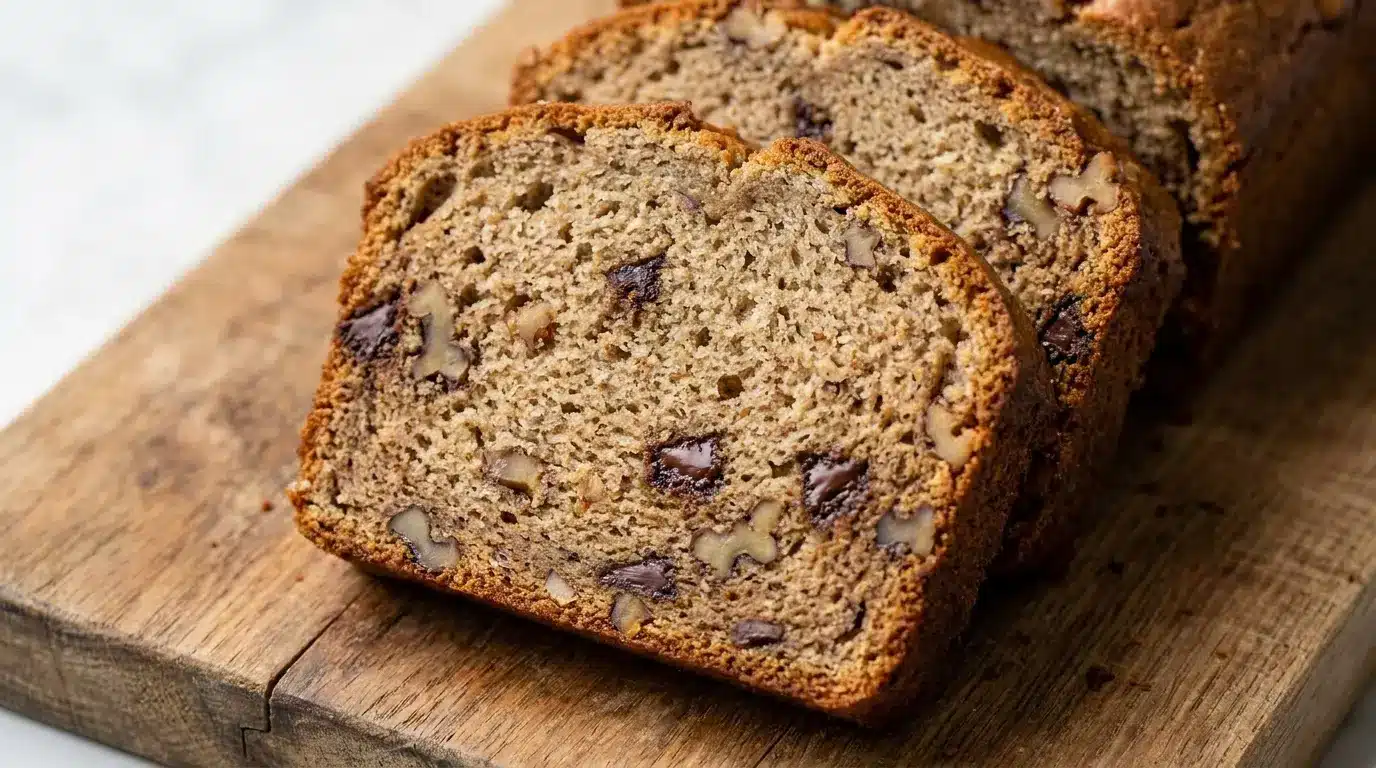
Every texture change in the loaf traces back to one cause: more protein means more gluten. Here is what shows up when it comes out of the oven.
- Chew: The bite feels closer to a bakery loaf than a slice of cake.
- Tighter crumb: Air pockets are smaller and more even throughout the loaf.
- Better shape: The center sinks less as the loaf cools on the rack.
- More absorption: Bread flour drinks up liquid, so dryness is the real risk if you skip the adjustment in Step 3 below.
- Faint wheat note: A light wheat flavor sits behind the banana.
The stronger gluten network also keeps mix-ins in place. Chocolate chips and walnuts stay spread through the loaf instead of sinking to the bottom.
The loaf also keeps longer on the counter. A tighter crumb loses moisture slowly. Wrapped well, the loaf stays soft into day three instead of drying out by day two.
One visible change happens at the top. The crust browns faster and turns firmer. Tent the pan with foil halfway through baking if you prefer a softer top.
What You Need for a Bread Flour Banana Bread
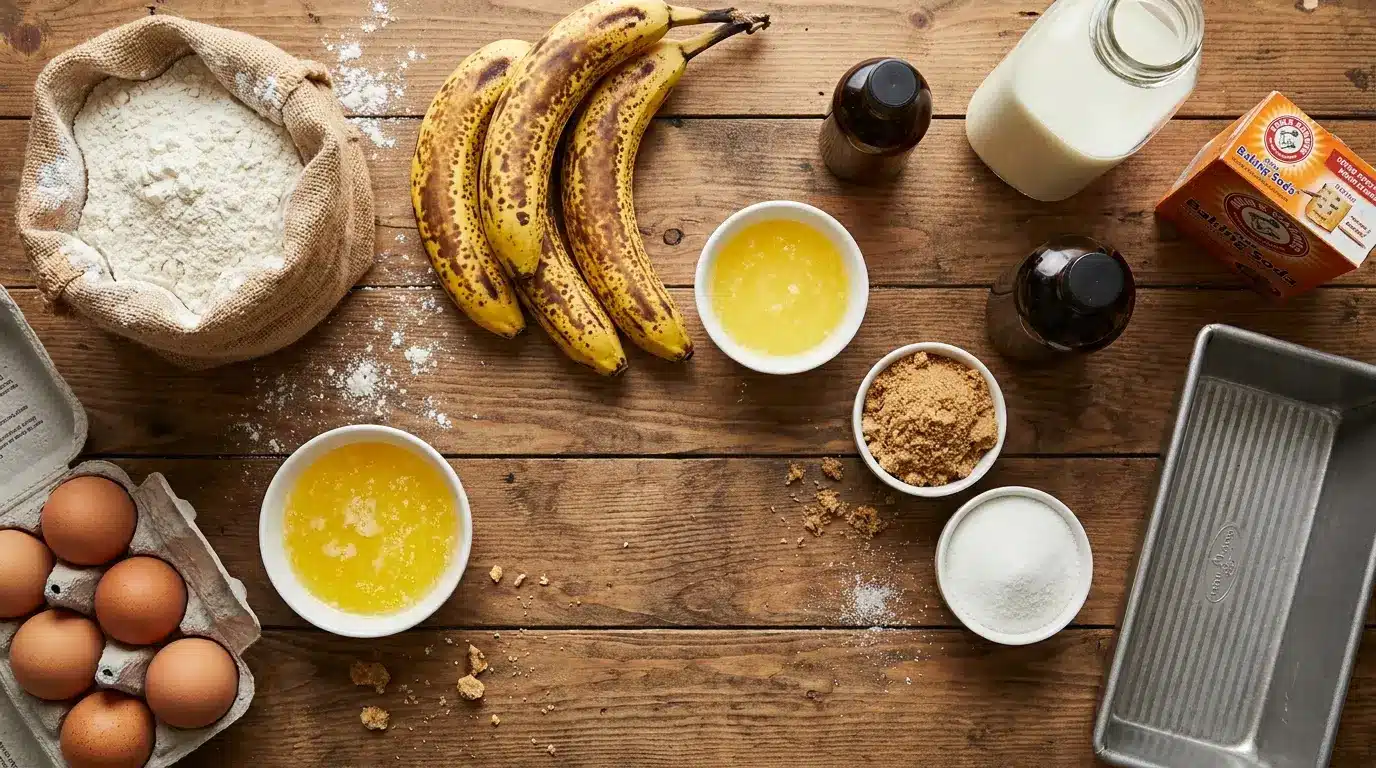
A standard loaf uses basic pantry ingredients. Here is a typical starting list:
- 2 cups bread flour
- 1 tsp baking soda
- ½ tsp salt
- 3 to 4 ripe bananas, mashed smooth
- ½ cup melted butter
- ¾ cup sugar
- 2 eggs
- 1 tsp vanilla
- 4 tsp milk, buttermilk, or yogurt (the moisture adjustment for bread flour)
You will also need a kitchen scale, a spatula, and a 9-by-5-inch loaf pan.
How to Swap in Bread Flour Without Wrecking the Loaf
You do not need a new recipe. Use your usual banana bread and adjust these five things instead. The whole process adds about one minute to your routine.
Step 1: Measure Cup for Cup
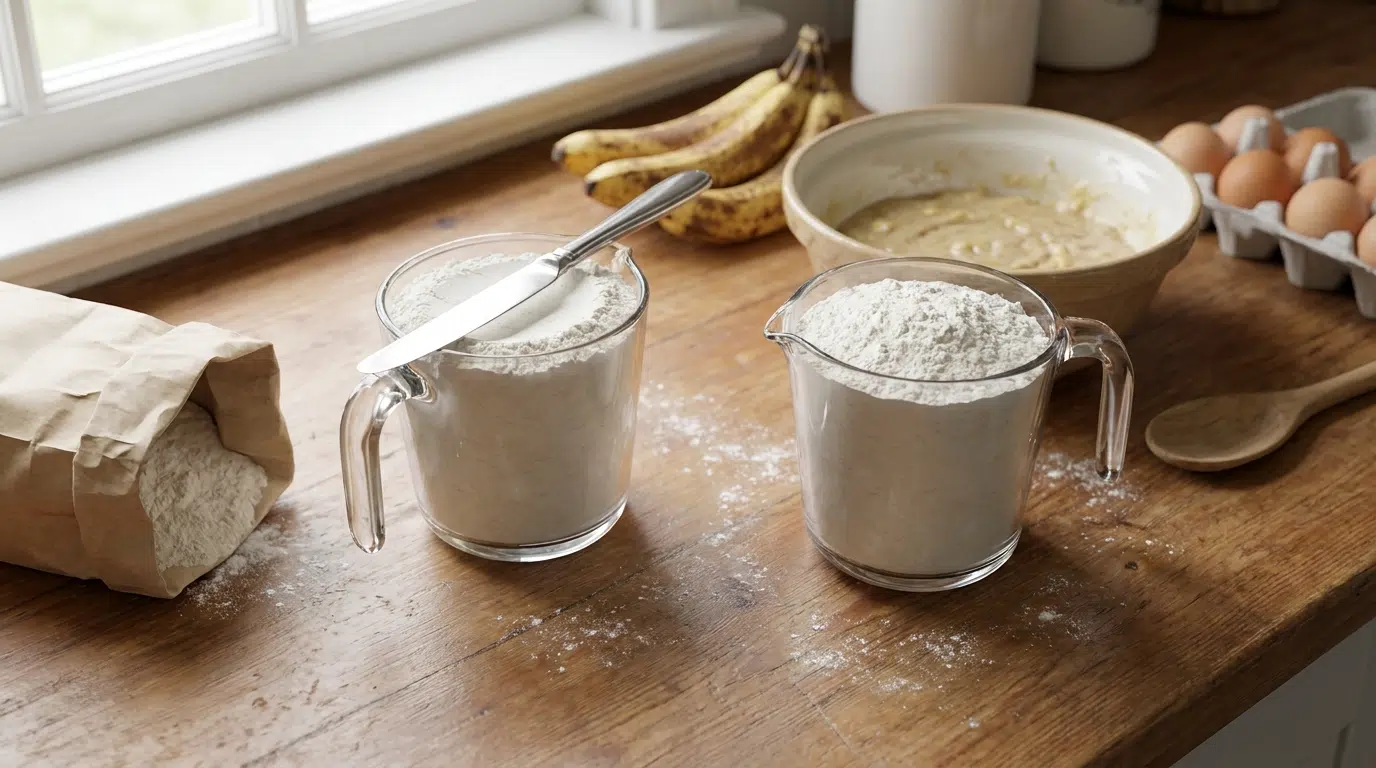
Do not reduce the amount of flour. The ratio stays the same as your original recipe.
Some sources suggest cutting the flour by ten percent because bread flour absorbs more liquid. Skip that advice. Cutting flour removes structure without solving the absorption problem. Fix absorption with extra liquid in Step 3 instead.
Step 2: Weigh the Flour Instead Of Scooping
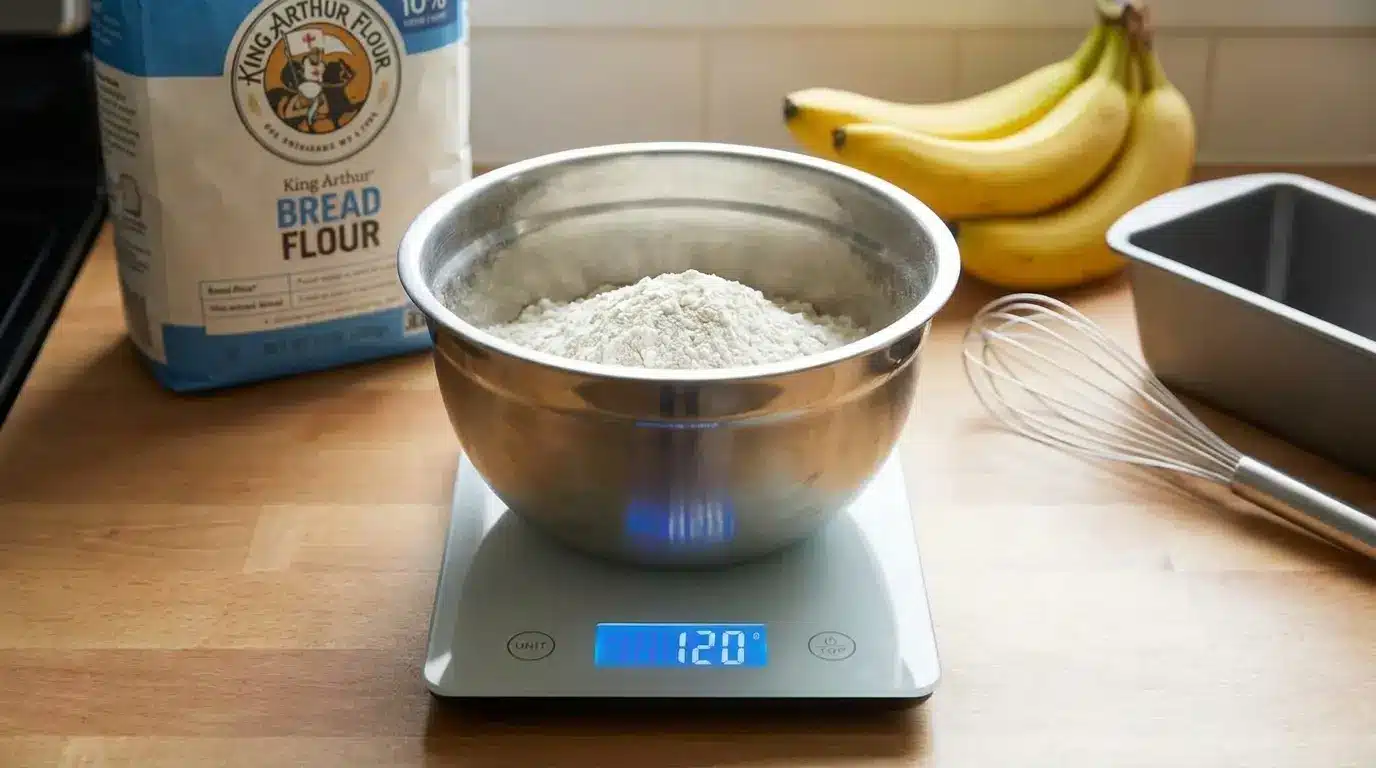
Scooping straight from the bag packs the flour. You can add an extra ounce or two without knowing it.
Spoon the flour into the cup and level it off with a knife. Better yet, use a kitchen scale. One cup of bread flour weighs about 120 grams. That small gap is the difference between a moist loaf and a dry one.
Step 3: Add Two Teaspoons Of Milk Per Cup
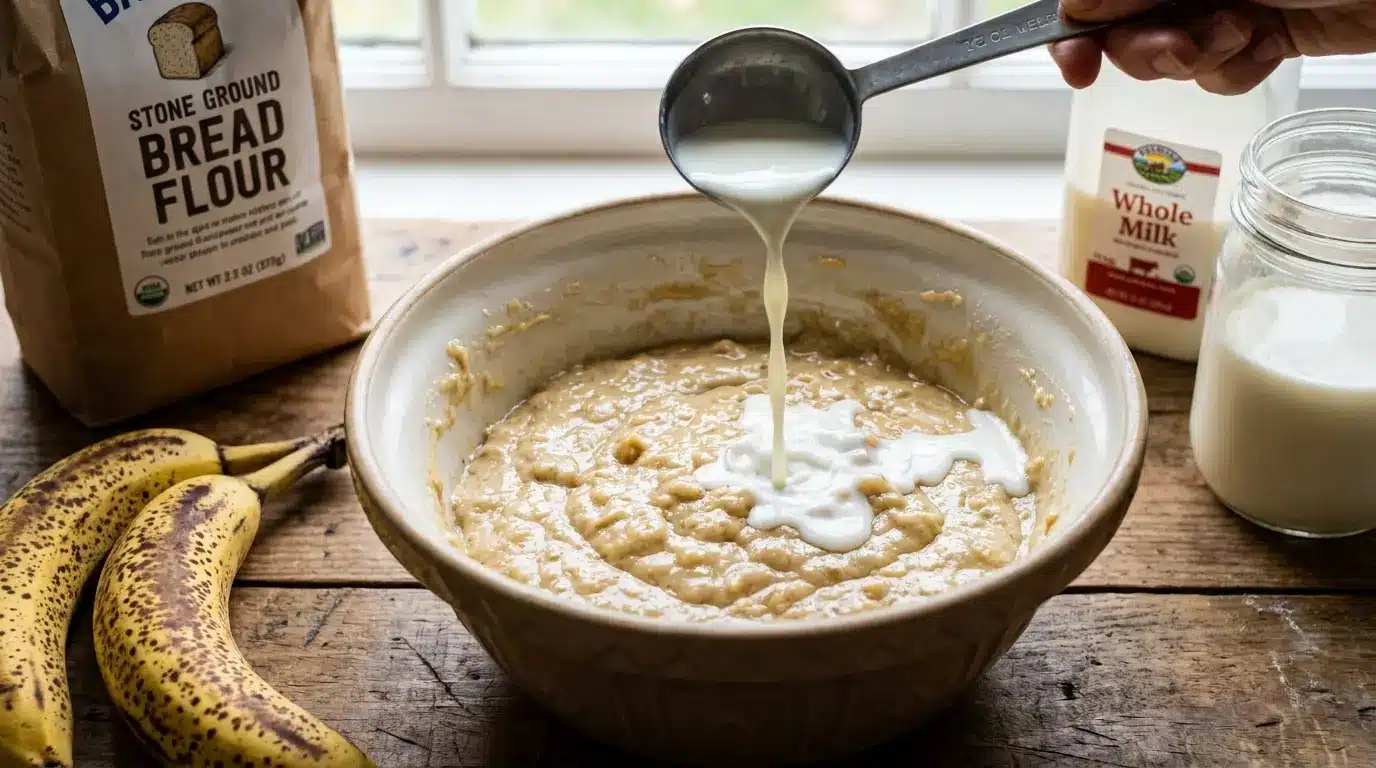
Stir in about two teaspoons of milk, buttermilk, or yogurt for every cup of bread flour you use. This ratio comes from King Arthur Baking test kitchen testing.
- Milk: Adds moisture without changing the flavor
- Buttermilk: Adds mild tang and creates the softest crumb
- Sour cream or yogurt: Adds richness along with moisture
Step 4: Or Use One Extra Banana Instead
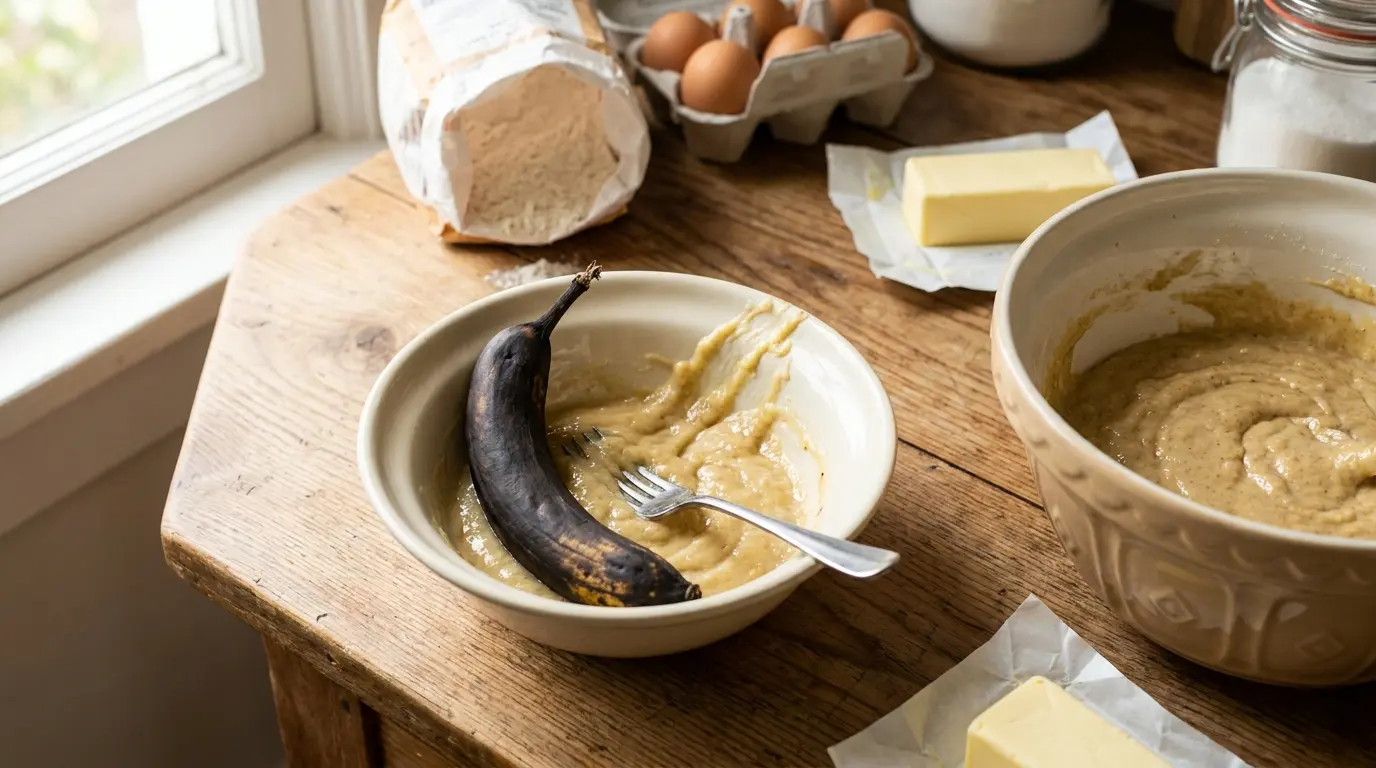
This step replaces Step 3. Do one or the other, never both. Adding extra liquid and an extra banana at the same time makes the batter too wet. The loaf will sink in the middle.
An extra mashed banana adds the same moisture and pushes the banana flavor further. Use a fully black banana, not a spotted yellow one. Riper fruit carries more sugar and more water.
Mash it smooth before adding. Large banana chunks leave wet pockets in the finished loaf.
Step 5: Stop Mixing Early
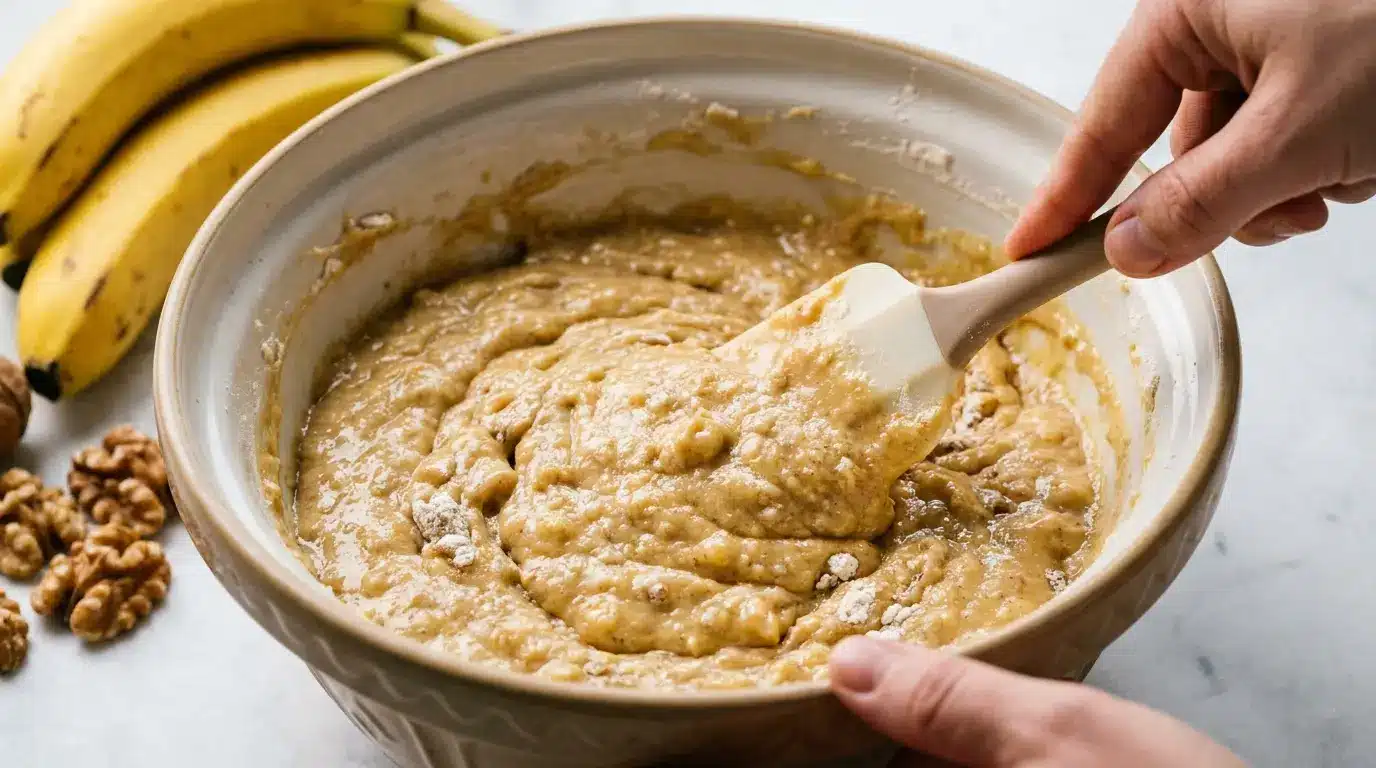
Pull the spatula the moment the last dry streak disappears. Every stir past that point builds more gluten. Bread flour builds it faster than all-purpose flour does.
Overworked batter bakes into a rubbery loaf with tunnels through the middle. A properly mixed batter usually comes together in under thirty folds.
Three habits keep the crumb soft:
- Fold by hand: A spatula gives you control that a stand mixer cannot
- Add mix-ins with the flour: Stirring chips in afterward doubles your fold count
- Leave the lumps: A perfectly smooth batter usually means you went too far
Why Bread Flour Banana Bread Turns Out Gummy
A gummy or rubbery loaf comes from overworked gluten. Bread flour builds it quickly, so heavy stirring pushes the batter past the point of no return.
Two fixes solve most cases:
- Let the batter rest ten minutes before it goes into the pan. This gives the flour time to hydrate fully and softens the final crumb.
- Drop the oven temperature by about 25 degrees and bake slightly longer. The center sets before the edges dry out.
Underbaking can also cause a gummy center. It looks a lot like overmixing from the outside. A denser loaf needs a few extra minutes to cook through.
Trust the toothpick over the timer. Start checking about five minutes before the recipe says to. Keep testing every few minutes until the pick comes out clean.
How To Store a Bread Flour Banana Bread
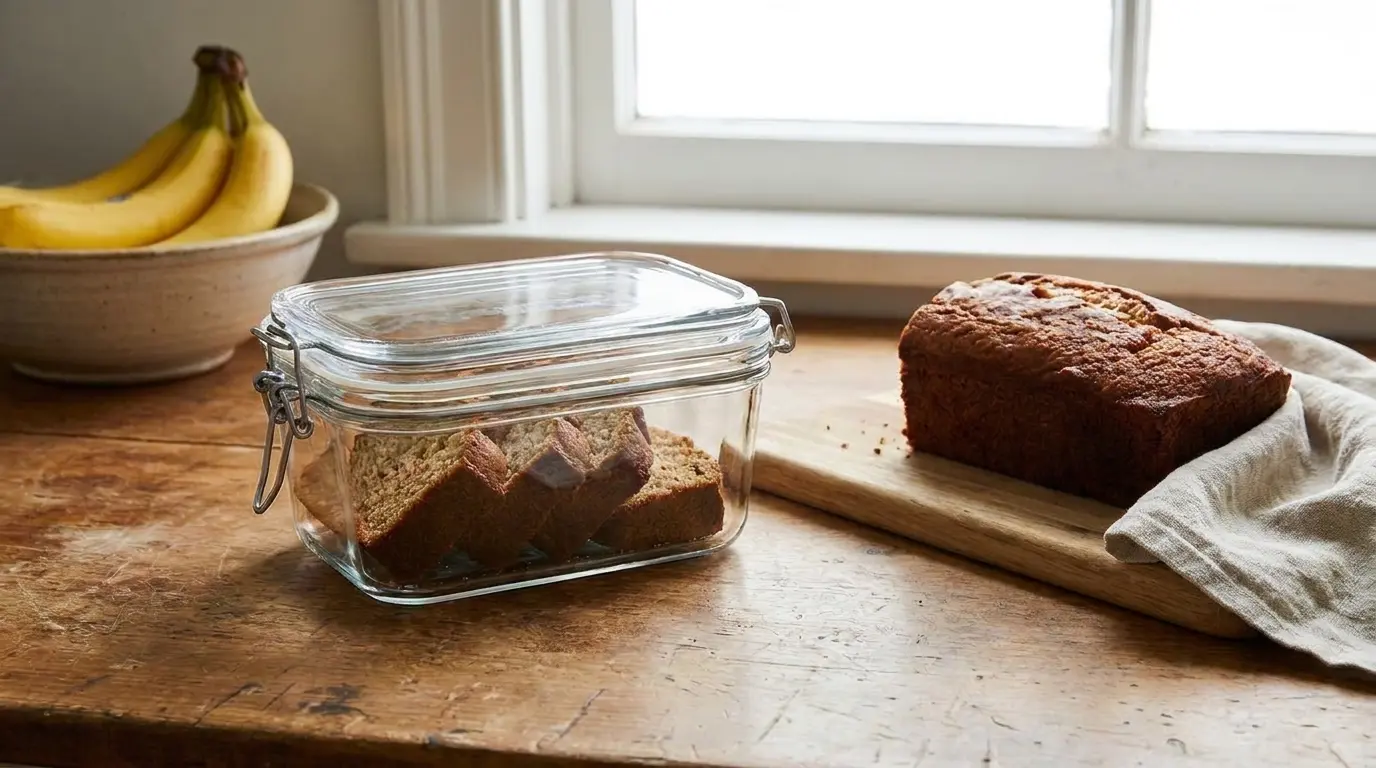
A tighter crumb holds moisture longer, so this loaf keeps better than an all-purpose version. Here is how long it lasts with each storage method:
- Counter: Wrap in foil or seal in a container. Stays soft for up to four days.
- Fridge: Keeps up to one week. Cold firms up the crumb, so warm a slice before eating.
- Freezer: Wrap slices in plastic, then foil. Keeps for three months. Thaws on the counter in about one hour.
Do not wrap a warm loaf. Trapped steam turns the top gummy overnight. Let the pan cool completely to room temperature before wrapping, which usually takes about two hours.
Why All-Purpose Flour Is Still the Standard
All-purpose flour is the default choice in almost every banana bread recipe. The crumb comes out soft, even, and cake-like, which is the texture most people expect from this loaf.
It sits at around 11 to 12 percent protein. That is enough gluten to hold the loaf together without making it chewy.
All-purpose is also the more forgiving option. It absorbs less liquid, so a slightly heavy hand with the flour will not dry out the loaf. It tolerates more stirring before the gluten turns tough.
If you bake banana bread once a year and skip the kitchen scale, all-purpose flour covers your mistakes.
When You Should Skip Bread Flour
Bread flour is not always the right call. Leave it for another bake if:
- You want a light, cake-style crumb
- You are baking banana muffins (chew reads as tough in a small format)
- Your recipe is already low on butter, oil, or bananas
- You are baking for kids who push back on firmer textures
- The recipe calls for a soft swirl or filling that needs a tender base
- You are doubling a recipe for a crowd and cannot fold every bowl by hand
None of these situations break the loaf. They just mean the finished texture will not match what you had in mind.
Other Flours That Work in Banana Bread
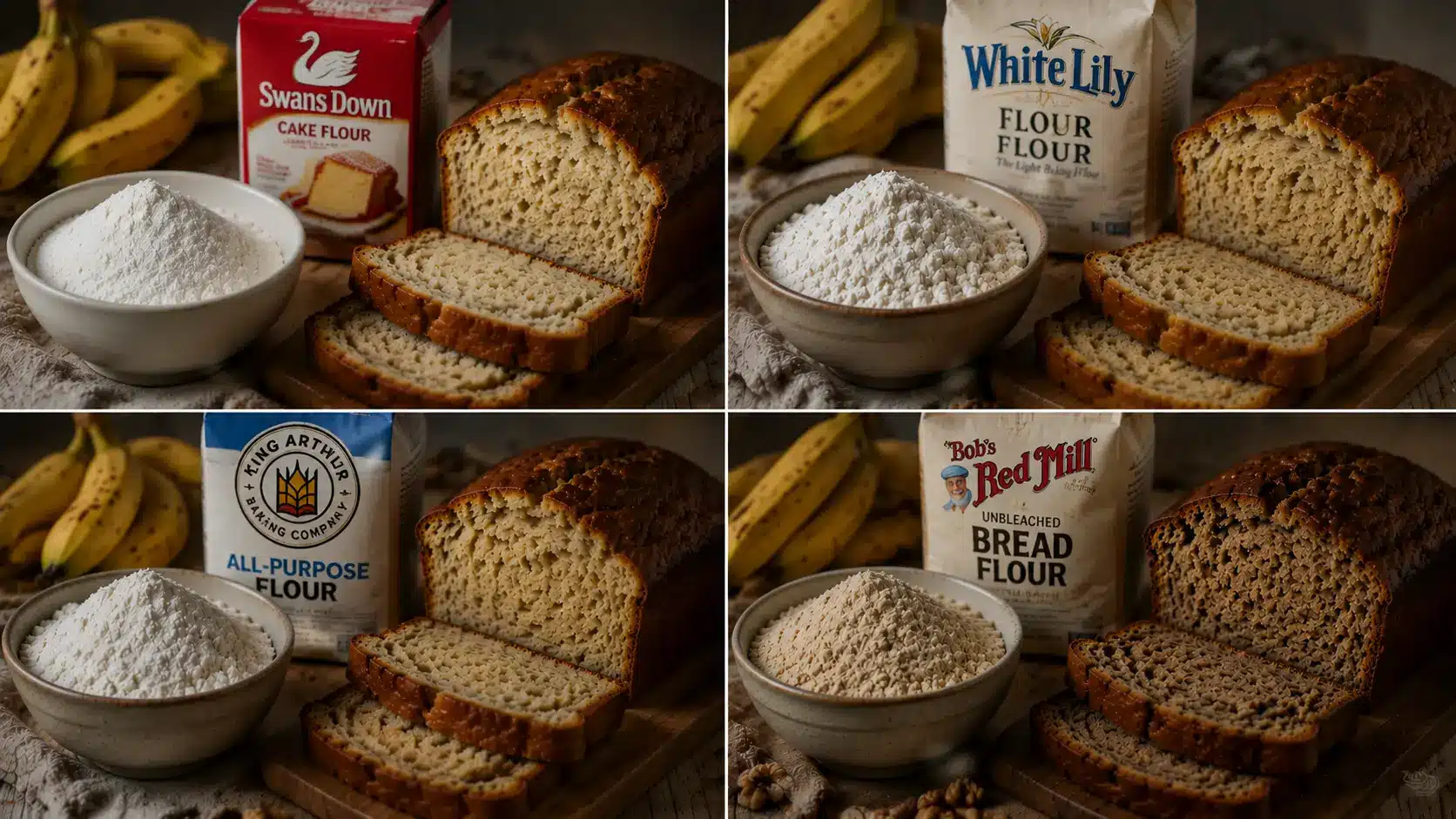
Bread flour is not your only option. Protein content drives the crumb you get, and each flour lands at a different level. Here is how the common choices compare as a substitute for all-purpose flour:
| Flour | Protein | Crumb it makes | How to swap |
|---|---|---|---|
| Swans Down cake flour | 7% | Softest and lightest of the group | Use 1 cup + 2 tbsp per cup of all-purpose; sift first |
| White Lily self-rising | 8.5% | Tender, rises slightly higher | Cup for cup; omit the baking soda and salt already in the recipe |
| King Arthur all-purpose | 11.7% | Soft and even, forgiving of small errors | The default; trades places with most all-purpose without changes |
| Bob’s Red Mill bread flour | 13–14% | Hearty, denser, slightly drier | Swap up to half the flour; add 1 tbsp milk per cup used |
If you keep one backup flour in the pantry, all-purpose earns that spot. Bread flour comes second, and it earns it on texture alone.
Frequently Asked Questions
What happens if I use bread flour instead of plain flour?
Using bread flour makes banana bread slightly chewier, firmer, and more structured. The crumb becomes tighter, and the loaf may brown faster. Add a little extra liquid and avoid overmixing to keep it tender.
Can you substitute bread flour for all-purpose flour in banana bread?
Yes, you can use a 1:1 swap. Add about two teaspoons of milk, buttermilk, or yogurt per cup of bread flour, then mix gently until the batter comes together.
What is the best flour for banana bread?
All-purpose flour is the best choice for a soft, moist, cake-like banana bread. Bread flour works well if you prefer a denser loaf with a chewier texture.
Why did my bread flour banana bread turn out gummy?
Bread flour banana bread usually turns gummy from overmixing or underbaking. Mix only until combined and bake until a toothpick inserted in the center comes out clean.
Can you use bread flour for banana muffins?
Yes, but the muffins will be denser and chewier. All-purpose flour is usually better for light, tender banana muffins.
How ripe should bananas be when using bread flour?
Use very ripe bananas with mostly black peels. They add extra moisture and sweetness, helping balance the stronger absorption of bread flour.
Make the Swap with Confidence
Can you use bread flour for banana bread? Yes, and the results can surprise you. The loaf gets chewier, holds its shape better, and keeps longer on the counter. Mix-ins stay evenly spread instead of sinking to the bottom.
The swap takes one adjustment: two teaspoons of liquid per cup of flour, or one extra ripe banana. Stop mixing when the dry streaks disappear, and the texture stays soft.
Ready to take your banana bread further? Check out our guide to the best banana bread add-ins for ideas on what to mix in next.