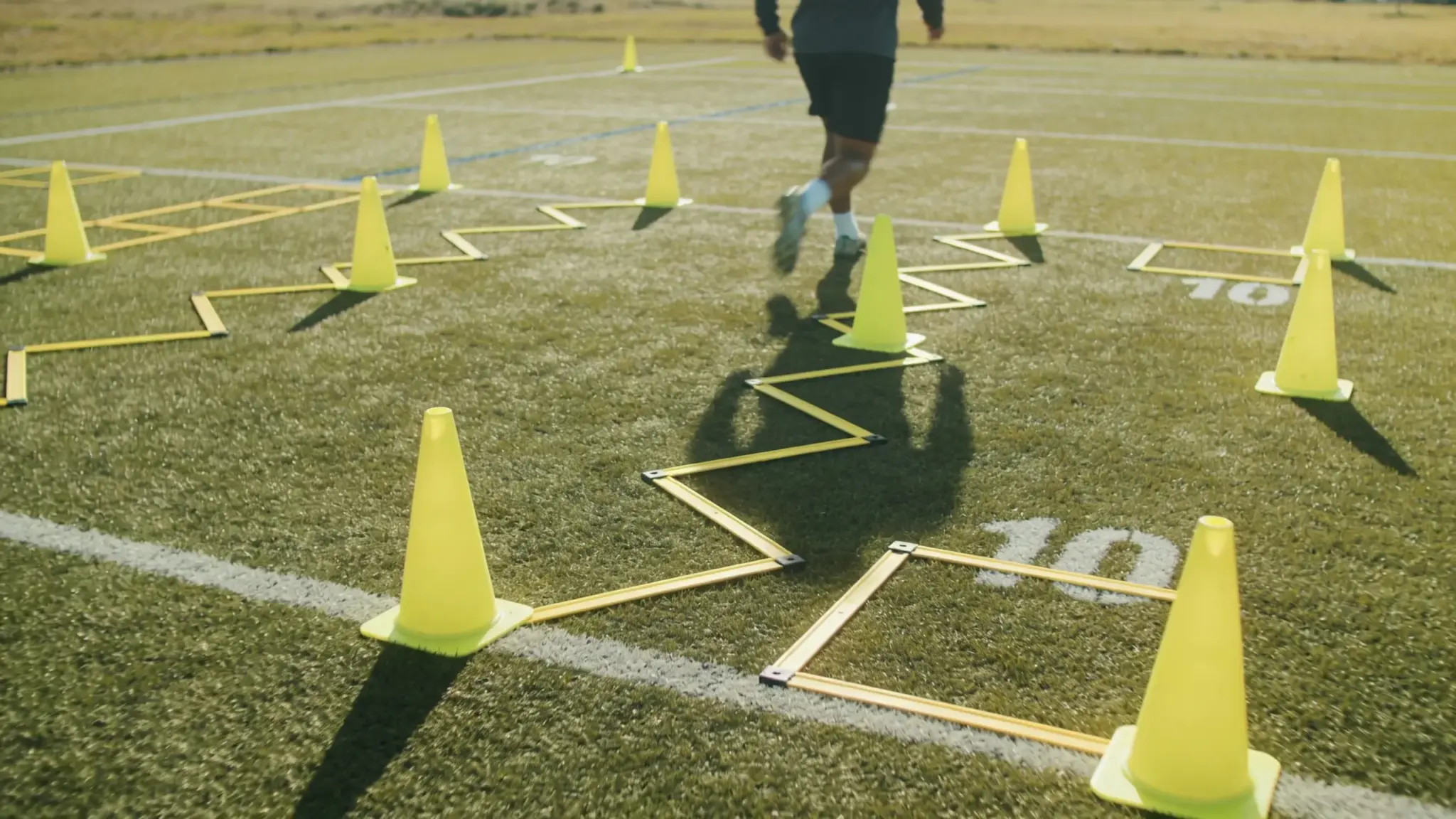
Cone drills are one of the simplest ways to improve speed, agility, and quick direction changes. With just a set of cones and a small open space, athletes can train acceleration, deceleration, balance, and reaction skills without expensive equipment.
This blog covers effective cone drills, proper setup, and modifications for different skill levels.
Why Do Cone Drills Work?
Cone drills work because they train a skill most standard workouts skip: deceleration.
When you sprint, plant, and cut, your brain and muscles build a repeatable movement pattern. Practicing that pattern makes direction changes faster and more controlled. That is what separates reactive athletes from straight-line runners.
A study in the Journal of Strength and Conditioning Research found six weeks of cone drills improved speed, agility, and power in college athletes. Research also shows these drills improve proprioception, your body’s ability to sense its own position during movement. Poor proprioception is a major factor in ankle and knee injuries during quick cuts.
Cone drills also strengthen tendons over time. Stronger tendons absorb more force during stops and pivots, which reduces strain on joints at high speed.
Cone drills are a core tool in any speed and agility training program, sitting alongside sprint work and footwork drills.
6 Cone Drills Every Athlete Should Know
Cone drills are simple setups that train acceleration, deceleration, and quick direction changes. When practiced regularly, they build better coordination, sharper footwork, and stronger athletic control.
Here are the six drills every athlete should run.
1. The Pro Agility Drill (5-10-5 Shuttle)
Source: SKLZ
The Pro Agility Drill is one of the most widely tested drills at the NFL Combine. It measures lateral speed, reaction ability, and change-of-direction control.
Setup: Place three cones in a straight line, each 5 yards apart.
How to perform it:
- Start at the middle cone in a low athletic squat. Place your hand on the ground, same side as your first direction.
- Explode to the first cone with a strong crossover step. Stay low and drive hard.
- Touch the cone with the correct hand. Keep your opposite hand off the ground.
- Push off and sprint 10 yards to the far cone. Touch it.
- Drive back through the middle cone at full speed to finish.
Key tip: Stay low through every turn. Standing up too early kills your speed out of each cut.
2. The L-Drill (3-Cone Drill)
Source: Simple Speed Coach
The L-Drill tests your ability to accelerate, cut tightly, and run a figure-eight path at speed. It is a standard measurement drill at NFL Combine testing.
Setup: Place three cones in an L-shape. Each cone is 5 yards from the next.
How to perform it:
- Start in a strong athletic stance at the first cone.
- Sprint 5 yards to the second cone. Touch the line.
- Pivot right, drop your hips, and explode back to the first cone. Touch it.
- Turn and sprint back to the second cone.
- Run a tight figure-eight around the third cone.
- Stay on the balls of your feet through every cut.
- Sink your hips and control the turn. Do not let your body drift wide.
- Push off hard and sprint through the finish.
Key tip: Your figure-eight cut determines your time. Keep it tight and under control.
3. The T-Drill
Source: PLT4M
The T-Drill trains you to sprint forward, shuffle laterally, and backpedal, all in one sequence. It is used across football, basketball, and soccer programs at every level.
Setup: Place four cones in a T-shape. The base cone sits 10 yards from the center. The two outer cones sit 5 yards from the center on each side.
How to perform it:
- Start in a staggered athletic stance at the base cone.
- Sprint straight to the center cone.
- Drop your hips and choose a direction, left or right.
- Turn your head and shoulders first, then rotate your body around the cone.
- Shuffle laterally to the outer cone. Stay low and keep your chest stable.
- Shuffle back across to the opposite outer cone.
- Return to the center cone and drop your hips again.
- Backpedal to the starting cone at full speed.
Key tip: Never cross your feet during the lateral shuffle. It breaks your balance and slows every transition.
4. The 4-Cone Box Drill
Source: DICK’S
The 4-Cone Box Drill trains you to move in all four directions without losing body control. It combines sprinting, lateral shuffling, and backpedaling in one short sequence.
Setup: Place four cones in a square, 5 yards apart on each side.
How to perform it:
- Start at the first cone in an athletic stance.
- Sprint forward to the second cone.
- Side shuffle across to the third cone. Stay low and keep your chest up.
- Backpedal to the fourth cone with short, controlled steps.
- Plant your foot and rotate smoothly into a forward position.
- Sprint through the finish at full speed.
Key tip: Keep your weight on the balls of your feet through every transition. Flat-footed athletes lose time at each corner.
5. Reaction Cone Drill
Source: Pierre’s Elite Performance
The Reaction Cone Drill adds an element of unpredictability to standard cone work. Instead of running a set pattern, you react to a verbal or visual cue and move to the called cone.
Setup: Place four cones in a 5-yard square. Start in the middle in a low athletic stance.
How to perform it:
- Chop your feet quickly in place. Stay low and keep your eyes up.
- Wait for the coach’s cue, a direction, or a cone number.
- React immediately and shuffle to the called cone. Return to the center.
- Crossover reaction: move with crossover steps while staying balanced through each change.
- Backpedal reaction: drop your hips and move backward with short, controlled steps.
- Sprint reaction: explode forward at full speed to the called cone and reset quickly.
Key tip: This drill trains your reaction time more than your physical speed. The goal is to cut your response delay, not just move faster.
6. Cone Alley Drill
Source: King Sports
The Cone Alley Drill trains forward sprinting and backward movement in a repeated pattern. It builds the ability to switch between two directions without losing control.
Setup: Place cones about 4 yards apart in a staggered line. Start at the first cone in an athletic stance.
How to perform it:
- Sprint toward the first cone with explosive acceleration.
- As you reach it, lower your hips and shift into a controlled backpedal at a slight angle.
- Keep your eyes forward. Track the next cone with your peripheral vision.
- Once you spot the next cone, react and drive forward out of the backpedal.
- Complete the full cone pattern. Then repeat from the opposite direction.
Key tip: Running this drill from both directions trains both sides of your body equally. Do not skip the second pass.
Cone Drills for Different Sports
Cone drills can be adapted for any sport. Each sport uses specific movement patterns, so choosing the right drills trains movements that match actual game situations.
1. Cone Drills for Football Players
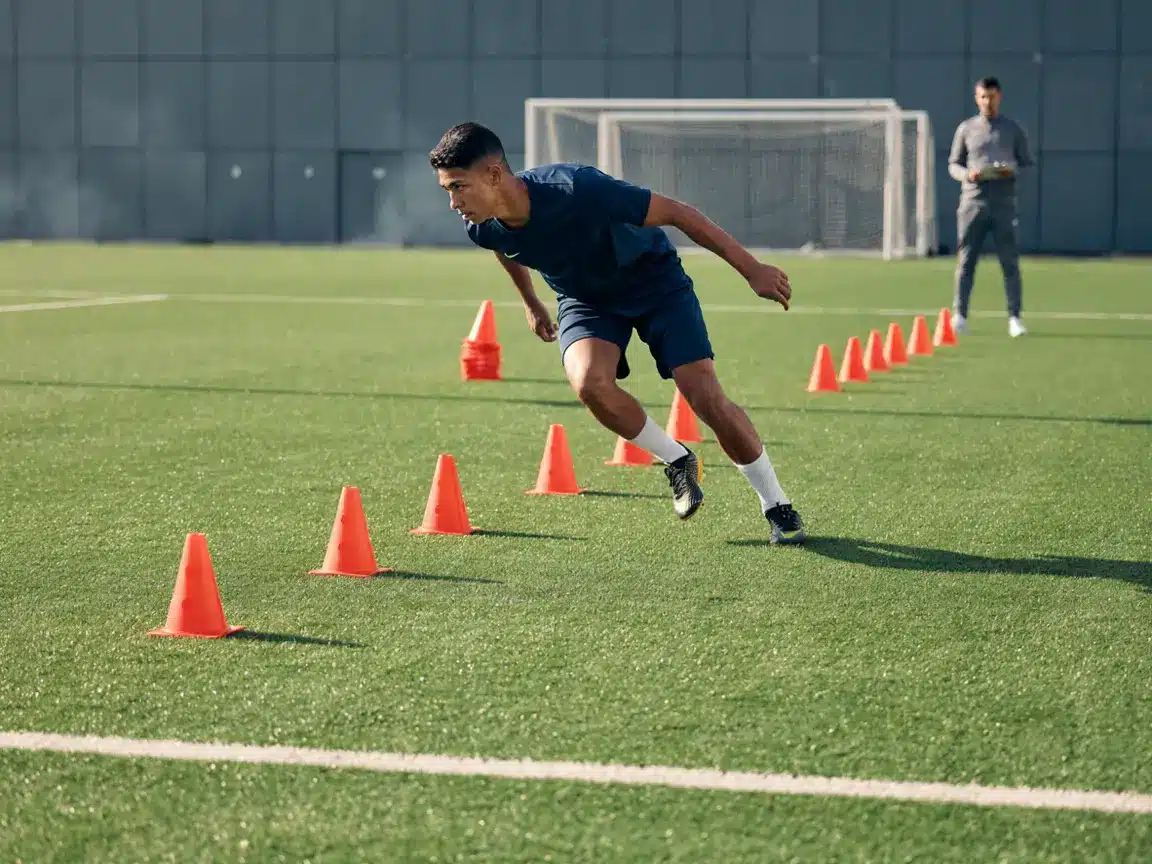
Football requires quick acceleration, sudden stops, and direction changes while reacting to opponents. Cone drills build the footwork and body control needed in game situations.
The 5-10-5 shuttle builds lateral speed and reaction ability. The L-Drill develops sharp cuts and explosive acceleration out of breaks. These movements help wide receivers create separation, defensive players mirror opponents, and running backs cut through tight spaces.
2. Cone Drills for Basketball Players
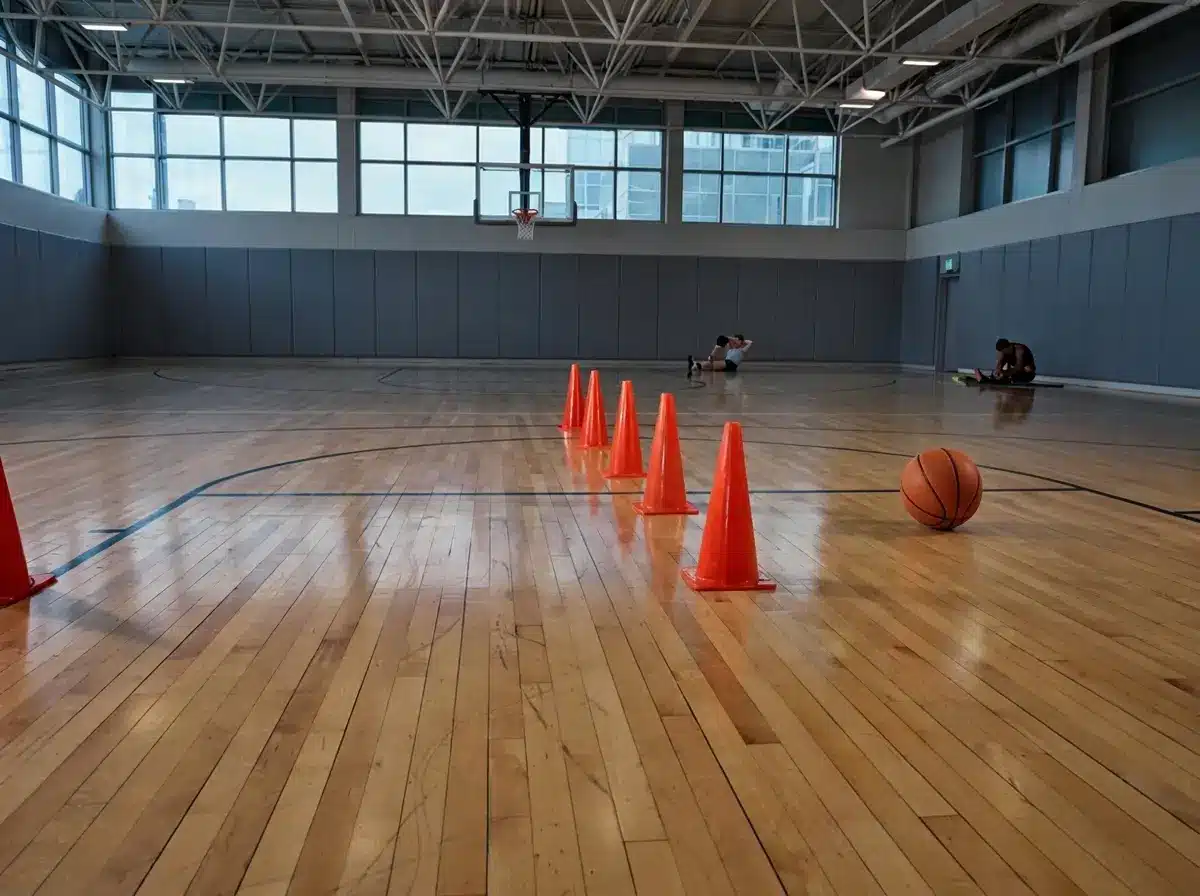
Basketball players need fast feet, balance, and the ability to move efficiently in every direction. Cone drills improve defensive slides, transition speed, and body control during quick movements on the court.
Cone zig-zags, lateral shuffles, and closeout drills train players to change direction while staying low. They also build proper defensive positioning through repeated practice. These exercises are especially useful for guards and defenders.
3. Cone Drills for Tennis Players
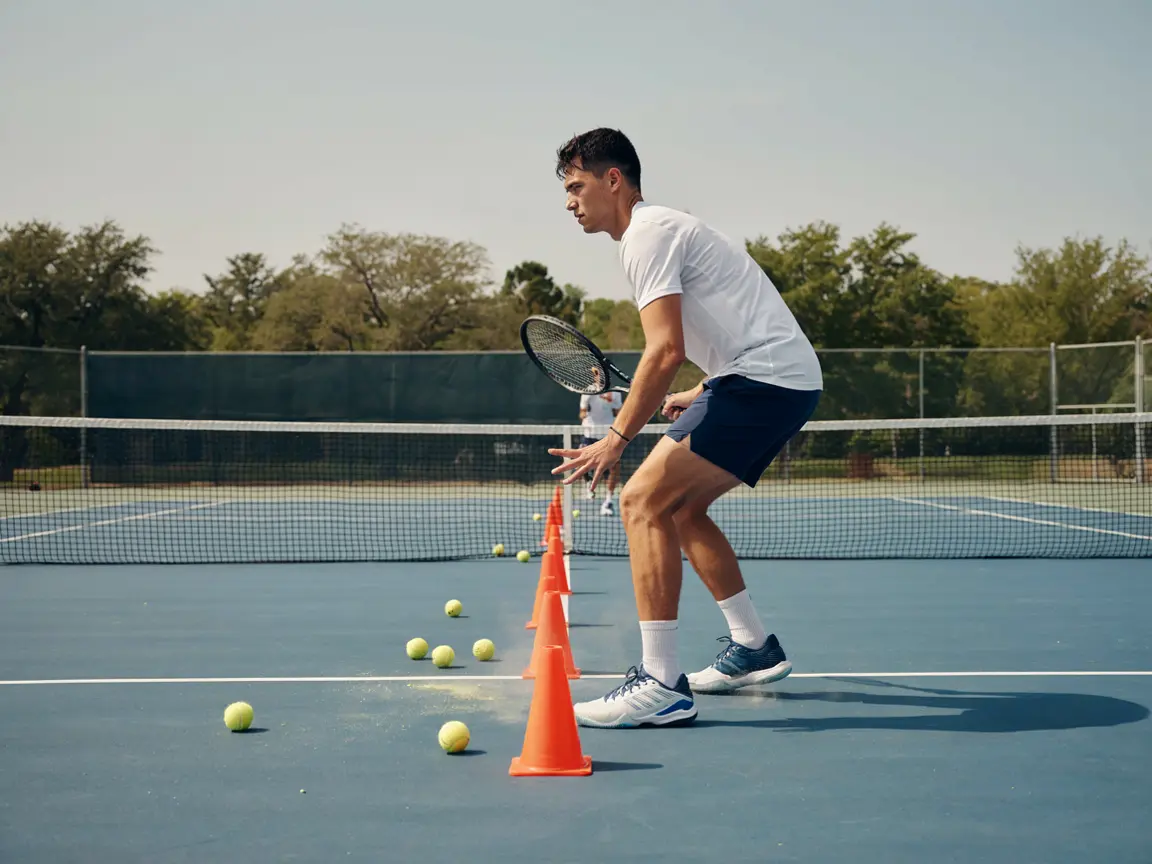
Tennis involves repeated bursts of movement, fast recovery steps, and rapid switches between forward, backward, and sideways motion. Cone drills improve court coverage and movement efficiency.
T-drills, side-to-side cone touches, and forward-backward sprints help players build faster reactions and maintain balance while moving around the court.
4. Cone Drills for Track and Field Athletes
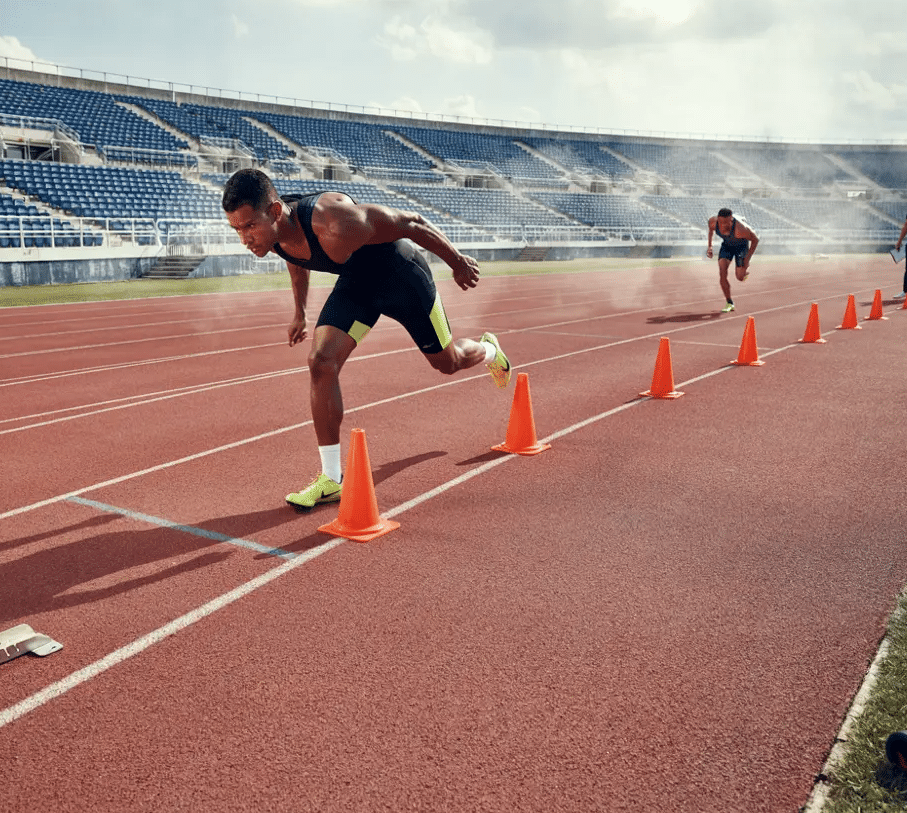
Track athletes use cone drills to improve acceleration, running mechanics, and coordination. Agility work builds better body control and explosive movement alongside sprint technique.
Acceleration runs, cone sprints, and reaction starts help athletes practice powerful first steps and efficient movement patterns. These exercises are especially useful for sprinters and multi-event athletes.
How to Structure a Cone Drill Workout
A balanced cone drill program should include different movement focuses throughout the week. Rotating between speed, agility, reaction, and sport-specific movements gives your body time to recover and adapt.
Keep sessions short and high quality. Perform 3 to 5 repetitions per drill. Rest 60 to 90 seconds between efforts.
Day 1: Acceleration and Footwork
Begin with an active warm-up. Then run ladder drills, short cone sprints, and acceleration-based drills. Focus on explosive first steps, quick foot placement, and proper sprint mechanics.
Day 2: Change of Direction
Run the L-Drill, Pro Agility Shuttle, T-Drill, and Box Drill. These movements build cutting ability, body control, and the ability to switch directions quickly.
Day 3: Reaction and Game Speed
Use reaction cone drills, partner-based cone drills, and varied movement patterns. These exercises build decision-making speed and help athletes respond faster during competition.
Day 4: Sport-Specific Work (Optional)
Adapt drills to your sport. Options include defensive slides for basketball, dribbling patterns for soccer, and route cuts for football. Sprint mechanics work well for track athletes.
Conclusion
Four cones and 10 yards of space are enough to build real athletic speed.
The drills in this article appear at NFL Combines, youth soccer academies, and college track programs. The movement problems they fix are the same at every level.
Start with the Pro Agility Drill and L-Drill to build a baseline. Add the T-Drill once those feel clean and controlled. For younger athletes, shorten distances and keep sessions short and reactive. Form first. Speed follows on its own.
Consistent cone drill training builds the kind of speed that actually shows up in games.
Frequently Asked Questions
Do cone drills actually help?
Yes, cone drills improve agility, foot speed, and change-of-direction control, especially for sports. But real game transfer depends on adding reaction and sport-specific movements, not just preset patterns.
Did Messi do cone drills?
There’s no clear public record that Messi specifically trained with modern “cone drills” like in gym setups. But his early training focused heavily on close-control dribbling exercises with cones.
Are cone drills good for beginners?
Yes, cone drills are good for beginners because they build basic footwork, balance, and coordination in a simple, controlled way.
Who has the fastest 3-Cone drill in the NFL?
The fastest 3-cone drill time in NFL Combine history belongs to Jordan Thomas, who recorded 6.28 seconds in 2018. For defensive backs, D.J. Hayden’s 6.50-second run in 2013 remains one of the most notable performances.
Is cone drill agility?
Yes, cone drills are a form of agility training. They improve an athlete’s ability to accelerate, decelerate, change direction quickly, maintain balance, and react efficiently during sport-specific movements.