
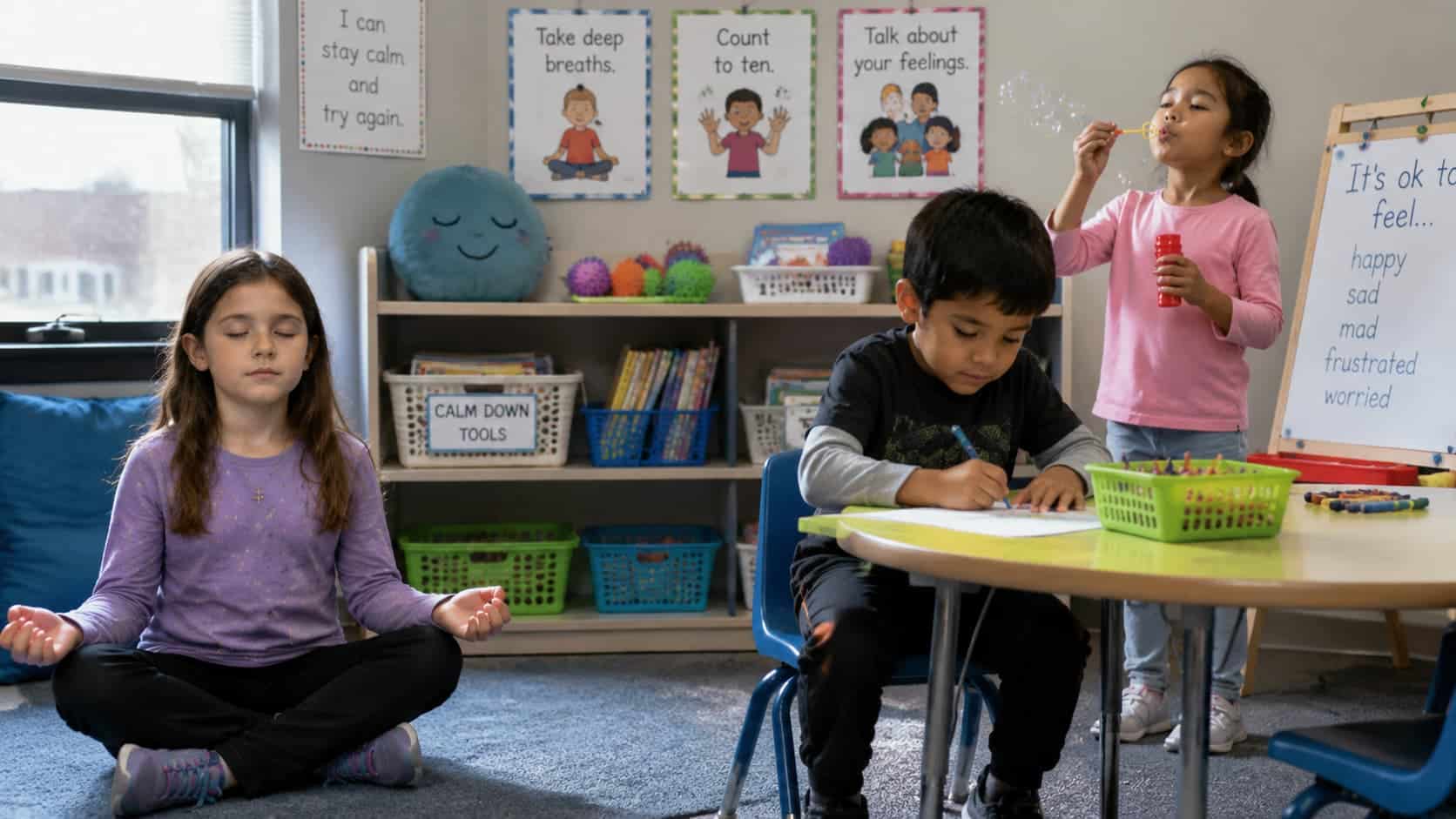
Kids deal with stress, anger, sadness, and fear every single day. Many of them have no idea what to do when those feelings get too big. That gap is where meltdowns happen, friendships break down, and school becomes hard to manage.
Kids can learn coping skills, building their own set of strategies to stay balanced and handle challenges when life gets tough.
This post covers coping skills sorted into six clear categories. You can pick what fits your child’s age, personality, and needs. Start with one or two. Build from there.
Calming and Breathing Coping Skills for Kids
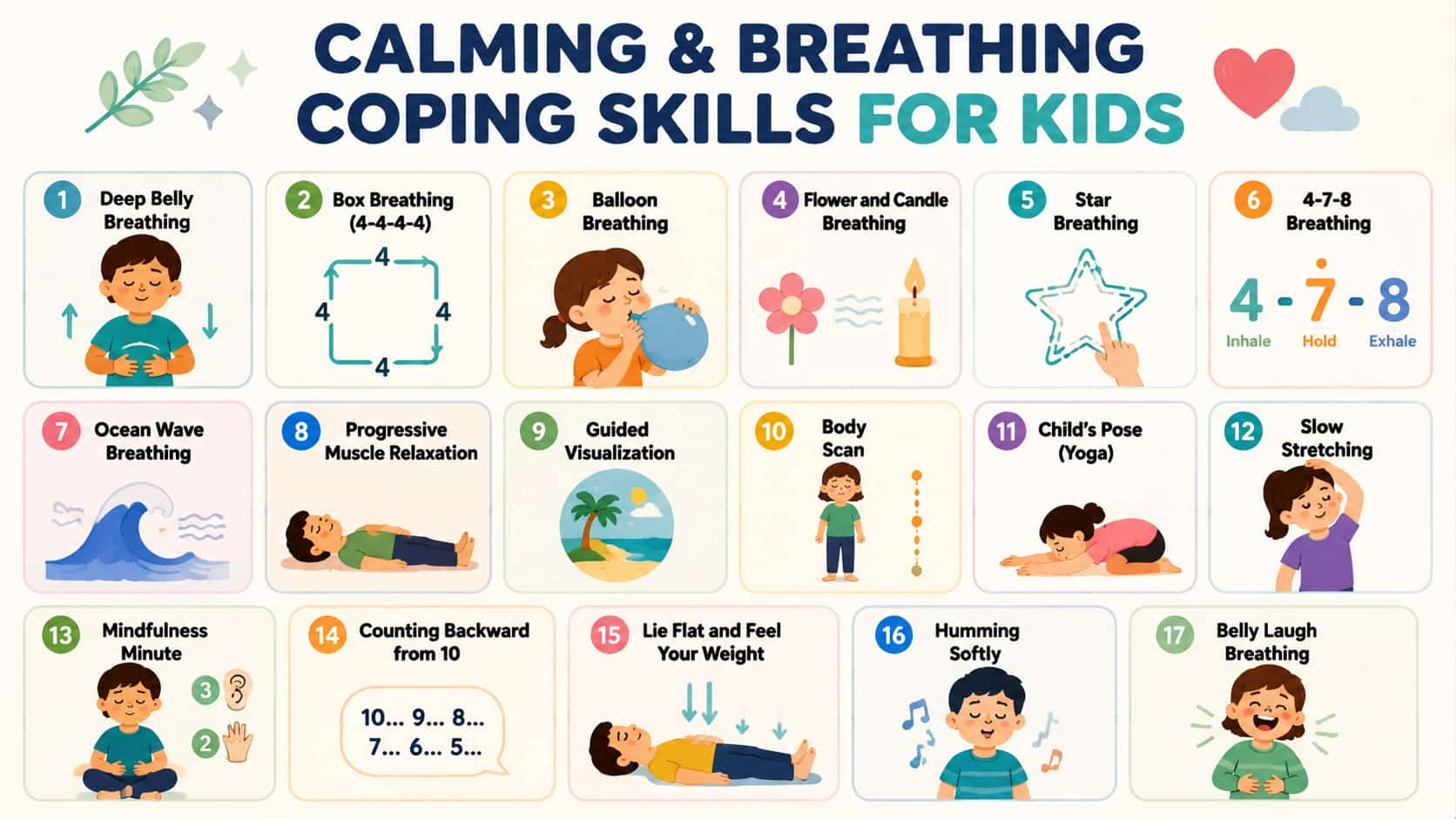
Breathing and body-based skills work fast because they directly slow down the nervous system’s stress response. These techniques can bring a child back to calm within minutes, even without adult help.
1. Deep Belly Breathing: Breathe in slowly through the nose and feel the belly rise, then breathe out fully through the mouth. Works for all ages, including toddlers.
2. Box Breathing (4-4-4-4) Inhale for 4 counts, hold for 4, exhale for 4, then hold again for 4. Repeat three to four times to feel the shift.
3. Balloon Breathing: Breathe in and imagine puffing up like a balloon, then slowly exhale to deflate. Young children respond well to this visual approach.
4. Flower and Candle Breathing: Smell an imaginary flower on the inhale, then blow out an imaginary candle on the exhale. Simple enough for children ages 3 and up.
5. Star Breathing: Trace a five-pointed star with one finger. Inhale on each upstroke and exhale on each downstroke. A strong tool for classrooms and home.
6. 4-7-8 Breathing: Inhale for 4 counts, hold for 7, then exhale slowly for 8 counts. Best suited for children ages 8 and up.
7. Ocean Wave Breathing: Breathe in as you picture a wave coming in, then breathe out as it pulls back. Pair with ocean sounds for a stronger calming effect.
8. Progressive Muscle Relaxation: Tense and release each body part from the toes up to the head. This teaches children to notice exactly where they hold stress in the body.
9. Guided Visualization: Close the eyes and picture a calm, safe place in full detail. A beach, a forest, or a quiet backyard all work well.
10. Body Scan: Slowly notice each part of the body from head to feet without judgment. Builds physical self-awareness and helps children release stored tension.
11. Child’s Pose (Yoga): Kneel on the floor, fold forward, and let the arms rest at the sides. Hold for 30 seconds while breathing slowly and steadily.
12. Slow Stretching: Reach arms overhead, roll the shoulders, and do gentle neck rolls. Releases stored physical tension in just a few minutes.
13. Mindfulness Minute: Sit still for 60 seconds and notice three things you hear and two things you feel. No talking and no prompts needed.
14. Counting Backward from 10 Simple and fast. It interrupts an emotional spiral before it grows. Any child can do this on their own at any age.
15. Lie Flat and Feel Your Weight. Lie on the floor or bed and press the body down into the surface beneath. Noticing the ground underneath naturally slows breathing and heart rate.
16. Humming Softly Humming activates the vagus nerve, which plays a direct role in calming the body. Even 30 seconds of soft humming can shift a child’s state.
17. Belly Laugh Breathing: Take one slow breath in, then exhale in a long, exaggerated ha-ha-ha. Releases physical tension and often leads to genuine laughter.
Emotional Expression Coping Skills for Kids
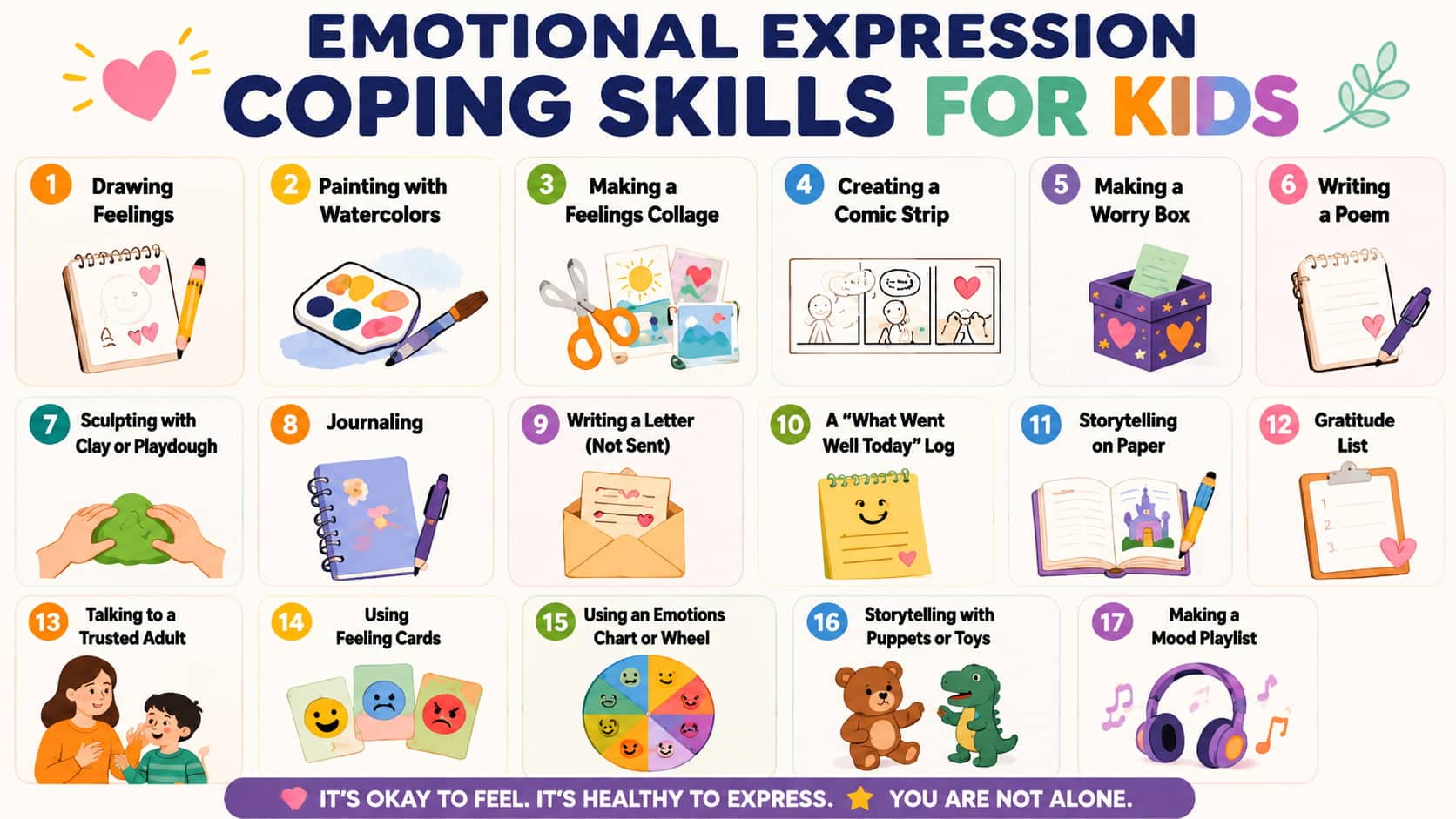
Many children do not have words for what they feel, and that gap is where creative expression comes in. Art, writing, and verbal tools give kids another way to name, process, and release big emotions.
18. Drawing Feelings: Draw a face, a color, or a symbol that matches the current emotion. No art skill required. The act of drawing matters more than the result.
19. Painting with Watercolors Slow, flowing brush strokes have a calming effect on the mind and body. Let the child pick colors based on how they feel right now.
20. Making a Feelings Collage: Cut images from magazines that match current emotions and paste them on one sheet. A visual, hands-on way to process complex feelings without needing words.
21. Creating a Comic Strip: Draw three to four panels showing a problem and how a character handles it. This builds both emotional awareness and basic problem-solving thinking at the same time.
22. Making a Worry Box: Decorate a small box, write worries on slips of paper, and place them inside. The act of storing worries reduces how much space they take up mentally.
23. Writing a Poem: Free verse with no rules. Just put the feeling into any words that come out. Short poems work just as well as long ones for emotional release.
24. Sculpting with Clay or Playdough Physical kneading relieves frustration while keeping the hands busy. Shaping something new gives children a concrete sense of control when everything else feels out of hand.
25. Journaling: Write freely about the day, a feeling, or a specific event. No editing and no judgment. The point is expression, not a finished product.
26. Writing a Letter (Not Sent) Write to the person or situation causing stress. Do not send it. Tear it up afterward if that feels right. The release is in the writing itself.
27. A “What Went Well Today” Log: Write one good thing from the day, even on hard days. This small, consistent habit builds awareness of positive moments over time.
28. Storytelling on Paper: Write a short story where a character faces a similar problem and finds a way through it. Distance through fiction makes difficult feelings easier to examine.
29. Gratitude List: Write three specific things to be thankful for right now. Specific details make this far more effective than a vague, general list.
30. Talking to a Trusted Adult: A parent, teacher, or school counselor all count here. Saying a problem out loud reduces the emotional weight it carries in a child’s mind.
31. Using Feeling Cards, pick a card from a feelings deck that matches the current emotion. Saying the feeling word aloud helps children identify what they are actually experiencing.
32. Using an Emotions Chart or Wheel, Point to the feeling on a chart or the Plutchik Wheel of Emotions. Works well for children who struggle to put emotions into words on their own.
33. Storytelling with Puppets or Stuffed Animals: Act out a situation using toys or puppets. Children often express what they find too hard to say directly through play.
34. Making a Mood Playlist Choose songs that match the current emotion, then gradually shift toward more upbeat tracks. Music transitions can naturally guide a child’s mood in a positive direction.
Physical Movement Coping Skills for Kids
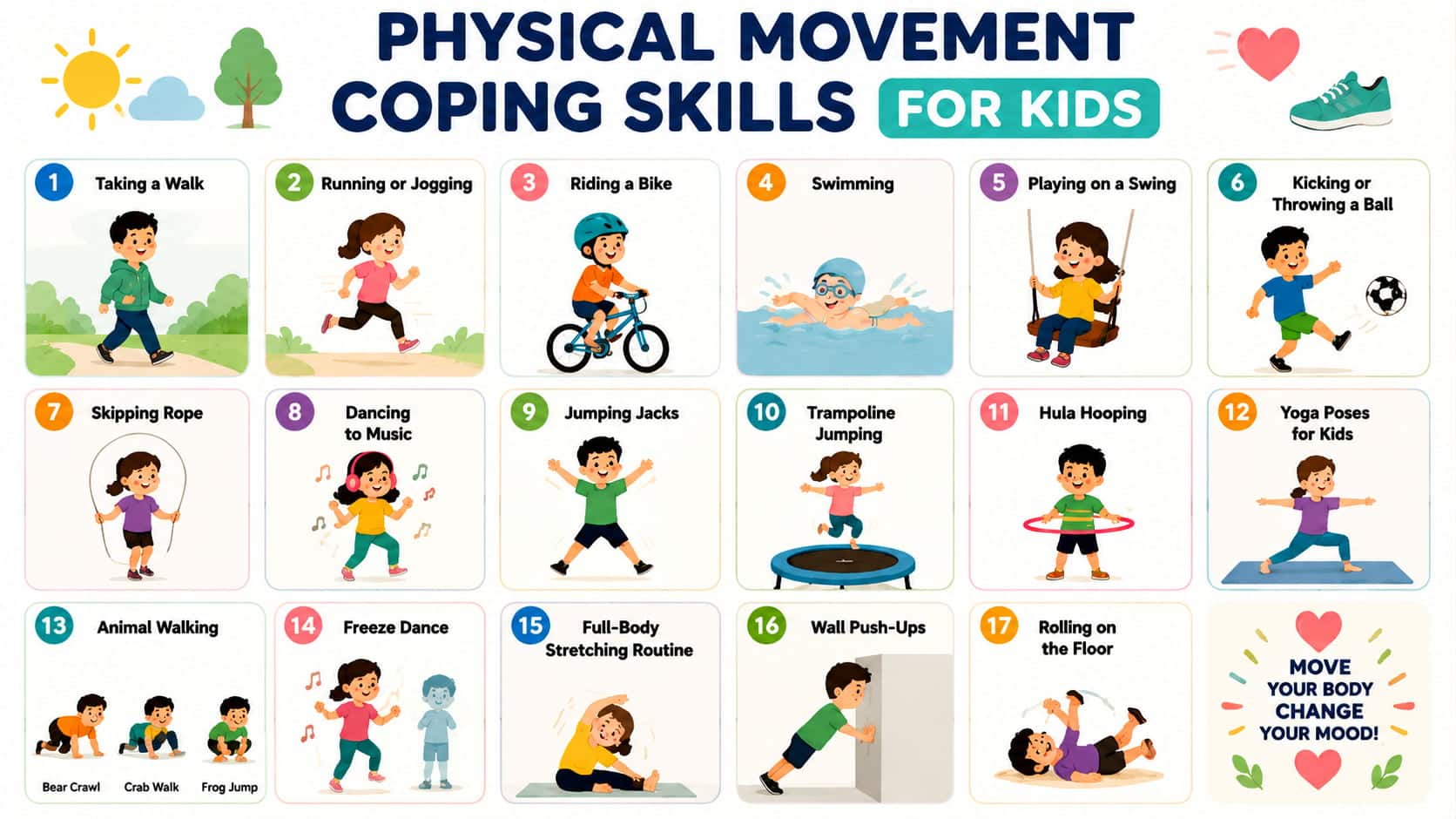
Physical movement reduces cortisol and releases endorphins, both of which directly affect mood and emotional balance. These skills work best for high-energy, restless, or frustrated children who need to move before they can settle down and talk.
35. Taking a Walk Even five minutes outside changes perspective. Fresh air combined with movement is one of the most accessible stress relievers any child can use.
36. Running or Jogging: Running burns off adrenaline fast. No equipment needed. A few laps around the block or yard are enough to feel a real shift.
37. Riding a Bike Combines physical movement, fresh air, and the balance and focus that cycling demands. A natural, absorbing way to step away from what is causing stress.
38. Swimming: Full-body movement paired with the sensory input of water. Swimming is physically tiring and tends to leave children noticeably calmer afterward.
39. Playing on a Swing: The rhythmic back-and-forth motion regulates the nervous system. This is one of the most calming outdoor activities for sensory-sensitive children.
40. Kicking or throwing a Ball Redirects physical energy without aggression. Easy to do solo or with another person in any open space without special equipment.
41. Skipping Rope The rhythm of skipping requires real focus, and that focus interrupts anxious or spiraling thoughts before they grow.
42. Dancing to Music: Pick any song and move freely. There is no right or wrong way to do this. Even two minutes of free movement can shift a heavy mood.
43. Jumping Jacks: A quick and effective energy release that takes less than a minute. Easy to do in a bedroom, hallway, or classroom without any equipment.
44. Trampoline Jumping: Rhythmic bouncing regulates sensory input and burns off restless energy. Works well for children who carry stress in the bodies throughout the day.
45. Hula Hooping Hula hooping requires coordination and rhythm. Both demands naturally pull the mind away from stress and toward the physical task at hand.
46. Yoga Poses for kids: warrior, tree pose, and downward dog combine movement with breath control. Teens can try guided sessions through apps like Yoga With Adriene for at-home teen coping skills practice.
47. Animal Walking Bear crawl, crab walk, frog jump. Fun, physical, and effective at releasing built-up tension without needing space, equipment, or adult instruction.
48. Freeze Dance Dance until the music stops, then hold completely still. Builds physical self-control through play and consistently elicits genuine laughter.
49. Full-Body Stretching Routine: Reach arms overhead, fold forward, and stretch each side in sequence. Slow stretching releases tension stored in muscles across a long, stressful day.
50. Wall Push-Ups: A simple resistance movement done against a wall. The physical pressure grounds the body and gives anxious energy a productive outlet.
51. Rolling on the Floor: Forward rolls, log rolls, or gentle side-to-side rolling all provide vestibular input. This type of movement is calming for many children, especially those under age 10.
Social and Connection Coping Skills for Kids
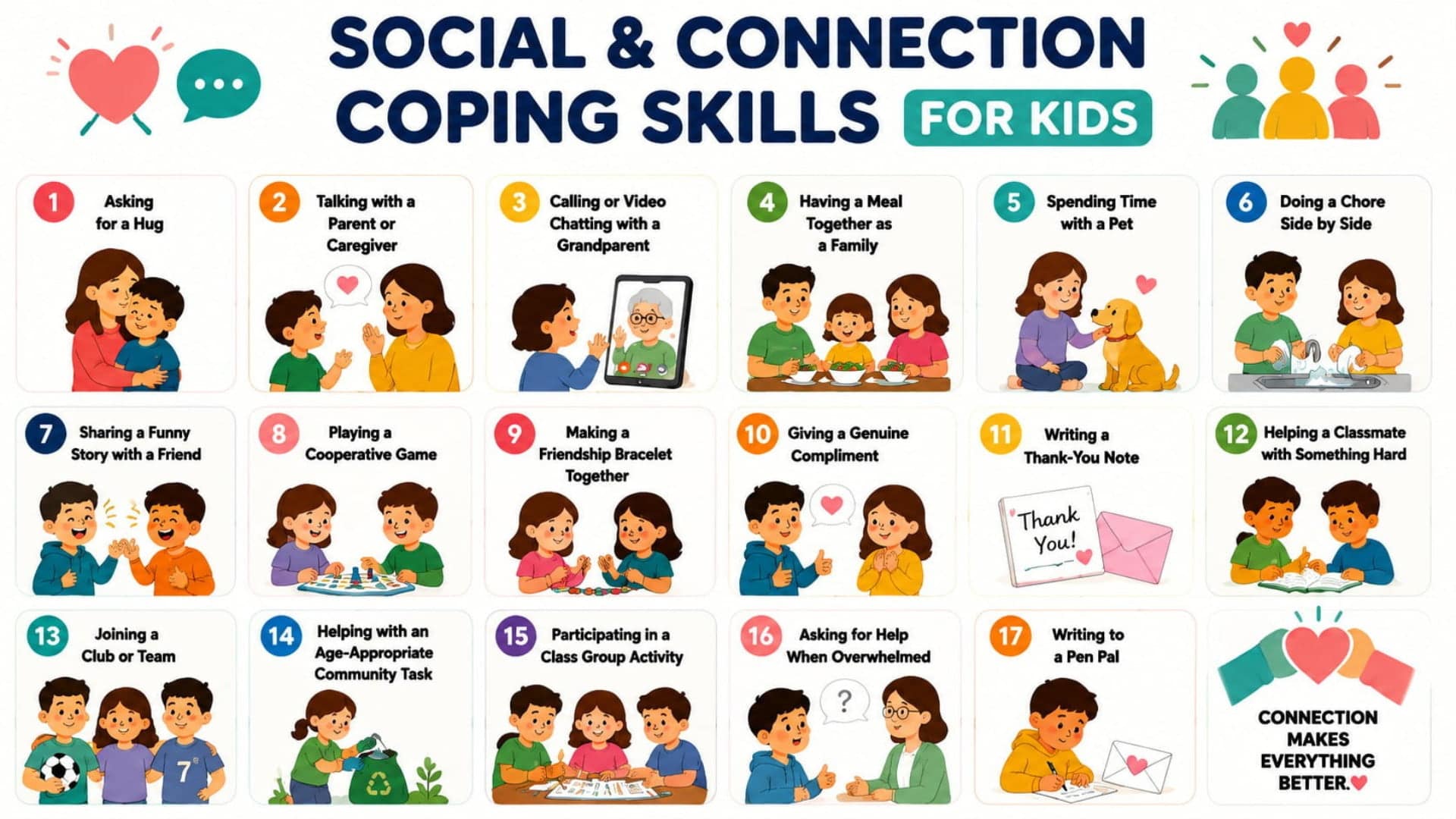
Children are wired for connection, and when they feel close to someone they trust, stress naturally reduces. These skills use relationships as a tool for emotional regulation, not just social enjoyment.
52. Asking for a Hug: Physical contact from a safe person lowers cortisol levels. Teach children that asking for comfort is a sign of self-awareness, not weakness.
53. Talking with a Parent or Caregiver: Explaining a problem out loud helps a child organize their thoughts. It also reduces the feeling of carrying the problem alone without any support.
54. Calling or Video Chatting with a Grandparent Connection across distance still builds emotional security. A familiar, caring voice can quickly shift a child’s mood in a hard moment.
55. Having a Meal Together as a Family: Shared meals reduce isolation and create a calm, predictable routine. The structure of a regular family dinner has a real effect on daily stress levels.
56. Spending Time with a Pet Stroking an animal slows heart rate and reduces stress hormones. Even a few minutes with a dog, cat, or rabbit has a measurable grounding effect on most children.
57. Doing a Chore Side by Side Working next to someone is often easier for children than a direct face-to-face conversation about feelings. Talking while doing something together lowers pressure on both sides.
58. Sharing a Funny Story with a Friend. Laughter is one of the fastest natural stress relievers available. A short, funny story with a trusted friend can break tension in seconds.
59. Playing a Cooperative Game: Games where children work toward a shared goal build trust and reduce competitive pressure. Especially helpful for kids who feel left out or socially anxious.
60. Making a Friendship Bracelet Together: A shared creative activity builds connection through the simple act of making something together. No special skills or materials required.
61. Giving a Genuine Compliment: Shifting attention outward improves mood naturally. One sincere compliment changes the tone of an interaction for both the giver and the receiver.
62. Writing a Thank-You Note: Short and sincere is enough. The act of writing it is just as calming for the writer as receiving one is for the reader.
63. Helping a Classmate with Something Hard Being useful builds confidence in a child. It also pulls their attention away from their own stress in a healthy, productive direction.
64. Joining a Club or Team Regular group activity gives a sense of belonging that daily classroom interaction often does not provide. Strong for children who feel disconnected or isolated.
65. Helping with an Age-Appropriate Community Task: Even small contributions build purpose in children. Picking up litter, helping a neighbor, or assisting at a food drive all count.
66. Participating in a Class Group Activity: Structured shared tasks reduce the pressure of unstructured social interaction. A group project or art assignment creates a real connection without forced conversation.
67. Asking for Help When Overwhelmed: Teach children directly that asking for help is a skill. Many children carry stress alone simply because no one told them asking is an option.
68. Writing to a Pen Pal: An old-fashioned strategy that still works. It creates anticipation, builds communication skills, and gives children an ongoing sense of connection.
Cognitive and Thinking Coping Skills for Kids
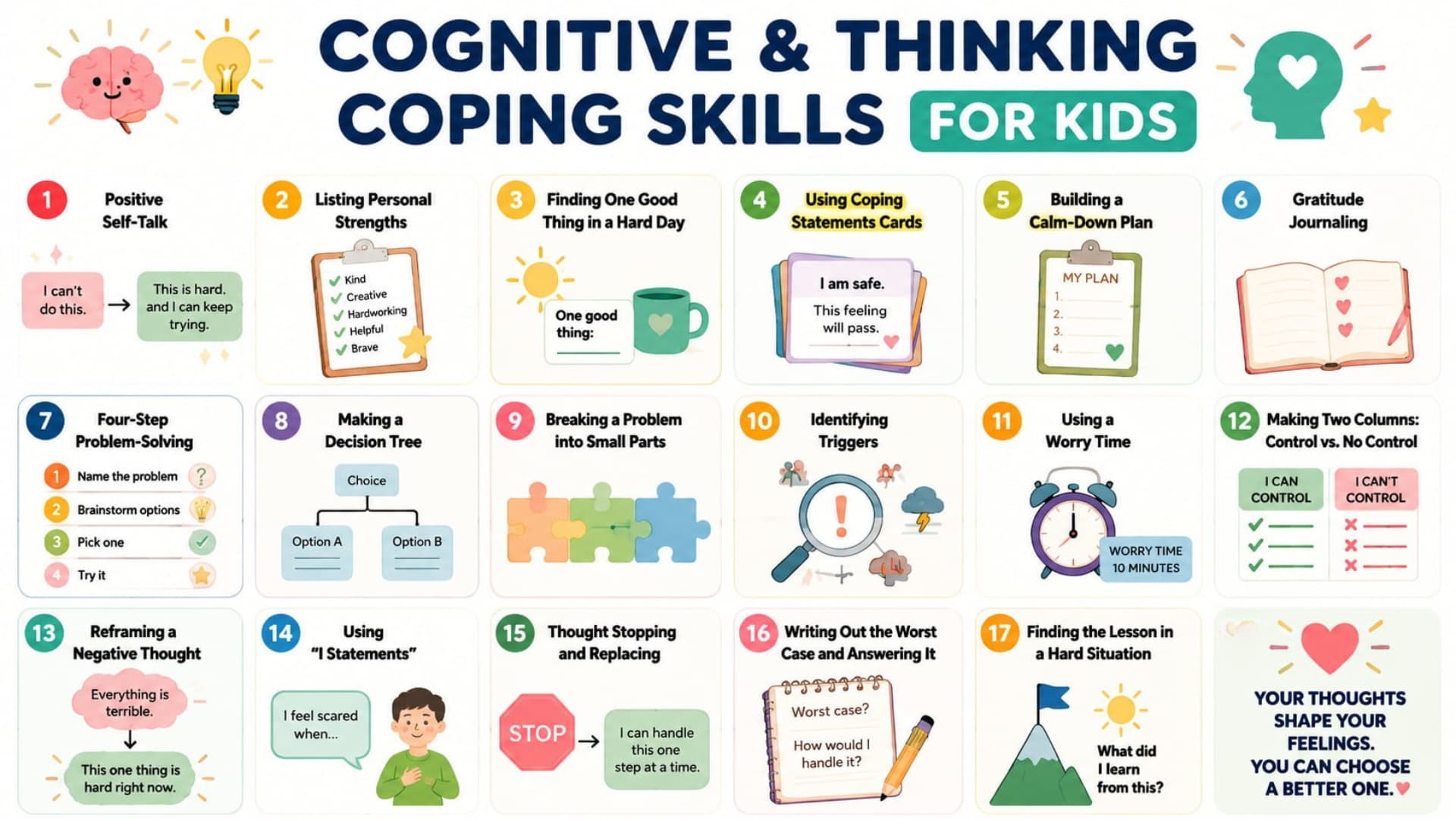
Thinking-based skills help children notice their own thought patterns and learn to choose a different response. They work best for children ages and up who tend to get stuck in loops of worry, self-doubt, or negative spirals.
69. Positive Self-Talk Replace “I can’t do this” with “This is hard, and I can keep trying.” Practice the replacement phrase out loud until it becomes a natural habit.
70. Listing Personal Strengths: Write five things the child does well. Read the list when confidence drops, or a situation feels impossible to get through.
71. Finding One Good Thing in a Hard Day: Even difficult days hold one small positive moment. Naming it out loud interrupts a spiral of negative thinking before it takes over completely.
72. Using Coping Statements Cards: Pre-written phrases like “I am safe” or “This feeling will pass.” Keep the cards in a pocket, backpack, or on a bedroom wall for quick access.
73. Building a Calm-Down Plan: Write the specific steps to take when overwhelming feelings start to build. Create the plan on a calm day, not in the middle of a crisis.
74. Gratitude Journaling: Write three specific things to be grateful for each day. Research published in the Journal of Positive Psychology shows that regular gratitude practice improves mood and wellbeing in both children and adults.
75. Four-Step Problem-Solving: Name the problem. Brainstorm options. Pick one. Try it. Simple enough for children ages 6 and up to learn and use on their own.
76. Making a Decision Tree: Draw branches for each possible choice and write the likely outcome at the end. Abstract decisions become visible and much easier to think through.
77. Breaking a Problem into Small Parts Ask: “What is one small step I can take right now?” This removes the frozen feeling that comes from looking at a large problem all at once.
78. Identifying Triggers: Know which situations, people, or events tend to cause big feelings. Writing them down builds self-awareness and helps children prepare for a stressful moment.
79. Using a Worry Time: Set aside 10 minutes at the same time each day to think about worries. Outside that window, the child learns to postpone rather than spiral all day long.
80. Making Two Columns: Control vs. No Control. Write what can be controlled on the left and what cannot on the right. All focus goes to the left column only. Concrete and grounding for most children.
81. Reframing a Negative Thought “Everything is terrible” becomes “This one thing is hard right now.” Specific language matters far more than empty positivity here.
82. Using “I Statements” “I feel scared when…” instead of “You make me feel…” Teaches children to own their emotions without directing blame at another person.
83. Thought Stopping and Replacing: Say “Stop” out loud or silently, then replace the thought with a specific, grounded alternative. Practice during calm moments so the skill is ready when it is needed.
84. Writing Out the Worst Case and Answering It: What is the worst thing that could happen? How would you handle it? Most fears shrink when examined with a direct, written answer.
85. Finding the Lesson in a Hard Situation: Ask: “What did I learn from this?” Shifts the event from purely negative into a source of real information and personal growth.
Sensory and Grounding Coping Skills for Kids
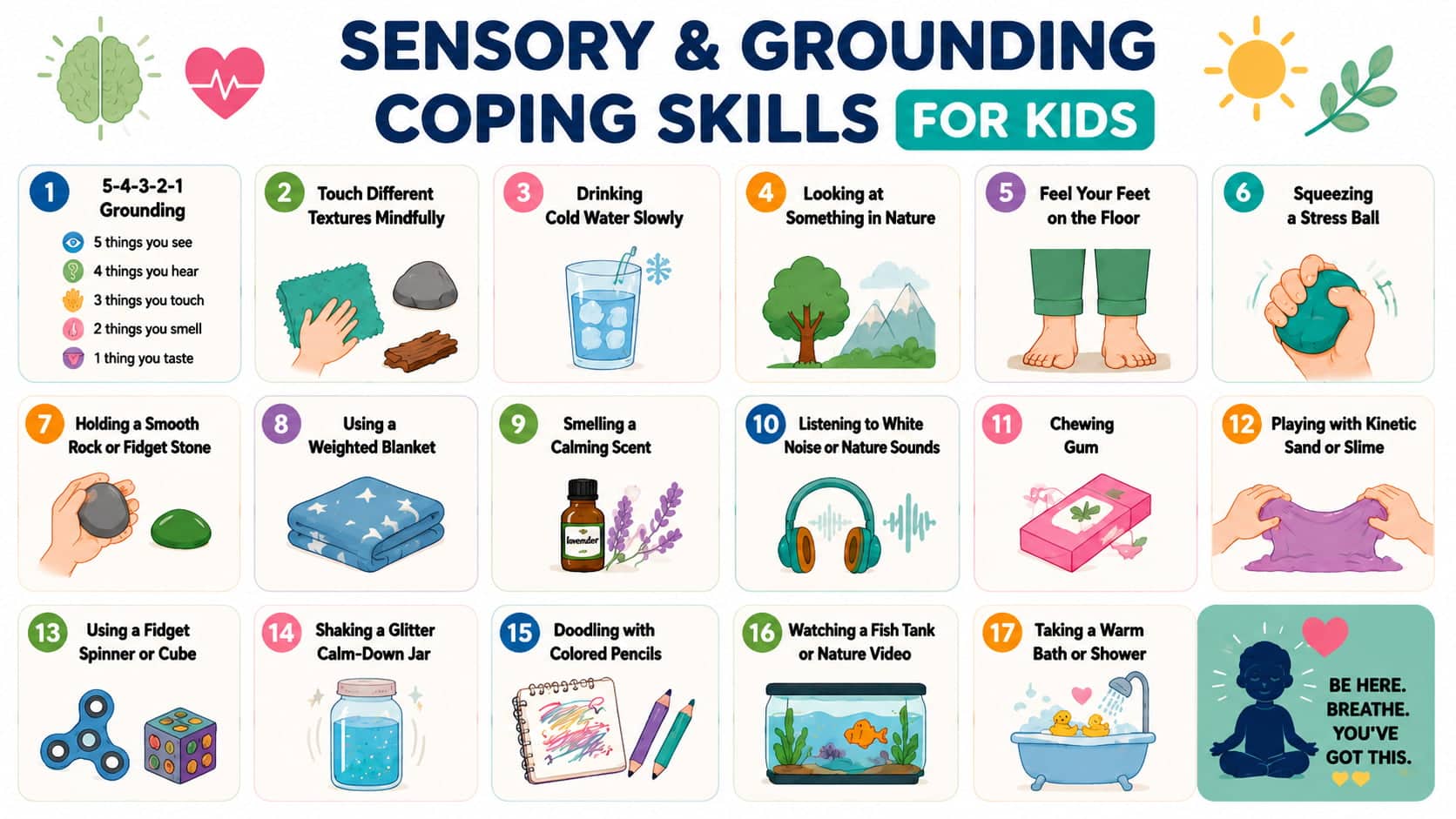
Sensory and grounding skills help children return to the present moment through the five senses. They work fast, require very little preparation, and are especially strong for children who feel panicked or emotionally flooded.
86. 5-4-3-2-1 Grounding Name 5 things you see, 4 you can hear, 3 you can touch, 2 you can smell, and 1 you can taste. Works within minutes for most children.
87. Touch Different Textures Mindfully: Soft fabric, rough bark, a smooth stone. Focus fully on each one for 10 to 15 seconds. Brings the mind out of the thought loop and back into the body.
88. Drinking Cold Water Slowly: Sipping water slowly redirects attention to the physical body in a gentle way. It also interrupts rapid, shallow breathing during anxious moments.
89. Looking at Something in Nature: A tree, a cloud, or a plant. Study the details for 60 full seconds. This type of focused attention calms the nervous system quickly and consistently.
90. Feel Your Feet on the Floor. Press both feet flat on the ground and notice the solid surface beneath them. Take three slow breaths from that stable, grounded position.
91. Squeezing a Stress Ball Repetitive squeeze-and-release is physically calming. Gives restless hands something safe and productive to do during tense or stressful moments.
92. Holding a Smooth Rock or Fidget Stone, Tactile input redirects nervous energy from the mind into the hands. Works well during school, medical appointments, or periods of waiting.
93. Using a weighted blanket, deep pressure input calms the nervous system in a real, measurable way. The American Occupational Therapy Association (AOTA) recommends consulting a therapist before using one with sensory-sensitive children.
94. Smelling a Calming Scent Lavender, vanilla, or citrus all work well. A small scent jar or a dot of lotion makes this easy to use on the go during stressful situations.
95. Listening to White Noise or Nature Sounds: Rain, ocean, or forest sounds reduce sensory overload in loud or busy environments. Helpful for children who feel overwhelmed in classrooms or public spaces.
96. Chewing Gum Rhythmic jaw movement has a documented calming effect on the nervous system. Discreet, simple, and accessible in most everyday settings.
97. Playing with Kinetic Sand or Slime Tactile, absorbing, and easy to set up at home. Keeps hands and attention occupied in a calm, focused way without needing adult direction.
98. Using a Fidget Spinner or Cube Small, quiet, and helpful for children who need to channel excess energy during seated tasks at school or while waiting somewhere.
99. Shaking a Glitter Calm-Down Jar: Shake the jar and watch the glitter settle slowly. Breathing naturally slows as the glitter moves. DIY version: mix water with glitter glue in a jar and seal the lid tightly.
100. Doodling with Colored Pencils: Unstructured, repetitive drawing calms the mind without demanding creative output or focused attention. A few minutes of free doodling can reset a child’s stress level.
101. Watching a Fish Tank or Nature Video, The gentle movement of water and living things reduces anxiety in a consistent, noticeable way. A short nature clip on a device works well when a tank is not available.
102. Taking a warm bath or shower activates the body’s natural relaxation response. A 10-minute soak can shift a child’s emotional state more than many active strategies can.
Best Tools for Developing Coping Skills in Children
The right tools make coping skills easier to practice and easier for children to use on their own. Having practical resources ready removes the guesswork when stress arrives without warning.
Worksheets and Printables
Printable coping tools give children a visual reference they can return to without adult help.
- Feelings check-in sheets. A daily sheet where children circle or draw the emotion they feel each morning or at bedtime.
- Coping strategies menu. A short personal list of the child’s five favorite coping skills, posted on a wall, desk, or refrigerator for quick reference.
- Emotion wheels for young children. A visual chart showing emotions sorted by type. Six Seconds EQ Network offers free printable emotion resources for classrooms and home use.
- Calm-down plan templates. A fill-in sheet that walks children through their own personal steps when feelings start to build.
Books for Kids and Parents About Coping
Well-chosen books teach coping concepts at a child’s own pace and in their own space.
- The Way I Feel by Janan Cain. A picture book for ages 3 to 6 that names and validates big emotions with clear, honest illustrations.
- When Sophie Gets Angry by Molly Bang. For ages 4 to 8. Shows what anger looks like and how one child moves through it naturally.
- Breathe Like a Bear by Kira Willey. A collection of breathing and mindfulness exercises written for children ages 4 to 8. Practical and easy to follow.
- The Whole-Brain Child by Daniel J. Siegel. A parent resource explaining how the developing brain handles emotion and how adults can respond more effectively.
Apps and Digital Tools
Targeted apps give children a portable coping option they can access anytime, anywhere.
- Headspace for Kids. Guided meditations and breathing exercises for children ages 5 to 12. Available on iOS and Android via headspace.com.
- Calm. Sleep stories and guided relaxation for all ages. The children’s section includes breathing tools and soothing audio tracks at calm.com.
- Smiling Mind. A free, psychologist-developed app built for schools and families with content sorted by age group. Available at smilingmind.com.au.
Therapy Cards, Games, and Classroom Tools
Structured tools make learning coping skills feel natural rather than like a formal lesson.
- Zones of Regulation curriculum. Widely used in US schools to help children identify emotional states and choose the right coping strategy. More at zonesofregulation.com.
- Coping skills card decks. Available from therapy supply stores. Cards can be sorted and used by children as a personal pick-your-strategy tool independently.
- Emotional regulation board games. Cooperative games focused on feelings and social problem-solving make emotional learning engaging without feeling clinical.
- Calm-down corner kits. A classroom combination of sensory and visual tools, including glitter jars, feeling charts, and breathing reminder cards.
Sensory and Physical Tools
Physical tools often produce the fastest shift in a child’s emotional state when used consistently.
- Weighted blankets. Aim for approximately 10% of the child’s body weight. Speak with a pediatric occupational therapist for sensory-sensitive children.
- Stress balls and therapy putty. Inexpensive, portable, and effective for children who carry tension in their hands during the school day.
- Fidget cubes and spinners. Discreet enough for classroom use. Helpful for children who need physical output during seated tasks.
- Calm-down glitter jars. DIY version: mix water with glitter glue in a jar and seal the lid tightly. The settling glitter gives children a visual pace to match their breathing.
- Sensory bins. Fill a container with sand, dried beans, or rice. Running hands through the material is calming for most younger children.
Final Thoughts
Coping skills for kids are not a one-time fix. They are a set of tools that grow stronger with regular practice.
A child who learns to breathe through fear, name what they feel, and ask for help is better equipped for every hard moment ahead. Start small.
Pick two or three skills from different categories and practice them on regular days, not just hard ones. Let your child choose what works for them. Keep the tools visible and the conversations low-pressure.
Building emotional strength in children is one of the most lasting things you can do for their long-term health.