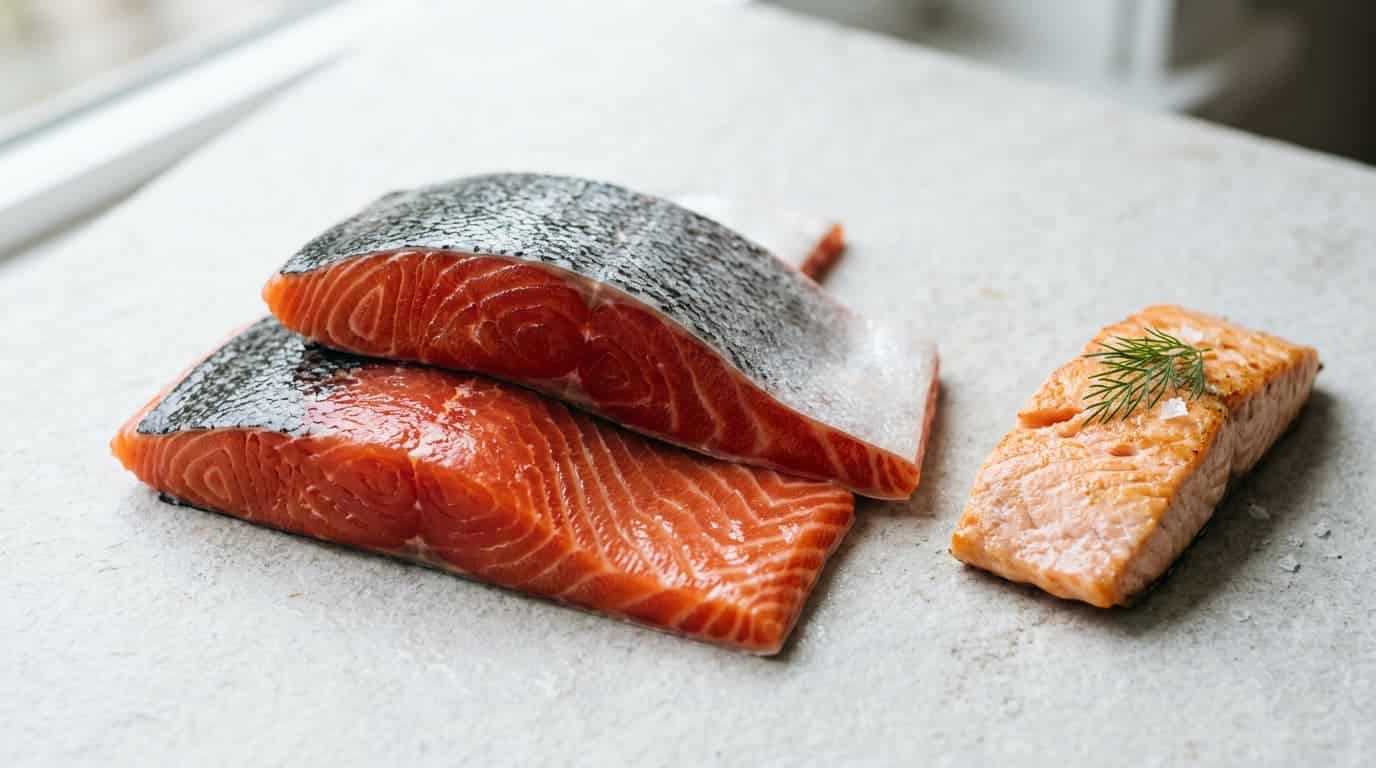
A 3-ounce serving of cooked sockeye salmon has 133 calories and 22 grams of protein. That same serving covers over 150% of your daily vitamin B12 need and over 70% of your vitamin D target. Few foods pack that much nutrition into such a small portion.
If you want a full picture of sockeye salmon nutrition, including how it compares to other salmon types and what cooking does to the numbers, this article covers it all.
You will also find out how wild sockeye salmon nutrition differs from farmed alternatives, and how much to eat each week.
What Is Sockeye Salmon?
Sockeye salmon is a species of wild Pacific salmon. It lives in the North Pacific Ocean and swims up rivers along the coast of Alaska and Canada to spawn. Unlike Atlantic salmon, which is almost always farmed, sockeye is caught wild.
It feeds mostly on plankton and krill in the open ocean. That diet gives it a deep red-orange flesh and a leaner fat profile compared to most other salmon types. It is one of the most popular wild salmon species sold in the United States.
Wild sockeye salmon nutrition is naturally high in omega-3 fats, complete protein, and fat-soluble vitamins. None of those qualities require artificial feed additives. They come directly from what the fish eats in its natural environment.
Sockeye Salmon Nutrition Facts per Serving
The table below shows the full nutrient breakdown for a standard cooked 3-ounce (85g) serving and a 100-gram portion. Numbers come from the USDA FoodData Central database for sockeye salmon cooked by dry heat.
| Nutrient | Per 3 oz (85g) | Per 100g |
|---|---|---|
| Calories | 133 kcal | 156 kcal |
| Protein | 22.5 g | 26.5 g |
| Total Fat | 4.8 g | 5.6 g |
| Saturated Fat | ~0.9 g | ~1.0 g |
| Omega-3 Fatty Acids (EPA + DHA) | ~0.8 g | ~0.95 g |
| Carbohydrates | 0 g | 0 g |
| Cholesterol | 52 mg | 61 mg |
| Sodium | 78 mg | 92 mg |
| Potassium | 371 mg | 436 mg |
| Vitamin D | 14 mcg (72% DV) | 17 mcg (84% DV) |
| Vitamin B12 | 3.8 mcg (158% DV) | 4.5 mcg (188% DV) |
| Selenium | 30 mcg (55% DV) | 35 mcg (65% DV) |
| Iron | Small amount | Small amount |
Key numbers to remember: One 3-oz serving covers over 150% of your daily B12, over 70% of your vitamin D, and more than half your selenium need. It has zero carbs and less sodium than most packaged protein foods.
What Makes Sockeye Salmon So Nutrient-Dense?
Sockeye salmon delivers more nutrition per calorie than most common protein foods. It combines complete protein, marine omega-3 fats, and a strong lineup of vitamins and minerals in a single serving.
1. High-Quality Complete Protein
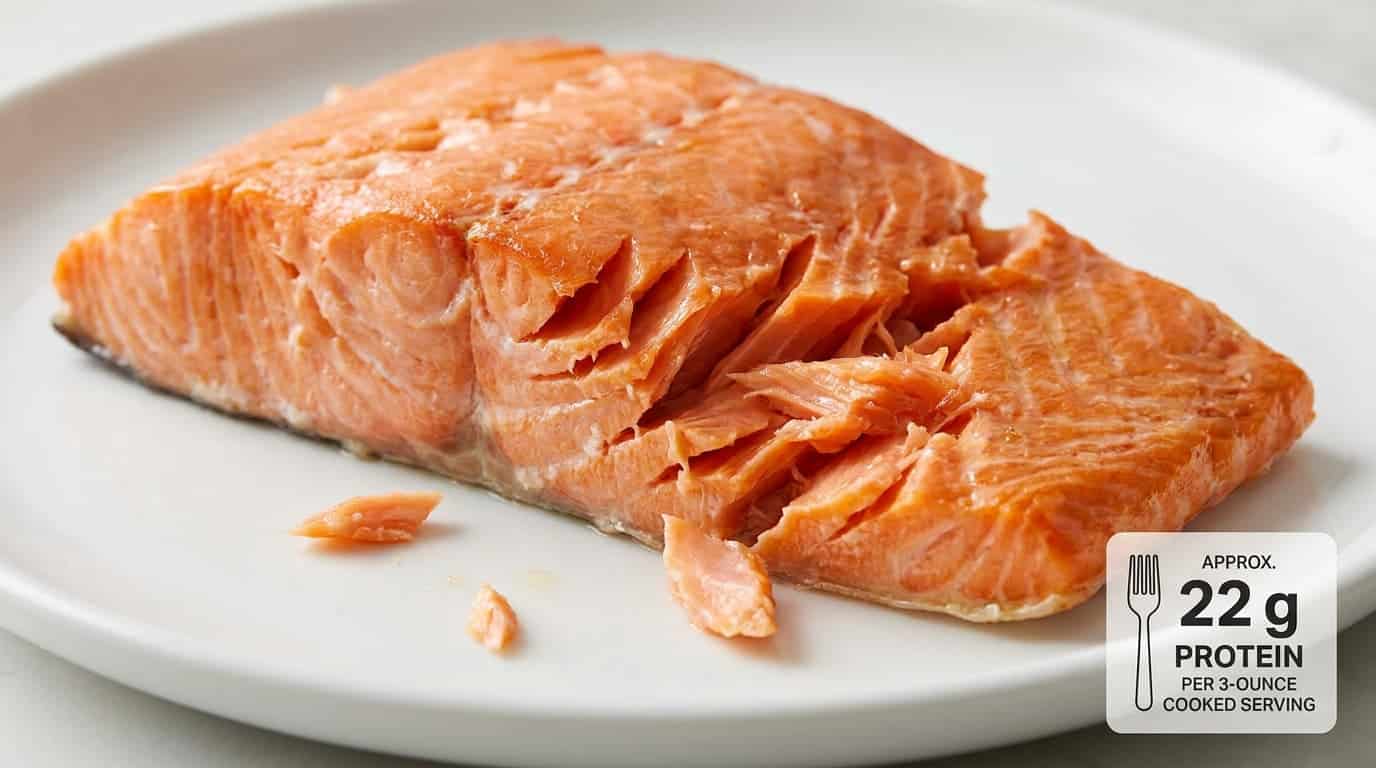
A 3-ounce serving of cooked sockeye salmon has about 22 grams of protein. That protein contains all nine essential amino acids. Your body cannot produce these on its own.
Complete protein supports muscle repair after exercise. It also keeps you full longer because protein takes more time to digest than carbohydrates.
2. EPA and DHA Omega-3 Fatty Acids
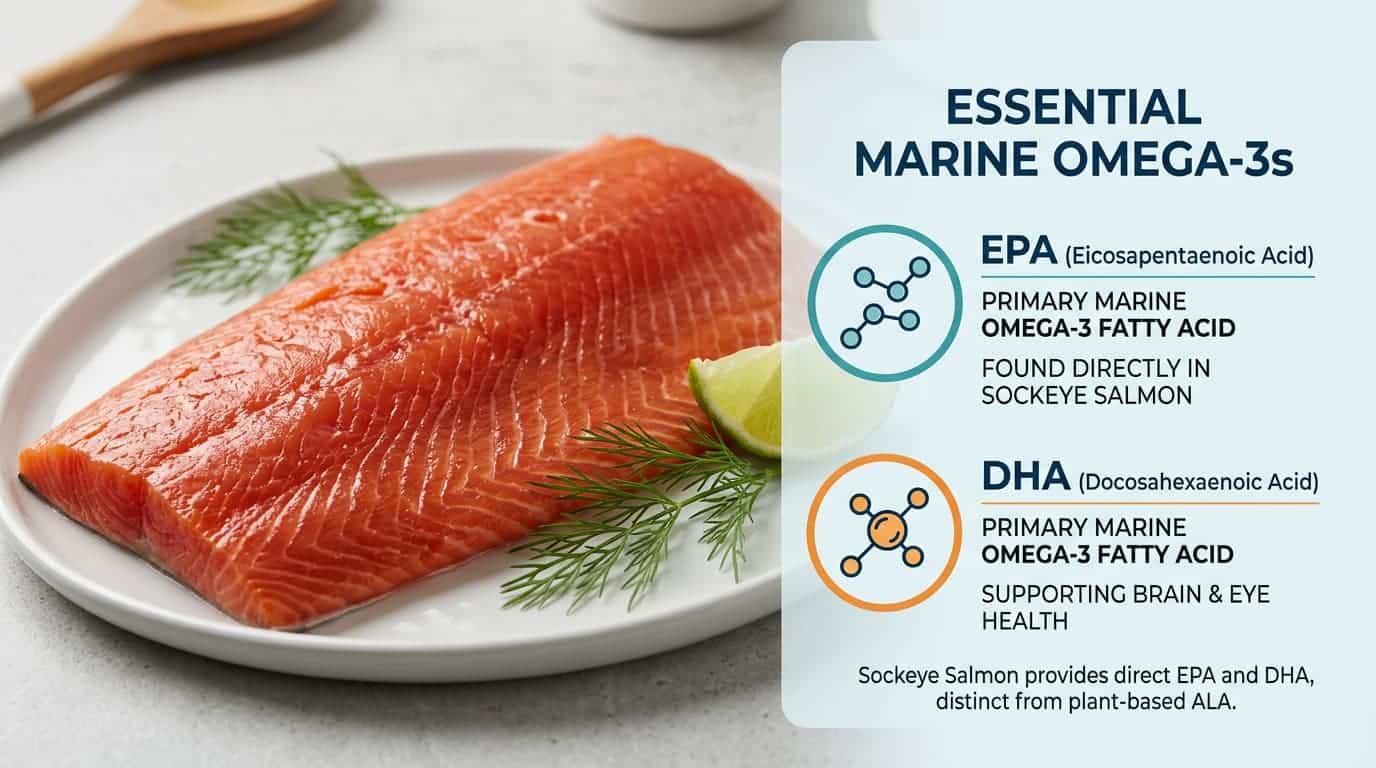
Sockeye salmon’s omega-3 content comes from EPA and DHA. These are the two forms of omega-3 found mainly in fish and seafood, as identified by the National Institutes of Health (NIH).
Plant foods like flaxseed contain a different form called ALA. Your body converts only a small amount of ALA into EPA and DHA. Eating fish gives you both directly.
3. Vitamin D
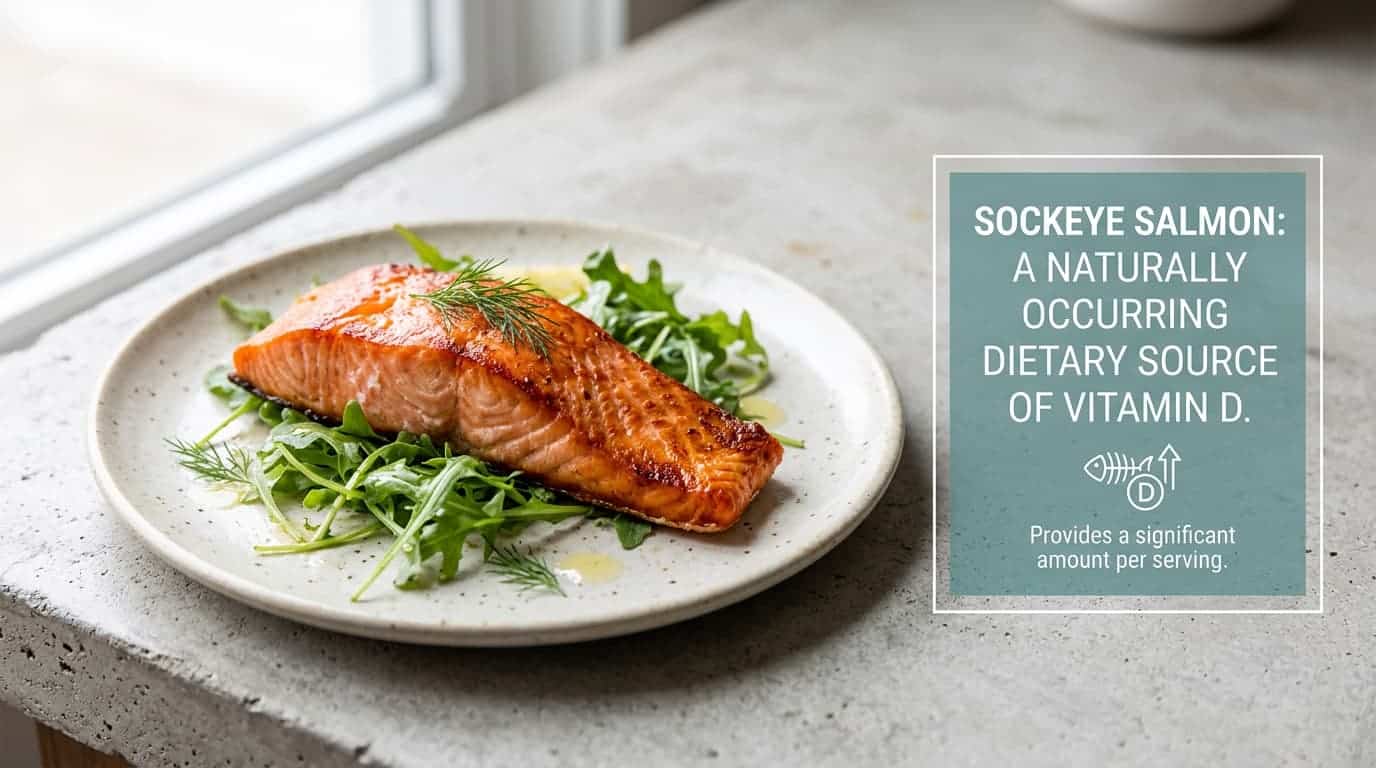
Sockeye salmon is one of the few foods with meaningful vitamin D in its natural form. A 3-ounce serving covers close to three-quarters of the daily value. Most foods need to be fortified to reach that level.
4. Vitamin B12 and Other B Vitamins
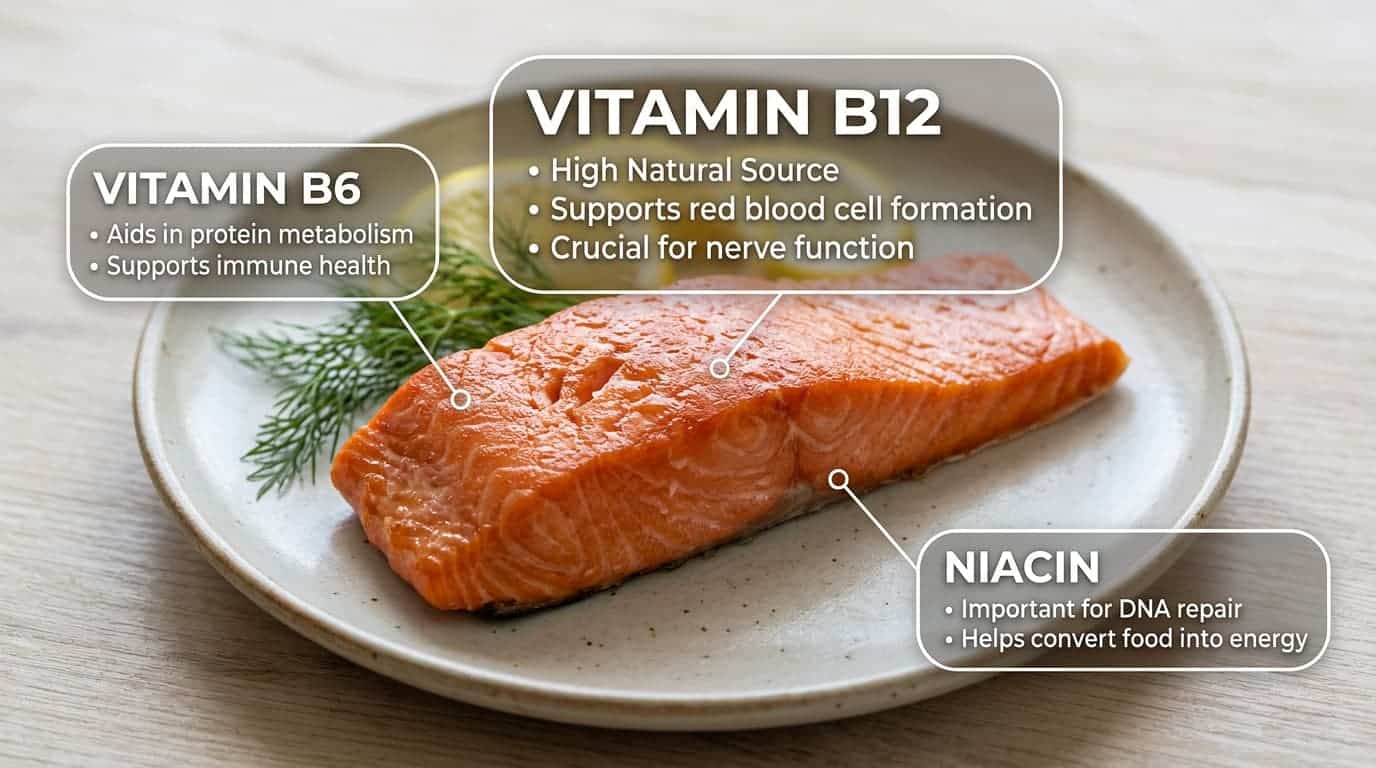
One serving of sockeye covers well over your full daily B12 need. B12 supports nerve function and helps your body make red blood cells. Vitamin B6 and niacin are also present in solid amounts. They help convert food into usable energy throughout the day.
5. Selenium, Potassium and Phosphorus
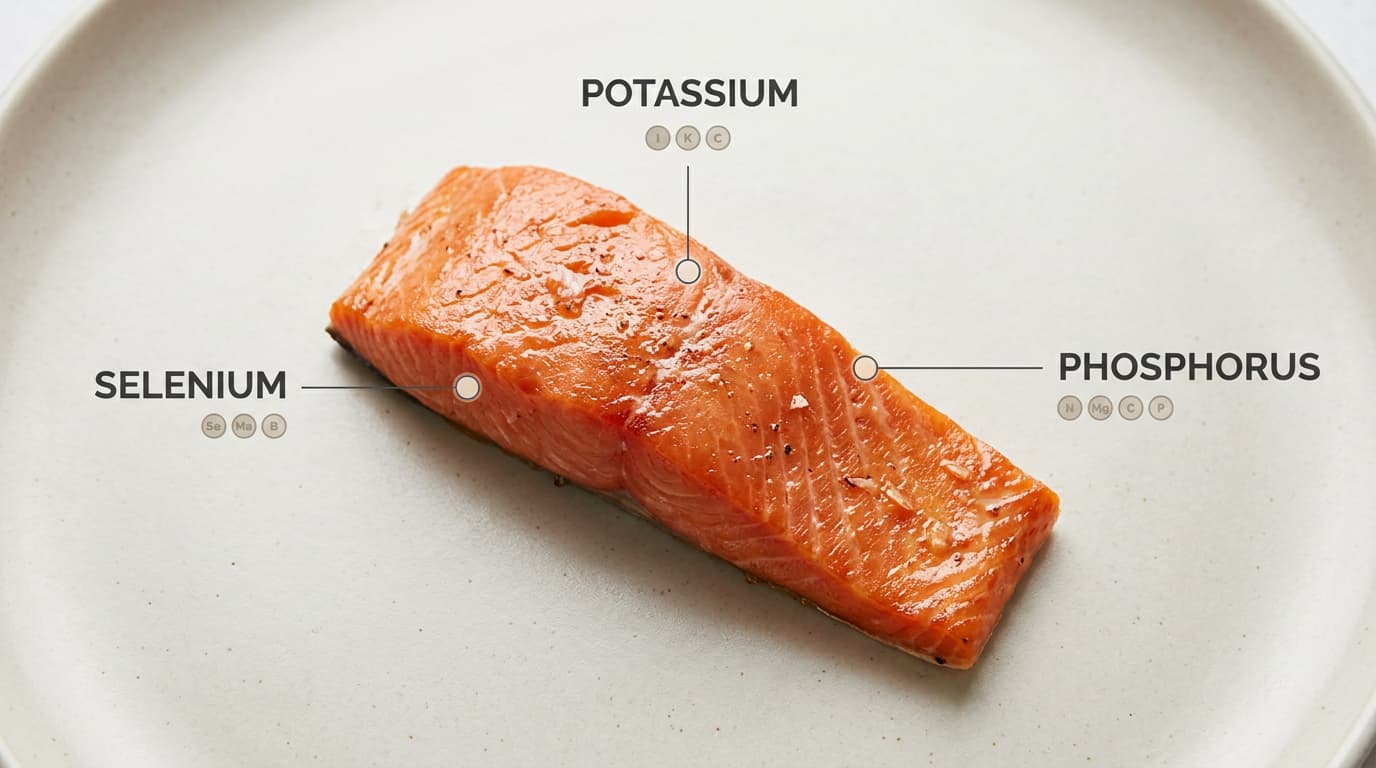
Sockeye salmon supplies three key minerals in each serving. Selenium covers more than half your daily need. Phosphorus supports bone structure, and potassium helps regulate blood pressure and fluid balance.
6. Astaxanthin
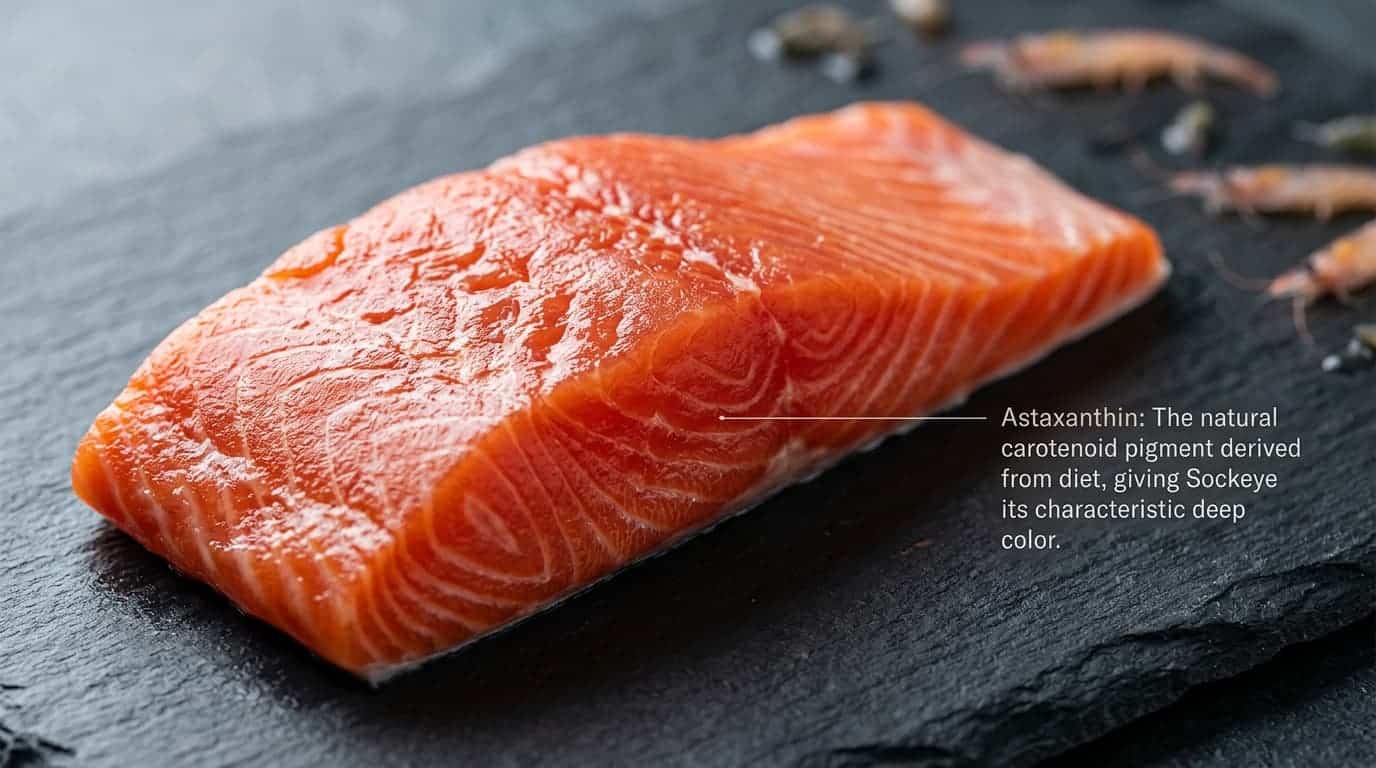
Astaxanthin is the carotenoid pigment that gives sockeye its deep red color. Wild sockeye gets it from the krill and plankton it eats. Farmed salmon often needs astaxanthin added to its feed to reach a similar color.
Beyond color, astaxanthin acts as an antioxidant. Early research shows it may help protect cells from oxidative stress.
Sockeye Salmon vs. Other Salmon: Nutrition Compared
Not all salmon has the same nutrition profile. Sockeye is the leanest option with the highest protein-per-calorie ratio. The comparison below uses standard cooked 100-gram portions.
| Salmon Type | Calories | Protein | Fat | Omega-3s | Key Difference |
|---|---|---|---|---|---|
| Sockeye (wild) | 156 kcal | 26.5 g | 5.6 g | ~1.0 g | Leanest, deep red flesh |
| Atlantic (farmed) | 206 kcal | 22 g | 12 g | ~1.5–2.0 g | Higher fat and omega-3s |
| King/Chinook | 231 kcal | 25.7 g | 13.4 g | ~1.5 g | Richest and fattiest |
| Coho | 139 kcal | 23.5 g | 4.3 g | ~1.0 g | Moderate across the board |
Sockeye and Coho are the two leanest options. If you want the most protein for the fewest calories, sockeye wins. If total omega-3 count is your goal, Atlantic or King salmon delivers more per gram of fat.
Health Benefits of Sockeye Salmon
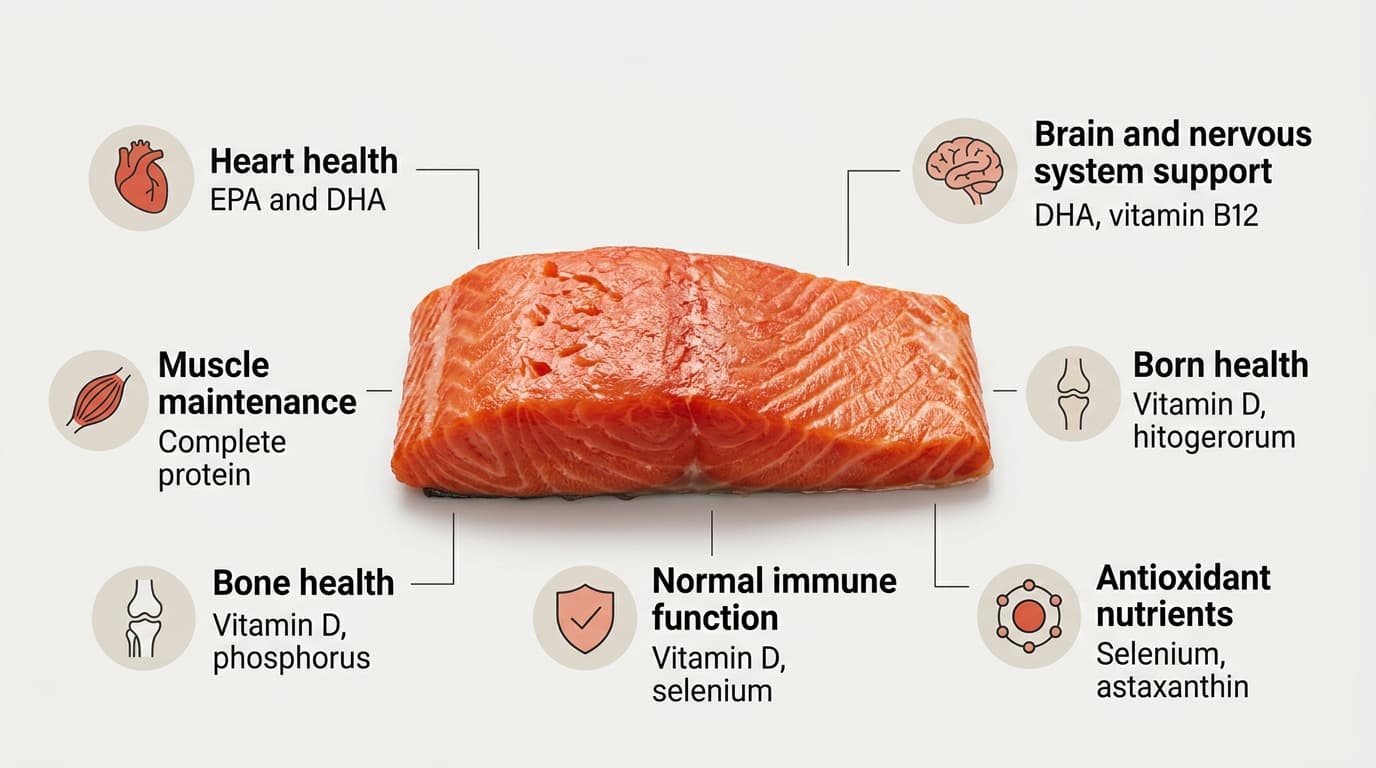
Sockeye salmon’s nutrients connect to several areas of health. These outcomes are not guaranteed by one type of fish alone. The research behind each nutrient, though, points in a consistent direction.
1. Supports Heart Health
EPA and DHA from sockeye are linked to heart health across a large body of research. The American Heart Association recommends eating fatty fish at least twice a week. Replacing red meat or processed protein with sockeye also cuts back on saturated fat. Both changes support overall cardiovascular health.
2. Supports Brain and Nerve Function
DHA makes up a large portion of the fat in your brain. Diets higher in DHA are connected to normal brain function throughout life. Vitamin B12 also supports nerve signaling and transmission. Sockeye delivers both nutrients in every serving.
3. Helps Maintain Muscle
Sockeye’s complete protein gives your muscles the amino acids they need to repair after activity. Getting enough protein regularly also helps slow muscle loss as you get older. This is especially true when paired with resistance exercise. Sockeye fits well as a post-workout protein option for active adults.
4. Supports Bone Health
Bones need more than calcium alone. Vitamin D helps your body absorb calcium. Phosphorus supports bone mineral density. Protein contributes to overall bone structure. Sockeye salmon provides all three of these in one serving.
5. Supports Joint Health
Omega-3 fatty acids from fish may help reduce joint tenderness and stiffness. Research from the Arthritis Foundation links EPA and DHA to reduced inflammation in people with rheumatoid arthritis. Eating sockeye regularly as part of a balanced diet may support joint comfort over time.
6. Supports Normal Immune Function
Vitamin D and selenium both play roles in how your immune system works. Protein also supports the production of antibodies. Sockeye salmon’s combination of these three nutrients makes it a useful food within an overall immune-supportive diet.
7. Provides Antioxidant Support
Selenium works inside antioxidant enzymes that protect cells from oxidative stress. Astaxanthin, the pigment behind sockeye’s color, also shows antioxidant activity in early research. Together, they add another layer to sockeye’s already strong nutrient profile.
Does Cooking Change Sockeye Salmon Nutrition?
The cooking method itself changes the nutrition profile very little. What shifts is moisture content and anything you add to the fish.
- Cooked vs. raw: Cooking removes water. This concentrates protein, fat, and minerals per 100 grams. The fish gains nothing nutritionally. Numbers just look higher because the food is denser.
- Baked or grilled: These methods add no extra calories. They are the cleanest ways to prepare sockeye without changing its nutritional value.
- Pan-fried: Added butter or oil raises the calorie count. The salmon itself stays the same. The additions change the total.
- Canned sockeye: Canned salmon stays nutrient-rich. If you eat the soft, edible bones, you also get a meaningful calcium boost that a fresh fillet does not offer.
- Smoked sockeye: The curing process adds a large amount of sodium. Fresh, baked, or grilled sockeye sits at around 78 mg of sodium per serving. Smoked versions can run several times higher. Check labels if you are managing sodium intake.
How Much Sockeye Salmon Should You Eat Per Week?
The FDA and EPA recommend 2 to 3 servings of low-mercury fish per week. That works out to about 8 to 12 ounces total. Sockeye fits well within that range.
A single serving is about 3 to 4 ounces, roughly the size of a deck of cards. Eating sockeye twice a week gives you solid protein, omega-3s, and vitamin D without excess mercury exposure.
You do not need to eat it every day to see these benefits. Pairing it with other low-mercury fish like shrimp, trout, or tilapia adds variety and keeps your weekly fish intake within the recommended range.
Is Sockeye Salmon Safe to Eat Regularly?
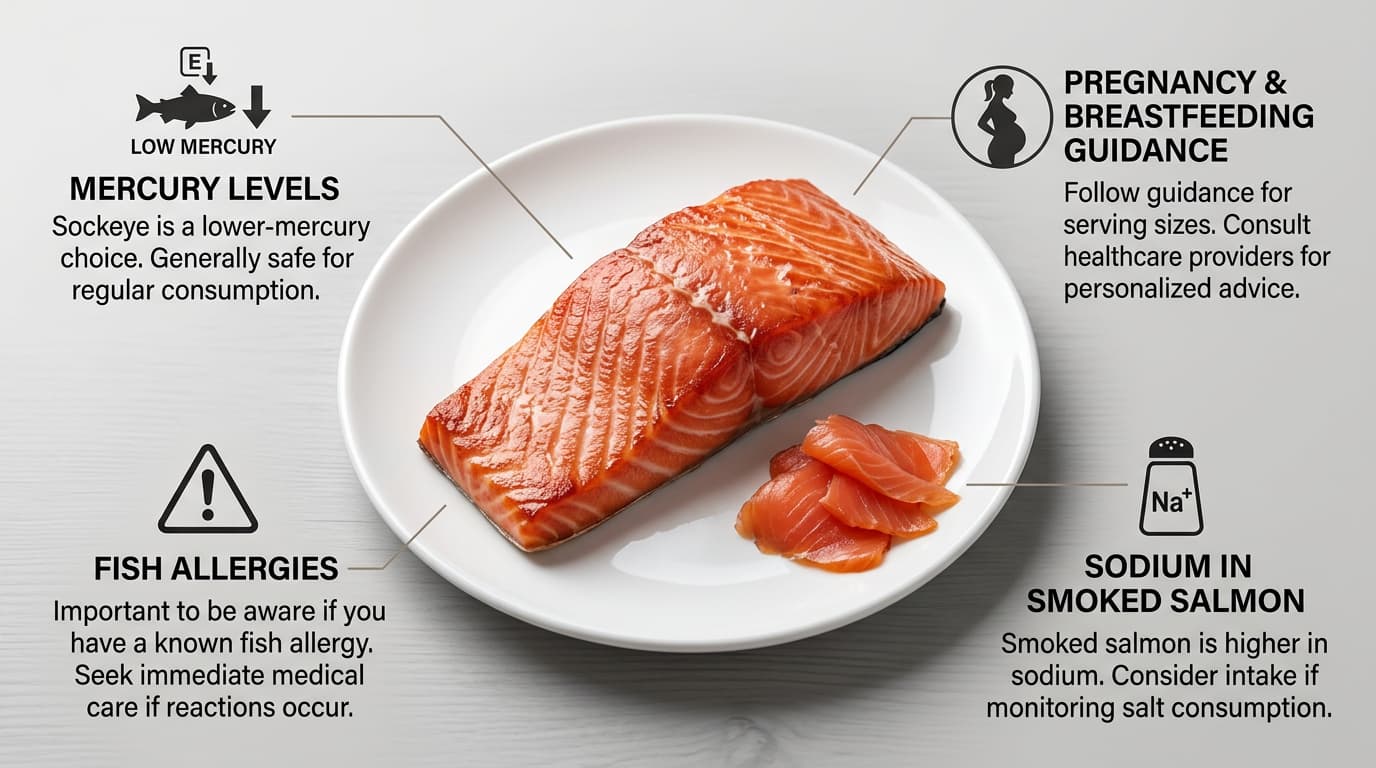
Sockeye salmon is safe for most people to eat regularly. A few groups need to pay closer attention to specific factors.
1. Mercury Levels
Salmon, including sockeye, sits on the FDA and EPA’s “Best Choices” list for mercury. This category covers fish that are among the lowest in mercury. The guidance allows 2 to 3 servings per week for most adults.
2. Pregnancy and Breastfeeding
The FDA and EPA recommend 8 to 12 ounces of low-mercury fish per week during pregnancy and breastfeeding. Salmon falls into that safe category. For personal guidance, speak with your doctor or refer directly to the FDA and EPA fish advice page.
3. Fish Allergies
People with a fish allergy should avoid sockeye salmon. A fish allergy can trigger a serious reaction. Speak with an allergist before eating salmon for the first time if you are unsure.
4. Sodium in Smoked Salmon
Fresh and baked sockeye stays low in sodium. Smoked sockeye can carry several times more sodium per serving due to the curing process. If you are watching sodium, treat smoked salmon as an occasional choice rather than a daily one.
How to Buy and Store Sockeye Salmon
Getting the most from sockeye salmon nutrition starts with choosing a fresh or properly frozen product.
Buying Tips
- Look for packaging labeled “wild” or “wild-caught” to confirm it is not a farmed substitute.
- Choose packages marked “sustainable seafood” when possible.
- Fresh sockeye should have a clean, ocean-like smell. Avoid anything with a strong ammonia odor.
- For smoked sockeye, avoid products with dried or brown edges that appear wet or leaky.
- Frozen sockeye keeps nearly all the same nutrients as fresh. Freezing locks in protein, fat, and vitamins soon after the catch.
Storage Tips
- Fresh sockeye goes bad quickly if not kept cold. Store it in the fridge and use within 1 to 2 days of purchase.
- Cooked sockeye stays fresh in the fridge for 3 to 4 days in a sealed container.
- For longer storage, keep it in the freezer. Whole fillets, steaks, and portions all freeze well.
How Much Sockeye Salmon Should You Eat?
The FDA and EPA recommend 2 to 3 servings of low-mercury fish each week. That works out to about 8 to 12 ounces total. Sockeye salmon fits well within that range as a regular part of your diet.
A single serving is about 3 to 4 ounces, roughly the size of a deck of cards. Eating sockeye twice a week covers a solid amount of protein, omega-3s, and vitamin D without excess mercury exposure.
There is no need to eat it daily to get these benefits. Pairing it with other low-mercury fish, like shrimp or trout, adds variety. This keeps your overall fish intake within the recommended range.
Disclaimer: This article is for informational purposes only and does not replace professional medical or dietary advice. Speak with a registered dietitian or your doctor before making significant changes to your diet, especially if you have a health condition, are pregnant, or are managing a chronic illness.
Final Thoughts on Sockeye Salmon Nutrition
Sockeye salmon nutrition offers a powerful mix of protein, omega-3s, vitamin D, and B12 in every serving.
Its nutrients support heart, brain, muscle, bone, and immune health. Fresh or canned options can be healthy choices, while smoked versions may contain more sodium.
Eating sockeye salmon two to three times a week can help meet seafood intake recommendations.
Frequently Asked Questions
Is Sockeye Salmon Keto-Friendly?
Yes. Sockeye salmon has zero carbohydrates, high protein, and moderate healthy fat. It fits well within low-carb and ketogenic eating plans.
Can you eat sockeye salmon skin?
Yes, the skin is safe to eat and holds extra omega-3 fat. Clean it well before cooking and cook it until it turns crisp for the best texture and flavor.
Is frozen sockeye salmon less nutritious than fresh?
No. Frozen sockeye retains nearly all the same nutrition as fresh. The freezing process locks in protein, fat, and vitamins shortly after harvest without meaningful nutrient loss.
How long does cooked sockeye salmon last in the fridge?
Cooked sockeye salmon stays fresh in the fridge for about 3 to 4 days. Store it in a sealed container to keep it safe.
Does sockeye salmon contain iron?
Yes, sockeye salmon contains a small but useful amount of iron per serving. It is not a major iron source, but it contributes alongside its other minerals, including selenium, potassium, and phosphorus.