Leaning forward can ease spinal stenosis symptoms by reducing pressure on compressed nerves. Physical therapy uses targeted exercises and movement changes to improve mobility and manage pain.
This article covers helpful exercises, movements to avoid, and when to seek professional care.
What Is Spinal Stenosis and How Does It Feel?
Spinal stenosis happens when the spinal canal narrows and puts pressure on nearby nerves or the spinal cord. This narrowing usually develops slowly. Arthritis, disc changes, and general wear as the body ages are the most common causes.
It can affect the lower back (lumbar stenosis) or the neck (cervical stenosis). Lumbar stenosis is far more common in adults over 60.
One of the most recognizable patterns is neurogenic claudication. It causes leg heaviness, cramping, or weakness after walking a certain distance. The symptoms ease quickly when you sit down or lean forward. The shopping cart sign is a real-world version of this response. It points directly to nerve compression in the lumbar spine.
- Lumbar stenosis tends to cause leg pain, cramping, and weakness
- Cervical stenosis can affect the arms and balance
- Symptoms get worse with standing or walking and ease when sitting or leaning forward
Why Does Spinal Stenosis Physical Therapy Work?
Stronger core and hip muscles take pressure off compressed nerves. Better flexibility reduces stiffness. Improved movement patterns mean less strain during daily tasks.
A key reason many exercises for this condition are flexion-based comes down to space. Bending slightly forward opens the spinal canal and gives compressed nerves a little more room.
This is the same reason sitting or leaning forward feels better than standing upright. Exercises that use this position produce the same relief during movement.
Research note: A 2022 systematic review found that combining manual therapy with exercise led to short-term improvements in symptoms and function. These gains were clinically meaningful for people with spinal stenosis. Progress is usually gradual. Consistency matters more than intensity.
What Does a Physical Therapist Actually Do?

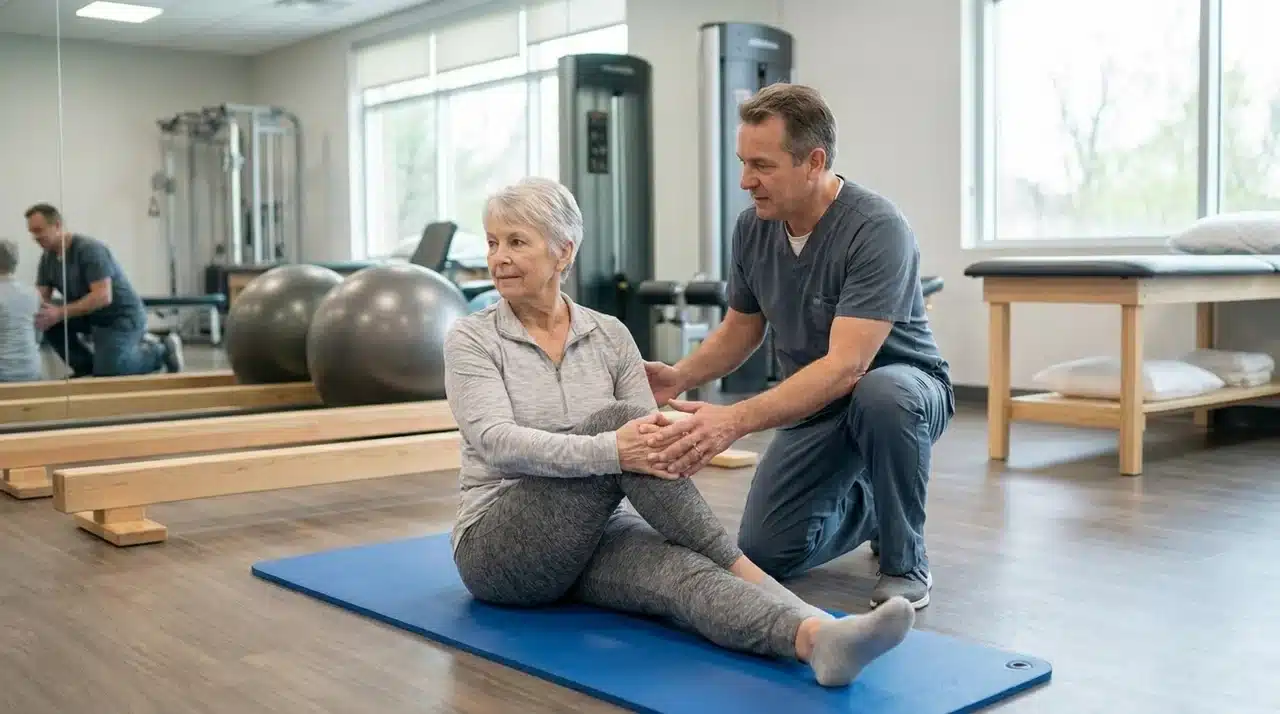
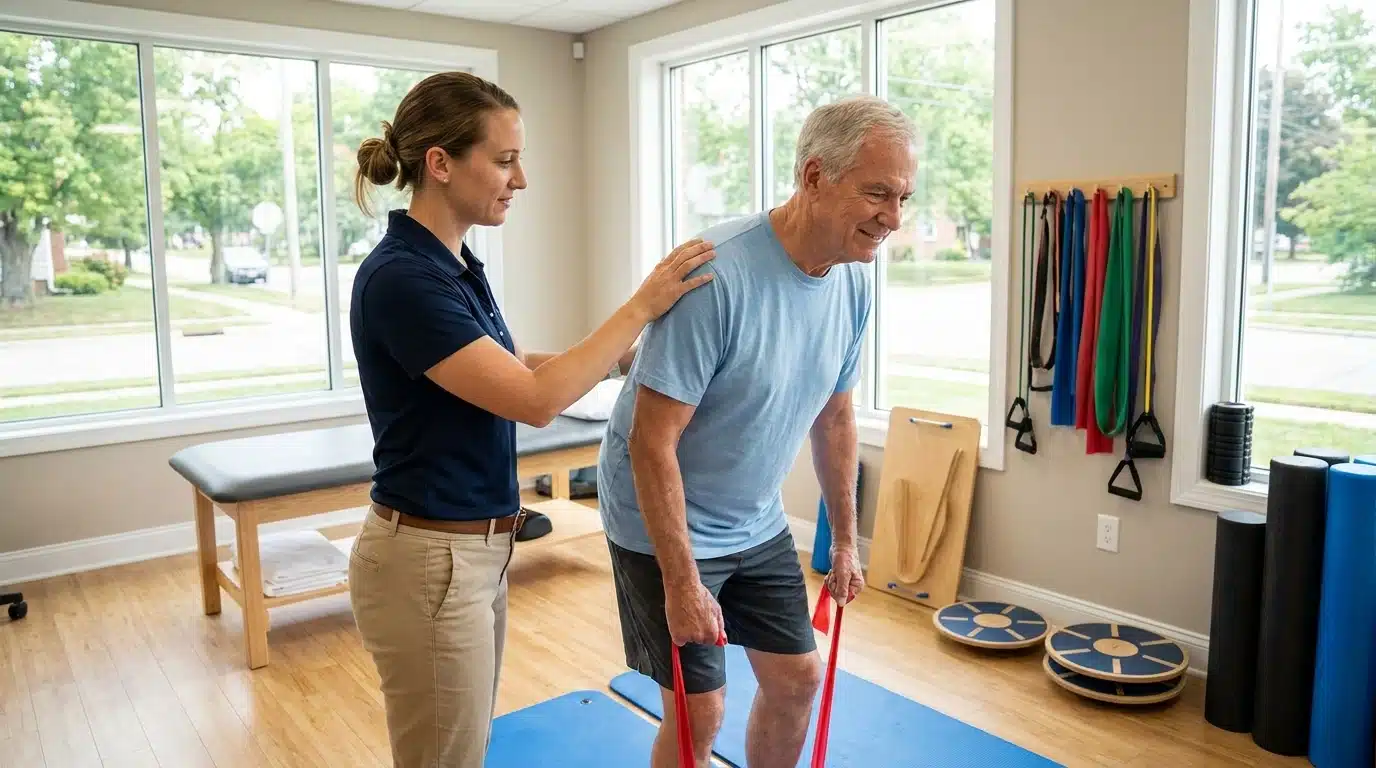
A physical therapist does more than hand you an exercise sheet. They assess your posture, mobility, strength, and movement patterns. From there, they build a plan that fits your specific symptoms and goals. No two programs look exactly the same.
Sessions often include:
- Exercise instruction and step-by-step progression
- Soft tissue work and joint mobilization to reduce stiffness
- Posture and movement training for daily tasks like sitting, standing, and lifting
- Nerve mobility exercises, when appropriate, to reduce nerve sensitivity
- Balance and gait training if walking feels unsteady
Clinical guidelines recommend at least 6 weeks of supervised physical therapy as the first step for lumbar spinal stenosis with neurogenic claudication. Home exercises alone are not enough. Structured sessions with a therapist produce better results than going it alone.
How long does PT take? Most programs run 2 to 3 sessions per week for at least 6 weeks. Many people notice improvement within 4 to 6 weeks of starting. Your therapist will adjust the schedule as your mobility improves.
Physical Therapy Exercises for Spinal Stenosis
Exercise sits at the center of most programs. A therapist typically builds a plan around four categories: gentle mobility work, stretching, strengthening, and low-impact movement.
Check with your provider before trying new movements at home. Adjust everything based on your own comfort level.
1. Gentle Mobility Exercises
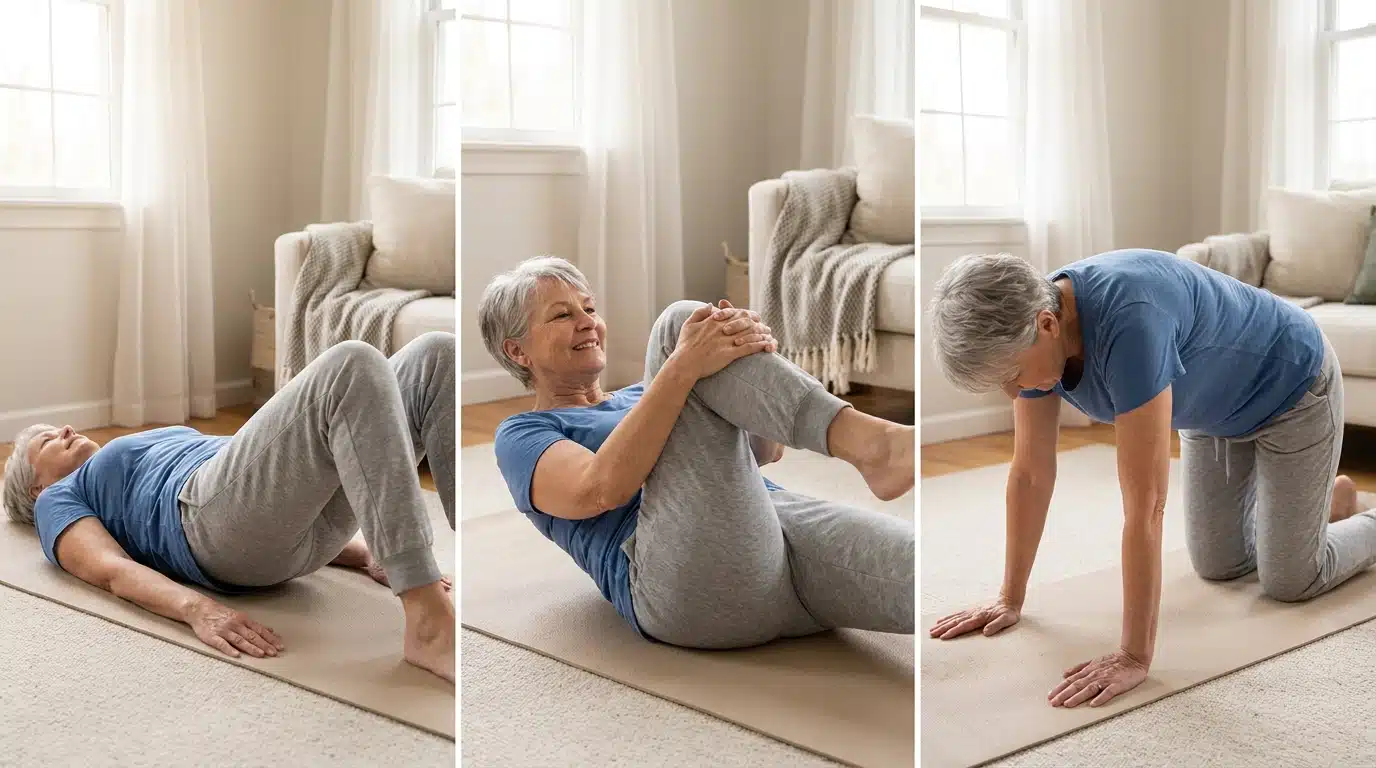
These exercises keep the lower back moving without putting extra stress on sensitive nerves or joints. They are often the first step in a program. They reduce morning stiffness and prepare the body for more active work later.
Pelvic Tilts
Lie on your back with knees bent and feet flat on the floor. Gently tilt your pelvis to flatten your lower back against the floor. Hold for a few seconds and release. Repeat 10 times. This improves core control and eases lower back stiffness.
Knee-to-Chest Stretch
Pull one knee at a time toward your chest while lying on your back. Hold for 20 to 30 seconds. Switch sides. This eases lower back tension and may create a more comfortable position for irritated spinal nerves.
Cat-Cow Stretch
On hands and knees, slowly alternate between arching and rounding your back. Move at your own pace for 10 repetitions. This supports spinal flexibility and body awareness without adding strain.
2. Stretching Exercises
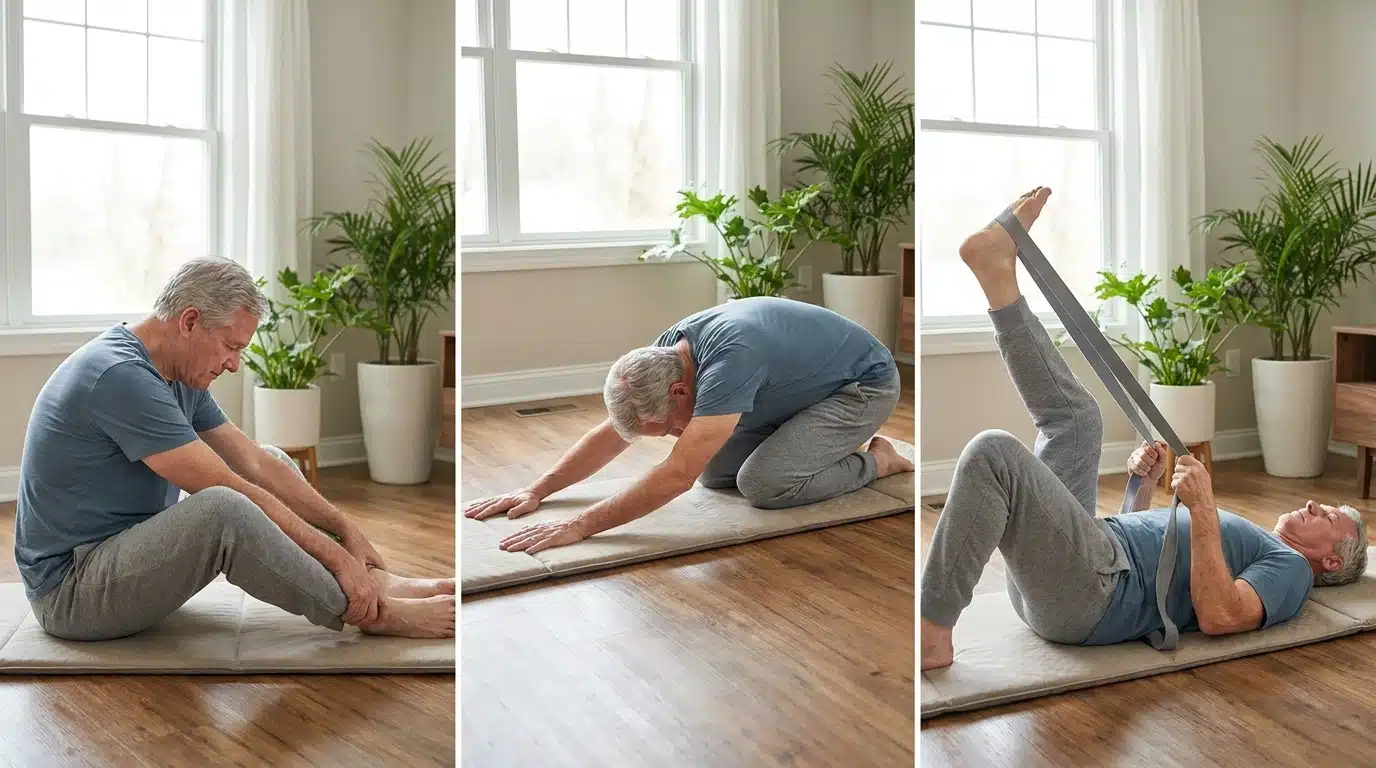
Stretching improves flexibility and reduces the tightness that often makes movement harder. Flexion-based stretches work well here because they open space around the spinal nerves.
Seated Forward Bend
Sit at the edge of a chair with knees apart. Slowly bend forward and let your arms hang toward the floor. Keep the movement slow and controlled. Hold for 20 to 30 seconds. This stretches the lower back and hamstrings in a position that tends to feel easier with stenosis symptoms.
Child’s Pose
From a kneeling position, sit back toward your heels and stretch your arms forward on the floor. Hold for 20 to 30 seconds. This relaxes the hips and lower back through a gentle forward bend.
Hamstring Stretch
Lie on your back and gently pull one straightened leg toward you using a towel or strap. Hold for 20 to 30 seconds. Better hamstring flexibility supports posture and reduces extra strain on the lower back during daily activities.
3. Core and Hip Strengthening
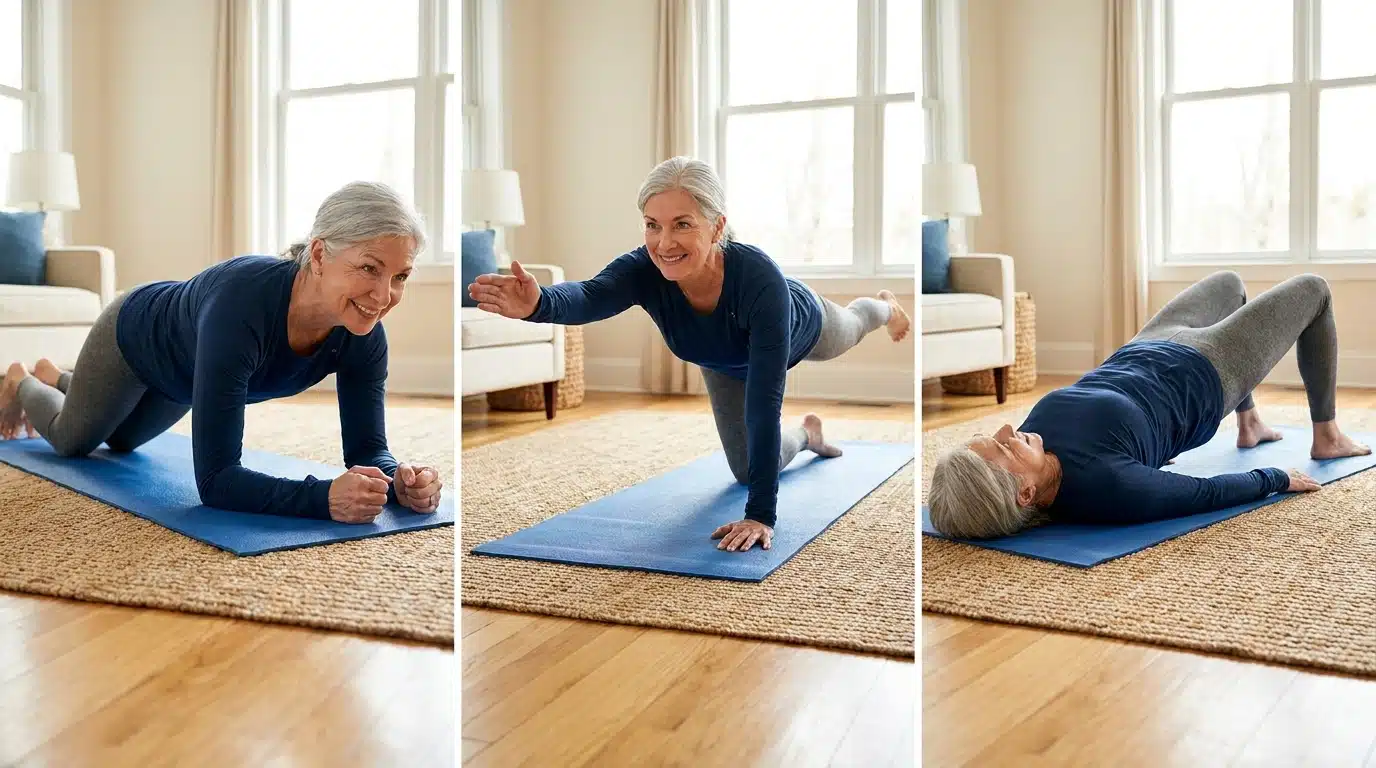
Building strength around the core and hips creates better support for the spine during everyday movement. These muscles control stability, reduce strain on the lower back, and make position changes feel more controlled.
Modified Plank
Start on your forearms and knees rather than your toes. Hold a straight body position for 15 to 30 seconds. This builds core stability without excessive lower back strain.
Bird-Dogs
From hands and knees, extend one arm and the opposite leg at the same time. Hold for a few seconds and switch sides. Aim for 8 to 10 repetitions. This improves coordination and strengthens the core, hips, and back together.
Glute Bridges
Lie on your back with knees bent. Press your feet into the floor and lift your hips. Hold until your body forms a straight line from knees to shoulders. Lower slowly. Repeat 10 to 12 times. This strengthens the hips and pelvic muscles that support the lower back during walking and standing.
4. Walking and Low-Impact Movement
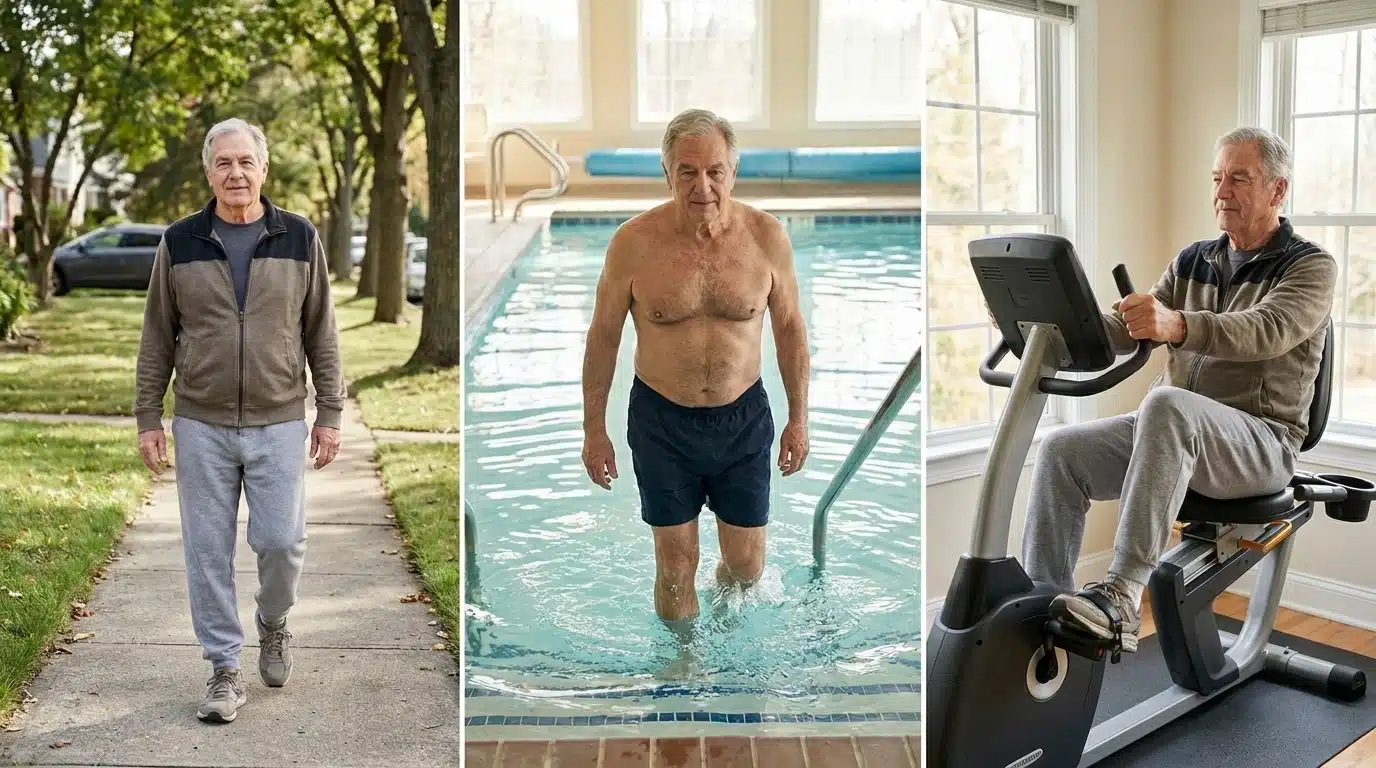
Low-impact activities build endurance while placing less stress on the spine. Walking is often recommended because it supports circulation, builds daily movement tolerance, and allows gradual progression.
Short Walking Sessions
Start with 5 to 10 minutes and increase gradually. Walking on a slight forward incline puts the spine in mild flexion. This may reduce discomfort during longer sessions.
Pool Walking
The water reduces pressure on the spine while still building endurance. This works well for people who find land-based walking difficult at the start.
Stationary Cycling
The forward-leaning seat position keeps the spine in slight flexion. This improves cardiovascular fitness and tends to feel more comfortable than walking for many people with stenosis.
Movements to Avoid With Spinal Stenosis
Not all exercise is helpful. Some movements increase pressure on already-compressed nerves and can make symptoms worse.
Stop any exercise that causes sharp pain, increased numbness, or symptoms that spread further into a leg or arm. Adjust the movement or skip it until you speak with your therapist.
- Back extension exercises (such as cobra poses or standing backbends) reduce the space inside the spinal canal. They may increase pain or worsen leg symptoms.
- High-impact activities like running and jumping create repeated stress that can aggravate the spine.
- Prolonged standing without movement breaks keeps the spine in an extended position, which tends to increase discomfort.
- Heavy lifting with poor form places sudden, uneven load on the lower back. Avoid it until your therapist clears the movement.
You do not need to avoid exercise altogether. Most movements can be adjusted to suit your comfort level. Your therapist will help you find the right version of each exercise.
How to Build Your Exercise Routine for Spinal Stenosis
Start slowly. Begin with a few comfortable movements. Then gradually increase the time, repetitions, or difficulty as your strength and comfort improve.
| Phase | Focus | Example Activities |
|---|---|---|
| Weeks 1–2 | Gentle mobility and pain management | Pelvic tilts, knee-to-chest, cat-cow |
| Weeks 3–4 | Stretching and basic strengthening | Child’s pose, hamstring stretch, modified plank |
| Weeks 5–6 | Progressive strengthening and walking tolerance | Bird-dogs, glute bridges, short walking sessions |
| Beyond 6 weeks | Maintenance and long-term mobility | Stationary cycling, pool walking, full routine |
Tracking changes helps. Keep a simple record of stiffness levels, pain before and after exercise, and how far you can walk. These notes help you and your therapist understand what is working.
Rest days matter. They give your body time to recover while regular practice builds momentum. Even after symptoms improve, a maintenance routine helps you stay active and avoid setbacks.
Lifestyle Habits That Support Spinal Health
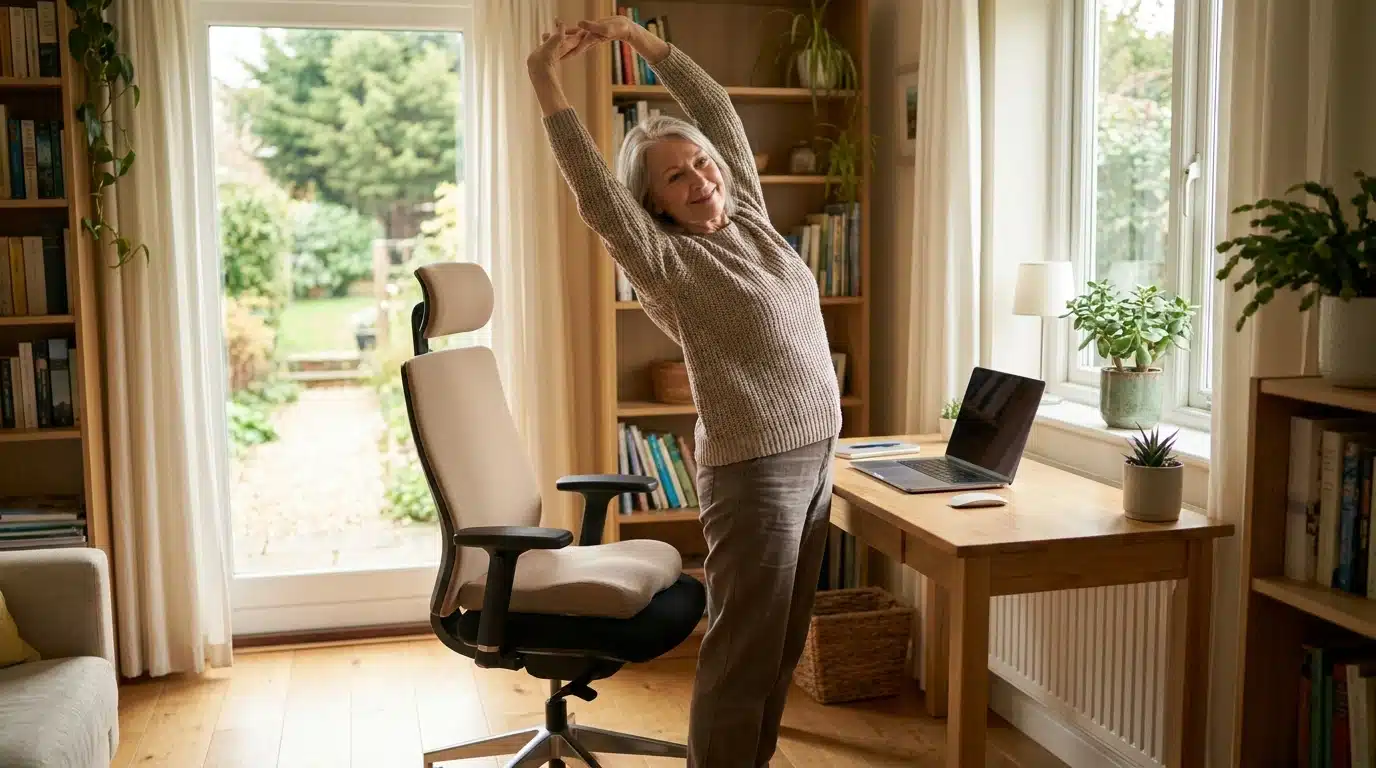
What you do outside of therapy shapes how your body feels day to day. Small, consistent changes add up over time.
- Change positions regularly. Avoid sitting or standing in one place for long periods. A quick walk or stretch every 30 to 45 minutes prevents stiffness from building up.
- Pay attention to posture during tasks. Adjust how you sit at a desk and how you lift from a low shelf. Limit how long you stand in one spot. Small changes reduce unnecessary strain on the spine.
- Adjust your sleep position. Side sleeping with a pillow between the knees works well. Placing a pillow under the knees when sleeping on your back also helps maintain a comfortable spinal position overnight.
- Practice nerve mobility exercises recommended by your therapist. Gentle nerve mobility work done consistently between sessions can reduce sensitivity and support smoother daily movement.
These habits are not a replacement for therapy. They carry the benefits of your sessions into the rest of your day.
When to See a Physical Therapist or Doctor
Gentle exercises and movement changes are a reasonable starting point. But there are times when professional guidance becomes necessary.
See a Physical Therapist If:
- Home exercises are not improving symptoms after 2 to 3 weeks
- You are unsure which movements are helping or making things worse
- Walking distance keeps decreasing despite regular activity
See a Doctor Promptly if You Experience:
- Sudden or worsening leg weakness
- Loss of bladder or bowel control
- Major changes in balance
- Symptoms that spread further into both legs
These signs may need further medical evaluation before continuing with exercise.
Frequently Asked Questions
Can you do spinal stenosis exercises at home?
Many exercises can be done at home, but a physical therapist can help ensure they fit your symptoms and movement needs.
How often should you see a physical therapist?
The schedule depends on your symptoms and progress, but sessions are often adjusted as your mobility improves.
Can poor posture make spinal stenosis symptoms worse?
Poor posture may increase strain on the spine and make symptoms feel more noticeable. Improving sitting, standing, and movement habits can help reduce unnecessary stress.
What happens if you stop physical therapy exercises?
Stopping exercises completely may lead to reduced strength, flexibility, and mobility over time. Continuing a maintenance routine can help preserve the progress you have made.
How often should you see a physical therapist?
Most programs run 2 to 3 sessions per week for at least 6 weeks. Your therapist will adjust the schedule as your mobility and symptoms improve.
Managing Spinal Stenosis for the Long Term
Spinal stenosis physical therapy builds the strength and flexibility your spine needs to handle daily movement. The exercises ease symptoms. The bigger gain comes from building a body that handles movement better over time. Stronger muscles, better flexibility, and smarter daily habits all work together.
Stay consistent, adjust when needed, and get help at the right time. If pain flares, back down and give your body time to recover. If progress stalls, talk to your therapist about what to change.
Spinal stenosis physical therapy is not a one-time fix. It is a habit. Build the habit, and your body will reward you with better movement and less pain over time.
Share this article with someone managing the same symptoms. Subscribe to our newsletter for more movement guides like this one.