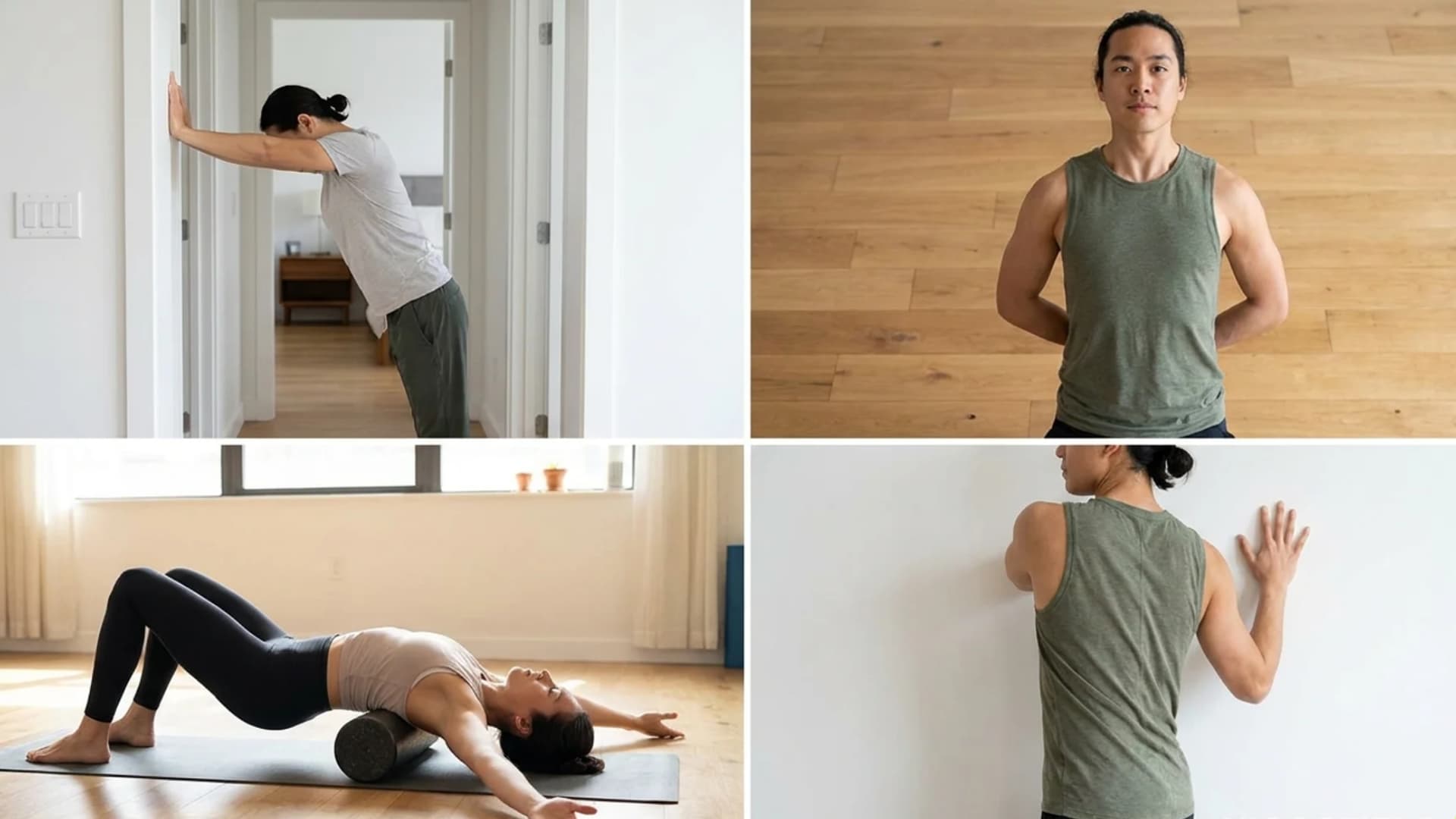
Chest tightness often comes from long hours at a desk, pushing workouts, or poor posture. Over time, tight pecs can contribute to rounded shoulders, upper-back tension, and limited shoulder movement.
Regular chest stretches can loosen tight muscles, open the shoulders, and support better posture.
Below are chest stretches with simple instructions, hold times, timing tips, and advice for soreness or strain.
What Are Chest Stretches?
Chest stretches are movements that lengthen the pectoral muscles at the front of the chest. They improve flexibility, reduce stiffness, and support better upper-body movement.
“Pec” is short for pectoral, so pec stretches and chest stretches mean the same thing.
Two muscles make up the chest:
- Pectoralis major: The large, fan-shaped muscle across the chest. It moves the arm across the body.
- Pectoralis minor: A smaller muscle that sits underneath. It connects to the shoulder blade and is often the culprit behind rounded shoulders.
These stretches lengthen the muscle rather than build it. A push-up contracts the pecs for strength. A stretch does the opposite and restores range of motion.
Your pecs control most arm and shoulder movement. When they tighten, stiffness often shows up as rounded shoulders or achy upper-back tension.
What Causes Tight Chest Muscles?
Tight chest muscles usually come from holding positions that keep the pecs short for too long. Not stretching them back out lets the tightness build.
Here are the most common causes and how each one affects the chest.
| Cause | How It Affects the Chest |
|---|---|
| Long hours sitting | Pulls the shoulders forward and shortens the chest muscles |
| Strength training | Repeated pushing exercises tighten the pecs over time |
| Poor posture | Creates ongoing tension across the chest and shoulders |
| Limited mobility | Reduces shoulder range of motion |
| Lack of stretching | Leaves muscles shortened after activity |
| Muscle strain | A pulled or overworked pec feels tight and tender as it recovers |
Hours hunched over a keyboard teach these muscles to stay short. Stretching is how you interrupt the pattern.
10 Best Chest Stretches to Relieve Tightness
These chest stretches effectively release tension. You can do almost all of them at home or at your desk with no equipment. Work through them in order or pick the ones that suit your situation best.
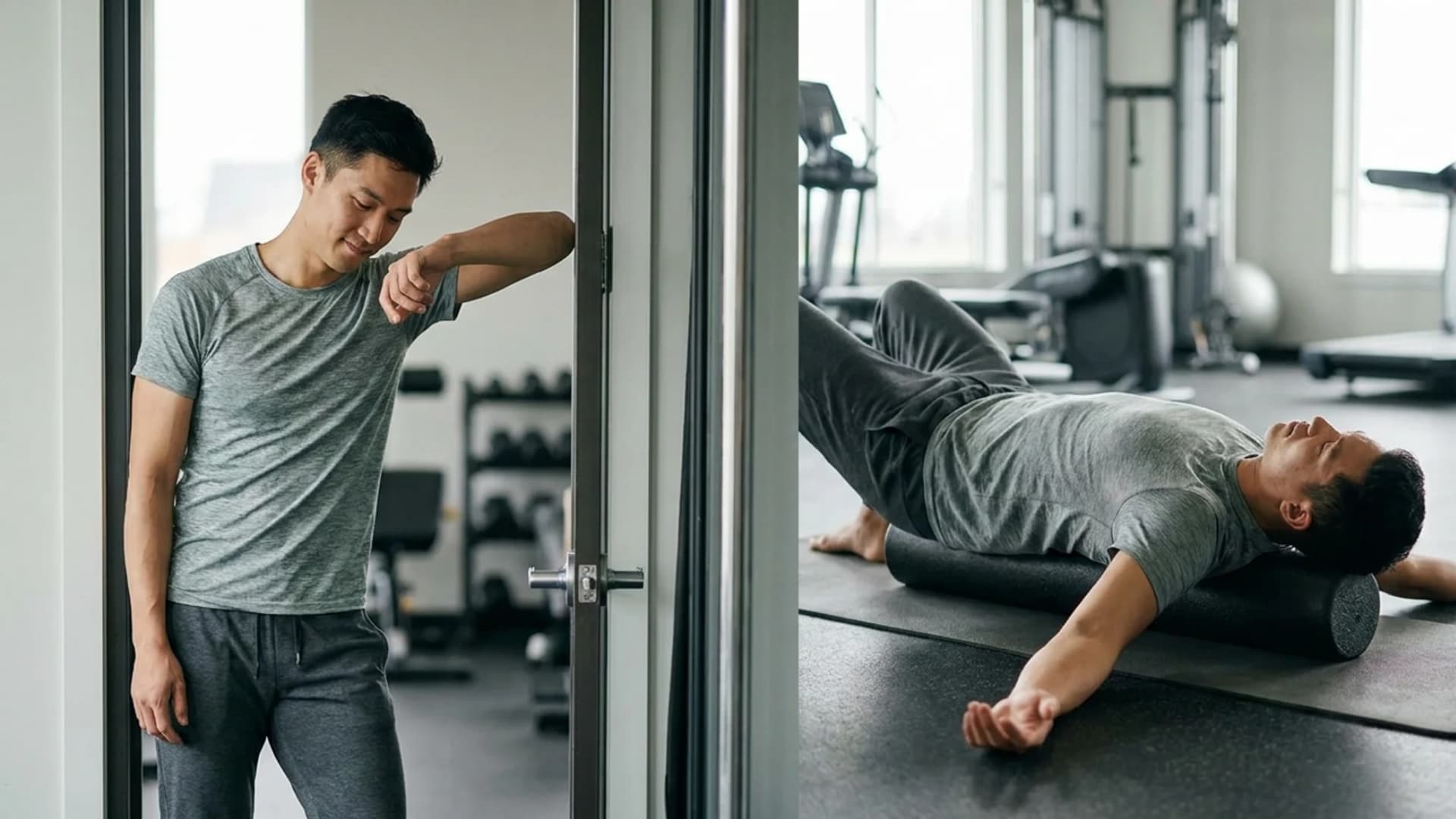
1. Doorway Chest Stretch
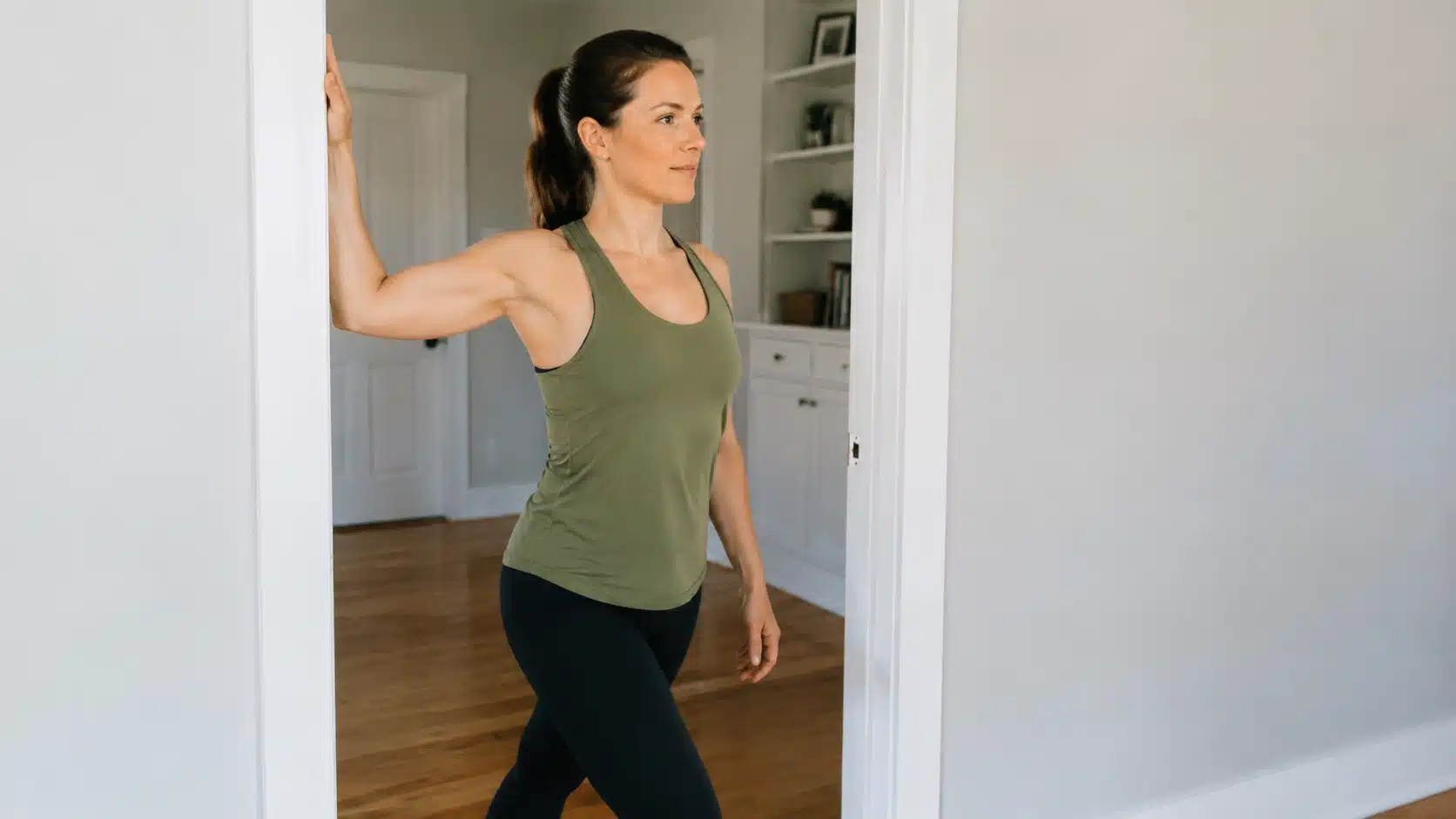
The doorway stretch is the most well-known option for opening tight pecs. The door frame gives you a fixed point to push against. It targets both the pectoralis major and minor.
How to do it:
- Stand in an open doorway and place your forearm against the frame.
- Bend your elbow to about 90 degrees, roughly at shoulder height.
- Step forward slowly with one foot until you feel a gentle stretch.
- Keep your shoulder relaxed and down, not shrugged toward your ear.
- Hold, then switch sides.
Common mistake: Forcing the step forward and letting the shoulder creep up. The stretch should feel like a mild pull, never a sharp pinch in the front of the shoulder.
2. Standing Chest Stretch
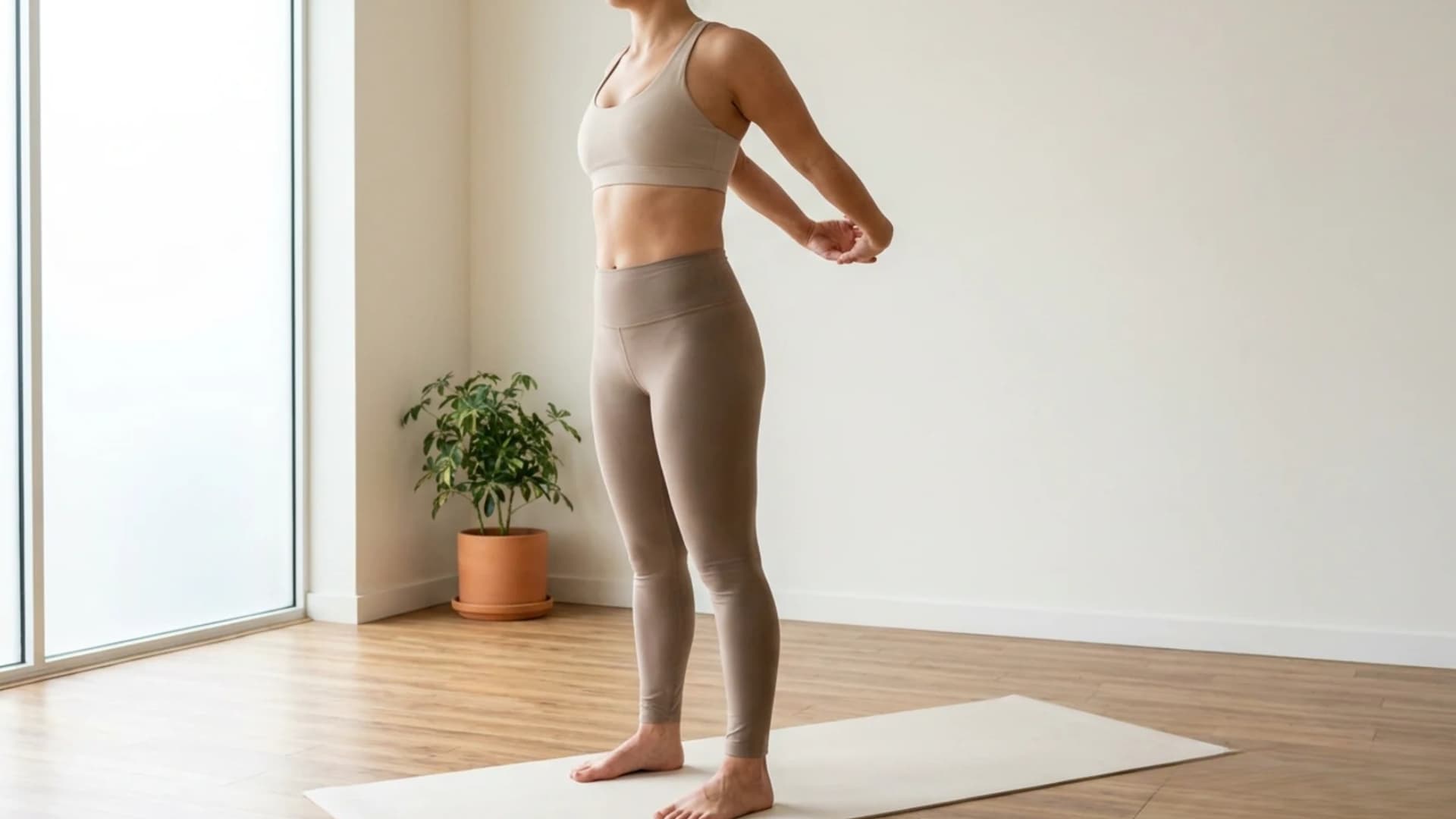
The standing chest stretch is the easiest option for beginners. It needs no wall or door. Use it as a quick reset between tasks or as a gentle warm-up before activity.
How to do it:
- Stand tall and clasp your hands together behind your back.
- Gently straighten your arms and lift your hands slightly away from your body.
- Draw your shoulder blades together until you feel your chest open.
- Hold, then release slowly.
3. Wall Chest Stretch
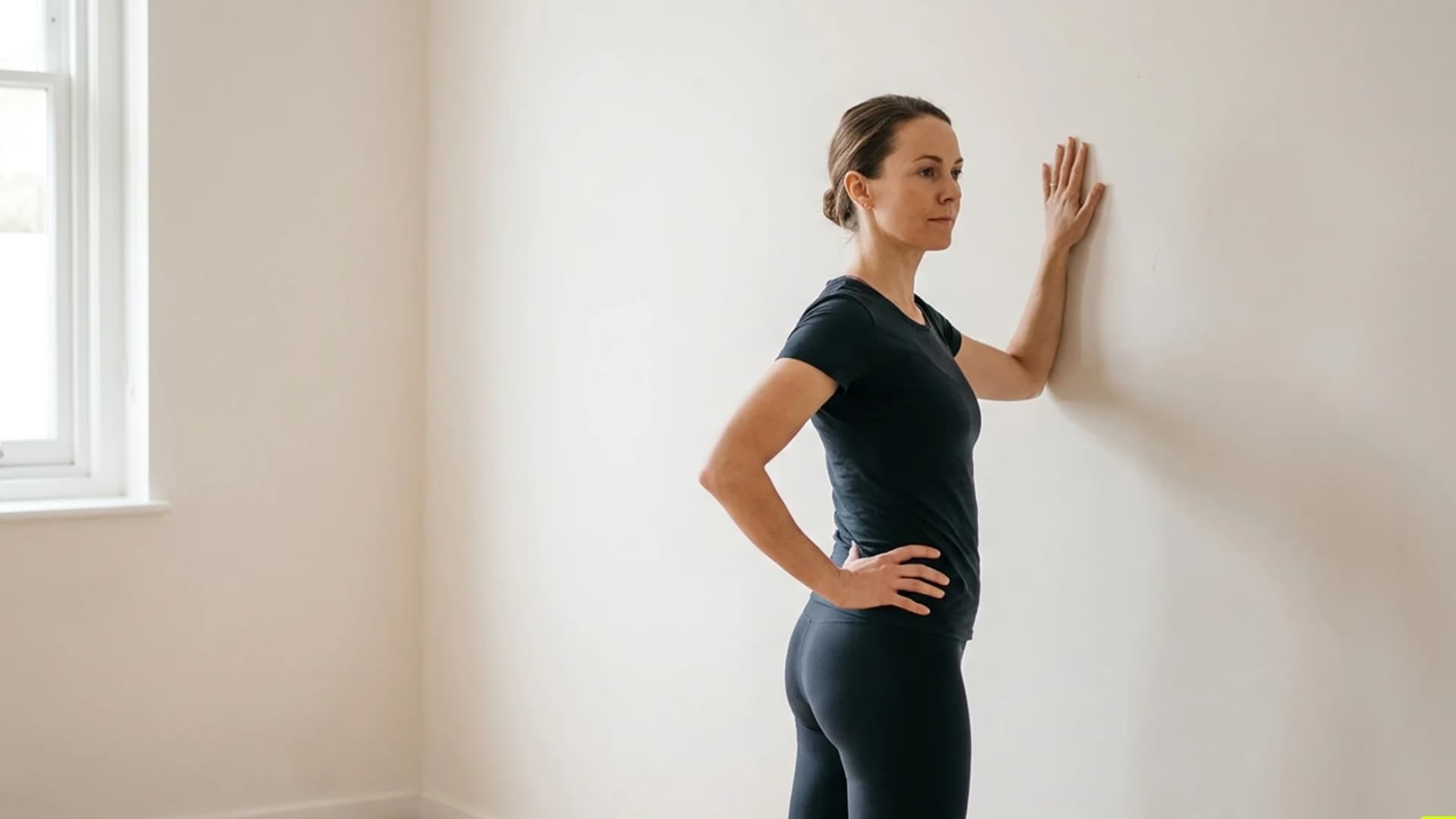
The wall chest stretch lets you target one side at a time. This is useful if one pec feels tighter than the other.
How to do it:
- Stand next to a wall and place one palm or forearm flat against it.
- Set your arm at about shoulder height.
- Slowly rotate your body away from the wall until you feel the stretch.
- Keep the working shoulder down and relaxed throughout.
- Hold, then switch sides.
Rotate your torso rather than yanking the arm. That is what opens the chest safely.
4. Lying Chest Opener
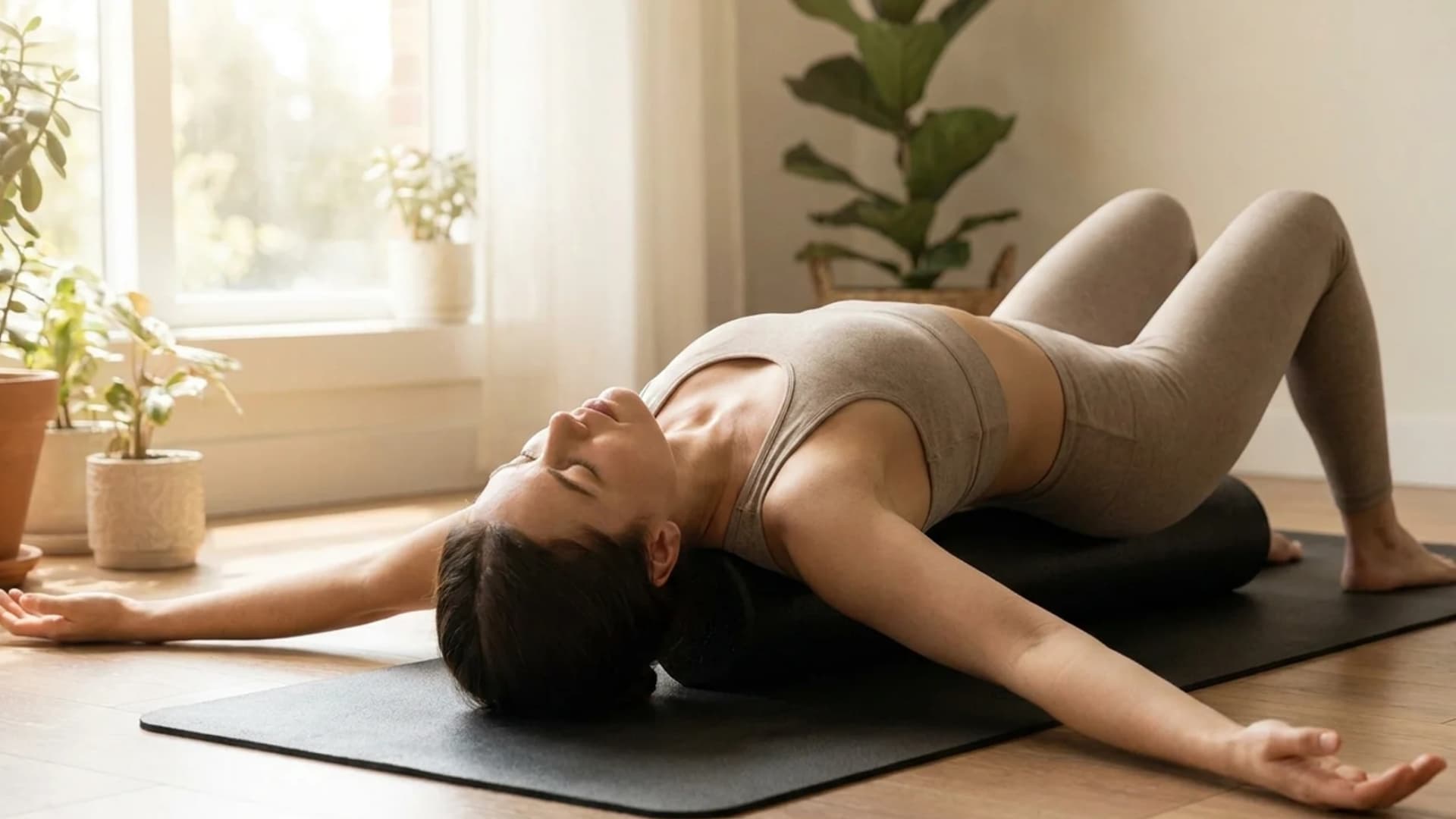
The lying chest opener uses the floor to support your spine while gravity does the stretching. It works especially well after long periods of sitting.
How to do it:
- Lie on your back with a rolled towel or foam roller running along your spine from head to tailbone.
- Let your arms fall out to the sides in a T or cactus shape.
- Relax and let your chest and shoulders sink open with each breath.
- Rest there and breathe steadily.
The floor keeps your back stable, which makes this a strong choice for posture work.
5. Kneeling Chest Stretch
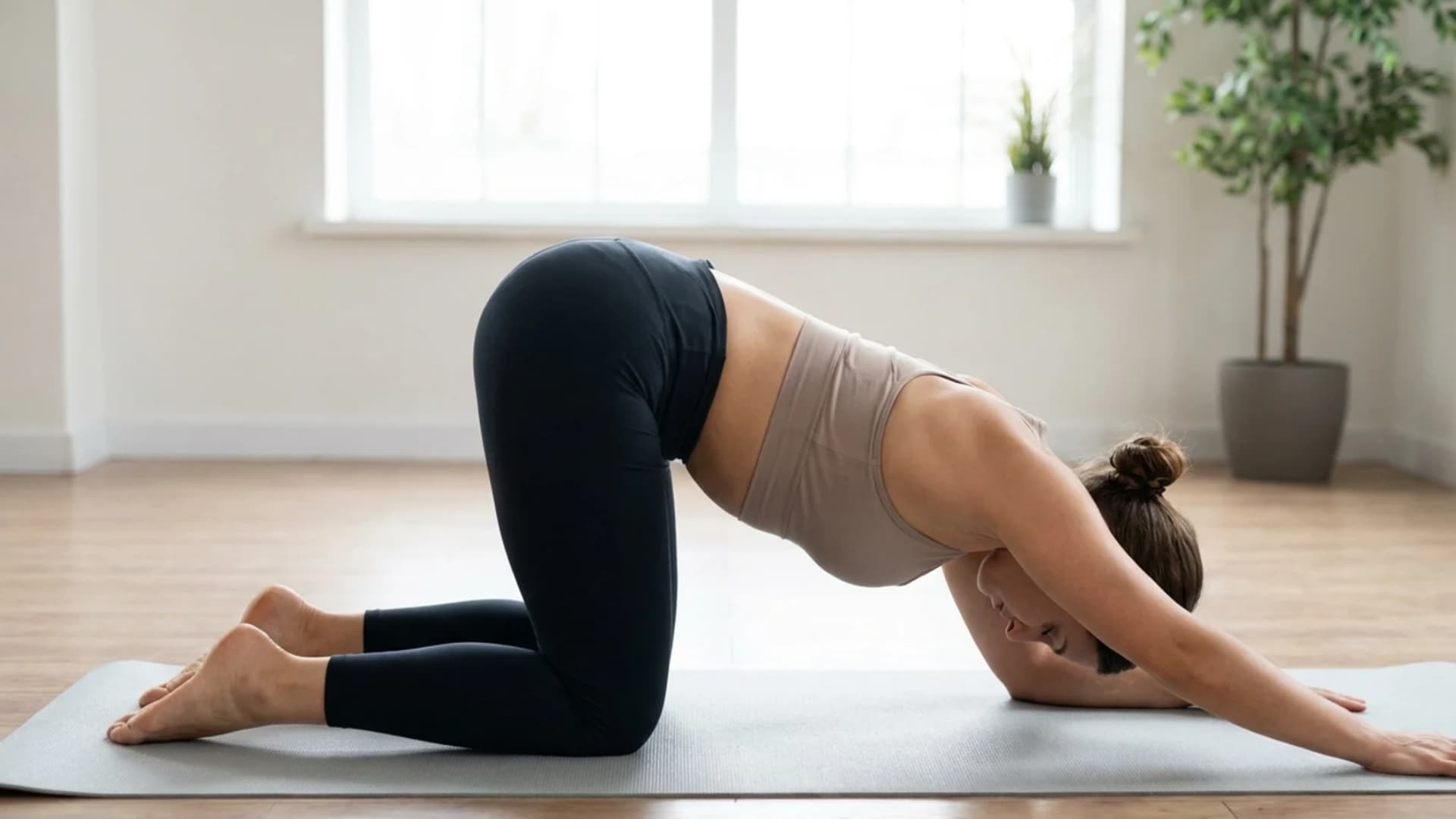
This stretch releases tight pecs while improving shoulder mobility at the same time. It works well after long periods of sitting because it opens the chest and encourages the shoulders to move back.
How to do it:
- Start on your hands and knees with your back flat and neck relaxed.
- Slowly slide one hand forward on the floor.
- Rotate your chest slightly toward the opposite side.
- Lower your shoulder gently toward the floor until you feel the stretch across your chest and front shoulder.
Keep the movement slow and controlled throughout.
6. Foam Roller Chest Opener
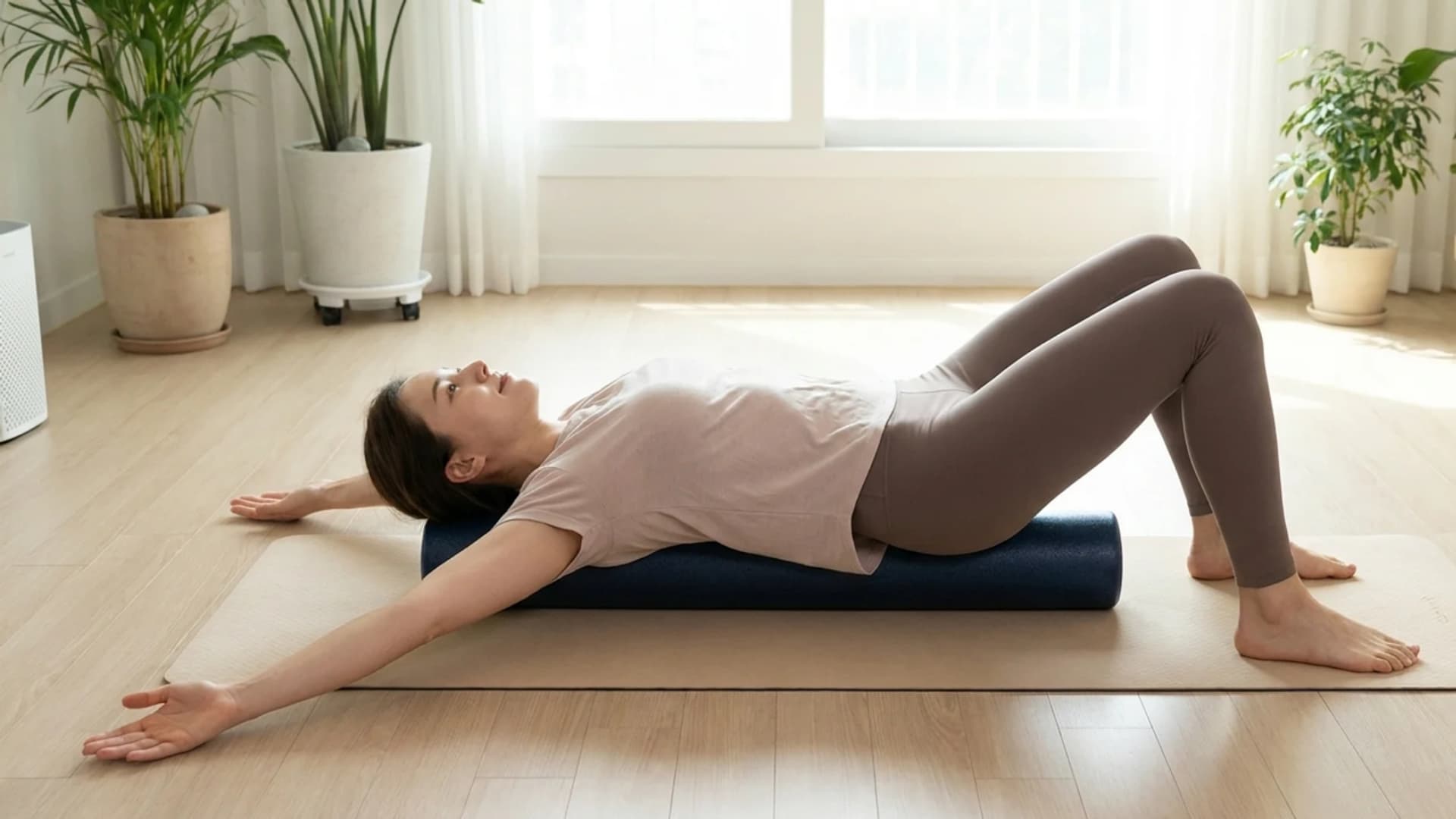
Foam rolling works through pressure and gentle spinal extension rather than a static pull. It still produces a strong chest-opening effect.
How to do it:
- Lie lengthwise on a foam roller and run it along your spine.
- Bend your knees and place your feet flat on the floor.
- Let your arms open out to the sides and rest there.
- Stay still and breathe rather than rolling back and forth.
- Hold for one to two minutes.
The roller lifts your spine slightly, which encourages the chest to open.
7. Corner Chest Stretch
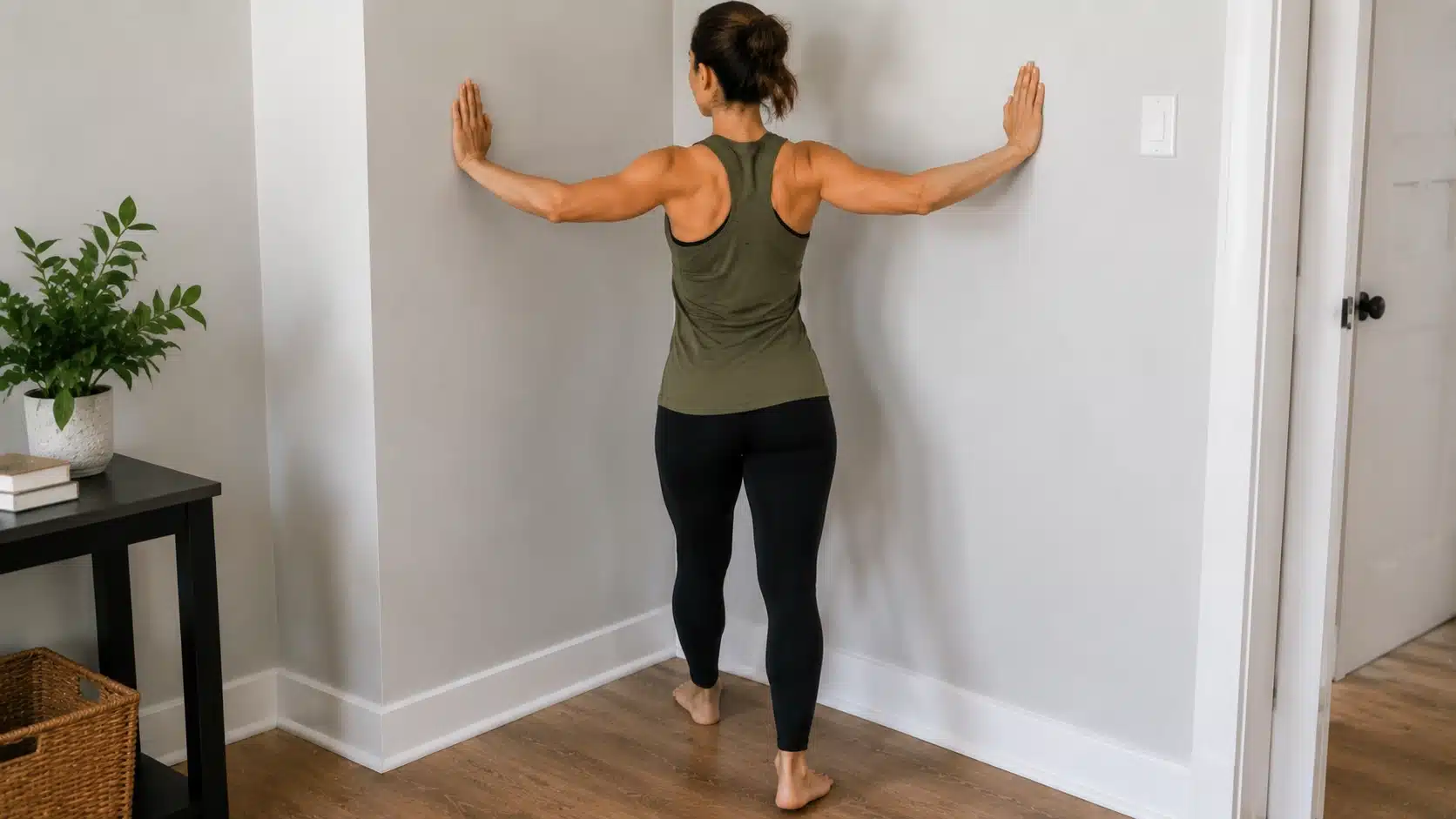
The corner stretch is a solid alternative when no doorway is available. It opens both sides of the chest at once.
How to do it:
- Stand facing the inside corner of a room.
- Place a forearm on each wall at shoulder height.
- Lean your chest gently toward the corner until you feel a mild stretch.
- Hold, then step back to release.
It works well in an office or any spare bit of wall at home.
8. Cross-Body Arm Stretch
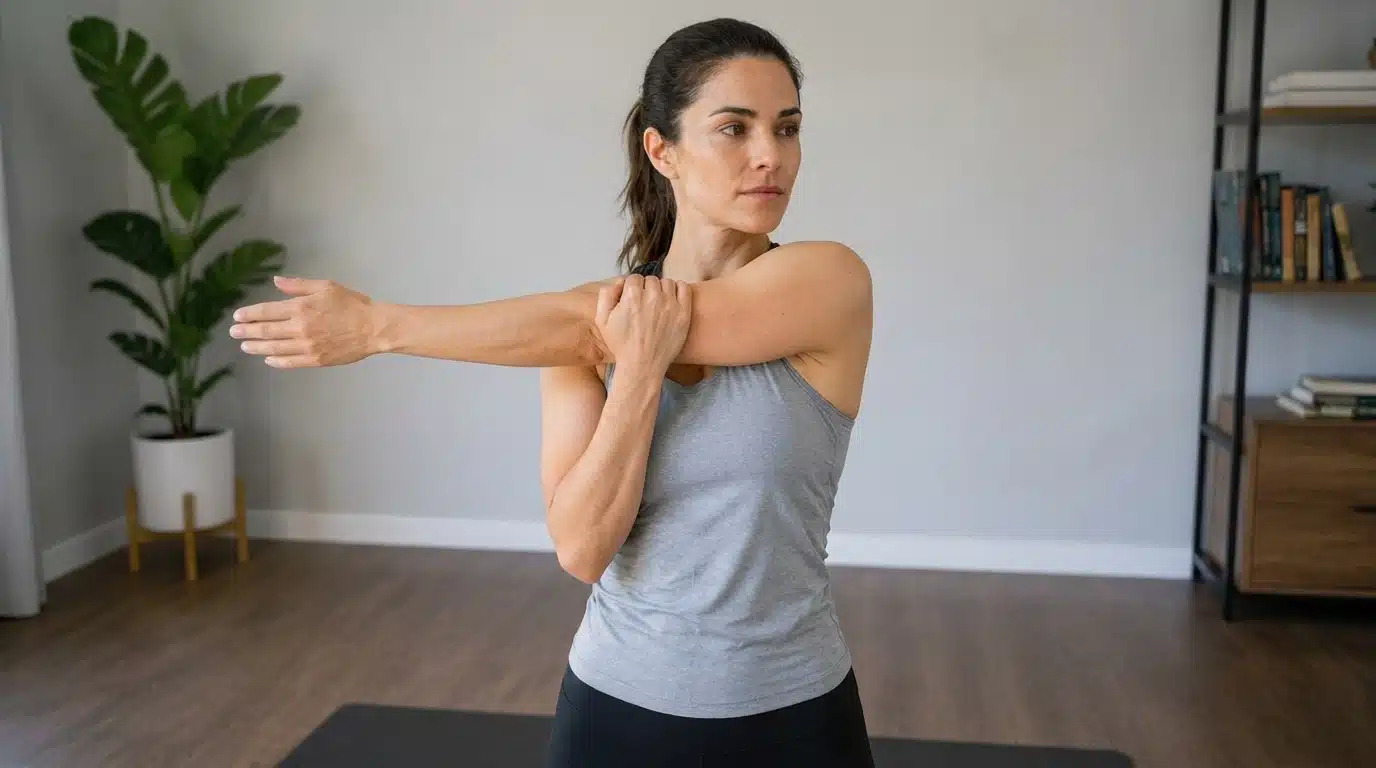
The cross-body stretch is the gentlest pec stretch on this list. It is a smart first move when the chest feels sore or tender.
How to do it:
- Bring one arm straight across your body at chest height.
- Use your other hand to draw it gently closer to your chest.
- Feel a light stretch across the outer chest and back of the shoulder.
- Hold, then switch sides.
This stretch puts almost no load on the front of the shoulder. It is a good starting point if a fuller stretch feels like too much right now.
9. Seated Chest Stretch
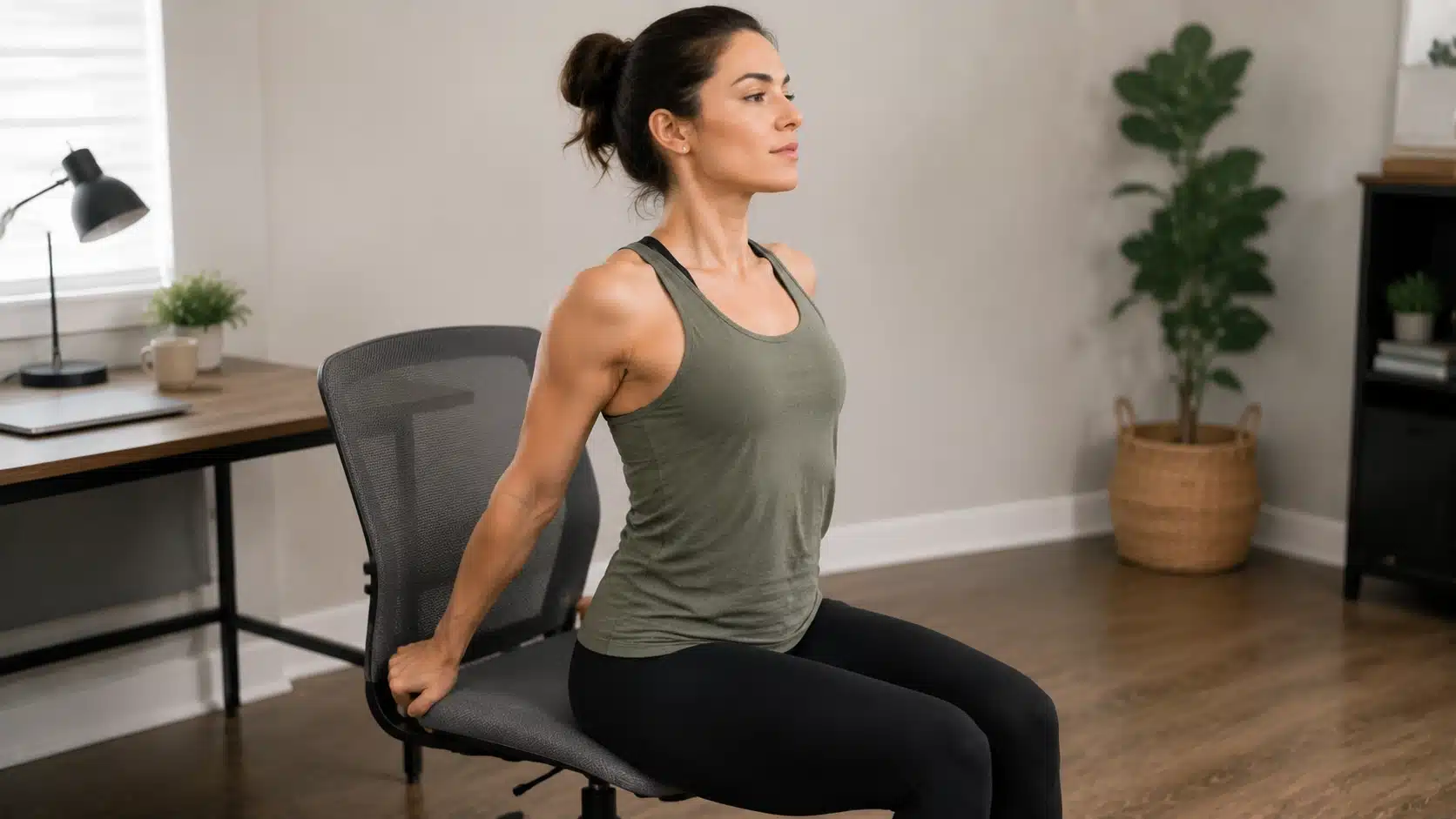
The seated chest stretch is made for desk workers. You can do it right in your chair without standing up.
How to do it:
- Sit tall toward the front of a sturdy chair.
- Reach both hands behind you and hold the back or seat edges.
- Gently draw your shoulder blades together and open your chest.
- Hold, keeping your neck long and relaxed.
Use this as a mid-afternoon reset when your shoulders start rounding forward.
10. Cobra Pose Chest Stretch
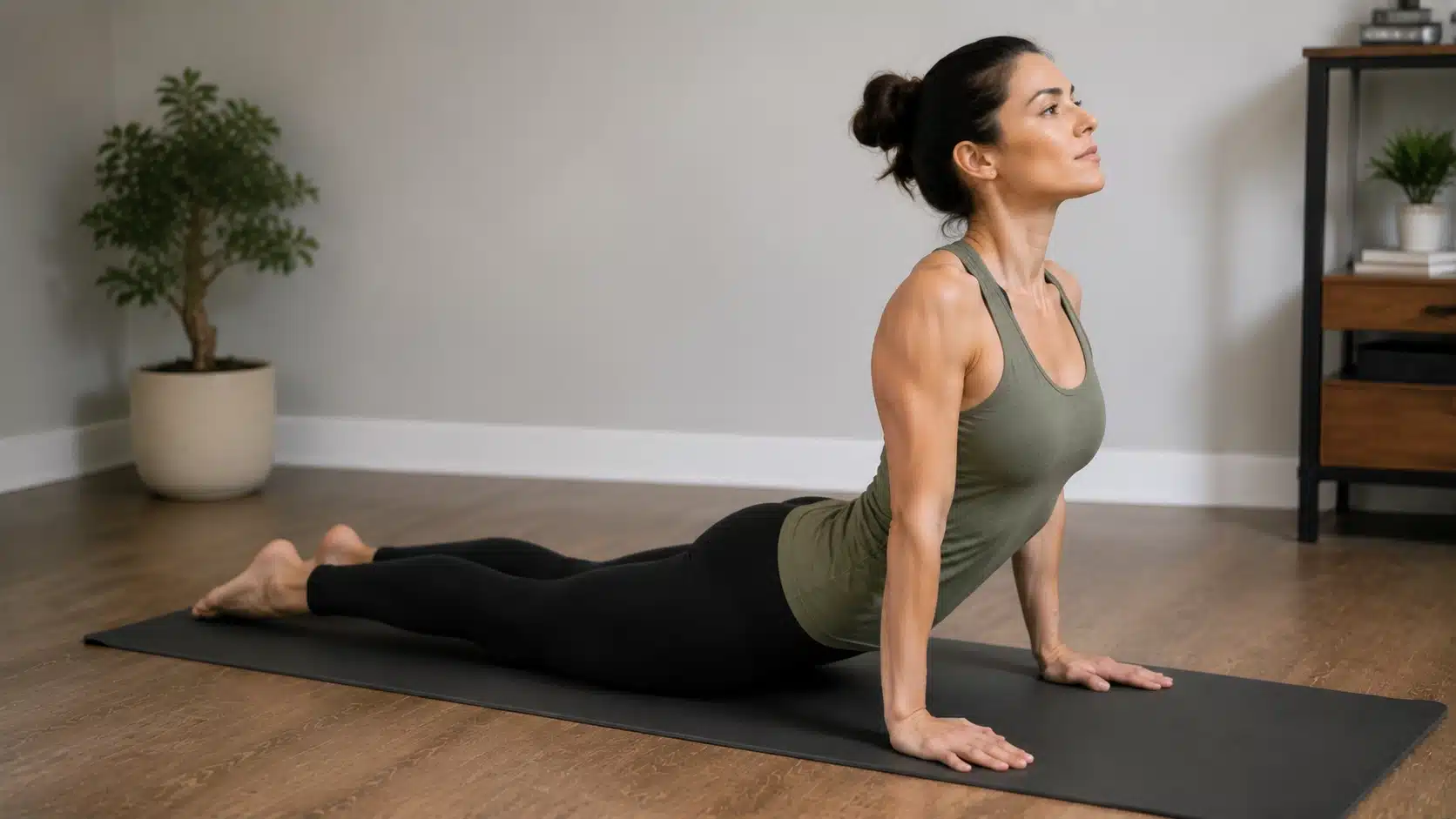
Cobra pose opens the chest through gentle back extension. It also stretches the abdomen and the front of the shoulders.
How to do it:
- Lie face down with your hands flat under your shoulders.
- Press gently into your hands and lift your chest off the floor.
- Keep your elbows slightly bent and your shoulders drawing down away from your ears.
- Only rise as far as feels easy on your lower back.
Skip this one if you have existing lower back pain.
Chest Stretches for a Sore or Strained Chest Muscle
If your chest is sore or you think you have pulled a muscle, you are managing recovery, not flexibility. The golden rule is to stay well within a pain-free range.
First, know the difference between soreness and a strain.
- Muscle soreness after a workout is normal. It shows up one to two days later, feels like a dull ache, and eases with gentle movement. A light pec stretch can help here.
- A muscle strain is an injury. It comes with sharper pain, tenderness, and sometimes swelling or weakness. It needs more care and time to heal.
For ordinary soreness: Gentle stretching is fine. Stick to soft options like the cross-body arm stretch, hold them comfortably, and stop at any sharp pain.
For a strained chest: Do not stretch a fresh strain hard. For the first one to two days, rest and ice while the tissue settles. Once the sharp pain fades, ease in with very gentle stretches and progress slowly. Back off immediately if pain returns.
When to See a Professional
See a doctor or physical therapist if you notice any of these signs:
- A sudden pop or tearing sensation at the time of injury
- Marked swelling or bruising across the chest
- Noticeable weakness when pushing or lifting
- Pain that does not improve after several days of rest
Not all chest pain is muscular. Chest pain with shortness of breath, dizziness, or pain spreading to the arm or jaw is a medical emergency. Seek immediate care if this happens.
Do Chest Stretches Help with Posture?
Yes. Tight pecs are one of the biggest hidden drivers of rounded shoulders.
When the pectoralis minor stays short, it pulls the shoulder blade forward. This rolls the shoulders inward and produces that slumped look. The upper-back muscles that should pull you upright also get weak over time.
A regular pec stretch releases that front-side pull. This makes it easier to sit and stand tall. For lasting change, pair chest opening stretches with upper-back strengthening. Both sides of the shoulder need to balance out for real improvement.
The table below shows how common posture problems connect to the most helpful movements.
| Tight Chest Effect | Helpful Movement |
|---|---|
| Rounded shoulders | Chest opening stretches |
| Limited shoulder movement | Shoulder mobility exercises |
| Upper-body stiffness | A daily stretching routine |
When Should You Stretch: Before or After a Workout?
Timing changes which kind of chest stretch you should use. Before training, you want to warm the muscles up. After training, you want to help them relax and recover.
Before Workout
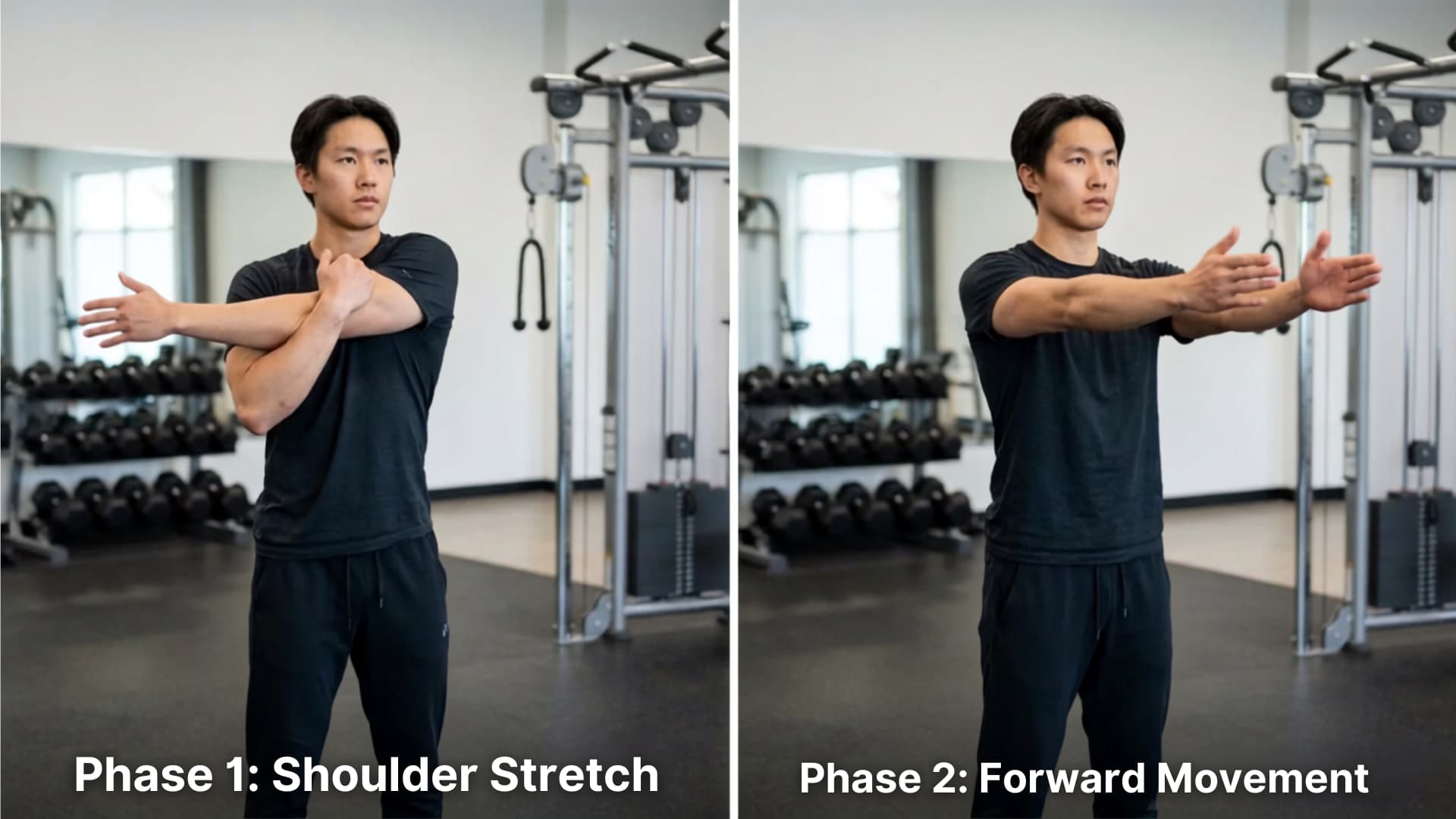
Use moving stretches before you lift. Research shows that long static holds before strength work can temporarily reduce muscle activation and hurt performance. Moving stretches warm the tissue without that trade-off.
Good pre-workout options:
- Arm circles
- Standing chest openers
- Gentle, moving doorway reaches
Keep them controlled and brief. That is enough to prepare the shoulders and chest for pressing movements.
After Workout
Your muscles are warm after training. Holding a stretch helps you cool down and ease the tightness that builds from pressing exercises. This is when static stretching works best.
Good post-workout options:
- Doorway stretch
- Wall stretch
- Foam roller chest opener
| Timing | Stretch Style | Duration |
|---|---|---|
| Before workout | Moving stretches | 10 to 30 seconds |
| After workout | Static holds | 20 to 60 seconds |
How Long Should You Hold a Chest Stretch?
For general flexibility, hold each chest stretch for about 30 seconds. That is long enough for the muscle to relax past its initial resistance and start to lengthen.
Here is what happens in the body. When you first move into a stretch, the muscle reflexively tightens to protect itself. Hold steady, and after several seconds, tension sensors signal the muscle to ease off. Full release takes closer to 30 seconds. That is why bouncing in and out of a stretch never works well.
The American College of Sports Medicine (ACSM) recommends 10 to 30 seconds for general health. For bigger flexibility gains, hold for up to 60 seconds. A useful target is 60 seconds of total stretching per muscle group. Two 30-second holds or four 15-second holds both do the job.
| Goal | Hold Time |
|---|---|
| Daily mobility | 20 to 30 seconds |
| Improving flexibility | 30 to 60 seconds |
| Post-workout recovery | 20 to 45 seconds |
| Sore or recovering chest | 10 to 20 seconds, pain-free only |
Beginners should start at the shorter end and build up over time. Never push into sharp pain. That is a signal to back off, not to hold longer.
Mistakes to Avoid When Stretching Your Chest
Most stretching problems come from trying too hard. These are the mistakes that reduce results or risk injury.
| Mistake | Why It Matters |
|---|---|
| Stretching through pain | Irritates the muscle or joint |
| Holding your breath | Blocks the muscle from relaxing |
| Stretching too aggressively | Can strain the shoulder |
| Stretching a fresh strain hard | Slows healing |
Breathe steadily throughout each stretch. A slow exhale as you settle into the position helps the muscle let go.
Safety Tips for Chest Stretching
Chest stretching is low risk when you keep it gentle. Most people can do these moves at home with no problem. The one joint to respect is the shoulder, since it is easy to overstretch.
- Stop right away if you feel sharp or shooting pain.
- Ease into each position slowly instead of bouncing or jerking into it.
- Keep stretches short and gentle if your chest is sore or recently strained.
- Do not stretch through numbness, tingling, or pain that travels down the arm.
- See a physical therapist or doctor if you have had a serious shoulder or chest injury before starting.
- Also check with a professional if stretching pain lingers for more than a few days.
Pro Tip: Use a mirror or film yourself for the first few sessions. It is easy to shrug or twist too far without noticing. A quick check helps fix your form early.
Disclaimer: This article is for general information only and does not replace medical advice. Consult a doctor or physical therapist before stretching, especially if you have an injury, ongoing pain, or a medical condition. Seek emergency care for chest pain with shortness of breath, dizziness, or pain spreading to the arm or jaw.
Start Giving Your Chest Room to Breathe
Tight chest muscles sneak up on you. They come from desk chairs, bench presses, and overworked pecs still recovering. The fix is simpler than you think.
Chest stretches done consistently and held for around 30 seconds can change how your chest feels. No equipment required. Start with the doorway stretch. Add the lying opener after long sitting. Save static holds for after workouts.
If your chest is sore, drop to the gentlest pec stretch. Stay well inside a pain-free range and stop if anything hurts. Breathe through each hold. Small consistent daily effort adds up to looser shoulders over time.
Frequently Asked Questions
Are chest stretches good for posture?
Yes. Tight chest muscles pull the shoulders forward into a rounded position. Regular chest stretches release that pull and help you sit and stand taller when paired with upper-back strengthening.
How often should I do chest stretches?
Daily stretching is fine if you sit a lot. For flexibility gains, aim for three to five sessions per week, plus stretches after pressing workouts. Consistency matters most.
Should I stretch a sore chest muscle?
Yes, gently. For normal soreness, light pec stretches are fine. For a fresh strain with sharp pain, rest first and ease in slowly once the pain settles.
Why does my chest feel tight after sitting?
Long hours of sitting keep the pectoral muscles shortened. Without regular stretching, they stay tight and pull the shoulders forward, reducing shoulder range of motion over time.
Can a pec stretch reduce shoulder tightness?
Often, yes. The chest and shoulder work closely together. Tight pecs restrict shoulder movement. A regular pec stretch frees the joint and eases stiffness across the front shoulder.
What is the best chest stretch for beginners?
The standing chest stretch is the easiest starting point. Clasp your hands behind your back, draw your shoulder blades together, and hold for 20 to 30 seconds. No equipment needed.
Should I use static or moving stretches before a chest workout?
Use moving stretches before a workout. Static holds over 60 seconds can briefly reduce muscle output. Arm circles and chest openers are a good warm-up. Save static stretches for after.