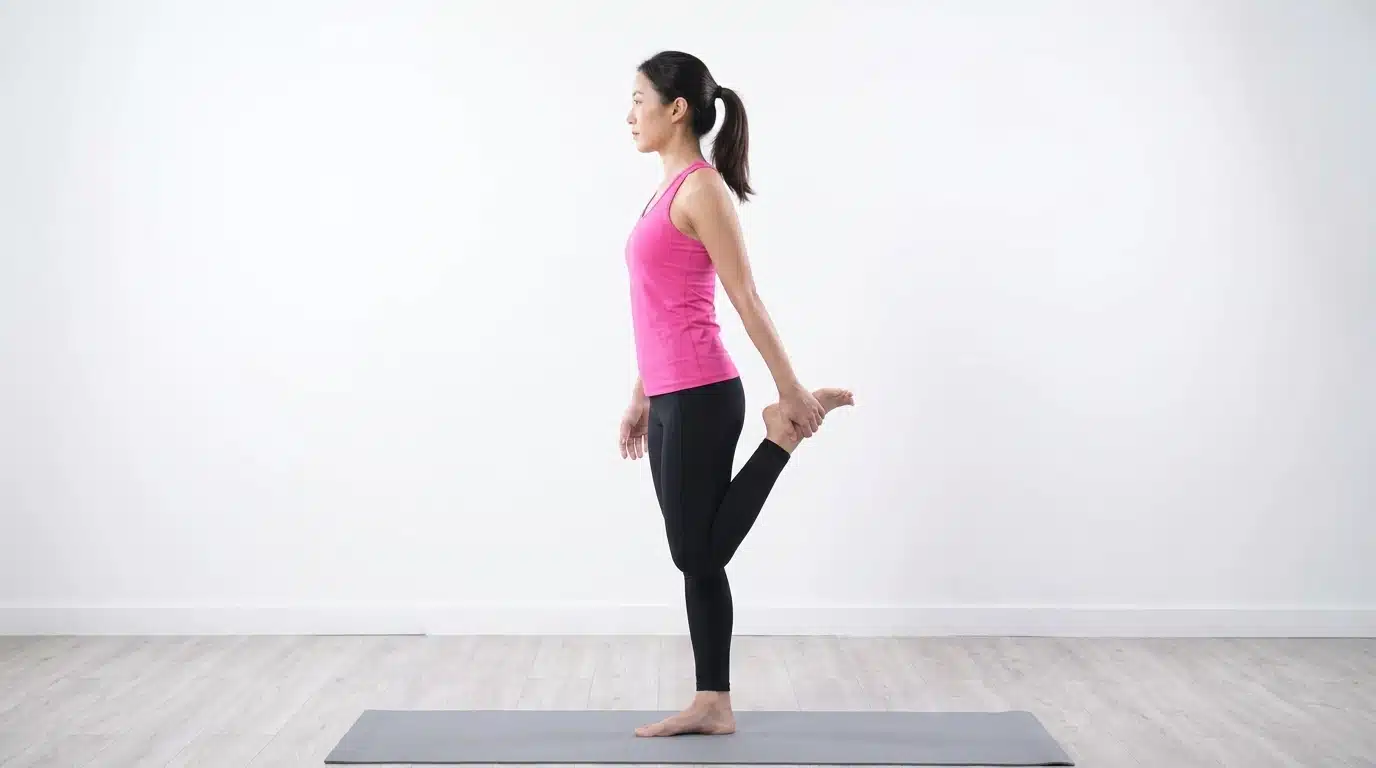
The standing quad stretch is one of the most common stretches in fitness. Yet many people still get the form wrong. If your quads feel tight after a run, leg day, or hours of sitting, you need this stretch.
It targets the quadriceps, one of the largest muscle groups in your entire body. Done correctly, it improves your flexibility, reduces knee stress, and supports faster recovery.
This post walks you through the standing quad stretch step by step with clear instructions. You will also find the muscles this stretch works, its full benefits, key variations, and tips for specific groups.
What Is a Standing Quad Stretch?
The standing quad stretch is a lower-body flexibility exercise that targets the quadriceps. This is a group of four muscles running along the front of your thigh.
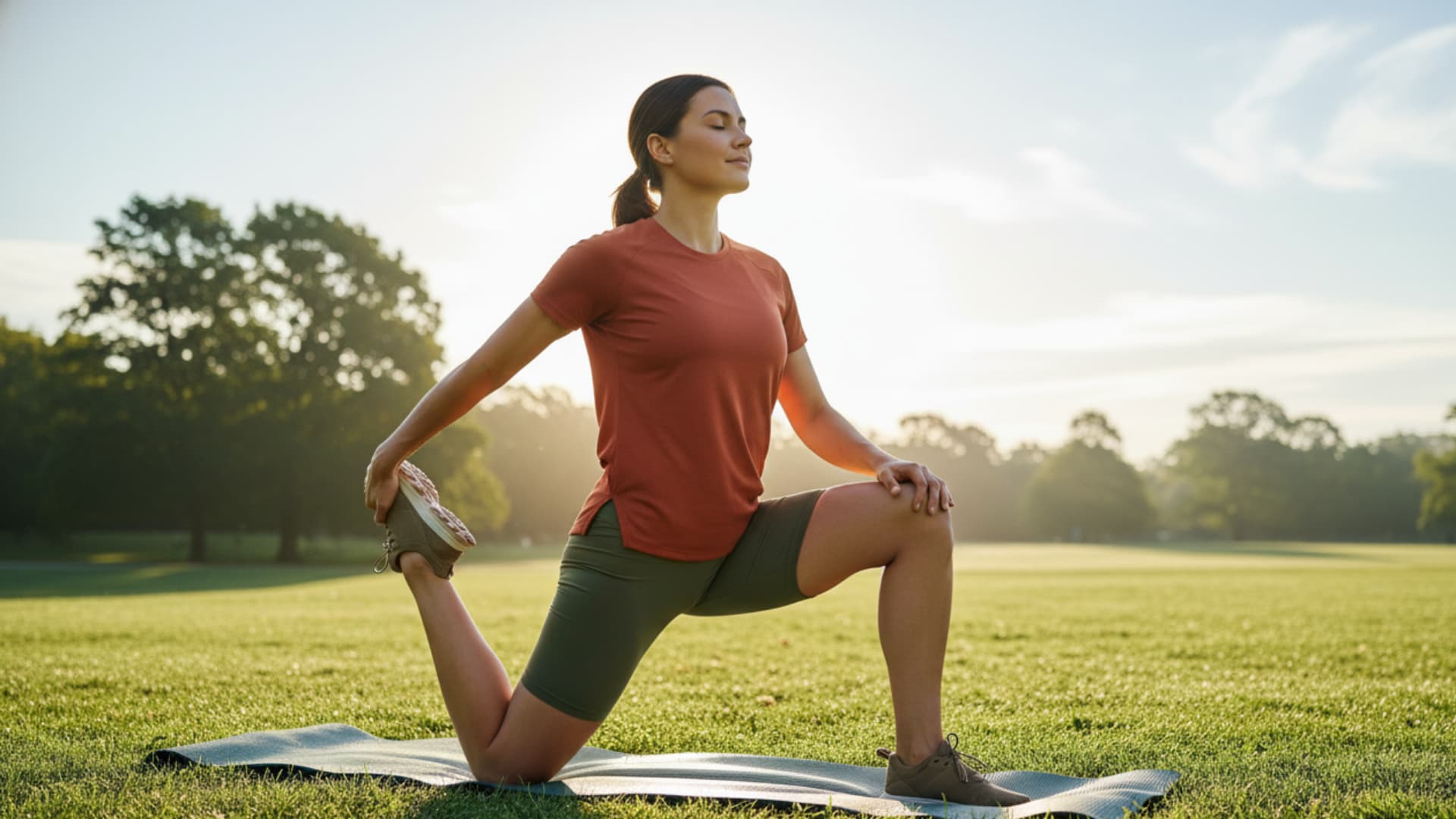
Stand on one leg, bend the other knee behind you, and hold your foot close to your glutes. This move lengthens the quad muscles and releases tightness from exercise or long hours of sitting.
It needs no equipment and takes under 60 seconds per side. Physical therapists, coaches, and athletes use it regularly to keep the front of the thigh mobile and healthy.
What Muscles Does the Standing Quad Stretch Work?
The standing quad stretch reaches further than just the front of your thigh. The table below breaks down each muscle it works, and the specific role each plays during the stretch.
| Muscle | Location | Role in the Stretch |
|---|---|---|
| Rectus Femoris | Front center of the thigh | Primary muscle stretches; crosses both the hip and knee joint |
| Vastus Lateralis | Outer side of the thigh | Lengthens as the knee bends back during the hold |
| Vastus Medialis | Inner thigh, near the knee | Released when you pull the heel toward the glutes |
| Vastus Intermedius | Deep layer of the front thigh | Relaxes beneath the other quad muscles as the knee flexes |
| Hip Flexors (Iliopsoas) | Front of the hip and lower spine | Stretched as the hip moves into extension |
| Knee Joint Stabilizers | Around the kneecap | Mobilized gently through the full range of the knee bend |
Benefits of the Standing Quad Stretch
The standing quad stretch delivers real, lasting results for your lower body with consistent practice. Here are the key benefits you can expect when you add it to your regular routine.
- Improves quad flexibility: Regular stretching of the front of the thigh increases your full range of hip and knee motion over time.
- Reduces knee pain: Loosening tight quads takes direct pressure off the patellar tendon and kneecap, which supports long-term joint health.
- Lowers injury risk: Flexible quads are far less likely to strain during running, jumping, or heavy squats.
- Supports post-workout recovery: Stretching after exercise helps muscles return to their resting length and reduces next-day soreness.
- Improves standing posture: Tight quads pull the pelvis forward; regular stretching helps realign the spine and hips.
- Counters the effects of sitting: Long hours at a desk shorten the hip flexors and quads; this stretch works directly against that.
- Supports better athletic performance: Greater quad flexibility allows deeper squats, longer stride length, and better lower-body control.
How to Do a Standing Quad Stretch
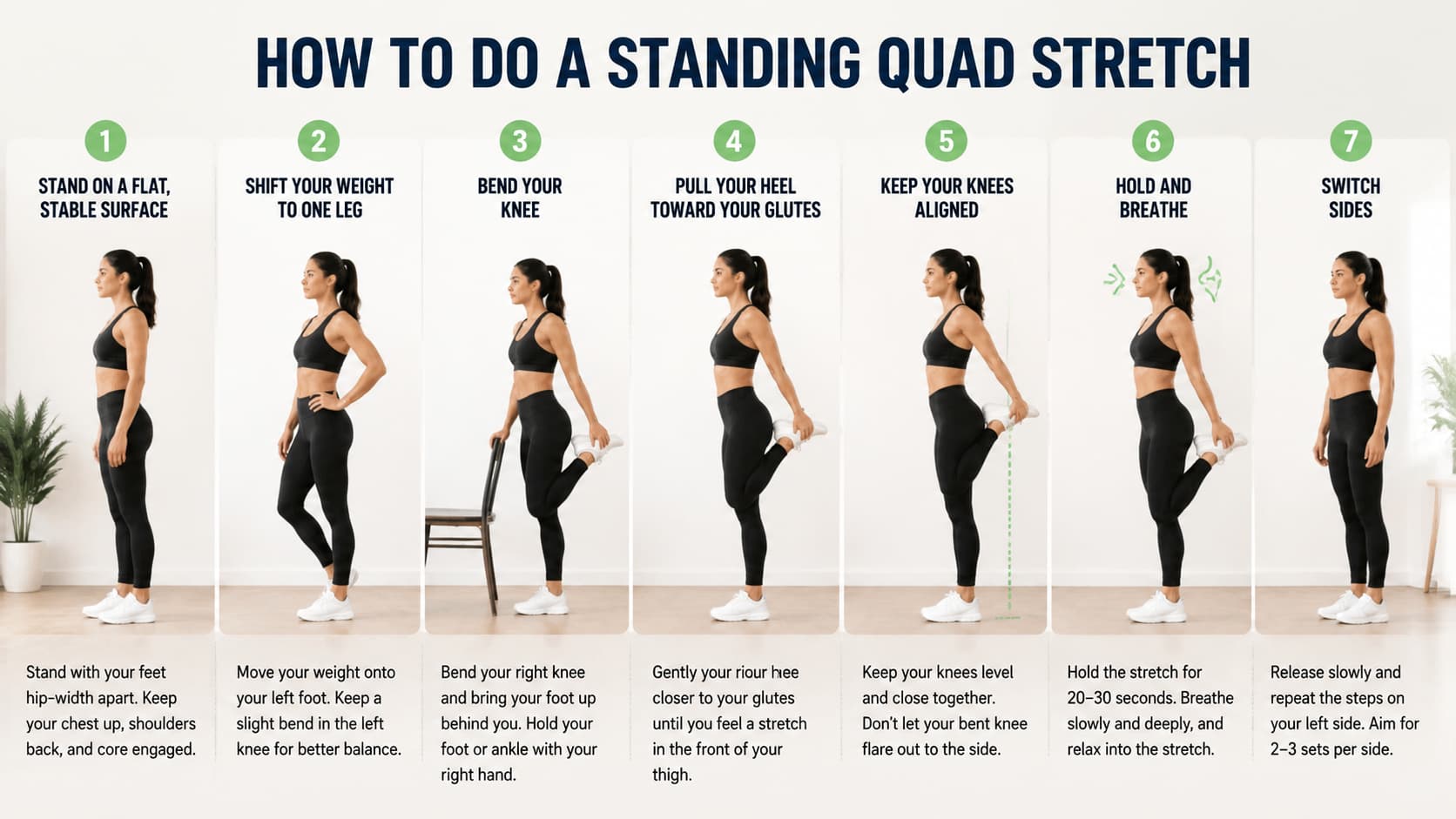
Getting the standing quad stretch right takes more than just pulling your foot back and hoping for the best. Follow each step below for correct form and full benefit on every rep.
Step 1: Stand on a Flat, Stable Surface
Stand with your feet hip-width apart on a flat floor or firm ground. Keep your chest up, shoulders back, and core lightly engaged. This gives you a stable base before you shift weight to one side.
Step 2: Shift Your Weight to One Leg
Move your weight slowly onto your left foot. Keep a slight bend in the left knee so the joint is not locked. A soft bend in the standing leg gives you far better balance throughout the stretch.
Step 3: Bend Your Right Knee
Bend your right knee and bring your right foot up behind your body. Reach back with your right hand and hold the top of your foot or your ankle. If balance feels off, place your left hand on a wall or chair first before attempting the hold.
Step 4: Pull Your Heel Toward Your Glutes
Gently draw your right heel toward your right glute until you feel a stretch through the front of your right thigh. Pull only to a point of mild tension. Stop before it causes any pain in the knee or thigh.
Step 5: Keep Your Knees Aligned
Press your right knee slightly back so both knees stay level. Do not let the bent knee flare out to the side. Keeping the knees lined up keeps the stretch focused directly on the quad muscle.
Step 6: Hold and Breathe
Hold the position for 20 to 30 seconds while breathing slowly and evenly. Let your thigh relax a little more into the stretch with each exhale. Do not tighten up or hold your breath during the hold.
Step 7: Switch Sides
Release your right foot slowly and return it to the floor. Repeat all steps on your left side. Aim for 2 to 3 sets per side for steady improvement in flexibility over time.
Standing Quad Stretch Variations
Not everyone can do the standard standing quad stretch with ease from the start. These five variations let you adjust the stretch to match your balance level, flexibility, or fitness goals.
1. Wall-Assisted Standing Quad Stretch
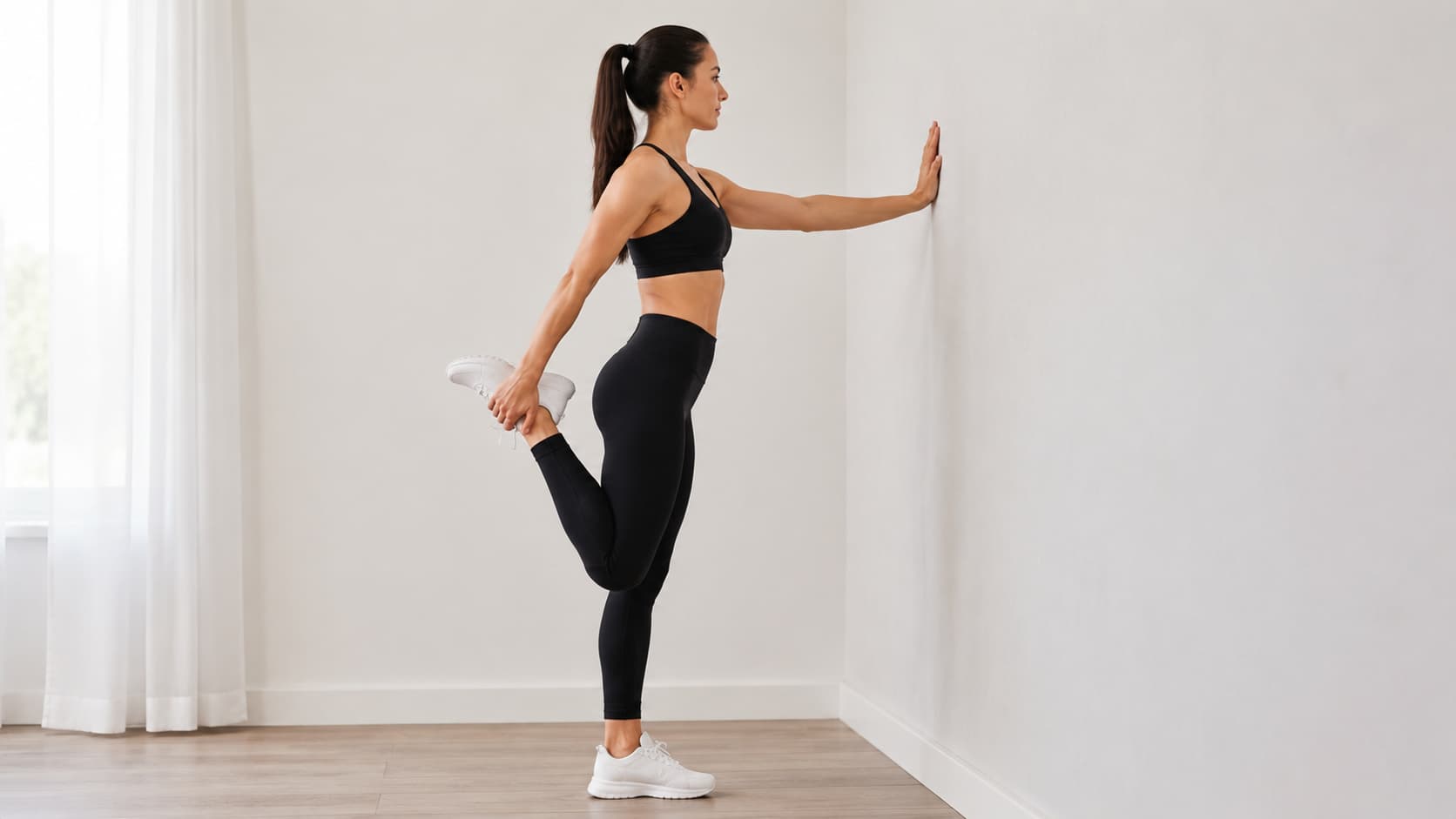
This is the best starting point for beginners or anyone who struggles to balance on one leg. The wall gives you a stable contact point so you can concentrate on the stretch without worrying about falling.
Steps:
- Stand next to a wall with your right side facing it.
- Place your right hand flat on the wall at shoulder height.
- Bend your left knee and hold your left ankle with your left hand.
- Pull your left heel toward your left glute until you feel a stretch through the front of your left thigh.
- Hold for 20 to 30 seconds, then switch sides.
2. Chair-Assisted Standing Quad Stretch
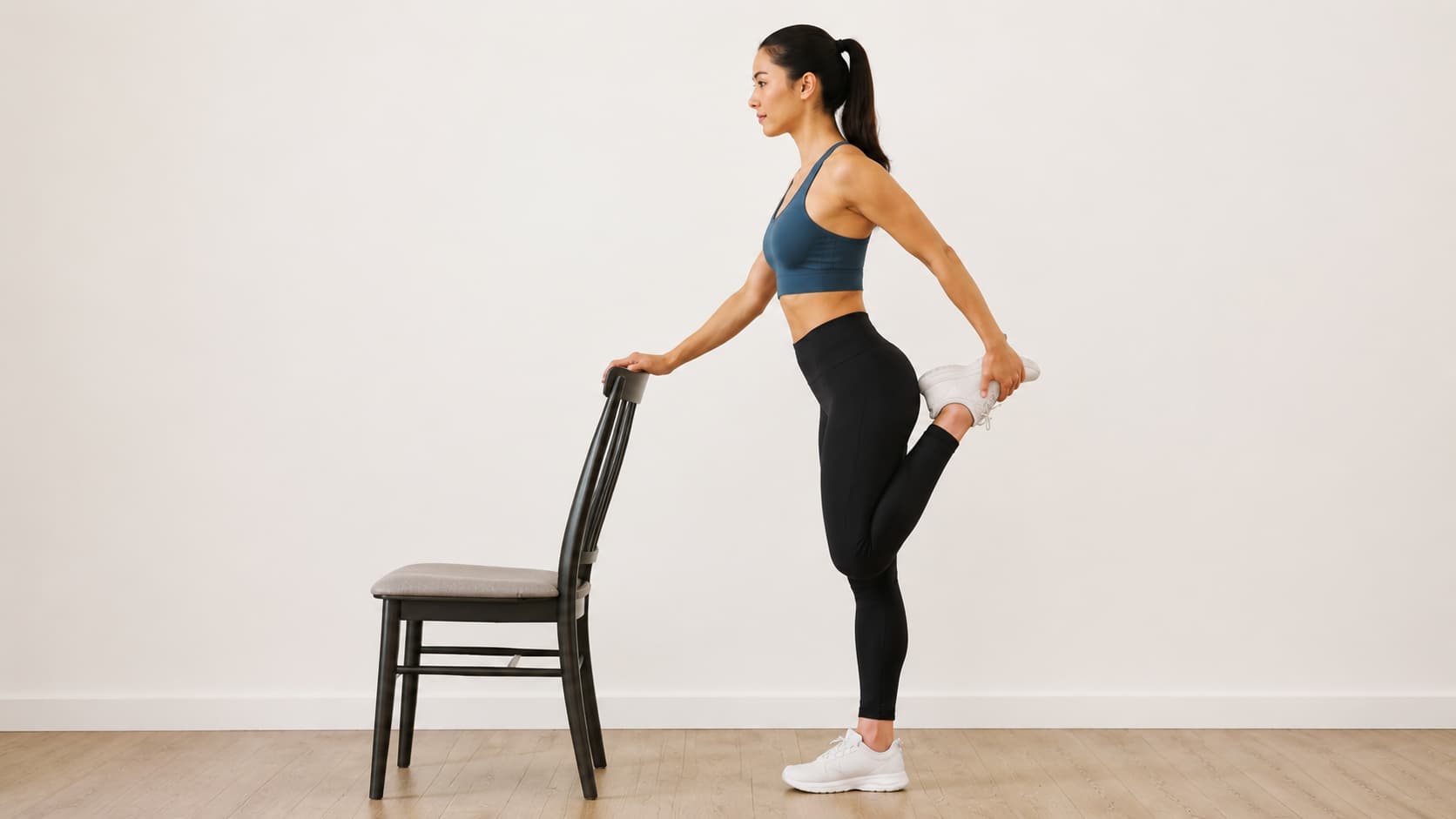
Use the back of a sturdy chair when you need more support than a wall provides. This version works well for older adults, those returning from injury, or anyone who feels unsteady on one leg.
Steps:
- Stand behind a chair with both hands resting on the top of the backrest.
- Shift your weight onto your right foot.
- Bend your left knee and hold your left ankle with your left hand.
- Pull your heel toward your glute and hold for 20 to 30 seconds.
- Place your foot back on the floor and repeat on the right side.
3. Lying Quad Stretch
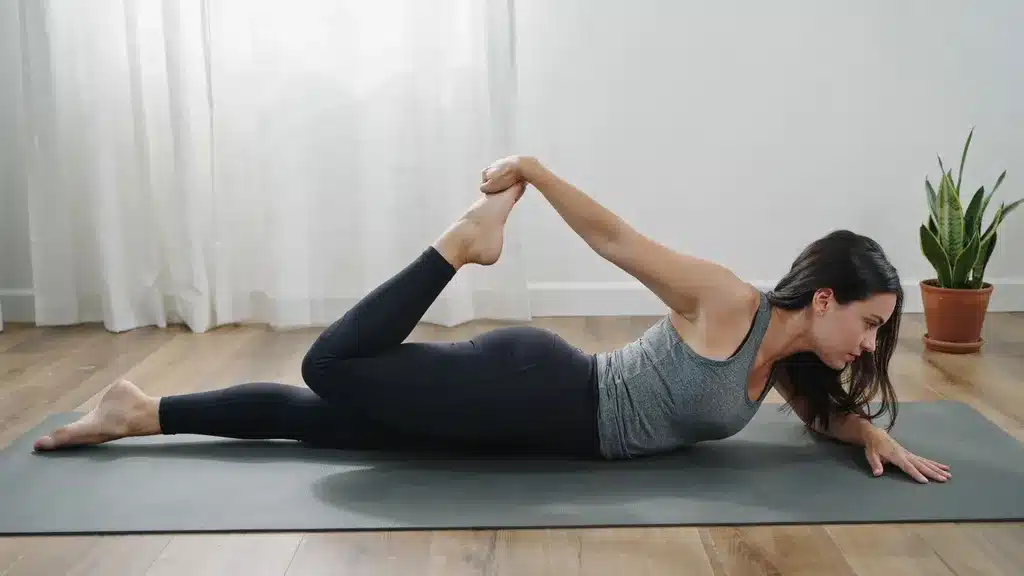
If standing is difficult or painful, the lying quad stretch delivers the same muscle release from the floor. This removes all balance demands, allowing the quad to fully relax during the hold.
Steps:
- Lie face down on a mat with both legs flat behind you.
- Bend your right knee and reach back with your right hand.
- Hold your right foot and pull it gently toward your right glute.
- Keep both hips flat on the mat throughout the hold.
- Hold for 20 to 30 seconds, then switch to the left side.
4. Kneeling Quad Stretch
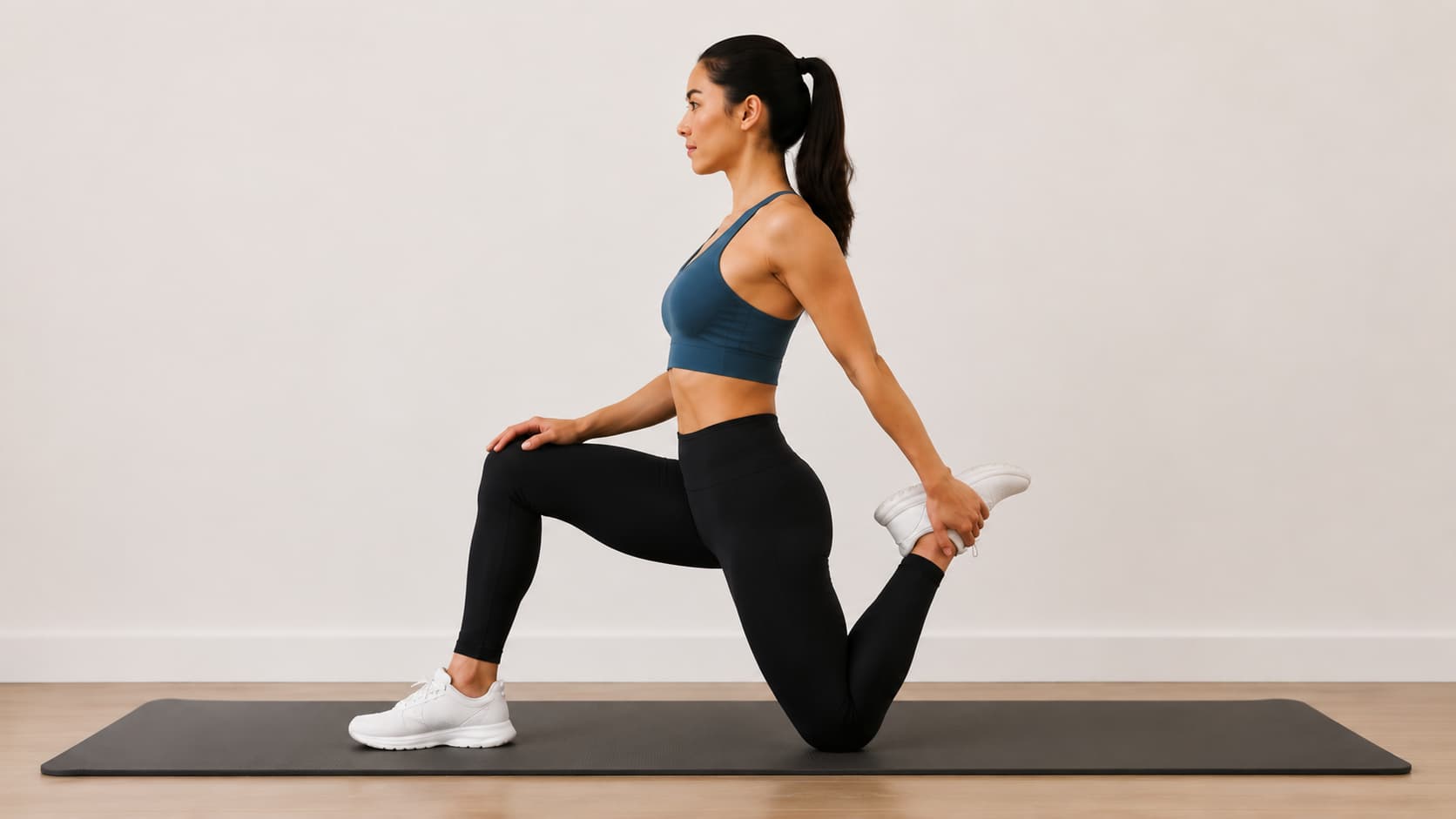
This version targets the rectus femoris more directly because of the hip extension position it creates. It works particularly well as a post-leg-day stretch for athletes, runners, and weightlifters.
Steps:
- Kneel on your right knee on a mat, with your left foot flat on the floor in front and the knee at 90 degrees.
- Keep your torso upright and tuck your pelvis slightly inward.
- Lean your body gently back until you feel a deep stretch in the front of your right thigh.
- Hold for 20 to 30 seconds.
- Switch sides and repeat.
5. Resistance Band Quad Stretch
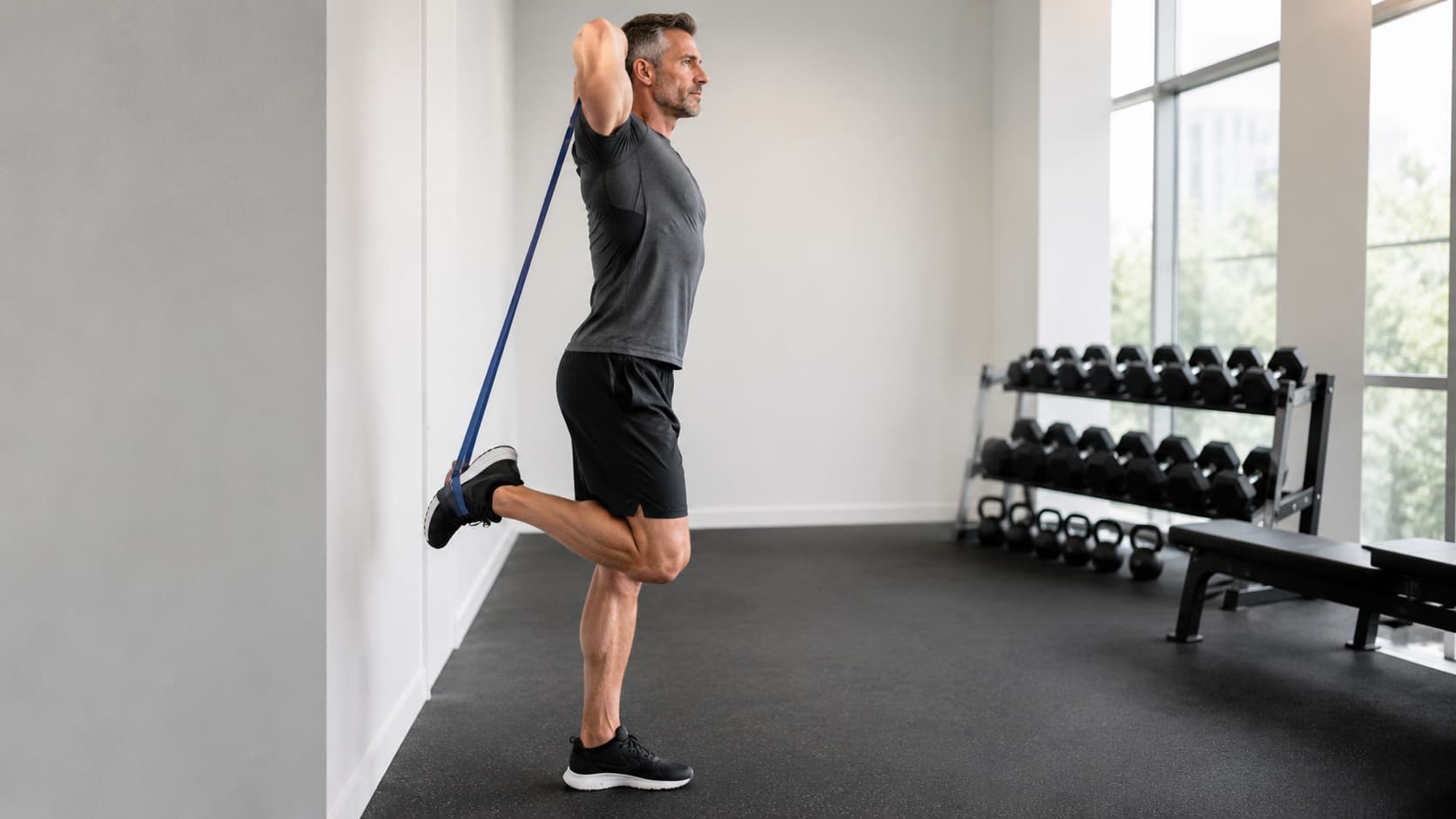
This version helps people who cannot reach their foot comfortably due to limited shoulder flexibility. The band does the pulling, so your hand does not need to reach as far behind you.
Steps:
- Stand near a wall for balance and loop a resistance band around your right ankle.
- Reach behind you and hold both ends of the band in your right hand.
- Pull the band to bend your right knee and bring your foot toward your glute.
- Stand tall and keep your right knee level with your left.
- Hold for 20 to 30 seconds, then switch to the left side.
Common Mistakes to Avoid in the Standing Quad Stretch
Small form errors during the standing quad stretch can reduce its effect or cause unnecessary strain. Recognizing these mistakes helps you stretch safely and get the full benefit every time.
| Mistake | Why It Is a Problem | What to Do Instead |
|---|---|---|
| Flaring the bent knee outward | Shifts the stretch away from the quad | Keep both knees side by side and level |
| Arching the lower back | Adds stress to the lumbar spine | Tuck your pelvis slightly and engage your core |
| Forcing the heel too hard toward the glutes | Can strain or irritate the knee joint | Pull only to a point of mild, manageable tension |
| Holding your breath | Stops the muscle from fully relaxing | Breathe slowly and steadily throughout the hold |
| Stretching without warming up first | Cold muscles are more prone to strain | Do 5 minutes of light movement before static stretching |
| Holding for less than 15 seconds | Does not give the muscle time to release | Hold each side for 20 to 30 seconds minimum |
| Locking the standing knee | Reduces balance and increases joint pressure | Keep a soft, slight bend in the standing leg |
| Leaning the torso forward | Takes the stretch off the quad entirely | Keep your chest up and your torso straight throughout |
Standing Quad Stretch for Specific Groups
The standing quad stretch works for a wide range of people, but your approach should fit your body and your daily habits. Here is how each group can get the best results from this stretch.
Runners
- Stretch both quads immediately after every run while the muscles are still warm
- Hold each side for 30 seconds to address tightness around the knee and hip
- Pair with hip flexor stretches for a full front-chain release after long or fast runs
- Use the kneeling variation after speed sessions for a deeper stretch on the rectus femoris
Athletes and Weightlifters
- Add the stretch to your cooldown after any leg-focused training session
- Use the kneeling variation post-squat for deeper targeting of the rectus femoris
- Aim for 2 to 3 sets per side to reduce next-day soreness
- The American Council on Exercise recommends static stretching during the cooldown phase for best flexibility results
Office Workers and Desk-Bound Individuals
- Do the stretch every 1 to 2 hours during long sitting sessions to reduce stiffness
- Use a chair or wall for support to make it easy to fit into your workday
- Even a 20-second hold per side can counter tightness from hours of sitting still
- Combine with a standing hip flexor stretch for a fuller lower-body release
Older Adults
- Use the chair-assisted variation to reduce fall risk and keep the stretch safe
- Move into the position slowly without forcing the knee joint
- Hold for 20 seconds and repeat 2 times per side rather than pushing for depth
- Check with a physical therapist before starting any new stretching program
People with Knee Pain or Tight Hip Flexors
- Stop immediately if you feel sharp or shooting pain in the knee during the stretch
- Try the lying quad stretch as a gentler option that removes load from the joint
- Focus on a mild pull rather than a deep one to avoid irritating the kneecap area
- Work with a physical therapist before adding this to your routine if you have a diagnosed knee condition
Beginners
- Start with the wall-assisted version for a safe and stable first experience
- Focus on correct posture before trying to increase hold time
- Build up from 15 seconds to 30 seconds gradually as your flexibility improves
- Perform this stretch after any workout, not before, until you feel confident with the form
When Should You Do the Standing Quad Stretch?
The best time for the standing quad stretch is after physical activity.
Your muscles are warm by then and respond better to a stretch. Post-workout is ideal, as warm muscles release more easily and the hold has a stronger effect on tightness and soreness.
You can also do it after long sitting sessions to relieve tension in the quadriceps and hip flexors. Before exercise, hold for around 10 seconds rather than a full 30-second static stretch.
Long static holds before training can temporarily reduce muscle force output, per NSCA performance guidelines. Aim to stretch at least once daily to build steady flexibility over time.
Conclusion
The standing quad stretch is a simple yet effective tool for anyone who uses their legs daily. It keeps your quads flexible, reduces knee stress, and supports faster recovery after long workouts or extended hours of sitting.
Runners, athletes, office workers, and total beginners all benefit from adding this stretch to their daily routine.
Correct form matters more than how far you can pull your foot back toward your body. Start slow, hold steady, and breathe through each rep.
Which lower-body stretch helps you the most? Let us know in the comments below!