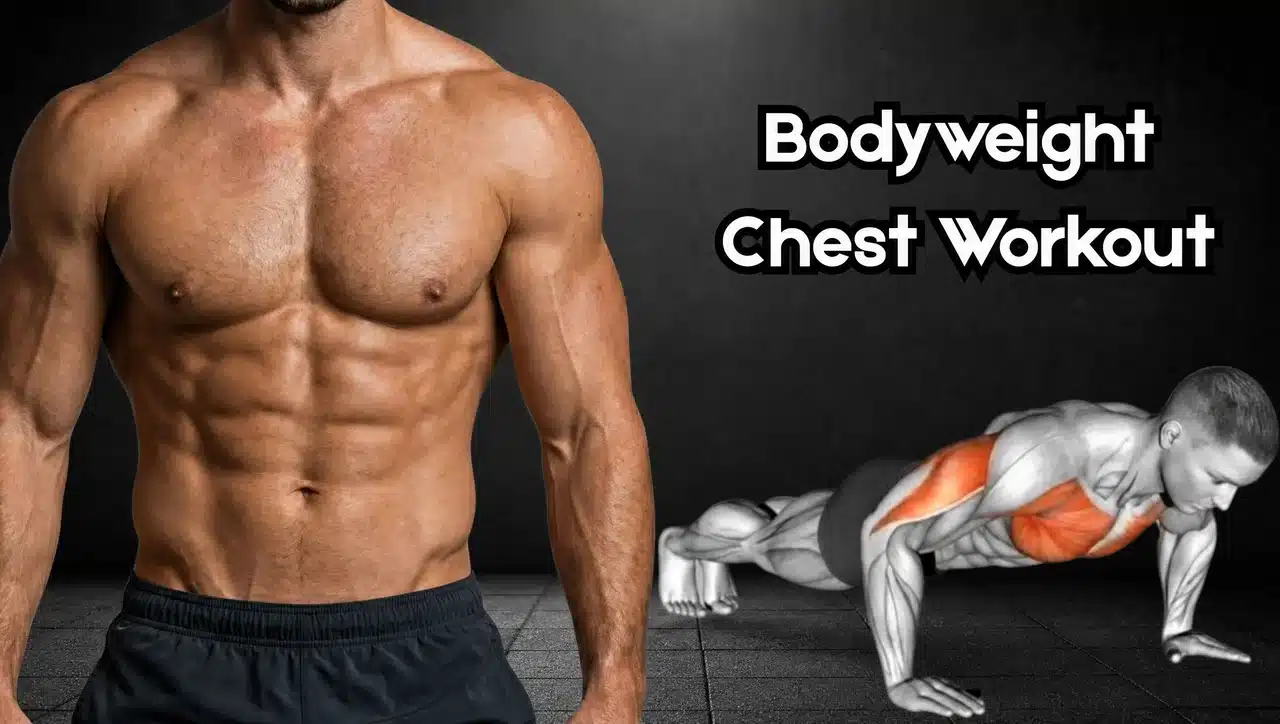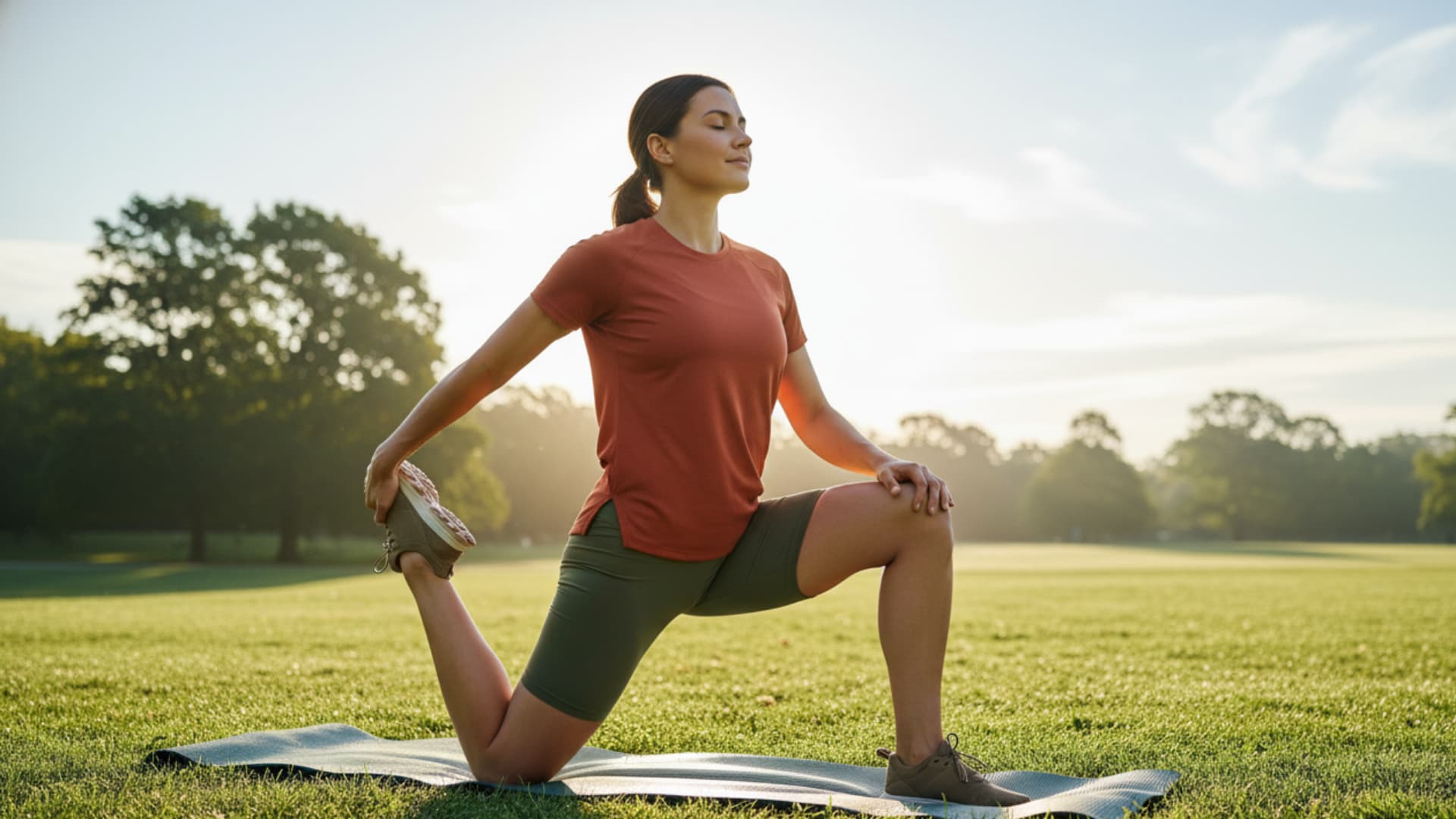
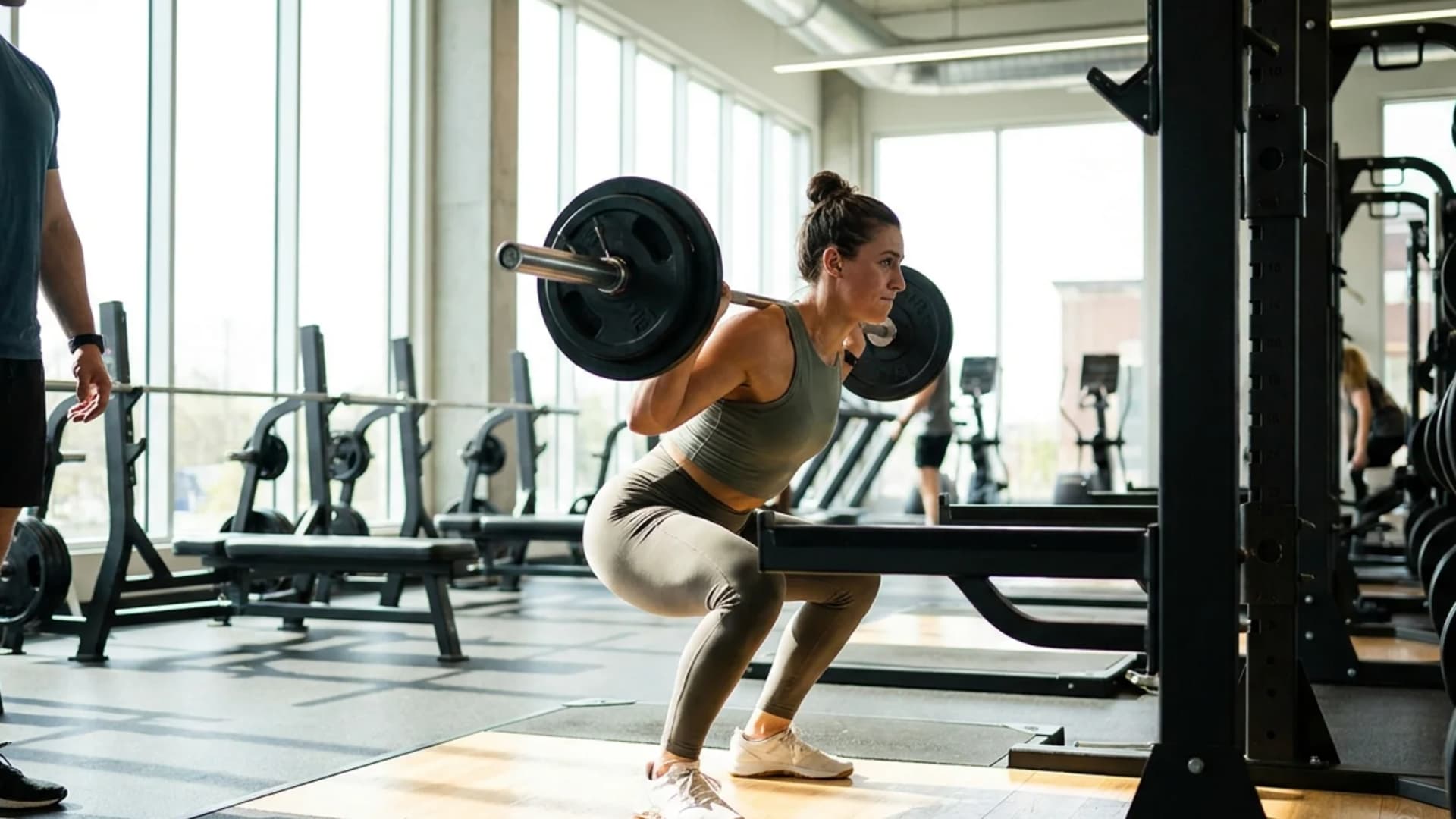
Compound exercises are popular with beginners and experienced lifters because they train multiple muscles in less time. Unlike isolation moves, they work several muscle groups at once.
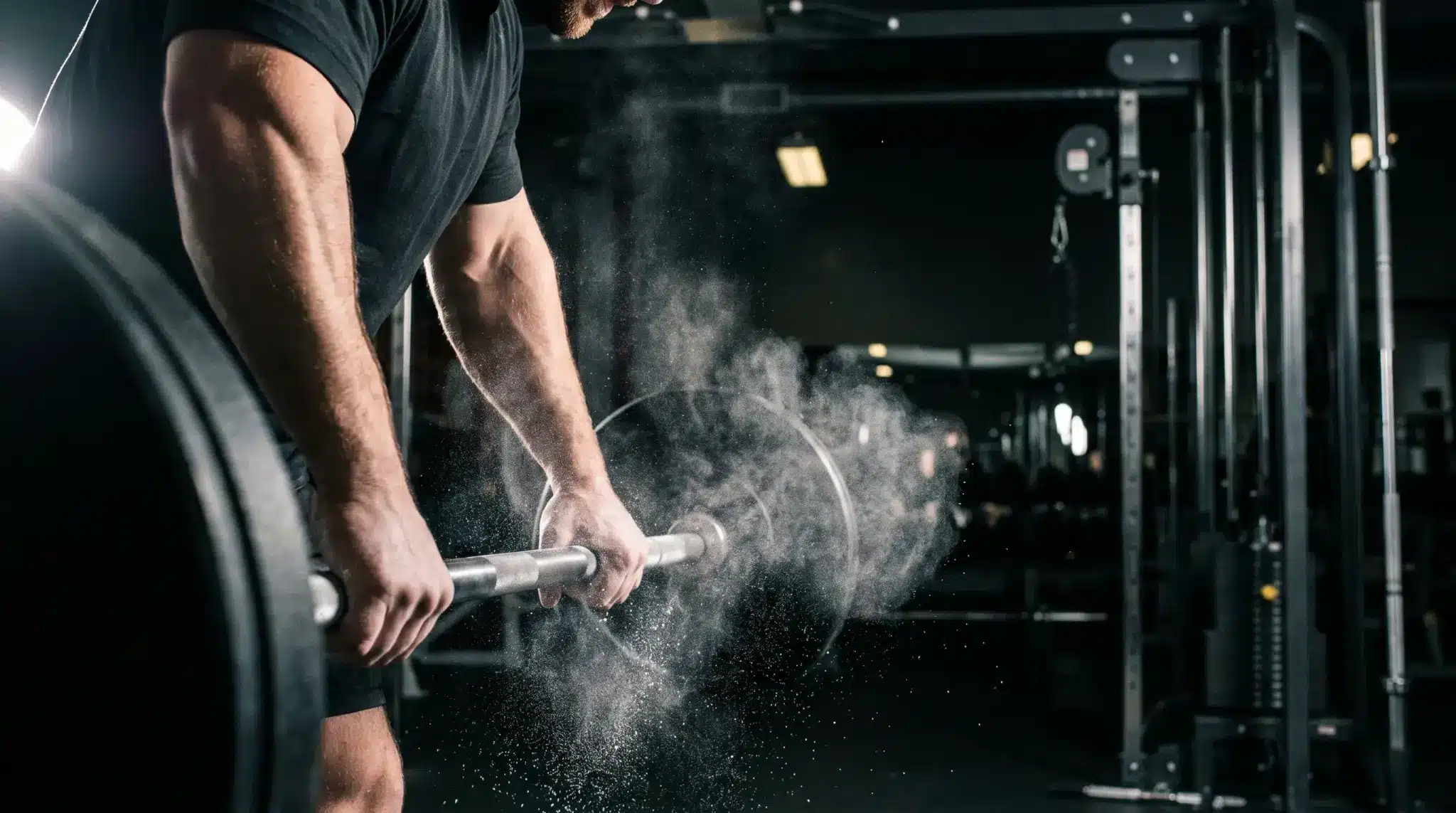
Squats train the legs, hips, and core, while deadlifts target the back, hamstrings, and grip.
These movements fit both home and gym workouts, helping beginners build strength and experienced lifters improve performance.
What Are Compound Exercises?
Compound exercises are movements that work two or more muscle groups through two or more joints at the same time.
A squat bends your hips, knees, and ankles together. This forces your quads, glutes, hamstrings, and core to work as a team in a single rep. A deadlift loads your hamstrings, glutes, back, and grip all at once.
Compound vs. Isolation Exercises
The key difference between compound and isolation exercises comes down to joints and muscles involved. Isolation moves work one muscle and one joint. A bicep curl only bends your elbow. That is its limit.
| Feature | Compound Exercise | Isolation Exercise |
|---|---|---|
| Joints used | 2 or more | 1 |
| Muscles worked | Multiple groups | Single muscle |
| Load capacity | Higher | Lower |
| Example | Squat, Deadlift | Bicep curl, Leg extension |
| Time efficiency | High | Low |
Compound exercises let you lift heavier loads. They train movement patterns you use in daily life, like pushing, pulling, and squatting. They also build coordination and save time by working multiple muscles per set.
Isolation exercises still have a place in training. But compound movements form the base of most effective strength programs.
Benefits of Compound Exercises
Compound exercises offer more than just muscle size. They improve performance, save gym time, and build full-body coordination.
- More muscle in less time: One squat hits quads, glutes, hamstrings, and core in a single set.
- Better overall strength: Compound lifts mirror real movement patterns like pushing, pulling, and squatting.
- Greater workout efficiency: One deadlift set trains your back, glutes, hamstrings, and grip at once.
- Improved coordination: Multi-joint moves like lunges build balance and leg strength at the same time.
- Higher calorie burn: More muscles working per set means more energy used during and after training.
13 Best Compound Exercises for Every Body
These exercises cover pushing, pulling, squatting, and carrying movements. Each one works multiple muscle groups and suits different fitness levels. Use this list to build a balanced strength routine that targets your whole body.
1. Barbell Squat
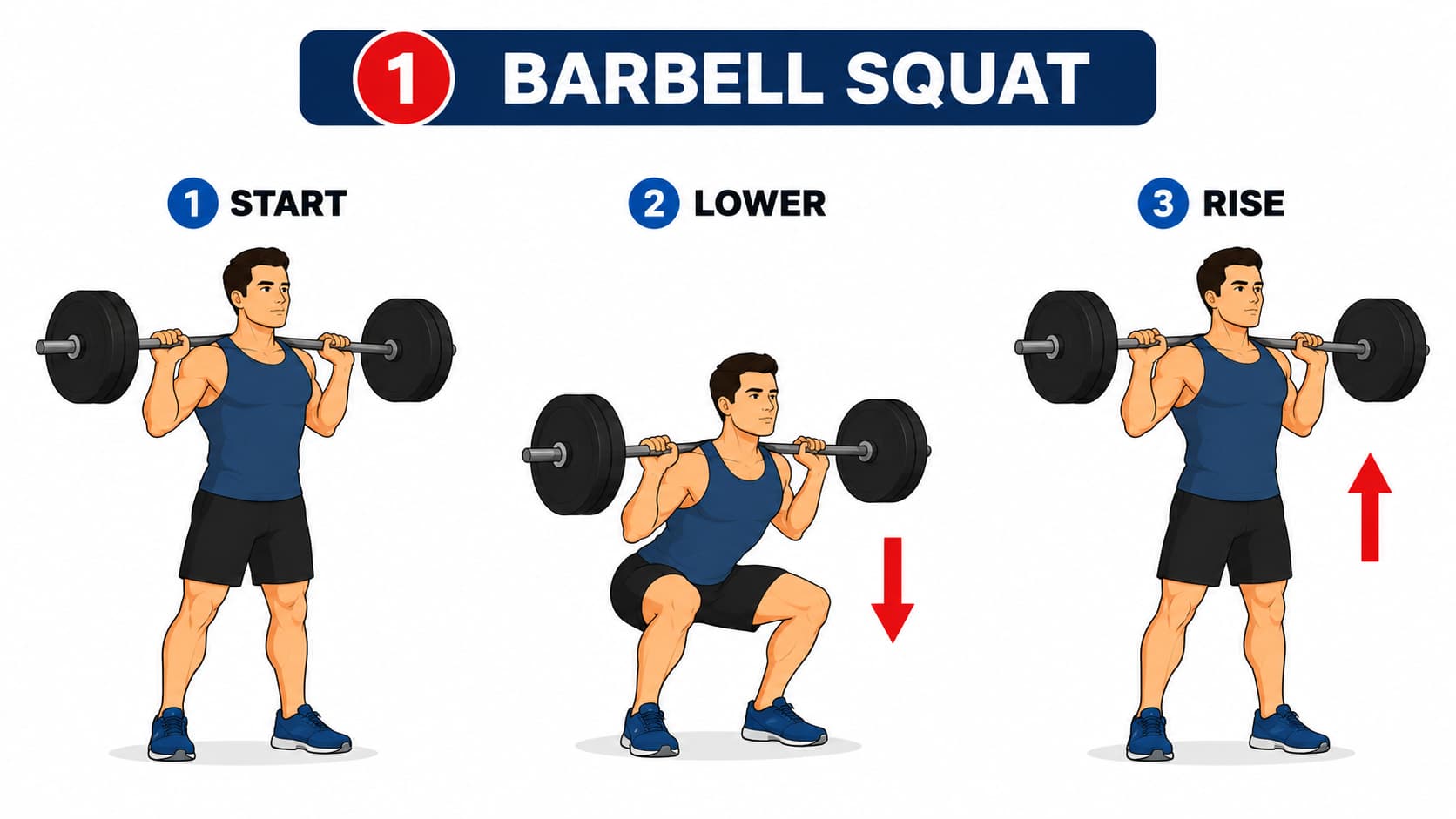
Muscles worked: Quadriceps, glutes, hamstrings, core
The barbell squat is one of the most effective lower-body exercises available. It places a heavy load on your quads, glutes, and hamstrings while your core stabilizes your torso under the bar.
How to do it:
- Set the bar across your upper back
- Keep your chest up and feet shoulder-width apart
- Lower until your thighs reach parallel to the floor
- Drive through your heels to stand back up
Beginner tip: Start with bodyweight squats or goblet squats before adding a barbell.
Common mistake: Letting your knees cave inward. Keep them tracking over your toes through the full movement.
2. Deadlift
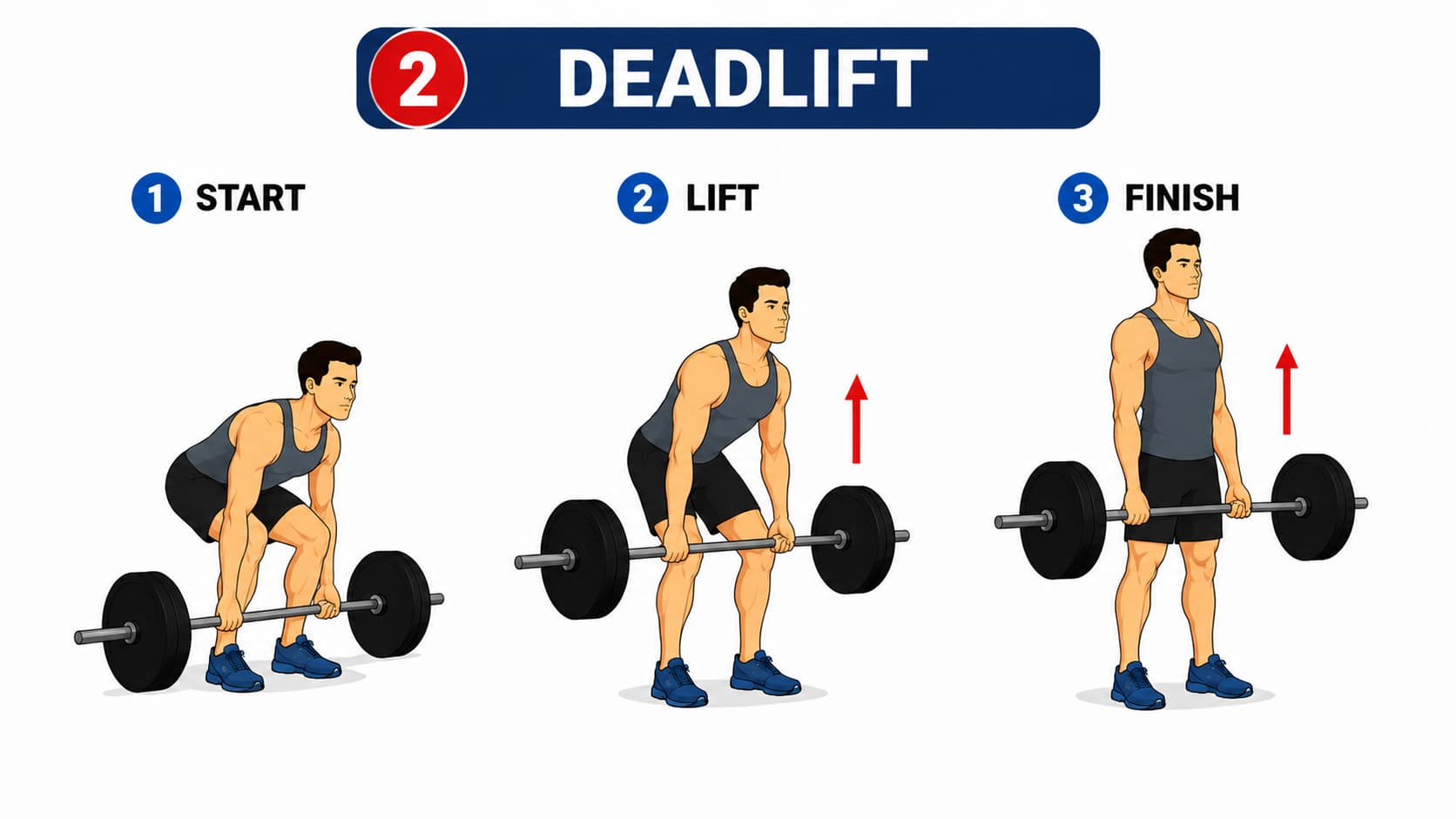
Muscles worked: Hamstrings, glutes, lower back, core, grip
The deadlift trains more muscles in one movement than almost any other exercise. It loads your entire posterior chain from your heels to your upper back. If you had to pick one lift, this one covers the most ground.
How to do it:
- Stand with feet hip-width apart and the bar over your mid-foot
- Hinge at your hips and grip the bar just outside your legs
- Keep your back flat and chest tall
- Push through the floor to stand, keeping the bar close to your body
Beginner tip: Start lighter than you think you need to. Focus on a flat back before adding plates.
Common mistake: Rounding your lower back under load. This puts serious strain on your spine.
3. Bench Press
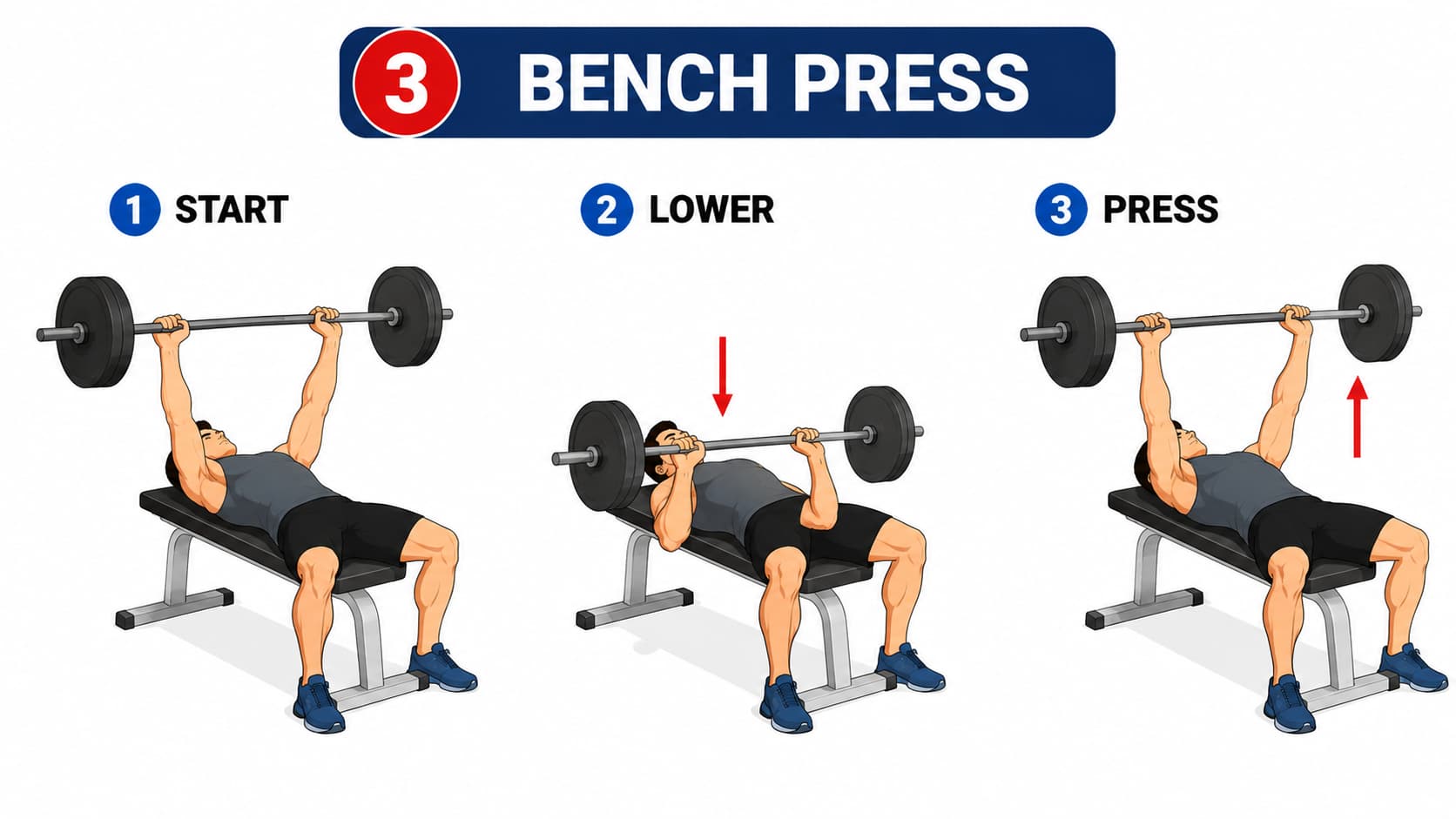
Muscles worked: Chest, shoulders, triceps
The bench press is the standard upper body pressing lift for building chest and arm strength. It lets you load heavy and track progress clearly. This makes it a reliable barometer for upper body strength gains.
How to do it:
- Lie on the bench with feet flat on the floor
- Grip the bar slightly wider than shoulder-width
- Lower the bar with control to your mid-chest
- Press it back up in a straight line
Beginner tip: Use a spotter or practice with an empty bar first.
Common mistake: Bouncing the bar off your chest. This reduces muscle work and raises injury risk.
4. Overhead Press
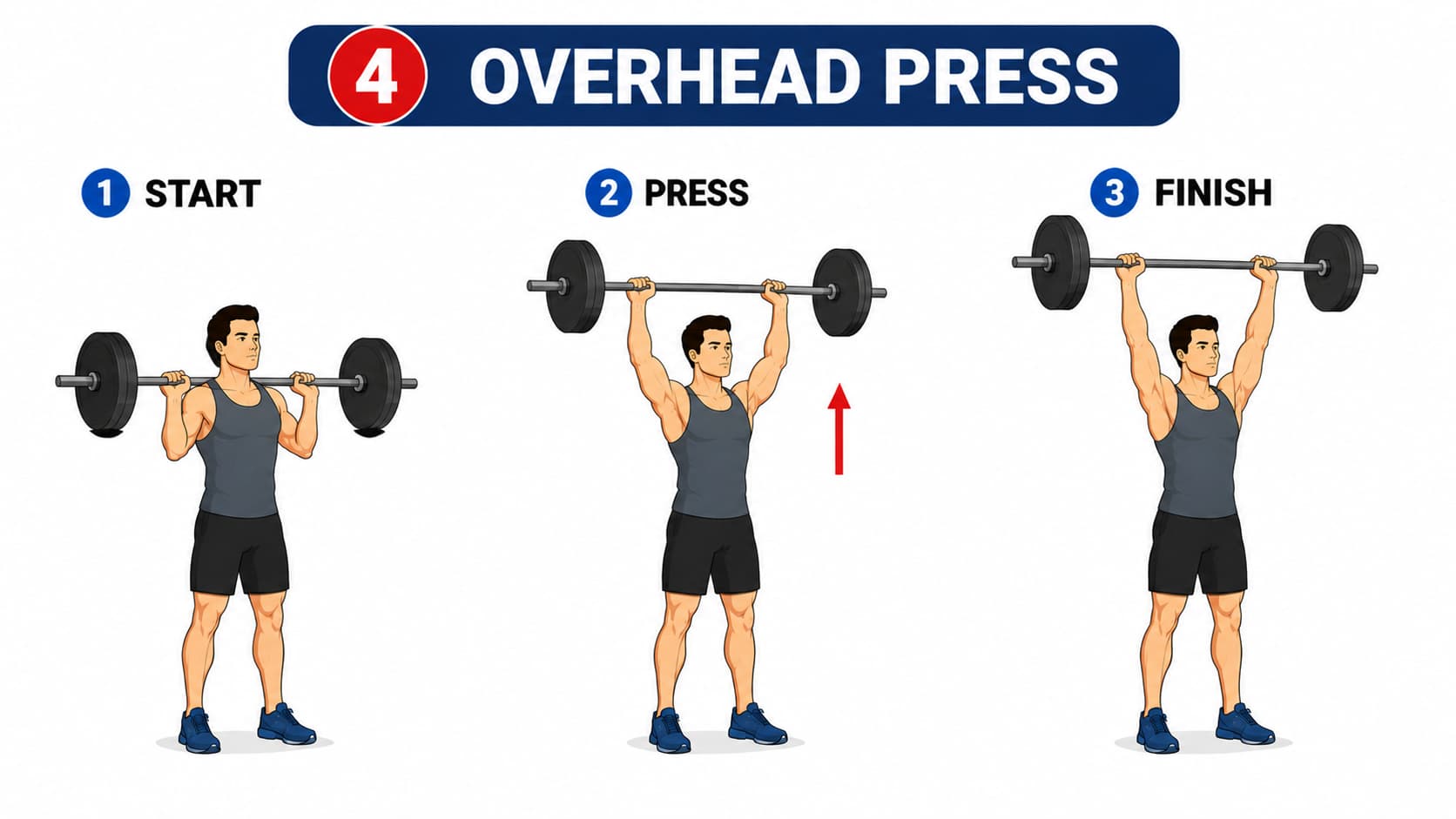
Muscles worked: Shoulders, triceps, upper chest, core
The overhead press trains pressing strength and shoulder stability. It also demands core activation to keep your spine neutral under load. This makes it a true compound movement, not just a shoulder exercise.
How to do it:
- Hold the bar at shoulder height with a grip slightly wider than your shoulders
- Press the bar straight overhead
- Move your head slightly back so the bar can pass your face
- Lower it back to shoulder height with control
Beginner tip: Keep your core tight throughout. Avoid letting your lower back arch as you press.
Common mistake: Leaning back too far to push the bar up. This shifts stress from your shoulders to your lower back.
5. Barbell Row
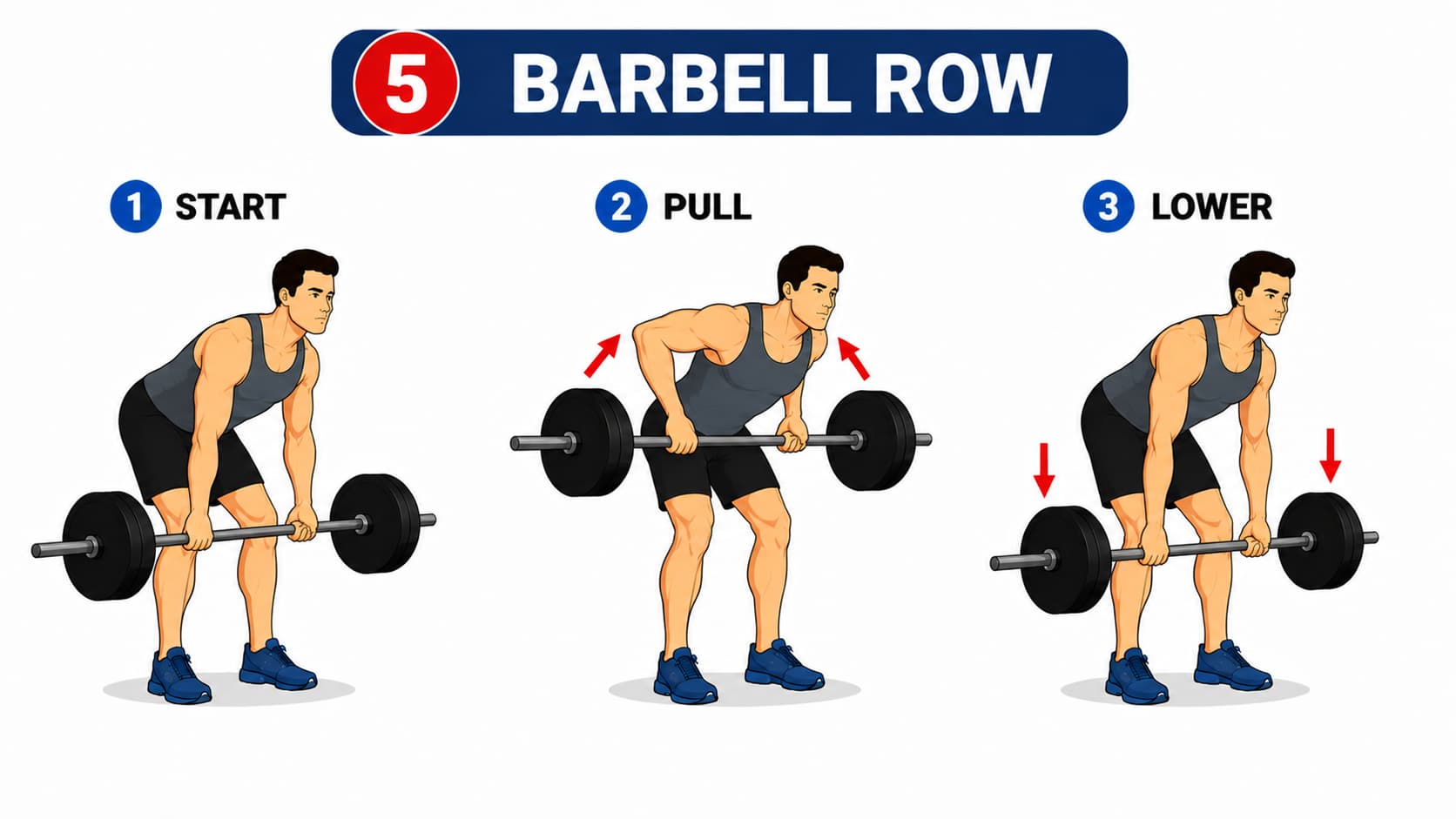
Muscles worked: Upper and mid-back, rear shoulders, biceps
The barbell row builds pulling strength and balances out all the pushing work in your routine. Strong back muscles support better posture and reduce the risk of shoulder injury.
How to do it:
- Hinge at your hips with your back flat and parallel to the floor
- Grip the bar just outside shoulder-width
- Pull the bar toward your stomach
- Lower it with control and repeat
Beginner tip: Start with less weight than you expect. Your lower back must hold its position for the full set.
Common mistake: Using hip momentum to swing the bar up. Pull with your back muscles, not your hips.
6. Pull-Ups
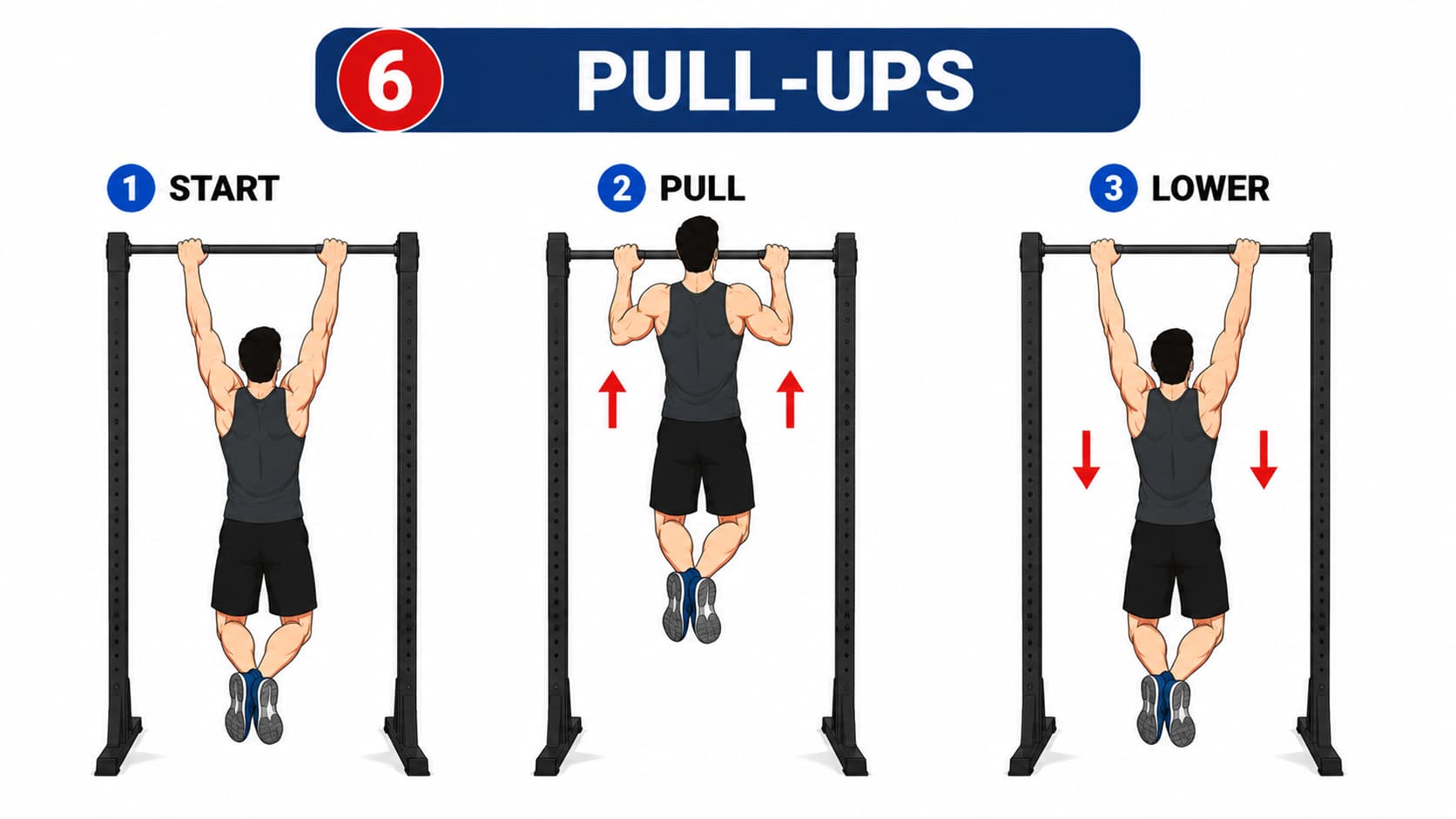
Muscles worked: Lats, upper back, biceps, core
Pull-ups build strong pulling strength using just your bodyweight. They rank among the best tests of upper body strength relative to body weight. They also improve grip and shoulder stability at the same time.
How to do it:
- Hang from a bar with hands slightly wider than shoulder-width
- Pull your chest toward the bar
- Lower yourself with control to a full hang
- Repeat without swinging
Beginner tip: Use a resistance band looped around the bar for assistance. An assisted pull-up machine also works well.
Common mistake: Only pulling until your chin clears the bar. Aim to get your chest close to the bar for a fuller range of motion.
7. Lunges
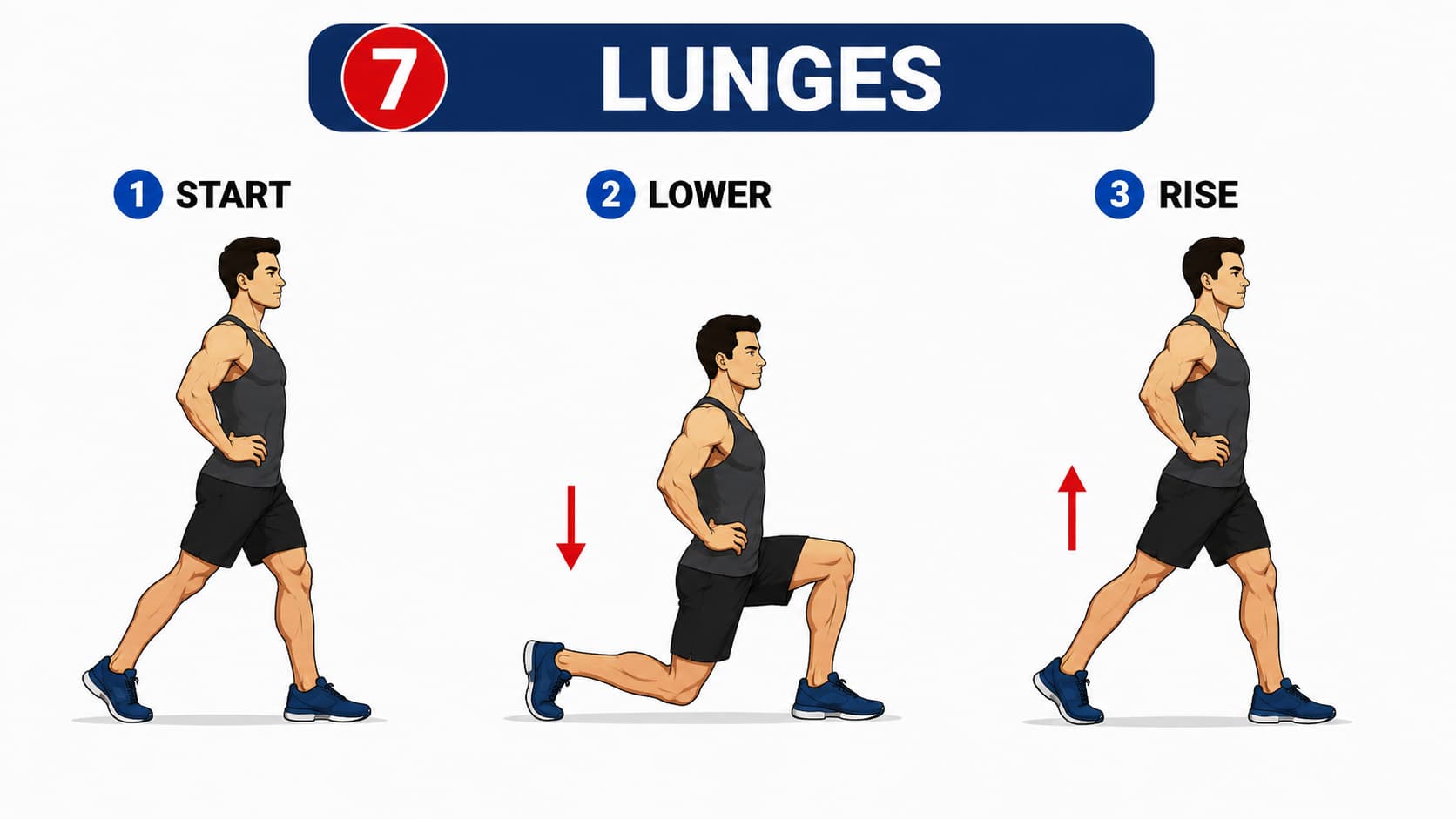
Muscles worked: Glutes, quadriceps, hamstrings
Lunges train each leg separately. This builds balanced strength between your left and right sides and improves balance at the same time. If one leg is weaker than the other, lunges will identify and fix that gap.
How to do it:
- Stand tall with feet together
- Step forward and lower your back knee toward the floor
- Keep your front shin vertical and torso upright
- Push through your front heel to return to start
Beginner tip: Start with bodyweight lunges. Add dumbbells once your balance feels solid.
Common mistake: Letting your front knee drift past your toes. Keep your knee stacked over your ankle.
8. Dips
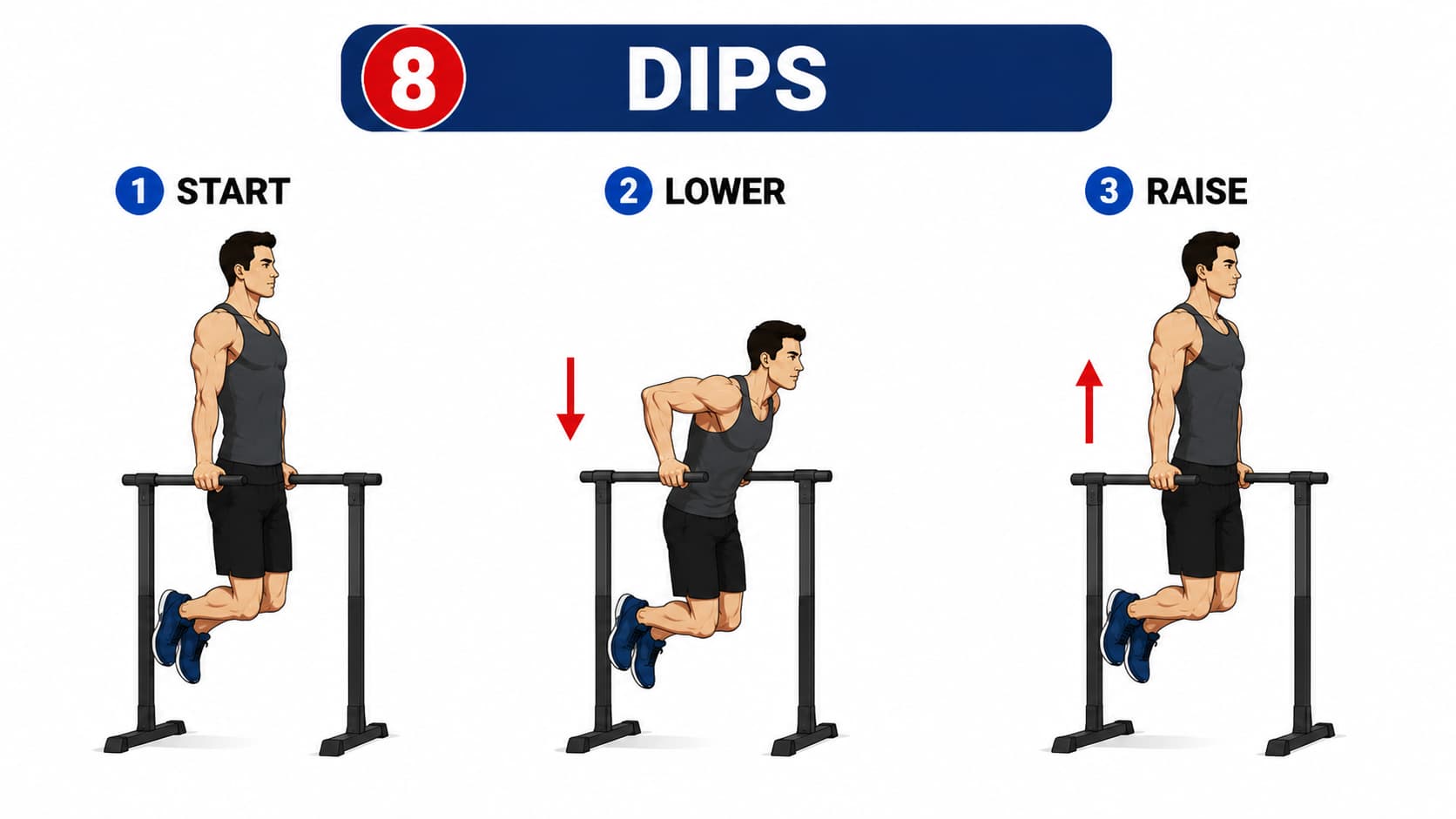
Muscles worked: Chest, shoulders, triceps
Dips are a bodyweight pressing exercise that loads your upper body through a deep range of motion. They build strong triceps and lower chest strength with no equipment beyond parallel bars.
How to do it:
- Grip the parallel bars with your arms straight
- Lower your body until your elbows reach about 90 degrees
- Keep your torso upright for more triceps focus
- Press back up to the starting position
Beginner tip: Start with an assisted dip machine if you cannot complete full dips yet.
Common mistake: Dropping too fast without control. Lower yourself slowly to protect your shoulder joints.
9. Romanian Deadlift
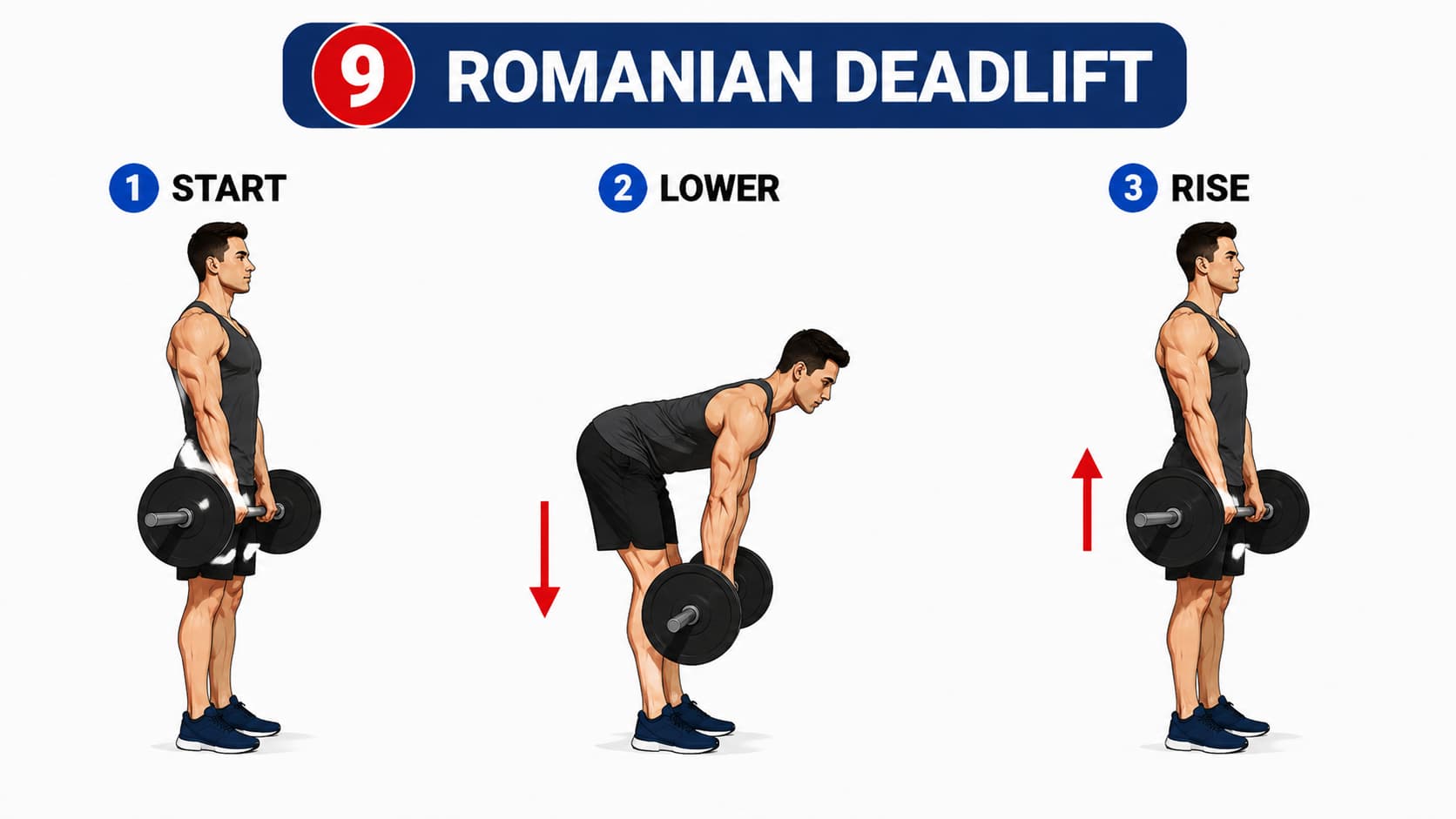
Muscles worked: Hamstrings, glutes, lower back
The Romanian deadlift (RDL) starts from a standing position rather than the floor. This variation keeps constant tension on your hamstrings through the hip hinge. It complements the conventional deadlift well by targeting the same muscles through a slightly different pattern.
How to do it:
- Stand with feet hip-width apart, bar resting against your thighs
- Hinge at your hips and lower the bar along your legs
- Keep a slight bend in your knees and your back flat
- Drive your hips forward to return to standing
Beginner tip: Keep the bar close to your legs throughout the movement. This protects your lower back.
Common mistake: Bending your knees too much and turning it into a regular squat. The RDL is a hip hinge, not a squat.
10. Push-Ups
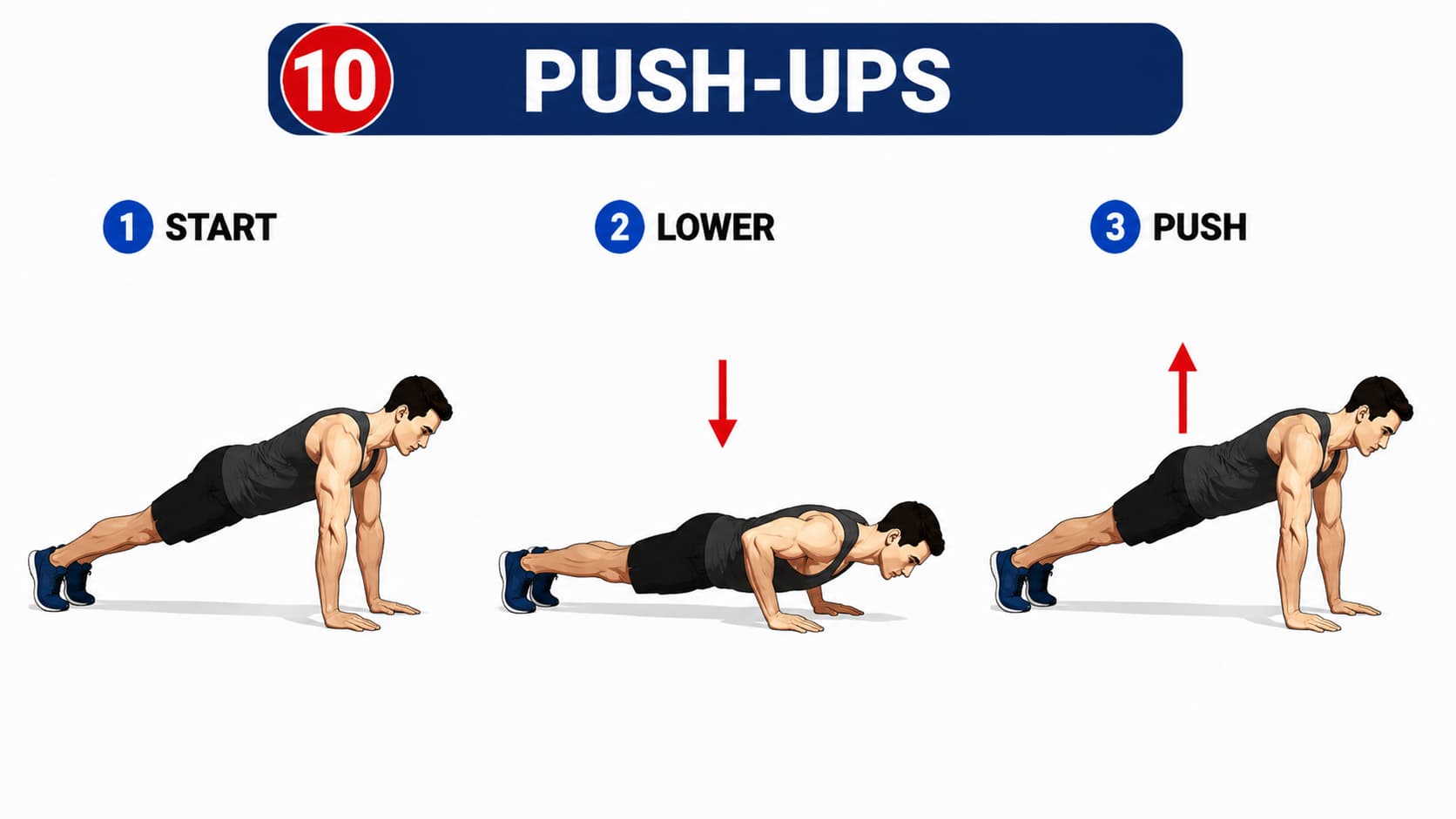
Muscles worked: Chest, shoulders, triceps, core
Push-ups are a foundational bodyweight pressing exercise. They work the same muscle groups as the bench press and require no equipment. This makes them useful for training at home or when traveling.
How to do it:
- Start in a high plank with hands slightly wider than shoulder-width
- Keep your body in a straight line from head to heels
- Lower your chest toward the floor
- Press back up and repeat
Beginner tip: Start on your knees if full push-ups are too difficult. Build toward a full plank position over time.
Common mistake: Letting your hips sag toward the floor. Keep your core tight on every rep.
11. Clean and Press
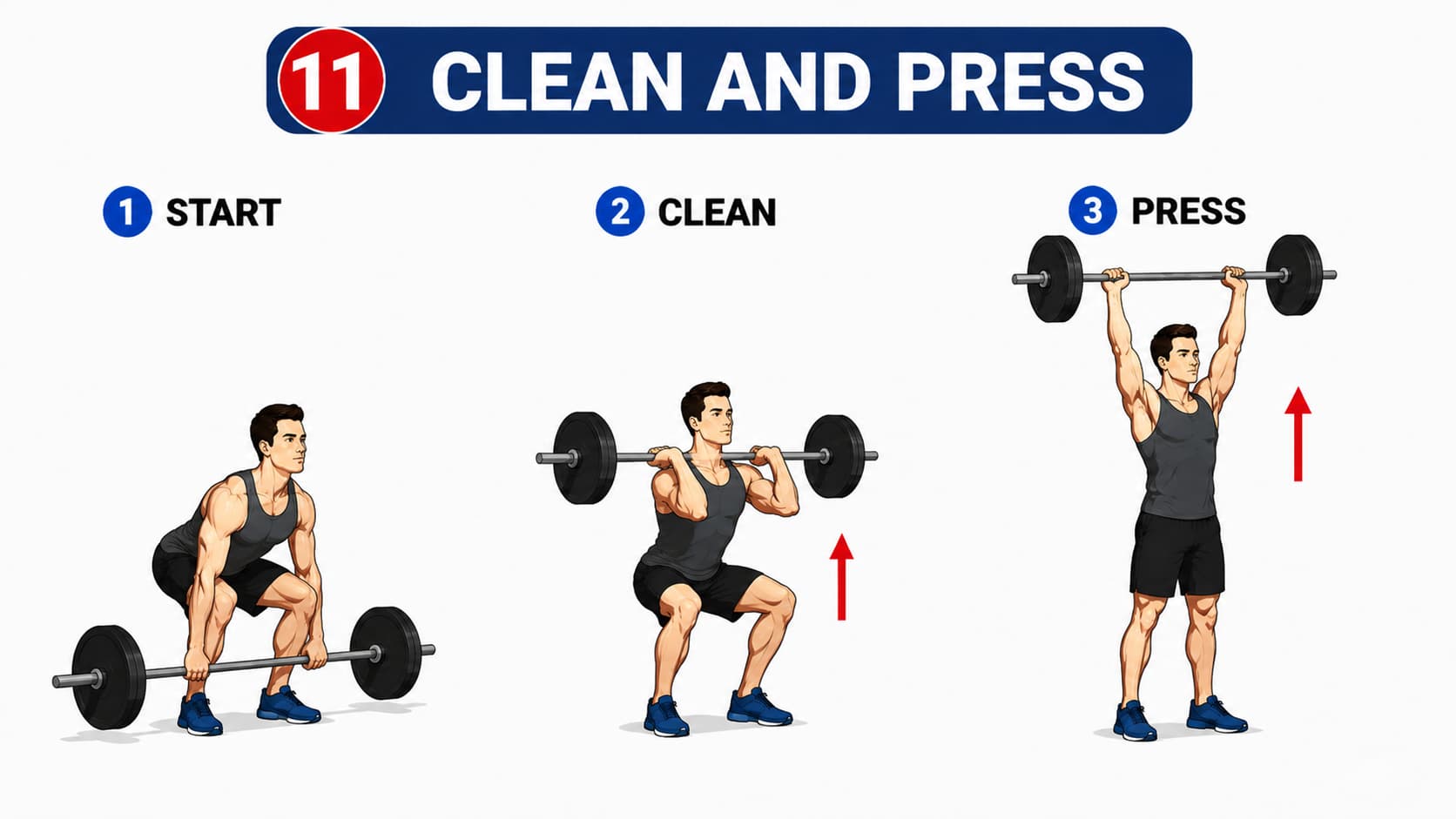
Muscles worked: Shoulders, legs, back, core
The clean and press is a full-body power movement. It combines a pull from the floor with an overhead press in one fluid sequence. This builds explosive power and total-body coordination that most other lifts cannot match.
How to do it:
- Start with the bar at mid-shin
- Pull the bar explosively and drop under it to catch it at shoulder height
- Set your position, then press the bar directly overhead
- Lower it back down with control
Beginner tip: This lift has several technical stages. Work with a coach before adding significant weight.
Common mistake: Pressing before the bar is fully racked at shoulder height. Always set your position first.
12. Hip Thrust
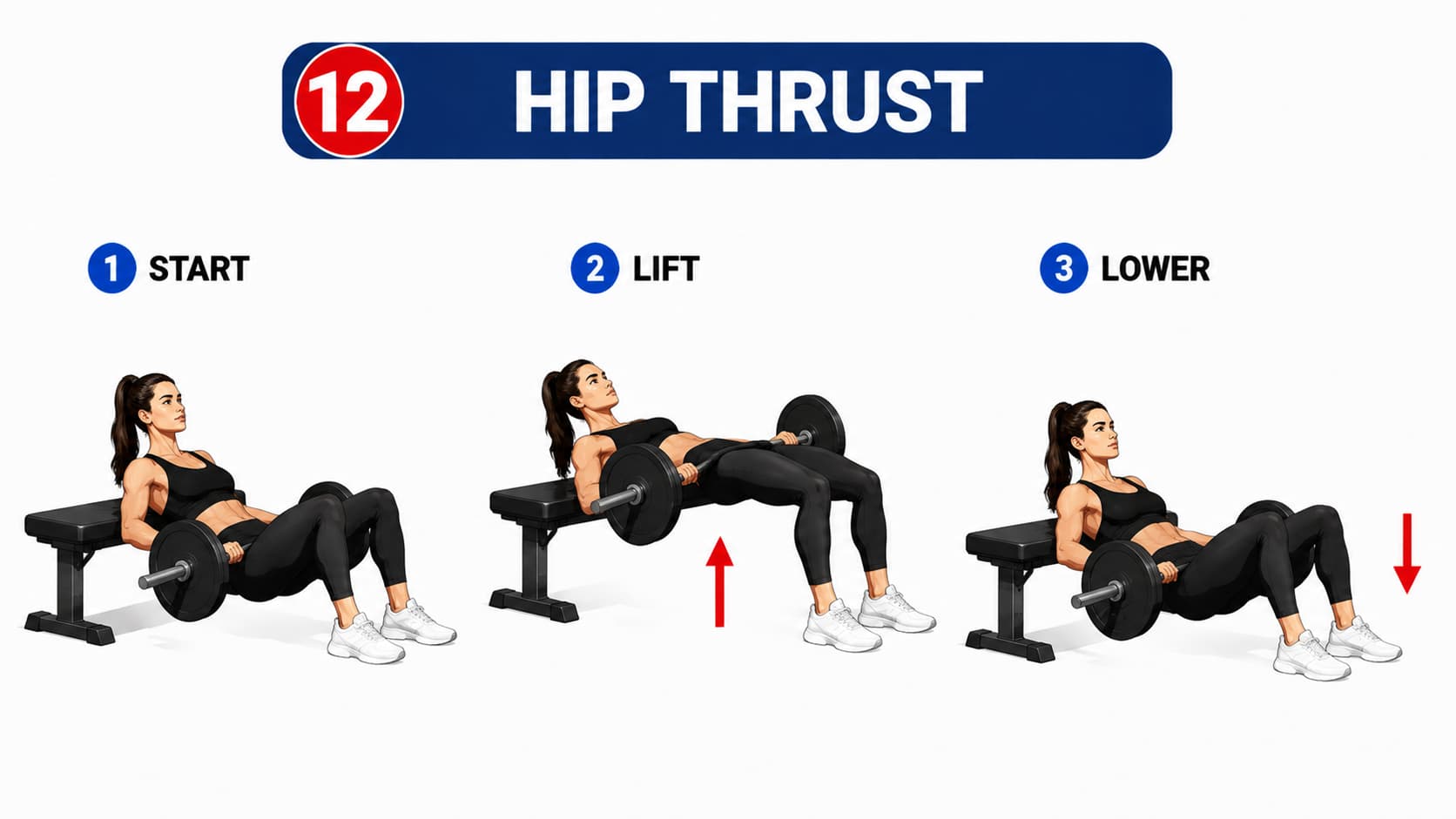
Muscles worked: Glutes, hamstrings, core
The hip thrust targets your glutes through a strong hip extension pattern. It complements squats and deadlifts by adding more direct glute loading than either lift provides on its own.
How to do it:
- Sit on the floor with your upper back against a bench
- Roll a barbell over your hips or place a dumbbell across them
- Drive your hips upward until your body forms a straight line from knees to shoulders
- Squeeze your glutes at the top and lower back down
Beginner tip: Start with bodyweight or a dumbbell across your hips. Add a barbell when your strength improves.
Common mistake: Pushing your hips past a straight line at the top. Focus on squeezing your glutes, not arching your lower back.
13. Farmer’s Carry
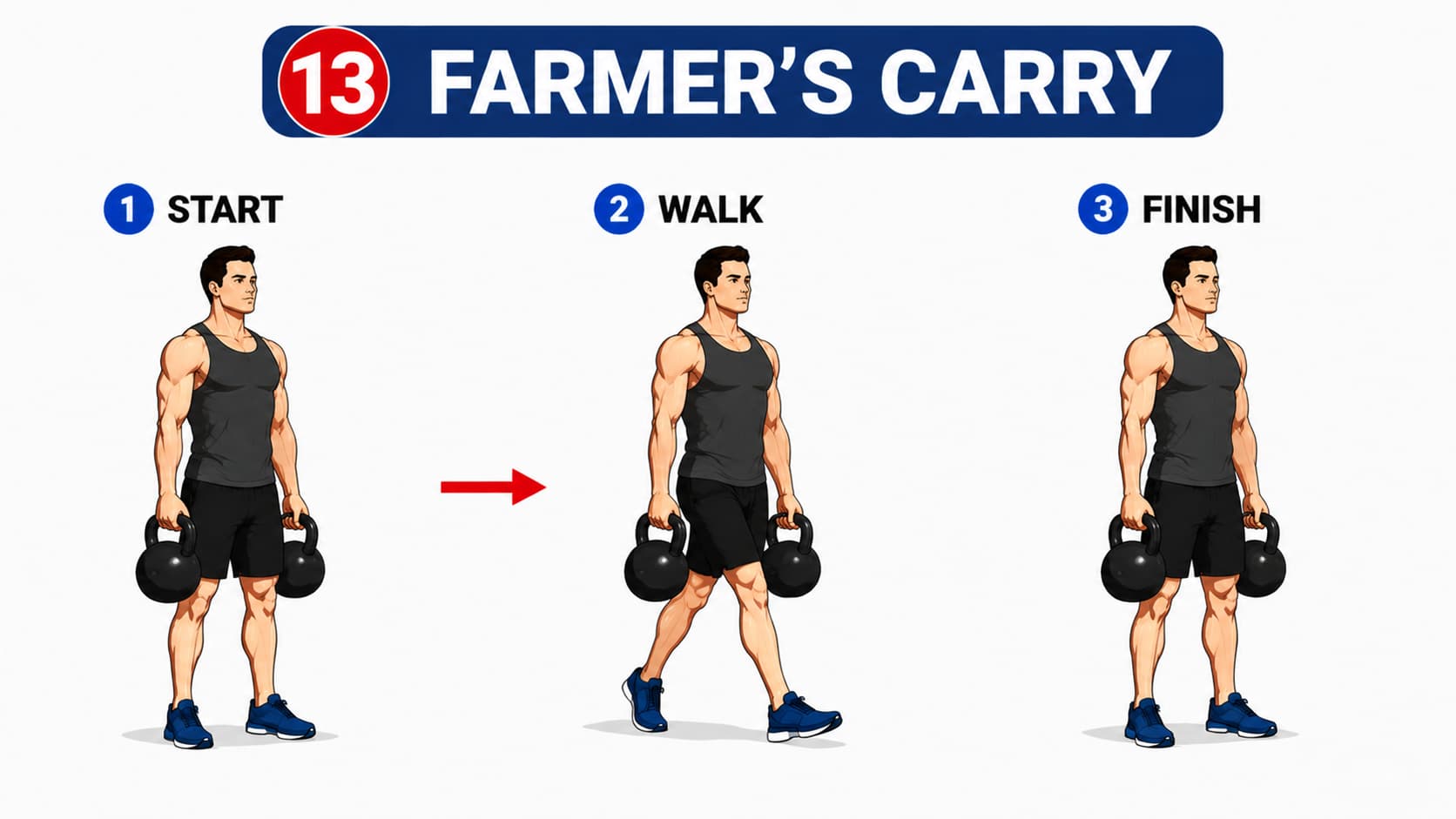
Muscles worked: Grip, core, shoulders, legs
The farmer’s carry trains your whole body through loaded walking. It builds grip strength, core stability, and full-body coordination in a single exercise. Few movements carry over to everyday life as well as this one.
How to do it:
- Hold a heavy dumbbell or kettlebell in each hand
- Stand tall with shoulders pulled back and core tight
- Walk a set distance at a controlled pace
- Set the weights down with control
Beginner tip: Start with a lighter load and shorter distance. Focus on upright posture throughout.
Common mistake: Leaning to one side when the weight gets heavy. Keep your shoulders level and core braced.
How to Choose the Right Compound Exercises for Your Goal
The best compound exercises for you depend on your training goal. Building muscle, gaining strength, losing fat, and starting fresh each need a different approach.
For Building Muscle
Progressive overload is the main driver of muscle growth. This means gradually adding weight, reps, or sets over time.
Exercises like squats, deadlifts, and bench presses let you track load increases clearly. Aim for 8 to 12 reps per set. This range balances enough load with enough volume to support muscle growth.
For Strength Gains
Strength training calls for lower reps and heavier weight. Sets of 1 to 5 reps with controlled form build maximum strength over time.
The squat, deadlift, bench press, and overhead press form the base of most strength programs. Rest 2 to 3 minutes between sets. Full recovery matters more for strength work than for muscle-building sets.
For Fat Loss and Conditioning
Compound movements work well in circuits for fat loss. Pairing squats, push-ups, and rows with 30 to 60 seconds of rest keeps your heart rate high.
Bodyweight compound exercises like push-ups, lunges, and pull-ups also fit well here. They need no equipment and work in almost any setting.
For Beginners
Start with bodyweight squats, push-ups, and lunges before adding weight. Learn proper form first. Poor technique raises the risk of injury and limits long-term progress.
Once each movement feels solid, add light resistance and build from there. Do not rush the process. Mastering the basics at this stage sets the foundation for all future gains.
Tips for Performing Compound Exercises Safely
Good form and smart programming make compound exercises more effective and safer over time. Here are six tips to get more from every session.
- Warm up before heavy sets. Do light cardio or bodyweight versions of your main lifts before adding load. This prepares your joints and raises muscle temperature.
- Master form before adding weight. Compound lifts involve multiple joints. Practice each pattern with light or no weight before increasing the load.
- Brace your core on every rep. A tight core supports your spine during squats, deadlifts, and presses. Keep it braced from start to finish.
- Control the lowering phase. Slow the descent on each rep. This builds strength and stops you from relying on momentum to move the weight.
- Breathe with your lifts. Exhale on the hardest part of each rep, such as standing up from a squat. A short breath hold during heavy lifts can help stabilize your core.
- Rest enough between sets. Compound lifts demand more recovery than isolation exercises. Take 2 to 3 minutes for heavier sets to allow full recovery.
Medical Disclaimer: This content is for informational purposes only and is not medical advice. Consult a healthcare professional before starting any new training program.
Final Thoughts on the Best Compound Exercises
The best compound exercises do more than build muscle. They train your whole body efficiently, save time, and build strength that carries over to real life.
From the barbell squat to the farmer’s carry, each exercise on this list has a clear purpose. Some target raw strength. Others improve coordination, balance, or full-body power.
Pick the ones that match your goal. Muscle growth needs progressive overload and controlled reps. Strength gains call for heavier loads and lower reps. Fat loss benefits from circuit-style training with short rest.
Start with solid form. Build weight over time. Compound movements reward consistent effort.
Frequently Asked Questions
How Many Compound Exercises Should I Do in One Workout?
Most workouts include 3 to 5 compound exercises per session. This is enough to train major muscle groups without overloading your recovery.
Can Compound Exercises Help with Weight Loss?
Yes, compound exercises can support weight loss. They use more muscle mass per movement, which burns more calories than isolation exercises.
Are Compound Exercises Safe for Older Adults?
Compound exercises can be safe for older adults when done with proper form and lighter loads. They help maintain muscle mass, balance, and bone strength.
How Often Should I Train Compound Exercises Each Week?
Training compound exercises 2 to 4 times per week works well for most people. This allows sufficient recovery between sessions while still consistently building strength.
Do Compound Exercises Build Muscle Faster Than Isolation Exercises?
Compound exercises often build muscle more efficiently than isolation exercises. They work several muscle groups at once, allowing heavier loads and greater overall stimulus.