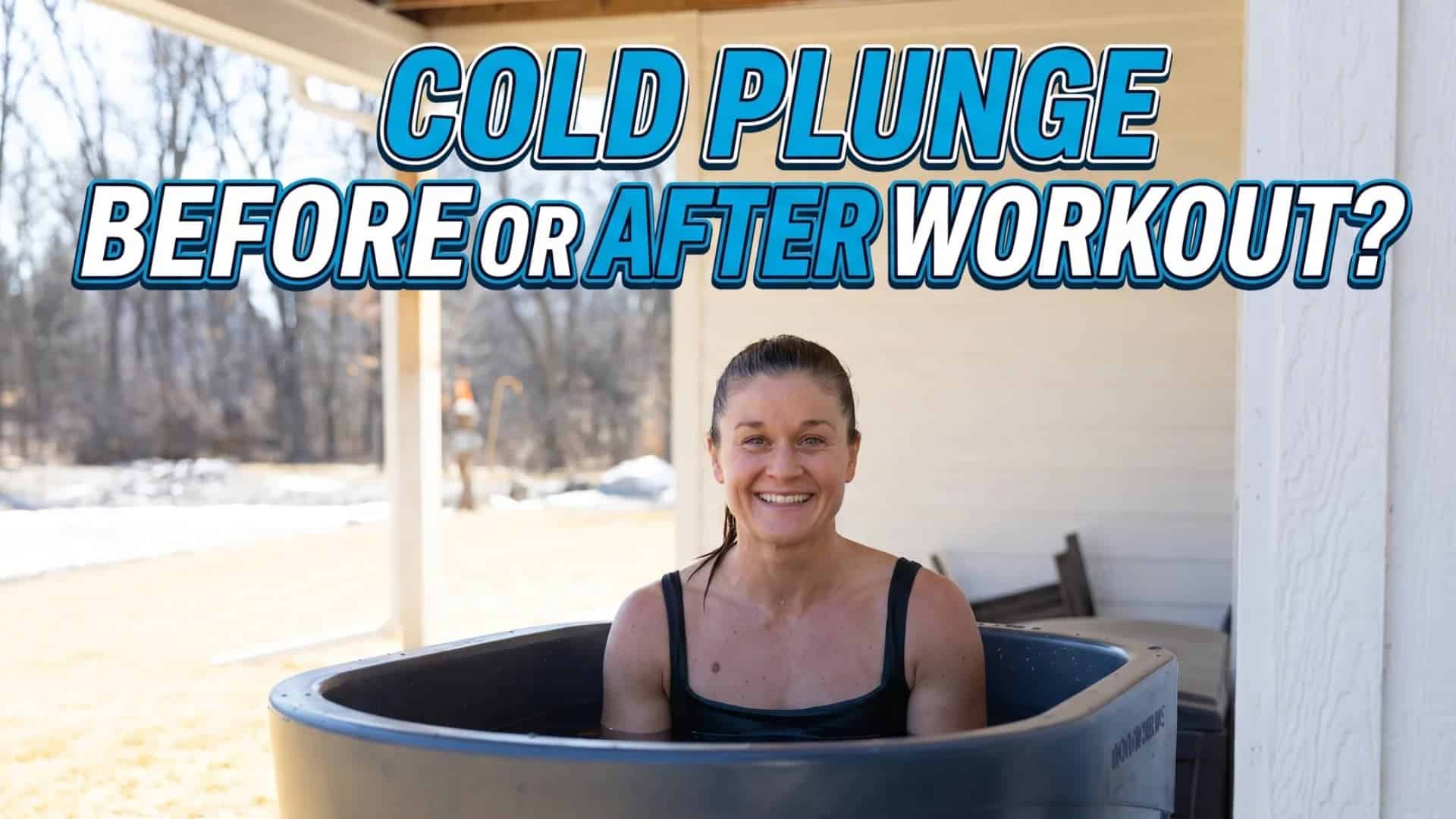
A cold plunge is a short dip in cold water used to support recovery, alertness, and physical adaptation. But the timing matters. Whether you do it before or after a workout can affect performance, soreness, and muscle growth, depending on your goal.
This article breaks down when cold plunging helps, when it can work against your goals, and the timing rule lifters should follow.
What Happens to Your Body in Cold Water
When you step into cold water, your body treats it as a stressor.
Blood vessels near the skin tighten, a process called vasoconstriction, to protect your core temperature. Heart rate and breathing both spike within seconds. Your brain releases adrenaline and dopamine almost immediately, which is why most people describe feeling alert and focused right after a plunge.
The temperature range that produces these effects consistently falls between 50°F and 59°F (10°C–15°C). Colder water doesn’t guarantee better results, but warmer water may reduce the circulatory impact.
The vasoconstriction effect is also what drives the timing debate. Cold water tightens blood vessels and slows nutrient delivery to muscle tissue. Get in at the wrong point in your training cycle, and that same response can work against your goals.
Should You Cold Plunge Before a Workout?
A pre-workout cold plunge is less common, but it has a specific use case that research supports.
When it helps: Benjamin Gordon, PhD, instructional assistant professor in applied physiology at the University of Florida, describes it as “pre-cooling.” Lowering core temperature before training in heat can help athletes sustain output longer before fatigue sets in. Runners, cyclists, and outdoor athletes training in warm conditions can benefit from a short plunge beforehand.
The dopamine and adrenaline response also has practical value for early-morning training or sessions where motivation is low. Many people describe feeling mentally switched on within minutes, without stimulants.
When it works against you: Cold lowers muscle temperature, which can reduce maximal strength and explosive power in the short term. Stepping from a cold plunge directly into heavy back squats is not ideal. A 10–15 minute active warm-up after a pre-workout plunge is enough to restore muscle temperature before loading.
| Training Type | Pre-Workout Plunge |
|---|---|
| Outdoor endurance in the heat | Yes, pre-cooling supports performance |
| Morning training, low motivation | Yes, short 1–2 min for mental clarity |
| Heavy lifting or max-effort sets | Only with a thorough warm-up after |
| Sprint or power-based work | Not recommended |
Should You Cold Plunge After a Workout?
Post-workout cold plunging is where most of the research sits. The findings are more divided than popular wellness content tends to admit.
The recovery case is real: Cold water immersion after a hard session reduces perceived muscle soreness. When blood vessels constrict during the plunge and then dilate again as the body rewarms, metabolic waste gets flushed from tissues. A 2018 systematic review of 99 studies, published in Frontiers in Physiology, found cold water immersion produced meaningful reductions in DOMS compared to passive rest.
Regular users also report better sleep quality, particularly after evening sessions. The drop in core temperature followed by gradual rewarming mirrors what the body does naturally as it prepares for sleep.
The catch for lifters: Strength training triggers anabolic signals, the molecular messages that tell your muscle fibers to rebuild stronger. Cold water immersion too soon after lifting dampens those signals.
A 2024 meta-analysis by Piñero et al., published in the European Journal of Sport Science, confirmed that cold water applied immediately after resistance training blunted muscle growth compared to no cold application. A 2025 study went further: a 20-minute cold plunge reduced blood flow to muscle by roughly 70 percent and lowered the amount of dietary amino acids incorporated into muscle during recovery by about 30 percent.
That is not a reason to avoid post-workout plunging entirely. It is a reason to pay attention to when you get in.
How to Decide the Best Time for a Cold Plunge
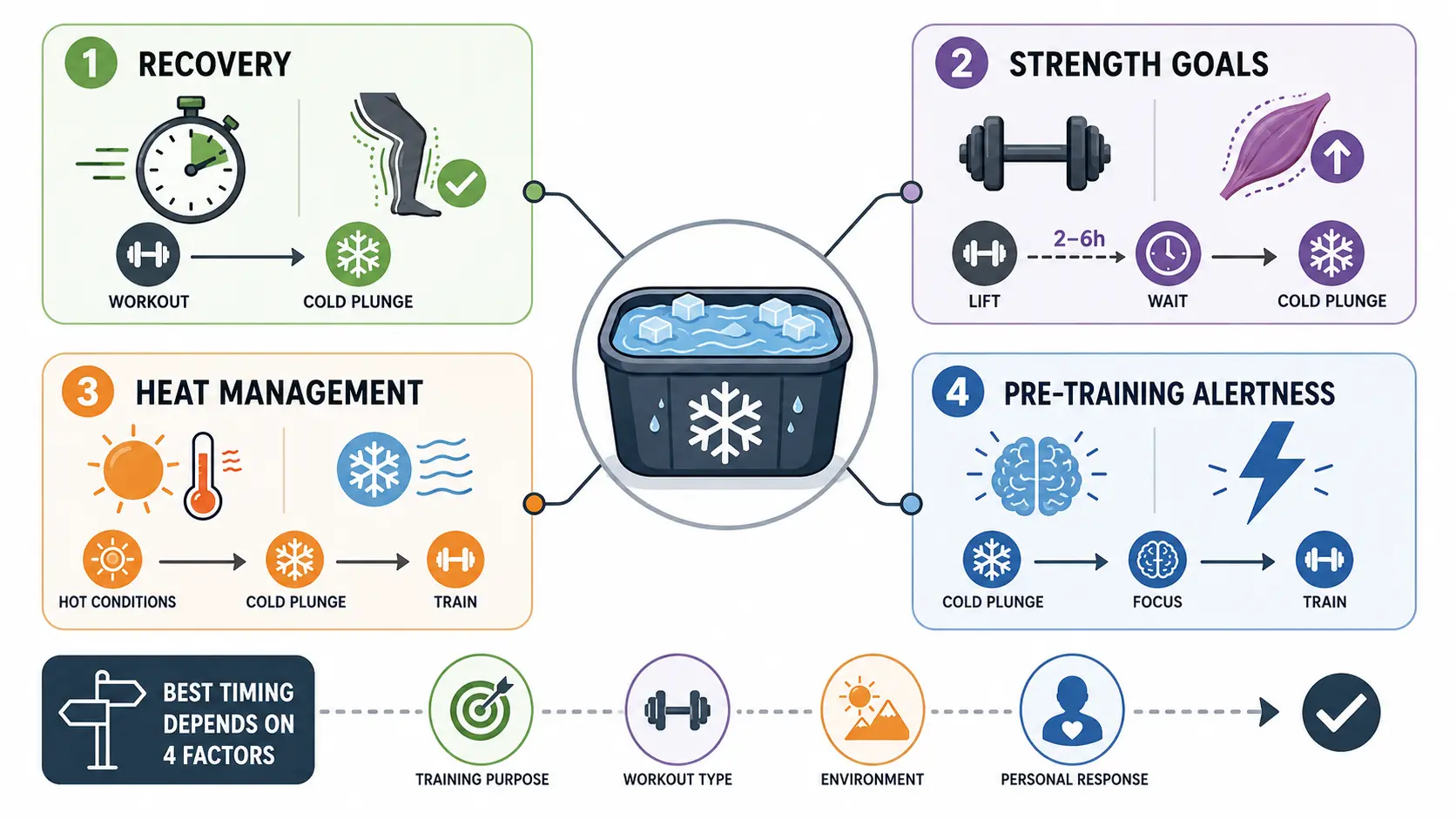
The best cold plunge timing depends on your main training goal. A recovery strategy that works for a runner may not be the right choice for someone trying to build muscle.
1. Endurance or Cardio Training
For runners, cyclists, and other endurance athletes, a cold plunge after training can help reduce muscle soreness and leave you feeling fresher for your next session. Aiming for about 30 minutes after finishing exercise can support recovery without the same muscle-growth concerns seen after resistance training.
2. Strength Training and Muscle Growth
If your goal is building muscle, avoid jumping into cold water immediately after lifting. Waiting around 4–6 hours gives your muscles time to complete the early repair and growth signals triggered by resistance training. Cold plunges on rest days or several hours away from your workout are better options.
3. Hot Weather Outdoor Training
A short cold plunge before exercise can work as pre-cooling. Lowering your core temperature before training in heat may delay fatigue and help endurance athletes maintain performance longer.
4. Mental Preparation or Early-Morning Energy
A brief 1–2 minute plunge before a workout can provide a quick alertness boost through the body’s stress response. If you use this approach, follow it with a proper warm-up because cold muscles are not ready for heavy effort immediately.
5. General Wellness and Sleep Quality
If your goal is relaxation, stress management, or better sleep, cold plunging in the evening away from training sessions can fit well into your routine. Many people find the cooling and rewarming process helps them feel calmer before bed.
There is no single perfect timing for everyone. Try one approach consistently for a few weeks, then adjust based on your soreness, performance, energy levels, and recovery.
The 4–6 Hour Rule for Strength Athletes
If building muscle is your main goal, wait at least 4–6 hours after a resistance training session before cold plunging.
That window gives the early anabolic signals time to fire before cold exposure interrupts them. In practice, this means: if you lift in the morning, plunge in the evening. If you lift in the afternoon, hold off until the next morning. Many athletes who train twice daily schedule their cold plunge between sessions, before the first lift and hours before the second.
If same-day plunging is unavoidable, allow at least 30–60 minutes and let your heart rate settle first. It is better than nothing, but the further from the session, the less interference.
This restriction does not apply to endurance training. Cold water after aerobic sessions does not carry the same hypertrophy concern. For runners and cyclists, plunging within 30 minutes of finishing can meaningfully reduce next-day soreness.
What Real People Notice After Regular Cold Plunging

Joe Rogan has been consistent about one thing: his post-workout routine combines sauna and cold plunge. He has said that his everyday muscle soreness dropped noticeably once the combination became regular. He treats it as non-negotiable. He does his sessions post-workout, not pre.
Alexa Mikhail, writing for Fortune, took a different approach. She built a morning plunge habit before workouts, starting with brief exposure and gradually adding time. Her focus was less on physical recovery and more on mental readiness. A different goal, a different timing choice.
In online fitness communities, the pattern is less settled. Strength athletes who plunge only on rest days report no negative effects on muscle growth. Others who plunge daily post-workout describe fewer gains over months of training. Some people notice no difference either way.
Individual response varies with genetics, training volume, sleep quality, and plunge duration. Tracking your soreness, strength, and sleep over 3–4 weeks with a consistent timing protocol will give you more useful information than any single study.
Common Mistakes With Cold Plunge Timing
Common cold plunge mistakes often come down to poor timing rather than the plunge itself. Avoiding these errors helps you get the recovery benefits without reducing workout performance or adaptation.
- Getting in immediately after heavy lifting. The biggest mistake for strength-focused athletes. If hypertrophy is the goal, immediate cold exposure after resistance training chips away at gains over time, particularly with regular, repeated sessions.
- Skipping the warm-up after a pre-workout plunge. Cold muscles under load is a reliable path to injury. Active movement for 10–15 minutes after a pre-workout plunge matters. It is not optional.
- Using the plunge instead of a cooldown. A cold plunge does not replace a gradual heart rate reduction. Enter the water when your heart rate is close to resting, not immediately after your last set. Going in with a very high heart rate adds unnecessary cardiovascular strain.
- Staying in too long. Most of the documented benefit comes from 2–10 minutes. Longer sessions at very cold temperatures do not proportionally increase recovery, and they add physiological stress without additional return.
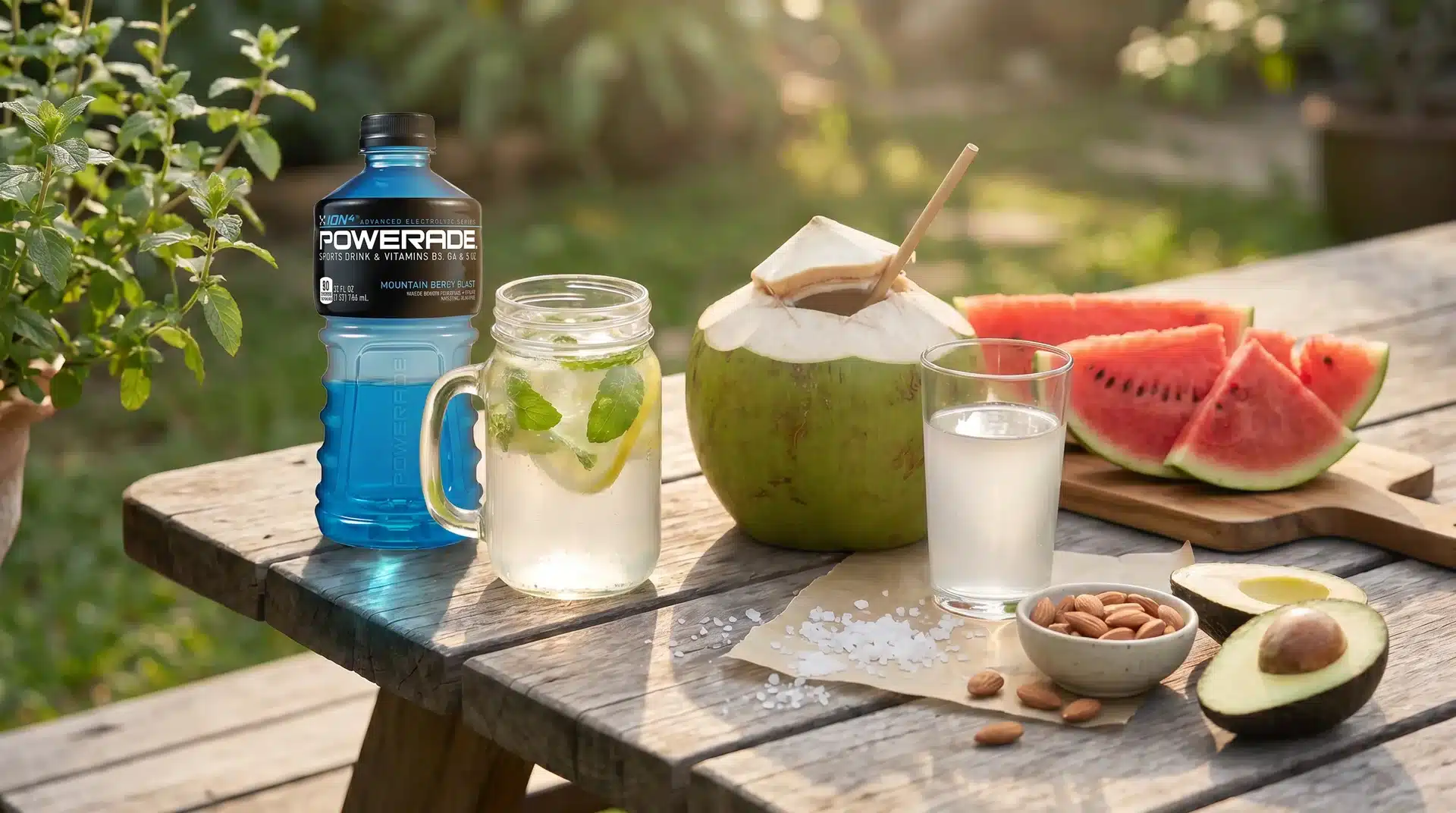
- Plunging dehydrated. Cold exposure affects circulation and body temperature regulation more noticeably when you are already dehydrated. Keeping your electrolyte intake consistent, including before and after sessions, supports a steadier response.
Cold Plunge Before or After Workout: The Bottom Line
The right timing for a cold plunge depends on what you are training for. There is no universal rule.
Before training, a short plunge can sharpen focus and lower core temperature for endurance work in the heat. After training, it supports soreness reduction and better sleep.
But if you lift weights for muscle growth, the 2024 Piñero meta-analysis is clear: getting in immediately after resistance training interferes with the process. The 4–6 hour rule exists for a reason.
Use the research as your starting point. Track what you feel and how you perform. The best cold plunge timing is the one that consistently supports how you train, and how you feel 24 hours later.
Frequently Asked Questions
Should you warm up after a pre-workout cold plunge?
Yes. Allow 10–15 minutes of active warm-up movement after a pre-workout plunge before loading muscle. Cold lowers muscle temperature temporarily, which can reduce strength and power output if you skip the warm-up.
Does cold plunging after cardio blunt fitness gains?
No. The hypertrophy-blunting effect applies mainly to resistance training. Cold water after endurance sessions is considerably less problematic and can support next-day recovery.
How long should you wait after lifting before a cold plunge?
At least 4–6 hours if muscle growth is the goal. Plunging in the morning before an afternoon lift is one practical way to get both benefits in the same day without interference.
Does a cold plunge before a workout burn more calories?
Cold exposure does increase short-term energy expenditure as your body works to maintain core temperature. The effect is modest, however, and not a strong reason on its own to plunge before training.
Is cold plunging safe for everyone?
Not without checking first. The American Heart Association notes that sudden cold water immersion can sharply raise heart rate and blood pressure. People with heart conditions or those on beta blockers should consult a doctor before starting.