Your quads take a serious beating on the bike. Every pedal stroke keeps your knees bent and your thighs working under load.
After an hour or more in that position, most cyclists feel that familiar tightness building in the front of the thigh. Left alone, it turns into knee pain, hip strain, and reduced power.
The lying quad stretch is one of the most effective ways to address this. It is simple, floor-based, and targets the exact muscles that cycling overworks.
This post covers what it is, how to do it correctly, and how it fits into your cycling recovery.
What Is the Lying Quad Stretch?
The lying quad stretch is a floor-based flexibility exercise that targets the four quadriceps muscles at the front of your thigh. You lie on your side or stomach and bend one knee.
Then you pull your heel toward your glutes until you feel a stretch through the front of the leg. Unlike standing quad stretches, this version removes the need for balance. Your body stays fully supported on the floor, allowing the muscle to release more completely.
It is widely used in physical therapy for knee pain and post-workout recovery. This makes it especially practical for cyclists who deal with tight quads after long rides.
Muscles Worked in the Lying Quad Stretch
The quadriceps are not one muscle. It is a group of four, and each one connects differently to your knee and hip.
Knowing which muscles the lying quad stretch targets helps explain why it works so well for cycling recovery.
| Muscle | Location | Primary Role | Why Cyclists Need to Stretch It |
|---|---|---|---|
| Rectus Femoris | Front center of the thigh | Extends the knee and flexes the hip | The only quad that crosses the hip; most shortened by cycling posture |
| Vastus Lateralis | Outer thigh | Extends the knee | Tightens during high-resistance pedaling |
| Vastus Medialis | Inner thigh near the knee | Extends the knee; stabilizes the kneecap | Tightness here leads to patellar tracking problems |
| Vastus Intermedius | Deep under the rectus femoris | Extends the knee | Contributes to overall quad stiffness that often goes unaddressed in recovery |
Benefits of the Lying Quad Stretch
Cycling locks your quads into a shortened, repetitive position for every minute you spend in the saddle. Consistent stretching after each session is one of the most practical ways to offset that.
Below are the key benefits, each grounded in how the stretch actually works in the body.
- Improves Quadriceps Flexibility for Cycling: Regular practice gradually lengthens the quadriceps muscles. This gives you a fuller range of motion and less wasted energy through each pedal stroke.
- Reduces Anterior Knee Pain: Tight quads pull the kneecap upward, compressing the joint. The lying quad stretch relieves this tension and supports better patellar tracking. According to Physio-Pedia, quadriceps tightness is a well-documented contributing factor in patellofemoral pain syndrome.
- Releases Hip Flexor Tension: The rectus femoris crosses both the hip and the knee. A lying quad stretch also addresses the hip flexor tightness cyclists build up from hours in the saddle.
- Speeds Up Muscle Recovery After a Ride: Lying down during the stretch allows your nervous system to relax fully. This produces a deeper, more passive release than you get from a standing stretch.
- Supports Better Pedaling Efficiency: Looser quads allow greater hip extension at the bottom of each pedal stroke. That means less energy is lost to your own muscle resistance on every rotation.
- Accessible at Any Fitness Level: No balance is required. This makes it a reliable option after long rides when your legs are tired, and a standing stretch is harder to hold steady.
How to Do the Lying Quad Stretch
There are two main positions for this stretch: side-lying and prone (face down). Both are effective, but each targets the quad muscles at a slightly different angle.
Pick one to start, or use both back-to-back for a more thorough quad release after cycling.
Side-Lying Quad Stretch
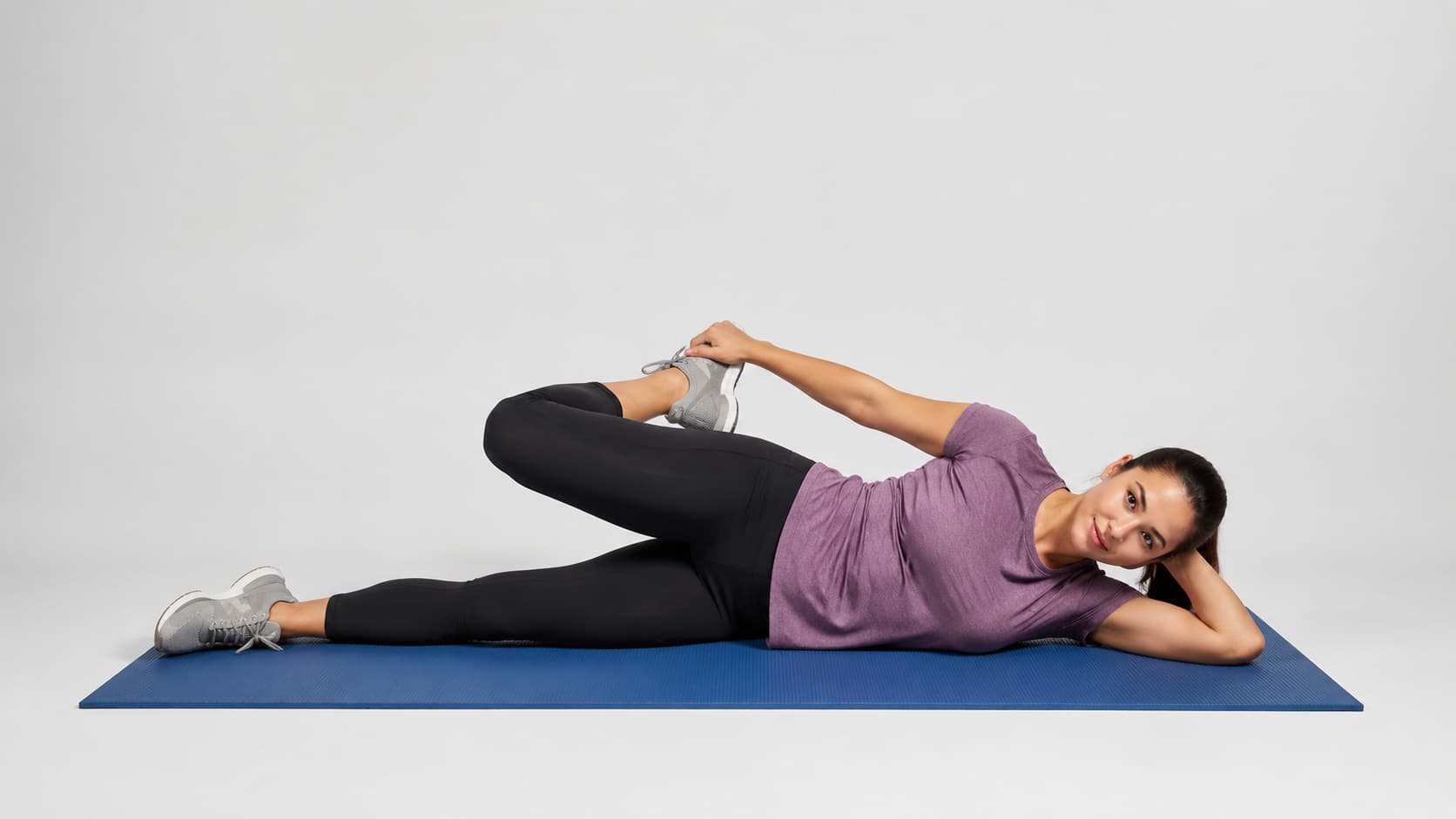
The side-lying version is the most accessible starting point. It puts no pressure on the stomach or lower back. The stretch intensity is easy to control from this position.
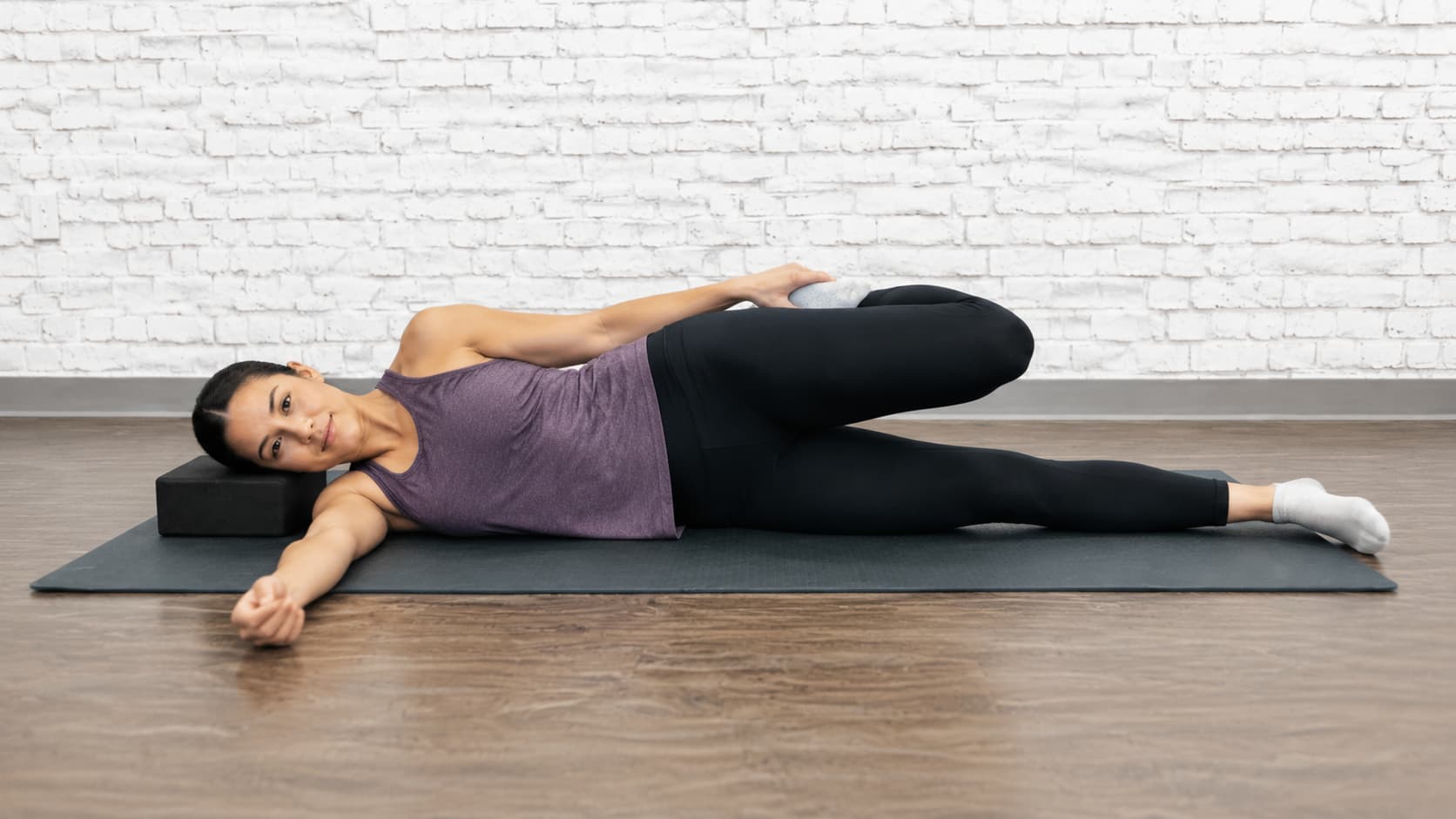
Step 1: Set your starting position. Lie on your right side on a mat. Stack your hips directly on top of each other and keep your body in a straight line from head to feet. This base position sets up the alignment you need before the stretch begins.
Step 2: Support your head. Rest your head on your right arm or place a folded towel under it for comfort. Your neck should feel relaxed throughout the hold. Tension in the neck or shoulder means your position needs a small adjustment.
Step 3: Bend your top knee and reach for the ankle. Bend your left knee and bring your heel toward your glutes. Reach back with your left hand and hold your ankle or the front of your foot. You should feel the stretch begin along the front of the left thigh right away.
Step 4: Keep your knees stacked. Do not let the top knee drift forward during the hold. This reduces tension on the quad and adds unwanted stress on the hip. Press it back gently with your hand if it starts to slide out of position.
Step 5: Tuck your pelvis before pulling the ankle closer. Think about pressing your hip bones toward the floor. This stops your lower back from arching and keeps the stretch focused on the quad rather than the spine.
Step 6: Hold and breathe. Hold for 30 seconds and breathe steadily. Take a slow breath in, then exhale during the hold. Exhaling helps the nervous system release the muscles more fully.
Step 7: Switch sides. Lower your foot carefully. Roll to your left side and repeat the steps with your right leg.
Pro Tip: If you cannot reach your ankle comfortably, loop a resistance band or yoga strap around your foot and hold the ends instead.
Prone Quad Stretch (Face Down)
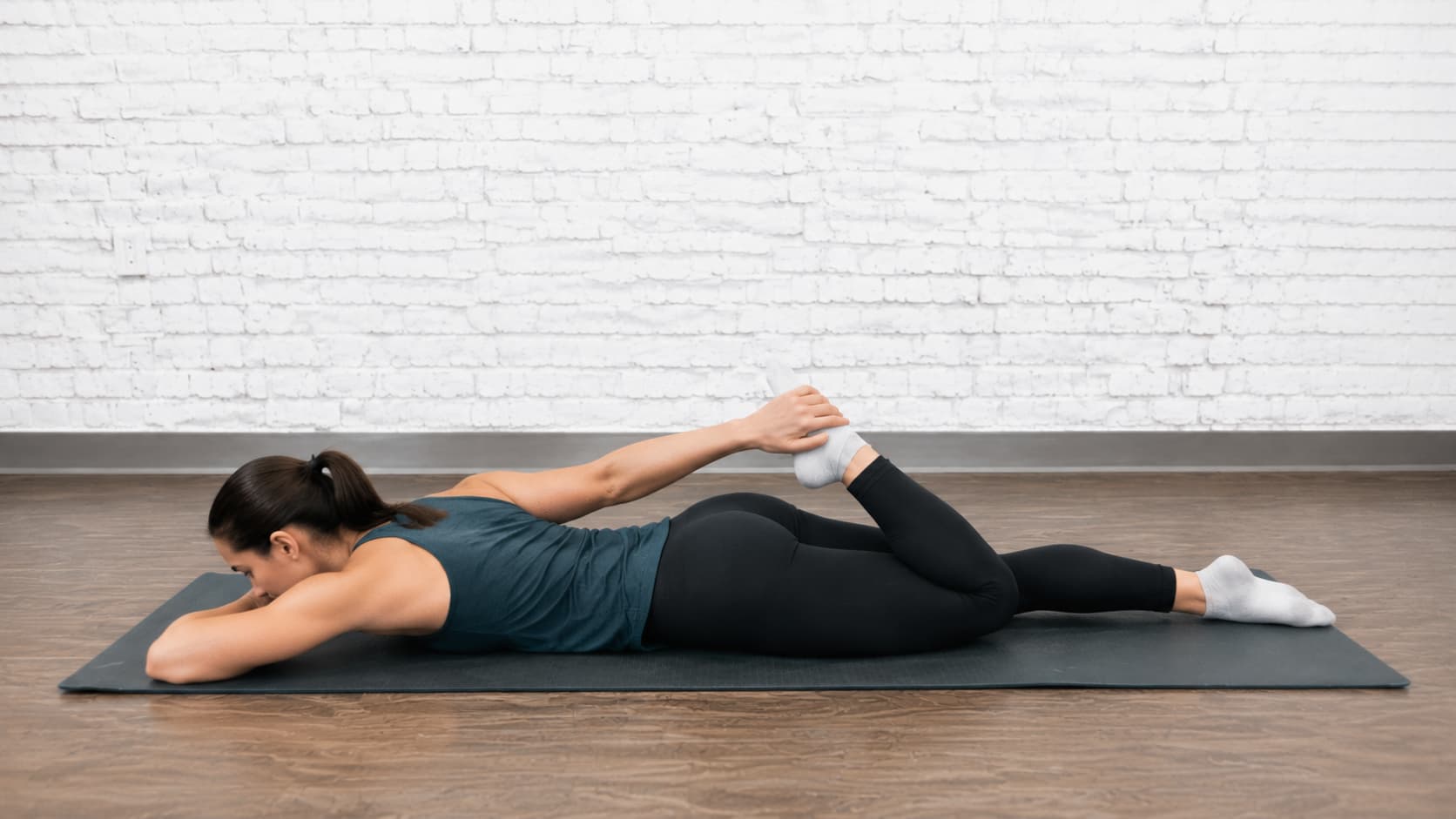
The prone quad stretch places more demand on the rectus femoris specifically. That muscle crosses both the hip and knee and is the one most affected by cycling posture.
Step 1: Lie face down on a flat mat. Rest your forehead on your left forearm for neck support. Keep your legs straight and your body relaxed before you begin the movement. Starting from a relaxed position helps the stretch feel more natural.
Step 2: Bend your right knee and reach for the ankle. Bring your right heel toward your right glute. Reach back with your right hand and hold your ankle. You should feel the stretch build along the front of your thigh as you pull.
Step 3: Keep your hips flat on the floor. Do not let them rotate or lift off the mat during the hold. Press your hip bones gently into the floor to stay grounded. Lifting the hip reduces the stretch on the rectus femoris and shifts the load to the lower back.
Step 4: Engage your core lightly. Draw your belly button in slightly without holding your breath. This keeps your lumbar spine in a safe, neutral position throughout the hold. A light engagement is enough; you do not need to brace hard.
Step 5: Hold and breathe. Hold for 30 seconds, exhaling during the hold. Let the muscle lengthen naturally with each breath. Do not force the heel closer to the glute; let the release happen gradually over the hold.
Step 6: Switch sides. Lower your right leg slowly. Rest for a few seconds, then repeat the steps with your left leg.
Pro Tip: Place a folded towel under your hip bones if floor pressure is uncomfortable during this position.
Lying Quad Stretch Variations
The standard positions work well on their own, but a few variations let you adjust the stretch to fit your needs. Some increase the stretch intensity, while others make it more accessible when mobility is limited.
Try these options to add more range to your post-ride routine or to work around specific discomfort.
1. Lying Quad Stretch with Hip Extension (Prone)
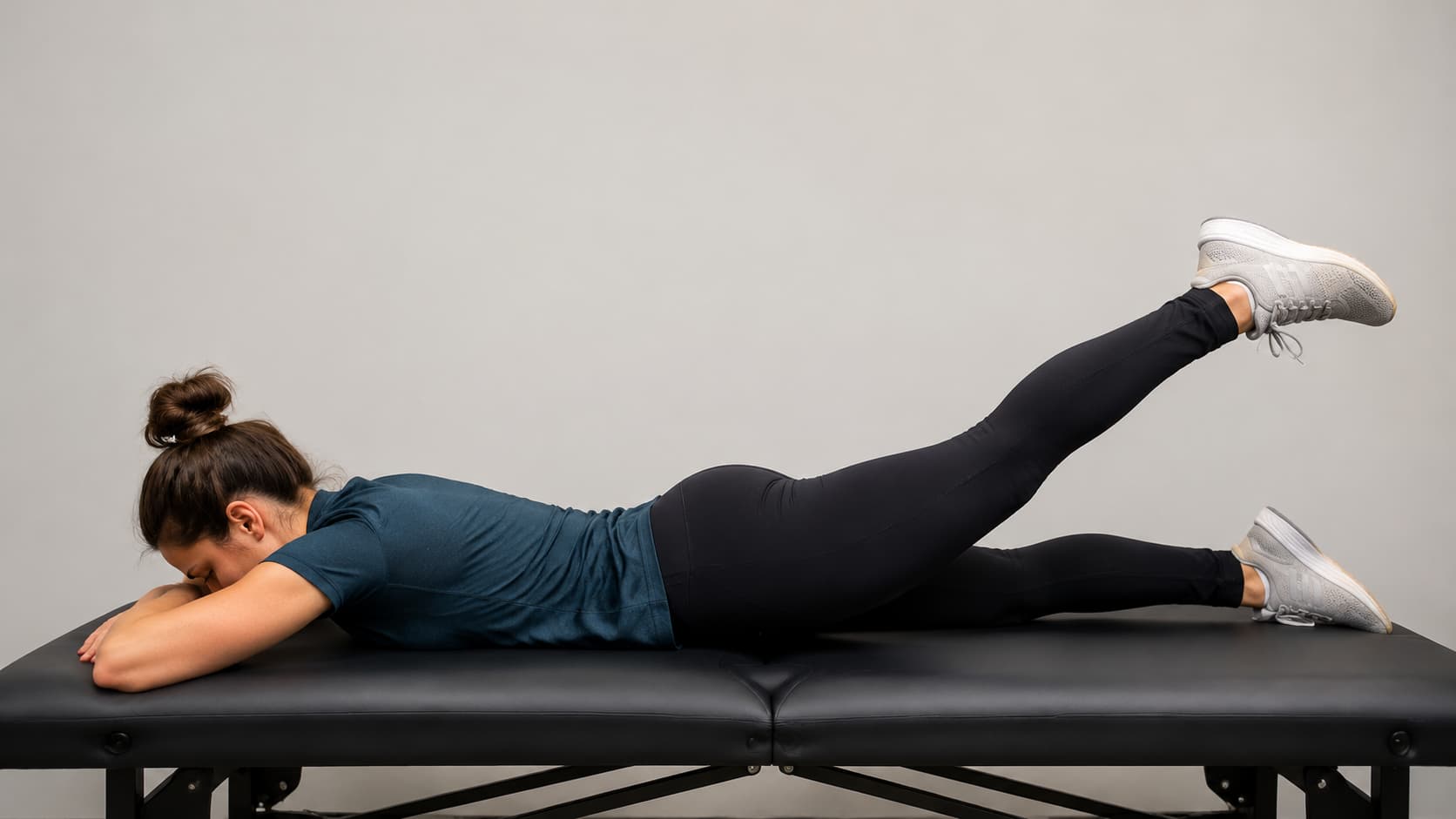
This variation adds a small hip extension to the standard prone stretch. Since the rectus femoris crosses the hip joint, lifting the knee slightly off the floor increases the total stretch through that muscle. It is a useful option for cyclists who want to target the rectus femoris more directly.
Steps:
- Set up in the standard prone quad stretch position.
- Hold your ankle and bring your heel toward your glute as normal.
- Once you feel the stretch, lift your bent knee slightly off the floor. One to two inches is enough.
- Hold this lifted position for 20 to 30 seconds.
- Lower your knee slowly and release your ankle.
- Repeat on the opposite side.
2. Lying Quad Stretch with a Resistance Band
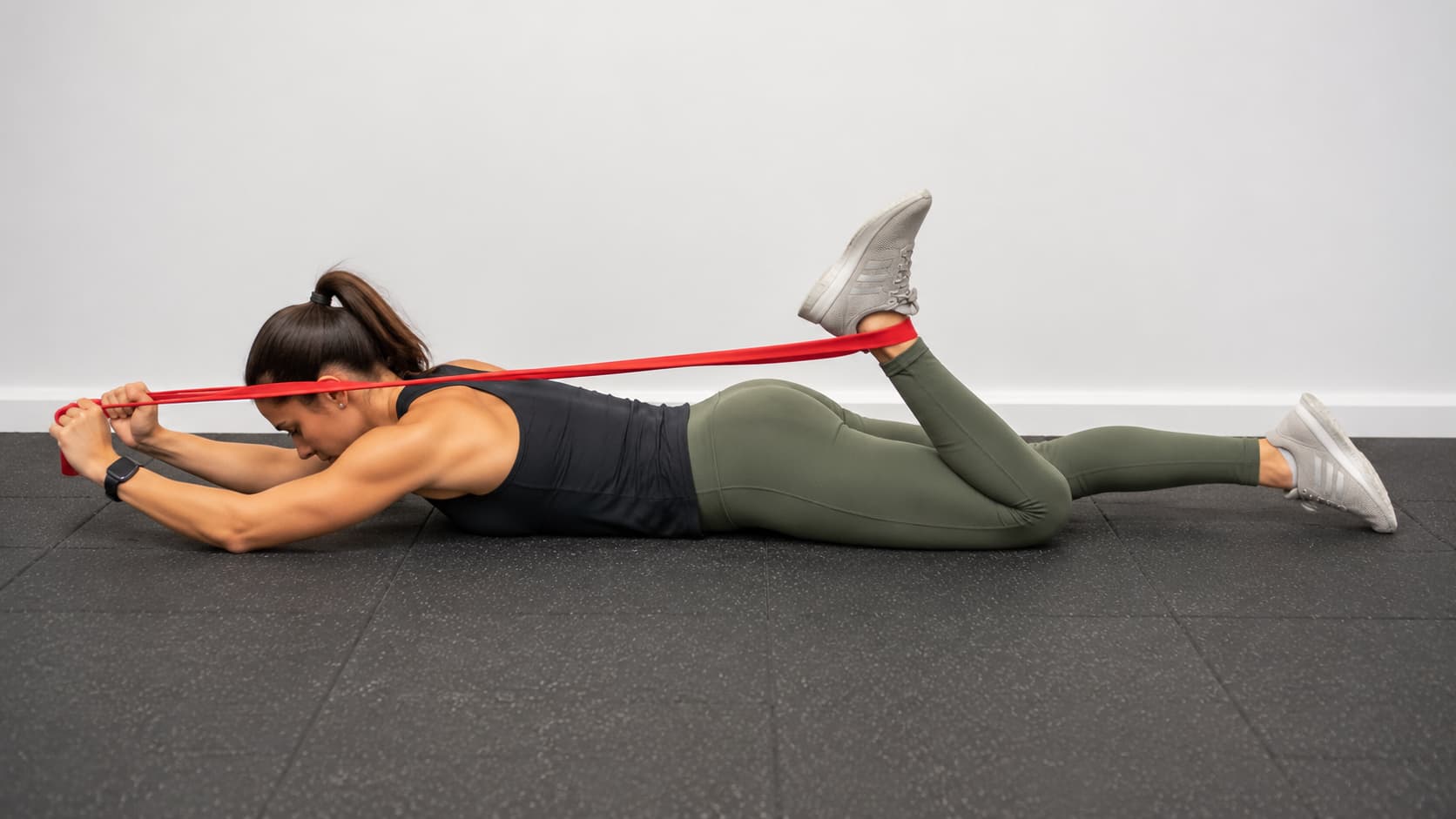
This version works well when reaching back for the ankle is difficult. It also suits cyclists whose upper body feels fatigued after a long ride. The band does the pulling work, so your arm stays relaxed throughout.
Steps:
- Loop a resistance band around your ankle before lying down.
- Get into the side-lying or prone position as normal.
- Hold the ends of the band with your hand instead of gripping the ankle directly.
- Pull the band to bring your heel toward your glutes.
- Hold for 30 seconds and breathe steadily throughout.
- Release, switch sides, and repeat.
3. Kneeling-to-Floor Transition Stretch
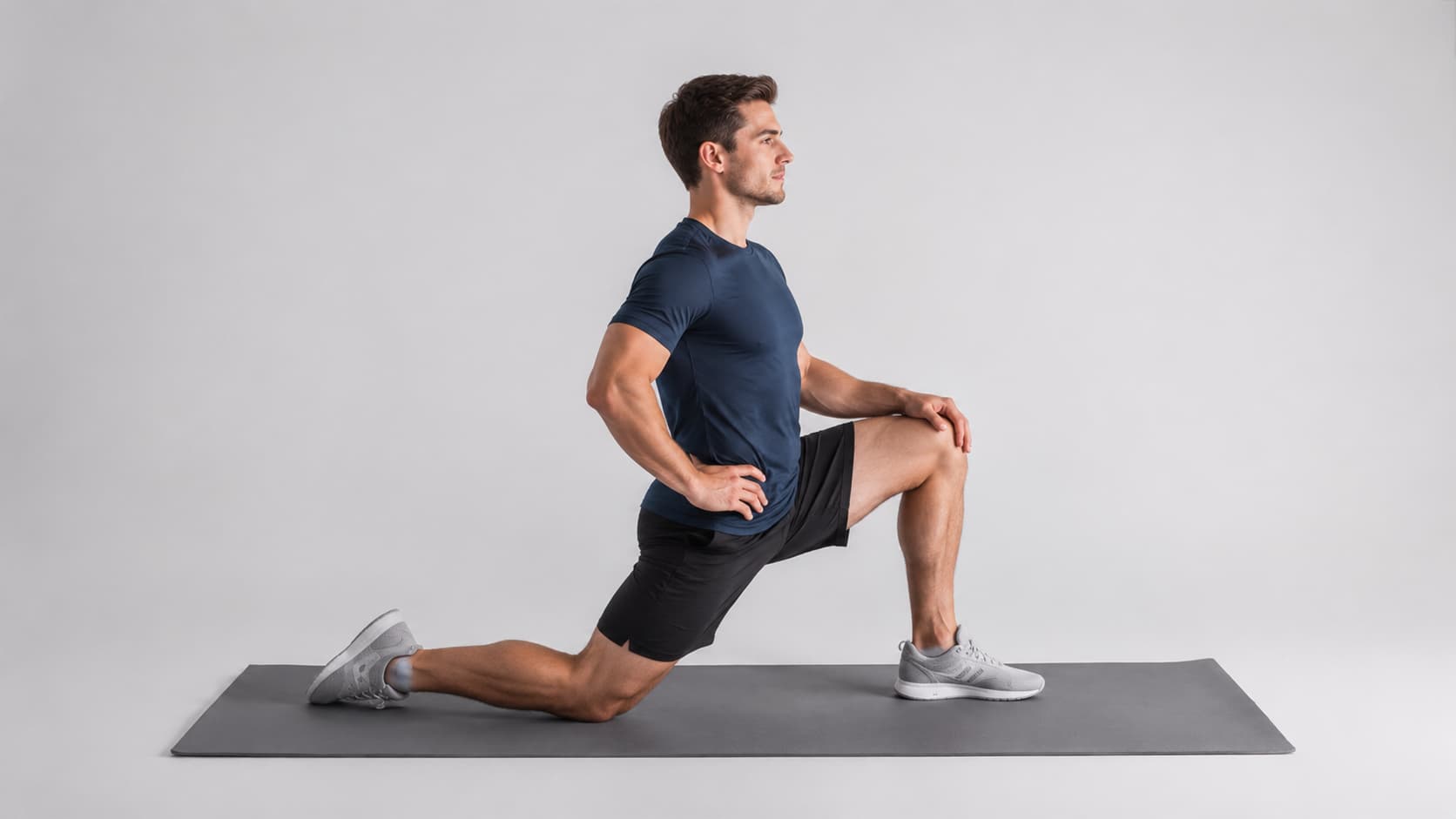
This variation works well as a lead-in to the lying quad stretch. It opens up the quad and hip flexor together before you move to the floor. This makes the full stretch easier to settle into right after a ride.
Steps:
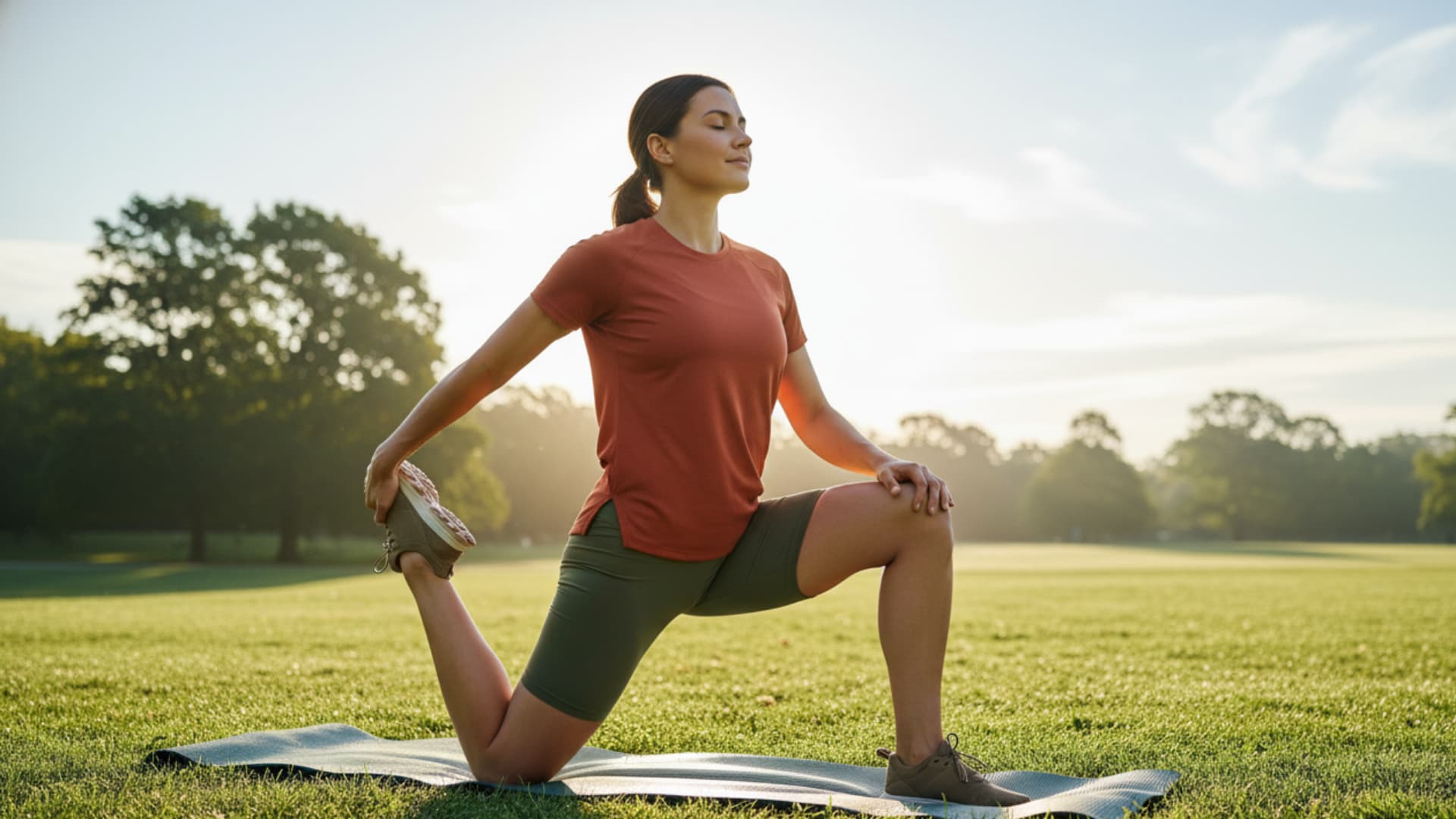
- Start in a kneeling lunge with your right knee on the floor and your left foot forward.
- Tuck your pelvis slightly and hold for 15 seconds to feel the initial release in the quadriceps and hip flexors.
- Slowly lower your torso toward the floor, bringing your back knee and thigh down to the mat.
- Once you are lying face down, move into the standard prone quad stretch position.
- Hold for 30 seconds, then switch sides.
Common Mistakes and How to Fix Them
Small errors in form are more common than people realize, and they reduce how much the stretch actually does. Most come down to hip position, knee alignment, or hold time.
Checking these points before and during the stretch makes a noticeable difference in both comfort and long-term results.
| Mistake | What Happens | The Fix |
|---|---|---|
| Arching the lower back | Pelvis tilts forward, compressing the spine and reducing the quad stretch | Tuck the pelvis before pulling the ankle; press the hip bones toward the floor |
| Top knee drifting forward (side-lying) | Reduces quad tension and adds strain on the hip and IT band | Keep knees stacked; press the top knee back with your free hand if it drifts |
| Gripping the toes instead of the ankle | Hyperextends the foot, shifting the focus away from the quad | Hold the top of the foot or the front of the ankle, not the toes |
| Holding the stretch too briefly | Holds under 20 seconds do not give the nervous system enough time to release the muscle | Use a timer and hold for a minimum of 30 seconds per side |
| Rotating the hips (prone position) | Lifts the hip off the floor and reduces rectus femoris stretch | Press both hip bones firmly into the mat before and during the hold |
| Skipping the stretch after shorter rides | Quad tightness builds gradually, even from 30-minute sessions | Add it as a fixed part of your cool-down after every ride, not just long ones |
How to Add the Lying Quad Stretch to Your Cycling Routine
Save the lying quad stretch for after your ride, not before. Static stretching before cycling can temporarily reduce muscle output. That works against your performance on the bike.
After a ride, cool down with five minutes of easy spinning or walking first. Then move to the floor and perform the side-lying quad stretch for 30 to 45 seconds per side. If you have time, follow it with the prone version for an added focus on the rectus femoris.
On full recovery days, hold each side for up to 60 seconds and repeat twice through. Doing this consistently after every session produces lasting gains in quadriceps flexibility and keeps your knees healthy over time.
Conclusion
The lying quad stretch is a small habit with real results. For cyclists, it directly addresses the tightness that builds up ride after ride in the front of the thigh.
It does not require equipment, balance, or much time. Two to three minutes after each ride is enough to start seeing a difference in how your legs feel.
Be consistent, use correct form, and avoid the common mistakes covered in this post. Your knees, hips, and pedaling power will all benefit.
Start with the side-lying version tonight and give your quads the attention they have earned on every ride.