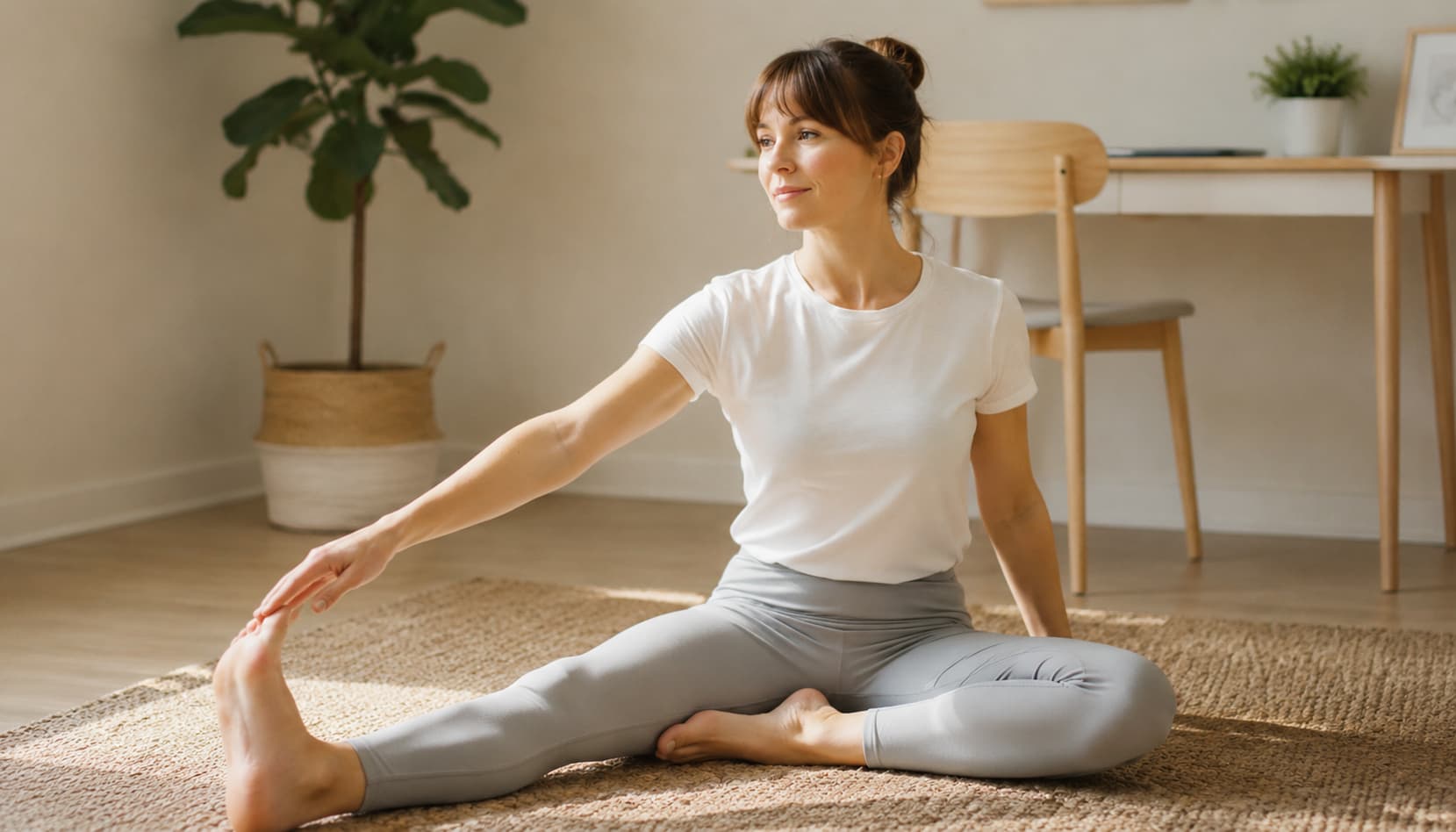
Tight quads are more common than you might think. Long hours at a desk or skipping post-workout stretches can leave the front of your thighs stiff and sore.
A seated quad stretch takes less than two minutes per side. It requires no equipment at all. You can do it on the floor or from a chair, without any special setup.
This post covers the correct technique, the muscles it targets, the real benefits, and the best variations. By the end, you will know exactly how to do this stretch safely and with confidence.
What Is a Seated Quad Stretch?
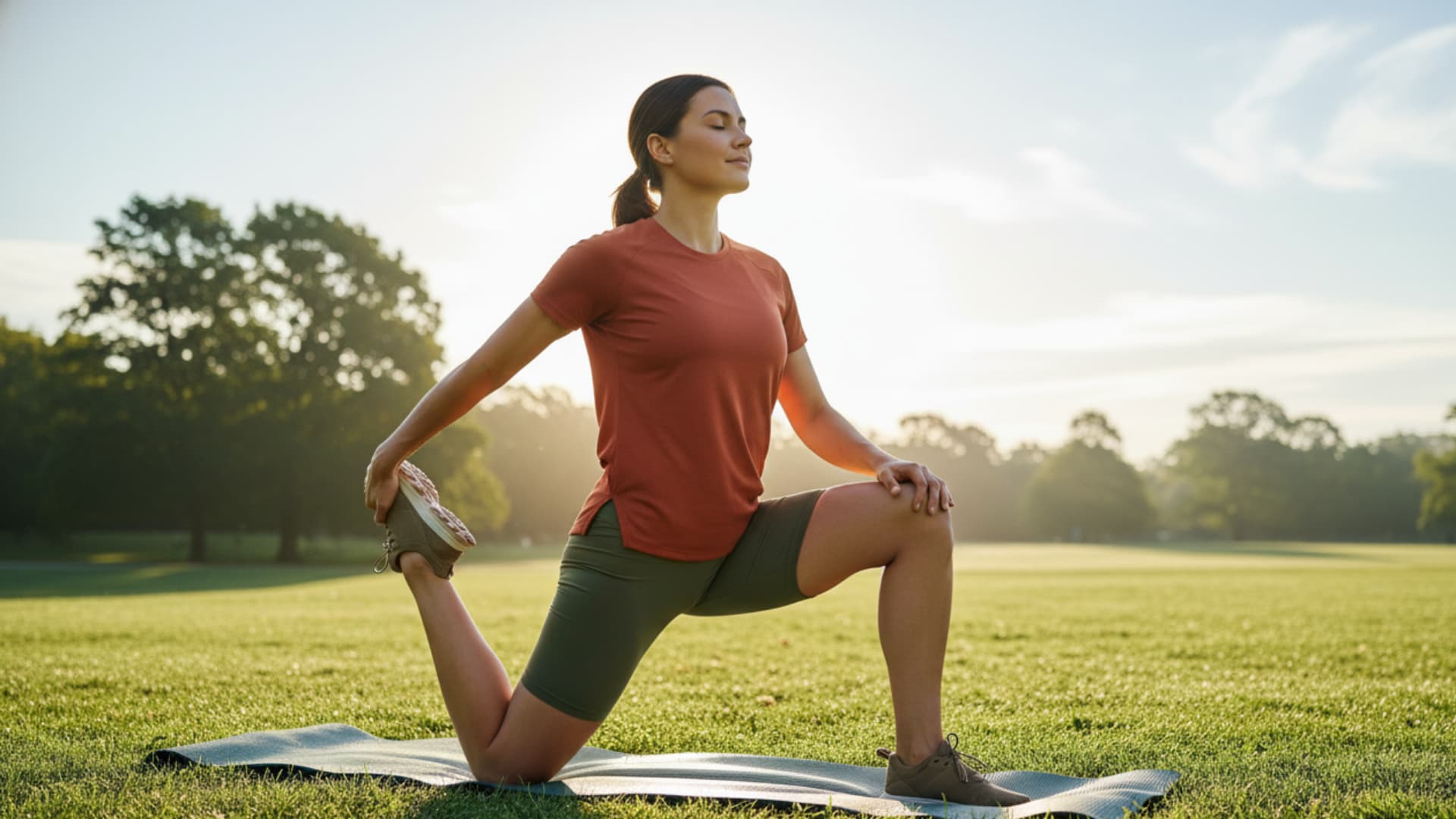
A seated quad stretch is a flexibility exercise that targets the muscles along the front of your thigh. You perform it from a seated position, either on the floor or in a chair.
Bend one knee and bring your foot toward your glutes. Unlike a standing quad stretch, this version removes the need for balance.
That makes it a good option for beginners, older adults, office workers, and anyone with knee or hip sensitivity. No equipment is needed, and the movement takes less than a minute to set up.
What Muscles Does a Seated Quad Stretch Work?
The quadriceps are a group of four muscles running along the front of your thigh. Each one plays a different role in knee extension and hip movement. Tight quads can affect both your knees and your lower back.
| Muscle | Location | Why It Gets Tight |
|---|---|---|
| Rectus Femoris | Front center of the thigh; crosses the hip joint | Prolonged sitting, running, and cycling |
| Vastus Lateralis | Outer side of the thigh | Squatting, leg press, cycling |
| Vastus Medialis | Inner thigh near the knee | Weak glutes, poor knee alignment |
| Vastus Intermedius | Deep center of the thigh | Overtraining without recovery stretching |
| Hip Flexors (secondary) | Front of the hip | Long hours of sitting, forward-leaning posture |
Benefits of the Seated Quad Stretch
Stretching your quads regularly does more than just ease tightness after training. Here are the key benefits you can expect when you make the seated quad stretch part of your routine.
- Reduces quad tightness: Regular stretching releases tension that builds in the front of your thigh from sitting, running, or cycling.
- Eases knee discomfort: Tight quads pull on the kneecap, increasing pressure on the joint. Stretching them can reduce that load over time.
- Improves hip flexor mobility: The rectus femoris crosses the hip joint, so a good quad stretch also loosens the front of your hip.
- Supports lower back health: Chronic quad tightness can tilt the pelvis forward, adding strain on the lumbar spine. Releasing the quads helps correct this pattern.
- Safe for all fitness levels: No balance is required, making this stretch suitable for beginners, seniors, and those recovering from injury.
- Requires no equipment: just a flat surface or a stable chair.
How to Do a Seated Quad Stretch (Step-by-Step)
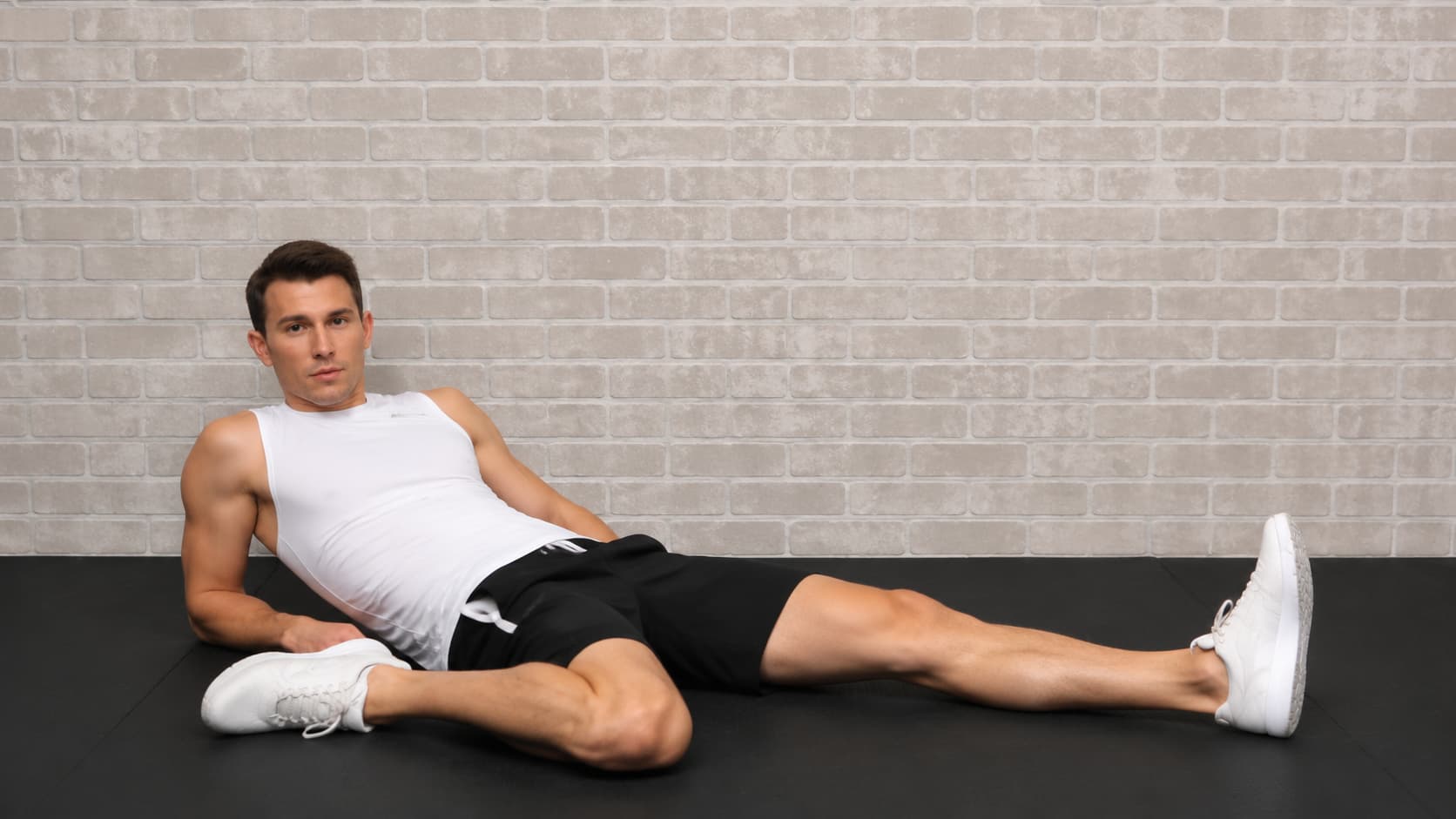
Getting the form right matters more than how deep you go into the stretch. These steps cover the floor version, which works well for most adults with no existing knee or hip concerns.
Step 1: Set Up Your Starting Position
Sit on a firm, flat surface with both legs extended straight in front of you. Place your hands on the floor beside your hips for support. Keep your back straight and your chest lifted before moving into the stretch.
Step 2: Bend One Knee
Slowly bend your right knee and bring your right foot toward your right glute. Move at an easy pace. Stop when you feel a mild pulling sensation in the front of your thigh.
Step 3: Place One Hand Behind You
Put your right hand flat on the floor just behind your right hip. This provides support and prevents you from leaning too far back. Keep most of your weight on your sitting bones, not on your hands.
Step 4: Sit Tall Through the Stretch
Keep your spine upright and your chest open throughout the hold. Leaning backward shifts tension from the quad to the lower back. Stay tall the entire time.
Step 5: Breathe and Hold
Breathe in slowly through your nose, then exhale through your mouth. Let each exhale help you settle into the position a little more. Hold for 20 to 30 seconds.
Step 6: Release and Switch Sides
Slowly release your foot and extend your right leg back out. Take one or two breaths, then repeat all the steps on your left side. Always stretch both sides equally each session.
Who Should Do a Seated Quad Stretch?
The seated quad stretch works for a wide range of people. Office workers who sit for long hours build up tension in the front of the hip and thigh. This stretch directly targets that tightness.
Runners and cyclists can use it as part of a post-workout cool-down to release the tension that builds during training. Seniors benefit from the chair version because it removes the balance demand of a standing quad stretch.
People in early rehabilitation after knee or hip procedures can also use it as a low-intensity option. Always check with your physical therapist first.
Seated Quad Stretch Variations
The floor version is not the only way to stretch your quads from a seated position. These three variations give you options based on your mobility, fitness level, and the space you are working in.
1. Chair Seated Quad Stretch
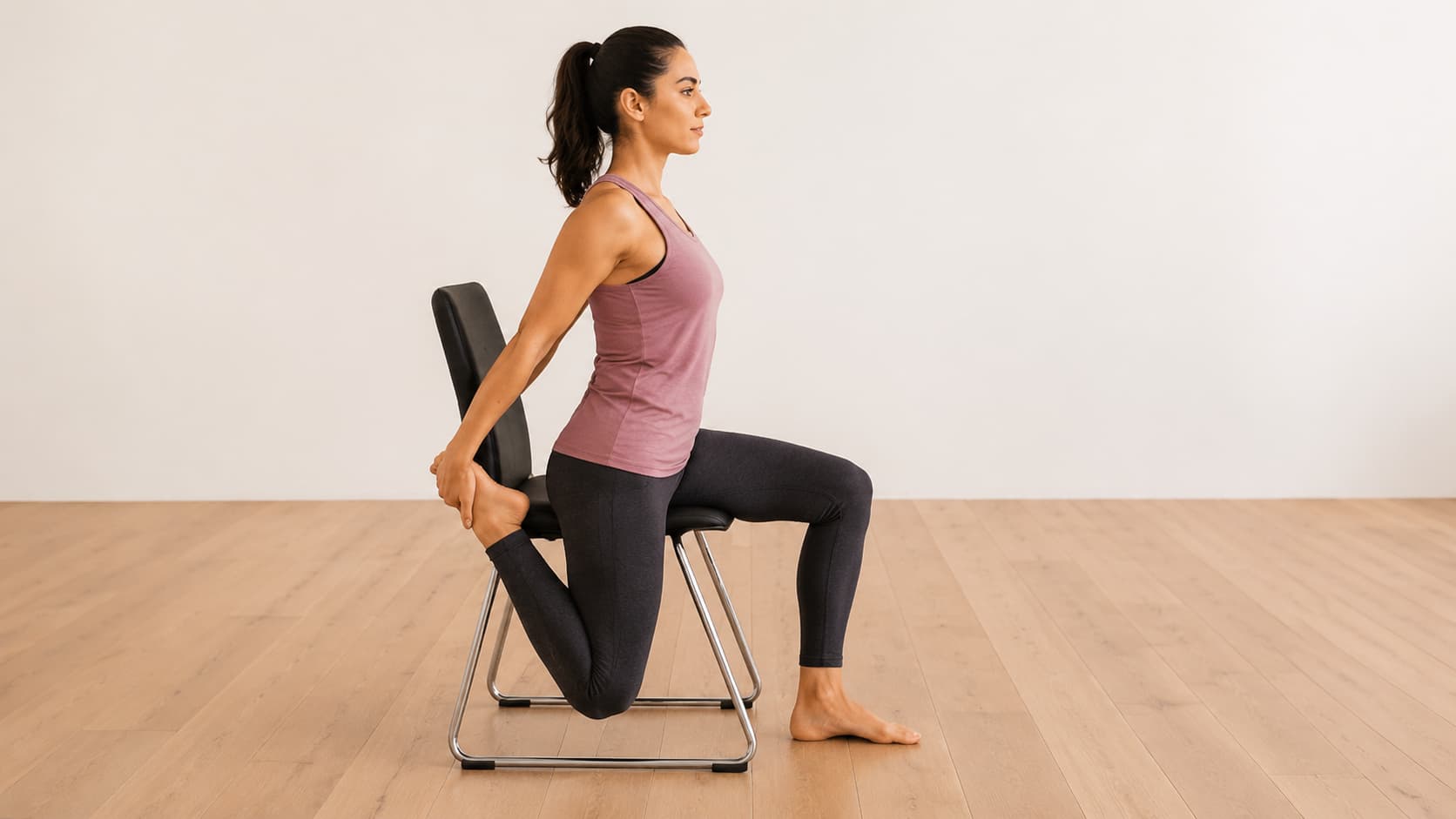
This option is best for seniors, desk workers, and anyone who finds sitting on the floor uncomfortable. It takes about 30 seconds per side and needs only a stable chair. You can fit it in between meetings or during a short break without any special setup. Tight quads from sitting all day can be addressed right at your desk with this chair-based quad stretch.
Steps:
- Sit near the front edge of a firm, non-rolling chair.
- Place both feet flat on the floor, hip-width apart.
- Slide one foot slowly backward under the chair.
- Rest the top of your foot flat on the floor. Do not lift your heel.
- Sit upright with both hands resting on your thighs.
- Hold for 20 to 25 seconds, breathe steadily, then switch sides.
2. Side-Lying Quad Stretch
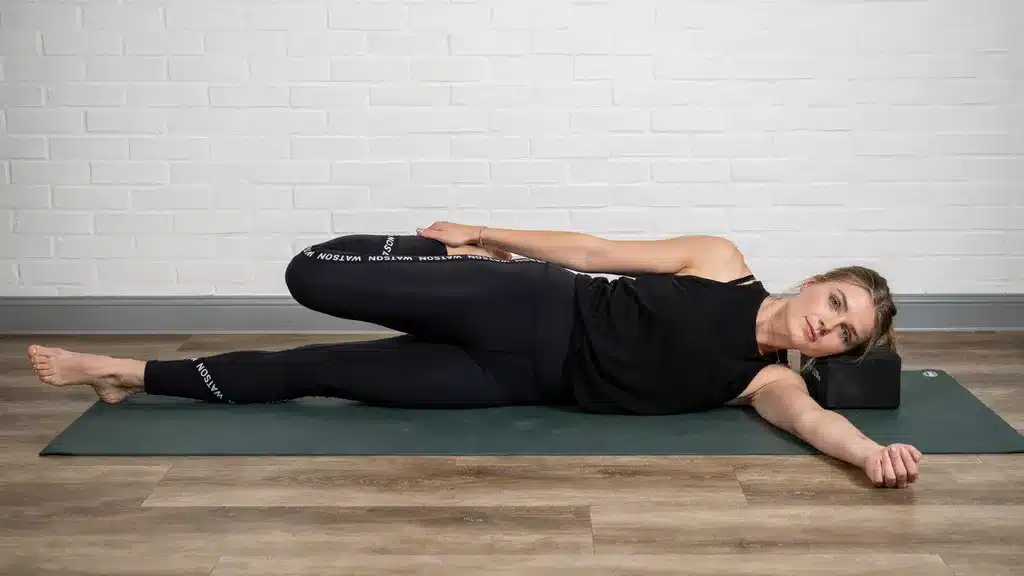
This variation works well if lower back pain makes sitting upright uncomfortable. Lying on your side removes pressure from the spine while still stretching the quad. Pairing it with hip flexor stretches can help release the full front of your thigh and hip at the same time. It is also a helpful starting point if any seated position causes discomfort.
Steps:
- Lie on your right side with both legs extended and your body in a straight line.
- Bend your left knee and bring your left foot toward your glutes.
- Hold your left ankle with your left hand.
- Keep your hips stacked on top of each other. Do not roll backward.
- Hold for 20 to 30 seconds, then switch to the other side.
3. Strap-Assisted Seated Quad Stretch
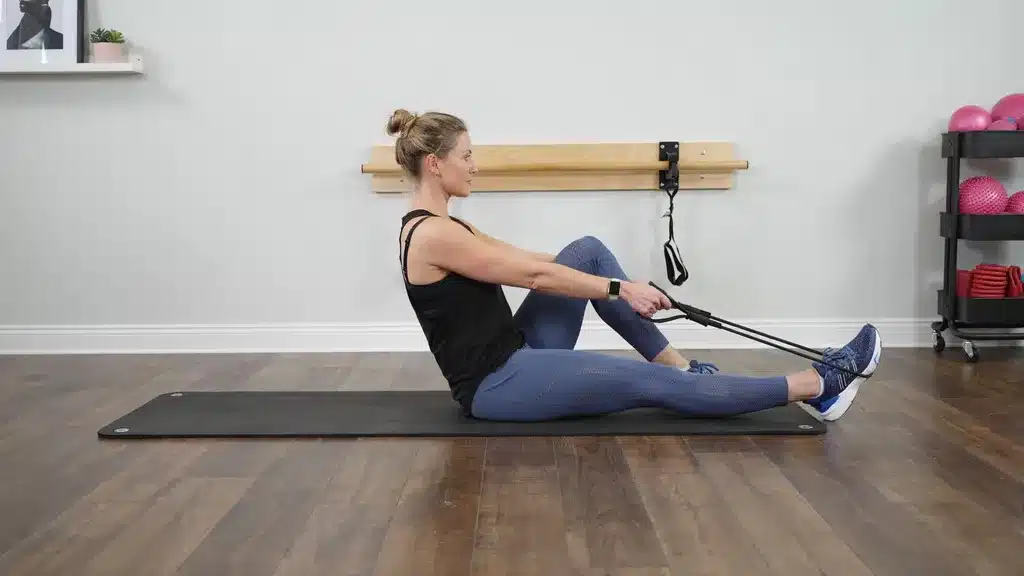
If you cannot reach your ankle comfortably, a yoga strap or folded towel can close the gap. This version works well for people with limited shoulder mobility or shorter arm reach. It is also a great starting point for anyone new to quad stretching exercises who needs a little extra reach.
Steps:
- Sit on the floor with both legs extended straight.
- Loop a yoga strap or folded towel around your right ankle.
- Bend your right knee and hold the strap with your right hand.
- Pull the strap gently until you feel a stretch in the front of your right thigh.
- Sit upright and hold for 20 to 30 seconds.
- Release and repeat on the left side.
How to Avoid Common Seated Quad Stretch Mistakes
Doing a seated quad stretch incorrectly can reduce its benefits or cause discomfort. Here are the most frequent mistakes and how to prevent them for safe, effective stretching.
| Mistake | Why It’s a Problem | What to Do Instead |
|---|---|---|
| Leaning back during the stretch | Reduces tension on the quad | Sit tall, spine upright |
| Letting the knee flare outward | Stresses the knee joint | Keep your knee pointing straight down |
| Holding your breath | Increases muscle tension | Exhale slowly throughout |
| Pulling the foot too aggressively | Risk of knee strain | Pull gently until mild tension is felt |
| Stretching with no warm-up | Cold muscles stretch poorly and are prone to strain | Walk or move for 5 minutes first |
| Rushing through holds | Static stretches need time to work | Hold for a minimum of 20 seconds |
| Skipping one side | Creates or worsens muscle imbalances | Always stretch both sides equally |
How Long Should You Hold a Seated Quad Stretch?
The American College of Sports Medicine recommends holding static stretches for 10 to 30 seconds. They suggest repeating this two to four times per muscle group.
For general flexibility maintenance, hold each side of the seated quad stretch for 20 to 30 seconds. Once or twice per session is enough.
If your quads are very tight, hold each side for 30 to 45 seconds, then do 2 to 3 rounds. Stretching daily produces better results than stretching two or three times a week. Consistency matters more than how long each individual holds lasts.
Conclusion
The seated quad stretch is one of the most accessible flexibility exercises you can add to your day. It targets the front of your thigh, supports your knees, and helps relieve tension from sitting or training.
You do not need a gym, a mat, or any special equipment to get started. The floor version, the chair version, and the strap-assisted option all follow the same basic principles. Sit tall, pull gently, breathe slowly, and hold for at least 20 seconds per side.
Start with just one full round today and build from there over time. Your quads will thank you.
Frequently Asked Questions
Can stretching lower blood pressure?
Yes. Research published in the Journal of Physical Activity and Health shows that regular static stretching can lower blood pressure. This is linked to improved blood vessel flexibility and reduced arterial stiffness.
How to loosen extremely tight quads?
Start with a five-minute warm-up walk, then hold a seated quad stretch for 30 to 45 seconds per side. Repeat two to three rounds daily. Running a foam roller along the front of the thigh before stretching can also help release deeper muscle tension faster.
Can quad stretches help knee pain?
Yes. Tight quads pull on the kneecap, increasing joint pressure. Regularly stretching them can ease anterior knee pain over time. See a physical therapist if your pain is sharp or does not improve.
Will stretching help arthritis?
Yes. The Arthritis Foundation recommends daily flexibility exercises as part of arthritis management. Regular gentle stretching can improve joint range of motion and reduce stiffness. Always stay within a pain-free range and check with your doctor first.