Chest pain can stop you in your tracks. For women, it often feels alarming, but not every chest pain signals a heart attack. A pulled chest muscle is one of the most common causes of sharp or aching pain in the chest. It can happen from a wrong move at the gym, a heavy lift, or even a persistent cough.
This article covers the symptoms of pulled chest muscle in females, the causes, and how to treat it at home. You will also learn the warning signs that need a doctor’s evaluation right away.
Pulled Chest Muscle: Anatomy and Basics
A pulled chest muscle happens when a strain or small tear forms in the muscles of the chest wall. This can affect the pectoral muscles across the front of the chest or the intercostal muscles between the ribs.
The two main chest muscles are the pectoralis major and the pectoralis minor. Both sit across the front of the chest and help move the shoulders and arms. The intercostal muscles run between each rib and support chest expansion during breathing. A strain can affect any of these areas, causing pain, tightness, or soreness with movement.
Knowing this chest muscle anatomy helps explain why a strain hurts during certain movements. These include lifting the arm, twisting the torso, taking a deep breath, or pressing on the sore spot.
How Doctors Grade a Chest Muscle Strain
Doctors classify chest muscle strains into three grades based on the amount of damage. Knowing the grade helps set the right expectations for recovery time and care.
- Grade 1 (Mild): Less than 5% of muscle fibers are damaged. Pain is sharp and localized, and most daily activities remain possible. Recovery takes two to three weeks.
- Grade 2 (Moderate): A larger number of fibers are torn. The muscle is not fully ruptured, but mobility and strength may be affected. Bruising and swelling are more likely at this stage.
- Grade 3 (Severe): A complete or near-complete muscle tear. This is rare in chest muscles but requires medical evaluation and a longer recovery period.
What are the Symptoms of a Pulled Chest Muscle in Females?
A pulled chest muscle brings on a range of symptoms, from sudden sharp pain to days of lasting stiffness. Here are the signs women notice most often.
1. Sharp or Aching Chest Pain
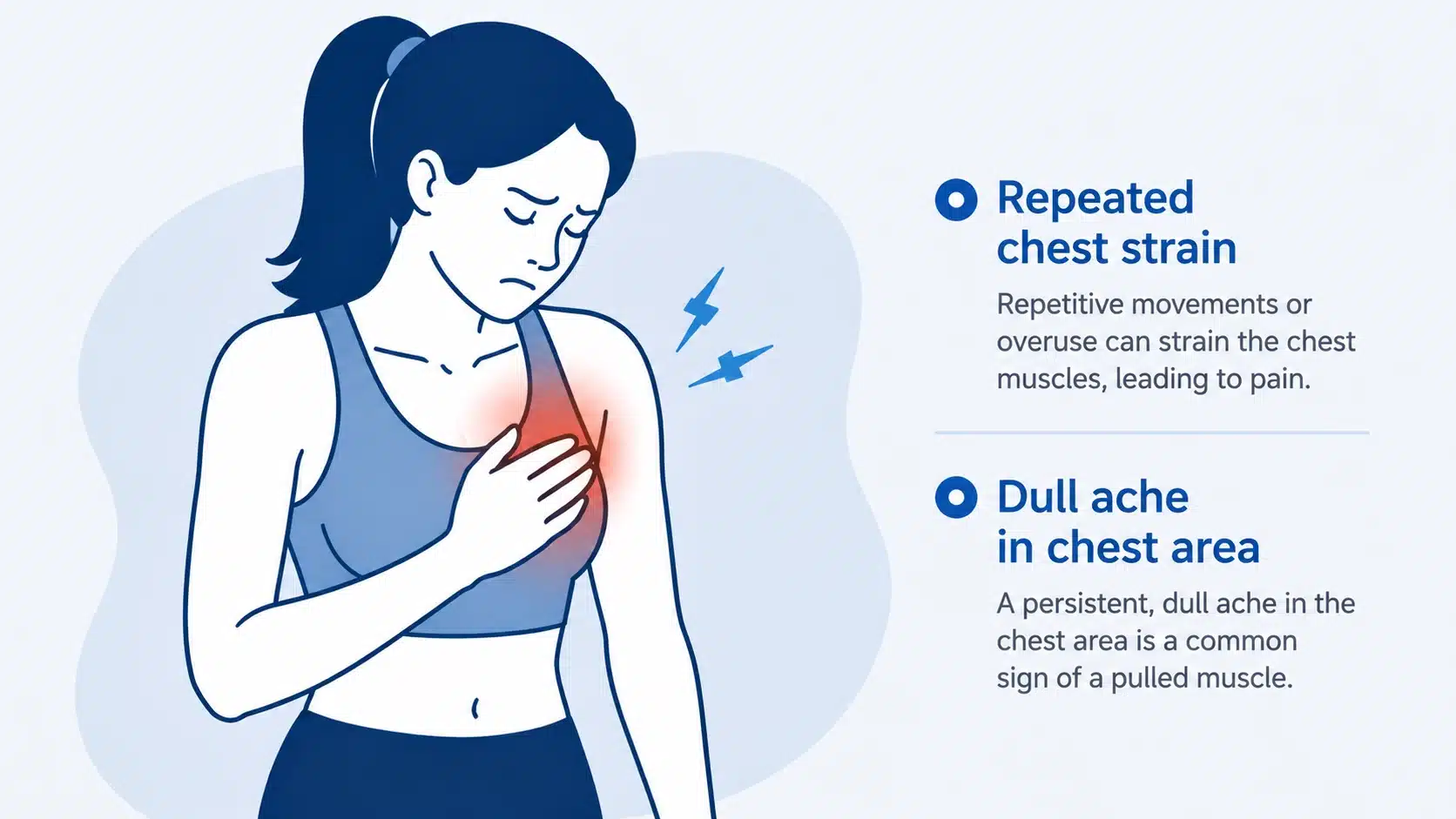
The pain from a pulled chest muscle may feel sharp and sudden at the time of injury. After the initial shock wears off, it often becomes a dull, aching sensation that lasts for several days.
Reaching overhead, stretching, lifting objects, or twisting the torso places extra load on the injured muscle. These movements can make the pain noticeably worse.
2. Breathing Deeply or Coughing
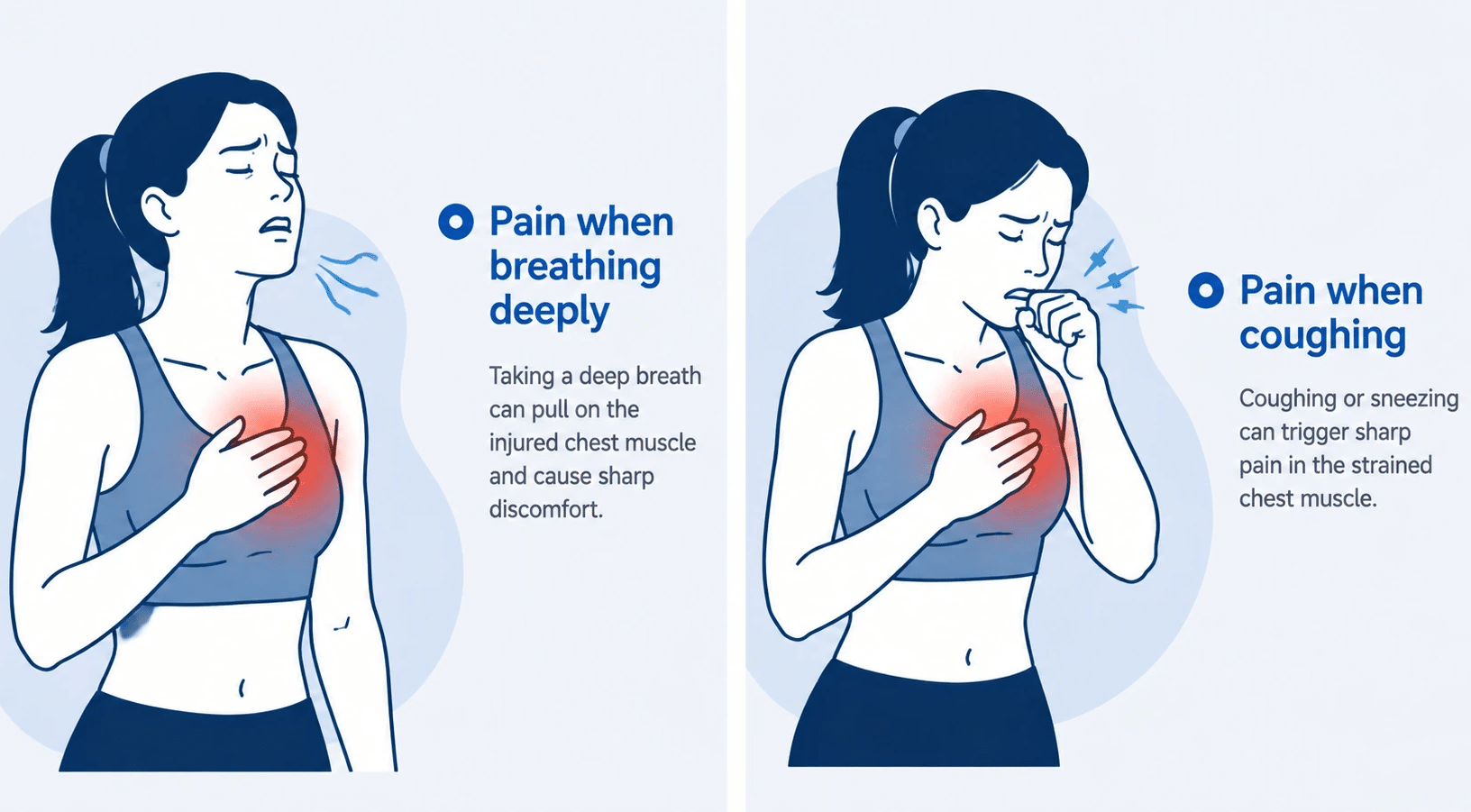
Chest wall muscles move with the ribs during every breath. When strained, a deep breath can stretch the injured area and trigger sharp or noticeable discomfort.
Coughing, sneezing, laughing, or any sudden physical movement can press on the chest muscles and cause the same sharp pain. This symptom often leads women to confuse a muscle strain with a rib or lung problem.
3. Tenderness In the Chest Area
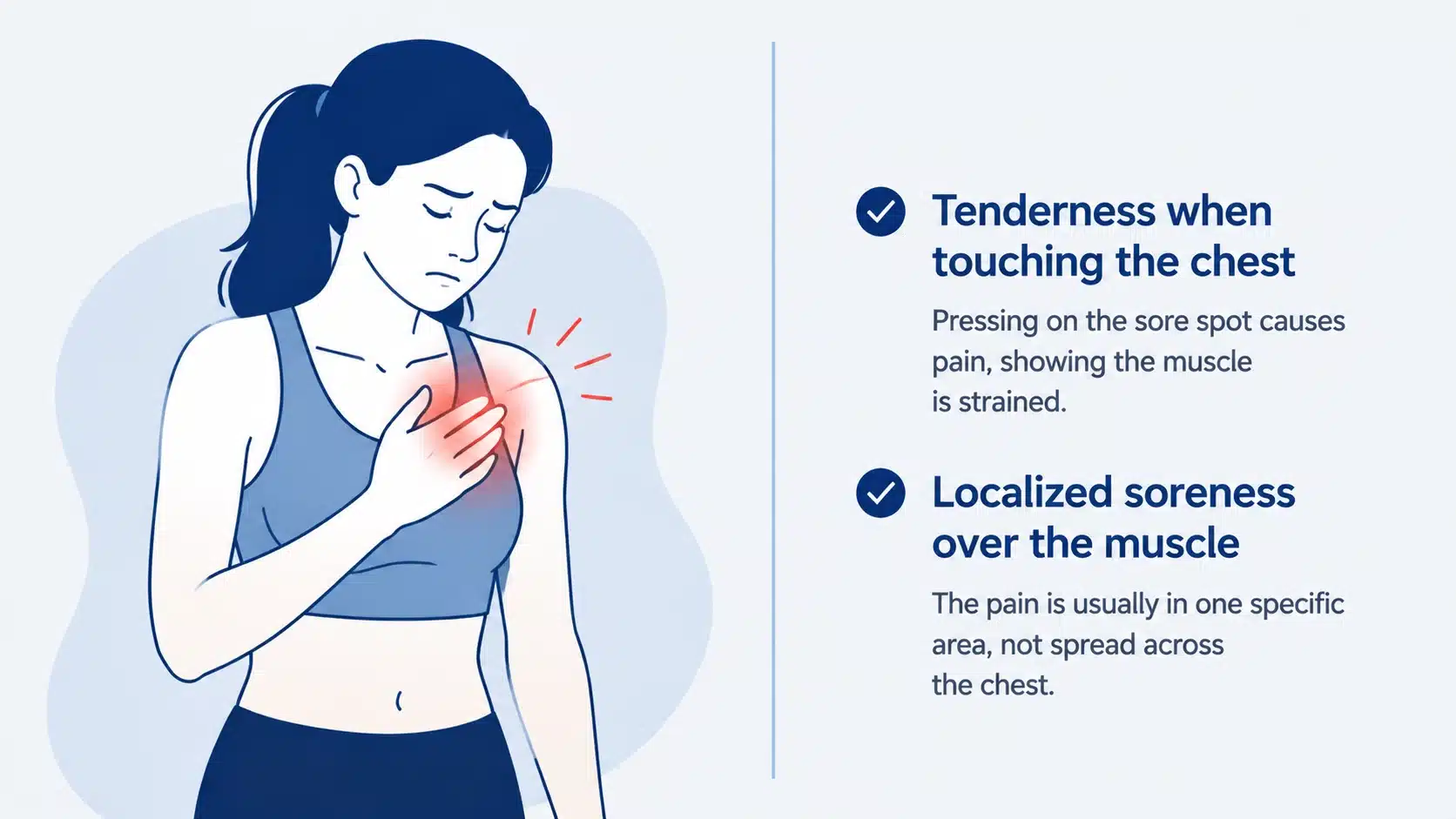
Gently pressing the painful area often reveals soreness directly over the strained muscle. This tenderness stays in one localized spot and is easy to identify with light pressure.
Localized chest wall tenderness is a reliable clue that the discomfort is muscular rather than coming from an internal organ. Pain from the heart, for example, usually does not respond to pressing on the chest wall in this way.
4. Swelling or Bruising Around the Chest Wall
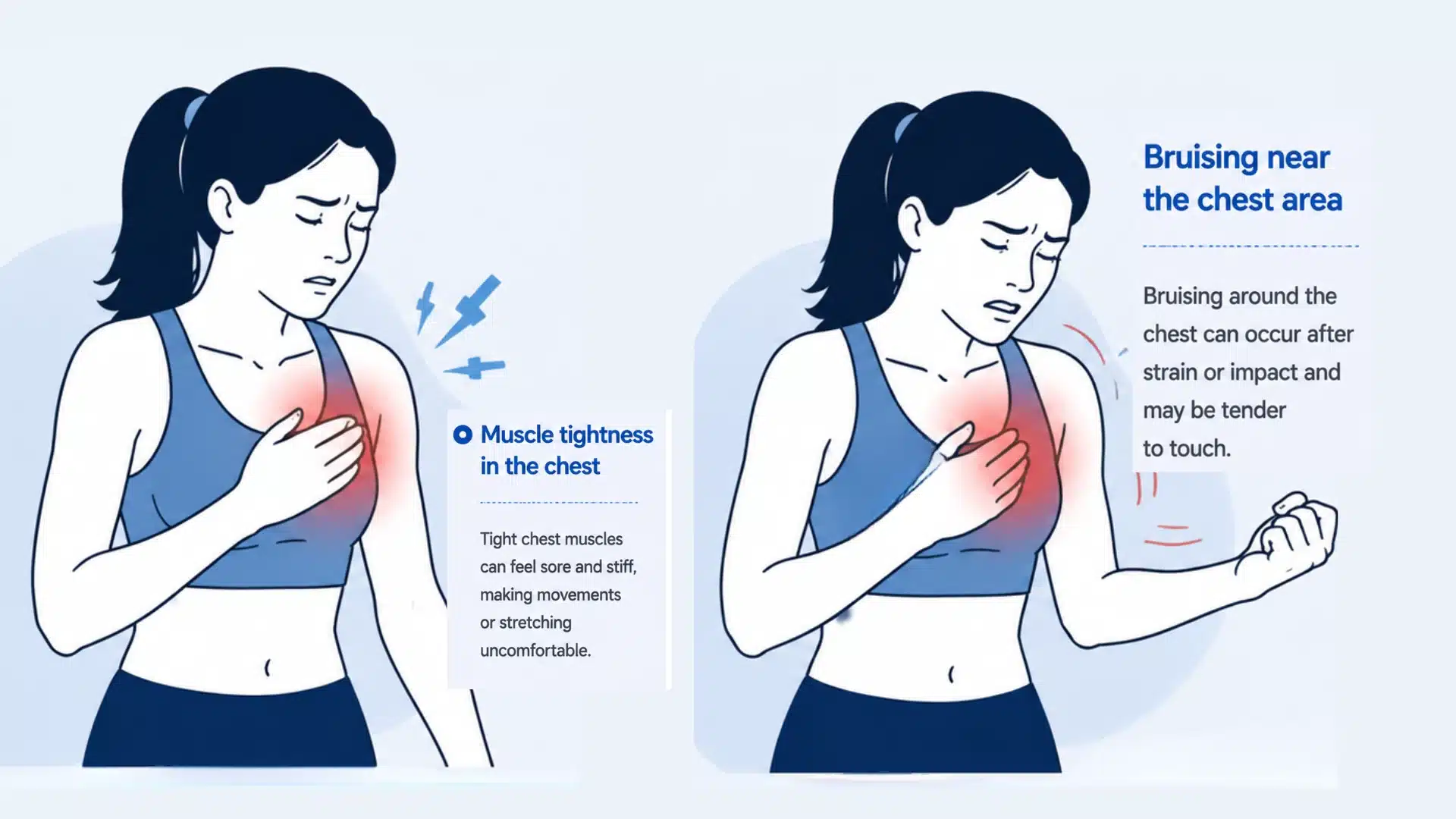
A moderate or severe chest muscle strain may cause swelling, discoloration, or bruising around the injured area. These signs often appear within the first 24 to 48 hours after the muscle fibers are damaged.
Bruising is more common with a small muscle tear, especially after a sudden impact or intense physical activity.
5. Muscle Tightness, Spasms, or Cramping
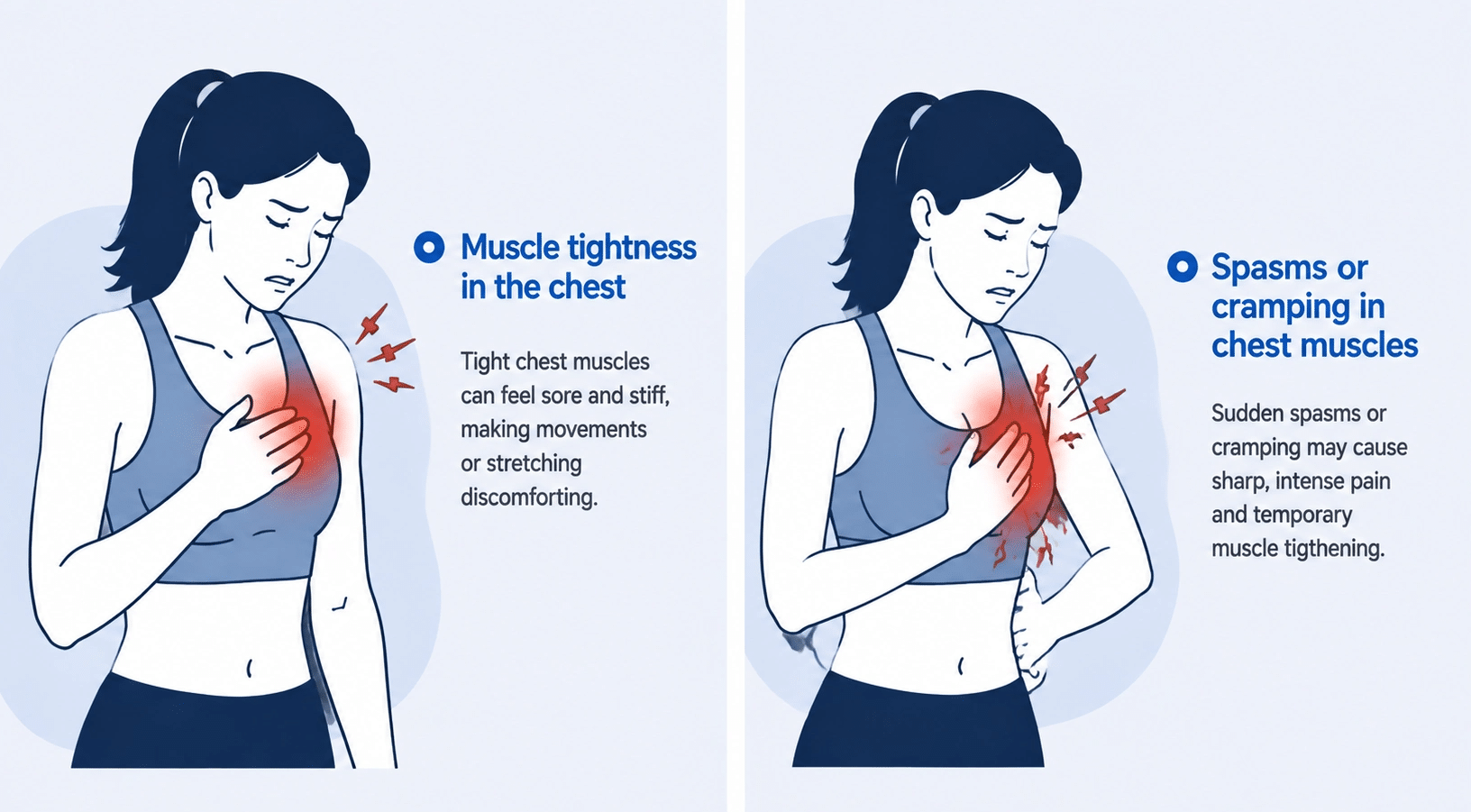
Some women experience muscle tightness, sudden contractions, or cramping after straining a chest muscle. These symptoms can occur during movement or at rest.
The muscle often tightens as a protective response to the injury. This discomfort can continue for several days while the body repairs the affected area.
6. Reduced Arm or Upper Body Movement
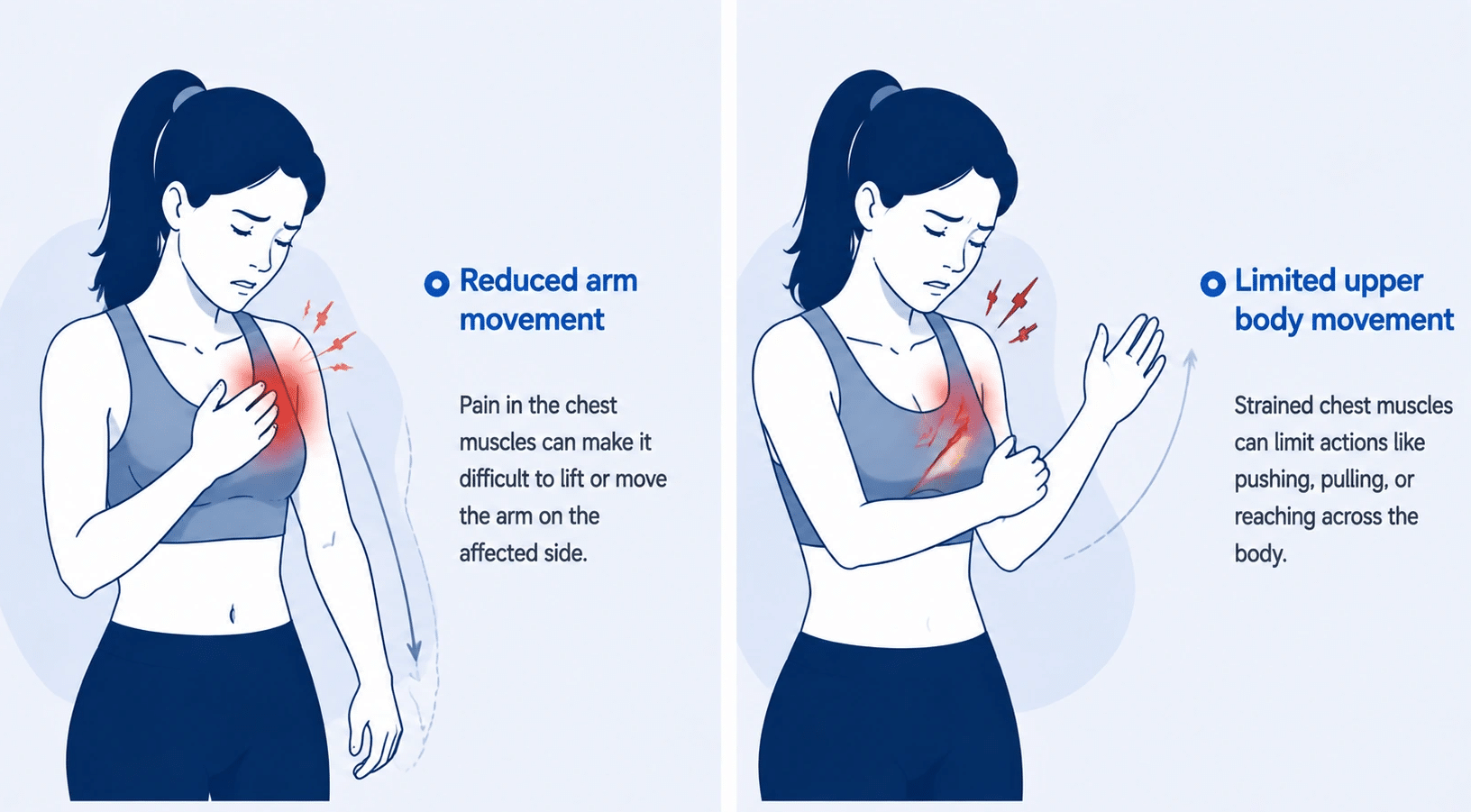
A pulled chest muscle can make everyday arm and upper-body movements uncomfortable. Lifting the arm, reaching overhead, pushing objects, or twisting the body may all feel harder than usual.
Chest muscles connect directly to the shoulder and arm. A strain can reduce your range of motion and general upper-body function until the muscle fully heals.
7. Muscle Weakness
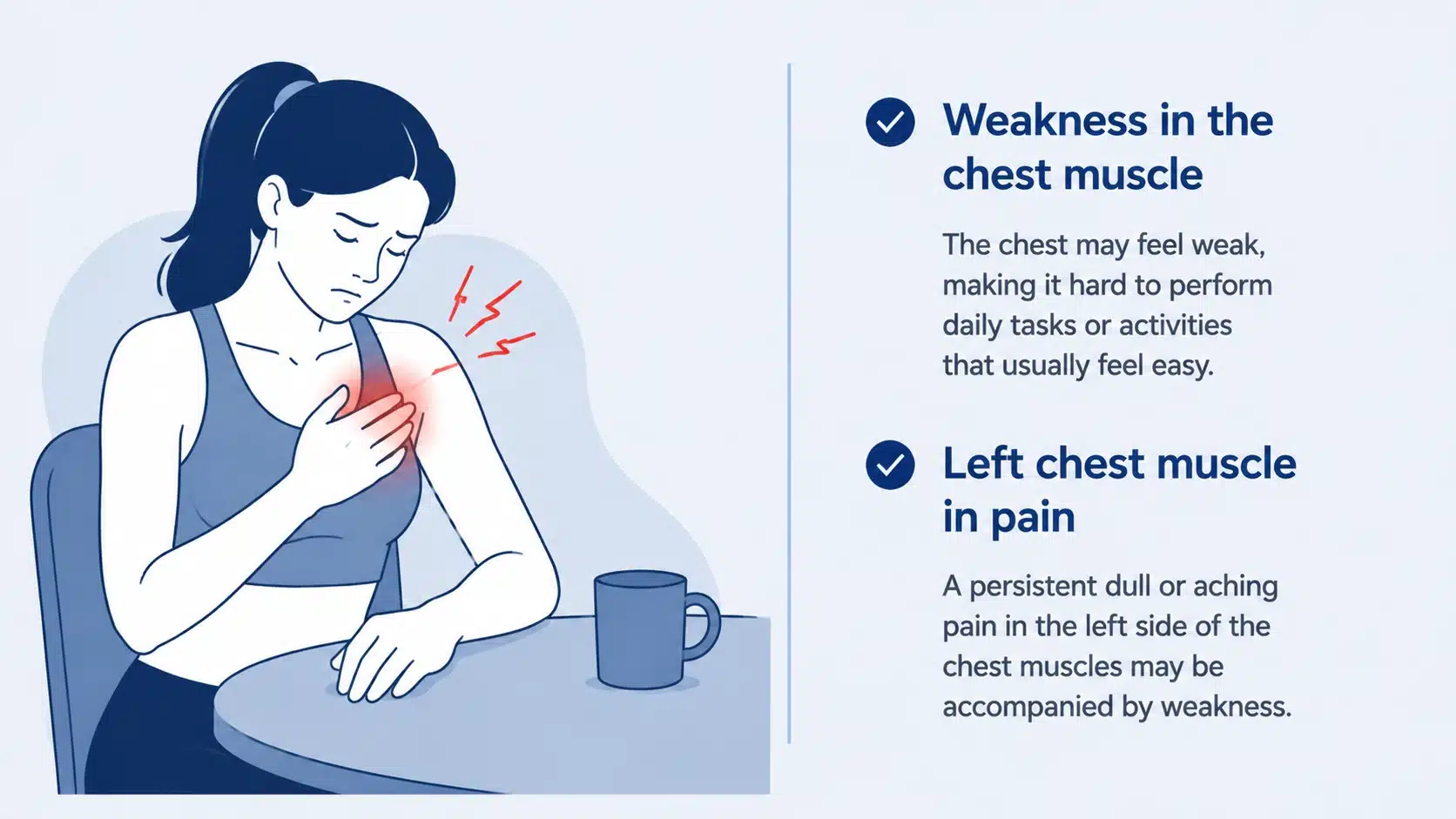
A more serious strain may cause noticeable weakness alongside pain and stiffness. The injured muscle may not produce the same strength during regular tasks or exercise.
Pushing a door open, carrying a bag, or performing any upper-body movement can feel much harder. This happens because the damaged muscle cannot work at its normal capacity.
Where Do Females Usually Feel Pulled Chest Muscle Pain?
Chest muscle pain does not always appear in the same spot. Where the pain sits can help identify which muscle was strained and what caused the injury.
1. Pain Under the Breast
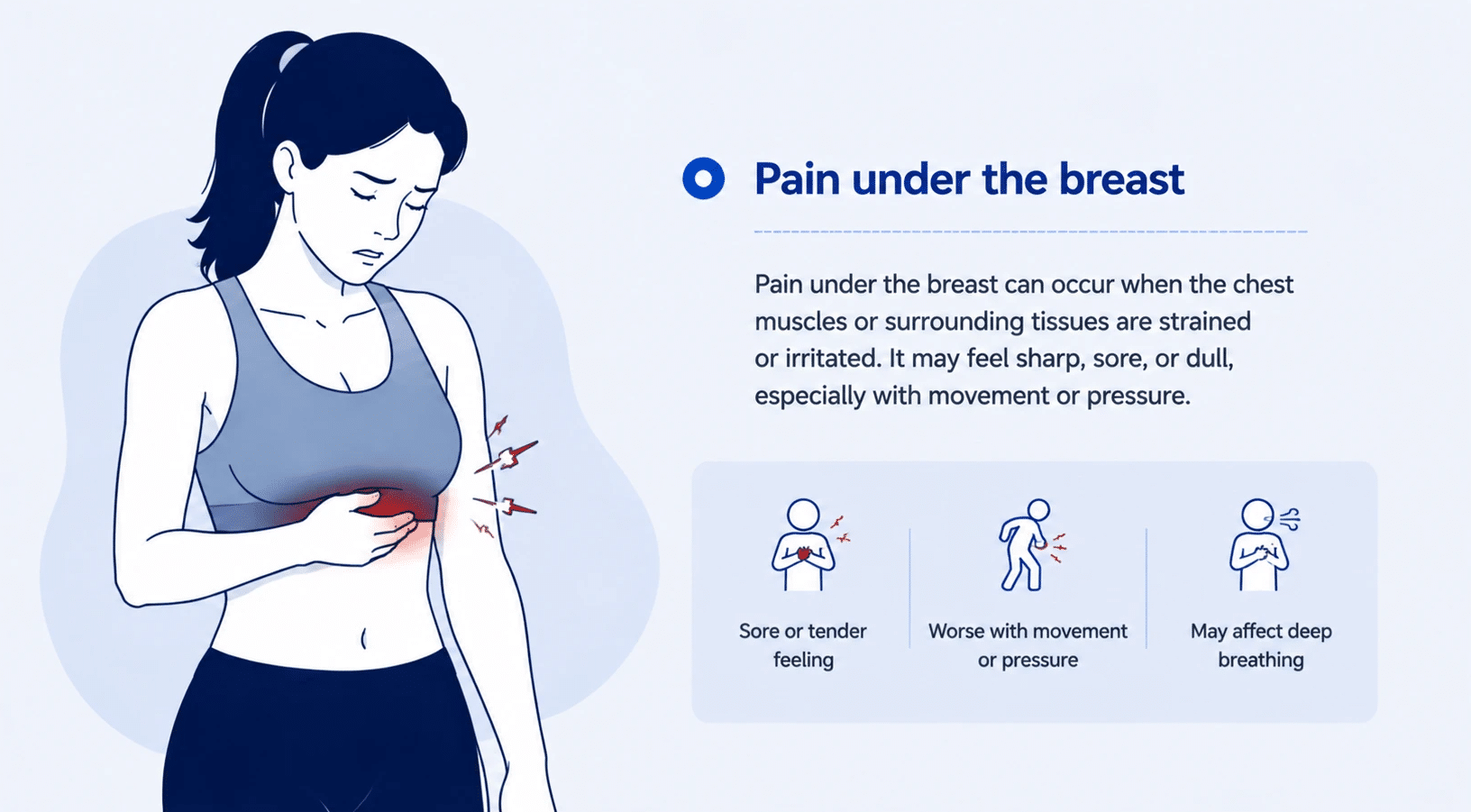
The muscles and connective tissue beneath the breast can become irritated during a chest strain. This causes pain that radiates upward and feels like it is coming from the breast itself.
Pain under the breast is one of the most confusing symptoms for women with a pulled chest muscle. The pain usually worsens with arm movement, which helps separate it from hormonal breast discomfort.
2. Pain on One Side of the Chest
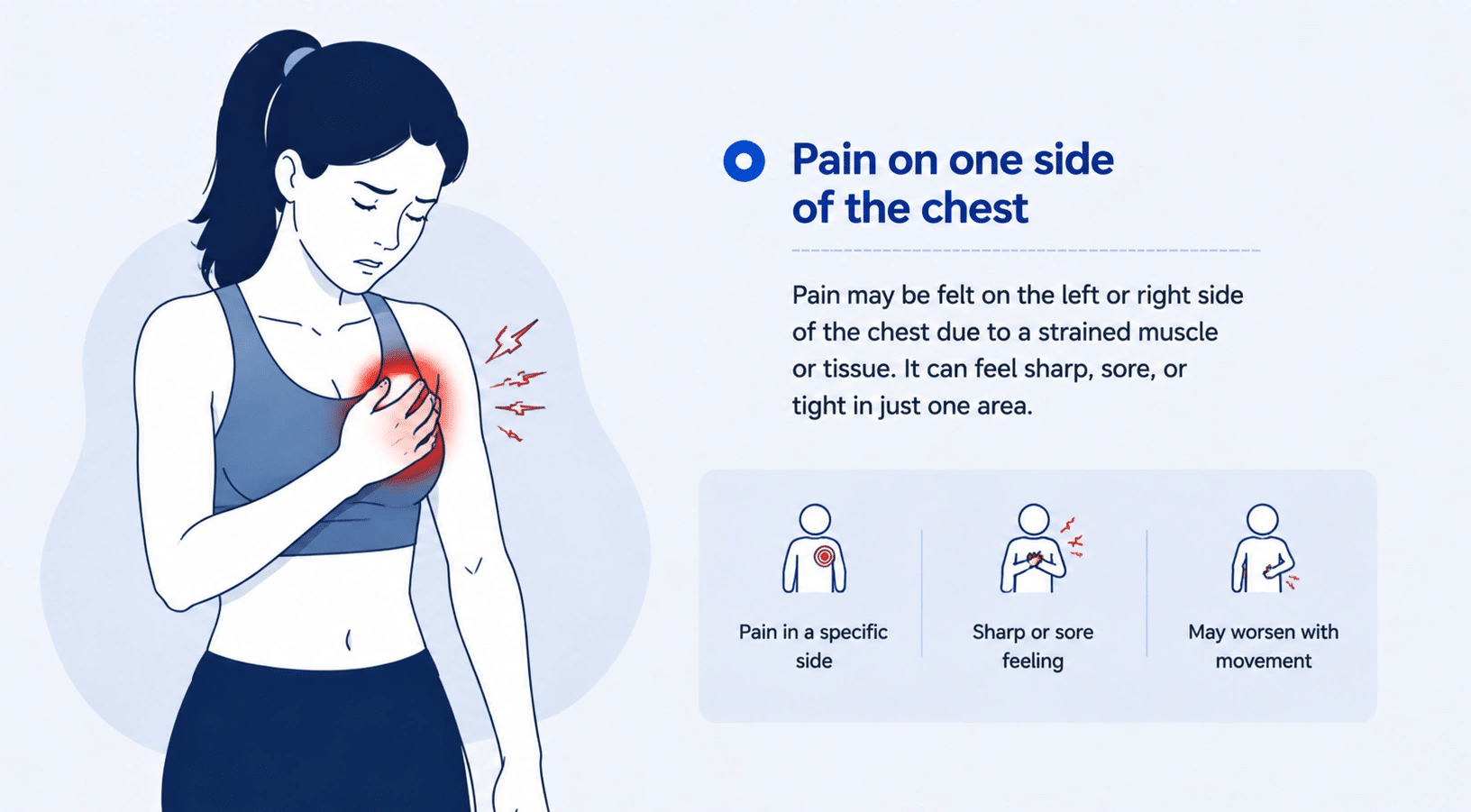
A pulled chest muscle almost always affects one side more than the other. Strains typically happen during activities that favor one side of the body, such as a one-sided push or overhead lift.
This one-sided pattern helps distinguish a muscle strain from other types of chest pain. Most other causes feel more central or spread across both sides.
3. Pain Near the Ribs or Sternum
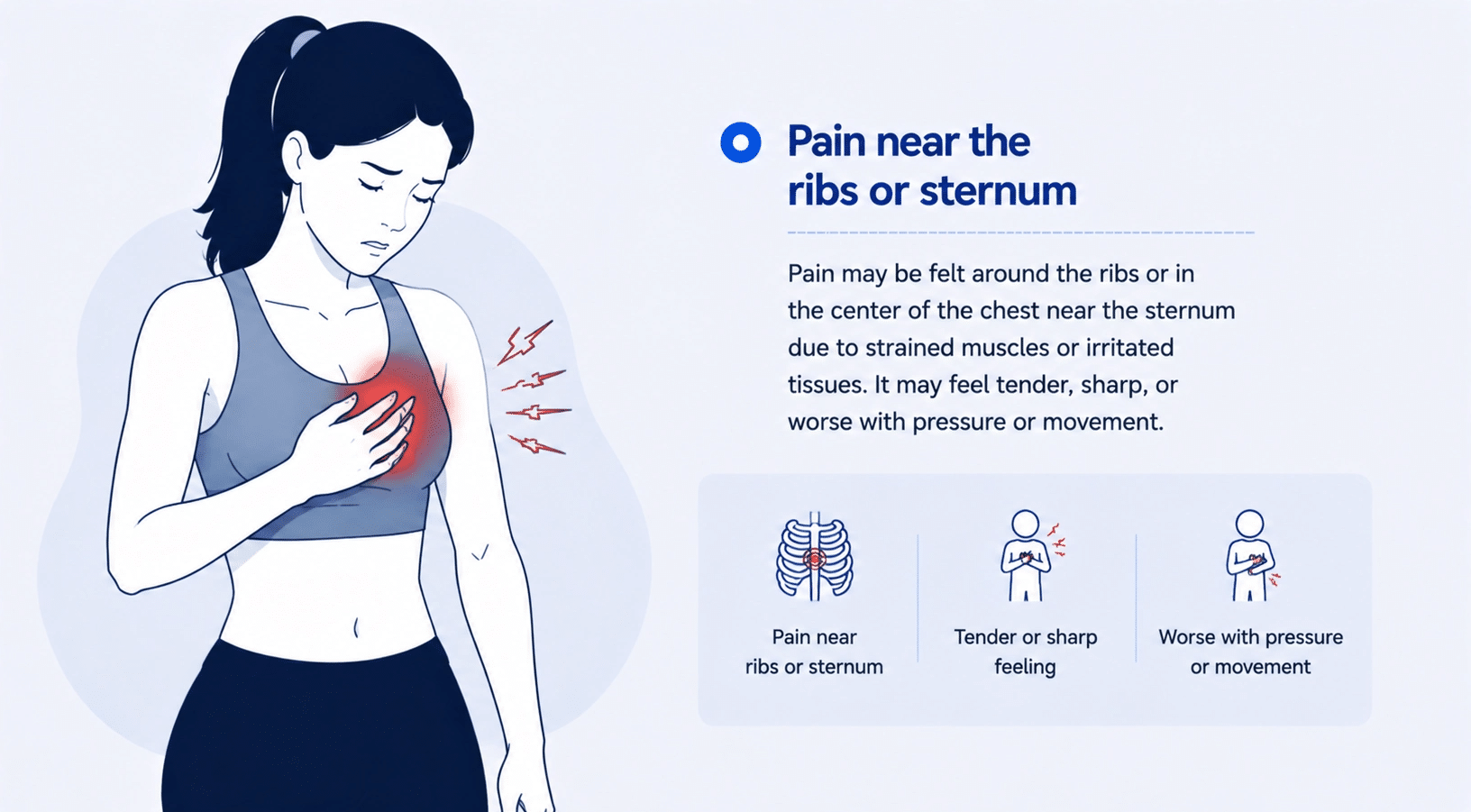
The intercostal muscles run between each rib. A strain in this area causes pain centered near the ribs or the sternum. It often gets sharper with a deep breath or a twisting motion of the torso.
This is different from breast pain caused by hormonal changes, cysts, or breast tissue conditions. Hormonal breast pain feels more spread out. It shifts with the menstrual cycle, not with movement or pressure on the chest wall.
What Causes a Pulled Chest Muscle in Females?
A pulled chest muscle can develop from a workout, a daily task, or a sudden injury. Identifying the cause early helps avoid repeat injury.
- Exercise and strength training: Weightlifting, push-ups, yoga, tennis, and contact sports can all strain the chest muscles. This is especially likely when intensity increases too fast or without a warm-up.
- Heavy lifting or repetitive movement: Carrying children, moving furniture, or repeating the same task at work can slowly wear down the chest muscles.
- Persistent coughing or respiratory illness: Bronchitis or a bad cold can strain the chest wall muscles just as much as a tough workout. This is a commonly overlooked cause.
- Poor posture and muscle overuse: Long hours at a desk with rounded shoulders put steady pressure on the chest muscles. Over time, this can cause chronic strain.
- Injury or trauma: A fall, a sports collision, or a direct impact to the chest can tear the muscles. This usually causes sudden and intense pain right away.
How Is a Pulled Chest Muscle Different From Other Causes of Chest Pain?
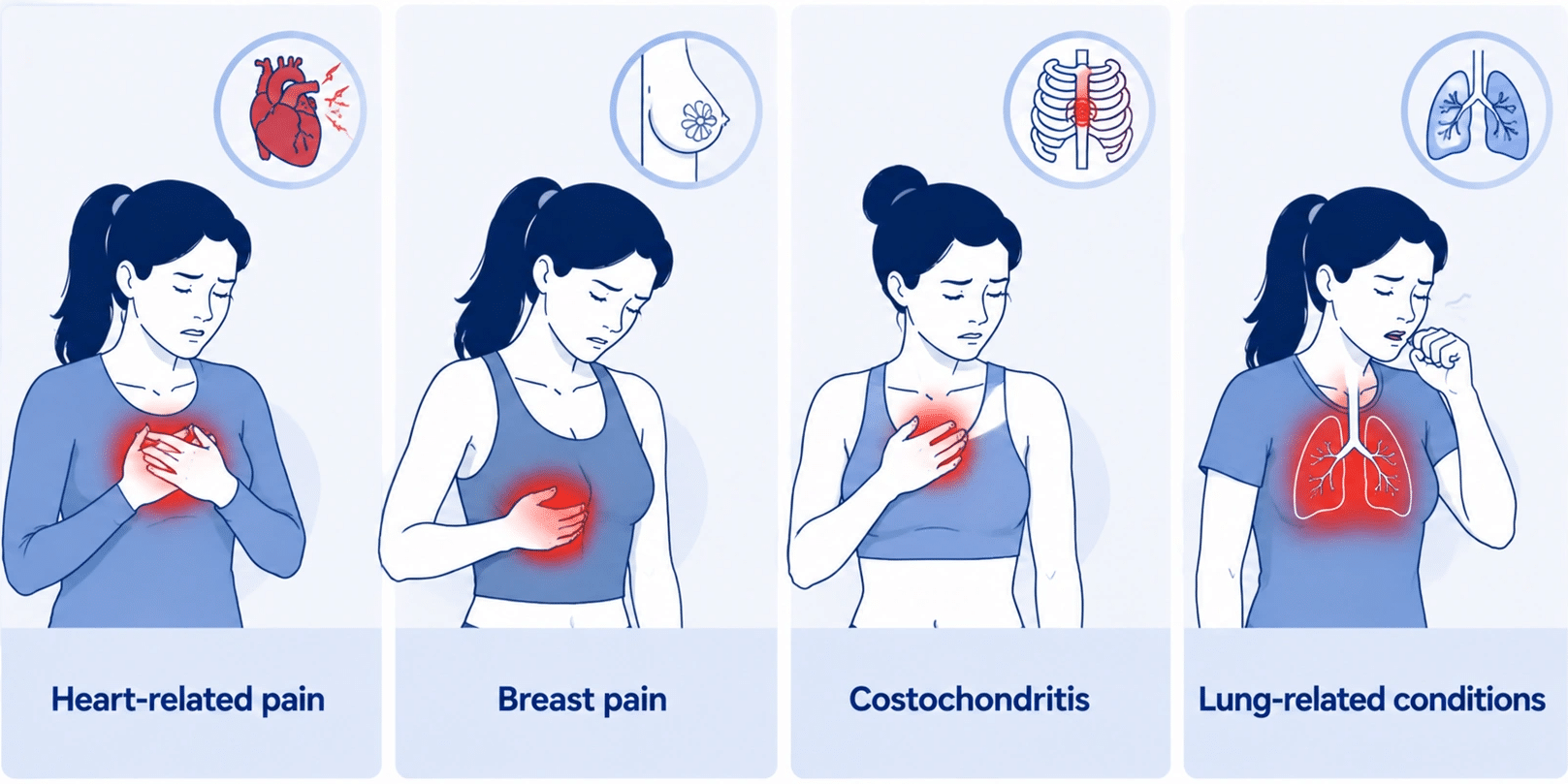
A pulled chest muscle can closely resemble other conditions, some of which are far more serious. The table below compares key differences so you can better assess what you are feeling. Always confirm with a doctor before drawing conclusions.
| Condition | How It Differs From a Pulled Muscle |
|---|---|
| Heart-related pain | Feels like pressure or squeezing. Often comes with sweating, nausea, dizziness, or pain that spreads to the arm, neck, or jaw. Does not change when you press on the chest wall. |
| Breast pain | Feels more spread out and does not change much with arm movement. A lump, skin change, or nipple discharge points to a breast issue that needs medical evaluation. |
| Costochondritis | Pain is centered right at the sternum and is sharp when pressed on that exact spot. It does not spread across a wider chest area the way a muscle strain might. |
| Pleuritis (pleurisy) | Sharp pain that worsens when breathing. May come with fever, cough, and general muscle aches. Caused by inflammation of the lining around the lungs, not the chest wall muscles. |
| Lung conditions | Come with shortness of breath, a fast heartbeat, or a bluish tint to the lips. These are emergency symptoms that need immediate medical care. |
Muscle strain pain typically changes with movement, body position, or pressure on the chest wall. It tends to sit close to the surface and worsen with specific movements rather than appearing suddenly at rest.
If you are unsure whether your chest pain is muscular, seek medical care without delay. A pulled muscle and a heart-related event can look similar, and only a proper evaluation can rule out serious causes.
How to Treat a Pulled Chest Muscle at Home
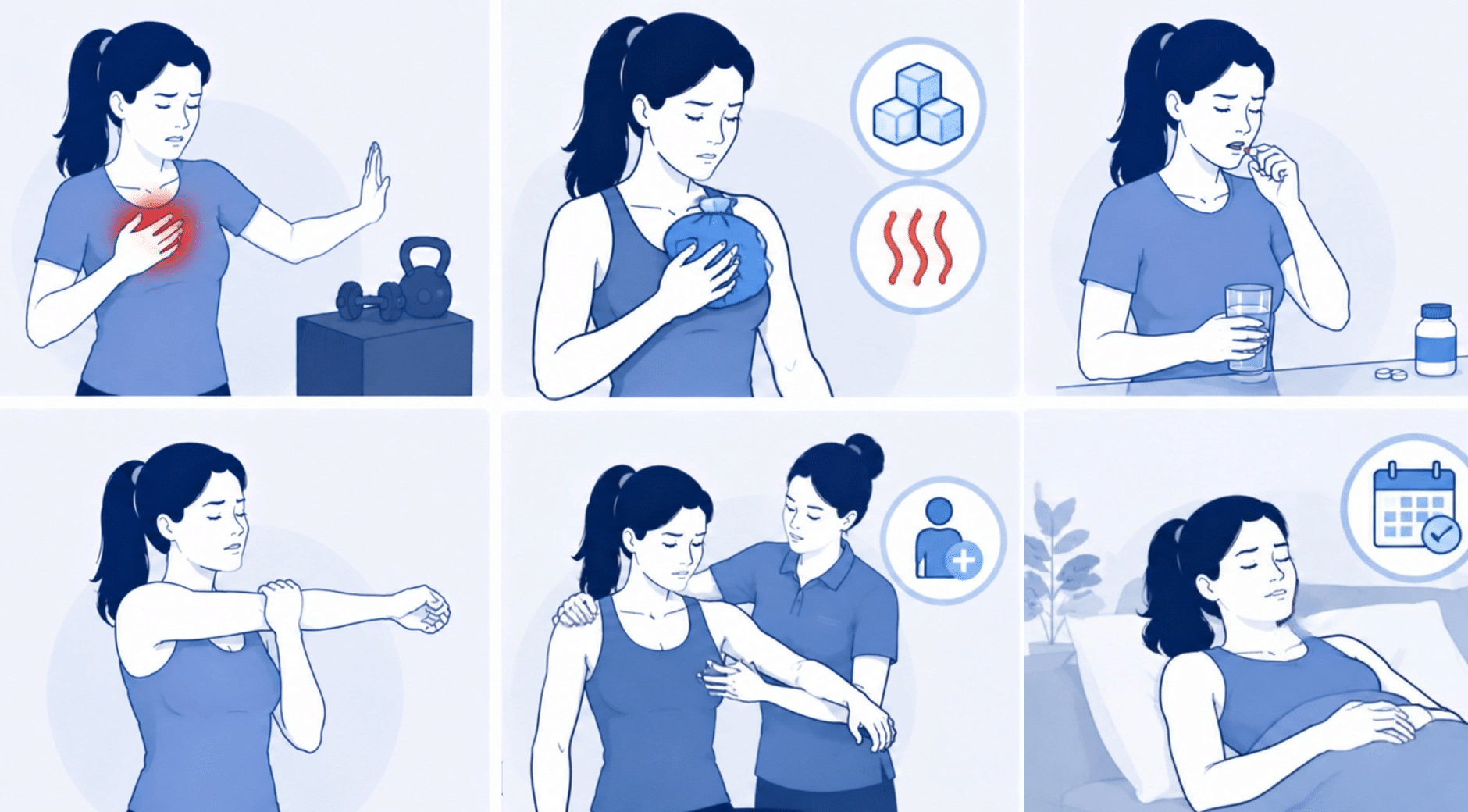
Most pulled chest muscles heal with simple home care. The RICE method (Rest, Ice, Compression, and Elevation) is the first-line approach for mild to moderate strains.
- Rest and activity changes: Stop the activity that caused the pain. Avoid heavy lifting, overhead reaching, or any movement that worsens the pain. Keep gentle, low-effort daily movement going to prevent stiffness.
- Ice therapy (first 48 to 72 hours): Apply a cloth-wrapped ice pack to the sore area for up to 20 minutes. Do this several times per day. Ice reduces swelling and eases initial pain.
- Heat therapy (after day three): Once swelling has gone down, switch to a warm compress or heating pad. Heat relaxes the muscle, eases tightness, and supports blood flow to the healing area.
- Compression: Wrapping the chest area with an elastic bandage can help reduce swelling. Do not wrap too tightly, as this can cause additional pain or restrict breathing.
- Elevation at night: Use pillows or a foam wedge to keep your chest slightly elevated when sleeping. This position can reduce swelling overnight.
- Over-the-counter pain relief: Ibuprofen can ease both pain and inflammation. Acetaminophen helps with pain but not swelling. Always check with a doctor or pharmacist if you take other medications regularly.
- Gentle stretching: Once the sharpest pain eases, light stretching helps the muscle regain full movement. Stop immediately if any stretch triggers sharp pain.
- Physical therapy: If pain persists beyond two weeks, a physical therapist can build a structured recovery plan. This will include targeted exercises for the chest and upper back.
Pro Tip: Track how the pain responds after each step. If any treatment makes the pain worse, stop and check with a doctor before continuing.
How Long Does a Pulled Chest Muscle Take to Heal?
Recovery time depends on the severity of the strain and how well the injured area is protected during healing.
- Grade 1 (Mild): Most women recover within one to three weeks with rest and basic home care.
- Grade 2 (Moderate): Recovery can take four to six weeks, especially if activity is not reduced early enough.
- Grade 3 (Severe): A complete tear may take six weeks or longer. Medical evaluation and physical therapy are usually needed.
Other factors include how quickly treatment starts and how much the area is used during healing. Returning to heavy exercise too soon is the most common reason a chest strain takes longer to heal.
How to Prevent Chest Muscle Strains
A few simple habits lower your risk of re-injuring the chest muscles. Build these into your regular training and daily routine.
- Warm up for five to ten minutes before any workout or physical activity
- Increase exercise intensity gradually. Do not jump to heavier loads too soon
- Use proper form when lifting anything heavy, whether at the gym or at home
- Work on upright posture during long periods of sitting at a desk or computer
- Strengthen the chest, shoulder, and upper back muscles together with balanced resistance training
- Build in rest days between intense workouts so chest muscles have time to recover fully
When Should a Female With Chest Muscle Pain See a Doctor?
Home care works well for most mild to moderate strains. But some symptoms mean you should seek medical attention right away rather than waiting to see if the pain fades.
- Chest pain that is sudden and severe
- Pain that comes with difficulty breathing
- Fainting or dizziness
- Sweating or nausea alongside chest pain
- Pain that spreads to the arm, jaw, neck, or back
- Pain that does not improve with rest after several days
- A new lump, breast skin changes, or breast area pain that does not go away
Emergency Warning: Treat any chest pain paired with shortness of breath, radiating arm or jaw pain, dizziness, or sweating as a medical emergency. Call 911 or go to the nearest emergency room immediately. Do not wait to see if the pain eases on its own
Final Thoughts on Symptoms of Pulled Chest Muscle in Females
The symptoms of a pulled chest muscle in females include sharp pain, tenderness, tightness, swelling, and reduced arm movement.
The pain often sits on one side or under the breast, making it easy to confuse with other conditions. Tracking how the pain responds to touch, movement, and rest helps separate a muscle strain from something more serious.
Most strains heal within a few weeks with rest and basic home care. If pain spreads to your arm or jaw, or comes with shortness of breath, see a doctor that day.
Frequently Asked Questions
How to tell if pain is muscular or internal?
Muscle pain worsens with movement, stretching, deep breathing, or pressing the sore area. Internal pain usually does not change with touch and may include other warning signs.
What feels like muscle pain but isn’t?
Heart issues, costochondritis, lung problems, and breast conditions can sometimes feel like muscle pain.
Will muscle pain go away by itself?
Yes, most mild chest muscle strains heal with rest and basic home care within a few weeks.
How to make chest muscle strain go away?
Rest the muscle, use ice first, apply heat later, and slowly return to activity as pain improves.
What type of chest pain is not serious?
Pain linked to movement, touch, or a recent workout is often less serious. Severe or spreading pain needs medical attention.