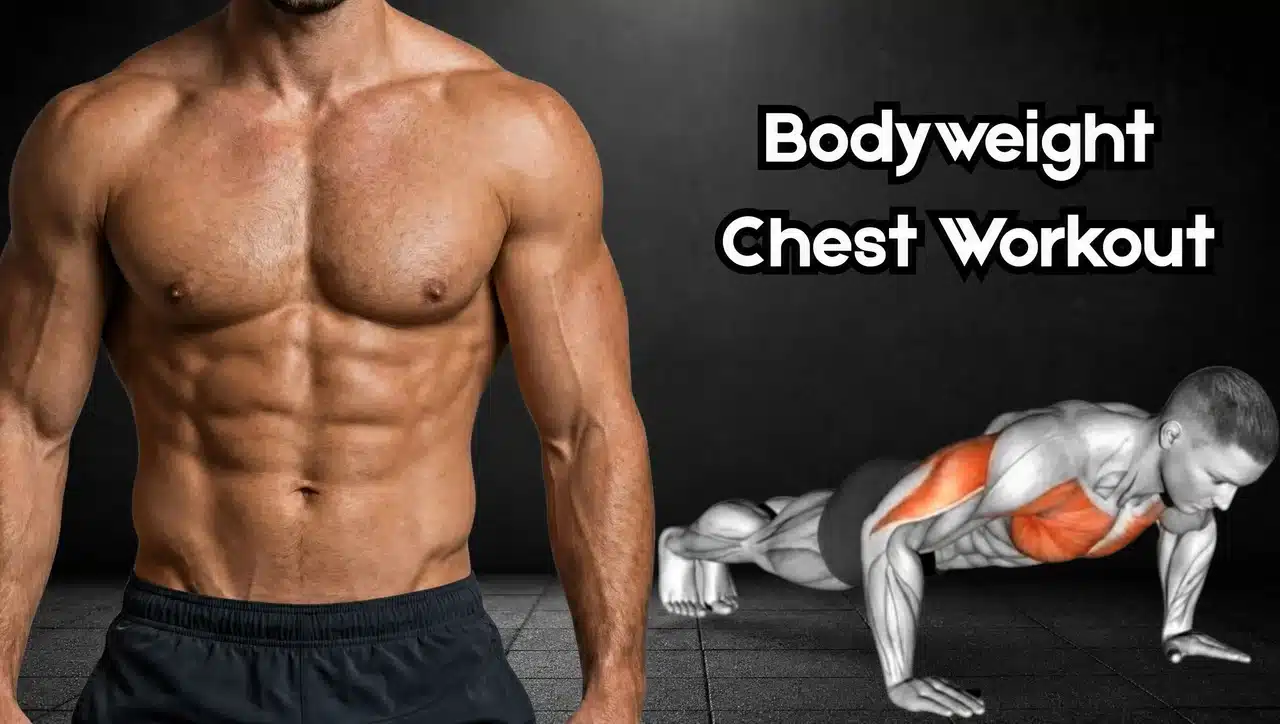
Building a stronger chest does not require a gym setup. Bodyweight exercises can build your pecs when you use the right angles, controlled reps, and progressive overload.
Push-ups, dips, and variations target different areas of your chest by changing your body position and hand placement. The key is training with variety instead of repeating the same movement.
This workout covers bodyweight chest exercises with form cues, beginner modifications, and plans for every level.
Why Chest Anatomy Matters for This Workout
Understanding the chest as one flat surface can lead to a limited training plan. Knowing how the two heads of the pectoralis major work changes how you train.
Upper Chest (Clavicular Head)
The clavicular head runs from the collarbone downward. It activates most when your feet are raised and your body angles downward during pressing. Decline push-ups are built around this angle.
Lower Chest (Sternal Head)
The sternal head runs from the breastbone across the lower pec. It takes more load when your hands are on a raised surface, and your body angles upward. Incline push-ups put you directly in that position.
Inner Chest (Adduction Focus)
Hand placement controls inner chest activation. Bring your hands closer together, and the inner fibers must pull the load across your body. A close or diamond grip creates this demand in a way a wide grip never does.
Key Point: A standard push-up hits the middle chest. A decline push-up hits the upper chest. An incline push-up hits the lower chest. You need all three angles for complete development.
The 11 Best Bodyweight Chest Exercises
These exercises cover the upper, middle, and lower chest. They also build pressing strength and shoulder stability. Work through the list and choose the variations that match your current level.
1. Dive-Bomber Push-Up
Primary chest focus: Upper chest, shoulders
Secondary muscles: Triceps, serratus anterior, core
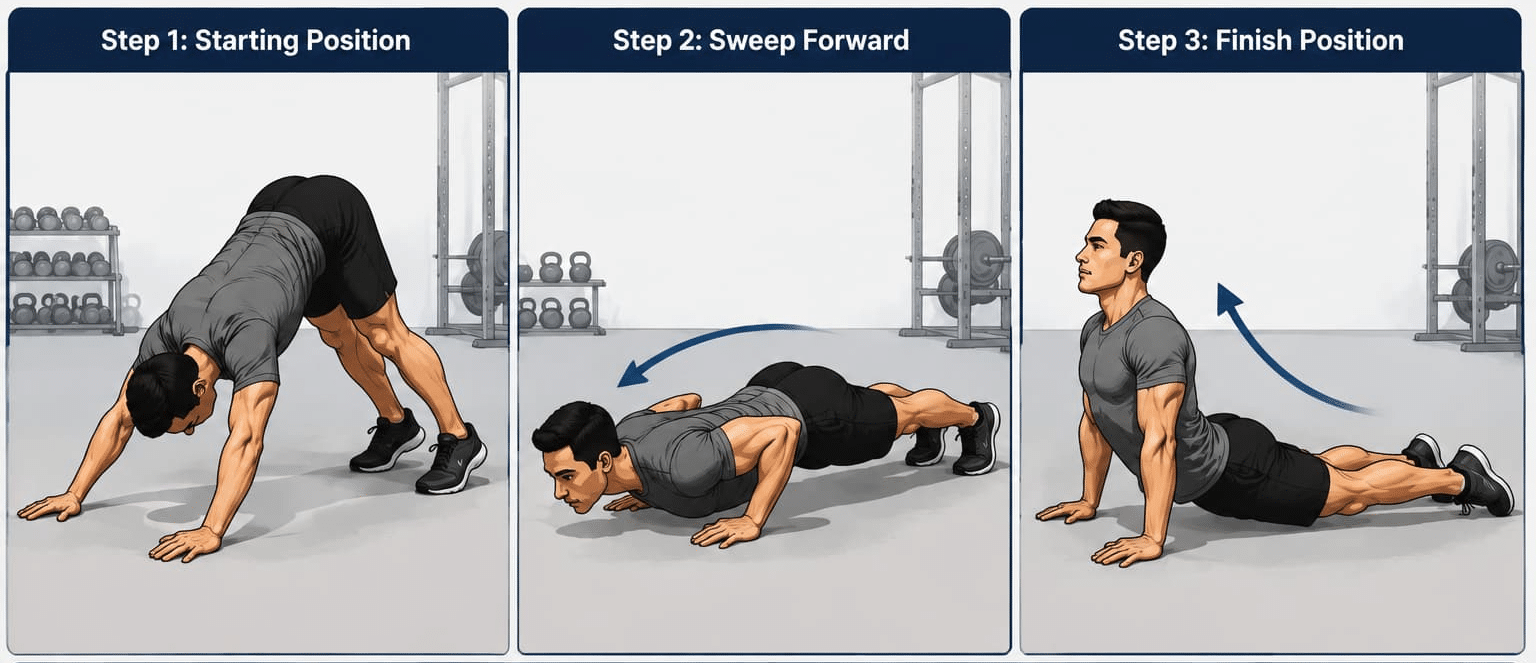
Start in a downward dog position with hips high. Sweep your body forward in an arc, keeping your chest close to the floor, until your hips are near the ground and your chest is up in a cobra-like position. Reverse the motion back through the same arc to return to the start. Every rep is a full forward-and-backward sweep. Do not stop halfway.
This movement demands more shoulder mobility than a standard push-up. Reduce the range of the sweep if you feel shoulder strain.
Beginner mod: Start with a smaller arc and a reduced range. Increase depth gradually as your shoulder mobility and chest strength improve.
Reps guide: 3 sets of 8–10 reps, 60 seconds rest
2. Decline Push-Up
Primary chest focus: Upper chest (clavicular head)
Secondary muscles: Triceps, anterior deltoids
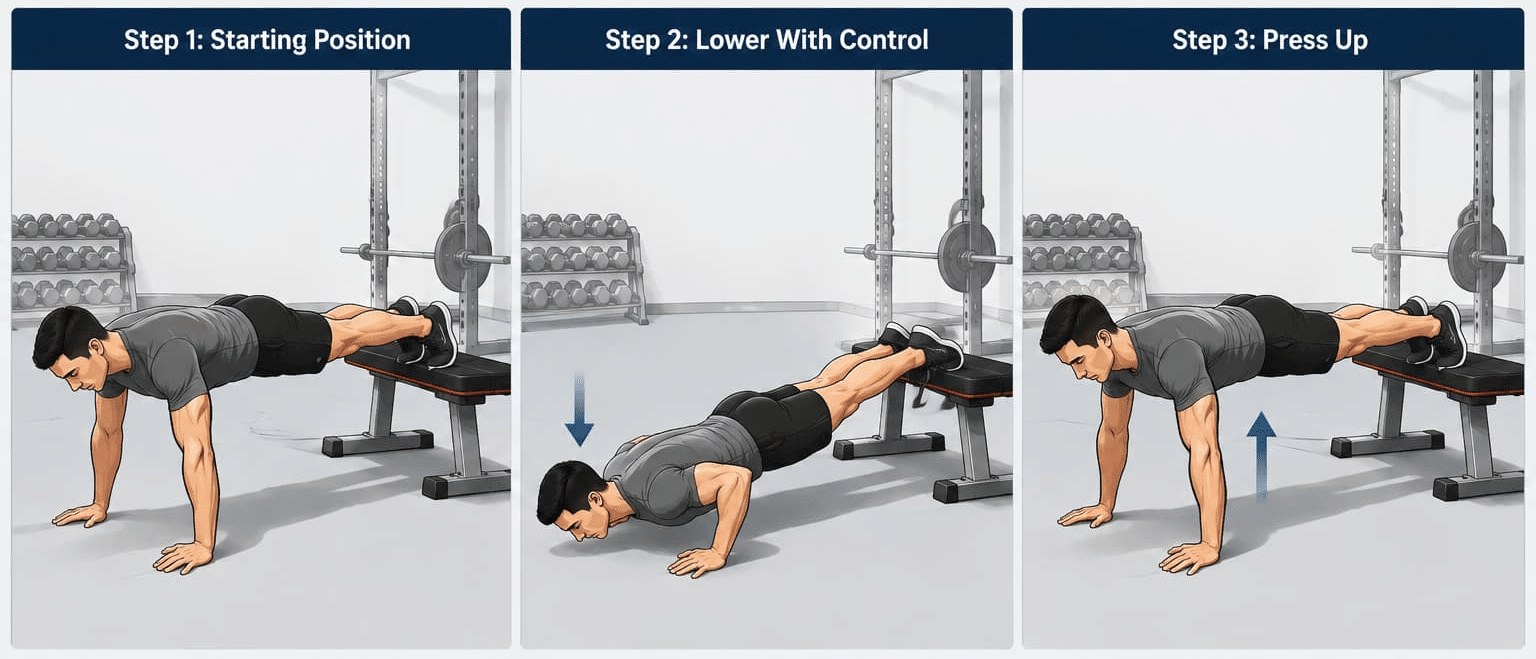
Place both feet on a raised surface like a chair, couch, or low step with hands flat on the floor shoulder-width apart. Your body forms a straight diagonal line from heels to head, hips neither sagging nor rising.
Lower your chest toward the floor with elbows at 45 degrees from your torso; stop just before touching, then press back up with control. The higher your feet are elevated, the greater the load shifts onto the clavicular head of the chest.
Beginner mod: Start with a low surface such as a single stair step. A small elevation still activates the upper chest. You do not need full chair height to feel the benefit.
Reps guide: 3 sets of 8–12 reps, 60 seconds rest
3. Chest Dip
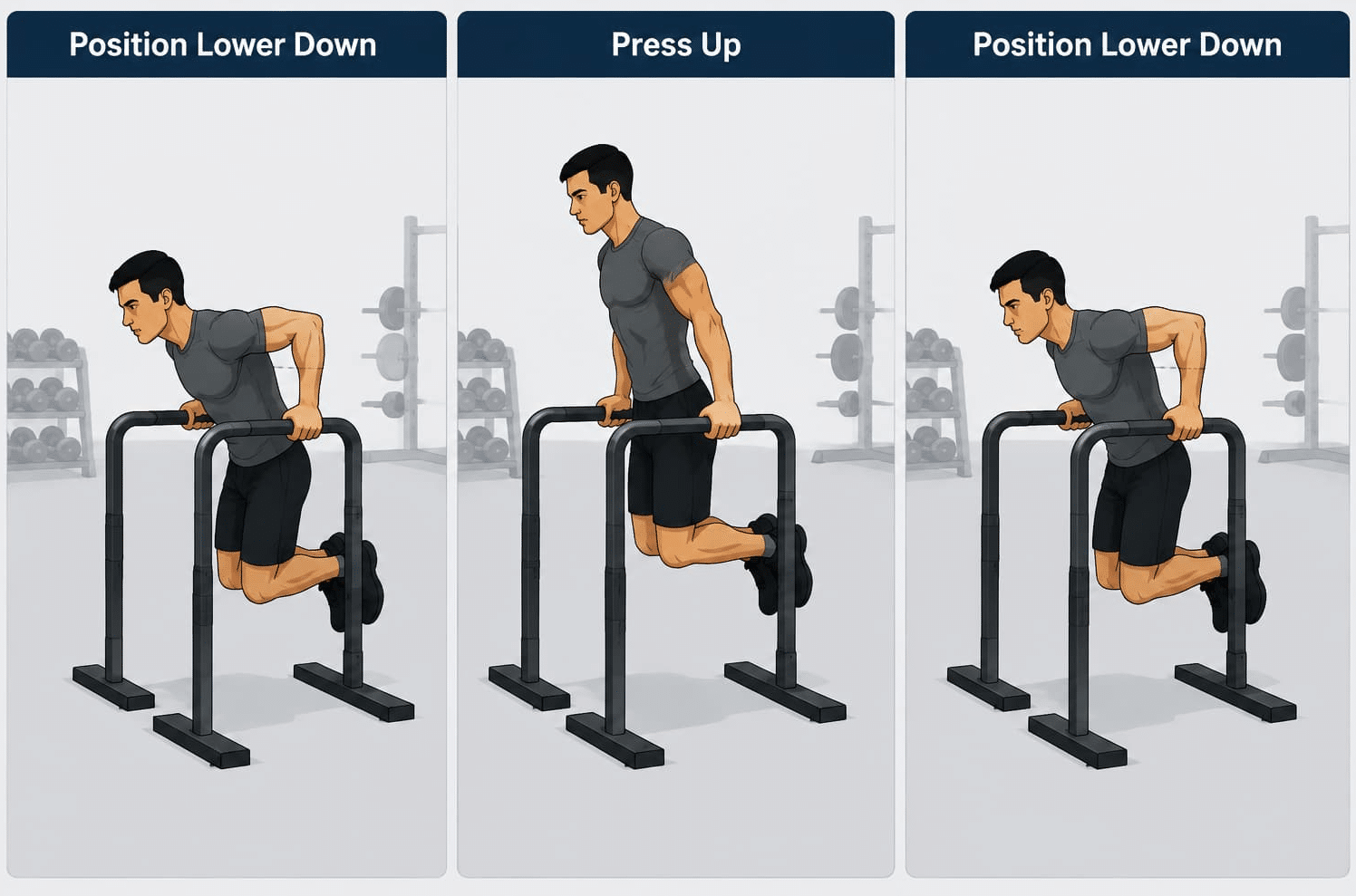
Primary chest focus: Full chest (clavicular + sternal fibers)
Secondary muscles: Anterior deltoids, triceps, serratus anterior, core
Grip the parallel bars or two sturdy chairs. Lean your torso slightly forward at about 15 to 20 degrees. This forward lean shifts the work from your triceps to your lower pecs. Lower until your shoulders drop just below your elbows. Press back up without locking out at the top.
Without the forward lean, most of the load goes to your triceps. The forward angle is what makes this a chest exercise.
Beginner mod: Bend your knees and cross your ankles behind you to reduce the load. Lower only halfway until you build enough strength for the full range of motion.
Reps guide: 3 sets of 8–12 reps, 60 seconds rest.
4. Incline Push-Up
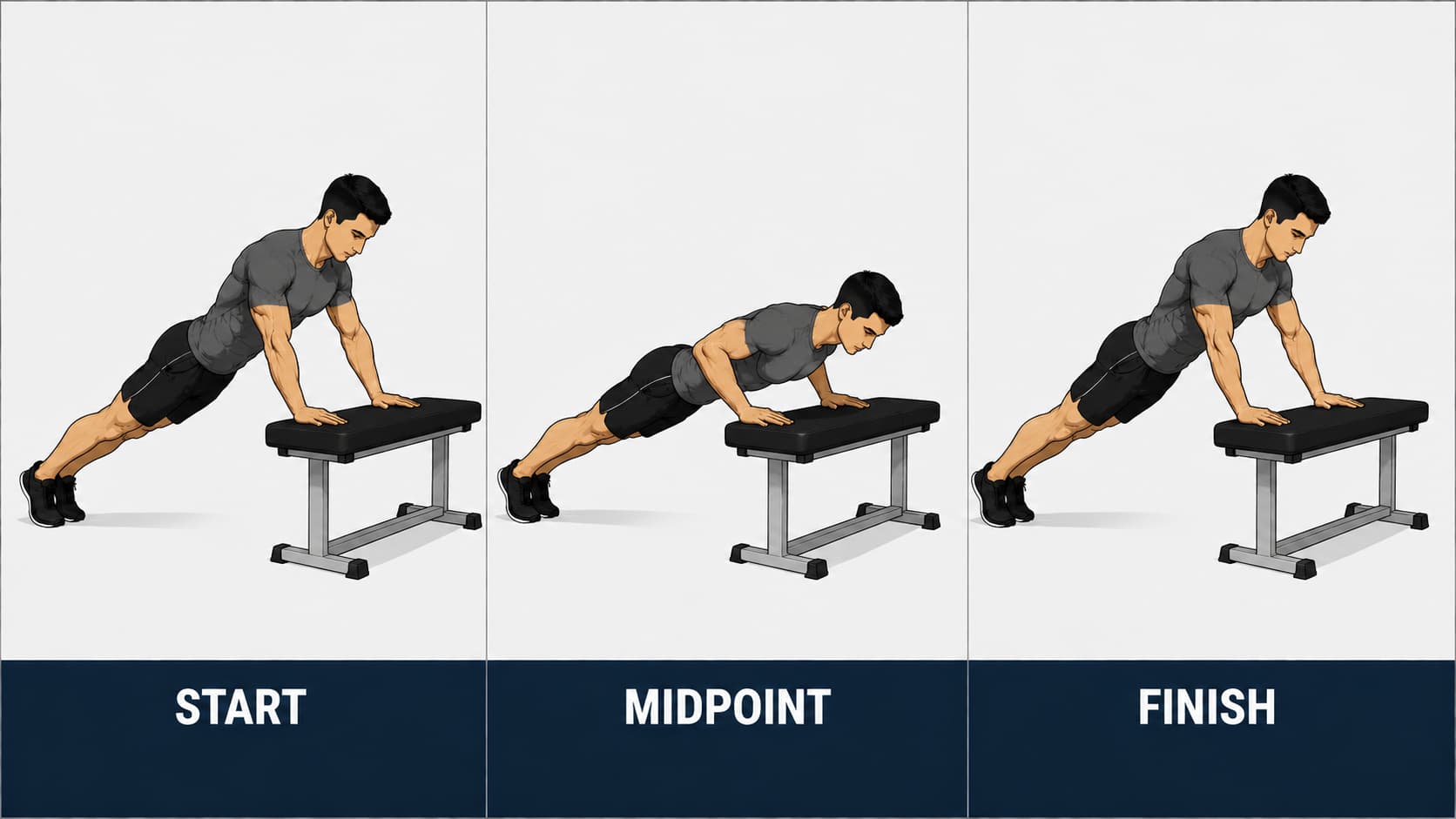
Primary chest focus: Full chest (beginner-friendly variation)
Secondary muscles: Triceps, anterior deltoids, core
Place both hands on a raised surface such as a couch edge, chair seat, or sturdy step. Walk your feet back until your body forms a straight diagonal line from heels to head.
Lower your chest toward the surface with elbows at 45 degrees. Stop when your chest nearly touches. Press back up without letting your hips drop or your lower back arch. The higher the surface, the easier the movement.
Beginner mod: Start with a high surface like a kitchen counter or wall. This reduces the load significantly and lets you practice straight-body position before moving to a lower surface.
Reps guide: 3 sets of 10–15 reps, 60 seconds rest
5. Close-Grip Push-Up
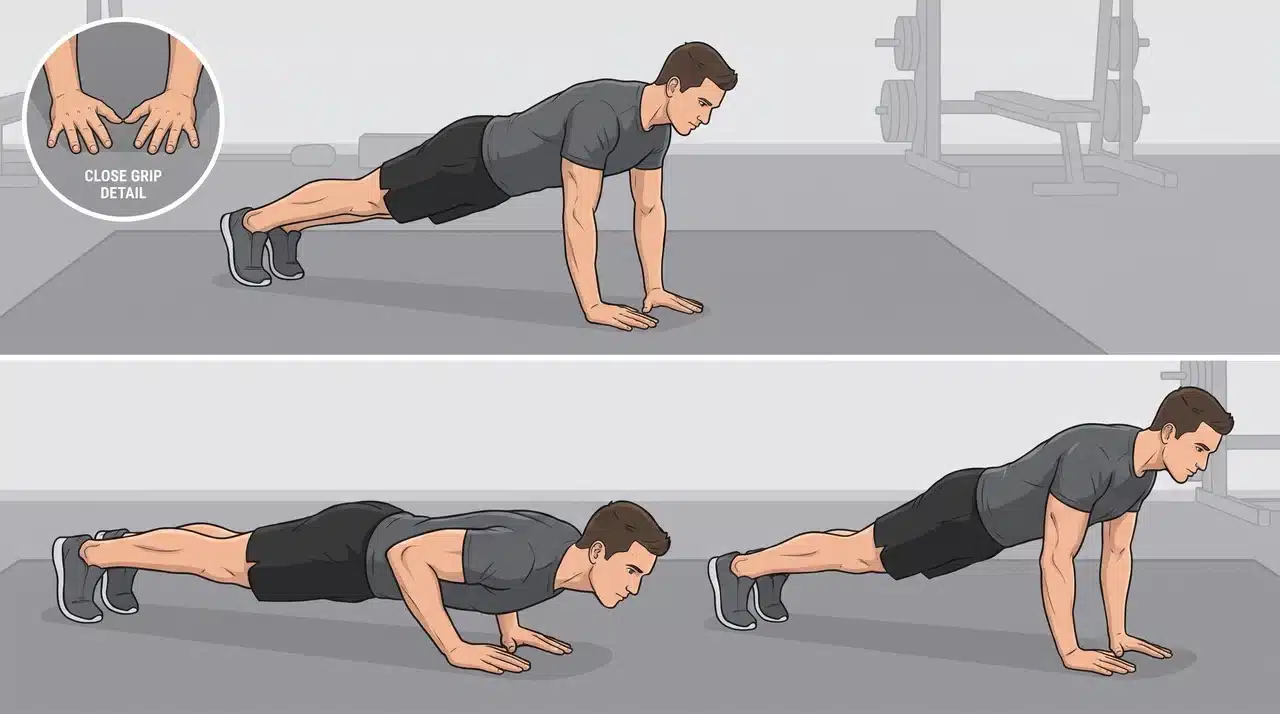
Primary chest focus: Full chest with increased triceps involvement
Secondary muscles: Triceps, anterior deltoids, serratus anterior, core
Place both hands directly under your sternum with index fingers and thumbs nearly touching. Keep your body in a straight line from heels to head. Lower your chest toward your hands, keeping your elbows tracking straight back along your sides. Stop just before your chest touches. Press back up. The narrow grip forces your triceps to work harder while the inner chest activates to pull the arm across the midline.
This is a more demanding variation than the narrow push-up. Your hands are fully under your sternum, which significantly increases inner chest and triceps engagement.
Beginner mod: Start with hands slightly narrower than shoulder-width. Build tricep and inner chest strength before moving hands all the way under the sternum. If your elbows flare, your hands are too close for your current strength.
Reps guide: 3 sets of 8–12 reps, 60 seconds rest.
6. Slow Eccentric Push-Up
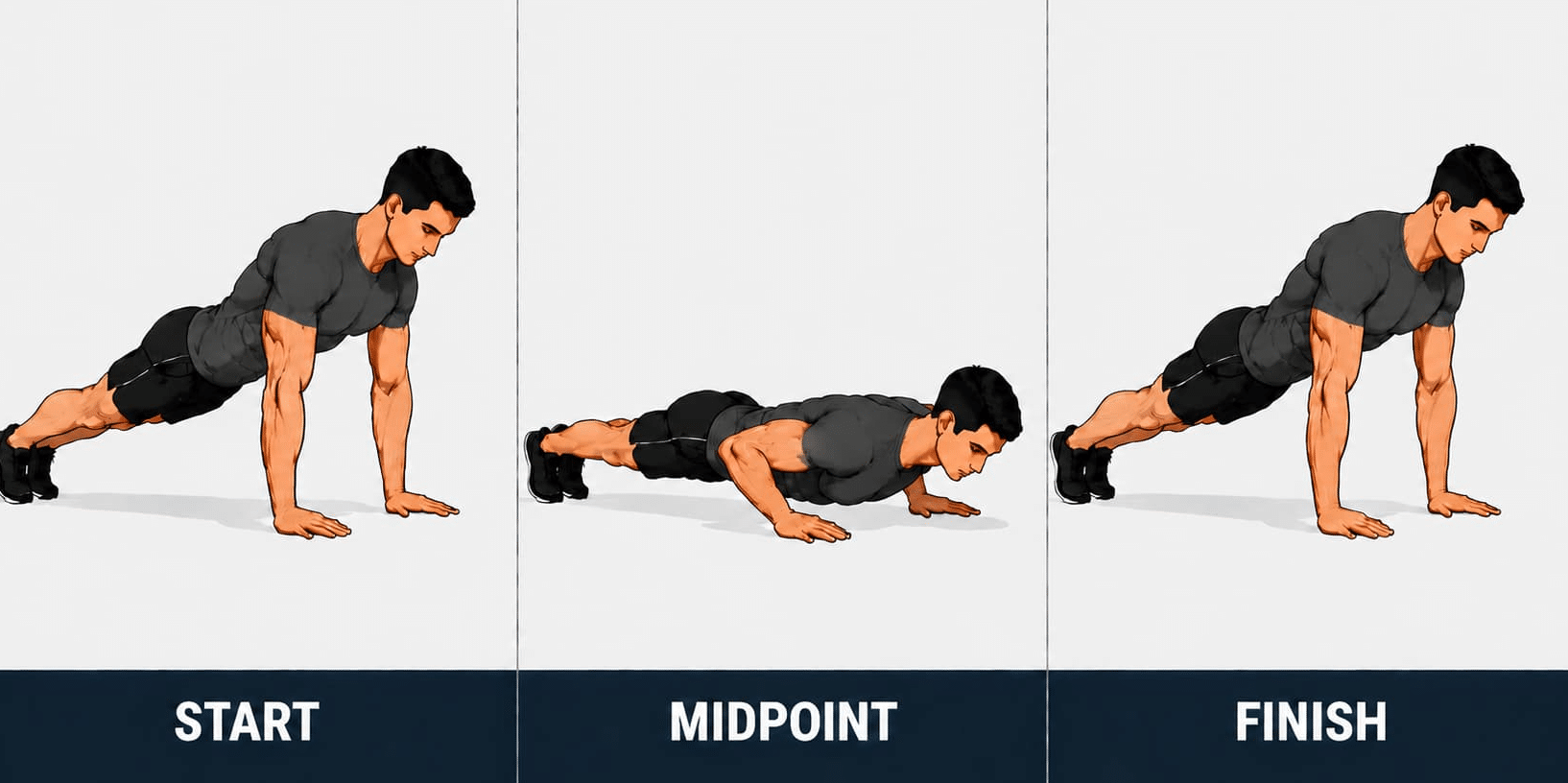
Primary chest focus: Full chest
Secondary muscles: Triceps, anterior deltoids, core
Set up in a standard push-up position with hands under shoulders. Take a full 4 seconds to lower your chest toward the floor. Keep your elbows at 45 degrees throughout. Press back up with one controlled push. The slow lowering is the key part. That is where the muscle damage and growth stimulus happens.
This variation requires no extra weight or equipment. It makes a standard push-up significantly harder by extending time under tension.
Beginner mod: Do the slow 4-second lowering from your knees. Then drop your knees and press back up from the full position. You get the eccentric benefit without needing full push-up strength yet.
Reps guide: 3 sets of 6–8 reps, 60 seconds rest
7. Modified Push-Up
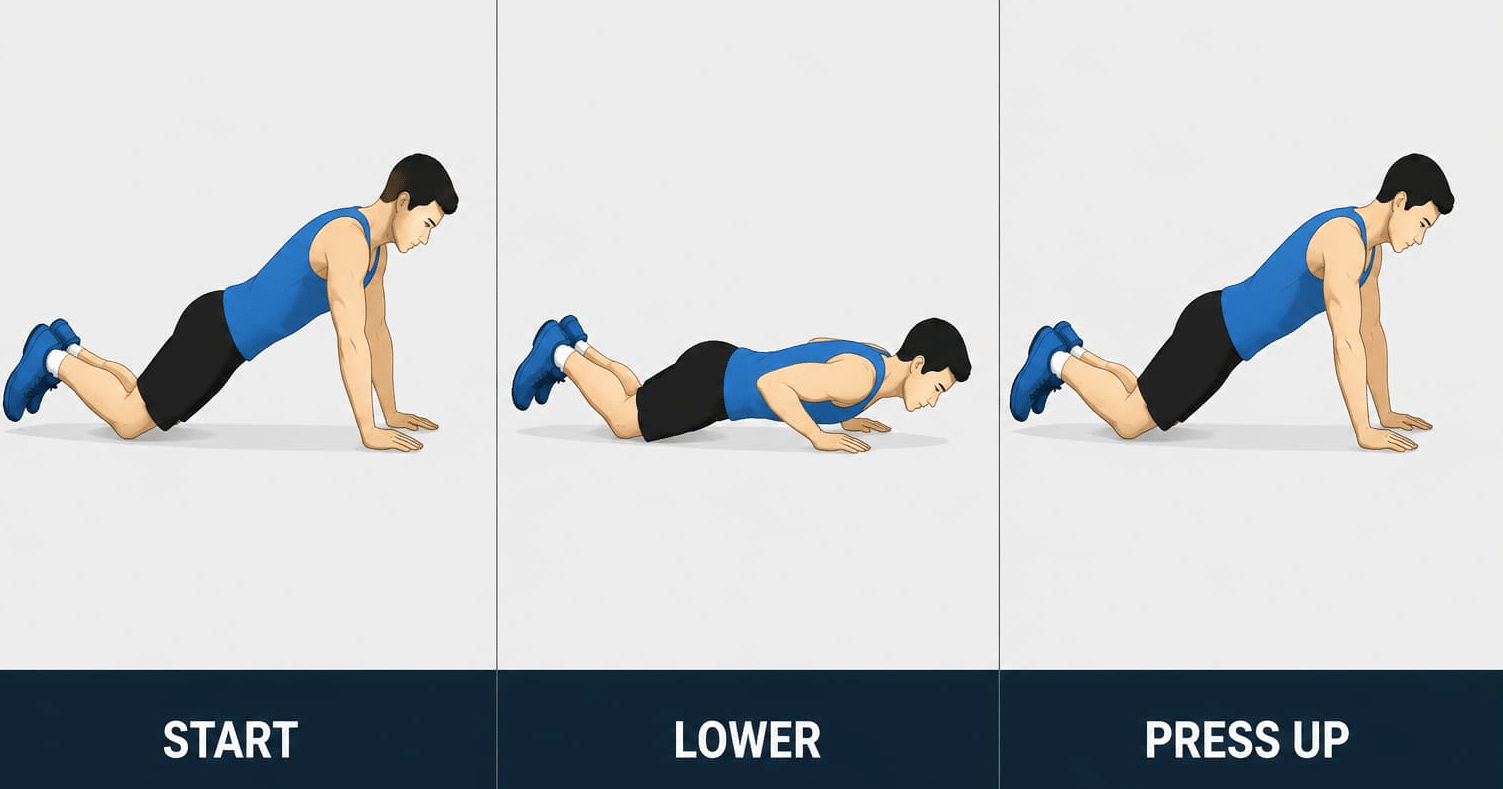
Primary chest focus: Full chest
Secondary muscles: Triceps, anterior deltoids, core
Start on your hands and knees. Place your hands slightly wider than shoulder-width. Your knees rest on the floor behind your hips. Keep your body in a straight diagonal line from knees to head. Do not let your hips sit back or your lower back sag. Lower your chest toward the floor with elbows at 45 degrees. Stop just before touching. Press back up with control.
This is a full beginner starting point. It builds the pressing pattern and chest activation you need before moving to a full push-up.
Beginner mod: Place a folded towel under your knees for comfort. Focus on the straight diagonal line first before worrying about depth; half reps with good form beat full reps with a collapsed position every time.
Reps guide: 3 sets of 10–15 reps, 60 seconds rest
8. Narrow Push-Up
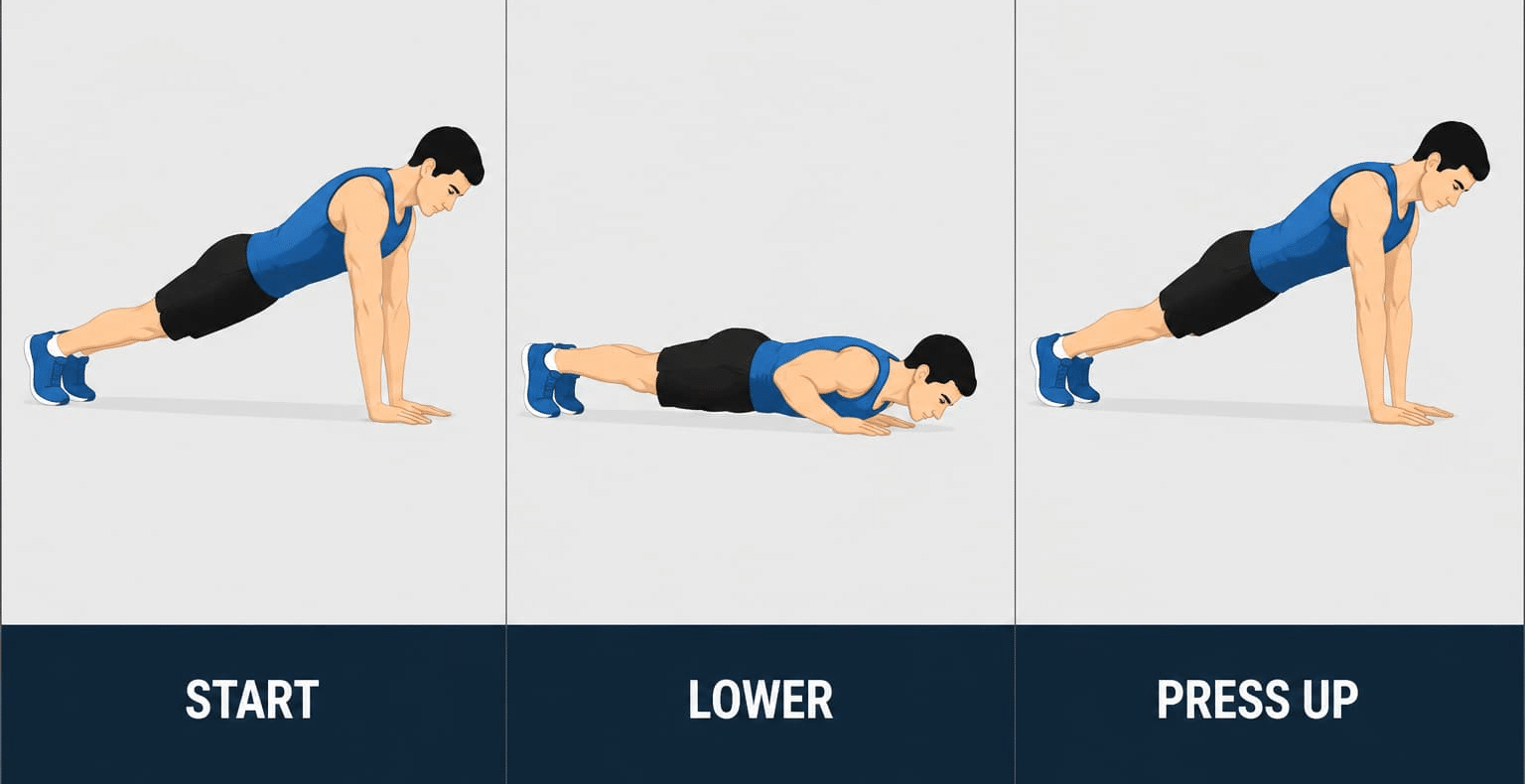
Primary chest focus: Full chest with triceps emphasis
Secondary muscles: Triceps, anterior deltoids, core
Place your hands closer than shoulder-width, directly under your chest, with your fingertips forward. Keep your body in a straight line from heels to head.
Lower your chest toward your hands, keeping your elbows close to your sides. Press back up with control. Unlike the close-grip push-up, your hands stay wider than the sternum. This keeps the chest as the primary mover rather than shifting most load to the triceps.
Beginner mod: Start with hands slightly narrower than shoulder-width. Give your triceps time to build strength before reducing the base of support further.
Reps guide: 3 sets of 8–12 reps, 60 seconds rest
9. Grasshopper Push-Up
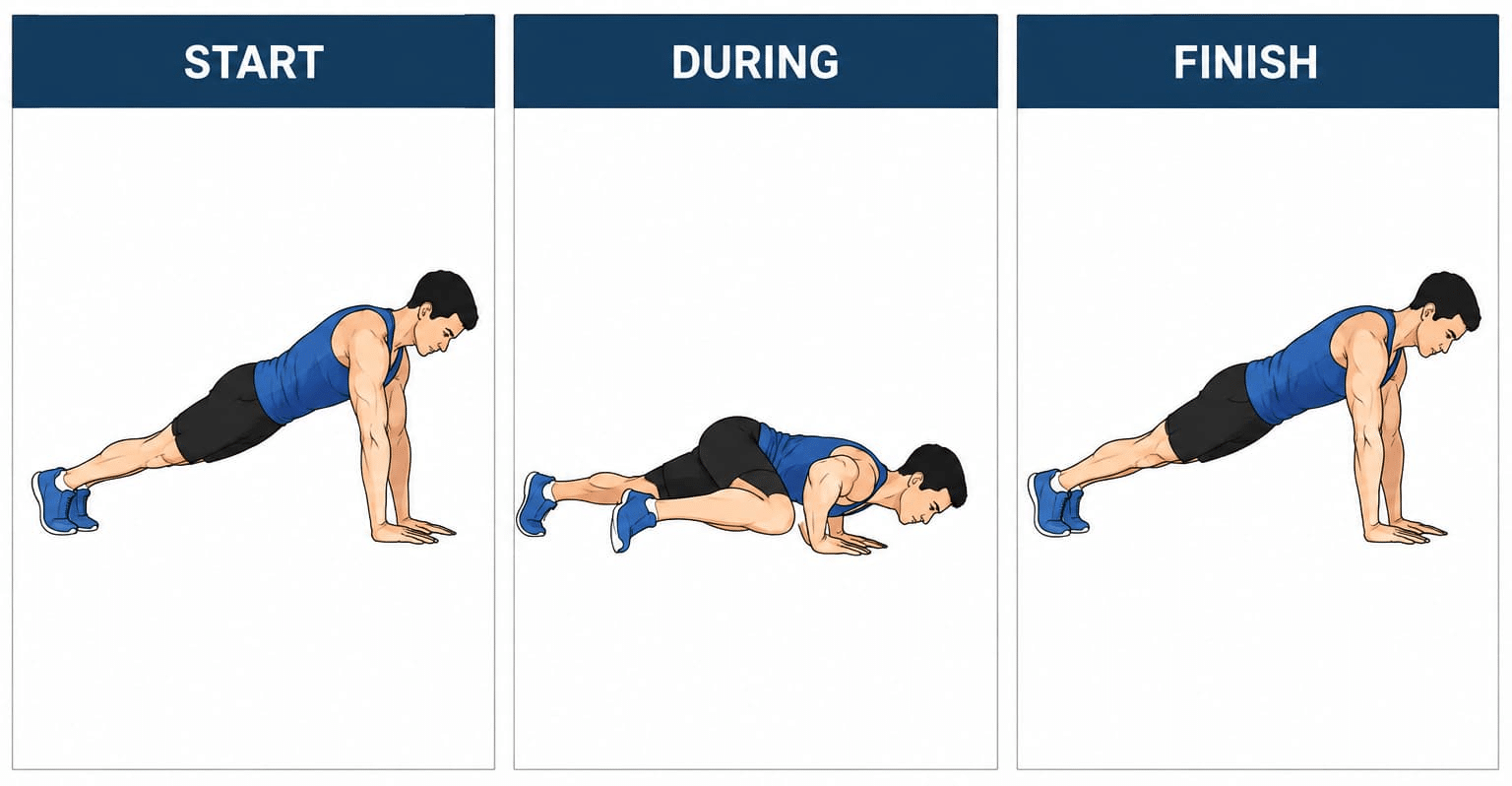
Primary chest focus: Full chest
Secondary muscles: Triceps, anterior deltoids, serratus anterior
Start in a standard push-up position. As you lower your chest toward the floor, sweep one knee underneath your body toward the opposite elbow. Press back up and return the leg to the start. Alternate sides each rep: right knee crosses toward the left elbow, then left knee toward the right elbow. The rotation happens at the bottom of the rep, not at the top.
The added rotation increases core demand and makes the movement harder without changing hand position.
Beginner mod: Slow the knee sweep down and focus on keeping your hips level throughout. Do not let the rotating leg pull your hips open or upward before adding speed.
Reps guide: 3 sets of 8–10 reps each side, 60 seconds rest.
10. Standard Push-Up
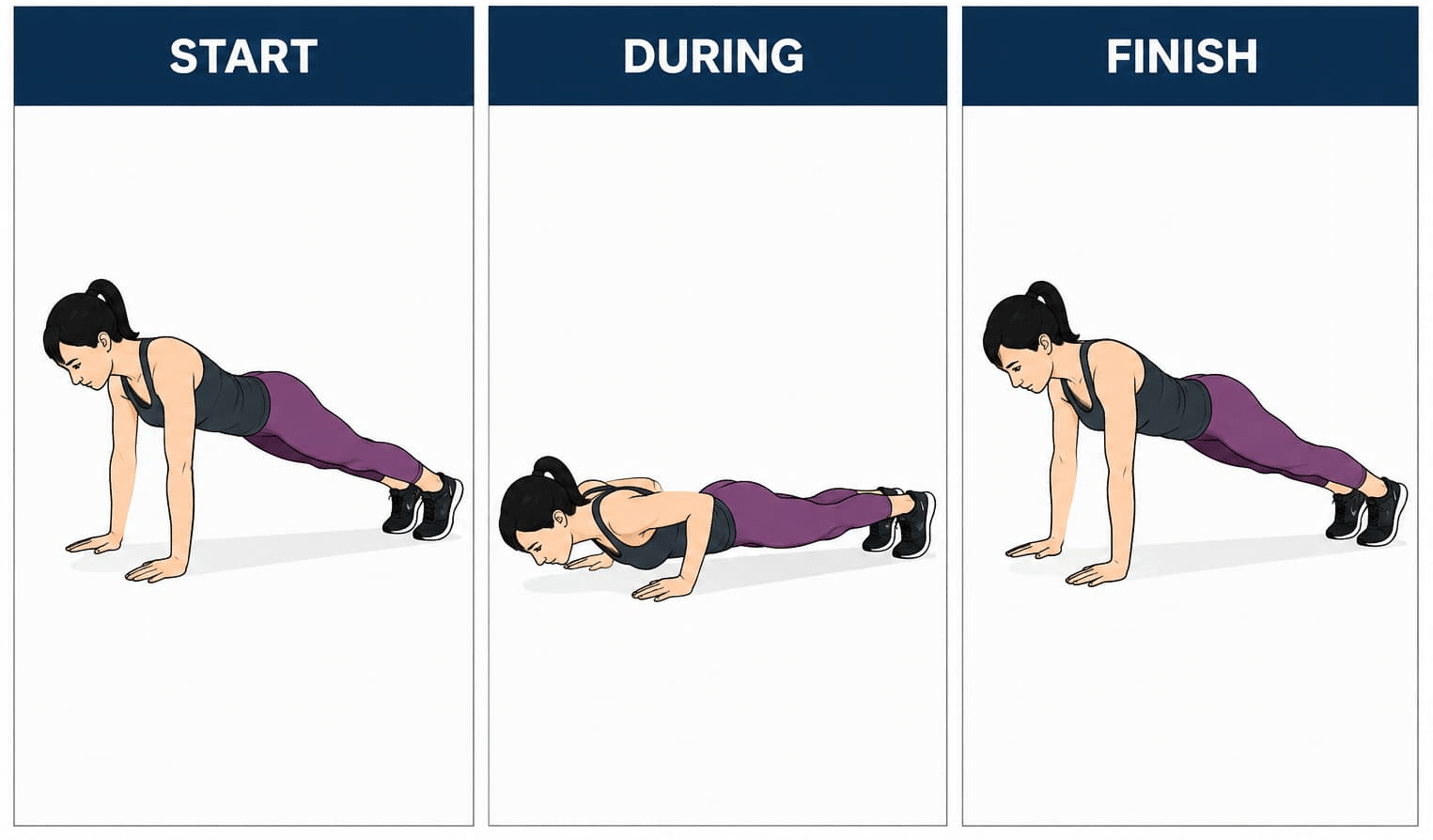
Primary chest focus: Full chest (sternal/mid chest emphasis)
Secondary muscles: Triceps, anterior deltoids, serratus anterior, core
Place hands shoulder-width apart directly under your shoulders. Keep your body in a straight line from heels to head with your core braced and glutes tight. Lower your chest toward the floor with elbows at 45 degrees from your torso. Stop just before touching. Press back up with control.
Beginner mod: Focus on slow, controlled reps. If your form breaks down, switch to a modified push-up and build back up to the full version.
Reps guide: 3 sets of 10–20 reps, 60 seconds rest
11. Uneven Push-Up
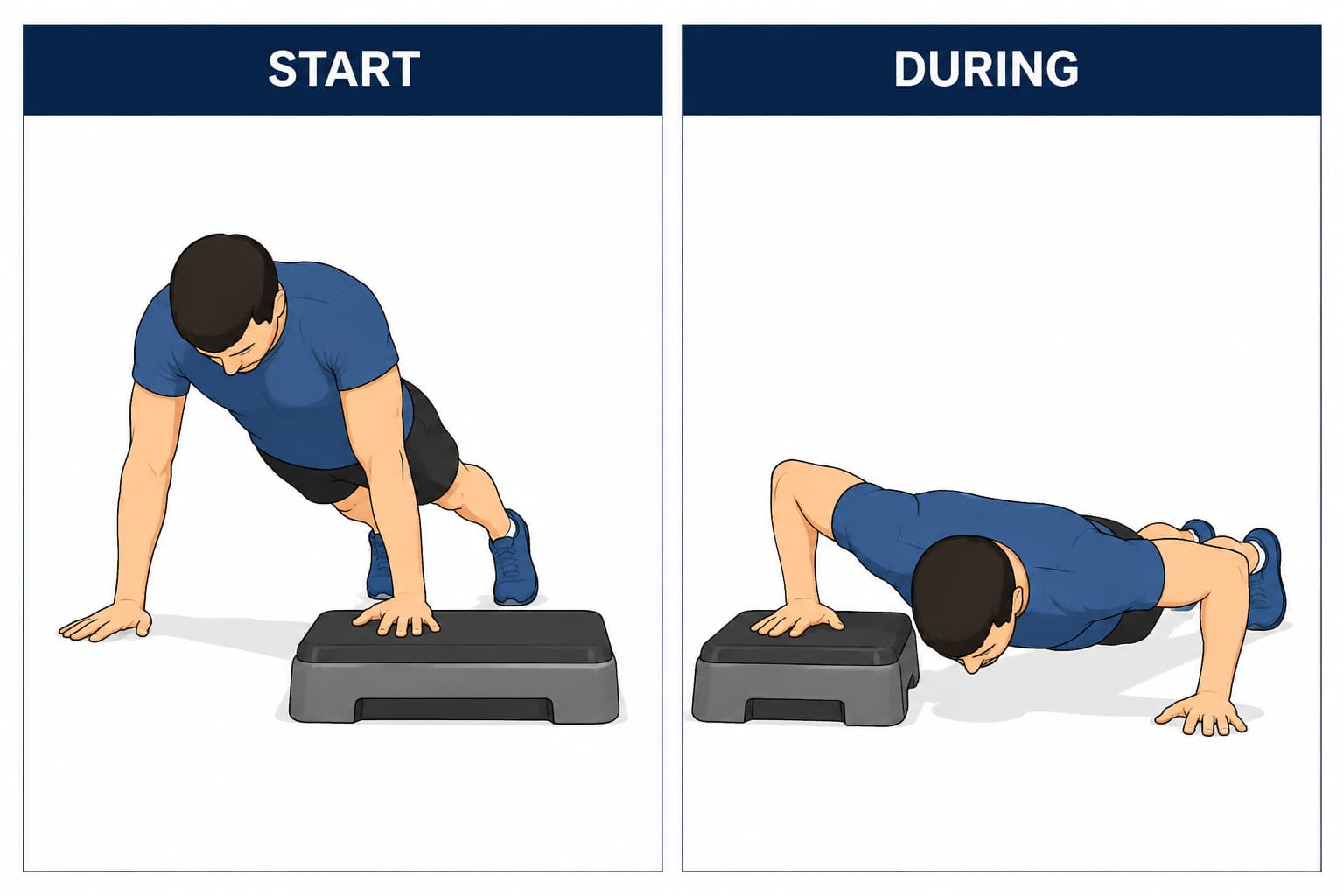
Primary chest focus: Full chest (unilateral emphasis)
Secondary muscles: Triceps, anterior deltoids, serratus anterior, core
Place one hand flat on the floor and the other hand on a raised surface such as a yoga block, book stack, or basketball. Keep your body in a straight line from heels to head. Lower your chest toward the floor with elbows at 45 degrees. Press back up. The lower hand side carries significantly more load. Switch sides after each set.
This is an effective way to train each pec independently without going straight to a one-arm push-up.
Beginner mod: Use a higher surface for the upper hand. The higher the object, the more load is shared between both arms. Lower the surface height as your unilateral strength improves.
Reps guide: 3 sets of 8–10 reps each side, 60 seconds rest.
Do’s and Don’ts of Bodyweight Chest Workout
Small form habits make the difference between a workout that builds your chest and one that only wears out your shoulders.
Do This
- Keep your core braced and use a full range of motion. End every rep with your chest just above the floor. Partial reps reduce muscle activation.
- Warm up before every session. Arm circles and light knee push-ups prime your chest and shoulders and reduce injury risk.
- Rest 48 hours between chest sessions. Your pecs grow during recovery, not during training.
- Apply progressive overload. Add reps, slow the tempo, or use a harder variation every one to two weeks.
Do Not Do This
- Do not let your hips sag or pike. This kills chest activation and moves load to your lower back.
- Do not flare your elbows to 90 degrees. This shifts stress away from the chest and onto the shoulder joints.
- Do not train chest every day. More sessions do not mean faster gains. Training through an unrecovered muscle stalls progress.
Safety Note: If you have a shoulder injury or joint pain, start with incline push-ups on a high surface. This significantly reduces the load on the shoulder joint. Stop any exercise that causes sharp or pinching pain and consult a professional before continuing.
Bodyweight Chest Workout Plans for Every Level
These three plans are structured by experience level. Start where you are. The exercises in each plan cover different chest angles so you train the full muscle, not just one portion.
Beginner: 3 Days per Week (e.G., Monday / Wednesday / Friday)
| Exercise | Sets | Reps | Rest |
|---|---|---|---|
| Incline Push-Up (high surface) | 3 | 12–15 | 45 sec |
| Modified Push-Up | 3 | 10–12 | 60 sec |
| Decline Push-Up (low surface) | 3 | 10–15 | 60 sec |
| Chest Dip (half range) | 3 | 8–10 | 60 sec |
Intermediate: 3 to 4 Days per Week
| Exercise | Sets | Reps | Rest |
|---|---|---|---|
| Decline Push-Up | 3 | 10–12 | 60 sec |
| Standard Push-Up | 3 | 12–15 | 60 sec |
| Narrow Push-Up | 3 | 8–12 | 60 sec |
| Dive-Bomber Push-Up | 3 | 8–10 | 60 sec |
| Chest Dip | 3 | 10–12 | 45 sec |
Advanced: 4 Days per Week
| Exercise | Sets | Reps | Rest |
|---|---|---|---|
| Decline Push-Up | 4 | 12–15 | 45 sec |
| Slow Eccentric Push-Up | 3 | 6–8 | 60 sec |
| Close-Grip Push-Up | 3 | 10–12 | 45 sec |
| Uneven Push-Up | 3 | 8–10 each side | 60 sec |
| Grasshopper Push-Up | 3 | 8–10 each side | 45 sec |
| Chest Dip | 4 | 12–15 | 45 sec |
Post-Workout Recovery Tips
Recovery is where your chest actually grows. Training creates the stimulus. What you do afterward determines the result.
- Cool-down stretches. Your chest and shoulders are warm right after training. Spend 5 minutes on a doorway chest stretch and cross-body shoulder stretch while your muscles are still receptive.
- Eat protein within an hour. Muscle repair needs amino acids quickly. Eggs, Greek yogurt, and cottage cheese work as well as any shake.
- Prioritize sleep. Training creates the signal. Sleep delivers the growth hormone that acts on it. Less than 7 hours slows your gains regardless of training effort.
- Wait 48 hours before training chest again. Soreness is not a reliable recovery indicator. Your pectorals need roughly 48 hours to repair properly. Training through that window interrupts the process.
- Stay hydrated the day after training. Muscle tissue is roughly 75 percent water. Low hydration slows protein synthesis and increases soreness in your next session.
Start Your Bodyweight Chest Workout Today
A stronger chest does not come from chasing the hardest exercise. It comes from understanding which angles target your pecs and using them consistently.
Once you know how to use decline push-ups for the upper chest, incline push-ups for the lower chest, and close-grip variations for the inner chest, your living room floor becomes a complete training setup.
This bodyweight chest workout covers everything you need: the right exercises, the correct form, three structured plans, and a recovery approach that lets your muscles grow. Pick the plan that matches your level, focus on clean reps, and progress from there.
Which exercise are you starting with? Share it in the comments and let us know how you get on.
Disclaimer: The information in this article is for educational purposes only. It does not replace professional medical advice. If you have a current injury, joint condition, or health concern, consult a qualified healthcare provider before starting any new exercise program.
Frequently Asked Questions
Can you build chest muscle with just bodyweight?
Yes. Your pecs respond to resistance and tension, not just barbells. Bodyweight exercises create enough stimulus for muscle growth when you use correct form, varied angles, and progressive overload over time.
Are 3 exercises for chest enough?
Yes, if you cover different angles: upper, lower, and inner chest. Quality, consistency, and progressive overload matter more than exercise count.
Is training chest once a week enough?
Once a week can maintain existing strength but is not enough for growth. Training chest twice a week gives better results and allows adequate recovery time between sessions.
What kills muscle gains the most?
Inconsistency, poor sleep, and not eating enough protein. You cannot out-train a poor recovery routine, regardless of how hard you train.
How long until you see results from a bodyweight chest workout?
Most people notice increased strength within 2 to 3 weeks. Visible chest definition typically appears around weeks 6 to 8 with consistent training three times per week.
Do push-ups build chest or just arms?
Push-ups primarily build the chest and triceps. Chest activation is higher when your elbows stay at 45 degrees, and you use the full range of motion. Flaring elbows to 90 degrees shifts the load to the shoulders and reduces chest involvement.