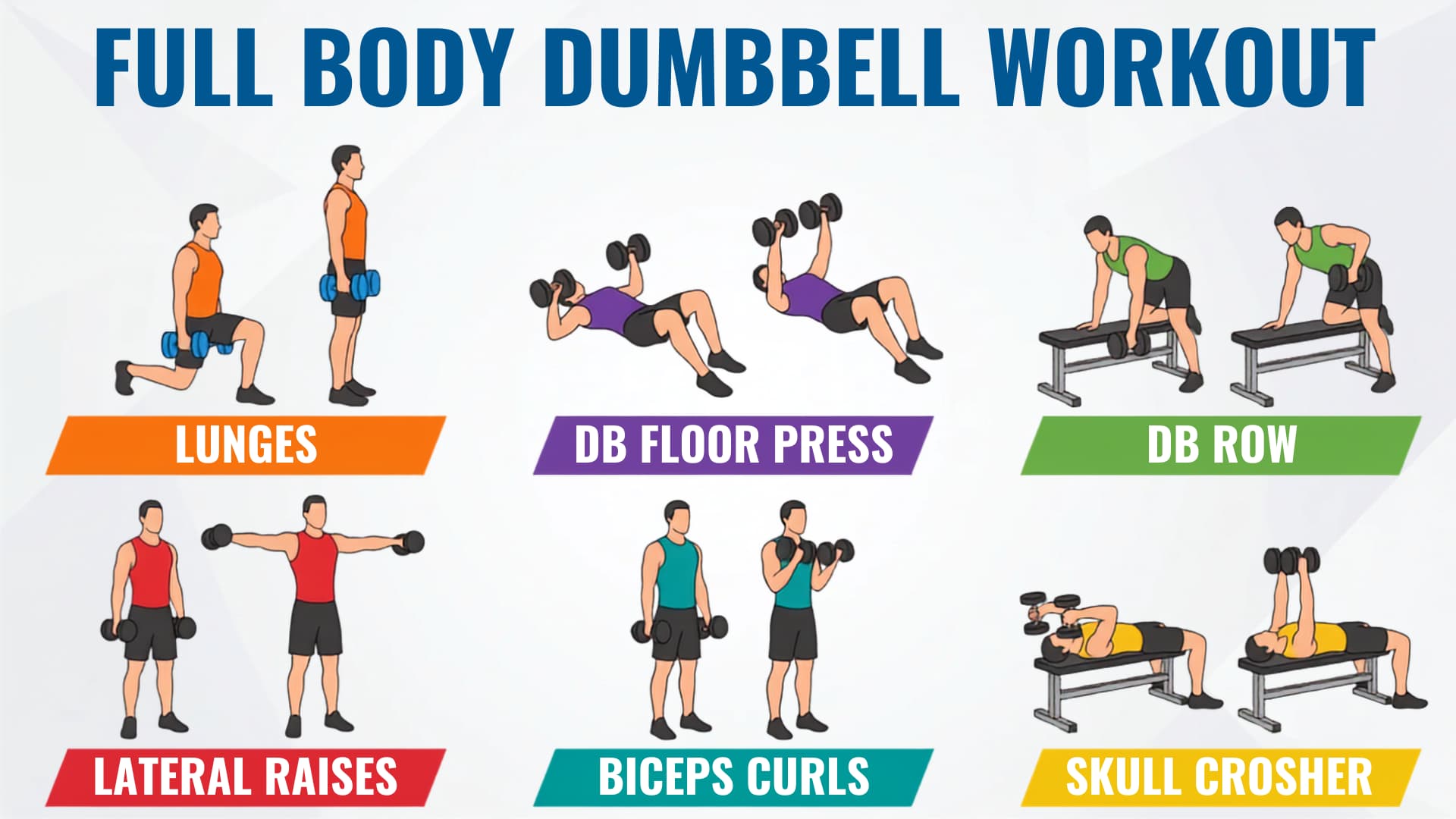
A full-body dumbbell workout helps you build strength without a gym membership or bulky equipment. With just one pair of dumbbells, you can train your entire body in a single session.
This list of exercises targets your legs, chest, back, shoulders, arms, and core using proven movements like squats, hinges, presses, and rows.
Each exercise is chosen to help you build strength, stability, and functional fitness.
What is a Full-Body Dumbbell Workout?
A full-body dumbbell workout trains your legs, chest, back, shoulders, arms, and core in one session using only dumbbells.
It is a simple starting point for beginners because it builds key movement patterns without requiring complex splits or multiple machines.
Dumbbells support unilateral training, meaning each side works independently. This can improve strength balance and allow a more natural range of motion compared with fixed equipment.
| Full-Body Dumbbell Workout | Split Workout |
|---|---|
| Trains all major muscles in one session | Focuses on specific muscle groups |
| Good for beginners and busy schedules | Better for higher training volume |
| Usually performed 2 to 4 times weekly | Requires more weekly sessions |
Dumbbells allow your joints to move through a fuller range of motion because your hands are not locked into a fixed path like with machines.
Equipment Needed for a Full-Body Dumbbell Workout
You do not need a full gym setup for this routine. A few basic items are enough to train safely and build strength over time.
- A pair of dumbbells: Provides resistance for every exercise in this workout.
- Adjustable dumbbells: Make it easier to increase weight as you get stronger, without buying multiple pairs.
- Exercise mat: Gives better comfort and grip during floor exercises like the dead bug and Russian twist.
- Bench (optional): Useful for chest presses and supported rows, but not required.
Pro Tip: Start with a weight you can control through the full movement. Good form matters more than lifting heavier, especially in the first few weeks.
No dumbbells yet? Use water bottles, resistance bands, or bodyweight variations to practice each movement pattern first. This builds the coordination you need before adding load.
How to Set Up Your Full Body Dumbbell Workout
Follow this structure to get the best results from the exercises below. The table shows how to adjust sets and frequency based on your experience level.
- Workout frequency: 2 to 4 days per week
- Sets per exercise: 3
- Reps per set: 8 to 12
- Rest between sets: 60 to 90 seconds
- Session length: 35 to 50 minutes
| Level | Weekly Sessions | Sets per Exercise | Rest Between Sessions |
|---|---|---|---|
| Beginner | 2 to 3 days | 2 sets, lighter weights | At least 1 full rest day |
| Intermediate | 3 to 4 days | 3 to 4 sets, challenging weights | 1 rest day between sessions |
| Advanced | 4 to 5 days | 4 sets, higher load or shorter rest | Split muscle groups for recovery |
The American College of Sports Medicine recommends training every major muscle group at least twice a week for general strength and health.
Rest days matter just as much as training days. Your muscles repair and grow during recovery, not during the workout itself. Skipping rest days raises your risk of overtraining and injury.
How to Warm Up Before Your Session
A short warm-up prepares your joints and muscles for lifting. It also lowers your injury risk and helps you move better from the very first rep.
Spend 5 to 10 minutes on the following before picking up any weight:
- Light cardio for 2 to 3 minutes, such as walking in place or jumping jacks
- Hip circles, 10 reps each side
- Arm circles, 10 reps forward and 10 reps backward
- Bodyweight squats, 10 reps
- Shoulder rolls, 10 reps
Do not stretch cold muscles before lifting. Save static stretching for after your session, when your muscles are already warm.
Lower Body Exercises for a Full Body Dumbbell Workout
Your lower body muscles carry you through daily tasks, from climbing stairs to standing up from a chair. These four exercises target your quads, glutes, and hamstrings.
1. Dumbbell Goblet Squat
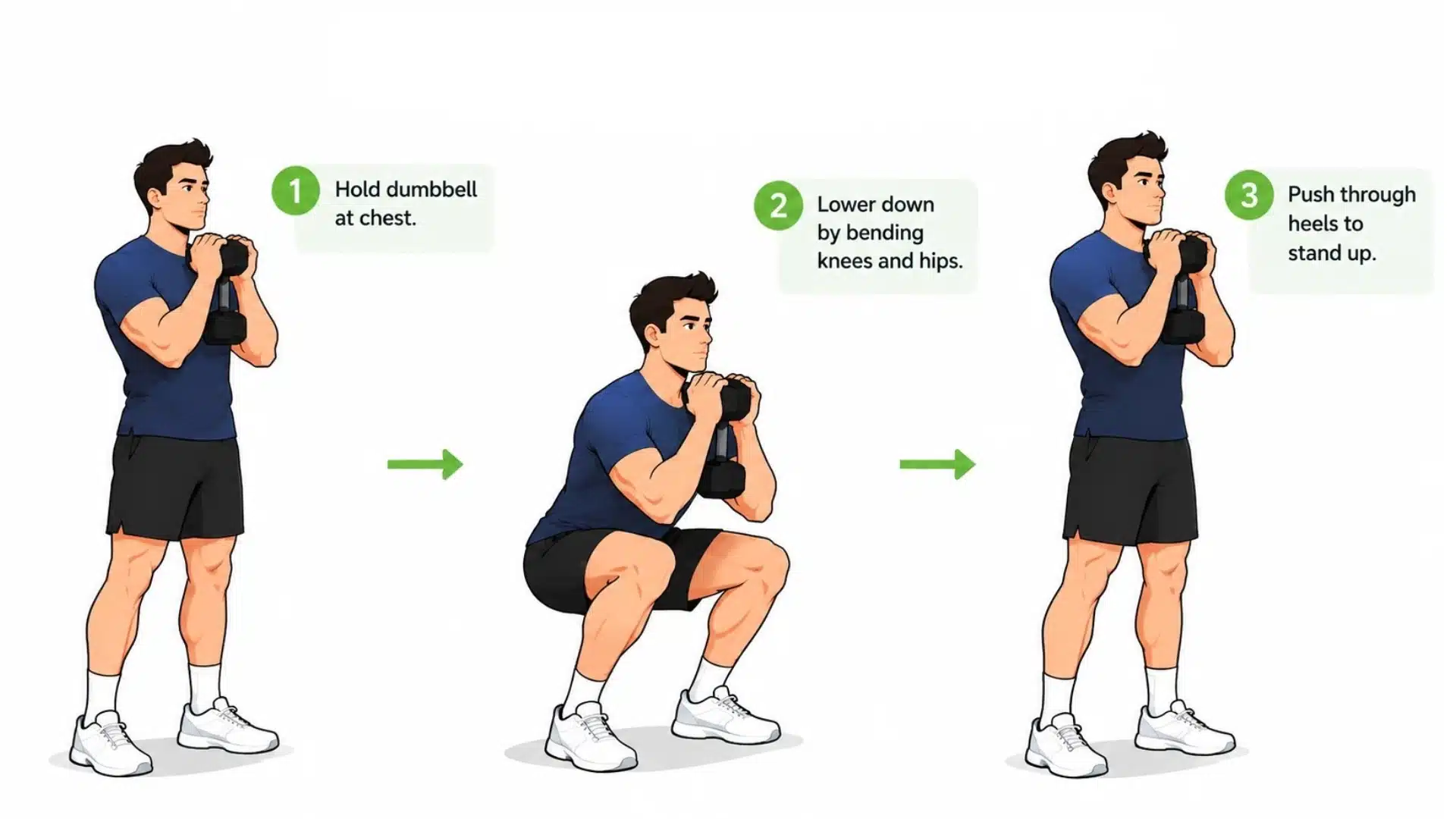
Muscles worked: Quads, glutes, core
Hold a dumbbell close to your chest with both hands. Bend your knees and lower your hips until your thighs are close to parallel with the floor. Then stand back up.
Keep your chest tall and your knees tracking over your toes. A common mistake is letting your heels lift off the ground. This shifts weight forward onto your toes and reduces stability.
2. Dumbbell Walking Lunges
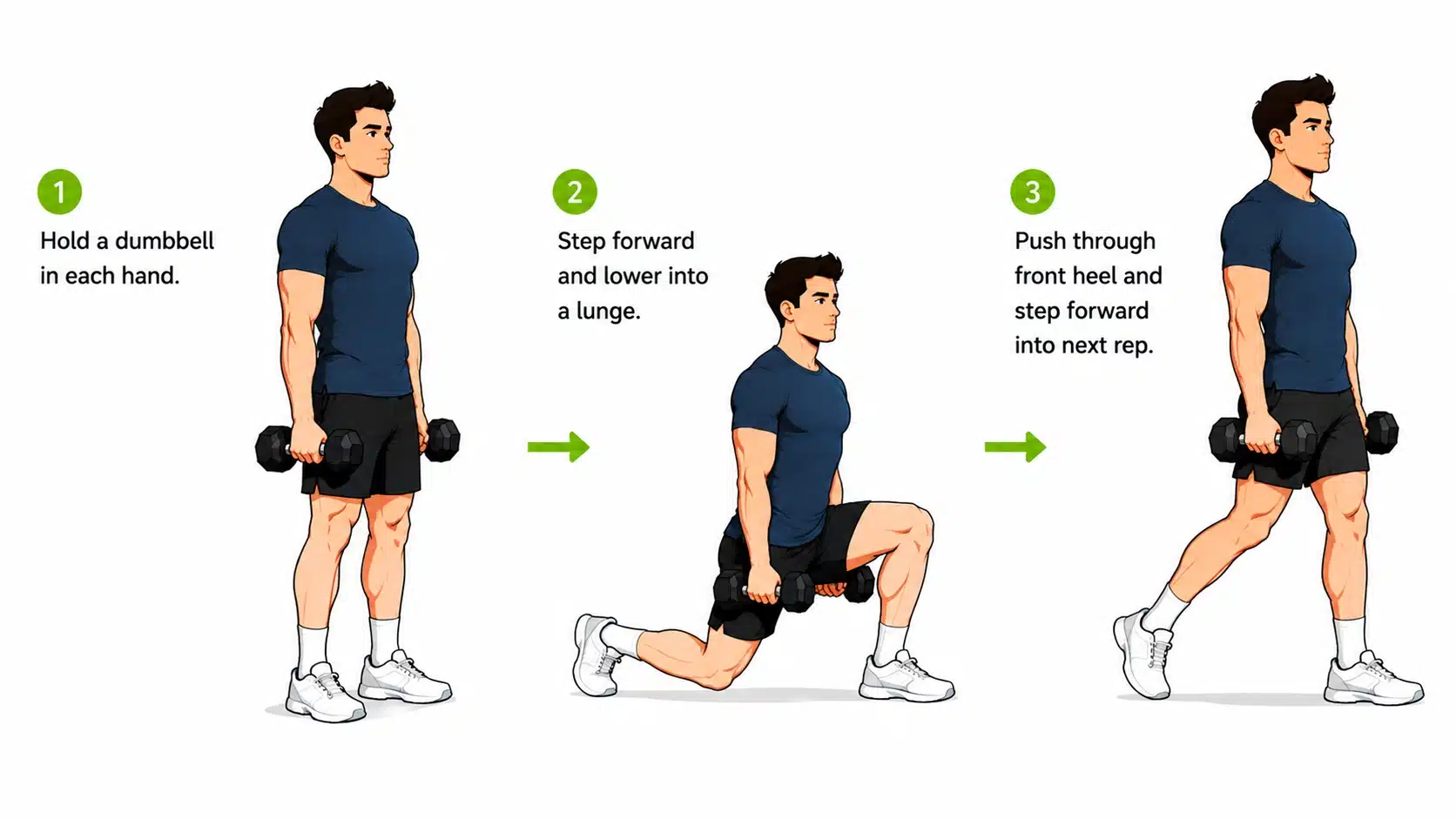
Muscles worked: Quads, glutes, hamstrings
Hold a dumbbell in each hand and step forward into a lunge. Lower your back knee toward the floor. Push through your front heel to bring your back foot forward into the next step.
Balance modification: If your balance feels off, try reverse lunges instead. Stepping backward reduces the balance demand while still training the same muscles.
3. Dumbbell Romanian Deadlift
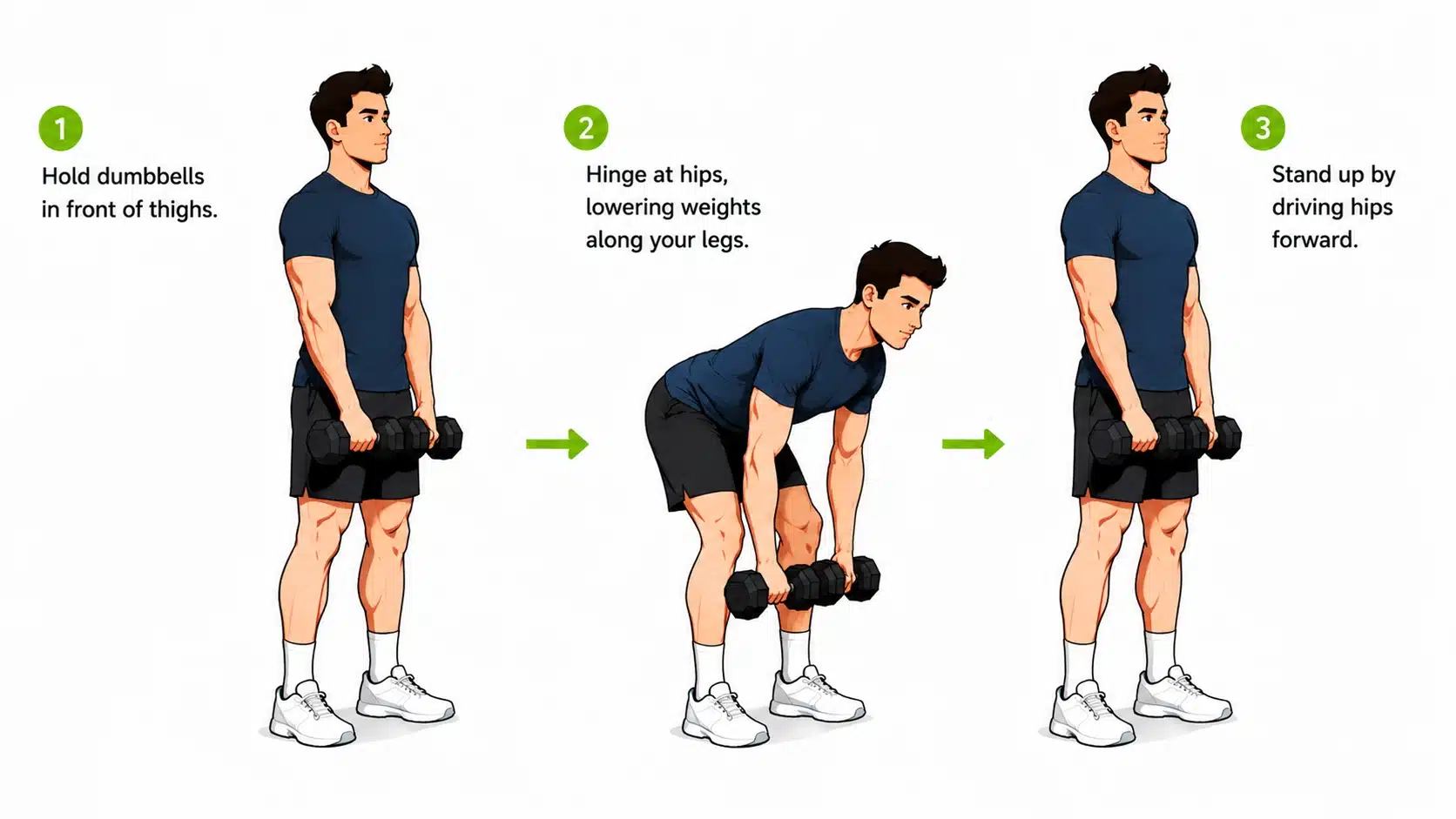
Muscles worked: Hamstrings, glutes, lower back
Hold a dumbbell in each hand in front of your thighs. Push your hips back while keeping a slight bend in your knees. Lower the dumbbells along your legs until you feel a stretch in your hamstrings.
Keep your spine neutral throughout the movement. Focus on the hip hinge rather than bending at your lower back. This keeps stress off your spine and on the right muscles.
4. Dumbbell Bulgarian Split Squat
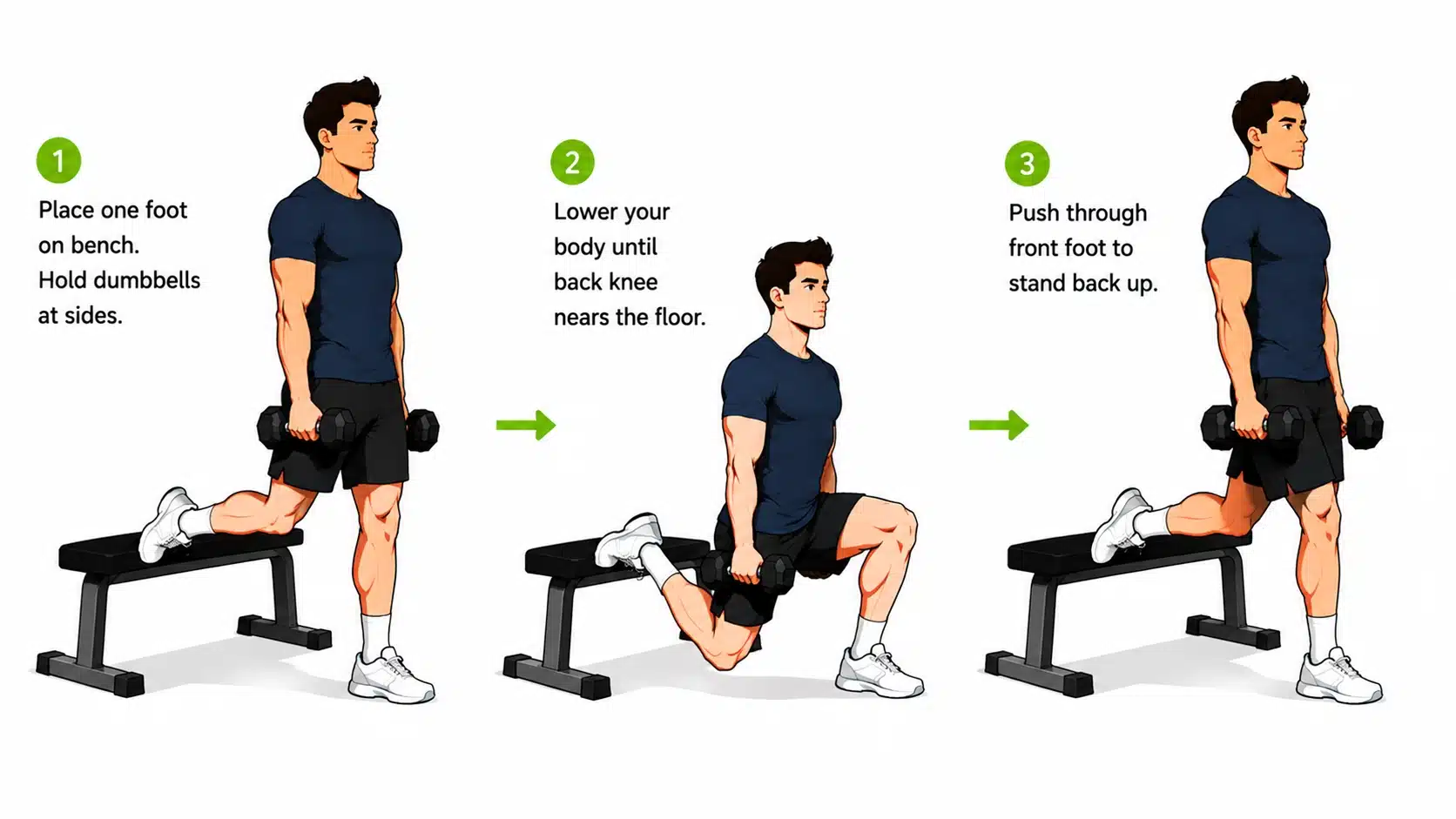
Muscles worked: Quads, glutes, core
Rest the top of one foot on a bench behind you. Hold a dumbbell in each hand. Lower your back knee toward the floor. Push through your front foot to stand back up.
This exercise trains each leg separately, which helps correct imbalances a standard squat can hide. It is more demanding than a regular squat, so start lighter than you expect.
Upper Body Push Exercises for a Full Body Dumbbell Workout
Push exercises build the muscles you use to press, lift, and move objects away from your body. These three moves directly train your chest, shoulders, and triceps and pair well with this upper-body dumbbell workout for balanced training.
5. Dumbbell Chest Press
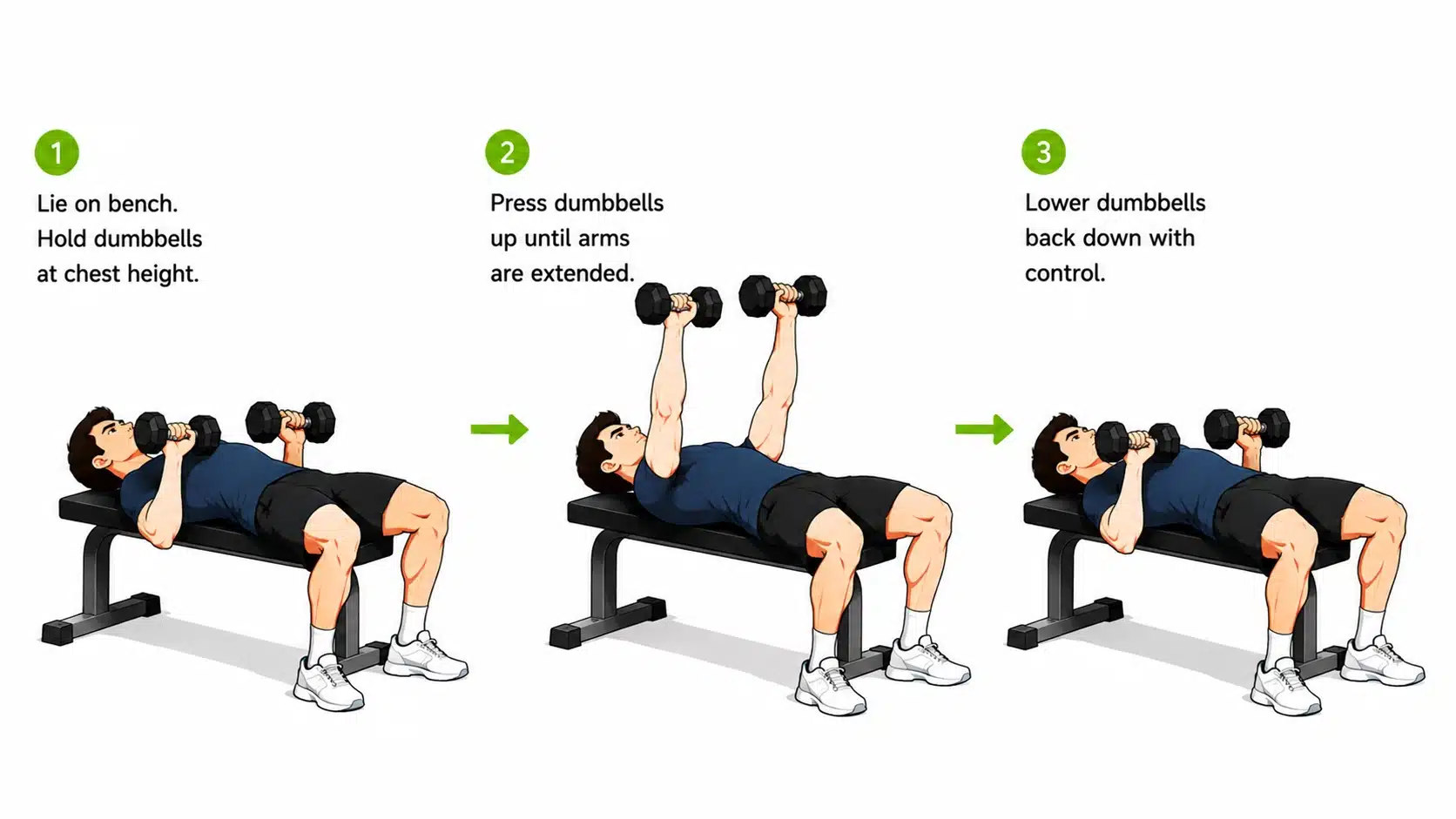
Muscles worked: Chest, shoulders, triceps
Lie on a bench with a dumbbell in each hand at chest height. Press the dumbbells up until your arms are fully extended. Lower them back down with control.
No bench? A floor press works just as well at home. Lie on the floor and press from there. The range of motion is slightly shorter, but the chest still works hard.
6. Dumbbell Shoulder Press
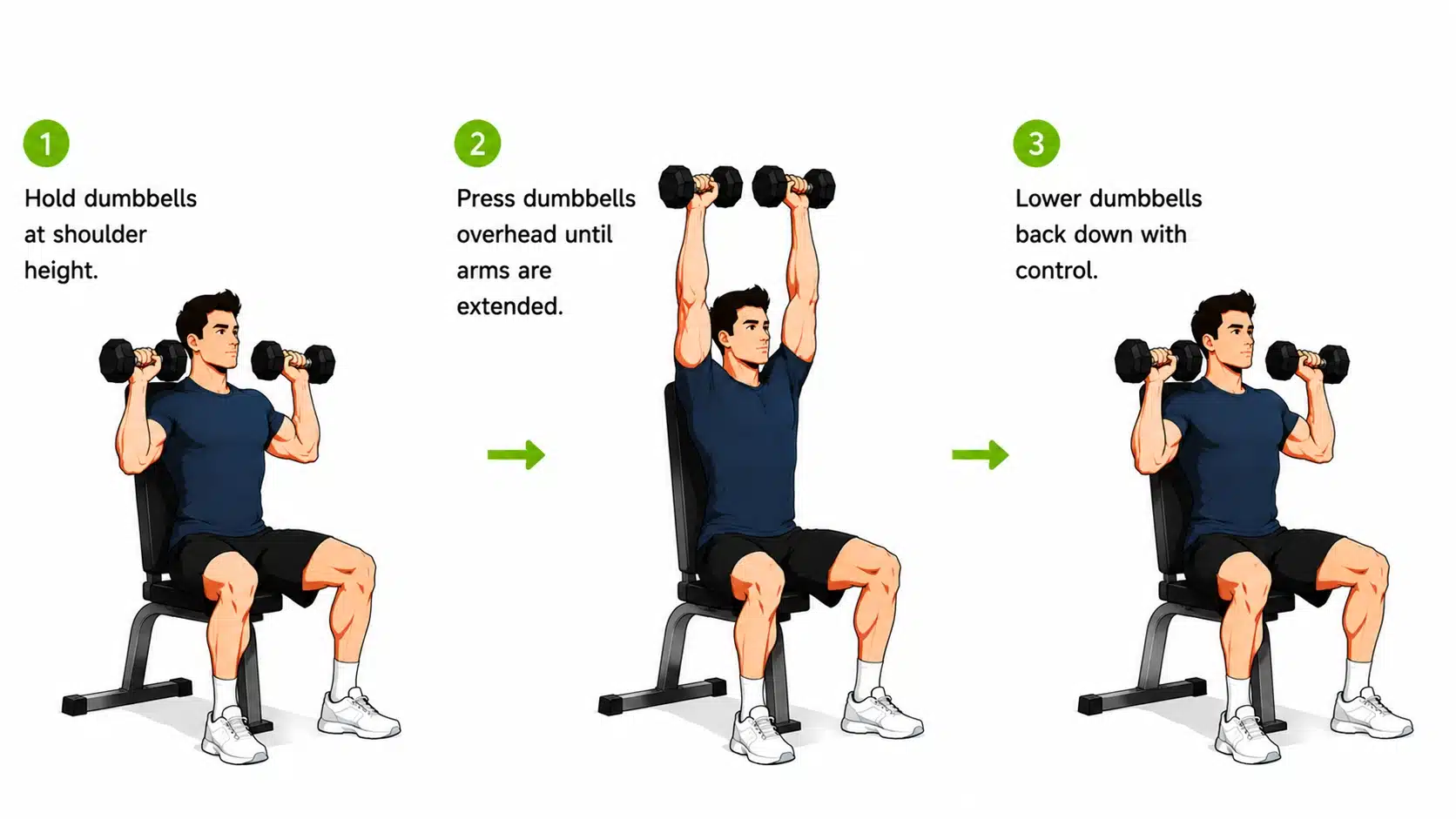
Muscles worked: Shoulders, triceps, core
Hold a dumbbell in each hand at shoulder height. Press them overhead until your arms are fully extended. Lower them back down with control.
Keep your core braced throughout the movement. Avoid arching your lower back excessively. That shifts stress away from your shoulders and onto your spine.
7. Dumbbell Lateral Raise
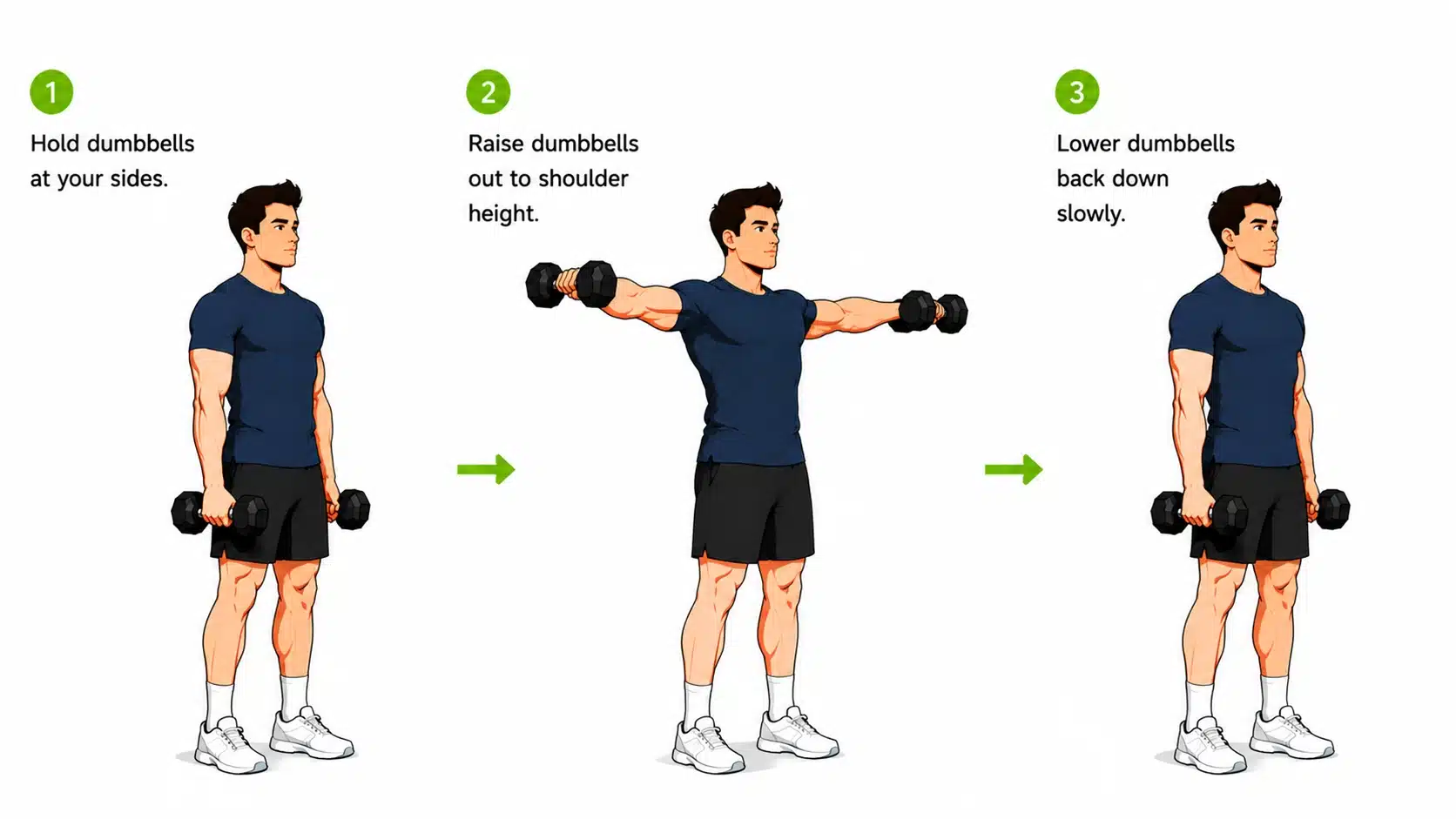
Muscles worked: Side deltoids (outer shoulder)
Hold a dumbbell in each hand at your sides. Raise them out to shoulder height, keeping a slight bend in your elbows. Lower them back down slowly.
Controlled movement matters more than heavy weight here. Swinging the dumbbells up removes the work from your shoulders. Use a weight that lets you lift with control on every rep.
Upper Body Pull Exercises for a Full Body Dumbbell Workout
Pull exercises balance out all the pushing work by strengthening your back and rear shoulders. They also improve your posture for everyday movement.
8. Bent-Over Dumbbell Row
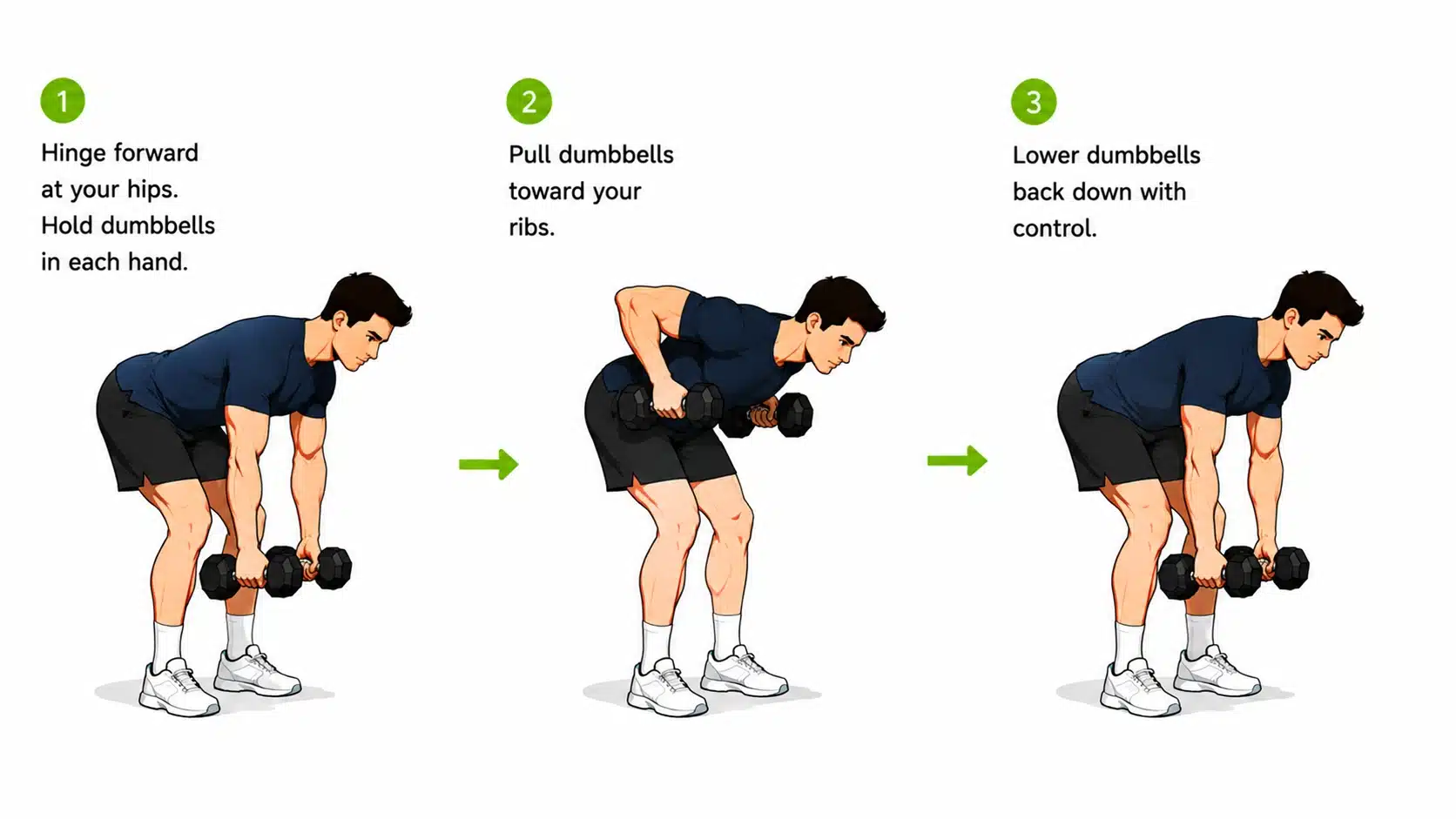
Muscles worked: Lats, upper back, rear shoulders
Hold a dumbbell in each hand. Hinge forward at your hips until your torso is close to parallel with the floor. Pull the dumbbells toward your ribs. Lower them back down with control.
Keep your back flat throughout the row. Rounding your spine puts unnecessary strain on your lower back. Think about pulling your elbows behind you, not just lifting the weights up.
9. Single Arm Dumbbell Row
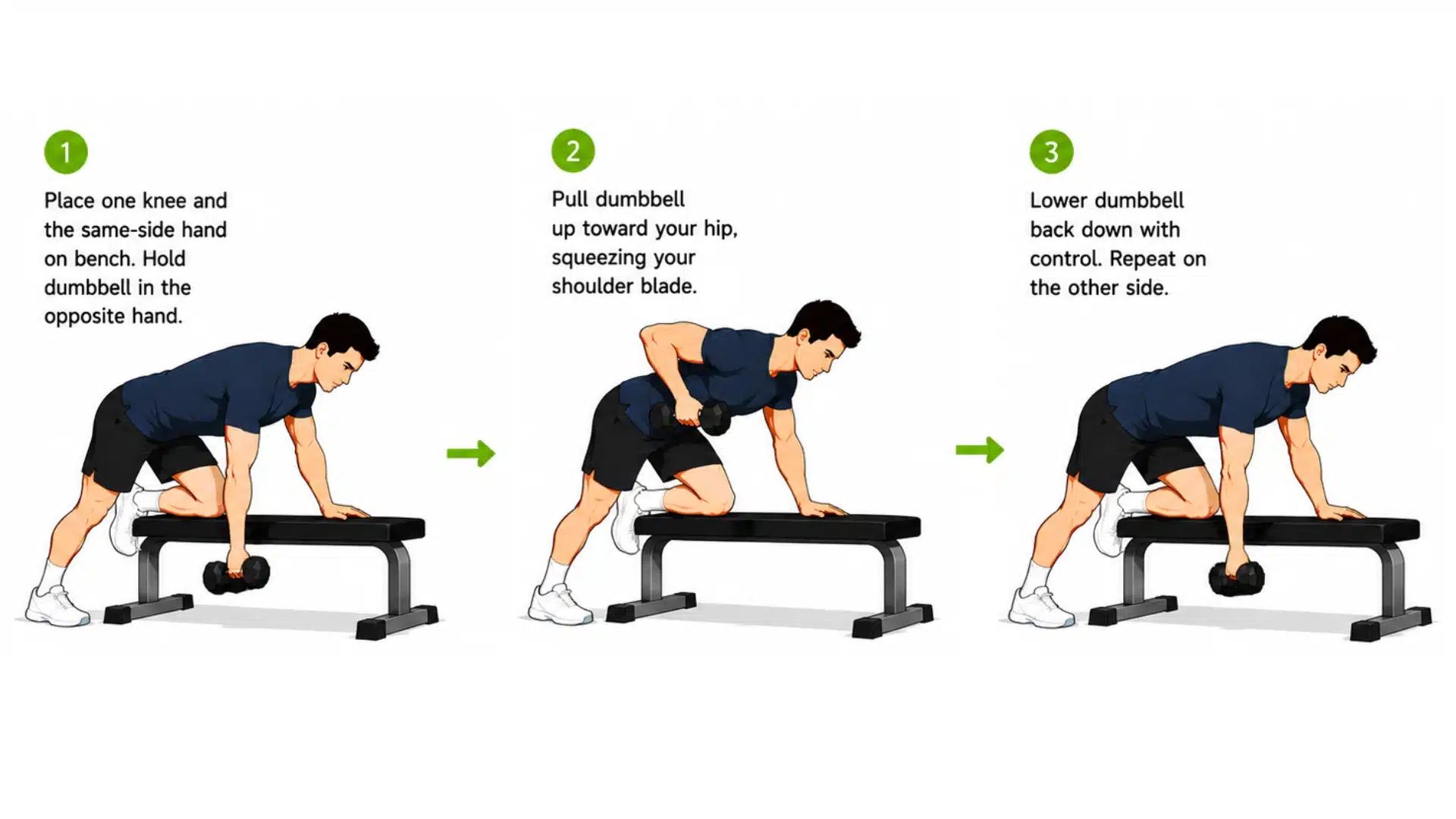
Muscles worked: Back, biceps, core
Place one knee and hand on a bench for support. Hold a dumbbell in your other hand. Pull the dumbbell toward your hip. Lower it back down with control.
Training one side at a time helps correct imbalances between your left and right back muscles. This makes it one of the best single-side exercises in this entire routine.
10. Dumbbell Reverse Fly
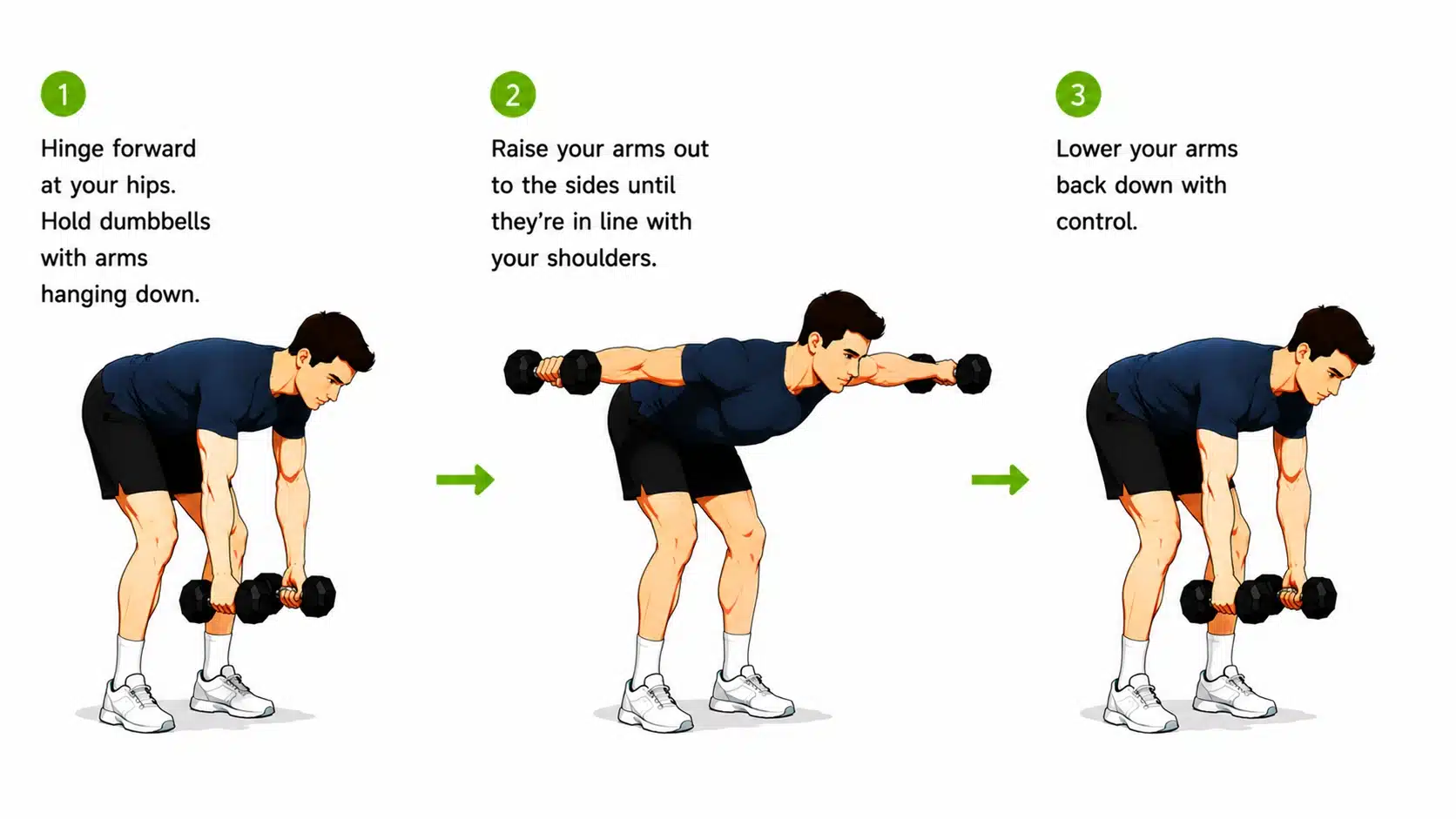
Muscles worked: Rear deltoids, upper back
Hinge forward at your hips with a dumbbell in each hand. Arms hang down. Raise your arms out to the sides until they are in line with your shoulders. Lower them back down.
Use lighter weights here than you would for a row. Your rear delts are a smaller muscle group and fatigue more quickly than your lats or upper back.
Arm and Core Exercises for a Full Body Dumbbell Workout
These five exercises round out your routine by isolating your arms and challenging your core. They also build grip strength that carries over into your daily life.
11. Dumbbell Bicep Curl
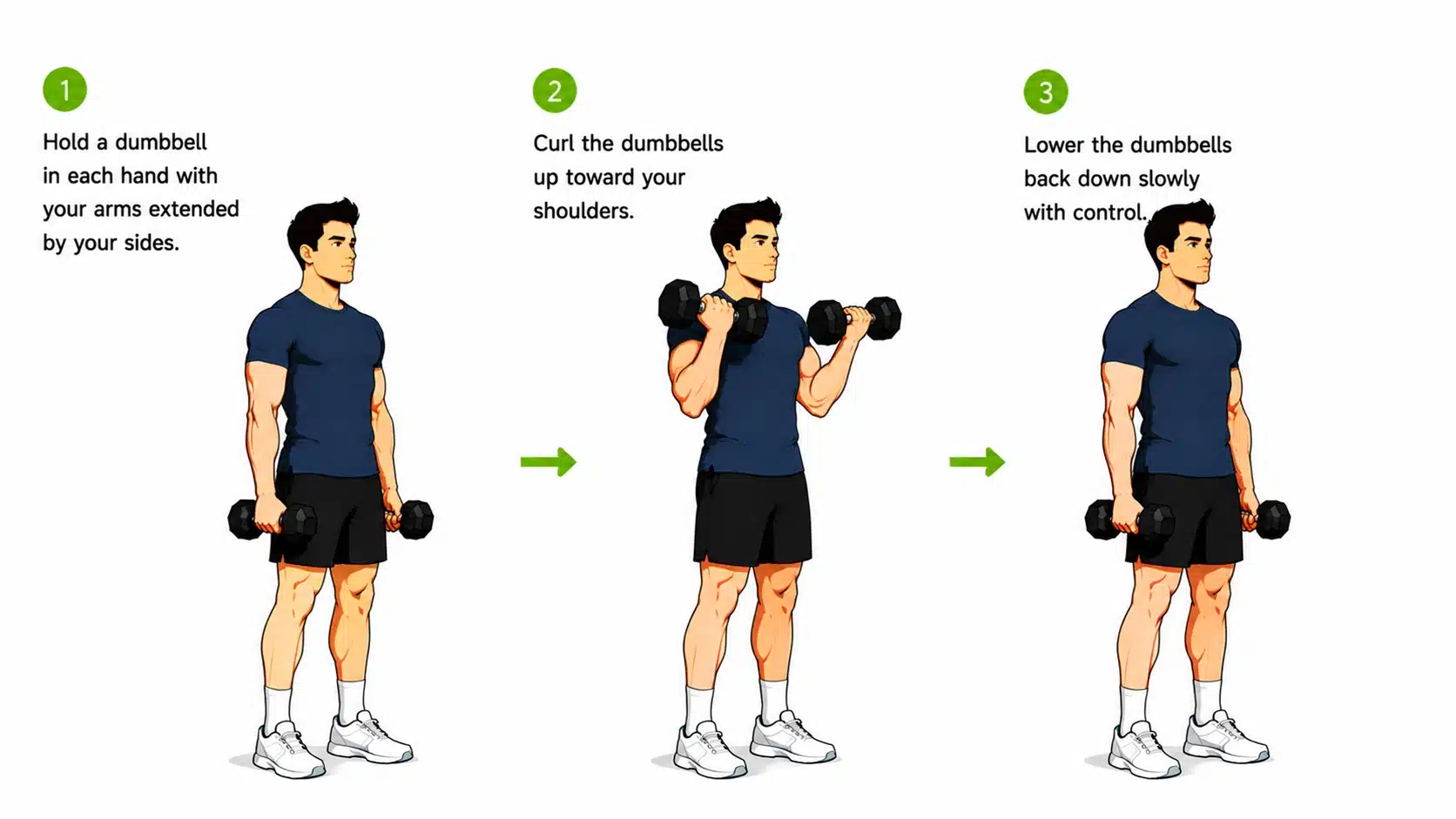
Muscles worked: Biceps
Hold a dumbbell in each hand with your arms extended at your sides. Curl the dumbbells up toward your shoulders. Lower them back down slowly.
Use a full range of motion on every rep. Avoid swinging your body to help lift the weight. Swinging takes tension off your biceps and makes the exercise less effective.
12. Dumbbell Overhead Triceps Extension
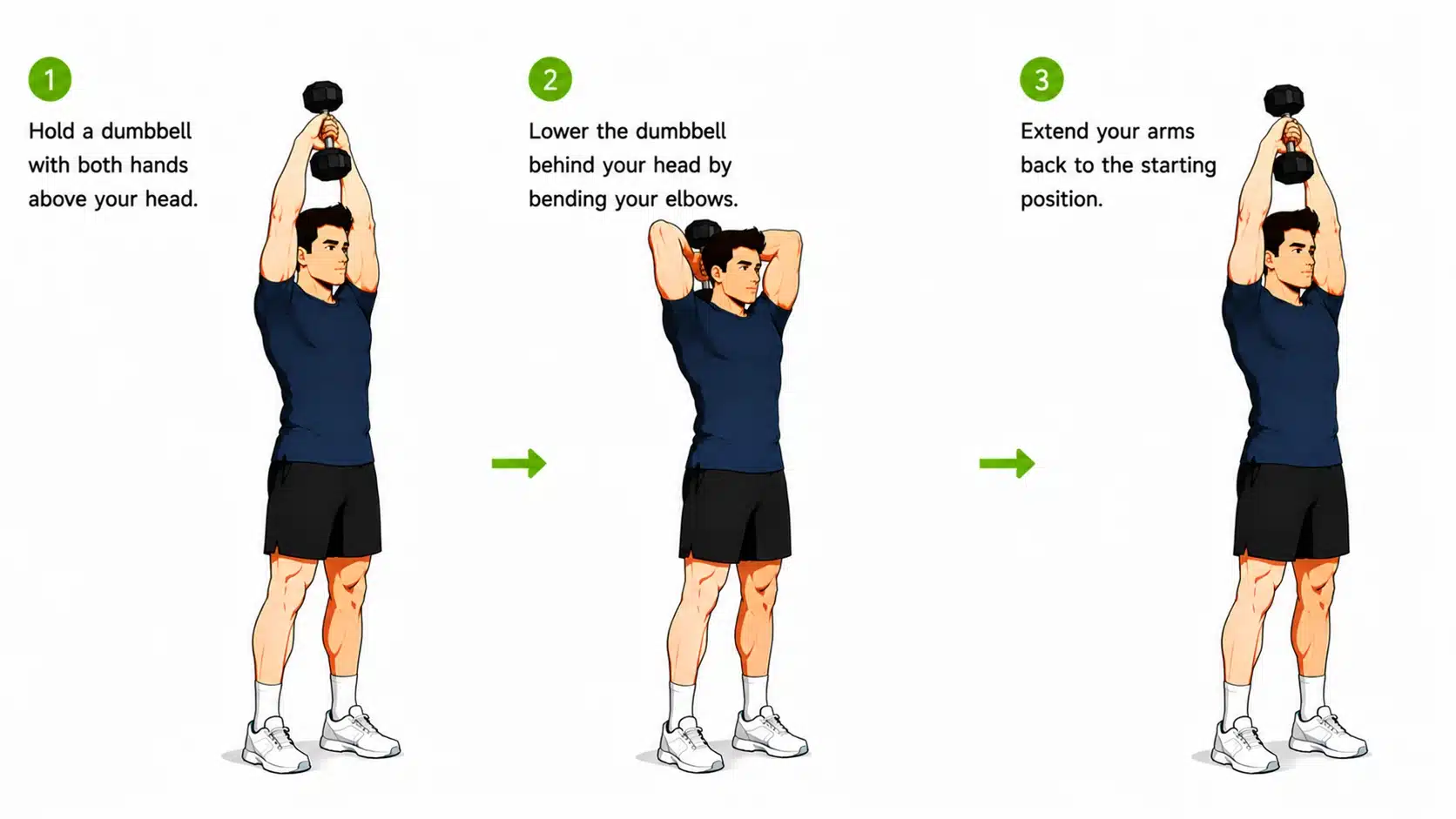
Muscles worked: Triceps
Hold a dumbbell with both hands above your head. Lower it behind your head by bending your elbows. Extend your arms back to the starting position.
This exercise targets the long head of your triceps more directly than pressing movements do. Keep your elbows pointing forward throughout the movement, not flaring out to the sides.
13. Dumbbell Russian Twist
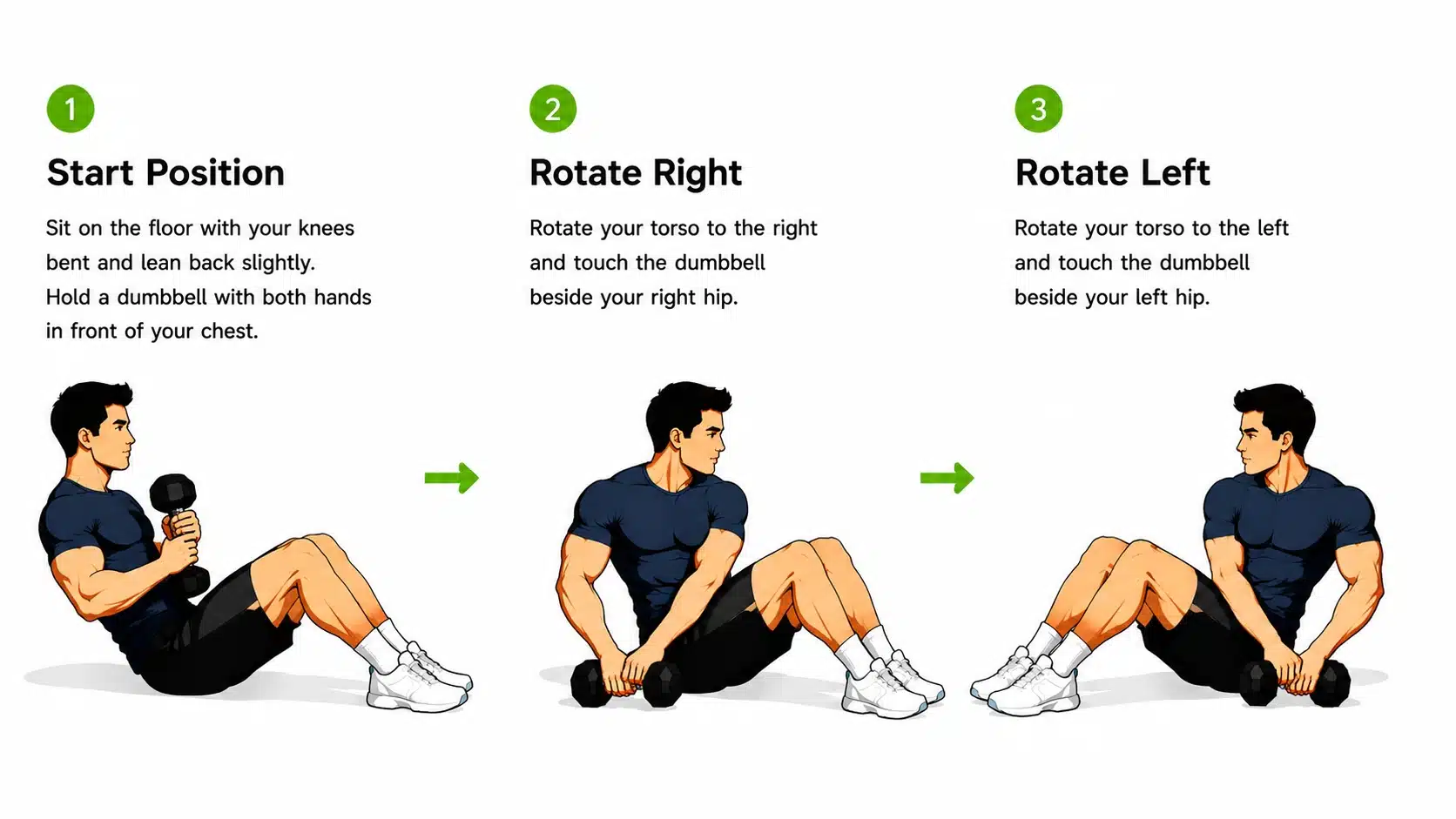
Muscles worked: Obliques, core
Sit on the floor with your knees bent. Lean back slightly and hold a dumbbell with both hands. Rotate your torso to touch the dumbbell on the floor beside each hip.
Keep the rotation controlled, not fast. Speeding through this movement reduces how much work your obliques actually do. If it feels too hard, put the dumbbell down and rotate with your hands together first.
14. Dumbbell Dead Bug
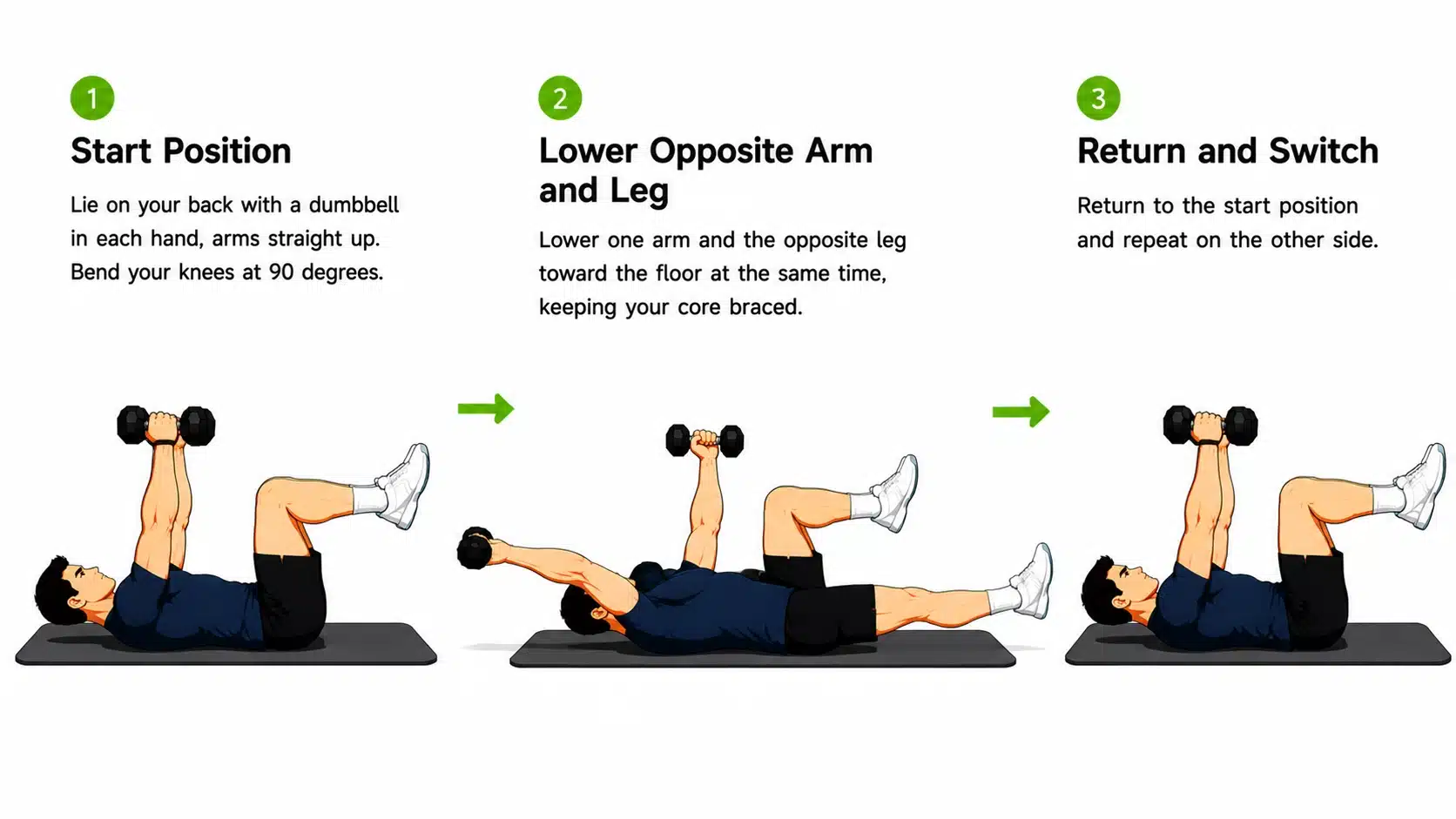
Muscles worked: Deep core muscles
Lie on your back with your knees bent at 90 degrees. Hold a dumbbell straight up in each hand. Lower one arm and the opposite leg toward the floor at the same time. Return to the start and switch sides.
This exercise builds stability and coordination between your upper and lower body. That carries over into squats, presses, and almost every other lift on this list.
15. Dumbbell Farmer’s Carry
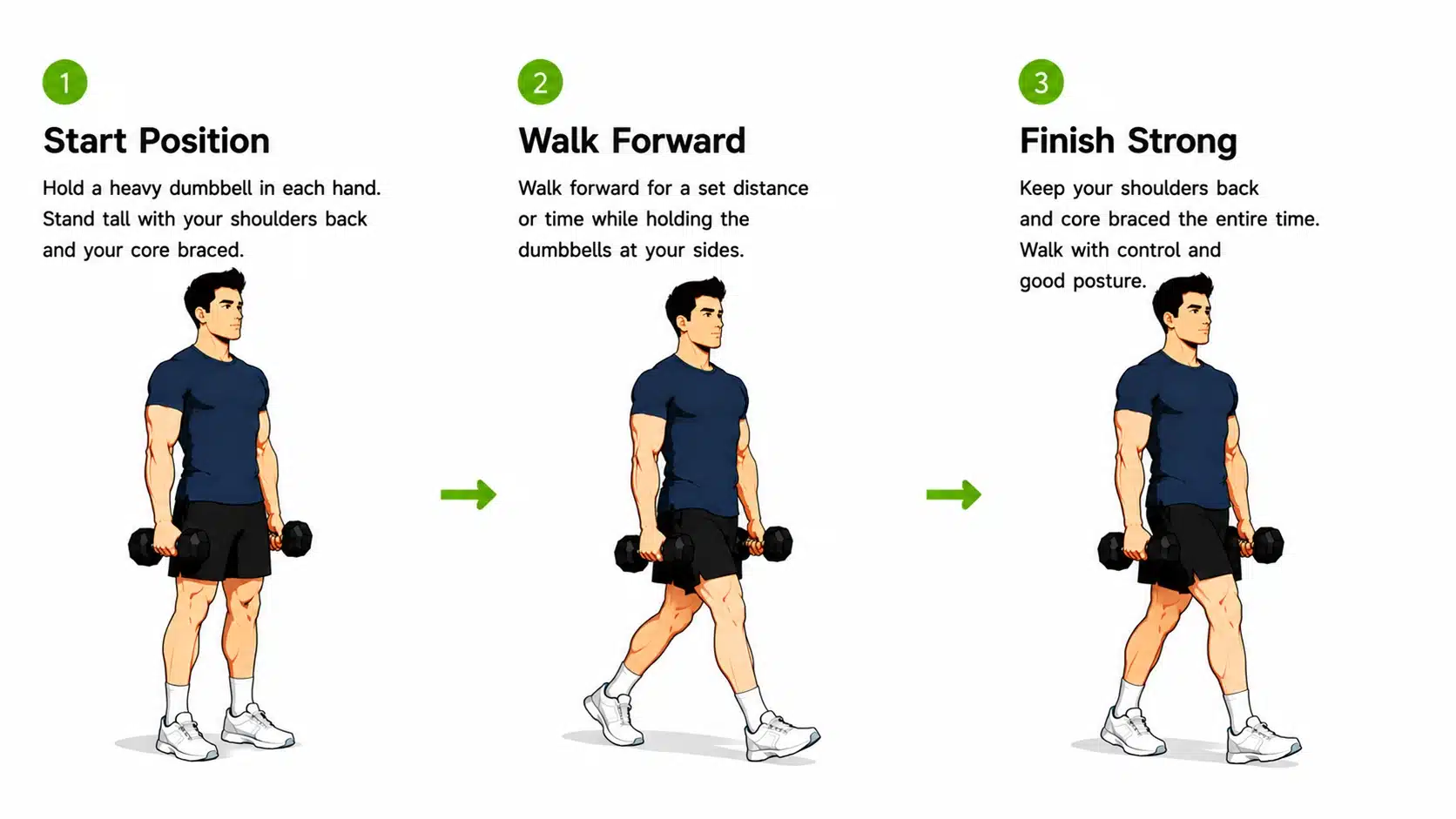
Muscles worked: Grip, core, shoulders, legs
Hold a heavy dumbbell in each hand and walk forward for a set distance or time. Keep your shoulders pulled back, and your core braced.
This movement builds grip strength and core stability at the same time. That same stability shows up in everyday tasks like carrying groceries, moving boxes, or walking with bags.
Benefits of a Full Body Dumbbell Workout
Training consistently with dumbbells gives you real, lasting results. Here is what you gain from sticking with this type of routine.
- Builds muscle and strength: Gradually increasing weight, reps, or sets over time pushes your muscles to adapt and grow. This is called progressive overload, and it is the foundation of all strength training.
- Supports bone health: Resistance training puts healthy stress on your bones. This stimulates bone density, which becomes more important with age.
- Corrects muscle imbalances: Dumbbell exercises make each side of your body work on its own. This fixes strength gaps between your left and right sides over time.
- Improves posture: Row and pull exercises strengthen the muscles along your upper back. Stronger upper back muscles help you stand and sit more upright.
- Supports fat loss: Compound movements like squats and rows engage multiple muscles at once. This burns more calories per session and improves your overall conditioning.
- Requires minimal equipment: One pair of dumbbells and a small open space are enough to get started.
3-Day Full Body Dumbbell Workout Plan
This plan is built for beginners and intermediate lifters who want a clear, repeatable routine. Train 3 days per week, with at least one rest day between each session.
Each day has a different focus. Day 1 covers compound strength. Day 2 targets single-leg and single-arm movements. Day 3 adds volume to finish the week strong.
Sample weekly schedule: Monday (Day 1), Wednesday (Day 2), Friday (Day 3). Rest on Tuesday, Thursday, and the weekend, or use those days for light walking.
Day 1: Compound Strength
| Exercise | Sets | Reps |
|---|---|---|
| Goblet Squat | 3 | 10 to 12 |
| Romanian Deadlift | 3 | 10 |
| Chest Press | 3 | 8 to 12 |
| Bent-Over Dumbbell Row | 3 | 10 |
| Shoulder Press | 3 | 8 to 10 |
Day 2: Unilateral and Stability
| Exercise | Sets | Reps |
|---|---|---|
| Bulgarian Split Squat | 3 | 8 to 10 each leg |
| Single-Arm Dumbbell Row | 3 | 10 each side |
| Lateral Raise | 3 | 12 |
| Dead Bug | 3 | 8 each side |
| Russian Twist | 3 | 12 each side |
Day 3: Volume and Conditioning
| Exercise | Sets | Reps |
|---|---|---|
| Walking Lunges | 3 | 10 each leg |
| Chest Press | 3 | 10 to 12 |
| Reverse Fly | 3 | 12 |
| Bicep Curl | 3 | 10 to 12 |
| Overhead Triceps Extension | 3 | 10 to 12 |
| Farmer’s Carry | 3 | 30 to 45 seconds |
Mistakes During Full Body Dumbbell Workouts
These four mistakes limit results and raise injury risk. Fixing them early saves you time and frustration later.
- Using the wrong weight: A weight that is too heavy leads to poor form. A weight that is too light does not challenge your muscles enough. Choose a weight that feels hard on the final 2 to 3 reps but lets you keep good form throughout.
- Ignoring form: Poor technique raises injury risk and reduces how well each exercise works. Learn the correct movement pattern before adding load. This matters most for deadlifts, rows, and presses.
- Skipping progressive overload: Doing the same weight and reps every week will stop producing results after a few weeks. Add reps or weight regularly to keep your muscles growing.
- Skipping warm-up and rest days: Training without warming up raises your injury risk. Skipping rest days slows recovery. Both hurt your long-term progress, not just individual sessions.
Disclaimer: This article is for general fitness information only. It is not a substitute for personalized medical or professional training advice. Talk to a doctor before starting a new exercise program if you have an existing injury or health condition.
Start Building Strength Today
A full-body dumbbell workout gives you everything you need to build real strength without a gym. These 15 exercises cover your legs, chest, back, shoulders, arms, and core using just one piece of equipment.
The 3-day plan keeps your training consistent, and the progression tips make sure you keep getting stronger over time.
Start with a weight you can control. Focus on your form first. Add more load when each set feels manageable on the final two reps.
Stay consistent with your workouts, track your progress, and gradually increase the challenge to keep building strength over time.
Frequently Asked Questions
Can you build muscle with only dumbbells?
Yes. Dumbbells build muscle when you apply progressive overload and eat enough protein. You do not need a barbell or machine to get real strength results.
How long should a full body dumbbell workout take?
Most sessions take 35 to 50 minutes depending on your exercise count and rest time. Rest 60 to 90 seconds between sets.
How heavy should dumbbells be for beginners?
Choose a weight that lets you finish all reps with good form, but still feels hard on the last 2 reps. Start light and add weight gradually.
Can beginners do a full body dumbbell workout?
Yes. Start with lighter weights and 2 sets per exercise. Focus on correct movement patterns before adding load to lower your injury risk.
How many days a week should I do dumbbell workouts?
Train 2 to 4 days per week with at least one rest day between sessions. This lets your muscles recover and grow stronger.