I'm Darryl Edwards (aka The Fitness Explorer), founder of Primal Play, a paleo nutritionist and author of the books Paleo from A to Z and Paleo Fitness based in London, England. This blog documents my experiences with a Paleo lifestyle that has made me fitter and healthier in my forties than ever before. I am a contributor to Paleo Magazine and presenter at various symposiums globally such as Paleo:f(x), PrimalCon, AHS (Ancestral Health Symposium), Thr1ve.Me, and other events globally. I am also founder of the first Paleo conference in Europe, HEALTH Unplugged which took place for the 3rd year running in Autumn 2016.
Paleo from A to Z: A reference guide to better health through nutrition and lifestyle. How to eat, live and thrive as nature intended!
by Darryl Edwards
"If you are looking for a simple way to better understand Paleo concepts, Darryl's Paleo from A to Z guide is the go-to resource." -Mark Sisson, best-selling author of The Primal Blueprint and publisher of Mark's Daily Apple
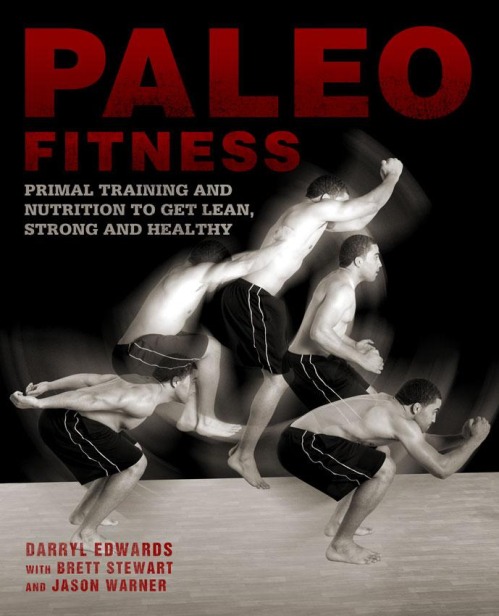
Paleo Fitness - A Primal Training and Nutrition Program to Get Lean, Strong and Healthy
by Darryl Edwards, Brett Stewart, Jason Warner
"This book is a useful reference to enable individuals just starting out on the Paleo path as well as those who want to explore more challenging, playful and interesting ways to move."
-Robb Wolf, New York Times best-selling author of The Paleo Solution
7 Day Introduction to Paleo Fitness: Get Fitter, Get Stronger, Get Healthier in Seven Days. Move as Nature Intended.
by Darryl Edwards
The Paleo Solution: The Original Human Diet
by Robb Wolf
Why Zebras Don't Get Ulcers
by Robert M. Sapolsky
Primal Blueprint: Reprogram Your Genes for Effortless Weight Loss, Vibrant Health & Boundless Energy (Primal Blueprint Series)
by Mark Sisson
Slow Death by Rubber Duck: The Secret Danger of Everyday Things
by Rick Smith, Bruce Lourie, Sarah Dopp
Wahls Protocol, The : A Radical New Way to Treat All Chronic Autoimmune Conditions Using Paleo Principles
by Terry Wahls, Eve Adamson
Protein Power
by Michael R. Eades, Mary Dan Eades, Mary Deans
Born to Run: The Hidden Tribe, the Ultra-Runners, and the Greatest Race the World Has Never Seen
by Christopher McDougall
In Defence of Food: The Myth of Nutrition and the Pleasures of Eating: An Eater's Manifesto
by Michael Pollan
Food Rules: An Eater's Manual
by Michael Pollan
The Paleo Diet for Athletes
by L. Cordain
Vegetarian Myth, The
by Lierre Keith
The Second Brain
by Michael D. Gershon
The Paleo Diet: Lose Weight and Get Healthy by Eating the Foods You Were Designed to Eat
by Loren Cordain
Eat Drink Paleo
by Irena Macri
Cholesterol Clarity: What the HDL is Wrong with My Numbers?
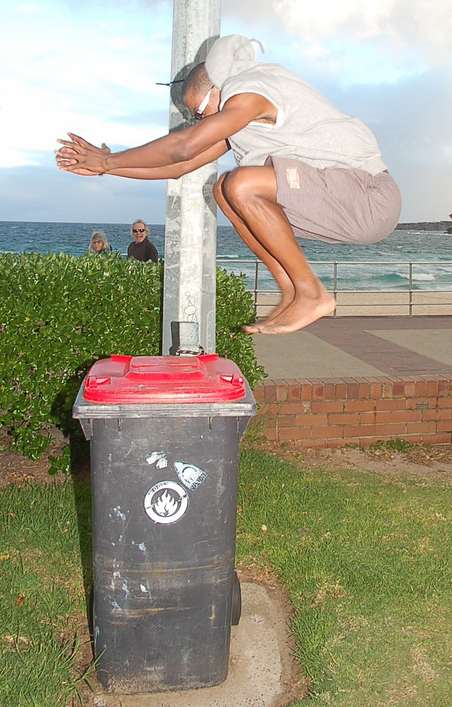
Balance - the ability to control the body's stability whilst moving (or stationary) regardless of its base of support. One of the 20 Components of Fitness.
The video below is of me attempting to use a park bench as a balance beam.
How to improve your balance:
There is no need to use a BOSU, swiss ball, balance board or a park bench for that matter. There are much simpler methods.
For example try brushing your teeth whilst standing on one leg (do this barefoot).
Aim to stand on one leg for the duration of brushing e.g. 2 minutes in the morning on the left leg, and then the other leg at night. You may only manage a few seconds to begin with, but this will increase over time as your skills improve.
The intention is not to hold on to anything or to put the other foot down to gain support.
Vary the amount of knee bend each time, this will not only strengthen the muscles that support the knee but also help prevent injury and knee pain. This may be uncomfortable to begin with but is necessary to promote stability in the joints.
Also spend time balancing on the heel, balls of feet, inside and outside of foot. This will help to sensitise the foot whilst improving ankle mobility and strength.
To control and minimise re-balancing use the hip/core as the primary area of control (rather than the arms) to maintain balance.
The hips, knees and ankles should work together in an integrated fashion.
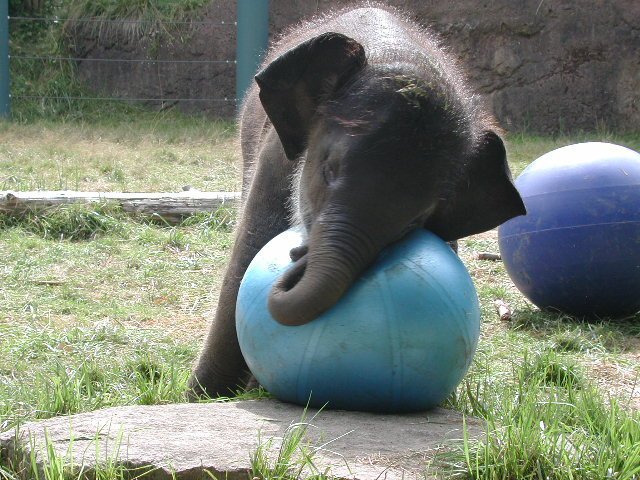
I'm not a big fan of Swiss/BOSU balls. Although I do feel these can offer a 'challenge' in testing one's balance ability.
There is no doubt they are a common sight in gyms, and the argument often used to justify their proliferation is an increase in core engagement because of the additional inherent stabilisation required by the body.
A recent study by Brandon Uribe and his team casts doubts on their effectiveness. The investigation tested muscle activation performing presses (bench/shoulder) on a fixed bench versus a stability ball. They tested the muscles involved in this activity (including the abs) and they concluded using an unstable surface made no difference during muscle recruitment.
Makes you wonder why you would bother using a nonstable surface - if there is no gain? I can think of a good reason to be as 'stable' as possible though (apart from safety). Using a stable support is more likely to increase total muscle activation due to the greater loads possible during lifting i.e. you can go heavier with a solid platform!
To test balance simply perform an exercise or activity you normally perform bilaterally (i.e. on two legs) and do the same on one leg - such as a squat. Or even perform an exercise with your eyes closed such as a deadlift. You will most likely find the above a significant challenge to the stabiliser muscles, without the use of a 'ball' of any kind.






 Monday, June 6, 2011 at 1:16 | by