


I'm Darryl Edwards, a natural movement therapist, paleo clinical nutritionist, blogger and published author based in London, England.  This blog documents my experiences with a primal lifestyle that has made me fitter and healthier in my forties than ever before.  I am a contributor to Paleo Magazine and presenter at various symposiums such as Paleo:f(x), PrimalCon and other events globally.

Let's Explore Fitness!

More about me...

More about my services... 

Recent Comments

Latest Tweets
Facebook

Images
at Gym Jones...


Search

Subscribe to The Fitness Explorer Newsletter


Categories
Reading List
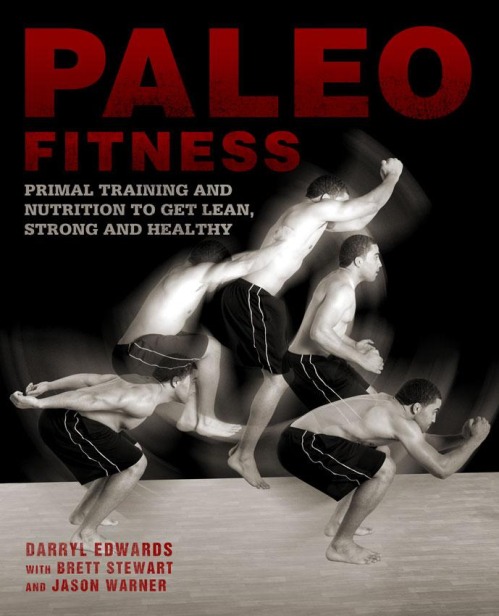
  • Paleo Fitness - A Primal Training and Nutrition Program to Get Lean, Strong and Healthy
    Paleo Fitness - A Primal Training and Nutrition Program to Get Lean, Strong and Healthy
    by Darryl Edwards, Brett Stewart, Jason Warner
  • The Paleo Solution
    The Paleo Solution
    by Robb Wolf

    Paleo for weight loss, performance and disease prevention. Read my full review here.

  • Why Zebras Don't Get Ulcers
    Why Zebras Don't Get Ulcers
    by Robert M. Sapolsky

    The impact of too much stress in our lives - impotence, obesity, heart disease and much more...

  • The Primal Blueprint: Reprogram Your Genes for Effortless Weight Loss, Vibrant Health, and Boundless Energy
    The Primal Blueprint: Reprogram Your Genes for Effortless Weight Loss, Vibrant Health, and Boundless Energy
    by Mark Sisson

    Usually we have to go back to basics to progress, this is a great place to start!

  • Slow Death by Rubber Duck: The Secret Danger of Everyday Things
    Slow Death by Rubber Duck: The Secret Danger of Everyday Things
    by Rick Smith, Bruce Lourie, Sarah Dopp

    "Think about the toxic chemicals you put onto your body, and are exposed to on a daily basis.  Frankly, quite worrying..."

  • Protein Power
    Protein Power
    by Michael R. Eades, Mary Dan Eades, Mary Deans

    First published in the mid 1990s.  Amongst other things, disputes the 'fat intake causes obesity' argument and reasons why the high carb/low-fat diet doesn't work.

  • Born to Run: The Hidden Tribe, the Ultra-Runners, and the Greatest Race the World Has Never Seen
    Born to Run: The Hidden Tribe, the Ultra-Runners, and the Greatest Race the World Has Never Seen
    by Christopher McDougall

    An inspirational read, whether you are a 'runner' or not.  This book also investigates why expensive 'cushioned' running shoes increases the likelihood of injury.

  • In Defence of Food: The Myth of Nutrition and the Pleasures of Eating: An Eater's Manifesto
    In Defence of Food: The Myth of Nutrition and the Pleasures of Eating: An Eater's Manifesto
    by Michael Pollan

    An insight into real, simple and nutritious food.  Insightful.

  • Food Rules: An Eater's Manual
    Food Rules: An Eater's Manual
    by Michael Pollan

    An excellent, non-scientific common sense quick reference to the often confusing question : "What should I eat?"

  • The Paleo Diet for Athletes
    The Paleo Diet for Athletes
    by L. Cordain

    An alternative to Cordain's first book "The Paleo Diet" if who want to consider the impact of Paleo on athletic performance.  It is geared towards endurance athletes but an interesting read nonetheless.

  • Vegetarian Myth, The
    Vegetarian Myth, The
    by Lierre Keith

    I'm an omnivore.  I believe it is healthy to eat naturally-reared meat, non-farmed fish as well as a wide variety of fresh vegetables.  This book is an interesting read and has a lot to say about why becoming a vegetarian isn't necessarily the best option for humans.  However read this, do your own research and make up your own mind.

  • The Second Brain
    The Second Brain
    by Michael D. Gershon

    A discussion about the complex nervous system working in the gut, which produces neurotransmitters such as serotonin.  In fact much more serotonin is produced in the gut than the brain!

  • The Rise and Fall of Modern Medicine
    The Rise and Fall of Modern Medicine
    by James Le Fanu
  • Swindled: From Poison Sweets to Counterfeit Coffee - The Dark History of the Food Cheats
    Swindled: From Poison Sweets to Counterfeit Coffee - The Dark History of the Food Cheats
    by Bee Wilson
  • Cancer: The Evolutionary Legacy
    Cancer: The Evolutionary Legacy
    by M.F. Greaves
  • The Paleo Diet: Lose Weight and Get Healthy by Eating the Foods You Were Designed to Eat
    The Paleo Diet: Lose Weight and Get Healthy by Eating the Foods You Were Designed to Eat
    by Loren Cordain

    This provides extraordinary insight into the reasons behind adopting a paleolithic diet.  Some aspects are controversial and many may feel it is too dogmatic.  I have often gone back to this book and re-read it for clarification as Dr Loren Cordain is often mis-quoted.  There is now a revised edition (2010 edition) to counter some of its earlier criticisms, this is an excellent resource and a must-read for any one serious about paleo nutrition.

  • Lore of Running
    Lore of Running
    by Tim Noakes

    This book offers a comprehensive insight into the science, coaching and discipline of running.  Energy systems, coaching and training.  Often quoted as the bible of running.

Entries in Recovery (3)

Wednesday
May252011

Nutrition: Sweet Potato (A Paleo Exception)

Nutrition: Sweet Potato (A Paleo Exception)

Those who adhere strictly to a Paleo style diet can find their recovery or energy levels for activity can be hampered (especially) if they opt for ultra-low carbohydrate intake.  

It is important to fuel our bodies for activity, and to support recovery.  But it is often confusing as to what options are available to us as paleo or primal dieters who don't want to rely on high glycaemic foods (pasta, potatoes, rice, etc) to perform this task?

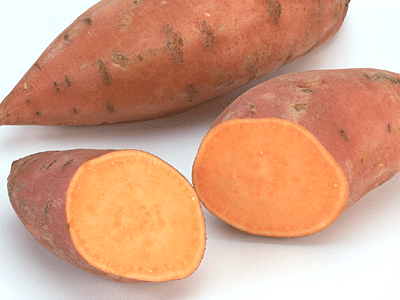
Well one alternative includes root vegetables (tubers) - such as yams and sweet potatoes.  These are neolithic foods but can be important as a means of achieving healthier calorific density in moderation.  Below I consider some benefits of the sweet potato.

The sweet potato is a moderate GI (glycaemic index) carbohydrate and is very high in Vitamin A (a fat-soluble antioxidant).  Vitamin A (beta-carotene) is what gives sweet potatoes the rich orange colour (some sweet potatoes are purple in colour).  

To maximise absorption of vitamin A ensure you have adequate fat with your meal to ensure the body is better able to utilise this antioxidant.

Interestingly a study several years ago of 10,000 Finnish smokers found that those with higher levels of Vitamin A (beta-carotene) in the blood had a lower incidence of lung cancer.  This was only the case with Vitamin A from natural sources though, not that coming from synthetic vitamin supplementation where lung cancer rates where actually found to be higher! [1]  Another reason to stick to natural sources for antioxidants!

In Loren Cordain's book "Paleo Diet For Athletes" the sweet potato is also considered as one of the better options for recovery from extended endurance work.  This book goes into great detail of nutrition for pre-, during and post-activity.

The sweet potato also includes Vitamin C, E, B6 - the micronutrients manganese, copper and traces of potassium and iron.  Anthocyanin is a colour related pigment which studies have shown to have anti-inflammatory properties another property supporting one's recovery from activity.[2] 

Here's a recipe for Sweet Potato Chips (using coconut oil for adequate fat intake).

Sources: 

[1] http://www.jrussellshealth.org/caveats_vit_min.html

[2] Effects of anthocyanin-rich purple potato flakes on antioxidant status in F344 rats fed a cholesterol-rich diet. Br J Nutr. 2007 Nov;98(5):914-21. Han KH, Matsumoto A, Shimada K et al.


Sunday
Sep122010

Workout: Active Recovery

Today a surprise!

Yesterday I was on a MovNat Seminar where I was physically challenged for most of the day (in conjunction with what I did last week) so feeling a little sore with DOMS.  

After a really hard workout it is tempting to want to stay in bed, sit around and watch TV, especially on a Sunday.  But sometimes it really is best to keep moving, otherwise you are likely to feel even worse.

Today I'm taking it easy.  But that does not mean I am doing nothing.  

Do something as simple as taking a stroll through the park (not jogging), an easy-going bike ride, doing some dynamic stretches or some light gardening.  No rush or heavy exertion, just take it easy.

By staying active on a 'rest' day: 

  • you keep the joints lubricated; 
  • relieve soreness and stiffness by increasing blood flow to the muscles;
  • aid in recovery from intense exercise/activity;
  • and also relieve stress.

Some days we do need complete downtime, other days we should train very hard.  But balance should be maintained to avoid training plateaus and to maintain well-being.  

Remember, active rest and recovery as part of your training: stay healthy and injury free.

Tuesday
Aug102010

Six Benefits of Rest

When embarking on a new workout regime and you start seeing great results.  There is often the tendency to overdo it.  I have fallen foul of this myself, and often fail to get adequate rest.  This is often cited:
"If I work out more frequently, or for longer than the results will surely be better?" - anon.

One thing is for sure.  High intensity workouts performed for 6-7 days a week, will definitely result in burnout, a lack of motivation, illness and injury.

Six benefits of rest:
  1. Aids Recovery:  a day or two off per week is required to allow bone, muscle, tendons and ligaments the time to recover and repair themselves.  Muscle growth occurs during rest periods, not during exercise;
  2. Keeps you healthy:  avoids the risk of the immune response being compromised due to over-training;
  3. Helps you sleep:  adequate sleep allows the mind to repair itself and develop new connections (useful when learning new skills, adaptations);
  4. Lowers stress: decreases abnormal levels of cortisol (stress hormone): This will allow alertness, productivity and general health to be maintained;
  5. More energy throughout the day:   adequate rest helps you avoid energy slumps during the day, ensuring workouts are more effective and efficient;
  6. Boosts brain function:  allows for better concentration and focus.

I often repeat the mantra: 

"There is no such thing as over-training, but under-resting."  

This is certainly true, and needs to be factored into your training regime - whatever it may be.

----